I would like to say a big thank you, if you have recently purchased the Easy Aran Pullover pattern.
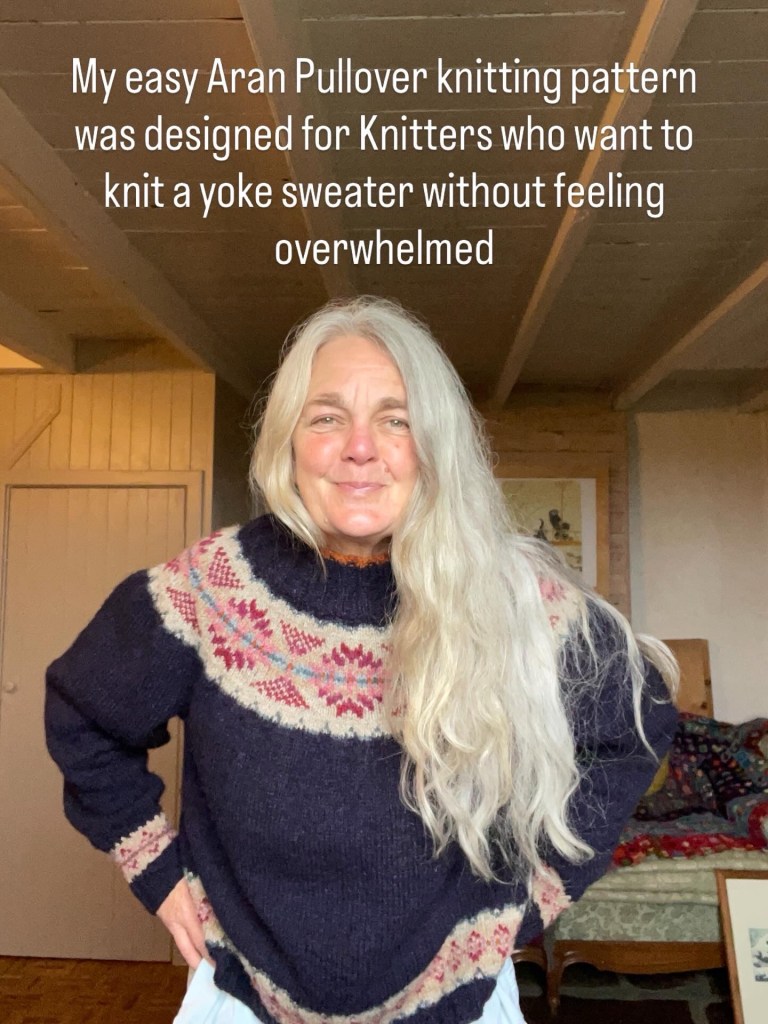
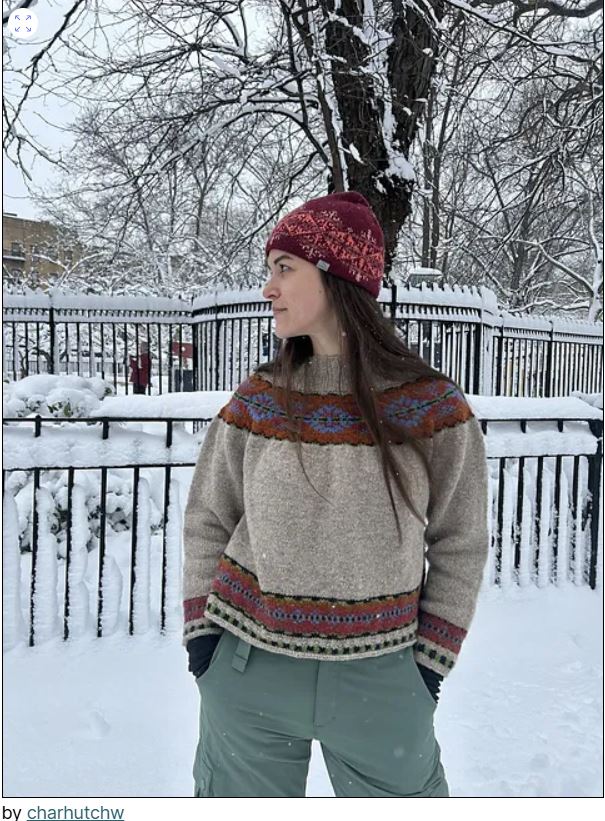
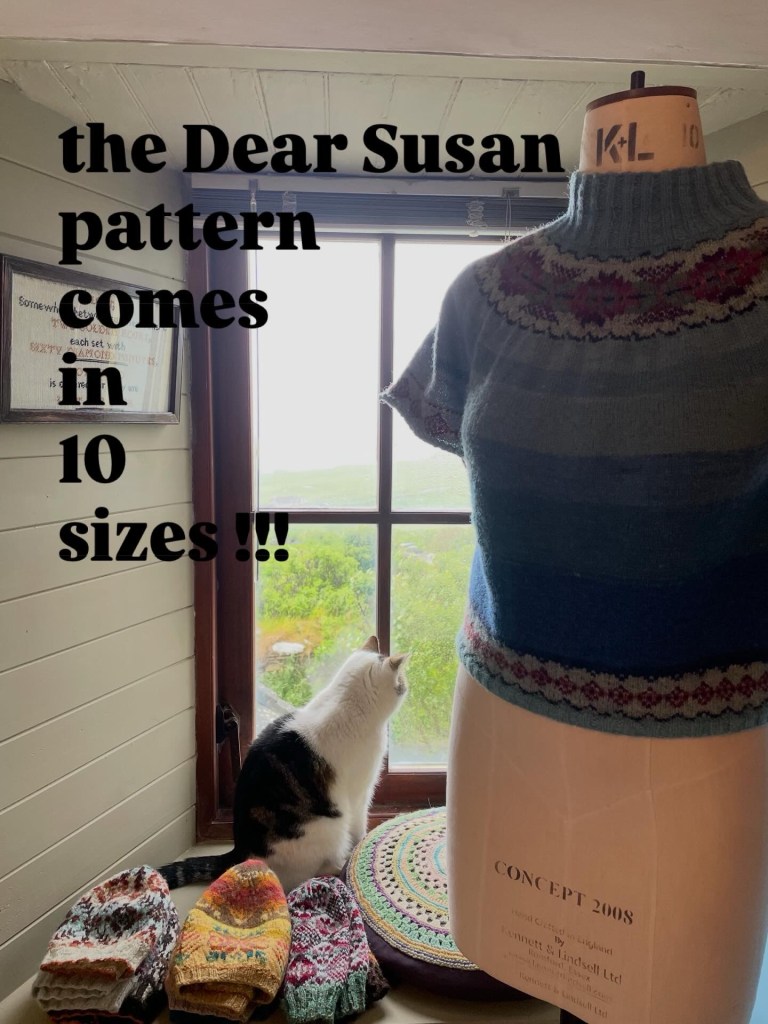
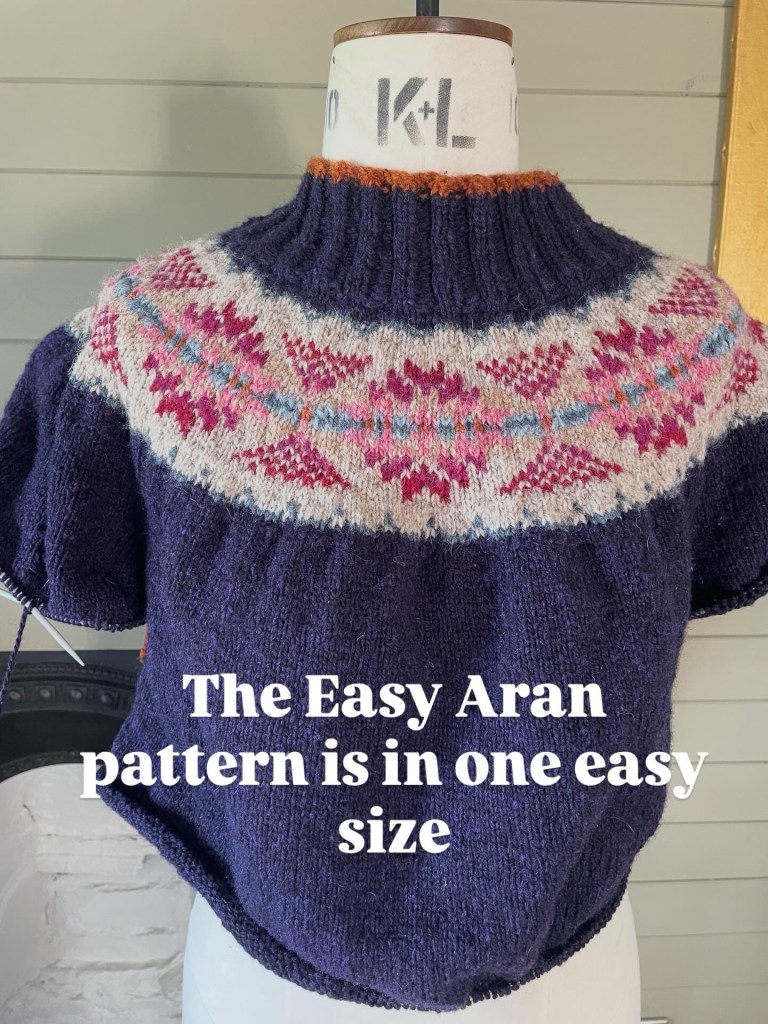
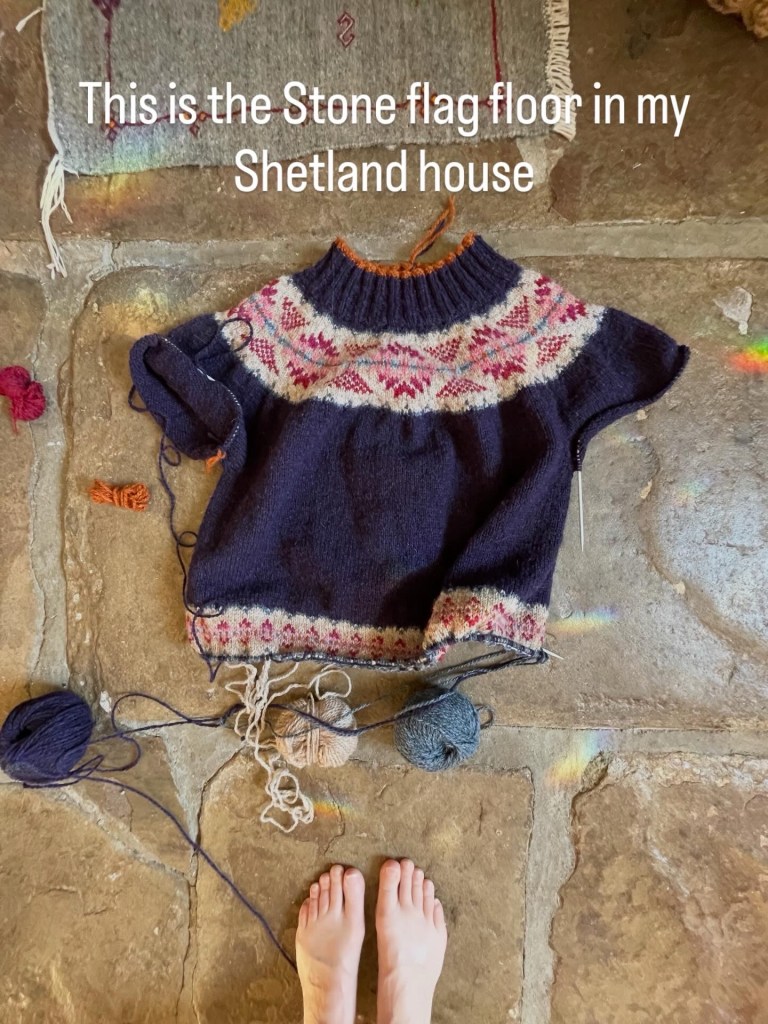
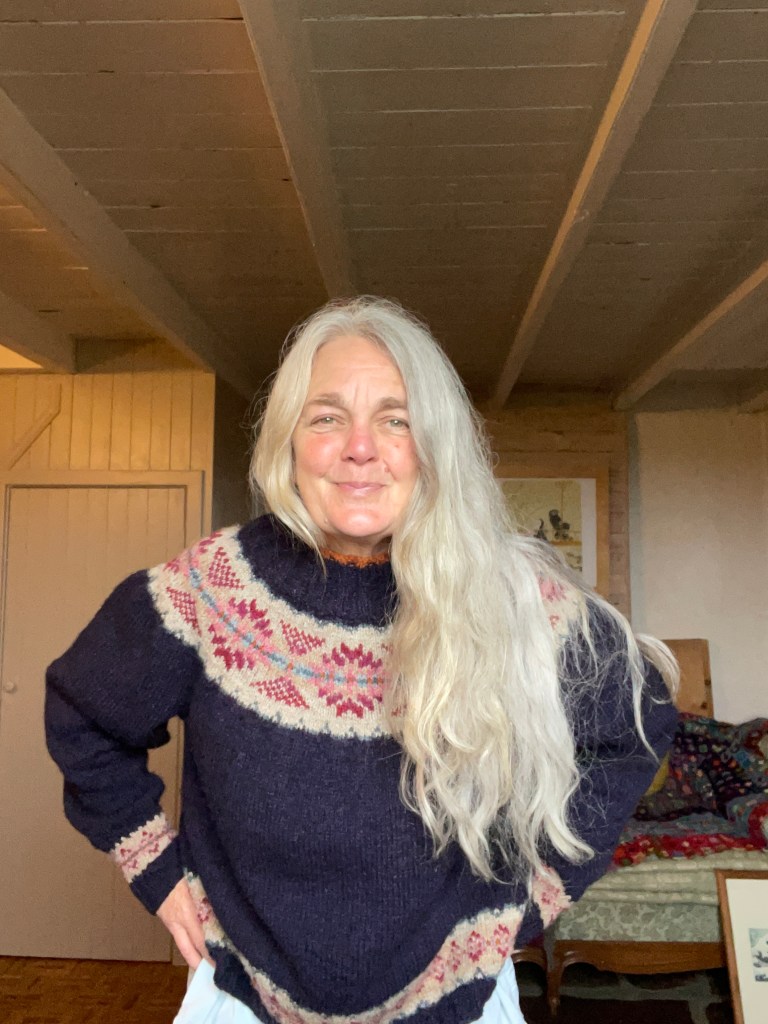
I designed and made this jumper when I was living in Shetland. It is a very easy version of the Dear Susan pattern that is in 10 sizes. The Easy Aran is in just one relaxed size.
Quite a few people have recently bought my Easy Aran Pullover pattern and I have seen some very lovely versions on personal colour choices of the knitters. they can be seen in projects on Ravelry.
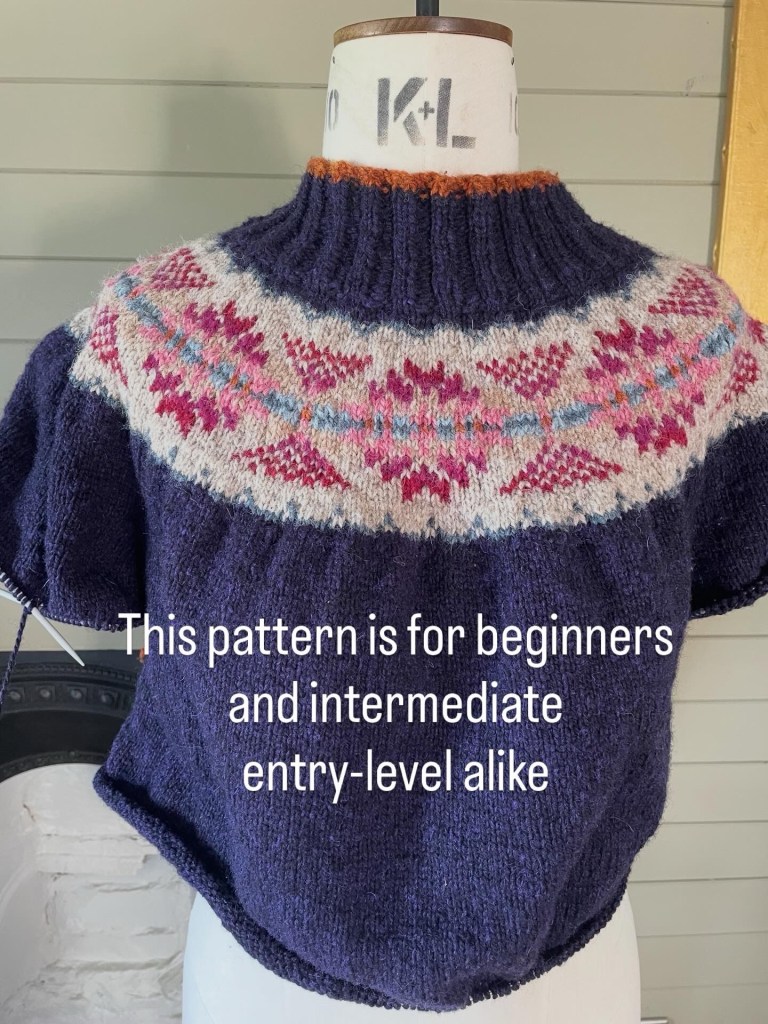
I designed this jumper with people who wanted an easier option to make a traditional Shetland motif yoke sweater and the result was a very lovely go to jumper.
The pattern also has a 10 page story with it, about my life in Shetland and a woman called Susan Halcrow, who owned the house that I bought from 1876 to 1960
Living in Shetland seems a long time ago now but I do know that my time there shaped my thinking and design ideas for my patterns.
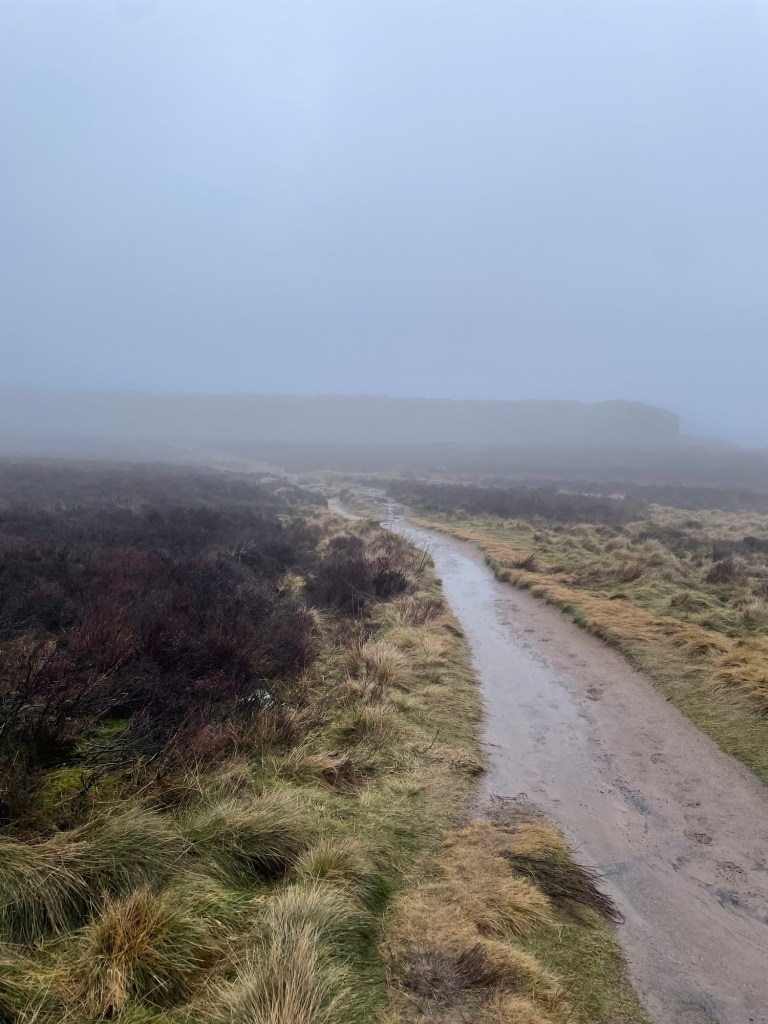
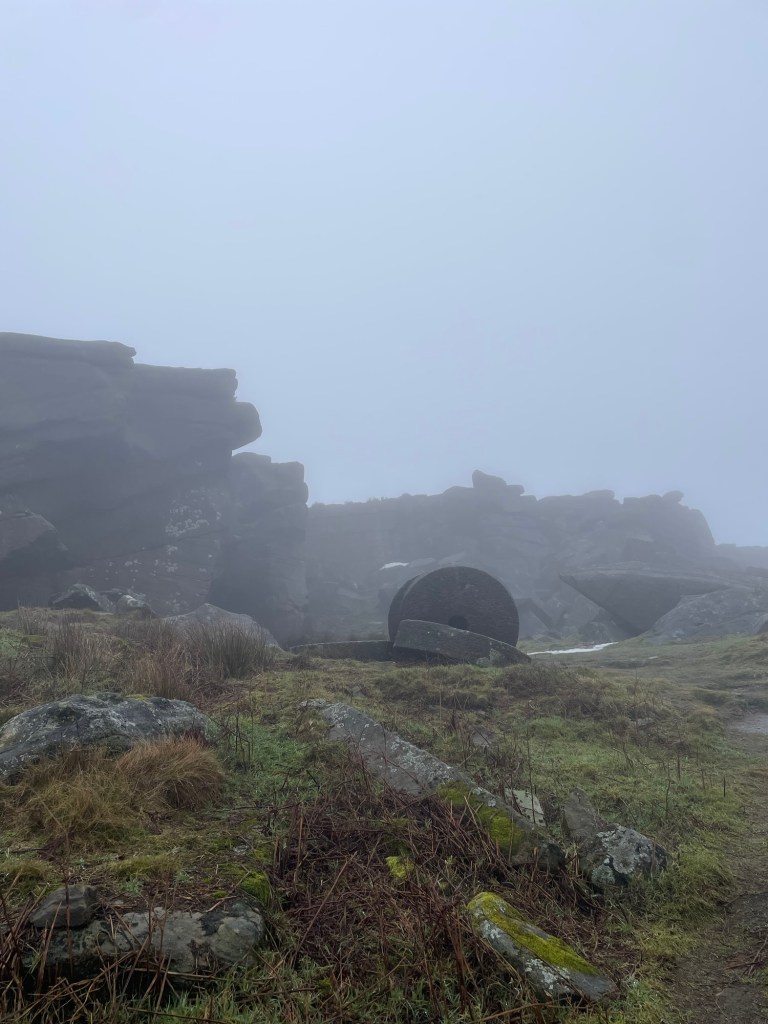
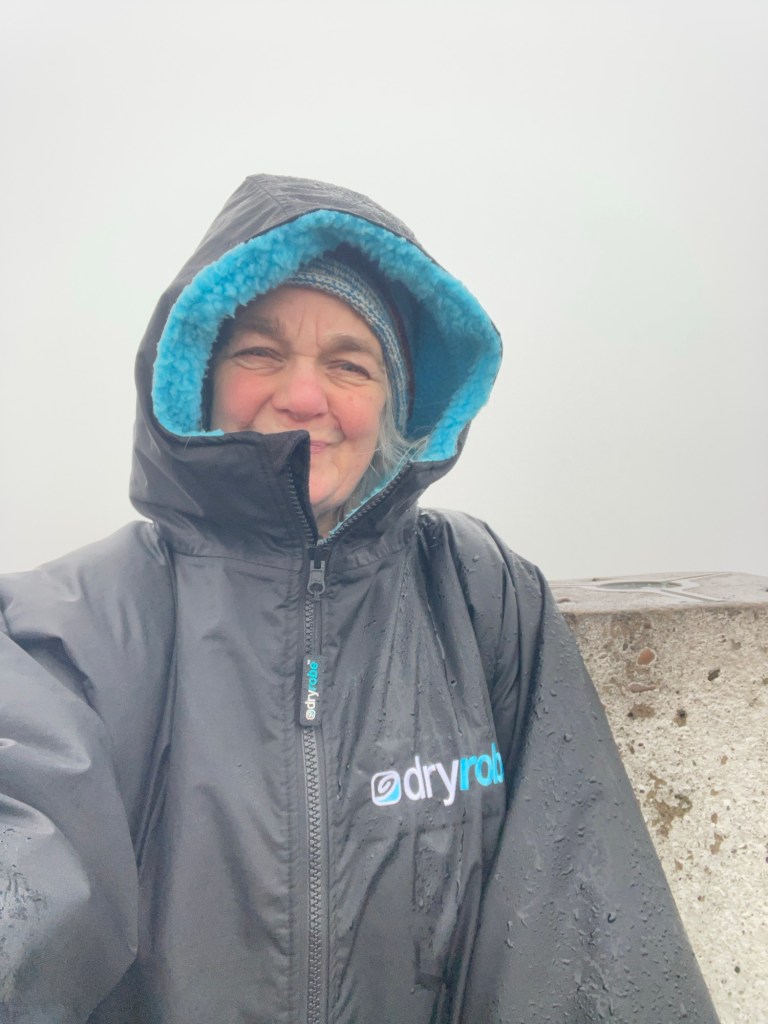
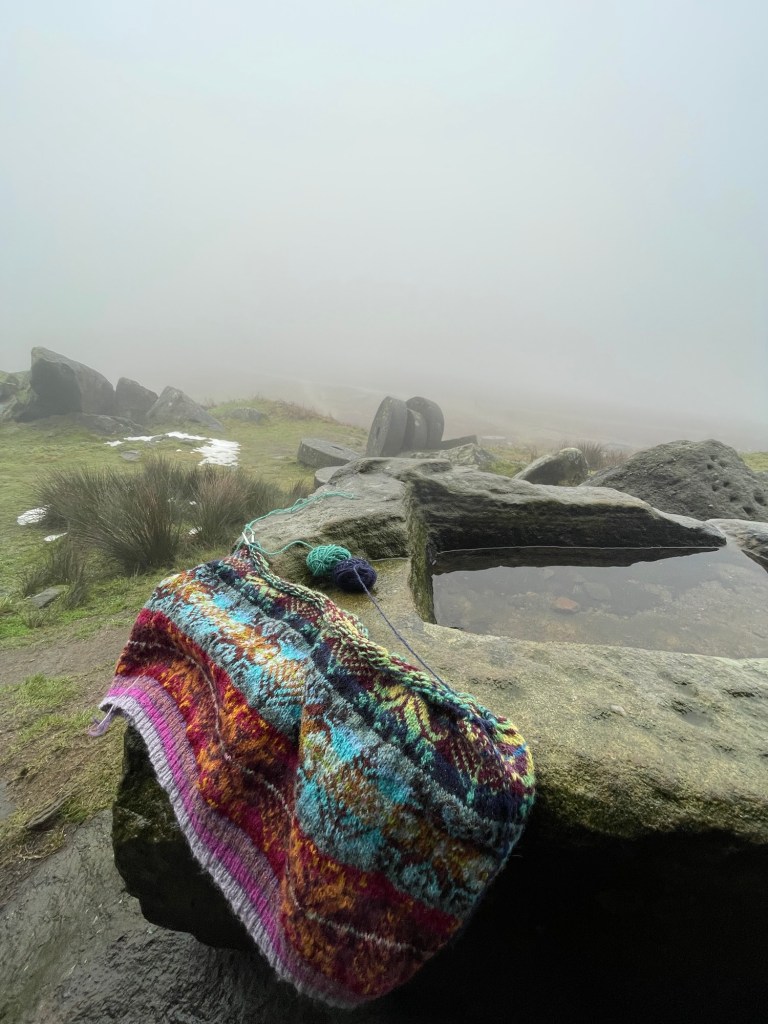
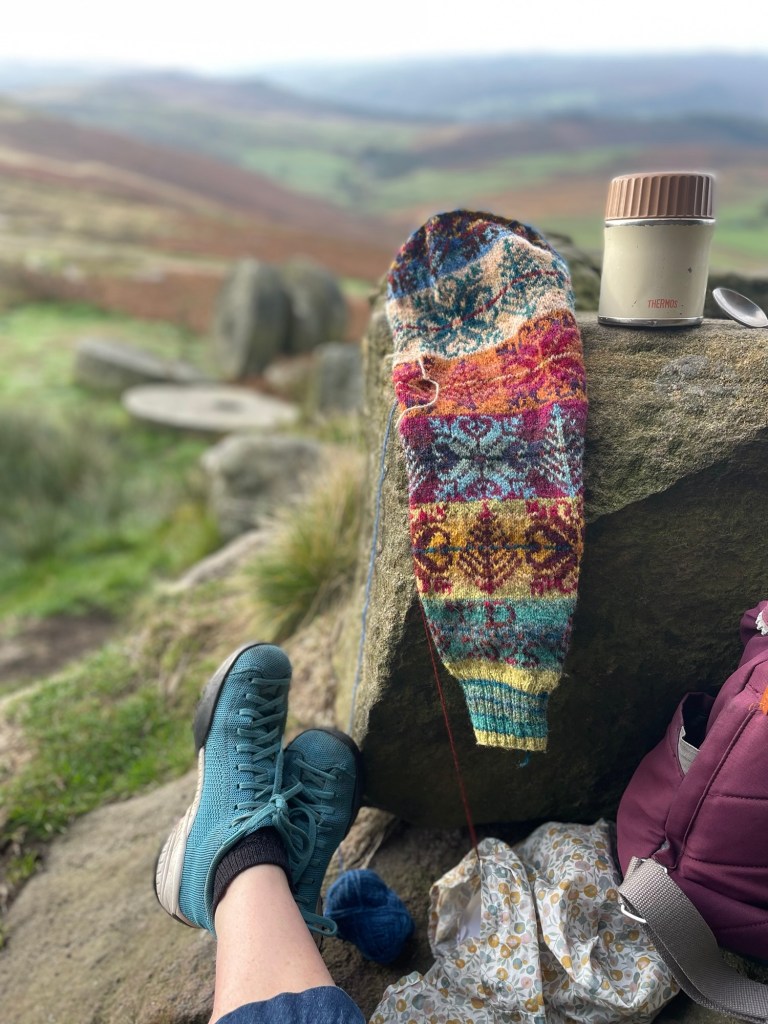
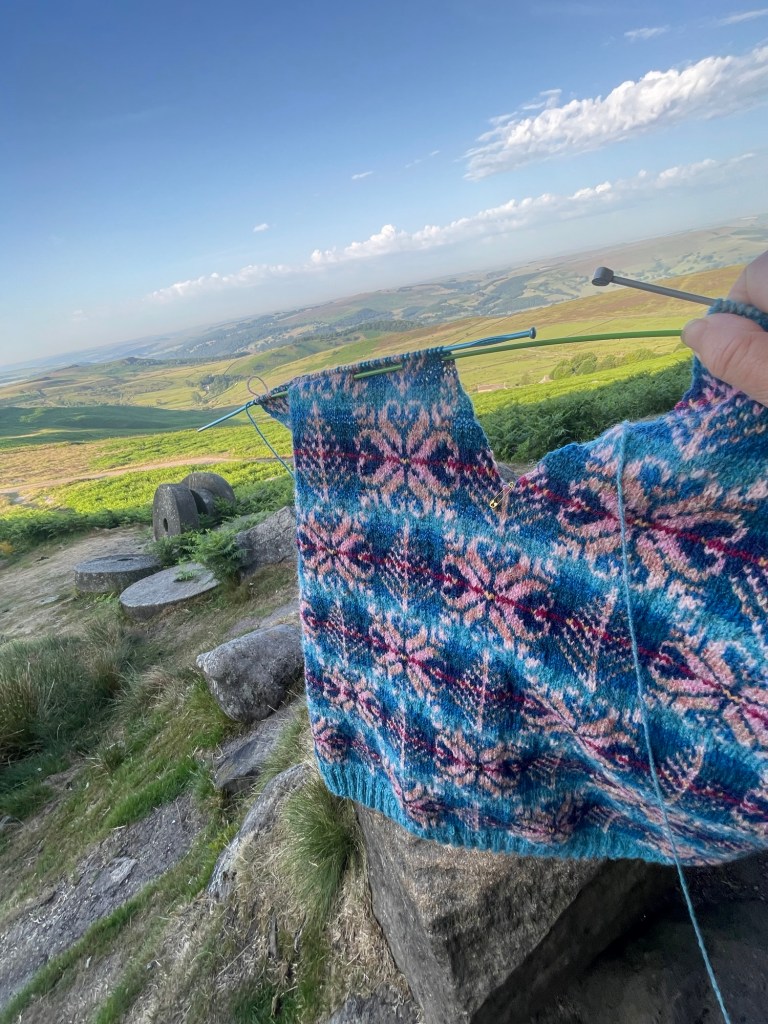
If you have been following me for a while, you will know that my favourite place to knit outdoors is beside the abandoned old millstones at the bottom of Stanage Edge. I have been going for years. After 7 weeks of solid heavy rain, this morning, there was a hint of a tiny blue sky so I headed out for Burbage Edge to walk to Stanage. This is what it was like
I must admit, the extremity of it all was magical. So many people were out on the moors walking, running, mountain biking – it is a gritty, strong city here.
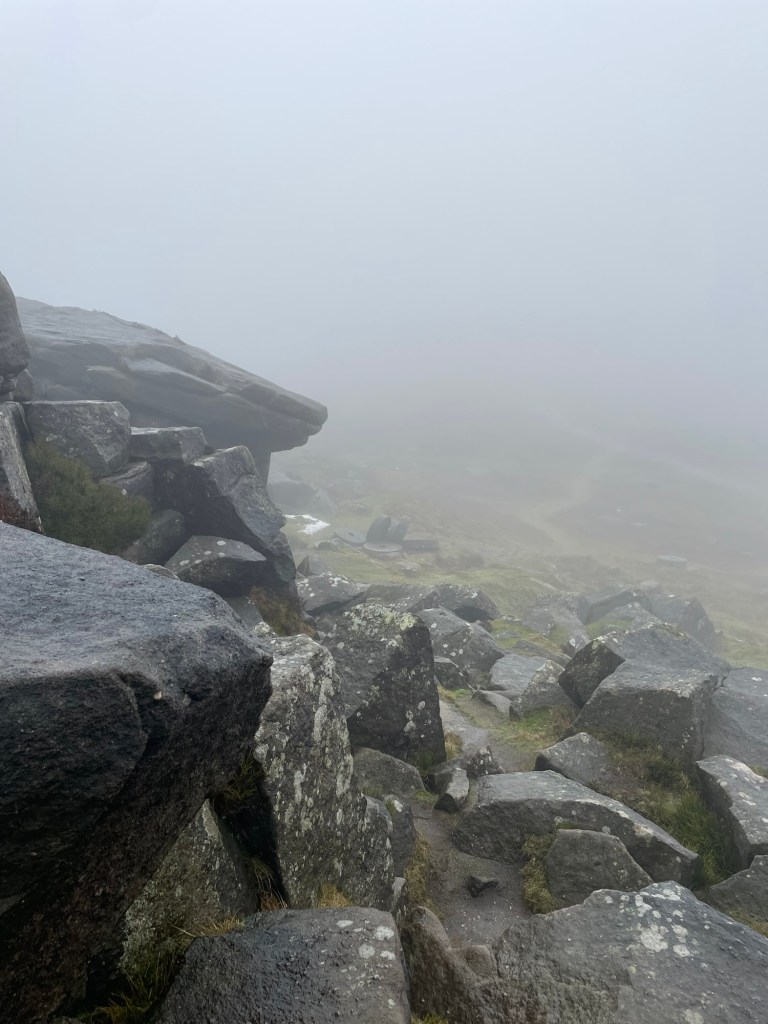
I don’t think it was total mist and rain, I think the clouds had dropped to cover the entire moor and rock edge.
at my favourite place, I sat beneath the shelter of the overhanging rocks to knit, drink tea and look at the moving wetness. Everyone seemed moved by it.
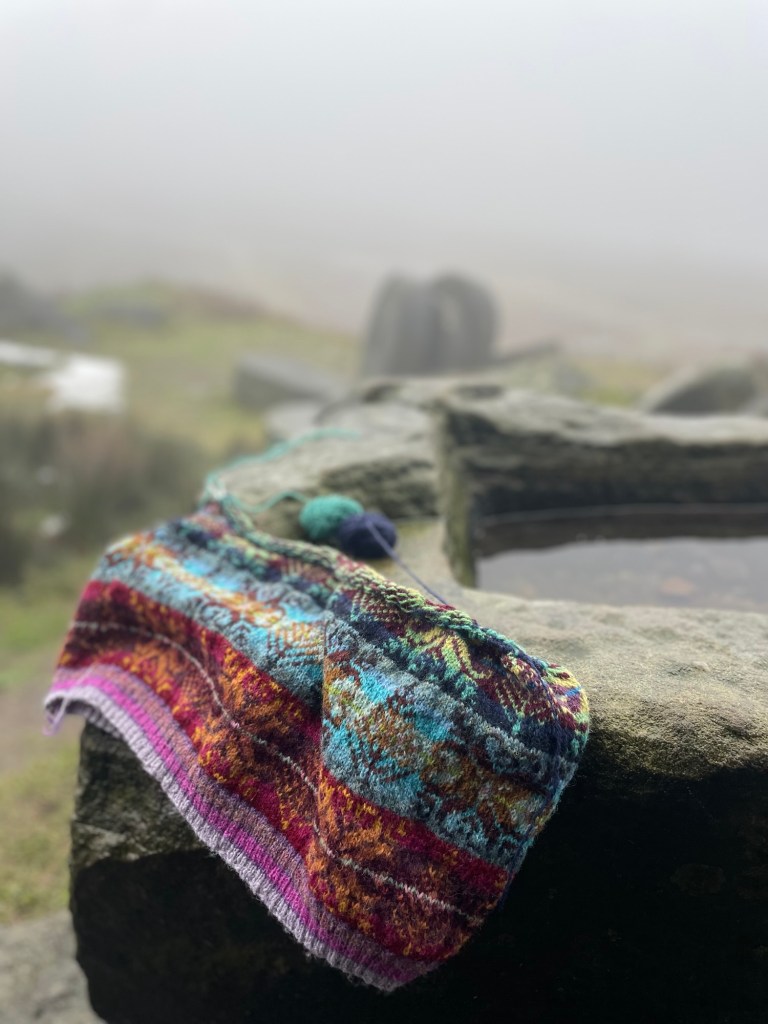
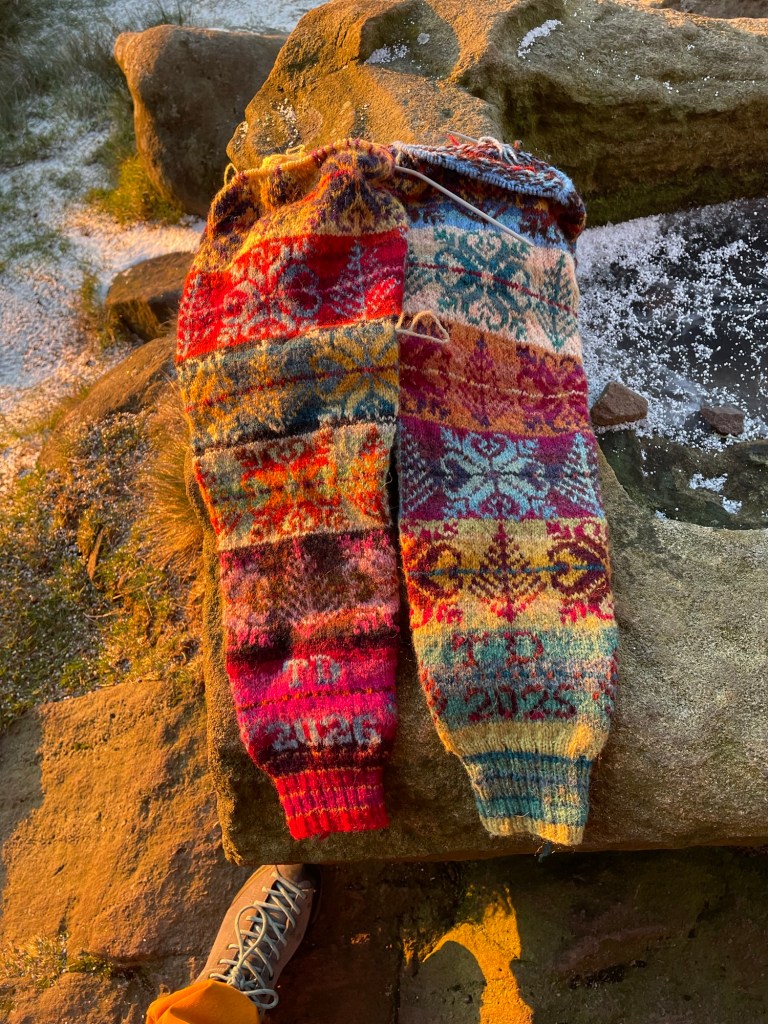
Afterwards, my knitting was wet with cloud and mist. It smelled of Lanolin and the Peak District. How lucky are we in this country to live near such peaceful places when the world is in deeply sadening pain – and we feel it.
Kaleidoscope jumper on the hand made stone trough beside very old abandoned millstones.
This Winter has seemed long and dark and wet. Even I have begun to hibernate.
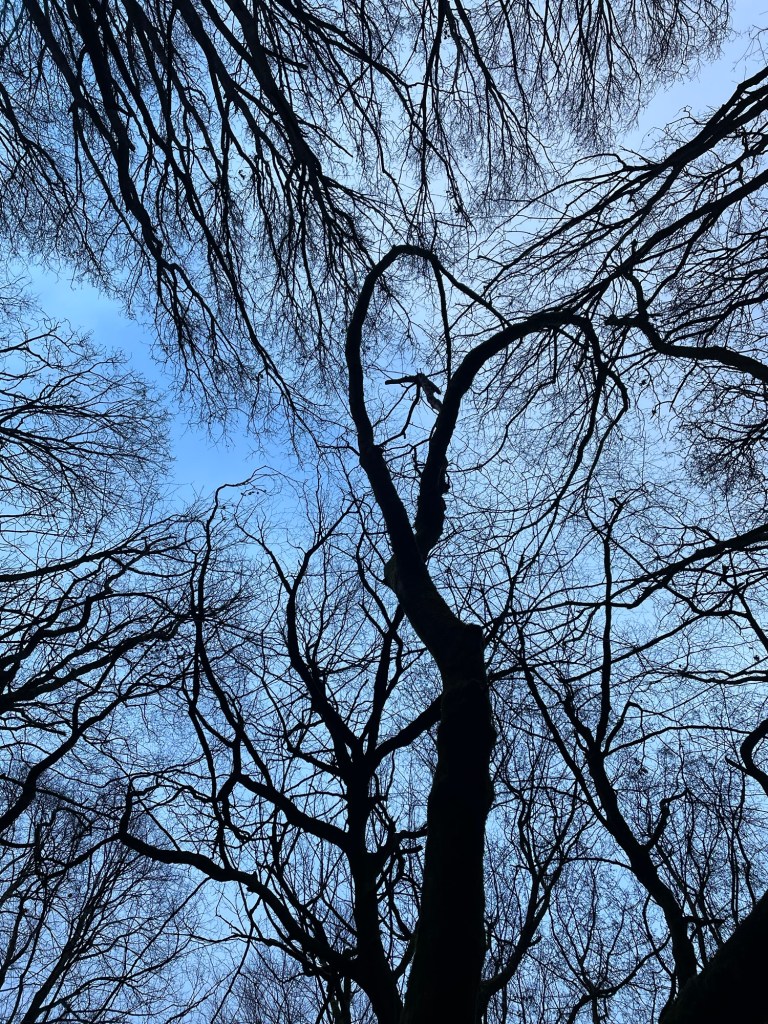
Last week, we had one small window of a couple of hours of light and I walked through the woods looking at the sky between the bare branches up high.
Behind the scenes, I am devising a 6 month programme for a Colour Swatch Club – some of you have sent me registration forms for this – I am looking forward to sending you all the information and monthly list soon as well as starting the club in April.
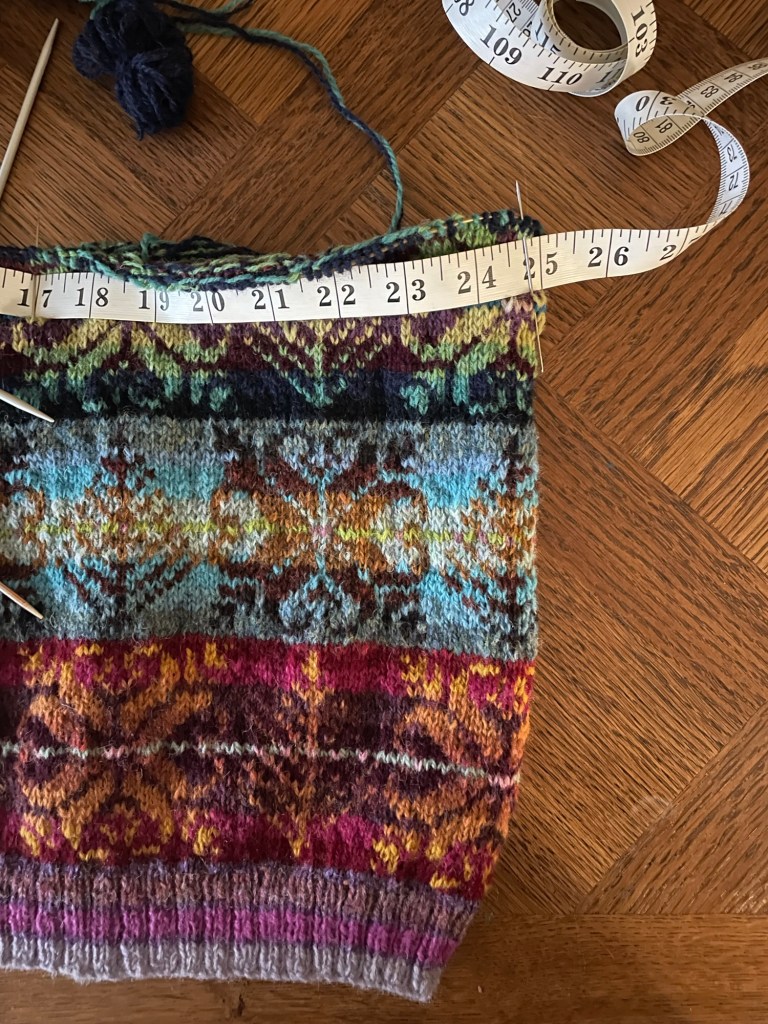
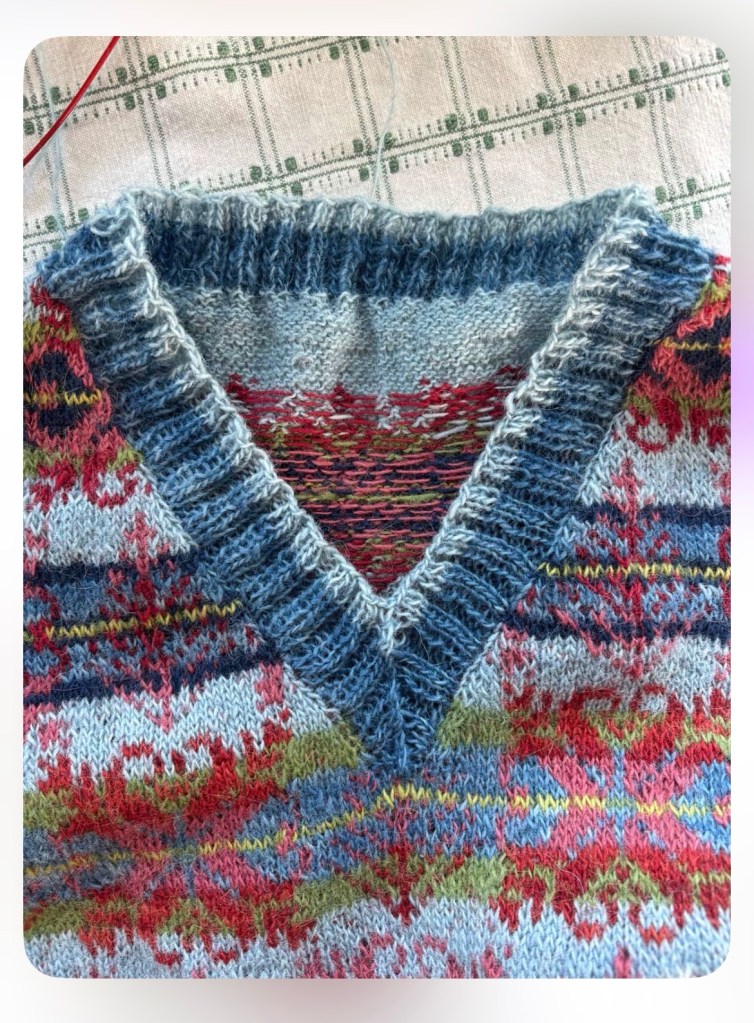
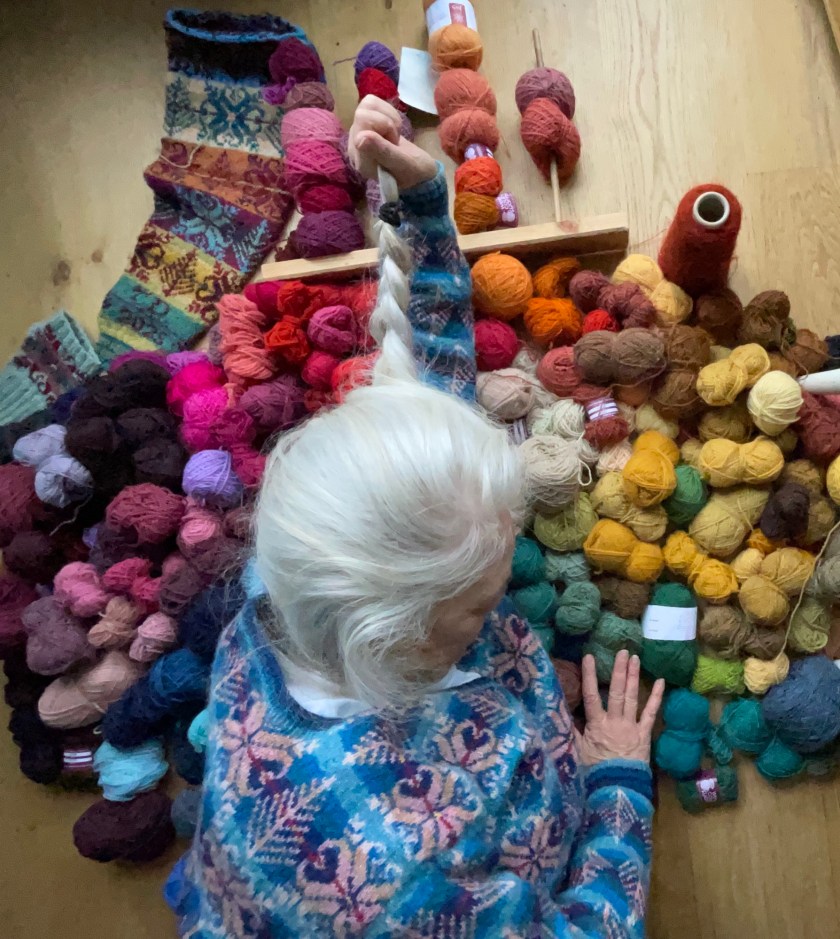
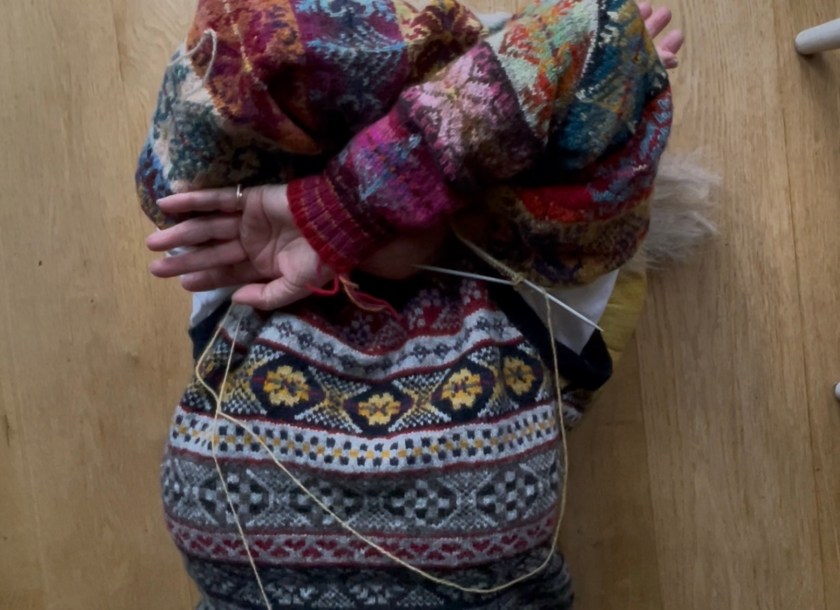
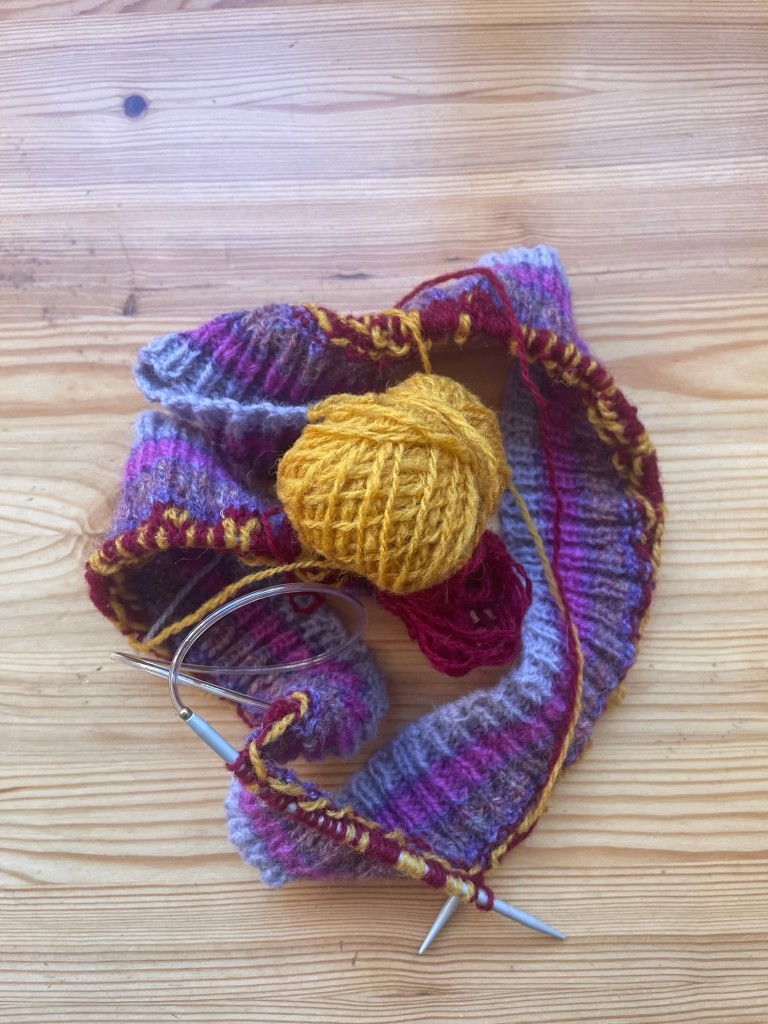
I have also been knitting my 2nd Kaleidoscope Jumper using any leftover yarn that I have in my box. To help the people who wanted a larger jumper than the first one, that came out at a 44 inch chest, I have been using 3:5mm UK size needles instead of the 3mm ones in the first knit. My latest jumper will come out at about a 50inch chest, which will be big and look silly on me or will look pretty cool. Either way, I will be able to tell everyone how to increase the size of the original finished chest.
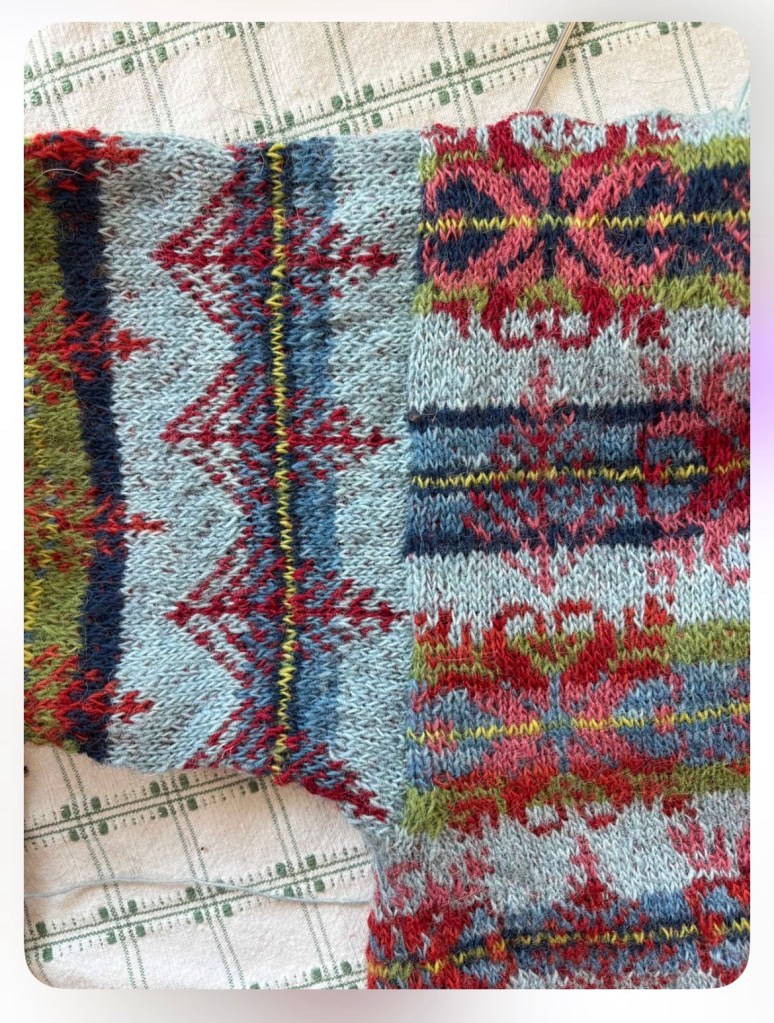
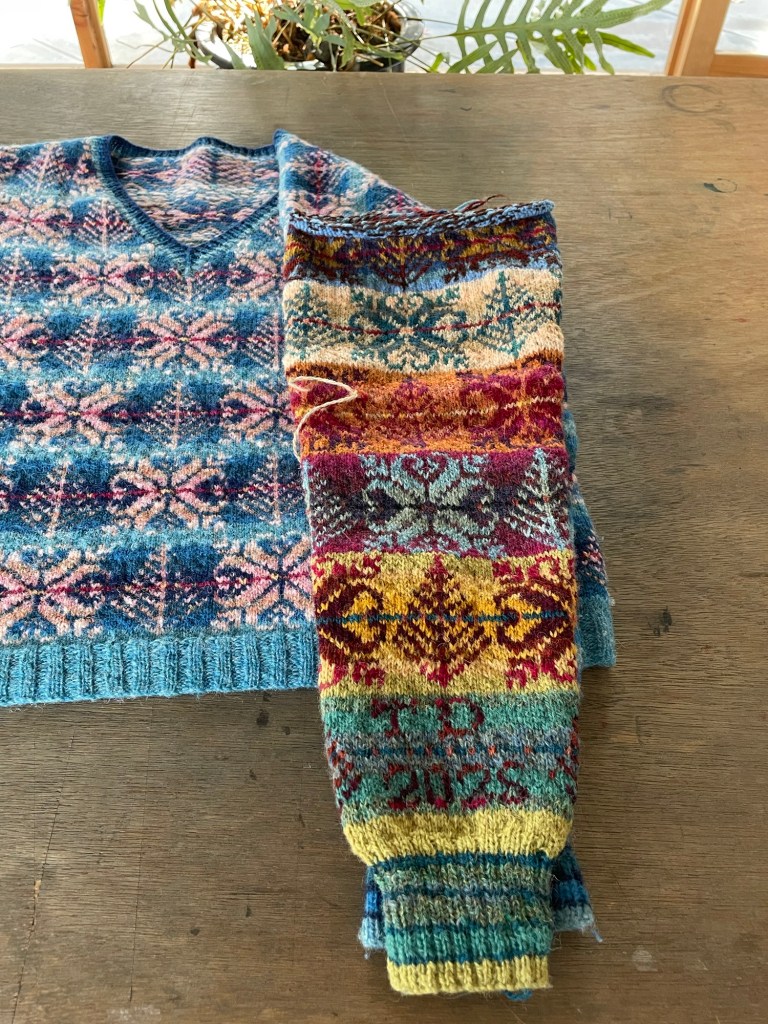
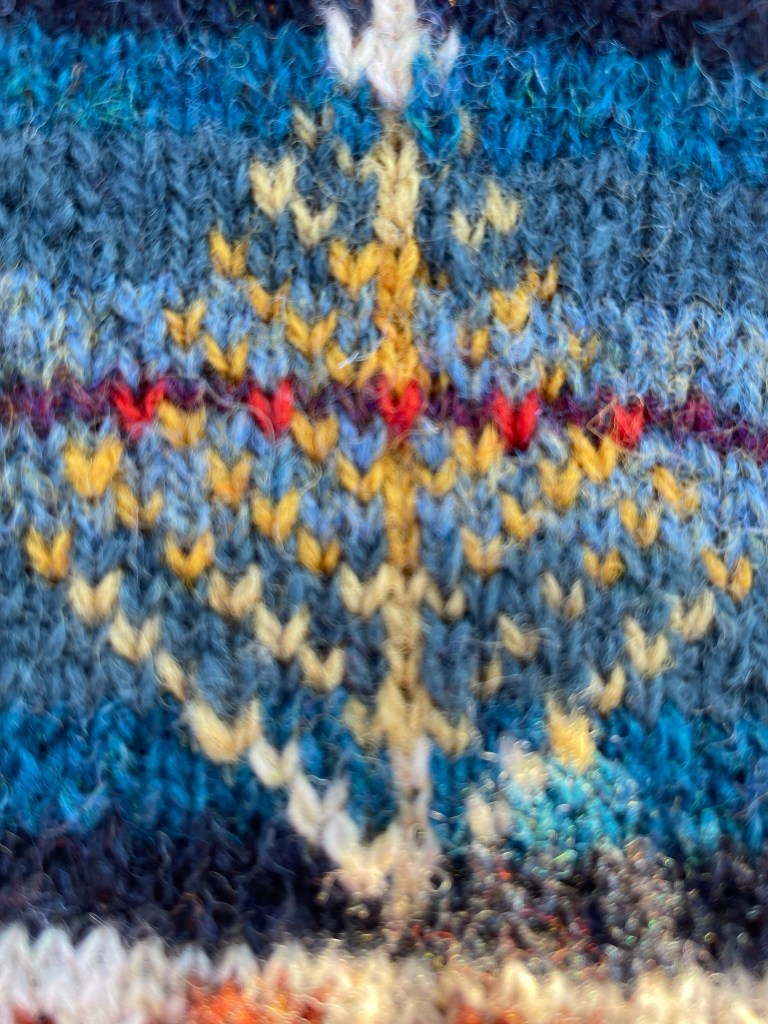
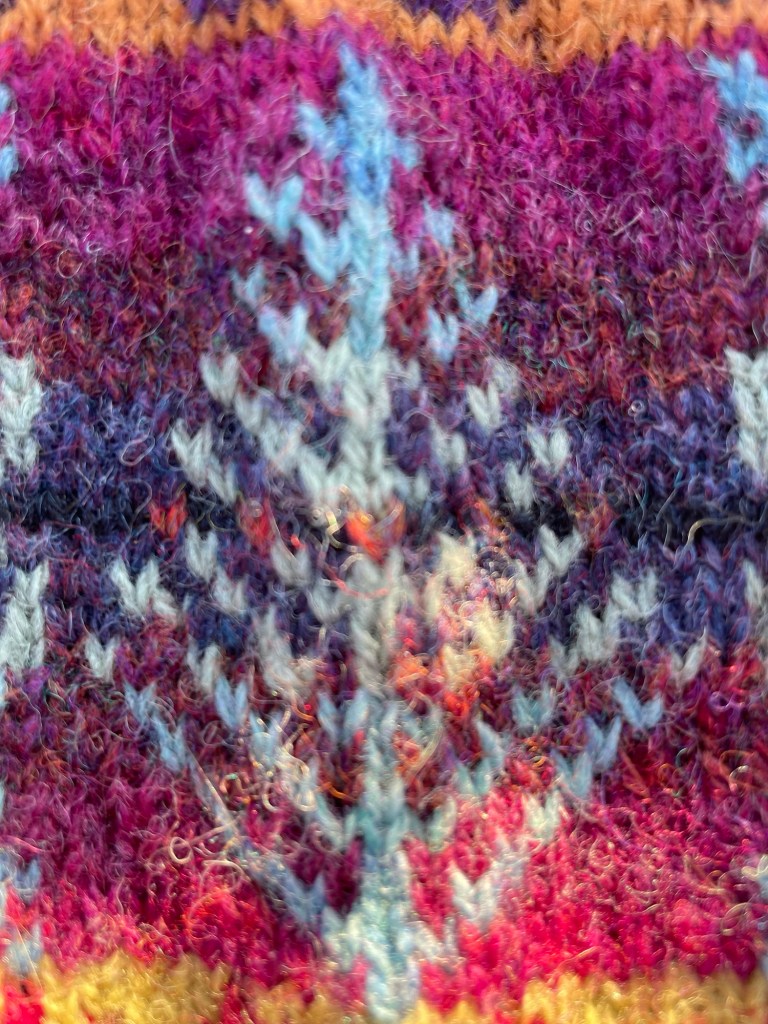
I have been knitting Tree and Star sleeves this time – which is a bolt on pattern ravelry as an option to knit other than the Tree sleeves in the original jumper pattern which you can see here.
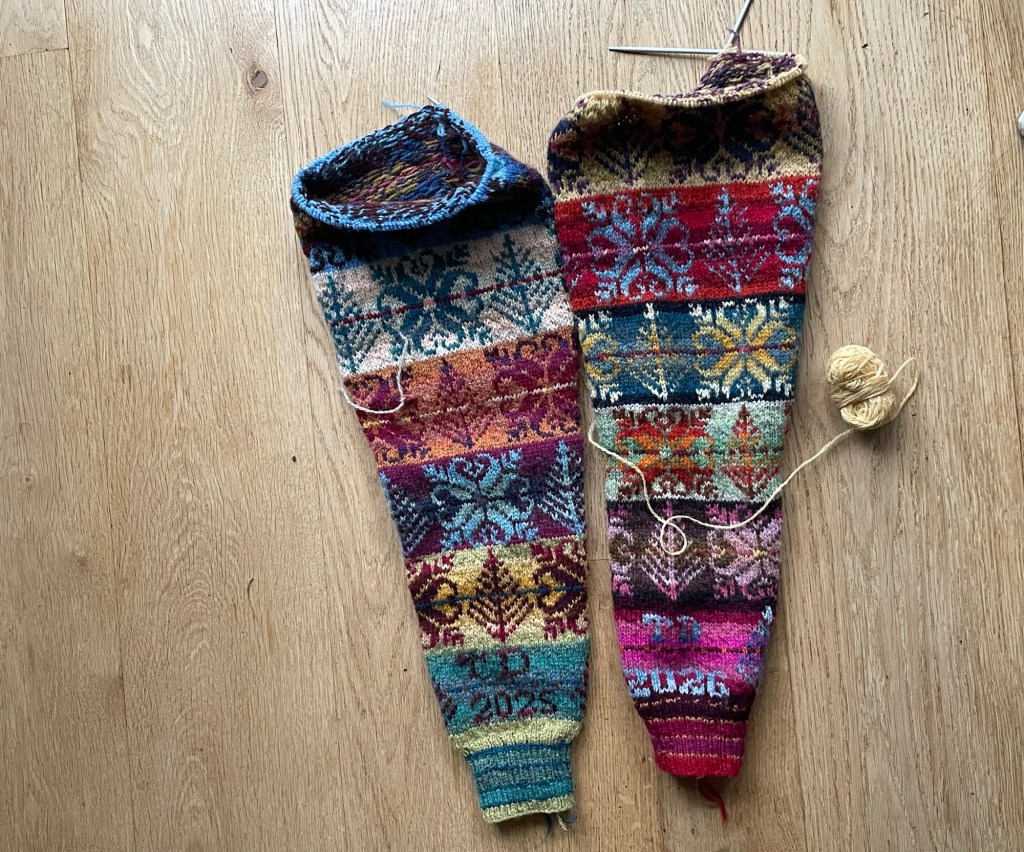
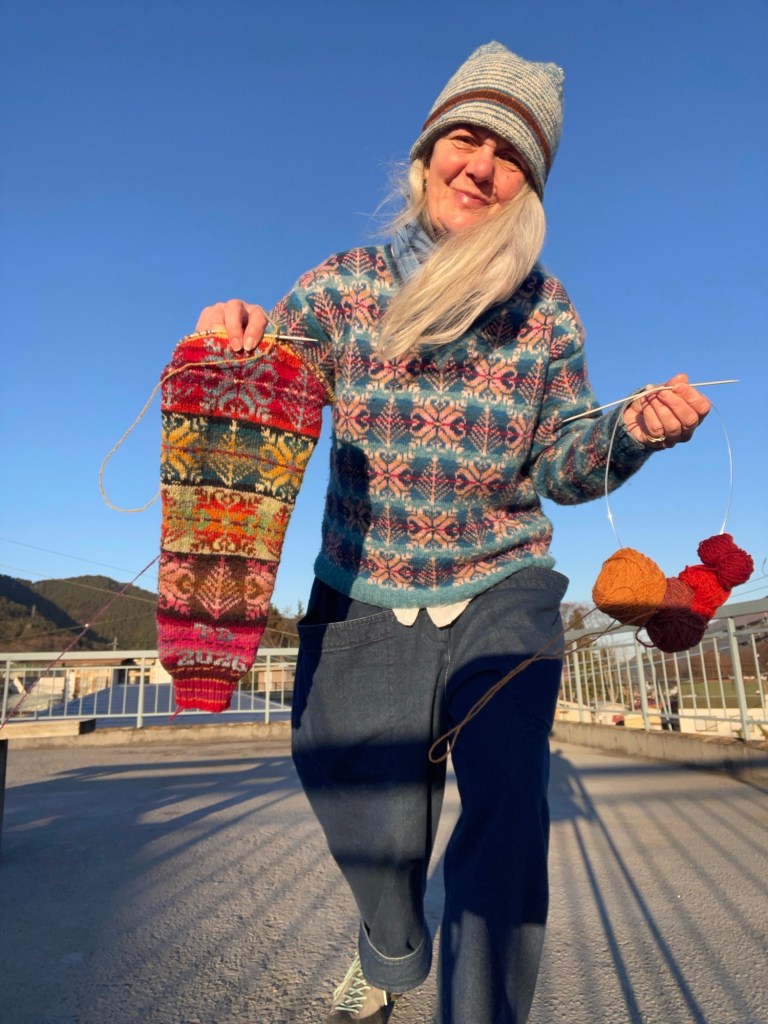
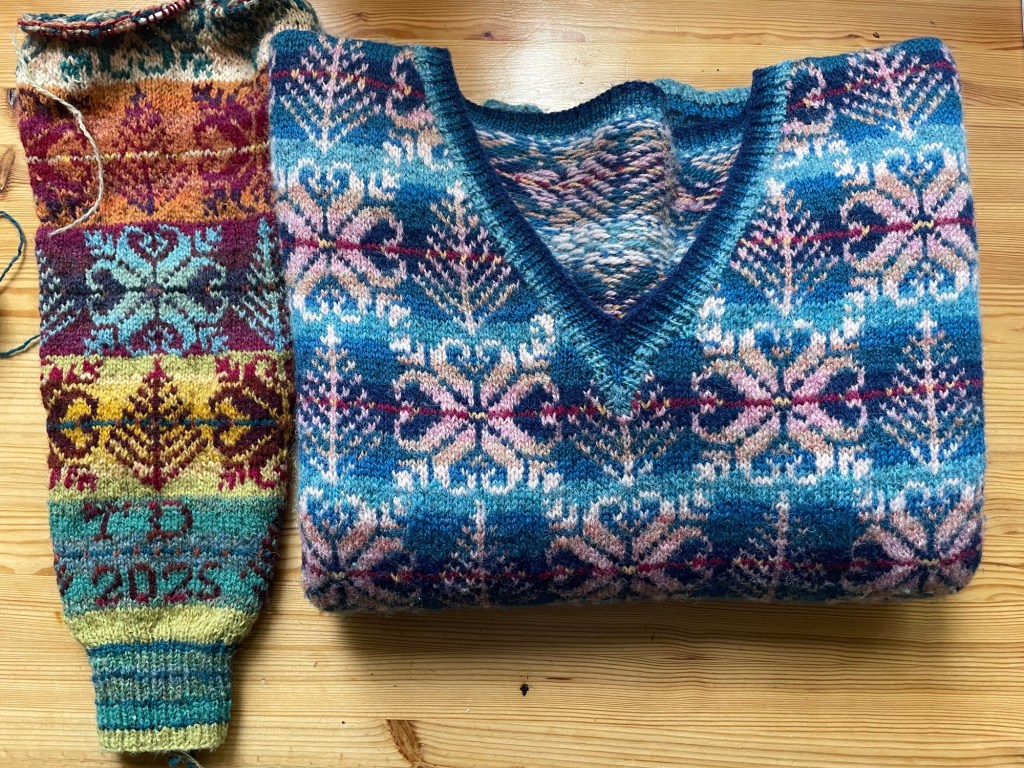
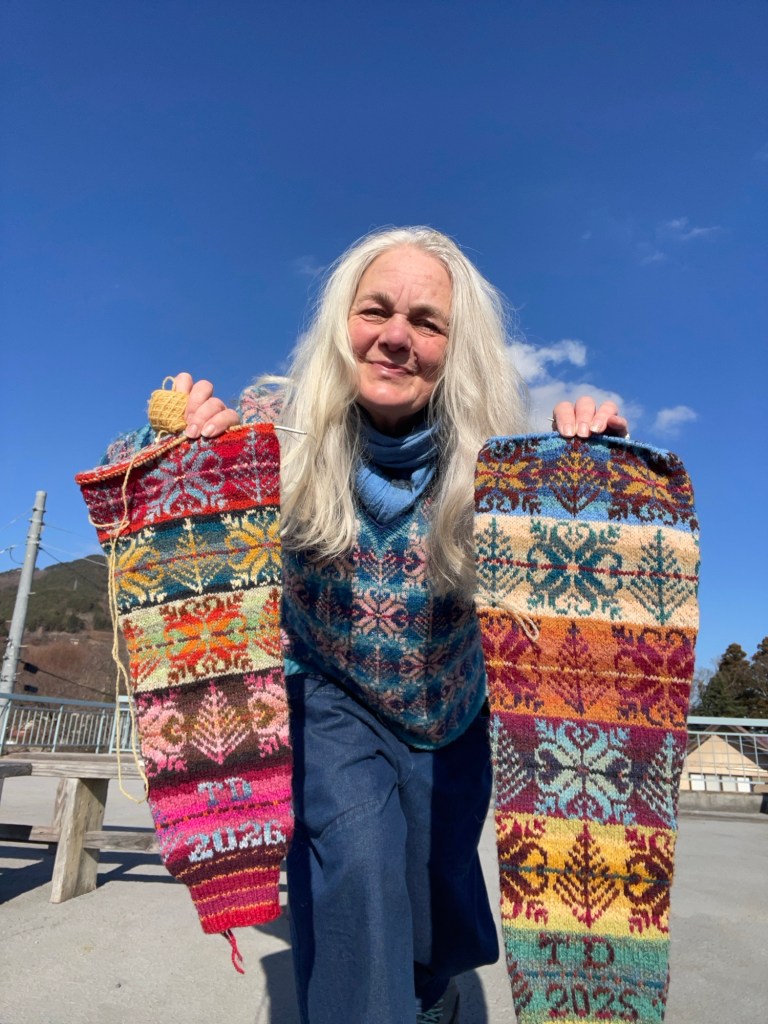
The detail that I particularly love in the bolt on sleeve pattern is that I have added a full chart of the Alphabet so that you can personalise your knitting with your initials and date of knitting it. I finished one sleeve in 2025, the other on new year’s day on 2026. So my sleeves have different years knitted into them.
Here are some of the really wonderful Kaleidoscope patterns knitted by other knitters – they are in the projects on the pattern tab. You can see a lot more projects here
Screenshot
Some of them have been steeked and the project photos show you how this has been done.
Another thing that I have been doing behind the scenes is updating this website /blog which I started in 2016 when I was doing my Masters at NTU in Nottingham. I added to the home page until it was not understandable and there has never been a buy now button on my online workshops page.
The home page is now very clear, with just services listed and the workshops page, I am very excited to say, now has a BUY NOW button which takes the customer straight to paypal with easy payment methods.
image of workshops page with new BUY NOW button
Learning how to sort html, link paypal to the blog, add a button and links and update the page work for the customer more easily took me a heartbreaking 8 hours over 3 days. BUT, I finally did it.
A quick link to my workshop page is here. Give me feedback on how it looks, if you like and how I can make it better for the customer.
Today, has been particularly wet, after days of heavy rains. Today, never really got light – so when I say that I hibernate, I really have been staying inside.
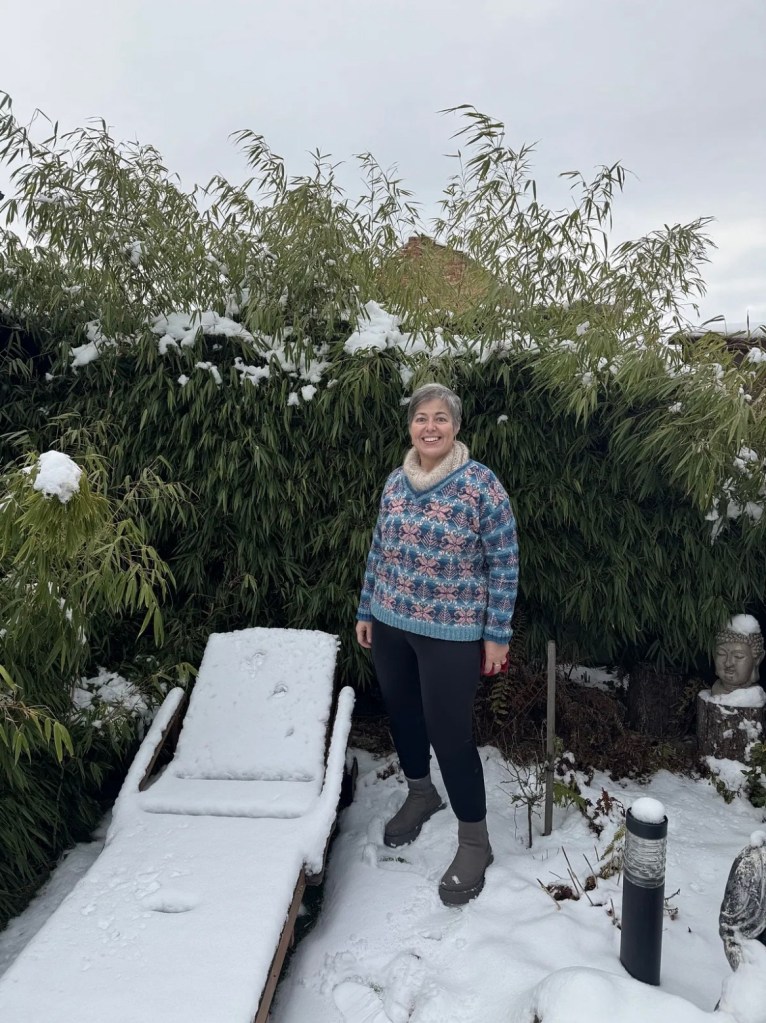
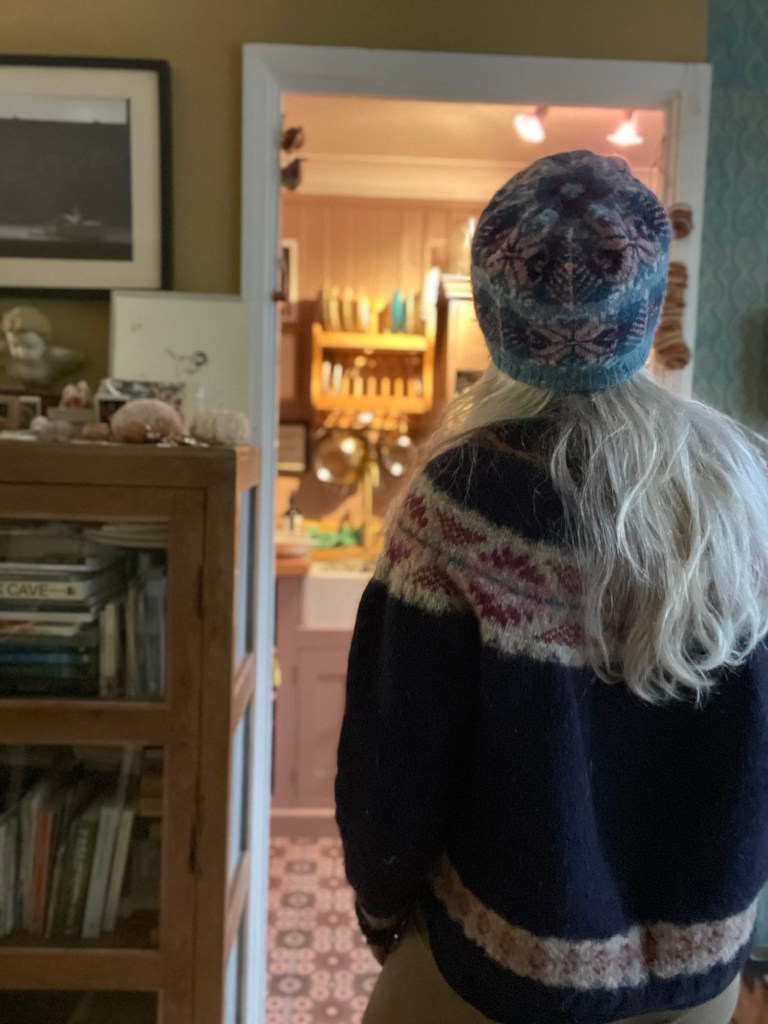
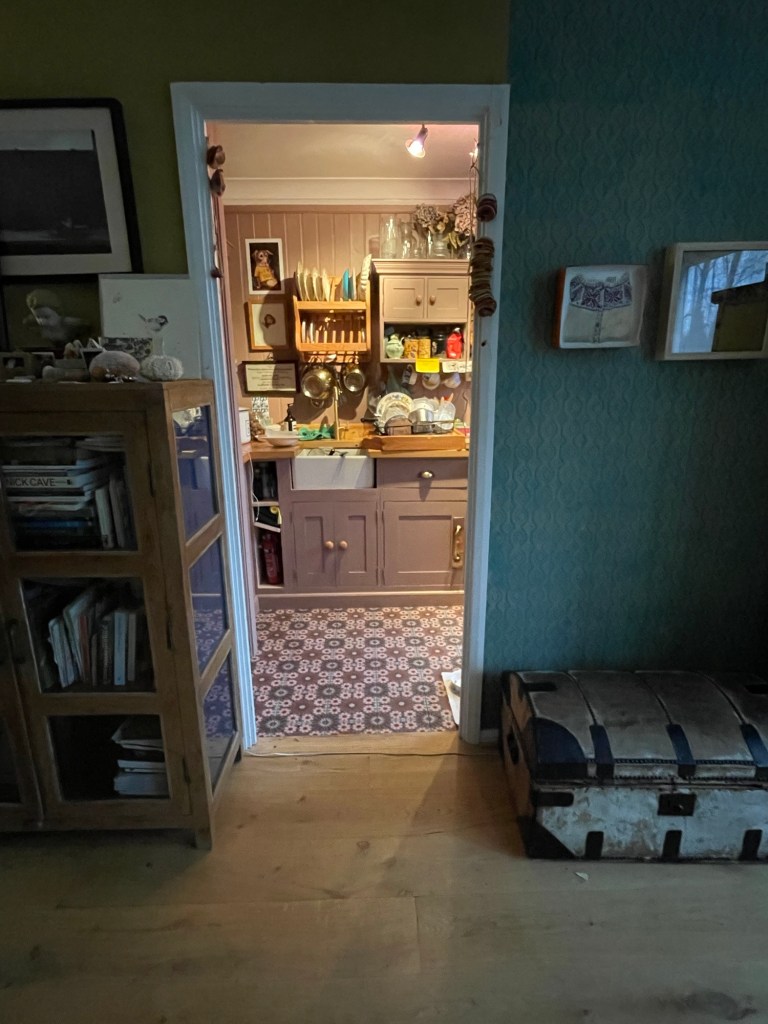
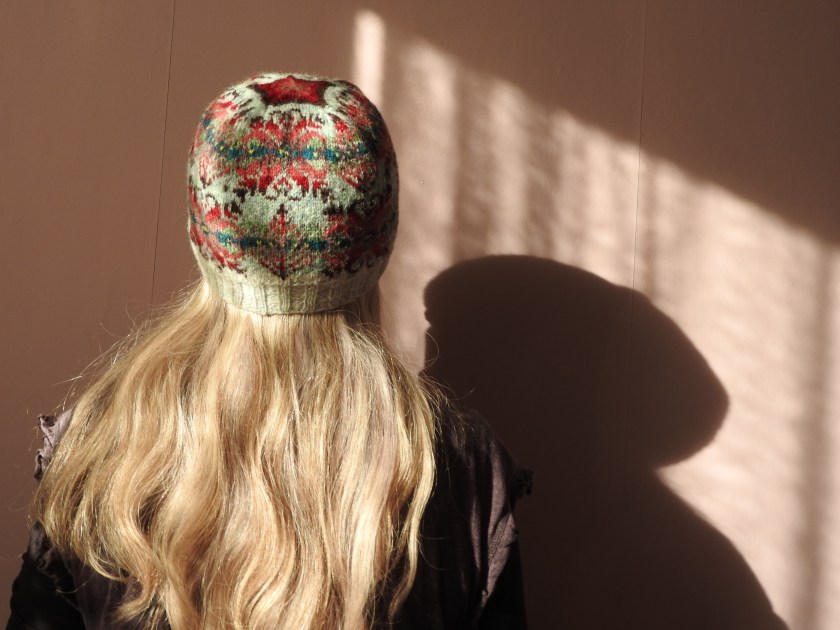
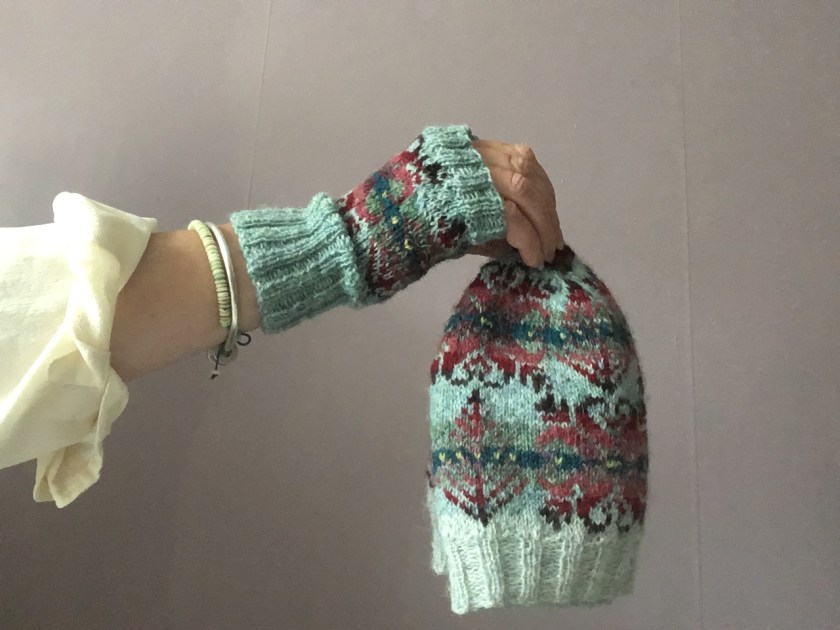
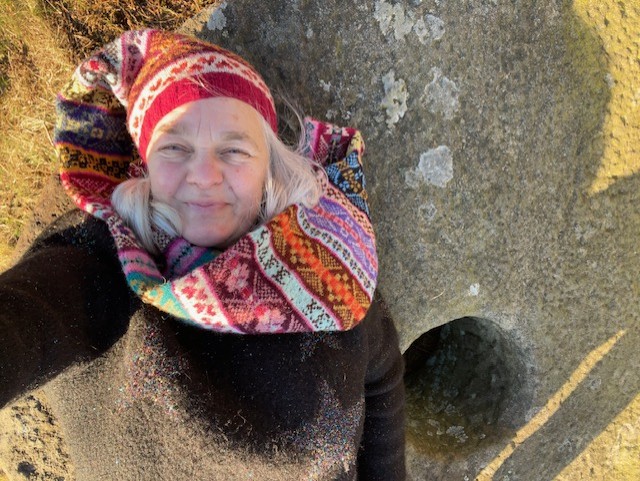
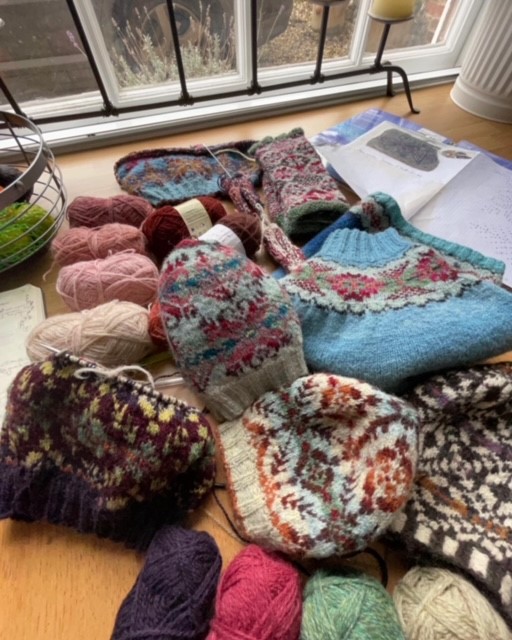
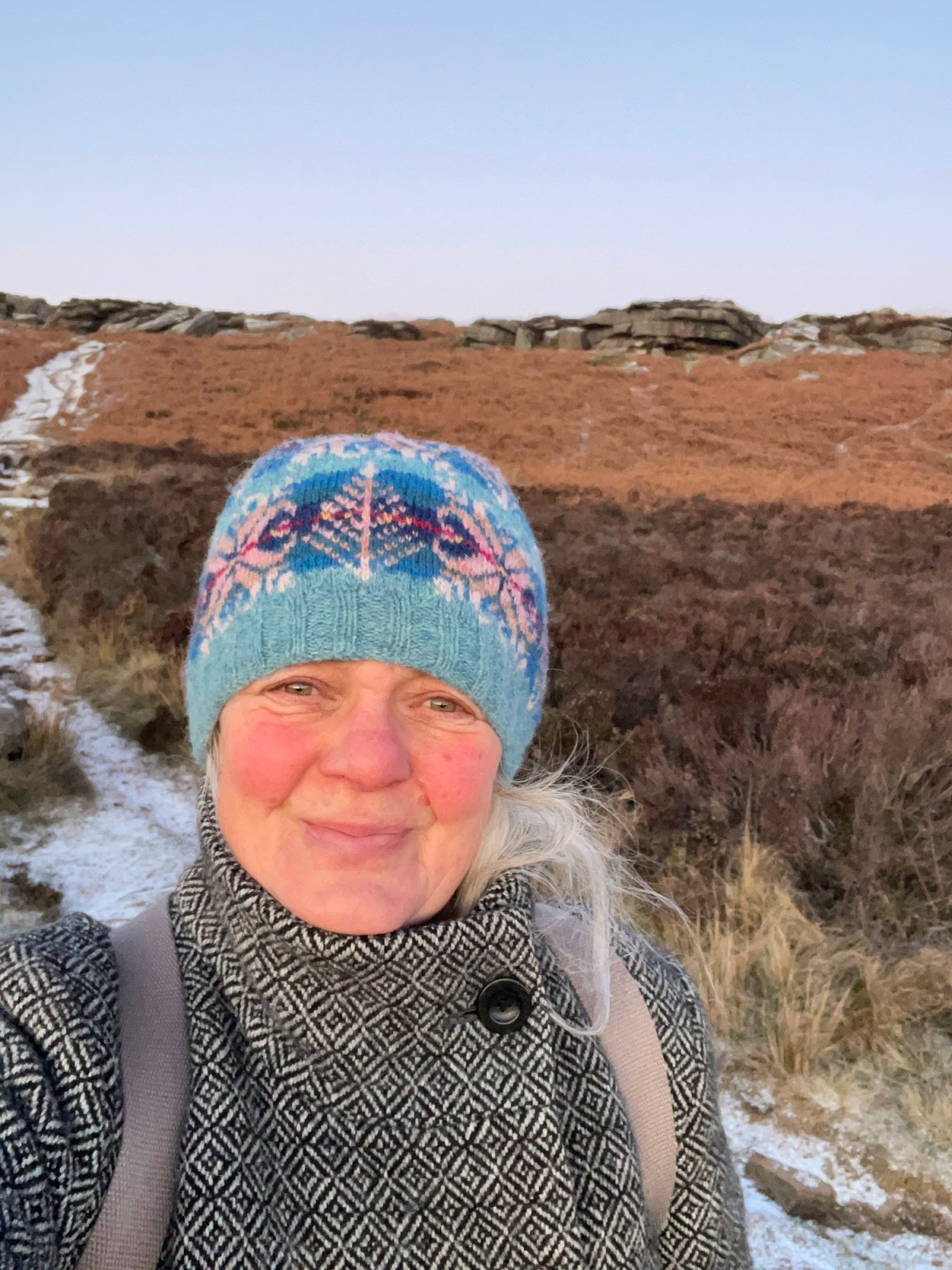
Above are a couple of photos from today – my Home Wear which includes my Tree and Star Hat for cosiness.
staying inside is not like me but it’s been harsh weather. I often see people living wonderful seemingly carefree lives in camper vans, in the forests or by the sea but lately, it would be a damp existance, in a van in England.
Another thing that has happened behind the scenes is that I have given my notice in at work. I am an Apprenticeship Coach at a University. I love my students / apprentices but after staying in Japan for a month in December, I knew that I need to begin to find myself again. I am 63 this summer and my time is precious. I am not sure whether it was the right thing to do because the part time job gave me financial and emotional stability but it also took away my freedom and made me very tired. The team at work are brilliant. We all support each other and accept every unusual quirk that we may have. There is a lot of laughter when people come into the office and I will miss that. I will also miss the photo copier. So, Onward and upward. I am hopting to use mondays as my design days from April going forward.
Comment if you would like to see anything new in my designs.
or if you want to get in touch about anything then complete the contact form below. Thanks for subscribing to these little posts. Tracey 🙂
And, if this is your first time landing here on this blog and would like to be kept up to date – then you can add your email below and you will automatically recieve updates – tips / tricks / offers.
PS, if you want to use the comment or subscribe form, you need to log onto the website to do it – these forms are not as active on a mobile view.
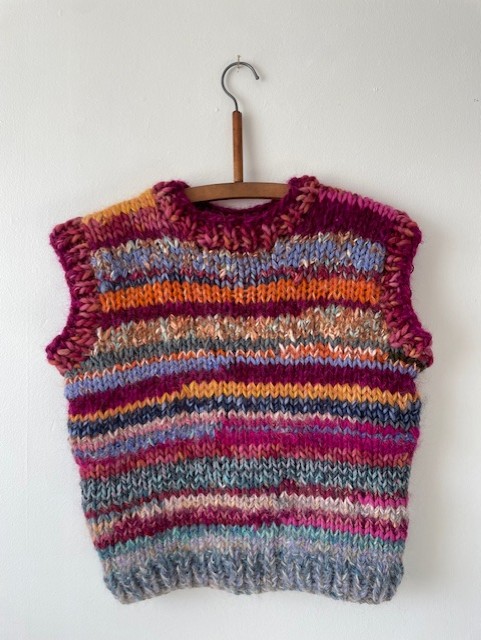
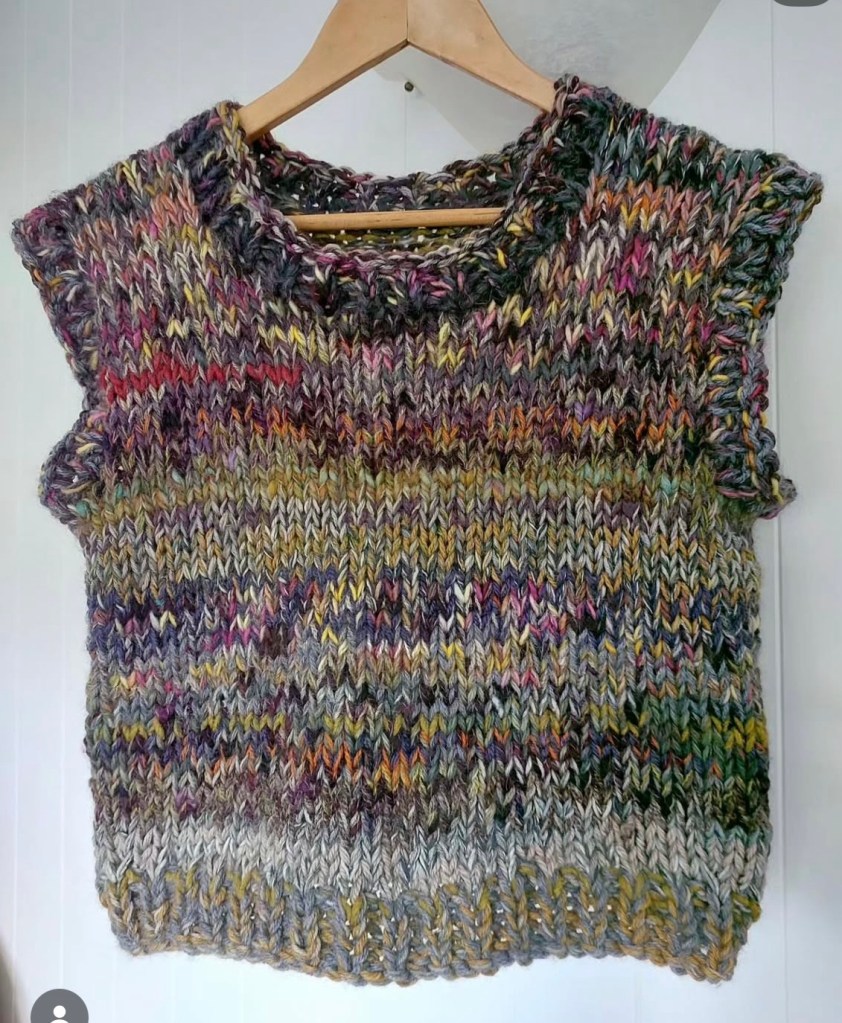
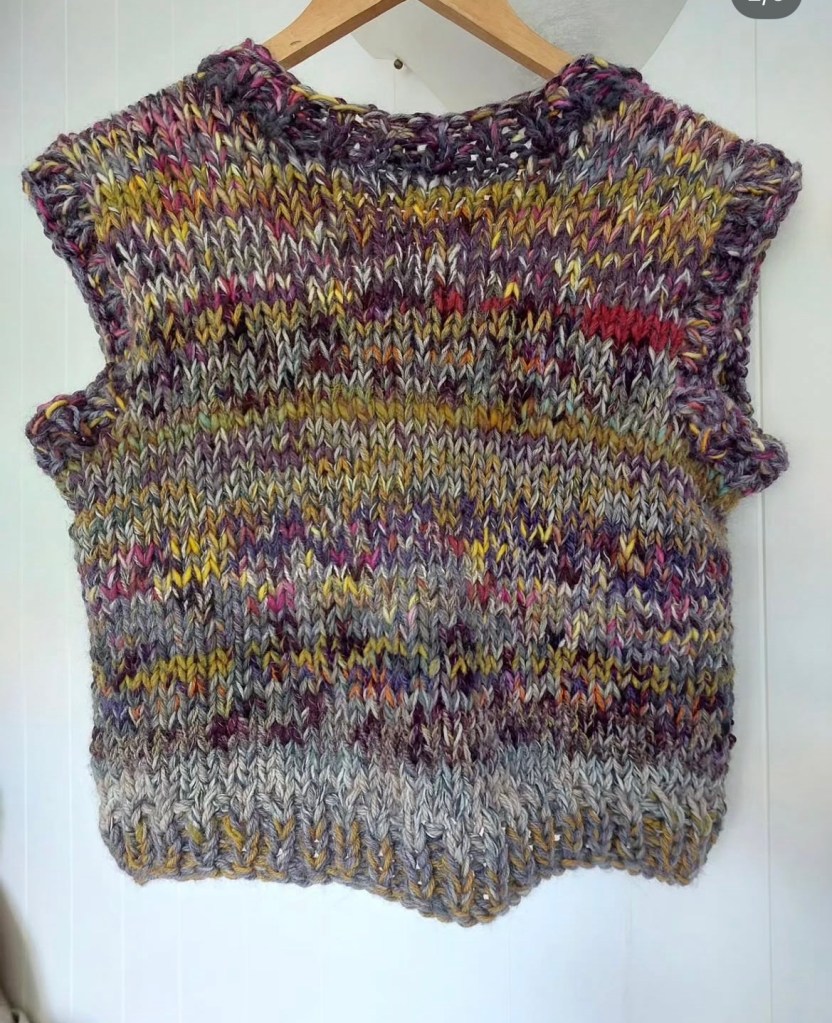
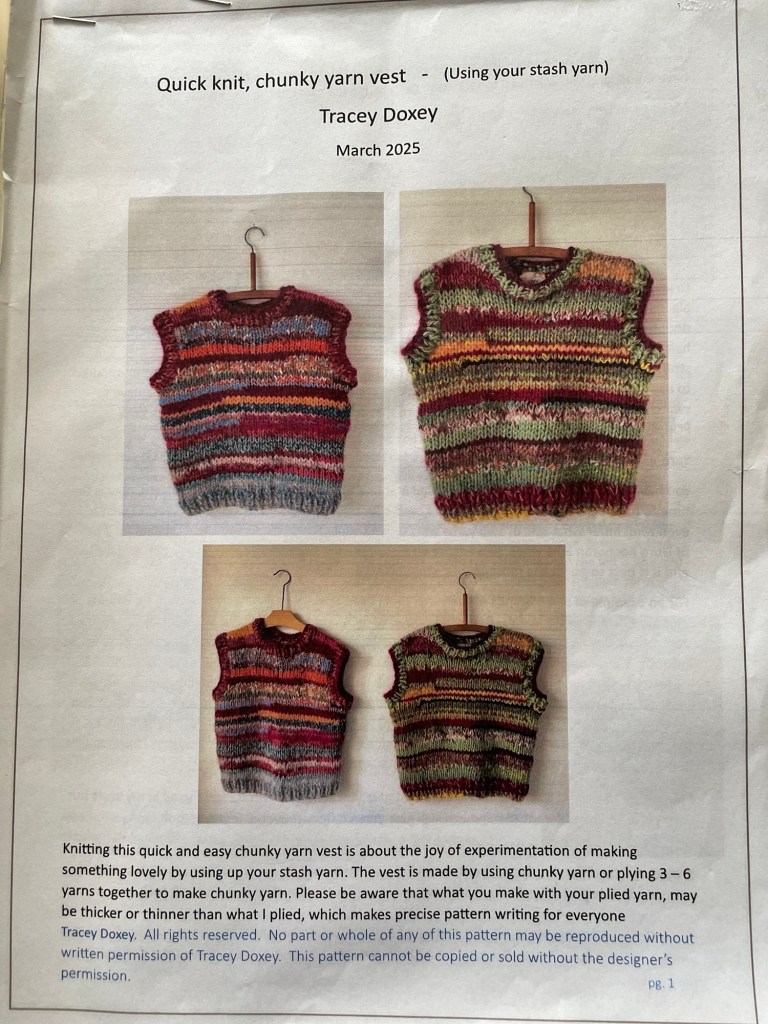
It is a very quick and easy knit vest to knit using stash yarn and large 12mmUK needles. It flies off the needles with great speed – mine took me three days to knit from beginning to end. It is something to love, something lovely to knit and very useful by using up your stash yarn – that you also bought because you loved it.
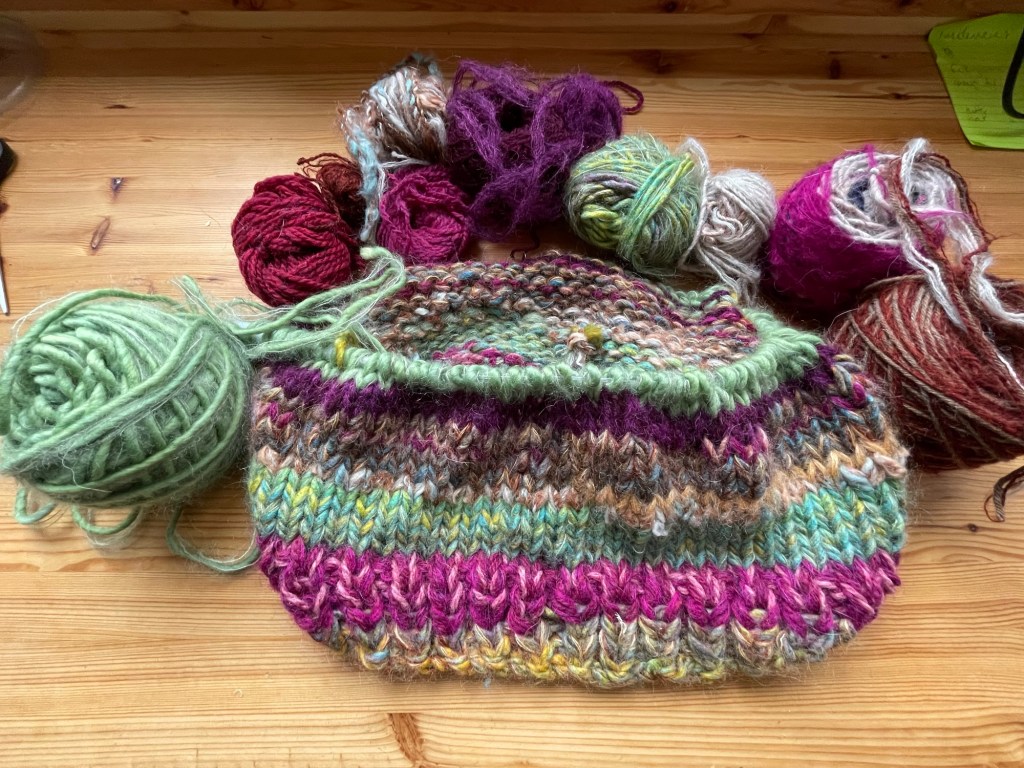
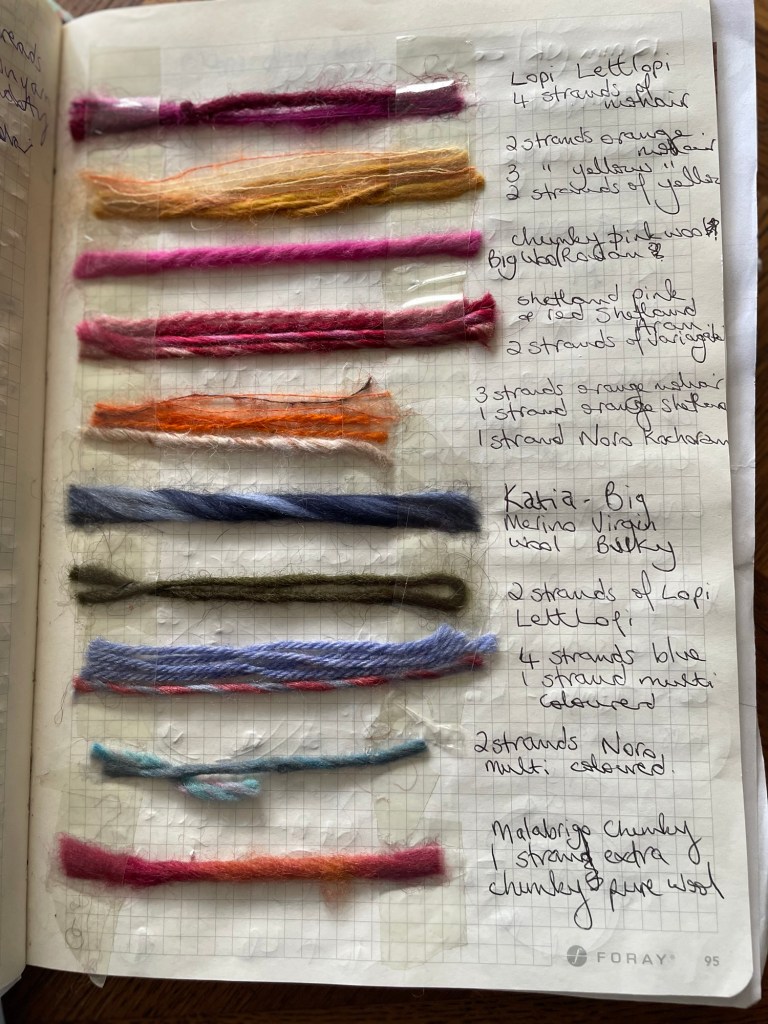
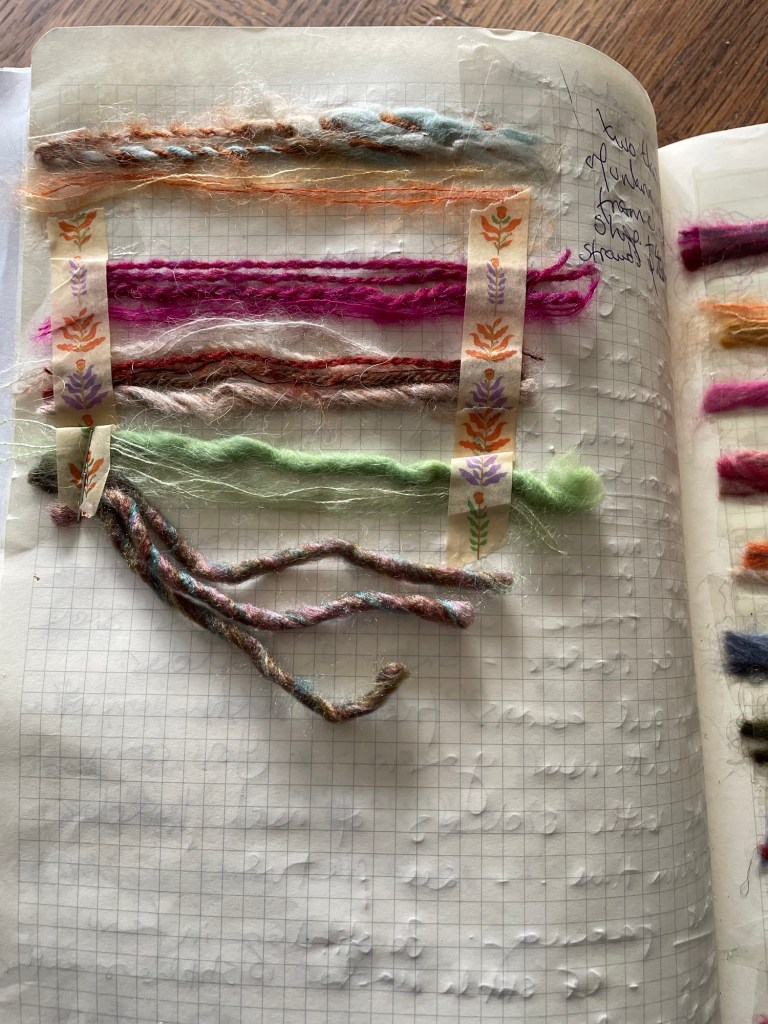
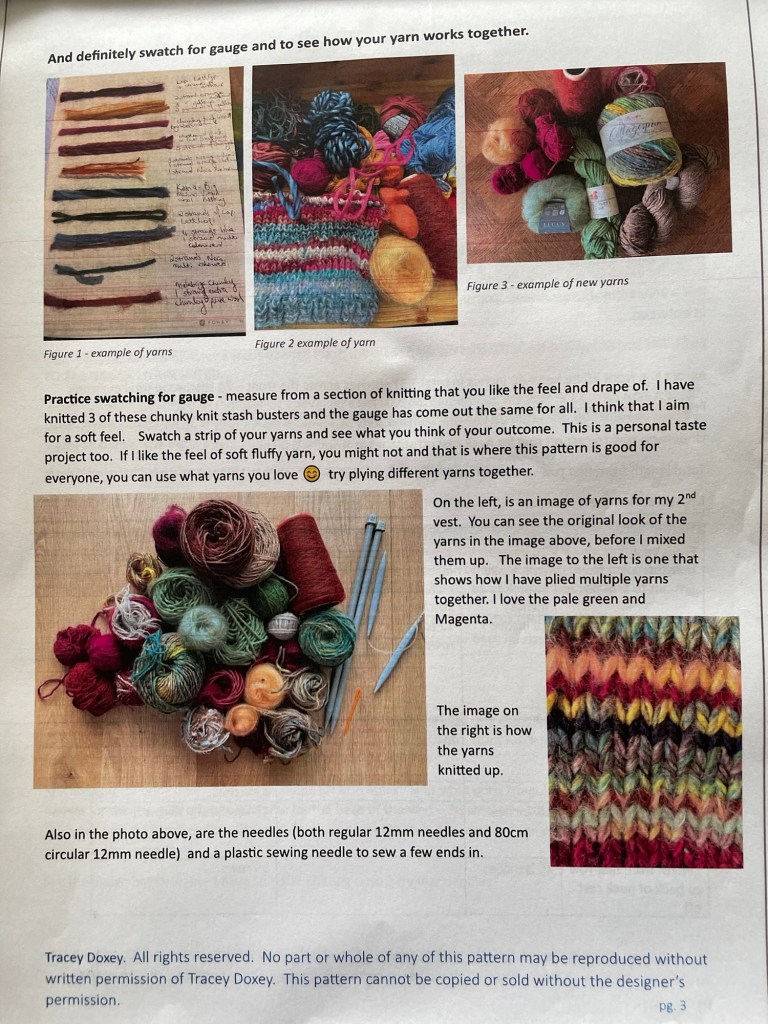
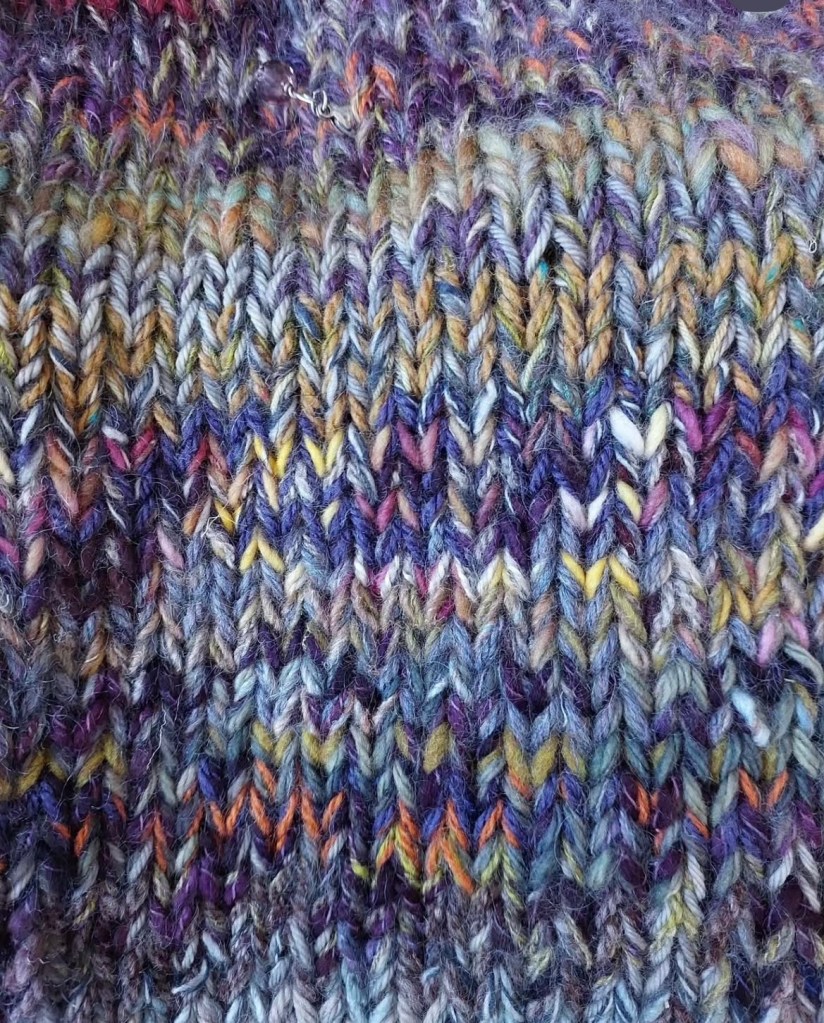
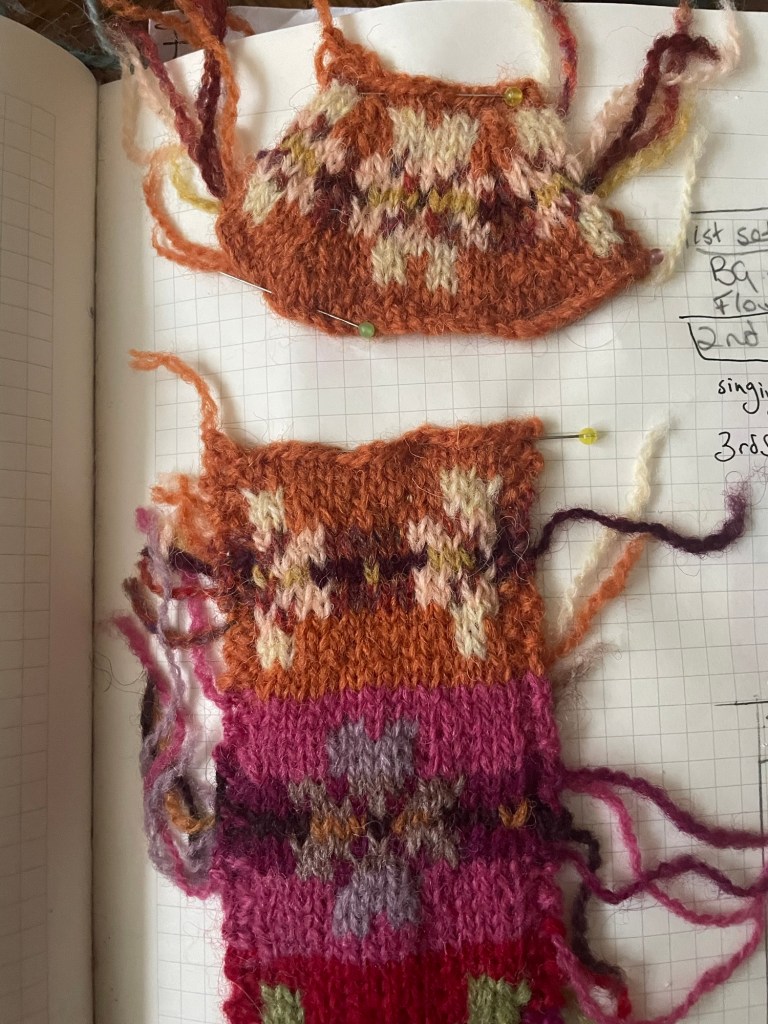
This vest is made up of chunky yarn by playing 3 to 6 yarns together to make a really nice fat yarn. Please be aware that what you make with your plied yarn maybe thicker or thinner than what I plied because it is all random but totally works out in the end because we knit by length. Here are some visual examples from my swatch book of the yarns that I used.
For a yarn example, you can see here I used 4 strands of mohair together with 1 strand of Lettlope or two strands of orange mohair with five strands of very thin of the yarn or, for example, one of the yarns that I used on its own was the Big Wool by Rowan so the experimentation of yarns plied together goes on and on and the results are a surprise and exciting which makes you excited about colour knitting.
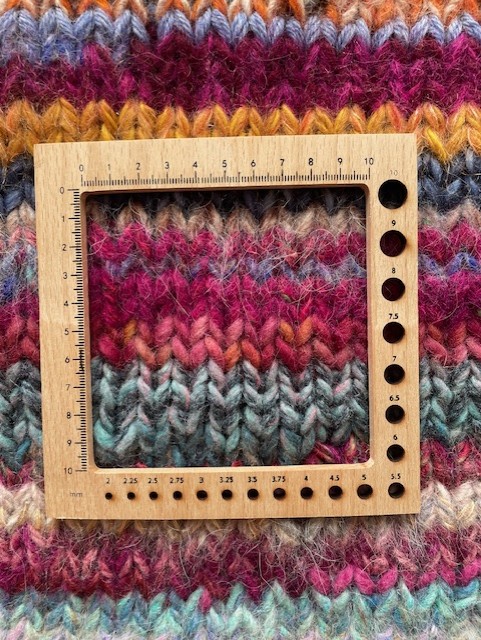
In the pattern, I recommend practising swatching for gauge. I give you instructions on how to measure a section of your knitting that you like and feel the drape of and how to make this work in your own vest project.
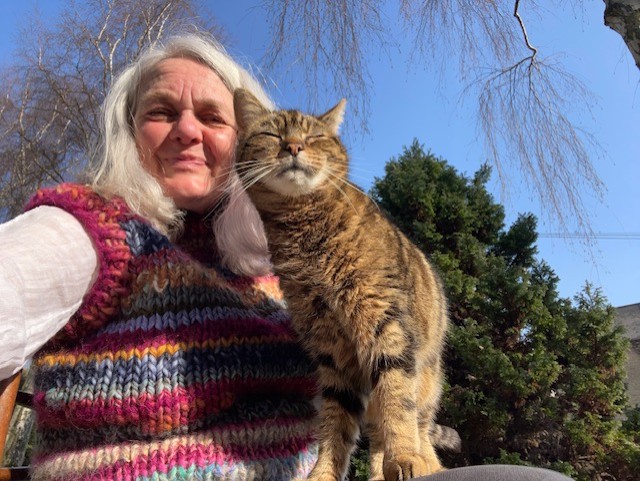
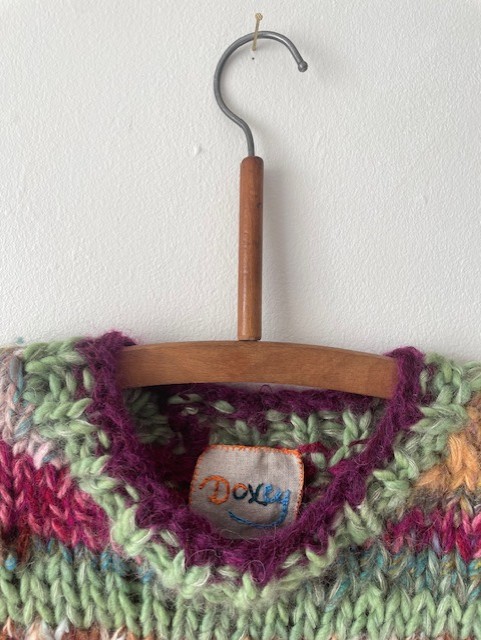
I have knitted two of these vests and I wear one in the winter and the other one was bought by a client and I enjoyed embroidering a little label for the neck which you can see it here.
The last images are knitted by Kath Ward this week which she shared to instragram and I was so happy to see. She has been a long time follower of mine on Instagram and she normally knits lace so chose to knit this chunky Vest pattern as a rest. It also took her three days to knit – I bet she knits another.
Cath’s Chunky knit VestCath’s yarns
She knitted one strand of grey mohair through all of her waist yarn colours to keep unity through it all.
You can have a lot of fun with this pattern and just use what you’ve got and really enjoy it and see what happens
The pattern has 9 pages and includes images of the yarns that I used, information on how to get your gauge, photo images of progress of the vest, finished measurements of my vest, and written instructions on how to make it
It’s a real joy quick joy to make for yourself or for a gift or to just to use up some of that stash that you have that you’ve never touched for years but really liked.
This is a project to use those really like lots of different yarns.
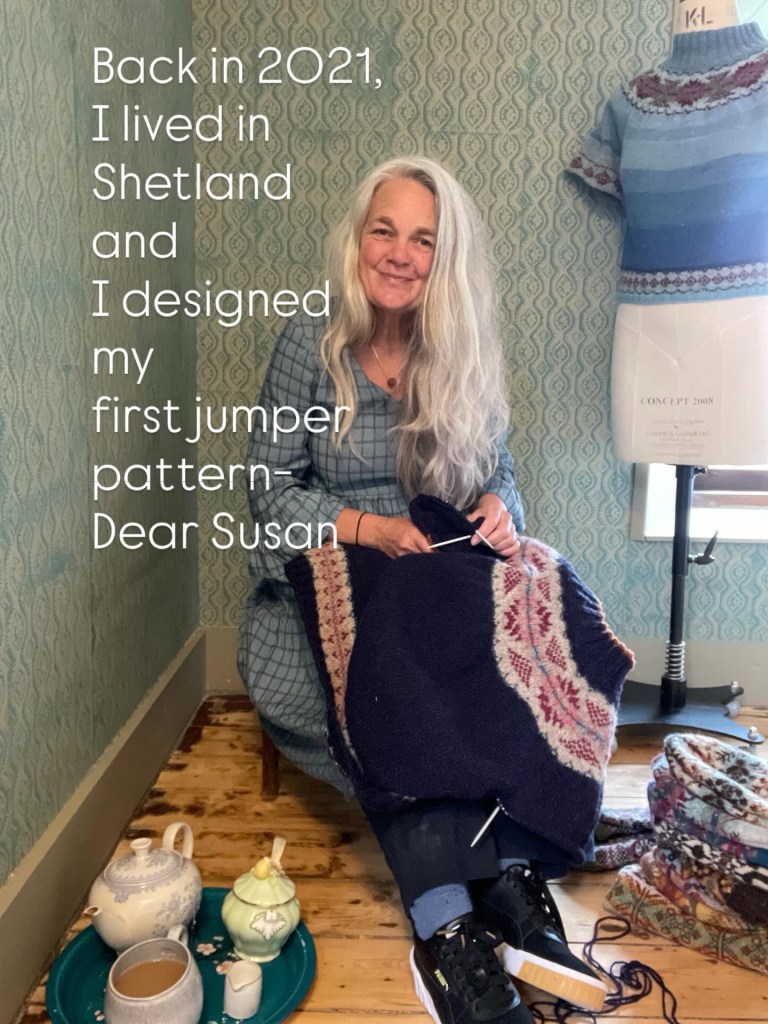
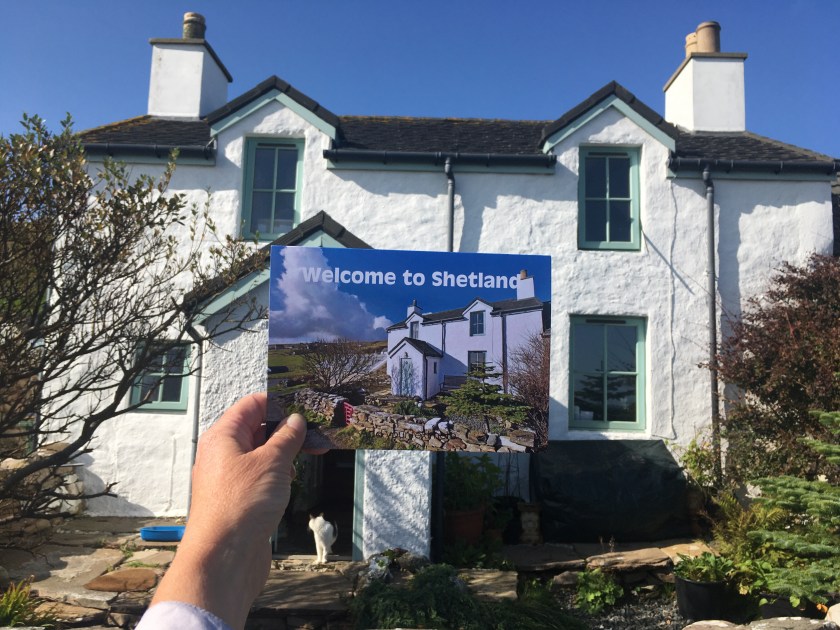
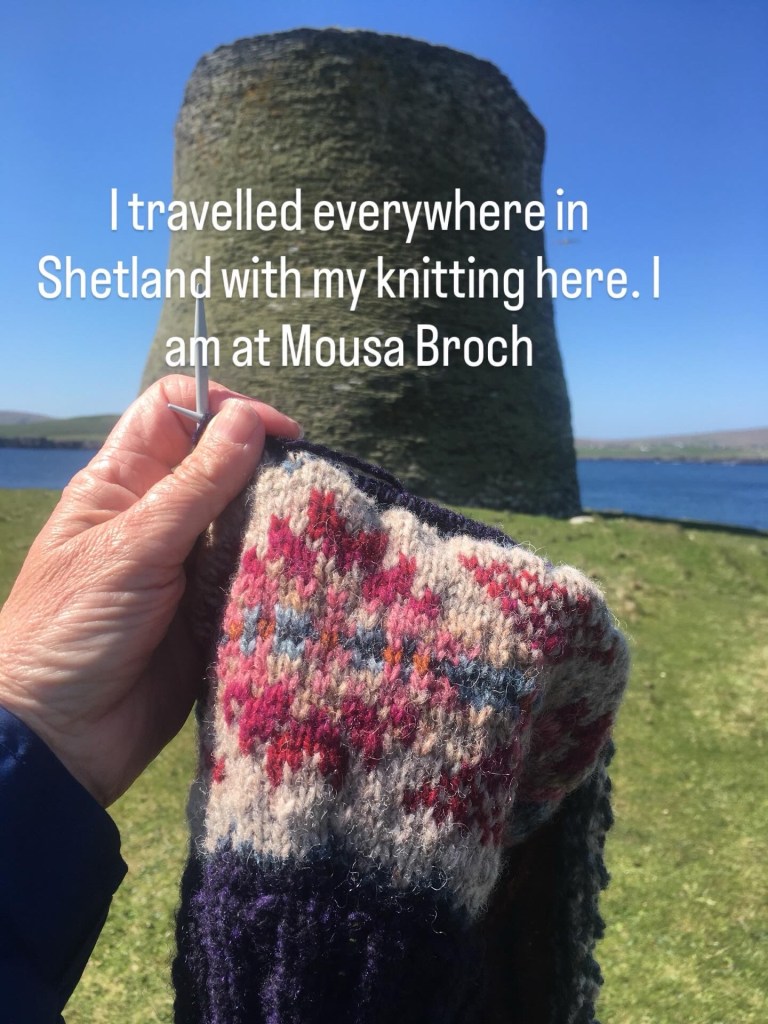
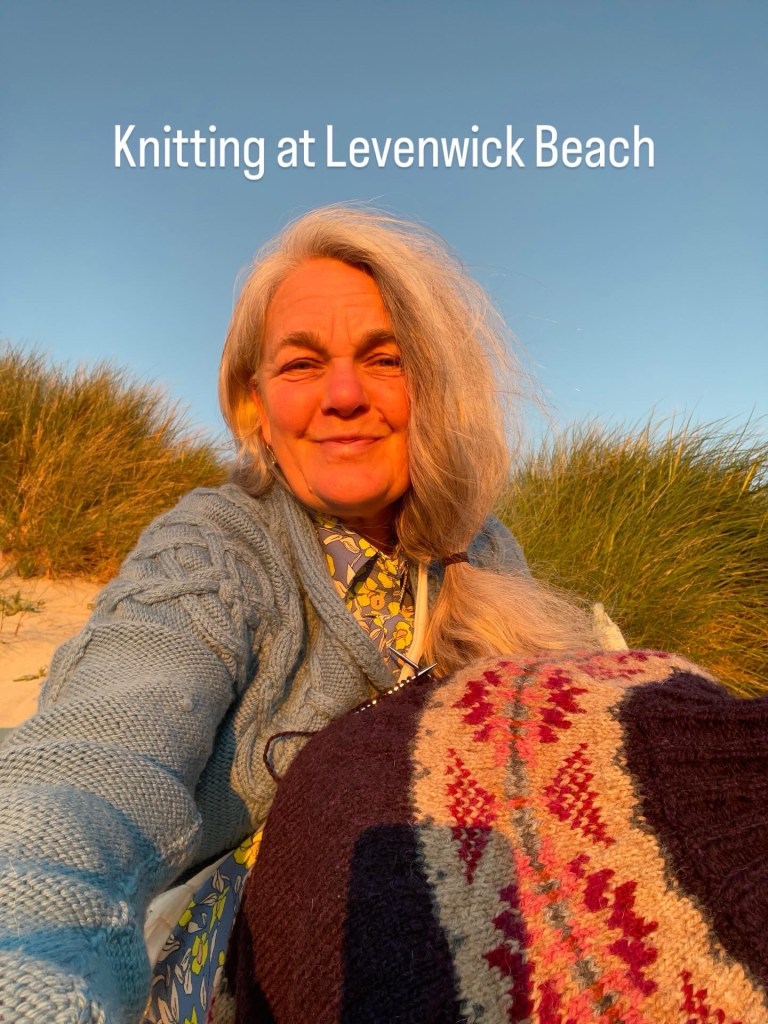
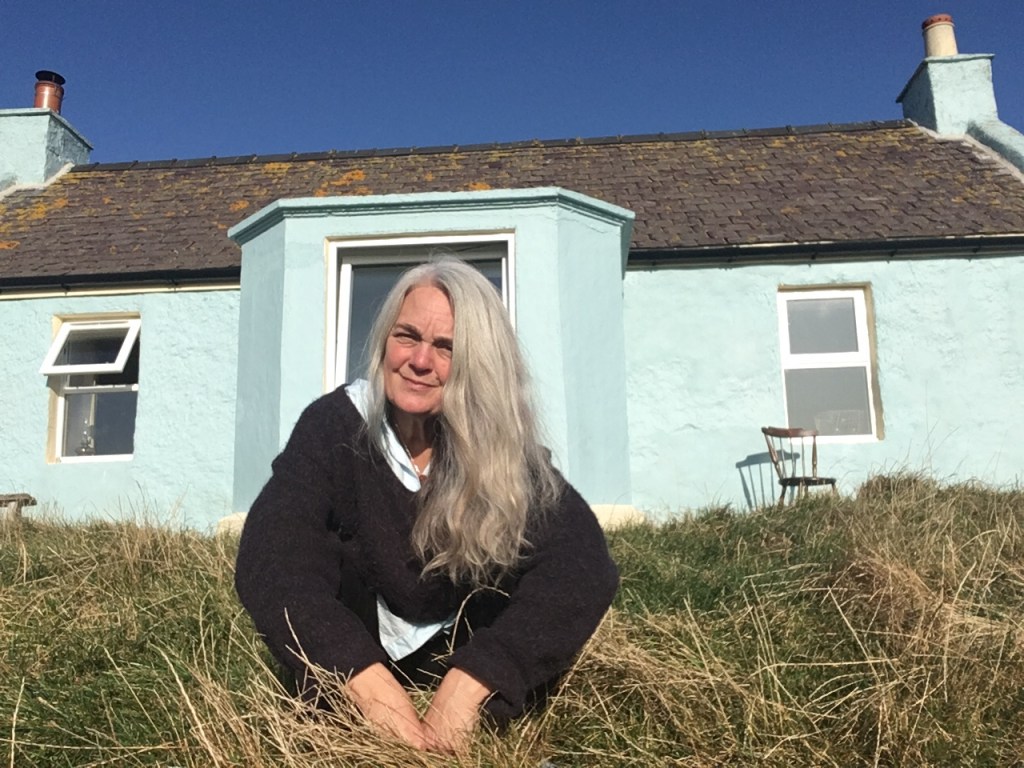
I thought I’d share with you my first ever jumper pattern that I designed. In August 2020, I bought a Croft house in Levenwick that faced the sea. This was the beginning of my real knitting journey and of designing Shetland motif knitting patterns.
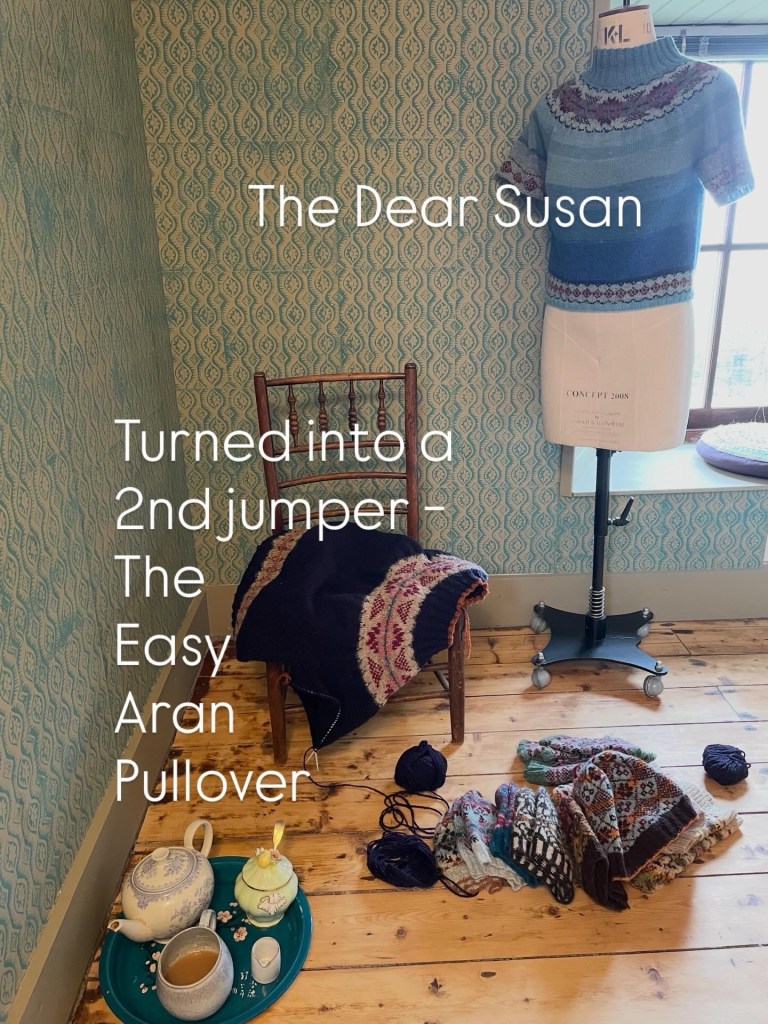
I started with beanie patterns but in 2021 I designed these two jumpers using the same Shetland yoke motif. The first jumper is in Shetland 2ply and I named it, dear Susan after the woman that lived in the house that I bought from 1876 to 1960.. she was a very impressive inspiring beautiful woman. You can read all about this on my blog if you dig way back.
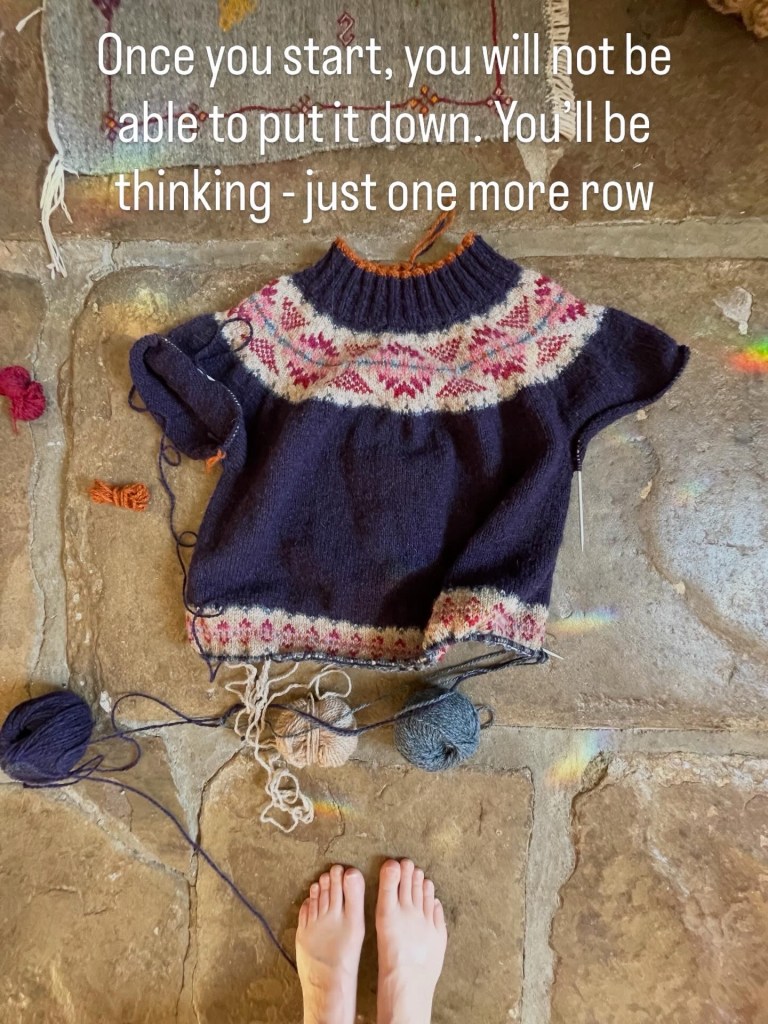
After I knitted the Dear Susan, I developed the pattern into a very easy quick knit Aran jumper and named it, Easy Aran pullover
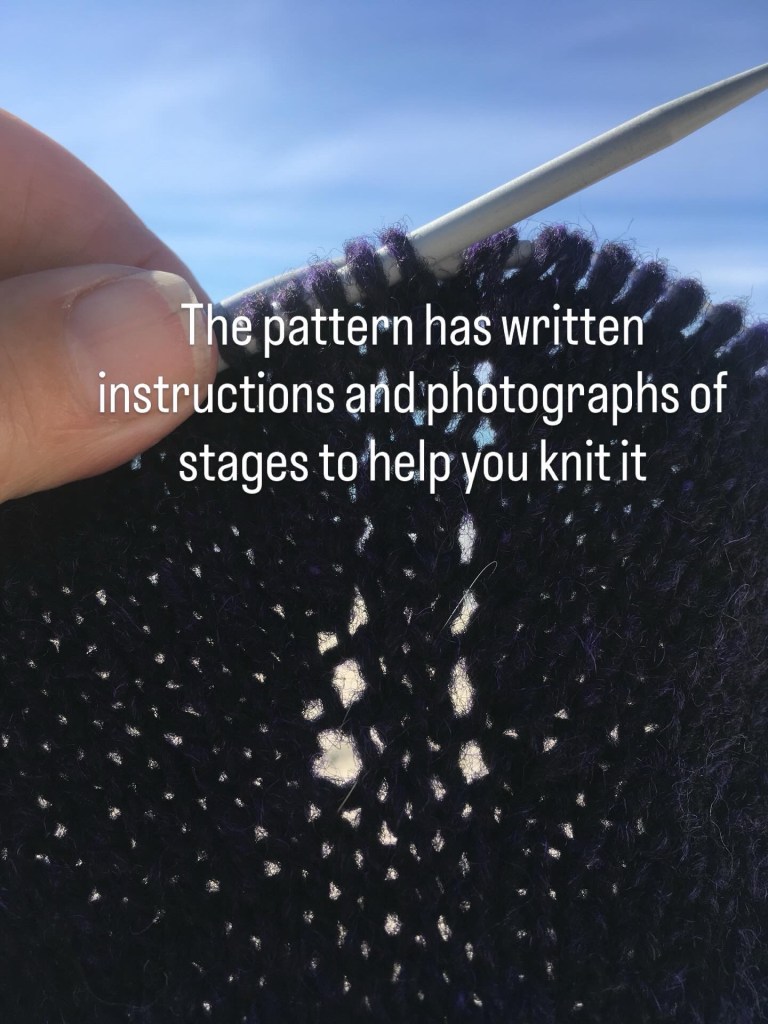
Both of these jumpers are very easy to knit and the patterns include photograph tutorials, written instructions, and colour charts I’ve come a long way since designing these patterns almost 6 years ago, but they are still two of my life changing decisions. I’m grateful for the time that I lived in Shetland.
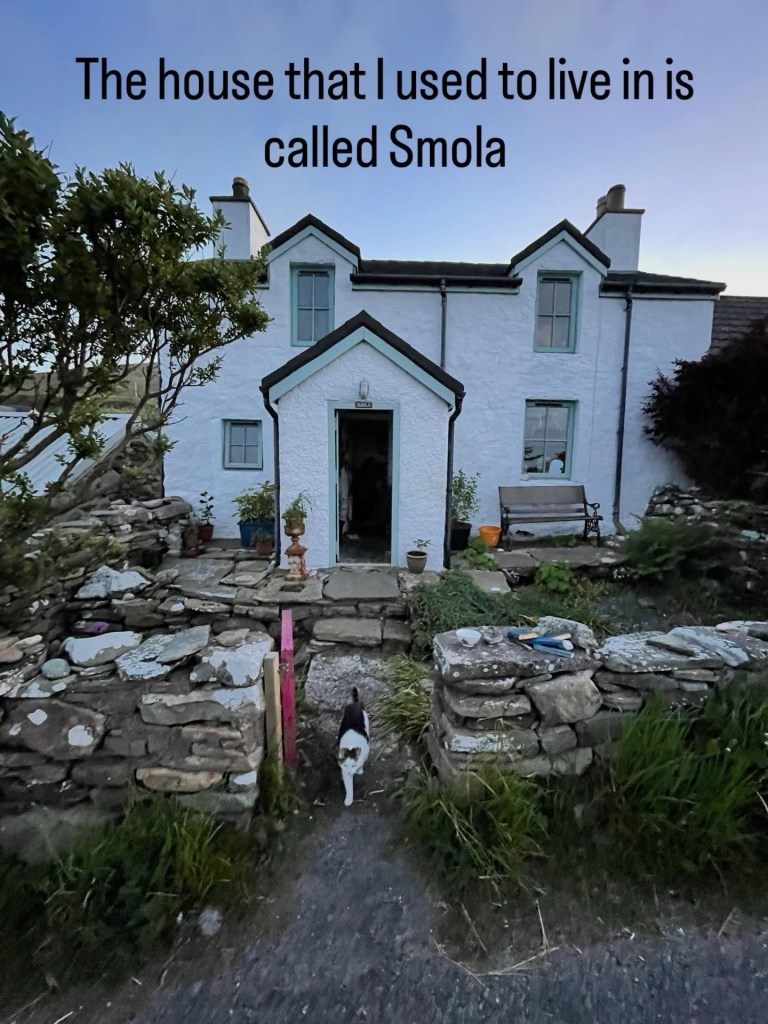
Both patterns also include a 12 page story about my life in Shetland – my house named Smola, Susan – who had lived in it, an me – with each of these patterns
Here is the beginning of that story in the patterns
Dear Susan
and
A house of two women
Tracey Doxey
Preface
Shetland, May 2021
One day, towards the end of May, it rained so heavily that when the winds took up the weight of sky and sea water, dropping it upon the house roof, I could hear nothing else but the sound of pelting rain. Dampness penetrated the house, not as seeping or leaking but as a shroud that rested upon my body. I lit the fire in an attempt to fight back. After one hour, the weight lifted and I began to knit, waiting for the promised summer. By early evening, the sun came out as if there had never been rain at all so I walked to pay the wood man for the fire wood and on the way home, I took a detour to the beach. I wandered the edge of the surging waves, churned up by the afternoon’s winds. The sea, still being in a fury, was not able to slow down its waves to meet the sudden calmness of the early evening. The ebbing sea left a wake of tidal crustations as if lace edges on the beach. I looked for Buckies but all in an instant, I saw a tiny green sea urchin the size of a small flat pea. I bent to pick it up just as the tide surged over my shoes but I caught it before it was lost back in to the sea.
I wondered if you ever walked to the beach to collect sea treasures or if you never bothered.
Shetland, Arrival August 2020
Dear Susan,
I begin with the outside, with what I have to hand; my reason, my eyes, my spatial understanding, and an openness tinged with the unknown.
On arriving, I need my first investigations of your croft house interior to be made alone. I want to inhale the house, listen to my internal feelings at first sight then recognise how my body responds to the old stones – I need to let body and stones talk to me. Thoughts and feelings need space. I need space. I haven’t yet found you. I do not know that you were born in this house 145 years ago.
It is a pale grey day, mist rolling over the hill behind the house as if a blind has been half pulled down a window. The sky is bleached out, the day is calm and windless, not particularly notable.
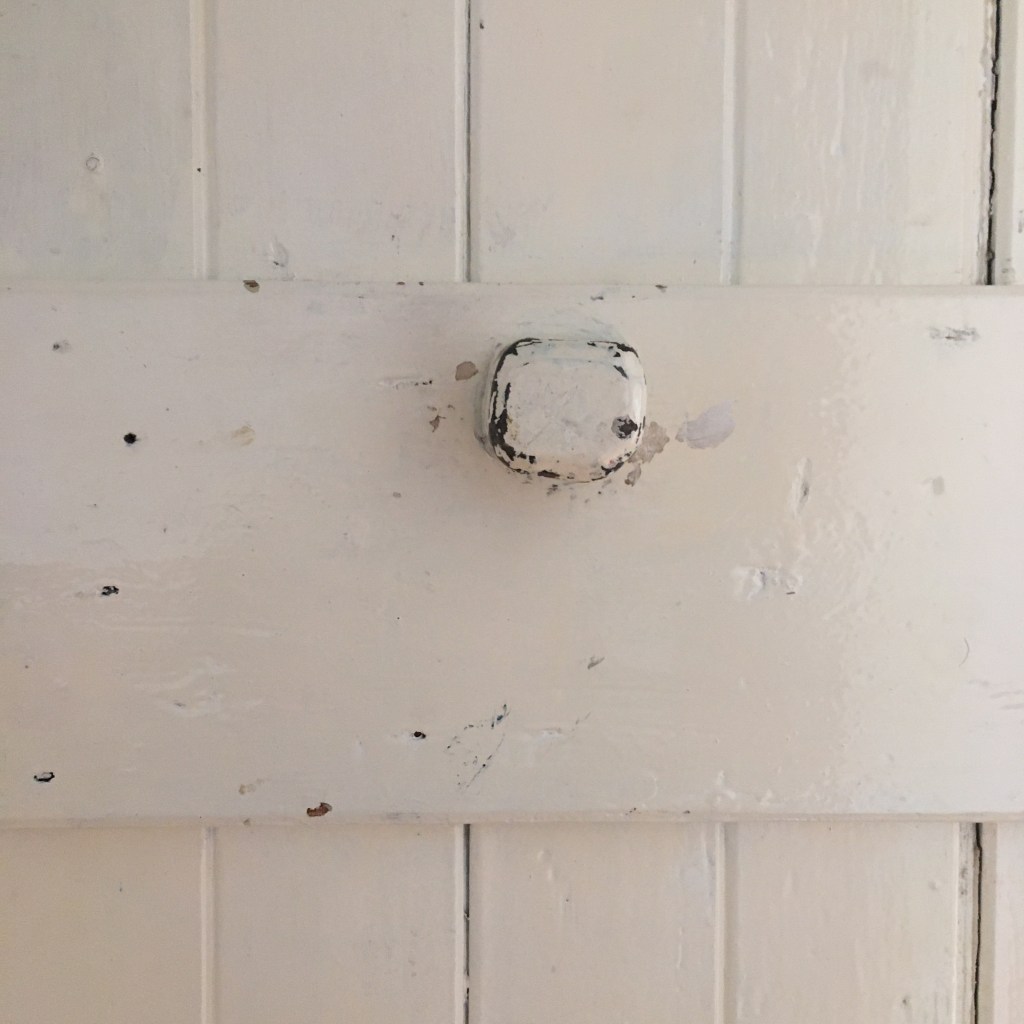
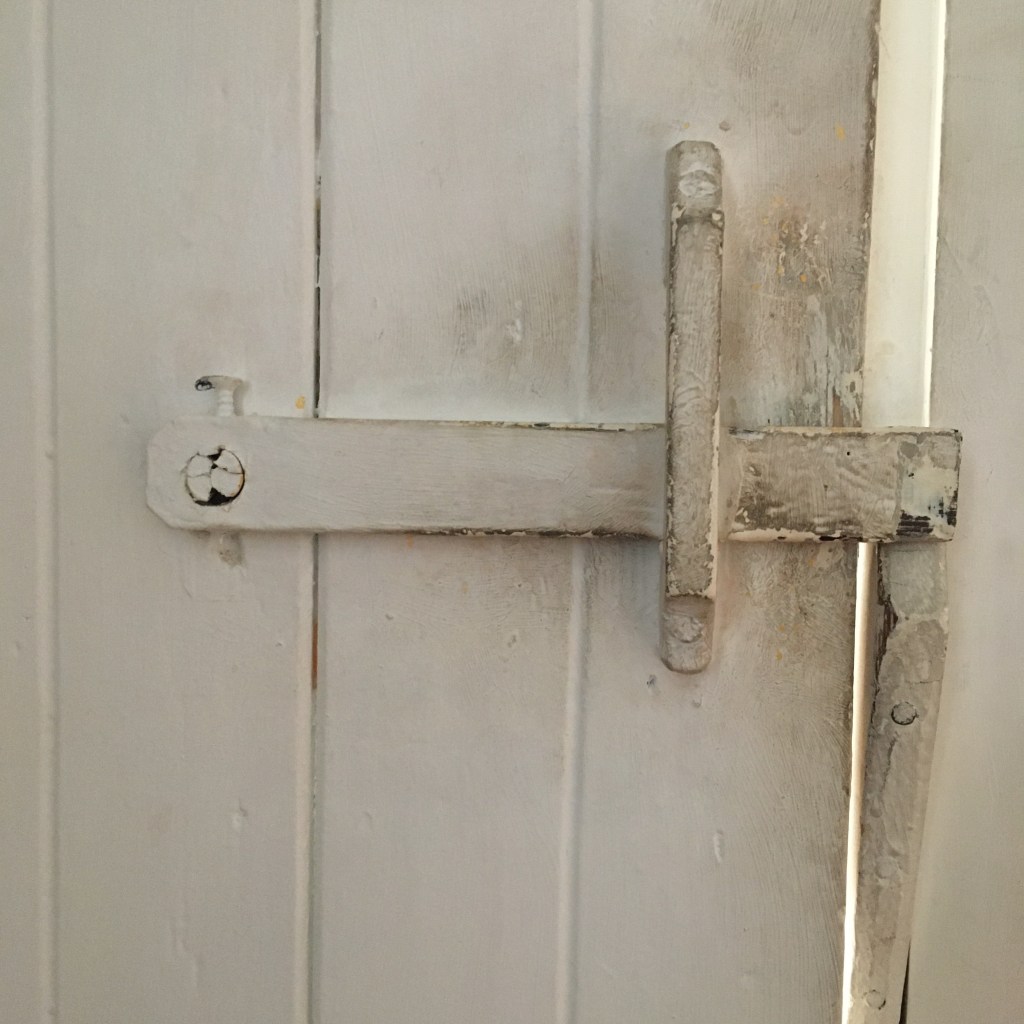
I open the front porch door, then, I try the house door with its mismatched glass panels. It opens. To the right in the tiny vestibule area, there is a third old, board-door, painted white with a hand-hewn square wooden knob which I turn to the right. The simple mechanism lifts a wooden latch inside. That sharp click sound of the latch lifting and hitting its wooden casing is the sound that I will forever remember of this place. It is my first sound here and it will probably be my last when I leave. It is a click of old wood against old wood, heard by every man, woman and child that has ever entered this house before me, for the last 180 years. Human touch leaves tangible traces of every hand that has opened it before me. The patina of years lies dirty on the paint’s surface.
Simultaneously, within the sound, my heart is given over to the first sight of the flag floor and fire place in the sitting room. In an instant, I am sold on sound and sight. I know I will not pull out of this crazy unseen deal to buy a house and change my life entirely.
Heart over head, I move in three weeks later, with two cats and a bag, the furniture and belongings on a lorry, to arrive a week later.
Life shrinks or expands in proportion to one’s courage.
Anais Nin
Dear Susan,
I have been sent an image of your Brother – John Halcrow, in his Naval Uniform. I begin to look at censuses and the local history ancestry website then I ask around to find out about the previous inhabitants of this house. I called in at John’s to ask about you because I know nothing of the woman I had heard lived in the house for many years. He said to speak to Jim, so I went over the road to Jim’s and Martin was there too. They were off to Anne Mouat’s funeral but Jim was gracious with his time with me. He told me of you – Susanna (Susan, Cissie) who lived in the house that I now live in and that he was sent as a child, nearly 80 years ago, to collect the milk from you at your house. He told me that you had one cow on the croft, you sold milk, and you rowed the little hand-written paper milk bills up on a shelf in the porch – the same porch that I have. He was a young boy then but he clearly remembers you.
At the funeral, Martin spoke with Raymond whose Aunt lived in the house after you. You knew her, her name was Alice. Raymond came to see me the next day with a mesmerising handful of photographs of you. He introduced me to Susanna Halcrow (Susan, Cissie, or even Zizzie) The photographs, he told me, had been left in the house after his Aunt Alice had died some 30 years after you.
For the first time I could put a face to the name of a woman who lived in my old house for 83 years. Your face, your name. I sank to sit on the floor to look at your serene face in the images dating back to early 1900. Your candid expression caught by the lens of a camera, looking openly right back at me opened something inside me to find you more deeply.
You were born in this house on the 6th February 1876 and Died on 4th January 1960.
In the archives at the museum, I found that your Halcrow family had lived here through the 1800’s – 1960. They were listed in the 1888 valuation roll of the Symbister Estate, Whalsay, partly owned by the Laird, William Arthur Bruce (In 1888, John Halcrow, your Father) tenant, paid a yearly rent of £4, 10 Shillings for croft number 7. You would have been twelve years old (registered as knitter). The whole family are on the census of 1881 and ‘Susanna’ is listed as being five years old – there were seven people living in this small house at that time – Thomas Halcrow aged 86, Barbara Halcrow aged 83 (your grandparents), John Halcrow aged 40 and Ann Halcrow aged 41 (your parents) John aged nine, you aged five and a boy named John Brown aged 13, but you will already know this. Seven people living in this small two bedroomed house. Afterwards, I looked at records from 1838 and found your family, here, in Upperton.
In the grave yard at Levenwick cemetery, you lie on your own next to your parents and brothers. Your head is against the sea and in May, you rest above a bank carpeted in pale lemon primroses. I wonder if you are lonely, or if you are free.
Over the months after arriving, I became obsessed with you and wrote thoughts that occurred to me about you, on scraps of paper. These papers began to litter the house. I connected with you through a field of built environment in the house, photographs, your old pottery, the view from the sitting room window and eight sessions in the Shetland Museum archive which revealed the legal documents relating to some of the most notable social changes in Shetland between the 1880’s and mid 1950’s. The *Register of the Sasines, recorded the sale of the house from Laird to local in 1923, valuation rolls of rent paid for three generations of the Halcrow family for over 100 years are traceable, the Napier Commission registered the croft and detailed their calculated rental value and reduction of rents for Shetland crofters and the legal rights for tenants, the Small Holding Act, and I found the registered wills of your brother and finally your own, which gave me an insight into over one hundred years of three generations of Halcrow life within this old house. To the very end, with your serene looking gaze of steady calm and with a glint in your eyes, you put everything in order to the very last moment – crossing every t and dotting ever i. All of your wishes are written clearly in the directions of your will.
But, how am I to find out about you – what you thought and felt and how you lived? The neighbours reveal little.
So, I turn to the physical things to look at our lives carried out in the same place – the same stone walls of a house built so long ago – with no record of its beginning, how the breeze moves through the house through its open doors, the sound of the wooden doors and their opening and closing then there is the view – a view that has changed every single day of every single year but it is the same frame from which you looked and I now look out of at the changing world.
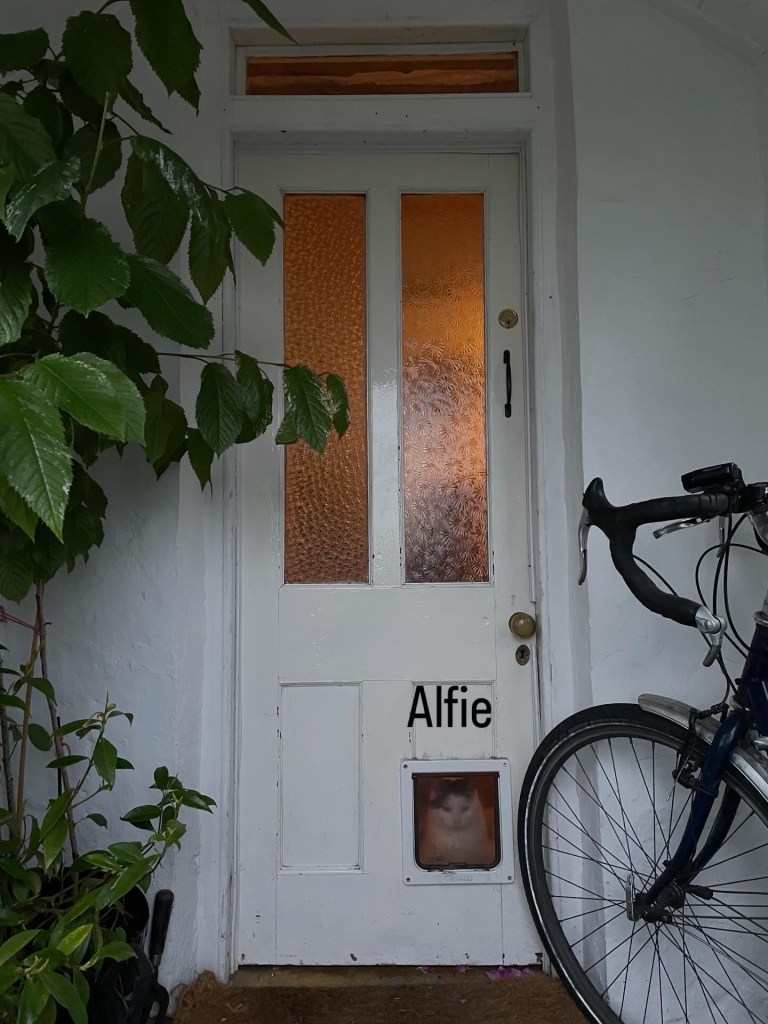
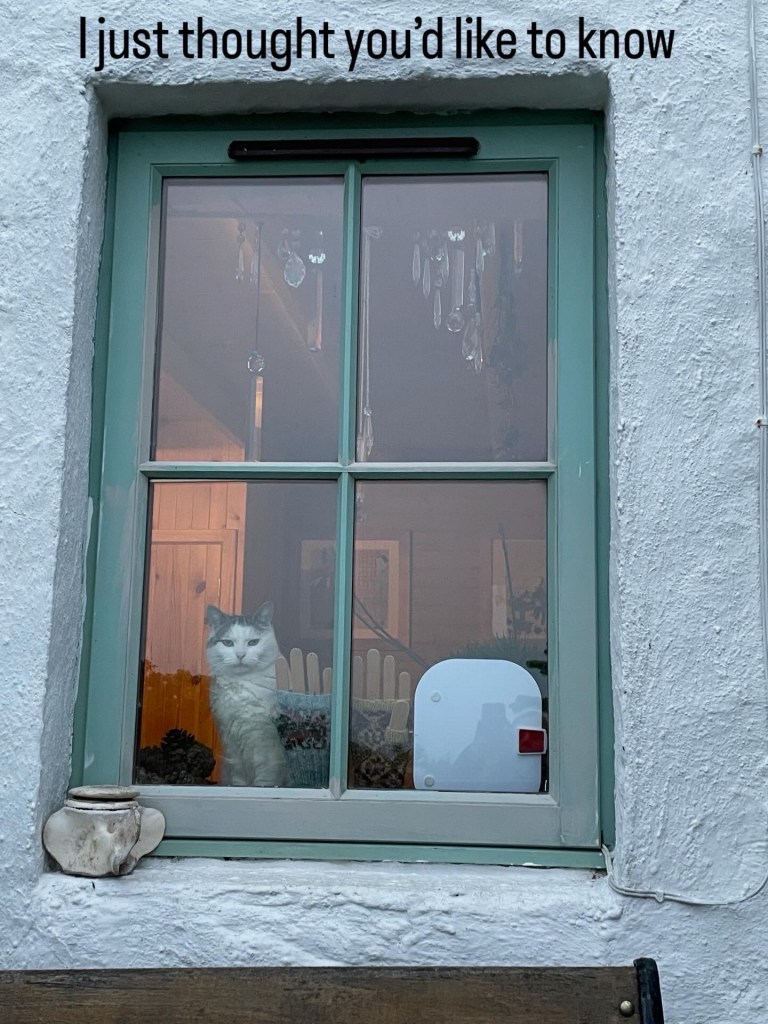
Your artifacts have been returned to the house – some pitchers, jugs, vases, plates, bowls. Before mixing them on the shelves with my own plates and jugs, I turn them around and around to connect with a life before and then there is the biggest connection of all – that you were and I am single women, living a life and paying the bills on our own in an old stone house facing the sea. Did you talk to Ralph, the dog, as I talk with Tiggy and Alfie?
I wonder about the touch upon things, the patina laid down by years of paint, of opening and closing the door, of turning door knobs, of opening and closing windows.
Finding you is like the moment I removed a damp layer of wallpaper in one gentle pull upwards, in an old abandoned derelict Shetland croft house, to reveal a perfect hand printed layer of pre 1950’s paper with wildflowers printed up it. Then, in one more pull that strip of hand printed wallpaper also came off the wall completely intact. I folded the paper and placed it under my jumper, its dampness pressed against the skin of my belly. I thought that if I were to paste the top layer of wall paper back over the void, then no one would know what had been before. No one would know what had been removed from underneath the top layer. It was as if it had never existed.
Finding you IS like finding old beautiful handprinted wallpaper lying beneath layers of less attractive paper. Then peeling it off in sections and placing it under my jumper for safety. Susan, you are under my jumper, next to my skin.
I lift the pewter lid of your old Victorian salt ware jug to look inside. Revealing, peeling, pasting, painting, lifting, closing, opening things in the house, as generations have done so before me. I paint over what has been on the walls and doors. I sit quietly to look at the layers of layers, like the quiet man who mediates first thing in the morning, stripping away layers of noise to his core, before all else happens in the day.
I spoke to Marylyn, who, as a 10-year-old child, moved in to this house with her family. It was the year you died. She told me of a wash stand in each bedroom and jugs and bowls, a sink at the bottom of the stairs and a radio on a dresser in the front room. These were your things left behind. I can picture them now. She told me that her and her brother slid down the green linoleum on the stairs and they telephoned their cousins in the house behind by joining two cans with a long piece of string and shouting out the back window in the north bedroom. I can hear their laughter now. Children in the house for the first time in over 60 years.
I have had moments where I wonder if I am prying. I wonder if you would like me. I hope that you would like me.
Maybe there is not much difference between us. Did you look in the mirror to comb your hair or did you, as I do, stand outside in front of the house to comb your hair into the wind whereupon stray grey hairs blow upon the breeze and hang upon the roses?
Susan, I am now the carer of your house for however long I can endure the winters.
House / Home – Situatedness
Outside, I Inhale the heady scent of peat smoke, as a hundred women must have done so before me.
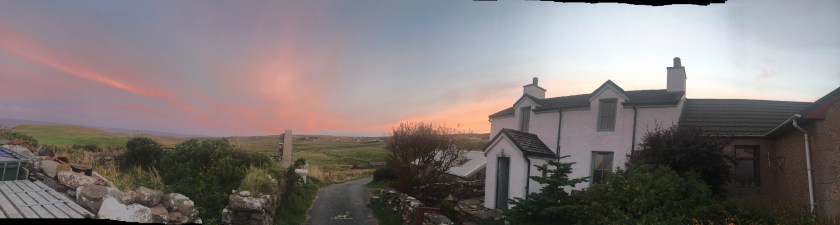
Standing on to the hand-hewn flag stone veranda that skirts the front of the house, I take in the heady scent of the previous night’s peat fire smoke lingering in the air. The grey sky is touching the grey sea beholding all that is in front of me, under my feet and behind me within the stones of this old house.
The rough stone structure of the house has been touched by many hands over nearly two centuries and is built upon rock. This house is my place of thinking and feeling. It holds me within its walls endowed with previous lives, to live freely, without compromise of any other thing except the elements and darkness of night and the lengthy lightness of summer – yet these are still penetrable. Isolation can penetrate.
The house gives to me the opportunity of freedom and I give it the love and tenderness to continue standing strong. But the Winter took its toll on me and then Easter was beyond harsh where the floors shook and the chimneys roared with swirling storm winds. I have lost energy.
How many women have stood at this door way, eyes drawn East to the sea, mind drawn inward to the shores, children playing, wars questioned, lost ones at sea, the animals and subsistence or maybe even love? You lost your brother in the Battle of Jutland. He left this house and never returned. The interconnectivity of all of us lies in the details of life – past and present. A life before that built the foundations of this house is linked to this life now as my life now is linked to the lives gone before and to those that will live here after me. Who turned the first key? Who left the key under a stone in the garden so that when I found it, the rust was as thick as a pie crust?
Sea air permeates my skin, seeping into my bones and softening the edges of my soul. It takes time. I accept this time as a gift. I have come home. Maybe, all my life has been pointing to this one moment. A moving fluid moment of now. Time is temporary but for now, it is the right place.
I heard Marianne Faithful say, ‘ Eventually, I always end up where I’m meant to be.’
I know that here is where I am meant to be, for now.
The past is always carried into the present by the small unmovable things, the click of a latch, the stone floors, the view of the sea, the old byre, a curling photograph of a group of women, long dead, a sheet of paper left in the window sill, faded by the sun.
In the city, I had begun to lose my idea of direction. My direction was determined by worn out decisions made on previous decisions. This is a house of new decisions.
I am here, this is me, windblown, sieved soil, a beating heart, I am becoming sea, wind, beach, yarn.
The breath of my cats reminds me that in fact, I am not alone.
in October 2021 I moved back to England for many reasons
I’d like to celebrate something that seemed small when it happened but has been the absolute foundation of my creative practice today.
On Jan 21st 2020 – 6 years ago, I published my first pattern on Ravelry. It was my Sea Urchin Shetland hat pattern. When I look back, I see that I have never really just produced patterns but knitting stories – like recipes – like myths – like stories that I uncovered.
The Sea Urchin Hat pattern text starts with the below (it was written in January 2020) :-
Dear lover of yarn and of the tactile act of knitting,
This hat design has been long in the making. I’m producing it as a design sheet because the pattern can be followed to the stitch and colour, or you can use it as a springboard to develop your own ideas by choosing your colours and even a different tree and star motif to the one I have chosen to incorporate into your hat pattern – you can make it your design too.
Over the years, I’ve made this hat using varying yarns and colours. I’ve blocked it in to a shape that resembled a slouching hat or a kind of beret. I still have two of these hats from 2015, and I’ve worn them in all weathers and in many countries. I’ve left one and lost it in places but I have always retraced my steps and gratefully been reunited with the hat that now is part of me every winter. Seeing the early photos of this hat, I see a different shape entirely to the one that has morphed and shaped to my head through being soaked in gale force rains, being stuffed in pockets and in bags and left for months in a drawer. In November 2019, I was living in Brindister, West Burrafirth, Shetland and wore this hat every day whilst walking around the voe. By now, its shape had morphed into a basin shape and I felt lost without it if I ever forgot it any winter day – especially in the piercing winds.
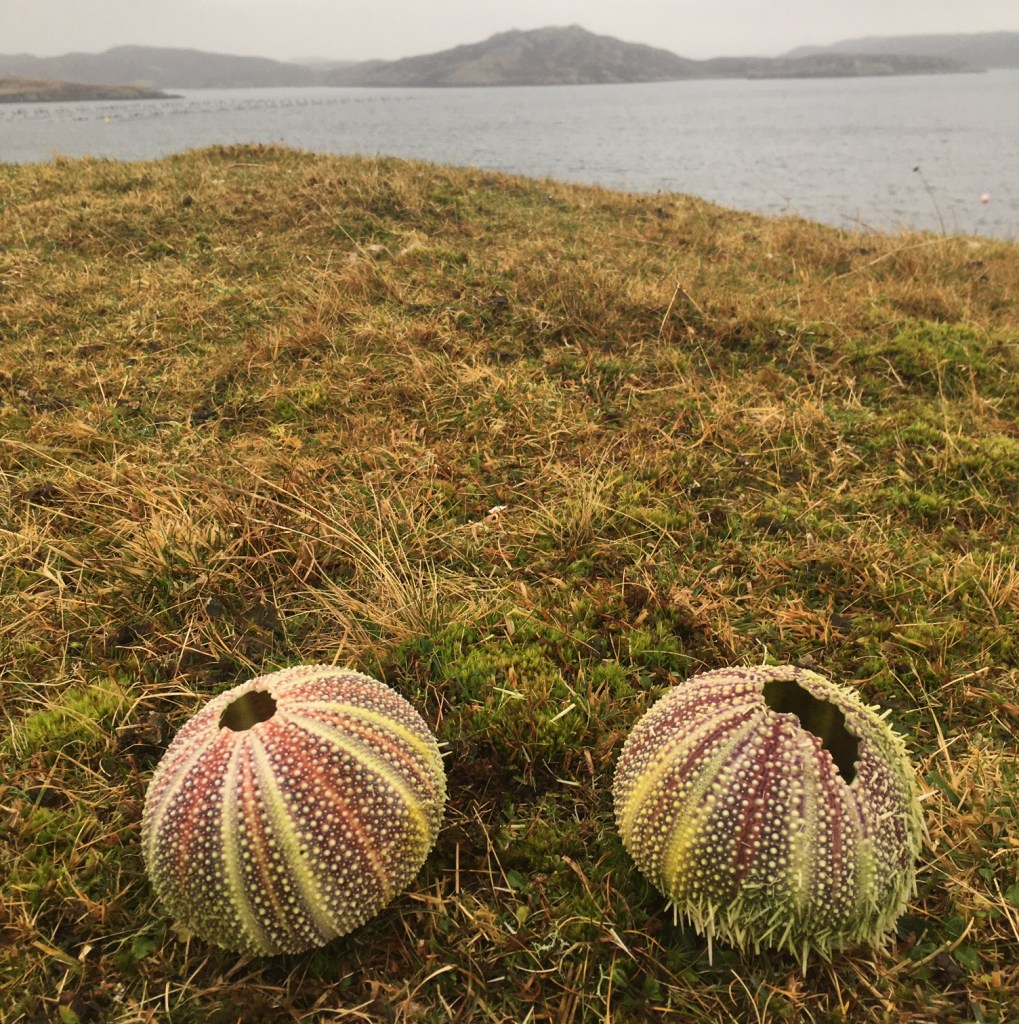
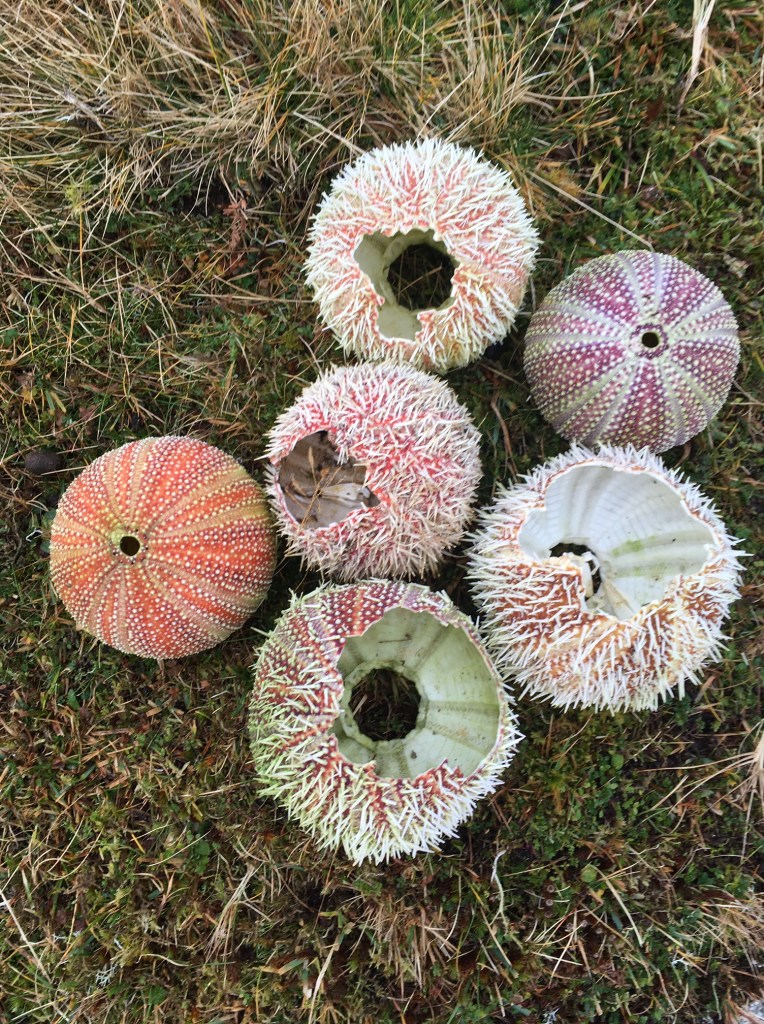
In November 2019, when, every day, I walked around the Voe at Brindister, I began to find discarded Sea Urchin shells left by seagulls. They were abandoned where the gull had left it after breaking it open to eat the urchin. I found them on banks and on flat, wet, mossy plateaus used as seagull breakfast tables. All had been smashed to get to breakfast but I was on the lookout for a complete one. The first found sea urchin shell was an exciting surprise, like finding a four-leafed clover when I was a kid. I turned it around and around looking at its pattern and the smashed opening. Then, I started looking out for these sea treasure on the land. I collected any shell that was whole, even if it was broken into until I couldn’t carry them in my hands – so I used my hat to carry the porcelain like sea urchin shells back to the croft house. When I looked, I saw that both my hat and urchin shell had a similar shape – the hat with a 5-pointed section crown and an urchin-like roundness and in return, the sea urchin shell looked hat-like
I would love for you, the knitter, designer, maker, lover of yarn and the tactile act of knitting, to make this hat in whichever colours and with whatever tree and star motif you would like. Any motif will make the same shape as the decrease around the tree creates the crown. Have fun, send photos of your finished hats to https://www.facebook.com/DoxeyKnits/ and I will post them on the FB and Instagram pages https://www.instagram.com/traceydoxey/
I would like to ask – How many knitting patterns do you know that start with a letter to the knitter ?
The pattern ends with the following words :-
I hope that you have enjoyed knitting this hat. If you want to experiment with larger needles and different yarns, as I have over the years, you’ll have a lot of fun with the results. I look forward to seeing your hats.
Big knitting love, Tracey.
How many knitting patterns do you know that end like a letter.
I want to thank this little design that I made whilst staying in Fair Isle then in Brindister, Shetland, running up to the end of 2019. The design challenged me at the end of my MA in Knitting from NTU during which time, I went back and forth to Shetland until I finally bought a croft house there in 2020 and I am ok that I made the decision to return to England in 2021– I wrote a book about my life in Shetland but it never was published.
I want to acknowledge and thank my creative spirit for developing this simple Shetland Yoke motif and simple hat into workshops, colour blending, and finally – a new jumper pattern. I have learned so much along the way, in 6 years.
What a journey.
Thank you to every one of you who has supported me by buying a knitting pattern or attended a workshop. I do not know what is to come 😊
much love. Tracey 🙂
Ravelry patterns are here – you will see the visual journey
I use two types of motifs when I design my knitting patterns – Fair Isle patterns which are traditionally OXO patterns – if anyone tells you any different or says that they are knitting Fair Isle, mostly they are knitting stranded colour work, which is also wonderful but not culturally Fair Isle.
And my other knitting designs which mostly have Shetland motifs – which I colour blend.
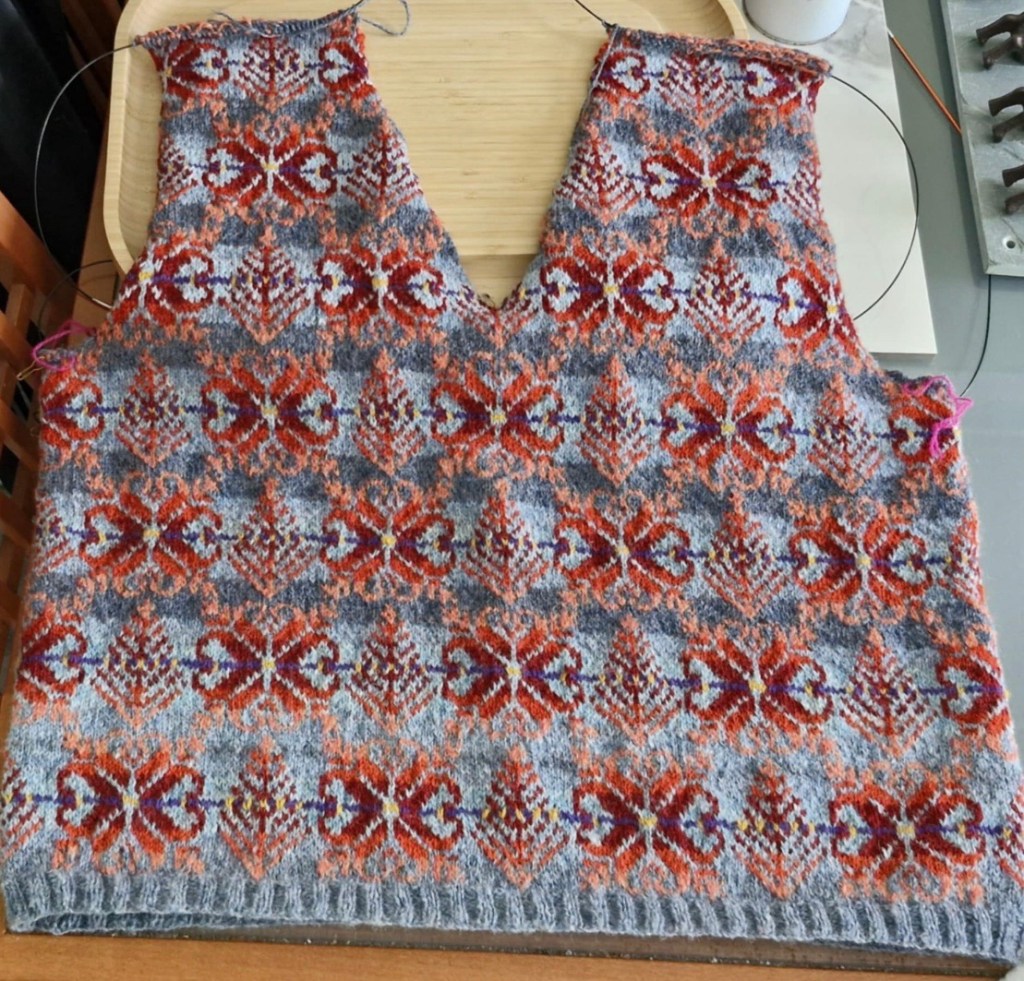
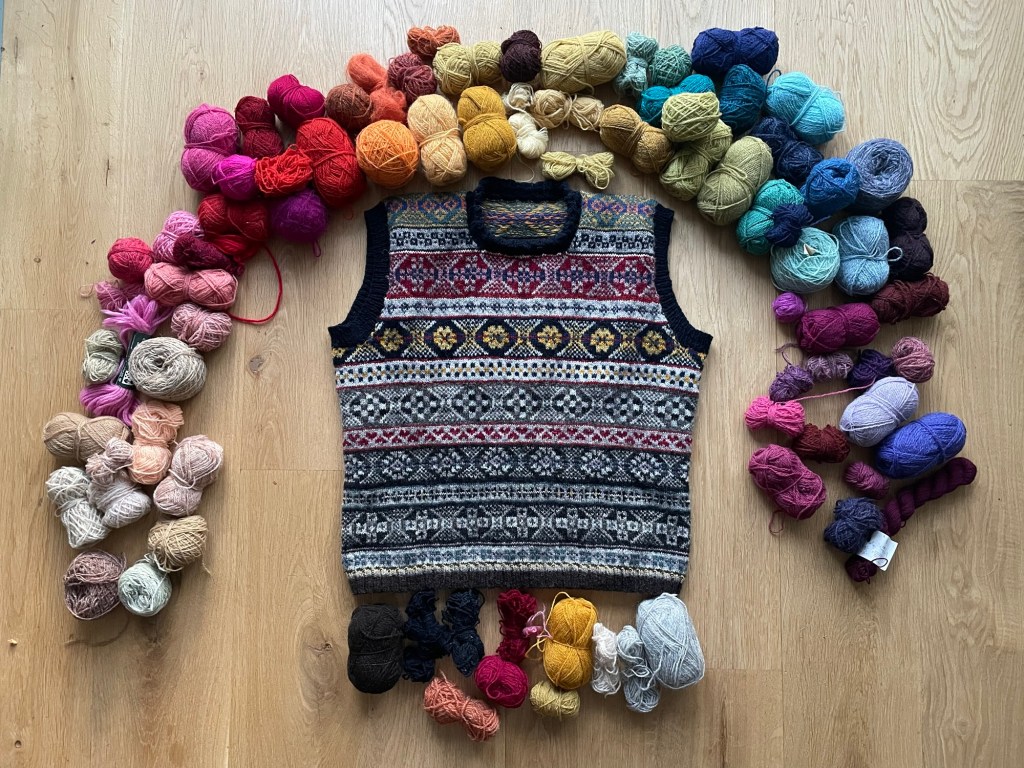
My Fair Isle designs have been particularly colourful. I designed the pattern as I knitted it and whilst I ran with the colours that I most love. Fair Isle motifs do not need lots of colour and always only 2 colours in each row. But, there is a particular way that I combine my colours. For example, for the Vest that I made for my sister, which is less colourful than I would normally choose because I asked her what colours she liked and she said, black, grey, navy and maybe dark red and mustard as well. I started knitting the vest with the colours she liked best, black, dark grey and light greys for the bigger OXO motifs then used the navy or red or mustard for the smaller bands of motifs in between. But, then, I got bored so stared to add the reds and navy and mustard into the larger OXO bands – kinda forgetting any sort of order. My favourite section of the vest is the part from the dividing vest at the armpits for front and back. I used her colour choices but where I wanted, and if you look carefully, you can see that I contrasted the colours in each OXO band between motif and background.
sisters
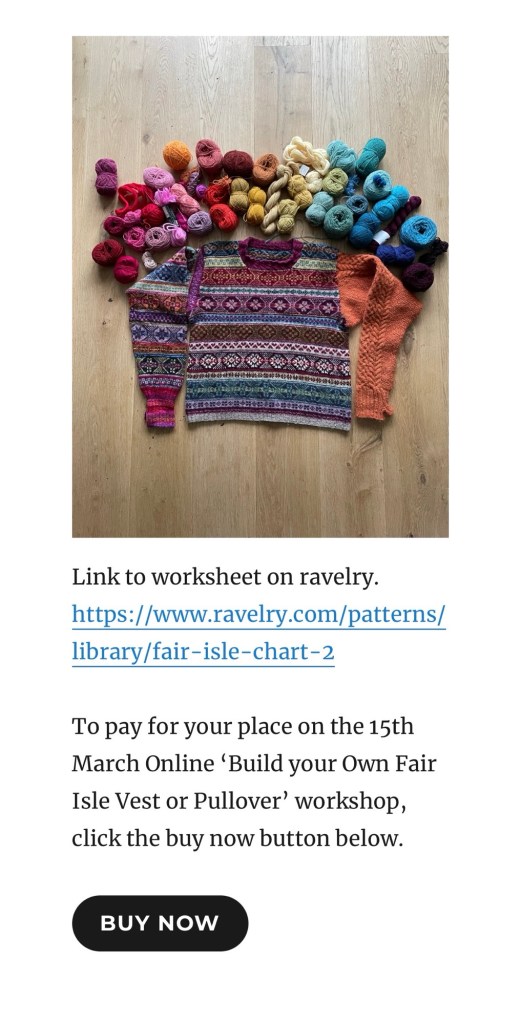
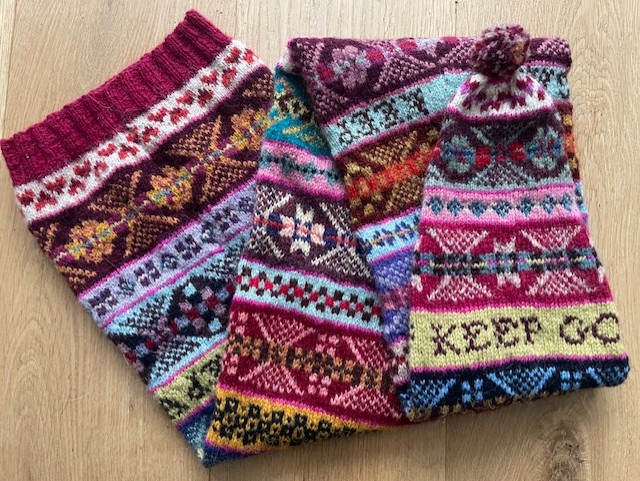
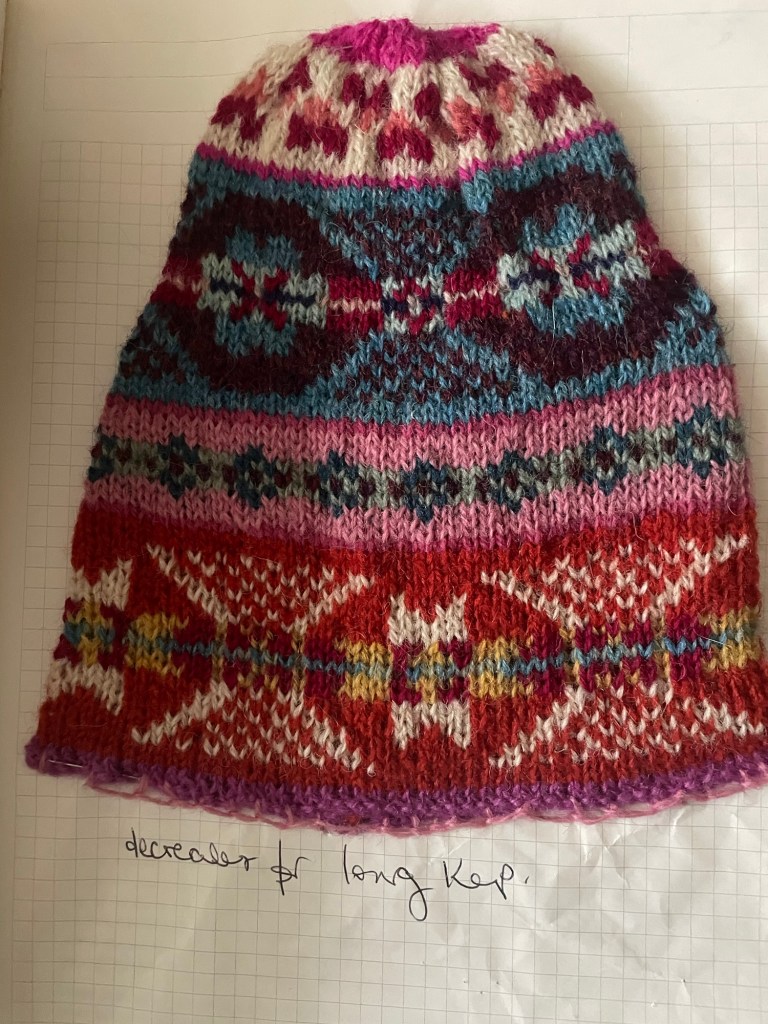
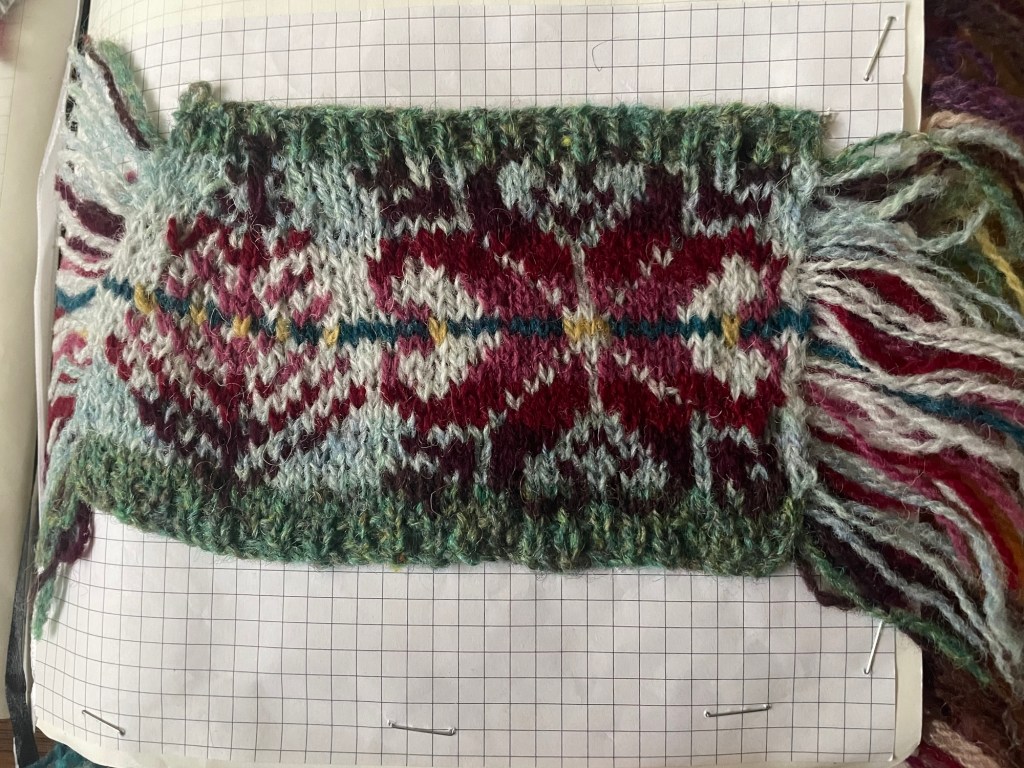
Here are some examples of my Fair Isle charts/ patterns – The Long Fair Isle Hat/Scarf and the Fair Isle chart. If you would like to learn how to build your own Fair Isle vest or jumper from my Fair Isle chart, then I am running a workshop on how to do this on 15th March.
Here are the links to the Fair Isle long/hat scarf pattern which gives you a full list of all the colours that I used as well as lots of clear easy to follow Fair Isle charts.
Here is the link to the Fair Isle Chart which gives you all of the colours for the jumper in the bottom image and also gives you full charts so that you can make your own jumper or vest. It is not a pattern.
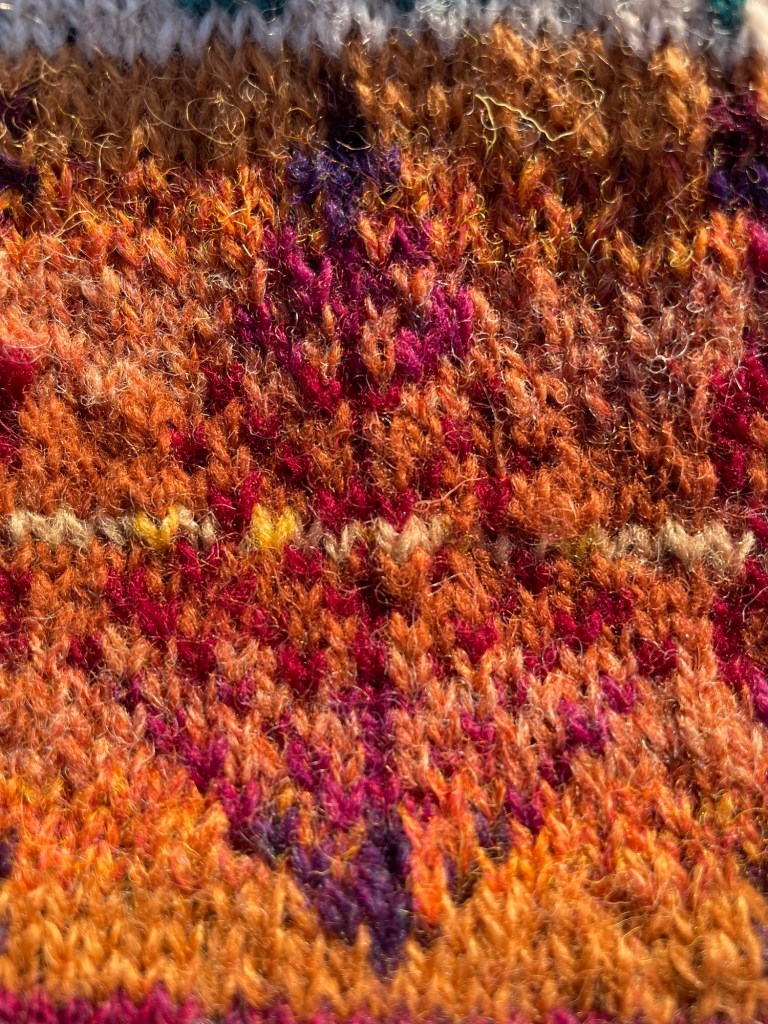
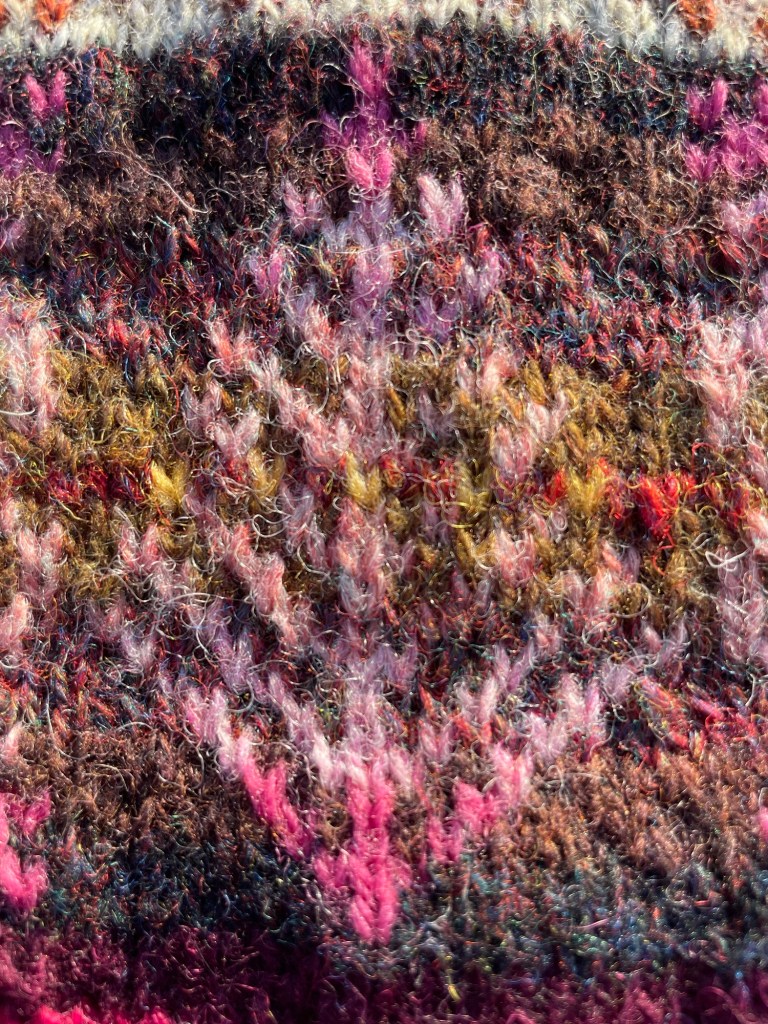
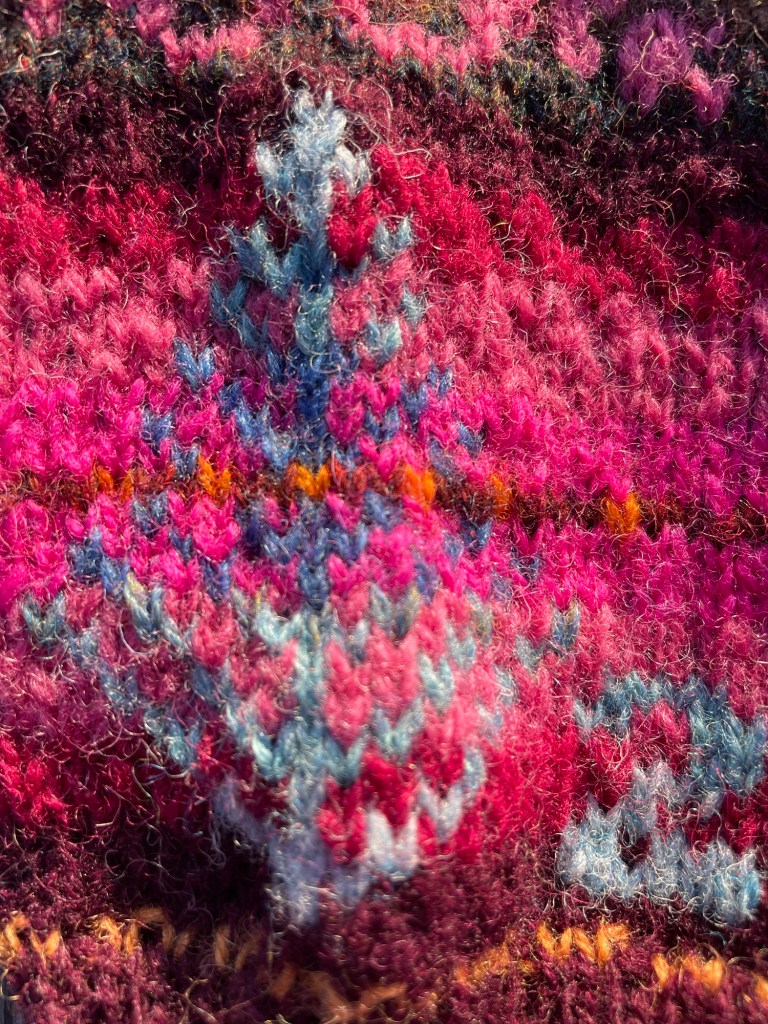
The patterns that I make using Shetland motifs, for example the Kaleidoscope jumper, I blend the colours for the back ground and the motif, I love colour blending. I use between 3-5 colours in the background and 3 or 4 colours in the motif, which gives the knitted article more of a rich colourful knit. I go for a glow.
here is a link to my latest design – but actually, the Dear Susan, Easy Aran jumper pattern which is a very quick and easy knit, also has colour blending on the yoke, cuffs and above the rib.
All of my patterns give clear instructions which row to change your colours but if you would like to do a Colour Blending Class, I have one running on 14th March.
My favourite way to use colours in my patterns is to blend them. 🙂 let me know in a comment how you like to use your colours. and if you would like to subscribe to my posts – just fill in the subscribe box below and you’ll receive any new posts.
Fair Isle Vest and colour blended sleeves for my 2nd Kaleidoscope jumper
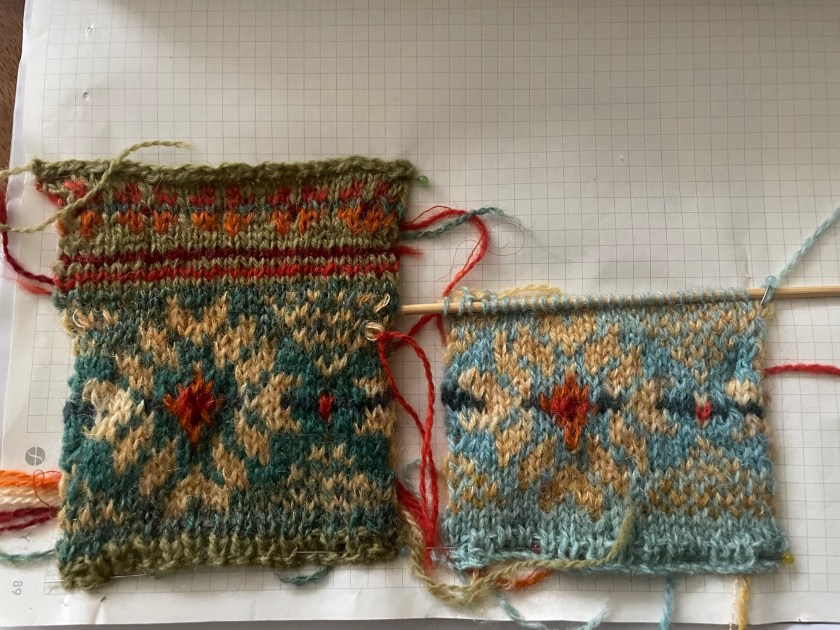
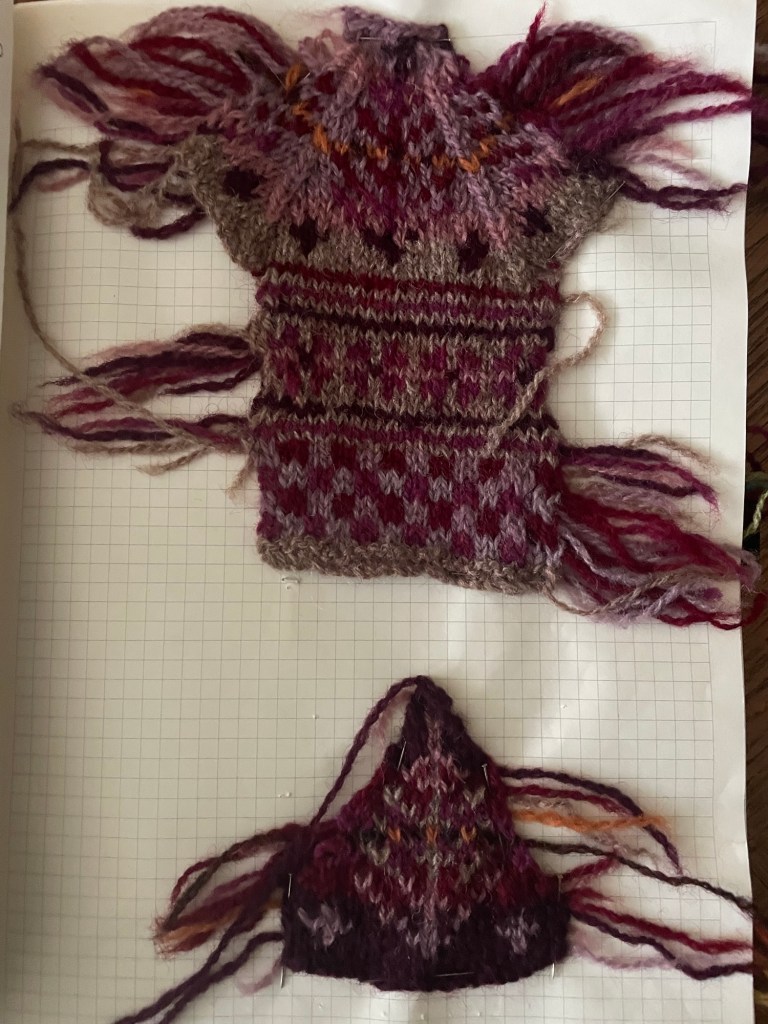
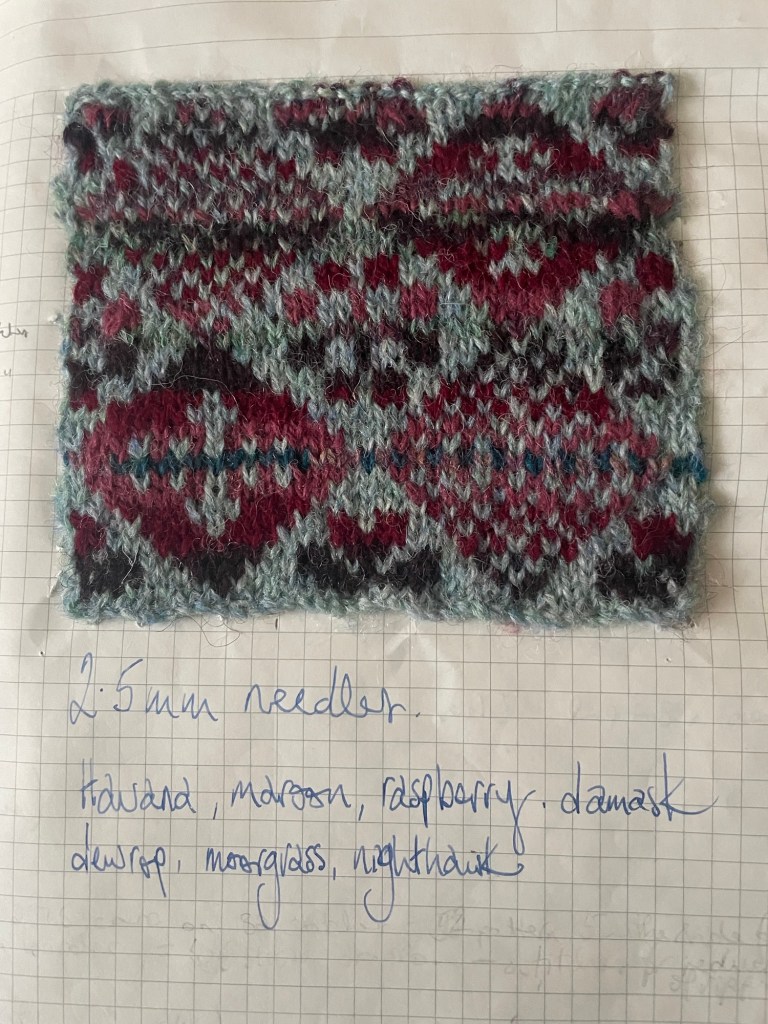
I am thinking about colour and swatching and how, even when people have joined my Online Colour Blending workshop, where I promote the practice of swatching – not many people do.
looking through one of my swatch books before my workshop on Friday
You cannot drive a car without practicing and you cannot play the piano with out practicing. You cannot get your colours right without swatching – at least at first – it does get easier and later you won’t have to but at first, practice.
I am thinking of starting a colour swatch book group. It will be online and we will meet once a month. I am not sure of its format yet but I will send you a charrt a month to knit in your own yarns.
Would this be of interest to anyone?
If you are interested then please get in touch with the contact box below and I will add you to a list to send information to – when it is ready. I am just putting a call out first to see if there is interest in the monthly club.
UPDATE – AS OF WEDNESDAY 21ST JAN THIS OPPORTUNITY TO JOIN THIS LIST IS NOW CLOSED
If you would like to subscribe to my blog for info on any other groups – complete the subscription box below
I put a pole out recently on Instagram stories to see if people would like me to knit another Kaleidoscope Jumper and over 100 people added yes.
When I first knitted the jumper pattern in August, I made the pattern one size only and some people were disappointed about that. I wrote a blog on why this was the case which is here, if you would like to read that.
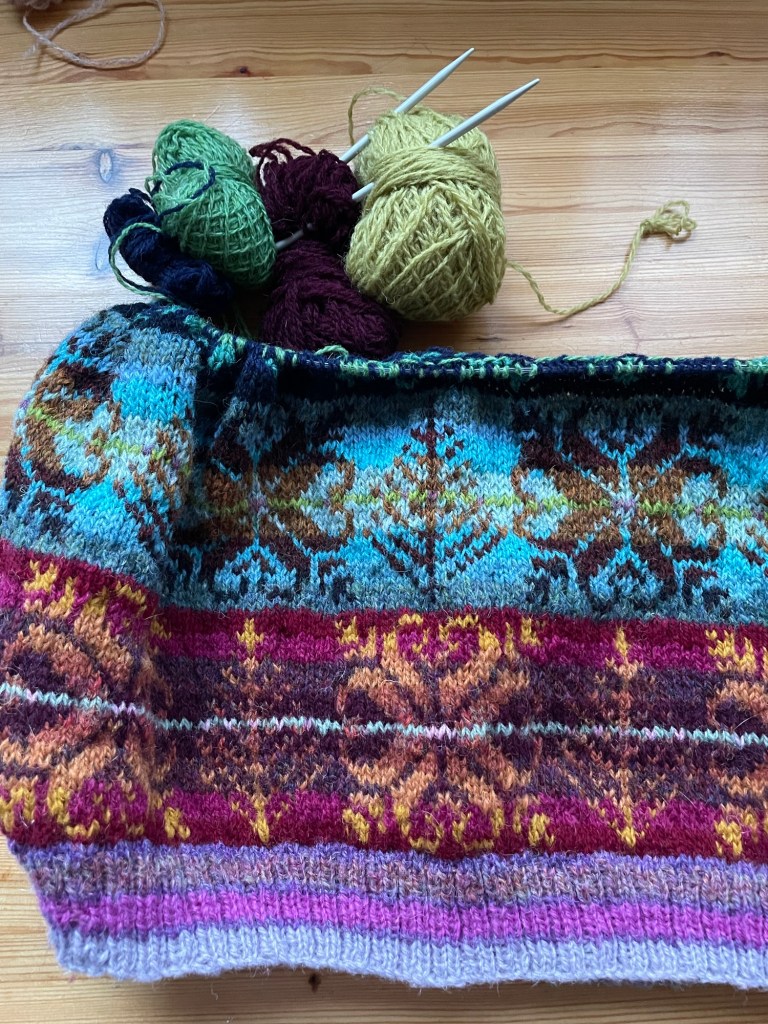
Recently, I have knitted the Tree and Star sleeves and didn’t know whether or not to knit another Kaleidoscope jumper body or just add them to a striped vest. I have decided to knit a 2nd Kaleidoscope jumper in larger needle size than the first one so that I can show everyone what increasing needle size will do to the overall size of the jumper.
The orginal Jumper pattern uses 2:75mm UK needles for the rib and 3mm UK needles for the body.
The jumper I am now knitting will use 3:5mm UK needles for the body and I will let you know along the way, what difference the needle size increase makes to the overall finished jumper.
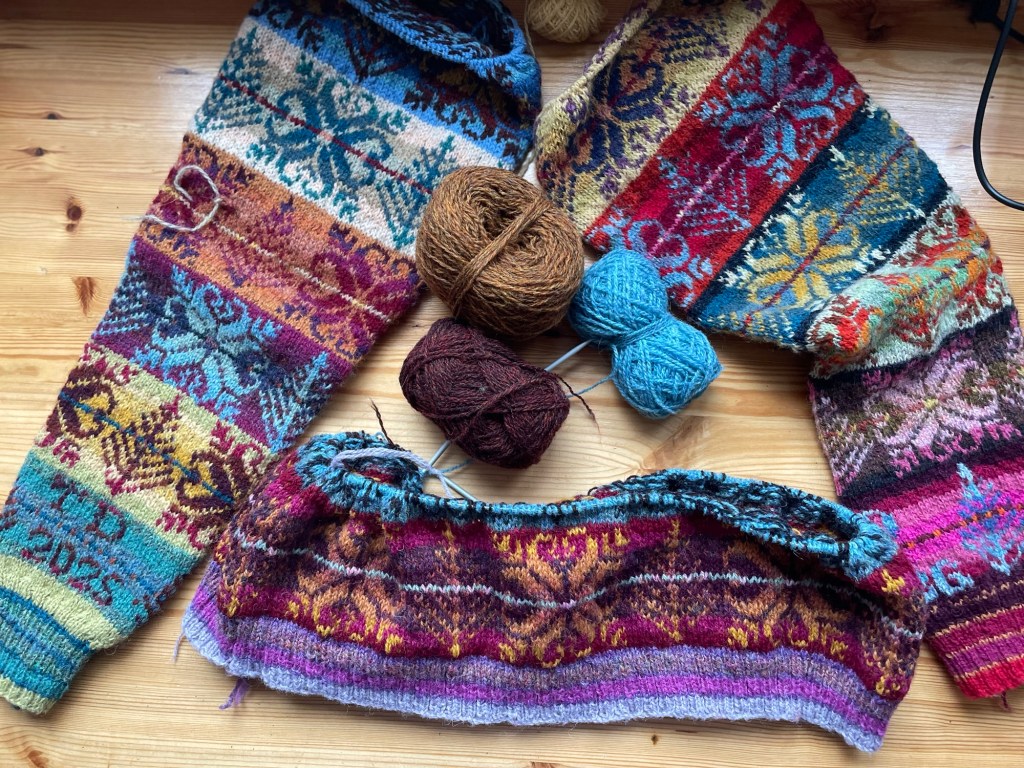
Here are the two sleeves that I have just finished – one in 2025 and the other yesterday, 2026. The Tree and Star sleeve pattern has a full alphabet sheet so that you can add your own initials and date your project
The Tree and Star sleeve pattern is an additional option instead of the Tree sleeves in the original jumper. I have really enjoyed knitting these sleeves using my stash of randome colours, though, each band is mostly colour blended.
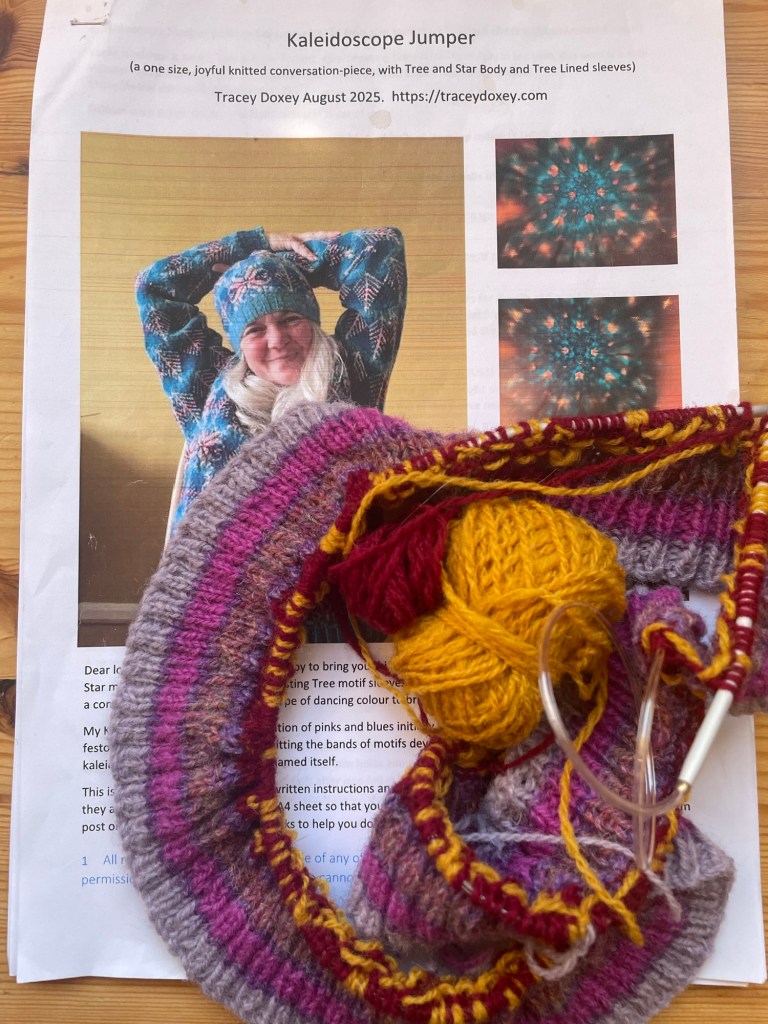
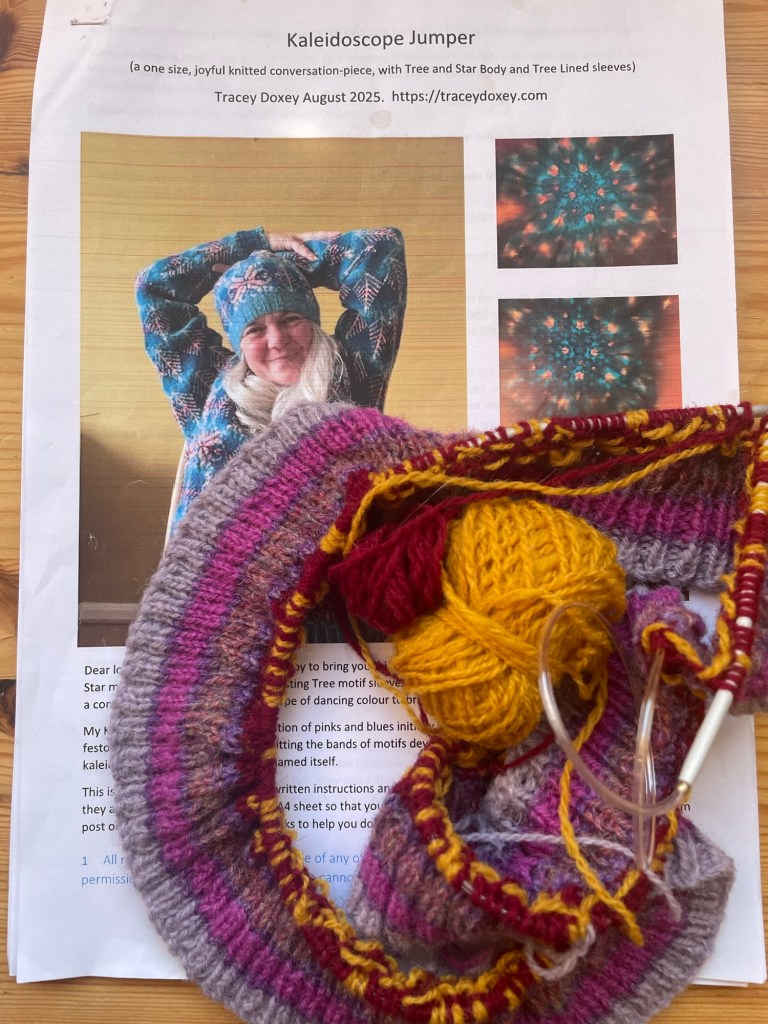
I have decided to do a Kaleidoscope Jumper Knit along so that it might help people if they feel stuck with the pattern. I will not be teaching on the KAL but I will be adding photos and updates to ravelry.
For the timeline, I am thinking along the following lines January – Cast on Feb / March – Knit the body of the jumper April – Knit the front V and back to shoulders. May / June – Knit the sleeves, graft the shoulders, knit the V neck and join the sleeves by grafting
This might not be possible for everyone so, start when you like and if you have already started, then please add to the group chat
I will be knitting my 2nd Kaleidoscope jumper in many colours – I hope that some of you will join me – this is my first every real KAL.
If you have started this jumper pattern and would like to join the knitalong, then please add your relpy to the Group KAL thread here.
I am looking forward to meeting some of you in the group. 🙂
























 tracey doxey
