Site specific Artist using own created textiles, laser cuts and hand block printed wallpaper to engage with narratives of landscapes, social history and place.
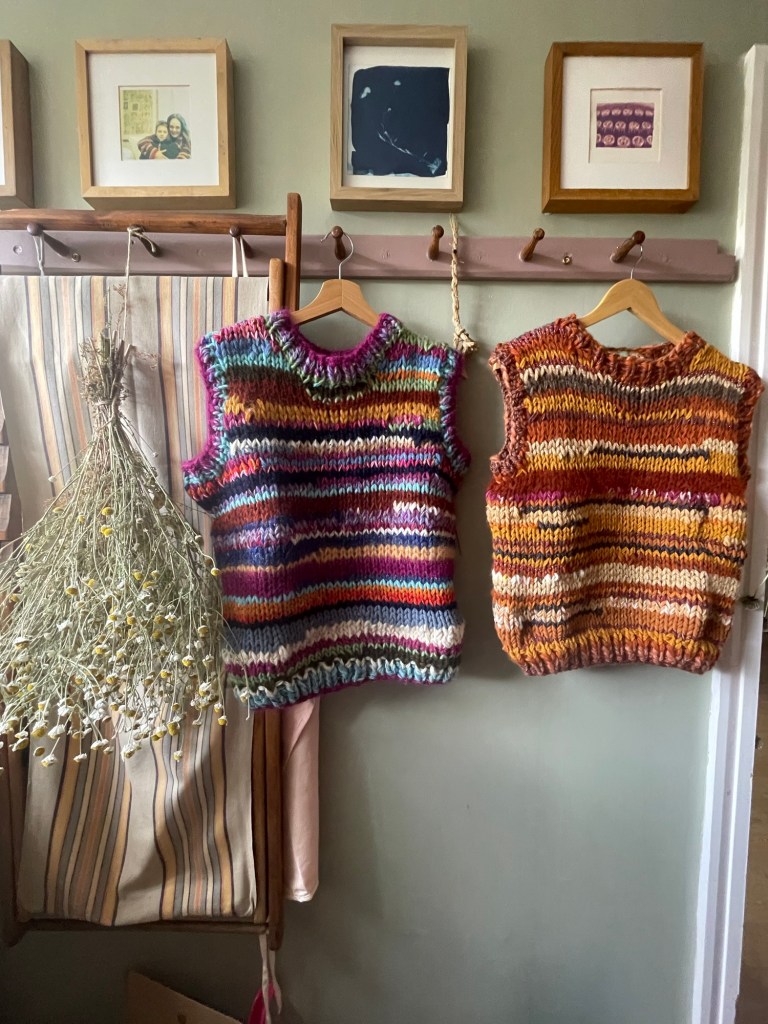
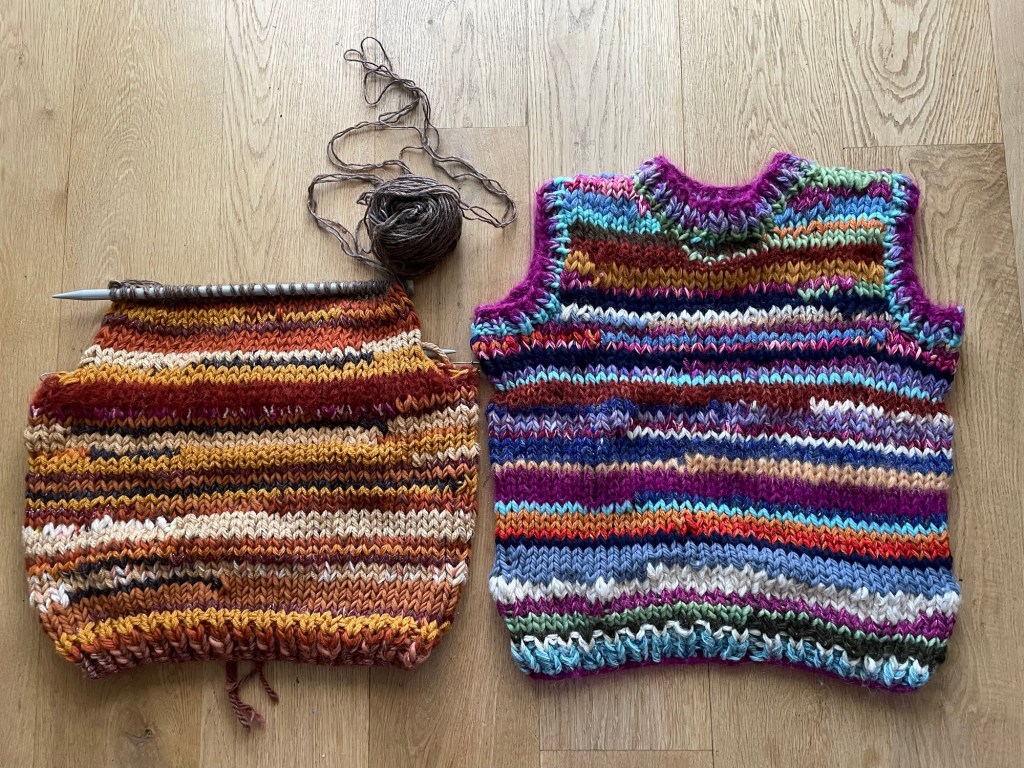
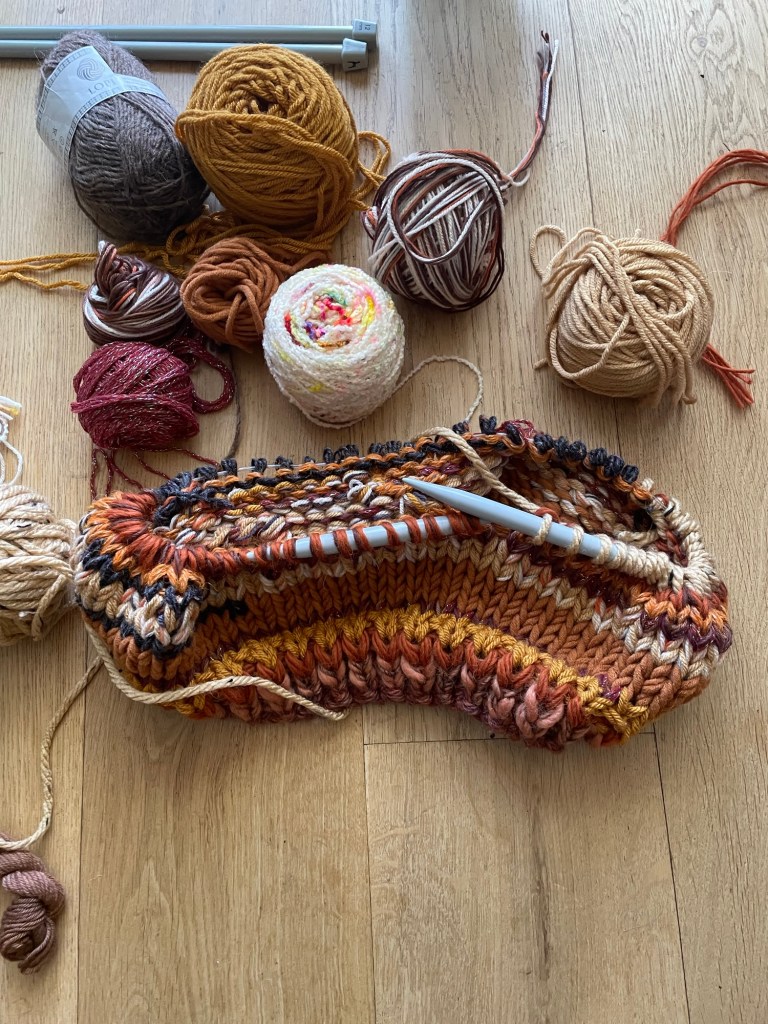
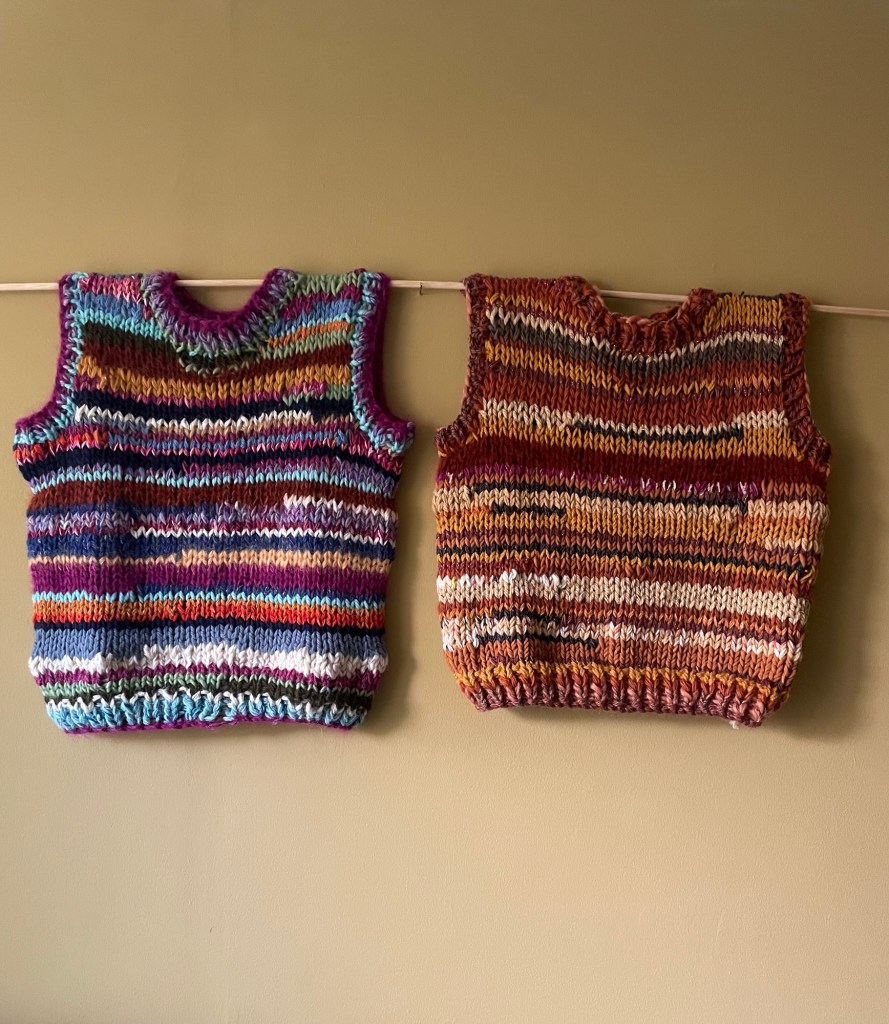
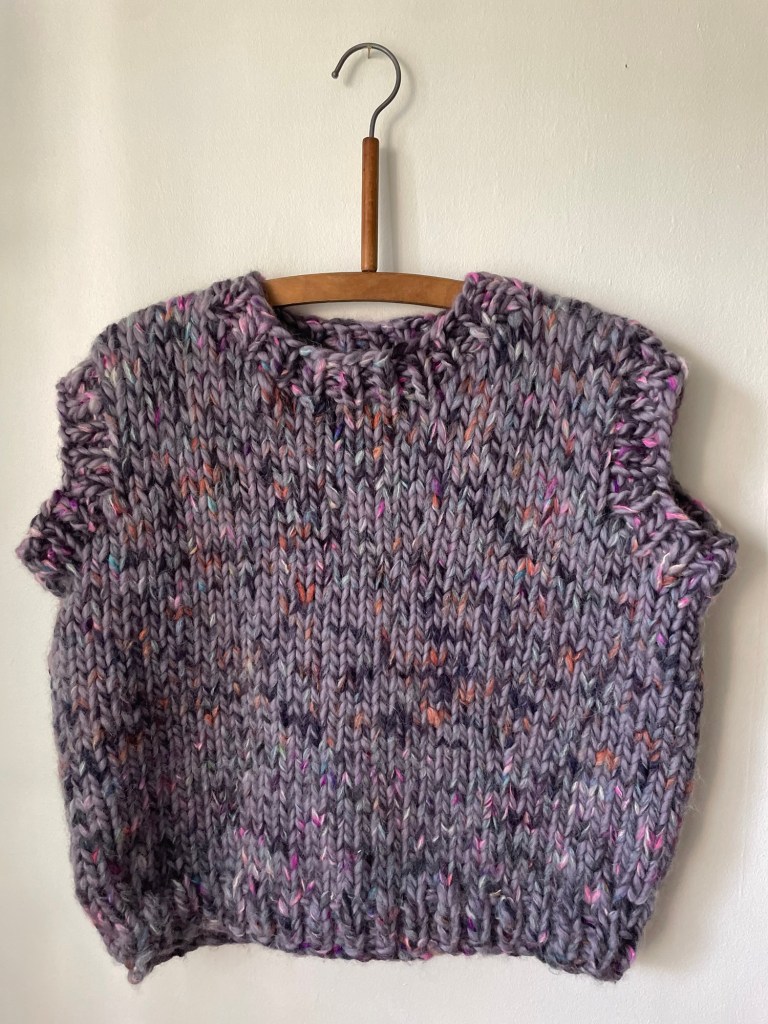
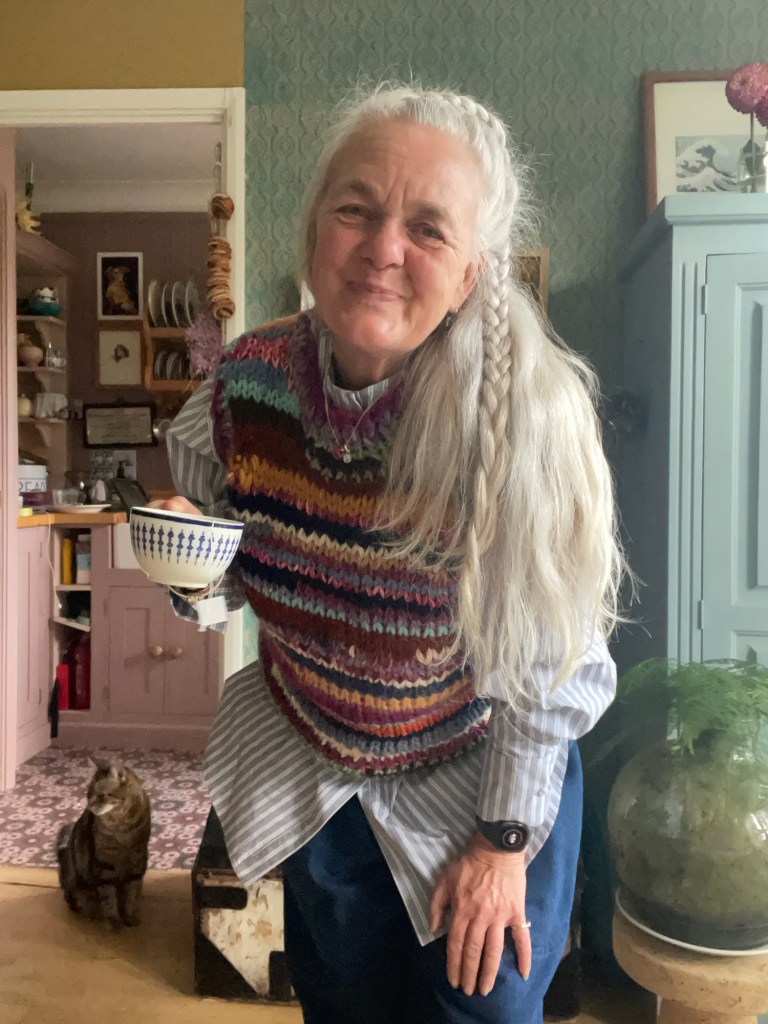
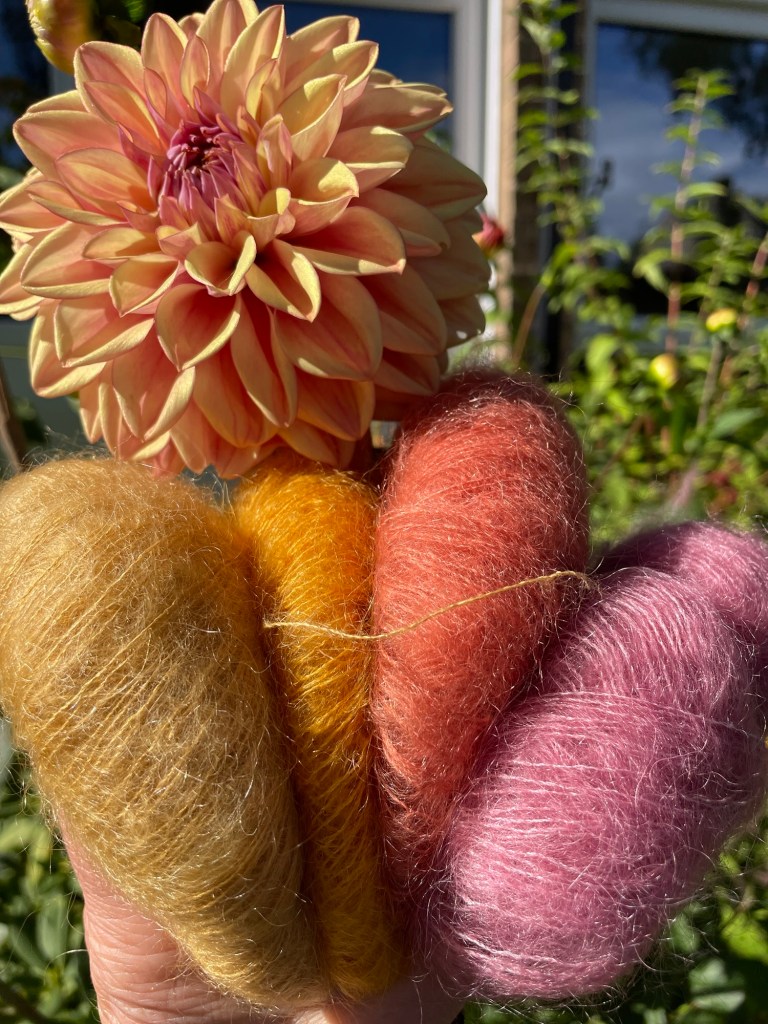
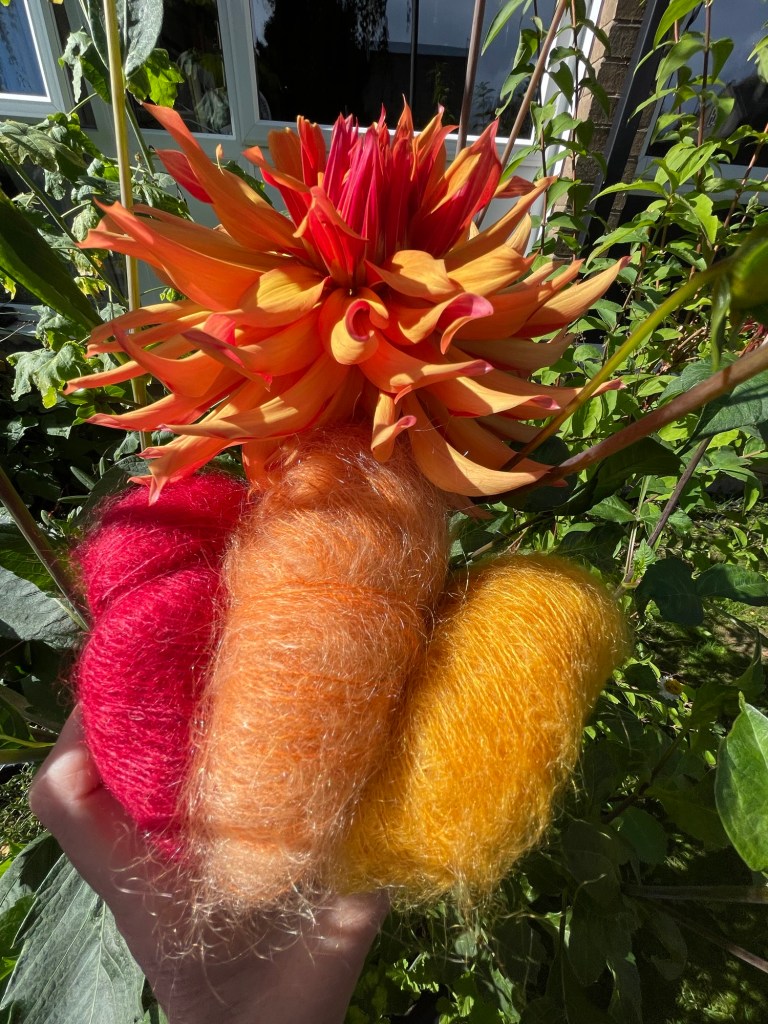
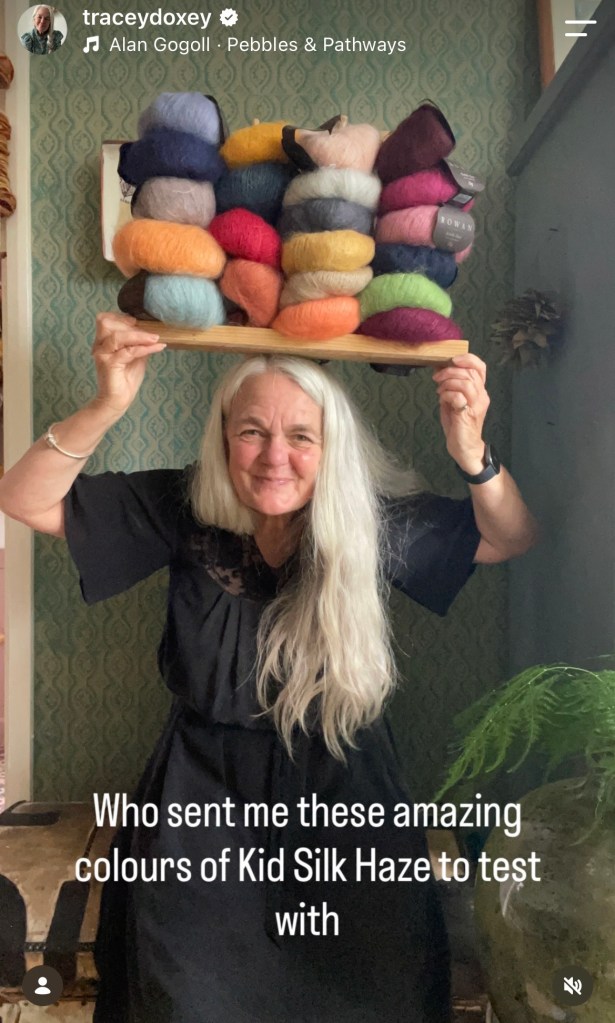
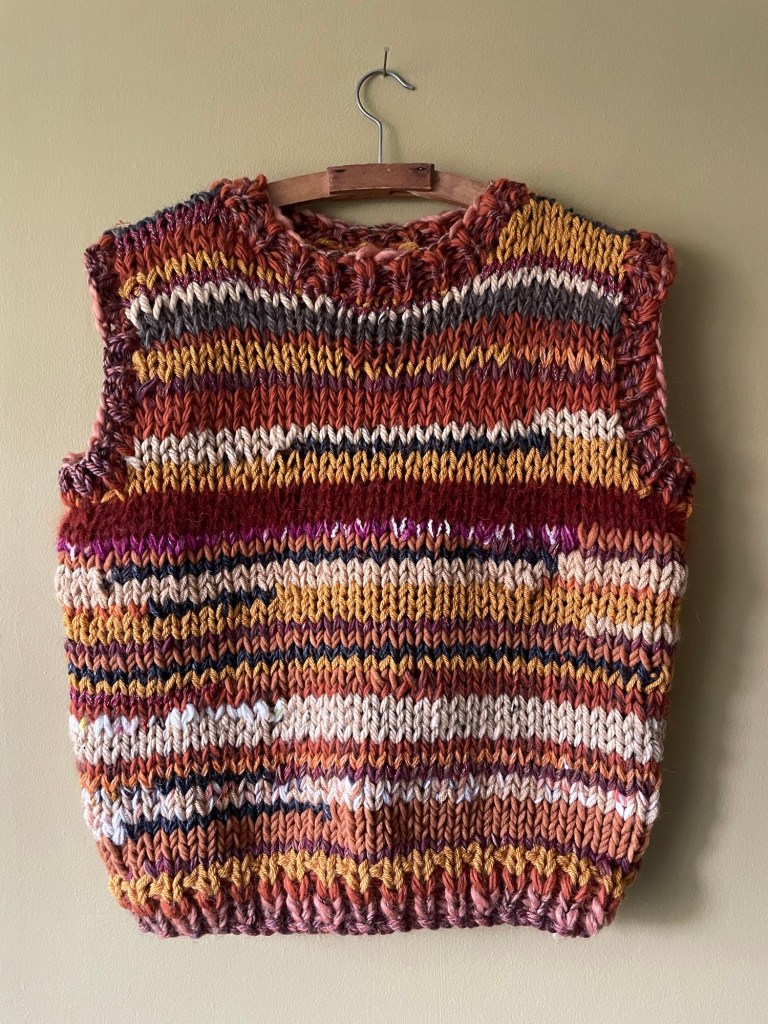
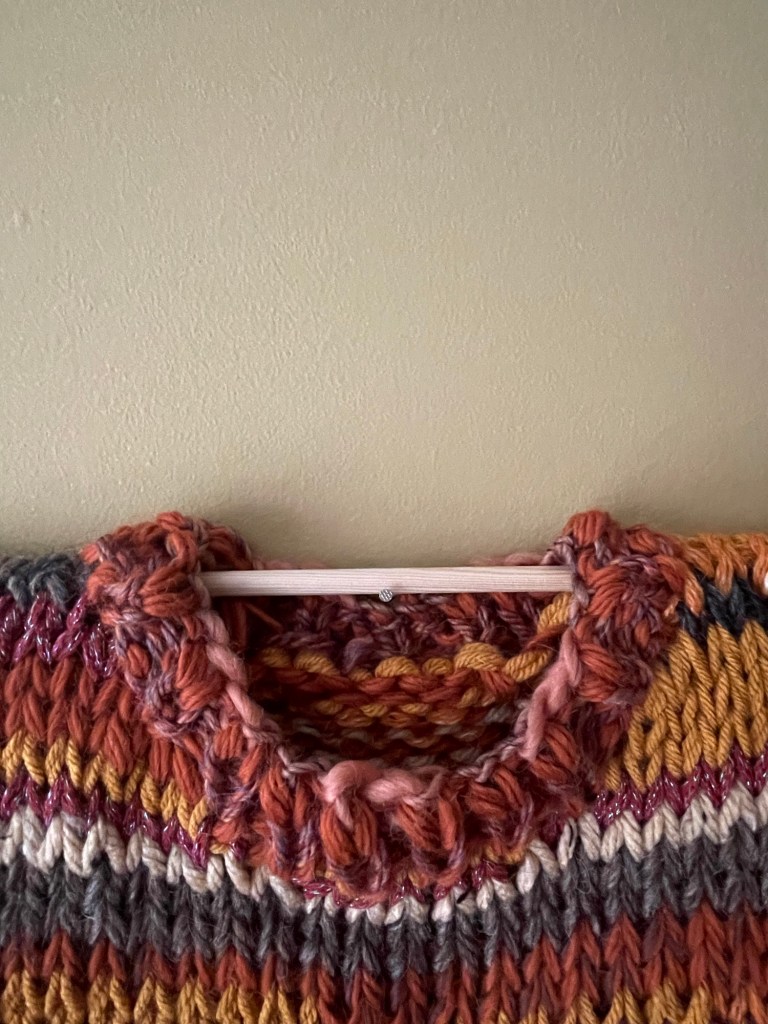
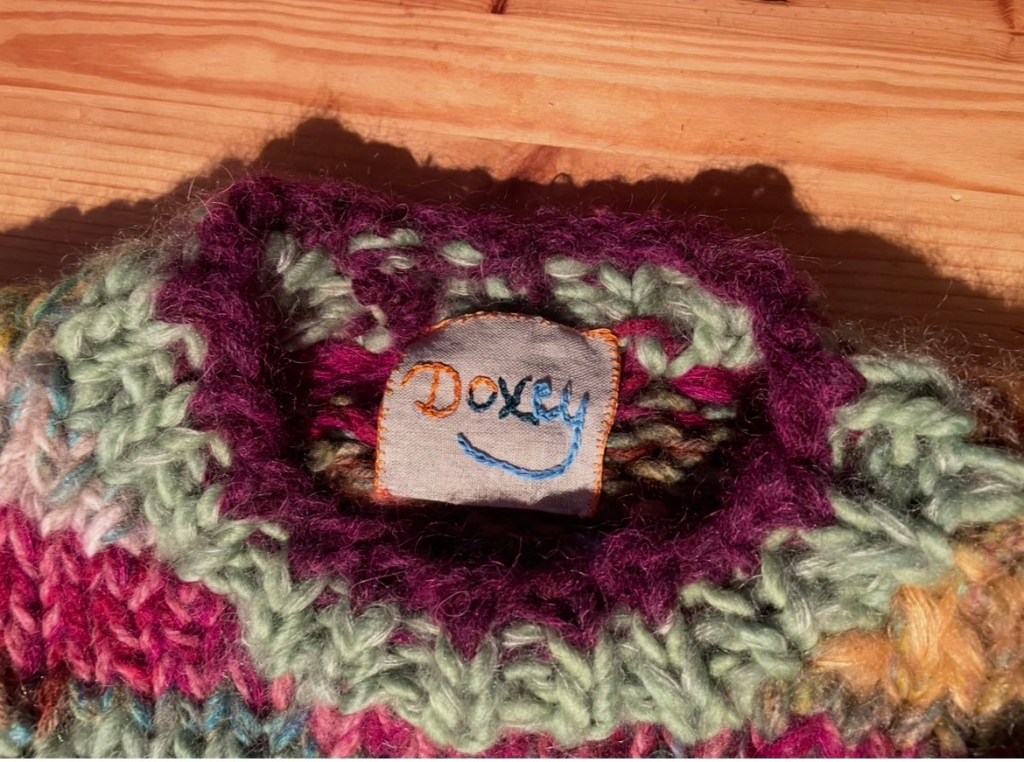
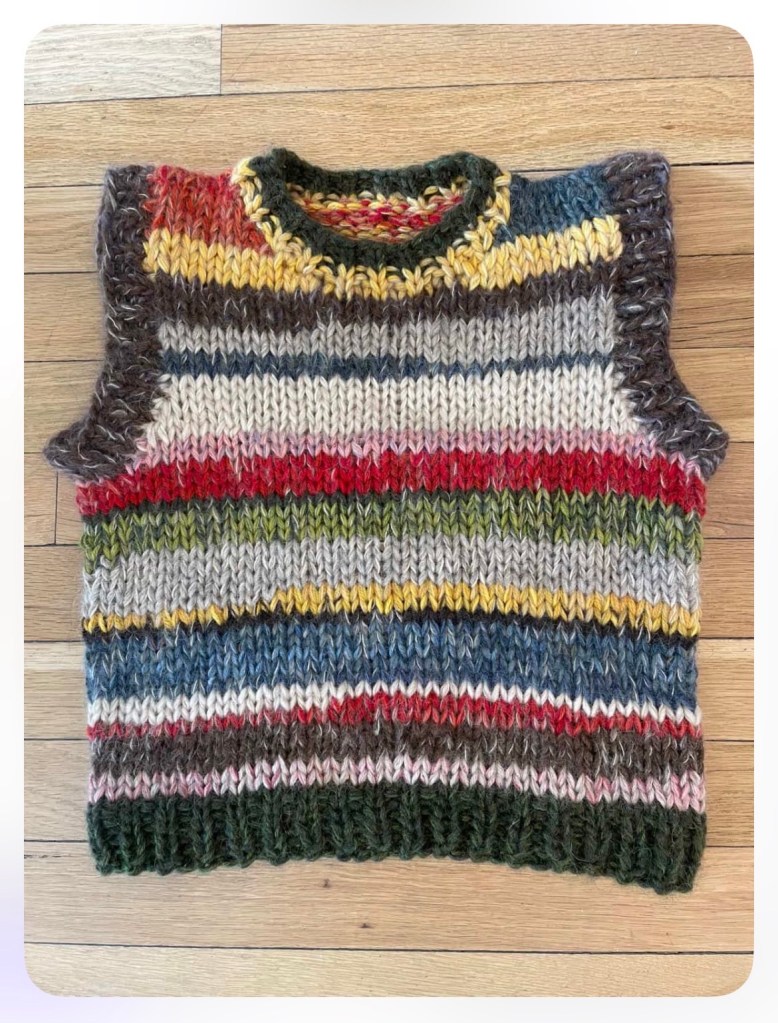
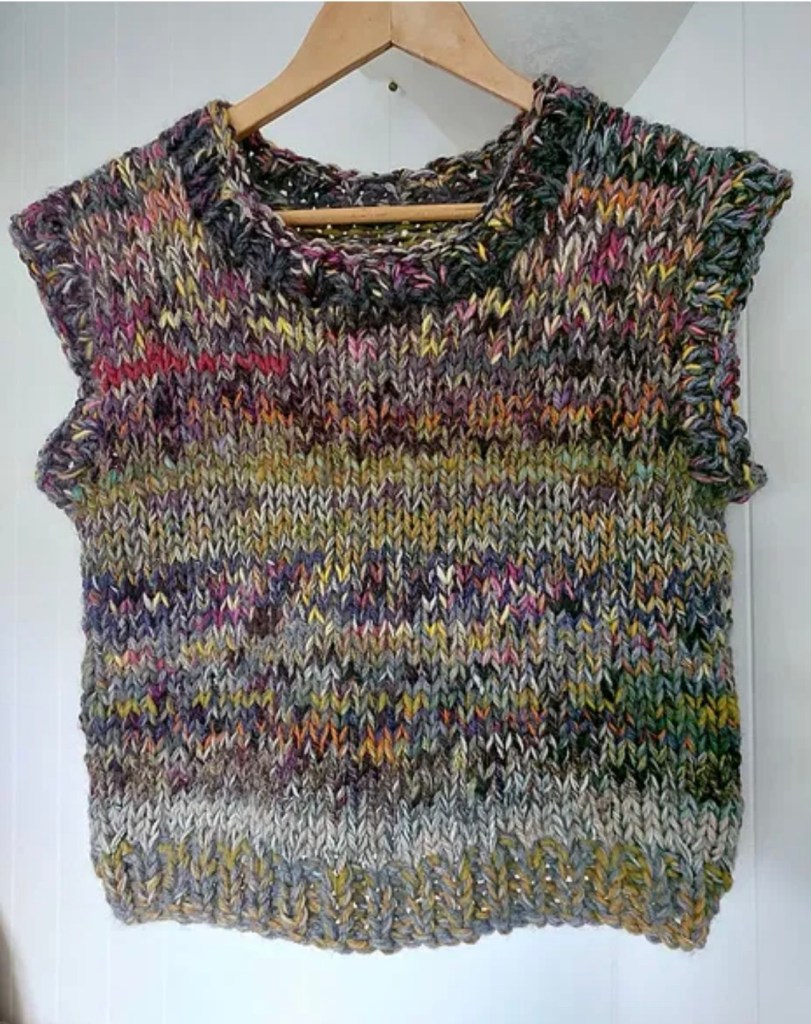
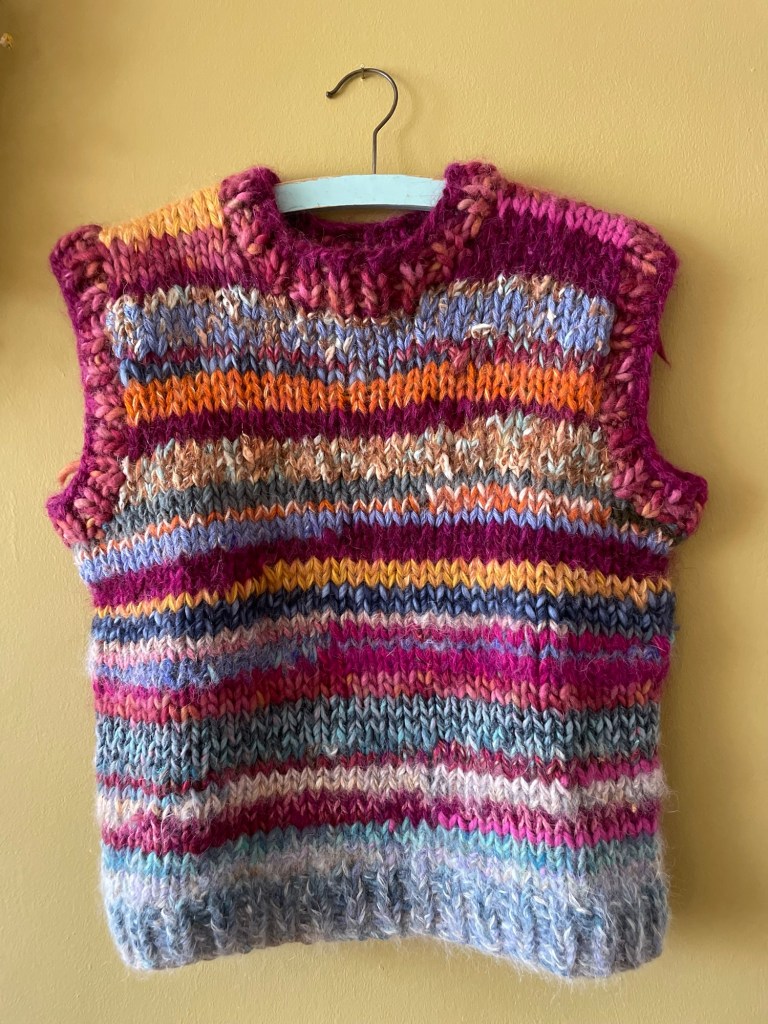
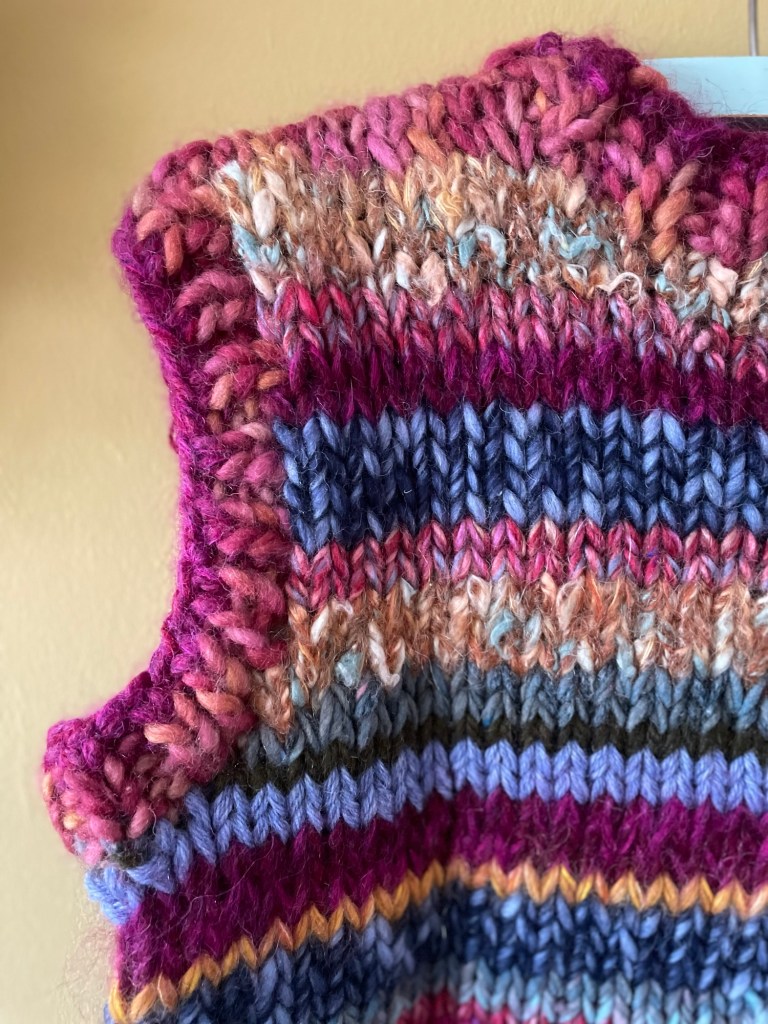
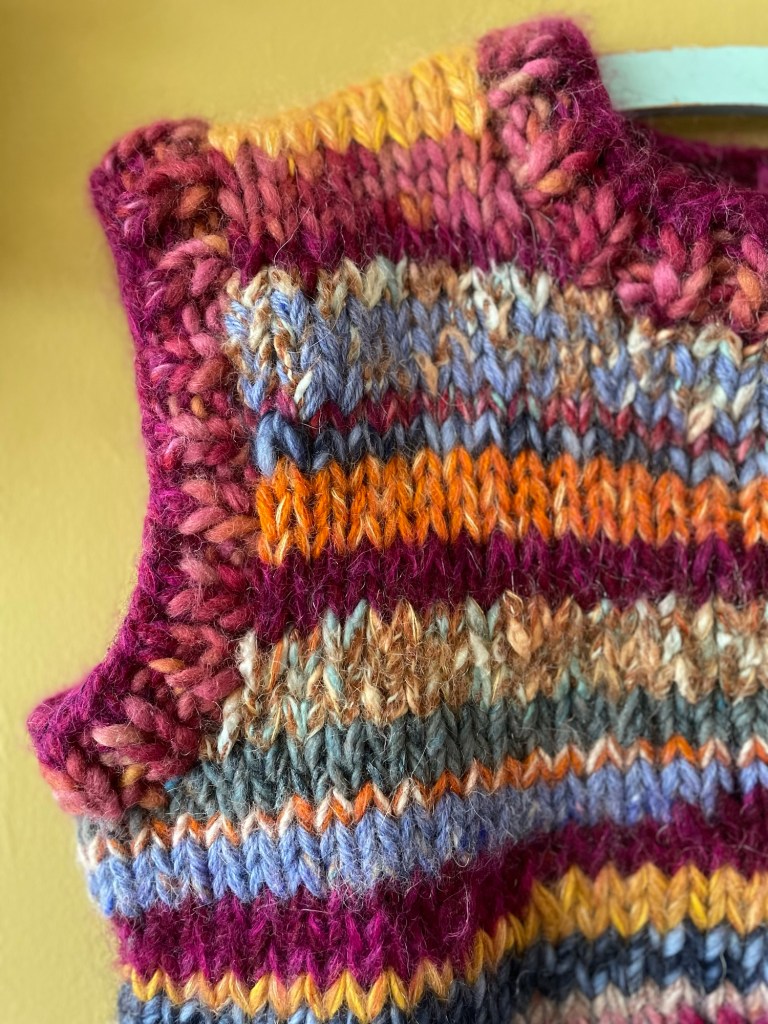
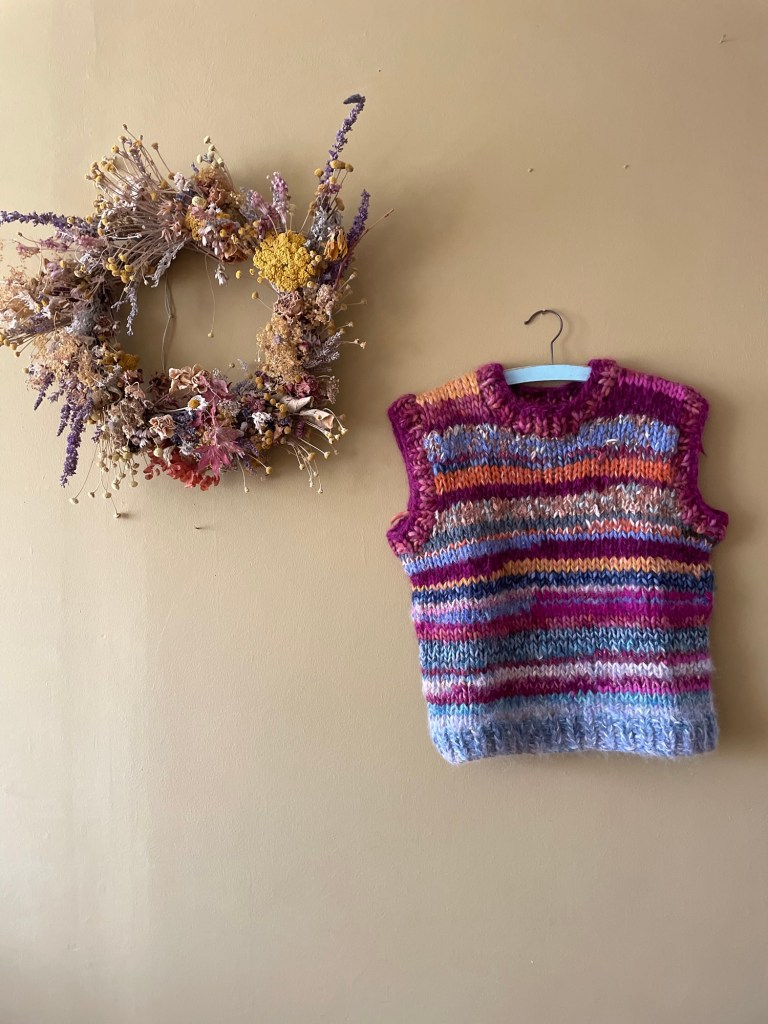
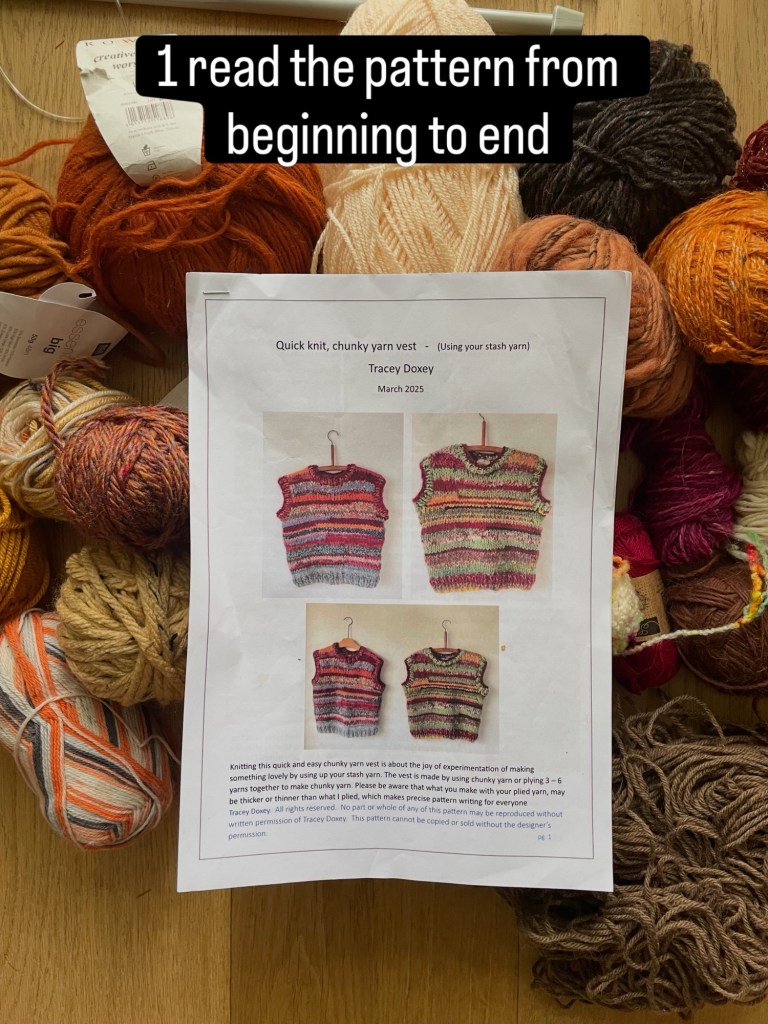
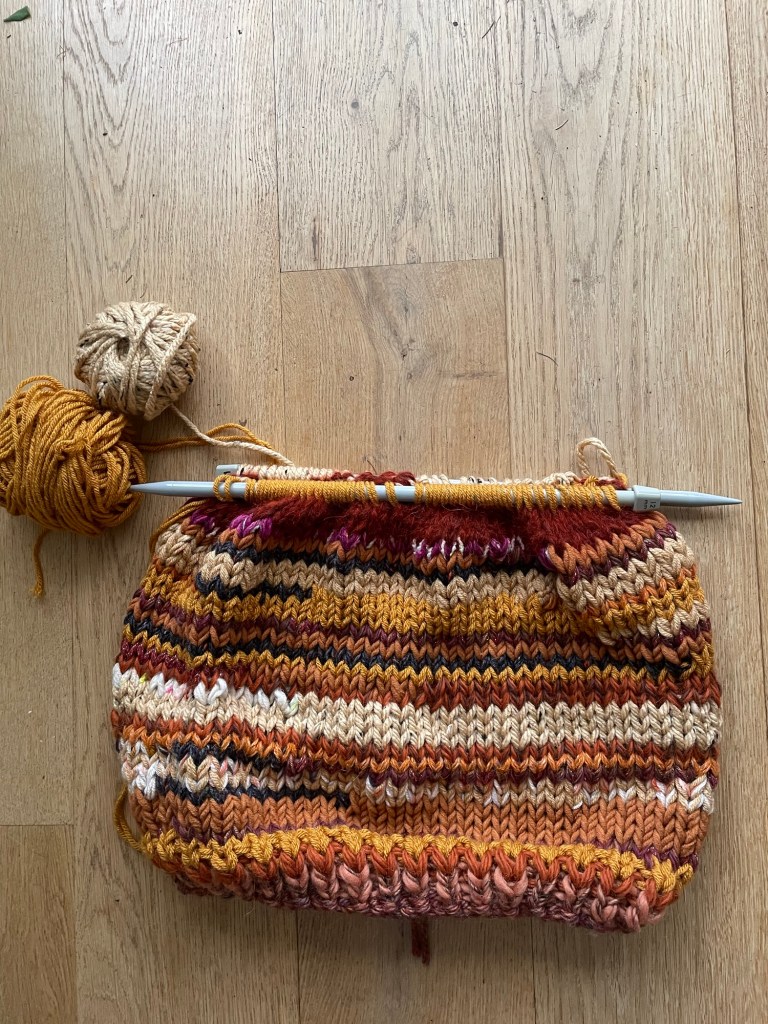
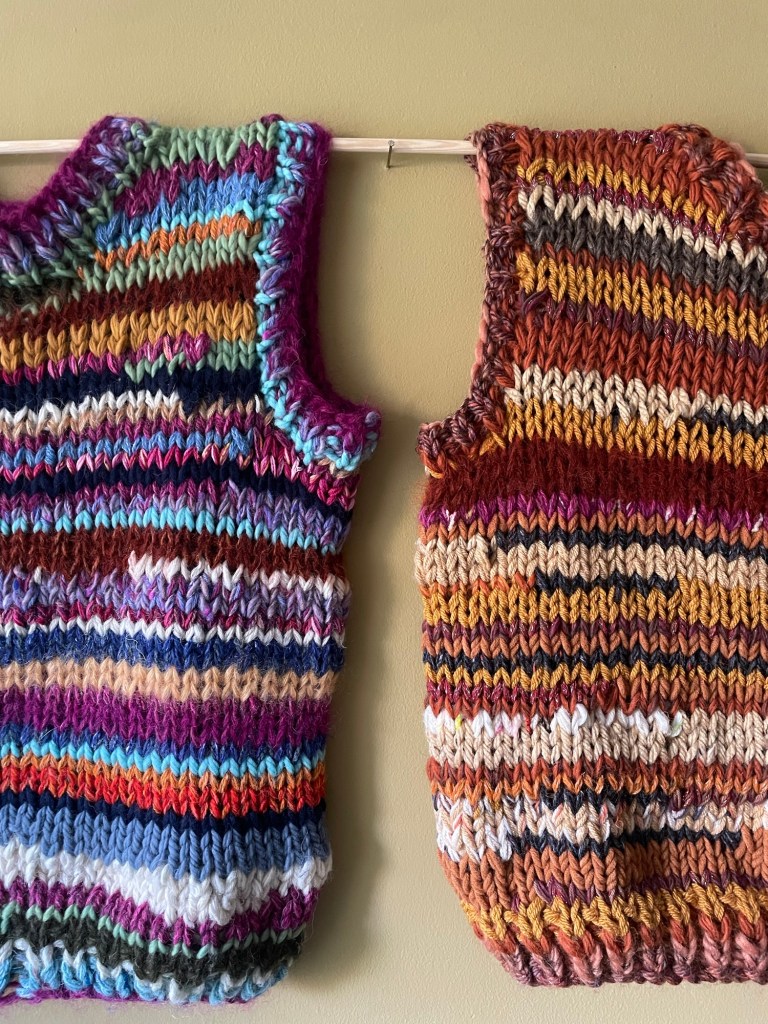
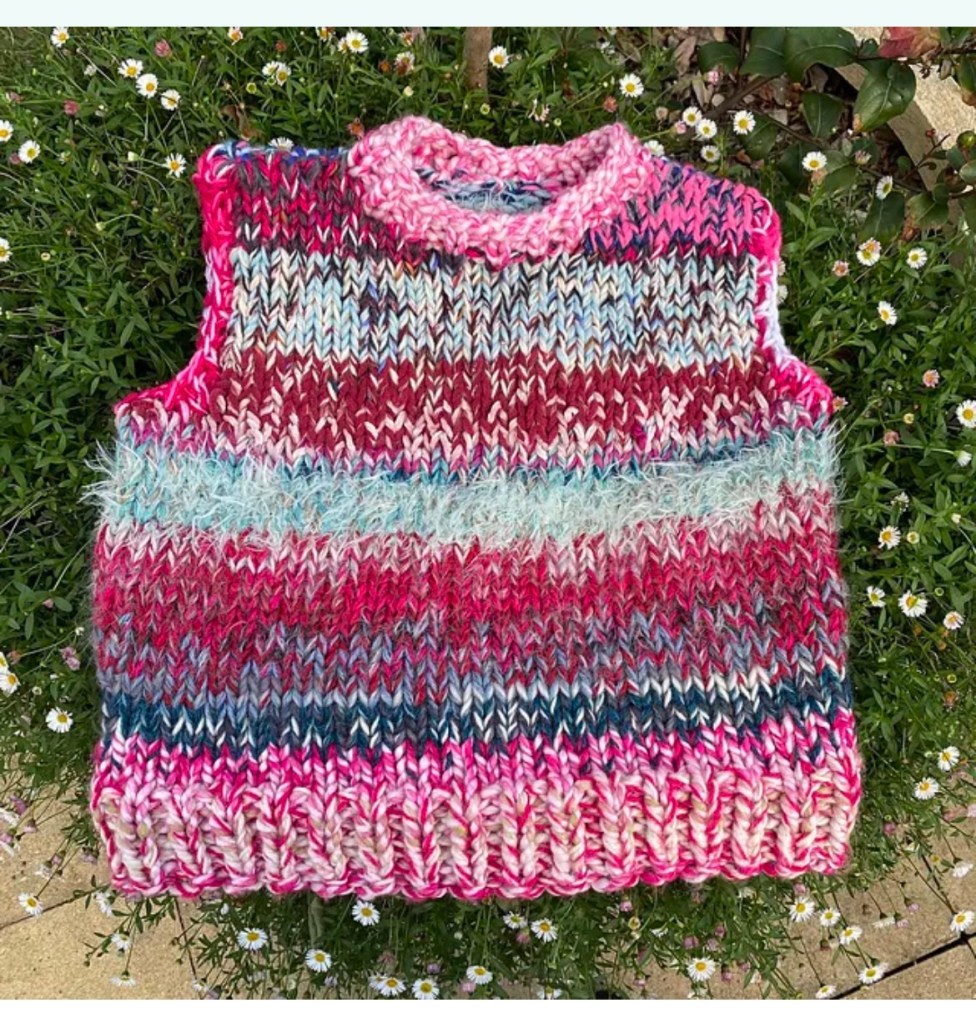
I have just finished my fourth Chunky Knit Vest from my easy to follow pattern, and I absolutely love how different it feels from the others. These yarns came from the mystery bag I bought last week called “Harvester Pie”, but as I knitted, I kept thinking the colours were more like butterscotch, honeycomb, autumn leaves, toasted caramel, warm rich autumn colours. When I look at yarn for this pattern, I always have my favourites – every stripe seemed to tell its own little story. I always save my very favourites for the neck and arm pit ribs…
The beauty of this pattern is that there is no right or wrong way to choose your colours AND I WOULD LIKE TO OFFER A YARN GIVEAWAY FOR ONE PERSON TO KNIT THEIR OWN CHUNKY KNIT VEST FROM THE LEFT OVERS OF MY LAST 2 VESTS.
🎉 Yarn Giveaway!
To celebrate this latest vest, I’d love one of you to create your own version.
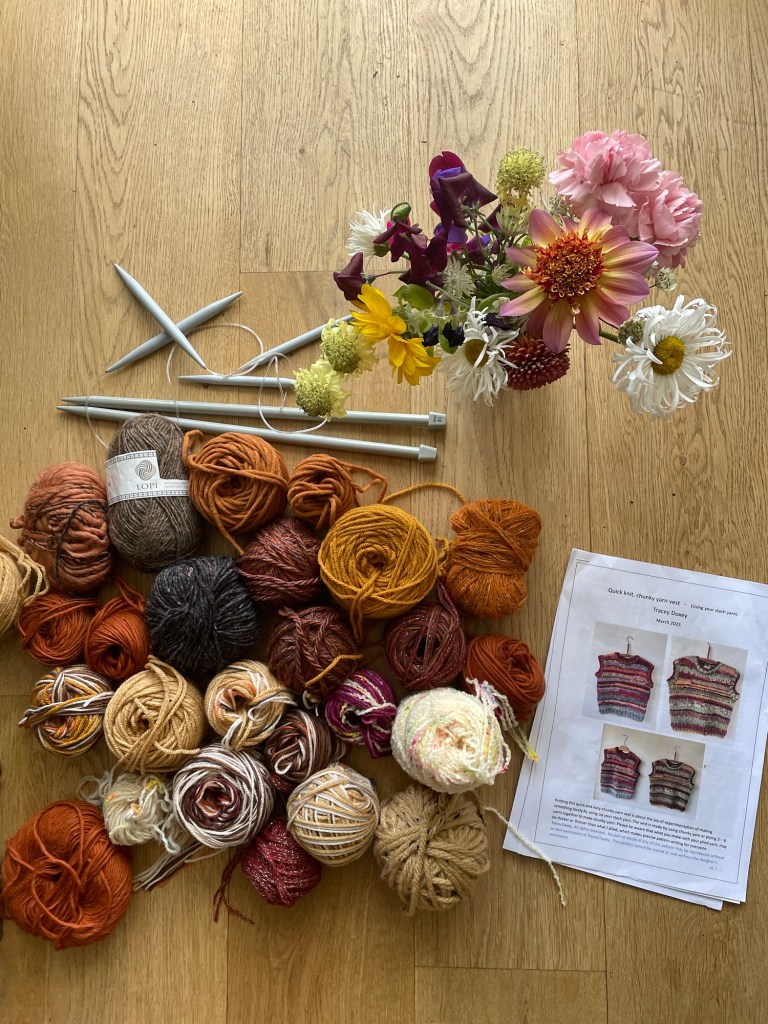
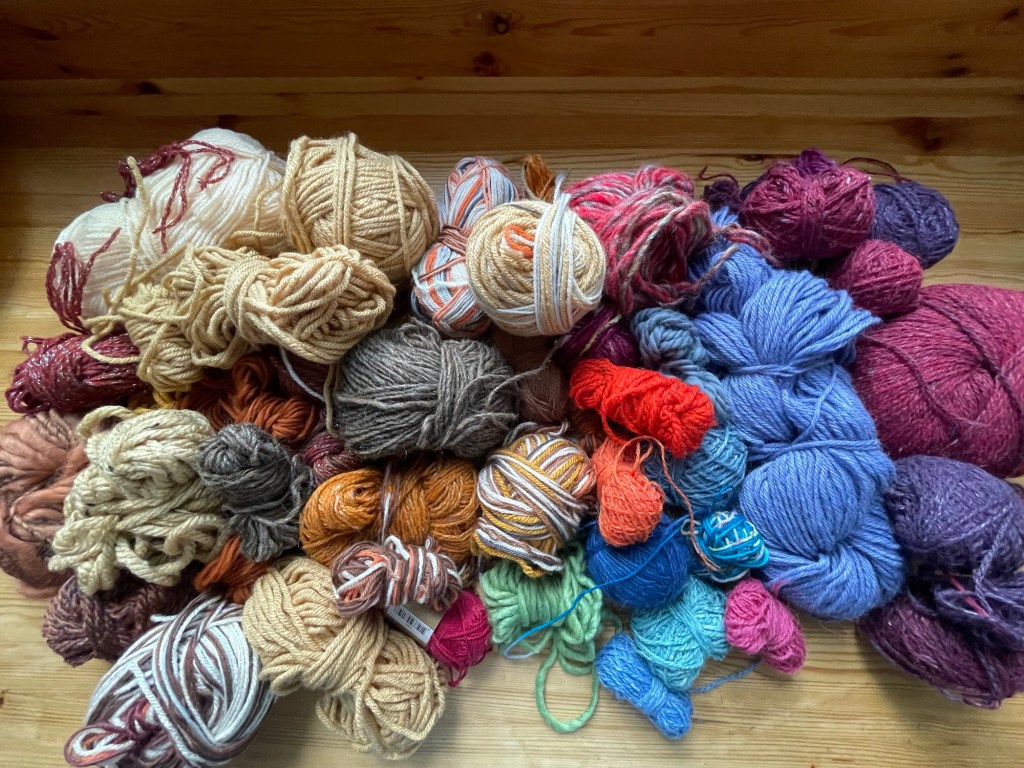
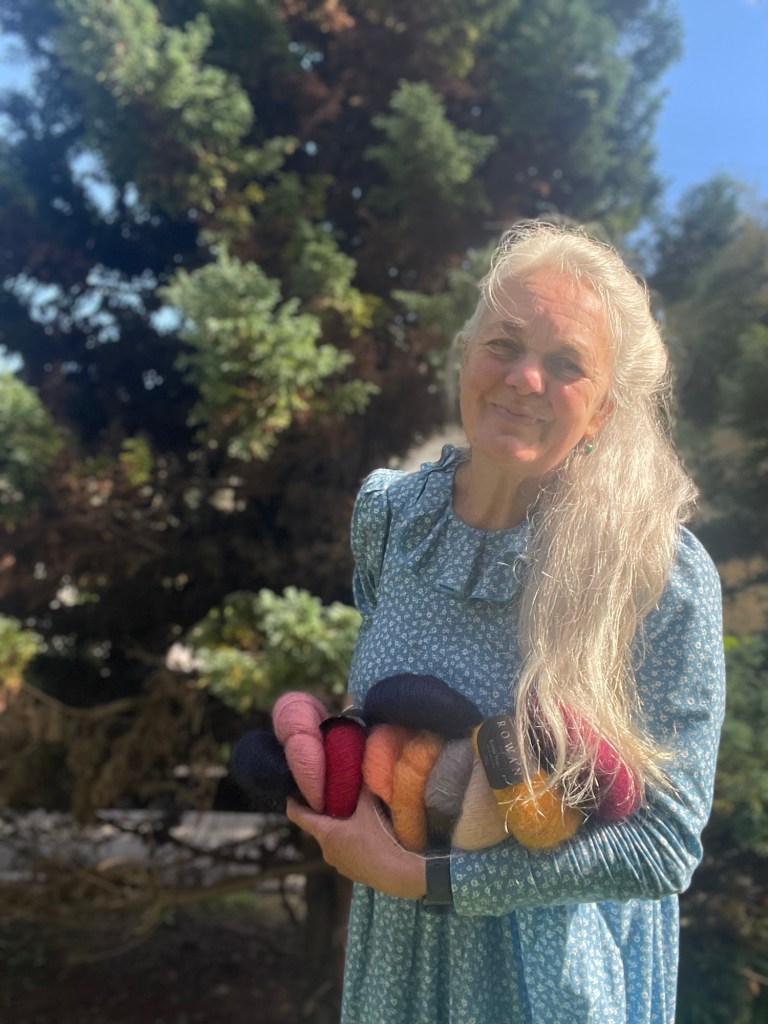
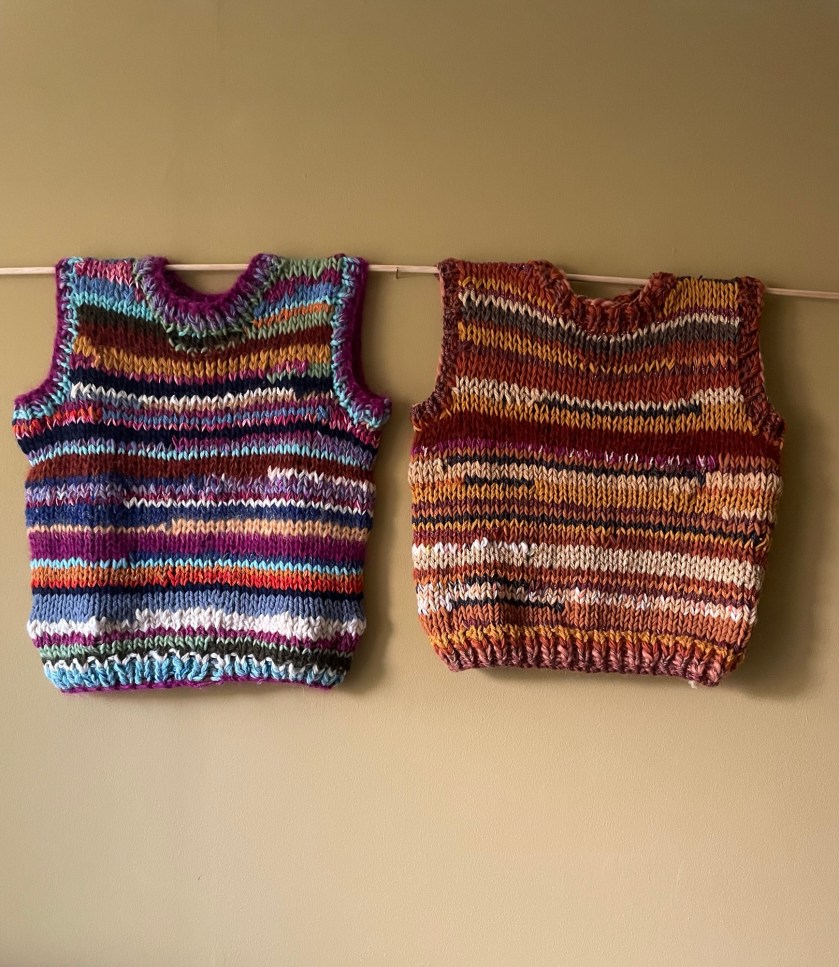
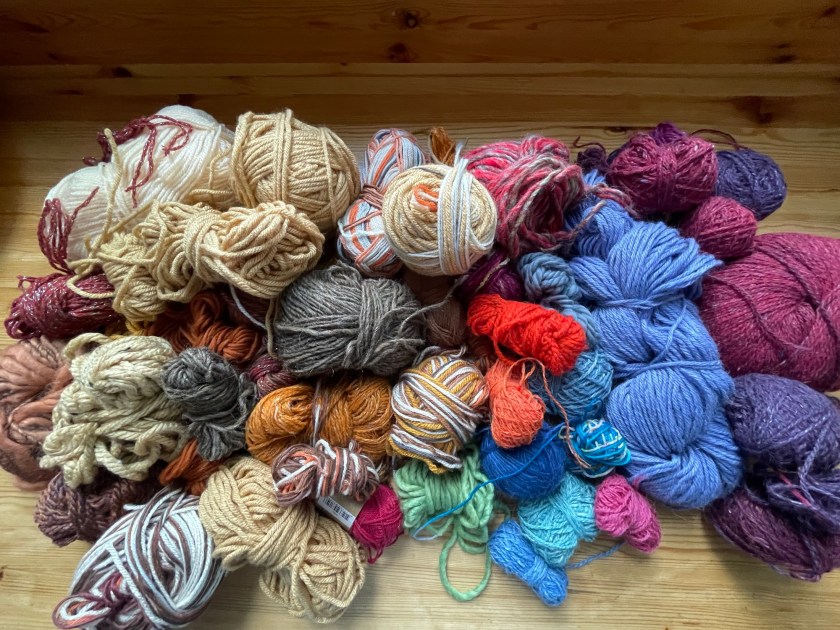
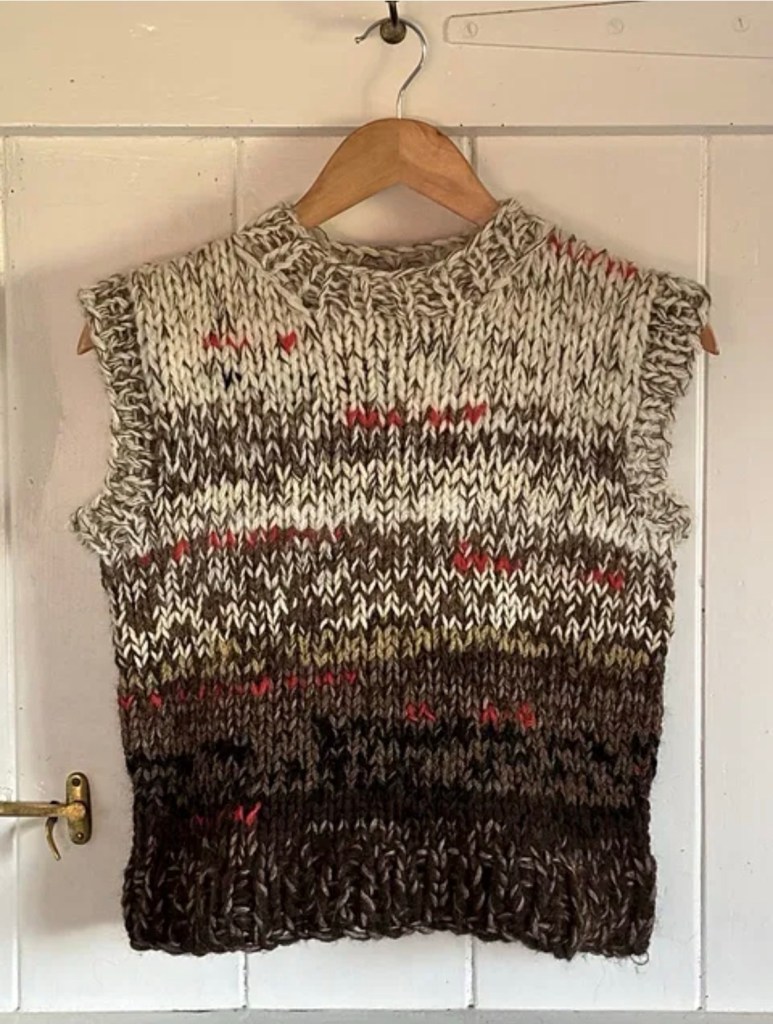
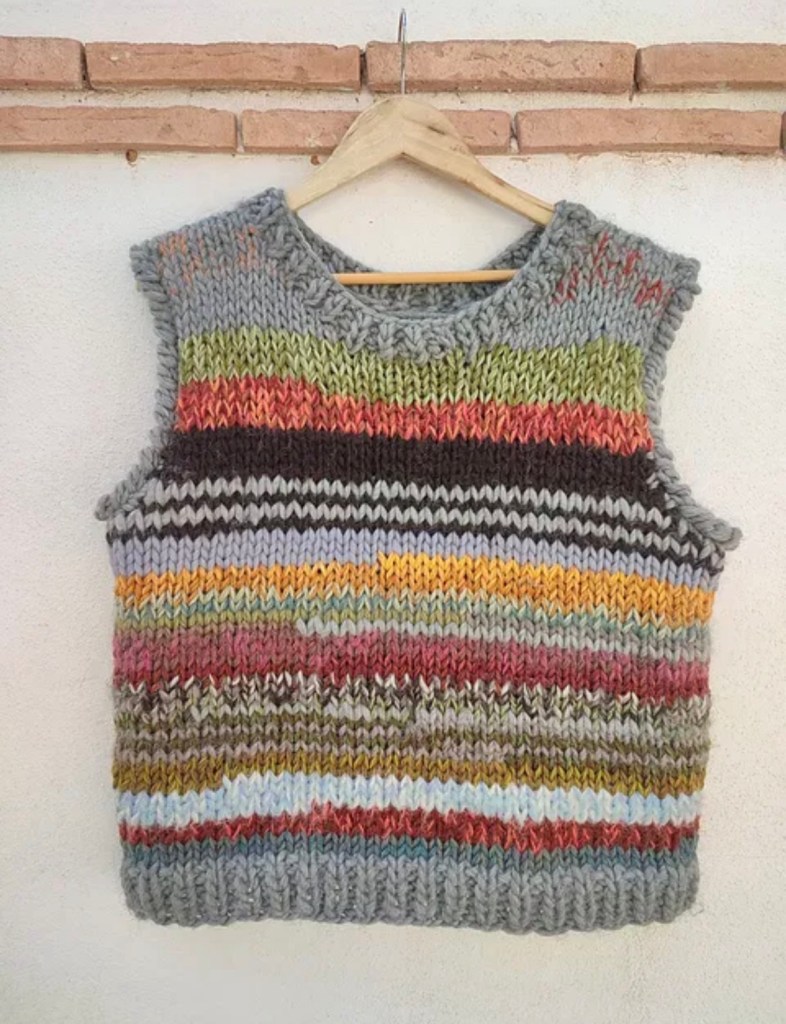
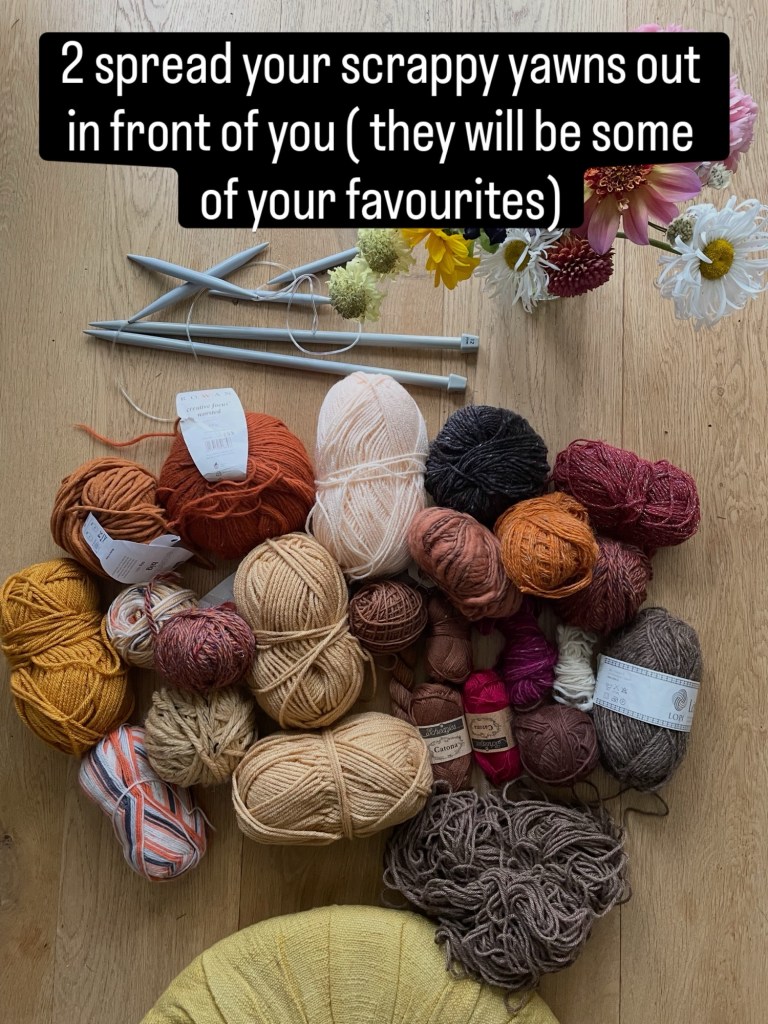
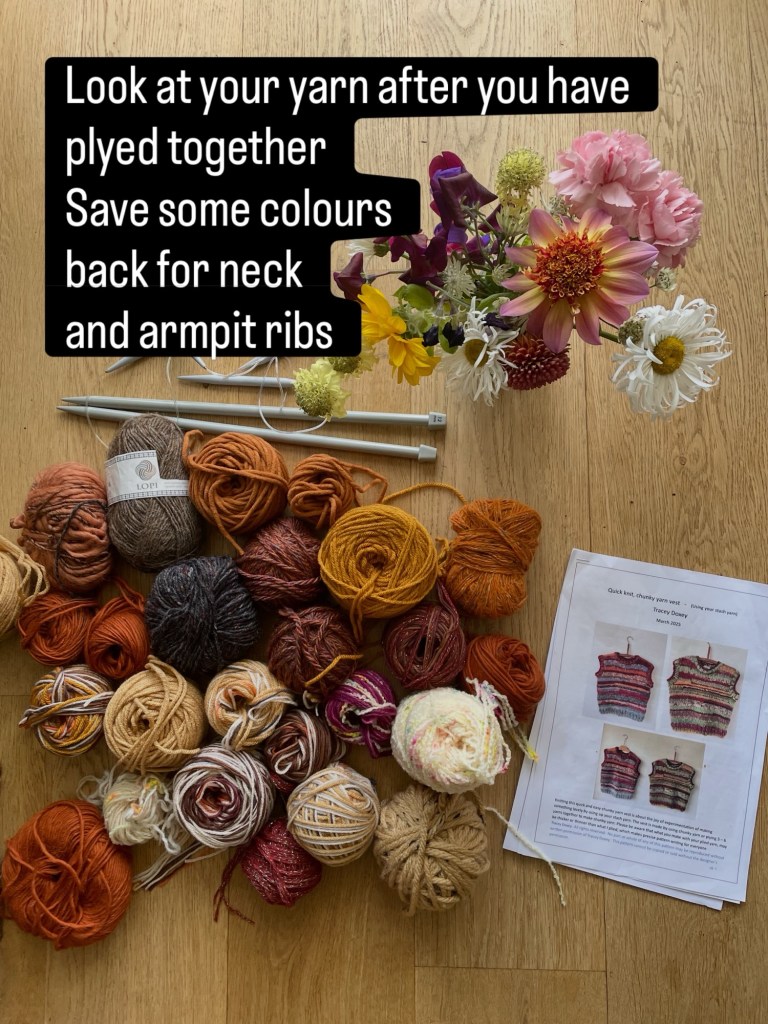
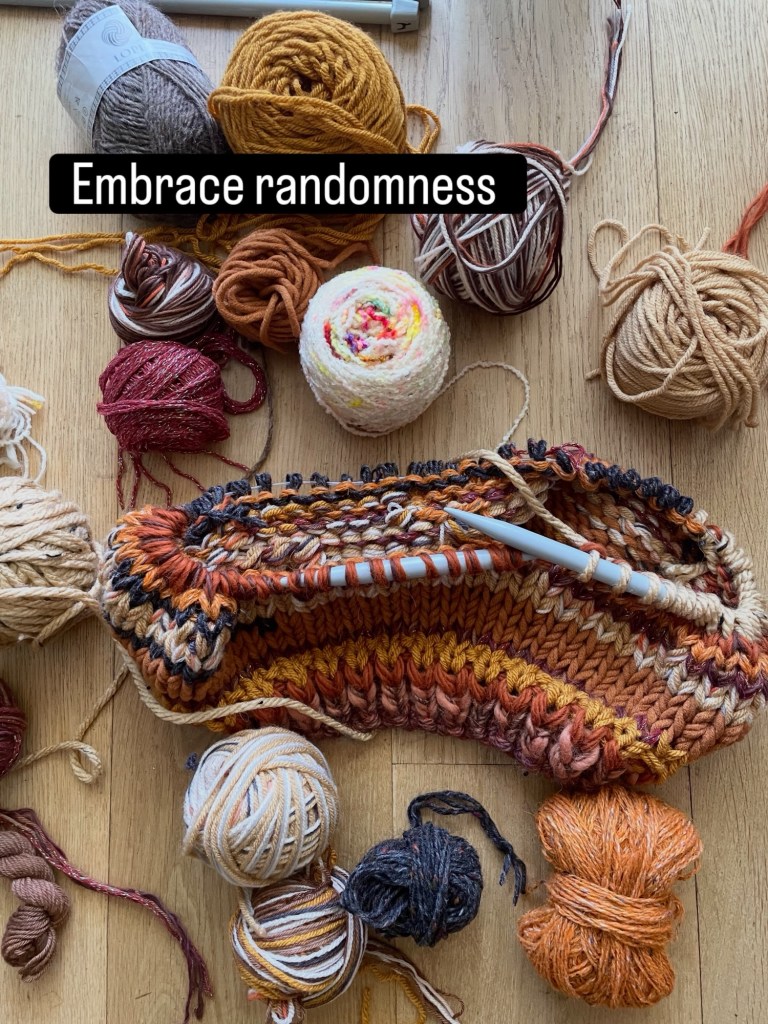
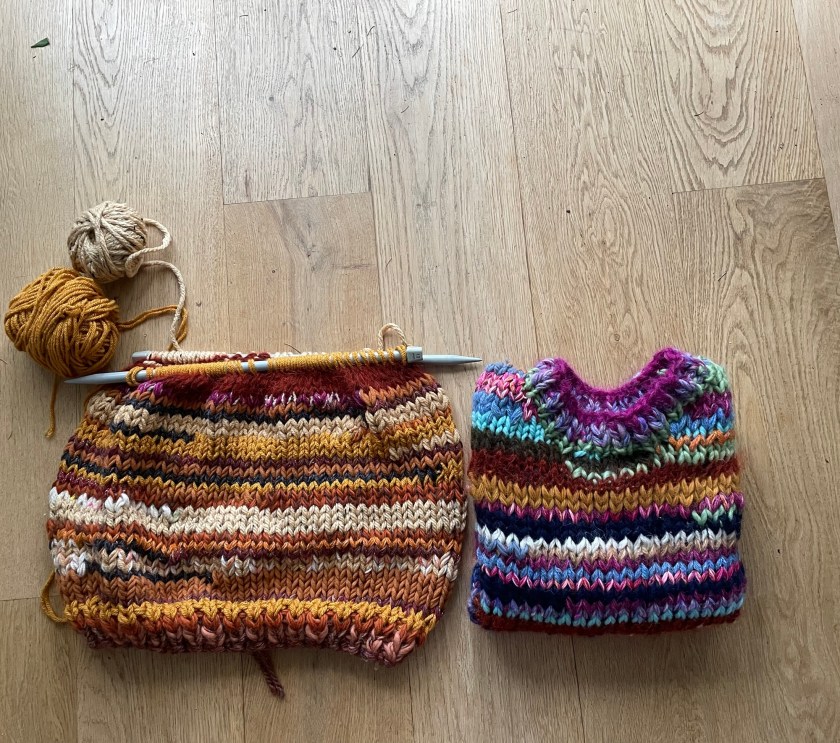
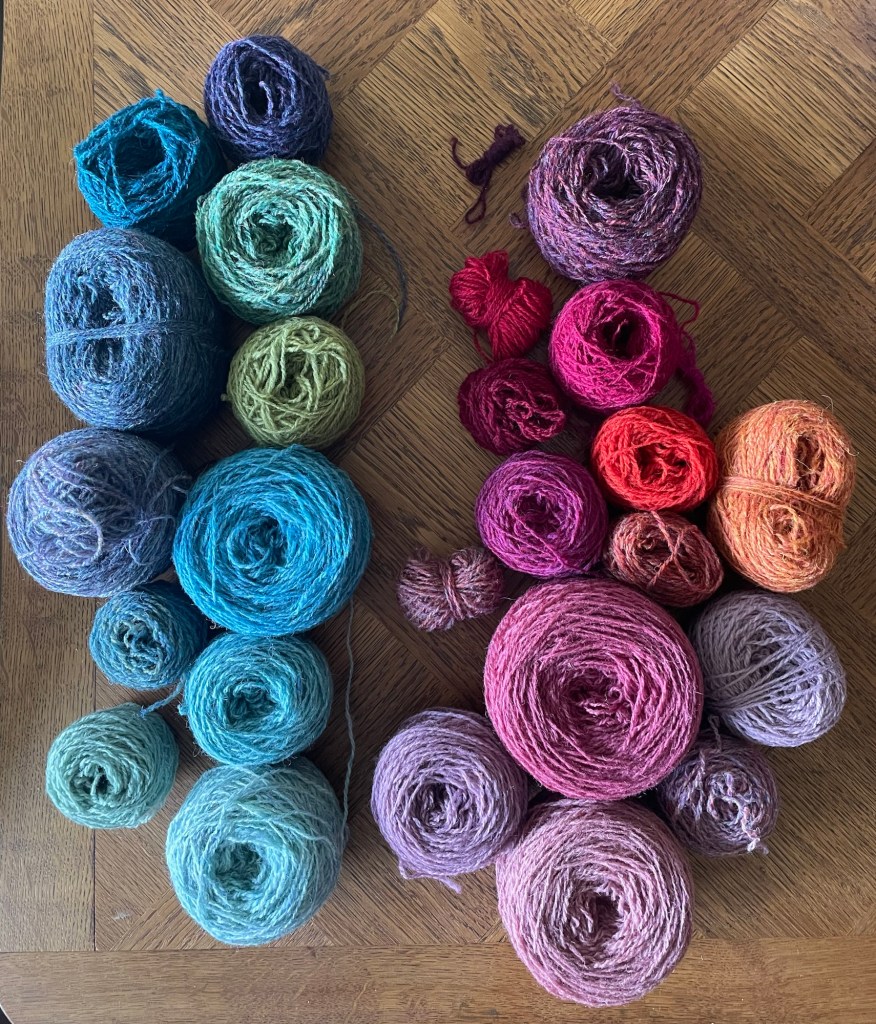
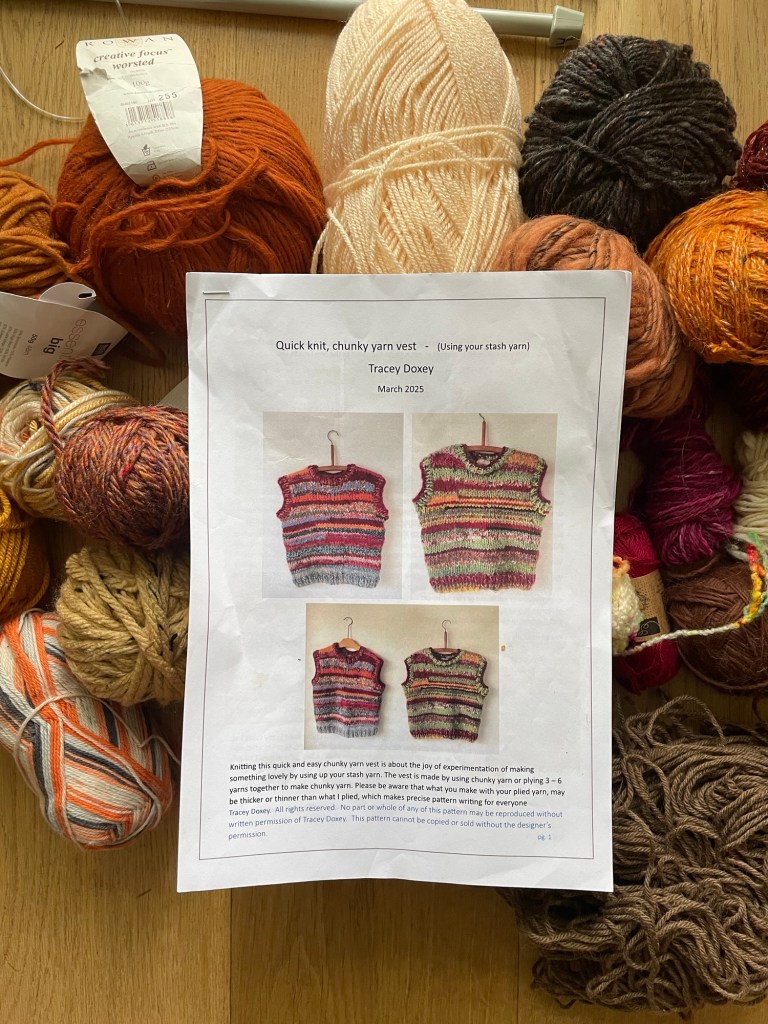
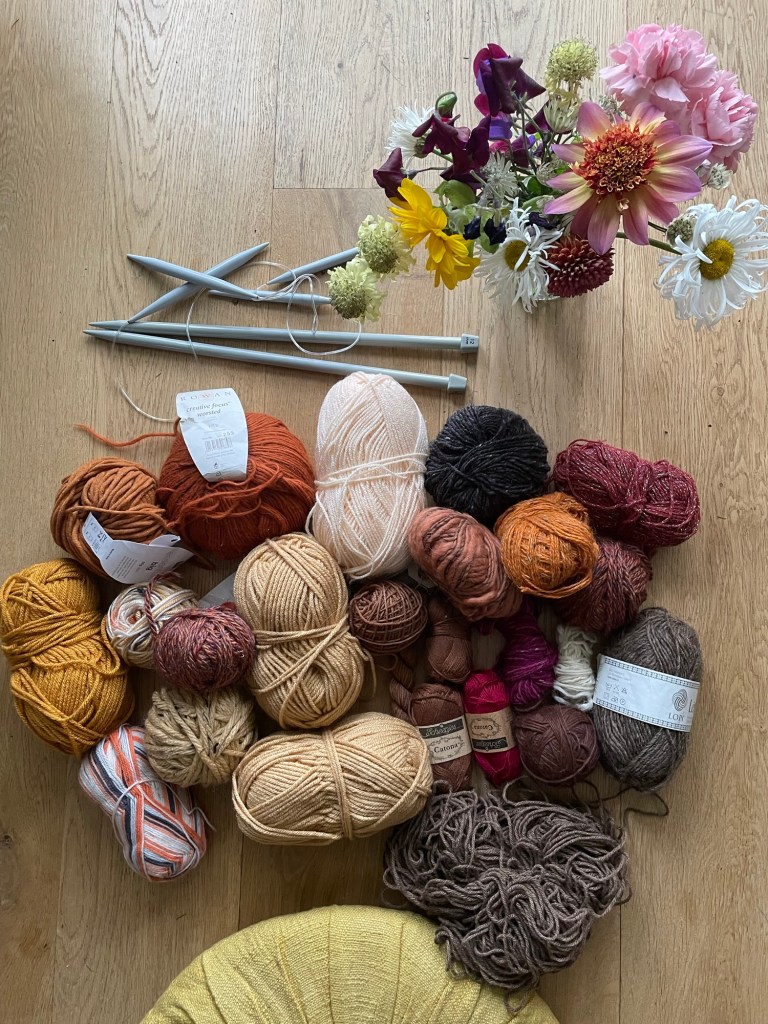
The remaining yarns from my Harvester Pie collection and the previous vest (pictured below) are going to One winner who will receive the bundle of leftover yarns shown in the photograph—perfect for creating a beautifully individual vest of your own.
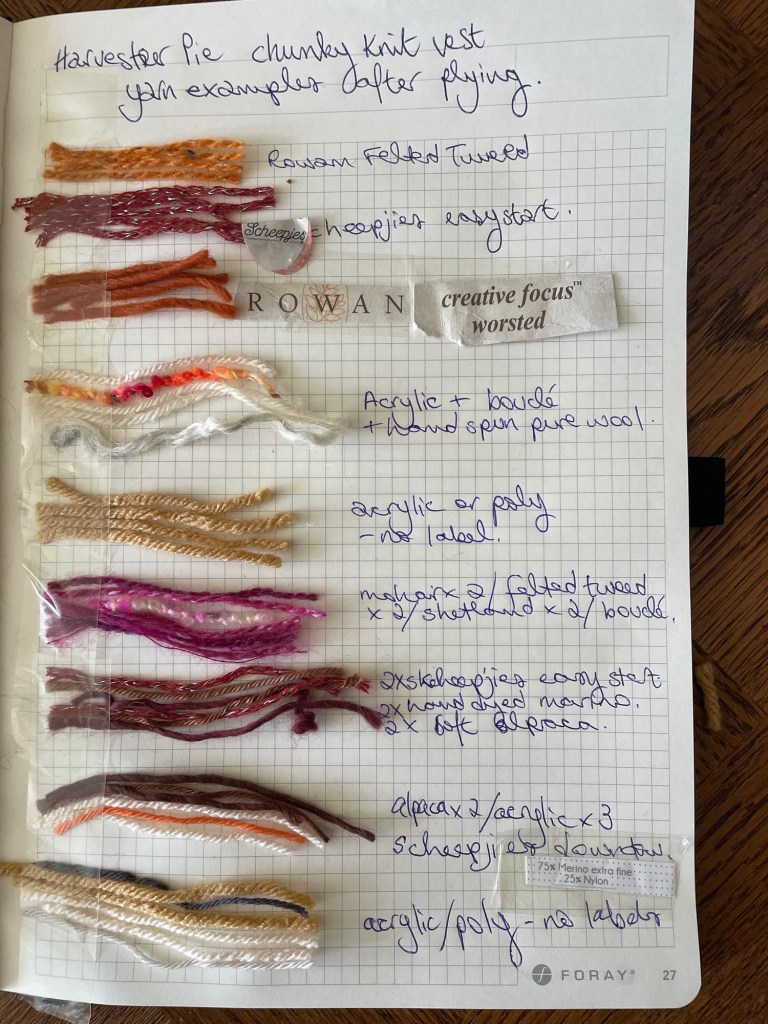
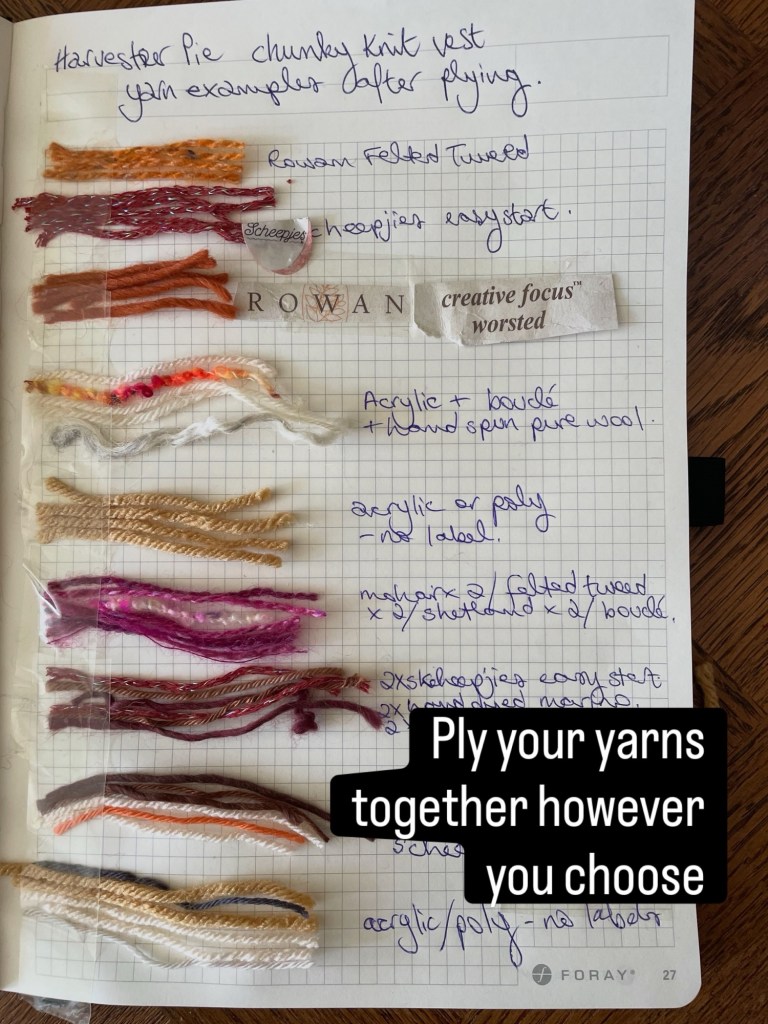
There is a mix of pure wool, Rowan felted tweed, lopi, and acrylic. Enough to make your own vest by plying the yarns together in whatever way you choose to create your own Chunky Knit Vest. The pattern gives ideas on what yarns to ply.
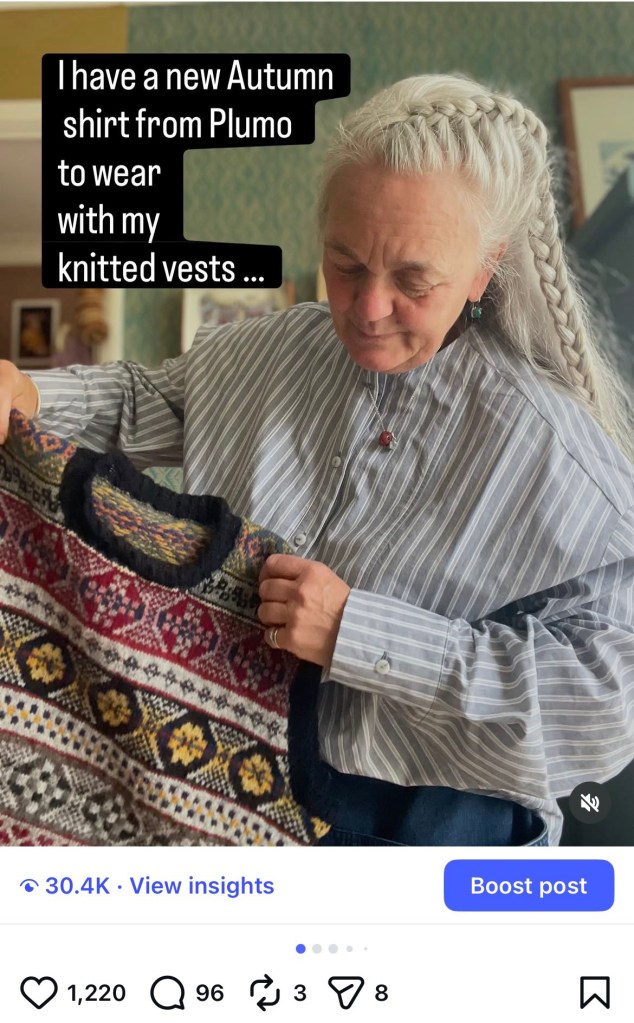
All you need to do is purchase my Chunky Knit Vest Pattern between 15th July and 31st July, and you’ll automatically be entered into the draw. There will be one lucky winner. The pattern is £6 on Ravelry
Purchase the Chunky Knit Vest Pattern between 15 July and 31 July.
Everyone who purchases the pattern during those dates will automatically be entered.
One winner will be chosen after the closing date. I will draw one winner at 6pm on 31st July
I will announce the winner on Instagram – @traceydoxey and email the winner too.
The only thing I’ll ask is that the winner pays the postage to their country, wherever they are in the world.
Thank you so much for all your enthusiasm for this pattern already. Seeing your colour choices in the projects in Ravelry and in the comments on Instagram has made me really happy. Seeing your own interpretations is one of the greatest joys of designing something like this. Every vest has its own personality, and every knitter brings their own unique selves to it.
Every vest becomes a reflection of the yarn you already have, the colours you love, and the choices you make along the way. No two will ever be the same, and I think that’s what makes knitting from stash so wonderfully exciting. This offer is a different type of stash – it is mine that I am offering to give away.
Last night I shared the very beginning of my chunky knit vest project over on instagram link here
– from choosing yarns from my stash to plying them together and watching unexpected colour combinations appear.
This morning I’ve reached one of my favourite stages.
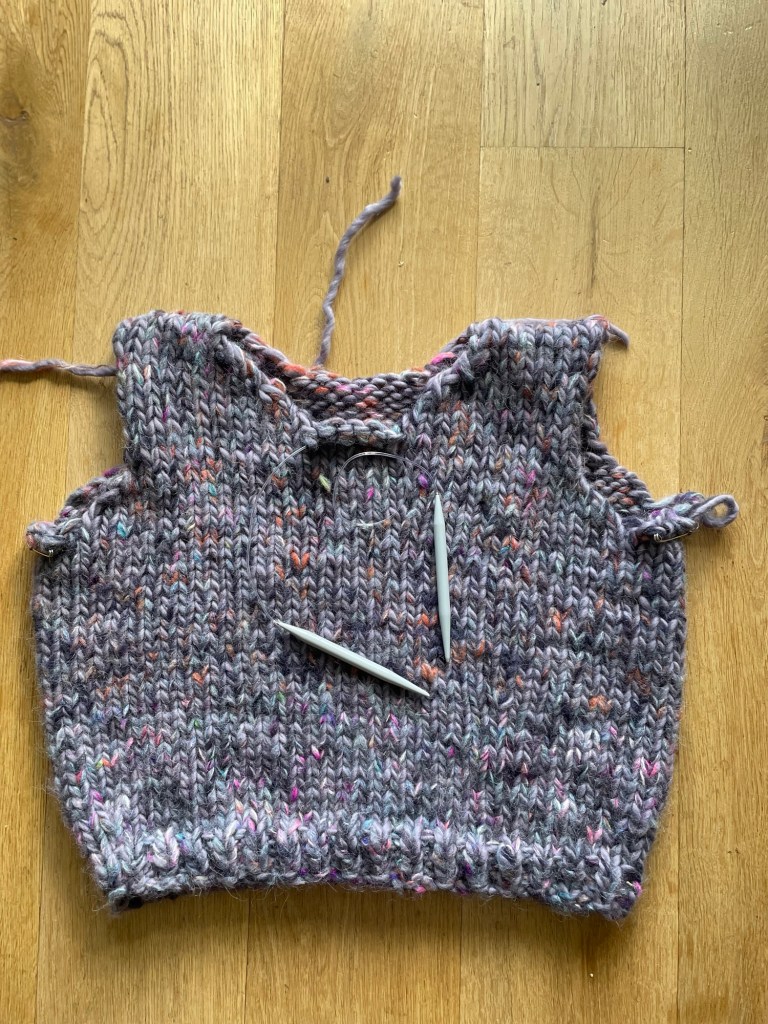
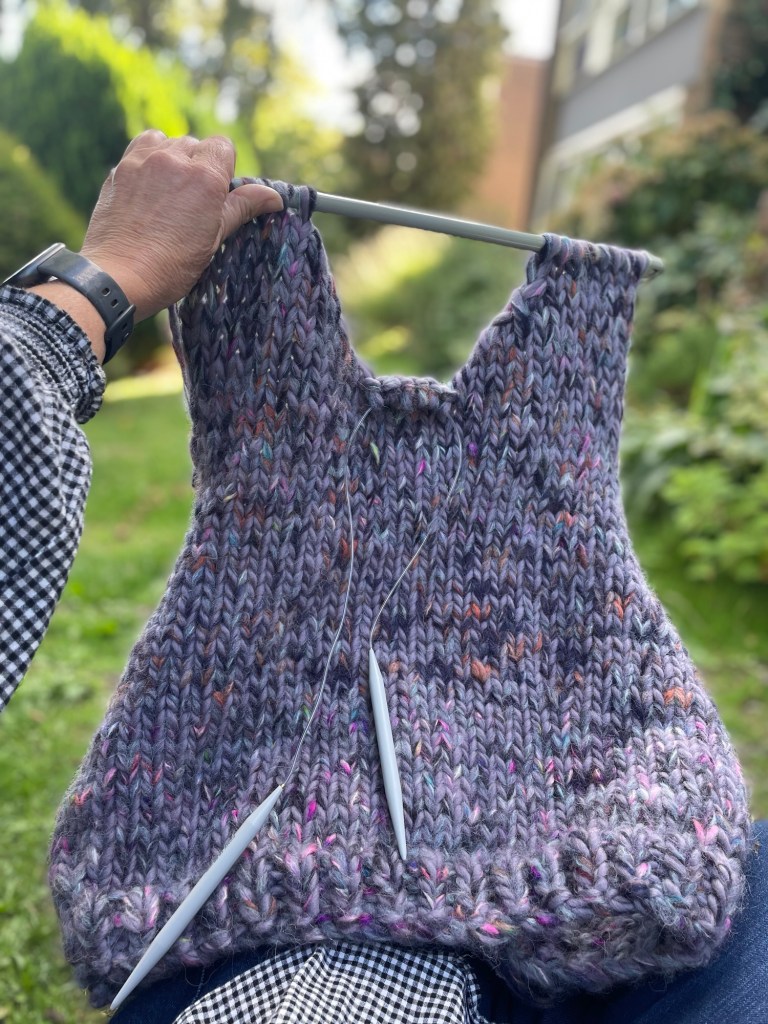
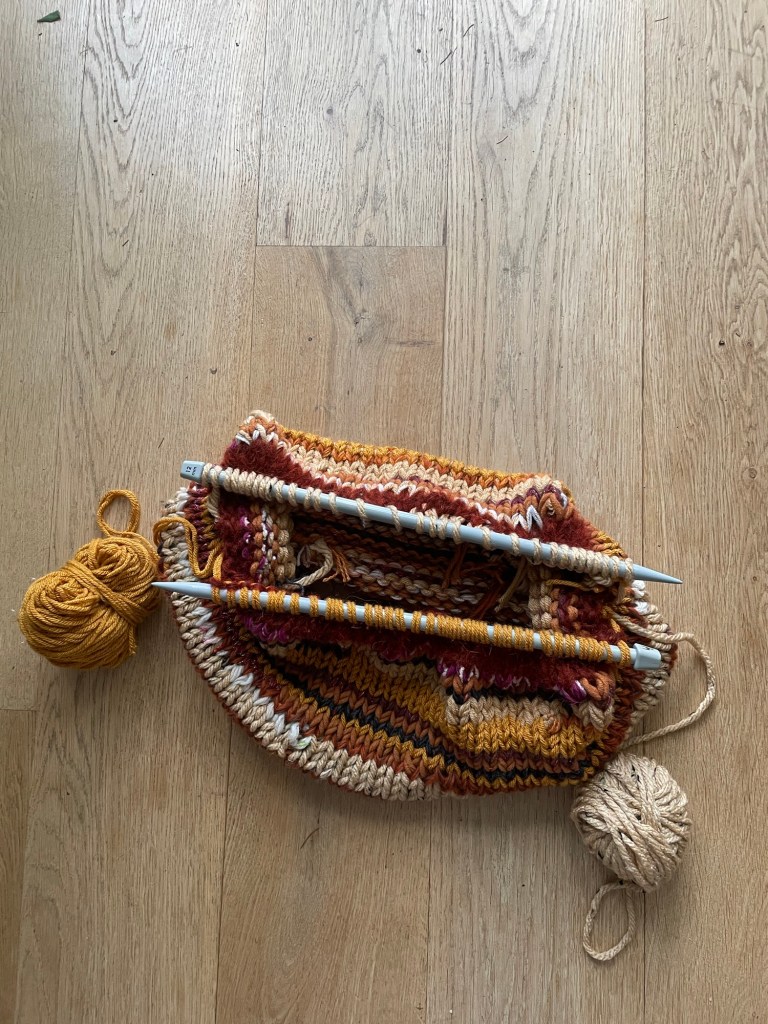
The body is knitted, I’ve divided for the armholes, and suddenly it feels as though I’m no longer making a swatch or experimenting. It’s becoming a garment.
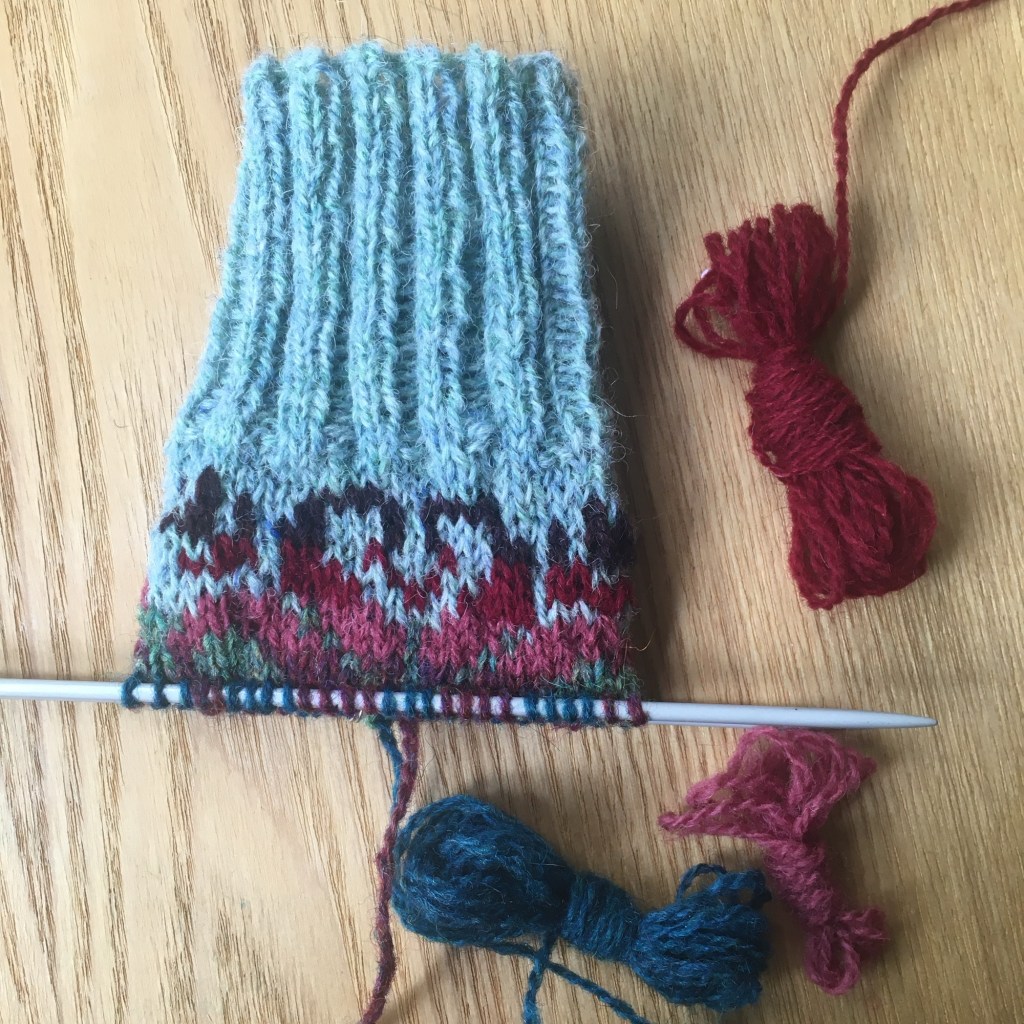
This is the stage where the knitting changes. Instead of endless rounds, there’s shaping and decision-making but this easy to follow Chunky Knit Vest pattern helps you with every step. Every few rows reveal a little more of the vest, and it’s exciting to see the colours shifting as different yarns come and go from your own personal choice and personal unique stash.
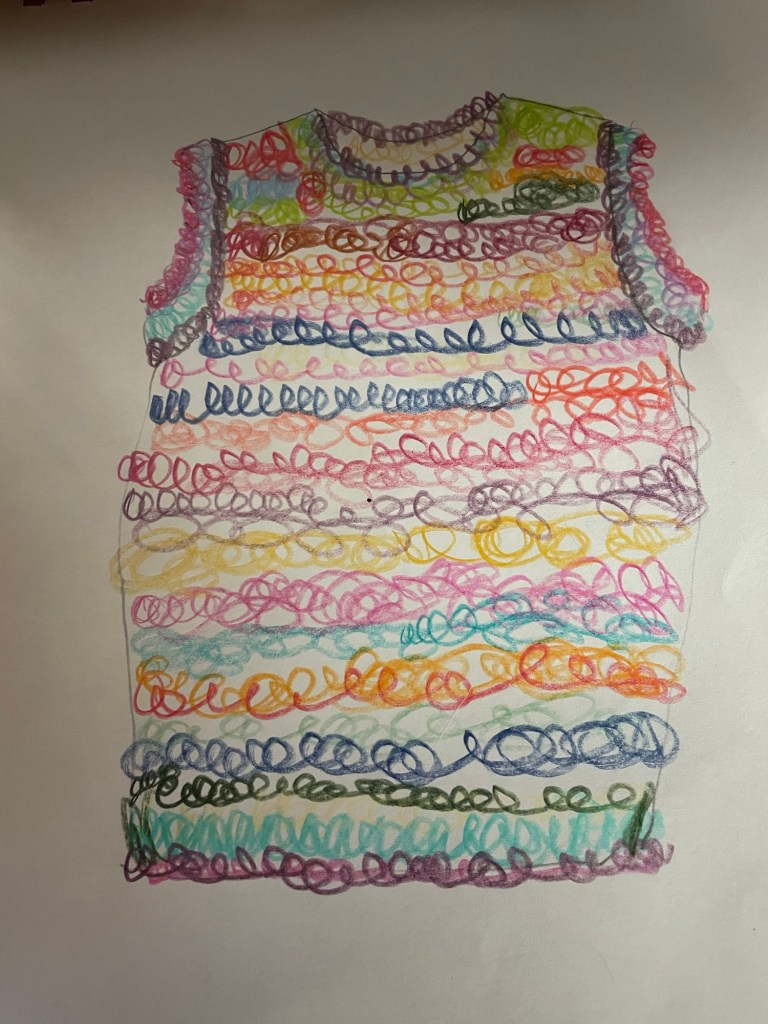
One of the things I love most about this pattern is that there isn’t a “correct” way to combine your yarns. You can work intuitively, adding a strand, dropping another, letting one colour drift into the next. The vest becomes a record of your stash and your own colour choices.
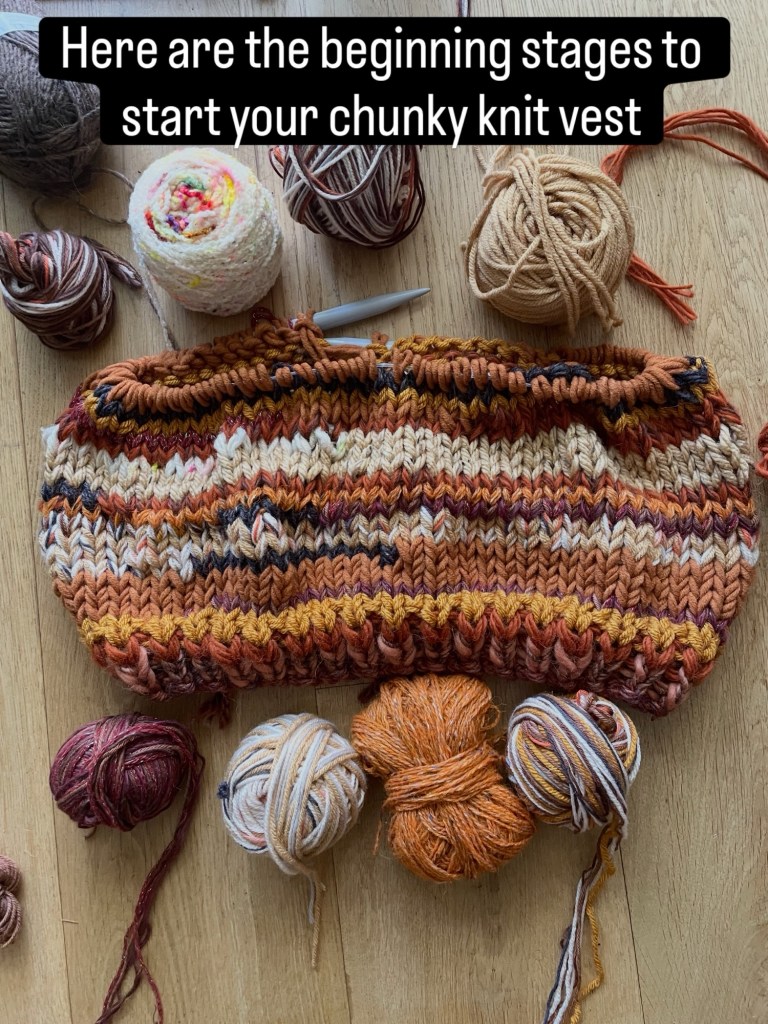
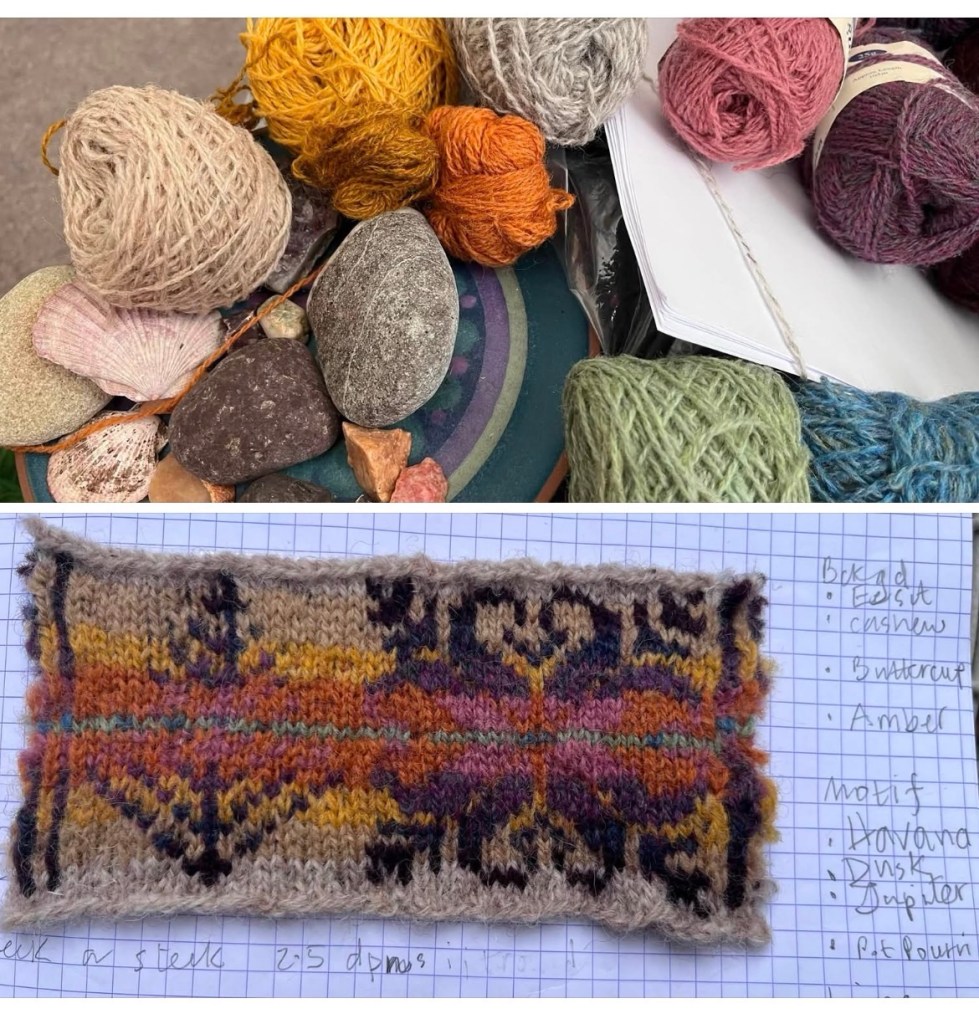
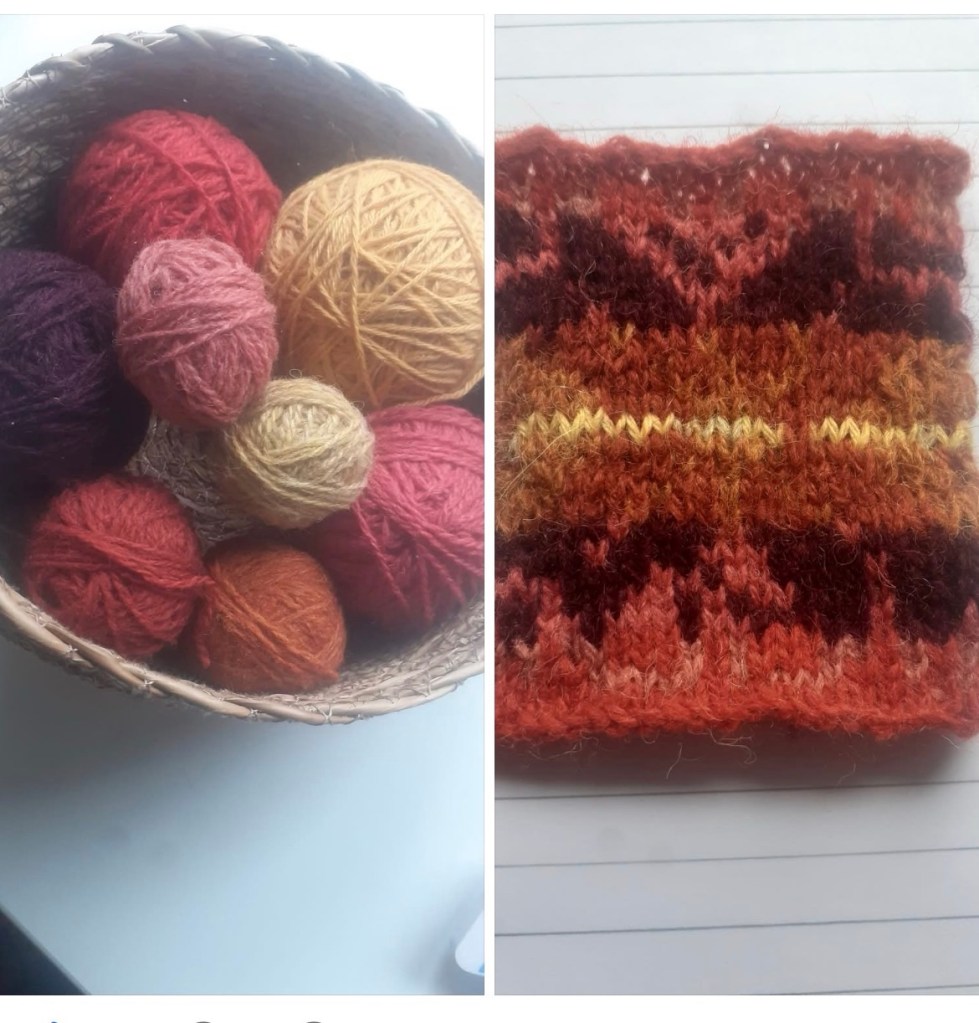
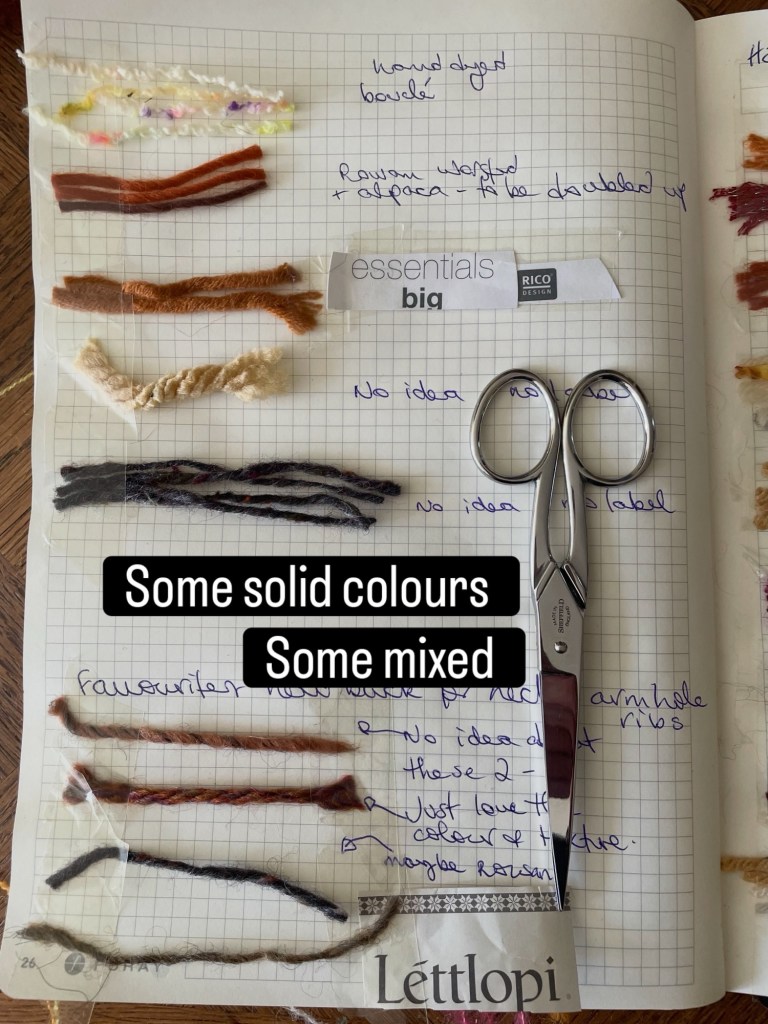
If you’ve been thinking about casting one on, perhaps this is your sign. Gather those odd balls of yarn that have been waiting patiently in your basket. Don’t worry if they don’t match. In fact, it’s often the unexpected combinations that create the most beautiful fabric. However, surprisingly, for the first time ever, I bought a random bag of colours on Saturday, and the bag was called Harvester Pie. I think that butterscotch, honeycomb, ginger and pie are all appropriate for these Autumn colours. You can see some of the plyed yarns in the images below.
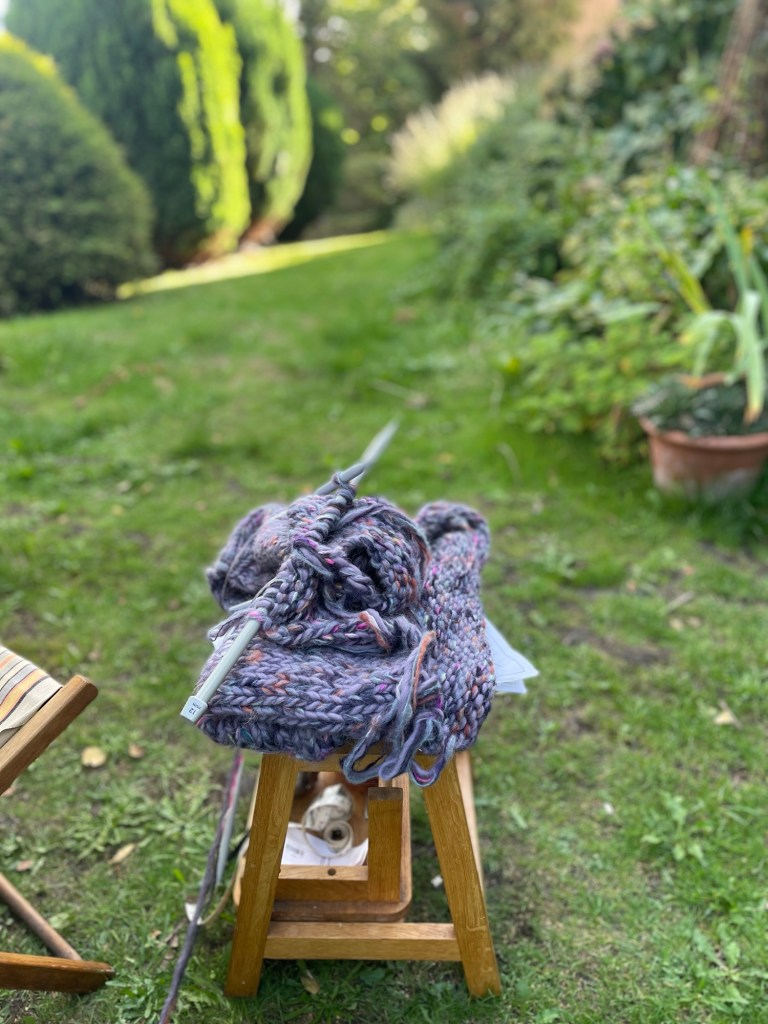
I’ll keep sharing this vest as it grows. Next stop… shoulders and neck shaping. But here are images of the first stages to help you, if you decided to have a go yourself.
I can’t wait to see how these autumn colours come together at the end of my 4th Chunky Knit Vest. My daughter took my first one (Compliment) I sold the 2nd one as a commission, I have the 3rd one and this is my 4th.
One of the things I love most about this pattern is that no two vests will ever be the same. Every knitter opens their own yarn basket, chooses from their own treasured leftovers and favourite odd balls, and creates colour combinations that nobody else would think of. The finished vest becomes a reflection of the person who made it. Have a look on Ravelry at some of the projects. Bottom of Form
Or on my Instagram as people are now adding their project photos in the comments which I am loving seeing.
I can’t wait to see everyone’s versions because I already know they’ll all be different. The pattern is the same, but the yarn choices belong to each knitter. That’s the magic of it. Every vest is unique, every colour journey is different, and every finished garment becomes something that couldn’t have been made by anyone else.
My hope is that this pattern gives you the confidence to reach for the yarns you already love. To stop worrying whether they’re the “right” colours and start enjoying the process of putting them together. There really isn’t a wrong answer—only combinations that tell your story.
This pattern doesn’t ask you to copy me. It invites you to become more like yourself with your own colours 😊
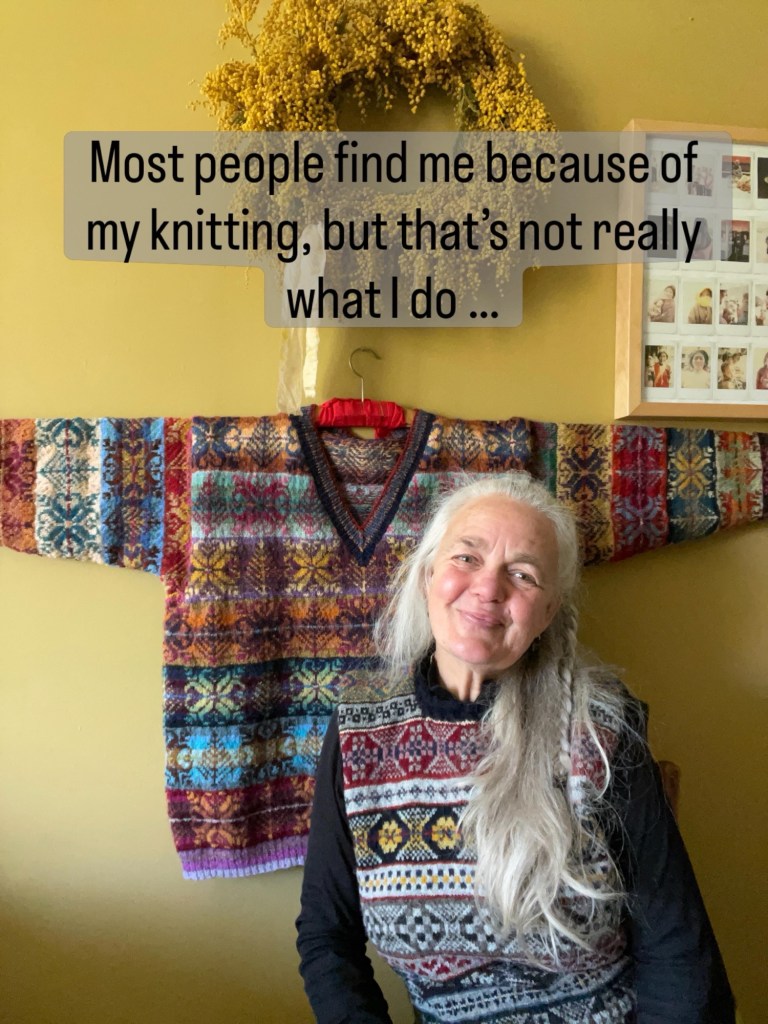
As more people discover my work, I’ve noticed quite a few assume that I knit jumpers for people or that I am just a colourful knitter.
It’s always a lovely compliment, but the reality is a bit different.
I’m not really in the business of knitting jumpers or hats.
I’m in the business of designing them and hat patterns in a marvellous kaleidoscope of colours. I also teach online workshops and am now running a 4 month online colour swatch journal group. This takes a huge amount of time.
And, the act of knitting is actually only a fraction of what goes into each pattern.
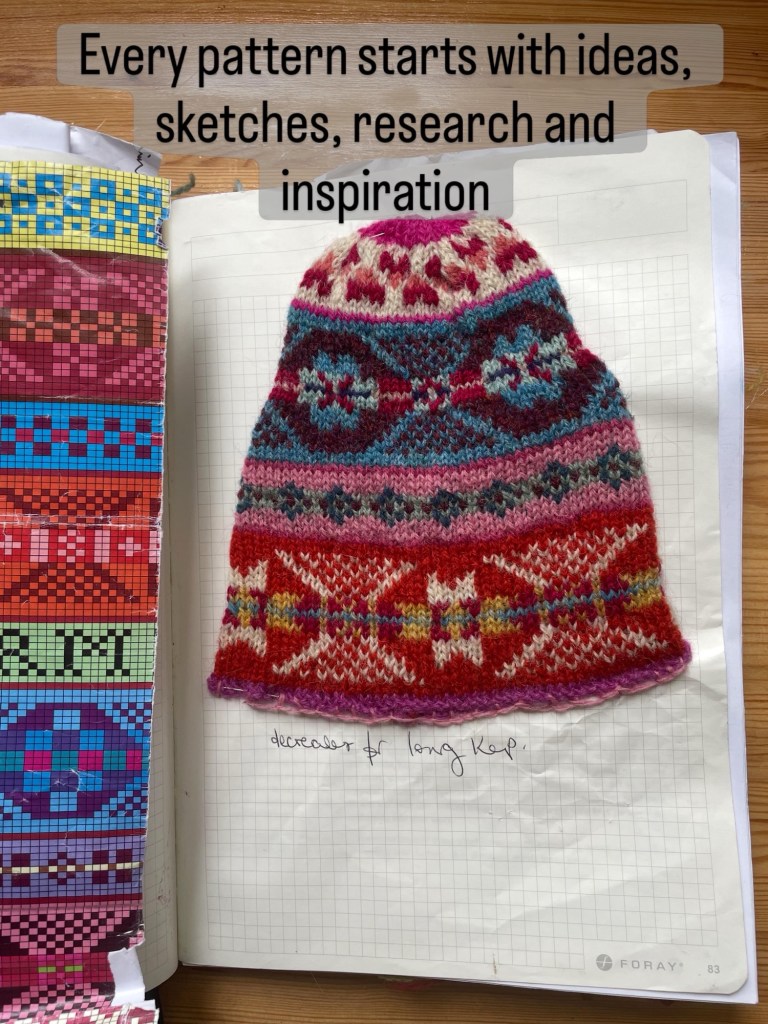
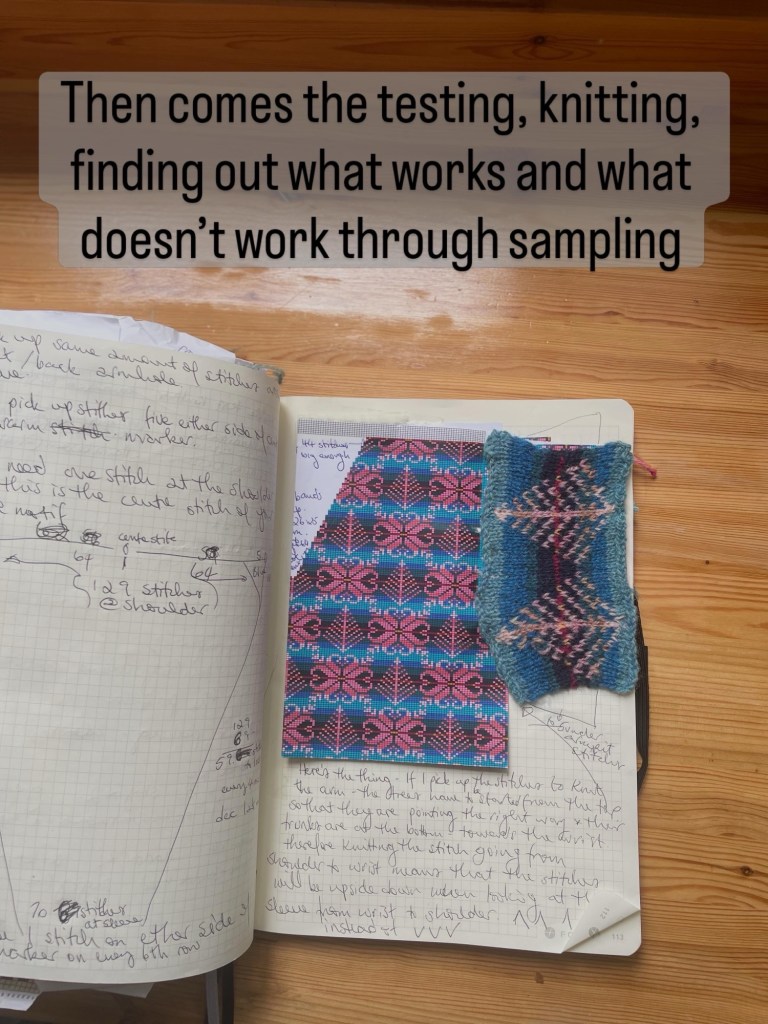
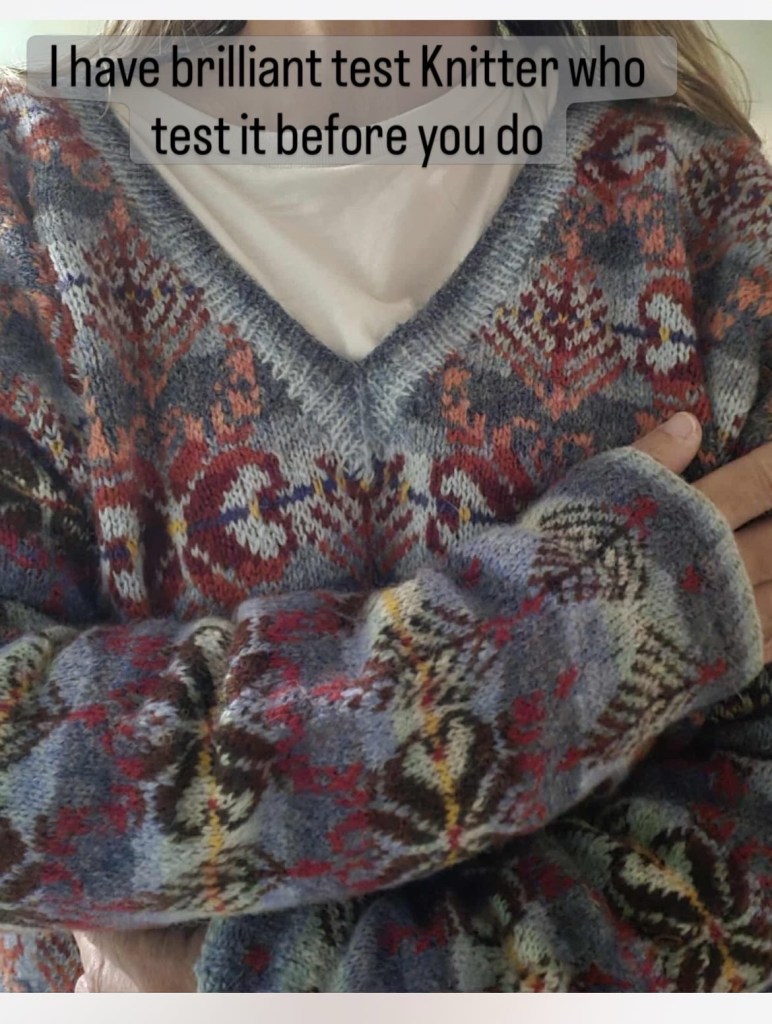
Before I even cast on, I’ve usually spent hours (often days) thinking about colour, inspiration, construction and whether an idea might work. Then comes the swatching. The maths. More swatching. More maths. Writing the pattern. Rewriting the pattern. Test knitting and working with those knitters. Photographing it. Filming it. Answering questions. Updating files.
By the time a pattern is ready to publish, I’ve invested far more hours than anyone will ever see.
If it takes someone 30 hours to knit one of my jumpers, I’ve probably spent several times that bringing the design into existence in the first place.
And that’s absolutely fine. I love what I do. I love the challenge of turning an idea into something that someone else can enjoy making.
But sometimes I think people don’t realise what they’re actually buying when they purchase an independent knitting pattern for £5 – £10 when a percentage is also taken by Ravelry and Paypal.
It isn’t just a PDF it is a story and my lifestyle. Independent designers put their lives into the patterns – we do not have a big tech team behind us to make everything work.
It’s all the hours of thinking, experimenting, mistakes, ripped-out swatches, calculations, colour decisions, late nights and cups of tea that came before it. It’s years of learning and refining my craft so that someone else can enjoy the creative part without having to solve all the problems first. I even have a Masters in Knitting and have knitted for over 50 years – through the 80’s to now.
Like many independent designers, I share a huge amount of my work online. I love inspiring people, showing my process and encouraging others to pick up their needles. I genuinely enjoy being part of this community. But, maybe it is time to scale back.
If I’m honest, it can sometimes feel as though a lot of people enjoy the free part without ever thinking about supporting the person creating it.
If everyone who admired a design bought just one pattern now and then, it would make an enormous difference to independent designers like me. Those £5 and £10 purchases are what allow us to keep creating, researching, designing and sharing.
So, if you’ve been following my work for a while, or you’ve ever thought, “I’d love to knit that one day,” perhaps today is the day to have another look through my patterns.
When you buy a pattern from an independent designer, you’re buying far more than a PDF.
Time to research. Time to experiment. Time to make mistakes and discover something unexpected. Time to wander around with a sketchbook, play with colour, and follow an idea simply because it’s interesting.
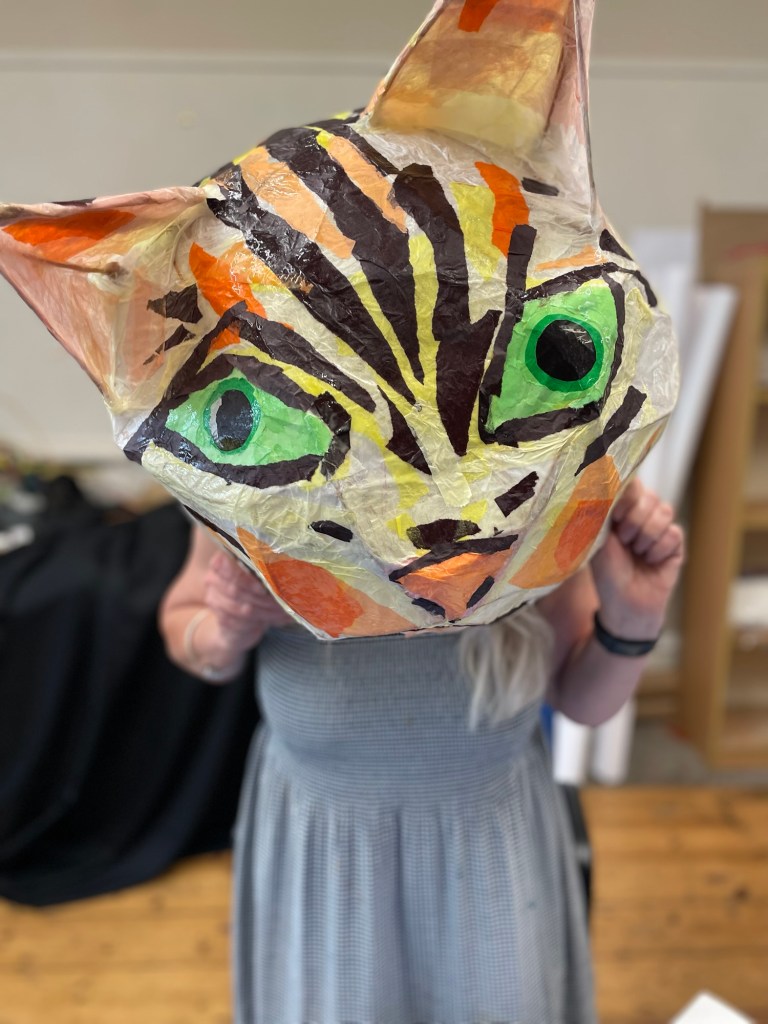
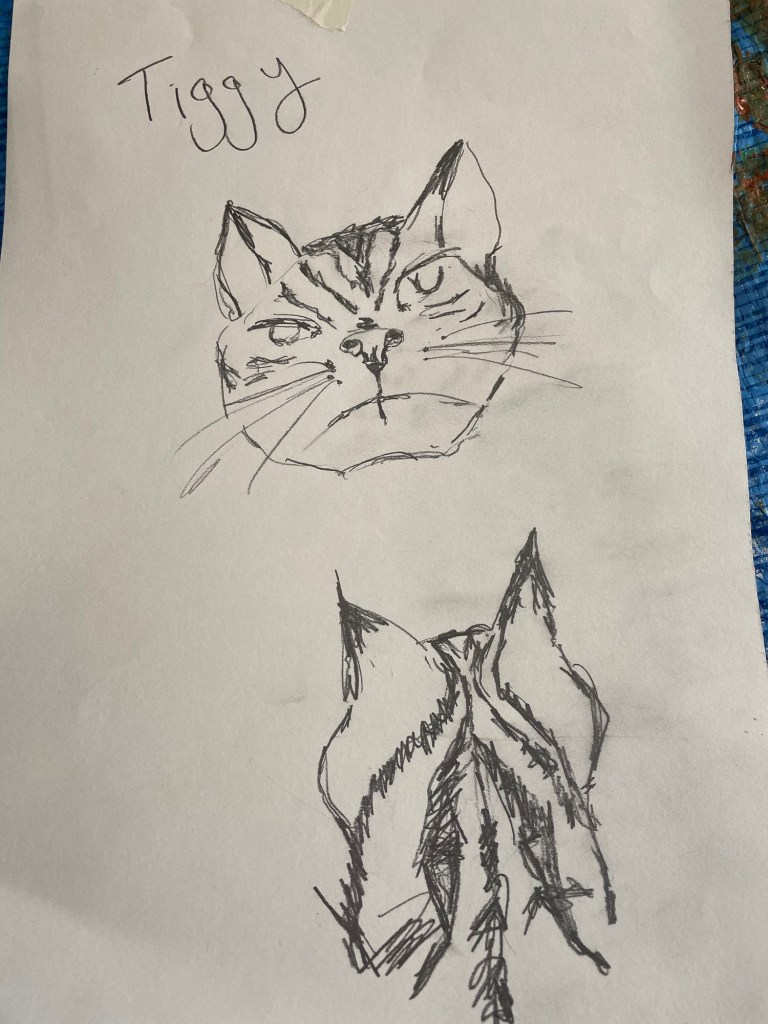
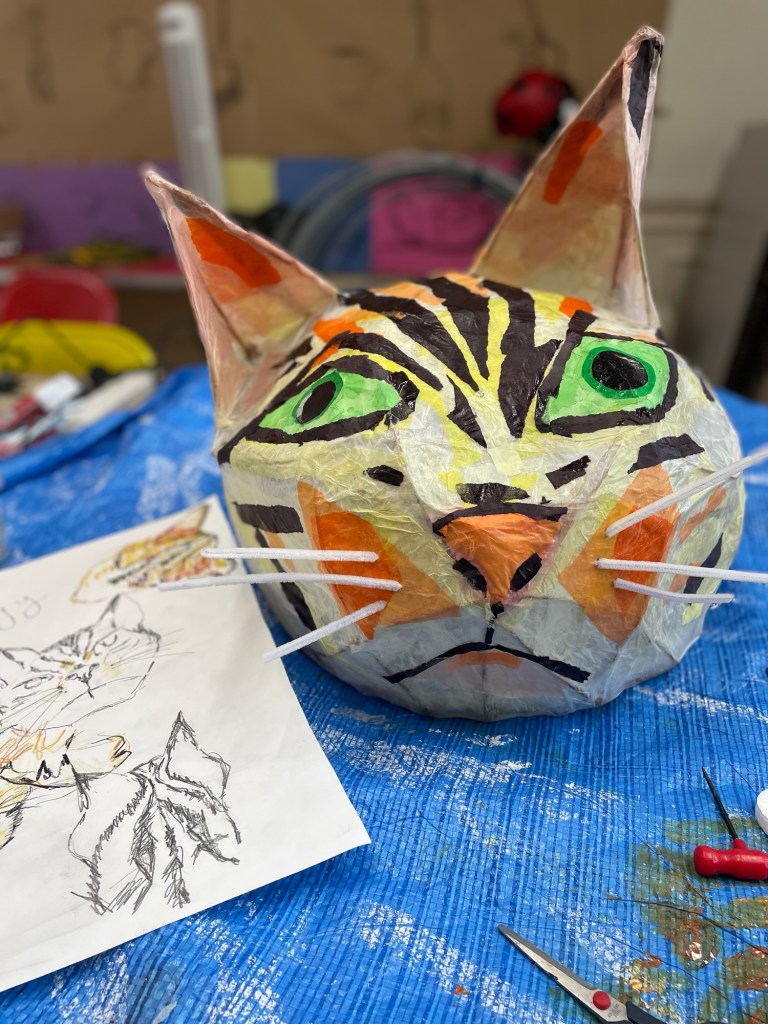
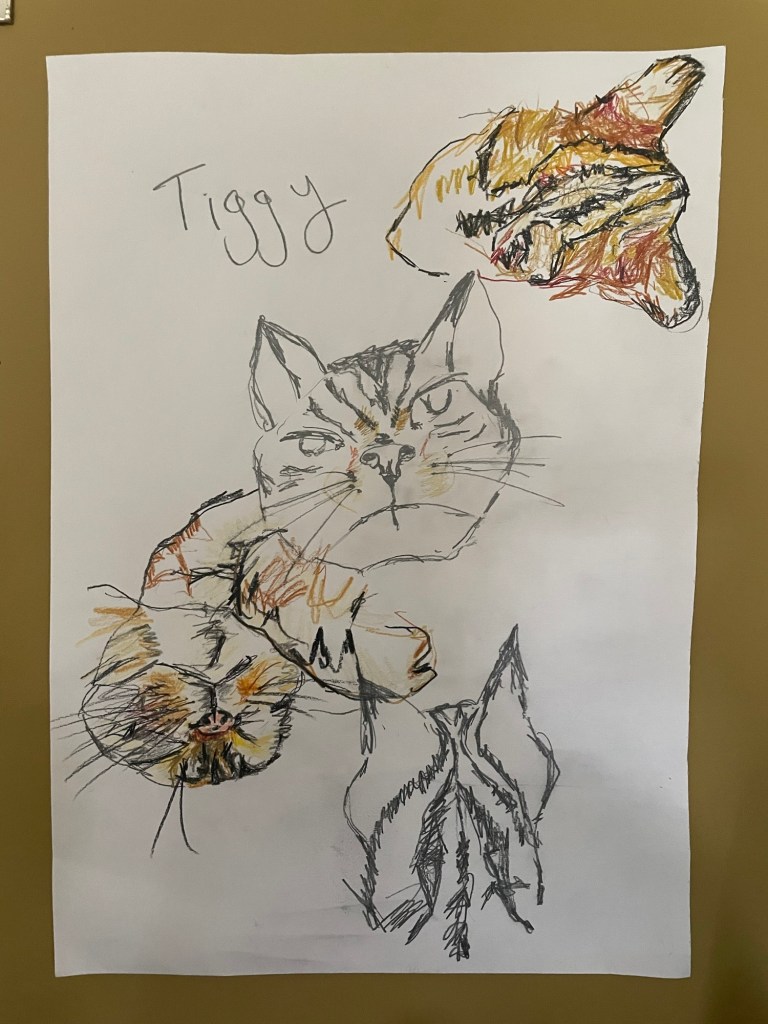
If you’ve followed me for a while, you’ll know that knitting isn’t the only thing I love making. I love drawing. I love creating sculptural pieces, like my cat lantern. I love exploring ideas that may never become knitting patterns at all. Those quieter, more experimental moments are often where the next creative spark begins.
The irony is that the more successful a creative business becomes, the less time there can be for simply being creative. There’s always another pattern to write, another email to answer, another deadline to meet, another post on Instagram, or photograph or story to write.
Every pattern you buy helps create a little more space for that kind of exploration again. It gives me the freedom to spend time making, drawing, painting, researching and developing ideas—not because they have to become a product tomorrow, but because that’s how good ideas grow.
Some of the most important moments in my creative life have come from giving myself permission to slow down, whether that was during my Fine Art degree and my Masters in Knitting. Those experiences continue to shape everything I design today.
So if you choose to support my work, you’re not just helping me publish the next knitting pattern.
You’re helping me remain an artist as well as a designer.
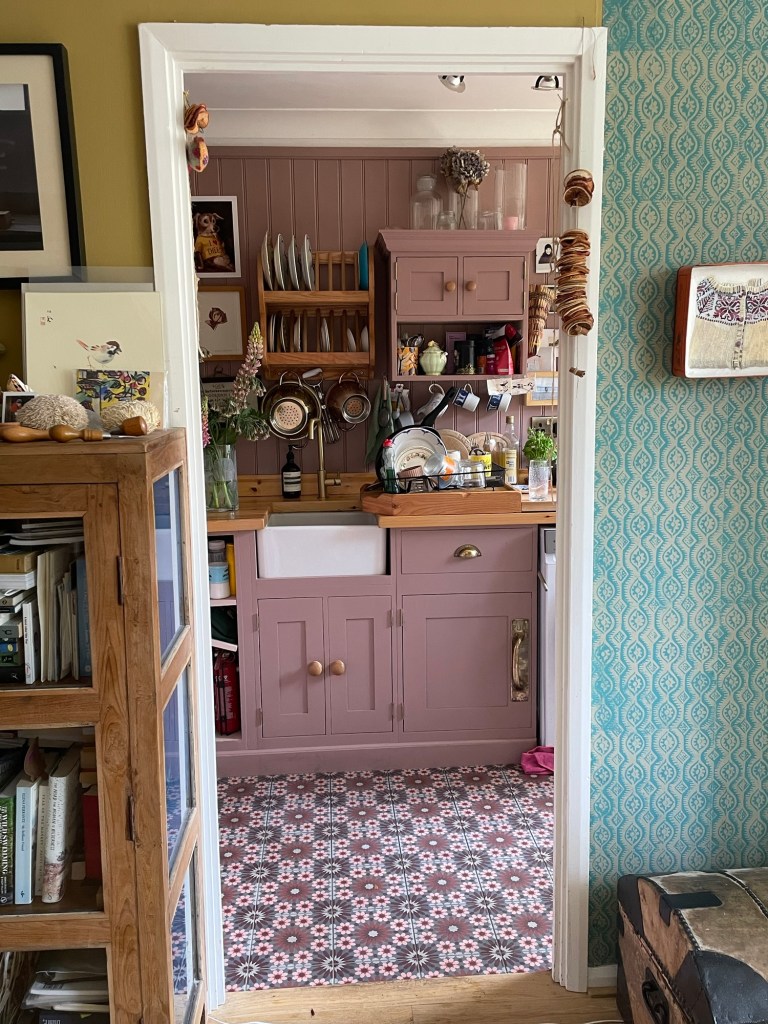
Sometimes I’d simply love to spend a few days drawing. Or painting. Or making something completely unexpected. I would like to paint my kitchen – not the cupboards, but paint the view.
Those are the moments that refill the creative well. They’re often the moments that quietly shape everything that comes afterwards.
You’re giving me something every artist needs from time to time: the freedom to be curious, to experiment, to make without knowing exactly where it will lead.
And I have a feeling that the patterns you enjoy tomorrow will begin in those moments.
If knitting isn’t on your list right now but you’ve enjoyed following my work over the years, another lovely way to support what I do is through my Ko-fi page.
People often say they’re “buying me a coffee”, but what they’re really giving me is something even more valuable: a little more time to create.
Time to open a sketchbook. Time to paint. Time to experiment with colour. Time to make something simply because I’m curious to see where the idea leads.
Those quieter creative moments are where so many future designs begin.
Whether you choose a pattern, leave a Ko-fi, or simply continue to cheer me on, thank you for being part of the journey. It really does make a difference.
I have been thinking about the Japanese Concept of Mono no aware. Our English language falls short of a real translation for this concept, but it could be loosely be understood as – An awareness of impermanence, and / or the bittersweet beauty of transience.
My allotment has become a place of reflection in the sense that last week, I reflected that in my old borrowed allotment, I’m feeling a sense of belonging to something impermanent but deeply enriching. I have been loaned / am the temporary custodian of 5 fruit trees, raspberry and Blueberry beds and a bed that I am trying to grow vegetables in, in the allotment. Martin, in his early 80’s has loaned me the plot in his old allotment that his grandfather and father had before him – it has been in his family for over 100 years. Can you imagine that in a city of such vast changes?
In the allotment, I recognised a feeling similar to the feeling I felt on my daily visits to the old onsen in Fujiyoshida – realising that things are beautiful because they are old, temporary, inherited, and quietly passing through time. Not melancholy exactly. More like being emotionally moved by the fragile continuity of life, passed through people.
I felt it in the old onsen near Mount Fuji because nothing there was optimized or modernized into a “wellness experience.” It was simply alive with history.
And now I’m feeling the same in my allotment in Sheffield because it has the same emotional structure and yet the places could not be further apart
* old hands cared for it before me * Martin and Liz carried it through decades and generations * fruit trees planted by people long gone are still feeding someone, * I am temporarily part of a chain larger than myself,
I do not have a name for this feeling but it is clear within me and I don’t want to let this tiny space go now because it is a wonderland of overgrown time. I think the name is Mono no aware.
Martin strimmed the long grass and placed plastic a chair under the tree for me.
I feel gratitude mixed with ache in the allotment, as I did in the Onsen in Fujiyoshida.
Some of the qualities of Mono no aware, could be: –
awareness of impermanence
emotional movement caused by transience
tenderness toward passing things
beauty heightened because something cannot last
continuity existing through change rather than despite it
The allotment matters more because:
other hands came before me
Martin will not be here forever, and nor shall I
I myself am only temporarily part of it
the fruit trees outlive individual custodians
the place carries visible time inside it
And the onsen comparison feels beautiful because of its non-pristine preservation and accumulation of human passage over decades and generations.
I have become deeply connected to these moments in places which carry the same depth. And, during time spent in Japan I encountered a feeling later recognisable to me through the concept of mono no aware — an emotional awareness of impermanence and continuity — which I now recognise again in the inherited allotment culture of Sheffield. I also felt it in the house that I bought in Shetland. Maybe I seek it, I don’t know but I do cherish it.
I am thinking of applying for a residency in Japan again, with these thoughts in mind.
knitting
allotment stewardship
inherited labour
ageing
temporary belonging
rural continuity
handwork
impermanence
greenery as living memory
Maybe this is “an application idea” and more like the beginning of a serious long-term artistic direction. I hope so.
Learn how to build your own Fair Isle garment using my worksheet chart on Ravelry as a starting point – Link to chart here
I’ll be running my online Build Your Own Fair Isle Vest/Pullover workshop again on 30th May — and this will likely be the final time I offer this session.
This workshop is designed for knitters who want to move beyond simply following a Fair Isle pattern and begin understanding how to build their own garment layouts using my Fair Isle worksheet chart as a starting point.
Whether you dream of creating your own vest, pullover, colour combinations or motif arrangements, this workshop will give you the skills and confidence to start designing in a much more personal and creative way.
What we’ll cover during the workshop
During this 90-minute online session, I’ll guide you through how I use the Fair Isle worksheet chart to plan and develop a garment design.
We’ll explore:
alignment of motifs across a garment
how to use the 24-stitch repeat creatively
planning sizing and shaping
adapting motifs into your own layouts
understanding gauge and applying it to your project
colour placement and motif combinations
building confidence with Fair Isle chart reading and design
This is not a knitting session — it’s a creative planning and design workshop focused on helping you understand the structure behind Fair Isle garments.
Who is this workshop for?
This workshop is ideal for knitters who:
already enjoy Fair Isle knitting
want more confidence adapting motifs
would love to create more personal garment layouts
feel ready to experiment beyond fixed patterns
want to learn how garment planning works
You do not need to be an experienced designer to join.
Included after the session
All participants will receive:
PDF presentation handouts
20% off my knitting patterns
Workshop details
Date: Saturday 30th May Time: 4pm–5:30pm Location: Online Cost: £30
The workshop is based around My Fair Isle Chart as a starting point – link here
After what seems like an age, my 2nd Kaleidoscope Jumper is finished.
I wanted to experiment with using larger sized needles to see what would happen with the outcome of the size. Using 3:5mm needles instead of 3mm, as in the original jumper, gives me a 47 inch chest, whereas the first jumper was 44inch chest.
I also included small gussets at the armpits because the armholes were longer in this jumper than the original. I am really happy with the outcome – even if it feels far too big for me.
here is the original, if you cannot remember it 🙂
And here are a few images of the same Jumper pattern knitted by other people
If you would like to knit this versatile jumper of many colours, then the link to Ravelry is here
but if it feels like a daunting project, then start with the easy to knit hat pattern.
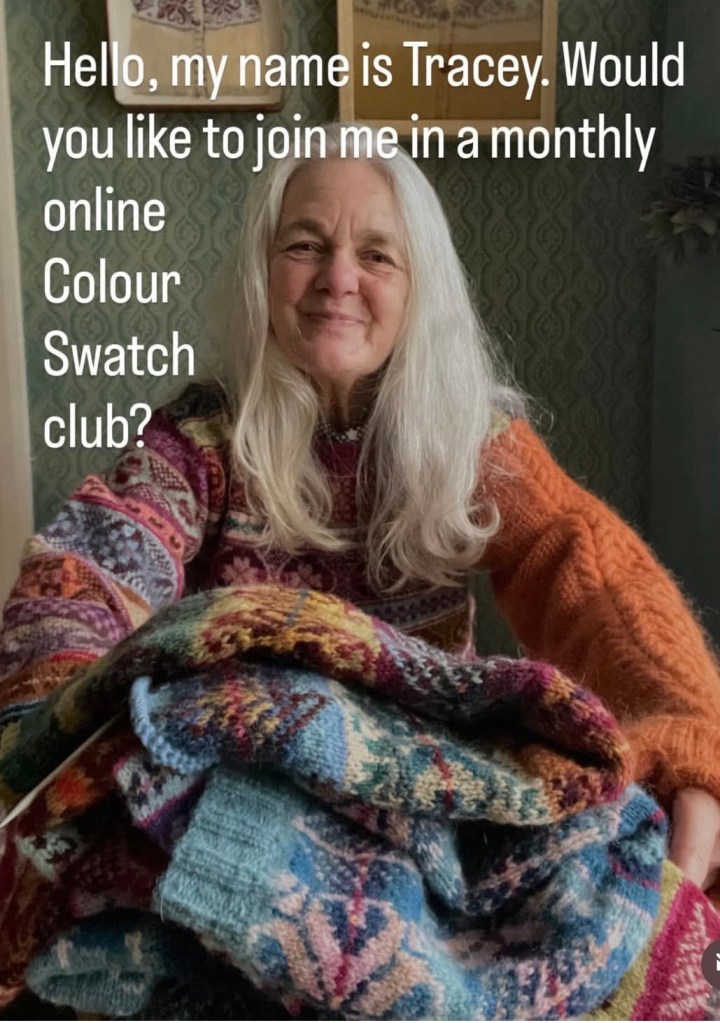
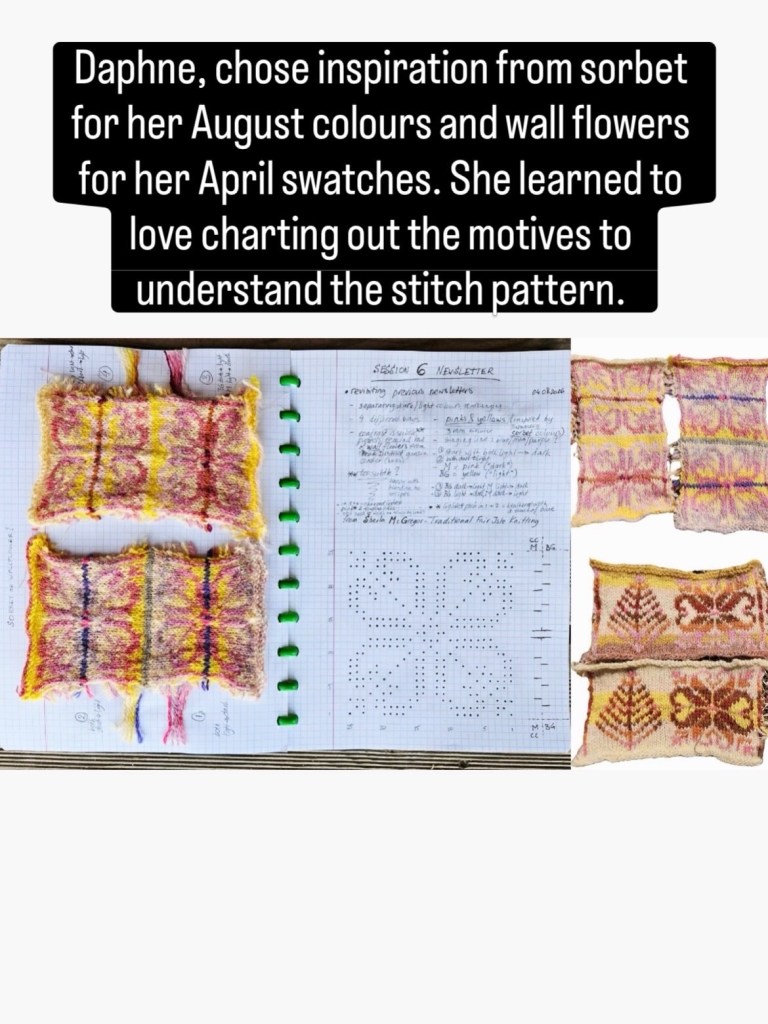
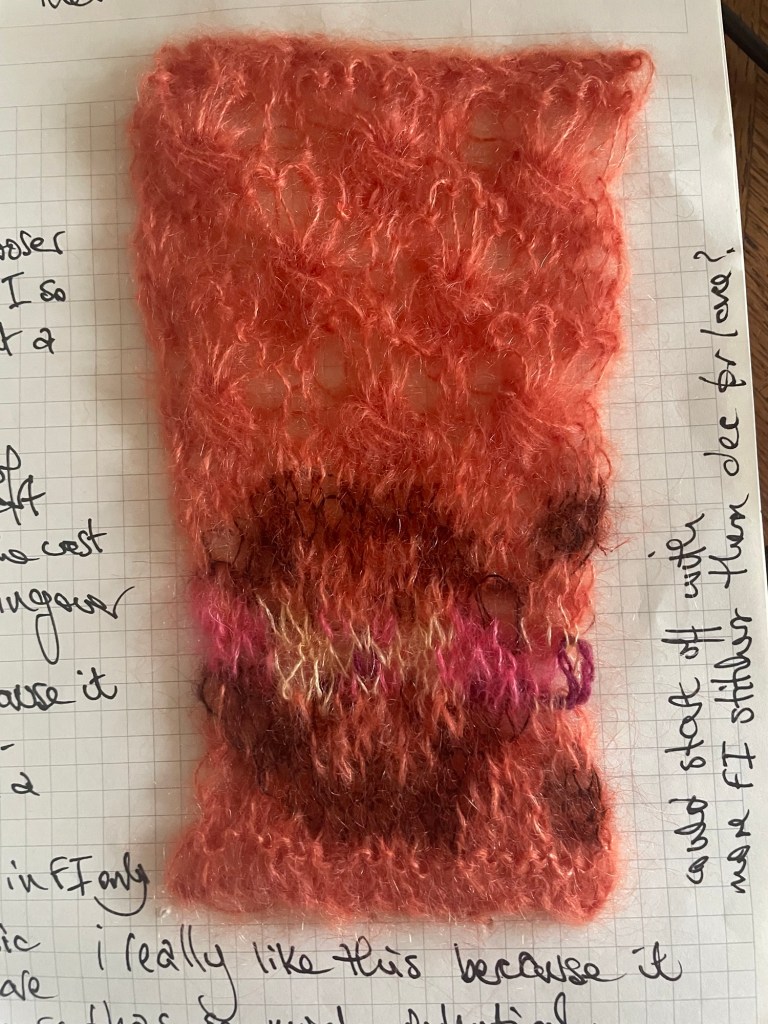
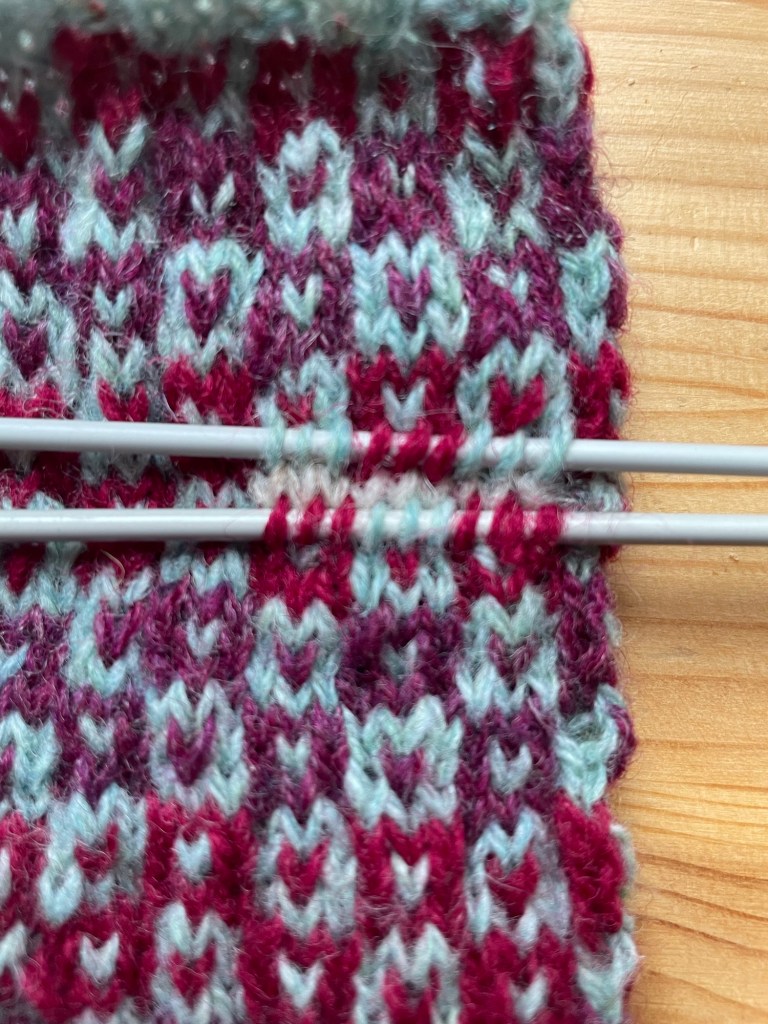
Earlier this year I put out the idea of a Colour Swatch group on Instagram. I was inundated with people wanting more information. Finally, a group of knitters joined me at the beginning of March for a monthly Colour Swatch Journal Club – lasting for 6 months.
I hoped people would become more adventurous with colour and even after 3 sessions, I am so excited by their results. What I didn’t expect was the extraordinary level of creativity, experimentation and personal interpretation that began appearing week after week.
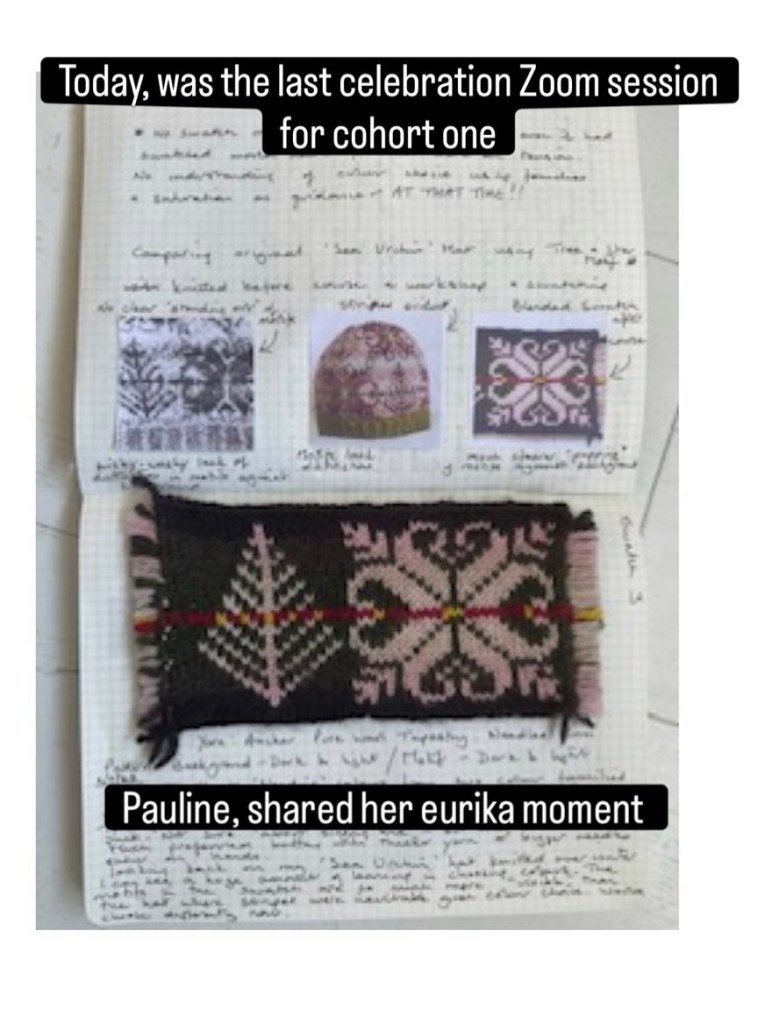
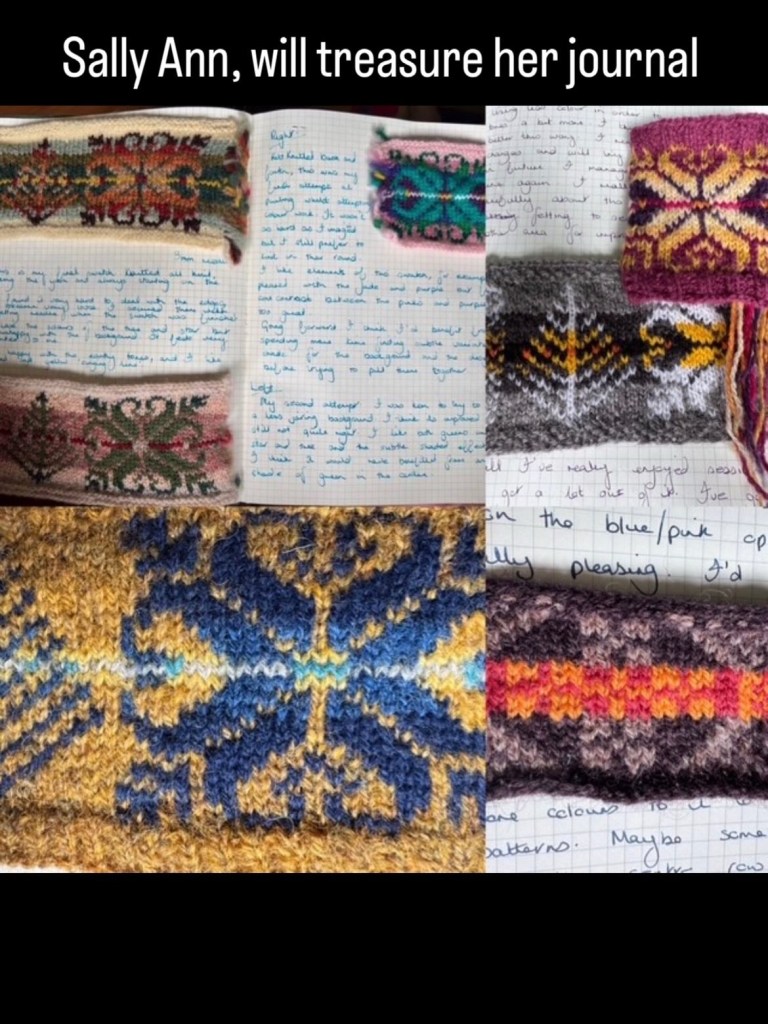
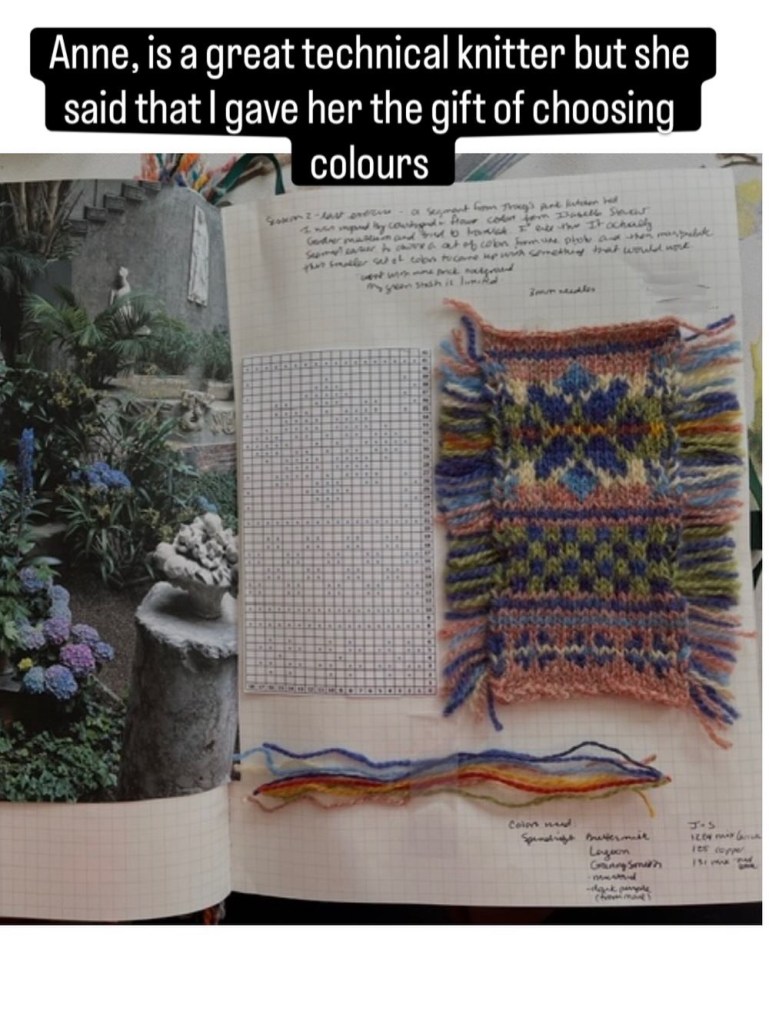
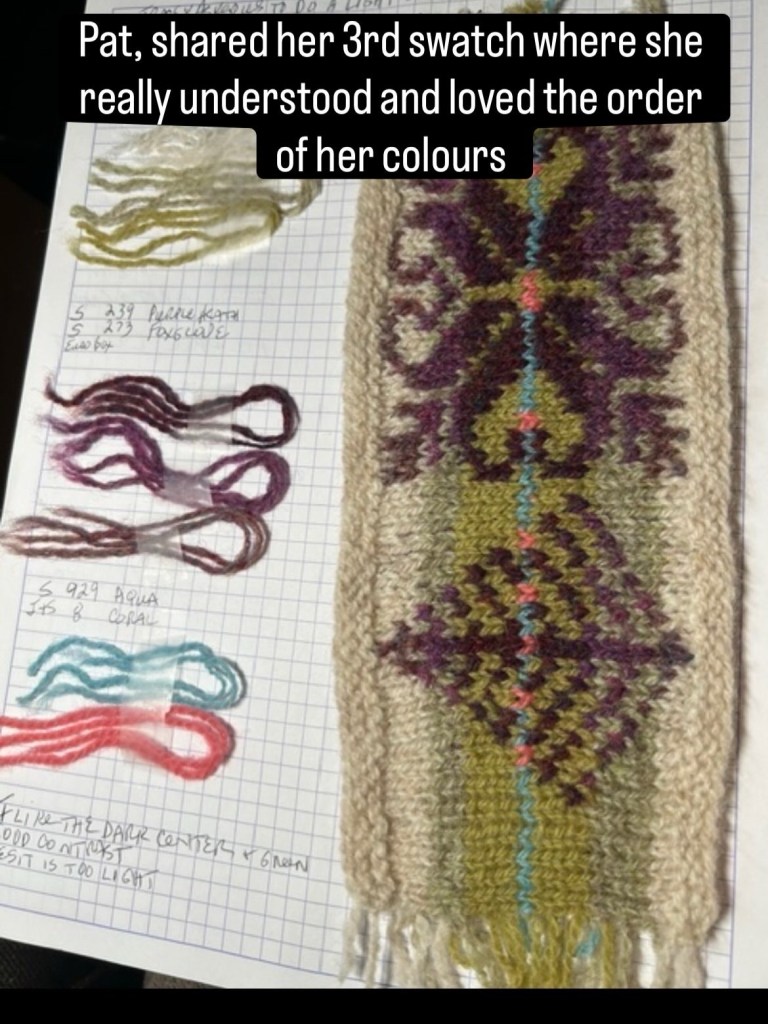
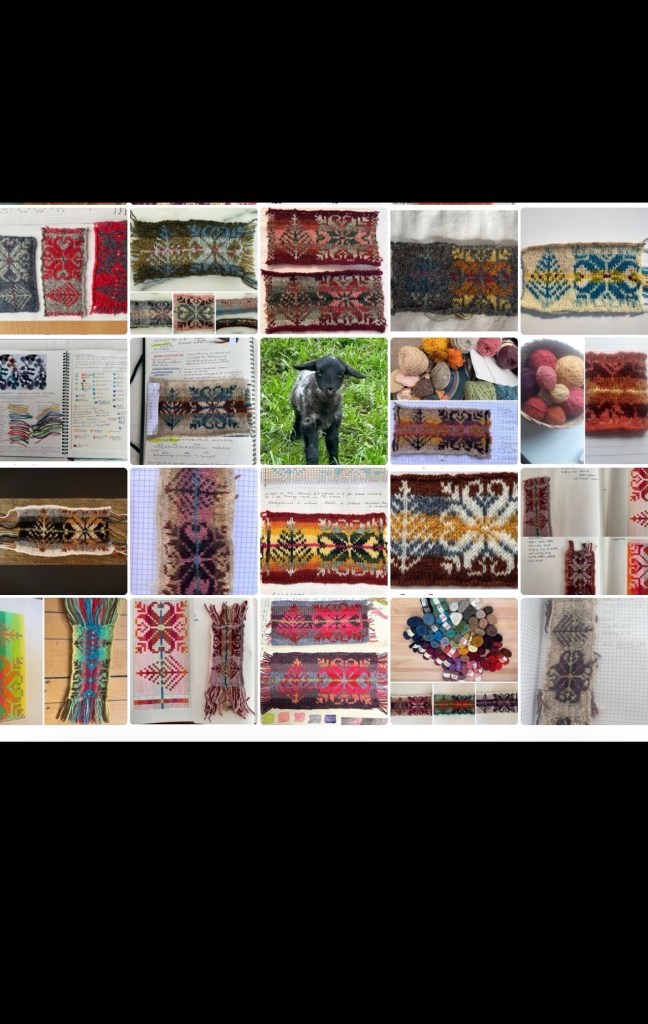
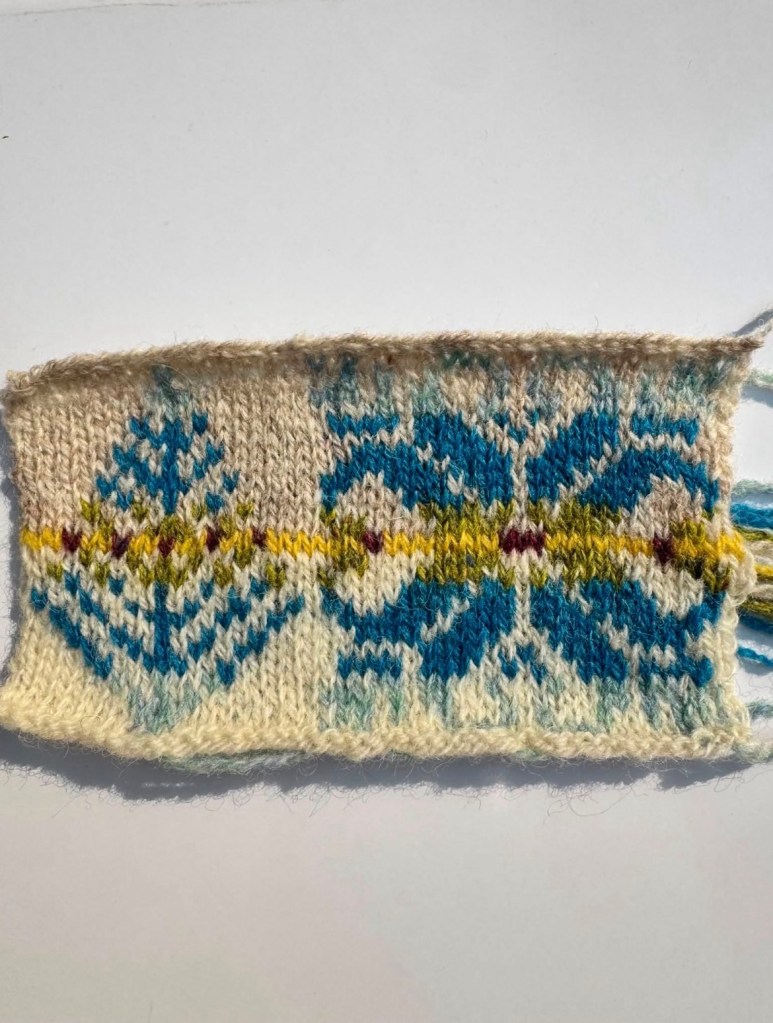
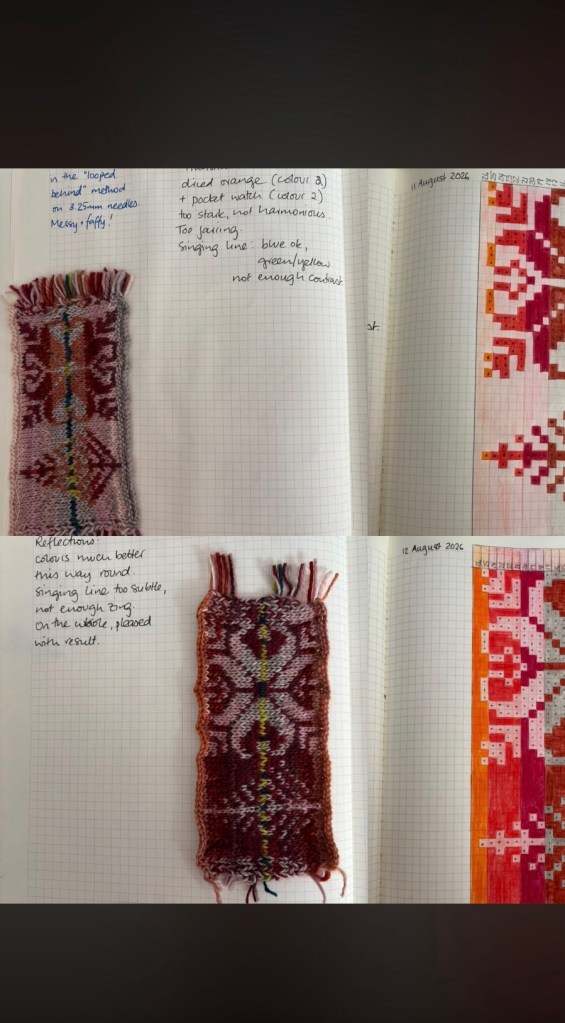
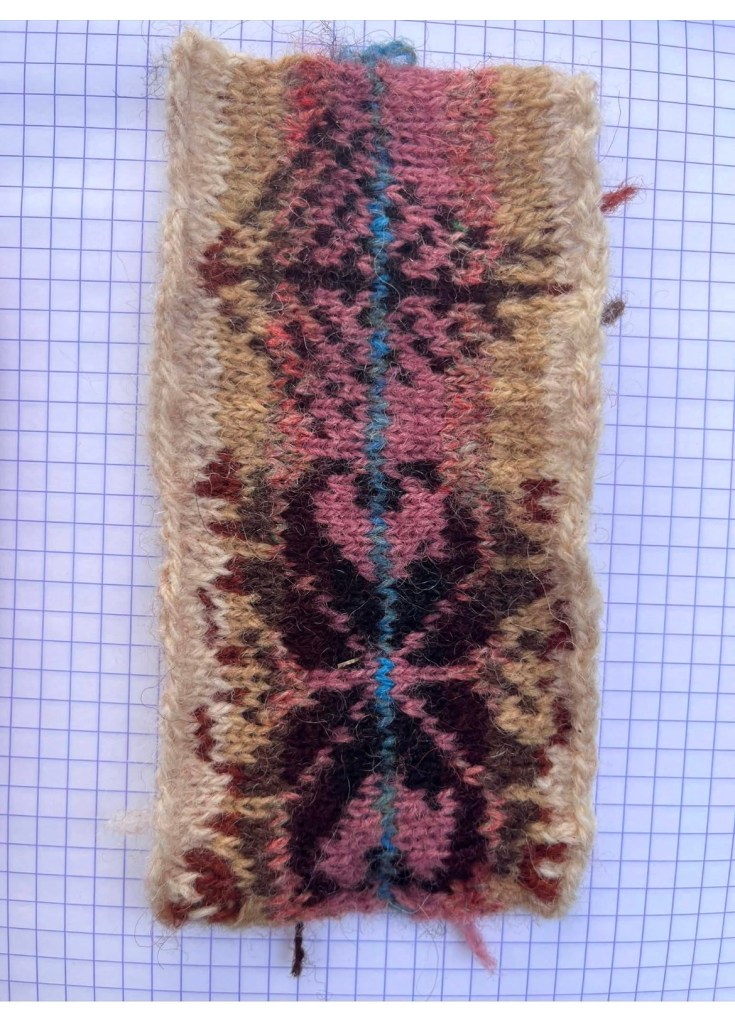
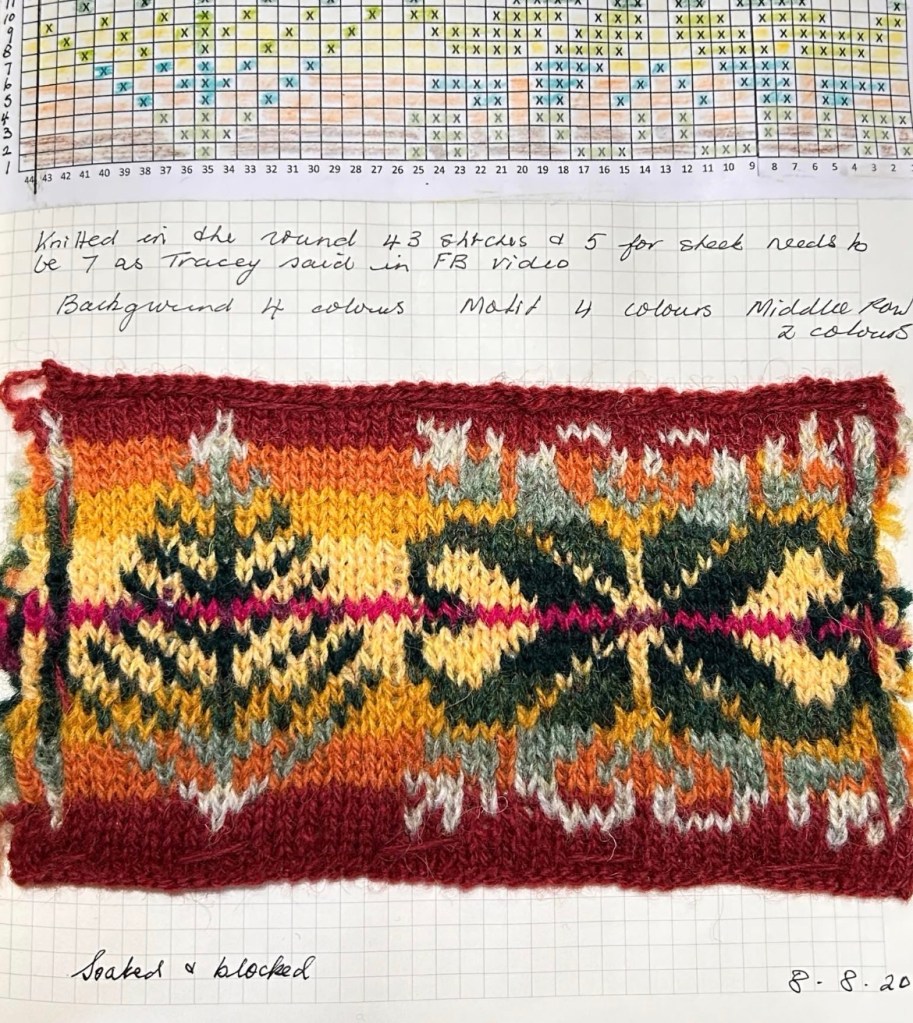
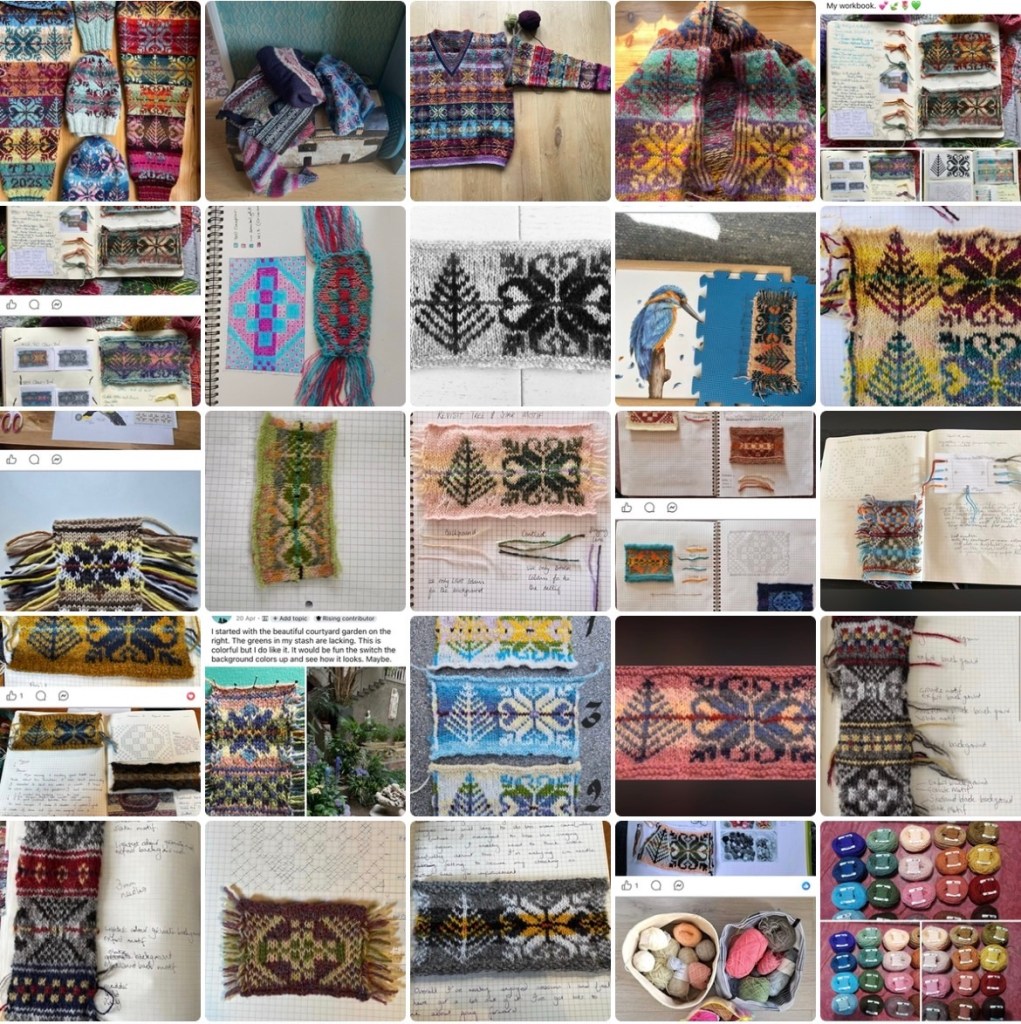
I am so proud of my Colour Swatch Journal Group’s development. Here is a peep inside the Colour Swatch Journal Club private FaceBook Group where participants share their swatches and colour development.
I am so proud of them – I’m watching their confidence grow through Colour and swatch experimentation.
My swatch journal club is developmental learning – this group is develops month on month, over 6 months with a sessional newsletter pdf emailed on the 1st of each month, including step by step exercises, inspiration, and charts, research and photo tutorials – which encourage understanding of value of colour, tone, contrast, colour blending and then confidence to run free with all their knowledge – it is a group who love to learn The Joy of Slow Colour Exploration There is also a private Facebook group to share their work and I meet online via zoom at the end of every month.
Each month, I send participants tiny experiments and developmental learning exercises – the outcomes of which I am sharing here today.
Developing A Small Swatch Can Change Everything in your practice.
Their notebooks and journals are filling up with unexpected colour combinations and these wonderful women are developing their own visual language. They are learning to see colour differently and their swatches are becoming little artworks. Their journals will be so exciting to see at the end – we will have a show and tell.
“Some participants became fascinated by…”
contrast
The Shetland motifs
garden colours and inspiration
colour blending
unexpected palettes
historical references
even experimenting with steeking.
This is What Happens When Knitters Start Trusting me to teach them how to use Colour in their projects.
The next series of my Colour Swatch Journal group sessional newsletters and meetings will start in September – so it will be a wonderful Autumn / Winter learning. And, instead of 6 months timescale, I am going to condense the exercises and newsletters into 4 months.
If you would like to go on the wait list to be sent the new information ( Around June time) then complete the contact form below and I will be in touch in June.
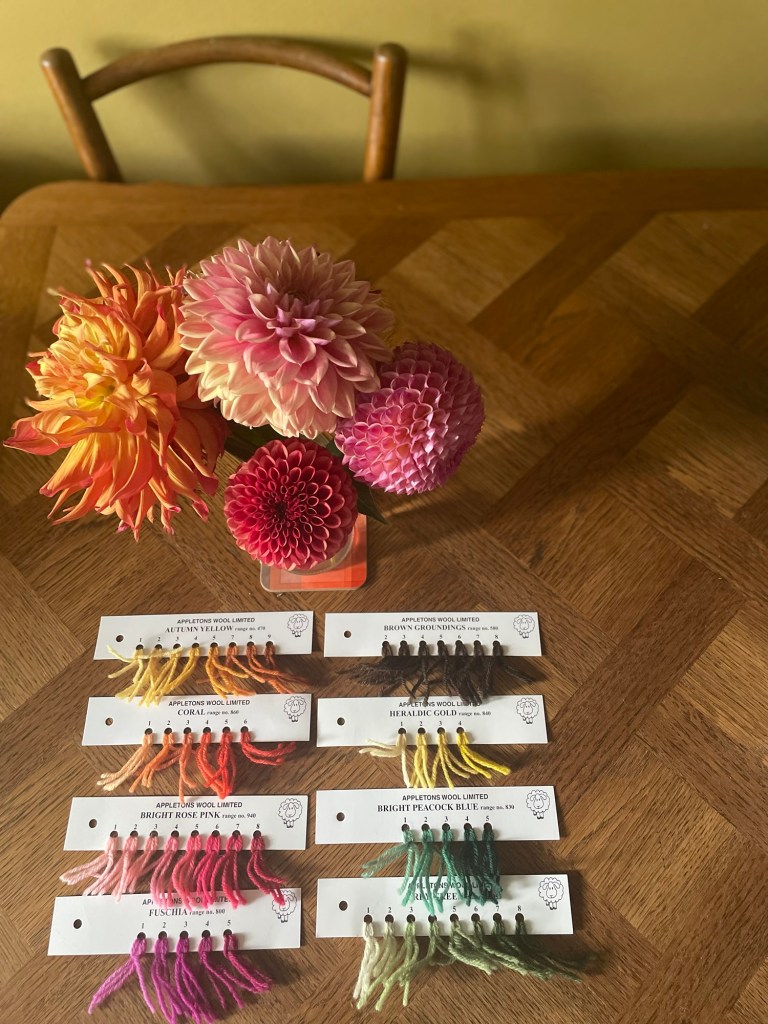
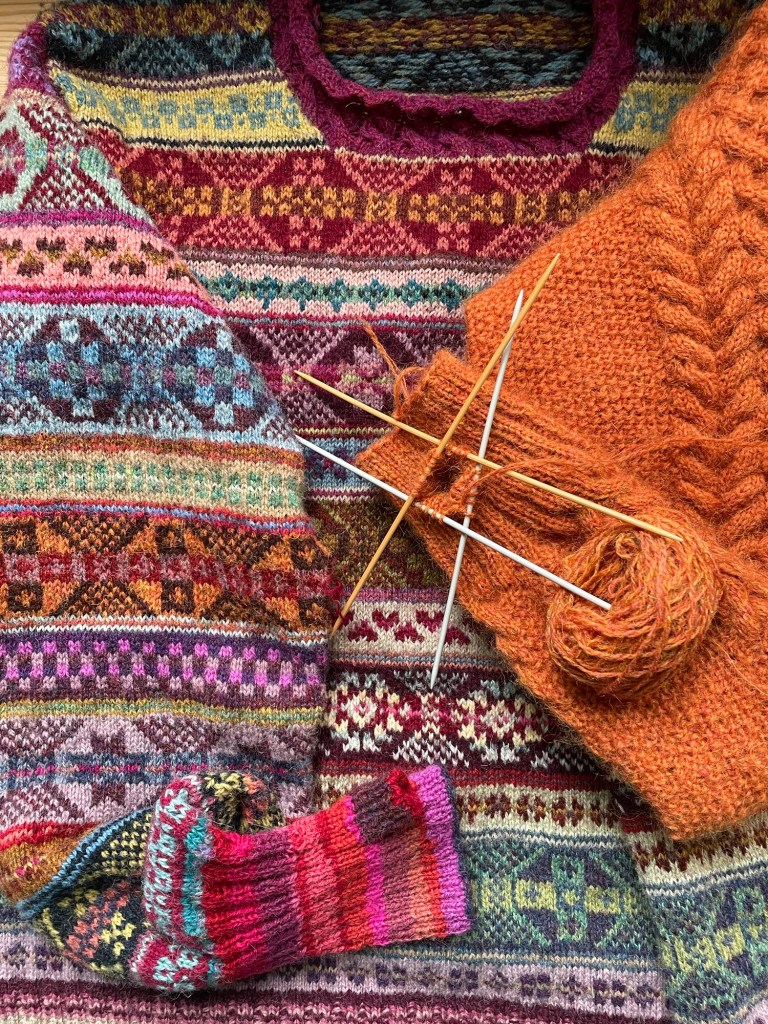
Experimenting with techniques, yarn and colour has been part of my life for over 45 years. I used to knit stranded colour Work in the 80’s but I didn’t even know that’s what I was doing and that a place called Fair Isle even existed. I used to wear my crazy coloured mismatched jumpers with Vivienne Westwood and Malcolm McLaren cotton culottes ,white muslin wrinkled Westwood stockings and ballet shoes even then I didn’t know that I had a passion for experimenting with knitting or colour.
This passion developed into knitting the most intricate jumpers that Patricia Roberts designed in the early 80s on the finest 2:5 mm needles with fine Shetland yarn bought from her shop in Covent Garden London
Today, I am patient with my projects and keep adding to my knowledge as I go into my mid 60s. I am always curious – thinking what if I did this or that or the other. I hardly see that kind of thinking these days but it was how we all knitted in the 80’s.
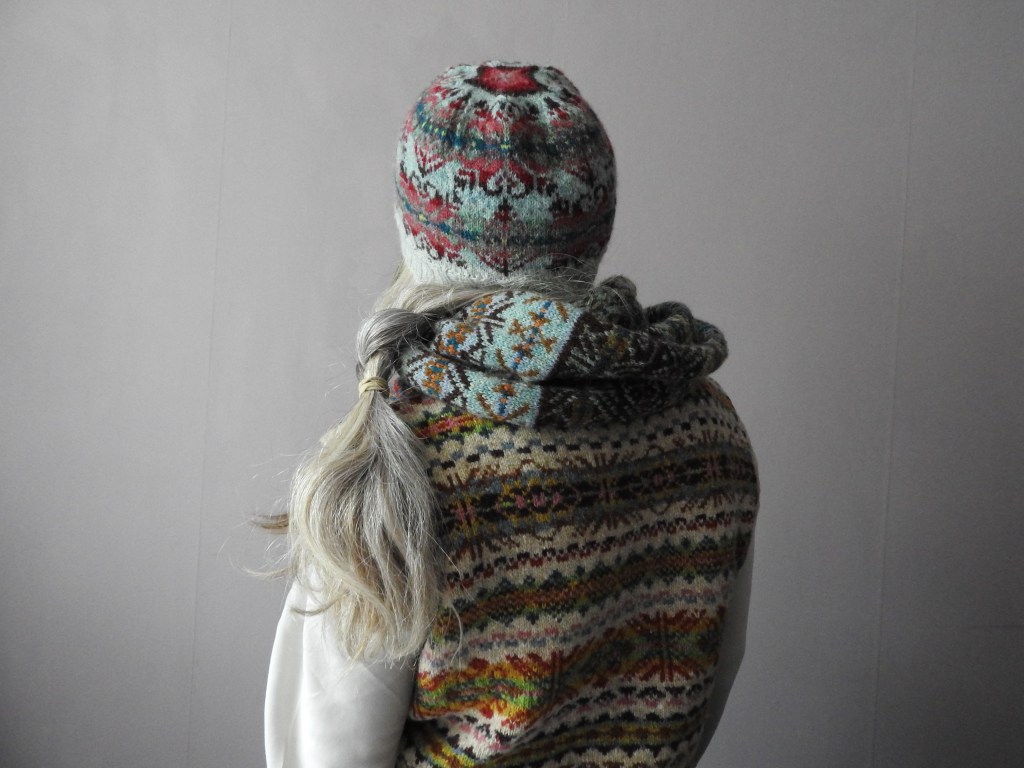
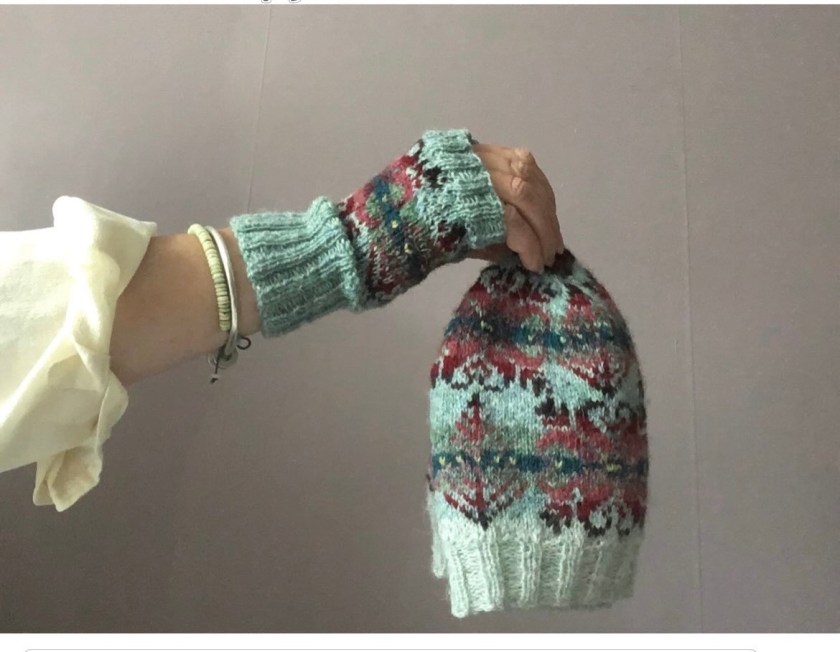
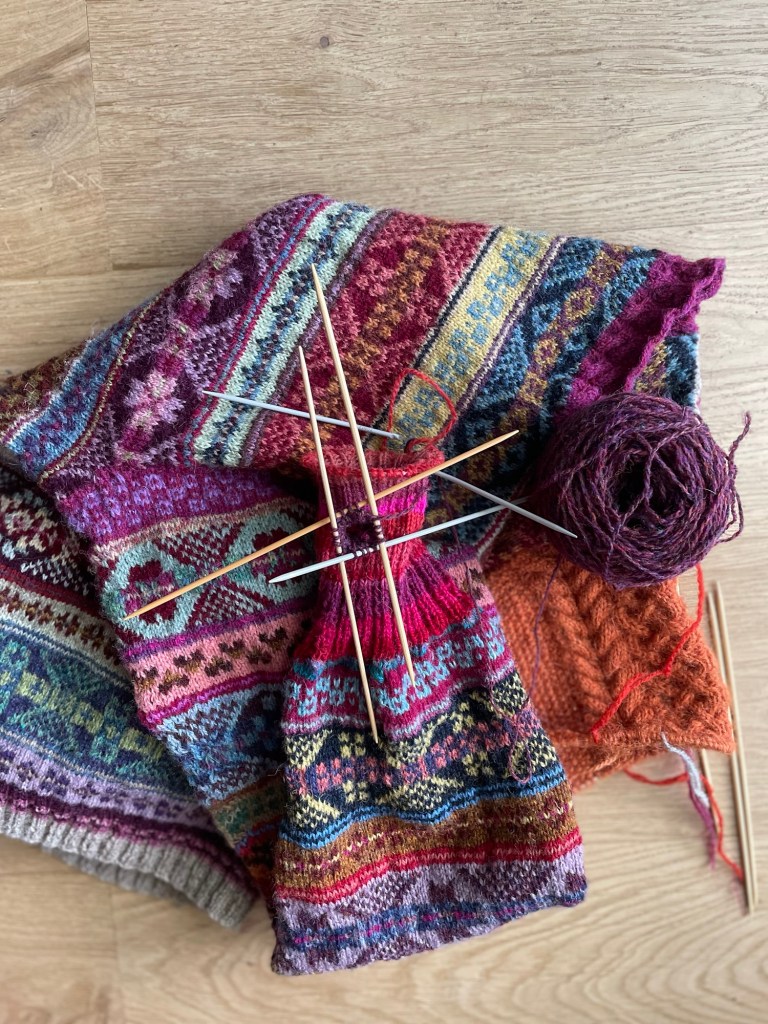
My latest design is called Kaleidoscope- It is a jumper pattern named after my blue Glass bead kaleidoscope and because the seemingly tessellating Shetland motifs repeat in the design. I have repeatedly returned to this Shetland Tree in Star Motif – starting from my very first knitted yoke cardigan knitted in 2015 which I progressed on to my Shetland Sea Urchin hat and mitts – then working to deliver a Colour Blending workshop for Rowan, I used the same motif and their yarns.
Once again I became inspired by the colour of our natural world last year with a long avenue of beautiful cherry blossom trees which inspired the colours of my latest Tree and Star hat and my first kaleidoscope jumper.
I put this pattern out into the world as a gift because I had made it for myself and many people wanted it. The motif is a 42 stitch pattern repeat and the V-neck falls in the centre of a tree – if I increased the size of the jumper I had to consider the following. It is knitted in the round so to increase the size, you would have to increase stitches by adding one more motive making it a very big jumper and a different management of other parts of it. Such as, if I added one more motif – then the V-neck position would fall in a different place and the shoulders and armpits would also increase in size. This would mean a TOTALLY different pattern, more test knits and not many people buy the patterns for me to spend one year of my life knitting 2 different jumpers.
I decided, instead, to experiment to increase the size by using 3.5 mm needles to make a larger jumper. I was doing this to help people see what would happen, it was not a solution to increase size but an experiment -Something I often did in the 80’s and 90’s with other patterns, changing yarns and needle size. I wondered it I increased the needle size or even the what would the outcome be.
The outcome of using the same yarn but needle size change, is a much larger jumper. I have steeked the neck and the armpits, if I’m completely honest I don’t like the bulky selvedge but I also wanted to experiment technique. I have steeked before but this time, I just cut without securing the steek stitches until afterwards.
I have found that many knitters need a pattern to be exact for them and to include all of the yarn colours, the weight of yarn, the amount of balls, the exact position of everything and that no one really wants to experiment at all anymore. I get it, yarn is expensive – but there is also a freedom in using what you have and experimenting which, interestingly, I have done all of my knitting life
So, my last knitted piece is a complete experiment in needle increase size, colour combinations, steeking stitches techniques, and just enjoying the sheer joy of making this project running free and dictating to me how I make my changes and adaptions.
Yesterday I cut the V Neck Steek stitches and it brought a new lease of life to me and my own practice. I stayed in the whole day finishing off the inside stitches and starting to knit the V-neck. I have developed an idea for making the sleeve edges larger so that they fit neatly into and increased size armpit.
This is where learning and design begins. How do I make this project work?
I’ve looked at it so long that I partially wanted it just finished. I also partially still don’t know what’s gonna happen with its outcome – but I planned out the V neck stitches and the sleeve increases and gussets on the back of a houmous packet – so I reckon, ALL IS WELL
If you would like to join me in my May online Colour Blending workshop, the link is here
After the rains of yesterday and after the ground has cooled down during the morning releasing that wonderful heavy scent of petrichor, in the afternoon a faint mist rising as a result of all the elements of rain, soil, warmth, and I am in my own elements.
I have been loaned three beds in one of the oldest established allotments in the city which has been managed by Martin’s family for over 100 years. He is 3rd generation. Can you imagine that? In the city of Sheffield, what these allotments have seen and hear. I am delighted with my small allocation which houses, at the edge, 3 old cooking apple trees, 1 eaters, 1 plum and 1 pear tree. I began by digging out the one and only bed that I think I can plant – the middle bed being full of raspberries which are my favourites and rhubarb which I can ignore and the last bed is full of blueberries which actually sadly look a little bit worse wear. Beyond my three little beds are three more on a lower tier and then three more and a greenhouse where I am the proud overseer of six tomato plants and a shed full of accumulation. Honestly, this simple small plot has given me hope – I am in my element.
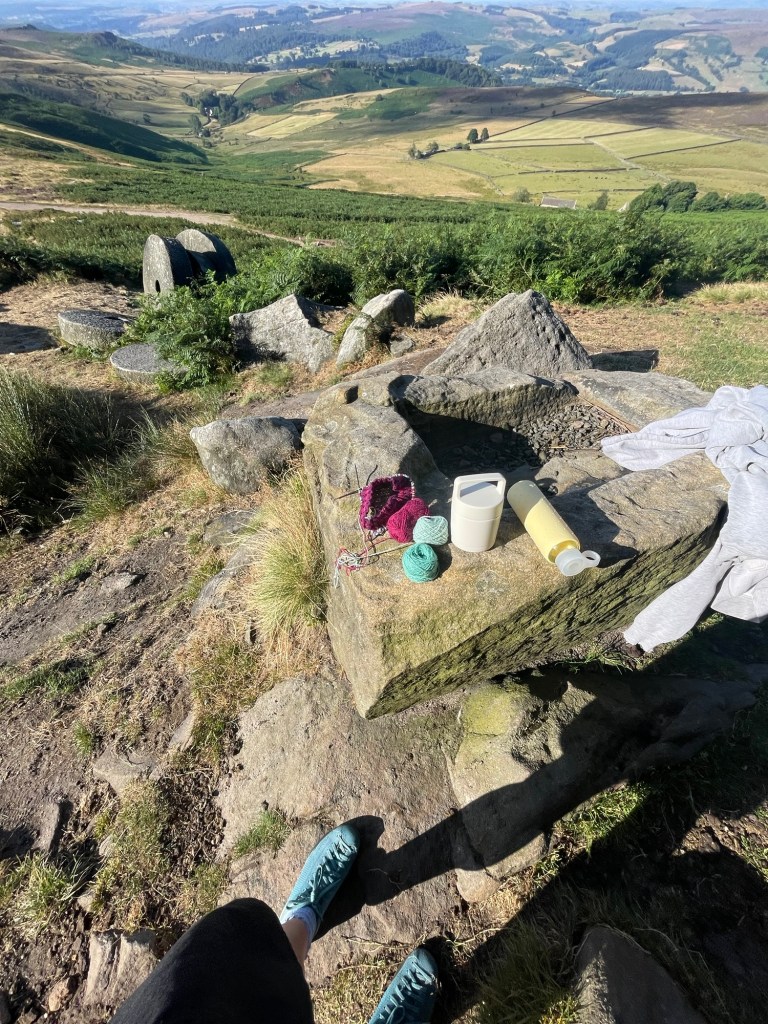
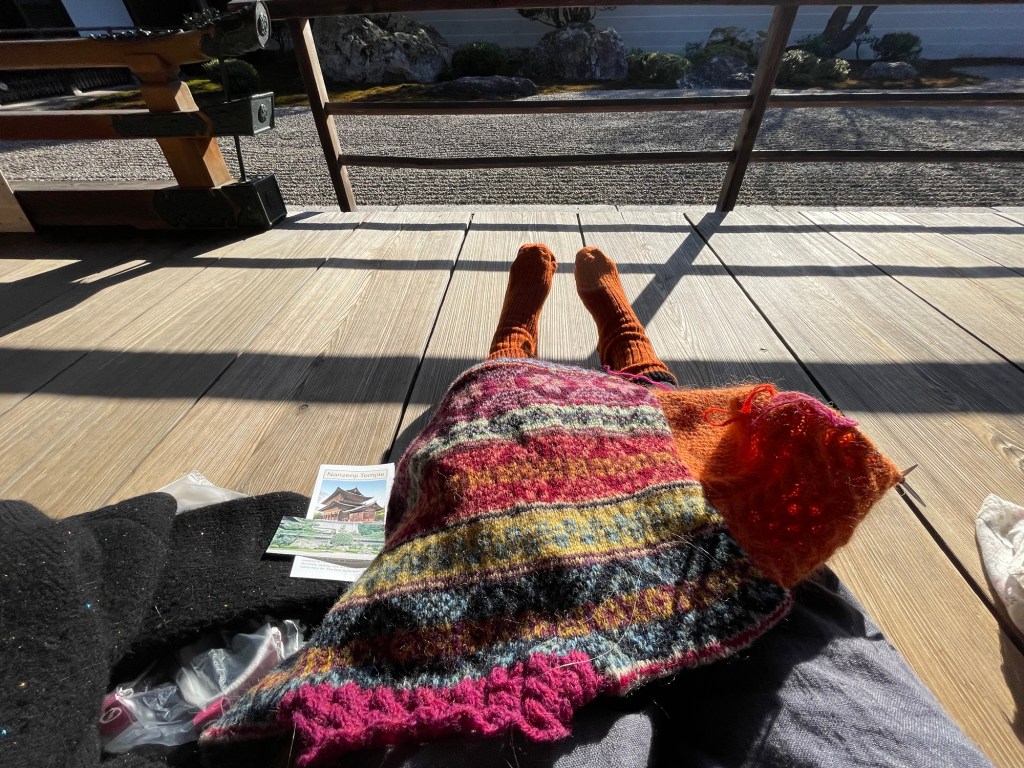
After while when I rest with my flask of tea, the humidity of the weather and the vast greenery of the area rest upon the bare skin of my arms. The plants are still covered in the rain drops from yesterday’s 24 hours of constant mizzle. I begin to have a few hopes for the blueberries and I cannot wait for the soft fruits to grow. I will bring my knitting down here. the other allotment folks will get to know me and I will get to know them. I will be seen as a small part of a very large Community and I welcome that.
Here is to a healthy summer.
I have forked and dug and raked the single bed for planting and added onions, spring onions, broccoli and cabbages. I don’t even really eat cabbages but the Deer and her baby will like them.
I return to this tiny plot every day. Each day is different always the birds are singing always it is lush and green but on the fifth day there appears a calm in me whilst I knit beside my baby cabbages starting life under the net, next to the apple trees where a gentle breeze is blowing blossom petals across the beds. I have knitted in some places in my life but I think that this is the most stable, close to home, open to nature, light, and growth.
I have just opened a May Colour Blending workshop on 31st – there are only 2 places left, if you would like to join. Take a look at the content of the session here.
On thursday evening, I set my alarm for 3:45am on Friday morning so that I could get to the meeting place at 4:45. Surprisingly, there was no need for the alarm because I woke at 3:30 and wondered if I’d missed it – IT being Beltane Gathering, high on a hill overlooking the city.
The sound of bells could be heard in the pre dawn light, lanterns were being lit and people gathered to walk in a line through the wood to the platform. I was in my hightened state of pure joy where elements meet – the unknown, a gathering, darkness, lanterns, masks for Beltane – moving from Spring into the first day of Summer – or May Day
It was my first time, not quite a novice but not a pro having not made a mask nor lantern due to other committments. But, I did make a rose flower crown from out of date roses. The hum and chatter of everyone walking in the semi darkness came alive at the top, with Morris dancing, singing, music and people dancing. It felt like another world
Until the song to welcome in the summer was sung then everyone danced and slowly went back to their ‘normal’ lives – the sun having risen, each person carrying their own beautiful rare internal feeling of being part of something so special and joyful that everyone was happy.