I have been thinking about the Japanese Concept of Mono no aware. Our English language falls short of a real translation for this concept, but it could be loosely be understood as – An awareness of impermanence, and / or the bittersweet beauty of transience.
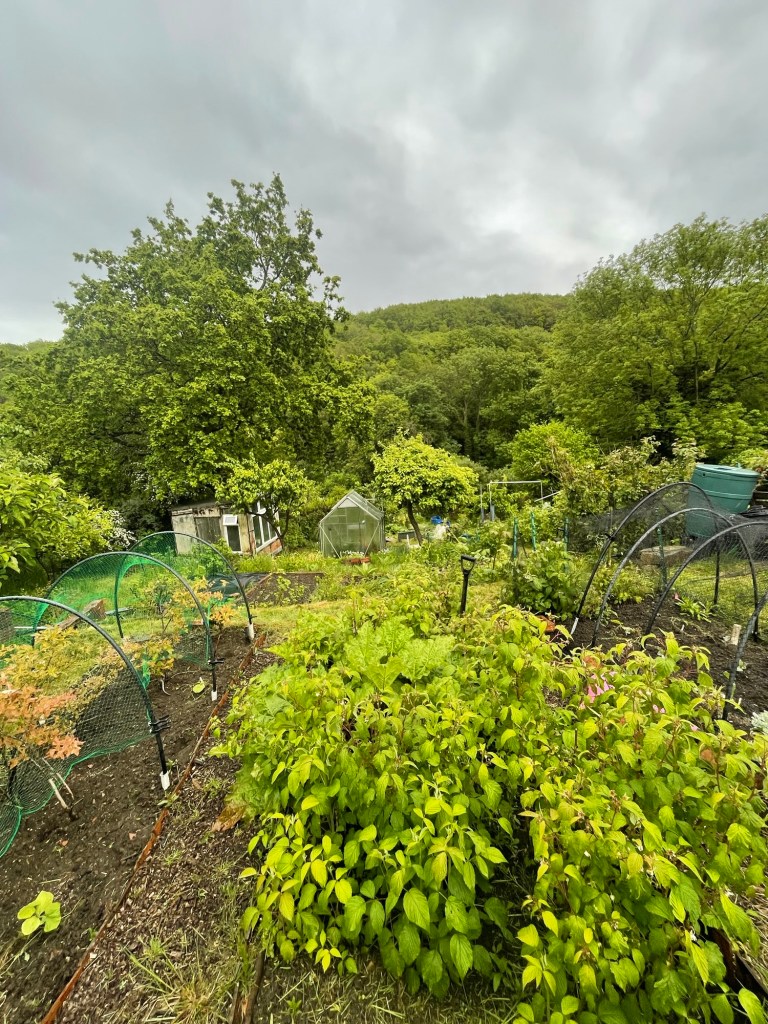
My allotment has become a place of reflection in the sense that last week, I reflected that in my old borrowed allotment, I’m feeling a sense of belonging to something impermanent but deeply enriching. I have been loaned / am the temporary custodian of 5 fruit trees, raspberry and Blueberry beds and a bed that I am trying to grow vegetables in, in the allotment. Martin, in his early 80’s has loaned me the plot in his old allotment that his grandfather and father had before him – it has been in his family for over 100 years. Can you imagine that in a city of such vast changes?
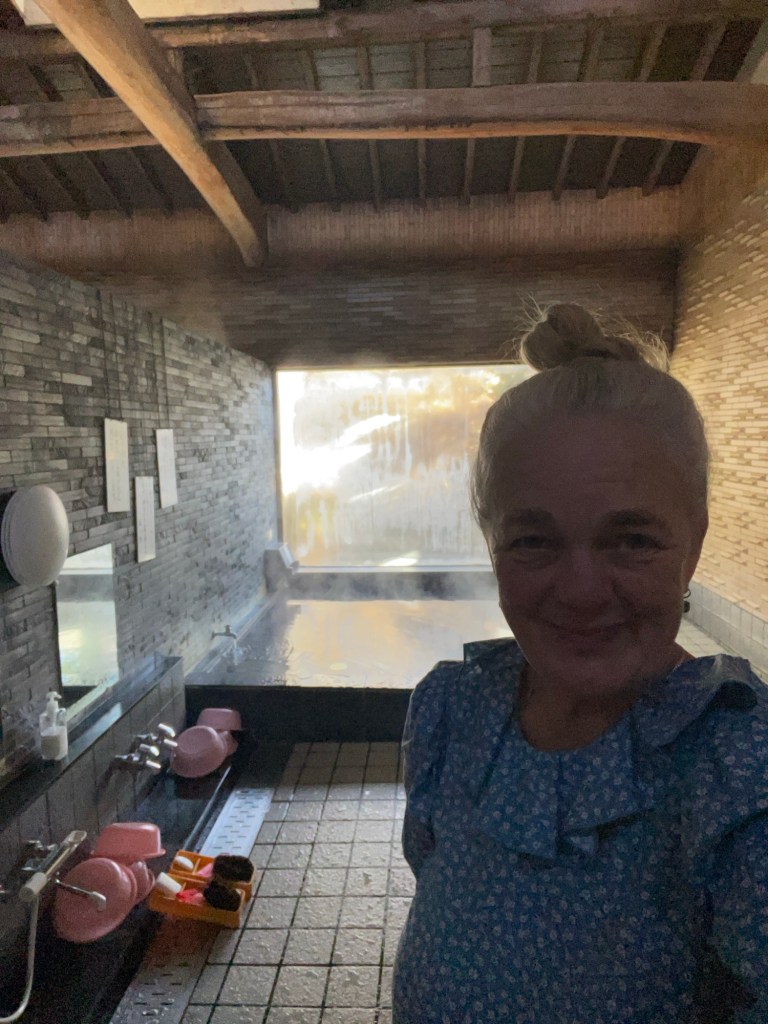
In the allotment, I recognised a feeling similar to the feeling I felt on my daily visits to the old onsen in Fujiyoshida – realising that things are beautiful because they are old, temporary, inherited, and quietly passing through time. Not melancholy exactly. More like being emotionally moved by the fragile continuity of life, passed through people.
I felt it in the old onsen near Mount Fuji because nothing there was optimized or modernized into a “wellness experience.” It was simply alive with history.
And now I’m feeling the same in my allotment in Sheffield because it has the same emotional structure and yet the places could not be further apart
* old hands cared for it before me
* Martin and Liz carried it through decades and generations
* fruit trees planted by people long gone are still feeding someone,
* I am temporarily part of a chain larger than myself,
I do not have a name for this feeling but it is clear within me and I don’t want to let this tiny space go now because it is a wonderland of overgrown time. I think the name is Mono no aware.
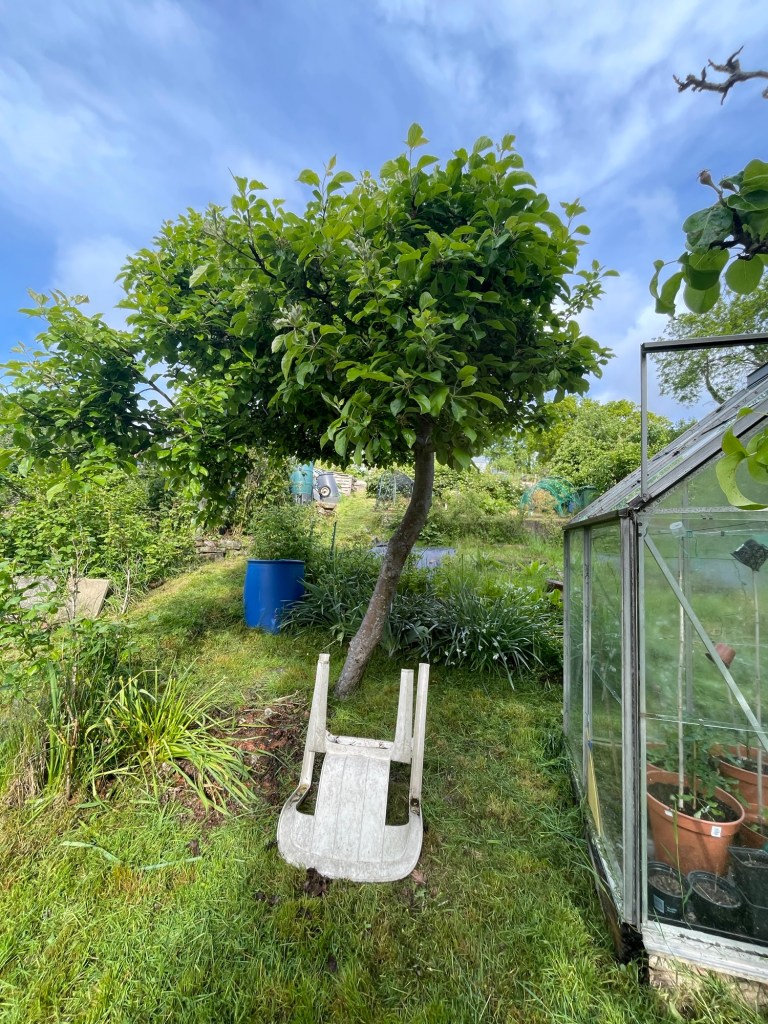
Martin strimmed the long grass and placed plastic a chair under the tree for me.
I feel gratitude mixed with ache in the allotment, as I did in the Onsen in Fujiyoshida.
Some of the qualities of Mono no aware, could be: –
- awareness of impermanence
- emotional movement caused by transience
- tenderness toward passing things
- beauty heightened because something cannot last
- continuity existing through change rather than despite it
The allotment matters more because:
- other hands came before me
- Martin will not be here forever, and nor shall I
- I myself am only temporarily part of it
- the fruit trees outlive individual custodians
- the place carries visible time inside it
And the onsen comparison feels beautiful because of its non-pristine preservation and accumulation of human passage over decades and generations.
I have become deeply connected to these moments in places which carry the same depth. And, during time spent in Japan I encountered a feeling later recognisable to me through the concept of mono no aware — an emotional awareness of impermanence and continuity — which I now recognise again in the inherited allotment culture of Sheffield. I also felt it in the house that I bought in Shetland. Maybe I seek it, I don’t know but I do cherish it.
I am thinking of applying for a residency in Japan again, with these thoughts in mind.
- knitting
- allotment stewardship
- inherited labour
- ageing
- temporary belonging
- rural continuity
- handwork
- impermanence
- greenery as living memory
Maybe this is “an application idea” and more like the beginning of a serious long-term artistic direction. I hope so.
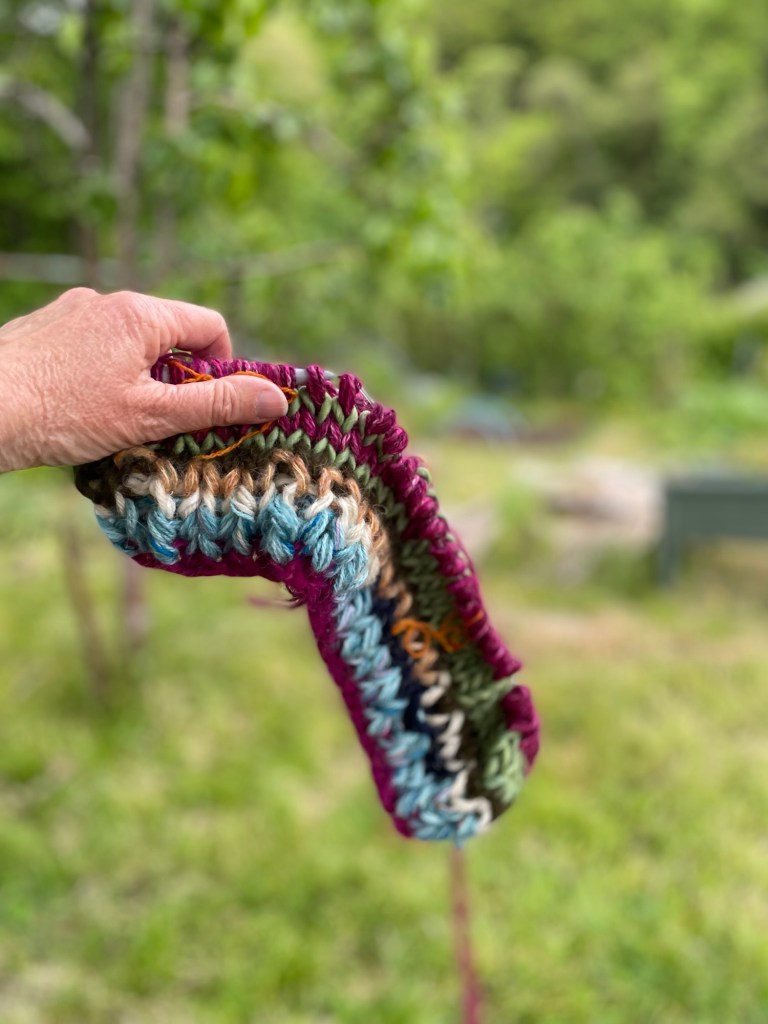
New Project – Easy quick chunky knit vest.
If you have any thoughts about Mono no aware, let me know in the comments.

