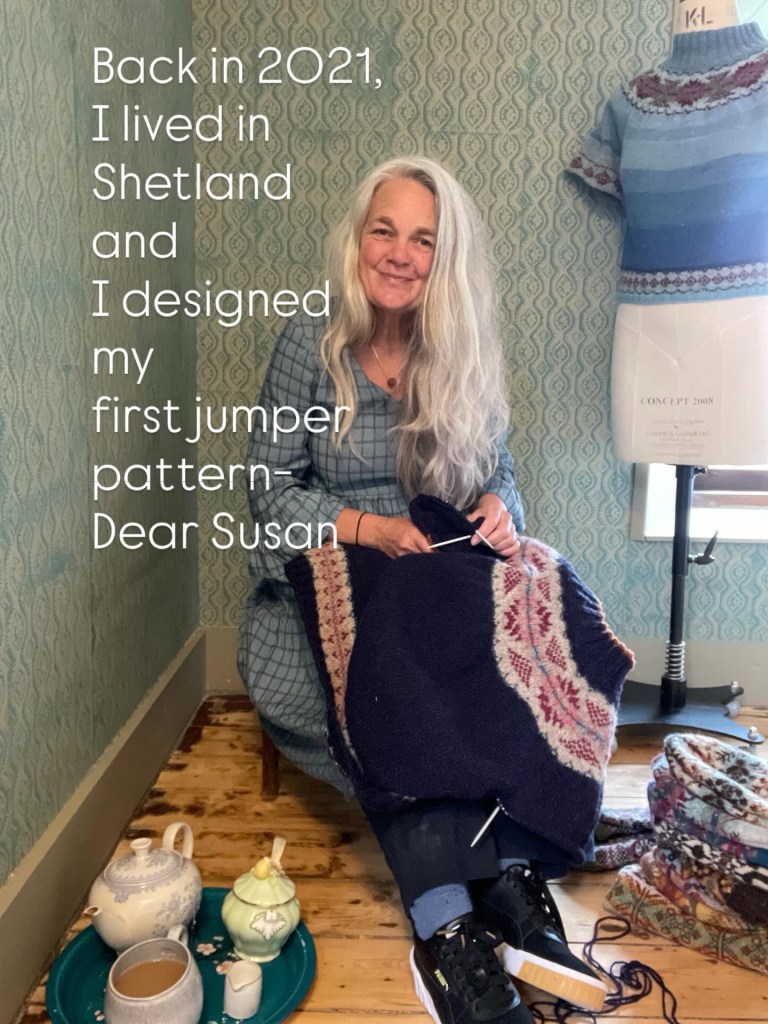
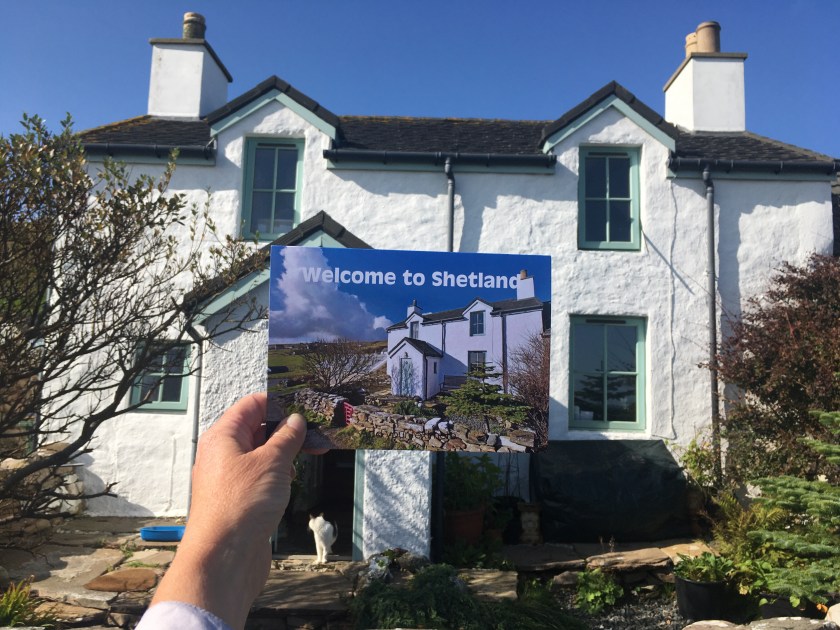
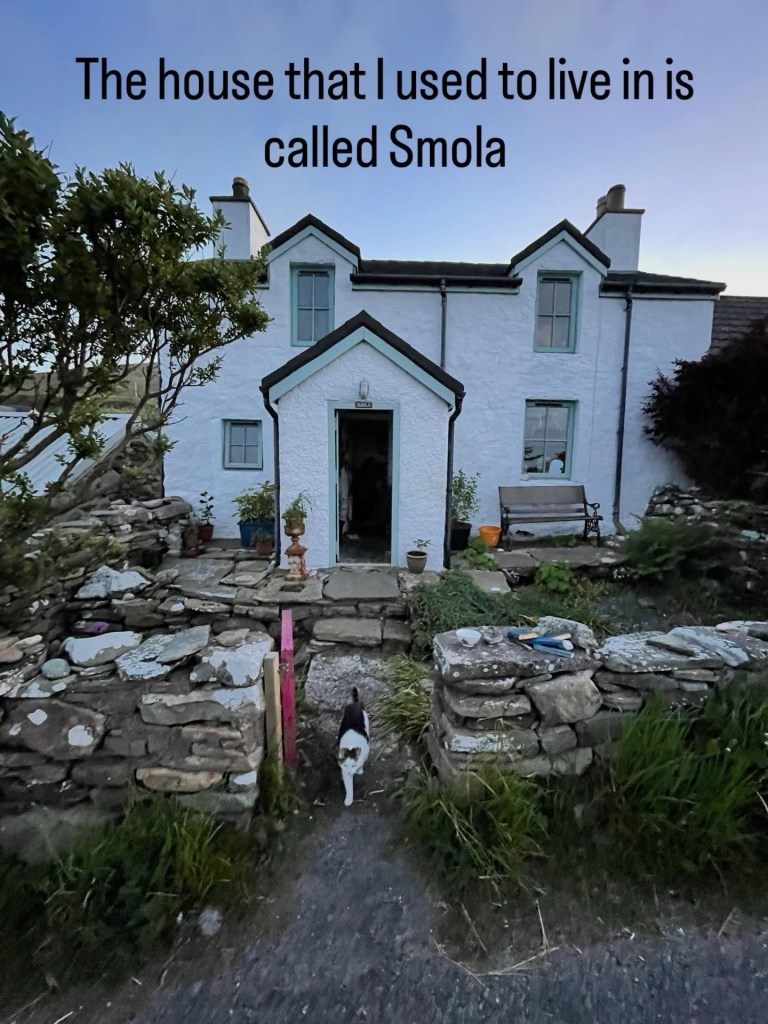
I thought I’d share with you my first ever jumper pattern that I designed. In August 2020, I bought a Croft house in Levenwick that faced the sea.
This was the beginning of my real knitting journey and of designing Shetland motif knitting patterns.
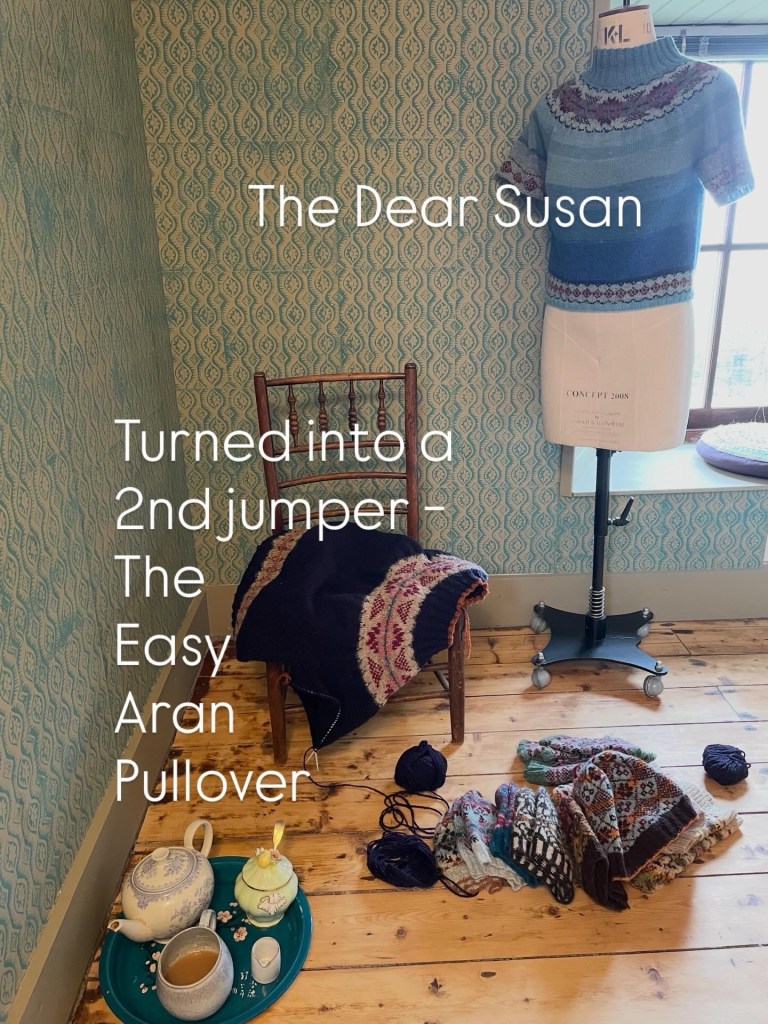
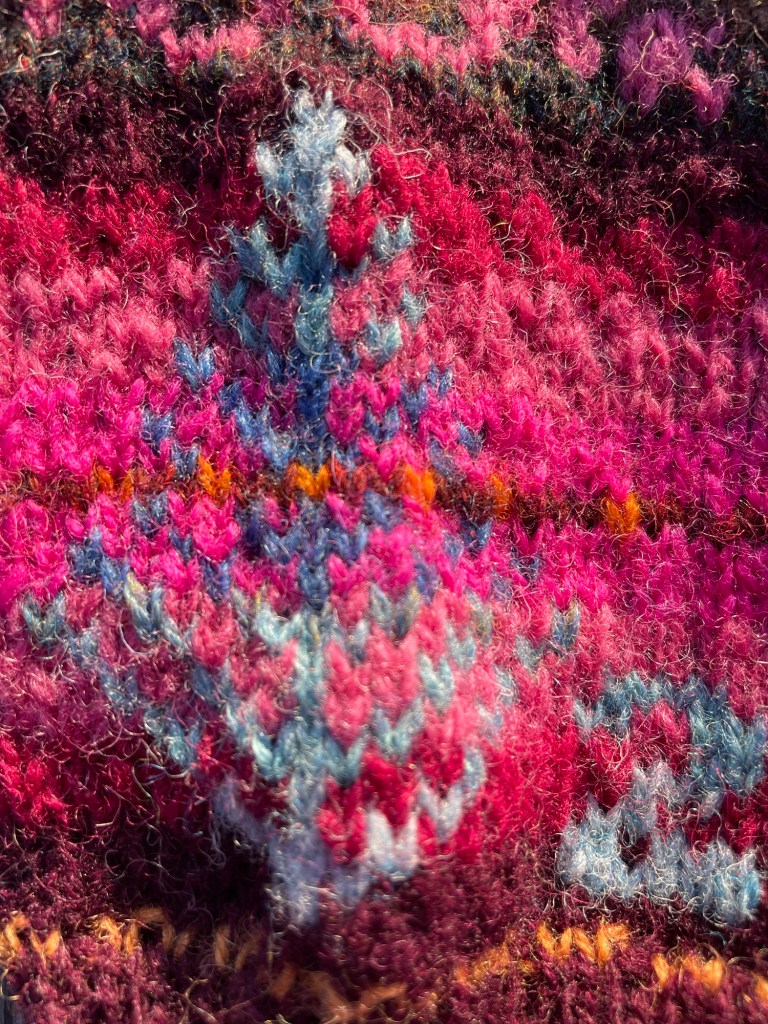
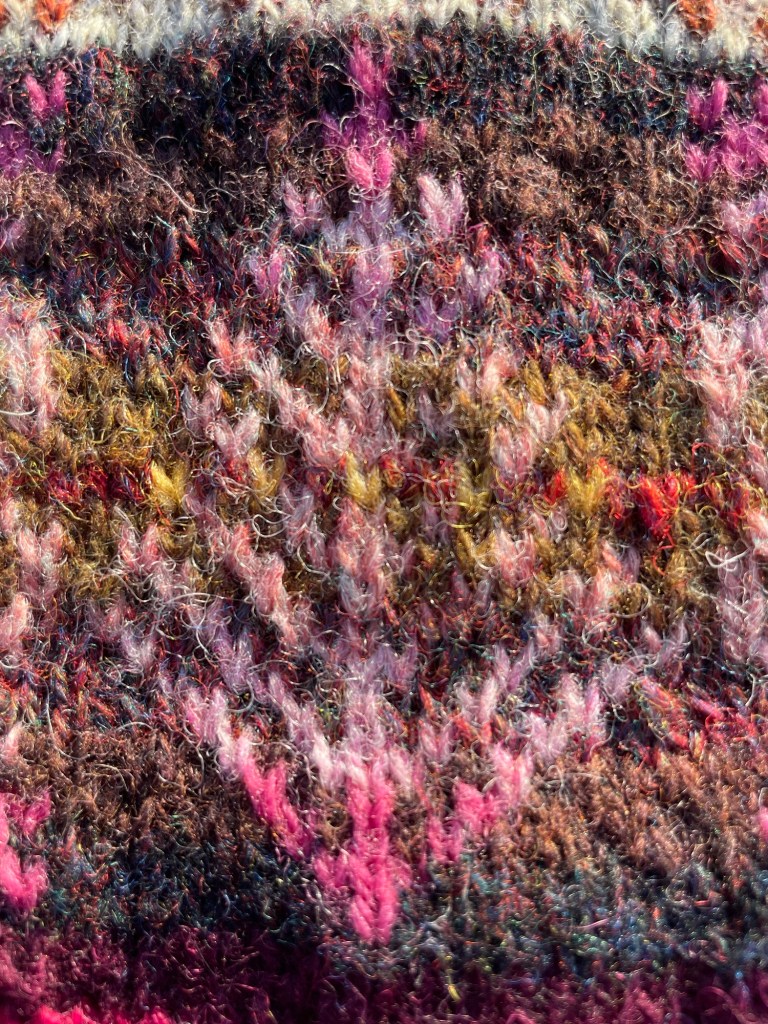
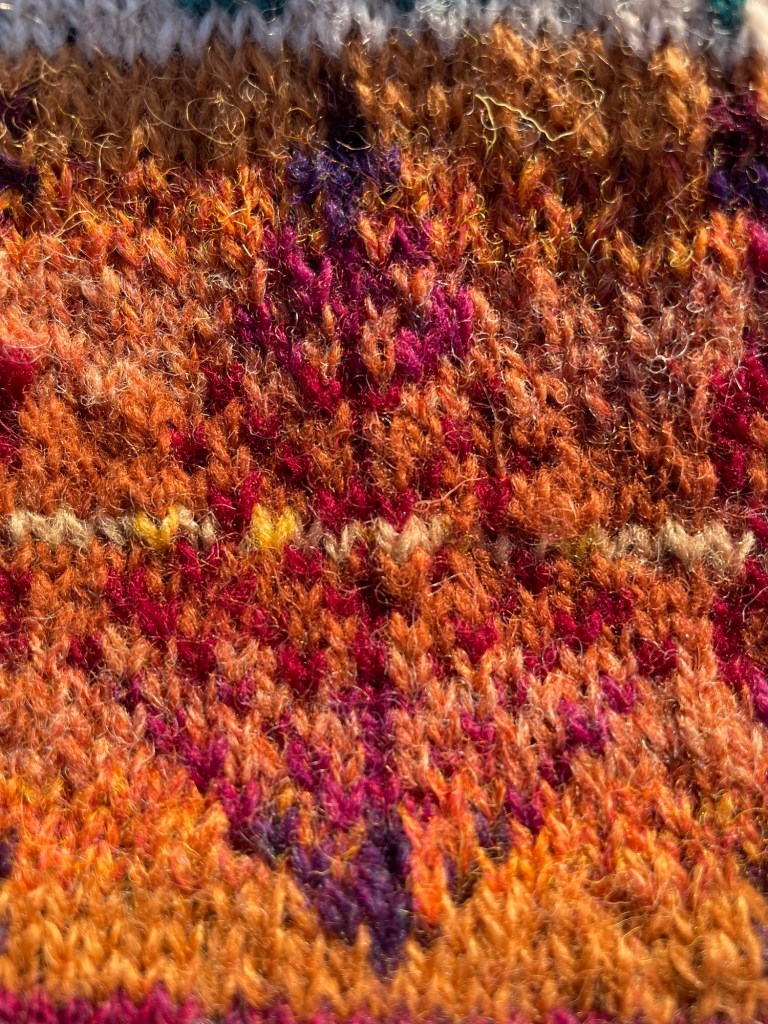
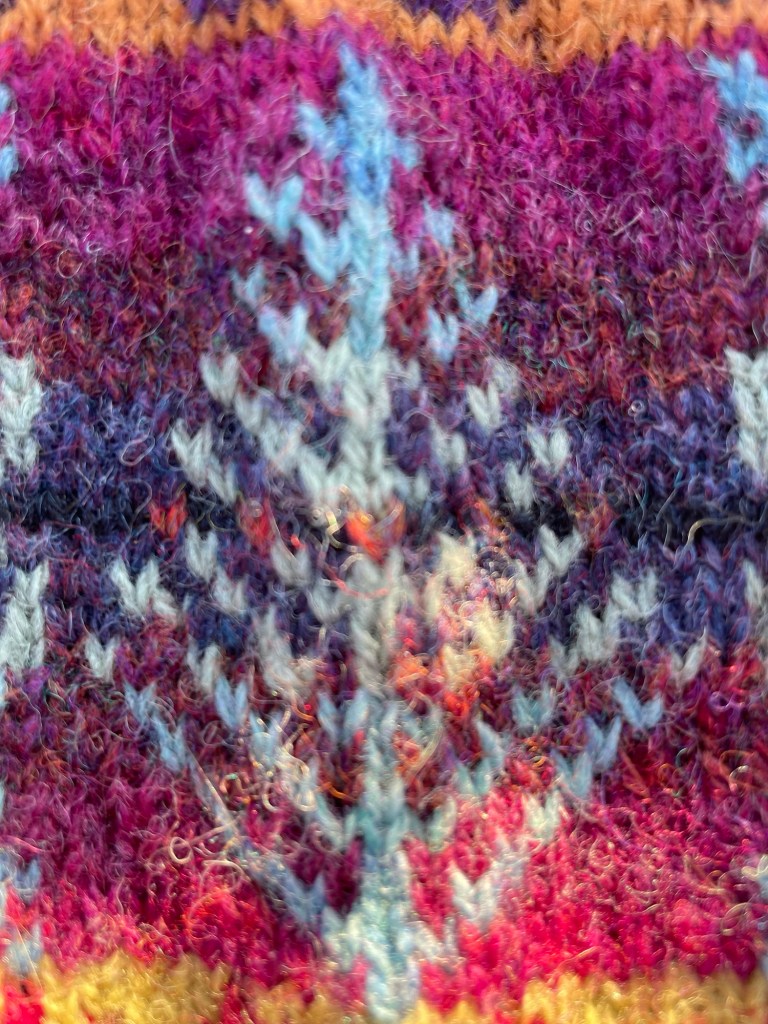
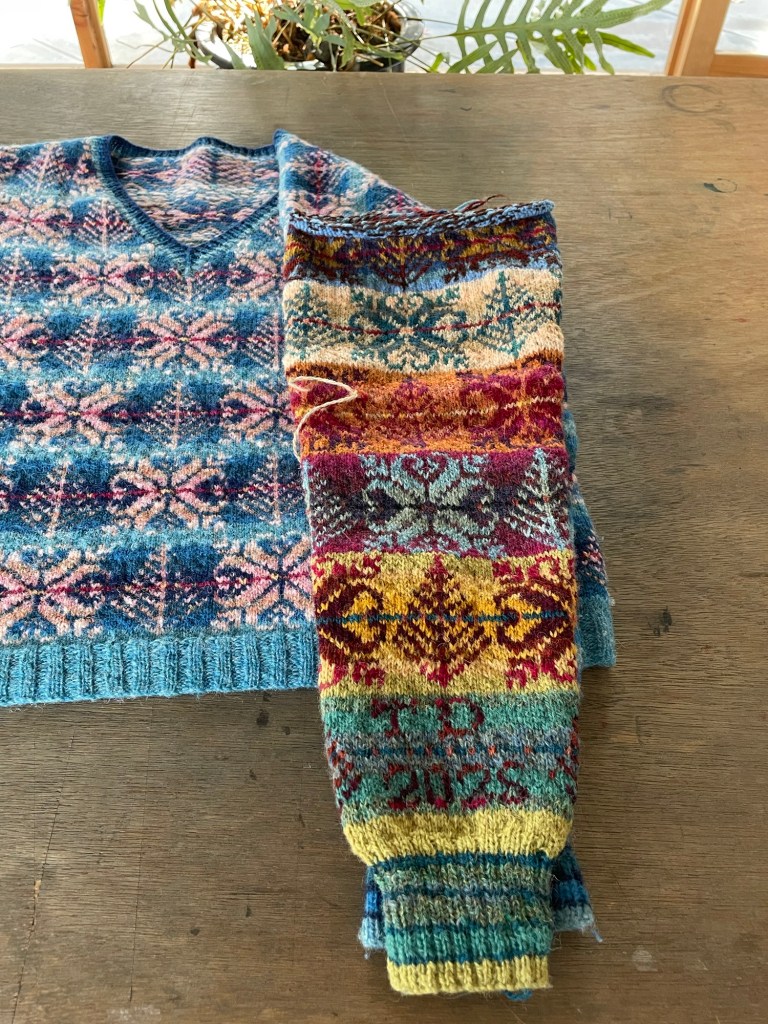
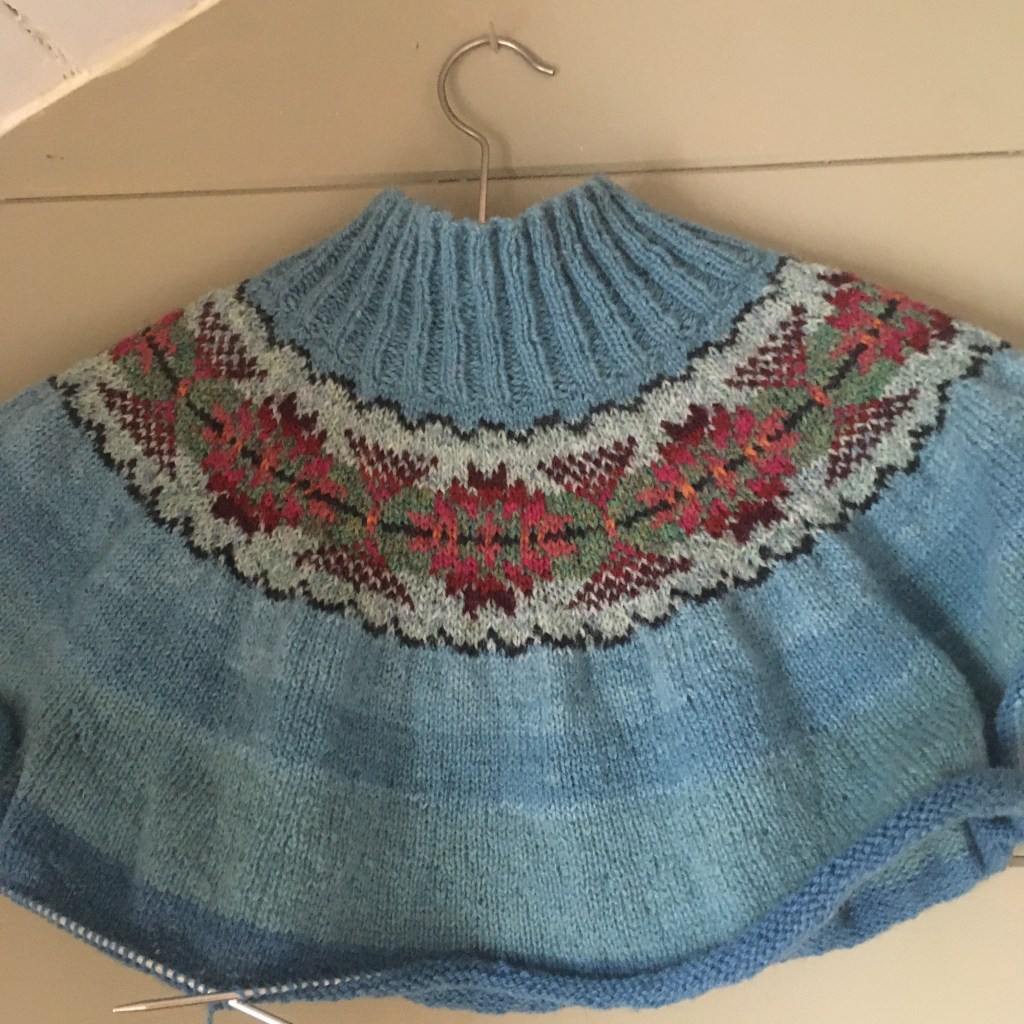
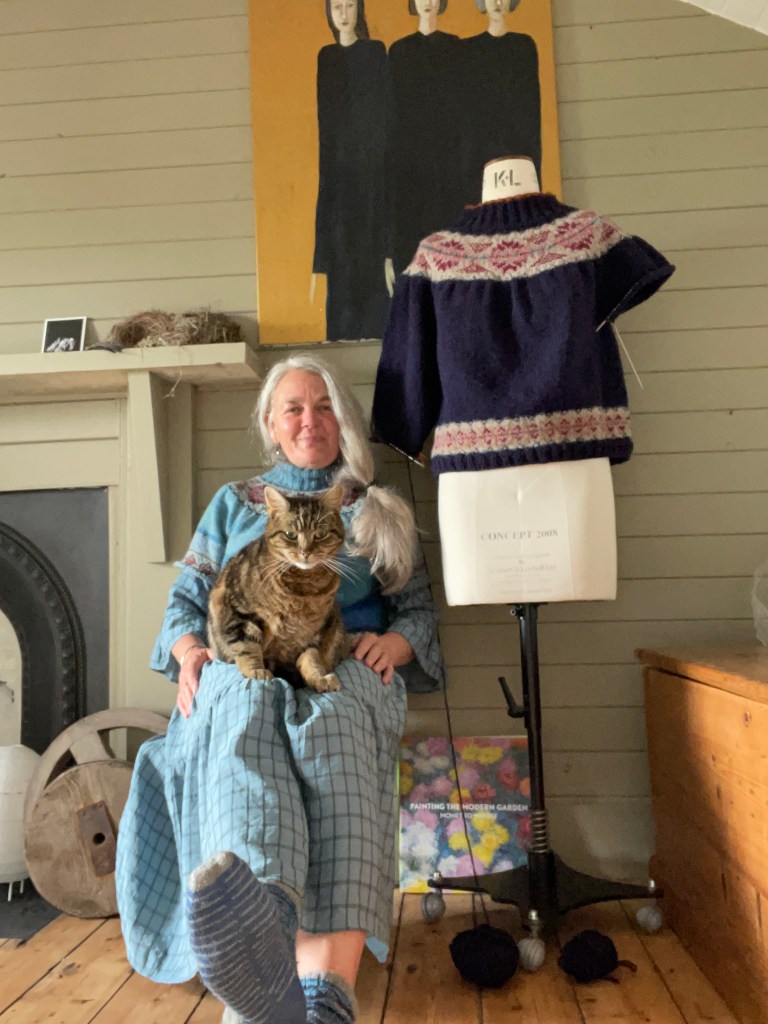
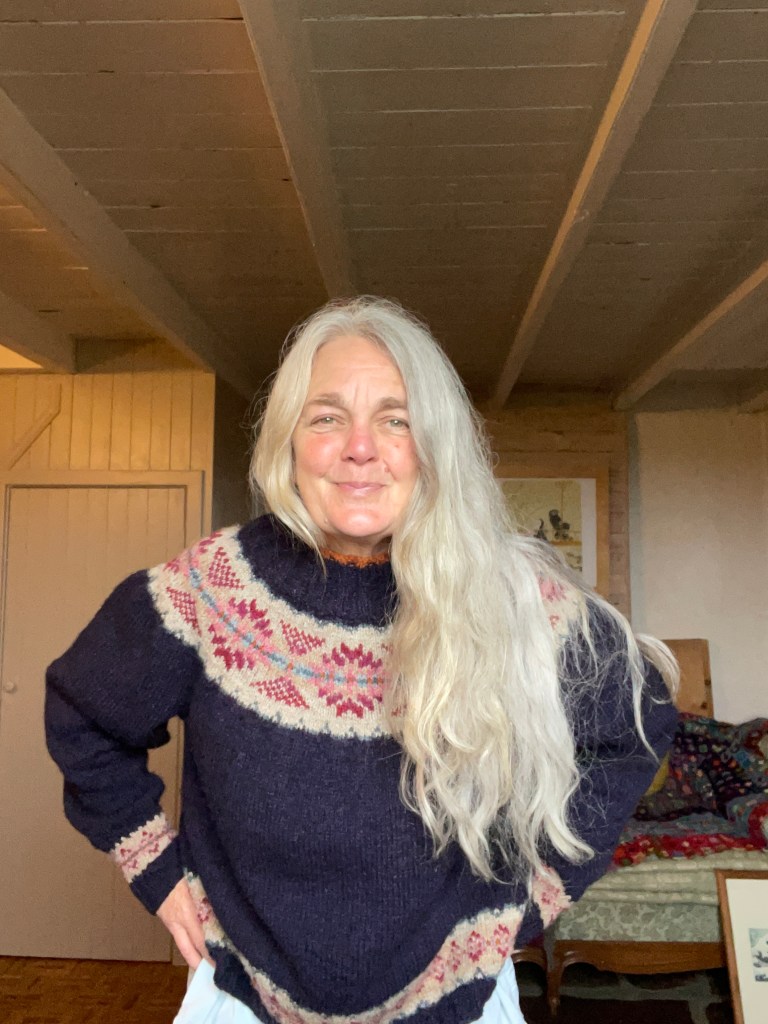
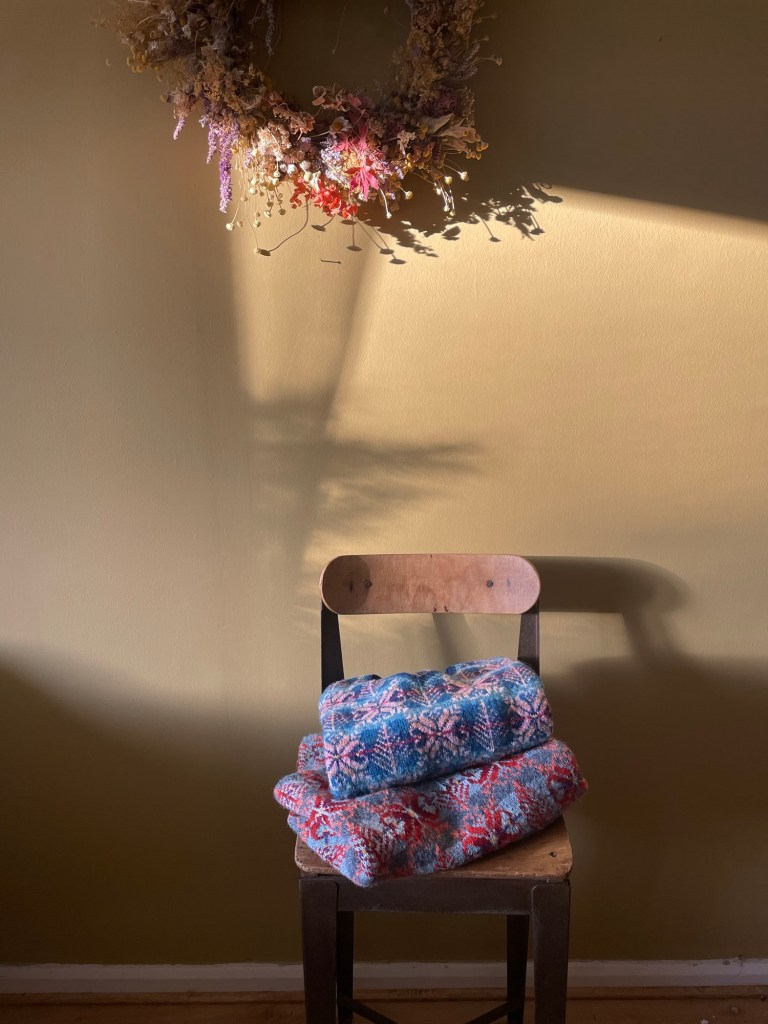
I started with beanie patterns but in 2021 I designed these two jumpers using the same Shetland yoke motif. The first jumper is in Shetland 2ply and I named it, dear Susan after the woman that lived in the house that I bought from 1876 to 1960.. she was a very impressive inspiring beautiful woman. You can read all about this on my blog if you dig way back.

here is a blog post, if you want to dig back
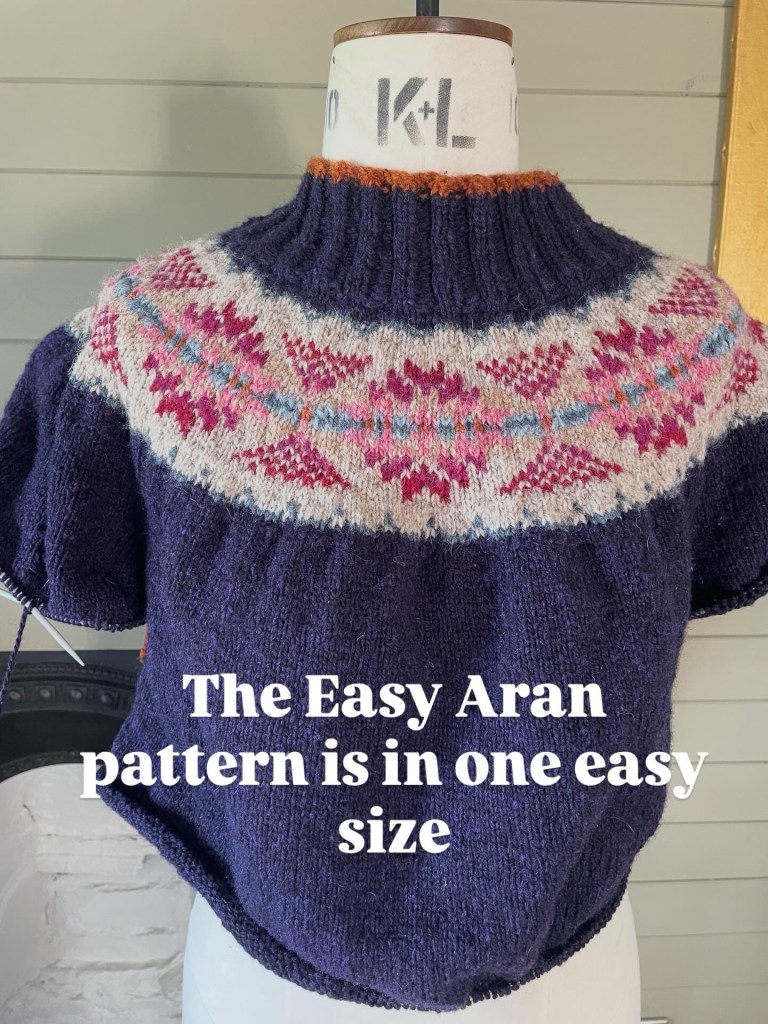
After I knitted the Dear Susan, I developed the pattern into a very easy quick knit Aran jumper and named it, Easy Aran pullover
Both of these jumpers are very easy to knit and the patterns include photograph tutorials, written instructions, and colour charts
I’ve come a long way since designing these patterns almost 6 years ago, but they are still two of my life changing decisions. I’m grateful for the time that I lived in Shetland.
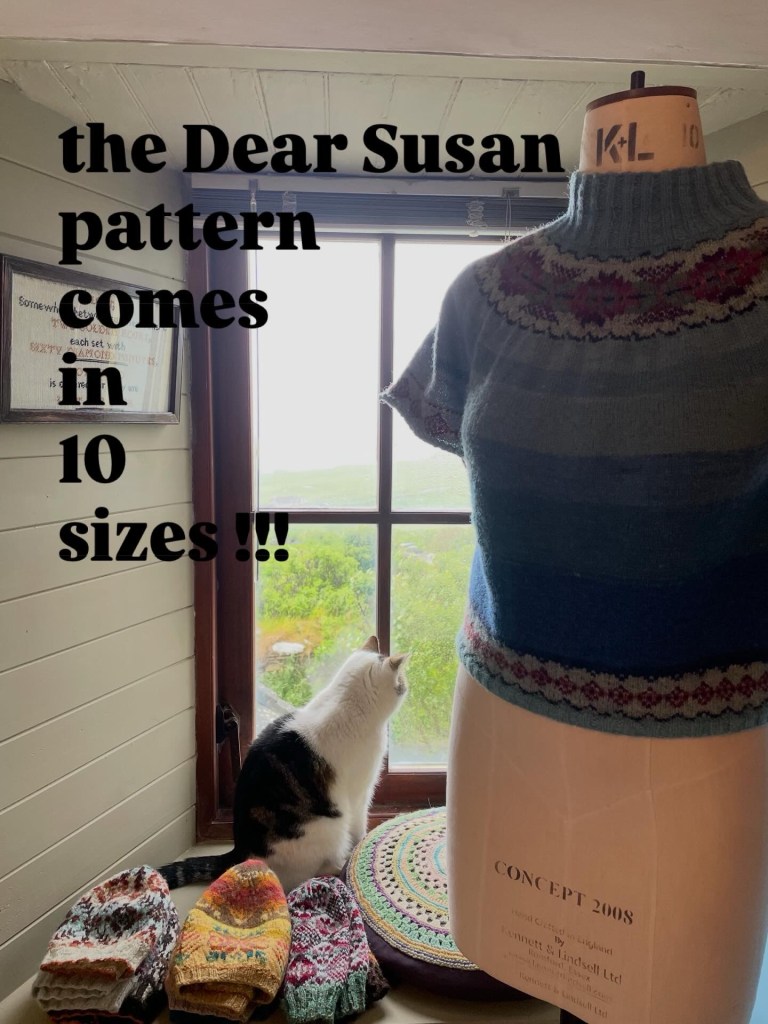
Both patterns also include a 12 page story about my life in Shetland – my house named Smola, Susan – who had lived in it, an me – with each of these patterns
Here is the beginning of that story in the patterns
Dear Susan
and
A house of two women
Tracey Doxey
Preface
Shetland, May 2021
One day, towards the end of May, it rained so heavily that when the winds took up the weight of sky and sea water, dropping it upon the house roof, I could hear nothing else but the sound of pelting rain. Dampness penetrated the house, not as seeping or leaking but as a shroud that rested upon my body. I lit the fire in an attempt to fight back. After one hour, the weight lifted and I began to knit, waiting for the promised summer. By early evening, the sun came out as if there had never been rain at all so I walked to pay the wood man for the fire wood and on the way home, I took a detour to the beach. I wandered the edge of the surging waves, churned up by the afternoon’s winds. The sea, still being in a fury, was not able to slow down its waves to meet the sudden calmness of the early evening. The ebbing sea left a wake of tidal crustations as if lace edges on the beach. I looked for Buckies but all in an instant, I saw a tiny green sea urchin the size of a small flat pea. I bent to pick it up just as the tide surged over my shoes but I caught it before it was lost back in to the sea.
I wondered if you ever walked to the beach to collect sea treasures or if you never bothered.
Shetland, Arrival August 2020
Dear Susan,
I begin with the outside, with what I have to hand; my reason, my eyes, my spatial understanding, and an openness tinged with the unknown.
On arriving, I need my first investigations of your croft house interior to be made alone. I want to inhale the house, listen to my internal feelings at first sight then recognise how my body responds to the old stones – I need to let body and stones talk to me. Thoughts and feelings need space. I need space. I haven’t yet found you. I do not know that you were born in this house 145 years ago.
It is a pale grey day, mist rolling over the hill behind the house as if a blind has been half pulled down a window. The sky is bleached out, the day is calm and windless, not particularly notable.
I open the front porch door, then, I try the house door with its mismatched glass panels. It opens. To the right in the tiny vestibule area, there is a third old, board-door, painted white with a hand-hewn square wooden knob which I turn to the right. The simple mechanism lifts a wooden latch inside. That sharp click sound of the latch lifting and hitting its wooden casing is the sound that I will forever remember of this place. It is my first sound here and it will probably be my last when I leave. It is a click of old wood against old wood, heard by every man, woman and child that has ever entered this house before me, for the last 180 years. Human touch leaves tangible traces of every hand that has opened it before me. The patina of years lies dirty on the paint’s surface.
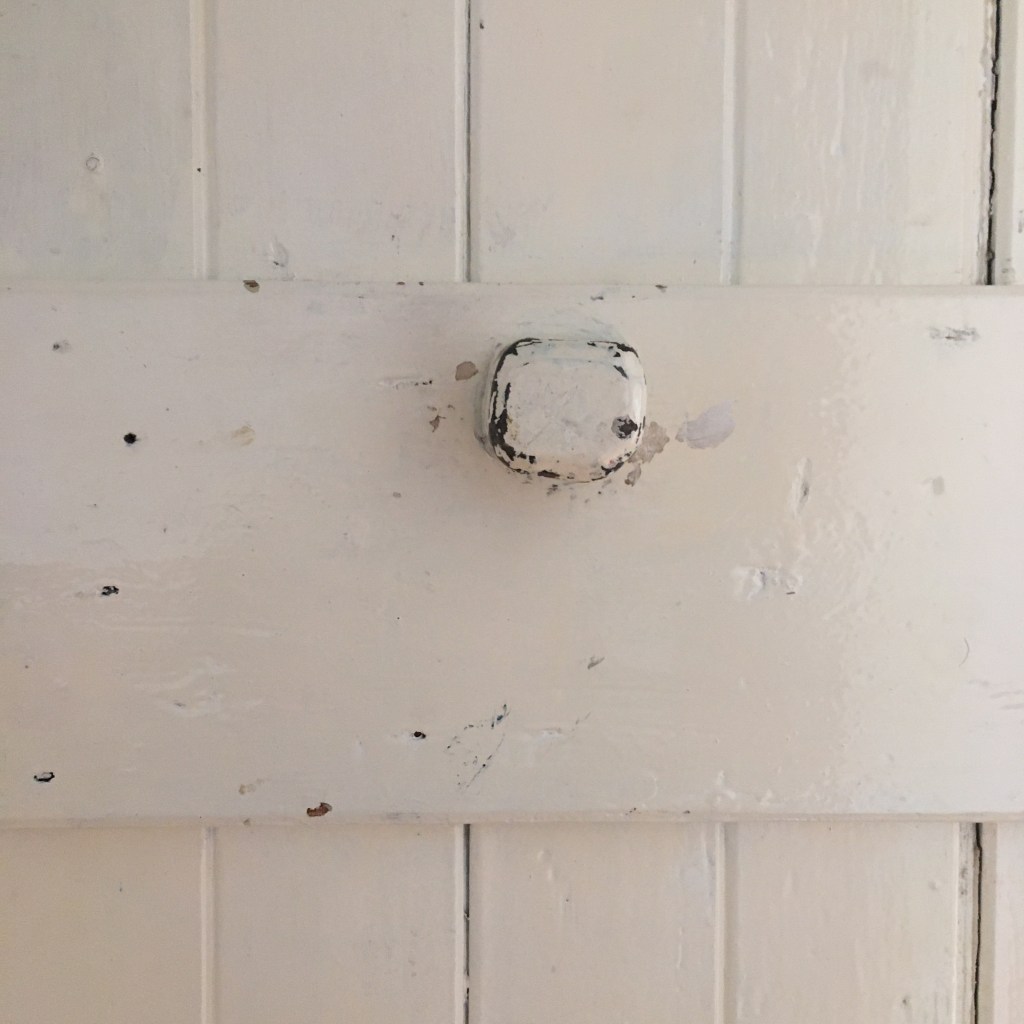
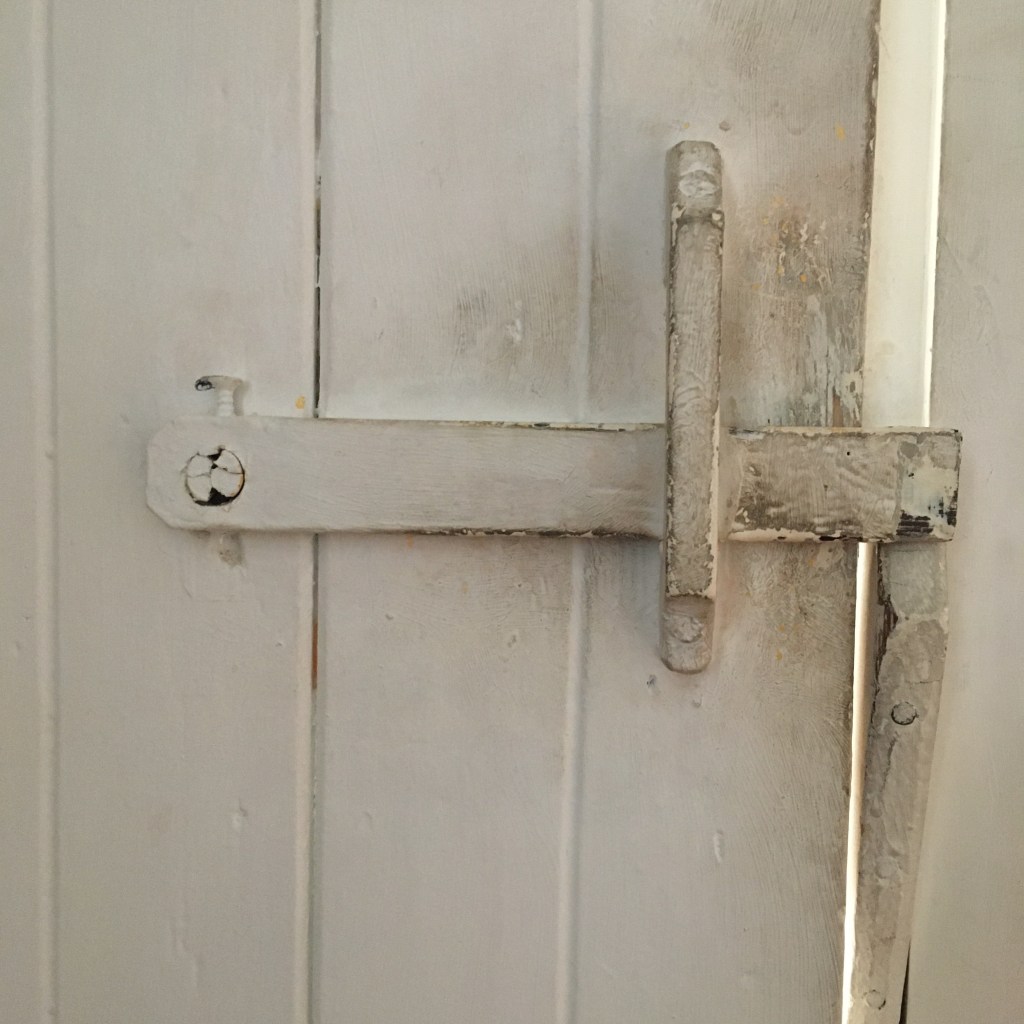
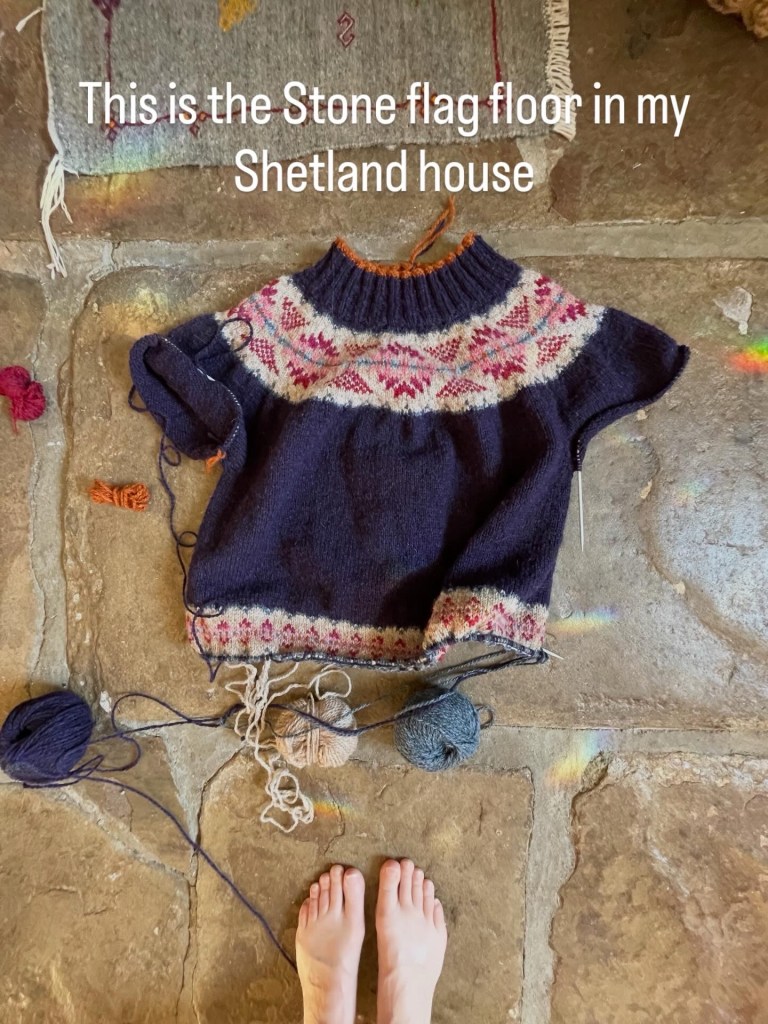
Simultaneously, within the sound, my heart is given over to the first sight of the flag floor and fire place in the sitting room. In an instant, I am sold on sound and sight. I know I will not pull out of this crazy unseen deal to buy a house and change my life entirely.
Heart over head, I move in three weeks later, with two cats and a bag, the furniture and belongings on a lorry, to arrive a week later.
Life shrinks or expands in proportion to one’s courage.
Anais Nin
Dear Susan,
I have been sent an image of your Brother – John Halcrow, in his Naval Uniform. I begin to look at censuses and the local history ancestry website then I ask around to find out about the previous inhabitants of this house. I called in at John’s to ask about you because I know nothing of the woman I had heard lived in the house for many years. He said to speak to Jim, so I went over the road to Jim’s and Martin was there too. They were off to Anne Mouat’s funeral but Jim was gracious with his time with me. He told me of you – Susanna (Susan, Cissie) who lived in the house that I now live in and that he was sent as a child, nearly 80 years ago, to collect the milk from you at your house. He told me that you had one cow on the croft, you sold milk, and you rowed the little hand-written paper milk bills up on a shelf in the porch – the same porch that I have. He was a young boy then but he clearly remembers you.
At the funeral, Martin spoke with Raymond whose Aunt lived in the house after you. You knew her, her name was Alice. Raymond came to see me the next day with a mesmerising handful of photographs of you. He introduced me to Susanna Halcrow (Susan, Cissie, or even Zizzie) The photographs, he told me, had been left in the house after his Aunt Alice had died some 30 years after you.
For the first time I could put a face to the name of a woman who lived in my old house for 83 years. Your face, your name. I sank to sit on the floor to look at your serene face in the images dating back to early 1900. Your candid expression caught by the lens of a camera, looking openly right back at me opened something inside me to find you more deeply.
You were born in this house on the 6th February 1876 and Died on 4th January 1960.
In the archives at the museum, I found that your Halcrow family had lived here through the 1800’s – 1960. They were listed in the 1888 valuation roll of the Symbister Estate, Whalsay, partly owned by the Laird, William Arthur Bruce (In 1888, John Halcrow, your Father) tenant, paid a yearly rent of £4, 10 Shillings for croft number 7. You would have been twelve years old (registered as knitter). The whole family are on the census of 1881 and ‘Susanna’ is listed as being five years old – there were seven people living in this small house at that time – Thomas Halcrow aged 86, Barbara Halcrow aged 83 (your grandparents), John Halcrow aged 40 and Ann Halcrow aged 41 (your parents) John aged nine, you aged five and a boy named John Brown aged 13, but you will already know this. Seven people living in this small two bedroomed house. Afterwards, I looked at records from 1838 and found your family, here, in Upperton.
In the grave yard at Levenwick cemetery, you lie on your own next to your parents and brothers. Your head is against the sea and in May, you rest above a bank carpeted in pale lemon primroses. I wonder if you are lonely, or if you are free.
Over the months after arriving, I became obsessed with you and wrote thoughts that occurred to me about you, on scraps of paper. These papers began to litter the house. I connected with you through a field of built environment in the house, photographs, your old pottery, the view from the sitting room window and eight sessions in the Shetland Museum archive which revealed the legal documents relating to some of the most notable social changes in Shetland between the 1880’s and mid 1950’s. The *Register of the Sasines, recorded the sale of the house from Laird to local in 1923, valuation rolls of rent paid for three generations of the Halcrow family for over 100 years are traceable, the Napier Commission registered the croft and detailed their calculated rental value and reduction of rents for Shetland crofters and the legal rights for tenants, the Small Holding Act, and I found the registered wills of your brother and finally your own, which gave me an insight into over one hundred years of three generations of Halcrow life within this old house. To the very end, with your serene looking gaze of steady calm and with a glint in your eyes, you put everything in order to the very last moment – crossing every t and dotting ever i. All of your wishes are written clearly in the directions of your will.
But, how am I to find out about you – what you thought and felt and how you lived? The neighbours reveal little.
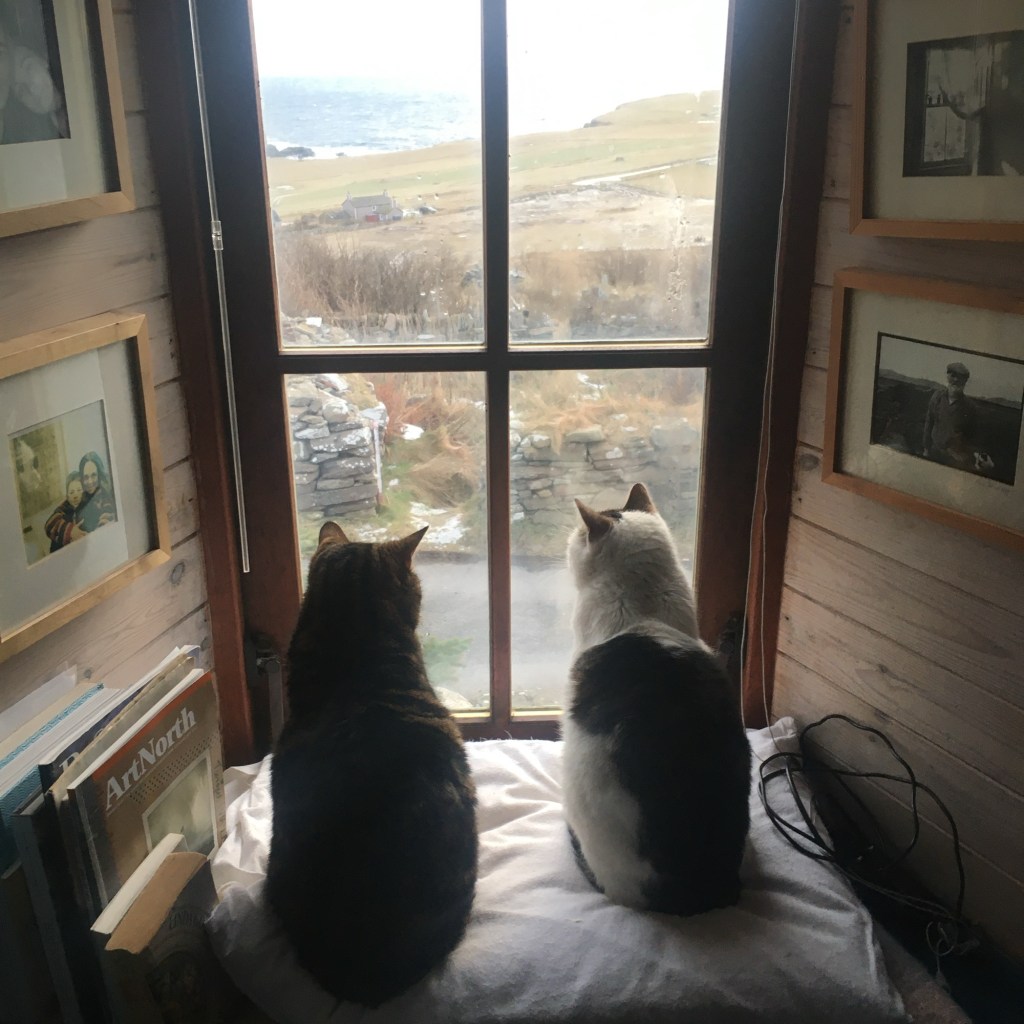
So, I turn to the physical things to look at our lives carried out in the same place – the same stone walls of a house built so long ago – with no record of its beginning, how the breeze moves through the house through its open doors, the sound of the wooden doors and their opening and closing then there is the view – a view that has changed every single day of every single year but it is the same frame from which you looked and I now look out of at the changing world.
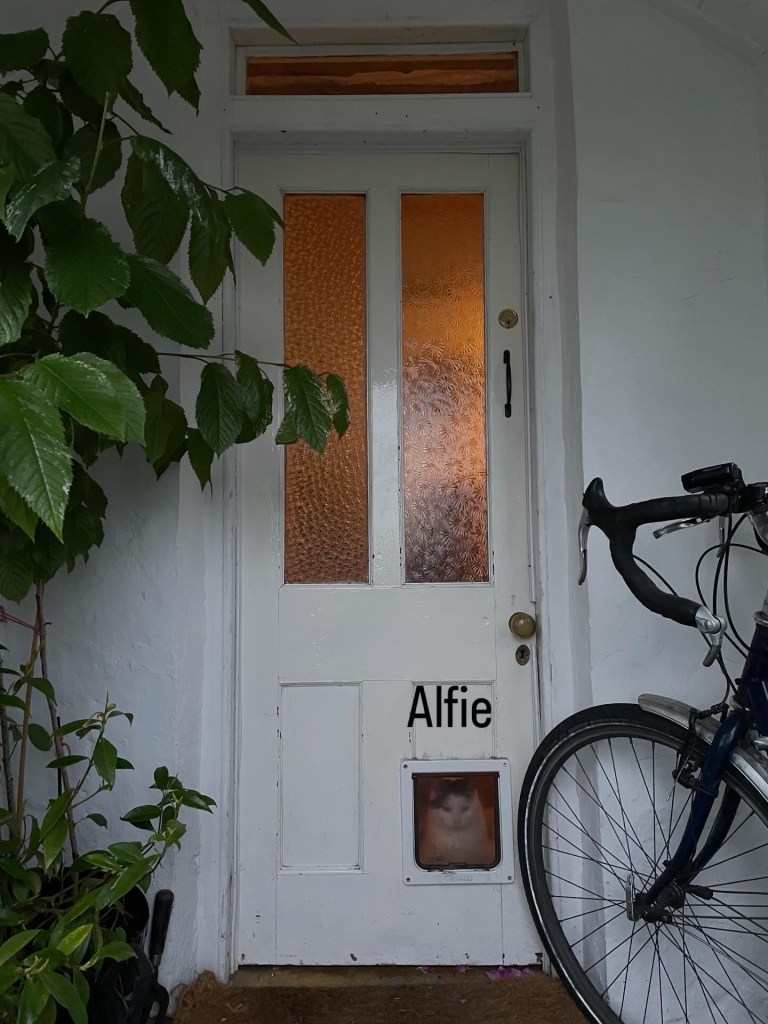
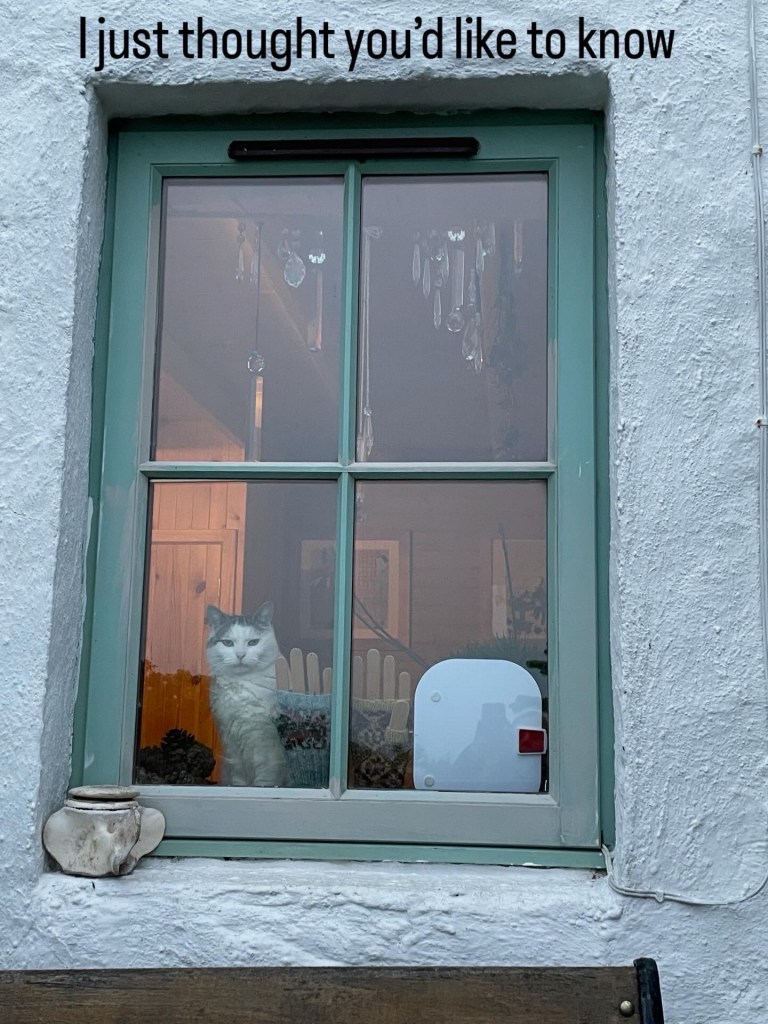
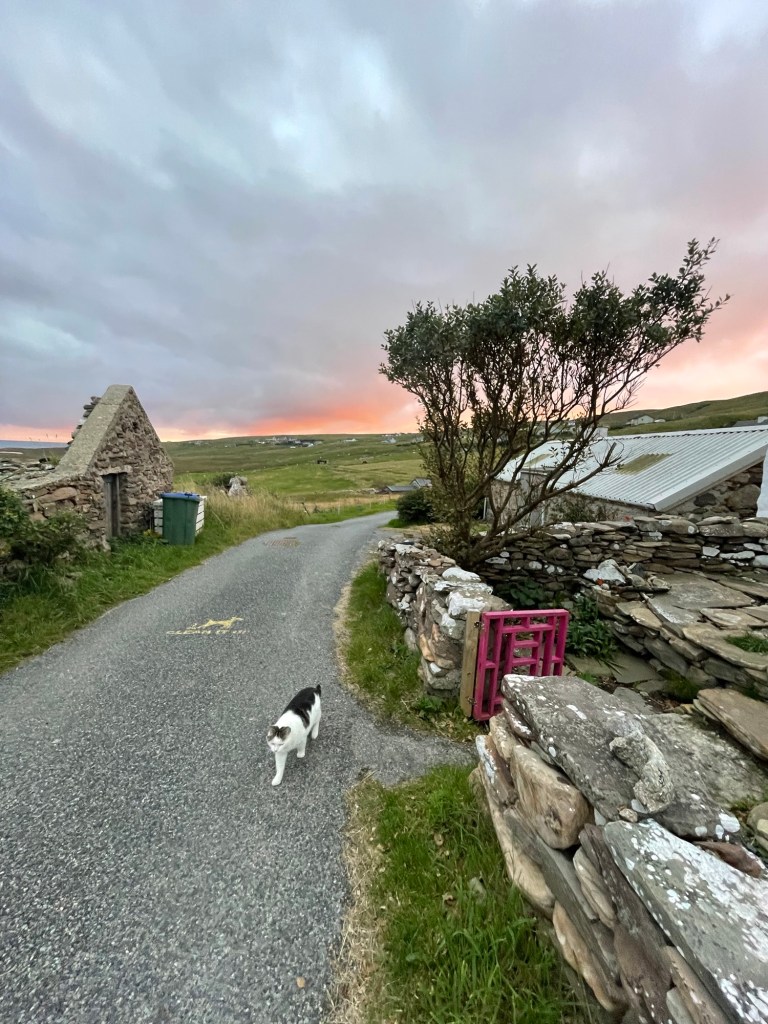
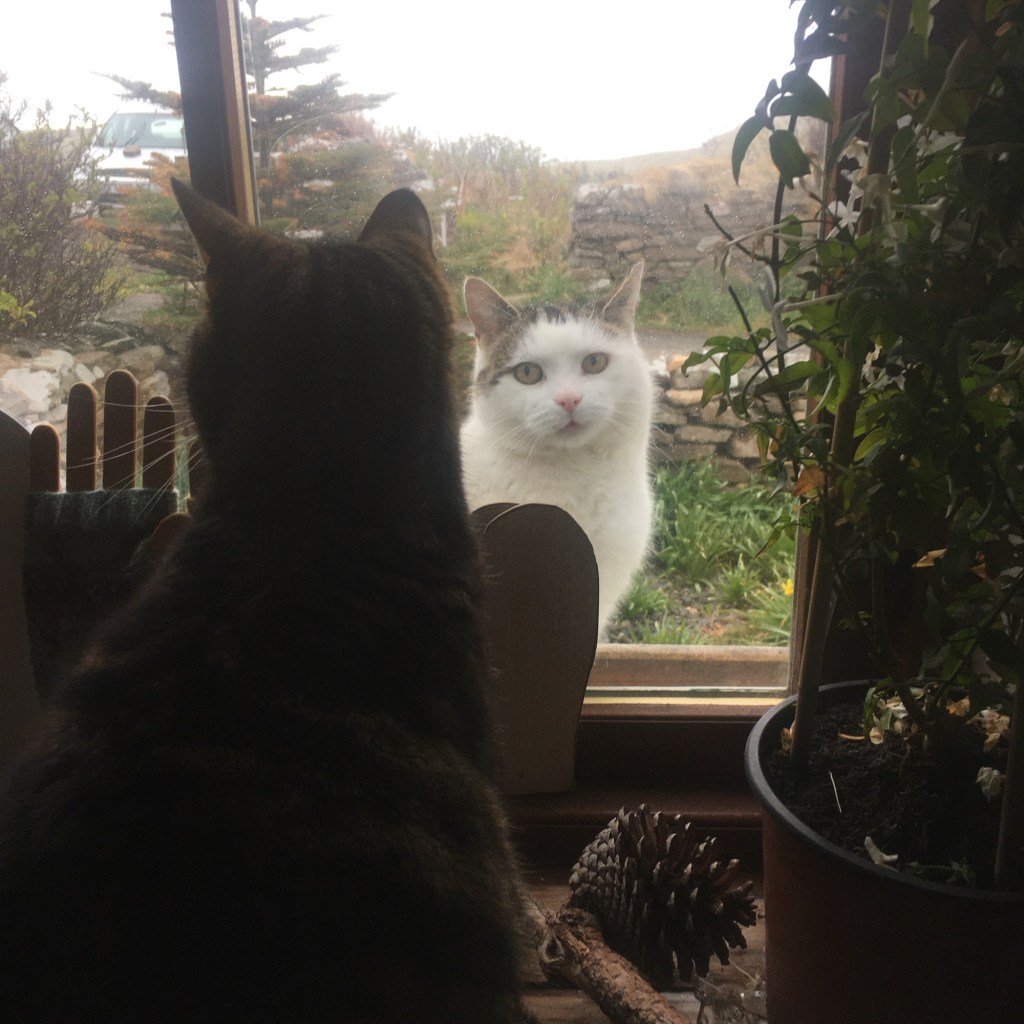
Your artifacts have been returned to the house – some pitchers, jugs, vases, plates, bowls. Before mixing them on the shelves with my own plates and jugs, I turn them around and around to connect with a life before and then there is the biggest connection of all – that you were and I am single women, living a life and paying the bills on our own in an old stone house facing the sea. Did you talk to Ralph, the dog, as I talk with Tiggy and Alfie?
I wonder about the touch upon things, the patina laid down by years of paint, of opening and closing the door, of turning door knobs, of opening and closing windows.
Finding you is like the moment I removed a damp layer of wallpaper in one gentle pull upwards, in an old abandoned derelict Shetland croft house, to reveal a perfect hand printed layer of pre 1950’s paper with wildflowers printed up it. Then, in one more pull that strip of hand printed wallpaper also came off the wall completely intact. I folded the paper and placed it under my jumper, its dampness pressed against the skin of my belly. I thought that if I were to paste the top layer of wall paper back over the void, then no one would know what had been before. No one would know what had been removed from underneath the top layer. It was as if it had never existed.
Finding you IS like finding old beautiful handprinted wallpaper lying beneath layers of less attractive paper. Then peeling it off in sections and placing it under my jumper for safety. Susan, you are under my jumper, next to my skin.
I lift the pewter lid of your old Victorian salt ware jug to look inside. Revealing, peeling, pasting, painting, lifting, closing, opening things in the house, as generations have done so before me. I paint over what has been on the walls and doors. I sit quietly to look at the layers of layers, like the quiet man who mediates first thing in the morning, stripping away layers of noise to his core, before all else happens in the day.
I spoke to Marylyn, who, as a 10-year-old child, moved in to this house with her family. It was the year you died. She told me of a wash stand in each bedroom and jugs and bowls, a sink at the bottom of the stairs and a radio on a dresser in the front room. These were your things left behind. I can picture them now. She told me that her and her brother slid down the green linoleum on the stairs and they telephoned their cousins in the house behind by joining two cans with a long piece of string and shouting out the back window in the north bedroom. I can hear their laughter now. Children in the house for the first time in over 60 years.
I have had moments where I wonder if I am prying. I wonder if you would like me. I hope that you would like me.
Maybe there is not much difference between us. Did you look in the mirror to comb your hair or did you, as I do, stand outside in front of the house to comb your hair into the wind whereupon stray grey hairs blow upon the breeze and hang upon the roses?

Susan, I am now the carer of your house for however long I can endure the winters.
House / Home – Situatedness
Outside, I Inhale the heady scent of peat smoke, as a hundred women must have done so before me.
Standing on to the hand-hewn flag stone veranda that skirts the front of the house, I take in the heady scent of the previous night’s peat fire smoke lingering in the air. The grey sky is touching the grey sea beholding all that is in front of me, under my feet and behind me within the stones of this old house.
The rough stone structure of the house has been touched by many hands over nearly two centuries and is built upon rock. This house is my place of thinking and feeling. It holds me within its walls endowed with previous lives, to live freely, without compromise of any other thing except the elements and darkness of night and the lengthy lightness of summer – yet these are still penetrable. Isolation can penetrate.
The house gives to me the opportunity of freedom and I give it the love and tenderness to continue standing strong. But the Winter took its toll on me and then Easter was beyond harsh where the floors shook and the chimneys roared with swirling storm winds. I have lost energy.
How many women have stood at this door way, eyes drawn East to the sea, mind drawn inward to the shores, children playing, wars questioned, lost ones at sea, the animals and subsistence or maybe even love? You lost your brother in the Battle of Jutland. He left this house and never returned. The interconnectivity of all of us lies in the details of life – past and present. A life before that built the foundations of this house is linked to this life now as my life now is linked to the lives gone before and to those that will live here after me. Who turned the first key? Who left the key under a stone in the garden so that when I found it, the rust was as thick as a pie crust?
Sea air permeates my skin, seeping into my bones and softening the edges of my soul. It takes time. I accept this time as a gift. I have come home. Maybe, all my life has been pointing to this one moment. A moving fluid moment of now. Time is temporary but for now, it is the right place.
I heard Marianne Faithful say, ‘ Eventually, I always end up where I’m meant to be.’
I know that here is where I am meant to be, for now.
The past is always carried into the present by the small unmovable things, the click of a latch, the stone floors, the view of the sea, the old byre, a curling photograph of a group of women, long dead, a sheet of paper left in the window sill, faded by the sun.
In the city, I had begun to lose my idea of direction. My direction was determined by worn out decisions made on previous decisions. This is a house of new decisions.
I am here, this is me, windblown, sieved soil, a beating heart, I am becoming sea, wind, beach, yarn.
The breath of my cats reminds me that in fact, I am not alone.
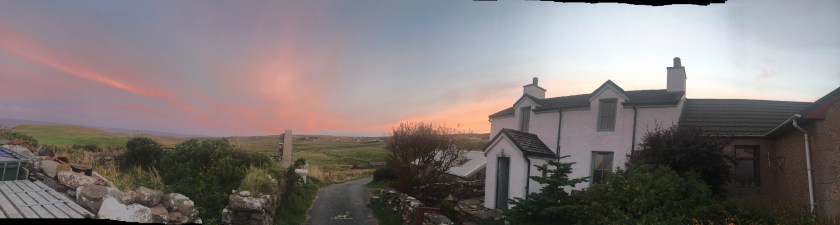
in October 2021 I moved back to England for many reasons
Here you can find the Dear Susan jumper pattern (in 10 sizes) or the Easy Aran Pullover in one relaxed size.




















 tracey doxey