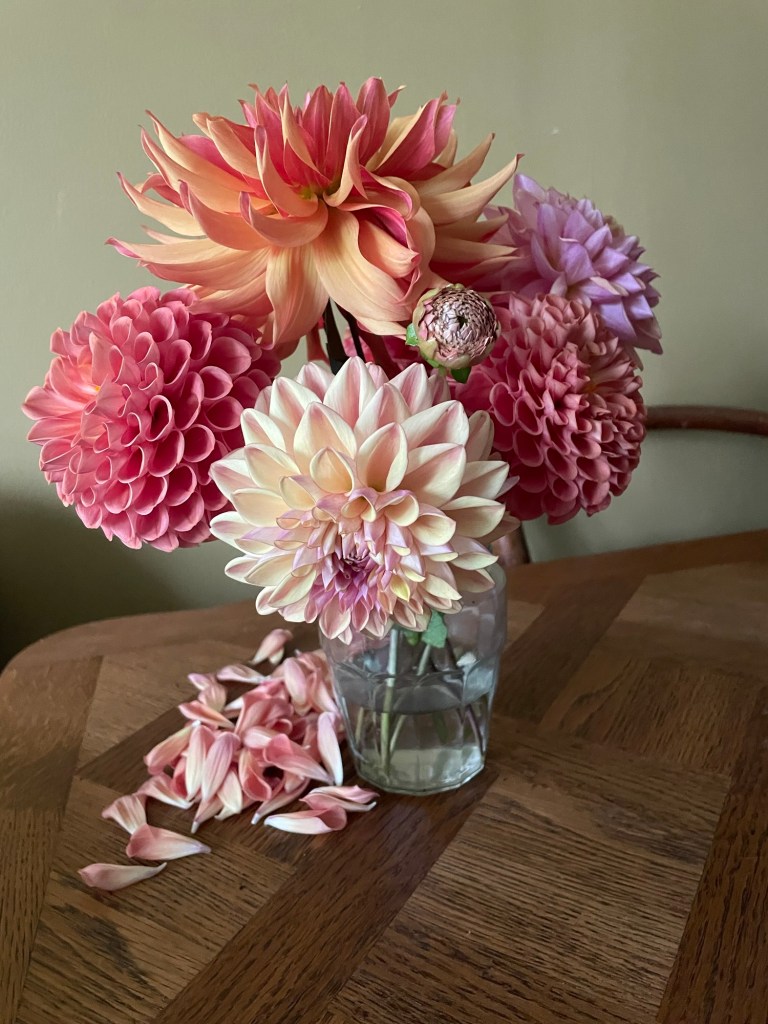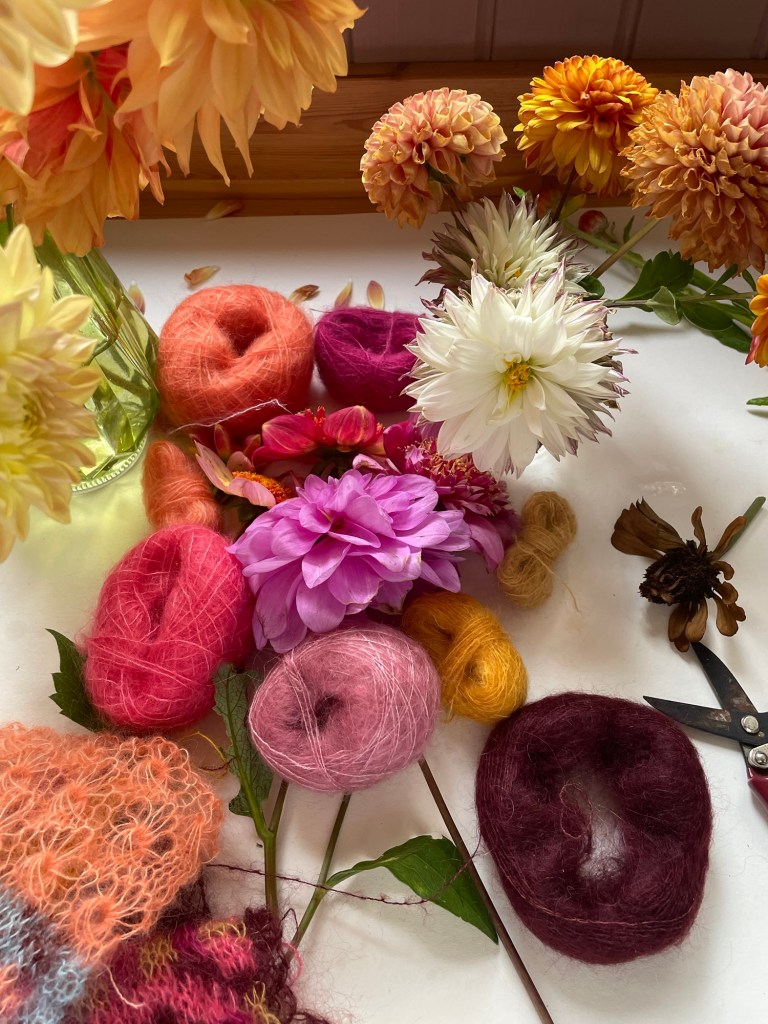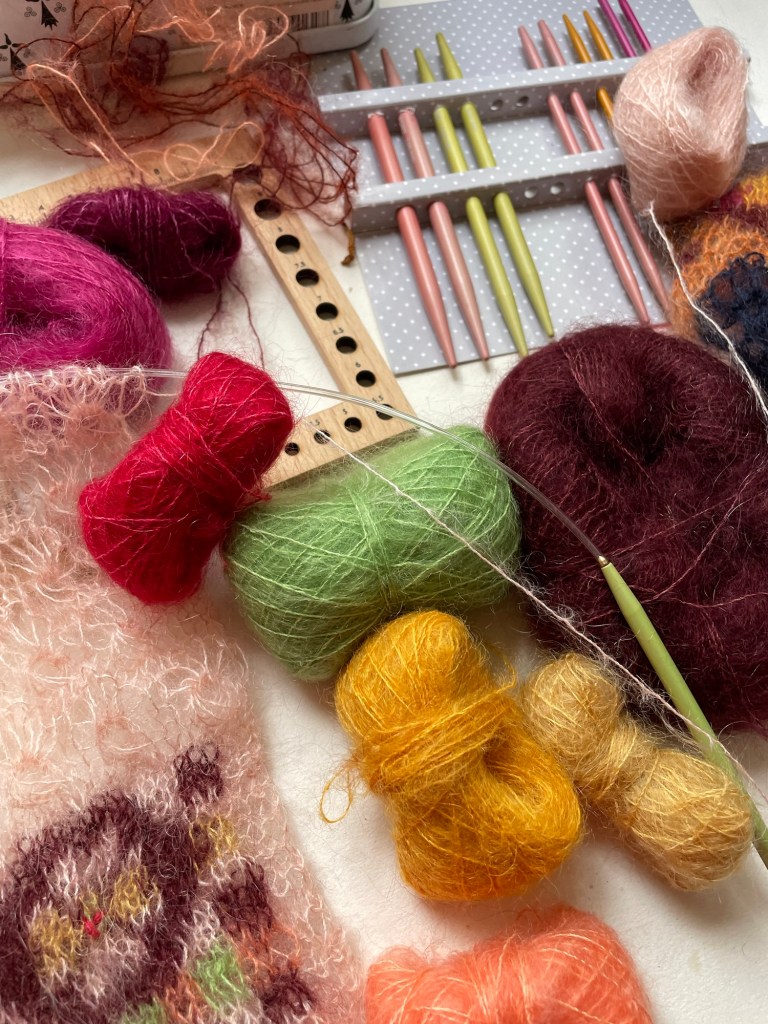
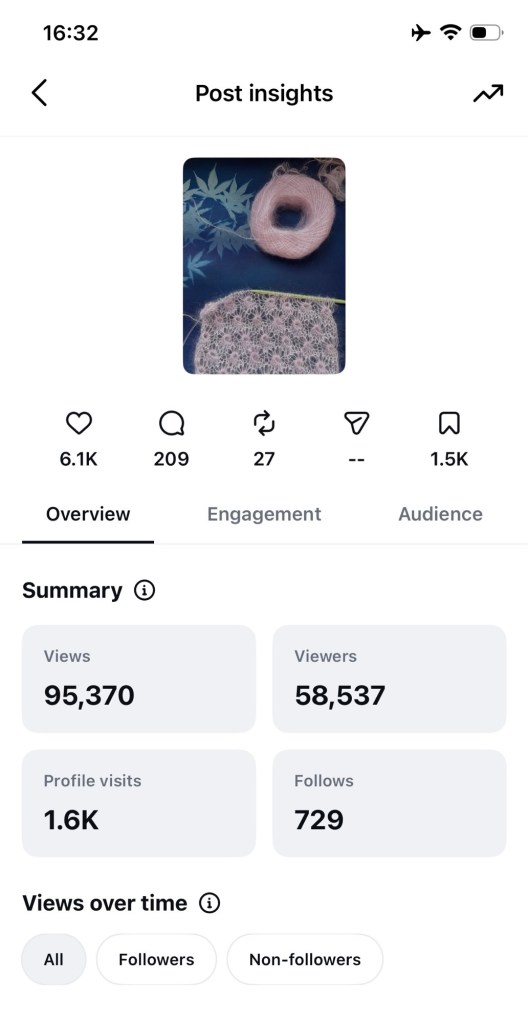
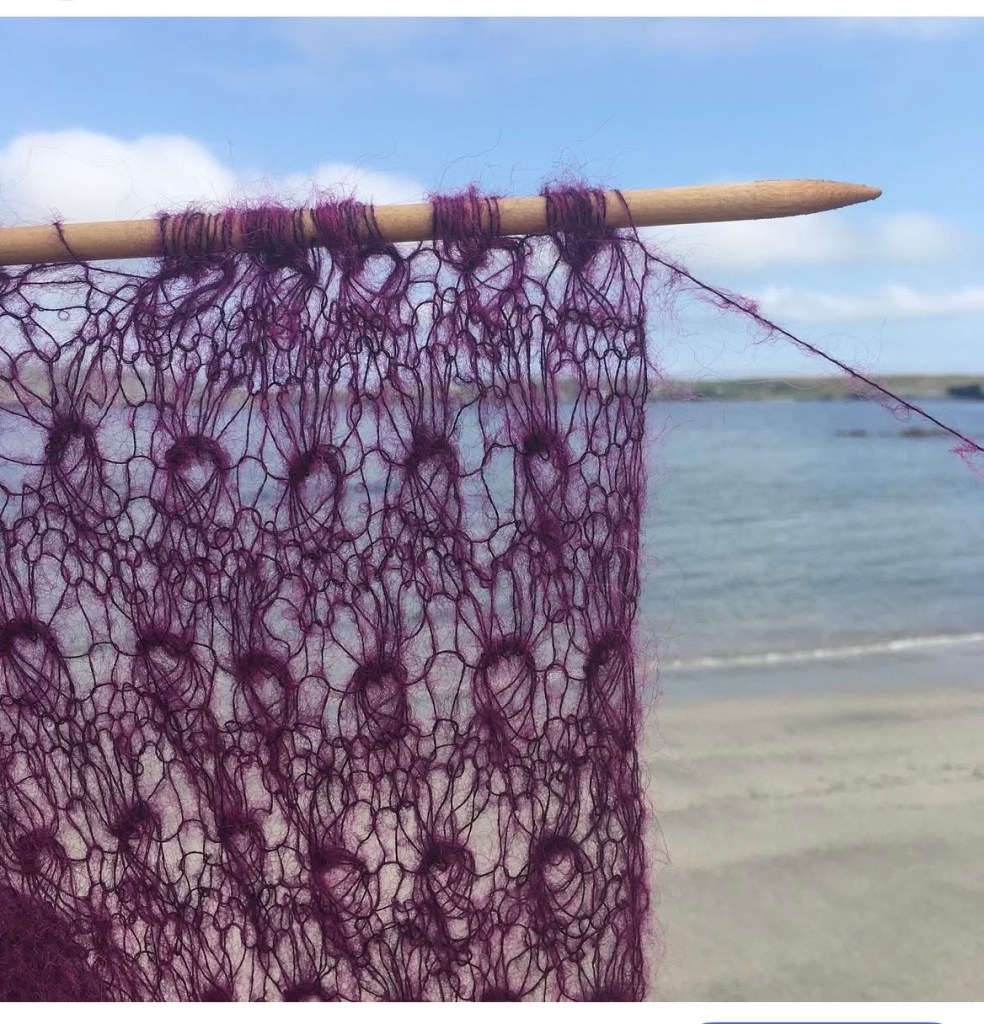
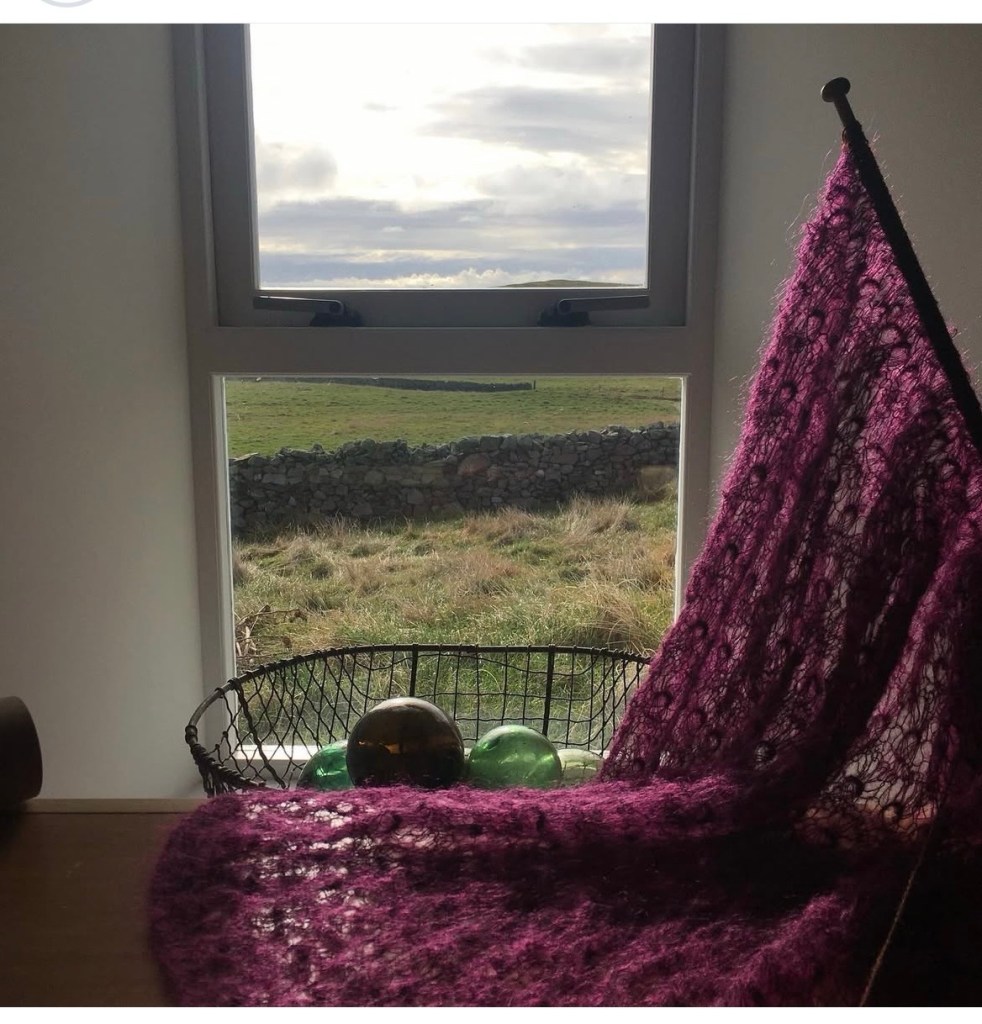
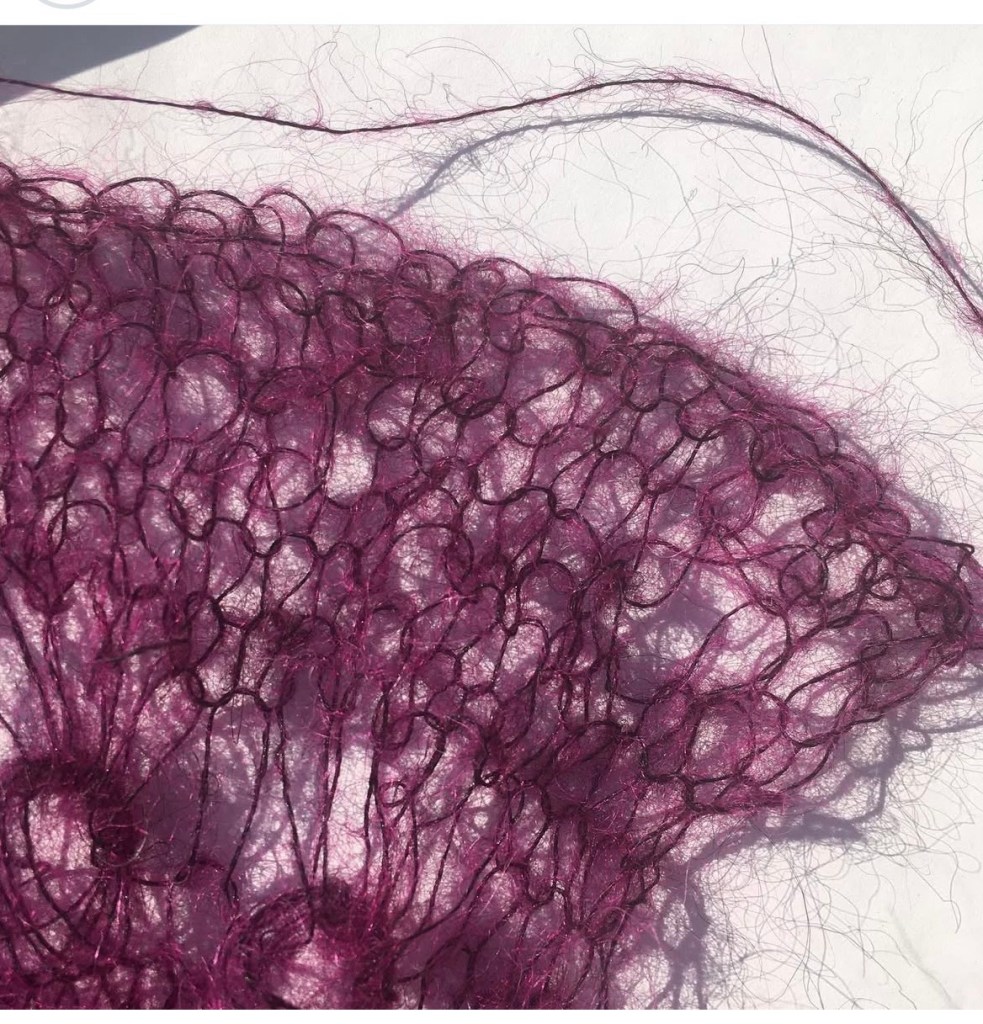
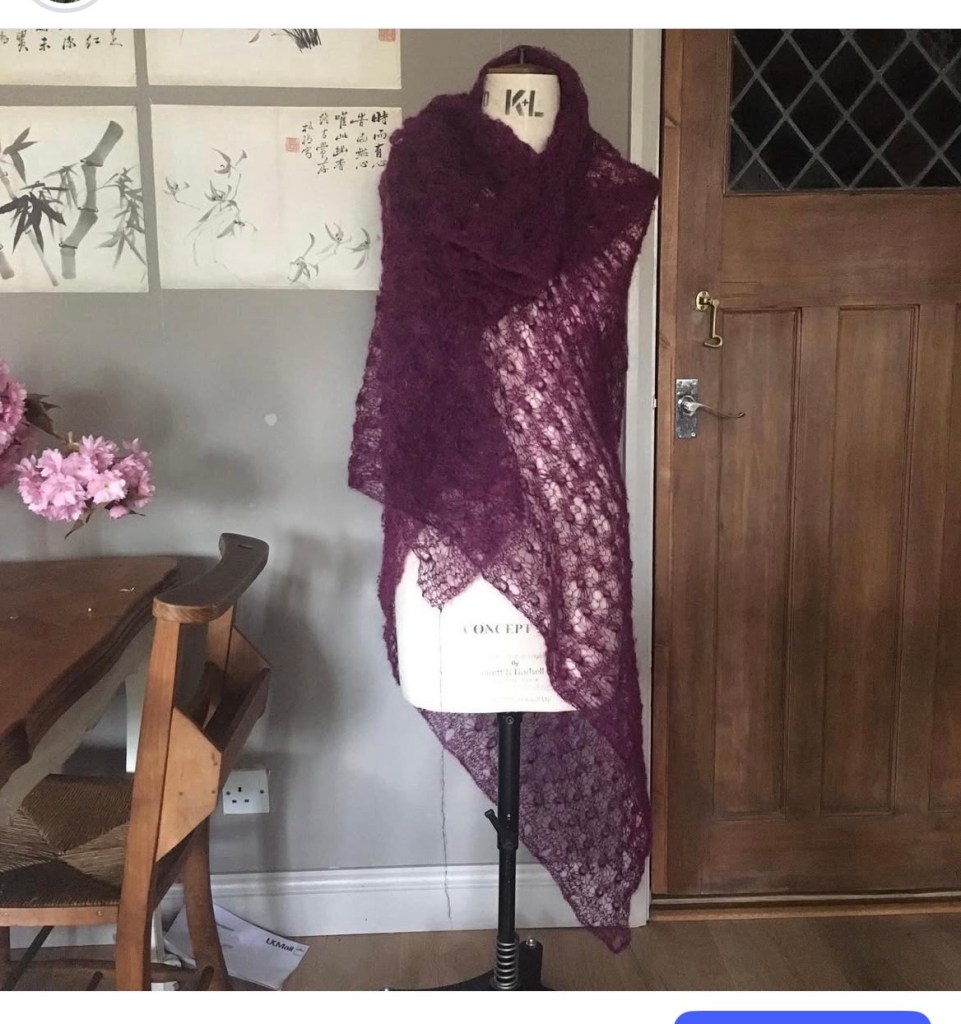
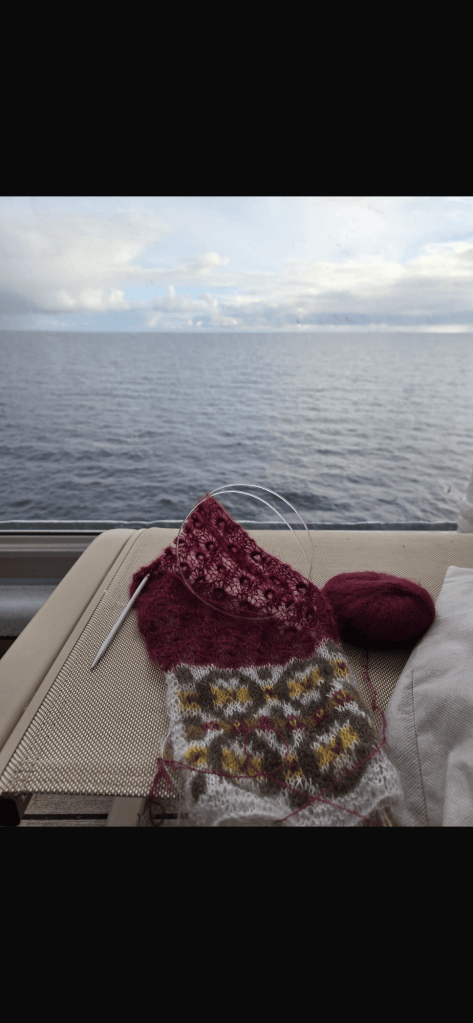
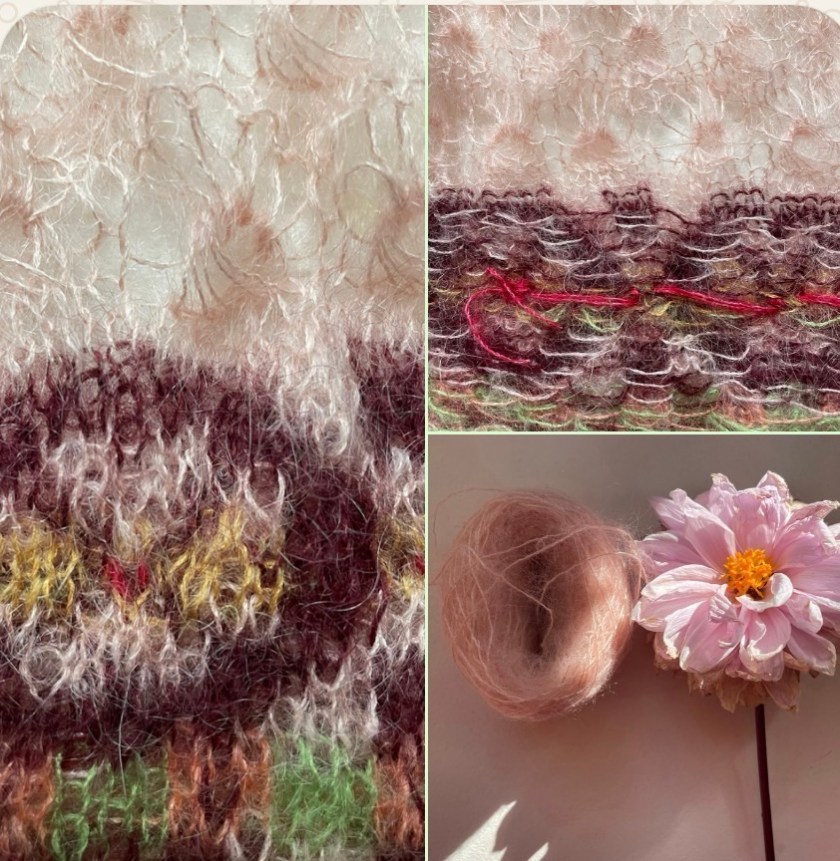
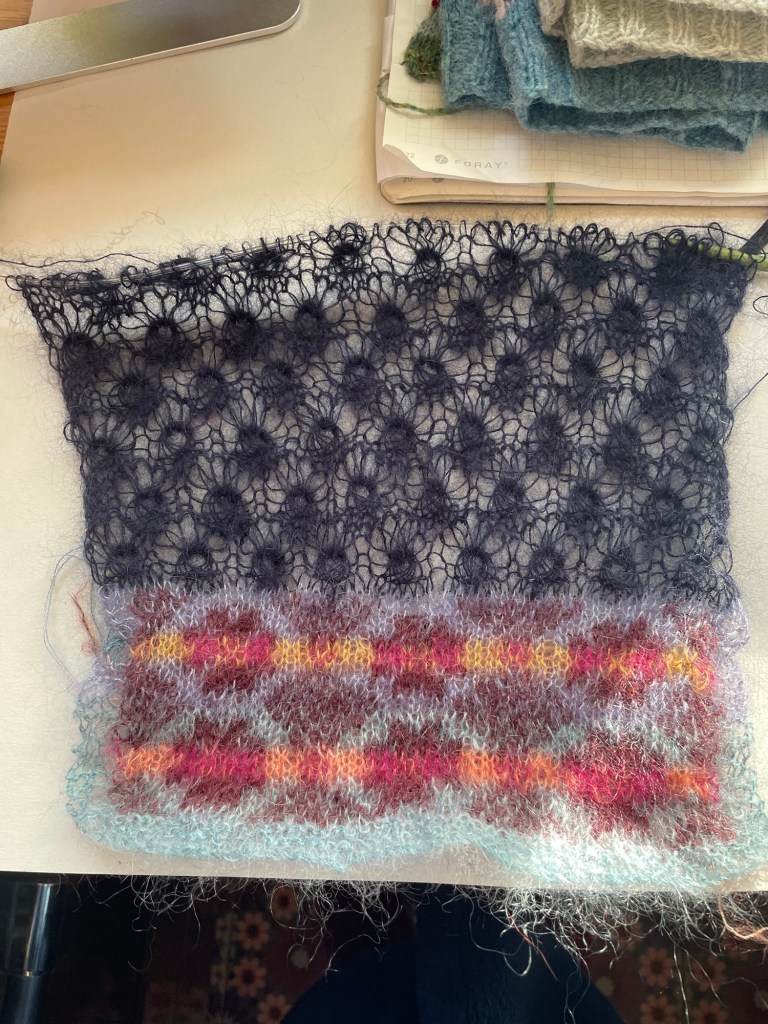
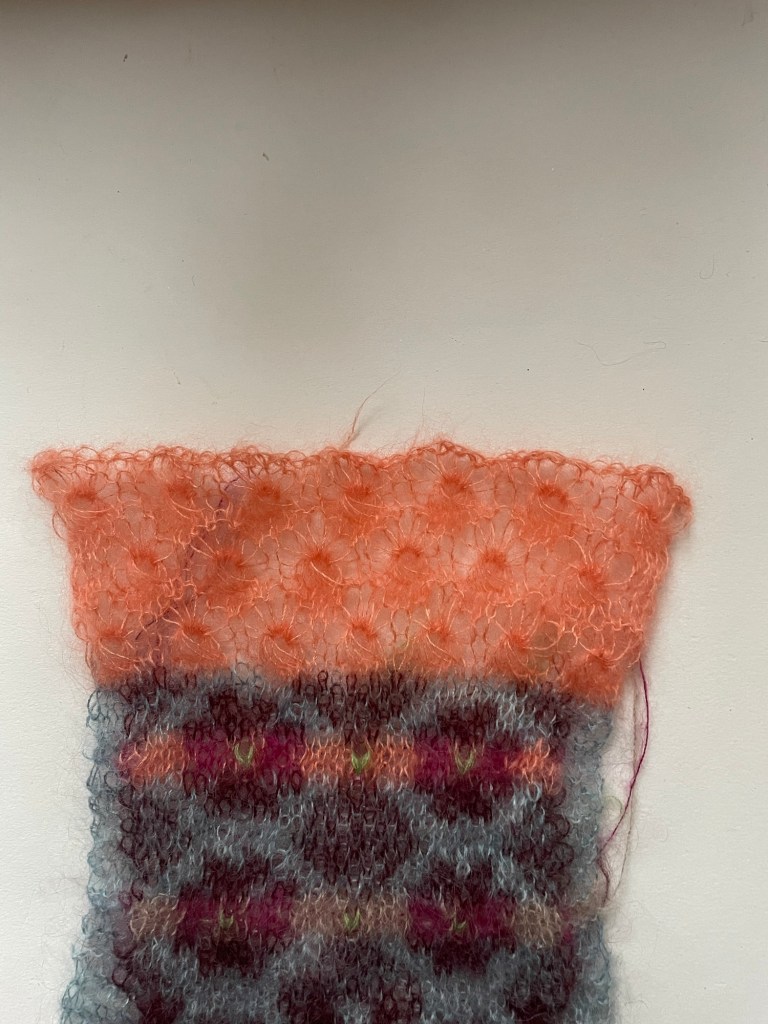
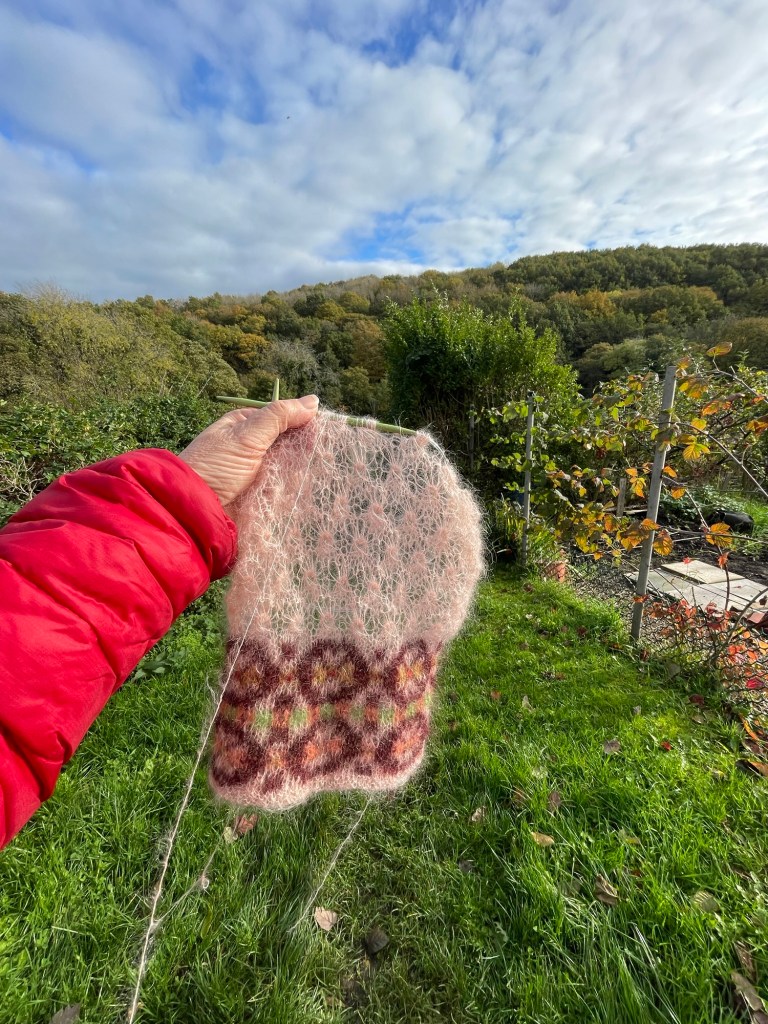
Two days ago, I posted two photographs of my latest lace knitting design on Instagram, and I really wasn’t expecting quite the response they received. The post has now reached over 40,000 individual accounts, with more than 95,000 views, 6,100 likes, 207 comments and around 1,500 saves. There have also been lots of shares and messages asking about the design and when the pattern will be available. Of course, likes and shares don’t ever equate to pattern sales. I wish it did 😊 See insights and 2 images from post below
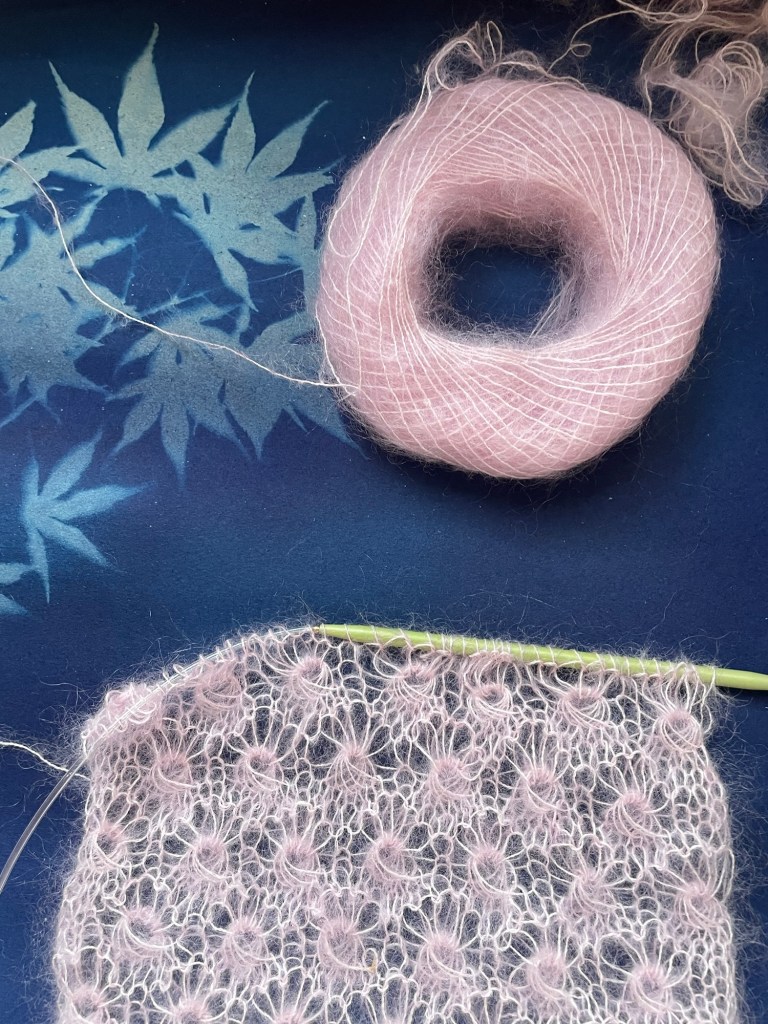
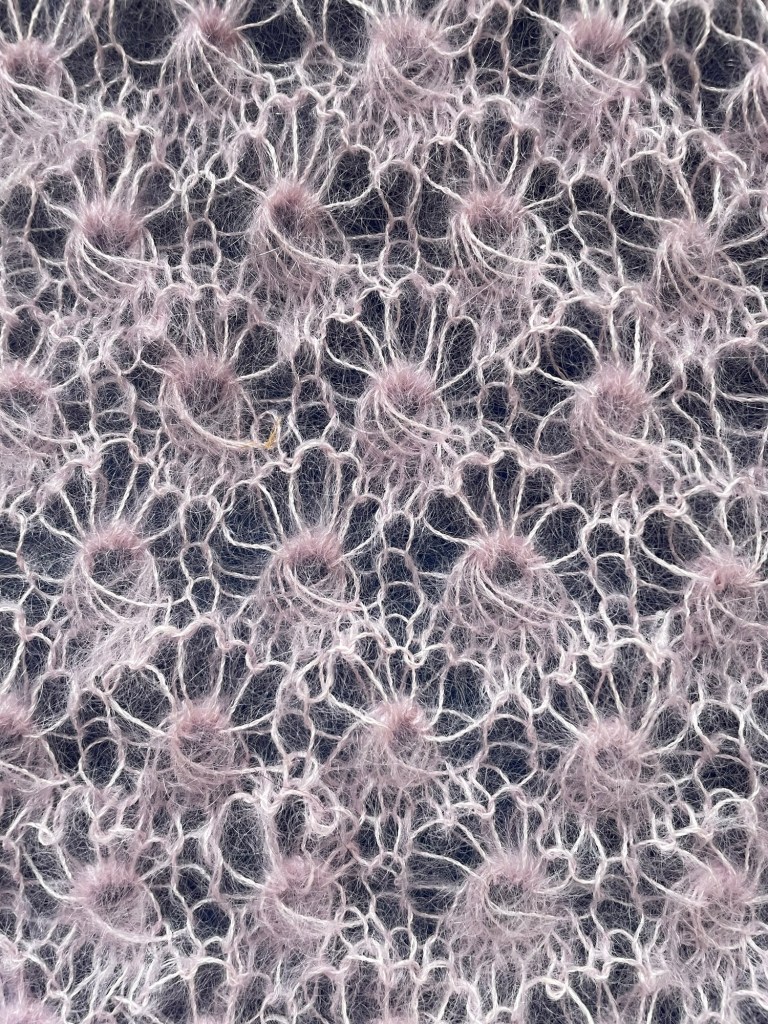
It’s been lovely to see so much interest, but it’s also made me think about my history with this particular lace pattern and just how long it has been part of my knitting practice.
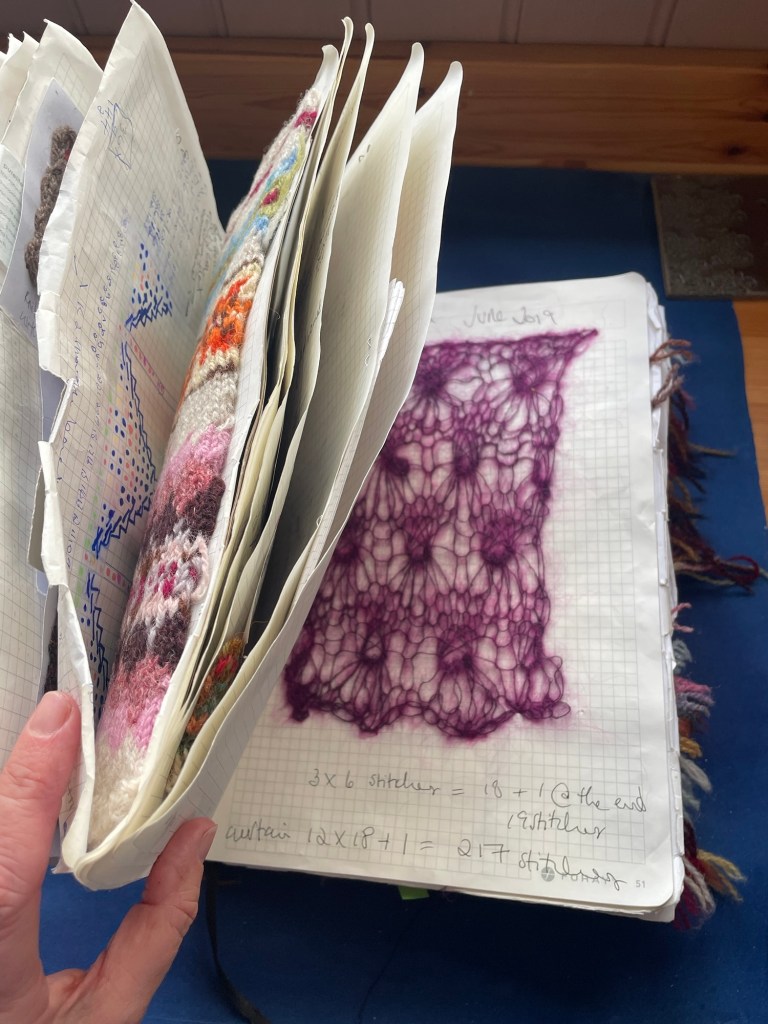
I first knitted this lace pattern in 2012 in a jumper when I returned from living in China. Then, in June 2019, during the summer when I was working on my Swatch Journal, I returned to it. I’d recently finished my Masters in Knitting and was exploring Fair Isle, while also making a huge curtain using this very same easy lace pattern. I took it everywhere with me – even to Fair Isle, when I was living with Mati Ventrillon and strangely, I visited Levenwick and sat on the beach knitting this lace curtain there. I had no idea that within 2 years I would move to live in Levenwick and sit on that beach hundreds of times. This lace pattern took over 6 months of my life from summer to winter of 2019.
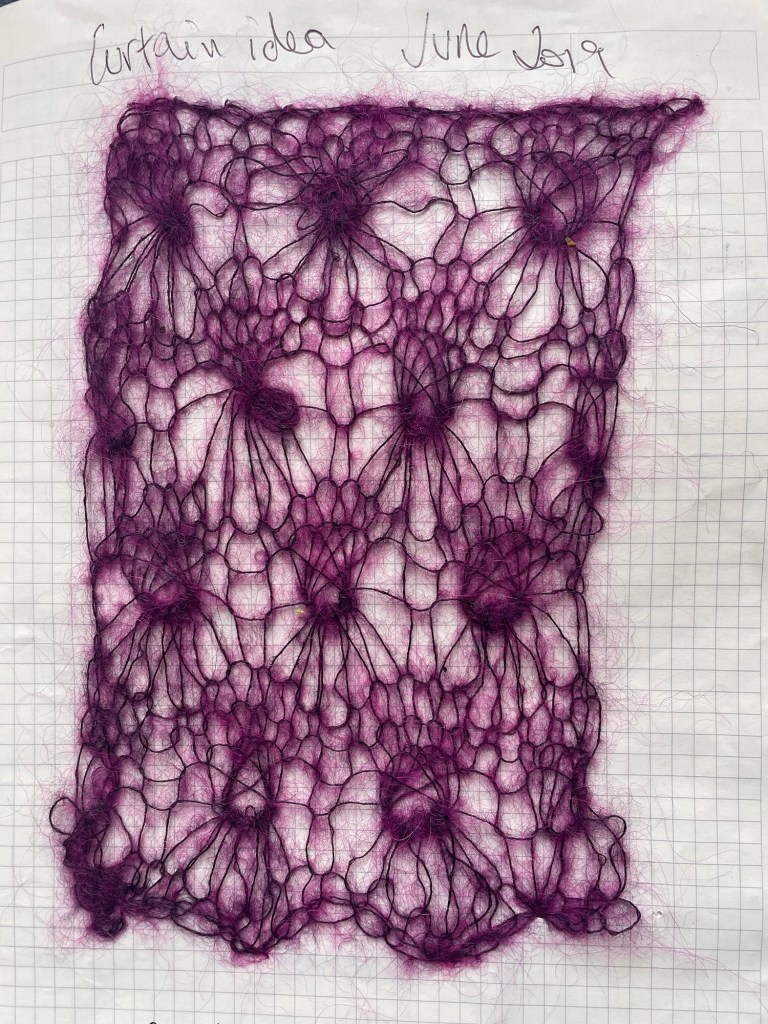
At that time, I didn’t have anything like the Instagram following I have today. Much of what I was doing was part of my own ongoing exploration of knitting, colour, pattern and materials. I was making things, experimenting and following ideas without necessarily knowing where they might lead.
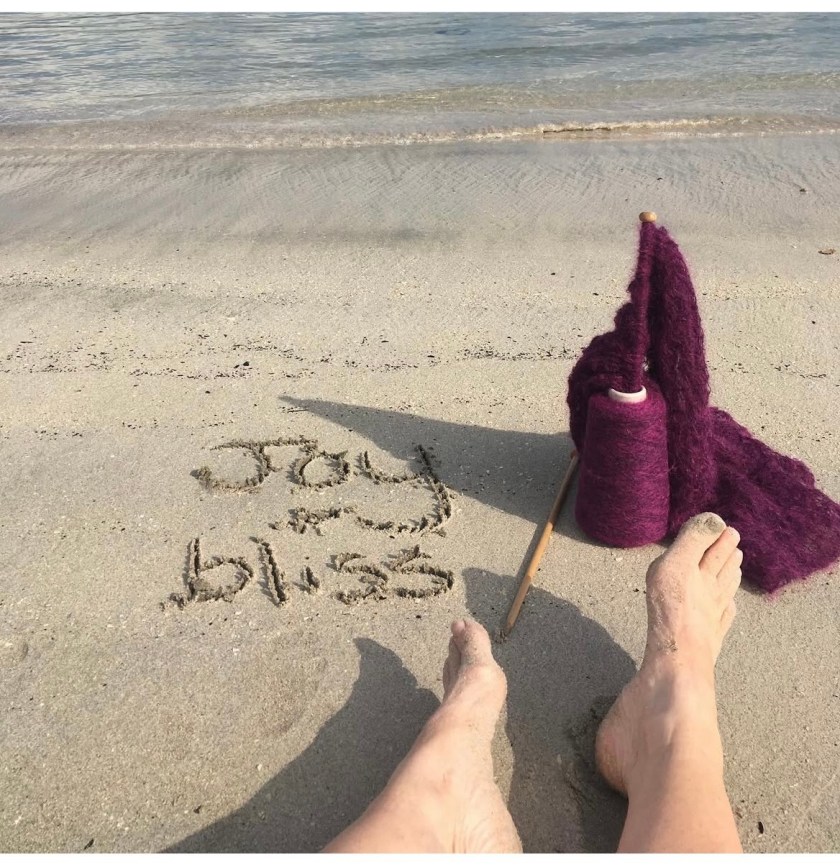
It’s interesting how a pattern can stay with you for years. You put it aside, work on other things, develop new ideas and skills, and then come back to it with a different perspective.
I’ve noticed a few people commenting that they’ve seen this lace in a Rowan book, possibly Book 47 or 49, which I have not seen. But I think it’s important to remember that no one owns a lace pattern. What matters is what you do with it. How you interpret it, develop it, combine it with other elements and make it your own within a new design.
And that’s exactly what I’ve been doing.
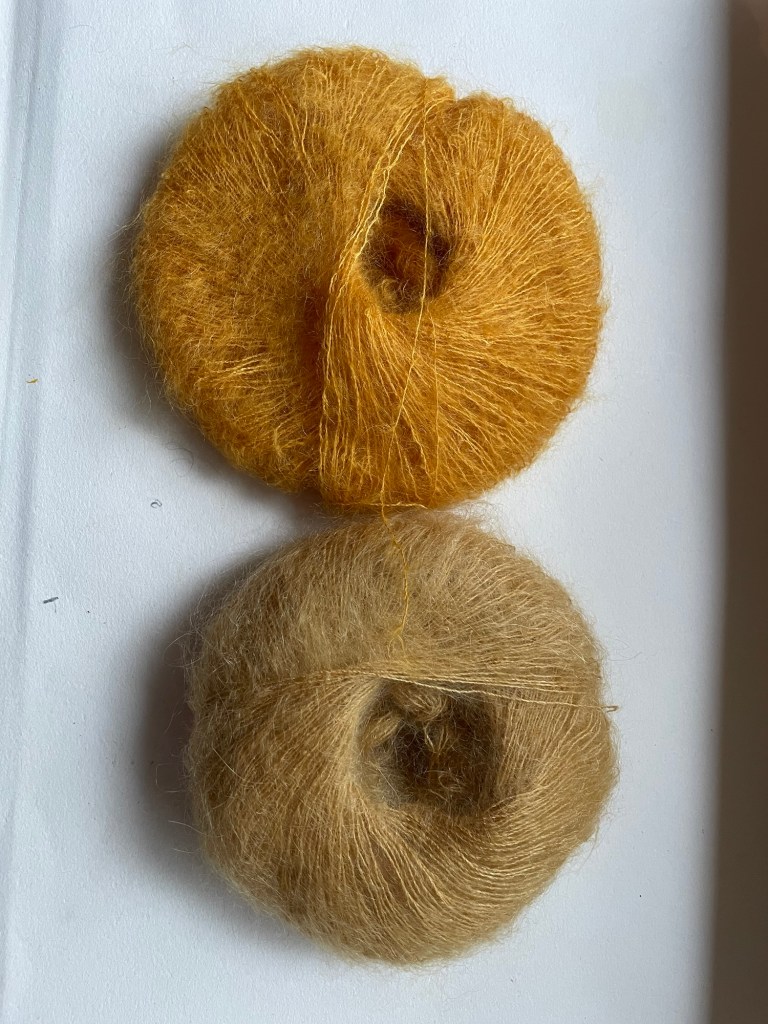
Since August I’ve been developing this into my next design, with Rowan very kindly sponsoring all the mohair Kid Silk Haze yarn.
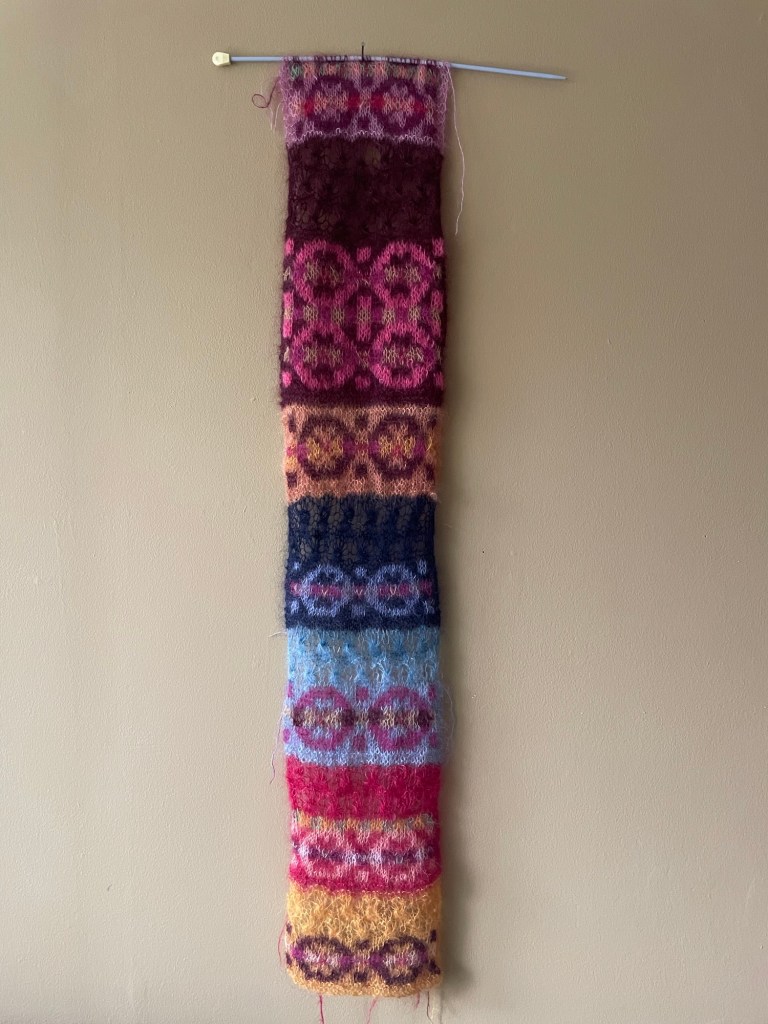
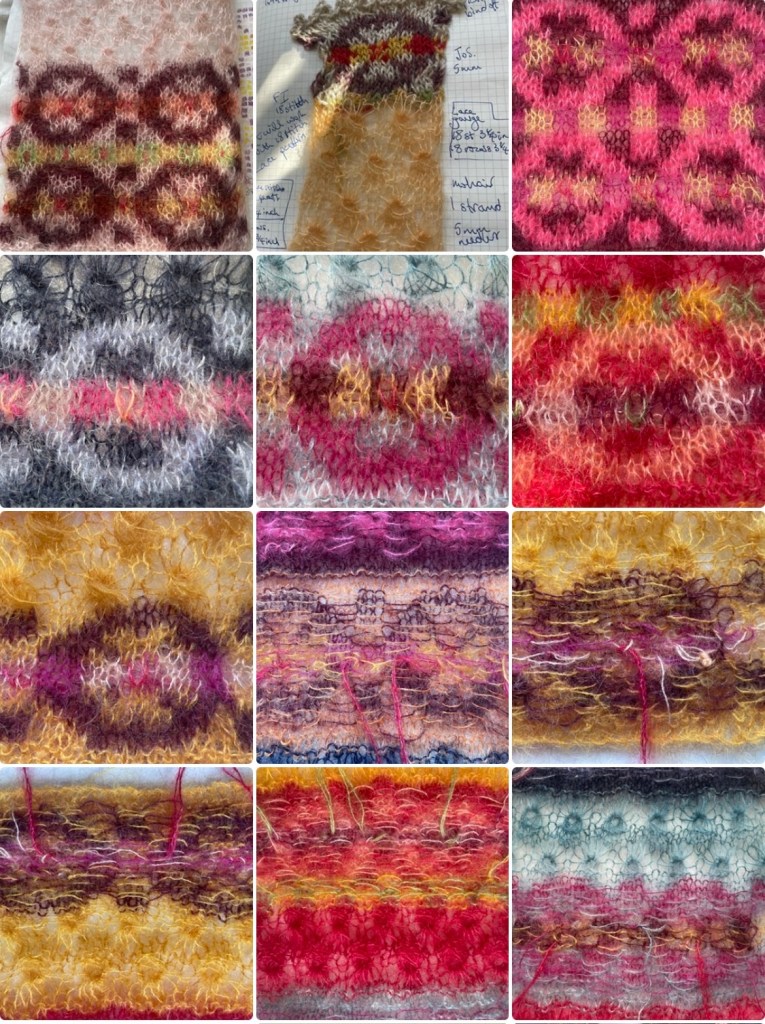
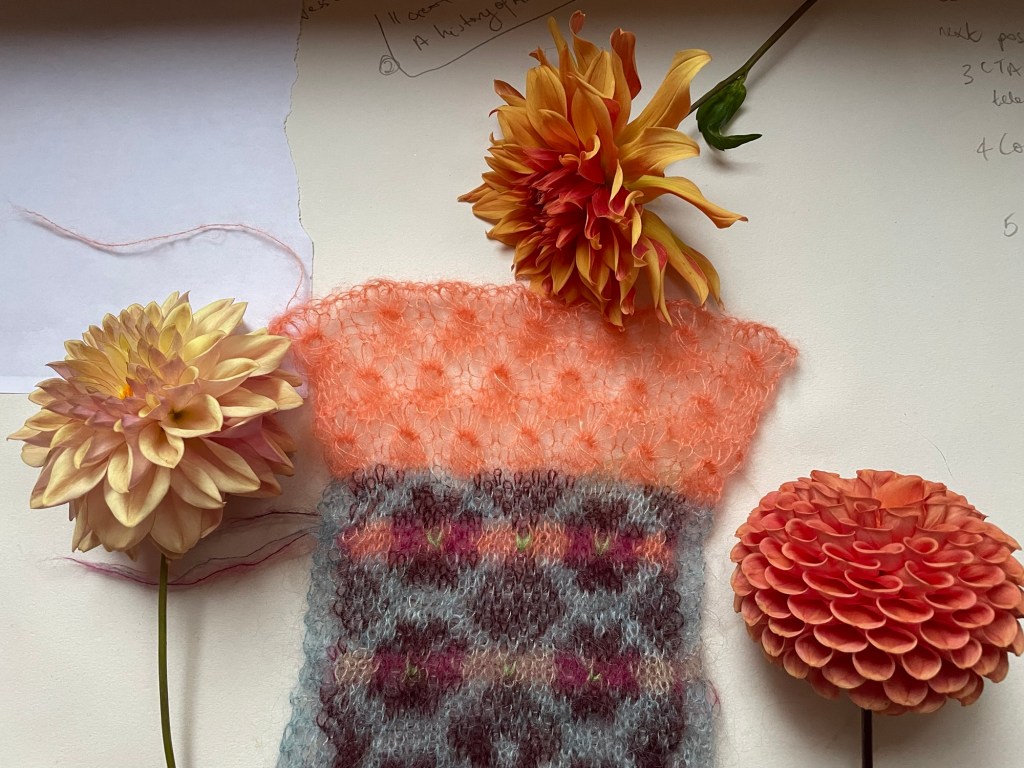
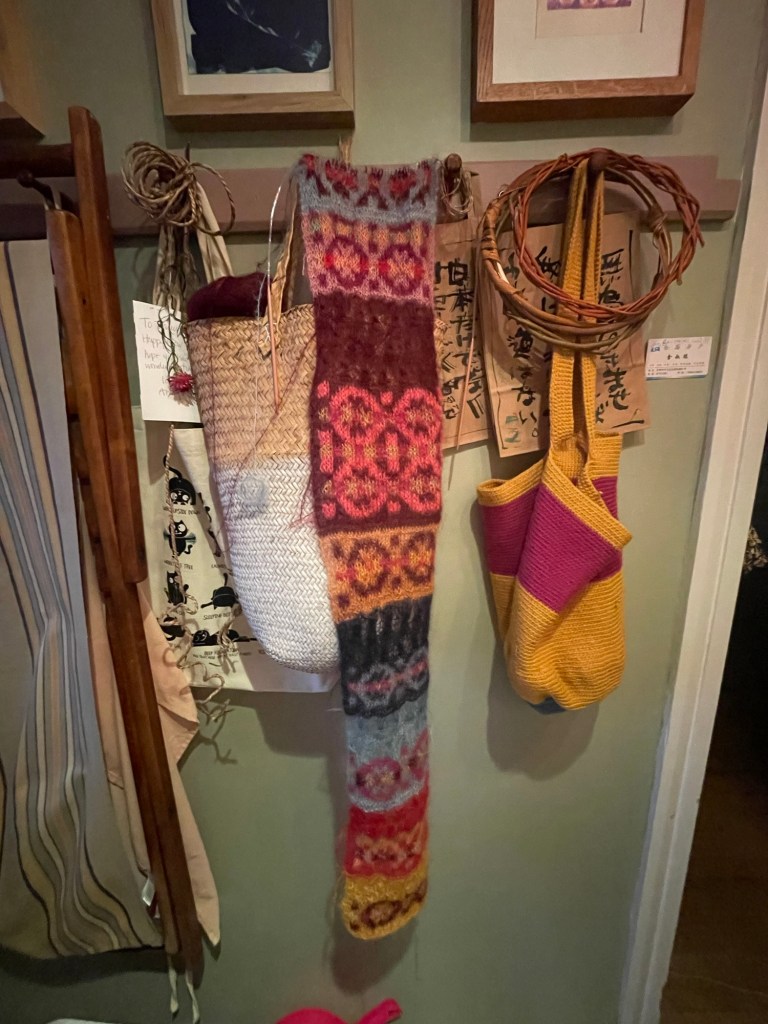
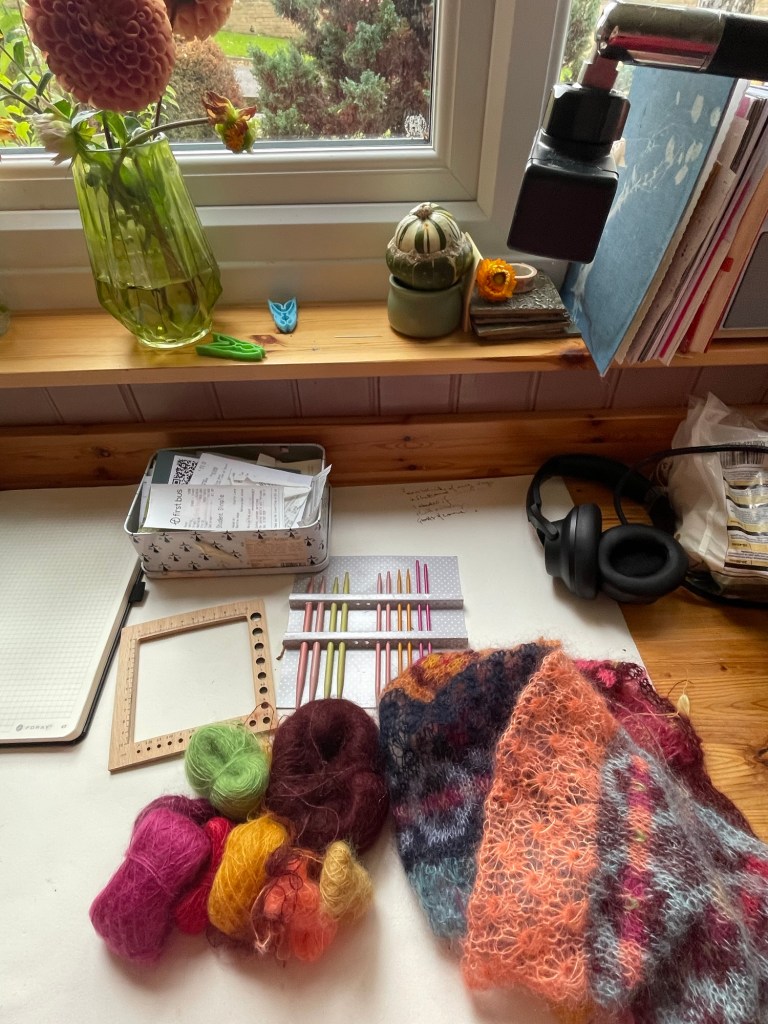
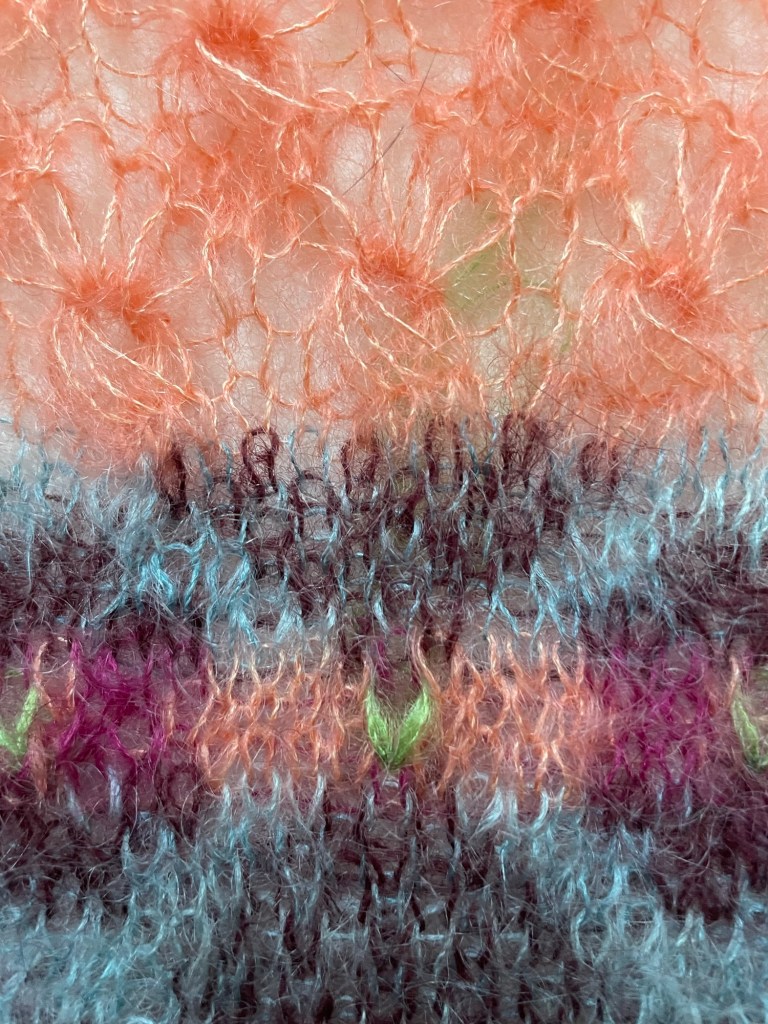
At first glance, it might look like a fairly simple scarf, with a lace panel running through the middle and Fair Isle motifs along the edges. But getting to this point has involved a considerable amount of work, testing and decision-making.
I’ve spent weeks testing different colour combinations. I wanted to be completely happy with the colours, not just find combinations that worked, but ones that felt right to me. I’ve sent yarn to both of my testers so they could knit their own samples and explore their favourite colour choices. One of my testers is currently crossing the Arctic Circle, while the other lives on the Isle of Wight. I’ve been looking at their swatches and considering their colour choices alongside my own.
I’ve also knitted the design four times myself.
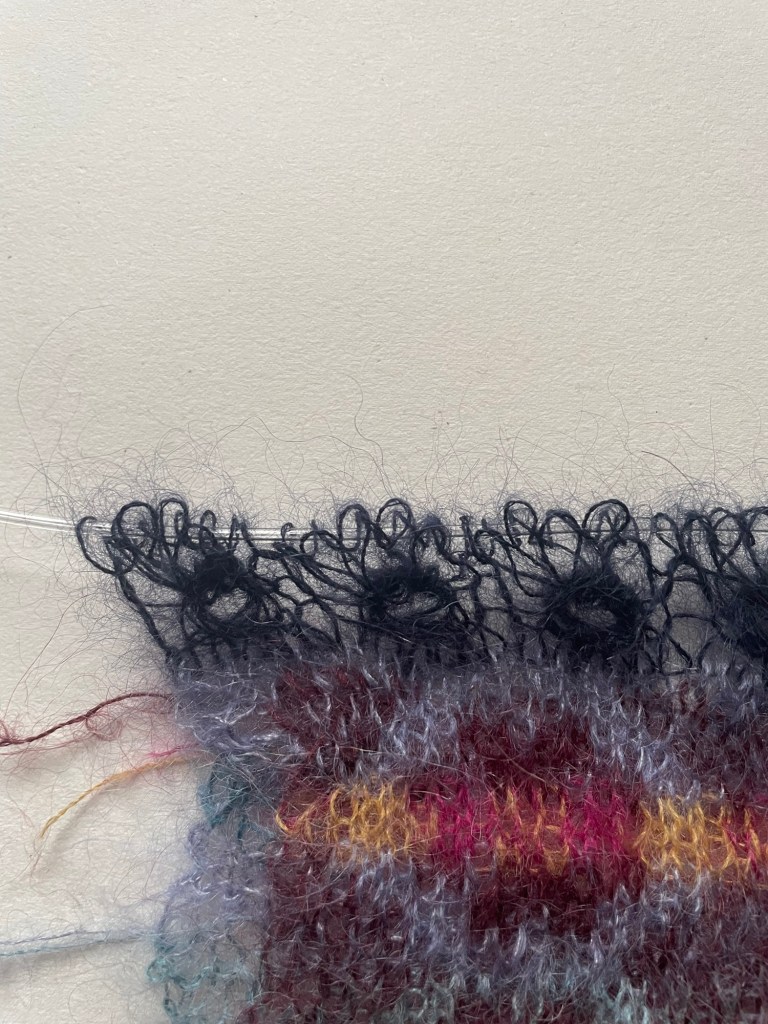
Along the way, I’ve changed the needle size at least five times, altered the proportions and worked on the motif panel at the bottom. I’ve made changes to ensure that it sits comfortably within the design and, just as importantly, that the pattern is easier to follow without having to keep working things out for yourself. I even worked 3 designs before settling on the one that smoothly transitions from the Fair Isle to the lace.
Even 10 weeks ago, whilst staying at Eden Fold at the end of September, I was still knitting different colour combinations and trying the lace in different needle sizes.
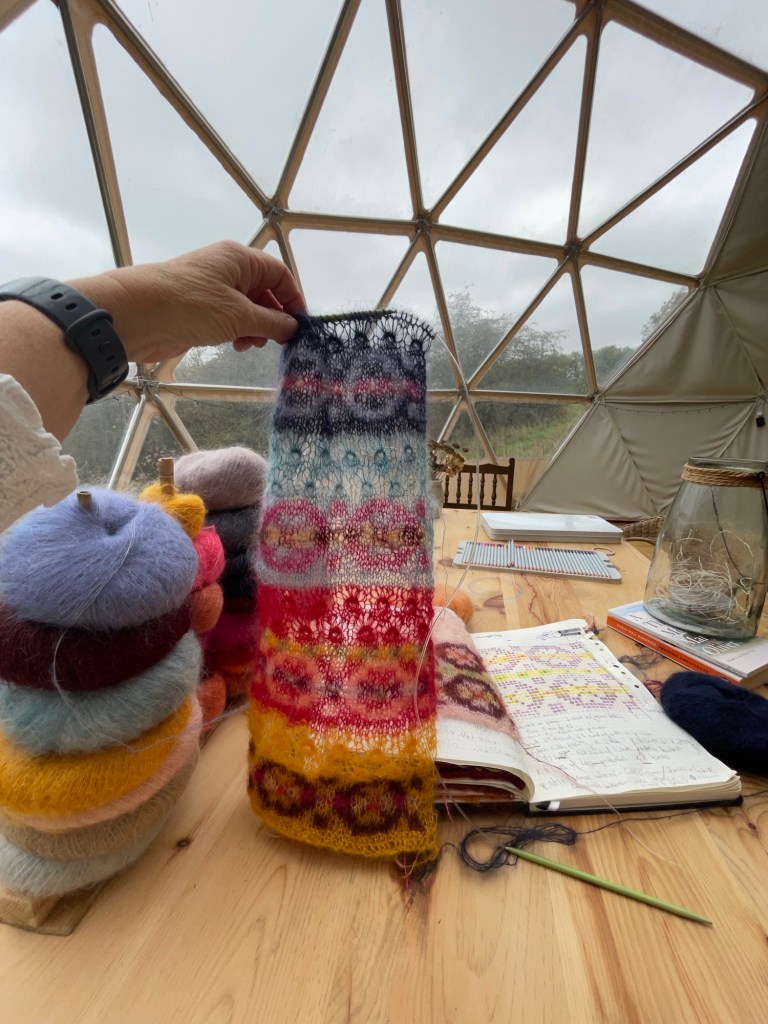
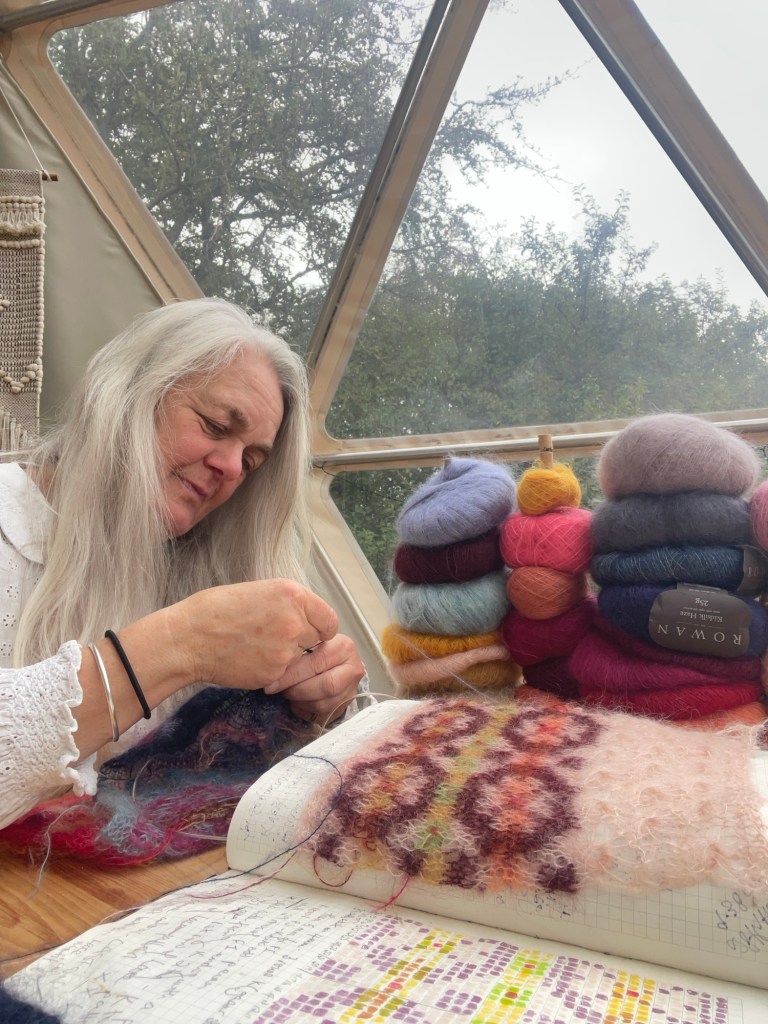
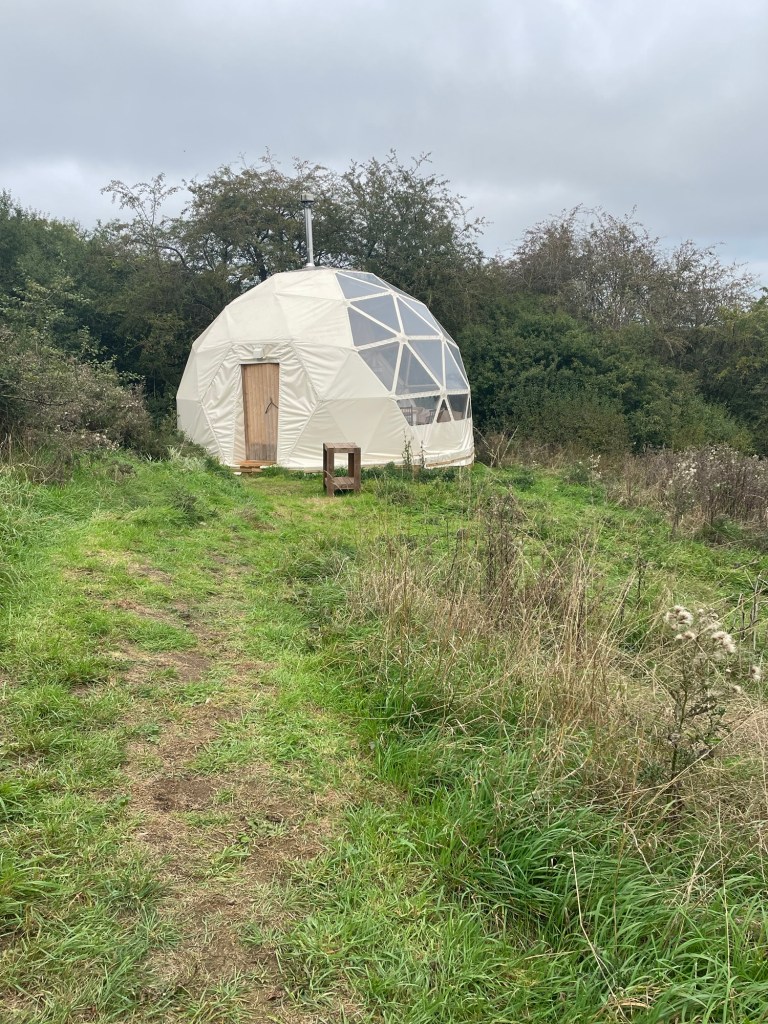
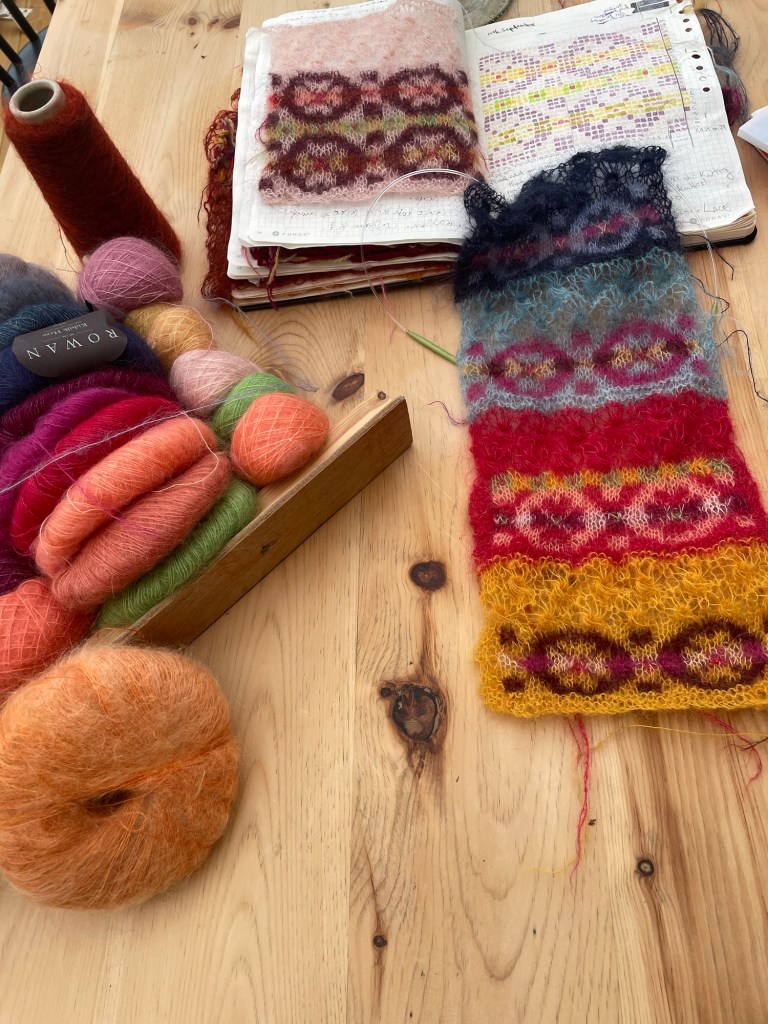
This is often the part of designing that people don’t necessarily see. A finished piece might look quite straightforward, but behind it there can be weeks of sampling, testing, changing things and starting again. Sometimes the smallest adjustment makes the biggest difference to how a design works. Two of my wonderful Colour Swatch Journal participants from group 1 have also test knitted it – one whilst on holiday crossing the Arctic Circle and the other from the beautiful Isle of White – thank you Pauline and Sally.
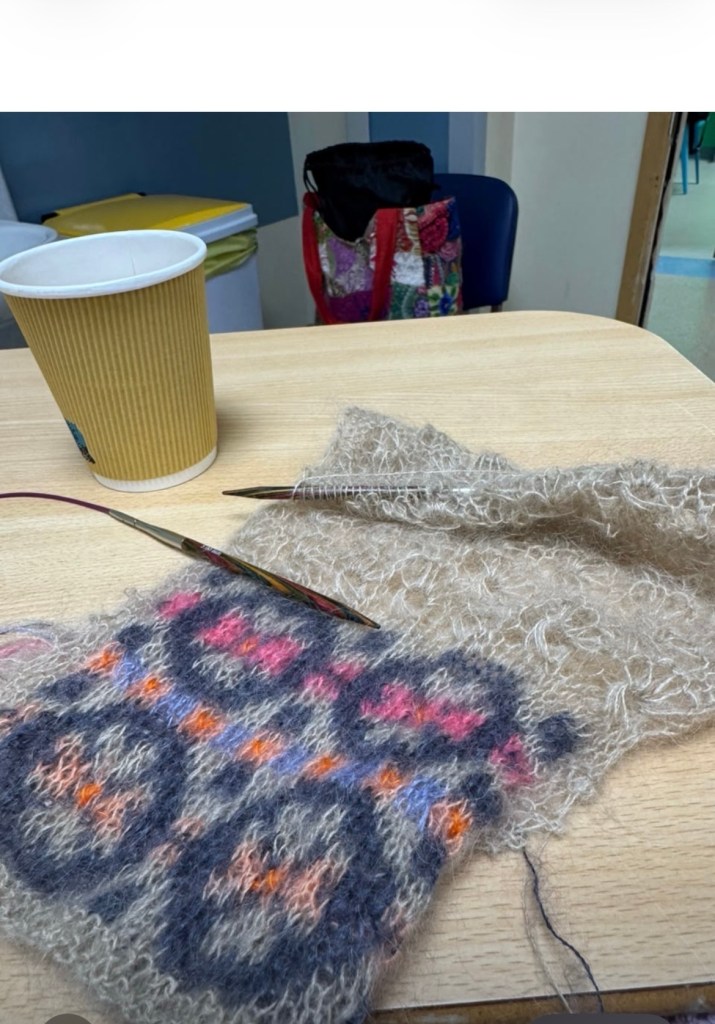
I want this scarf to be enjoyable to knit. I want the instructions to be clear and the pattern to flow easily, but I also want it to offer something a little different from what someone might normally choose.
I’ve now written the pattern. It’s been checked, and I’m currently adapting and refining it before it goes to a technical editor. I’m very nearly there, and I’m really looking forward to getting this design out into the world.
The plan is to release it on 1 December.
I hope people will enjoy knitting it. Although it looks quite simple, there’s a little more creativity involved than you might initially expect. It’s not necessarily about making something difficult or challenging, but about trying something a little different and perhaps being open minded and learning something along the way.
And this brings me to a question that has come up in several of the messages I’ve received.
People have been asking me whether the pattern is suitable for a beginner.
It’s a question I find myself thinking about quite a lot, because I’m never entirely sure what people mean when they describe themselves as a beginner knitter.
Is a beginner simply someone who can knit and purl? Someone who has knitted a scarf or two but hasn’t yet attempted a garment? Someone who has been knitting for a few months, or perhaps a few years, but hasn’t tried many different techniques?
Where does the benchmark begin, and where does it end?
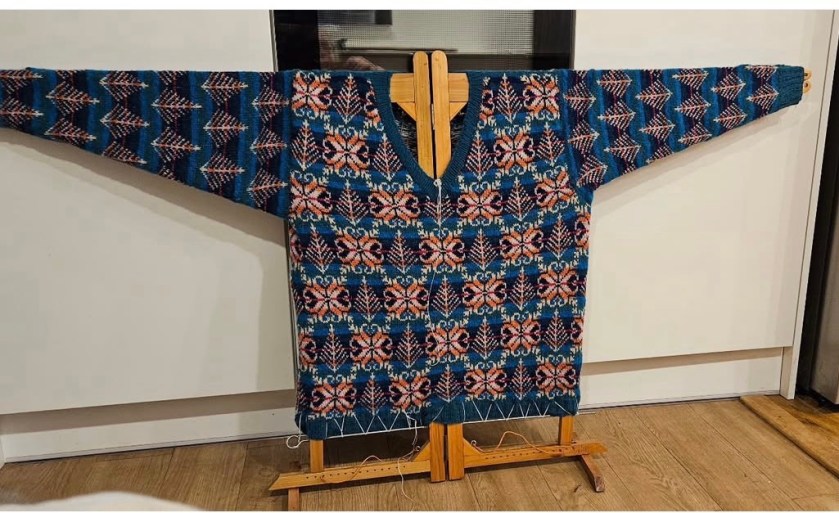
A couple of weeks ago, Jane finished knitting my Kaleidoscope Jumper. She also steeked it. She learned so much during the process and pushed herself to try things. Her Kaleidoscope jumper was her first every jumper pattern – she hadn’t done one before. Jane was a beginner and is also a maverick knitter.
And this is what I find so interesting.
I think of myself as a creative person who is always pushing myself, often quite considerably, into unfamiliar territory. I don’t necessarily need to know exactly how something is going to work before I begin. I’m interested in finding out, experimenting, making mistakes and learning through the process.
Jane did exactly that with her jumper.
So when someone asks whether a design is suitable for a beginner, I find myself wondering whether we sometimes underestimate what a beginner is capable of. Are we defining someone by the techniques they already know, rather than by their willingness to learn something new?
Of course, everyone knits differently. Some people are happy to knit familiar patterns and enjoy the comfort of knowing exactly what they’re doing. Others want to stretch themselves, experiment with colour, try new techniques and see where their knitting takes them.
Neither approach is better than the other.
But I do wonder whether we put too much emphasis on the label of beginner, as though it defines what someone can or cannot attempt.
Perhaps it’s not simply about how long you’ve been knitting, or how many techniques you’ve mastered. Perhaps it’s also about curiosity, confidence and being open to trying something you haven’t done before. It’s about engaging in something new to learn from.
So I’d really like to ask:
What is a beginner knitter?
This scarf pattern will hopefully be released to the world on 1st December.
Patterns on Ravelry are here
Sign up for new wait list for next Colour Swatch Journal group here