Happy New Year to my long-standing followers on this blog and to my new subscribers.
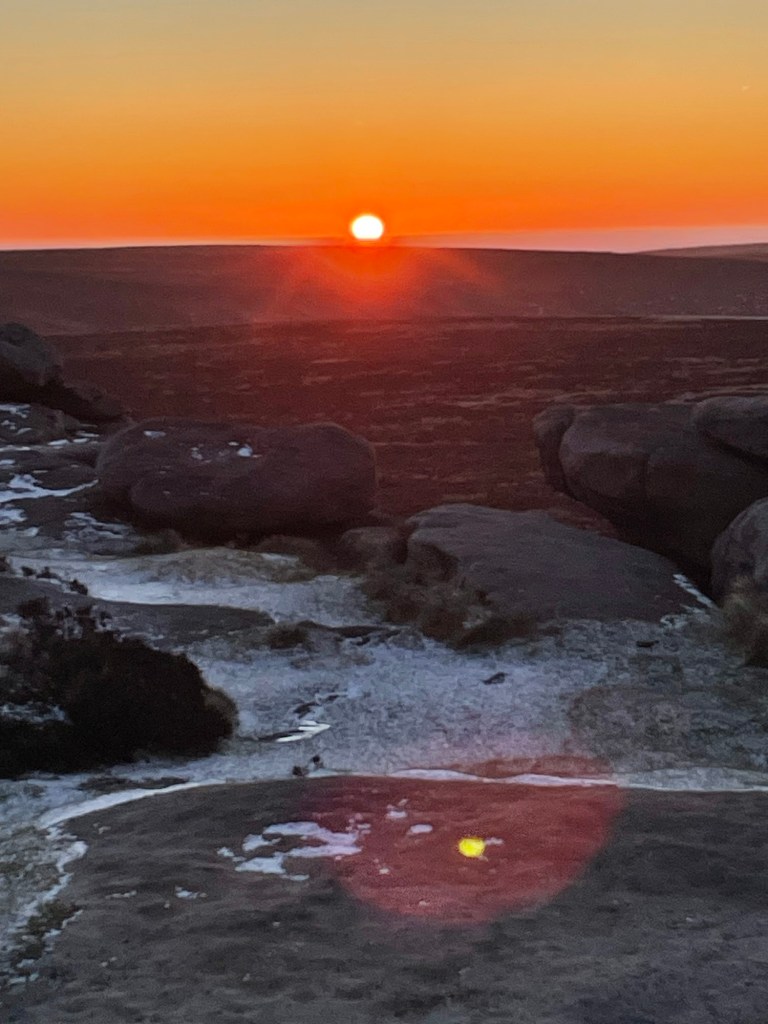
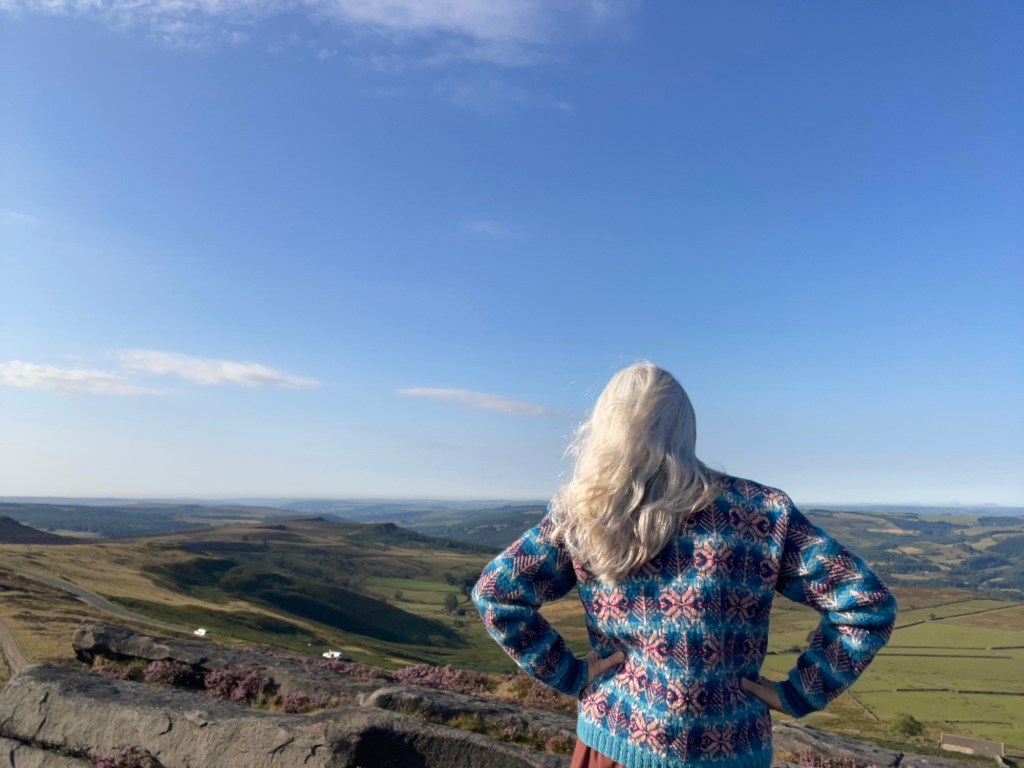
To celebrate the New Year, I arrived home from Japan on New Year’s Day and the next morning, I promptly went to Stanage Edge in the Peak District, which is 6 miles from my home in Sheffield, to watch the sunrise.
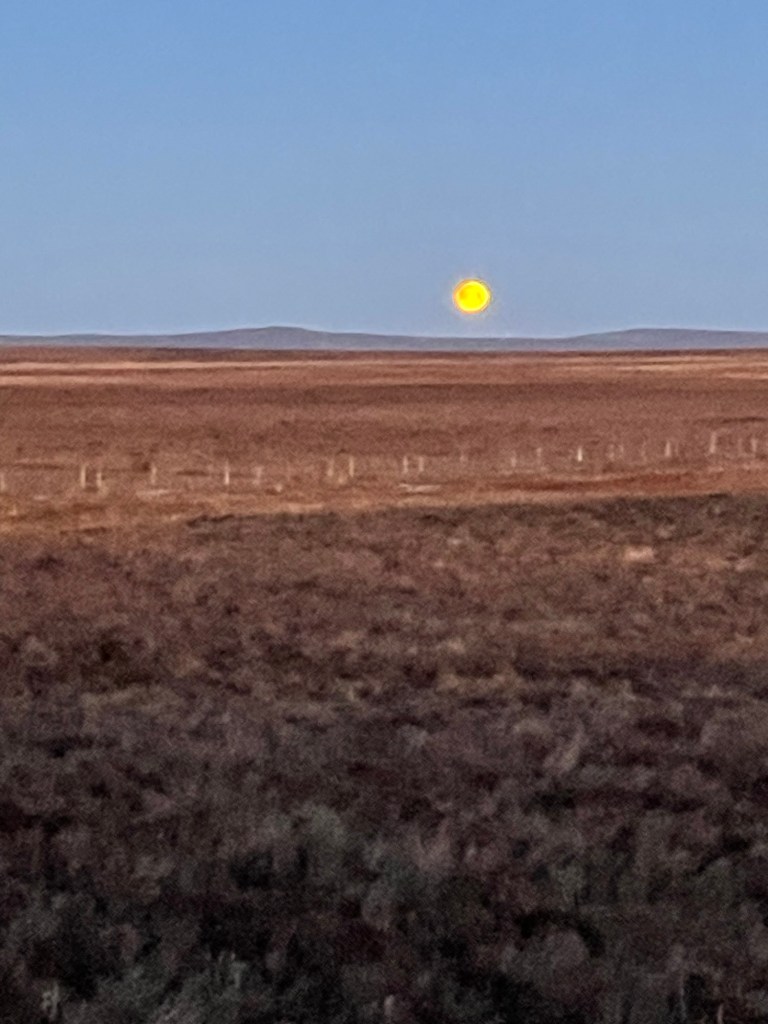
I could not have imagined that I would witness the biggest Orange Wolf Super moon setting over the horizon before an equally orange sun rose opposite making a truly Golden hour.
Wolf MoonSun rising
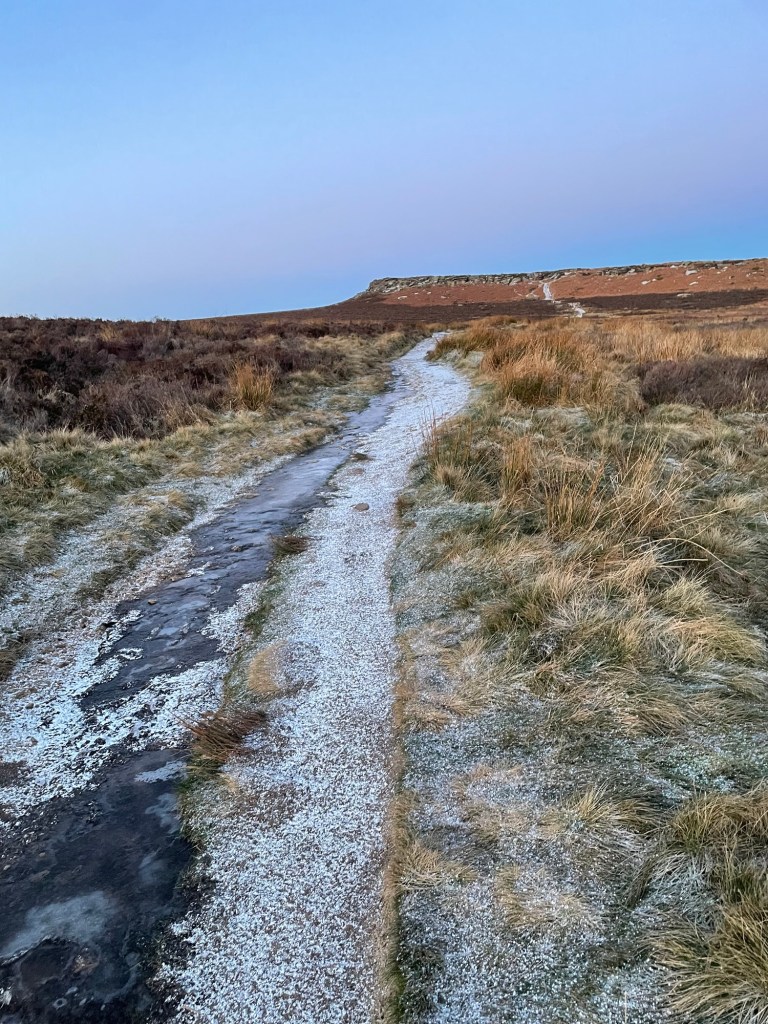
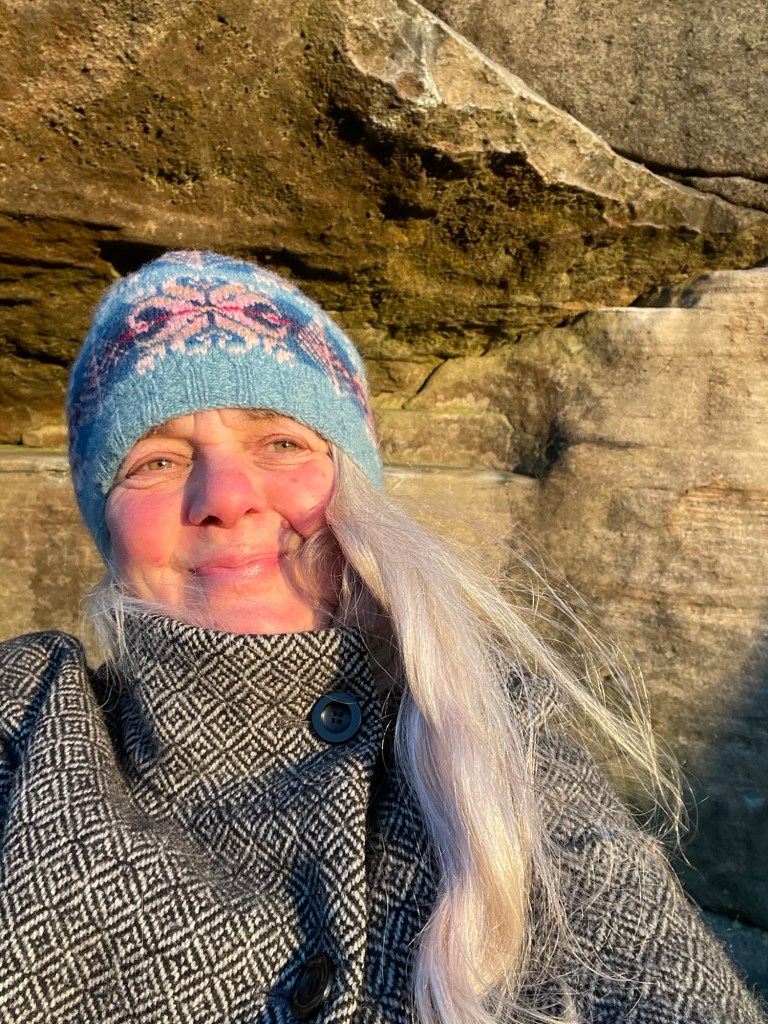
The ground was covered in ice puddles and the first scattering of a salty snow. An Icy wind cut through my coat and knitted jumper to the skin on my arms and I felt alive. Glad to be home glad to be back to the place that enriches me, time after time.
Normally I’m the only person on the edge of Stanage rocks at 7:45 am but there were small groups and a couple with a child who could not moderate the level of his own voice which carried excitedly across the edge of the rocks
I go to this place to reconnect to the core of myself – no cars, no city, no internet. The landscape has not changed for thousands of years. Many people know of this place and it is big enough to share because you need to be bold and brave in minus temperatures and biting winds to witness a moonset and a sunrise within half an hour while people still sleep in their warm unknowing beds.
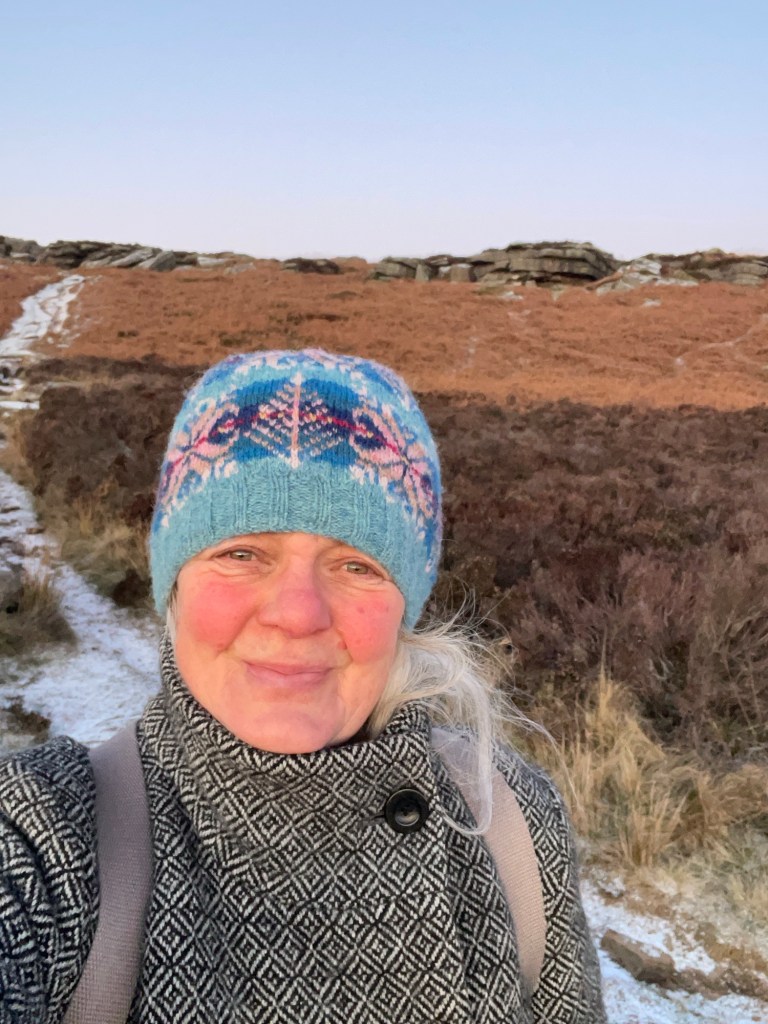
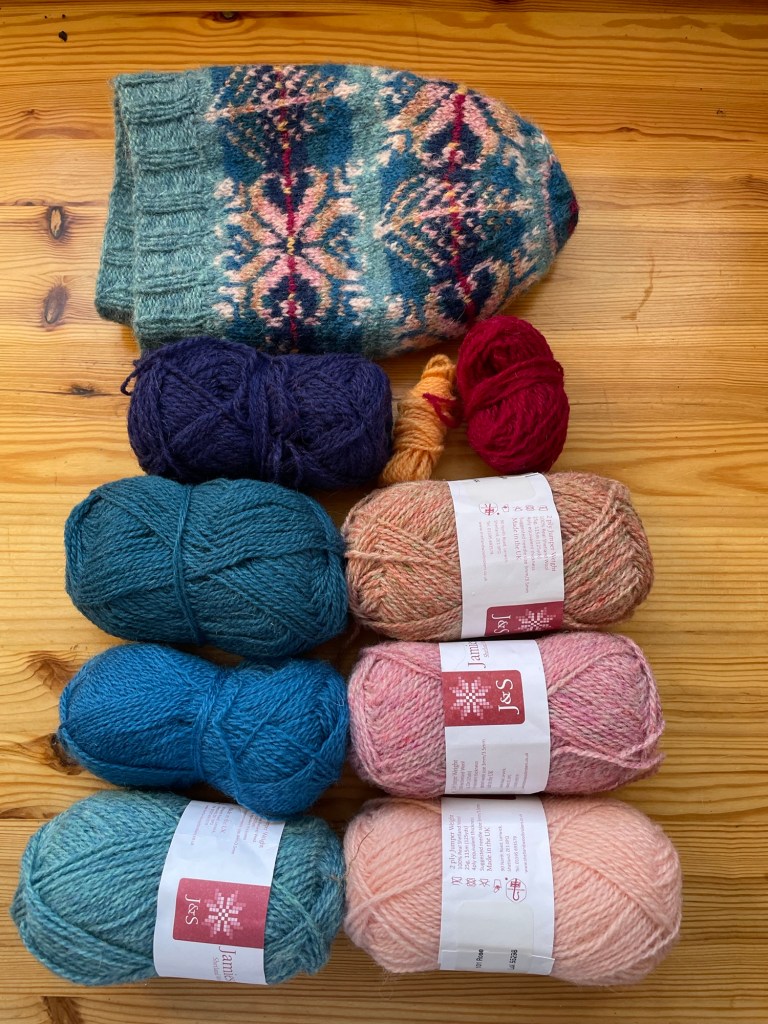
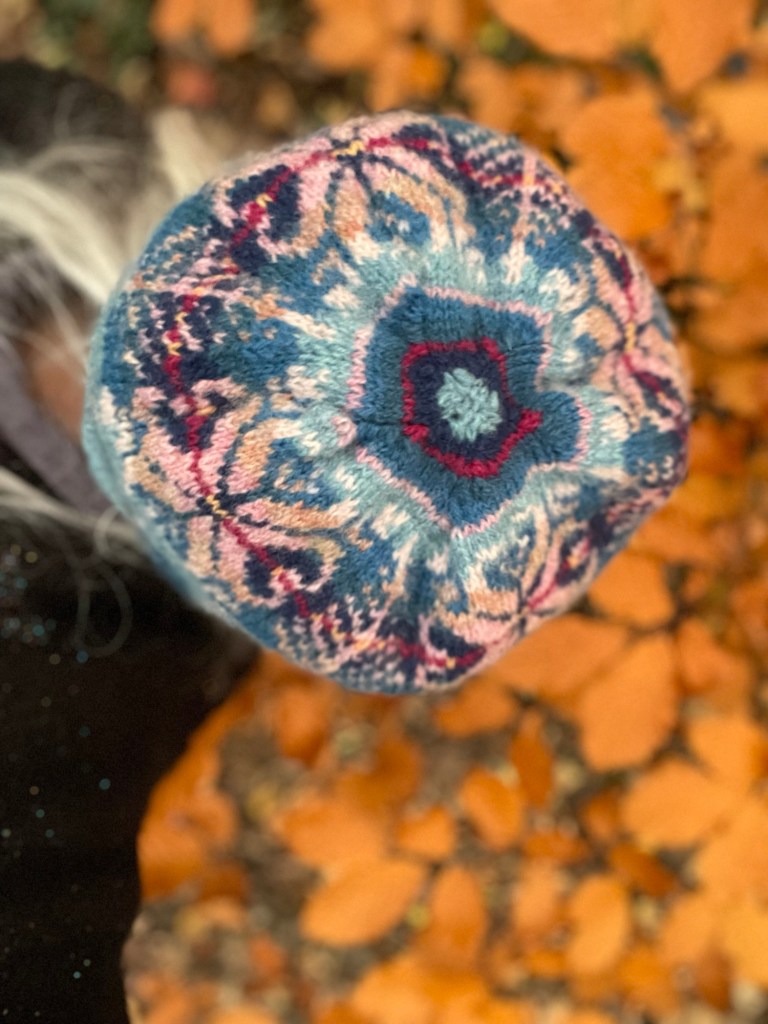
On the New Year, as a thank you to my followers I have posted on Instagram an opportunity to win enough yarn to knit my tree and Star beanie hat in its original coloured yarn, purchased from Jamieson & Smith in Shetland, but some of you do not follow me on Instagram so I’m posting on here the same opportunity
I am offering one person, who will be picked out of a draw next week, the opportunity to win the original Shetland coloured yarns to knit this gorgeous Tree and Star beanie.
To enter the drawer you have to buy the pattern for the hat.
If the winner of the draw is in the UK, I will post the Shetland yarn to them free, but if you live in another country other than England, then I will ask for a contribution to the postage for the winner
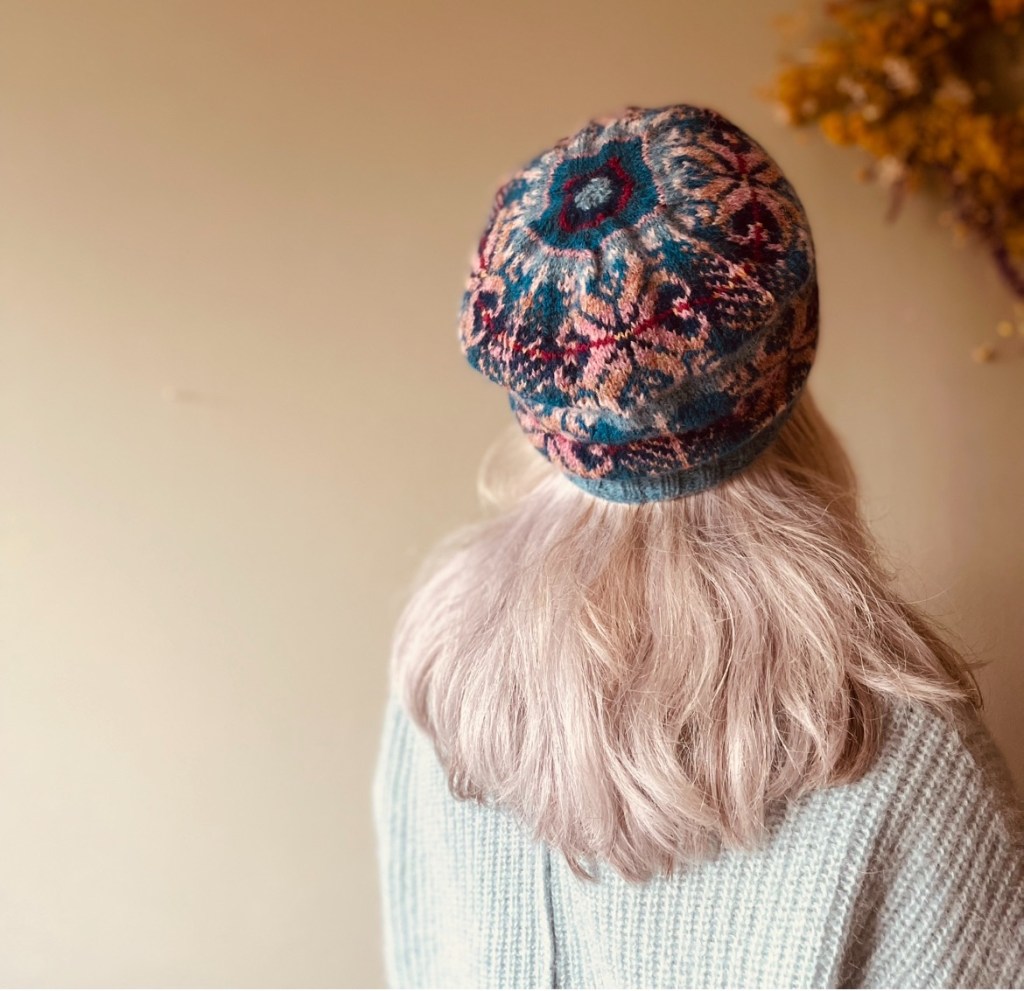
This hat pattern is a perfect easy starter project if you would like to knit the kaleidoscope jumper project because they both have the same easy Shetland Tree and Star Motif
I hope you’ll be following me for another year because I will be changing a few things in 2026. If you already don’t do so there are lots more images on Instagram.
Tell me …. What is it that puts you off using or experimenting with new colours in your stranded colour work project?
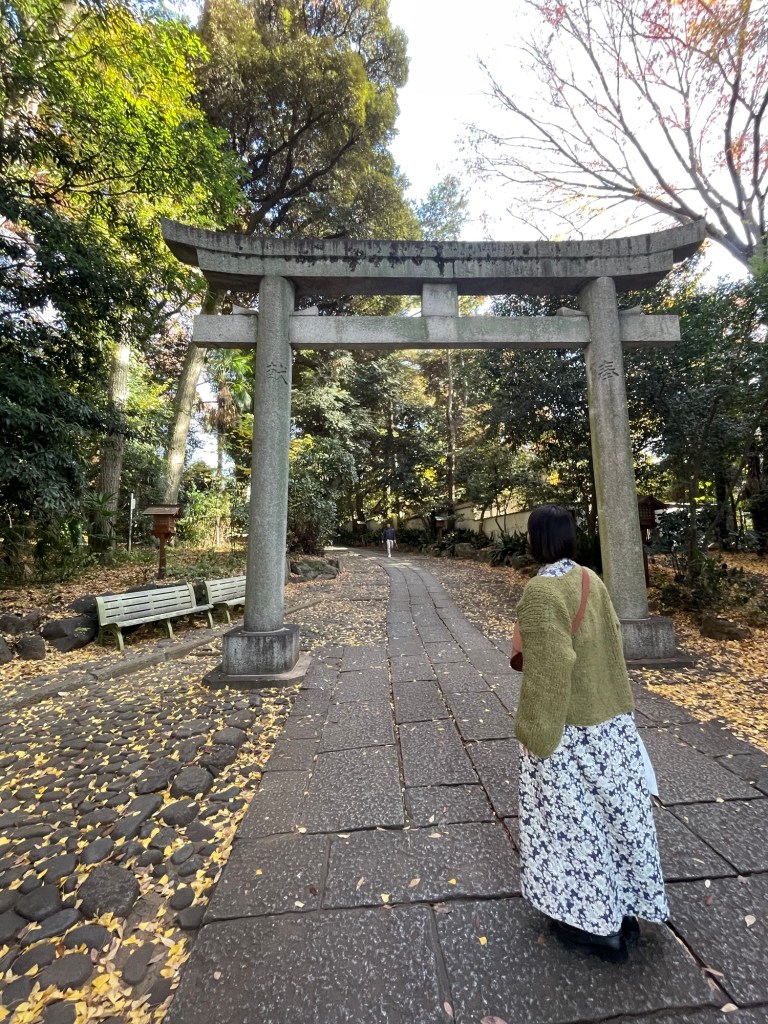
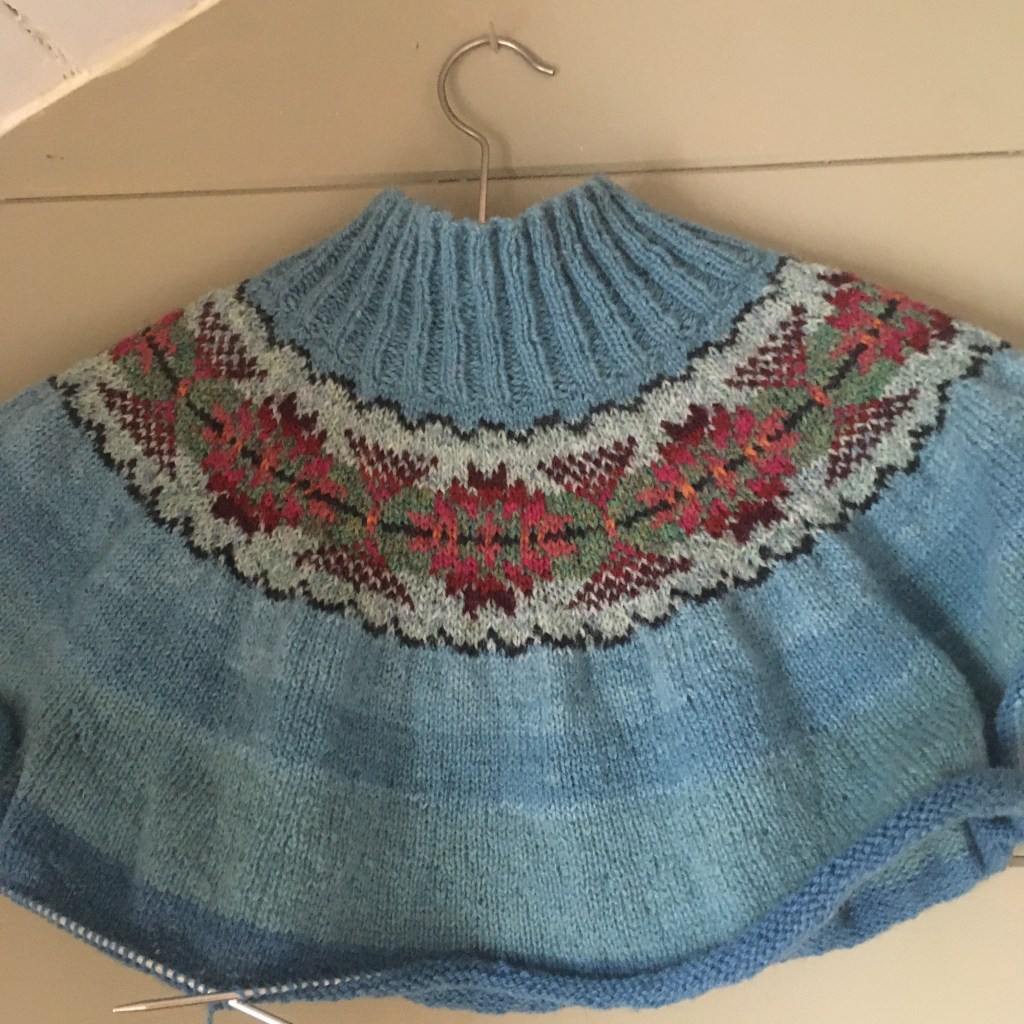
I’m currently in Fujiyoshida – a town at the base of Mount Fuji, for 28 days. I’ve been knitting my Tree and Star sleeves with an idea to add them to a fabric body. I bought a couple of Kimono from the flea market at Hanazono Shrine in Tokyo but the fabric doesn’t work for a body with these sleeves. So, I may knit another Kaleidoscope jumper body using 3mm needles so that all the people who wanted a larger size can see how a needle increase from 2:75mm to 3mm will make to the overall size. Would that be of interest to anyone who was hoping for the next size up?
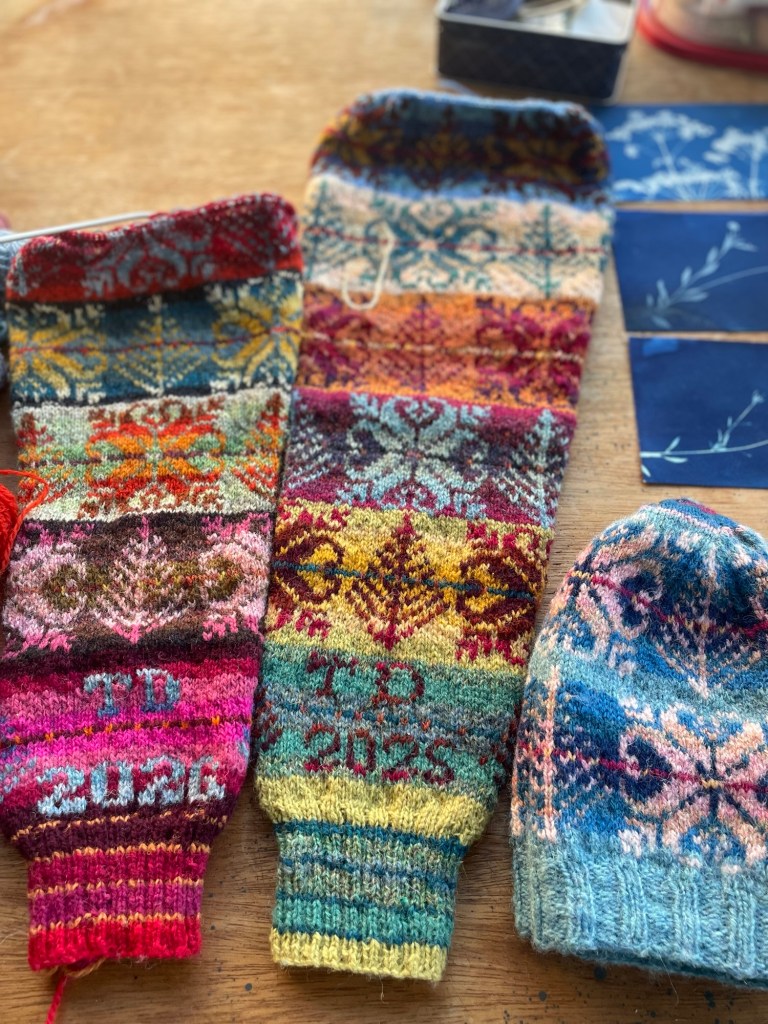
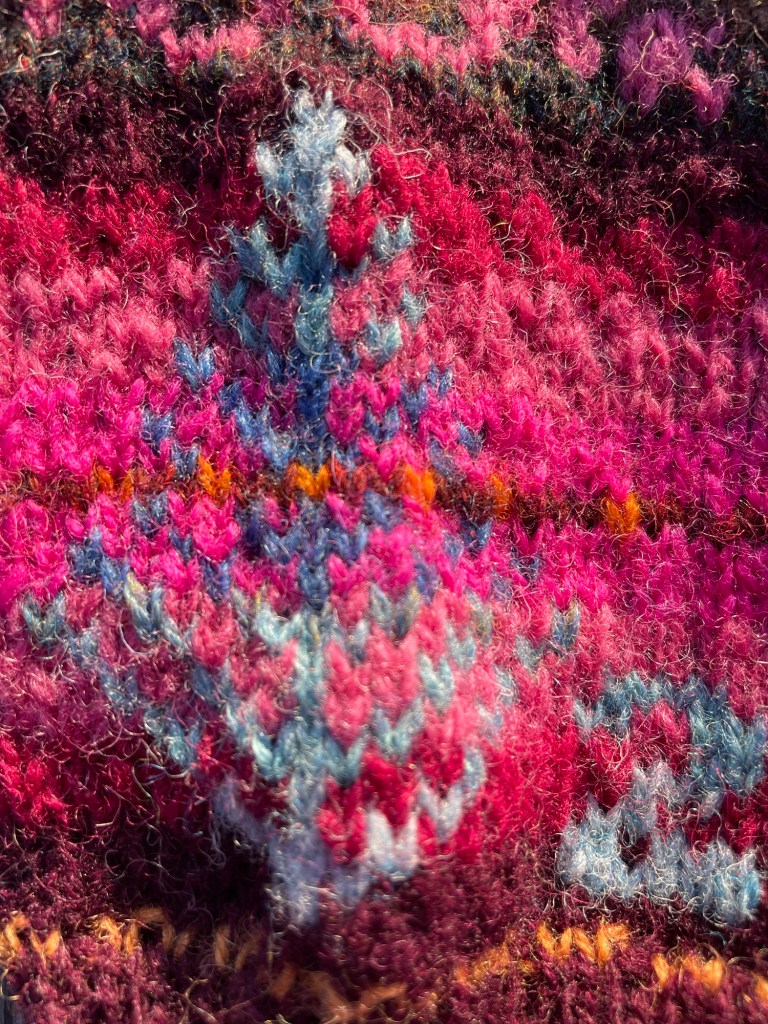
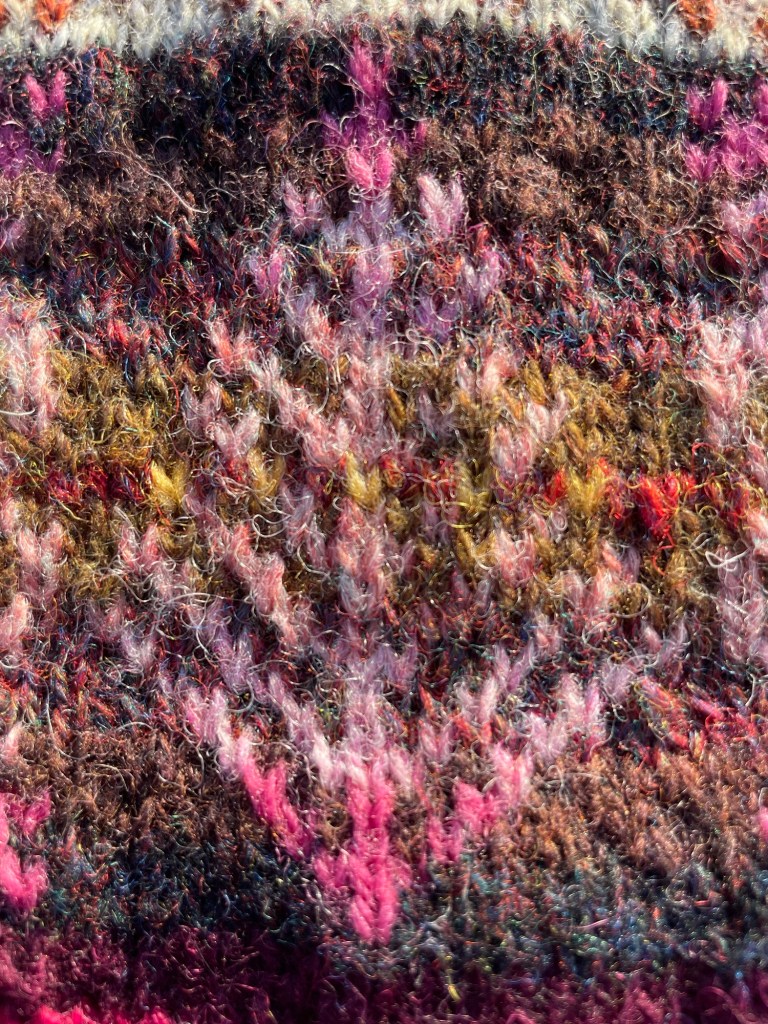
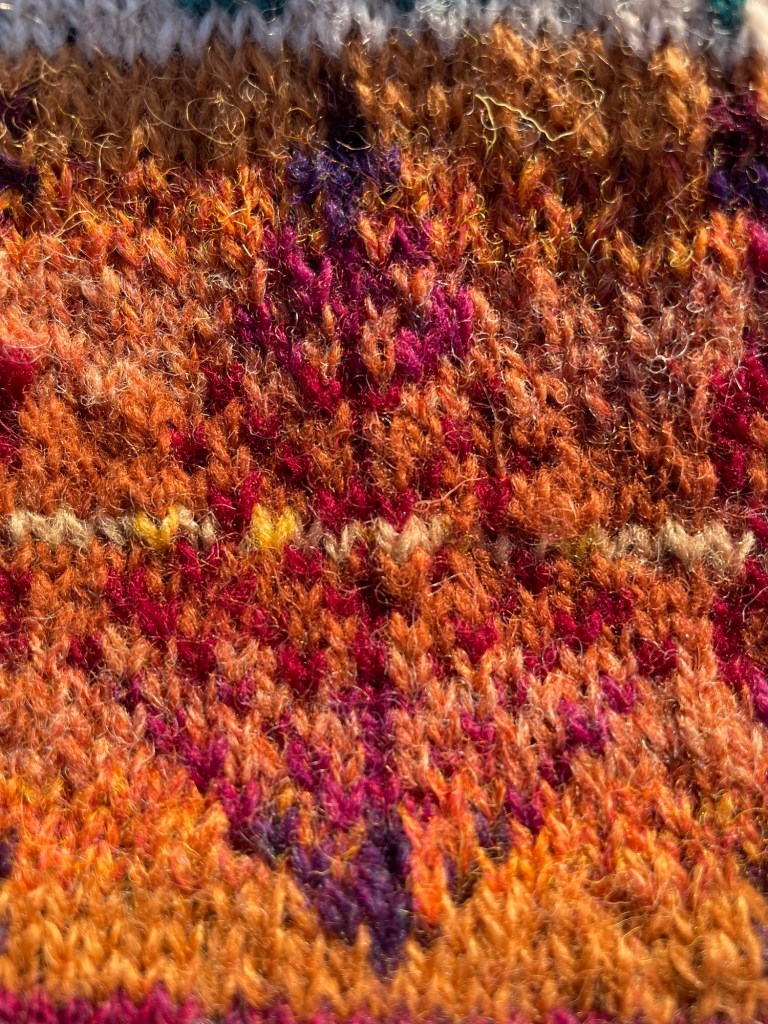
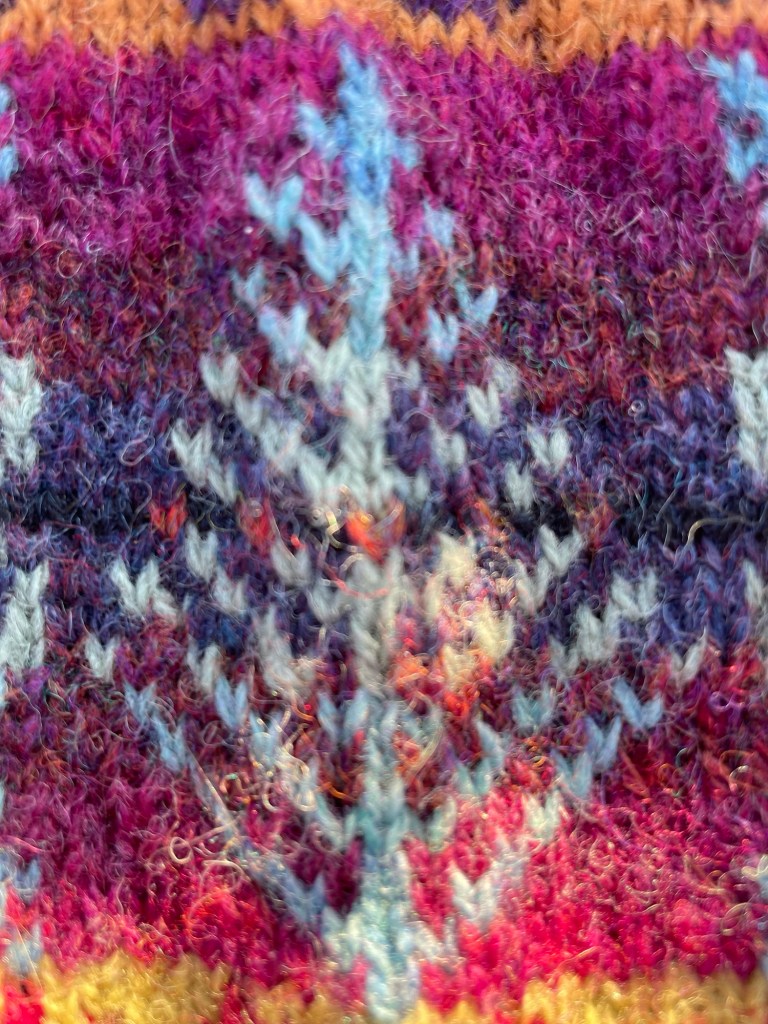
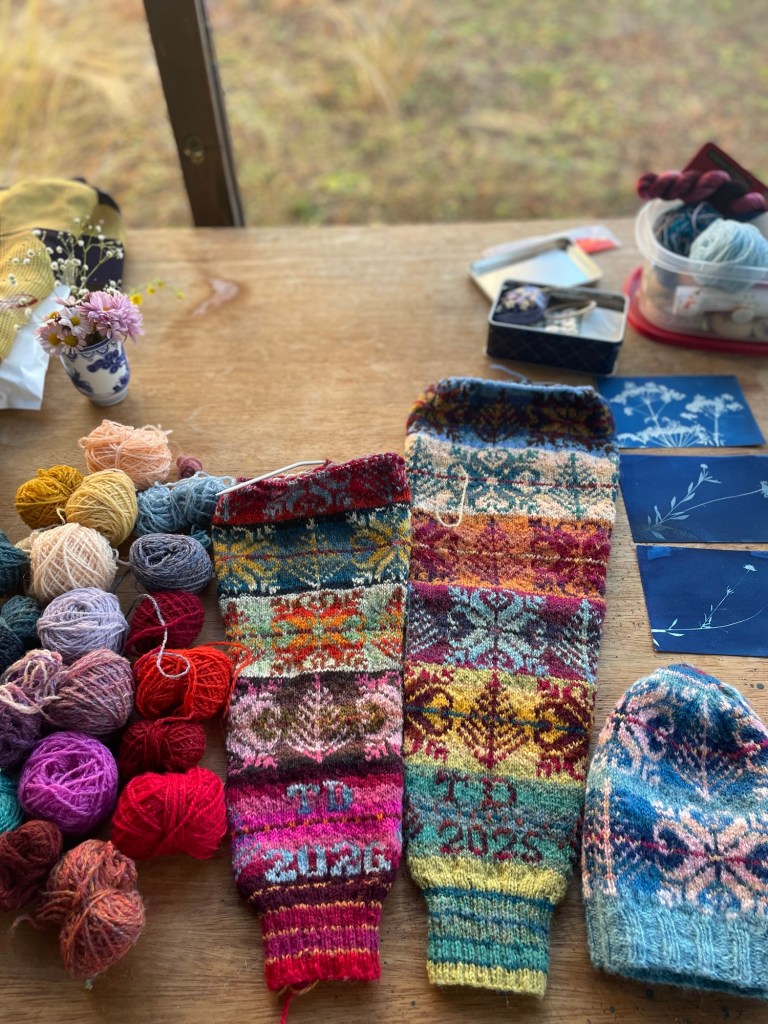
I am using my stash yarn as evidence of a journey in colour. A journey that anyone could do with their own stash. I kept knitting this motif in different colours because I couldn’t settle on just one. Each version felt like a different mood—quiet, bold, playful, grounded. The first colours of brightest pinks with my initials and the year 2026, when the project will be finished, felt like really owning the sleeve as – not just knitting but creative freedom.
That’s when I realized the pattern isn’t about my colour choices at all. It’s about giving you a place to try yours. I would like to invite you to have a look at these sleeves and think of the colours and if you were going to knit the same jumper – which ones might you give a try.
When I lived in Shetland, my knitting patterns and their colour choices were devised around the wild Shetland landscape, the croft house that I lived in and the woman who had lived in the house for 83 years until 1960. But now, the Kaleidoscope jumper has been more playful, named after my own kaleidoscope at home, which has a great big blue marble at the end.
Kaleidoscope
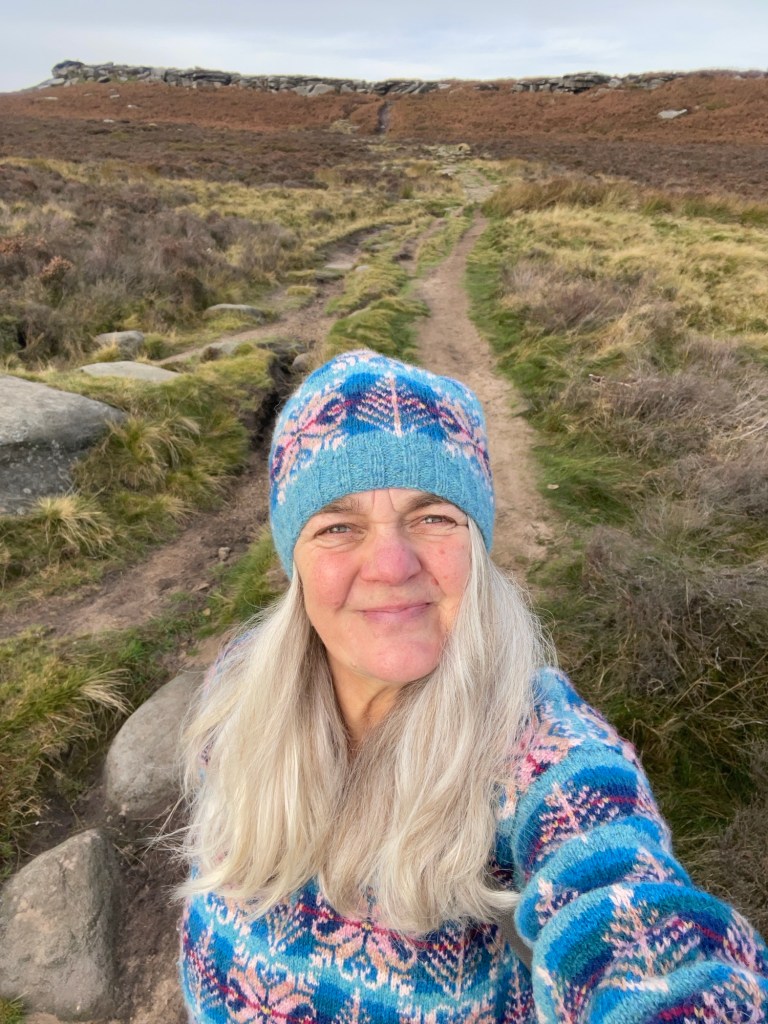
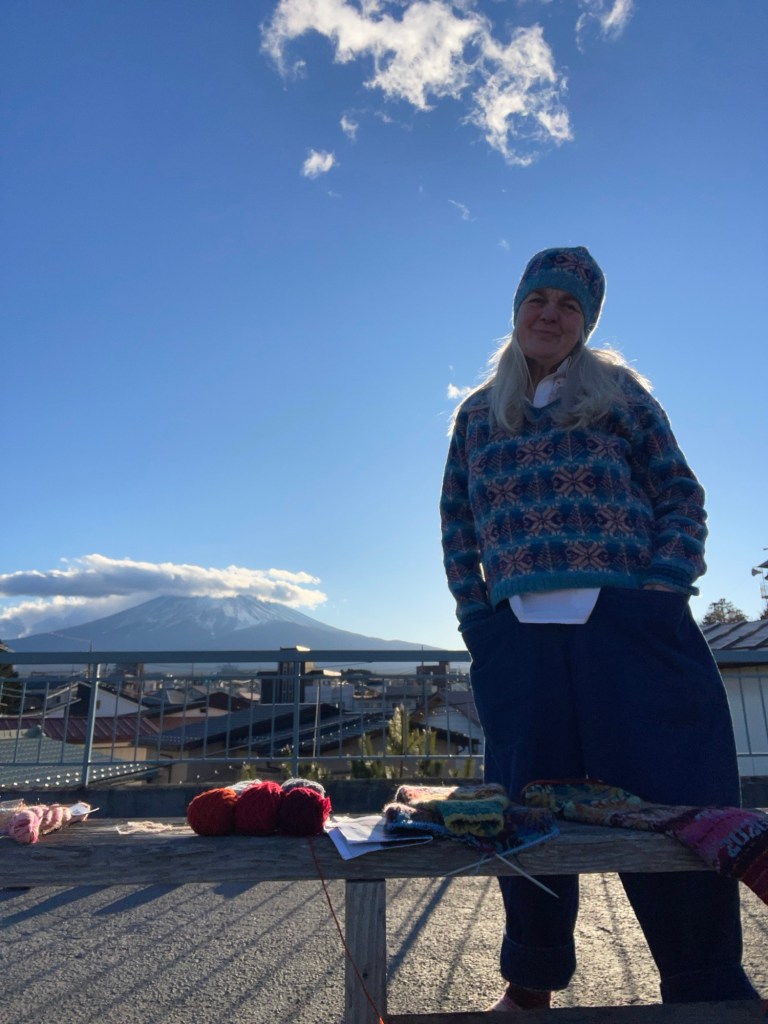
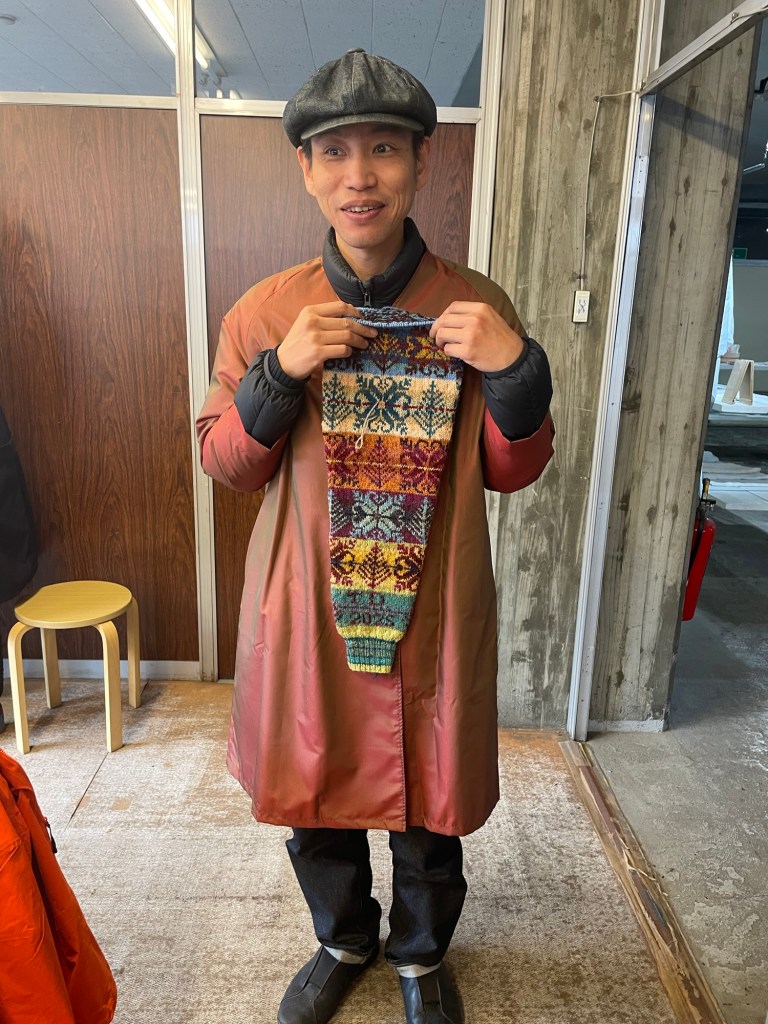
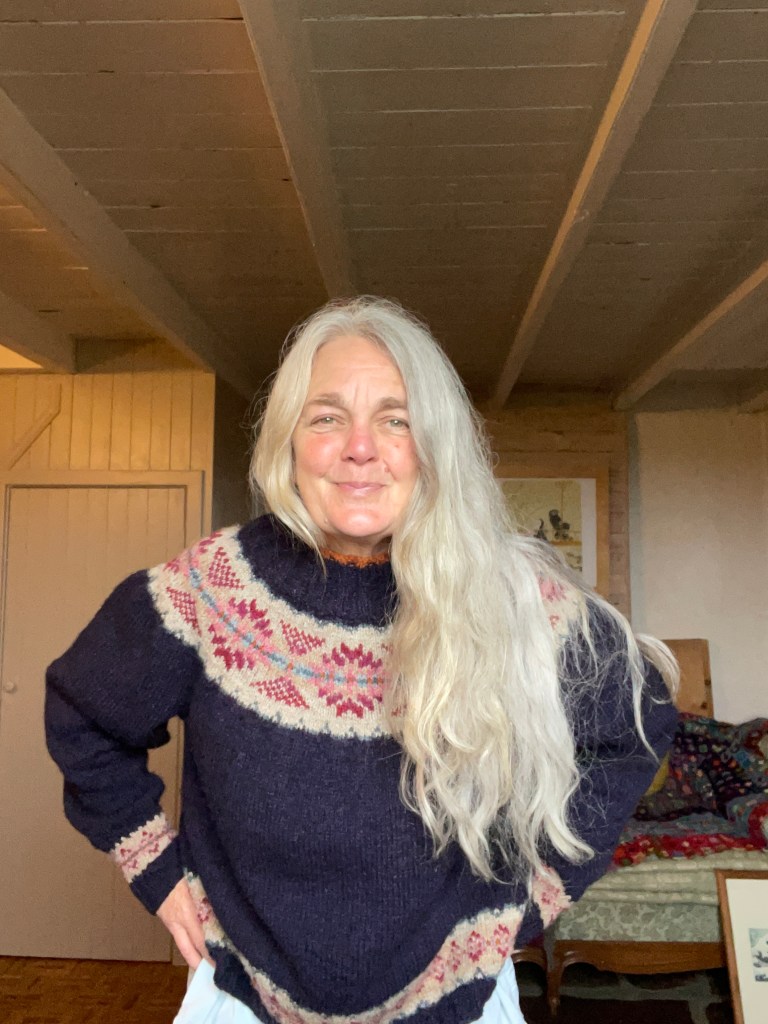
Would you like to try this jumper pattern for your everyday self—or your future self? I am wearing this jumper daily in Japan – it matches the sky and I am having a lot of fun wearing it with the matching hat and a tweed jacket. On Sunday, we all (from the residency) did a drop-in session for anyone who would like to knit or weave or trying punch needling. So many people came to see us including some Tokyo Fashion guys who wore all black, all brown or all Navy and I suggested that they needed a little colour – like a Fair Isle vest just showing through their dark colours -for every day. They were very interested in the colour idea.
The motif repeats consistently and the colours can be swapped without recalculating the whole pattern. I designed this so colour changes feel playful, not precious.
The pattern doesn’t ask you to commit to one look—it gives you a place to experiment. To trust your instincts. To surprise yourself.
If you want a project where colour gets to be personal, this one might be for you.
Swatch your colour ideas first – always swatch for colour to see what works and what doesn’t – for you. Keep the motif and the background colours with enough contrast so that the pattern is not muddied. And just experiment – this is the perfect motif.
Experimenting with colours that you love.
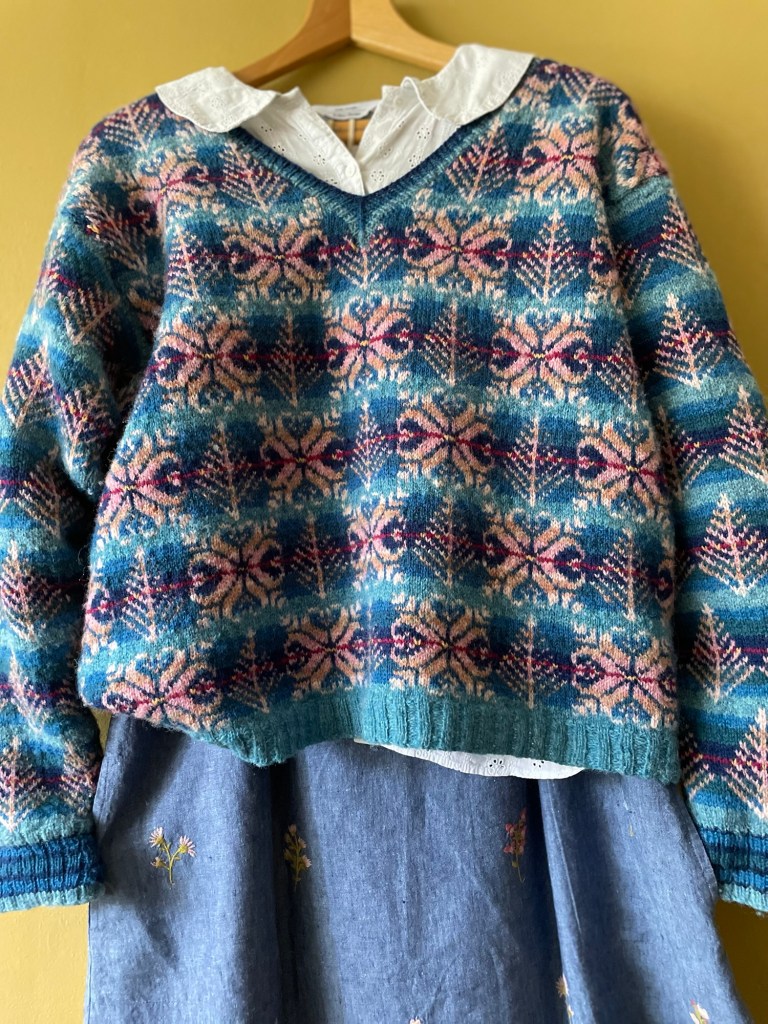
Here is the Kaleidoscope Jumper Let me know in the comments if you have bought the pattern and are still considering the colours you might choose.
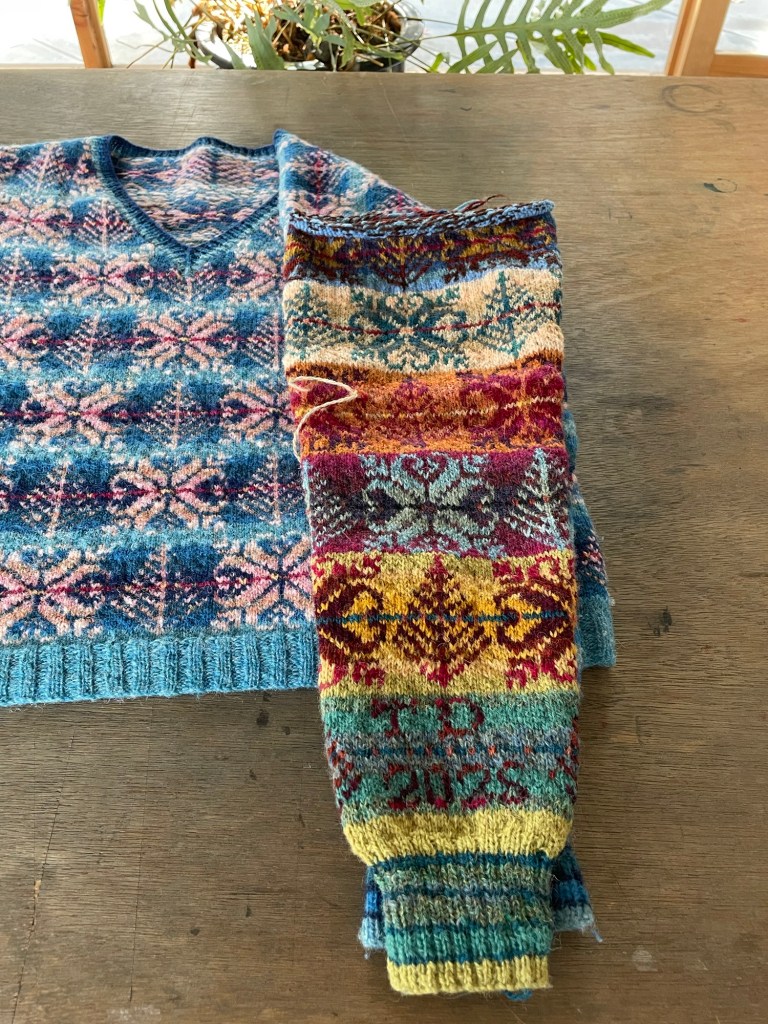
Here are the Tree and Star sleeves which are alternative sleeves to the Tree only sleeves in the original pattern.
Let me know what you think about your colour choices.
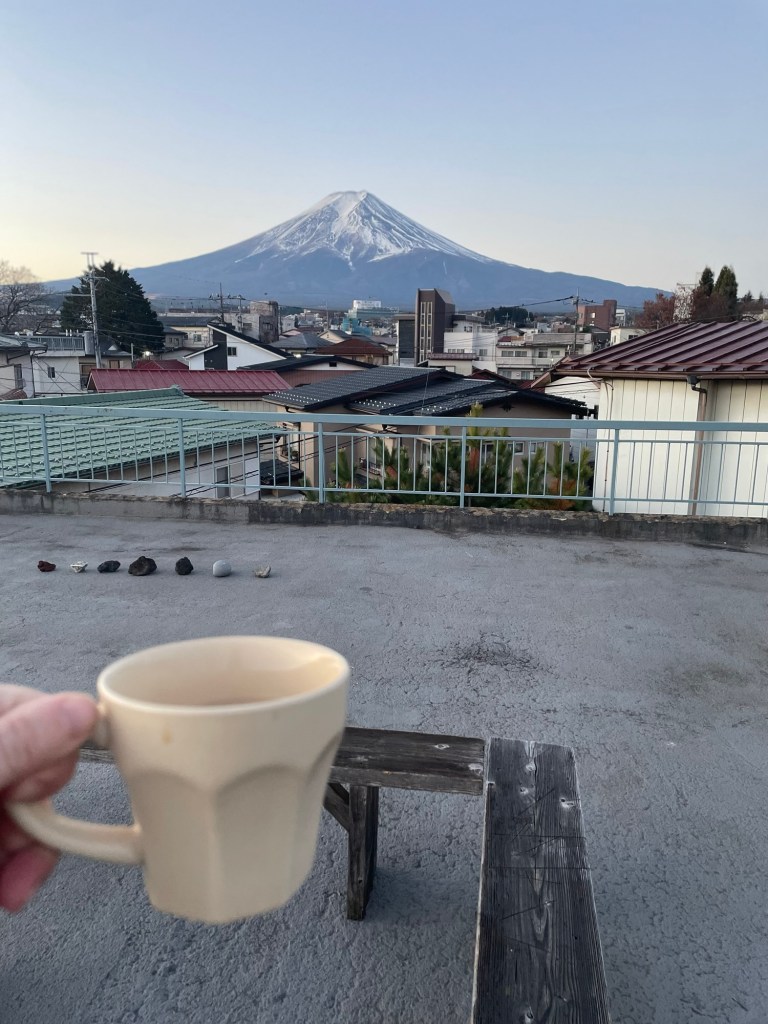
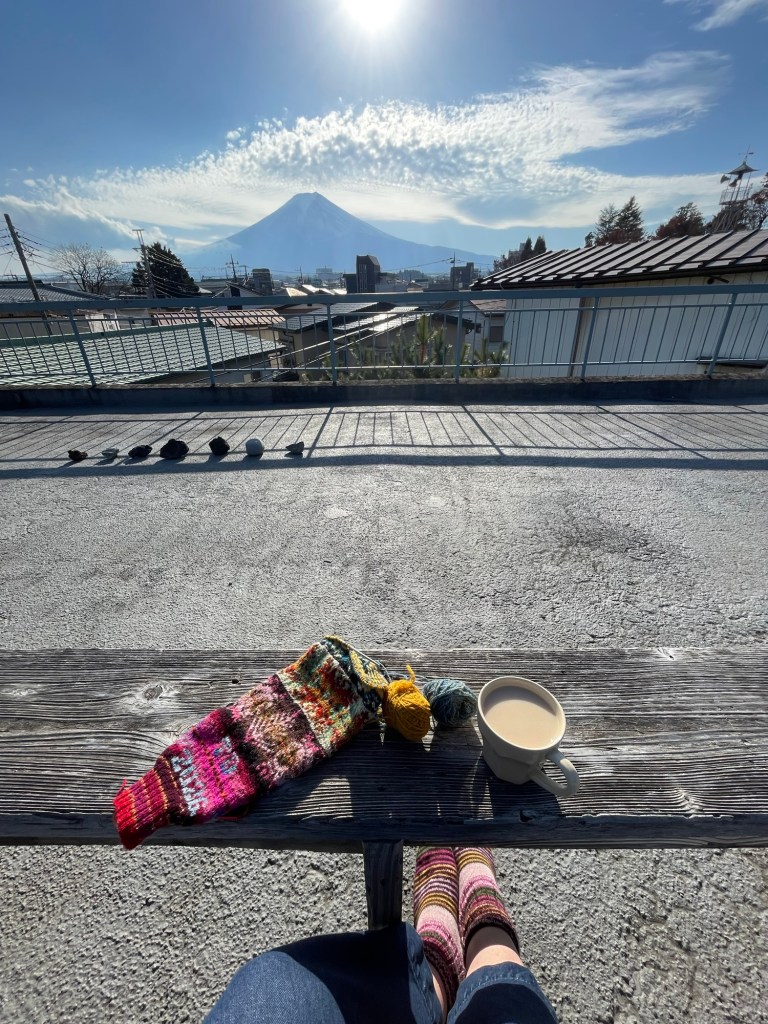
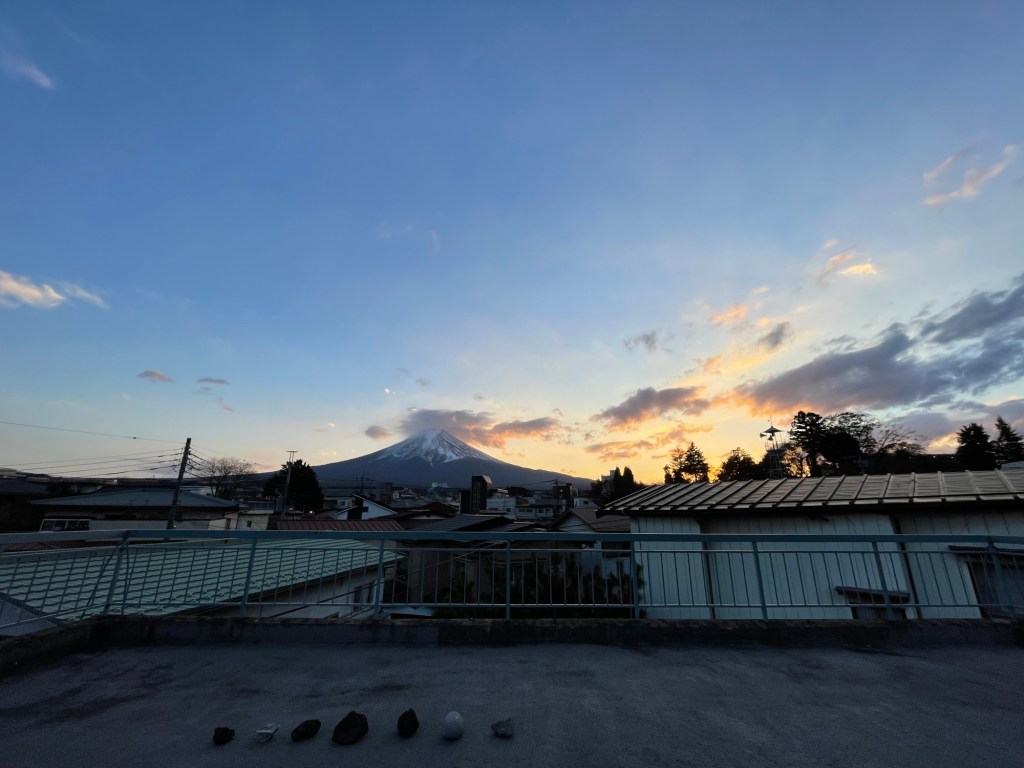
I’m sitting on the roof of our residency, watching sunrise over Fuji, and I finally figured out that it’s Saturday. Being on an artist residency for a month, in another place, city, country, is kind of not knowing what day it is. To be fully immersed in place and a practice of making whatever comes to mind, and experiencing and finding new things in a new city that you never knew existed removes dates on a calendar and even day names.
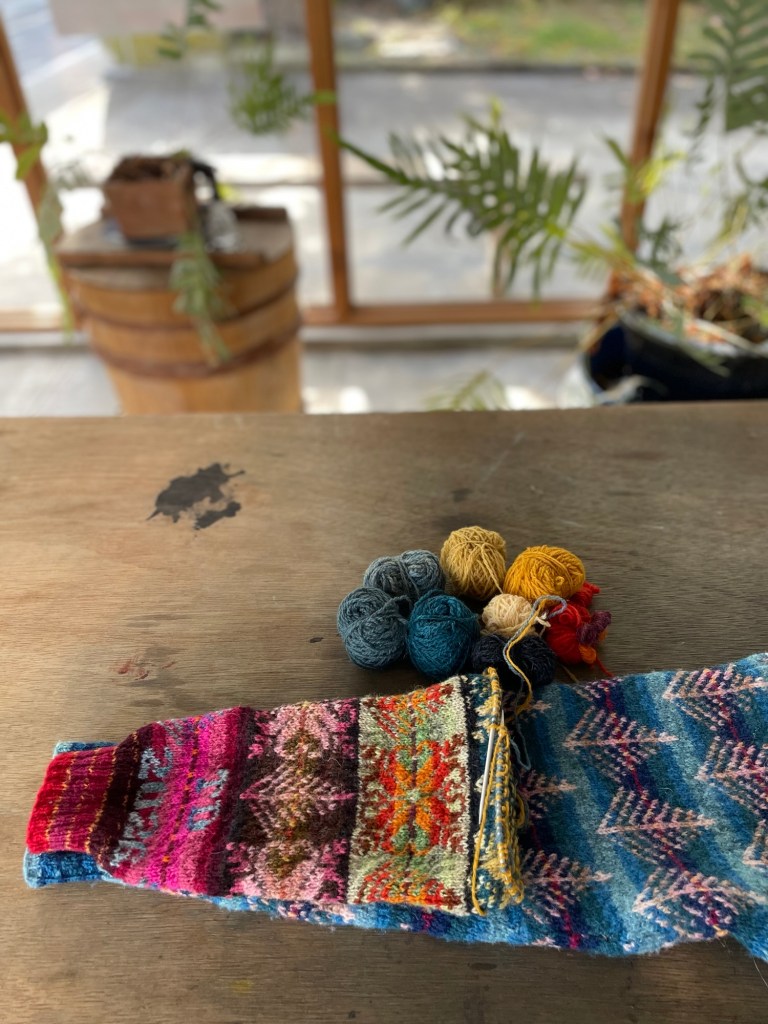
I think it’s day 12. I finally settled into this place with new people and new building. On a practical level I’m still knitting. I’ve been knitting my second sleeve using the colours that I brought with me and really enjoying how they both sleeves sit alongside each other.
We’ve all had an artist interview with the people who manage the residency here. The questions were quite interesting – Tell us about you, what can you bring to Fujiyoshida, what does the residency space mean for you and a couple more questions that I’ve forgotten. I think what I bring here is an enduring curiosity for a place and culture (not everyone sees that in me) and an ability to share my findings with many people on my website blog and on Instagram. Of course I share just my perspective but I have a pretty keen eye.
Yesterday I was picked up by a complete stranger that contacted me through Instagram. She is called Shannon. She and her sister Pat were visiting their brother Mike who lives quite close to Fujiyoshida. We went to the Itchiku Kubota Art Museum, which is a museum built in 1994 by Itchiku Kubota to house his permanent exhibition of his work. It was quite remarkable to see the Kimono in all of their glory showing his techniques. If you ever go, my favourites were numbers 19 and 20. The gardens and buildings also represent the world of Itchiku
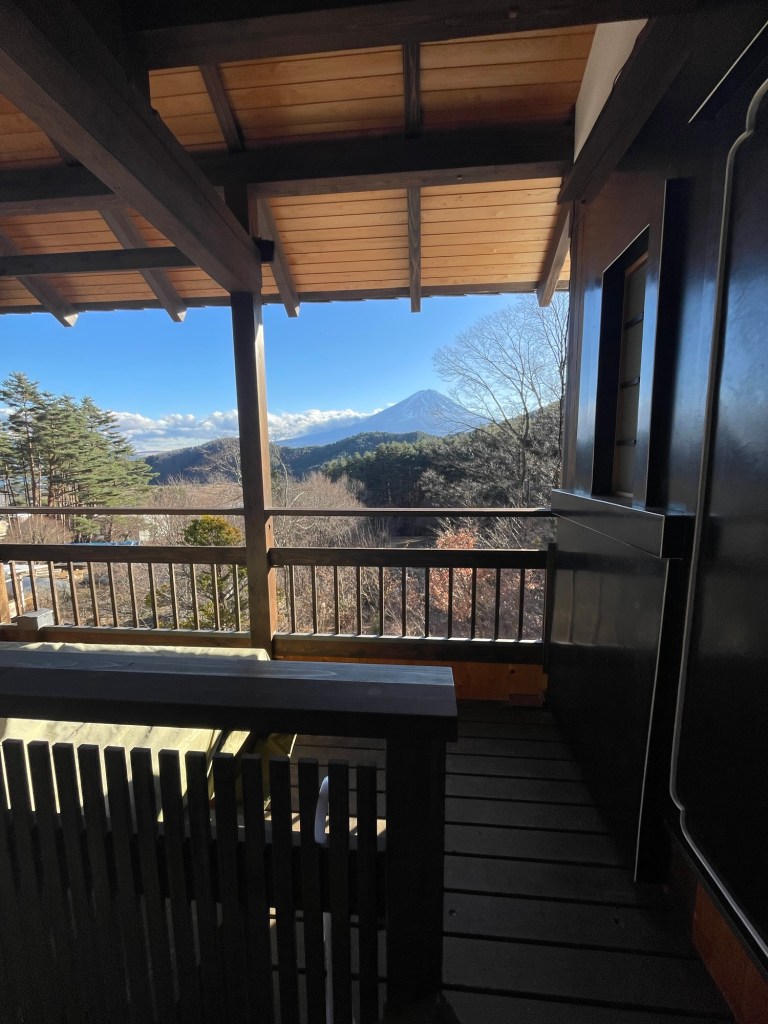
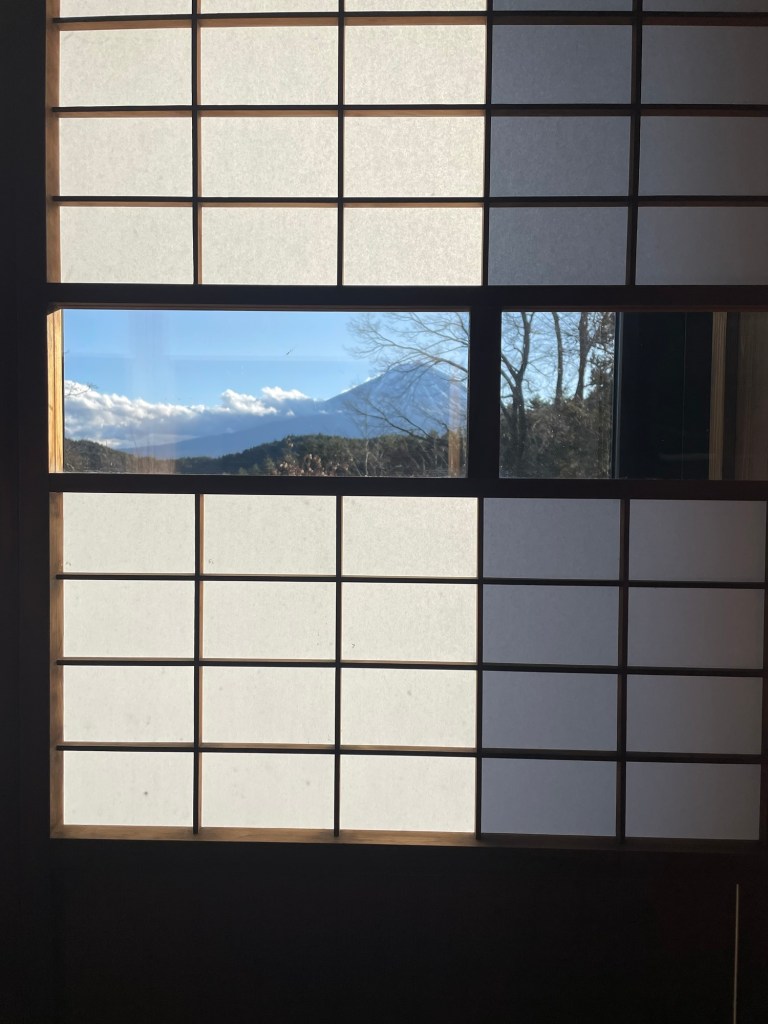
Then we went to the very beautiful chair museum to the foot of Mt. Fuji, in the forest of Oishi in Fujikawaguchiko. My favourite thing was the initial scent of wood on entering the building and the glorious, viewing Veranda where from many strategically placed small glass Windows in the traditional paper Shoji sliding doors you could view Mount Fuji whilst sitting on extremely exquisite low wooden sofas and chairs.
viewing gallery shoji screen view
The view is exquisite. The scent was heavenly and then I found out that the building had been completely dismantled from the Saitama Prefecture in Tokyo, piece by piece and brought her to the mountain side.
If you don’t take chances with new people you never encounter these new things, so thank you Shannon for getting in touch and thank you Mike for driving us everywhere yesterday.
On a basic level, I’m knitting and my knitting is always portable so I sit on the roof at sunrise and watch the sun drench Fuji with colours of red or white light. I take my knitting to cafés and down to the Onsen, Which I visit every day except Wednesdays when it’s closed.
Knitting brought me here. Knitting has taken me to Shetland and other far off places and enabled me to continue to learn and express my creative practice through storytelling.
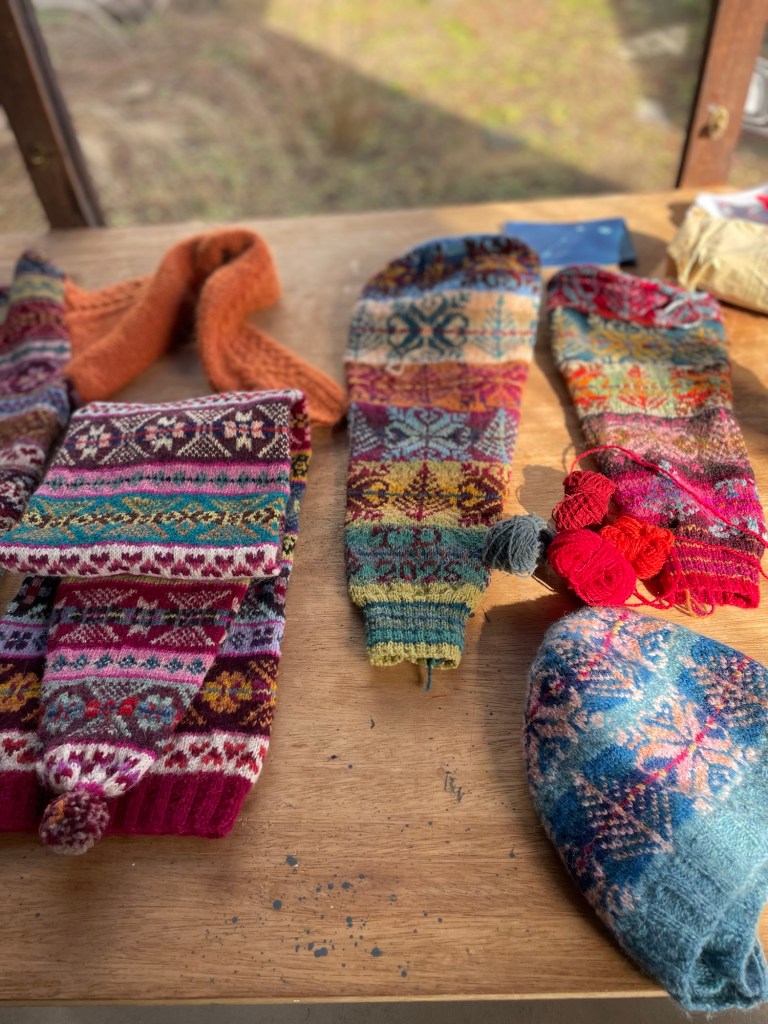
Here are my sleeves.
I am still not sure whether I will add them to a fabric body or a knitted body but if you want to practice your own colour work and experimentation through pattern and colour – then have to go with these sleeves or the hat pattern because this easy to knit motif lends itself to real experimentation and colour work.
Oh yes, I remember that one of the questions in the artist interview was, ‘what does art mean to you?’ and I think it is entirely about creative expression and freed of thought and when they both come together – you get alchemy
If you’d like to try this motif in a hat or jumper or alternative sleeves, then the links are here.
Tonight the moon is blue. It is a full, Super cold moon. Now, it is only 8 pm but utterly freezing outside.
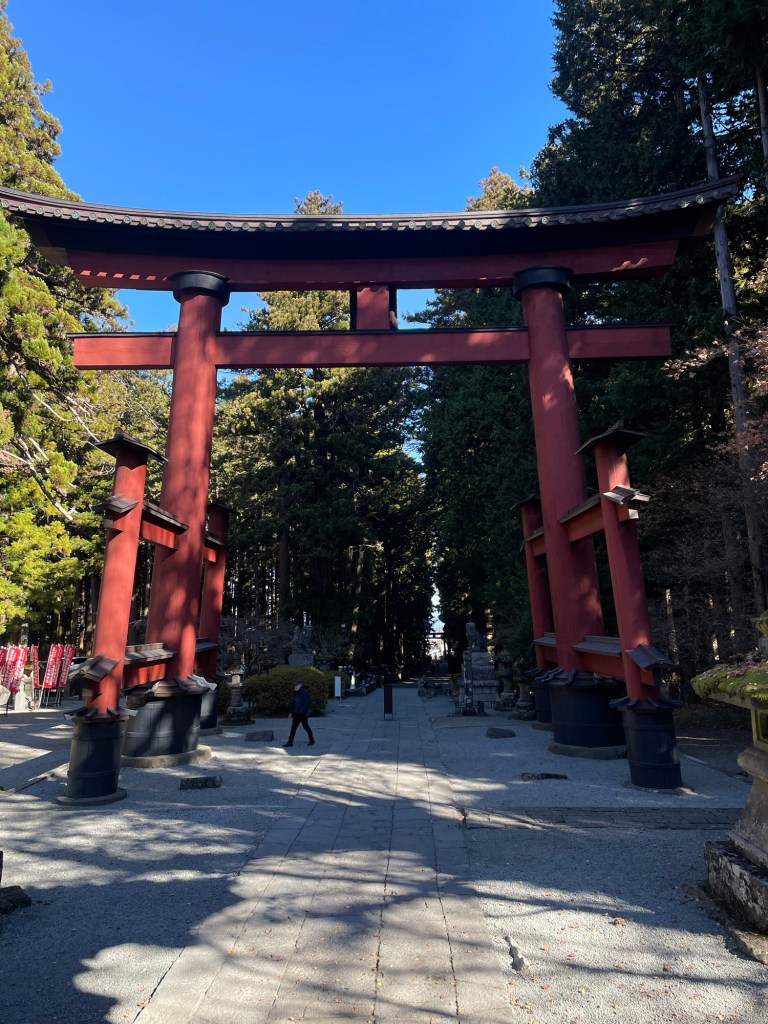
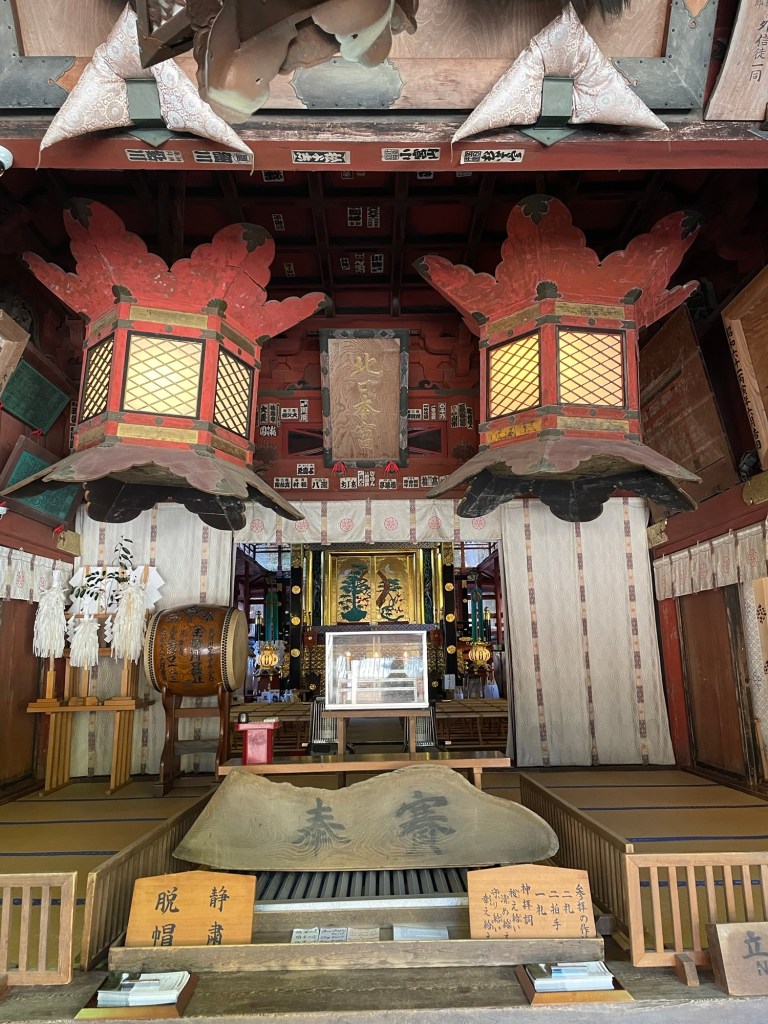
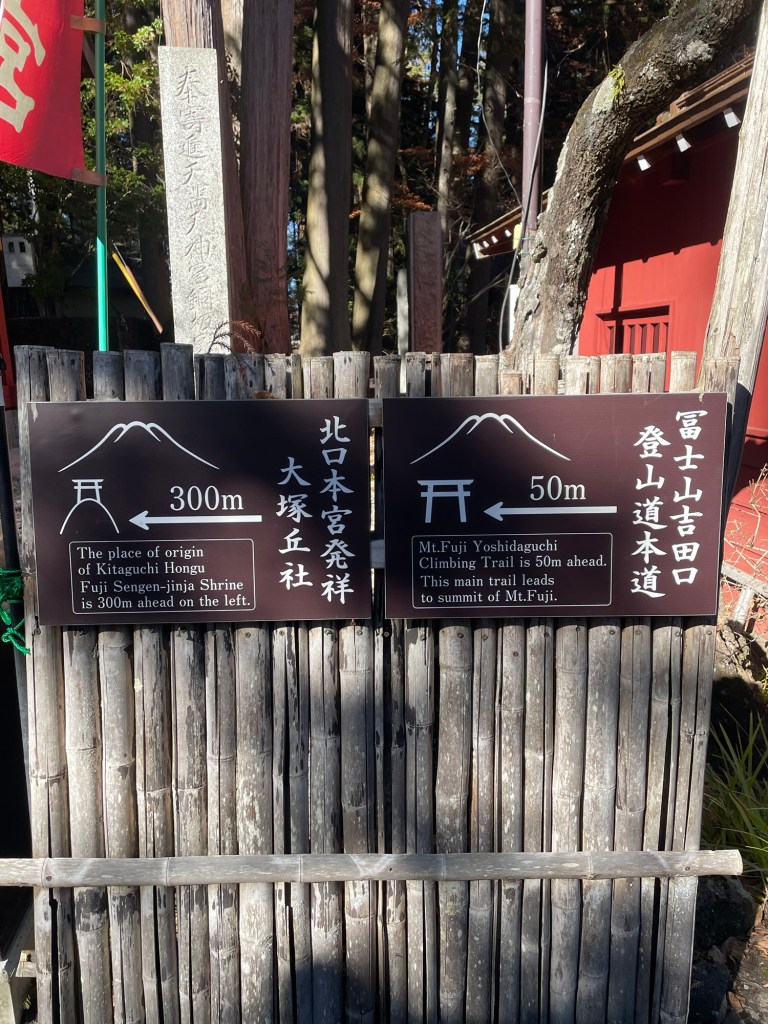
Today, after very little sleep, I decided to walk to the base of Mount Fuji. The morning was cold but bright. To get to Fuji, there is first about a 3 miles to walk from town to the Kitaguchi Hongu Fuji Sengen Shrine, which is a huge complex of buildings – the first small shrine is said to date back to 100AD. It is now a magnificent World Heritage Centre and I can completely understand why. I do not know its history but as I walked up the main road out of town, that leads directly to this place, I recognised that from the 16th century to the 19th century, the path was once lined with inns, temples and shrines and places managed my Oshi (priests) on both sides. Some of these places are still here and also recognised as historical buildings but some are also abandoned or derelict or turned into some other use but the gates at the front remain. Each one had information about its history and on each reading, it became more obvious how special this place has been to generations. The closer I got to Fuji, I began to sense how many people came to pilgrimage, rest and pray here before walking the mountain.
When you finally reach the gateway to Kitaguchi Shrine, it is in a forest of Japanese pine trees which all must be 100 feet tall. The path way is lined by majestic stone lanterns covered in moss. Immediately you are plunged into shadow and coldness under the trees where the pilgrims would’ve originally come to bathe and drink water before setting off to climb out Fuji.
The largest trees are respected with rope and paper ribbons. Even though I do not know or fully understand what is going on here, there is no denying that it is and has always been epic – as epic as when I walked the Great Wall of China and turned around to see the wall meander for miles into the distance, as epic as the day I spent in the Forbidden City and sat and the Pavilion of Crimson snow. These experiences are never forgotten and maybe hold some of the essence of the pilgrims within it. This is not just a complex of spiritual buildings they are stories of lives, beliefs, and gods.
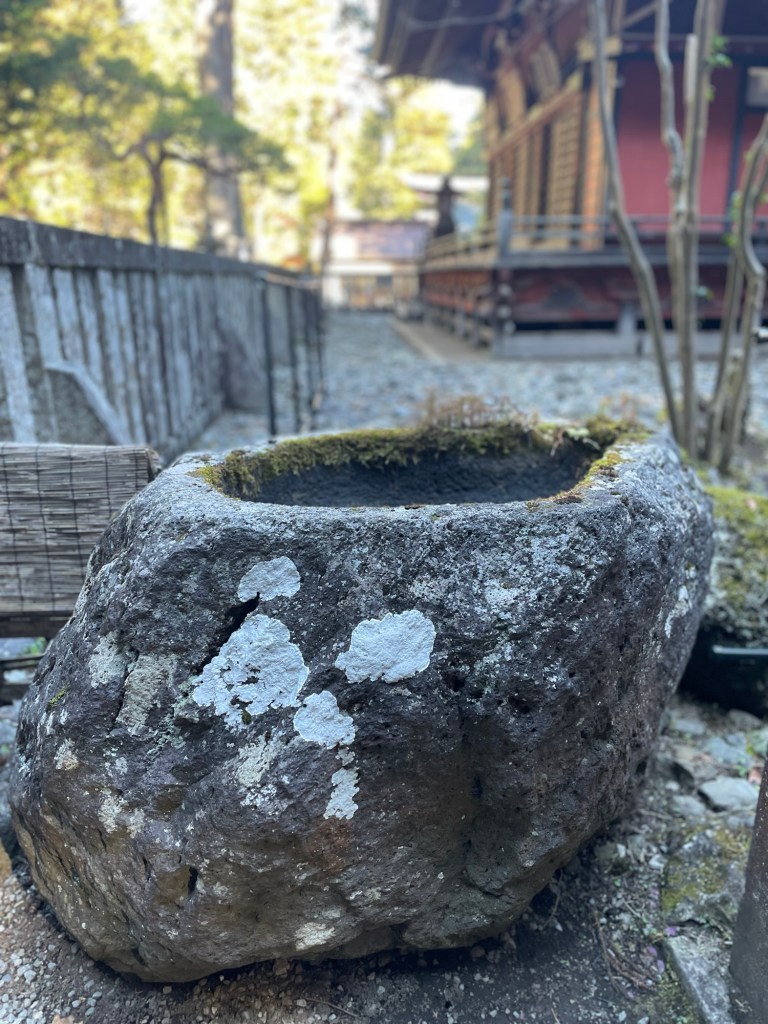
Great stones made into water troughs were covered in ice with little tiny fearn forests growing around the edges. When I looked at the rock, I thought, if stones could talk what stories they would tell of all those who have passed here since Fuji settled from erupting.
I walked around towards the base of the walk up to Fuji. The forest made it very cold and I decided to start the walk to the base until the black bear signs became progressively increased and I thought better off it because I was on my own so I turned back.
Back home, when Takumi, came round to sort the smoke detector in the residency, he said that I could buy a tiny bell from the souvenir shop and hang it off the back of my bag to deter the black bear. I don’t think that I can trust that idea so much.
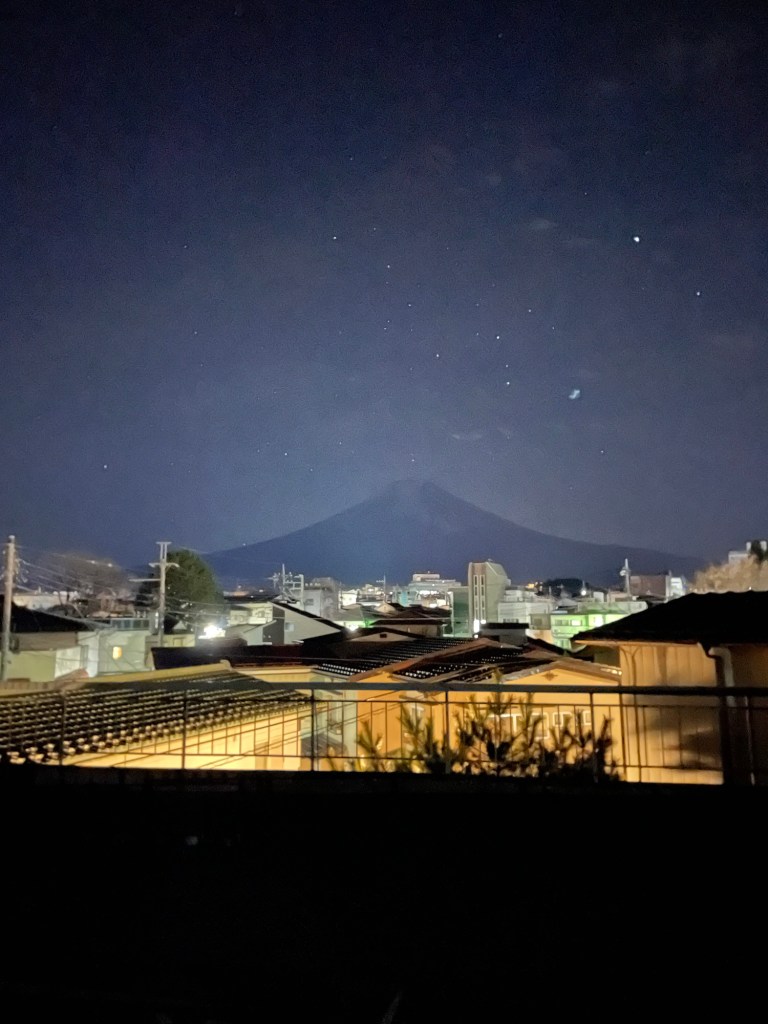
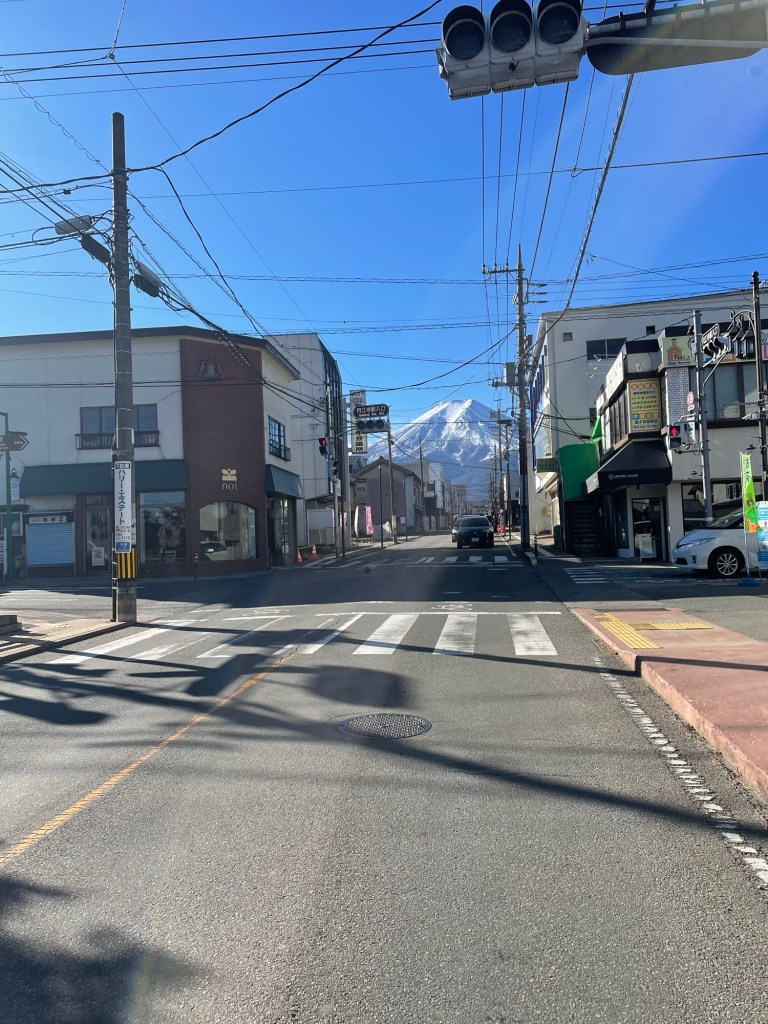
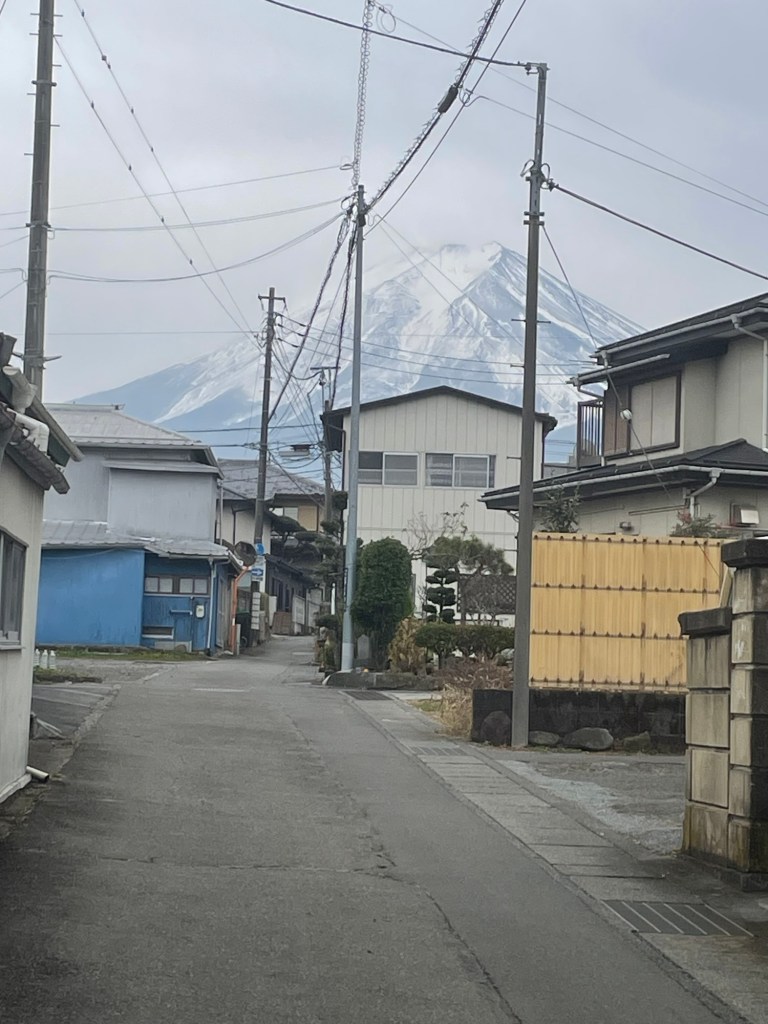
I have decided I might do a project – after Hokusai’s 100 views of Mount Fuji. I’ve shown quite a few of my Fuji, snaps on Instagram but now I’ve decided to work towards 100 modern views of Fuji. So now, hopefully, I will hopefully concentrate more on the idea but just to keep you going as Fuji shows up every day.
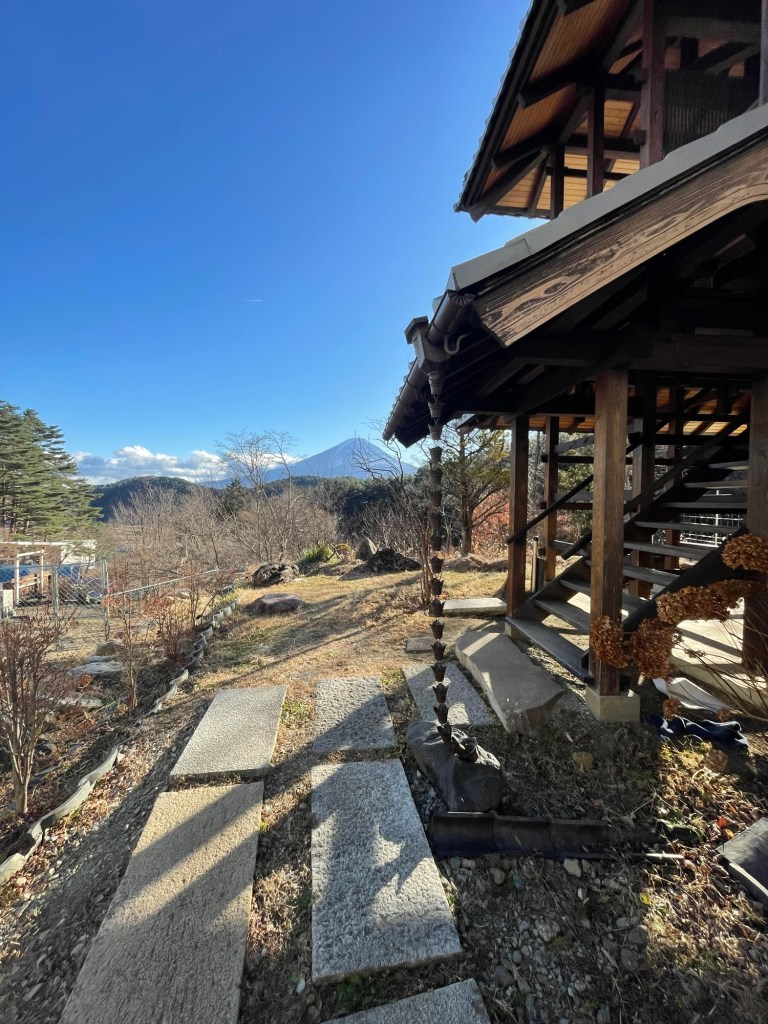
Here are a few views of Fuji in the last three days.
I have been knitting my second tree and star sleeve. I bought two antique kimono from a flea market at Hanazono shrine when I was in Tokyo because I was going to make a cloth body for my Tree and Star sleeves – you know, just make a little jacket body either padded or appliqued or something but I’m not so sure now
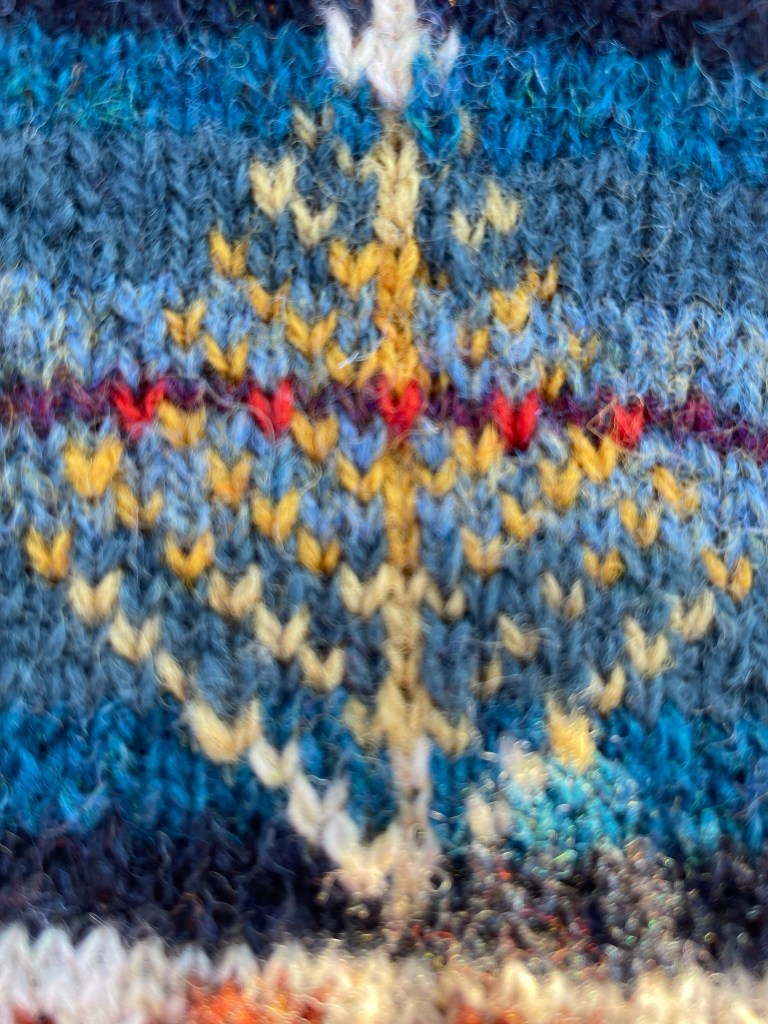
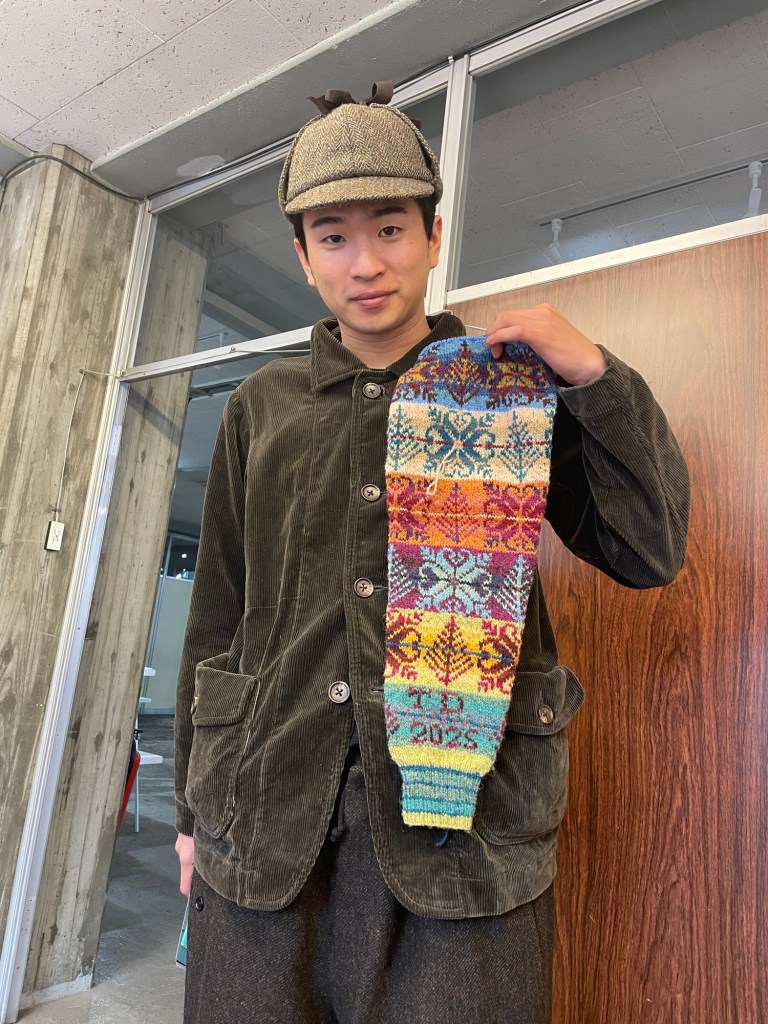
Here are the sleeves. I’m knitting them in lots of colours to give you ideas of alternative colour ways, if you’d like to knit the Kaleidoscope jumper or the sleeves yourself instead of in the blues and pinks that I chose.
It’s a very special place here in Fujiyoshida and I’m glad I made my own pilgrimage to get here.
Here is the sleeve pattern on Ravelry, if you would like to knit them for your own project or add them to the Kaleidoscope Jumper instead of the tree sleeves that are in the original pattern – see image on the right above.
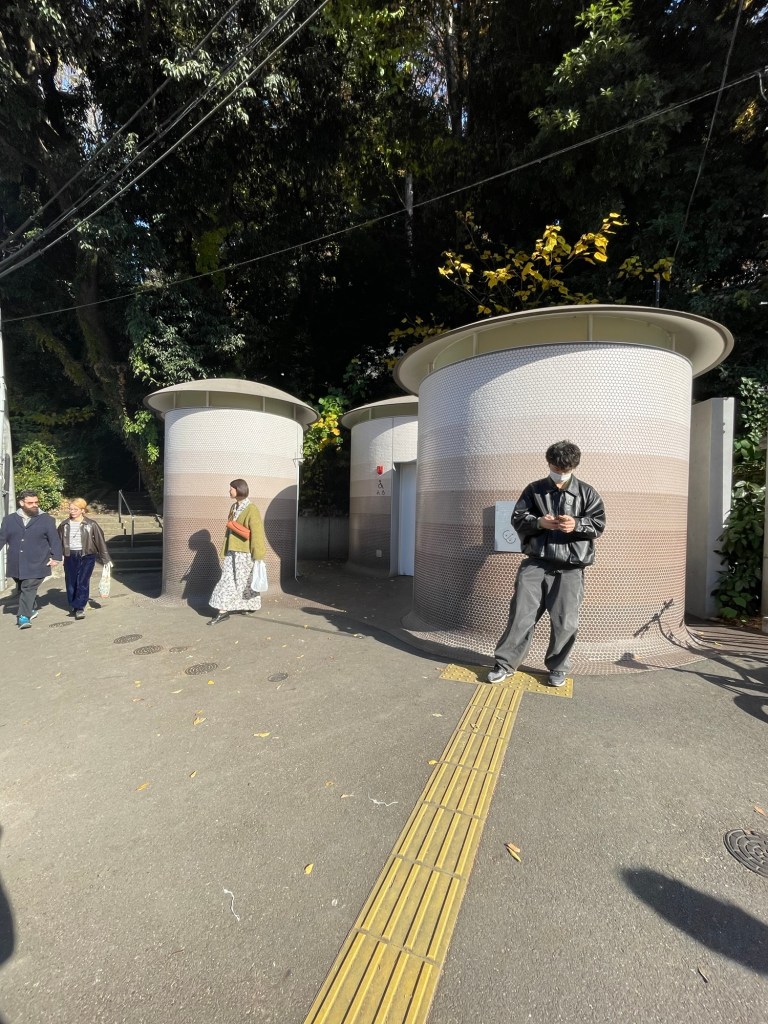
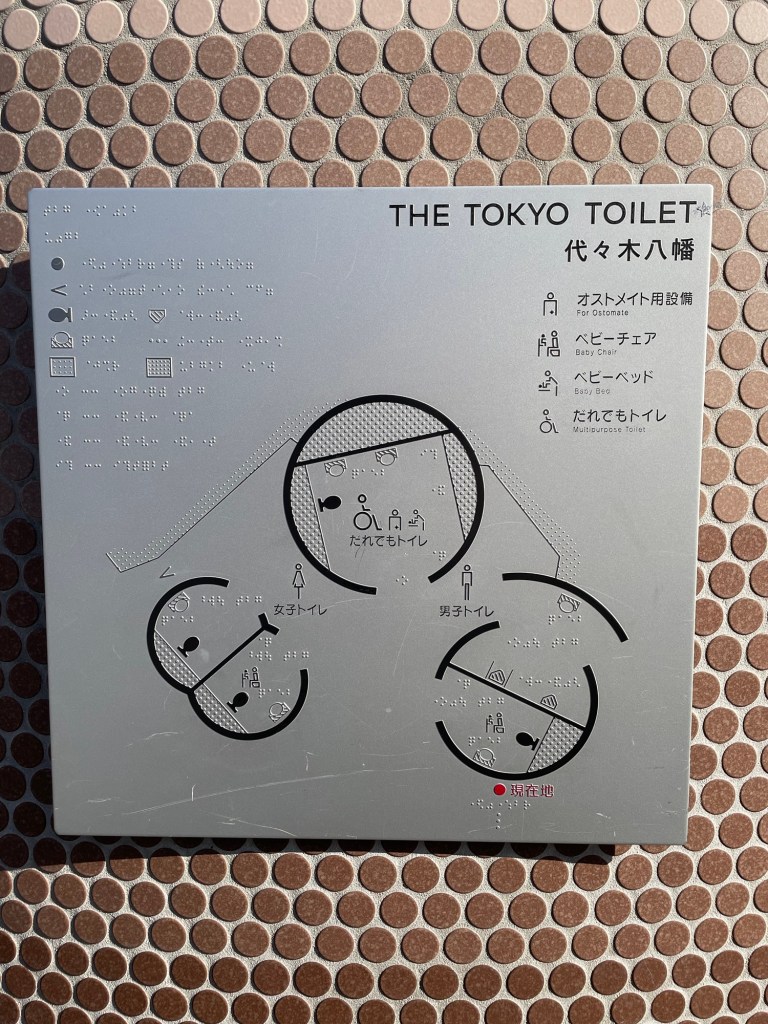
So much more has happened, I met my lovely friend, Yuka, who I have know from Uni and we went around the Tokyo toilets (my request) after the Film – Perfect Days. I had such a perfect day.
All ravelry patterns are here and if you would like to join me in an online colour workshop, nip to the link for workshops to find out more 🙂
I cannot sleep in this city that never sleeps. I have tried. My body is in some other time clock and my mind is thinking, going over everything that I have seen. I went to bed at 10pm, woke at 11,12 then 1am and again – finally at 2am. even breathing exercises didn’t make me go back to sleep.
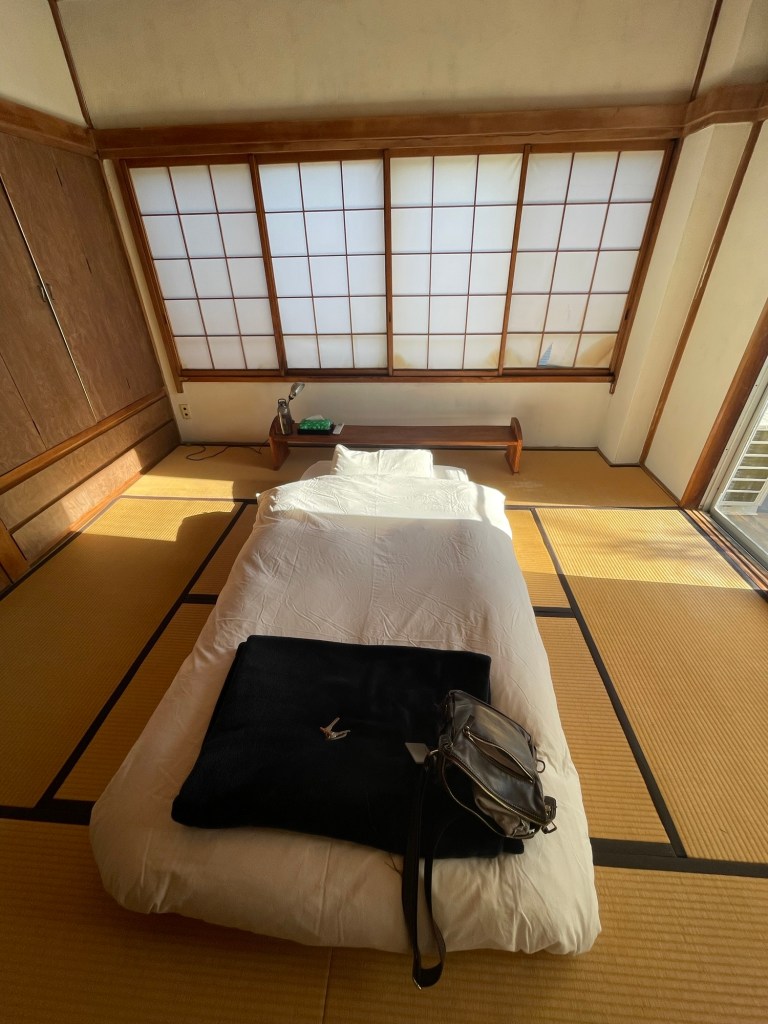
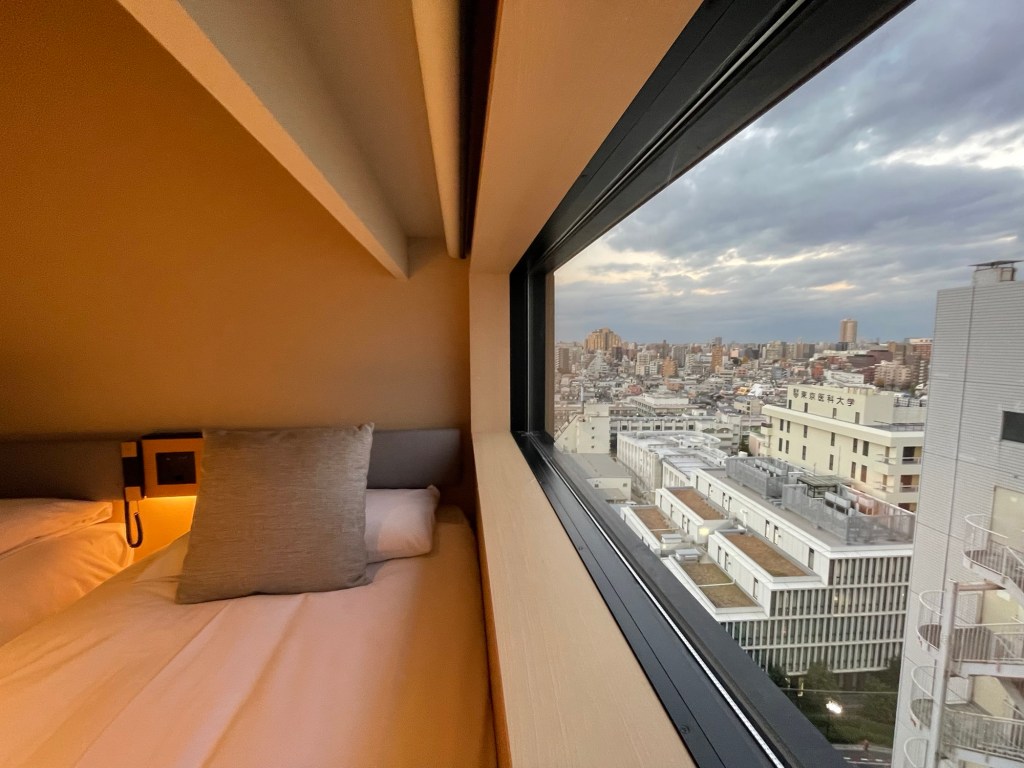
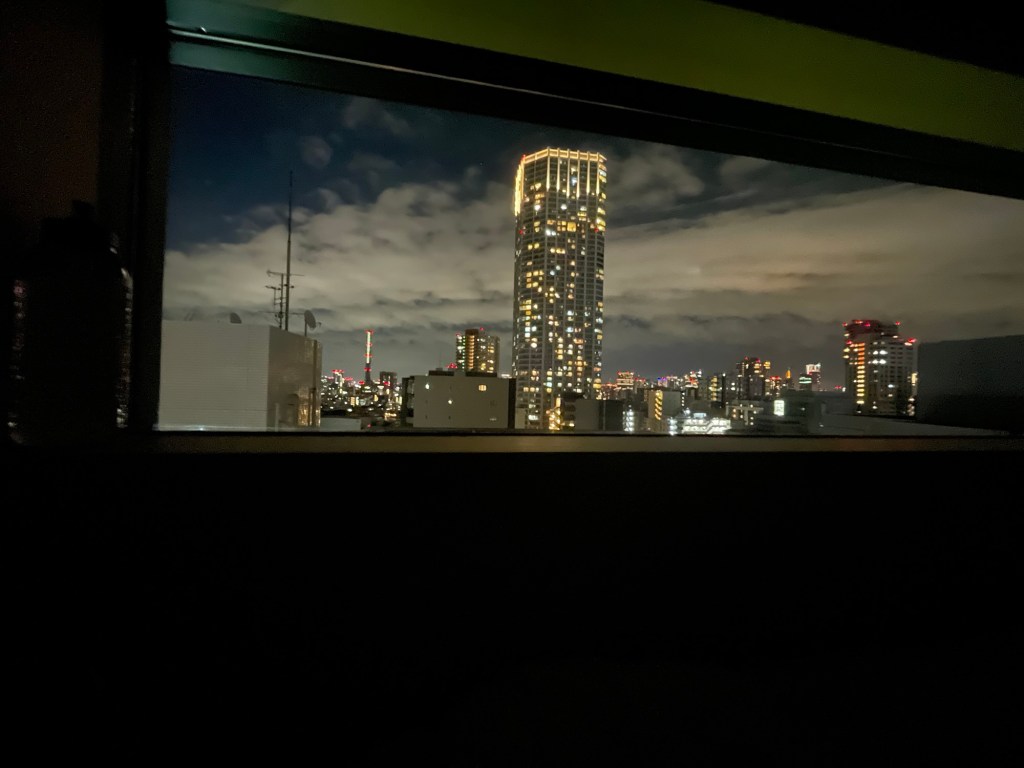
I wasn’t sure of the roof top Onsen closing times. I thought it was 3 am so, by the time I decided to go and check at 3:15, it was closed. I returned to my room and made tea – placing the Elegant claypot on the window sill beside its matching cup on a tiny tray and looked out at this magnificent unbelievable world that I can see from my long low Horizontal window the length of the bed.
I wonder at this world of so many people Living so close together in high rises, each with their own different lives. It is good to travel and travel alone so that each experience is fully taken in to the level of the knowledge with which you can try to understand it. Because I have never seen anything like the wondrous site that is in front of my eyes right now.
This week, the weather has had a sharp turn from really quite warm to really quite cold, in fact bitterly cold.
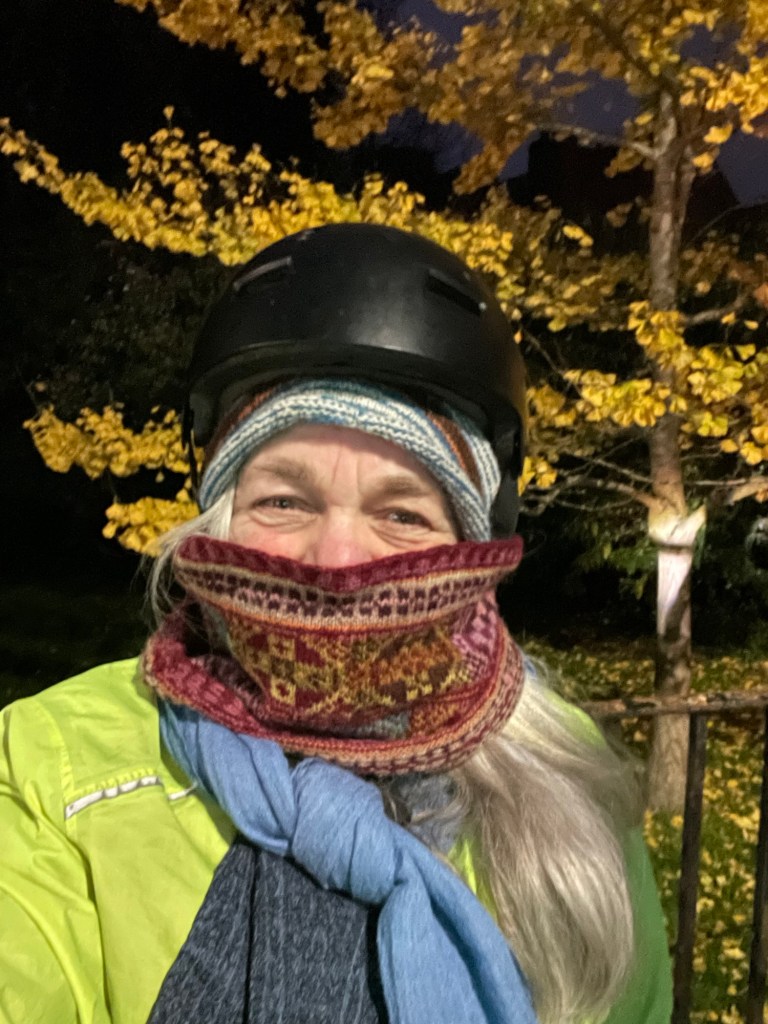
On Monday I reached for my stash Buster neck warmer and here I am on my bike going to the gym at 6:30 in the morning for a 7 am Body Balance class. I love Body Balance class on a Monday morning – it starts the week in the right way but getting there on these days in the pitch dark and freezing cold with sleet or lashing rain, on a tiny wheeled bike is a bit tough.
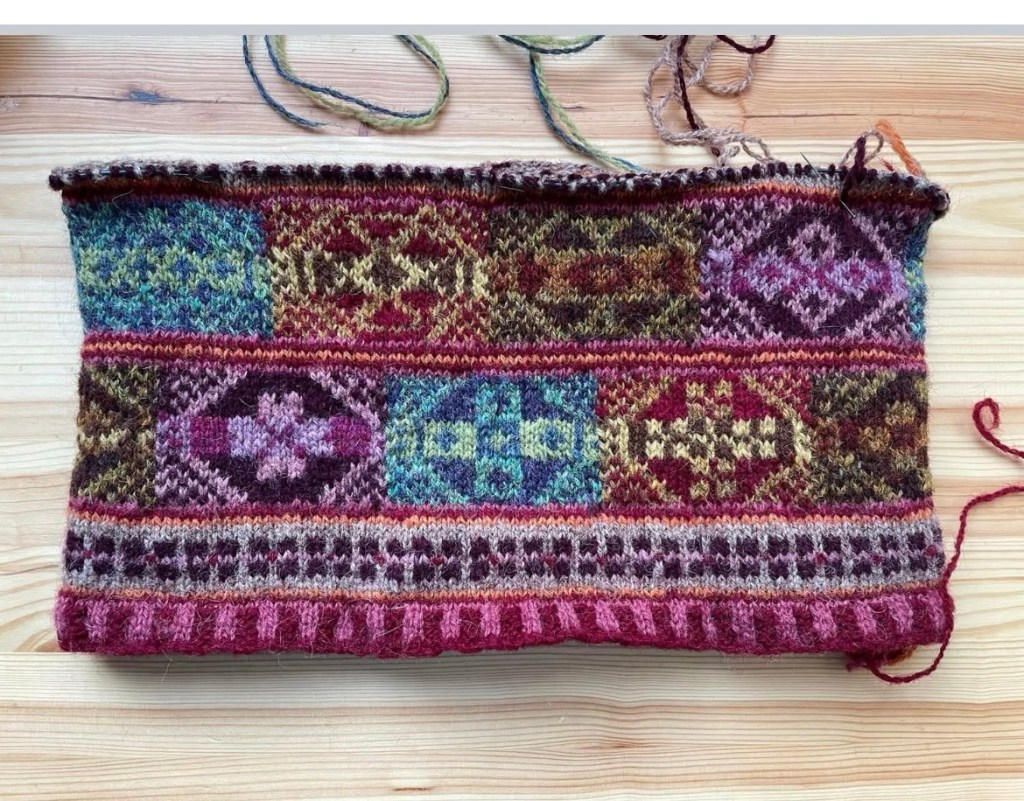
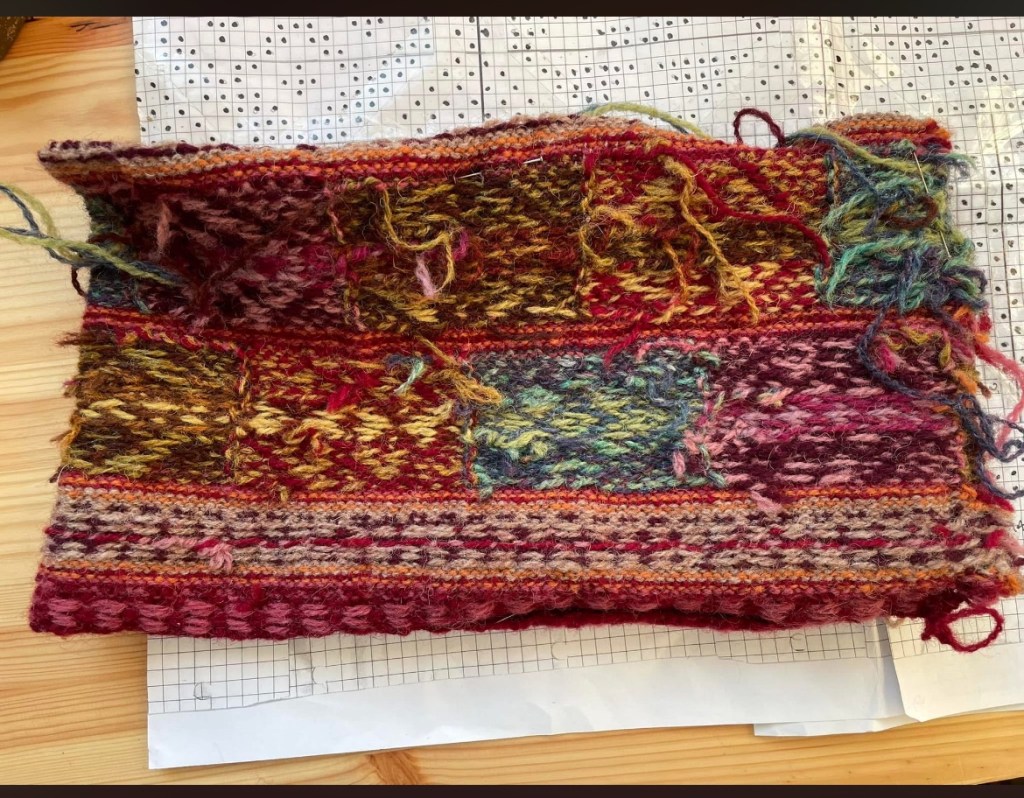
I designed the Stash Buster neck warmer in September 2023. You can see a link here for a blog on the making and designing of it. At the beginning of the process, I decided to chart out lots of Fair Isle patterns in my design sketch book on graph paper using the OXO motifs in different colours which means that the neck warmer is constructed in an intarsia way where each block has its own set of colours.
I have had a lot of new followers on instagram, and since I have been wearing the neck warmer again, there has been a small revival and interest in this pattern. so I want to say thank you for supporting me.
This week, on Tuesday evening, it was our crafting night at a local café in Nether Edge which has a huge wood burner inside. The cafe is a small room full of wonky tables, lots of chairs, a large fish tank and lots of plants and friendly people. This cafe is very comfortable in more ways than one – it is open- hearted and totally inclusive.
It is the best café in Sheffield and maybe Yorkshire so if you’re in the area check it out it’s called Café9 and you will always receive a great welcome
Next Friday, I will be flying to Tokyo. This week I’ve been sorting the last small details and meeting people who are going to look after my cat and come and live in my flat over the time that I’m away.
This afternoon I showed a new friend, that I met through Instagram, all the things in the flat and how they work for when she comes to stay. I wrote a cat and flat manual. This evening, I pondered how Instagram is quite a marvellous platform for joining people up. I have met so many brilliant women through my Instagram feed – either they’ve got in touch with me or I’ve got in touch with them and over time, we have built up longstanding friendships.
I’ll be taking quite a few of my making ideas to Japan. I’ve decided to take my Tree and Star sleeves to Fuji, because I have an idea that I’d quite like to add them to a jacket that I’ll make using flea market kimonos. I’ll take the kimono to pieces and reuse and reshape the pieces in different ways to make a jacket body – this is one of my ideas – I have a lot of ideas and I don’t know if any of them will come to full fruition but I am so looking forward to having one month in Fujiyoshida to just be – think, write, observe, sit quietly and notice the details.
I am excited to be taking the sleeves, because I know that they can be knitted into to any number of things such as on to a previously knitted vest or as I hope to do, added to a fabric body or as add-ons to the kaleidoscope jumper.
When I begin to be free with my creativity, more and more ideas come. Ideas to create things that I had not thought of before.
I was asked on Instagram today, if I could post works in progress so, above is an image of both of my Tree and Star sleeves using colours from my stash.
If you would like to knit the sleeves yourself, to add to other projects, or to add to your Kaliedoscop jumper the pattern is here
I try to design beautiful knitted articles but they may not be considered interesting. All of my designs are meaningful to me but of course they will not be meaningful for others. All of my patterns also have a story embedded within them often from inspiration of place, people or colour But my stories are also not that meaningful to other others.
And big yarn companies that make patterns like Rowan or Sirdar, don’t genuinely take inspiration from real places or people that they’ve met. They often start with a mood board which has no integrity within the finished article so how do independent designers like me make a living from our creative practice?
Well, the answer is we don’t. I work at the university 2 1/2 days a week to pay my bills then I do my house jobs, care for the cat and manage the car and daily tasks and try to fit my creative practice into the time left for me, which can be hard when so many other other things take up my time
Independent designers do their own marketing, promotion and social media – responding to comments on Instagram and writing for the website to promote my creative practice. But then if I do sell a pattern for say, £4 Ravelry take 10% and then so do Paypal so I get about £3.20 for probably three months work to design Knit, test knit it, write the pattern – And that’s if I sell any at all.
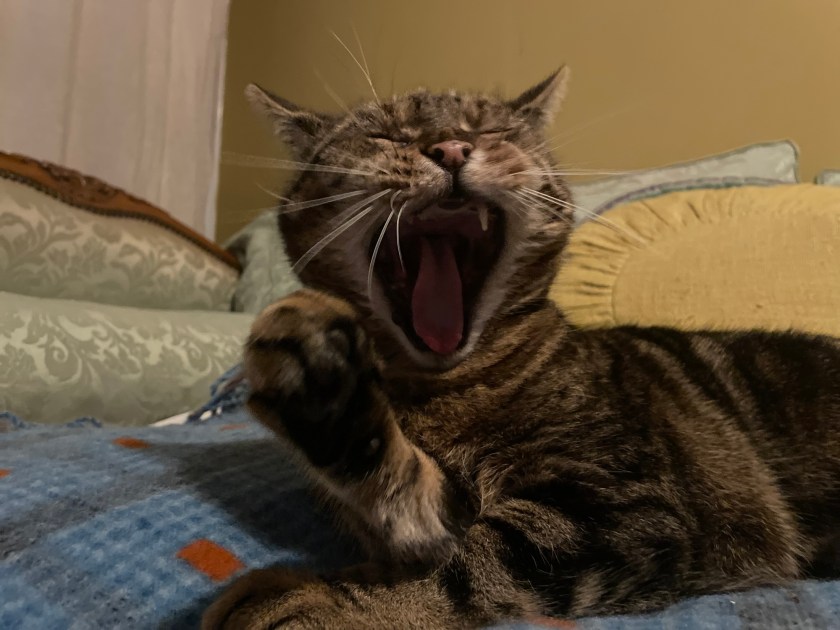
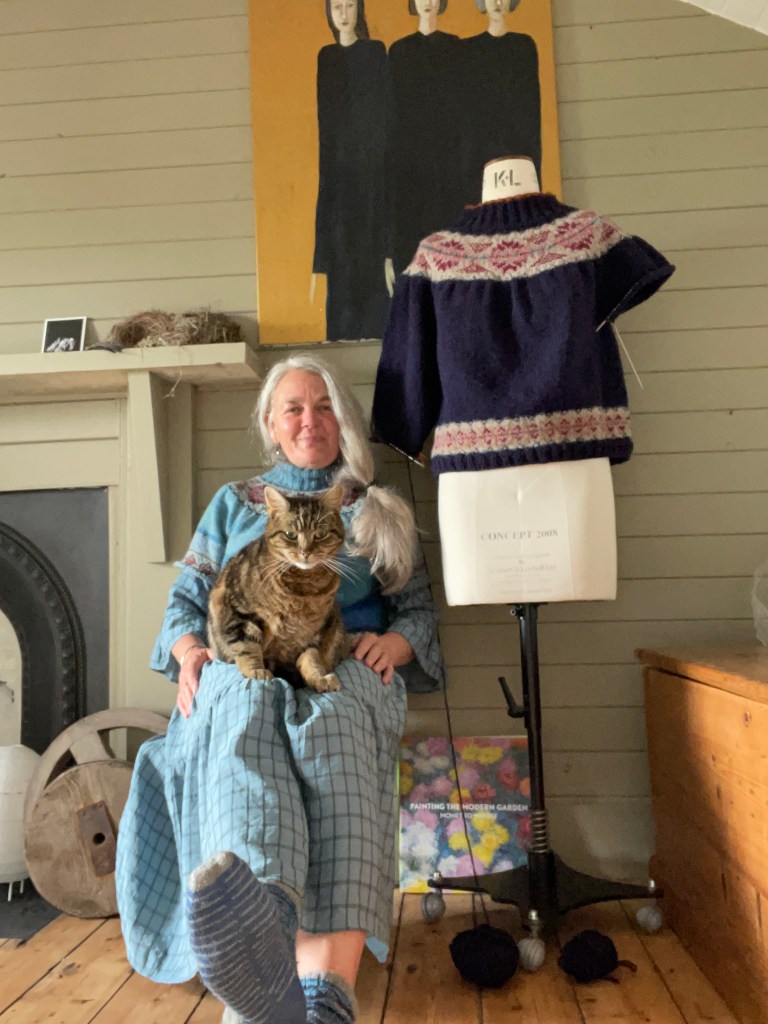
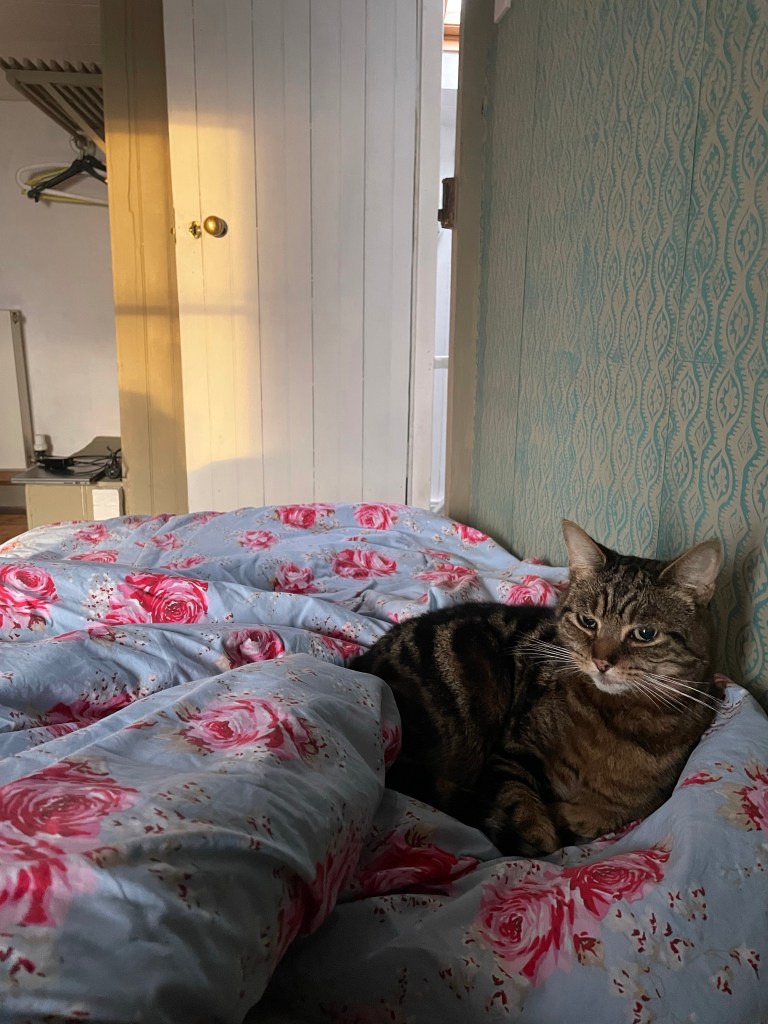
I don’t have funding like a lot of creative practitioners, nor financial support so I want this post to say a big thank to you if you have ever bought a pattern or been on one of my workshops with me which showsme that the hard work that I’ve put in over the years has not been wasted and now, when I do finally get time to sit down and knit – my cat sits on top of me.
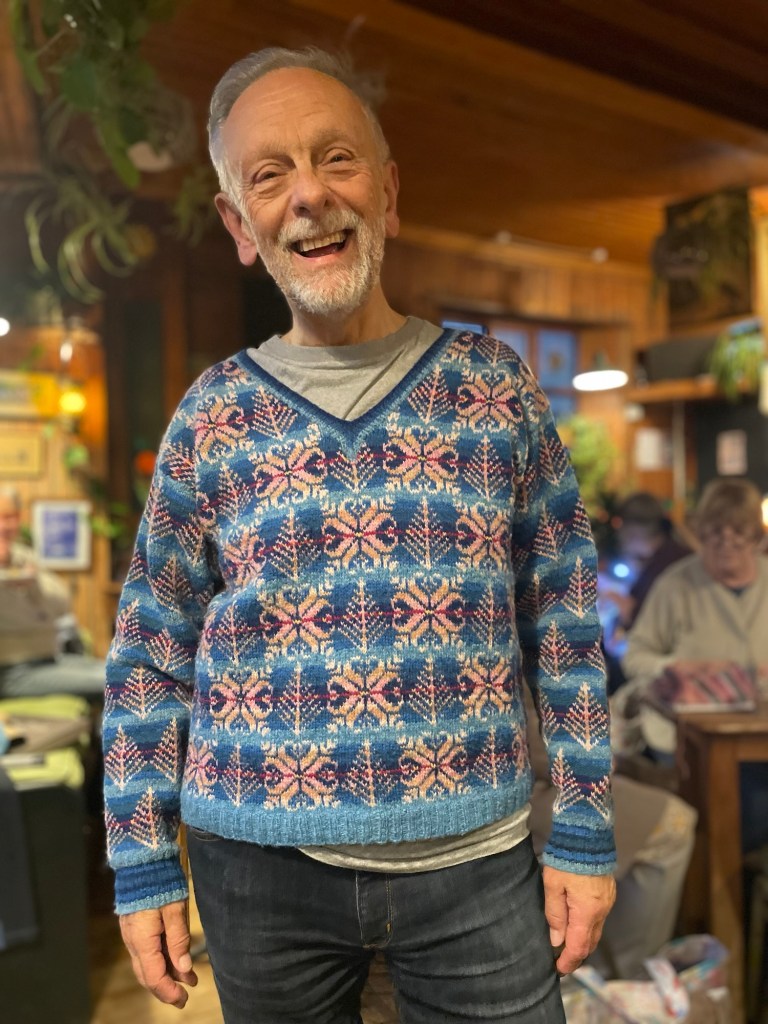
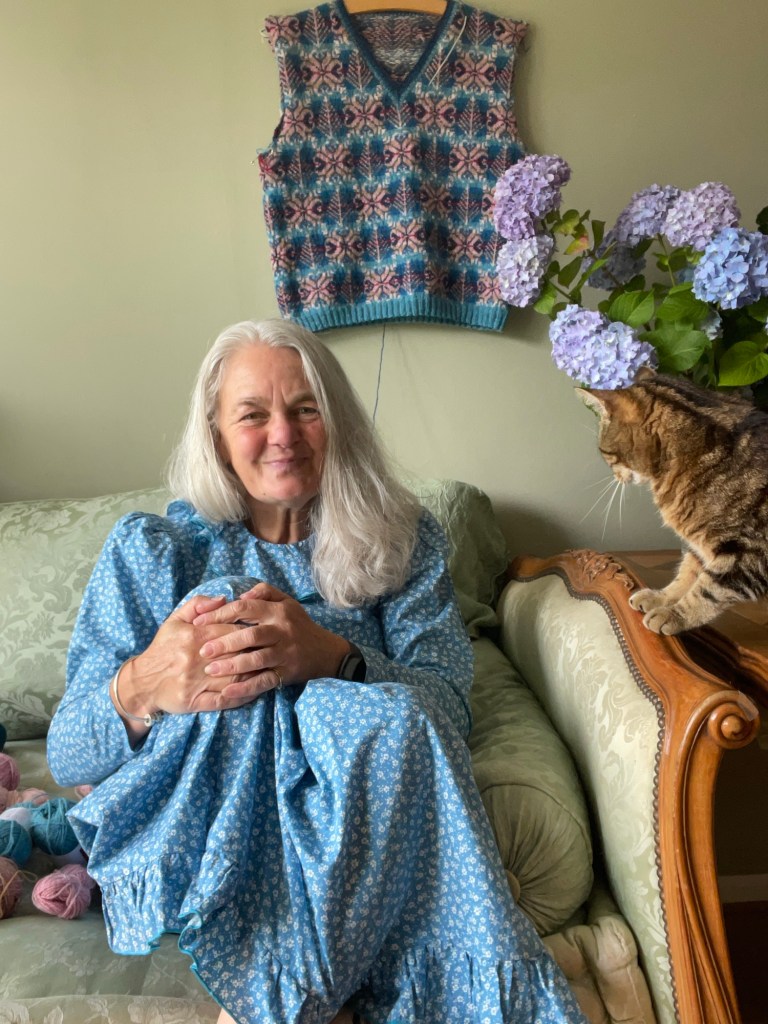
Here is a spotlight on my favourite pattern that I have ever designed at the moment and it’s the kaleidoscope jumper with add-on sleeve pattern and matching hat. I love wearing this jumper and always receive so many beautiful little comments about it so from one independent designer to whoever it is reading this Thank you for supporting us
Finding Colour Confidence: Trusting Your Eye and Your Yarn
I often have comments on my posts about how people like the colours that I choose. They look at all those colours — beautiful, bright, blended or contrasting and say that they don’t know how to choose their own colour combinations successfully.
I used to feel the same way. Choosing colour felt like a test I hadn’t studied for — as if there were secret rules I hadn’t learned.
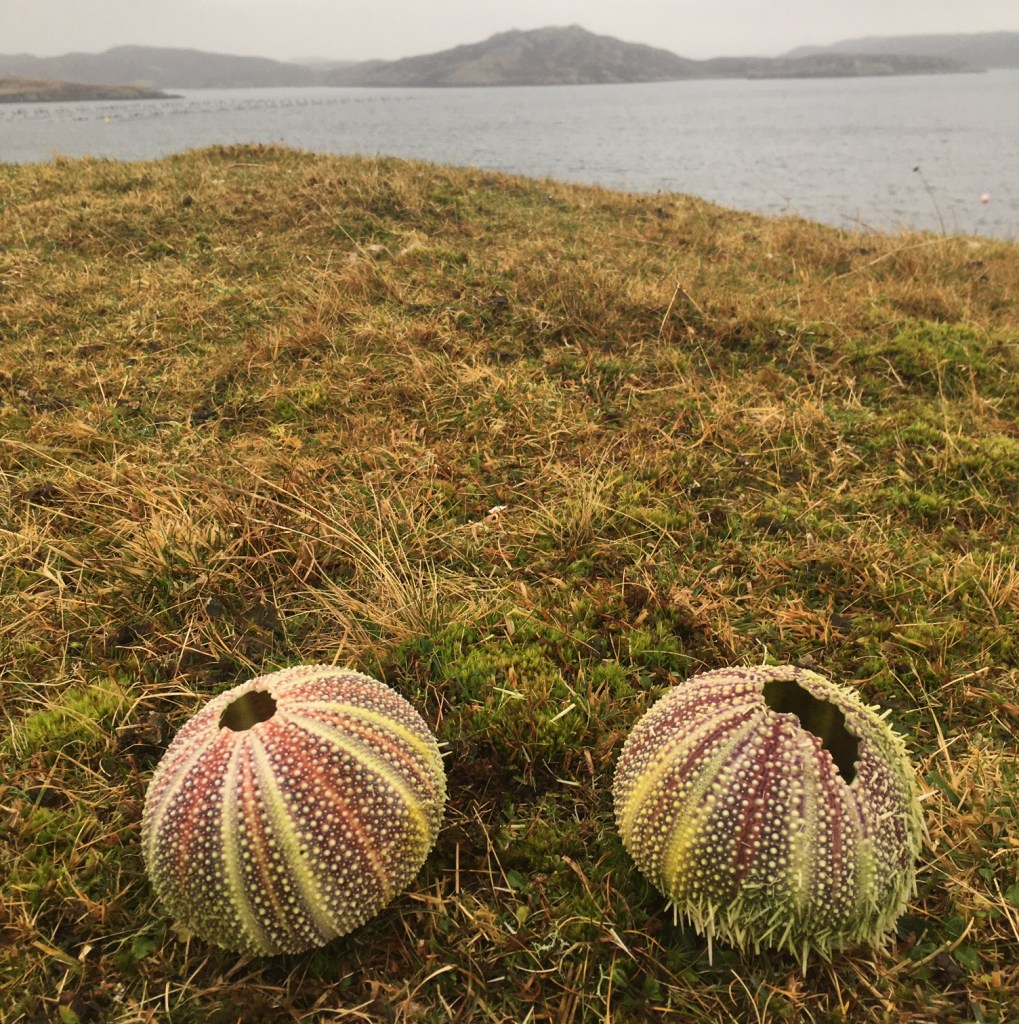
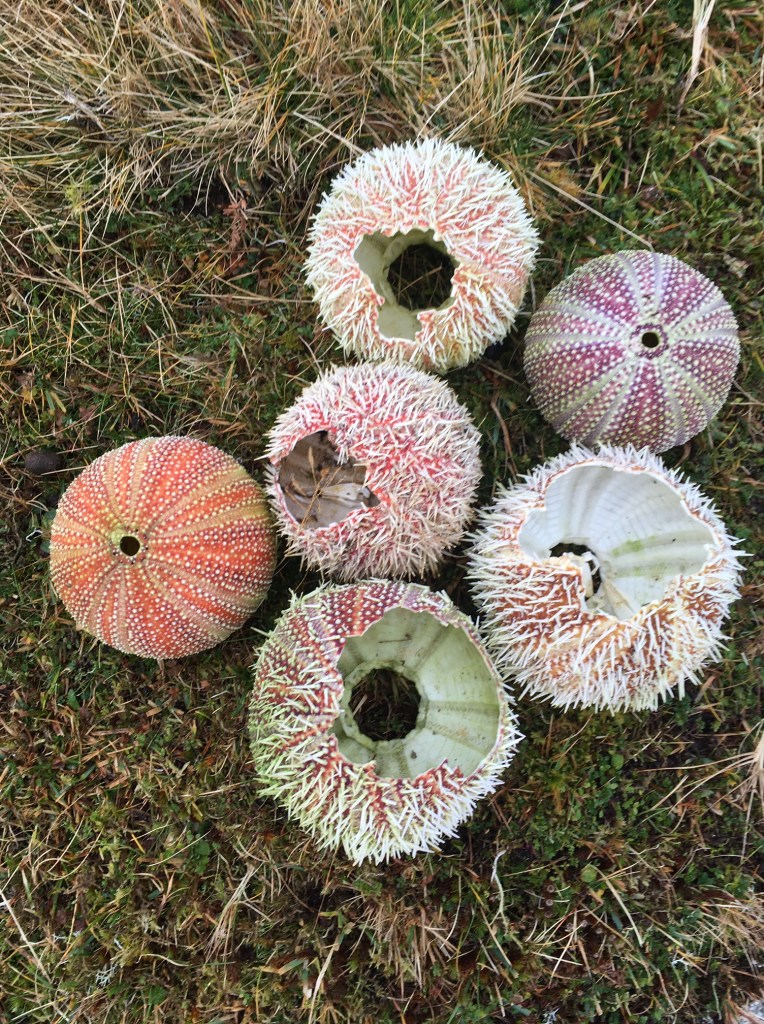
My colour journey started after I went to Shetland to stay on Fair Isle with Mati, then at Brindister just before Christmas of 2019. At Brindister, I found Sea Urchin shells scattered on the hill beside the voe. I began to name the place Sea Urchin Hill and really took notice of the colours and form of the dried Sea Urchin Shells after the sea gulls had eaten the urchin.
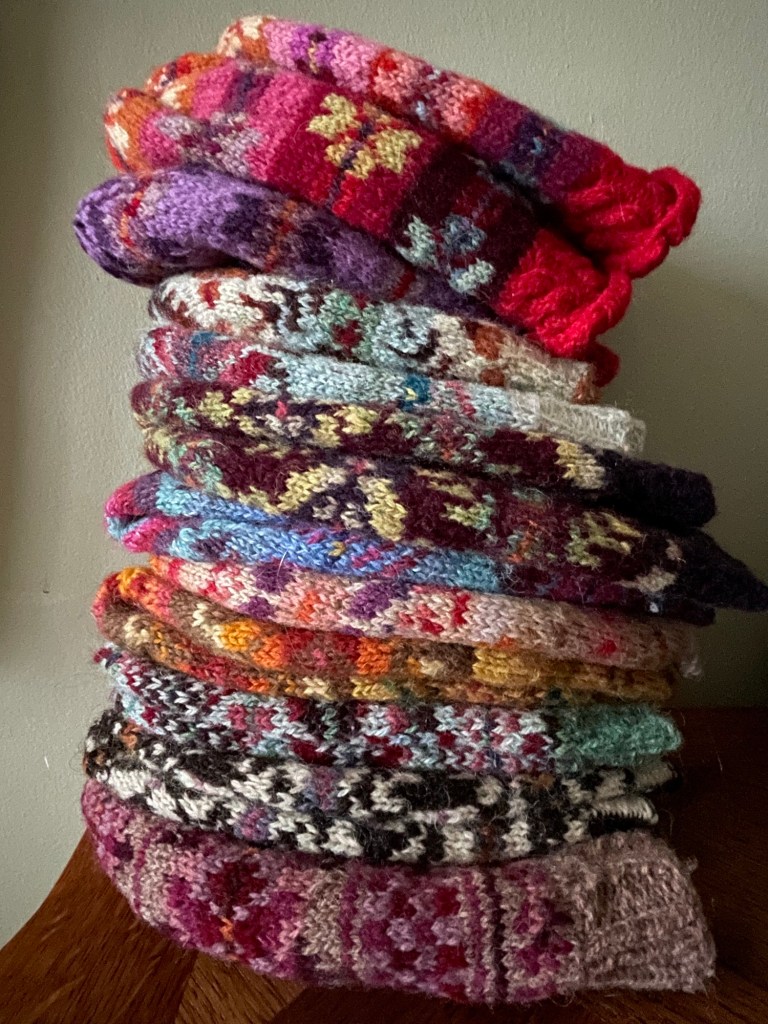
In Jamieson’s of Shetland, in Lerwick, I bought colours that I felt worked for me for a new hat project. By then, I had started sampling colours but still didn’t know what I was doing. When I got home from Shetland, I started the Sea Urchin hat pattern with light background and a darker coloured Shetland Tree and Star Motif. And that is where the story of my colour blending started I laid two yarns together on a whim: a stormy and washy blue skies and a flash of dark reds and purples from one of the shells that I had seen.
. It shouldn’t have worked — but it did. It looked alive. And that was the start of learning to trust my inspiration and eye and I began to blend the colours.
What Changed
It wasn’t that I suddenly “understood” colour blending – my swatch book will show you that but it was that I stopped trying to get it right and started trying to get it interesting and understand the changes in tone and colour. I began to notice colour in the world around me — the copper of old bricks, the green of moss after rain, the pink glow of dusk. Nature never worries about matching. It just works.
That’s when I realised: Colour confidence isn’t about knowing rules — it’s about paying attention, and being willing to play.
Small Steps to Build Colour Confidence
1. Start with Inspiration, Not Theory Forget the colour wheel for a moment. Go for a walk, look through a photo album, open your wardrobe. What colours feel like you? That’s where your palette begins.
2. Work With What You Have Lay out your stash and make little “yarn bouquets.” Mix fibres, tones, and textures — even scraps. Sometimes the most magical combination comes from leftovers you’d never thought to pair.
A Palette from the Everyday
This week I took a walk through Sheffield woods — everything was damp and glowing. There was soft lichen green, deep bark brown, a sudden flare of orange leaves against a grey sky. When I came home, I pulled those colours from my stash and swatched a few rows. Instant calm. Sometimes, the best palette comes from the ground beneath your feet.
Confidence Comes with Play
Colour confidence isn’t something you’re born with. It’s something you knit into being — loop by loop, swatch by swatch. Every “wrong” colour combination teaches your eye what it loves. And every small experiment builds courage for the next.
looking at all the colours to really see them
Ready to find your own colour confidence? If you want to learn more now, and would like to join my exclusive small Colour classes of 6 people, then, I do teach colour blending workshops online and the information is here.
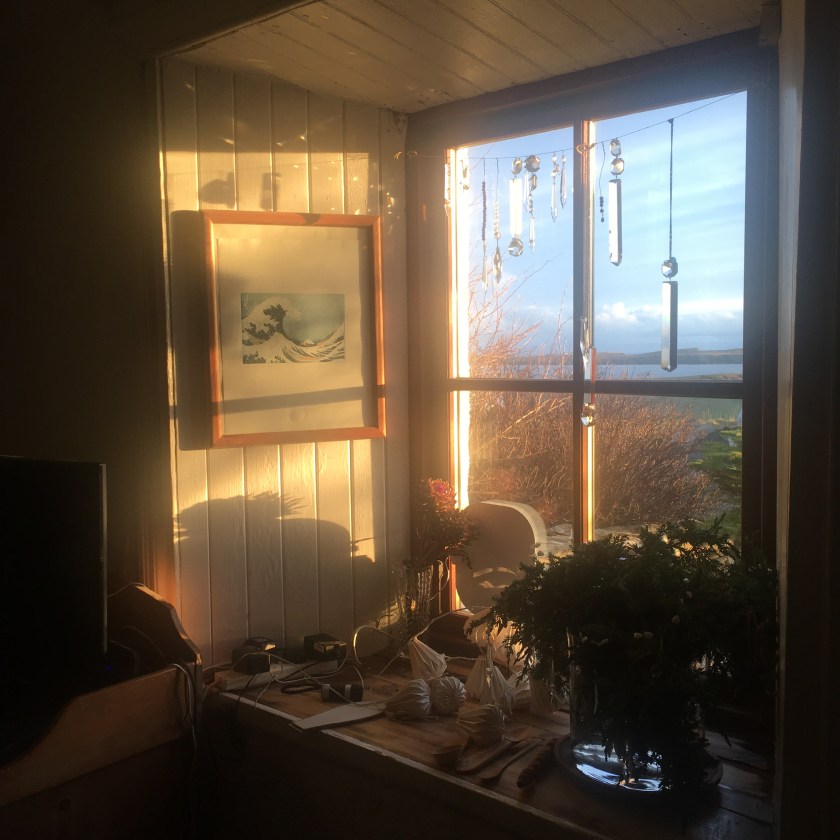
You’ll get the Sea Urchin Pattern free to work with after your workshop. Many people have joined me in the Colour Blending sessions from my first workshop in January 2021 – held in the window sill of my window in Shetland looking out to sea.
Now, I still teach but not often, so if you would like to grab a space, there is only one left for Friday 9th Jan and 4 left for Saturday 17th Jan. So please get in touch using the form on the workshops page.
If you have knitted the Sea Urchin hat pattern, please tag me on instagram because I do share other people’s knitting using my patterns.
AN EXTRACT FROM MY, ‘DEAR SUSAN,’ memoir from when I lived in Shetland
Shetland, Arrival August 2020
Dear Susan,
I begin with the outside, with what I have to hand; my reason, my eyes, my spatial understanding, and an openness tinged with the unknown.
On arriving, I need my first investigations of your croft house interior to be made alone. I want to inhale the house, listen to my internal feelings at first sight then recognise how my body responds to the old stones – I need to let body and stones talk to me. Thoughts and feelings need space. I need space. I haven’t yet found you. I do not know that you were born in this house 145 years ago.
It is a pale grey day, mist rolling over the hill behind the house as if a blind has been half pulled down a window. The sky is bleached out, the day is calm and windless, not particularly notable.
I open the front porch door, then, I try the house door with its mismatched glass panels. It opens. To the right in the tiny vestibule area, there is a third old, board-door, painted white with a hand-hewn square wooden knob which I turn to the right. The simple mechanism lifts a wooden latch inside. That sharp click sound of the latch lifting and hitting its wooden casing is the sound that I will forever remember of this place. It is my first sound here and it will probably be my last when I leave. It is a click of old wood against old wood, heard by every man, woman and child that has ever entered this house before me, for the last 180 years. Human touch leaves tangible traces of every hand that has opened it before me. The patina of years lies dirty on the paint’s surface.
Simultaneously, within the sound, my heart is given over to the first sight of the flag floor and fire place in the sitting room. In an instant, I am sold on sound and sight. I know I will not pull out of this crazy unseen deal to buy a house and change my life entirely.
Heart over head, I move in three weeks later, with two cats and a bag, the furniture and belongings on a lorry, to arrive a week later.
Life shrinks or expands in proportion to one’s courage.Anais Nin
Dear Susan,
I am finding you.
I have been sent an image of your Brother – John Halcrow, in his Naval Uniform. I begin to look at censuses and the local history ancestry website then I ask around to find out about the previous inhabitants of this house. I called in at John’s to ask about you because I know nothing of the woman I had heard lived in the house for many years. He said to speak to Jim, so I went over the road to Jim’s and Martin was there too. They were off to Anne Mouat’s funeral but Jim was gracious with his time with me. He told me of you – Susanna (Susan, Cissie) who lived in the house that I now live in and that he was sent as a child, nearly 80 years ago, to collect the milk from you at your house. He told me that you had one cow on the croft, you sold milk, and you rowed the little hand-written paper milk bills up on a shelf in the porch – the same porch that I have. He was a young boy then but he clearly remembers you.
At the funeral, Martin spoke with Raymond whose Aunt lived in the house after you. You knew her, her name was Alice. Raymond came to see me the next day with a mesmerising handful of photographs of you. He introduced me to Susanna Halcrow (Susan, Cissie, or even Zizzie) The photographs, he told me, had been left in the house after his Aunt Alice had died some 30 years after you.
For the first time I could put a face to the name of a woman who lived in my old house for 83 years. Your face, your name. I sank to sit on the floor to look at your serene face in the images dating back to early 1900. Your candid expression caught by the lens of a camera, looking openly right back at me opened something inside me to find you more deeply.
You were born in this house on the 6th February 1876 and Died on 4th January 1960.
In the archives at the museum, I found that your Halcrow family had lived here through the 1800’s – 1960. They were listed in the 1888 valuation roll of the Symbister Estate, Whalsay, partly owned by the Laird, William Arthur Bruce (In 1888, John Halcrow, your Father) tenant, paid a yearly rent of £4, 10 Shillings for croft number 7. You would have been twelve years old (registered as knitter). The whole family are on the census of 1881 and ‘Susanna’ is listed as being five years old – there were seven people living in this small house at that time – Thomas Halcrow aged 86, Barbara Halcrow aged 83 (your grandparents), John Halcrow aged 40 and Ann Halcrow aged 41 (your parents) John aged nine, you aged five and a boy named John Brown aged 13, but you will already know this. Seven people living in this small two bedroomed house. Afterwards, I looked at records from 1838 and found your family, here, in Upperton.
In the grave yard at Levenwick cemetery, you lie on your own next to your parents and brothers. Your head is against the sea and in May, you rest above a bank carpeted in pale lemon primroses. I wonder if you are lonely, or if you are free.
Over the months after arriving, I became obsessed with you and wrote thoughts that occurred to me about you, on scraps of paper. These papers began to litter the house. I connected with you through a field of built environment in the house, photographs, your old pottery, the view from the sitting room window and eight sessions in the Shetland Museum archive which revealed the legal documents relating to some of the most notable social changes in Shetland between the 1880’s and mid 1950’s. The *Register of the Sasines, recorded the sale of the house from Laird to local in 1923, valuation rolls of rent paid for three generations of the Halcrow family for over 100 years are traceable, the Napier Commission registered the croft and detailed their calculated rental value and reduction of rents for Shetland crofters and the legal rights for tenants, the Small Holding Act, and I found the registered wills of your brother and finally your own, which gave me an insight into over one hundred years of three generations of Halcrow life within this old house. To the very end, with your serene looking gaze of steady calm and with a glint in your eyes, you put everything in order to the very last moment – crossing every t and dotting ever i. All of your wishes are written clearly in the directions of your will.
But, how am I to find out about you – what you thought and felt and how you lived? The neighbours reveal little.
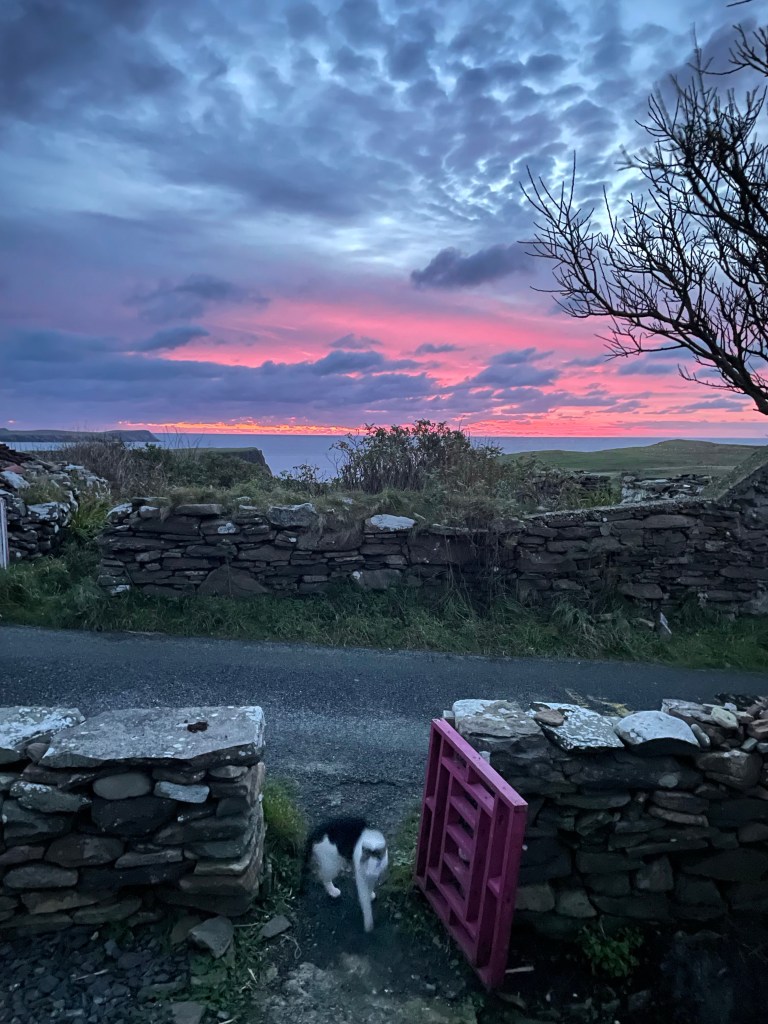
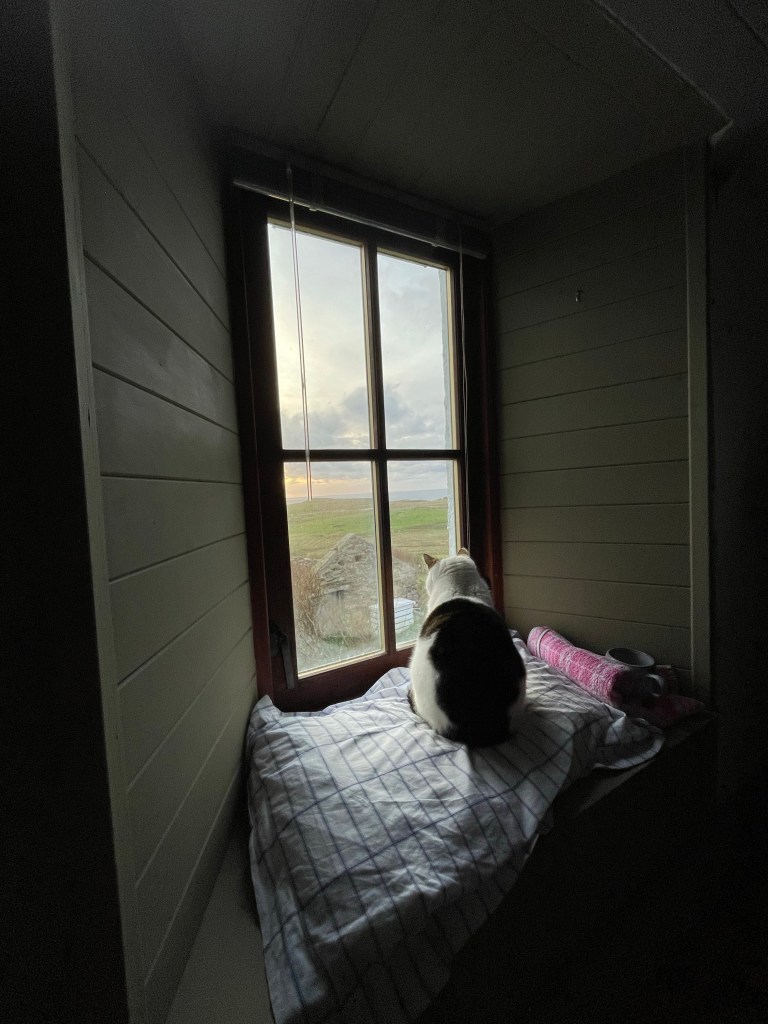
So, I turn to the physical things to look at our lives carried out in the same place – the same stone walls of a house built so long ago – with no record of its beginning, how the breeze moves through the house through its open doors, the sound of the wooden doors and their opening and closing then there is the view – a view that has changed every single day of every single year but it is the same frame from which you looked and I now look out of at the changing world.
Your artifacts have been returned to the house – some pitchers, jugs, vases, plates, bowls. Before mixing them on the shelves with my own plates and jugs, I turn them around and around to connect with a life before and then there is the biggest connection of all – that you were and I am single women, living a life and paying the bills on our own in an old stone house facing the sea. Did you talk to Ralph, the dog, as I talk with Tiggy and Alfie?
I wonder about the touch upon things, the patina laid down by years of paint, of opening and closing the door, of turning door knobs, of opening and closing windows.
Finding you is like the moment I removed a damp layer of wallpaper in one gentle pull upwards, in an old abandoned derelict Shetland croft house, to reveal a perfect hand printed layer of pre 1950’s paper with wildflowers printed up it. Then, in one more pull that strip of hand printed wallpaper also came off the wall completely intact. I folded the paper and placed it under my jumper, its dampness pressed against the skin of my belly. I thought that if I were to paste the top layer of wall paper back over the void, then no one would know what had been before. No one would know what had been removed from underneath the top layer. It was as if it had never existed.
Finding you IS like finding old beautiful handprinted wallpaper lying beneath layers of less attractive paper. Then peeling it off in sections and placing it under my jumper for safety. Susan, you are under my jumper, next to my skin.
I lift the pewter lid of your old Victorian salt ware jug to look inside. Revealing, peeling, pasting, painting, lifting, closing, opening things in the house, as generations have done so before me. I paint over what has been on the walls and doors. I sit quietly to look at the layers of layers, like the quiet man who mediates first thing in the morning, stripping away layers of noise to his core, before all else happens in the day.
I spoke to Marylyn, who, as a 10-year-old child, moved in to this house with her family. It was the year you died. She told me of a wash stand in each bedroom and jugs and bowls, a sink at the bottom of the stairs and a radio on a dresser in the front room. These were your things left behind. I can picture them now. She told me that her and her brother slid down the green linoleum on the stairs and they telephoned their cousins in the house behind by joining two cans with a long piece of string and shouting out the back window in the north bedroom. I can hear their laughter now. Children in the house for the first time in over 60 years.
But, I wonder, who cares for our loved things?
The above words are from the beginning of my memoir which was never published. I did have an agent but she couldn’t get a publisher interested
While I lived in Shetland, I designed many hats and then branched out to my first jumper – The Dear Susan, which was supported by a VACMA award – Visual Arts, Creative Makers from Creative Scotland. The award bought me time to create and the Dear Susan jumper came out of that creation.
The Dear Susan Jumper, was released in July 2021 and had a 13 page story included about the woman that the jumper was named after
Susan Halcrow would have been one exemplary woman – crofter, single, attractive. She was alive through so many huge social changes in Shetland and she knew her rights. She lived in the houses I bought for 83 years.
After I designed the Dear Susan jumper in 2ply and in many sizes – I knitted a very quick, easy Aran, Dear Susan. which was finally published in December 2021. It was designed with love and enriched with the winds and rains of Shetland.
Looking back, I am proud of these two designs and the story behind them.
If you would like to knit either of these jumpers, you do get a 13 page story about my life in Shetland, with it.
Surprisingly, yesterday, someone bought my east to knit, Aran , Dear Susan, Jumper pattern. I made this when I lived in Shetland and the entire piece is dedicated to the woman that lived in the house that I bought.
This is a beautiful, quick, easy knit yoke pullover, knitted in Aran weight yarn. It is entirely inspired from my living in Shetland with the landscape, the sea, the weather, the house I bought – and is a letter to Susan Halcrow, a woman that lived in the same house from 1876 to 1960. ‘Dear Susan’
The pattern (which is here) has a 12 page letter/story dedicated to her which is where the name of the pattern comes from
I originally knitted this pullover in spindrift yarn in the summer of 2021 but this jumper / easy pullover, has been knitted for Winter in Aran weight and is a fun, quick easy knit.
It is one size and fits many people. You can lengthen the body if you require.
It is knitted using 4mm (US6) circular needles and 2:75mm (US2) for the sleeve cuffs. It has been knitted by 4 test knitters – from a complete beginner to very experienced. Some of the test knitters went rogue with their yarn choices and the outcomes are lovely.
You can also make it a little larger by using 5mm needles – as one test knitter did.
Yarn:- Jamieson’s of Shetland Aran weight Heather yarn.
My test knitters used lots of different yarns and you will see this in the projects. You can try your Aran wight stash.
There are coloured charts, photos to explain how to do some of the stages and indepth fully written pattern. (23 pages in all to this pattern) 9 pages for the pattern –
Additional, to the pattern is a 12 page story/ letter dedicated to Susan Halcrow – Dear Susan,
here is an extract from the end of the letter after many months of research and living in the house …
(May 2021) Dear Susan – friend – may I call you friend?
I imagine you looking out of the South Bedroom window as I now do. The early spring evening light is illuminating the edge of the land, holding back the blue, blue sea. Would you have lit a fire in hearth in this bedroom beside you? I can see you putting the animals to bed – the cow in the barn (now derelict) the sheep in the field (now overgrown) or letting them out on the first clear break after 5 days of blizzards, arctic ice and gale force winds? Would you have smiled at the sudden calmness after such elemental ferocity as I now do?
Everything inside the house has possibly changed since you left in 1960 – except the floors, the doors and the view and maybe the sounds of the birds. The nature and intensity of this ever-changing view through the window is both of ours – both yours and mine.
Susan ….
This is not just a pattern but a true testament to a beautiful woman who lived a very long life in a beautiful house facing the sea with harsh weather, managing on her own and living a full life. It is a pattern of love and integrity. ’Dear Susan’ in Aran weight is a great winter pullover entirely inspired by life in Shetland.
Grateful thanks to my test knitters for the Aran jumper – Judi Hurst, Janet Benjafield, Cheryl De Ville and Tracie Bailey.










































 tracey doxey