Knitting at Stanage Edge, again: returning to one of my favourite places

On Friday 16 October, I returned to one of my favourite places to knit outdoors – in the Peak District.

It had been a while since I’d last sat here with my knitting, although I often find myself drawn back to the same places. There is something I love about returning to a familiar landscape, sometimes just a few weeks later, recognising that it has changed completely with the seasons. The colours shift, the light falls differently, the weather leaves its mark, and the view becomes something new again.

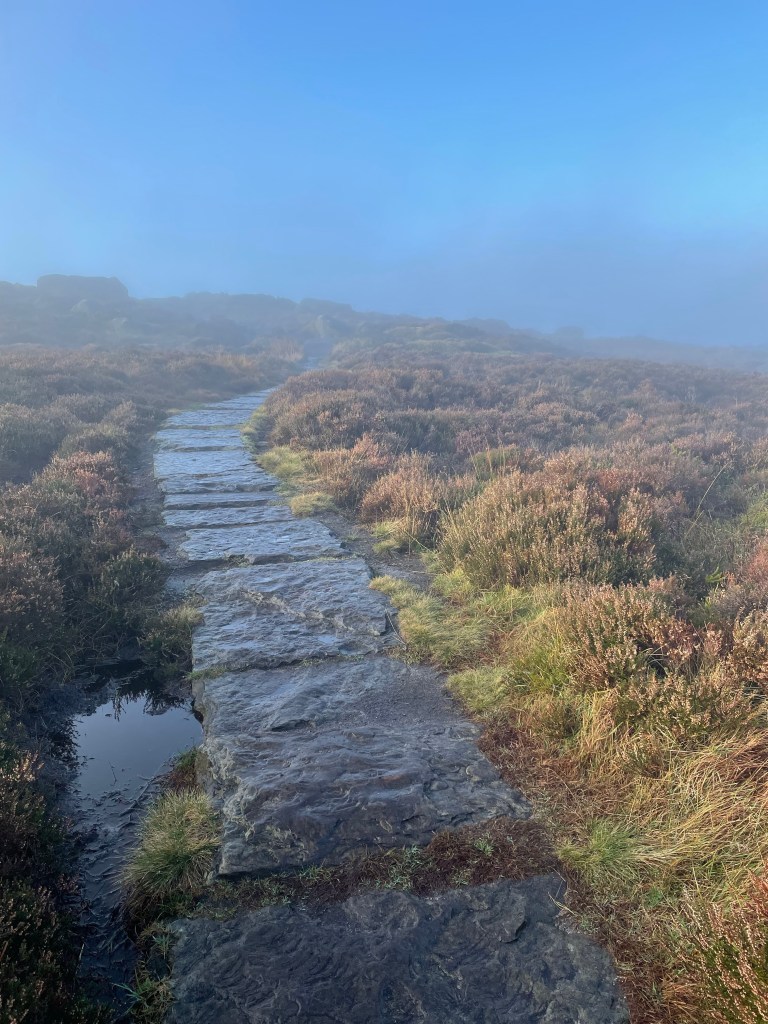
The night before my visit, the rain had been so heavy that I wondered whether there might be a cloud inversion in the valley. And there it was.
A view of my world

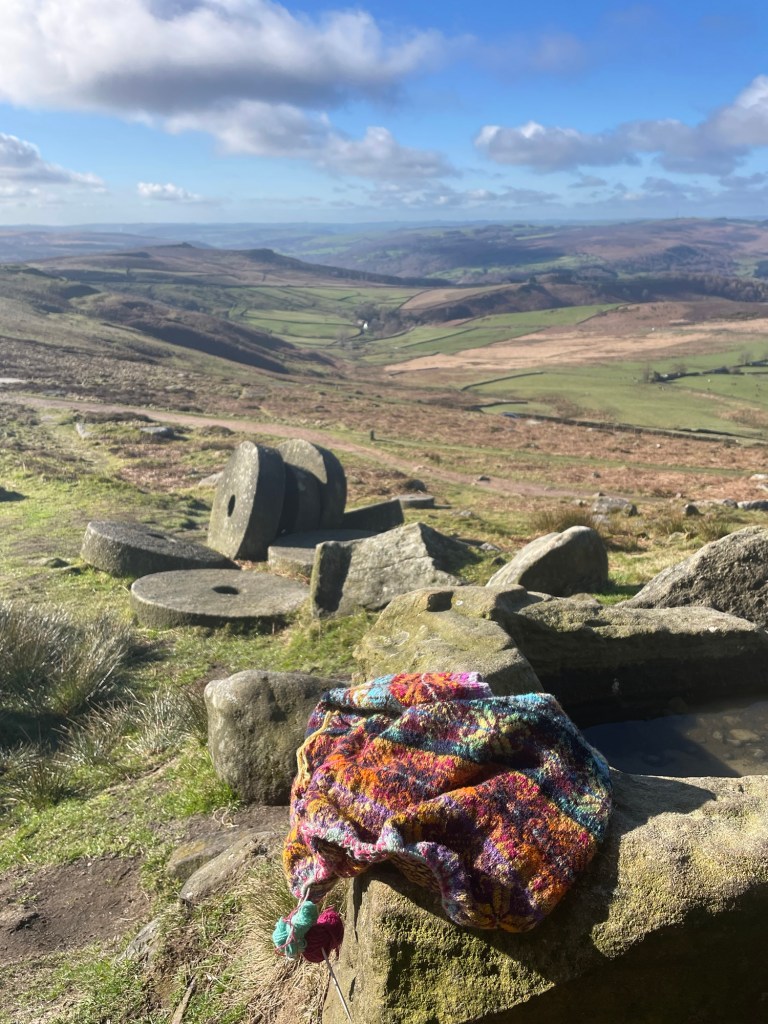
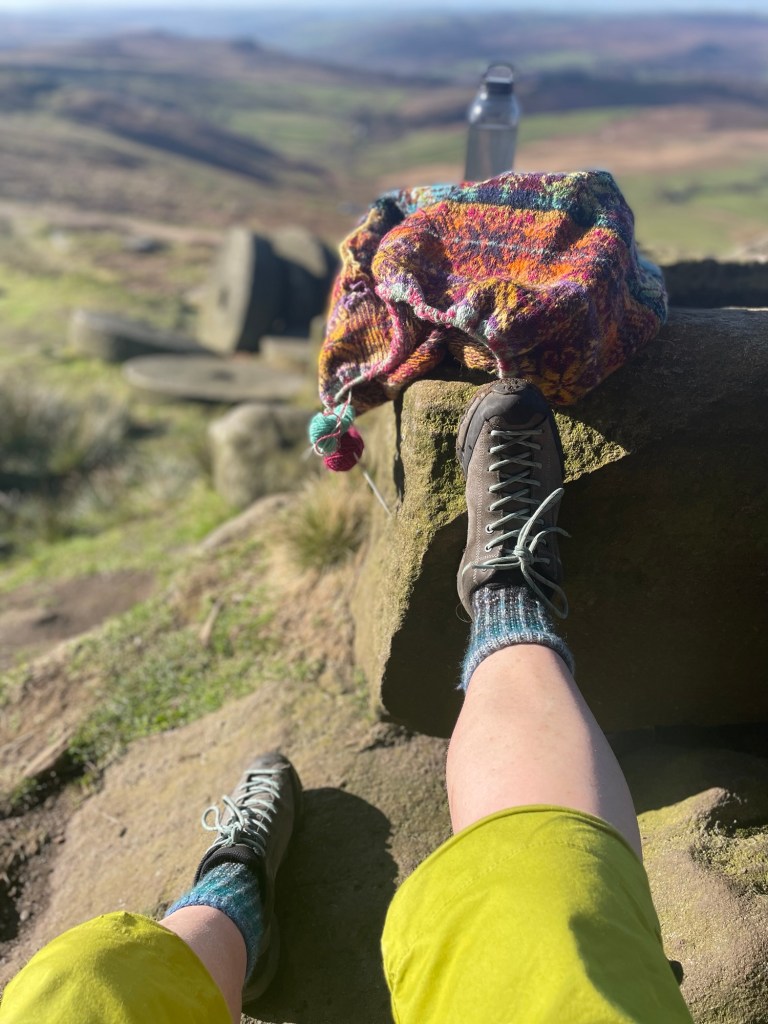
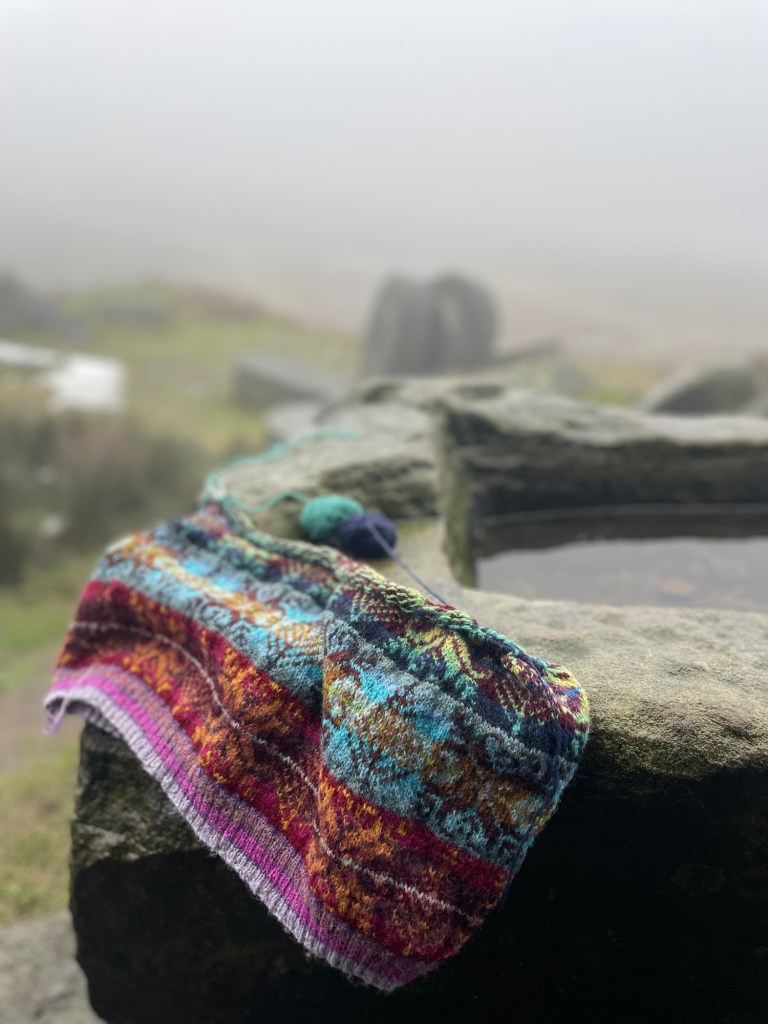
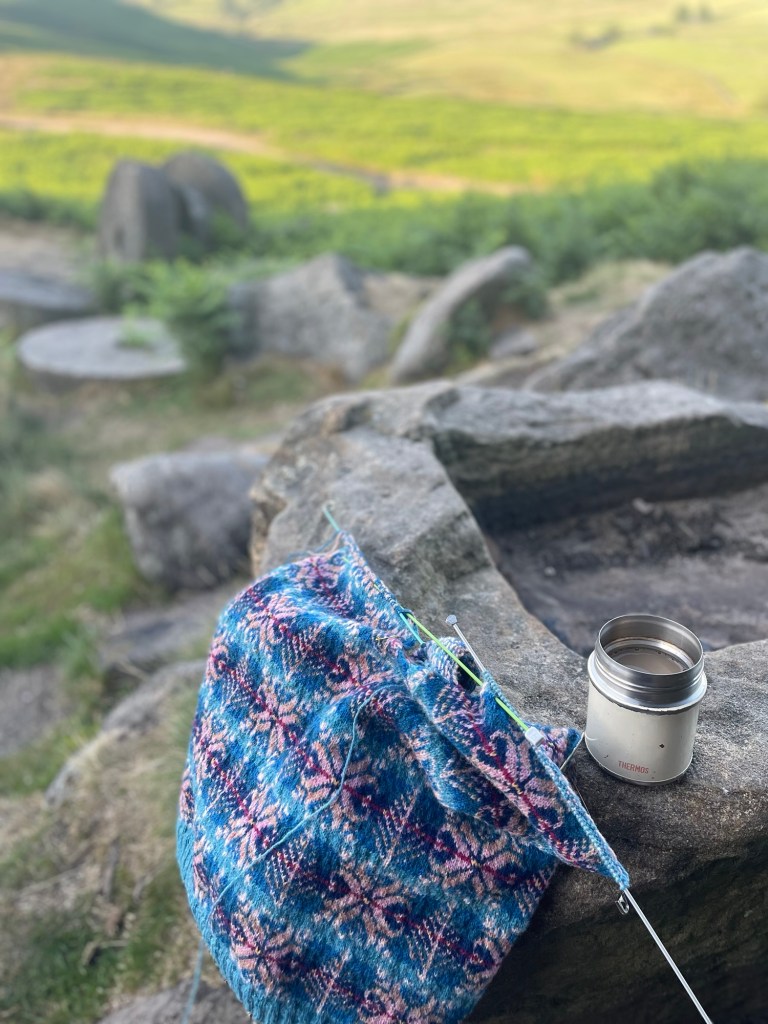
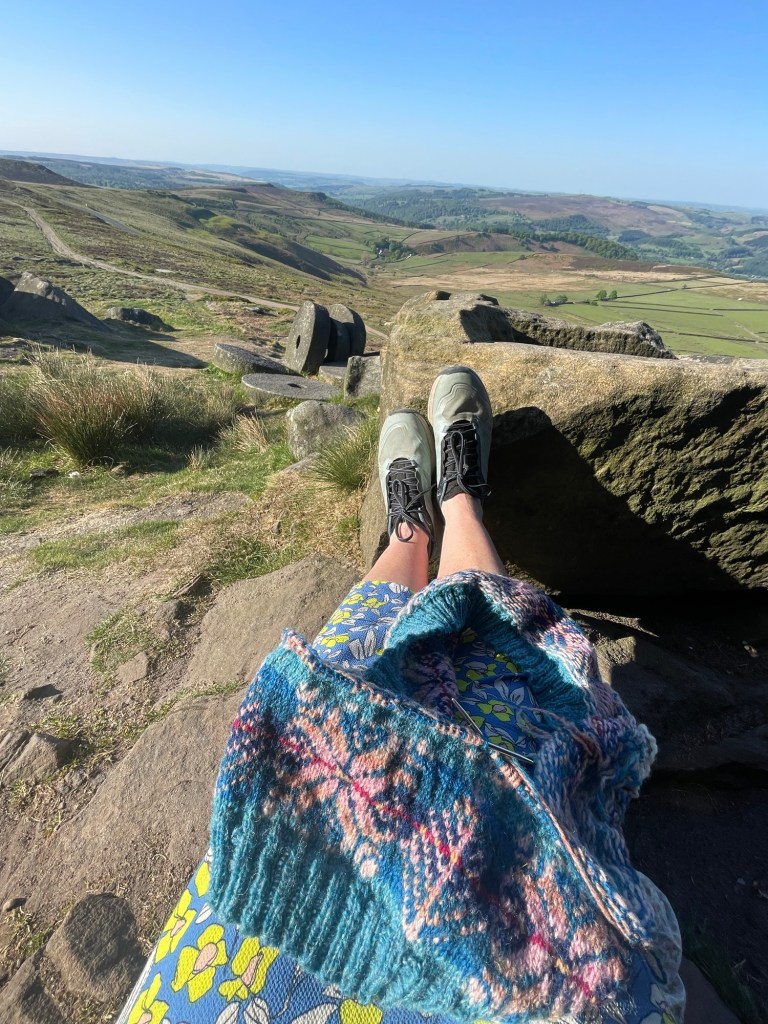
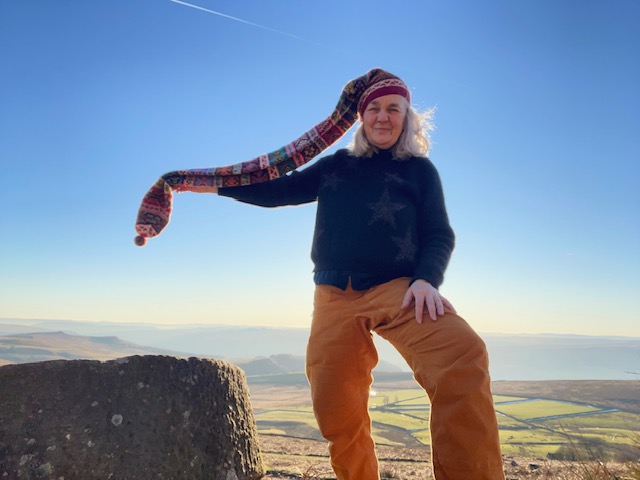
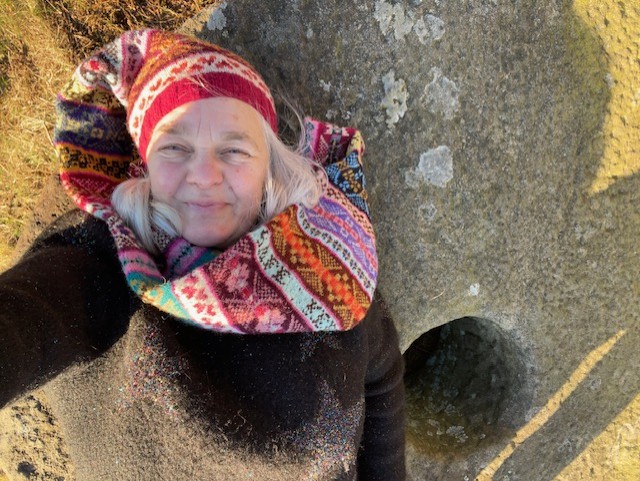
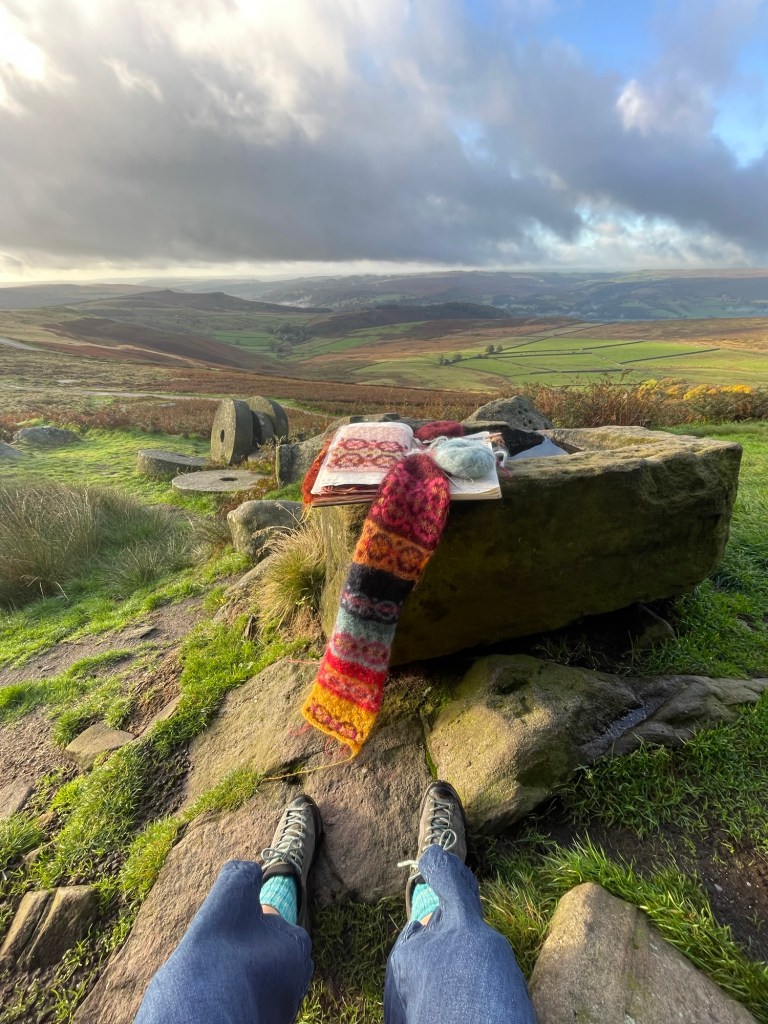
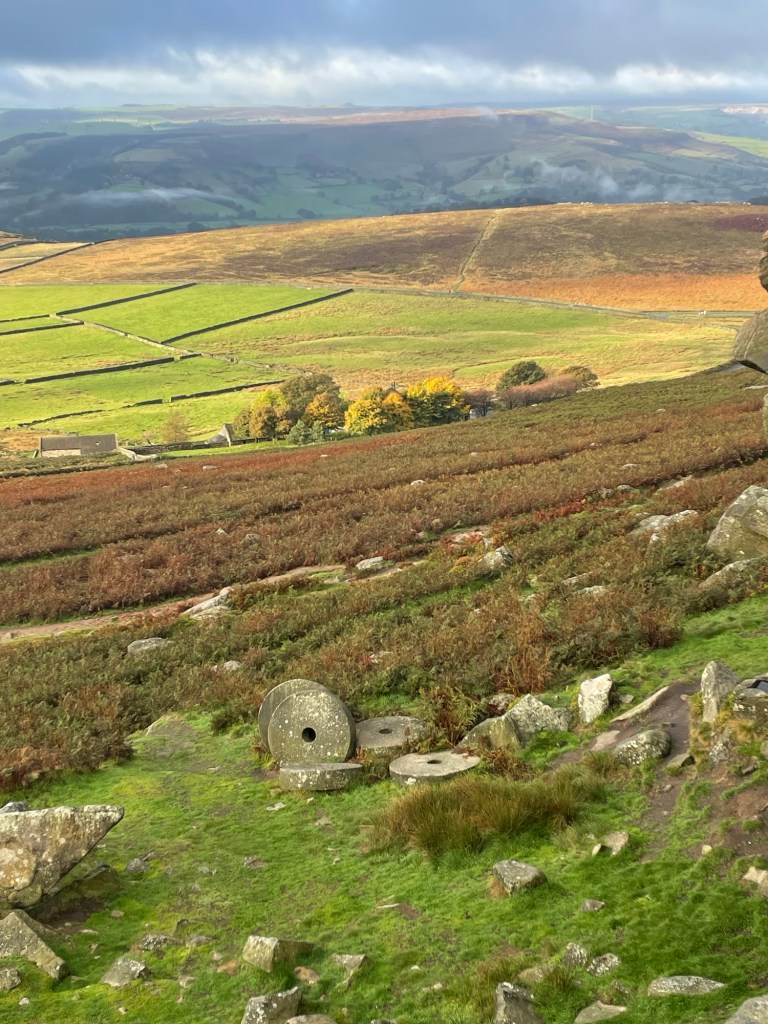
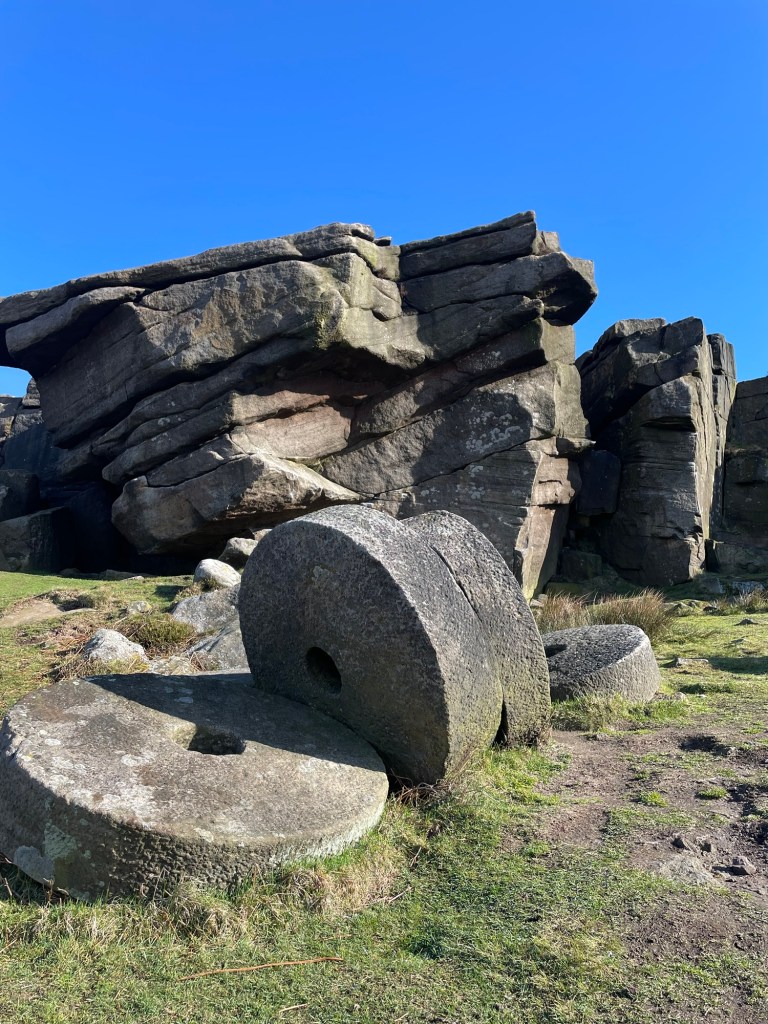
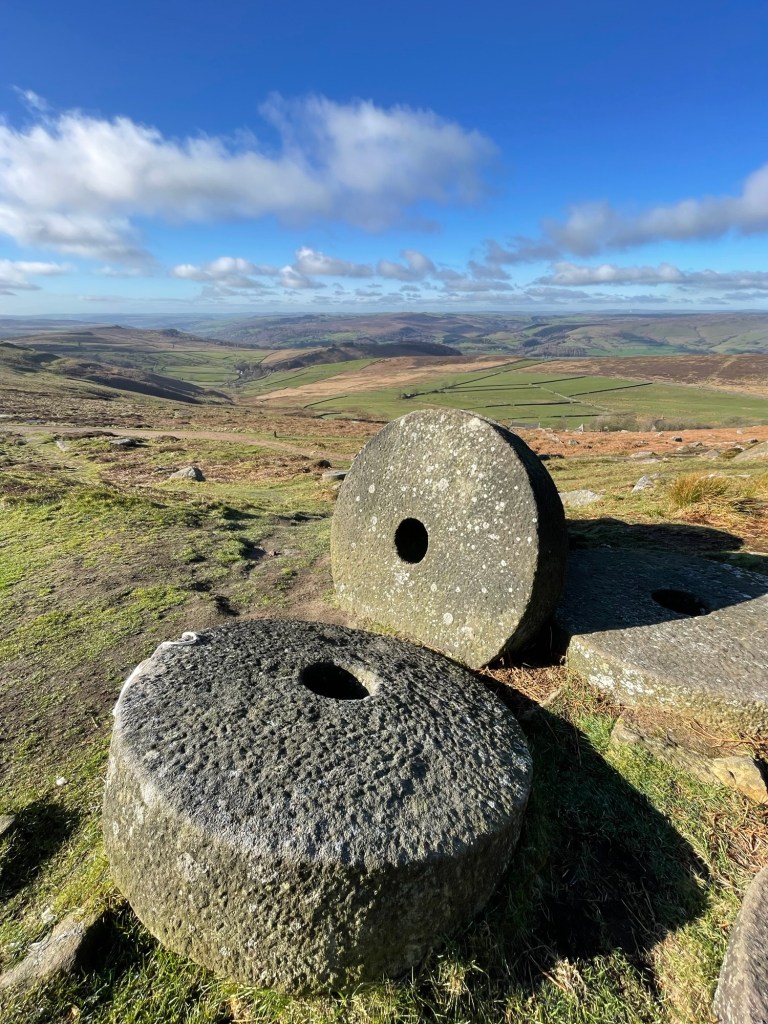
I sat at the base of Stanage Edge, beside the old stone trough and the fallen millstones that have become such familiar companions on my visits.

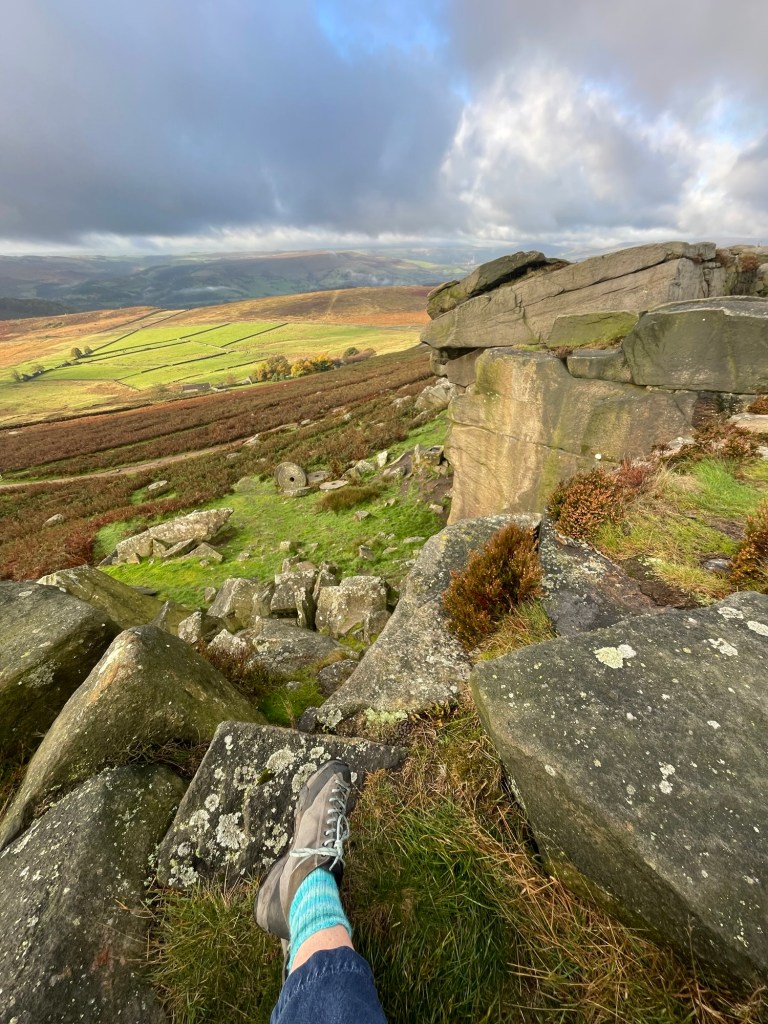
From here, I have a 180-degree view of a landscape that feels both vast and intimate.  Hope Valley stretches out before me, with Hathersage almost visible over the hill, while beyond the edge the land opens into a patchwork of hills, valleys and dry stone walls. On the horizon, I can see the places where people park their camper vans, hoping to catch the sunrise.
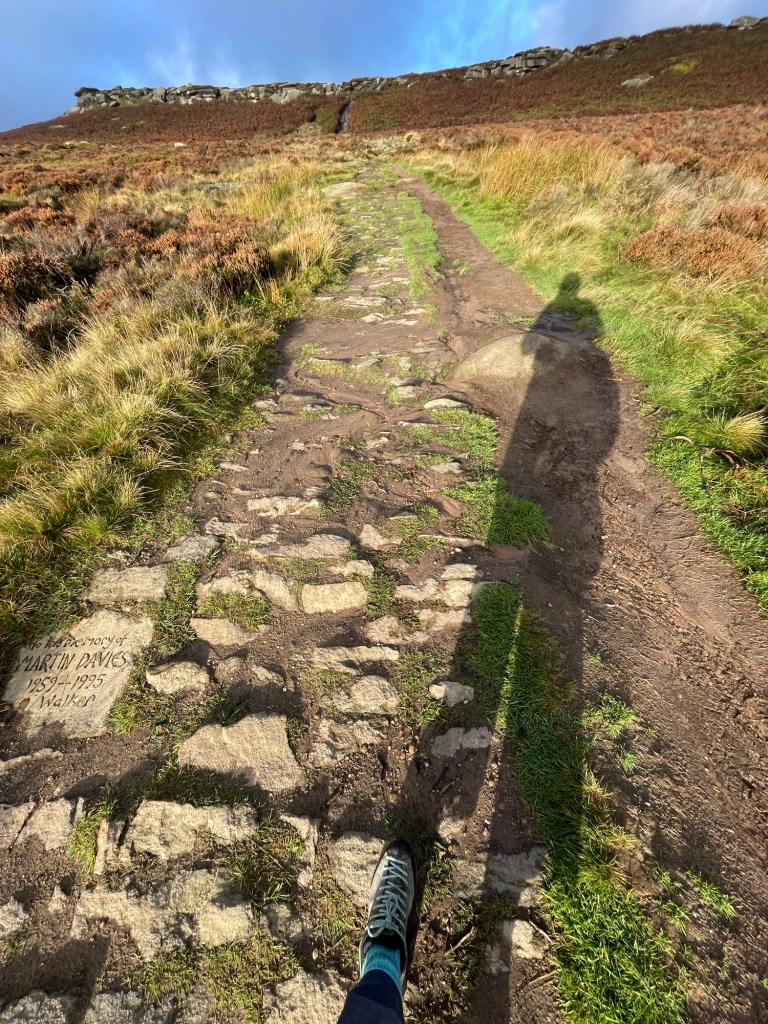
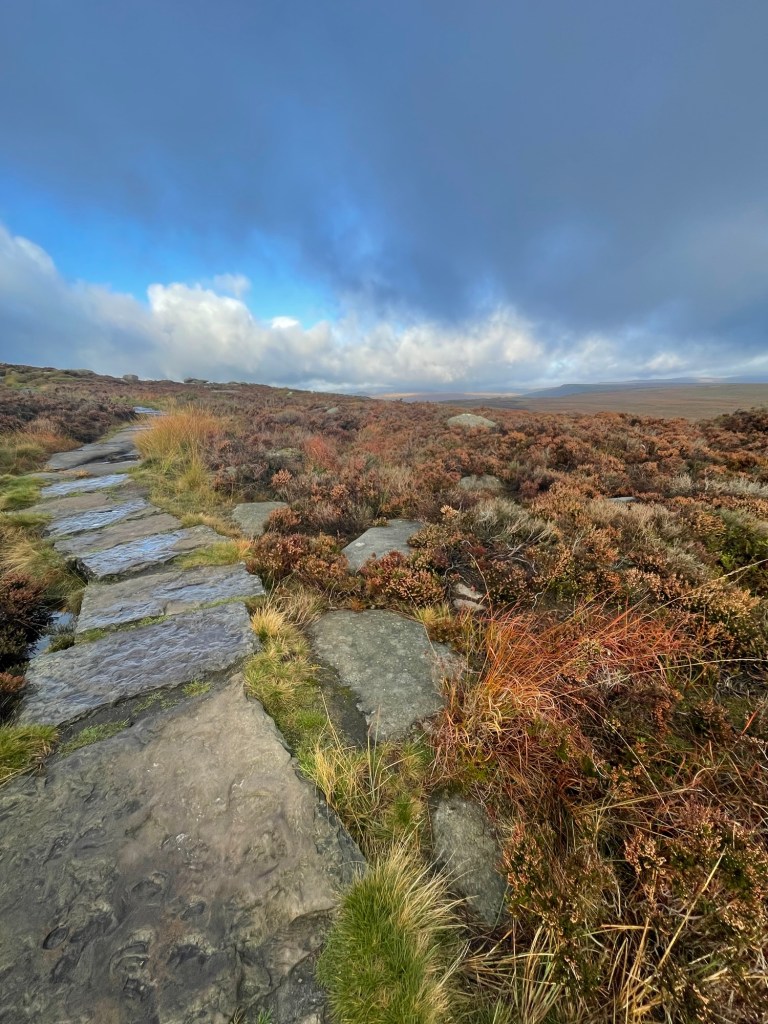
It is a gift to have such a view so close to home – I am lucky.

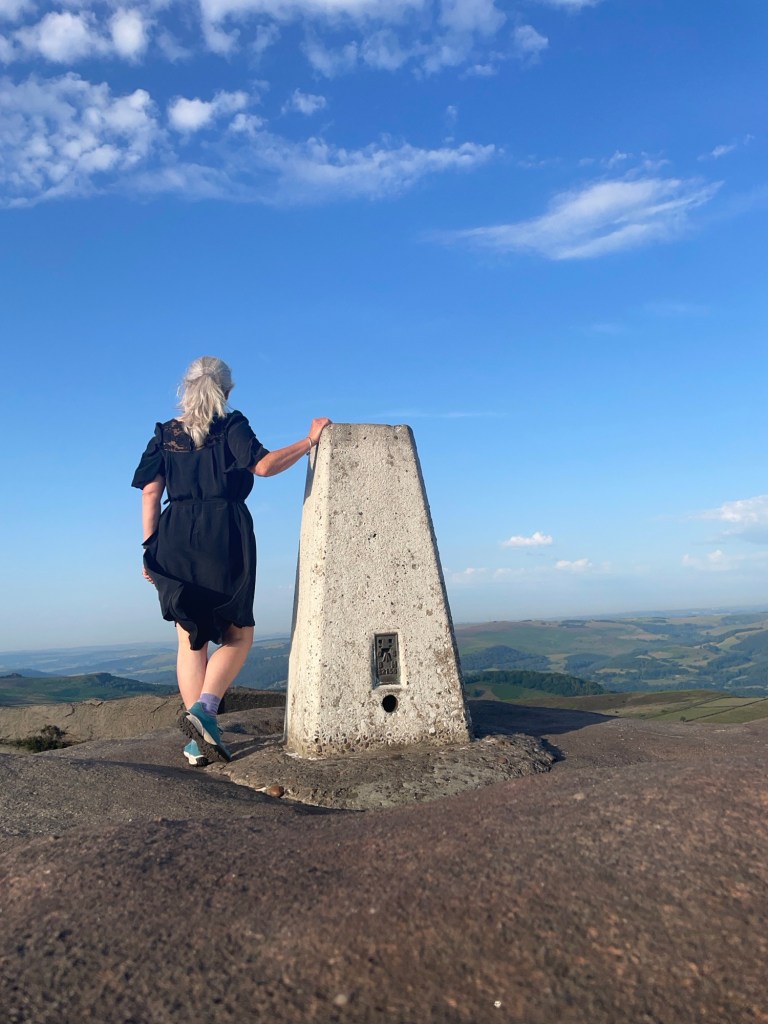
I love this place for so many reasons: the changing colours, the sound of the wind, the movement of clouds across the valley and the sense of time held in the landscape. Even on a familiar visit, there is always something to notice and although I always go alone, there is usually a conversation to be had on the top of the edge with a passer by also heading for the white Trigg.

And then there are the millstones.
The stories hidden in the stones

Whenever I post photographs from here on Instagram, people ask me about the great stone wheels scattered across the landscape. What are they? Why are they here? And why were they left behind?

The millstones are a reminder of an industry that once thrived across the Peak District. Made from the area’s hard gritstone, they were carved by hand and used in mills to grind grain into flour. Many of the stones we see today date from the eighteenth and nineteenth centuries, although the history of grinding grain stretches back thousands of years.

A typical Peak District millstone measures around 1.8 metres across and weighs approximately two and a half tonnes. It’s difficult to imagine the physical effort involved in making one, let alone moving it across rough, exposed moorland without the machinery we take for granted today.

The stoneworkers often worked on a small scale, with some also farming. Quarrying involved drilling into the rock and using metal wedges to split away the stone before shaping it into a wheel. A team of two might produce only around twenty millstones in a year.

Getting a finished stone down from the moors must have been an undertaking in itself. One suggestion is that the stones were attached to wooden axles and rolled towards waiting wagons. However they managed it, the work would have demanded considerable skill, strength and ingenuity.

For centuries, these stones were in demand. But eventually, the industry began to decline. White bread became increasingly popular, and the gritstone used for local millstones could leave traces of stone in the flour. Later, faster milling machinery made traditional stones less practical, while manufactured composite stones offered a more durable alternative.

Thousands of millstones were made over the centuries, and many were abandoned before they ever reached their intended mills. Today, an estimated 1,500 can still be found scattered throughout the Peak District, weathered by wind and rain, softened by moss and lichen, and gradually becoming part of the landscape.

I find it fascinating that something once made for such a practical purpose has become part of the beauty of this place. These stones are not simply objects left behind. They are evidence of the people who worked here, the skills they possessed and the industry that helped shape the landscape we walk through today.

When I sit beside them, I find myself wondering about the people who made them and the journey each stone was supposed to take.

A little colour, a little knitting, a lot of sky

Of course, I hadn’t come here just to look at the view. I’d brought my knitting and my trusty old thermos flask that Patti bought for me over 10 years ago.

I’m developing my swatches for my next knitting project, and there is something about working with colour outdoors that I find particularly rewarding. Away from the distractions of home, I can spend time looking carefully at the colours around me: the muted greens of the moorland, the russets and browns of the grasses, the grey of the gritstone and the shifting blues of the sky.  But actually, this project has been inspired by the Dahlias that I grew over the summer.  Their architectural shape and many colours have distracted me for many hours.

On this October early morning, with the valley opening out before me, the old millstones at my side and my knitting in my hands, I felt very fortunate to have this place within reach of home.

Some places ask us to keep exploring. Others invite us to return.

Stanage Edge does both for me.

And I suspect I’ll be back before too long, with another handful of yarn, another set of swatches and another reason to sit awhile beneath that enormous Peak District sky.
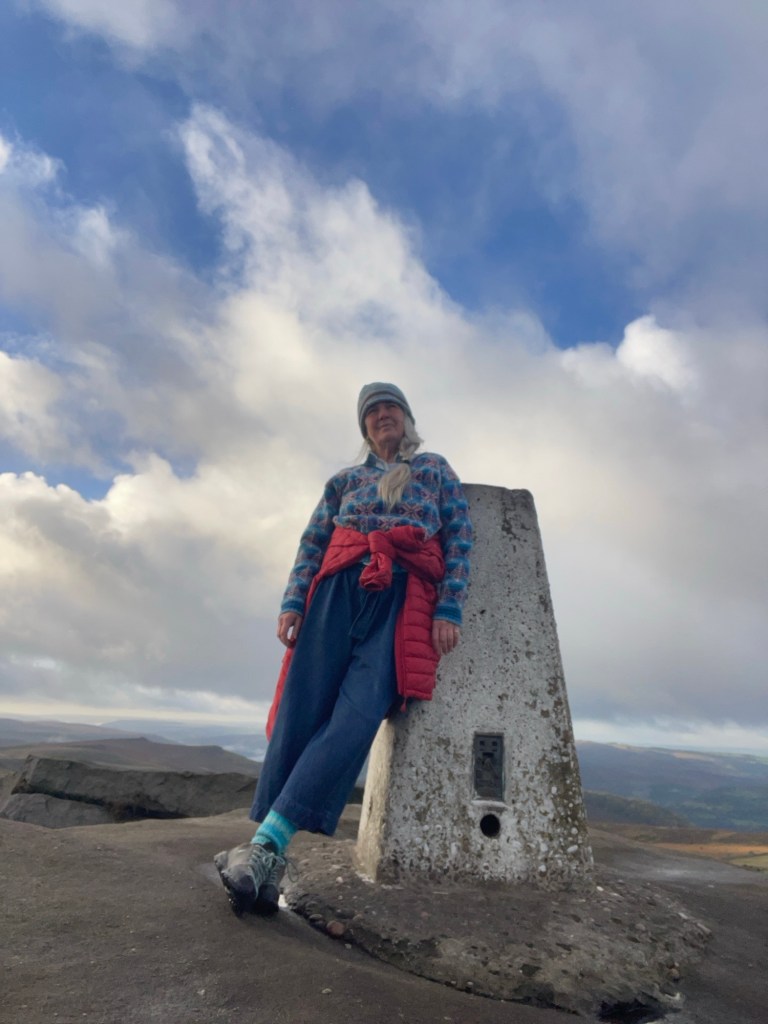
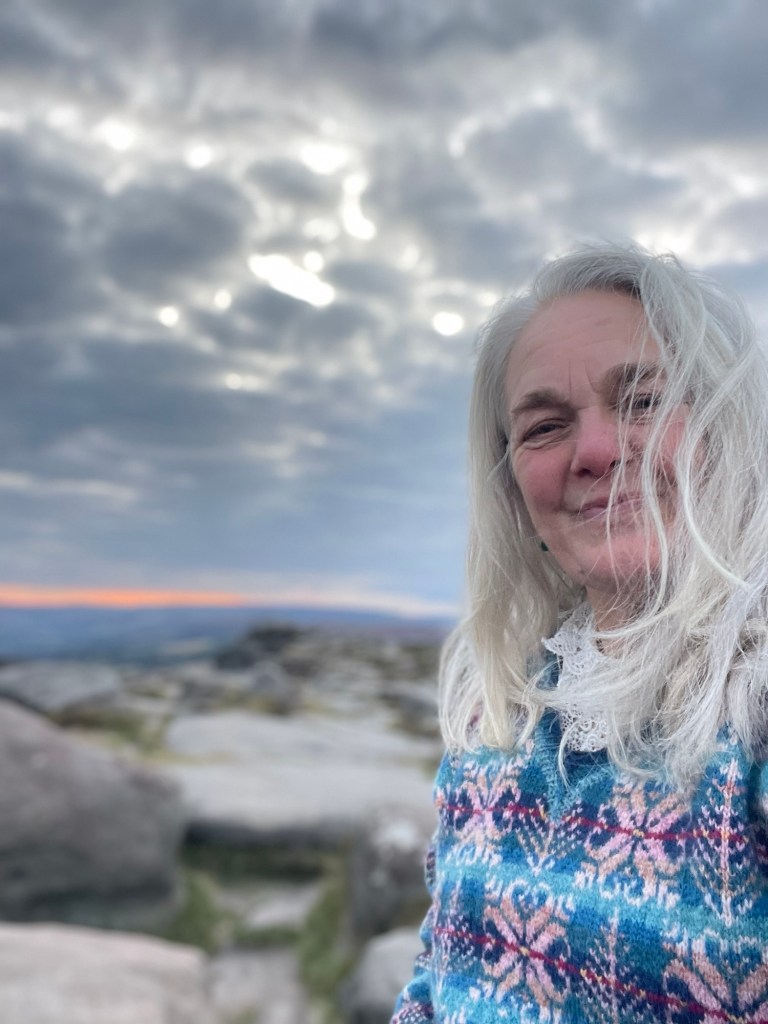
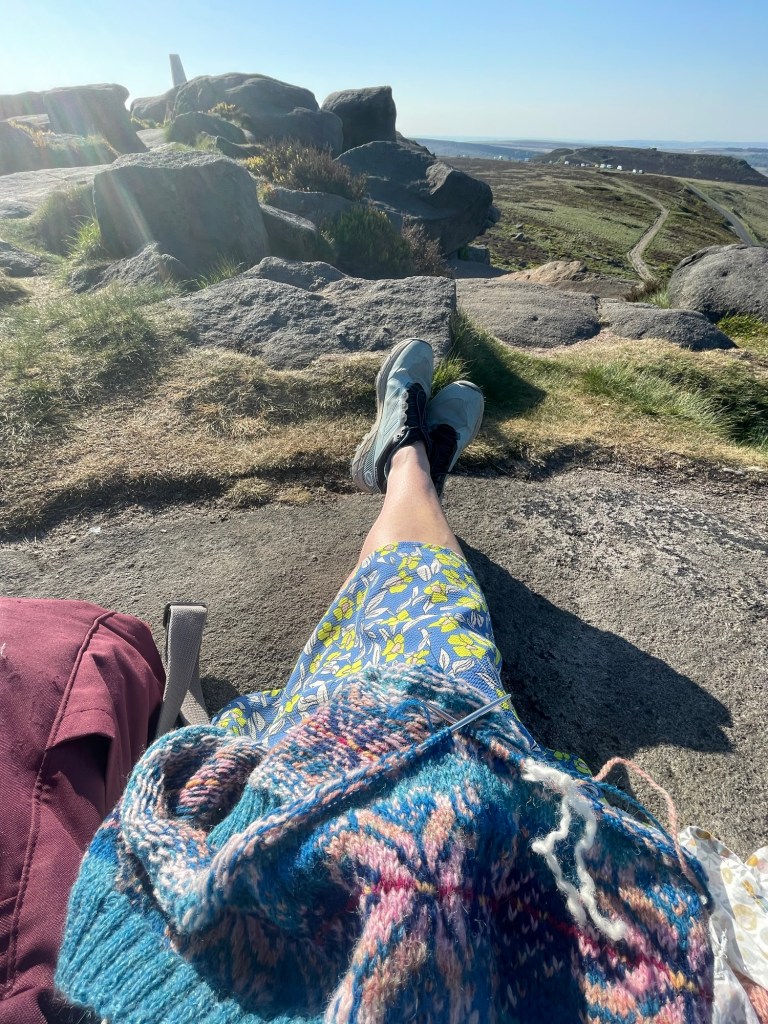
first time out for my Kaliedoscope jumper too.
Walk on the wild side.

Yesterday, I decided to nip out to Stanage Edge for a walk to the Millstones. I post about this location a few times a year.  The last time I went was 8th Feb when I was Fog chasing.

Yesterday, 2nd April, was a beautiful crisp cold day in the city and when the sun started to rise, I new I needed to take my knitting, beat the tourist cars in the car park and revisit the stones.  

Apparently, throughout the Peak District, there are more than a thousand abandoned millstones, covered with lichen and moss, weather-worn and often hidden to all that pass by.  I remember going to a quarry near the base of Stanage and the place was full of them – all hand made, all abandoned dating back to the 18th and 19th Centuries and were once used to grind grain into flour for use in the mills in the area.   I don’t know of any mills except Baily’s grain Mill in Matlock that now houses some very elegant flats.  All of this history lying around on the ground that we all take for granted as being part of something that we don’t really have the curiosity enough to check out.

The stones are huge – about 1.8m in diameter and lie where they were left. I will start to research them and bring to life some local history – for me, for you, if you are interested.

But for now, these are my favourites and I have many happy memories going back over 40 years, just at these very millstones and old stone trough that face towards Hathersage and Hope Valley.  I take my knitting, a flask, and time. 

This summer, I think  I will go on small millstone tours in the Peak District which borders Sheffield – starting just 6 miles from my flat and is a place I grew up in but I haven’t seen as many of the stones as I would like.  This is the year will be  my year of the round stones.

Oh, yes, as an Easter offer, I would like to thank everyone and have offered 10% off all of my knitting patterns, which doesn’t seem much on a £4 pattern but when Ravelry and Paypal take their cut, it is, indeed a small gift – Even the Kaleidoscope Jumper, the alternative sleeve pattern and Fair Isle long hat and the Chunky knit Vest are included in the offer for the first time.    Happy Easter break.  Maybe go look for your stones.

Thank you for your support over the last year and if you are interested in checking out my patterns – there is a 10% discount until Midnight UK time, tomorrow night – 4th April

Link to Ravelry patterns is here Ravelry: Designs by Tracey Doxey

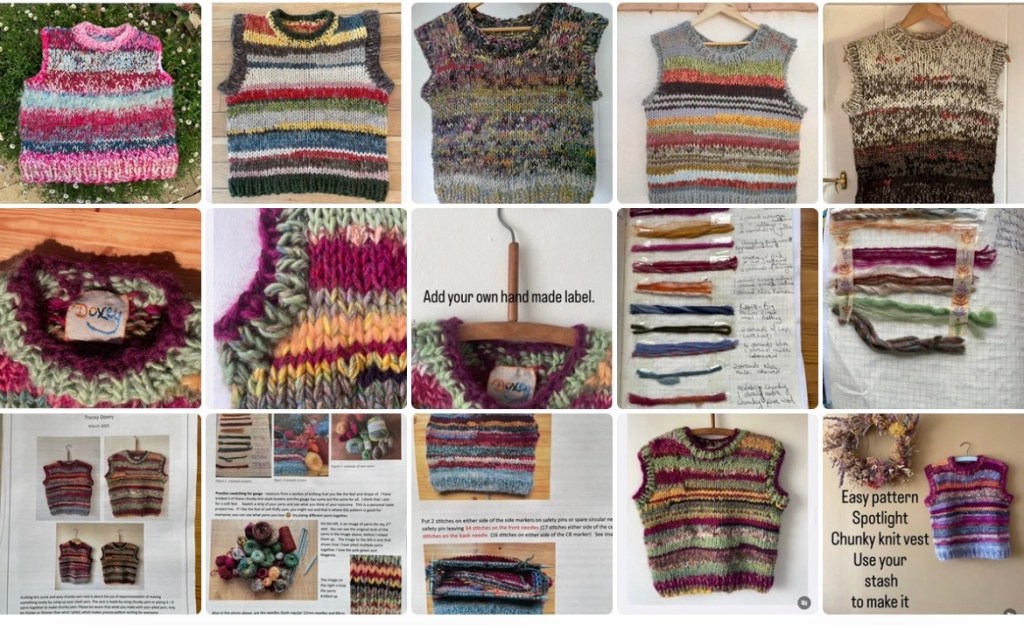
See the many ways in which people have used their own stash to knit the Chunky Knit vest Pattern. Ravelry: Chunky Knit Vest pattern by Tracey Doxey

Some of the times that I have visited these stones over the last year

Fog bow

The cat woke me with his heavy weight transferred through his fat kneading front paws alternately pressing into my sticking up right shoulder.

Alfie joined in the attempt to get me to feed them by his repetitive bipping noise.  The old, cheap, mantle clock chimed six so I turned face down in the pillows.

The forecast (a habit I have from Shetland of checking) read that we were to expect fog in the city first thing, then a ball of sun most of the day.  I lay there for a while, my tired body ignoring the purring and bipping cats.   At 7, I gave in and got up, fed and watered the boys, made tea then dressed hurriedly to get out onto the moors.   Fog in the city is boring, I wanted to remember what fog was like in Shetland –  to remember some part of it that used to haunt me for days on end, so I drove up to Burbage fog chasing.  But, at the edge of Ringinglow, bordering on the Derbyshire boundary, the fog started to clear and within seconds, I’d driven through it into pure blue sky and bright sunshine.  Another world.

At Burbage, both the moon and the sun hung in the sky casting their natural magic.   Fog was nowhere to be seen. A real warmth came from the sun high on the peaks at 8:30am.

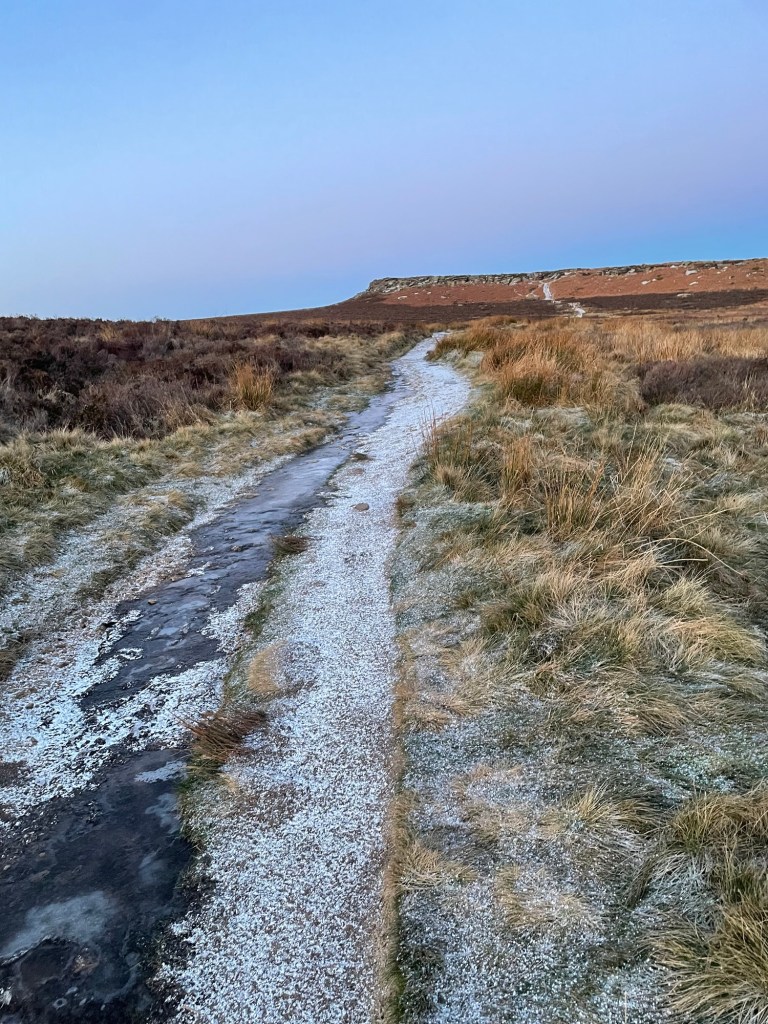
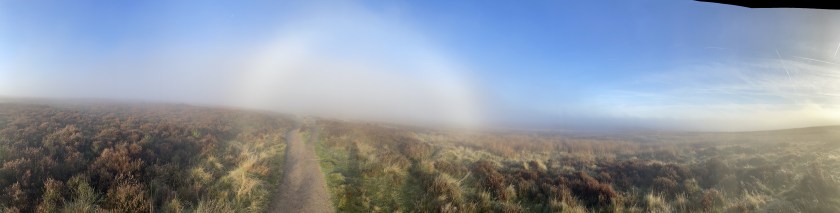
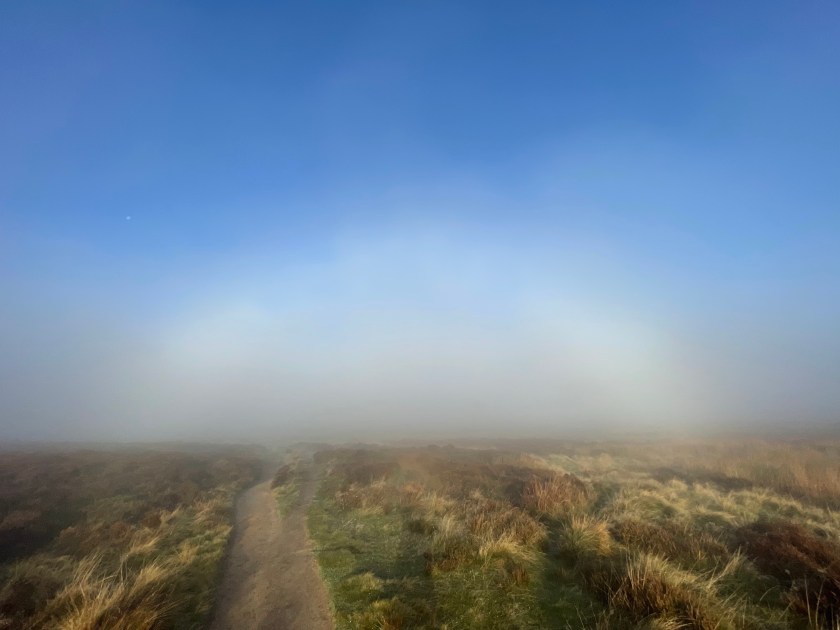
I walked towards Stanage Edge where the clear moon tilted over the rocks in a beckoning way. The path was bordered by long dead bog grass, heavy with water, looking like a prairie. Then the fog started to drift in below Stanage rocks, blown gently and slowly from the left, in a long soft ribbon, thick enough for the most magnificent natural thing to happen created by the collision of two things – the bright unhindered sun hit the fog and created a fog bow.

I actually squeaked with joy, turned to look back at that sun, then saw all the fronds on the low-lying fluffy grasses hanging in tiny droplets of water shining like glistening small crystals.

The fog bow came fully into sight.

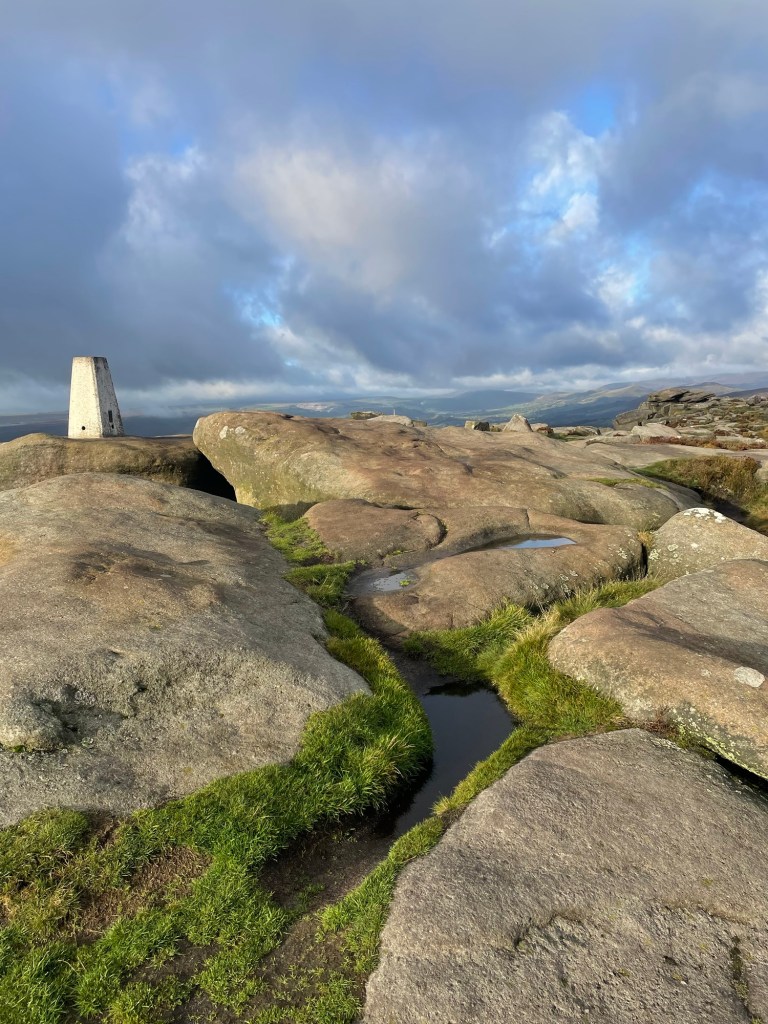
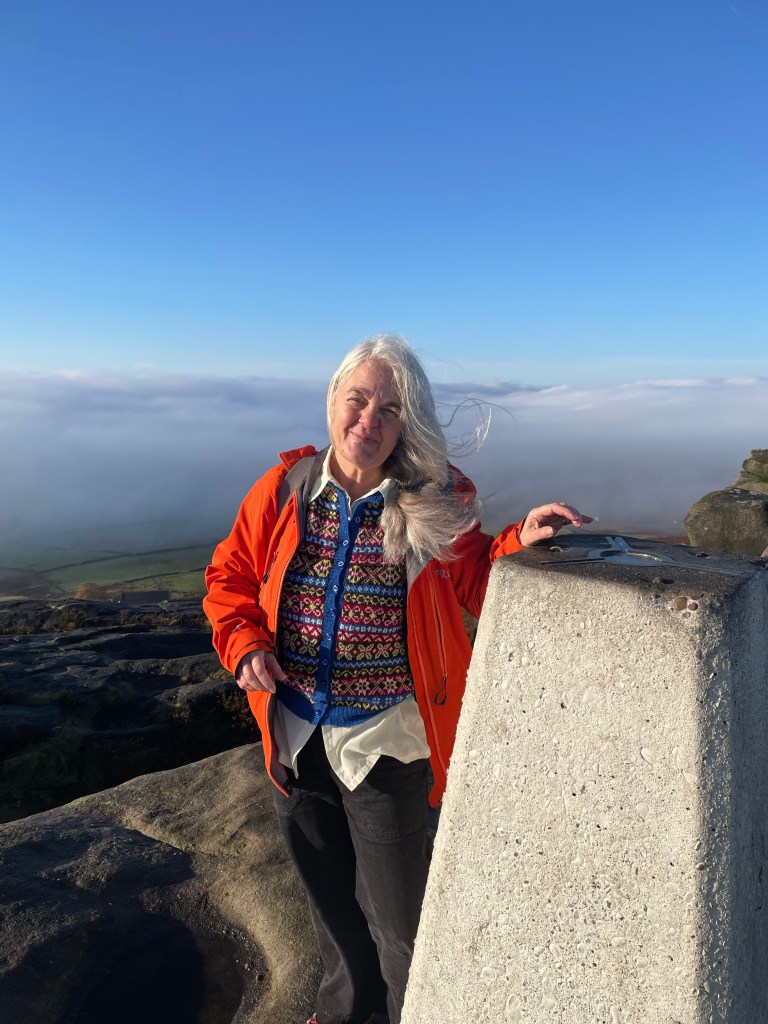
High up on the rocks, at the Edge, the fog rested in the valley over Hope and Hathersage. Every passing person had a photo at the trig, including me. And every passing person was excited by the energy of the sparkling light and visible moving shifting fog. Until, finally, the gentle wind pushed the fog up and over the edge of Stanage, covering both left and right and finally the trig.

What a beautiful world we live in.

Winter Solstice – at the still point of the turning world

At the turning point of the earth, on the shortest day, when the sun is furthest away, I celebrate Winter Solstice thinking of a gradual return of light. Celebrating the Winter Solstice is marked by people all over the world, in their own beautiful, personal ways.

I go outdoors. I wanted to connect with the environment but nothing prepared me for how I responded to that connection.

I waited for sunrise in a white sky. It did not arrive, but I felt its energy opening me up to connect to something hugely greater than self.

As the dank air penetrated, without plan or thought, I stood on the edge of Stanage,  opened my arms, closed my eyes and breathed in connecting with the landscape and something deep within myself.   I rarely express my life’s energy with open arms.  Today, I did. 

Here I am in my favourite spot on Stanage edge. Standing on ancient rocks, facing the horizon, in the split second of raising my arms and closing my eyes, there it was – that one pure moment of inner freedom, letting go, connecting with living the dance of life. 

It is an empowering action to accept life with open arms to allow my inner landscape to melt into the present moment. It is also slightly embarrassing but honest.

TS Eliot came to mind, written in Burnt Norton, one of the Four Quartets, he said it better than I ever could :-

At the still point of the turning world. Neither flesh nor

fleshless;

Neither from nor towards; at the still point, there the dance

is,

But neither arrest nor movement. And do not call it fixity.

Where past and future are gathered. Neither movement

from nor towards,

Neither ascent nor decline.  Except for the point, the still

point,

There would be no dance, and there is only the dance.

I can only say, there we have been : but I cannot say where.

And I cannot say, how long, for that is to place it in time…

I am reminded of the man who gave me these 4 Quartet booklets about 25 years ago.  A wise man, a teacher, a friend, a patron, a good man who was previously the Provost of Derby Cathedral and retired as Vicar at Chatsworth where I also lived at that time. A man who swapped books with me.  I gave him Jeanette Winterson, he gave me TS Eliot and William Morris books. We learned from each other.  I often think of him when I am at the still point of the turning world. And, I am grateful.

Today, I returned to Stanage Edge, as I have done so many times over, to acknowledge my internal and external place in life. I return to the solid rocks again and again connecting to past and present, whilst thinking of future. These stones and rocks become an anchor to steady my heart.

A familiar sight holds me, grouse utter their sounds in the heather, a cow bellows, the wind is a gentle whisper.

It is the shortest day of the year – Winter Solstice and I am finally

home

Cold fingers and knees atop an edge of ancient stones.

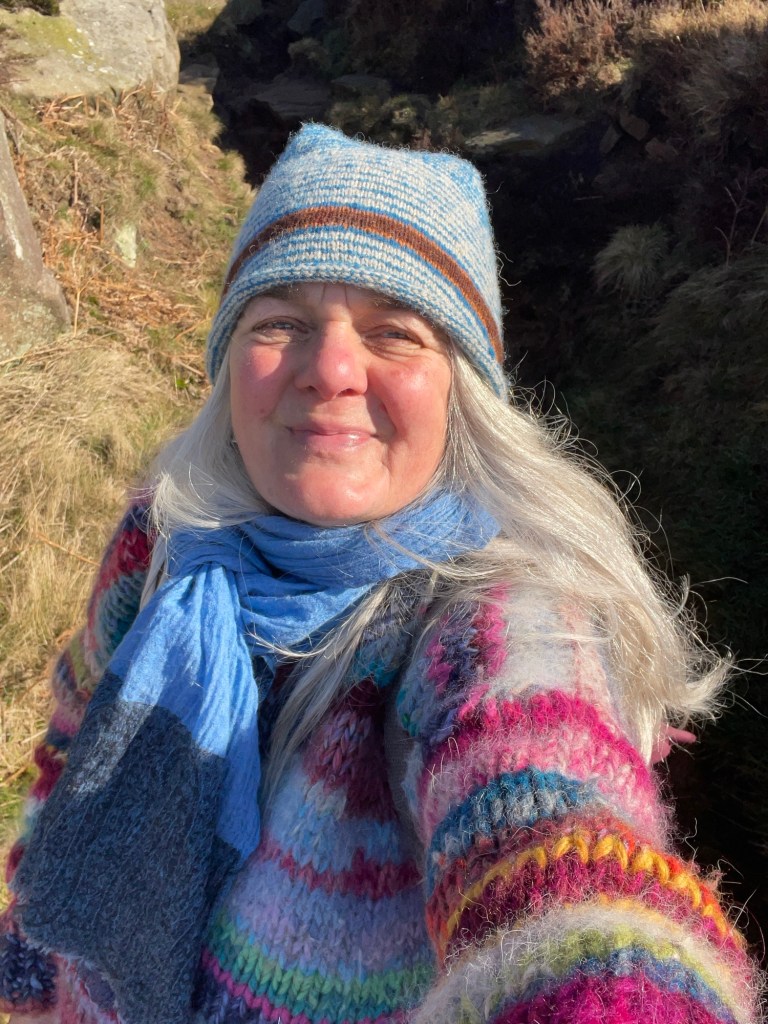
Today, I wore my newly finished ‘New Year Beret’, which I started in Shetland and finished in Sheffield. 

If you would like to look at the New Year Beret pattern, it is here.

I wish you a Happy Winter Solstice and I honestly want to say Happy Christmas and Good wishes for the New Year.   I want to say thank you to every one of you who have joined me this last year in an online workshop and thank you to those who have bought a pattern from me.  I’m truly grateful. Tracey, December 2021