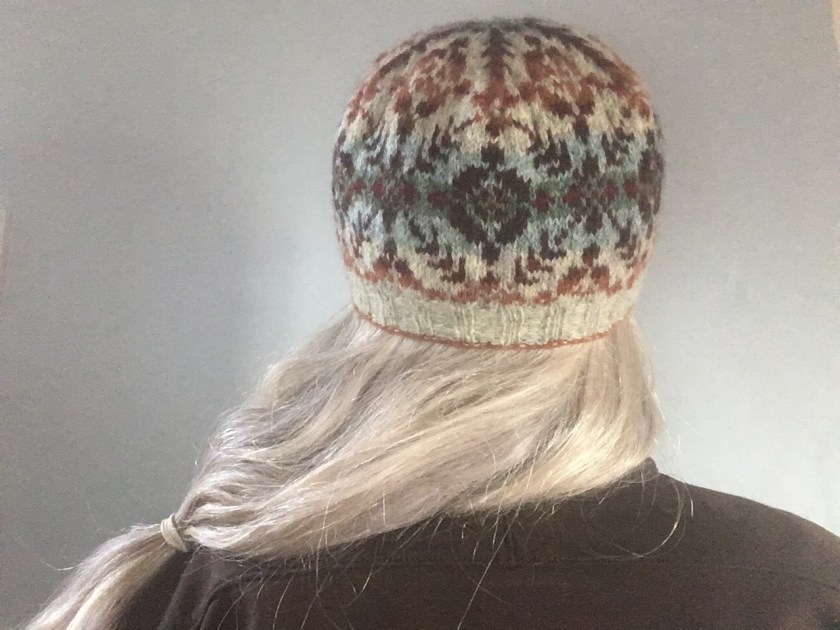
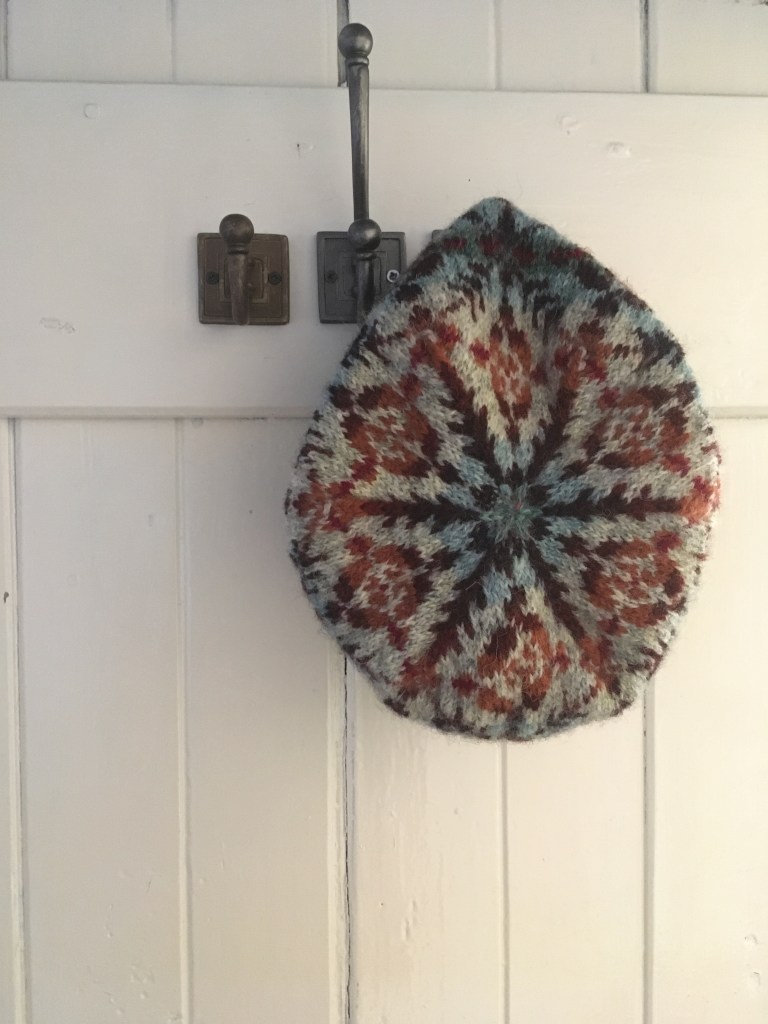
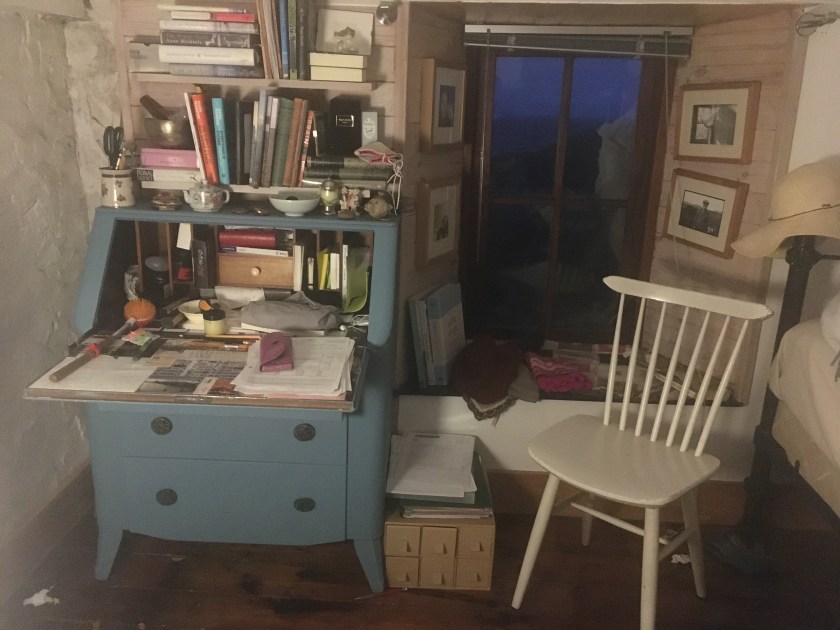
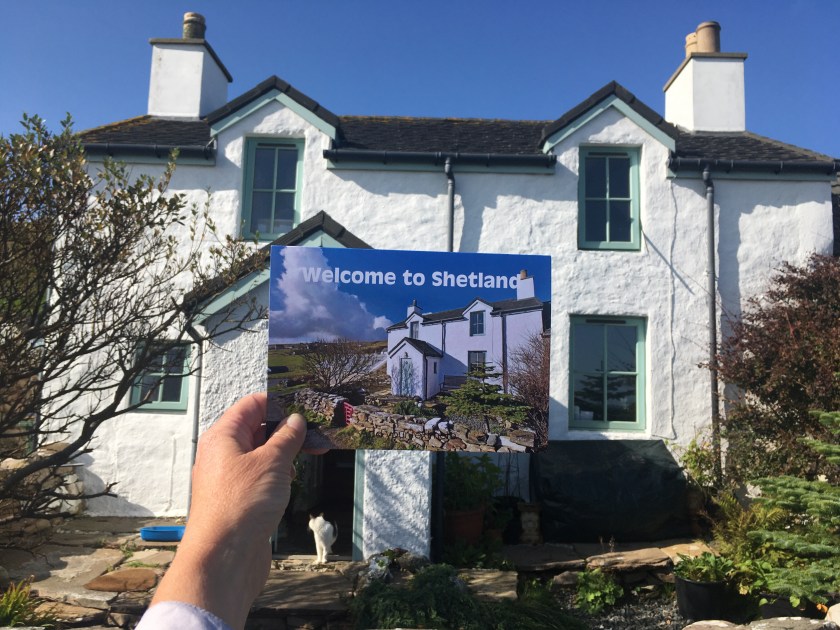
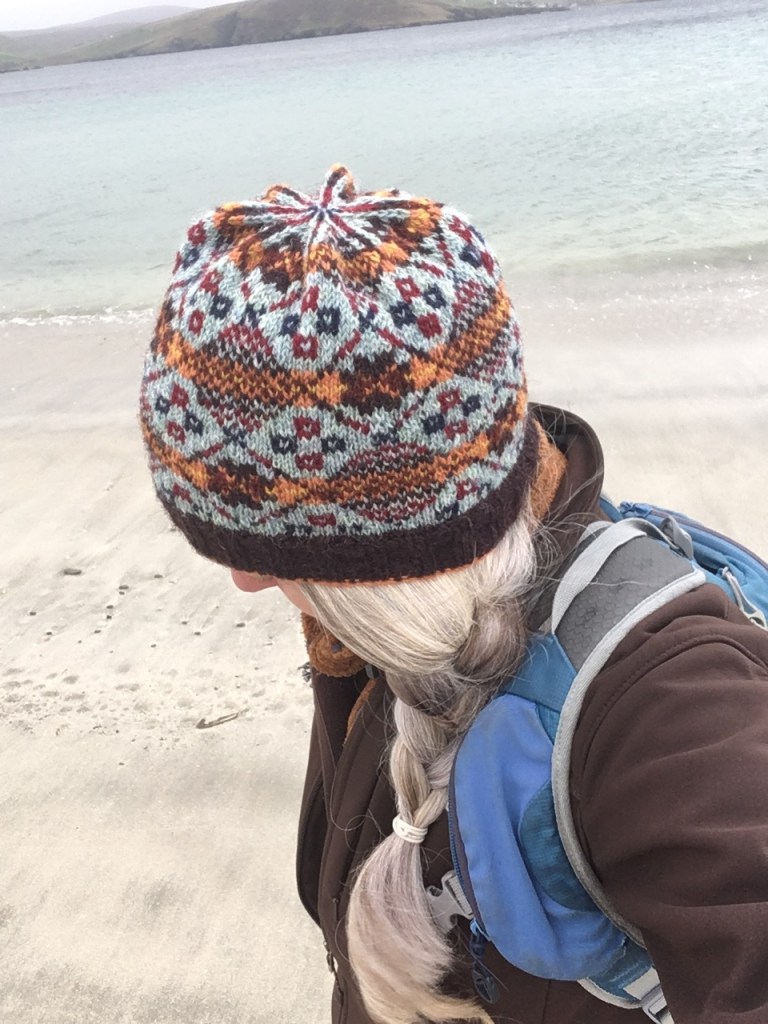
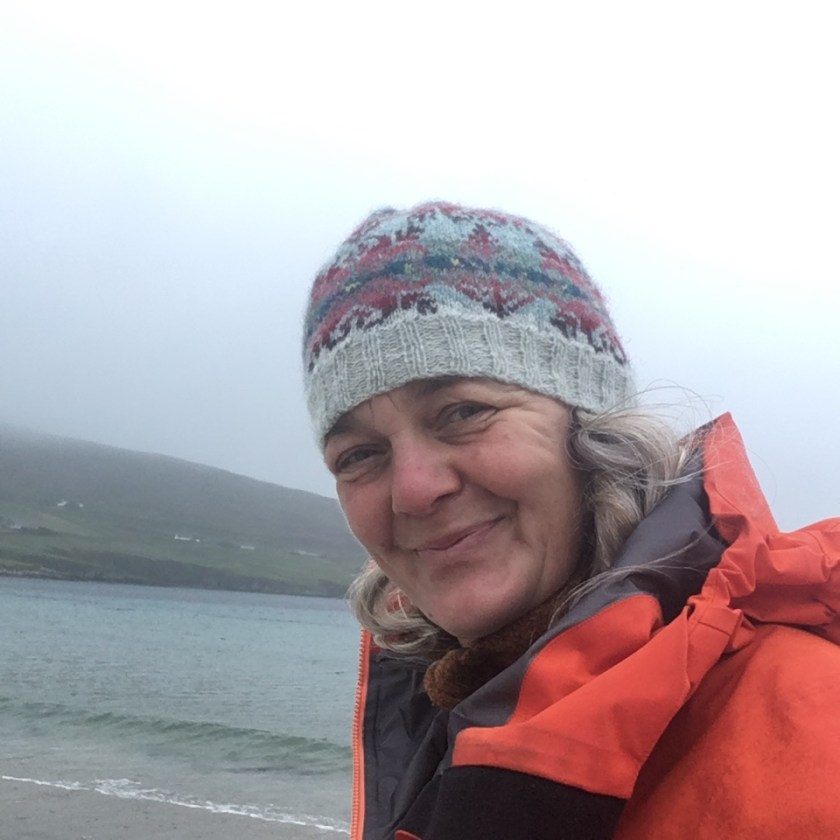
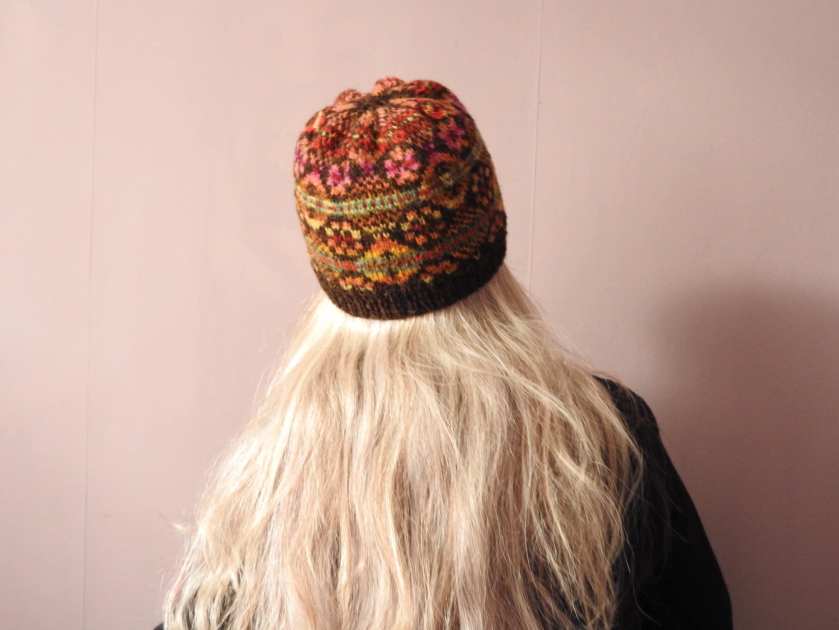
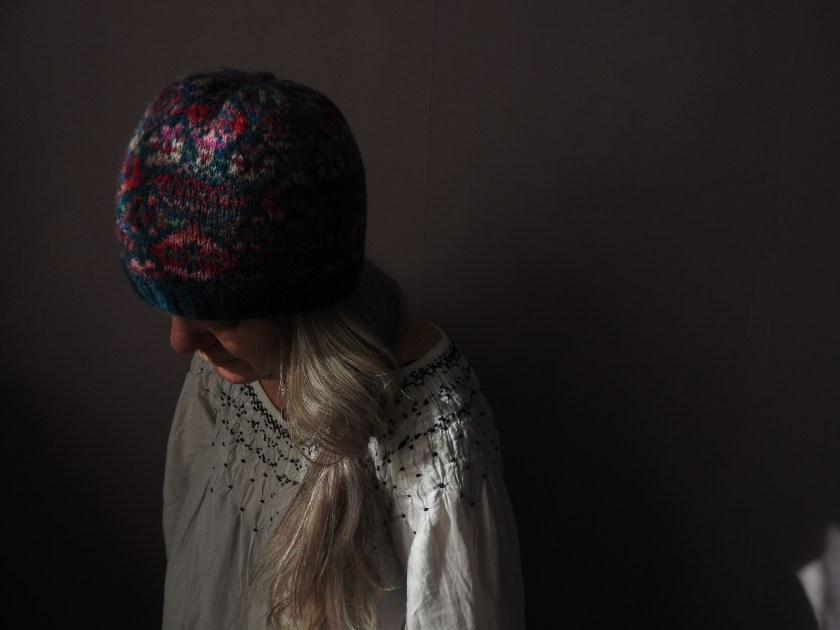
It is just over a week now since I finished my latest knitted hat design which is entirely inspired by Susan Halcrow. If you have been following this blog, you will know that Susan lived in this house from around 1880 to 1960. The pattern that I designed is with her in mind and hopefully honours the woman that lived here. When photographs were brought to me, I saw how strong this woman looked but also serene and calm. I’ve put all of the photographs of her on my wall, by my desk so that if things get a bit tough, I can look at her and think, she lived here alone and didn’t have a car, internet, TV or phone or any of the comforts that I do and she lived to be 83 years old. I’ve already shared the photograph of Susan in front of the magnificent peat stack, which she will have undoubtedly help cut and if not, definitely helped dry, carry and stack this magnificent pile. Since moving in to this house, one of my favourite things is to step out in the mornings and smell the heady scent of peat smoke still in the air from the previous night’s fires in the village.
I purposely chose peat as part of the range of colours of the new design because Peat featured heavily in people’s lives then, and can still do today. I burn peats on my fire (because they were kindly left by the previous owner) and I hope to get a peat bank and cut peats next April to dry and save for the Winter fires. The best peat smell is from my neighbour’s fire smoke – somehow, their fire smells really good.
Susan Halcrow and her Peat Stack
I called the pattern, ‘Good Wishes for the New Year’. This is the lovely message that Susan wrote at the bottom of her Christmas card one year. The photograph was taken in a professional photography studio in Lerwick and was the only one she ever sat for. She looks calm, serene and beautiful.
Anyway, here is the hat – If you’d like to take a look at the pattern, it is here
If you would like to read further research – I write my research findings both on Susan, the family and this house, in a monthly newsletter on Patreon and the link for that research is below.
Thanks for following and, if I don’t get chance to write again before Christmas, Good Wishes for the New Year, we could all kinda do with it. Much love. Tracey
The weather has turned but I am still deeply happy here. For the last week, it has seemed as if the house has been a small boat buffeted by the 50 mile an hour winds and the relentless rains, bobbing on a sea of all imaginable water – rain, sea, fog, mist – except for Thursday. Thursday was bright and sparkling where we all came out brightly and sparkly blinking in the sun to do outdoor jobs.
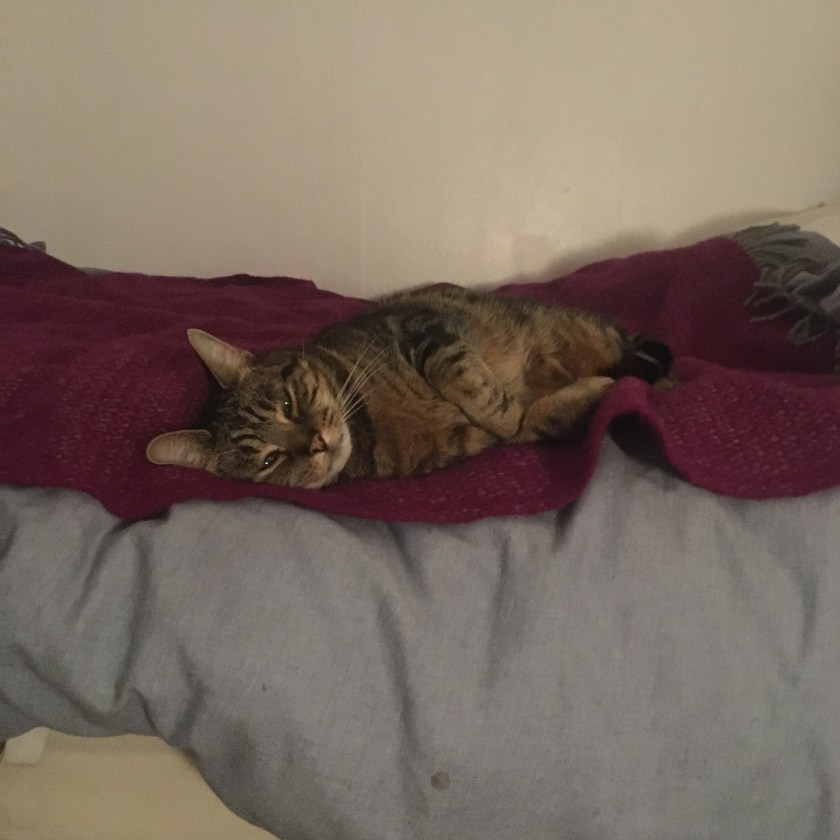
Last night the aurora appeared but I didn’t leave my bed until 3am when Alf started his routine nighly bip bip bipping noise wanting to go out and my night was disturbed again much like 32 years ago when my children were babies. We now have a cat flap but he cannot, for some unfathomable reason, use it and Tig can only go one way – in. So every night, I am woken and have to let them out. Sometimes, I get up, get them out, return to bed and sleep wondering in the morning if I did get up, sometimes, I get up, wait and let them back in then feed them and we are all confused about 3am being part of a dark daytime, but mostly, I am awake for at least 2 hours either mulling over the many, many jobs to be done or thinking and feeling. I write words that are so crystalline that these nocturnal hours may be my best for writing. There doesn’t appear to be enough hours in the day, so my thoughtful times blead into the night.
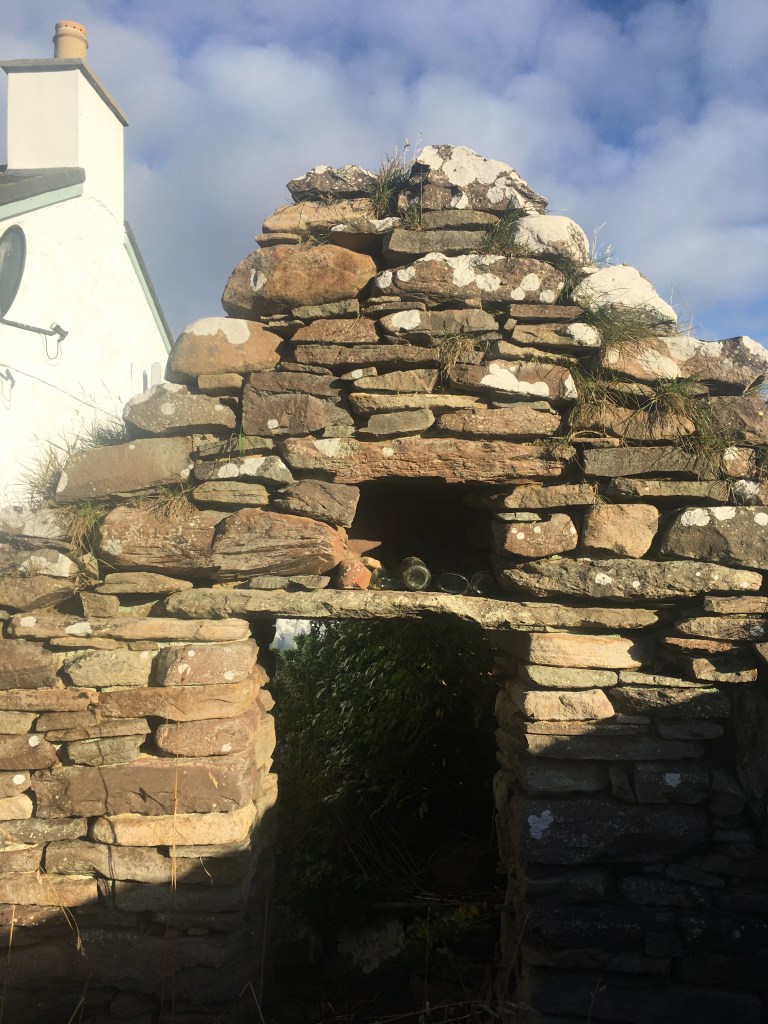
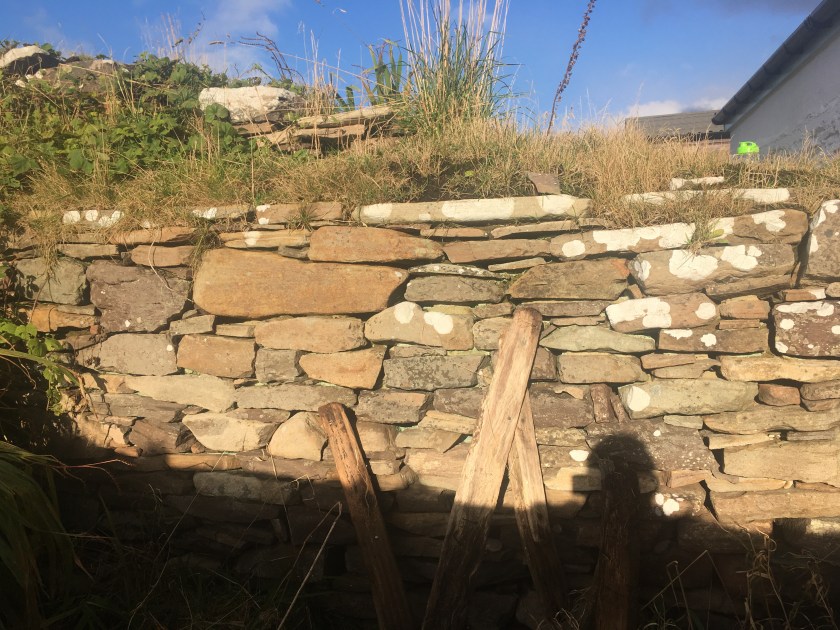
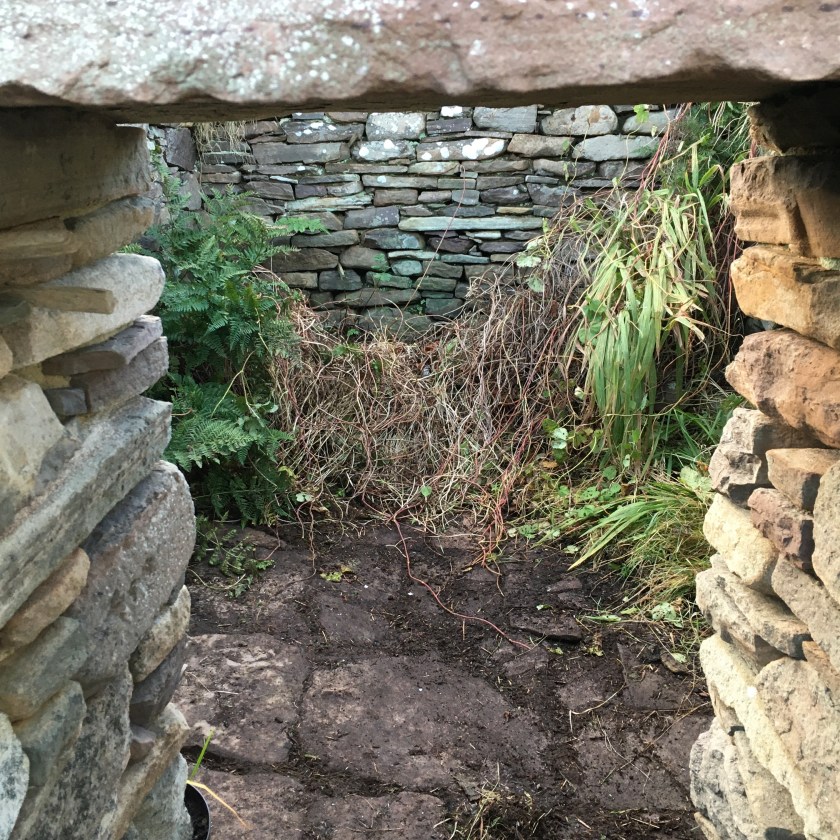
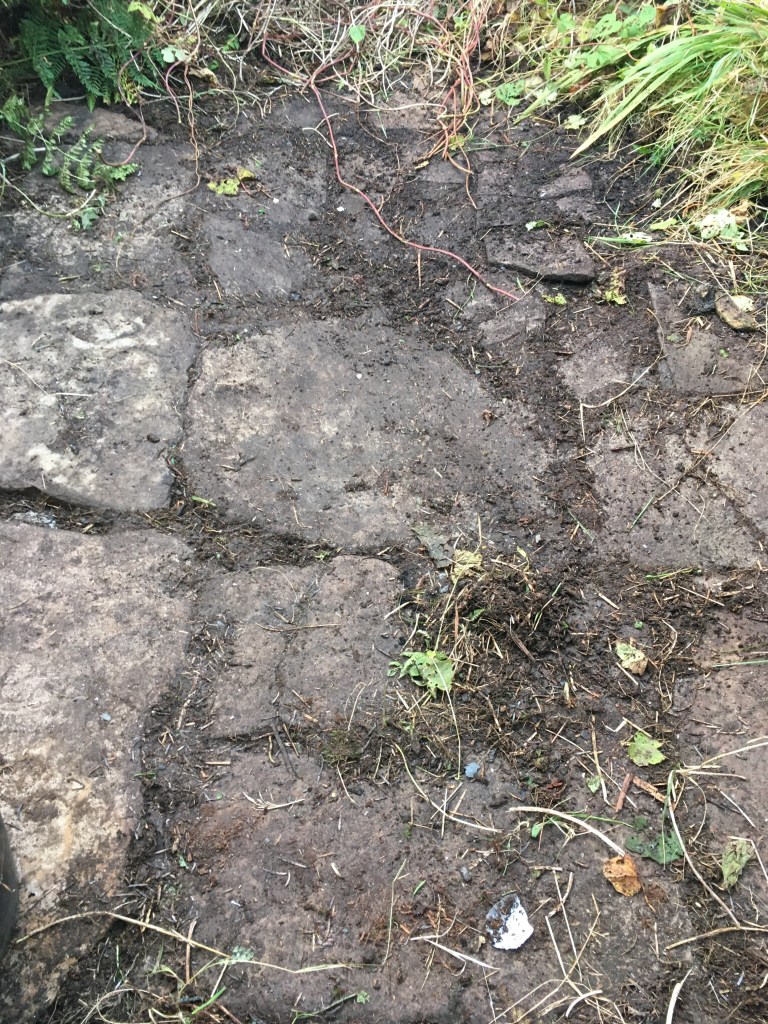
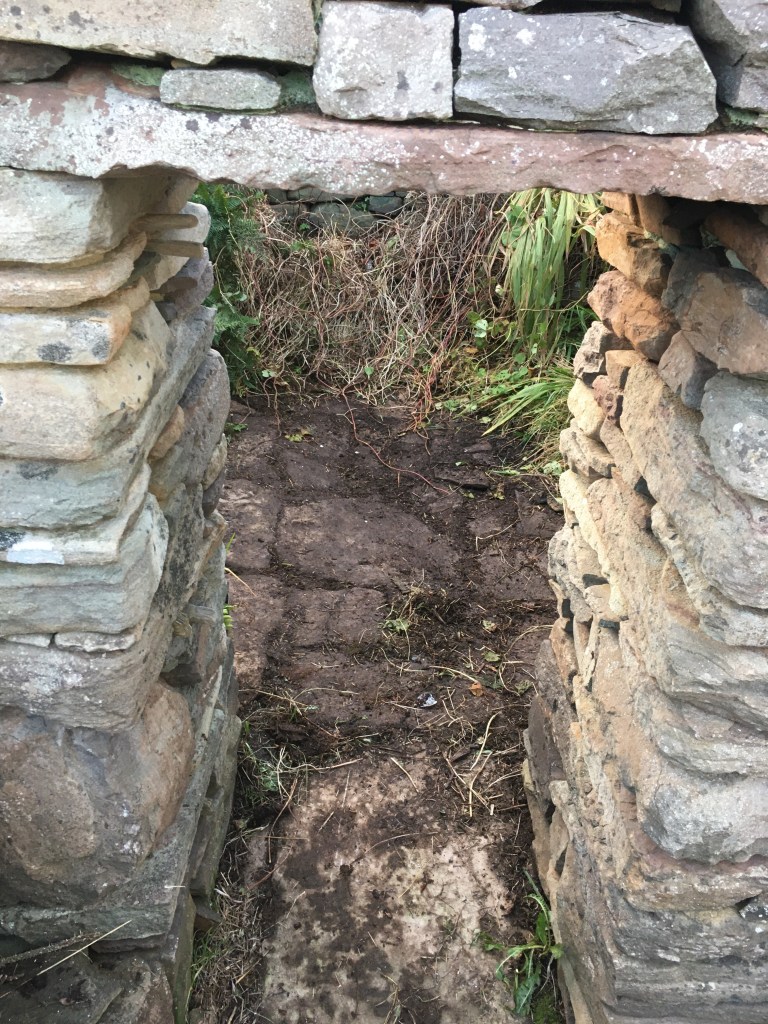
I have found some kind of rhythm. It is dictated, in the first place, by weather. If it is fine, I start digging out the byre behind my house. I am hoping that it will be my greenhouse. I’m slow. I’m getting old but every spade of years of growth moved, every flag stone revealed, and every time I bump my head on the low door way, makes this little shell of an old stone building more into the fabric of my daily life and for the future. I’m keeping the ferns in it and there appears to be grape vine but the rest is slowly being removed to make way for a roof next year and a sheltered place to grow veg and scented flowers. Every stone placed by someone before me, every shovel of overgrowth removed by me puts my small mark inside the place. There’s a barn too – called a shed. It leaks and houses inherited junk, rusted metal things, old wood and peat. I like it. I have a vision for it but that will wait.
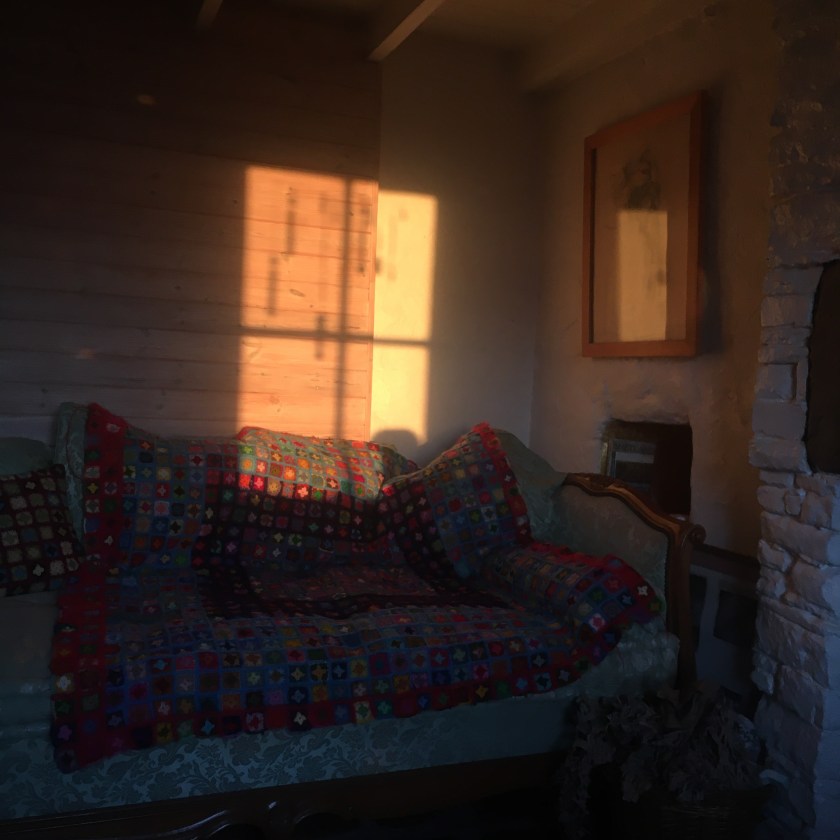
The house has not yet been changed inside by me. I am letting it speak to me, expose its foibles, and express its joys.
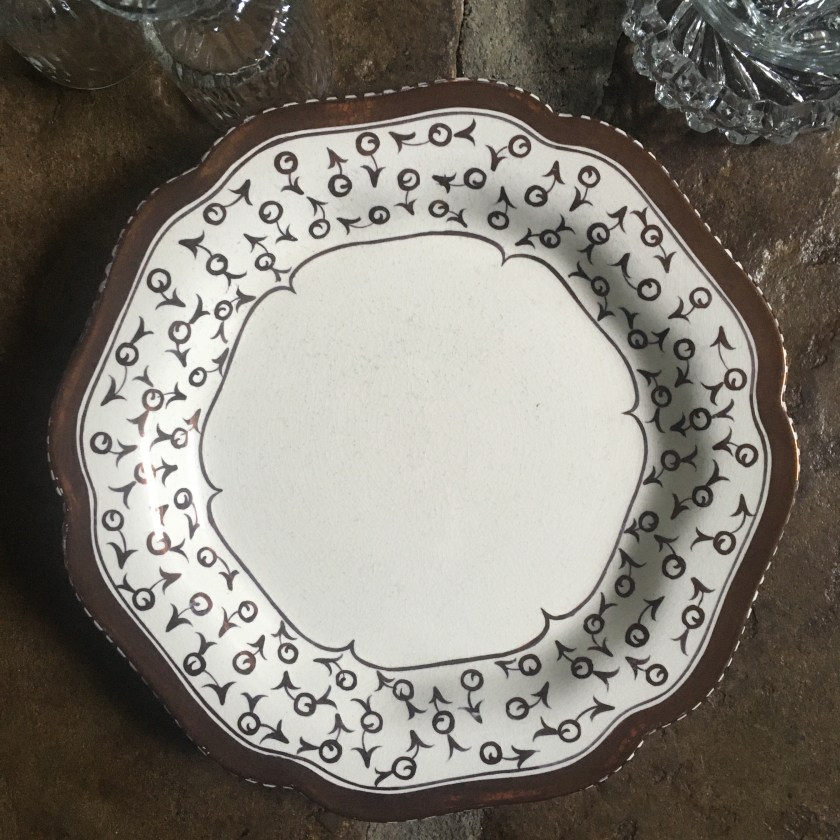
Things are returning to this place, kindly returned to me by a man who cleared it after his Aunt moved out in the early 90’s. His kindness at returning old jugs, glasses and plates that were once in this beautiful old house has been deeply moving. The pottery has once again seen the light of day and become pride of place. My favourite returning jug is a mid 19th Century Victorian salt glaze cream jug with pewter lid, which Raymond remembers being in the kitchen. It is returned to its old home after about 35 years of being away. I also love an old Wedgwood plate and if anyone can shed light on this plate, I’d be grateful These tactile treasures have been touched and used by the last two women who lived in this house for nearly 100 years. Just think of that – all the touches, all the pouring, all the meaningful reasons they were used.
old Wedgwood
This place and surroundings are always real, always natural. I am finding out more of the house and who lived here as well as change of land and outbuildings. My boys have settled into island life – mostly taking to bed during storms (which appears to be quite a lot) I’m glad they came with me – they make this place a home.
Anyway, it’s raining, to put it mildly. I’m going to put on 3 more layers of clothing and get out for a walk.
I also want to let you know that I have opened up my spare room on Air B&B for next year for single lady travelers, explores, lovers of knitting and crafts who would like to experience this island and lovely old house – the link is here.
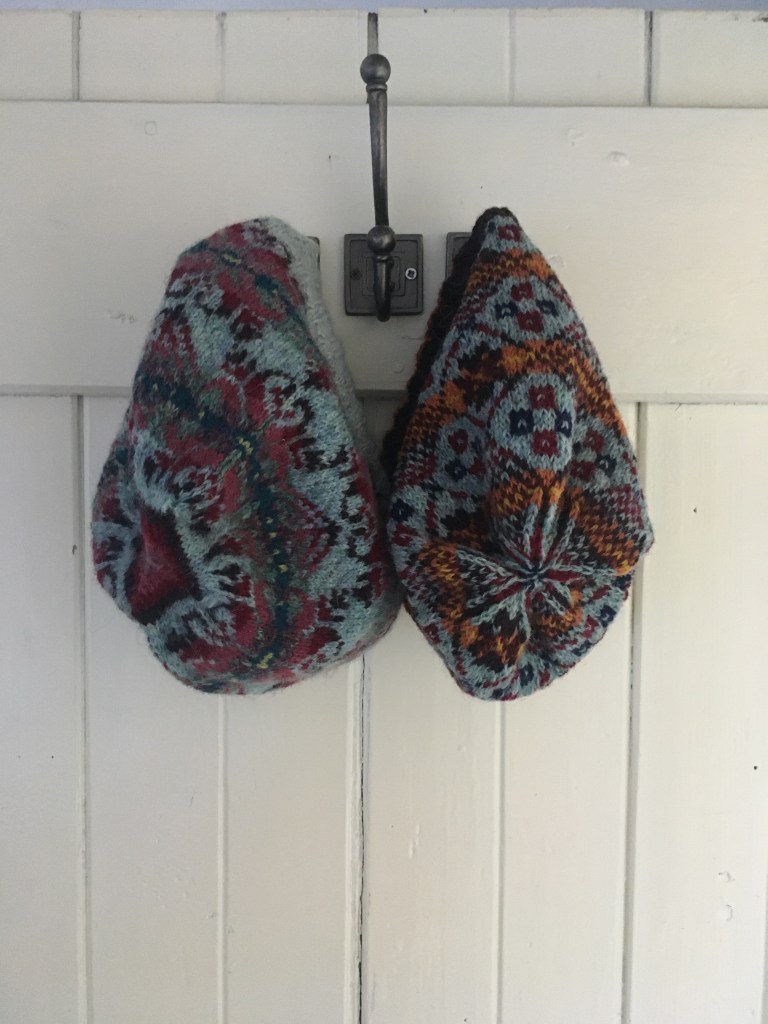
Where ever I lay my hat….
Sea Urchin and Fire and Sea hats hanging behind my bedroom door.
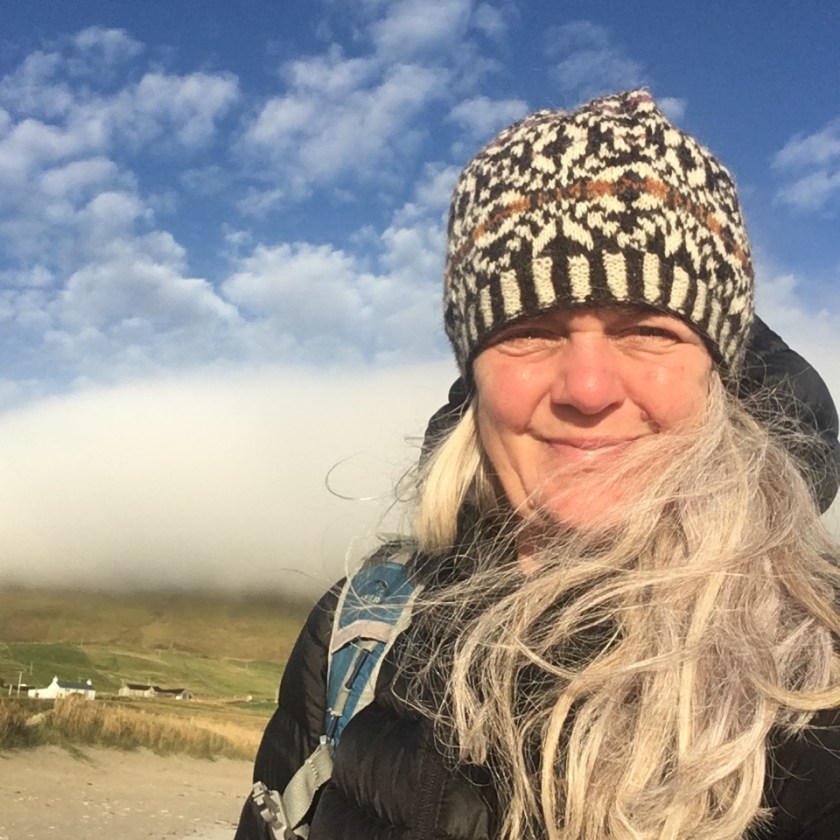
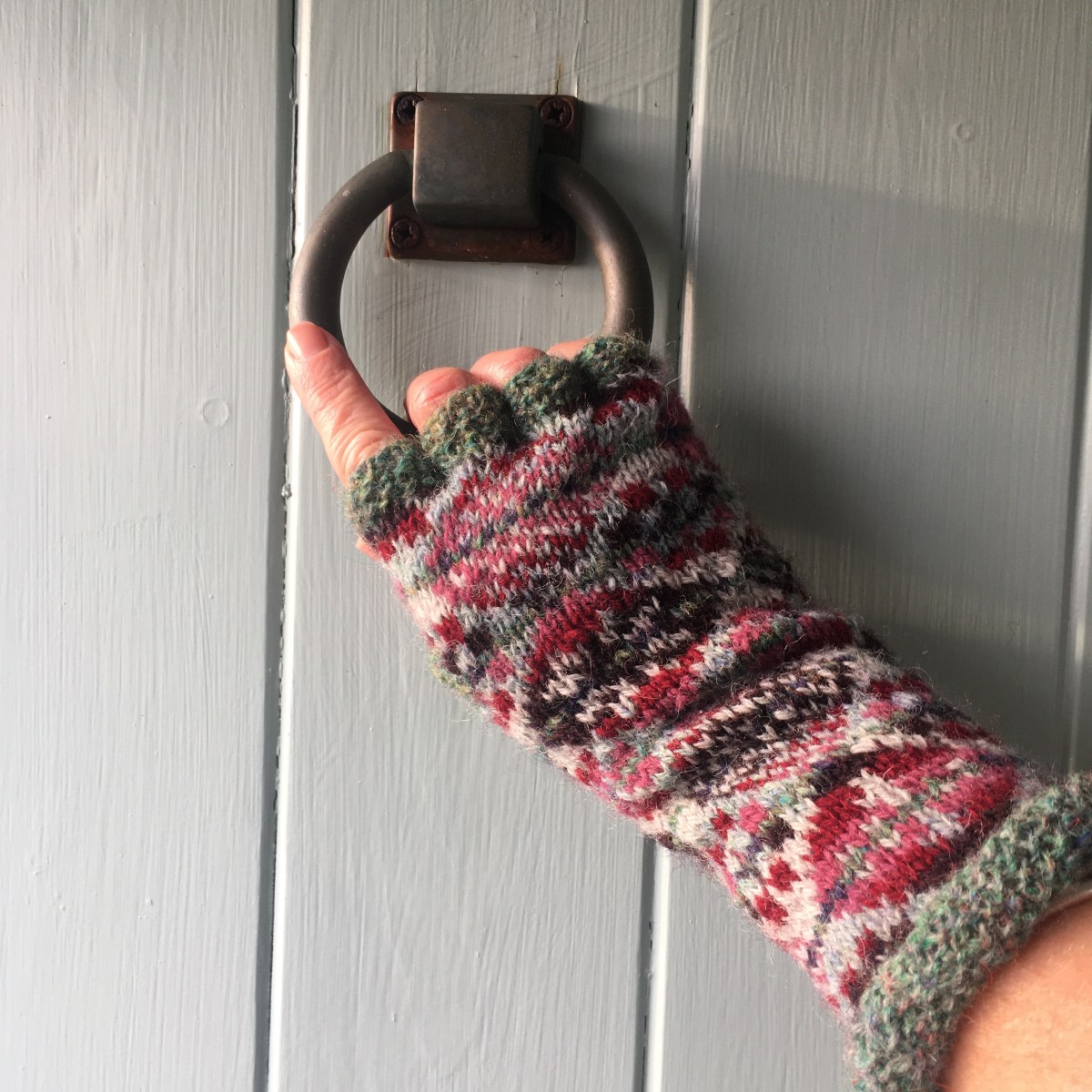
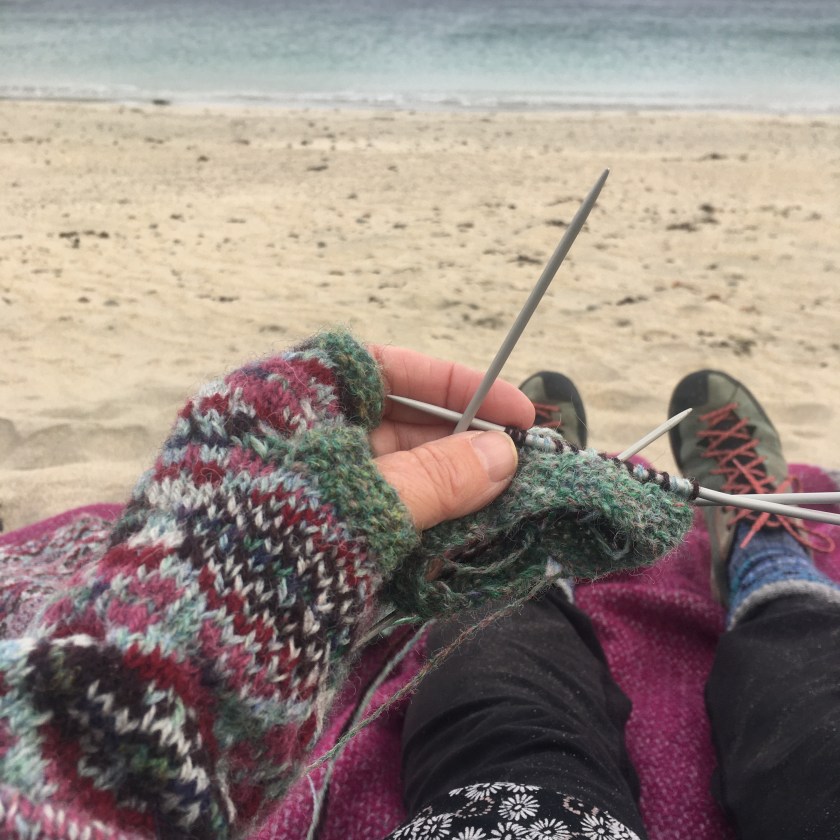
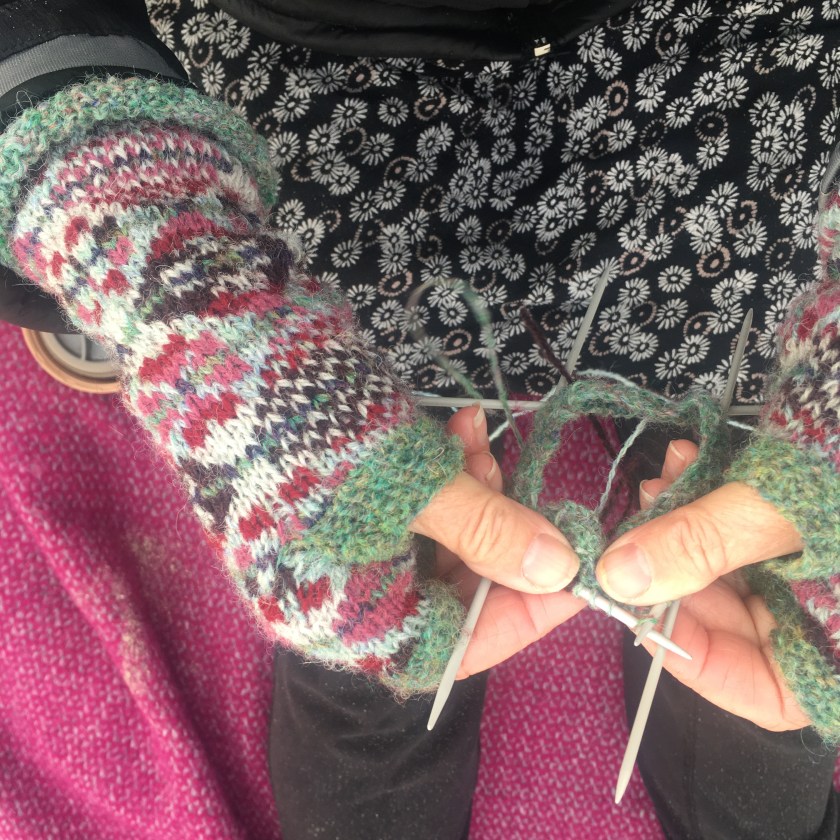
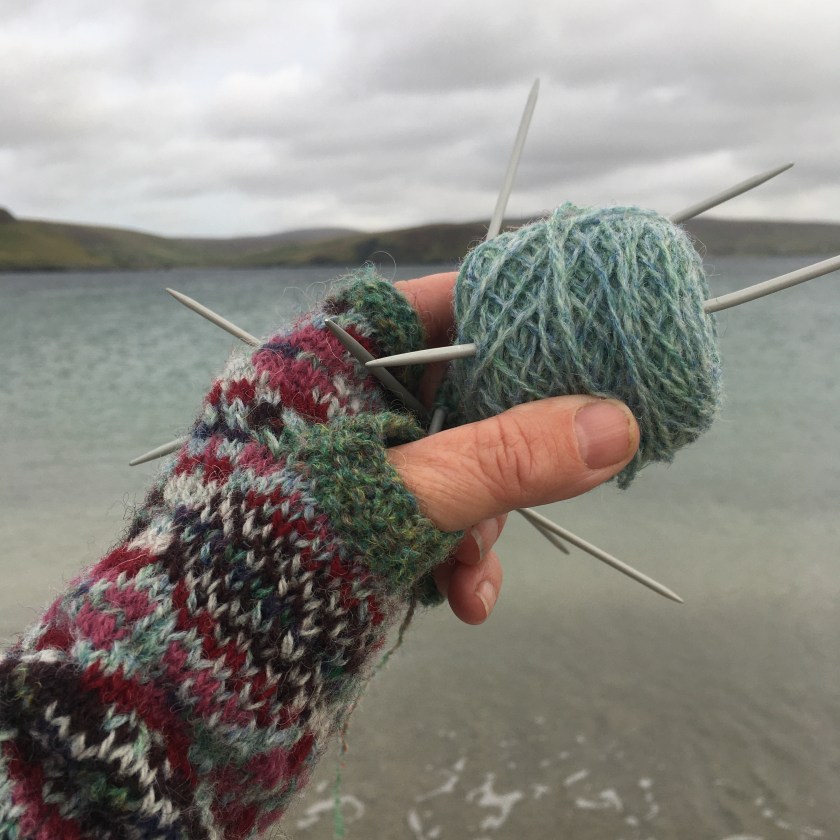
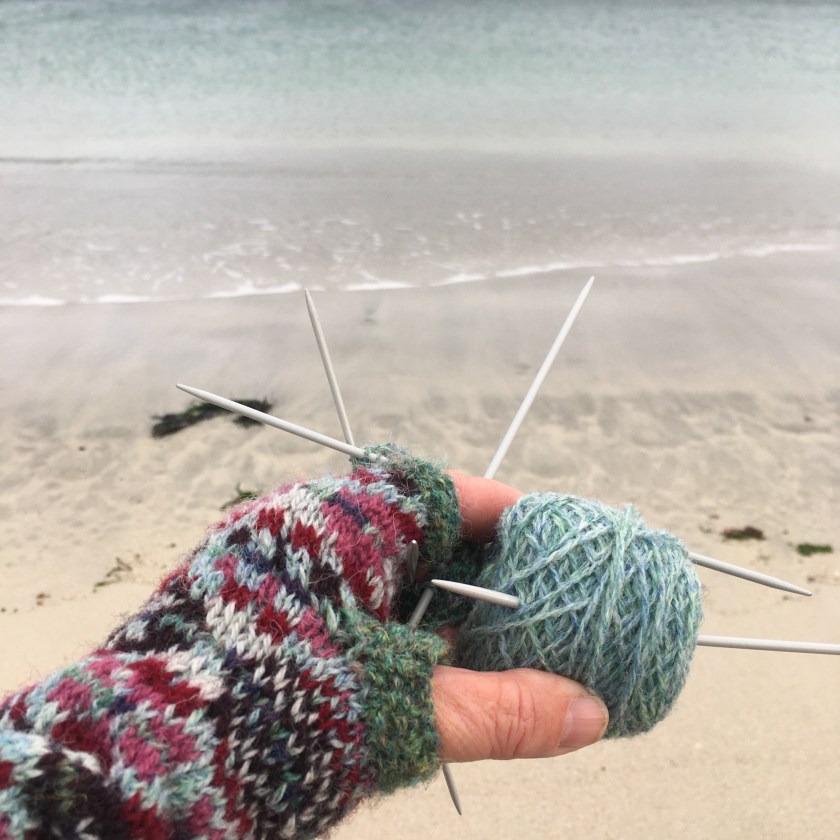
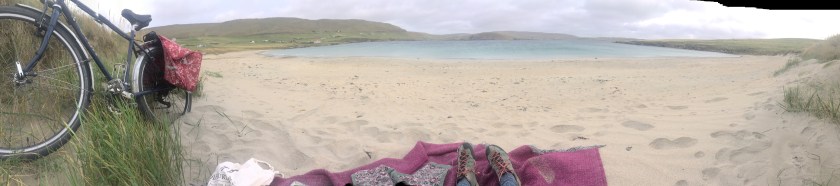
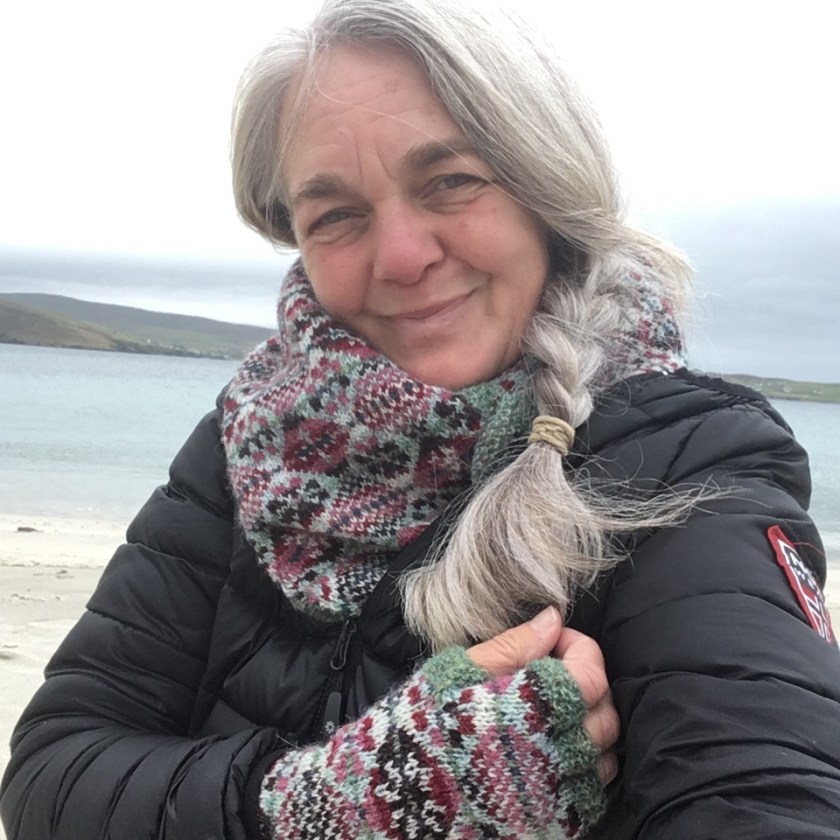
I pack the bike paniers for the beach – a place that I know is today in a wind storm. Laying the blanket upon the fine sand, making ready to start knitting the gloves with my online Ravelry Knit group is wonderful moment. It is THE perfect location to sit and knit, think, feel – the sea rolling and heaving in front of me, the bike tyres being quickly buried under small sand drifts behind me. I dig into the bank of the crescent beach and unpack a speckled banana and Christmas biscuits in an old tin, my 5 year old Thermos from Japan, my note book, pen, yarn and chart.
I sit as if a child on a picnic for no one and watch the weight of water lift the surface of the sea in front of me. Waves break and reach the shore line as if they move along the keys of a piano – right to left along the entire long beach.
Sand grains settle on the surface of my tea as if in a grain huddle, in the base of the open biscuit tin, on the blanket in the shape of the base of my shoe, in the threads in the ball of yarn, on the canvas yarn bag that travelled a thousand miles, in my hair, on the scarf.
I am here, this is me. Sand blown, wind blown, sea salt tasting.
I scan the sea for whales – the whales that came in to the bay last Weds when I was at St Ninian’s. The weight of the sea water, rising and sinking, ebbing and flowing – covering secrets below its surface in the cold, cold depths of ancient sea sounds.
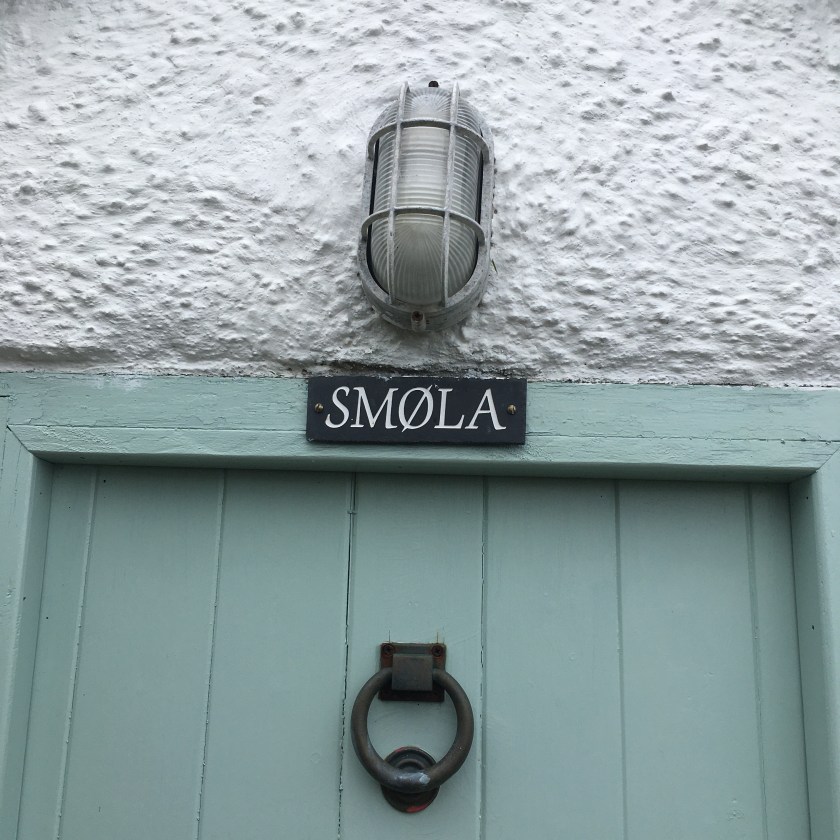
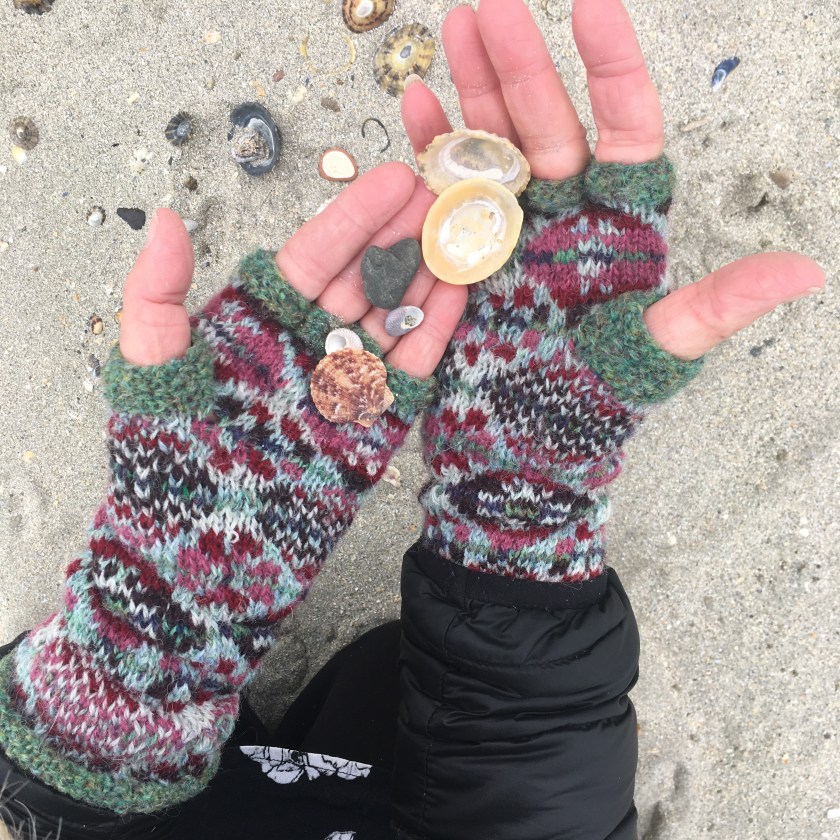
Today is the first day of my online Ravelry Knit Along where you can join me until 12th October in a group to knit the Smola gloves – named after my home in Shetland. You can ask questions, add photos, let me see your projects. THANK you to all those who have bought the pattern for the gloves already.
Happy knitting, happy sea and beach thoughts – If you’d like to join me on the beach next year, I will be offering Air B&B for single lady crafters, artists and explorers. Message me if you are interested in staying in my 200 year old house by the sea.
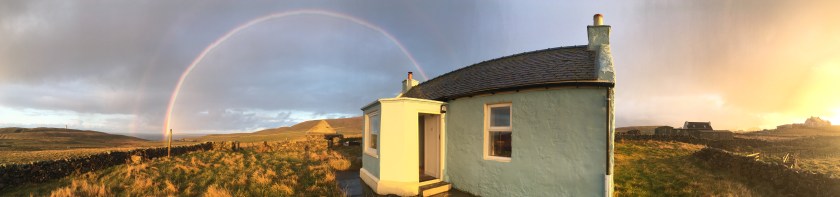
Exactly to the minute of one week since arriving at this tiny house.
I am utterly grateful for this opportunity to live in this life changing place by the sea. It wasn’t an easy journey but I am finally here.
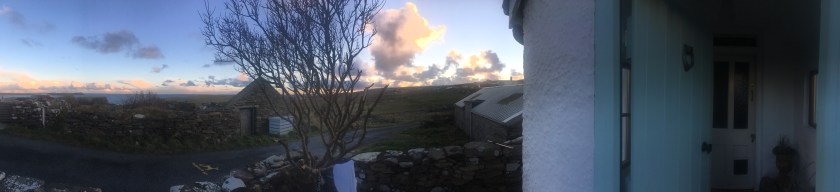
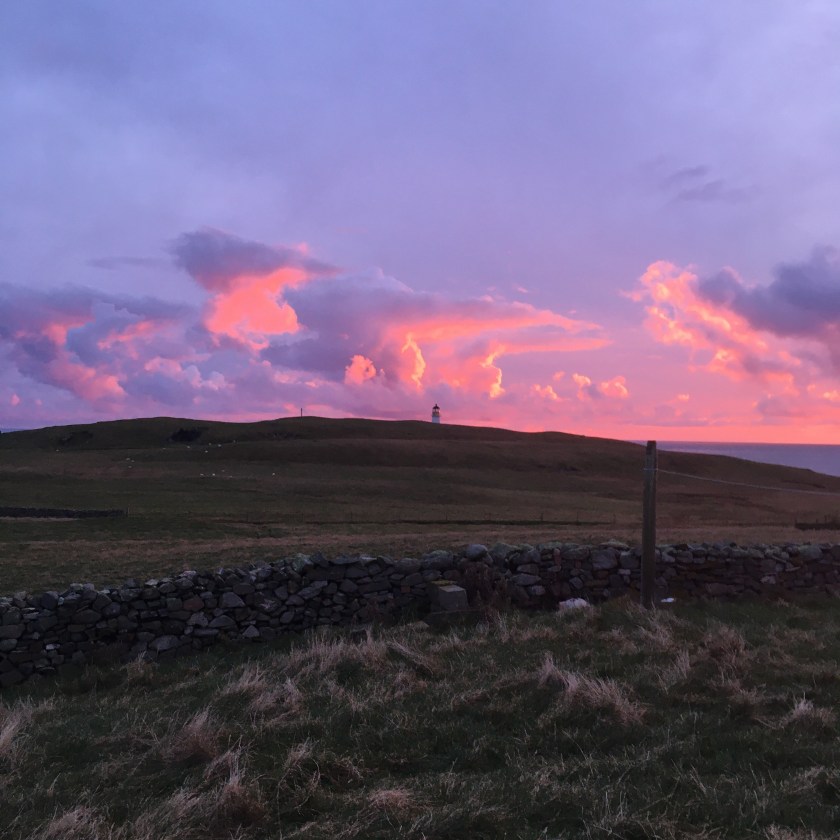
Every moment, I feel connected to the earth and I’m mindful of the days through the ever present wind, the break through of the sun and the pure blue skies, the wetness moving in over the hill – the weight of water moving in a line of cloudy fog, hail crashing onto the skylight at the top of the stairs so that the cats and I run around thinking we were under siege – new sounds, the weather making my face raw and ruddy and my hair in sea spray straw and above it all, this tiny house that is becoming the love of my life.
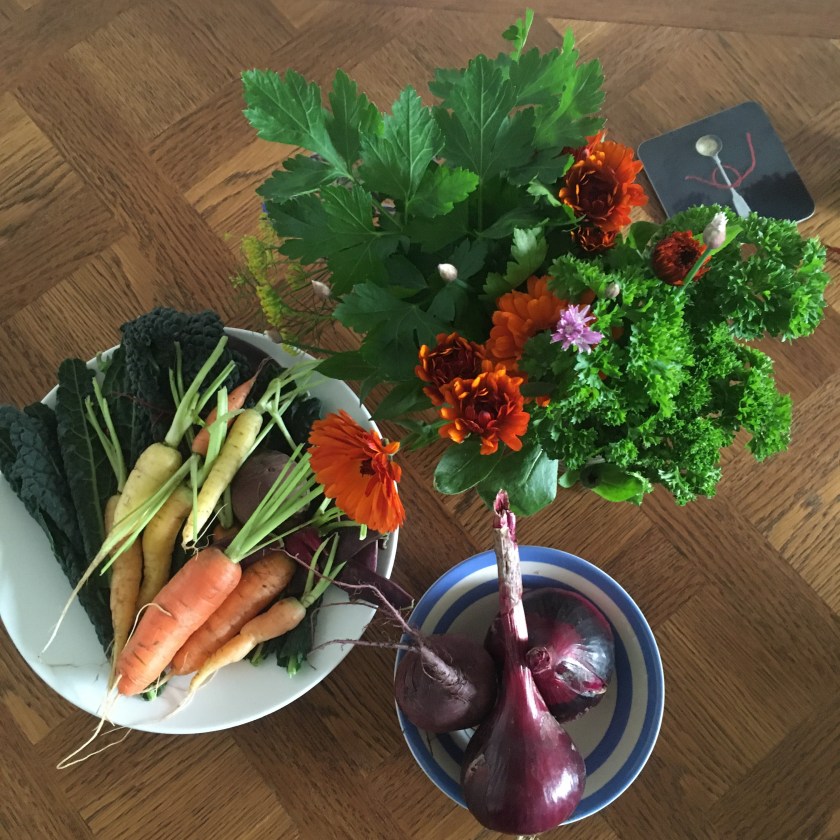
The kindness of friends and neighbours helping me arrive and settle in: B – meeting me at the ferry then driving me to the house, flowers and veg from C and H, BD – bringing me peats and coal for my first hearth fire, D brought me a Sunday dinner and E, brought me home grown flowers and shiny wholesome home grown veg last night.
Post cards from well wishers from all over the world begin to fill the wall.
I hear the geese fly over the house, knowing that they fly in their perfect V formation. I step outside to watch how they change position and take turns to fly at the point of the V facing into the wind, the rest in the slip stream. I am learning every moment, every day. Old stones surround my house. Standing on hand hewn stones is grounding.
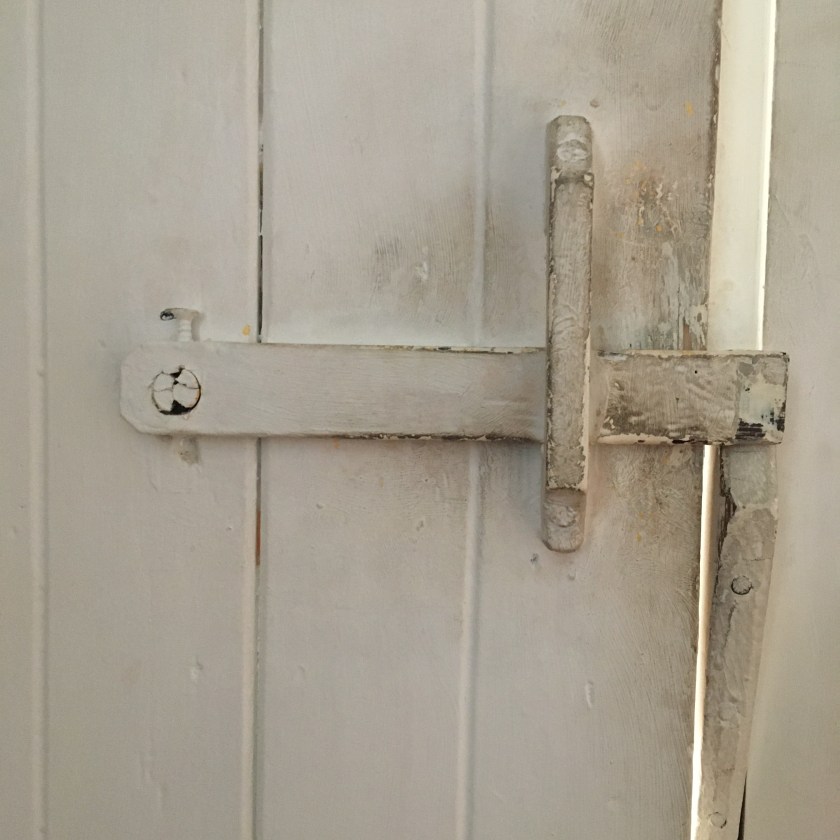
I have 3 doors – a front door that is mostly open, a small white glazed porch door and an interior door with a very old square wooden latch opener. It’s wonderful. How many people have turned the wooden latch-block before me to open the wooden latch inside? The inside latch clicks and hits the wooden housing and on that recognisable sound I hear the thud of the cats jumping off the bed in the bedroom above to come to greet me.
the beautiful old door latch knob – the latch needs a scrub and a lick of paint.
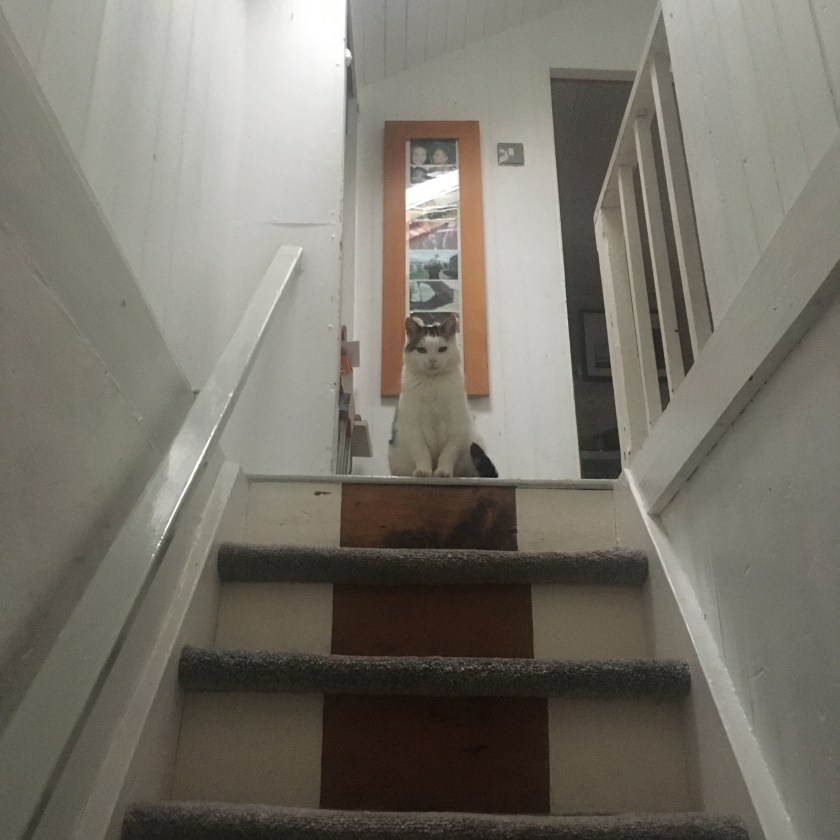
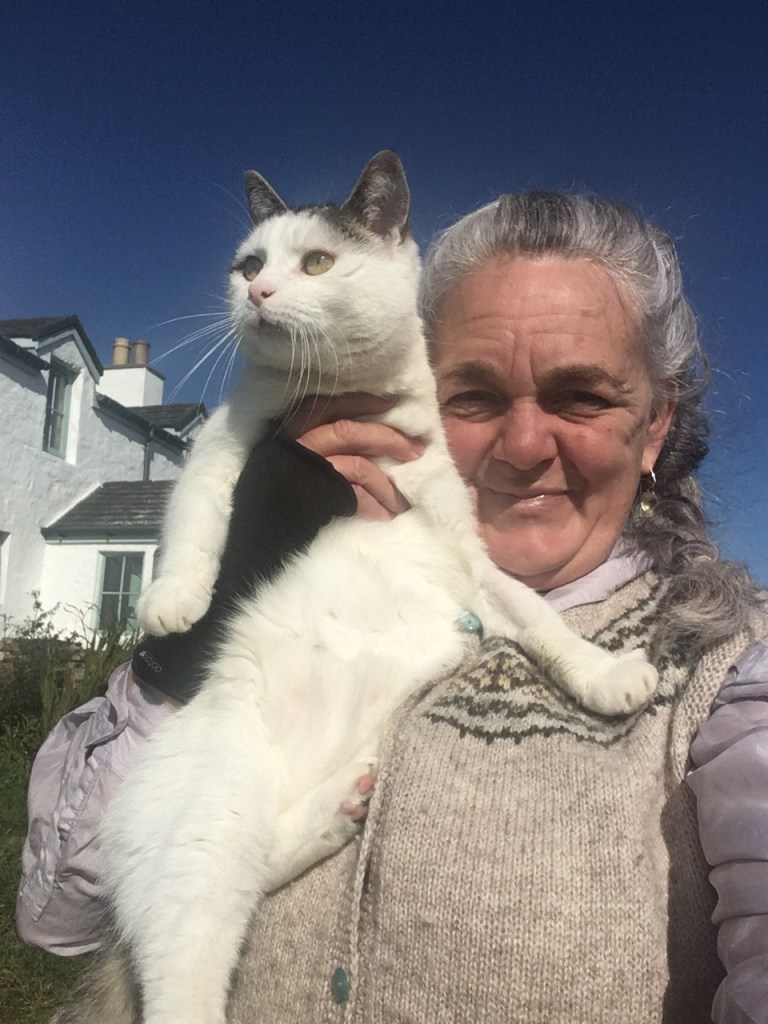
They have settled so well – now I put them out in the middle of the night if they are talking too much. They roam the area and roll in the sunshine outside the house on the road. They squint into the wind and rain and change their minds about going out. They are becoming island cats.
I am painting the visible wood in the window frames outside before the Winter sets in, I need to order coals, oil for the heating and any number of things. I still need to learn how to read the oil tank but I have managed to get the oven clock working so now I the oven works.
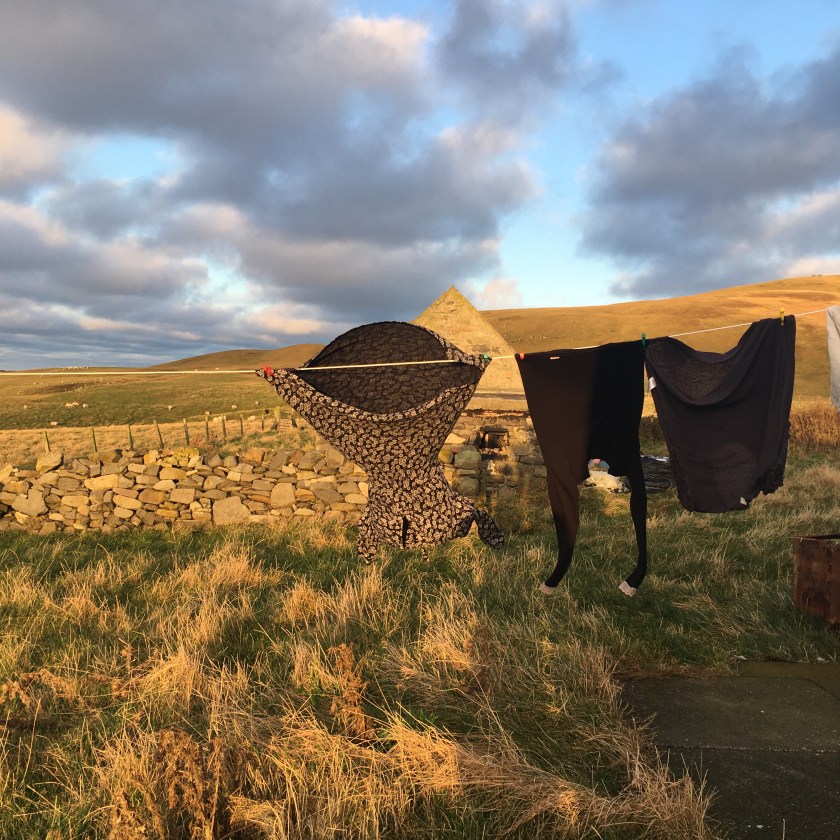
I am learning new things every time I turn around – looking at the hedgerow flowers growing with their faces away from the wind, the beach changes by the day, I search for heart shaped stones, I peel slugs the size of snakes from my porch floor, I move plants into a place of shelter, I wake and look out of the window towards the East for the sunrise every day – from the ship that is my bed sailing in a tiny house built into a bank for shelter. My TV doesn’t work but my environment is my TV.
This place will, at times, challenge me but I feel that there is nothing I cannot overcome. I’m beyond grateful for this time to live properly, feel deeply, touch the earth with integrity.
At times, I am an artist who has, on occasion, created small, site-specific worlds in abandoned croft houses across Shetland as a response to the researched details in the realities of stories which I seek, hear, see and experience. My art is a respectful conversation with the women who used to live in those beautiful places. I have an instinctive autoethnographic response in writing, site-specific films and photographs by using textiles, hand block prints and words. If I make art, this is currently my artistic practice, evolved from years of embedding myself within other cultures and places including Shetland and China.
When, as a mature student at art school, a wise man who lived a stone’s throw from my house (once a Provost of Derby Cathedral then a retiring Vicar on the Chatsworth Estate), said to me, ‘I read widely, if somewhat cursorily,’1 I was reading Winterson and he, Dostoevsky. On that comment, we swapped books, I went home and looked up the word cursorily in the dictionary and began my love of existential works – he read a modern ground-breaking 90’s book on sexual Identity and love; this was some time in 1996, he in his 80’s, me just turned 30.
Exuding wisdom, not always in what he said, but how he thought and mostly his ever open, learning mind was a turning point in my life and our conversations became somewhat magnetic for me.
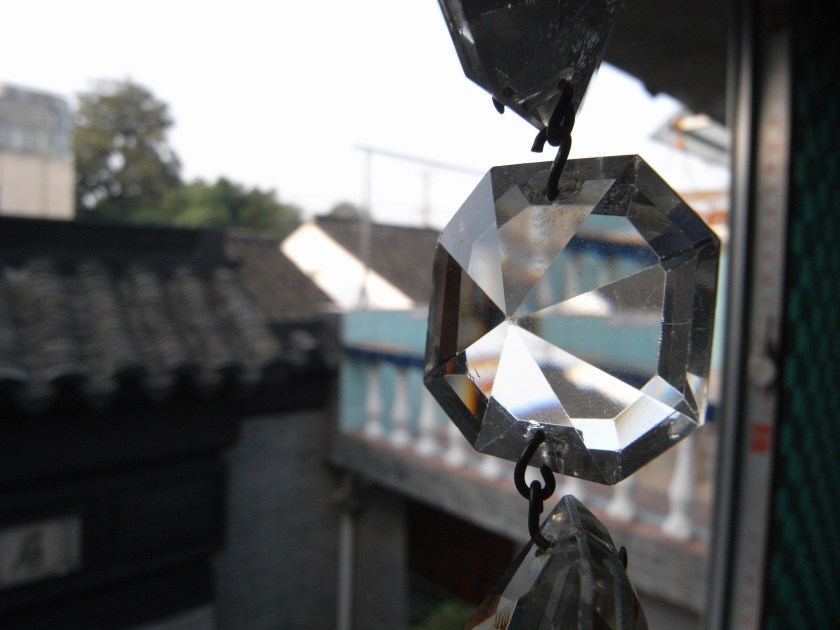
Every now and again, this man, now long dead, returns to me either in the form of a found note, the gift of a book, a photograph, or lead chandelier crystals. As he handed over the large prism crystals and cut nuggets that were once part of something larger but now lingering in an old shoe box in his shed, he said, ‘Tracey, never sell these, I had them during my grandiose period.’2 I, who don’t even remember what I did on Saturday, remember these words and both moments as if he had just spoken whilst sitting next to me on this bench in Sheffield. Words that have shaped every year of my life since spoken.
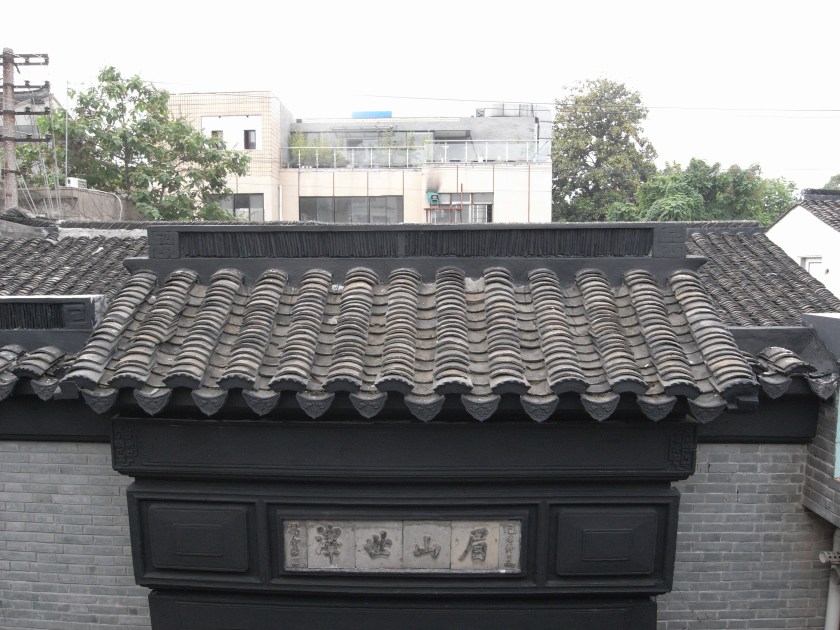
But he didn’t speak to me here, his memory does. I have hung those crystals in windows of every place I have ever lived in the 25 years since the he said that line, including in the old hutongs of Beijing and Suzhou. He is not my story – I can tell you another.
Exif_JPEG_PICTURE
Exif_JPEG_PICTURE
Exif_JPEG_PICTURE
Suzhou, 2008
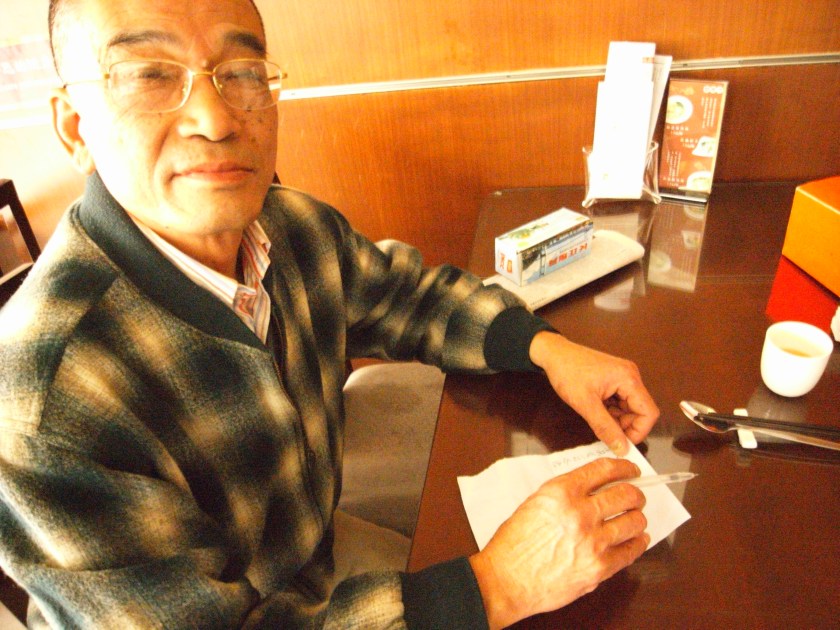
In 2008, after 3 months of living in China, I found out that my partner was cheating on me whilst I was working full-time. At first, I fell down, felt my heart damaged, tightened and fractured but after telling my Chinese friend, a Buddhist barber who lived in a one roomed house in the old hutongs of Suzhou for 50 years, he sat down and in front of me, wrote me a note in full Mandarin which I had translated at work. He wrote, ‘There’s an old saying in China and Buddhists say it too. Falling down is not terrible. The terrible thing is that you don’t stand up in time. You should stand up and brush off the dust and go on walking proudly as you used to do’.3 He also told me to let it go.
5 years after this conversation, I travelled over 3,000 miles to meet him on an ancient bridge in the old hutong lanes of Suzhou. He didn’t know that I was revisiting China, there was no way of contacting him, he hadn’t seen me in 5 years, he was walking with his head down, he raised his head, raised his arm in greeting and his eyes spoke.
Exif_JPEG_PICTURE
Exif_JPEG_PICTURE
Exif_JPEG_PICTURE
Cai Gen Lin
Now, I think of the strange impossibility of both men meeting and talking together. I don’t know if they would meet in the heat of China or the well-heeled sitting room of a Chatsworth vicarage but what deeply moving stories they would have recalled for each other. Wise, Christian, Mr Beddoes, beady hawk-eyes twinkling at the sheer marvelousness of the opportunity to speak with the ever deeply calm Cai Gen Lin, his Buddhist chanting songs playing in the background of his one roomed house, 24 hours a day – both religious men responding to the other with great respect, without speaking each other’s spoken language but speaking through their understanding, eyes, hands, gestures and intrinsic visible knowledge. Their stories flowing – neither could ever imagine – such worlds, religions, lifestyles and cultures so far apart both in distance and lifestyles from their own – that only words could bring them close enough to feel those distant worlds. Imagine THAT story – I am their link. I suppose, in a way, I am their story.
Yet, I have sat in silence with Cai Gen Lin and felt and known his worlds in China as I sat with Mr Beddoes in the scullery drinking warmed up old coffee on the stove hiding from people knocking at the door.
And then there are the stories of Shetland from my repeated visits between 2015/19 to listen to the oral histories of the old knitters and found that they mostly did not want to share their stories because they thought that I would steal them and their knitting patterns which, during my R&D trip in 2018, raised the question of, ‘Who owns words once they are said?’
I have so many stories inside of me – so many seen and understood lives.
I want to create the daughter of Hope and Memory – Art- but this may now be through words and not images.
Notes:
The Very Reverend Ronald Beddoes, circa 1995 in the old vicarage, Edensor Village, Chatsworth Estate. b. 1912 d. 2000
The Very Reverend Ronald Beddoes, circa 1995 in the old vicarage garden shed, Edensor Village, Chatsworth Estate. b. 1912 d. 2000
Cai Gen Lin, The Old lane by the bridge off Ping Jiang Lu, Suzhou, China, March 30th 2009 b. 1945, the 2nd child of 9, when China was still in Civil War.
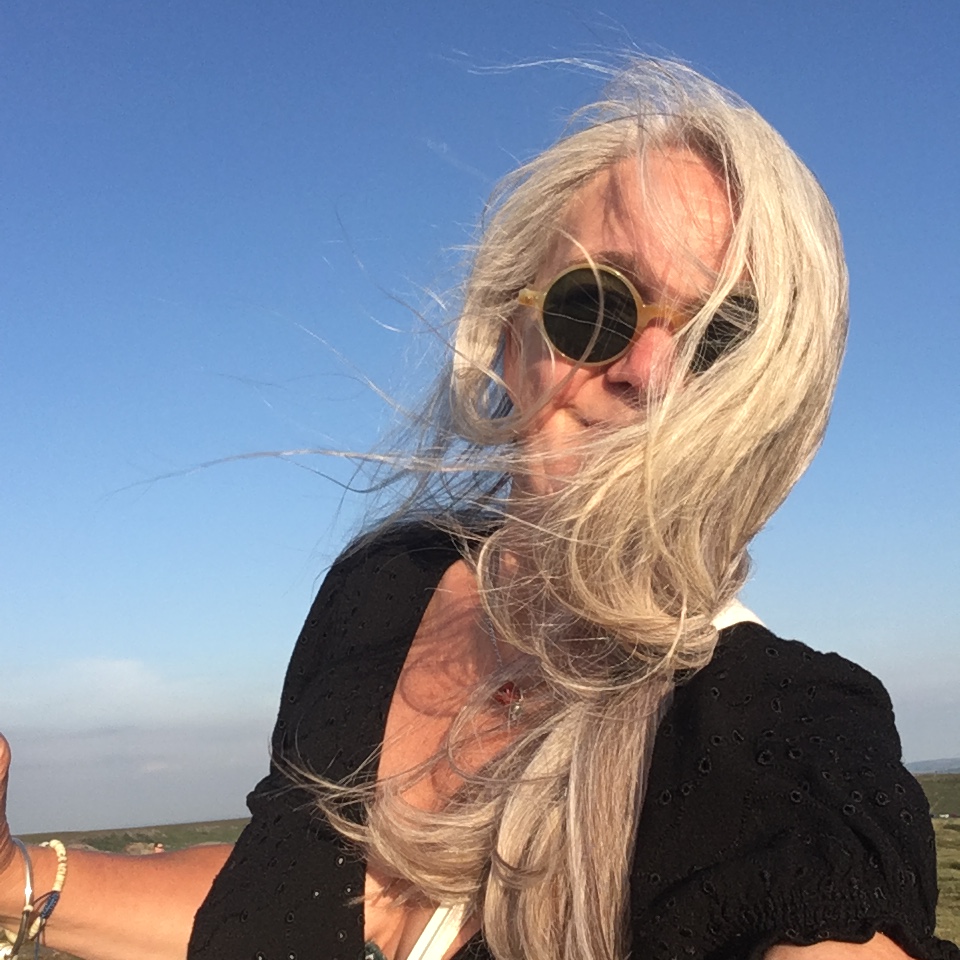
me – 57th Birthday on Stanage Edge, Peak District.
Things, objects – why do we keep things? Things that we don’t touch, or wear, or read or look at or even eat anymore. (go look in my fridge at the jars and see what I mean)
I am packing to leave on an unspecified date and in an, as yet, un arranged manner and it is dawning on me the magnitude of all of this. Initially, packing is quite exciting – interesting even. I open the kitchen cupboards, empty things out that have not seen the light of day in the 3 years that I have lived here, dutifully wash, dry, wrap and pack them in boxes that I have been collecting at a rate of two a day from the corner petrol station. I pack in a fine order to be opened up at the other end in an organised fashion. The boxes grow like interior walls and building blocks under other things – like tables and the bed and I begin to drown.
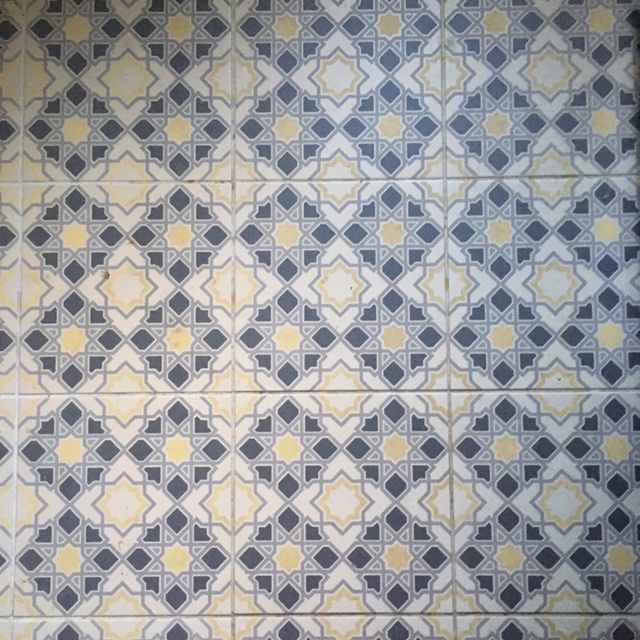
Reality of the movement of all of these neatly packed things is brought to a very sharp head when the removal company from Shetland call to say that I have too much stuff for one van and I will need two. The weight is too much and the size is too much – they want to see a video of all the stuff. A whatsapp video call is dutifully planned and I look around. It is dawning on me that it might be an idea to burn it all – all this stuff and be free. The boxes that are packed have things that I might need – a solid frying pan for that camp fire I might have, beautiful embroidered sheets for that guest I might have, my four vases for the flowers I might pick – it goes on and on for things that may never happen and it dawns on me that I am moving things, at great expense, to another place that is tiny where I want to be free. There is an internal argument for keeping these things because replacing them is expensive, they have a history with me, they are good quality – the argument goes on and on but comes to a wonderful crescendo whilst washing a tiny cut glass trinket thing with a battered silver lid with ancient patina going back to Victorian times. It’s washed, placed onto the drainer but slips gracefully and almost in full technicolour slow motion on to the Portuguese tiled floor and smashes into shards and chunks. Immediately, it’s rendered useless. It’s neither aesthetically pleasing nor valuable. It’s gone. And with that simple result I feel nothing and it is let go. This thing goes in to the bin.
I’ve left previous lives with a few bags and boxes. I’ve travelled to China with a back pack and bag with wheels on. Always, I was starting again and it always felt liberating – cathartic even.
So, when I get time, I will unpack and remove things. Because none of this can come back from that island and no one will want it which brings to mind all of the derelict abandoned croft houses I have been in across Shetland – some containing household objects of the previous occupants; china cabinets with their tea sets all toppled over in dust. They couldn’t take it with them – wherever they went and no one else took it.
And, in my case, why would I cover a Shetland life with an English one?
Dear lover of Yarn Stories and of the tactile art of knitting,
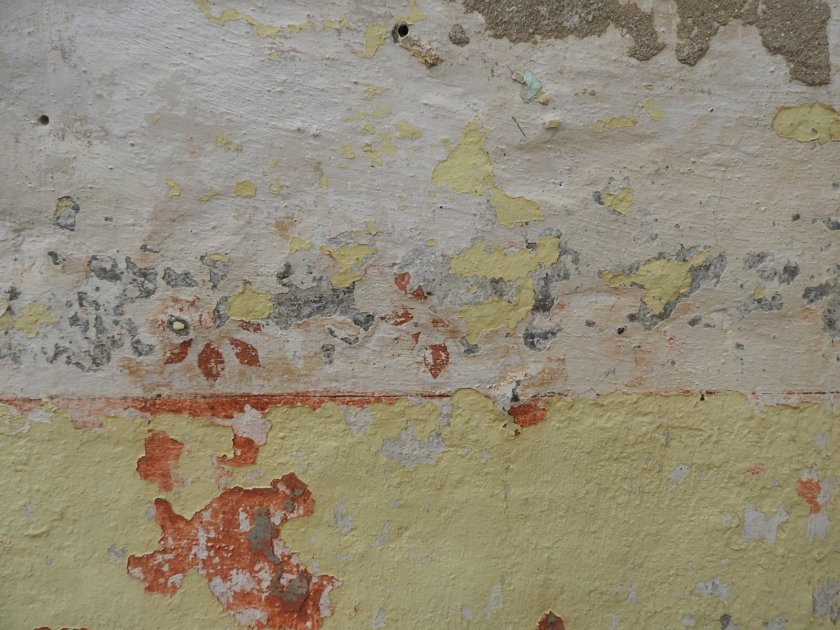
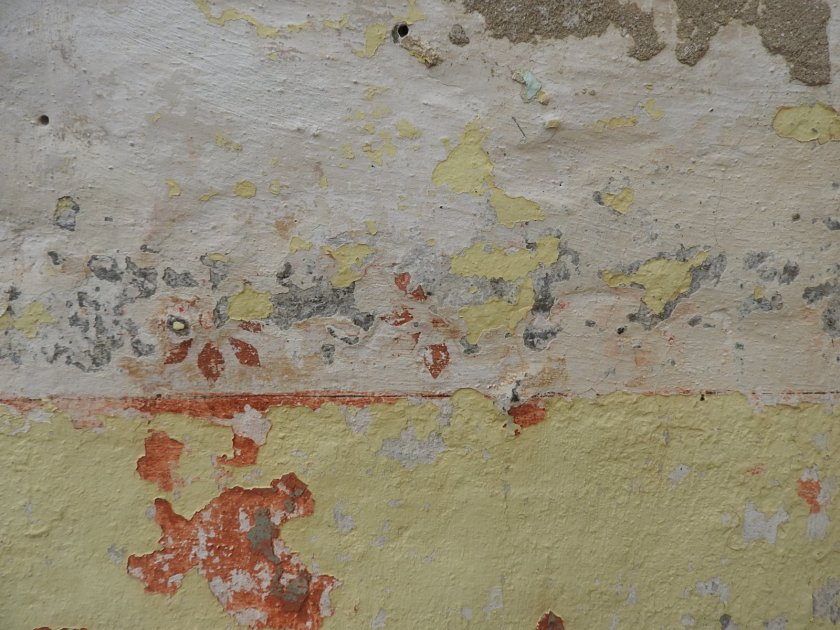
Making marks at the border of two paint colours.
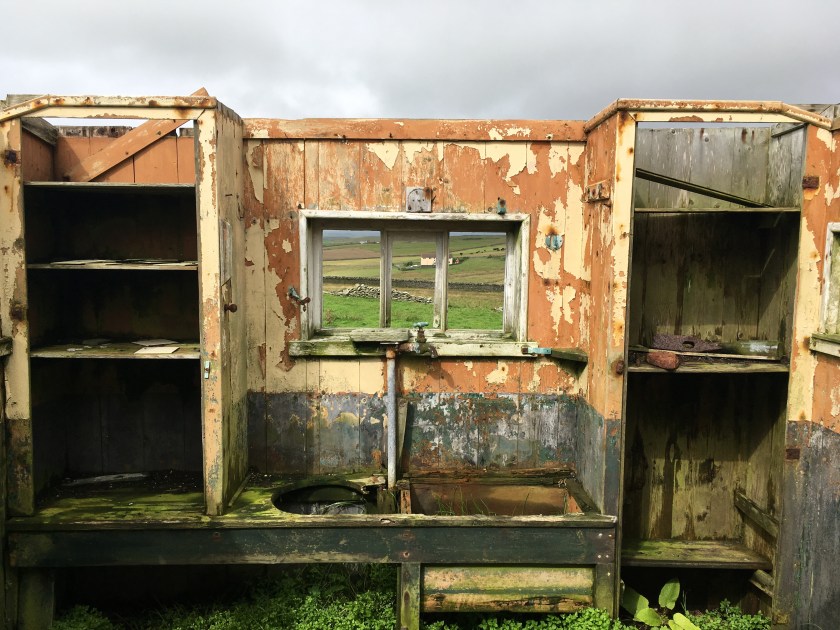
I have designed a hat which harks back to my wanderings across Shetland. This hat didn’t just happen. It has a story, as have all the knitted articles still in Shetland. I wasn’t born in Shetland but my heart resides there. I can say that my hat was ‘inspired by’ but that feels too shallow. The hat was made like a recipe, gathering the ingredients by sight, sound and touch. This hat recipe has painted flowers in it, abandoned crofts, tussock grass, boggy land, a home without a roof, a lean-to kitchen and women and their creativity in it.
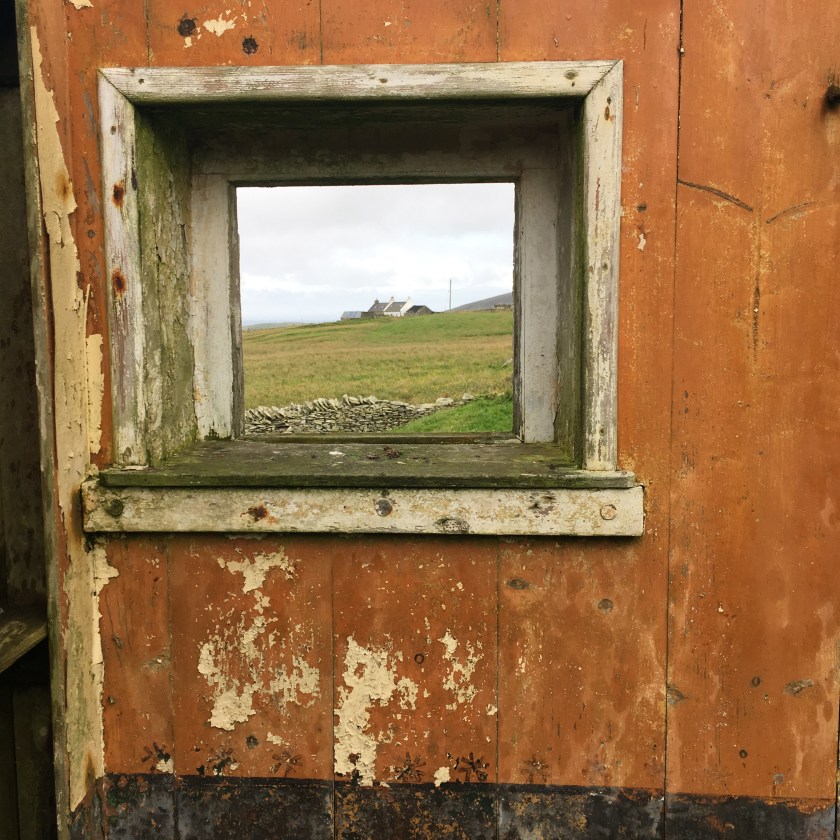
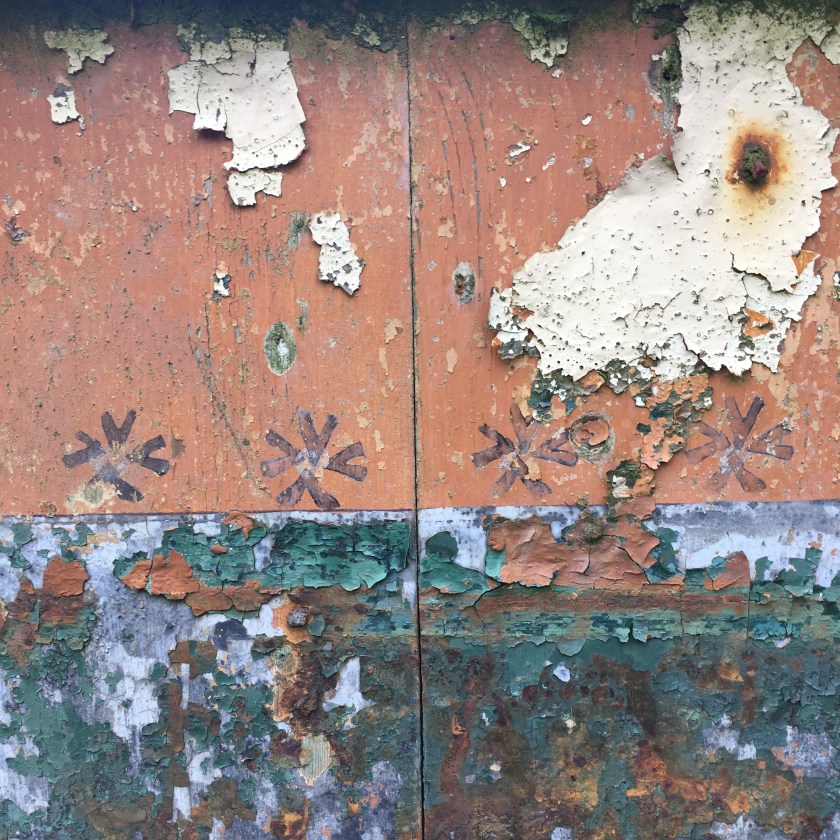
Painted by a woman, I think, by a woman with cold hands and an eye for detail. She will have looked at that wall and maybe, whilst knitting or walking or crofting or cutting peats, or caring for the children or family, she might have thought how she would like to make the walls pretty. Stencils seem visible in some homes. Where did the stencils come from to arrive at such remote, isolated homes? This unassuming row of flowers is deeply moving in its simplicity. Far away from neighbours, with a view of the sea, between the window and the sink is a row of 8 pointed flowers. The point where the energy of present and past meet are at the end of my touching finger and the disintegrating row of flowers. In some parts they have been painted over, but they are clear and proud. I ache at the beauty of the most simple stamped design carefully placed in groups of four V shapes to make an 8 pointed flower.
When did she think this pattern up? How did she do it? As I step back, I feel the same sense of pride that she must have when stepping back to see her row of flowers in her newly fitted kitchen in the lean to. A sink, a tap inside, cupboards and a border of flowers. I can see it now. The cups and plates and pans, with a view of the sea. This moment of really seeing takes my breath away. I stay for only a few minutes. Long enough to touch the woman that lived here long ago through her creativity and eye for detail and the end of my right forefinger.
Since September 2015, when I first visited Shetland for Wool Week, I’ve revisited the Islands many times. Over the years, I’ve stayed for weeks and months at a time, including stays with Barbara in her beautiful house built by a Sea Captain overlooking the sea in Lerwick, an R&D trip to Unst, a 4-week artist residency in Scalloway, 7 weeks with Mati Ventrillon on Fair Isle and 2 weeks in Brindister with endless stays in between. Returning to Shetland has always been about knitting. During these visits I began to build a strong love for finding the derelict, abandoned croft houses that are visible across Shetland, to see the interiors to in some way connect with the women who once lived in them. I’ve looked at censuses to find out who lived in certain homes and looked at their professions, I’ve looked at photographs of women in books ploughing the Fair Isle land who are looking straight into the camera lens, then I have gone to the walled old grave yard by the sea at the South End of Fair Isle and sought out those women by their names on the stones. I’ve worn old original Fair Isle cardigans, sat in the Lerwick library for hours and hours pouring over the Shetland knitting books and crossed the seas to touch and feel knitwear created by absolute artists of their time. All of the knitted pieces that are still in Shetland today, tell a story – a story of the woman who made those knitted pieces – the work bears a story that is woven into every stitch.
On my walks across Shetland, I found and looked at many derelict croft houses which were the homes of knitters, crofters, mothers, fishers, daughters and ‘spinsters’. The more I looked at, and went inside the homes, I felt more of a connection to the women who had lived there through visible signs of the past. My most favourite croft houses, which I visit each time I return, bear the marks of flowers, and leaves painted onto the walls. Each design is carefully and beautifully made by the families who used to live in those homes. I can imagine a woman carefully stencilling or stamping the flowers in a border around the wall of the lean-to kitchen. Some wall painted decorations particularly move me because they are so deeply powerful in their simplicity. I gently touch the patterns to feel through history to a time when a woman painted them long ago in a past that I long to know about.
As I walk away, always, the lasting memory is of the painted walls and it is these that I am honouring within this pattern. This hat pattern is inspired by the disintegrating flowers and leaves that I have found painted on croft house walls and the hat is made as a testament to the gendered craft of knitting, home, and to the beautiful women of Shetland, who knitted all of their lives and made homes a welcoming place.
here, you may find the Shetland Wall Flowers pattern.
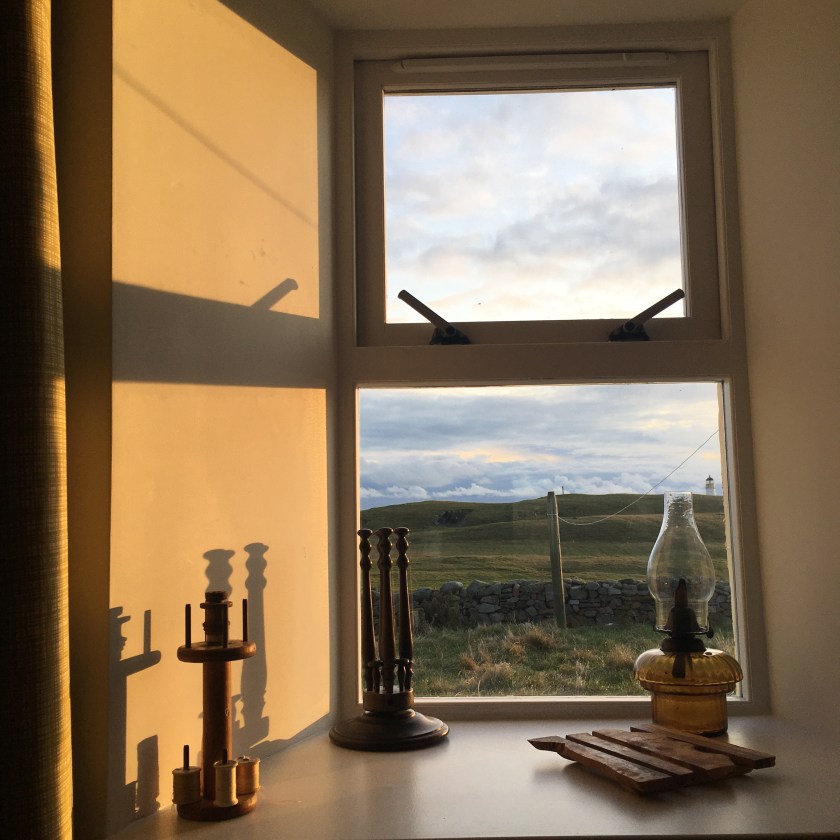
The light in the croft house dims sooner than at Mati’s house. The croft’s windows dictate the change in the amount of light within. Two – feet deep walls hold the place up. The deep walls narrow into the windows – each of which look out to every corner of the globe on this island which is only three miles long. I look out south-facing to the light house and gauge the weather by the grass waving or whipping in the wind and by the waves crashing or ebbing on the sea.
home for a while – Fair Isle
The intention is to leave no rubbish after my 9 day stay here. Everything has been bought at the one and only shop at great expense. Everything has come a long way and been handled by much transport – even from Lerwick, either by the local plane or boat from Grutness. I hand picked all the vegetables and packed them in brown bags. All of the peelings will be saved for the pigs at Mati’s, which are owned by four people and brushed by Saskia. I’m learning about animal behaviour from those pigs. They have grown from shy piglets arriving in a cage to grunting and squealing with anticipation at their one and only priority – food. One even bites the other.
Even after 3 weeks, Fair Isle is now so deep in my soul that
I already miss it and yet I am still here – how can that be? I miss the island when I am deep in the
moment of it. It’s like I don’t want to
lose it or I can’t lose it for to do so, would be to give up on a life less
ordinary.
I’m here with Mati as a knitting intern, (maybe the oldest intern in the West at age 56) I’m learning a lot, not only about knitting but island life, the sea, the wind, the land, grass, animal behaviour, the sun rise and whether the plane will come. Where can ‘A Body’ see an unbroken horizon at every window without hesitation. At every lift of the head, a huge deep basin of silver sea greets you. Seeing the sea, hearing it, tasting it makes it seep into your soul. The nights are so pitch dark that my heart quickens at the deepness of the darkness, when I open the door. Nothing can be seen when ther is no moon, except the light house light but even so, it adds to the eeriness of being able to cut darkness with a knife.
There is a book full of old images of Fair Isle islanders
here. I look at the women’s expressions
and how they stand unquestionably, stoically face on. They are all working hard with oxen, ploughs,
knitting, or peats. Maggie Stout of
Shirva is the woman that interests me the most. I cannot stop looking at her
looking at me. I can almost feel the middle
parting of her black hair with my finger – it is so pronounced. This place I am living has a long history. You
can find it easily. It is written across the stones in the grave yard. On a wet
Sunday afternoon, I look for Maggie on the stones. It’s beautiful. The names are listed on the stones, where
they lived and who they married. Women appear to bear their maiden names even
though they are married. History is
tangible here, as across all of Shetland.
How many women moved a curtain aside to look out to sea and wonder about
their men out there, wondering about their safety and return. The weather
changes at a pinch. The stones bear many stories of death at sea.
In this place are larger than life ship wrecked items of great beauty – two identical figurines and two mismatched simple chairs which add character and richness to this small croft house that I am staying for 9 nights.
ship wrecked
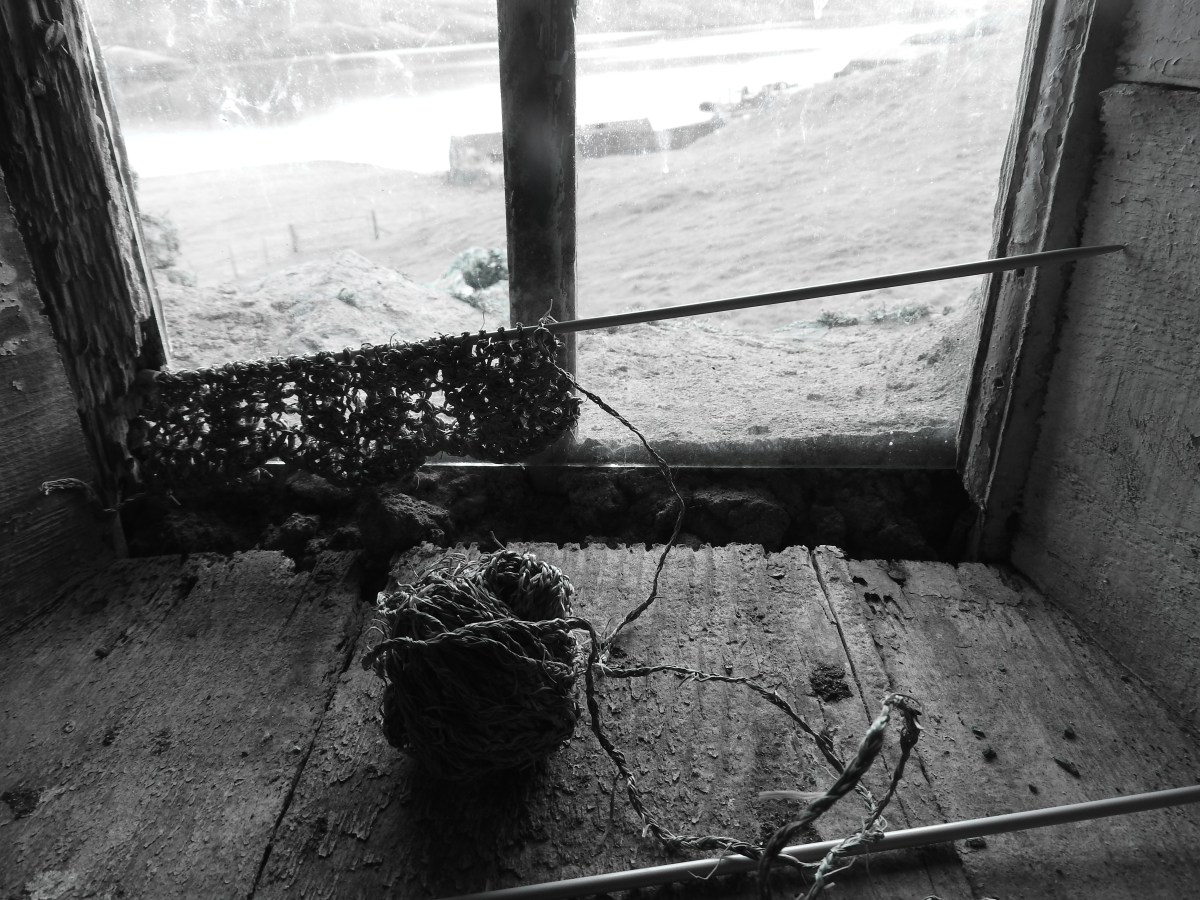
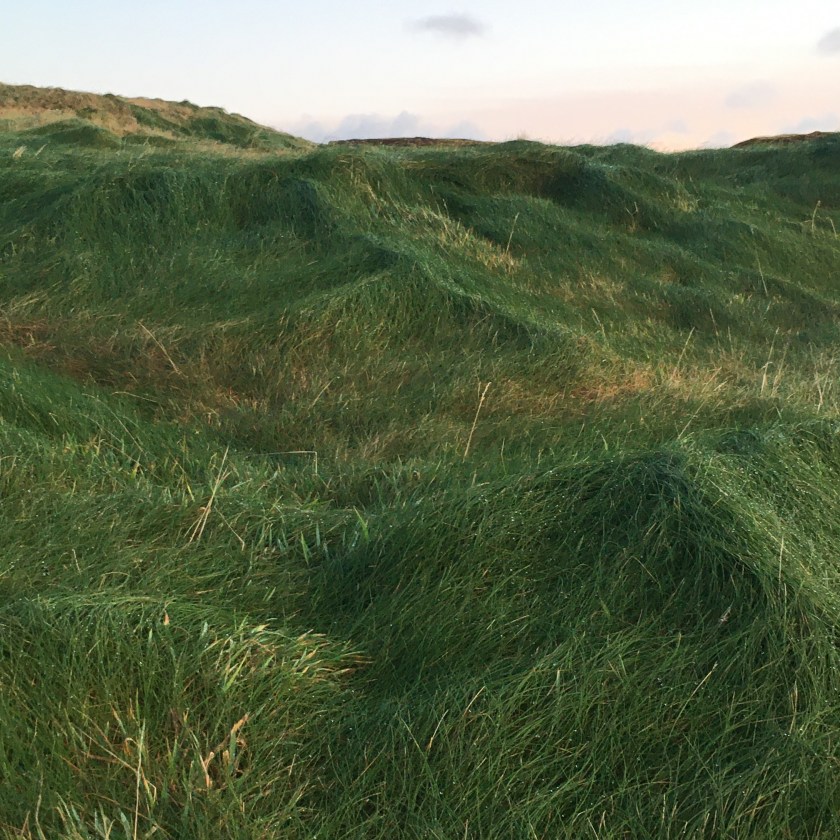
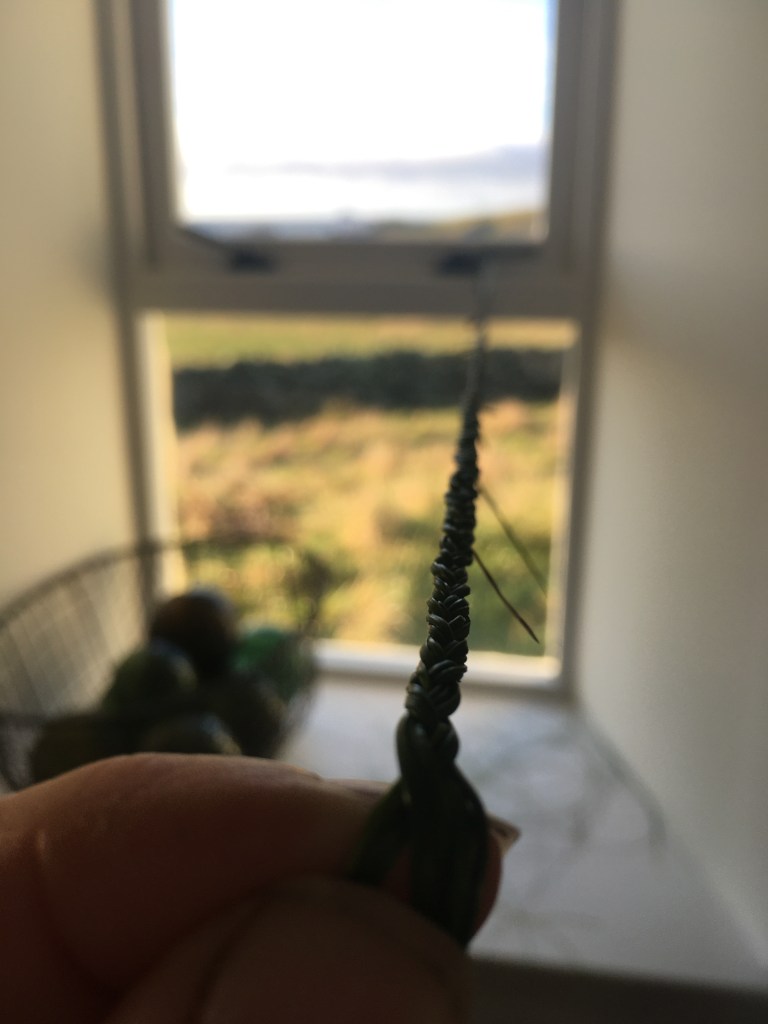
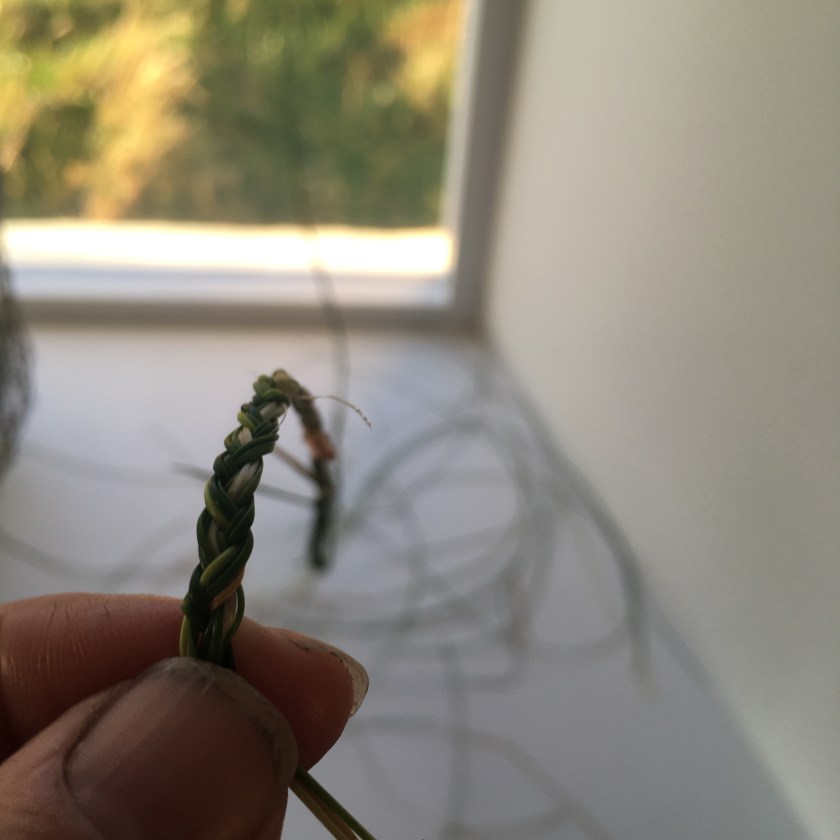
On the second day, Marie and I cut tussock grass, which is growing just below the chapel, with house scissors. We bag it. I want to knit it and make a lace curtain from its yarn. I’ve long since loved Shetland grass which grows at great length untouched, untrodden on and forms in dune-like shapes carved by the wind. We cut it without knowing its possibilities or strength. I spend 3 days and evenings plaiting the grass into a long length and a ball of grass yarn. The grass is strewn across 3 floors and stuck to everything. When knitting and unknitting, because I am dissatisfied with the results, the grass yarn bears the memory of the stitch.
I am using the resources of the island to create something to connect both with the island and with the age old practice of knitting in order to make site specific / site responsive work back in the Shetland landscape. It will be about the women knitters and a skilled craft that when placed within the landscape, will create a personally constructed context or narrative. My work is created around the theme of gendered women’s creative knitted work that is often undervalued and underpaid. I work within a place to learn the skills embedded within that area and I position my work back into the landscape to connect place, time, history, women’s craft and that pure moment in the present. If it works, for me, there is a distillation of experiences.
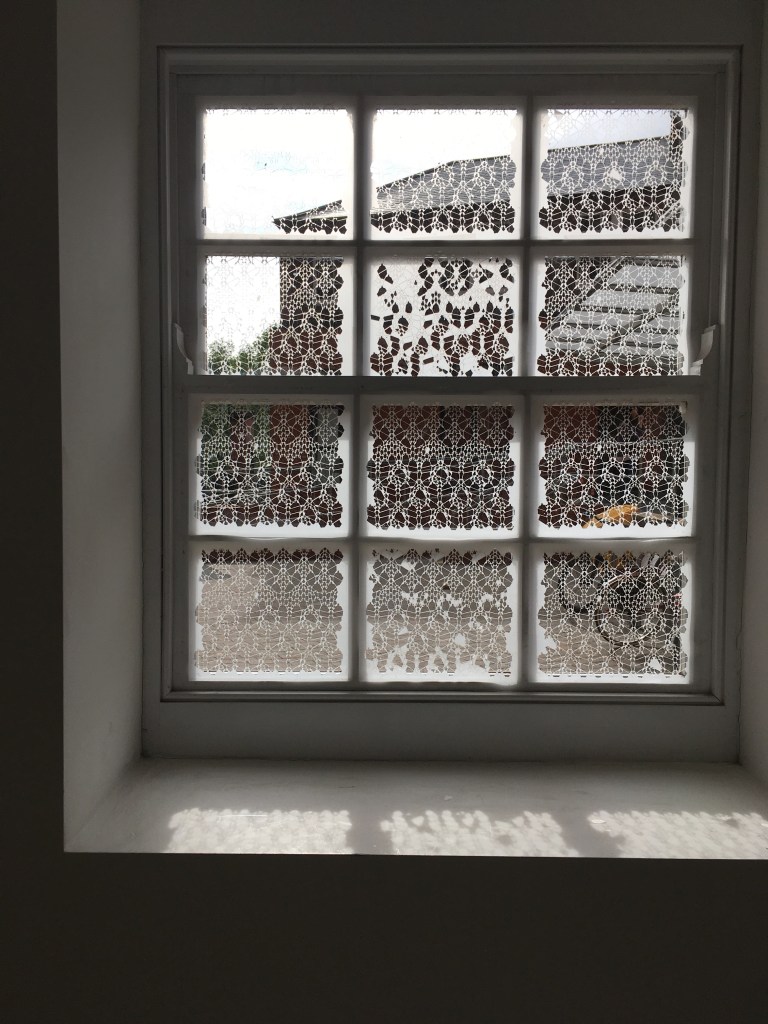
As I am working with the materials to hand – grass – and the thought of the women who lived in the croft houses here and how they knitted to subsidise the crofting income and how they dressed and looked in haps – I will choose to knit a hap lace edge and find the right window to place the lace knitted grass. It will be a window that women will have looked out of many times, over many generations whilst working on a croft in Shetland.
At every visit to Shetland over the past 4 years, I always
take time to return to an isolated, derelict, lonely croft house on Bressay where
I respectfully and quietly develop a creative practice that speaks to me of connections
and belonging.
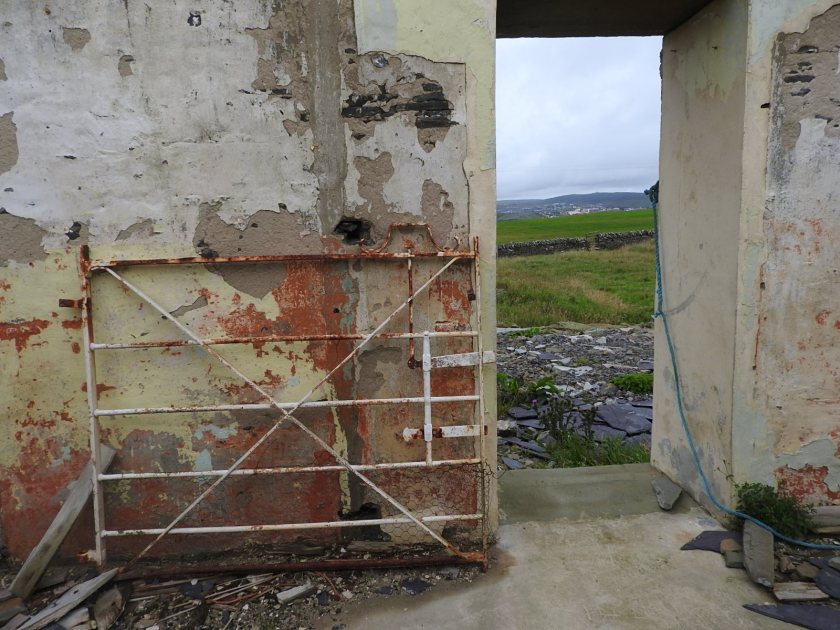
The deterioration of this 2 roomed croft house has been logged since I first saw hand stencilled flowers painted across the walls at waist height in 2015. The last family who lived in this small home painted those flowers but now they are gone. The croft house may be small in size but I have spoken to a woman who was born there, as were her brothers and sisters and her mother and her own children. It was her grandmother’s house and I heard of three generations of women who went home to give birth to their children there.
march 2017
Because I know this, I hear the sounds in the plaster on the
walls that is now, year by year, disappearing away down to the stone fabric of
the build.
For weeks before returning this time, I had made preparation
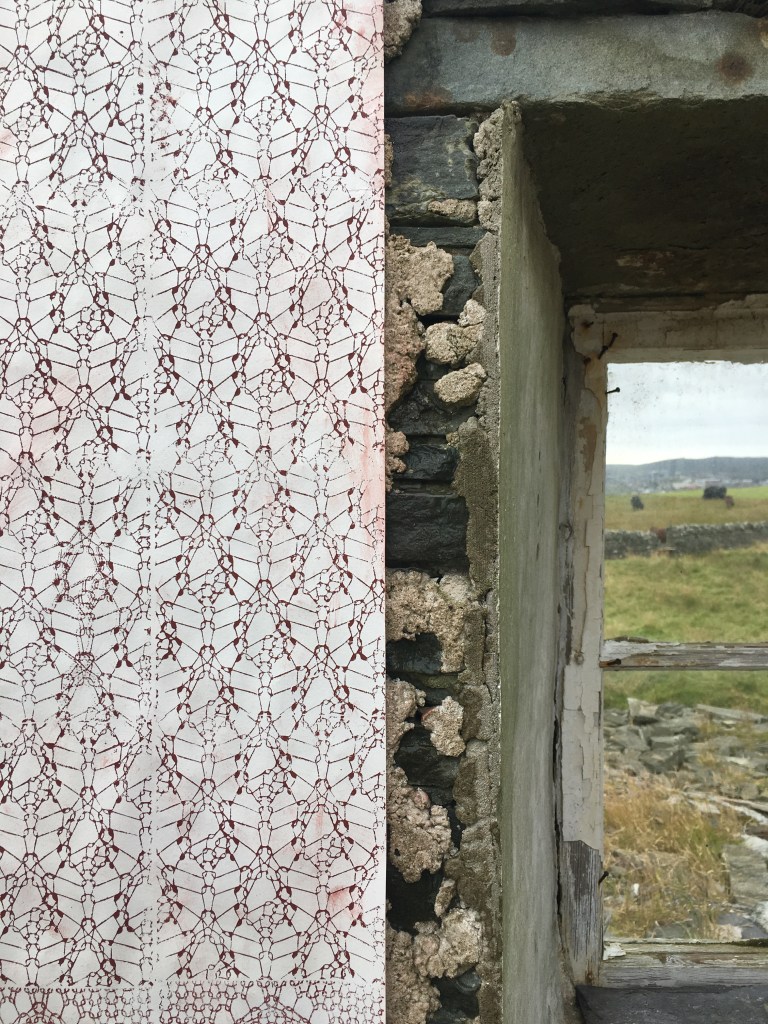
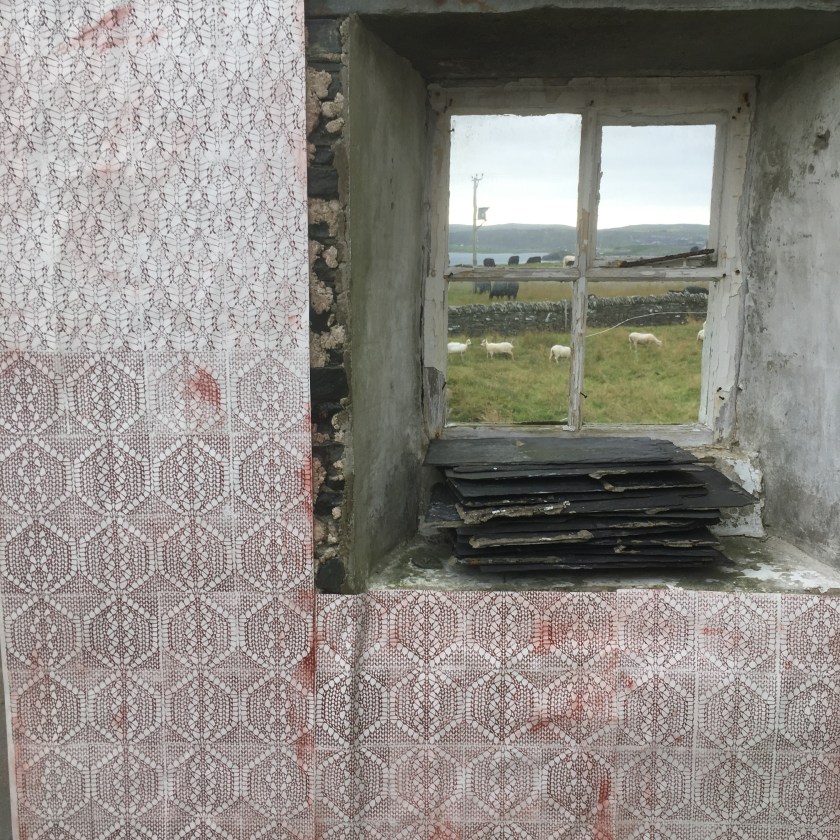
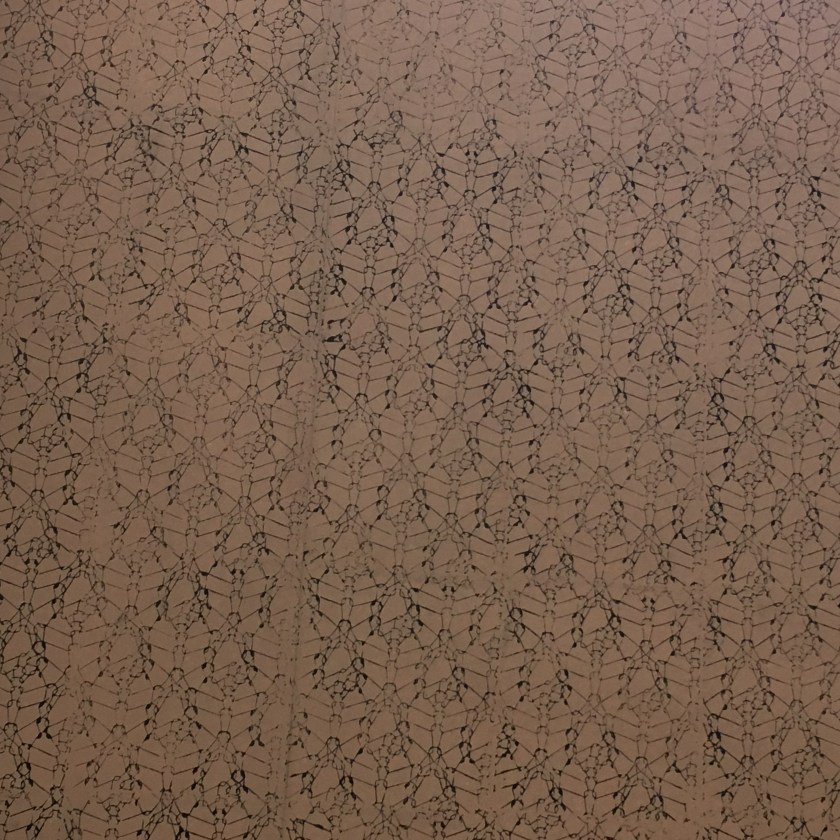
for my reunion with the shell of a house, by making it a gift of hand-block
printed wallpaper with a Shetland Bird’s eye and a Brother / Sister lace
design. This wallpaper has been a couple
of years in the making from learning CAD knit to using the stitch pattern to
create a laser etched rubber stamp to print the design. Material process and practice led research has
always been the core of the development of my art practice. I have long questioned – is it craft or art
and is it relevant today a Contemporary Art arena in a time of changing
families, fragmented families, home life, belonging, gendered women’s domestic
craft of knitting and narratives of those women.
The world is speedily changing and what can we say through
art that will make a difference to someone for a moment to stop and think and
feel.
Last week, on my first day back on Shetland, I nipped to see the derelict croft house. As I was rounding the corner on the hill, my pace and heart quickened at what sight may greet me as it had been 15 months and a cycle of 7 raw weather seasons each taking its toll on the exposed walls since my last visit. I hoped the house would be standing proudly as before which it was. It felt like meeting an old friend. Returning to make work here is not a safe option. It feels as if I am breaking and entering, although the house has no roof and takes the label of ‘barn’. I know it was a loving family home that just happens to be falling down on farm land which is owned by another person. I visit it like an old relative. I look forward to first sight of out and in. Each year, I notice change.
On Tuesday, I returned again. This time, I carried the wallpaper,
paste, brushes and measure to wallpaper around a window that I know so well. I
had a hope of making creative work that spoke of belonging and connection to
place and women’s domestic craft of knitting, maybe something of my own
personal journey to this point.
I measured, sized the walls, and hung the strips of paper on crumbling plaster in the hope of creating something that touched on the embedded experiences I had during the making process. A connection of past and present. I’m interested what other people see. My critical eye firstly noted that the water based ink ran when touched by water based glue, and that the design would have probably looked better with one style of lace pattern and at best it could be described as imperfect and at its worst – well, you can only say but actually, on a practice led research level, the piece did work because in the right place, with the right print, I know I can create a piece of work that does speak of belonging.
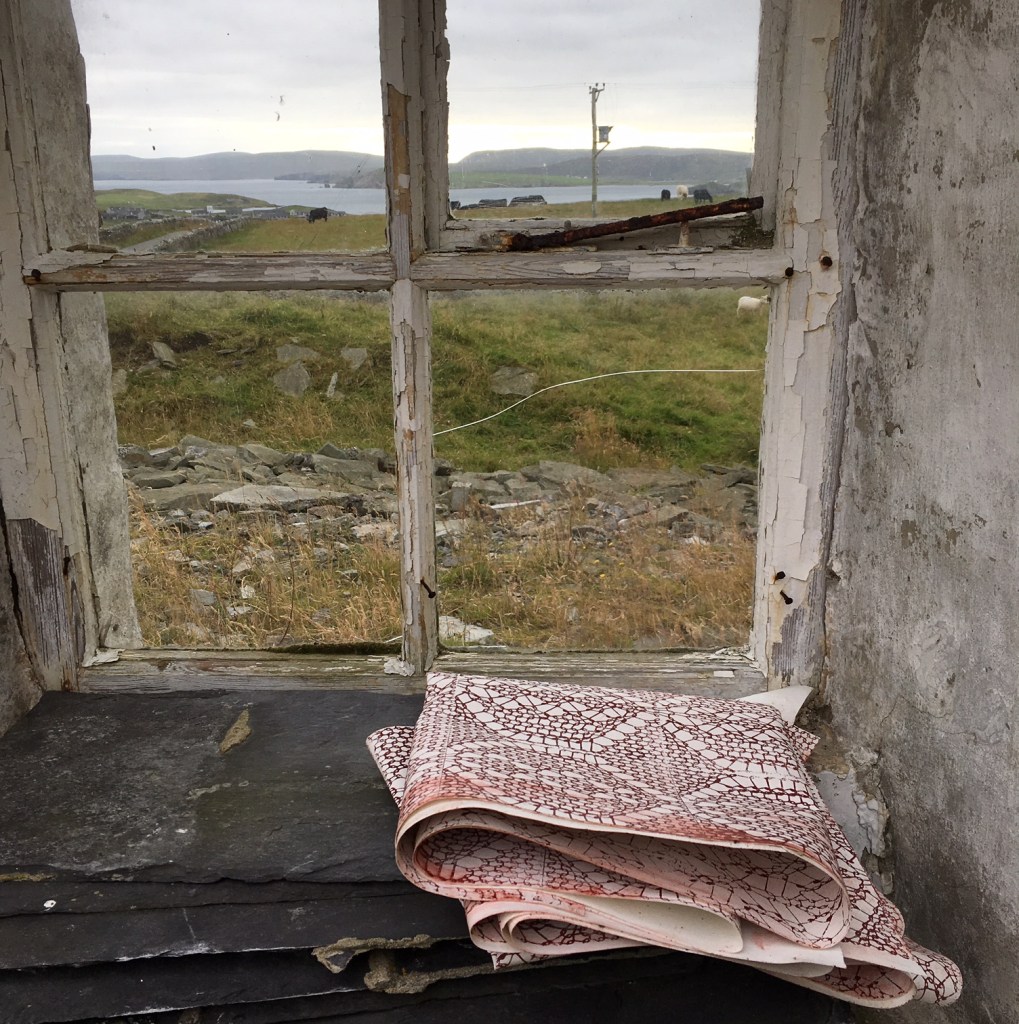
After I stepped back from it, I recorded my initial responses and photographed the work then I pulled the paper off the wall, folded it and took it away for the bin back in Lerwick and Left No Trace.
leave no trace
Leave no trace, only record the moment of a coming together
of a conceptual and expressive property which remains personal. What is this work – is it Art? Textile art?
Ethnography? Materiality? Am I telling stories? Am I making stories? I’m trying to understand it in a way in which
textile materials and techniques are expressed in contemporary site-specific
art in order to tell a story.
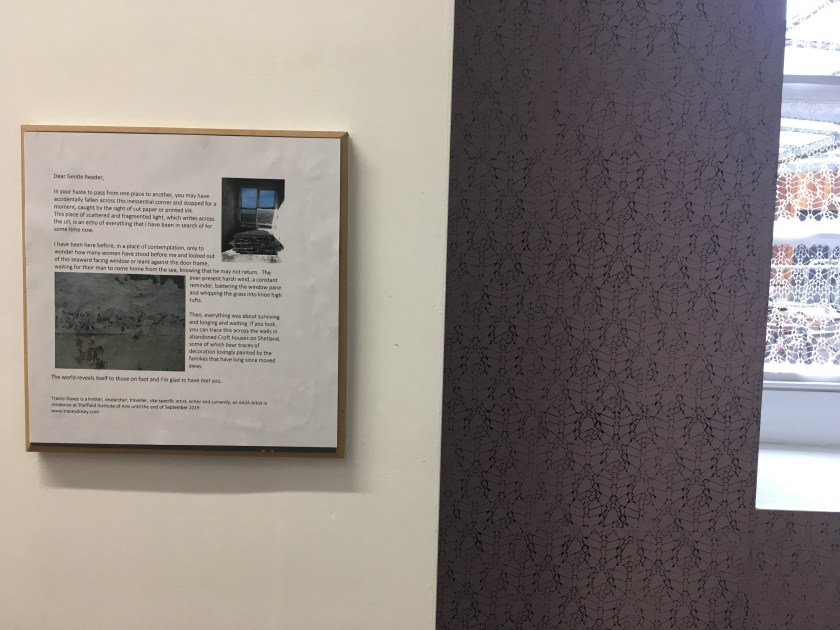
In
your haste to pass from one place to another, you may have accidentally fallen
across this inessential corner and stopped for a moment, caught by the sight of
cut paper or printed ink.
This
place of scattered and fragmented light, which writes across the sill, is an
echo of everything that I have been in search of for some time now.
I have been here before, in a place of contemplation, only to wonder how many women have stood before me and looked out of this seaward facing window or leant against the door frame, waiting for their man to come home from the sea, knowing that he may not return. The ever-present harsh wind, a constant reminder, battering the window pane and whipping the grass into knee high tufts.
Then, everything was about surviving and longing and waiting. Now, if you look, you can trace this across the walls in abandoned Croft houses on Shetland, some of which bear traces of decoration lovingly painted by the families that have long since moved away.
The world reveals itself to those on foot and I’m
glad to have met you.
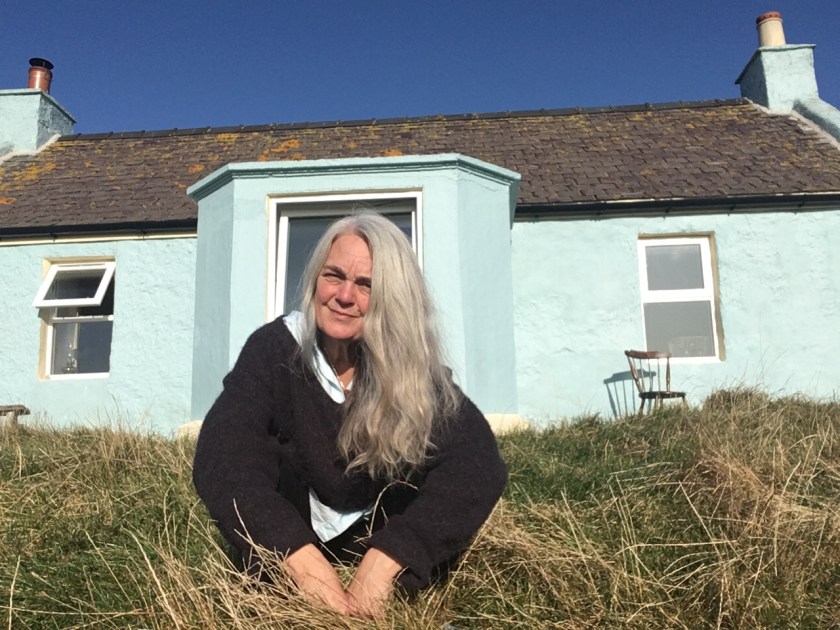
Tracey Doxey is a knitter, researcher, traveller, site-specific artist, writer and currently, an AA2A Artist in residence at Sheffield Institute of Arts until the end of September 2019.













































 tracey doxey