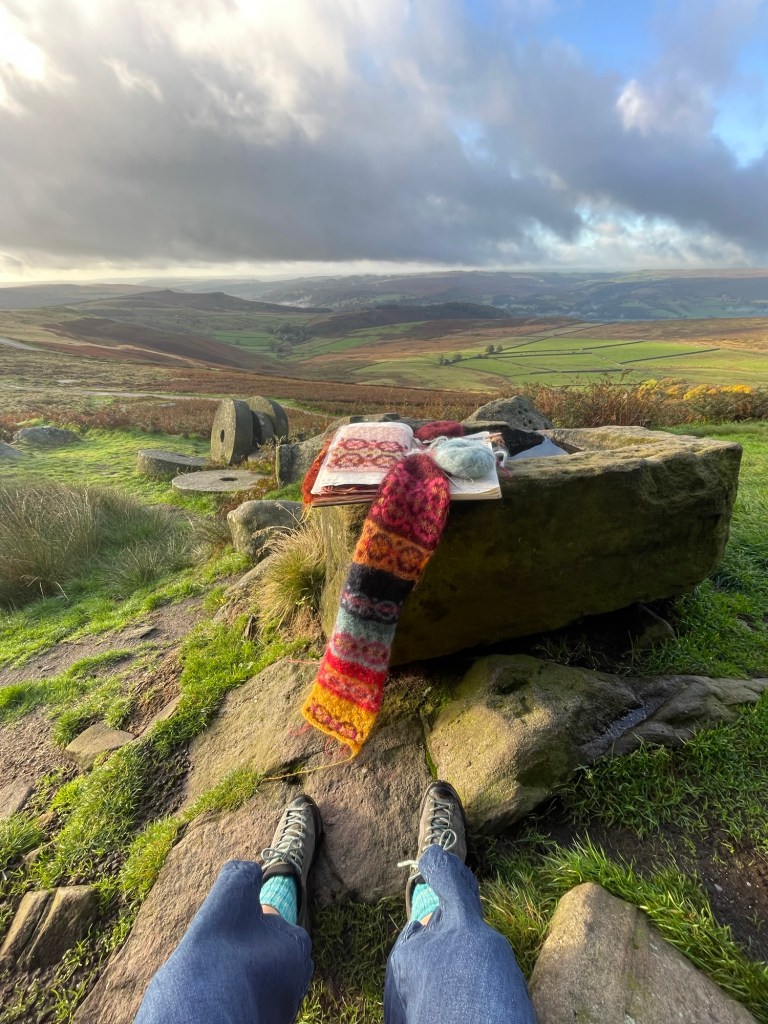
On Friday 16 October, I returned to one of my favourite places to knit outdoors – in the Peak District.
It had been a while since I’d last sat here with my knitting, although I often find myself drawn back to the same places. There is something I love about returning to a familiar landscape, sometimes just a few weeks later, recognising that it has changed completely with the seasons. The colours shift, the light falls differently, the weather leaves its mark, and the view becomes something new again.
The night before my visit, the rain had been so heavy that I wondered whether there might be a cloud inversion in the valley. And there it was.
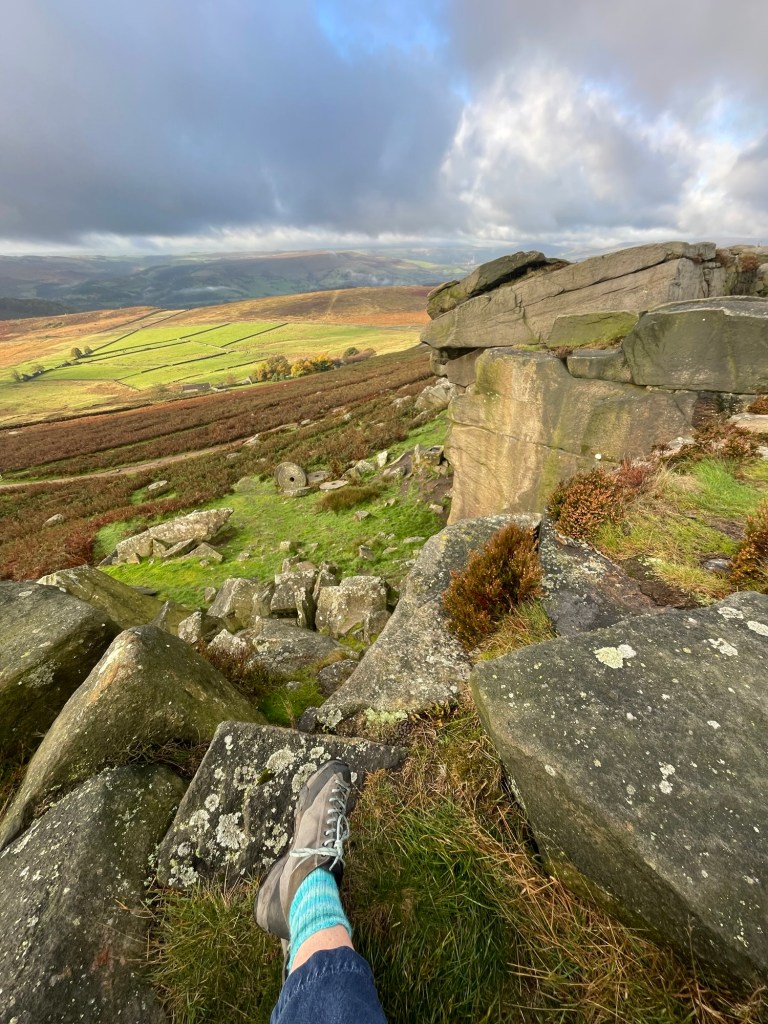
A view of my world
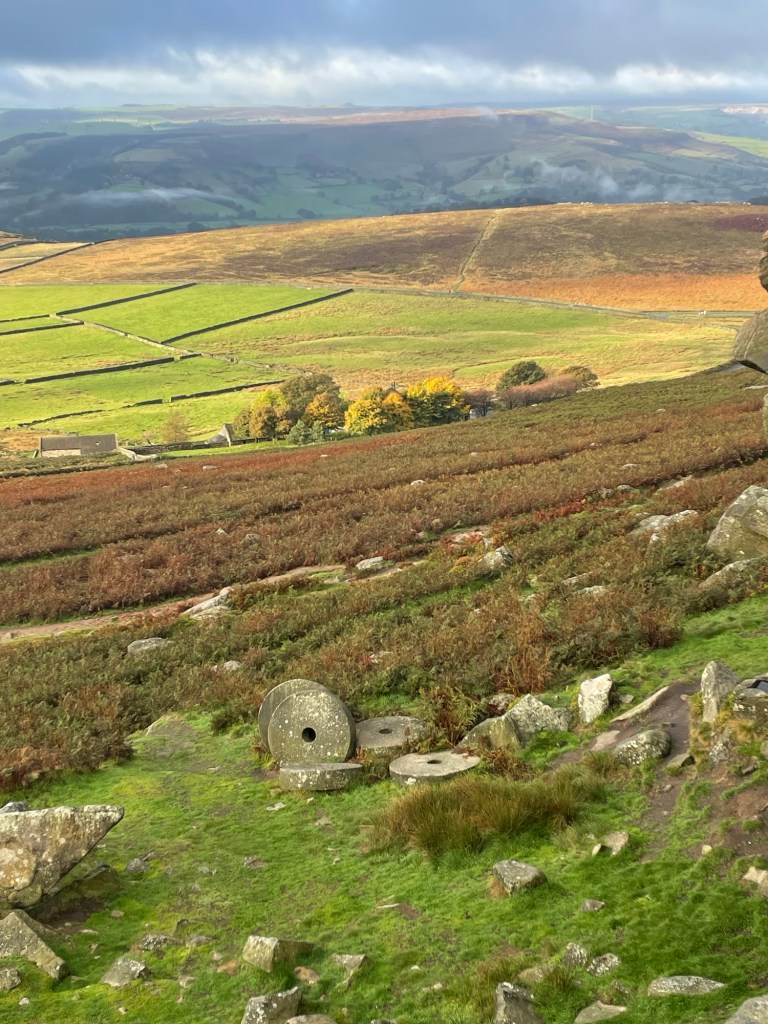
I sat at the base of Stanage Edge, beside the old stone trough and the fallen millstones that have become such familiar companions on my visits.
From here, I have a 180-degree view of a landscape that feels both vast and intimate. Hope Valley stretches out before me, with Hathersage almost visible over the hill, while beyond the edge the land opens into a patchwork of hills, valleys and dry stone walls. On the horizon, I can see the places where people park their camper vans, hoping to catch the sunrise.
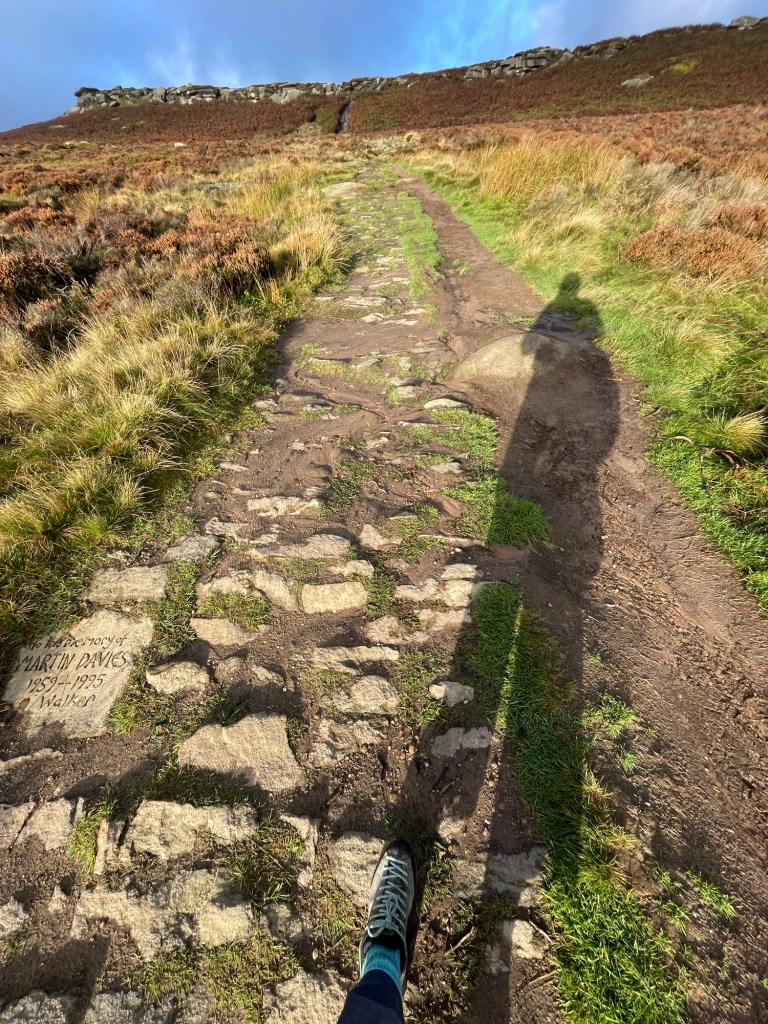
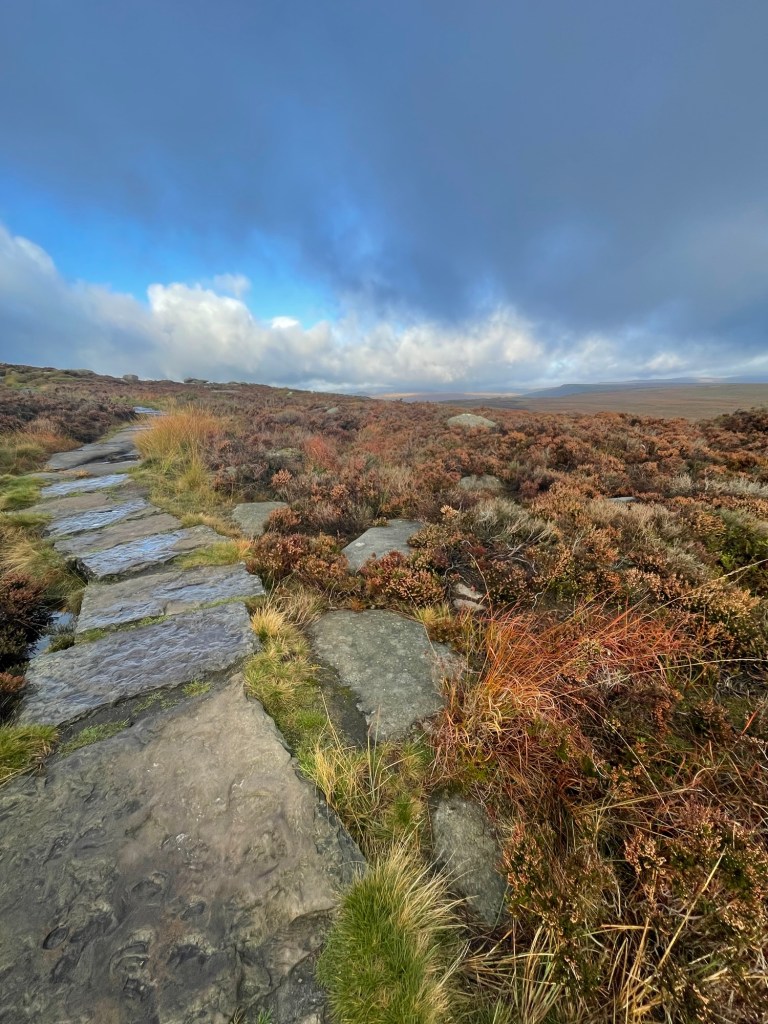
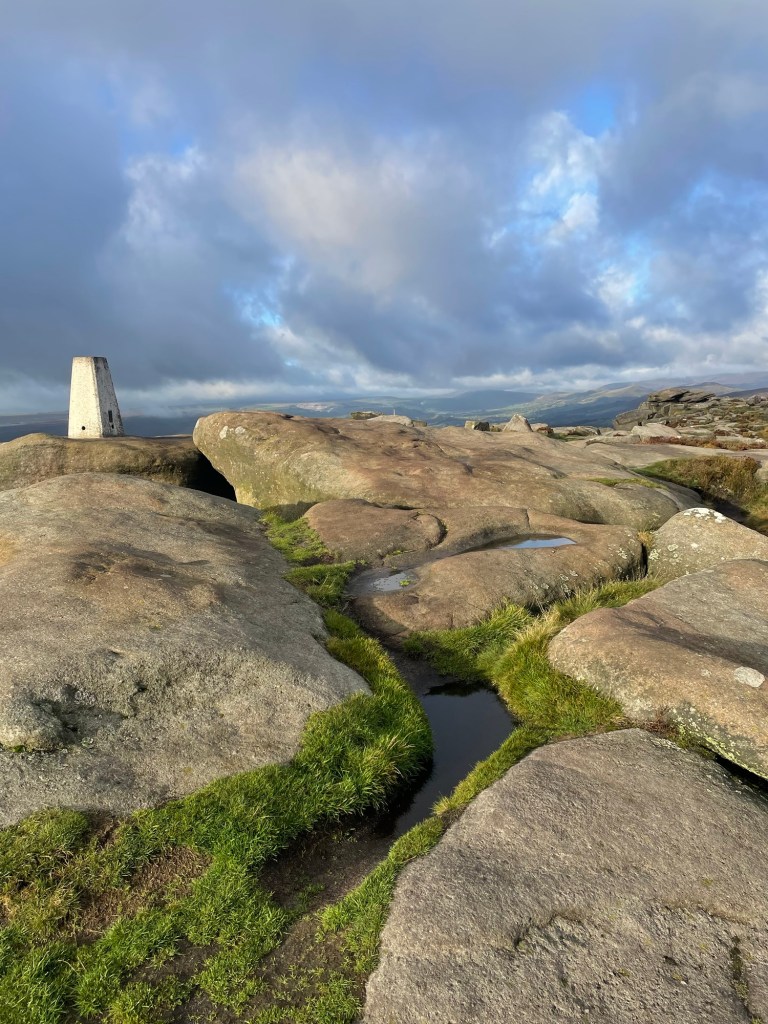
It is a gift to have such a view so close to home – I am lucky.
I love this place for so many reasons: the changing colours, the sound of the wind, the movement of clouds across the valley and the sense of time held in the landscape. Even on a familiar visit, there is always something to notice and although I always go alone, there is usually a conversation to be had on the top of the edge with a passer by also heading for the white Trigg.
And then there are the millstones.
The stories hidden in the stones
Whenever I post photographs from here on Instagram, people ask me about the great stone wheels scattered across the landscape. What are they? Why are they here? And why were they left behind?
The millstones are a reminder of an industry that once thrived across the Peak District. Made from the area’s hard gritstone, they were carved by hand and used in mills to grind grain into flour. Many of the stones we see today date from the eighteenth and nineteenth centuries, although the history of grinding grain stretches back thousands of years.
A typical Peak District millstone measures around 1.8 metres across and weighs approximately two and a half tonnes. It’s difficult to imagine the physical effort involved in making one, let alone moving it across rough, exposed moorland without the machinery we take for granted today.
The stoneworkers often worked on a small scale, with some also farming. Quarrying involved drilling into the rock and using metal wedges to split away the stone before shaping it into a wheel. A team of two might produce only around twenty millstones in a year.
Getting a finished stone down from the moors must have been an undertaking in itself. One suggestion is that the stones were attached to wooden axles and rolled towards waiting wagons. However they managed it, the work would have demanded considerable skill, strength and ingenuity.
For centuries, these stones were in demand. But eventually, the industry began to decline. White bread became increasingly popular, and the gritstone used for local millstones could leave traces of stone in the flour. Later, faster milling machinery made traditional stones less practical, while manufactured composite stones offered a more durable alternative.
Thousands of millstones were made over the centuries, and many were abandoned before they ever reached their intended mills. Today, an estimated 1,500 can still be found scattered throughout the Peak District, weathered by wind and rain, softened by moss and lichen, and gradually becoming part of the landscape.
I find it fascinating that something once made for such a practical purpose has become part of the beauty of this place. These stones are not simply objects left behind. They are evidence of the people who worked here, the skills they possessed and the industry that helped shape the landscape we walk through today.
When I sit beside them, I find myself wondering about the people who made them and the journey each stone was supposed to take.
A little colour, a little knitting, a lot of sky
Of course, I hadn’t come here just to look at the view. I’d brought my knitting and my trusty old thermos flask that Patti bought for me over 10 years ago.
I’m developing my swatches for my next knitting project, and there is something about working with colour outdoors that I find particularly rewarding. Away from the distractions of home, I can spend time looking carefully at the colours around me: the muted greens of the moorland, the russets and browns of the grasses, the grey of the gritstone and the shifting blues of the sky. But actually, this project has been inspired by the Dahlias that I grew over the summer. Their architectural shape and many colours have distracted me for many hours.
On this October early morning, with the valley opening out before me, the old millstones at my side and my knitting in my hands, I felt very fortunate to have this place within reach of home.
Some places ask us to keep exploring. Others invite us to return.
Stanage Edge does both for me.
And I suspect I’ll be back before too long, with another handful of yarn, another set of swatches and another reason to sit awhile beneath that enormous Peak District sky.
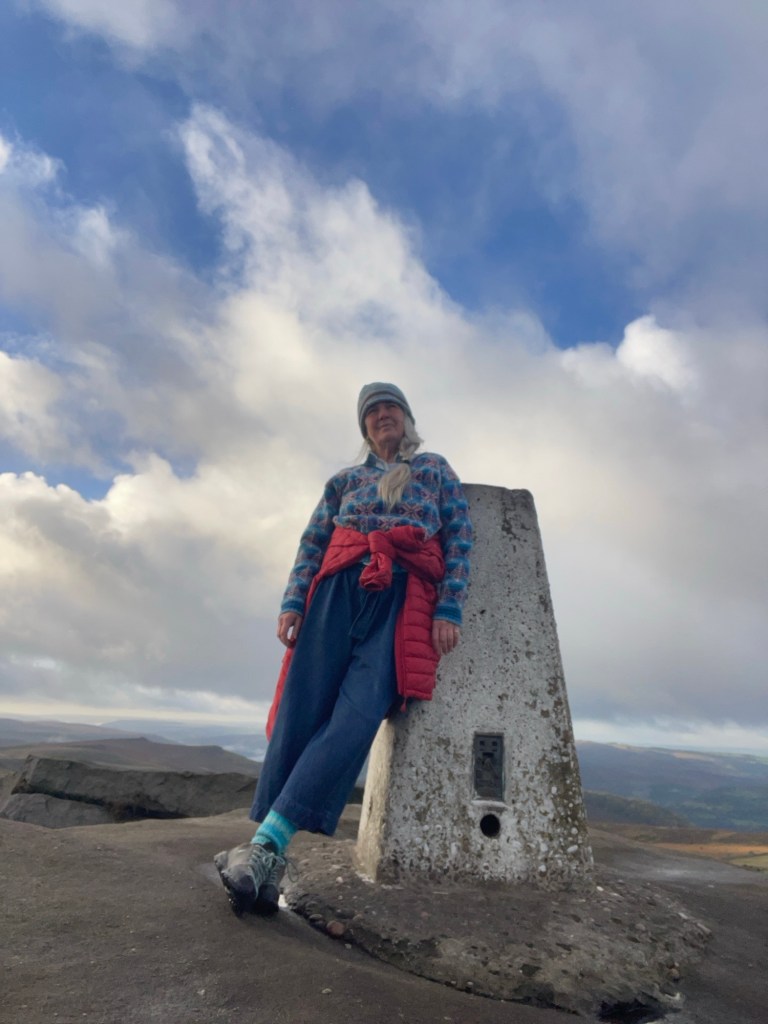
first time out for my Kaliedoscope jumper too.

