Finding Colour Confidence: Trusting Your Eye and Your Yarn
I often have comments on my posts about how people like the colours that I choose. They look at all those colours — beautiful, bright, blended or contrasting and say that they don’t know how to choose their own colour combinations successfully.
I used to feel the same way. Choosing colour felt like a test I hadn’t studied for — as if there were secret rules I hadn’t learned.
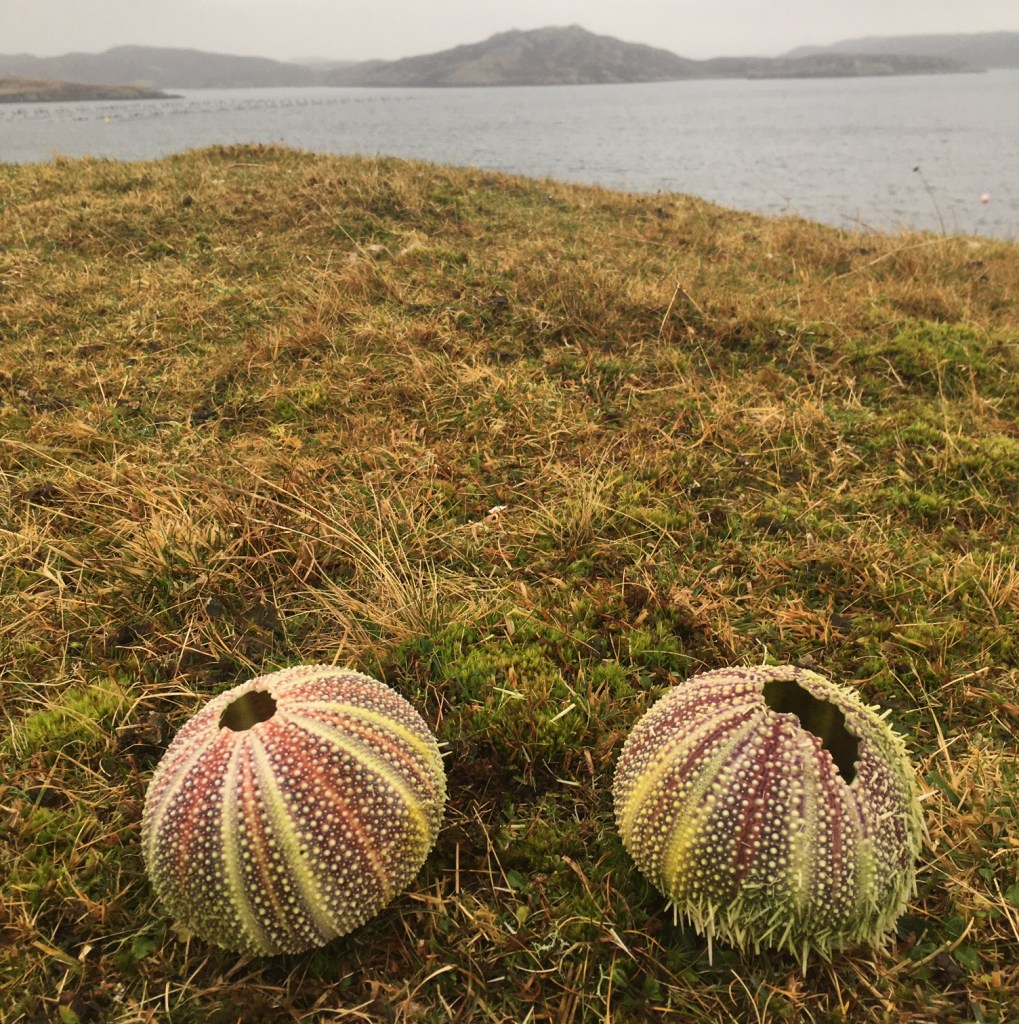
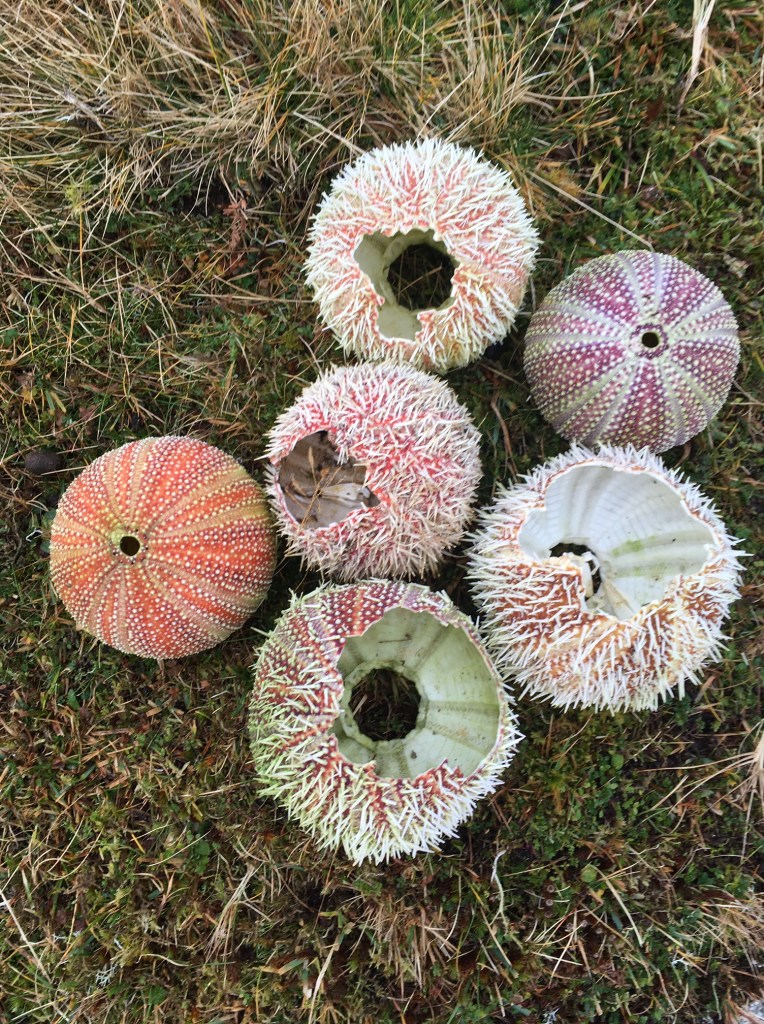
My colour journey started after I went to Shetland to stay on Fair Isle with Mati, then at Brindister just before Christmas of 2019. At Brindister, I found Sea Urchin shells scattered on the hill beside the voe. I began to name the place Sea Urchin Hill and really took notice of the colours and form of the dried Sea Urchin Shells after the sea gulls had eaten the urchin.
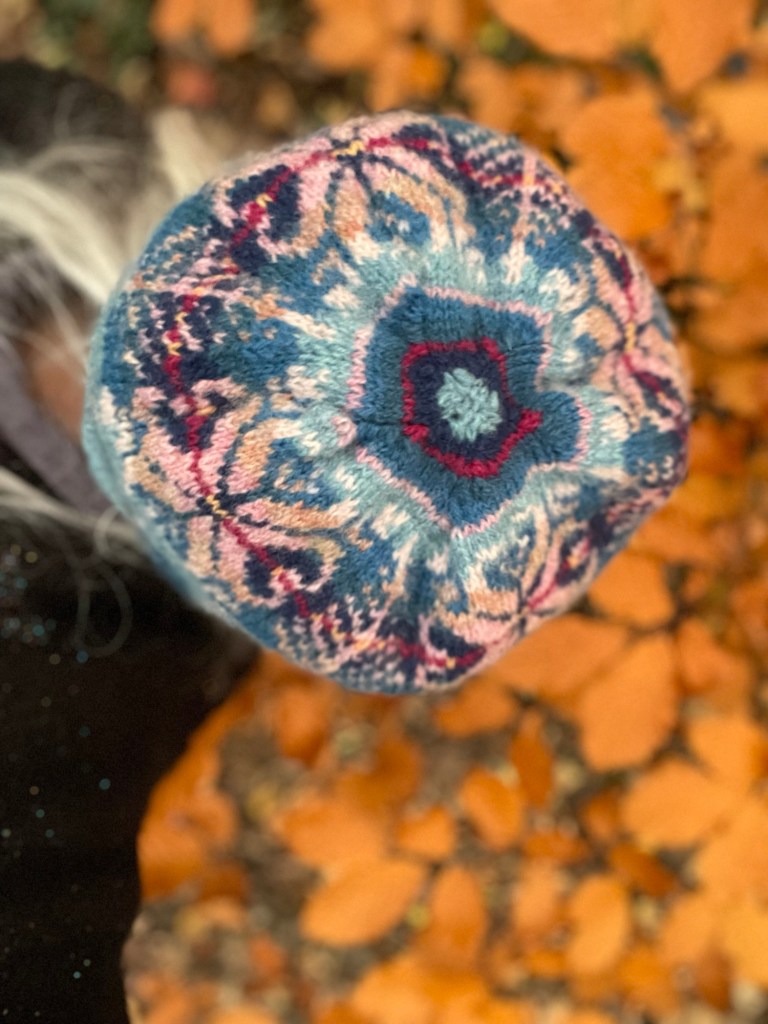
In Jamieson’s of Shetland, in Lerwick, I bought colours that I felt worked for me for a new hat project. By then, I had started sampling colours but still didn’t know what I was doing. When I got home from Shetland, I started the Sea Urchin hat pattern with light background and a darker coloured Shetland Tree and Star Motif. And that is where the story of my colour blending started I laid two yarns together on a whim: a stormy and washy blue skies and a flash of dark reds and purples from one of the shells that I had seen.
. It shouldn’t have worked — but it did. It looked alive. And that was the start of learning to trust my inspiration and eye and I began to blend the colours.
What Changed
It wasn’t that I suddenly “understood” colour blending – my swatch book will show you that but it was that I stopped trying to get it right and started trying to get it interesting and understand the changes in tone and colour. I began to notice colour in the world around me — the copper of old bricks, the green of moss after rain, the pink glow of dusk. Nature never worries about matching. It just works.
That’s when I realised: Colour confidence isn’t about knowing rules — it’s about paying attention, and being willing to play.
Small Steps to Build Colour Confidence
1. Start with Inspiration, Not Theory Forget the colour wheel for a moment. Go for a walk, look through a photo album, open your wardrobe. What colours feel like you? That’s where your palette begins.
2. Work With What You Have Lay out your stash and make little “yarn bouquets.” Mix fibres, tones, and textures — even scraps. Sometimes the most magical combination comes from leftovers you’d never thought to pair.
A Palette from the Everyday
This week I took a walk through Sheffield woods — everything was damp and glowing. There was soft lichen green, deep bark brown, a sudden flare of orange leaves against a grey sky. When I came home, I pulled those colours from my stash and swatched a few rows. Instant calm. Sometimes, the best palette comes from the ground beneath your feet.
Confidence Comes with Play
Colour confidence isn’t something you’re born with. It’s something you knit into being — loop by loop, swatch by swatch. Every “wrong” colour combination teaches your eye what it loves. And every small experiment builds courage for the next.
looking at all the colours to really see them
Ready to find your own colour confidence? If you want to learn more now, and would like to join my exclusive small Colour classes of 6 people, then, I do teach colour blending workshops online and the information is here.
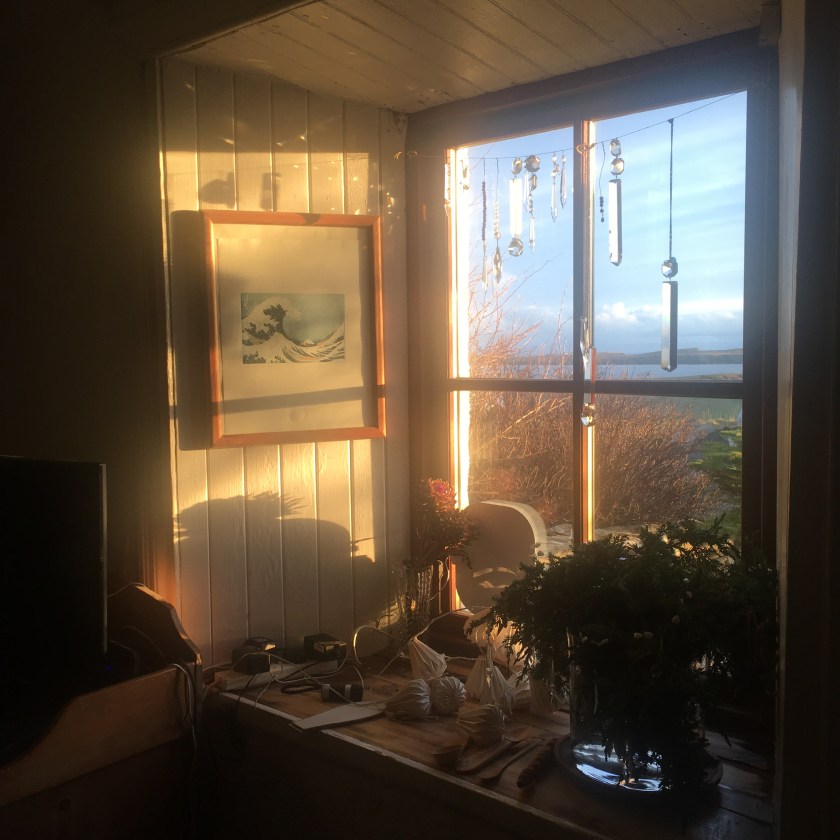
You’ll get the Sea Urchin Pattern free to work with after your workshop. Many people have joined me in the Colour Blending sessions from my first workshop in January 2021 – held in the window sill of my window in Shetland looking out to sea.
Now, I still teach but not often, so if you would like to grab a space, there is only one left for Friday 9th Jan and 4 left for Saturday 17th Jan. So please get in touch using the form on the workshops page.
If you have knitted the Sea Urchin hat pattern, please tag me on instagram because I do share other people’s knitting using my patterns.
A few words on designing a knitted piece that you would like to make. (including mistakes, errors, bodge)
swatching
When I was a child, I always made stuff. No one taught me, I just went for it. I remember seeing a large yellow cloth hard backed book on the shelf at the newsagents with 365 things to make in it. I ran to that book every time we went in that news agents and poured over the photos and asked for for the book for Christmas – I remember my mother answering, ‘You want a book?’ I was about 8 years old and loved that book. I sewed rag dolls, made resin ashtrays, made tiny doll dresses and sold them to my sister for her pocket money (which my mother made me give back) collected four / five / six / seven leafed clovers, pressed flowers, made cards – you name it, I made it. A loner’s kind of life then too.
I also remember my mother getting a Singer sewing treadle machine and I used it to make the entire miles and miles of the bunting for our estate jubilee party in 1977 – I was just 14 and could hardly reach the treadle peddle – no one taught me how to use it – I just got on with it coordinating foot and hand movements for miles of bunting, which seems simple but not when you embark on it as a young person – there is a responsiblity that I was unaware of. I also made very unattractive, shapeless, square t shirts for my dad out of the left over fabric, which were never worn.
Later, I taught myself to knit. There was no Youtube. Then I got a knitting machine, then I started knitting intricate patterns by hand, going directly ‘off piste’ every time with my own alterations. Making stuff has been a lifestyle. Now, I spend hours and hours ‘designing’ a few knitting patterns for small knitted articles. I’ve tried to stop but I just can’t. So I’ll share how I think I will make something – from scratch, from an idea, from a light bulb moment.
Just now, I want to make a very intricate pullover in an infinite number of colours, using traditional Fair Isle motifs – so to test how this will look, I will make a cowl. Already, I have learned from this exercise of knitting in the round, where the yarn tails end up after knitting blocks of different blocks of colour – not in the right place – that’s where.
My initial ideas are inspired by any number of things. Honestly, my ideas of colour and pattern come from deeply inspired thoughts of connecting to a person or place in history – ie my‘Dear Susan’ jumper, or from the sunrises when I was staying on Fair Isle – how the light cuts between the horizon line of the sea world and sky in‘Fair Isle Sunrise’or from the beautiful natural crustation of sea urchin shells that I collected from the discarded meals of gulls on Sea Urchin Hill in Brindister, which became the ‘Sea Urchin’ pattern.
But now I don’t live in Shetland. So what of inspiration? I’m still taken by how the light falls, both on my walls or even on the roof top of my daughter’s flat in London. So, I never stop. The excitement of light and colour never stops.
Lately, I have been really taken by a traditional fair Isle jumper that I saw in a museum because of its quality and integrity. Each motif in the row was different and repeated randomly in other rows. I counted about 15 Fair Isle patterns in the entire project. So, I studied them and began to graph them with an idea to draw on my love of colour (blending)and my memories of knitting Patricia Roberts intricate work in the 80’s to drawing on my use of Shetland yarn and love of traditional patterns.
I am wondering if you would like to join me on a journey of making your own design pattern? Go for it. Let’s start with a cowl. Easy.
I’ll show you how I have started project and what it looks like now – admittedly, some weeks have already passed and due to my writing schedule, many more will pass before it is finished. People can think that buying a knitting pattern from Ravelry for £3-£4 can be expensive, but behind it, for me, is hours and hours and hours of trial and error to find the right colour, tension, feel, drape, size and outcome. Then, I’ll let you know, that Paypal take a cut, quite a big cut and that Ravelry then charge at the end of the month for the patterns sold – so a £4 pattern can end up being about £2.90 and if I offer a discount, which I often do, then I will end up with about £2.00 for each sold pattern (they are cheapter than a cup of tea in town) so, you see, that Pattern designing can be just for the love of it (Unless you are a famous ‘knitter’) Fortunately, Knitting is one of my loves – and I share that love in patterns.
I said to someone yesterday, that I am not a knitter – I just knit, then move on.
So, let’s start at the beginning of this project, which may or may not work. What I used for this project is an inspirational image of a Fair Isle Jumper that I admired and wanted to develop into a project.
I wanted to use my colours – lots of colours and my methods of ‘colour blending’ and tiny needles to create a Persian carpet look. Already, the starting image will be forgotten within half a day’s developmental work.
Here we go.
What you’ll need for this project ( I am making a cowl – because my face is cold on the bike in the early mornings)
Your idea of which motifs you would like to knit
A notepad of graph sheets
Pencil, with rubber / sharpie, regular pen, tape measure
Time
Patience
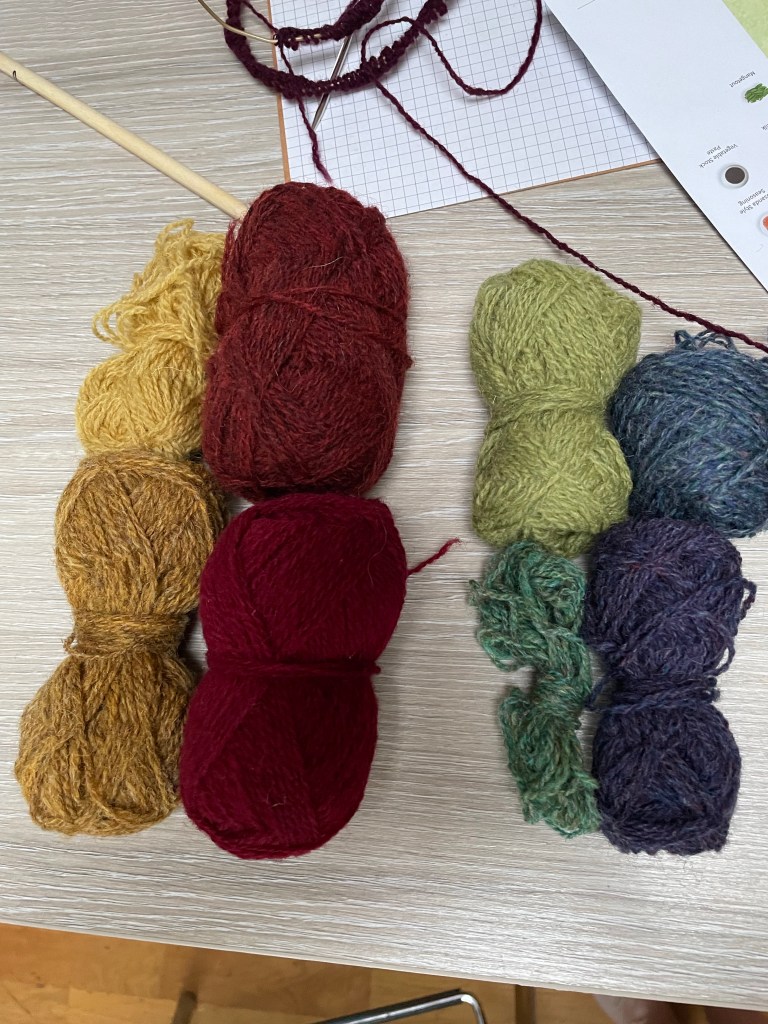
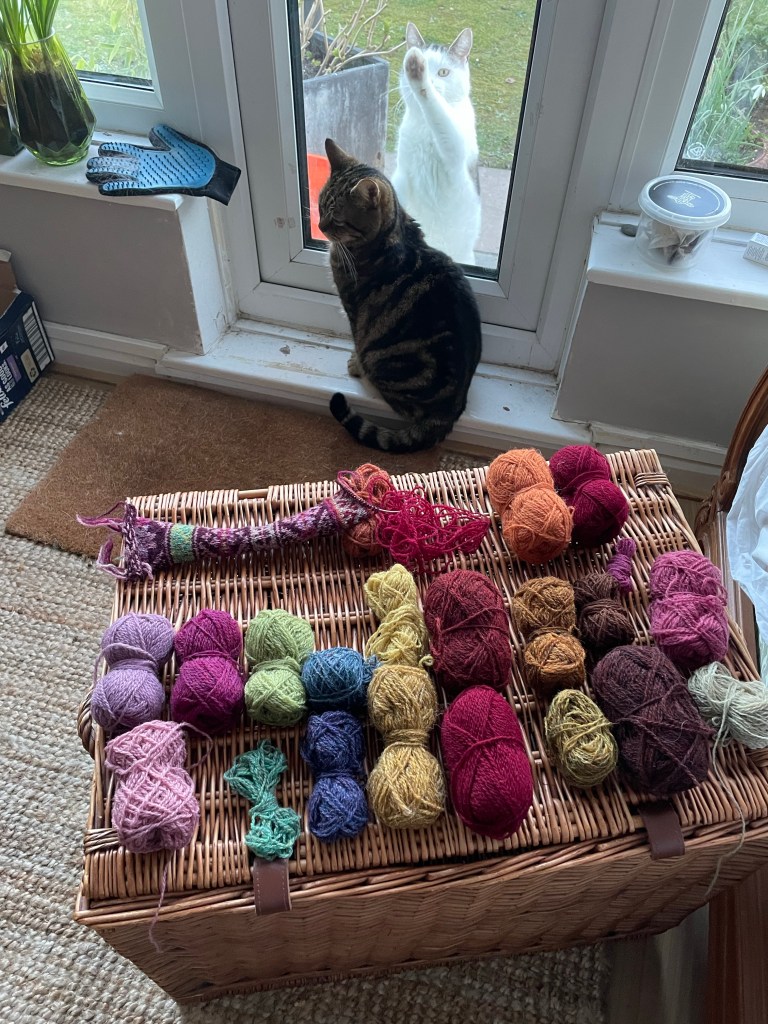
A stash of yarn (all the same quality of yarn)
Day light
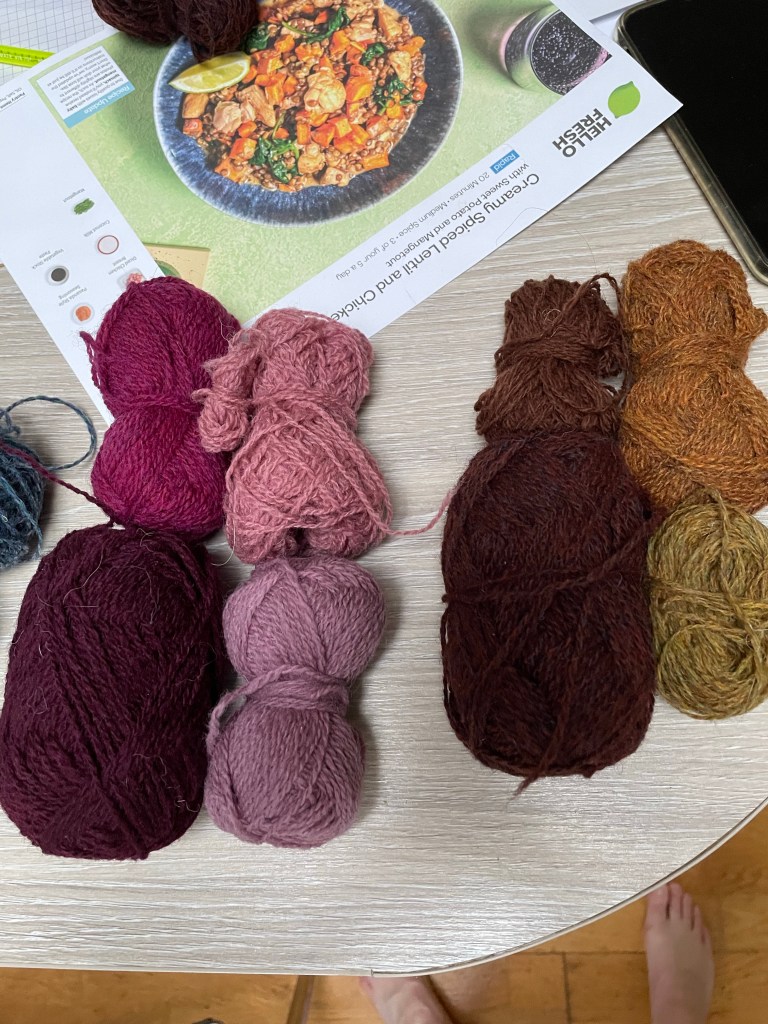
and Hello Fresh does work too.
boys and colour
Instructions –
Preparation
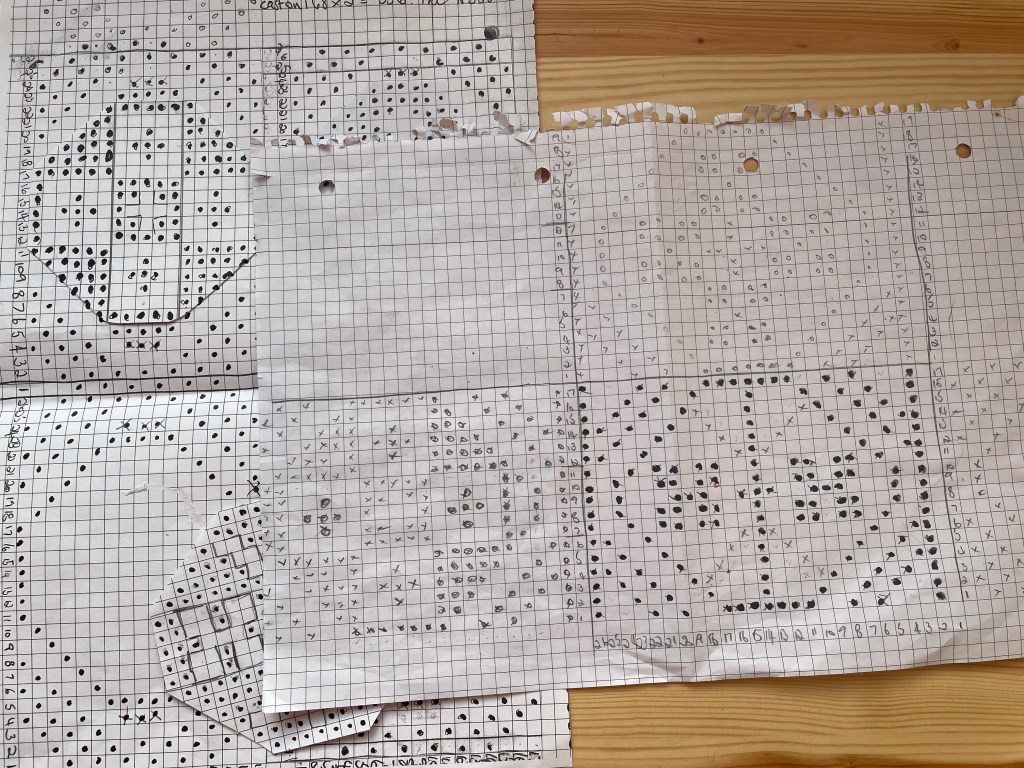
Start by looking at the motifs that you like and start replicating them on graph paper. You can also graph out patterns using excel spreadsheets, but that comes later for me, if I choose to put a pattern out. Initially, I like the tactile act of using paper and pencils. Graph the motifs by studying your image of knitted inspiration and working out the pattern or by looking in ‘The Complete Book of Traditional Fair Isle Knitting’ book by Sheila McGregor or the cute little ‘Shetland Pattern book’ by Mary Smith and Maggie Twatt. Both books are pretty old. I have a copy of both ( I used to have 2 copies of each but…)
Start graphing out your desired motifs and be prepared to make mistakes. I start with pencil and do a lot of rubbing out. Then I go over the pencil with a sharpie and still sometimes make errors. Making errors at this stage is also learning how the motif works, if this is the first time that you have knitted this kind of pattern.
Then, start to choose your colours. If you have attended any of my colour blending sessions, you will know how this goes. It can be complicated, it can also be easy but if you haven’t – then I suggest to firstly think of harmony, then contrast. And do not buddy up the colours.
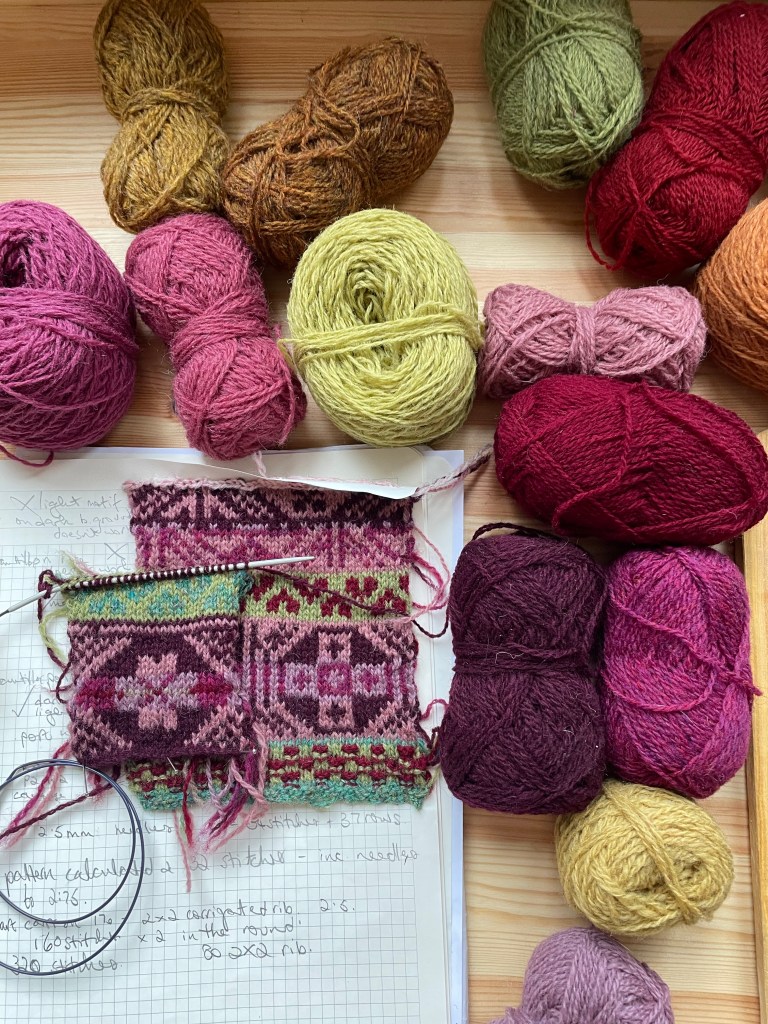
Knit some of your drawn out motifs into swatches. Use different size needles too, to see how the swatch looks. This is not supposed to be torture, this is the first fun bit after you have painstakingly drawn out the motifs on paper. The swatch is to check colour then tension (as a bi product)
When you have knitted random swatches in varying colours, you can see how the pattern stands – are there too many stitches in the block for the feel I want? – is there a harmony in colour, is there enough contrast? How does it feel? – yes, really, how does it feel in your heart? Is it better with dark motif on light back ground or vice versa? How the do the colours blend – oh, and never, never choose your colours under tungsten light or whilst watching the tele or not really looking – always choose your colours under natural daylight – ignore this last bit at your own peril.
When you have knitted the swatch, then you can measure it to figure out how many motifs you need for the size you want to knit – simples? Using the needles that you like for the outcome you like. Easy? Or just stick with figuring out your colours in the swatch. The size will take care of itself – right?
When you have knitted quite a few swatches in a number of colours, then you will have an idea if any adjustments need to be made to the motif or where it falls within the pattern or what motifs will go before or after the main motifs.
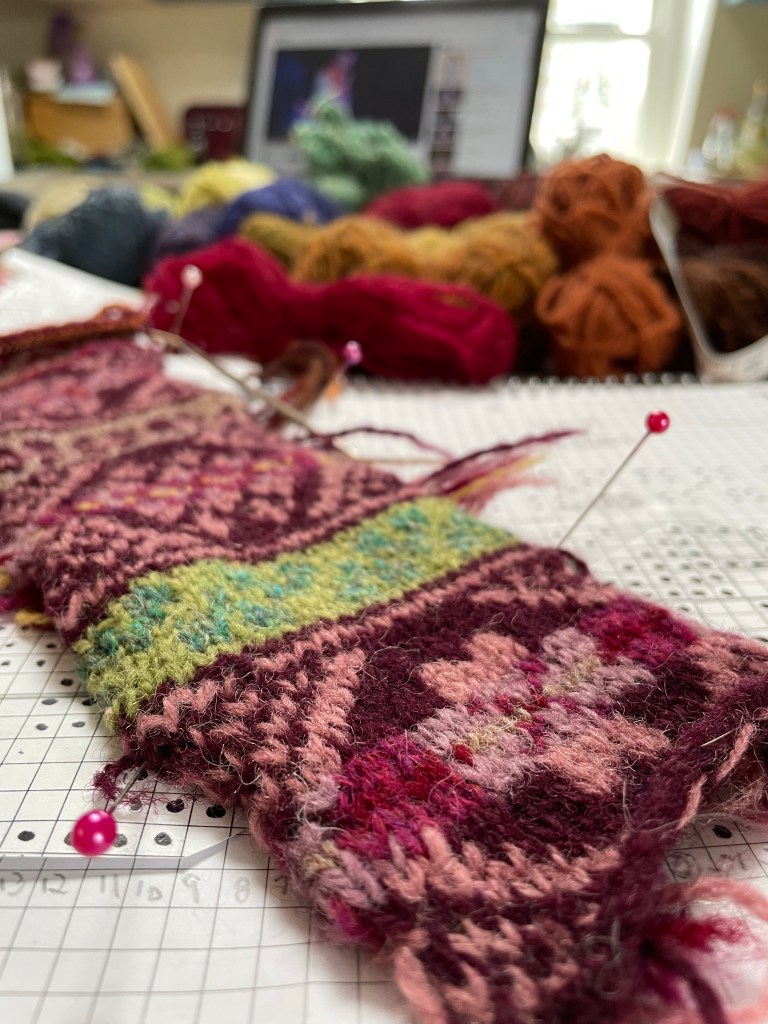
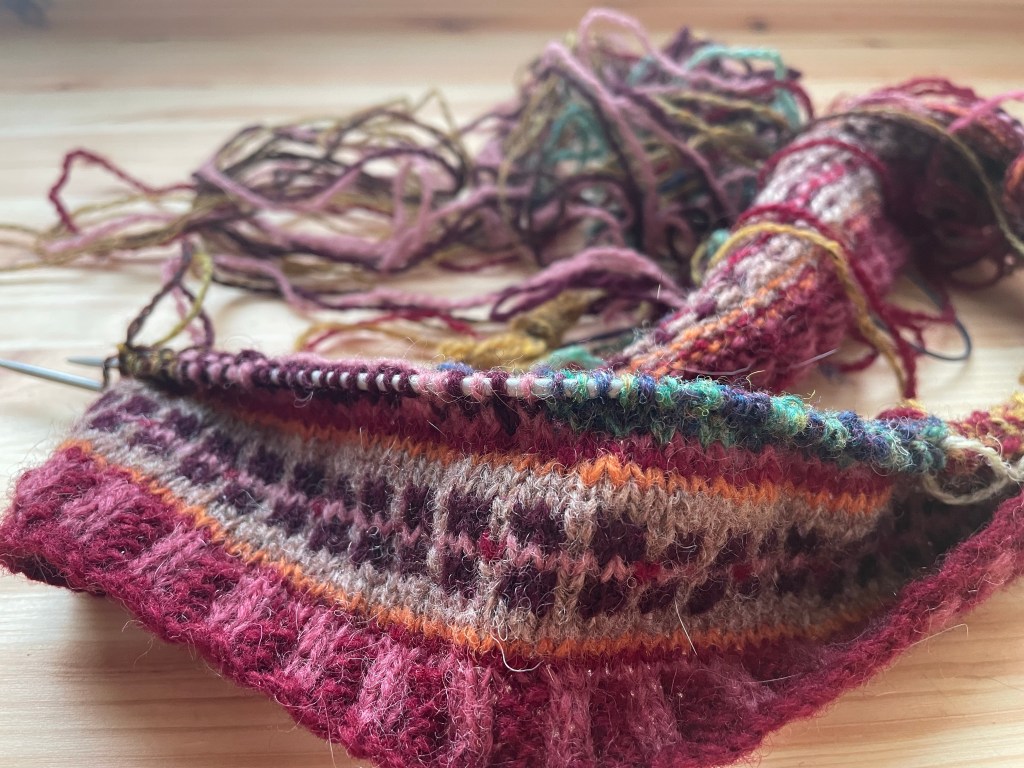
Anyway, here is a start – this is where I am with my project – round 3 of the first round of Fair Isle Motifs. It looks messy but I am in full control.
It is a cowl with 8 different hand drawn out Fair Isle motifs joined by seed stitches because I didn’t like how geometric the original Fair Isle joining sections looked. I am using a different set of colours for each block of motif, like I used to with Patricia Roberts’ patterns and even with I used to knit Kaffe Fassett jumpers in the 80’s.
Let me know how you get on. Leave me a comment on your thoughts.







 tracey doxey