Fair Isle Vest / pullover Worksheet

I am hoping to go to Japan on an Artist residency and have created a Fair Isle vest worksheet in order for any pattern sales form this £5.75 pattern can go towards my savings for travel expenses (I may only get as far as Manchester 🙂 ) but it is an earnest start.

So, I have been busy today – 2 posts in one day – never before has this happened.

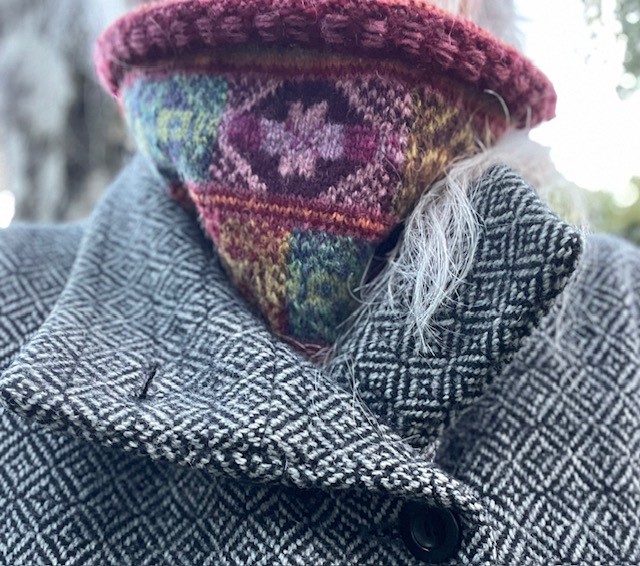
What is this post about – it is about a Fair Isle vest WORKSHEET that I have just submitted to Ravelry

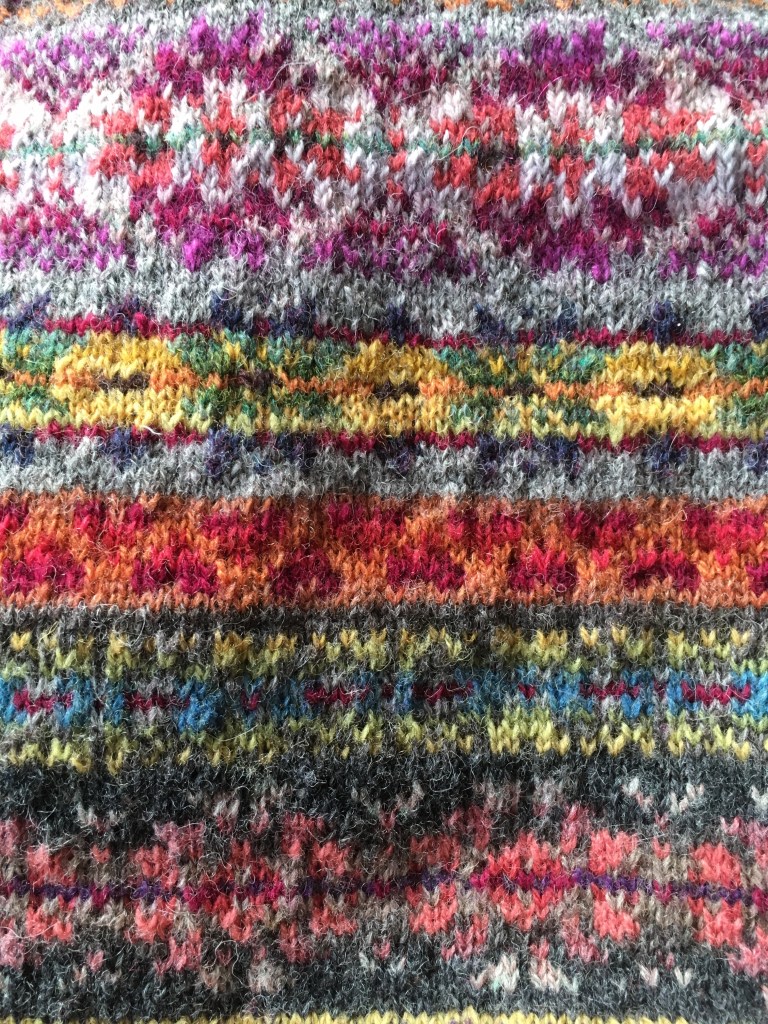
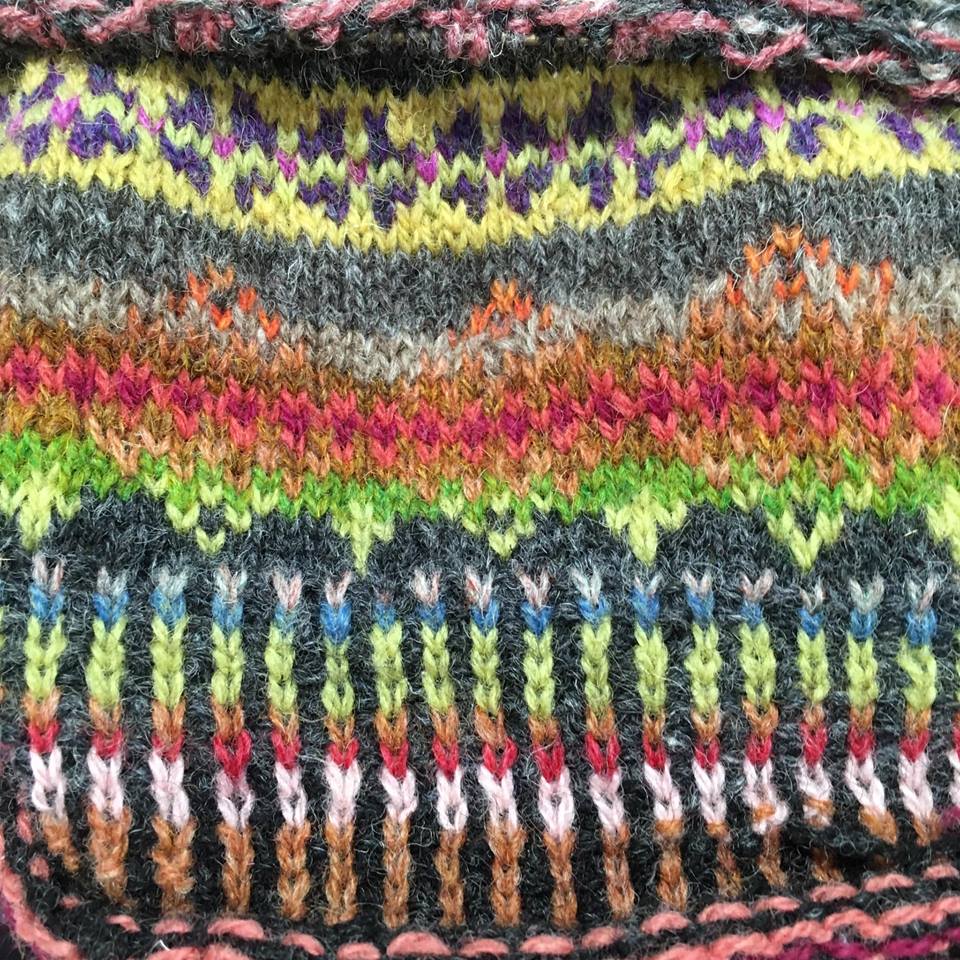
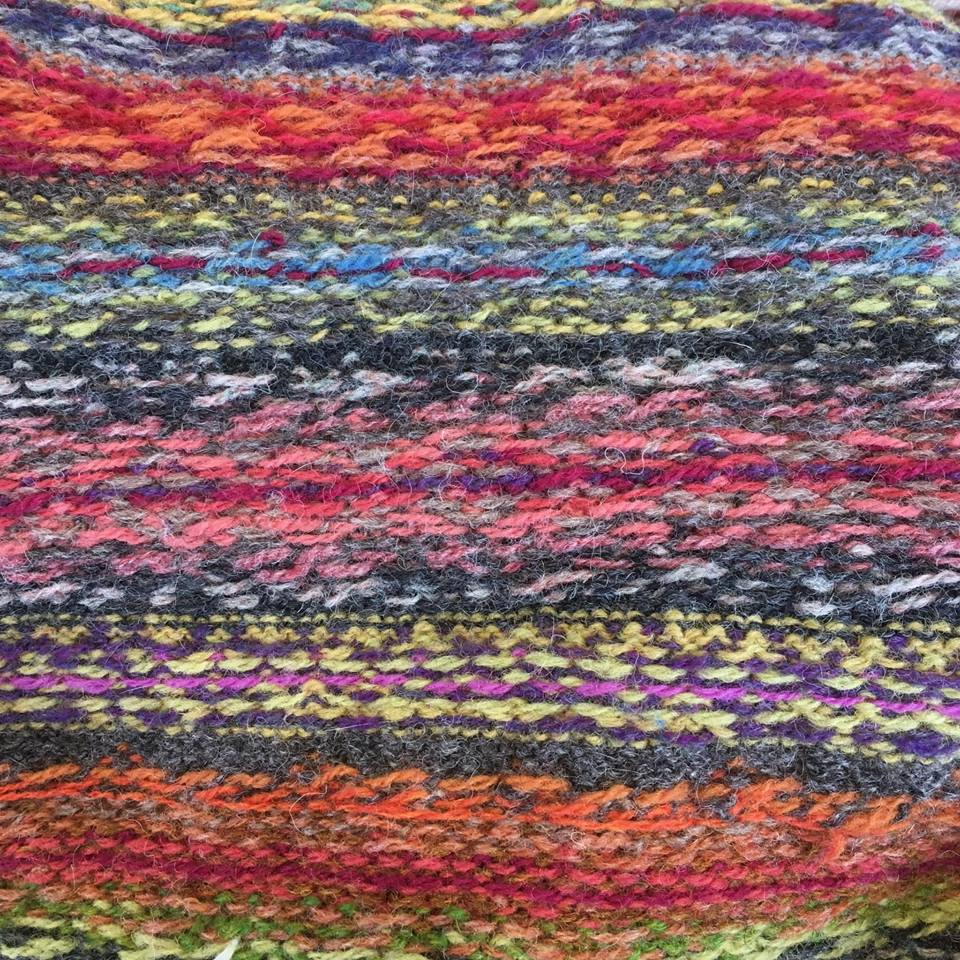
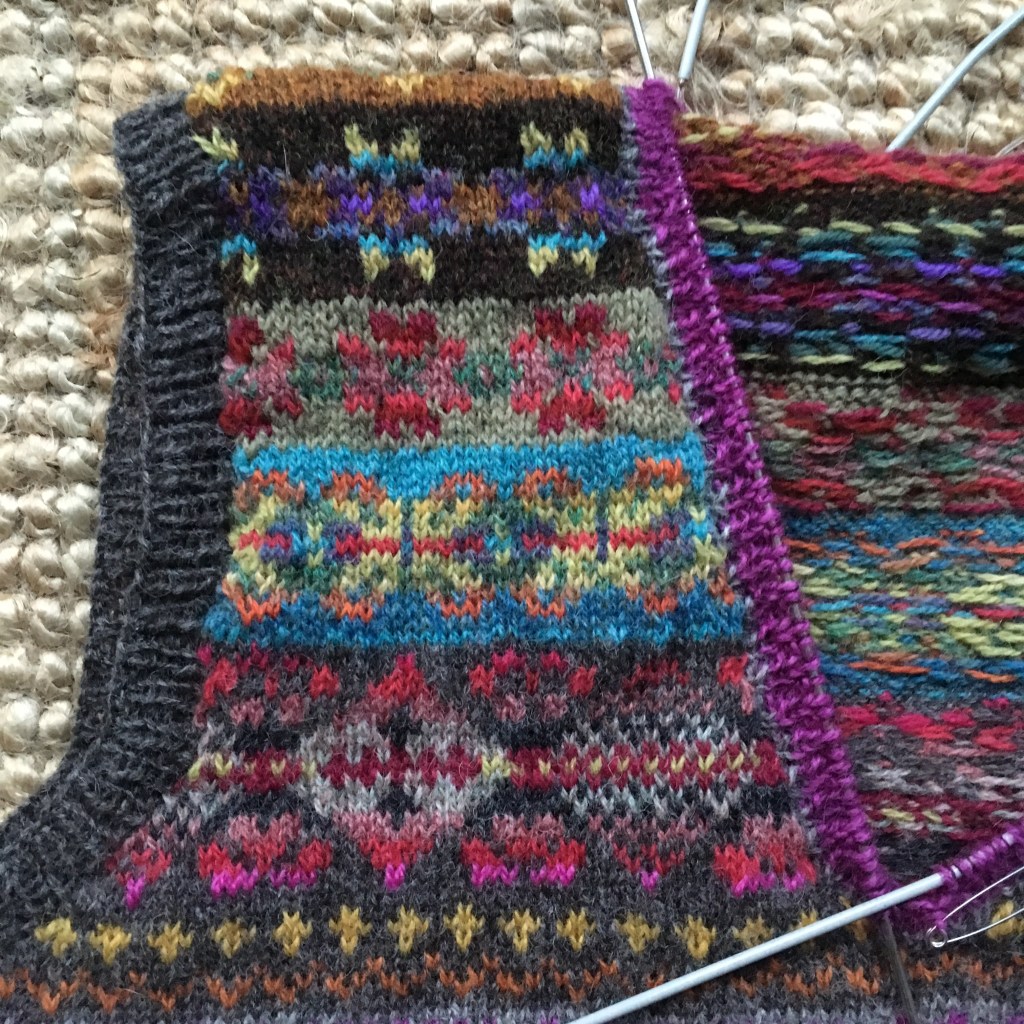
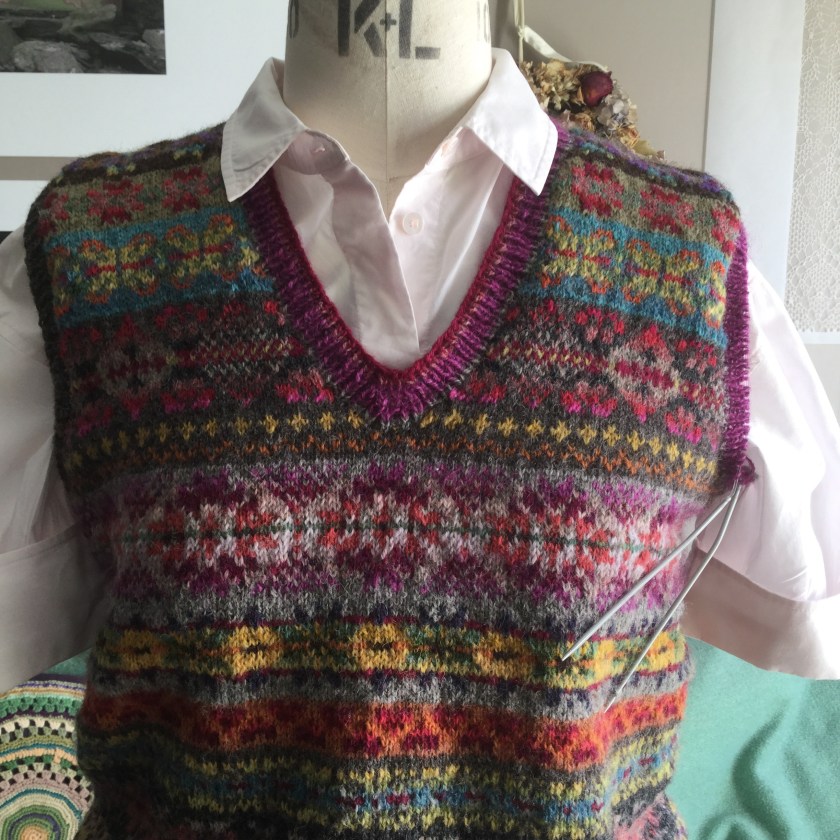
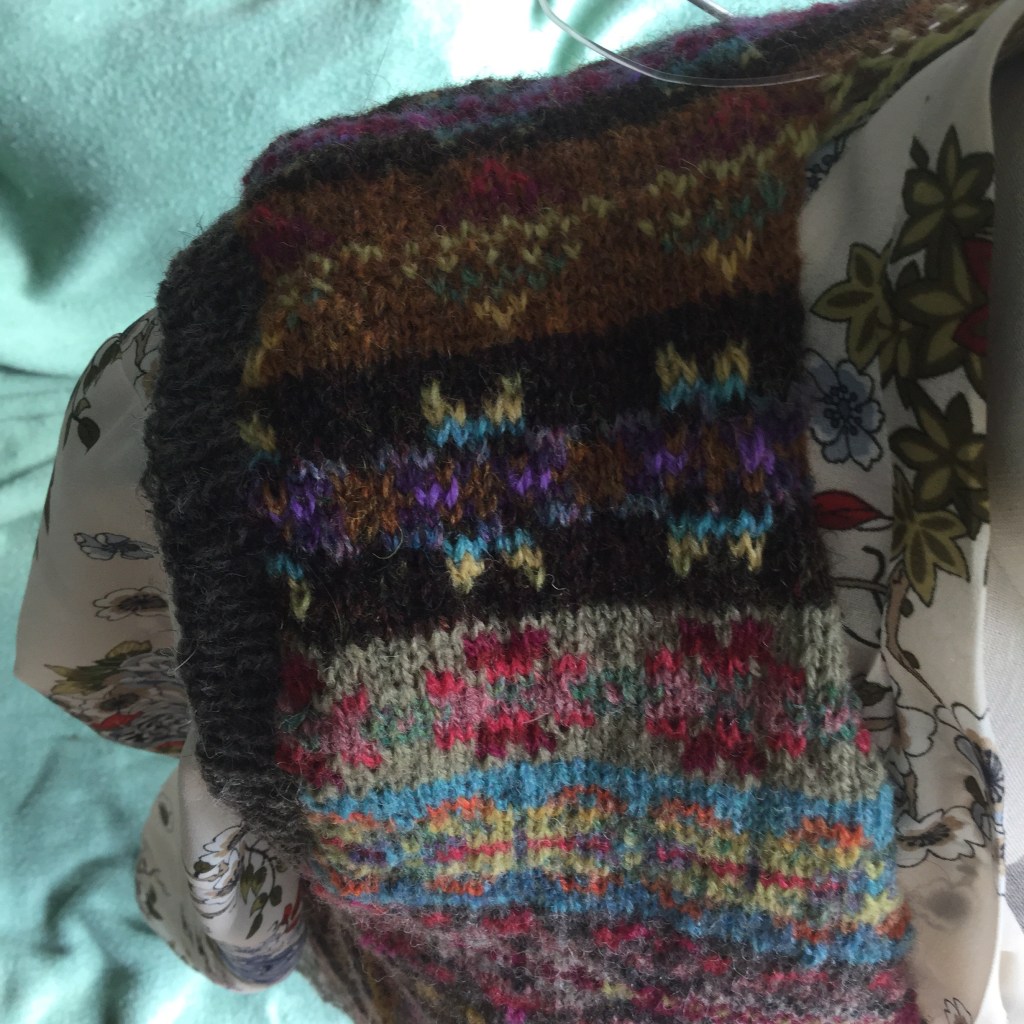
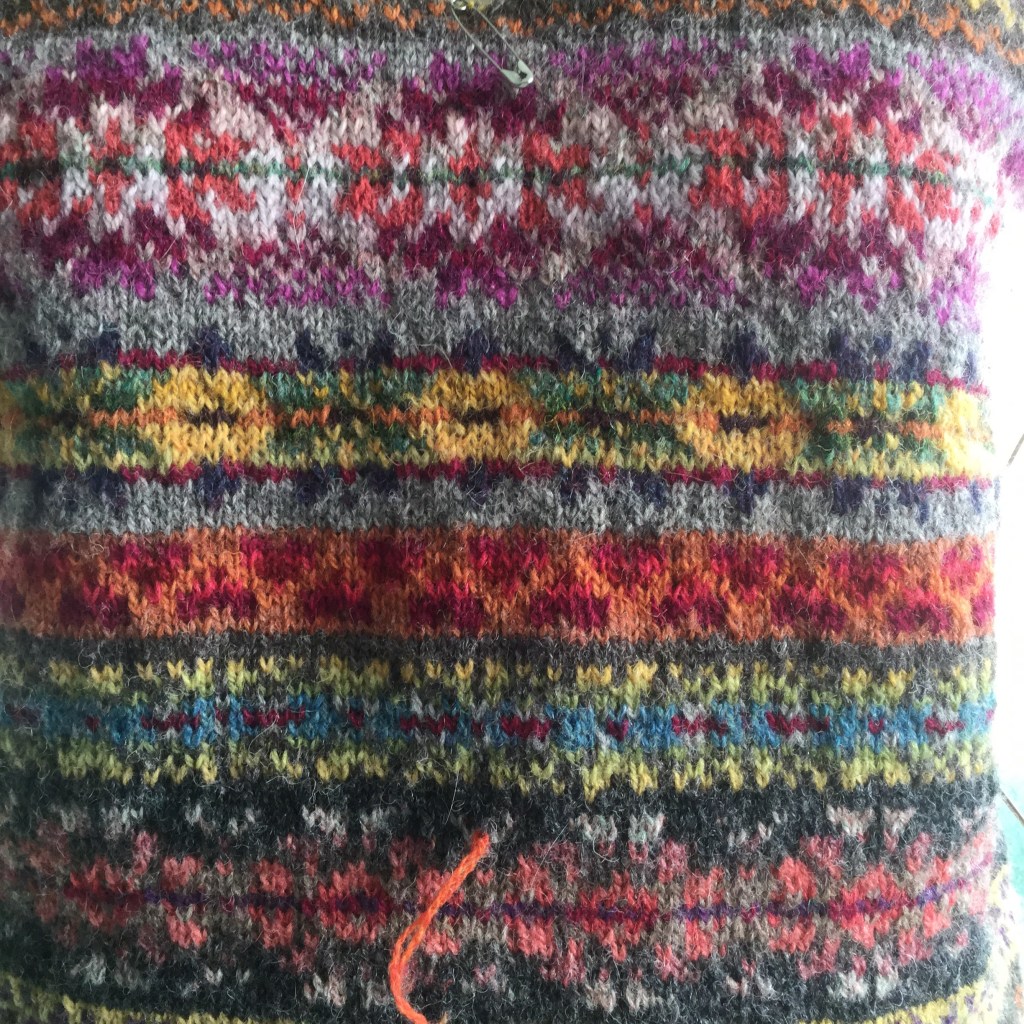
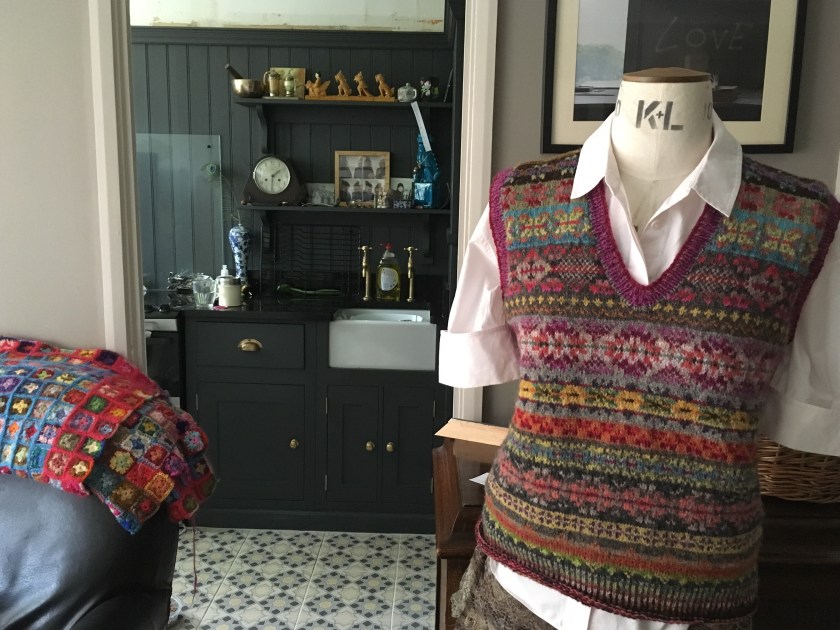
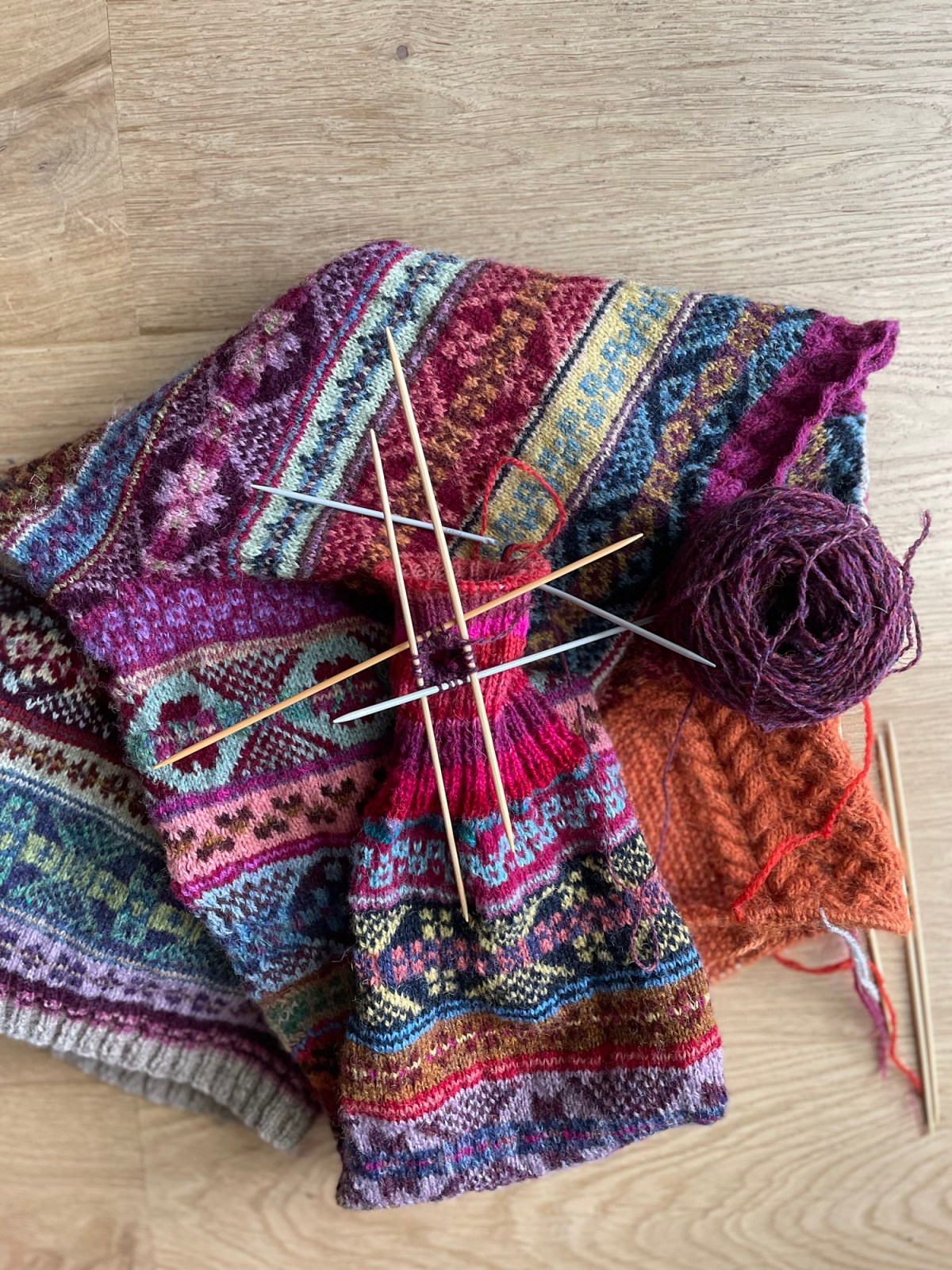
Every motif that I have knitted and every colour that I have used in my original vest turned pullover and every chart that I used when I added the Fair Isle sleeve is included in this Worksheet.

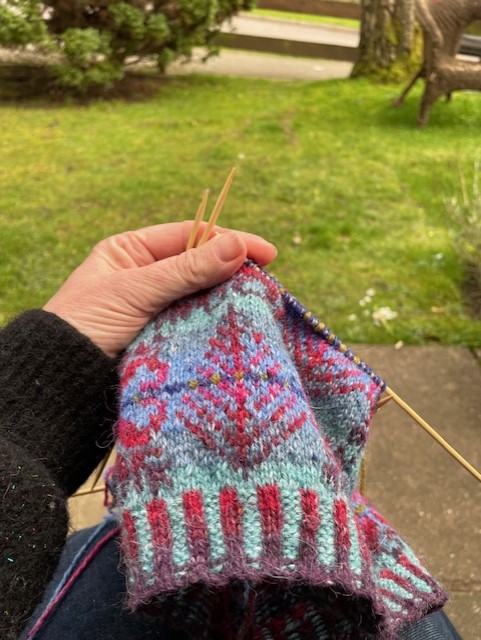
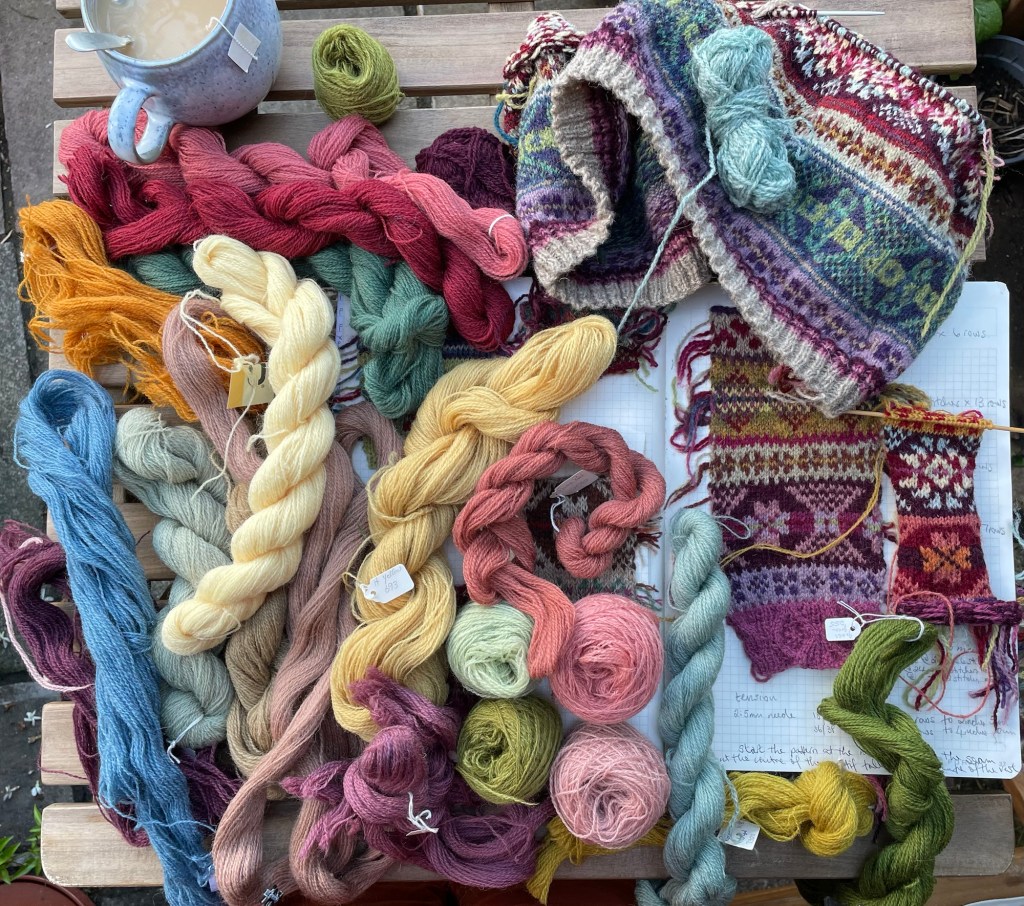
I first started this knitted piece whilst on holiday in Italy, last June.  At that time, I had no plan or idea what it would look like or what it would become because I was ‘just knitting in the round’ starting with lilac and blue and green. I was using the motifs that I had developed in my Stash Buster neck warmer pattern, to play with design, colour and texture to make a Fair Isle Vest using only the OXO patterns from Fair Isle with a bright twist on colour.  

Knitting, I have realised, is a compulsion for me.  Sometimes, I try to leave it, to do other interesting things but it is not long before I am drawn back to it. Knitting is something I have to do every day – for relaxation, design, creative development or learning, for experimenting with colour but I do not knit with the aim to monetise my designs or findings.  Maybe the work develops into a pattern but it is not my first aim to design patterns – knitting is my lifestyle. If I aimed to make money from the beginning – two things would happen – pure playful creativity would go out of the window and two, patterns do not earn me an income.  A £4 pattern is cut to about £2.90 after Ravelry and Paypal have taken their cuts.  Considering the hundreds of hours that goes into a pattern, making £2.90 isn’t really the driving reason to make it.  If I only make patterns with the end user in mind, then a creative design concept just becomes a product.  It has taken years to understand how I work – A Fine Art Degree, A Masters in Knitting, travelling to and from Shetland for years, living in a croft house by the sea in Levenwick, but mostly, it is my love of colour that has developed my practice and out of this was born my online colour blending workshops so that I can teach other people how to develop their own skills in how to blend colours within their Fair Isle and stranded knitting projects.  If I can make a pattern, or share a story or idea, I do – so that others can also learn from the colours.  

My reason for finally producing a Fair Isle Vest Worksheet ,  is because I have been asked so many times for a pattern and because I have decided that the earnings from this chart will go towards my savings for an Artist textile residency that I hope to do in Japan.

I have some faithful social media followers that have been with me for years – all through my Shetland move and back to the city, all through the workshops and every pattern – we have become friends and I respect them greatly.  Janet, Lyn, Cheryl, Yve, Shona, Berti, to name a few. 

So, what have I produced here, what am I putting out into the world?
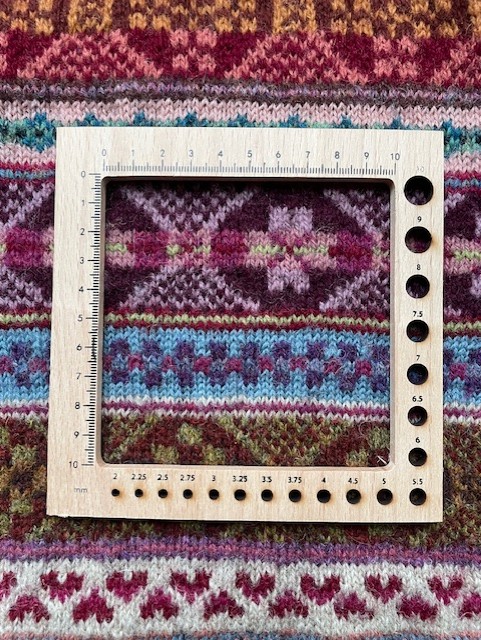
So many people have asked me for my Fair Isle Vest pattern – I have pointed them in the direction of the Stash Buster Neck warmer where there are many motifs so that they can create a jumper, like I have but they don’t want that – they want a vest pattern. But I cannot produce a vest or pullover pattern in every size that would make everyone happy.  To alter the stich count and where the motifs lie for everyone would take months.   My life doesn’t have that time and I am not a pattern editor – I have done it previously with the help of a friend from America where we spent months number crunching the Dear Susan pattern to deliver it for multiple sizes.  It is not an easy job and takes forever to check everything.   I am but one individual person – spending 3 full months designing a full pattern, at this time of my life is not what I can do.

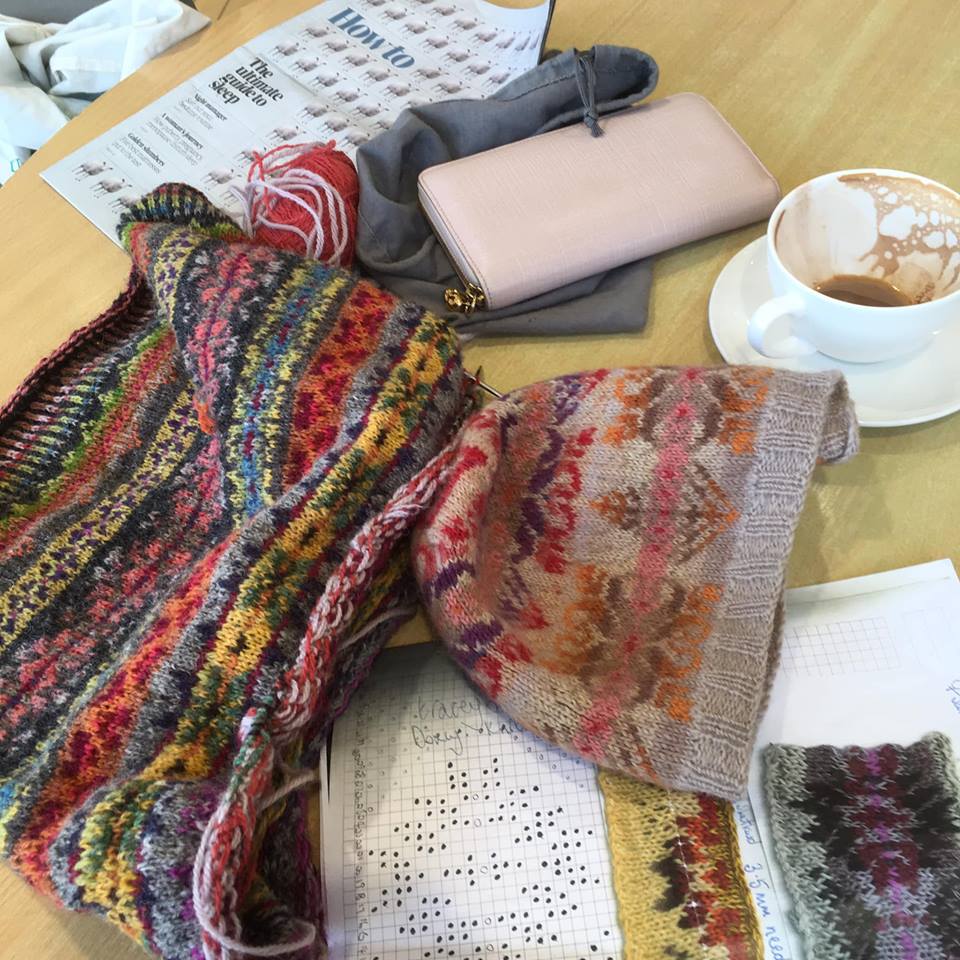
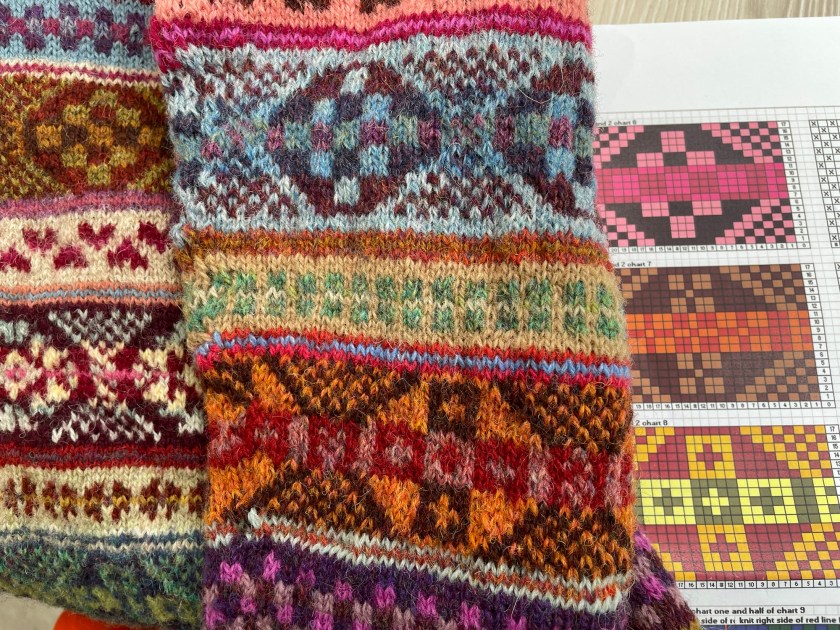
So, I have made a series of 2 fabulous, full colour A4 charts (body chart and sleeve chart) with all the colours listed alongside, that I used in my own knitting project  – to give you the tools to make your own road map for your own vest or pullover, or scarf, or hat.

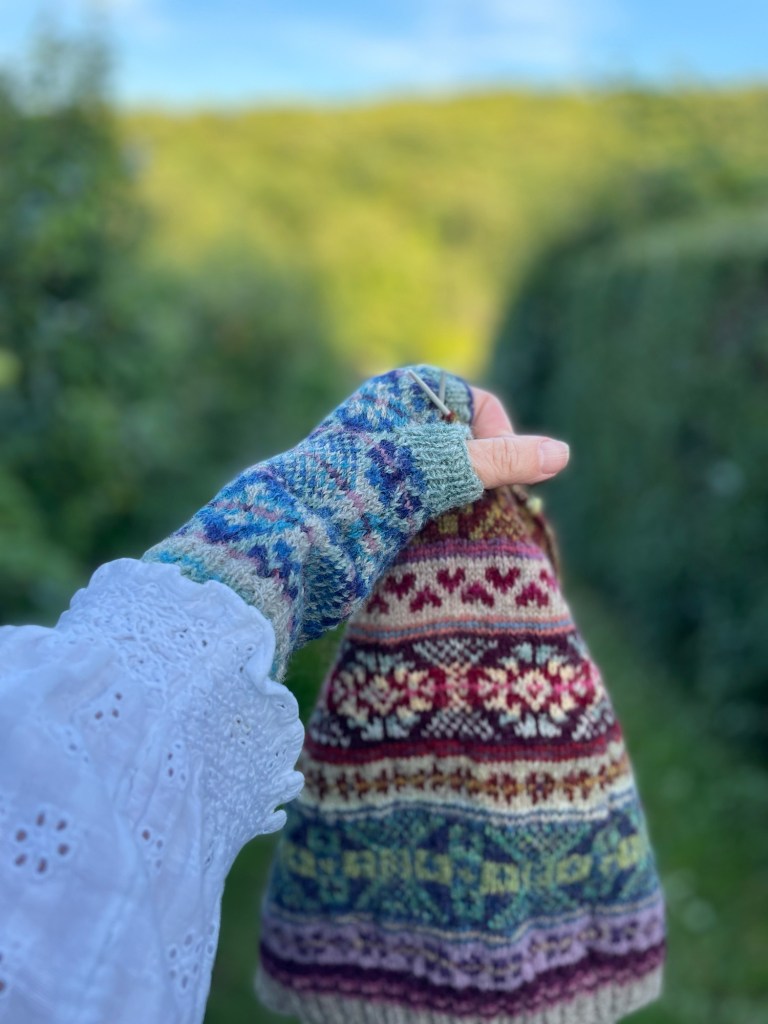
The complete charts included in this work sheet, are not a jumper pattern, nor a vest pattern.  What I have produced is a worksheet including the entire range of motif bands, built into a body and a sleeve chart with a clear centre stitch line.  One sleeve is Fair Isle patterns – the other is Aran, following the plaits of how I sometimes braid in my hair. 

These 2 large charts include 23 motifs and colours are a treasure trove of endless possibilities for you to be creative and make your own vest or pullover by incorporating them into your own favourite vest or jumper pattern.  Use any colours that you have, use any wool that you have, use 2 colours, or like me, use over 90 colours.  I am giving you a recipe for you to enjoy and work with in whatever way you want.  I am giving you 23 fully lined up Fair Isle charts to knit in any colour you choose to make your own design.  
Recently, I have been reminded of how Kaffe Fassett, in the 80’s made beautiful patterns in books and wrote, ‘ choose 9 balls of varied light colours and 9 balls of dark colours’ and people ran with that, me included.  Sometimes, he would write – use double knitting yarn, sometimes he listed the yarn and the exact colours.

If you run with these charts, you can use your favourite double knitting yarn and the jumper will be how you like it to look and feel with your favourite yarn, incorporating some or all of these Fair Isle motifs. 

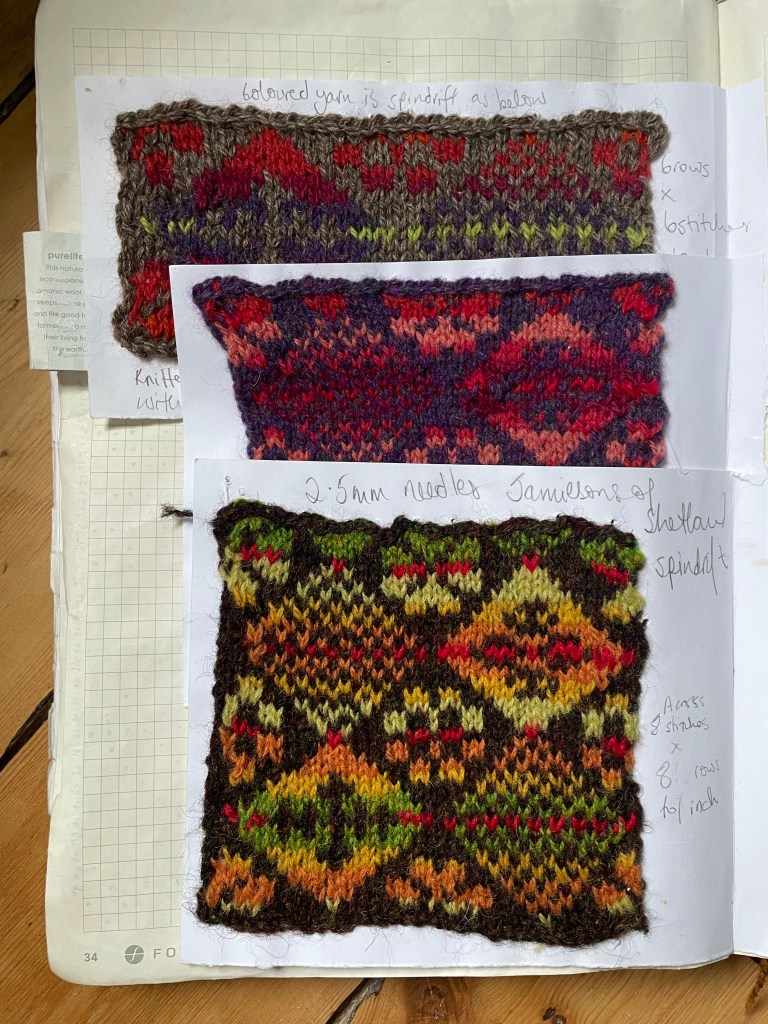
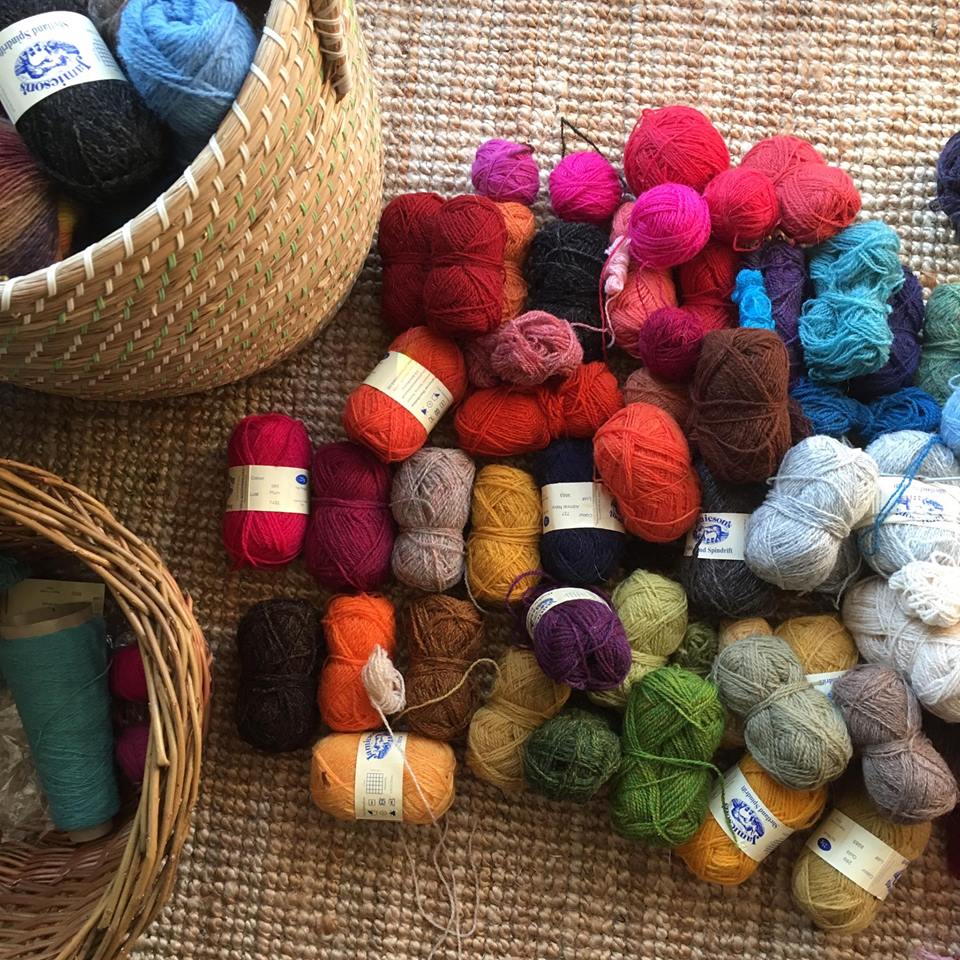
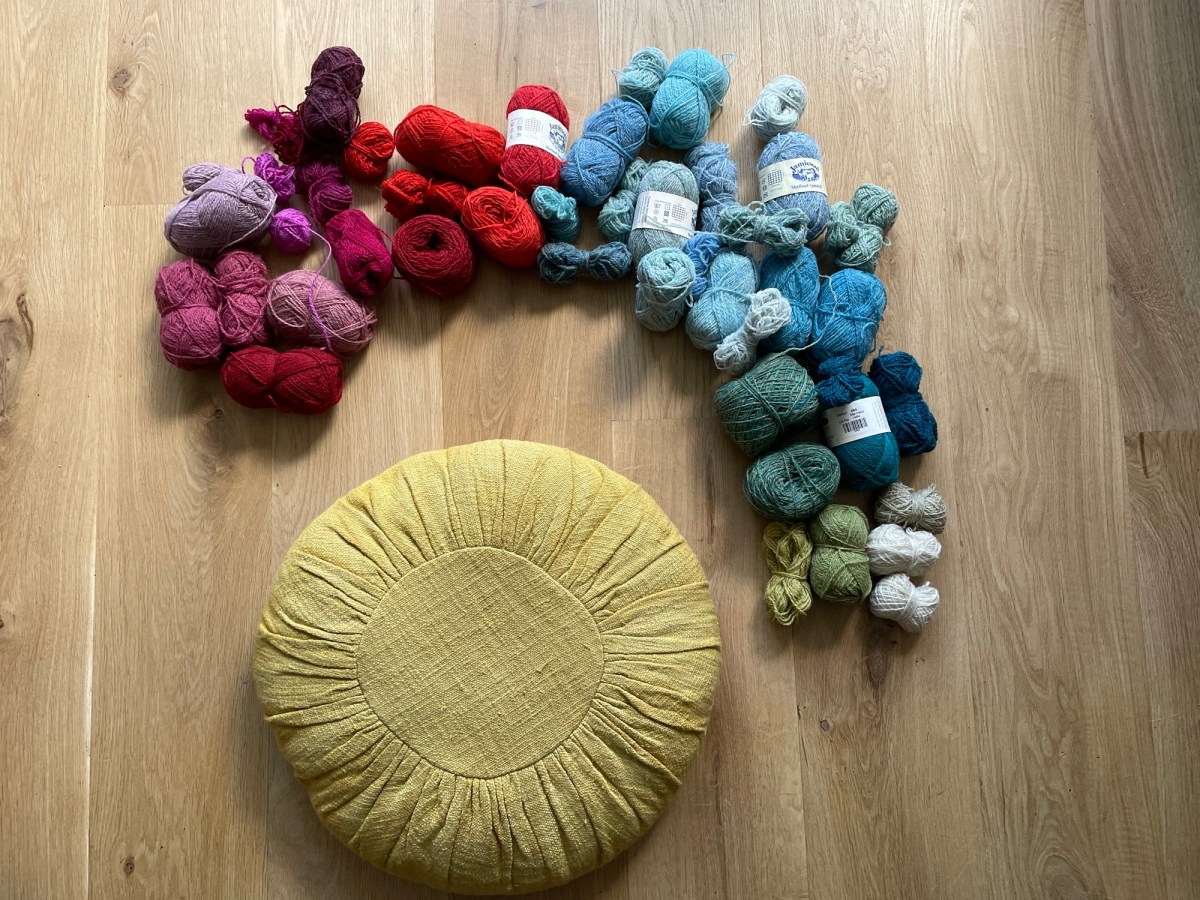
My jumper is knitted in Jamieson’s of Shetland spindrift using over 90 colours – some small lengths, some longer – these colours I have had left over from previous projects.   As the colours are not often repeated, not great lengths are required.   But you can do this differently.  Use your stash or buy just 4 colours or even 2.   The choices and permutations are endless but this relies on you.  It relies on being excited to try this, to work out your centre front (which in my case, mirrored my centre back) and making sure that your motif bands align.  It is about enjoying colour, swatching to experiment for colour combinations. It is a fun package and I would love you to have a go. 

It has taken me nearly one year to design and make this jumper – it has taken 3 days to map out the motif bands and make the chart used in the body and in the sleeve and another 2 days to pull it all together. 

If you have done so, I want to Thank you for buying my pattern for the charts – you are supporting me with saving towards my artist textile residency.

here is where the worksheet is at – let me know your thoughts on this one year project.
https://www.ravelry.com/patterns/library/fair-isle-chart-2

Stormy weather. time for mitts again.

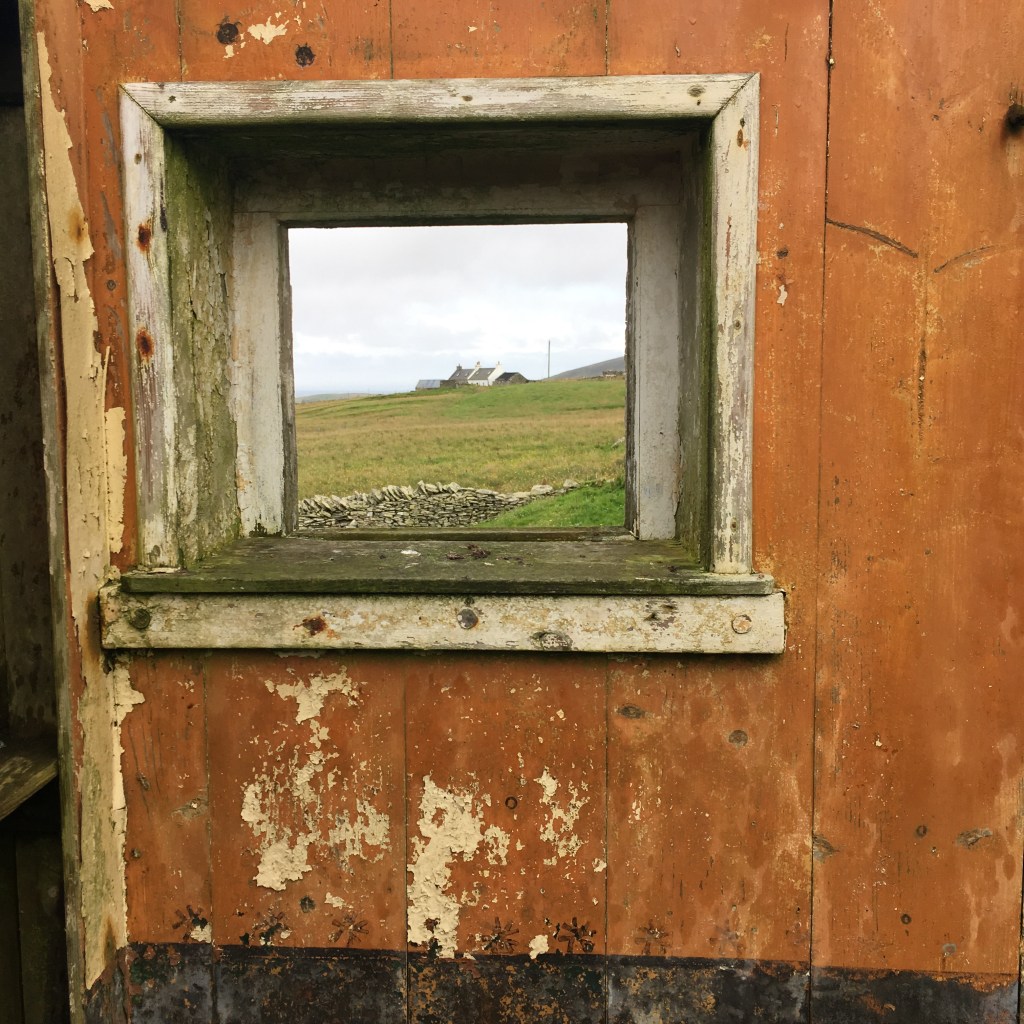
I don’t know where you live but here, in Sheffield, it has rained and rained and rained and recently, we’ve had winds over 40mh for prolonged periods of time.  The weather is becoming like me experience of Shetland, except when we have 40mph winds, they have 60 or higher.

Today, I wore mitts on my bike to my yoga class at 6am – there wasn’t a frost but the cars were covered in a cold damp film. There was a small break, where the sky shone rose colours and a ball sun rose lulling us into a false sense of security that maybe spring will spring.  The rains are back this afternoon.

On Friday, I teach my online knitting workshop for Rowan connect and I am preparing – rewriting my newly devised workshop plan, setting up prompts and examples of work, swatch books to look at and use to explain  how I blend colours in my knitting. I knitted the Sea Urchin hat in Rowan yarns as well as a little mitt – then I made a little film of how to make its thumb. It took about 3 hours to make the little 3 minute video –

All of my mitts patterns have a photo tutorial how to make thumbs.  They are fun, easy little patterns, quick to knit and easy to use any stash that you have – they are great for presents and great to wear on the bike on the way to the gym. They are here, if you want to look

If you have booked onto the Rowan workshops, I will see you on Friday 😊

Keep dry 🙂 Happy knitting

https://www.ravelry.com/designers/tracey-doxey

New Sea Urchin Pattern in Rowan Felted Tweed + Rowan Connect workshop

I’m really excited to have redesigned my Sea Urchin Hat in Rowan Felted Tweed and to be doing an online colour blending workshop for Rowan Connect in April.

In preparation for the workshop, I have been working with Kerry, from Rowan, regarding yarn colours to work with in in the workshop and to reknit the Sea Urchin hat pattern using Rowan Felted Tweed.

It didn’t take me long to finish the new hat and I was really pleased with how the colours worked together. Along the way, I had to adjust the pattern for an entirely different yarn to the one I originally used.  I knitted a corrugated rib for this pattern to show off the texture.

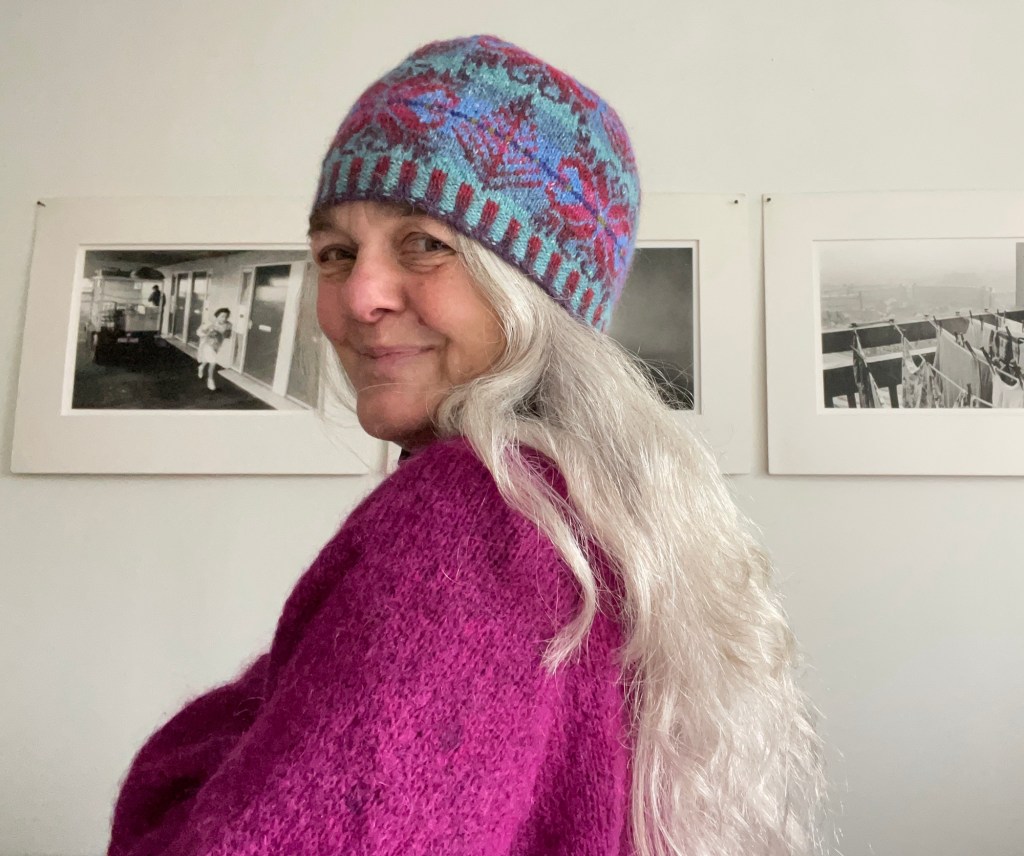
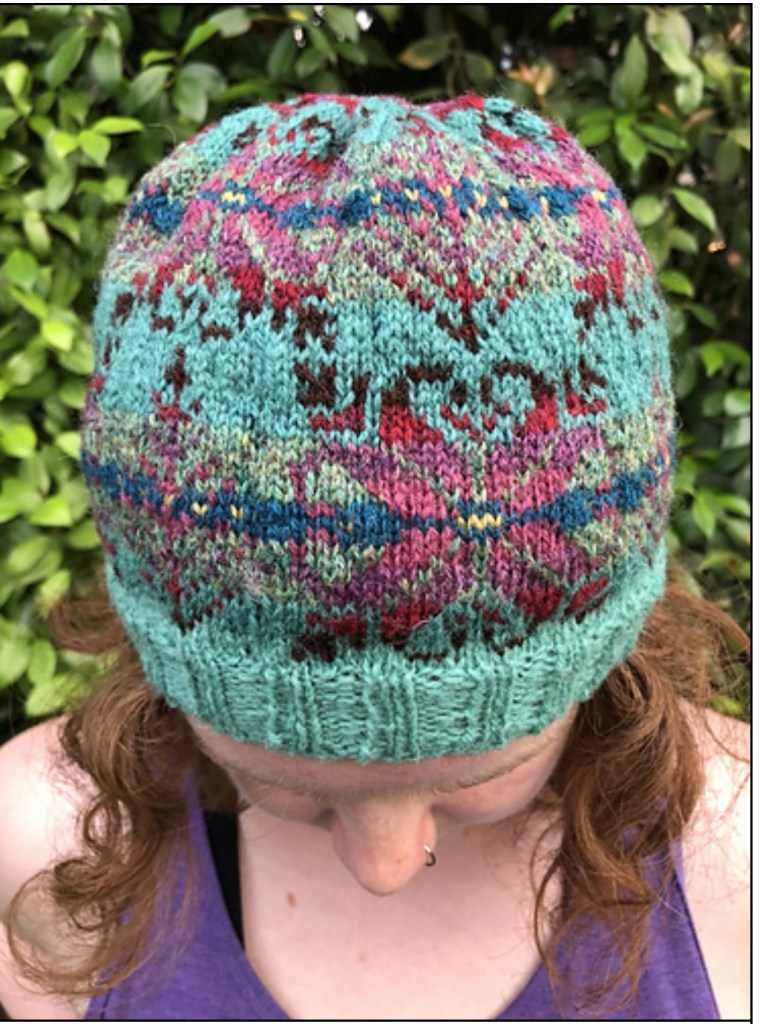
Here you can see the two hats alongside each other – one in Rowan Felted Tweed (RFT) and the other in Jamieson’s of Shetland (JoS).

RFT, is thicker yarn than I originally used – it’s composition is 50% Wool, 25% Alpaca, 25% Viscose and comes in 50g balls. It knits up as double knit, it’s soft and not scratchy. Jamieson’s Spindrift is 100% Shetland wool and knits up as 4ply and can be scratchy.  As well as the feel and size, the two hats turn out very differently in shape. The Rowan Felted Tweed hat is, of course, bigger thant he original.

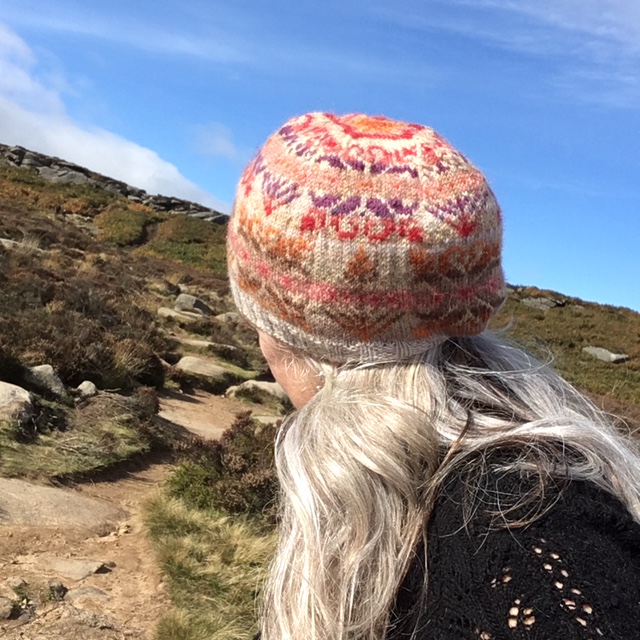
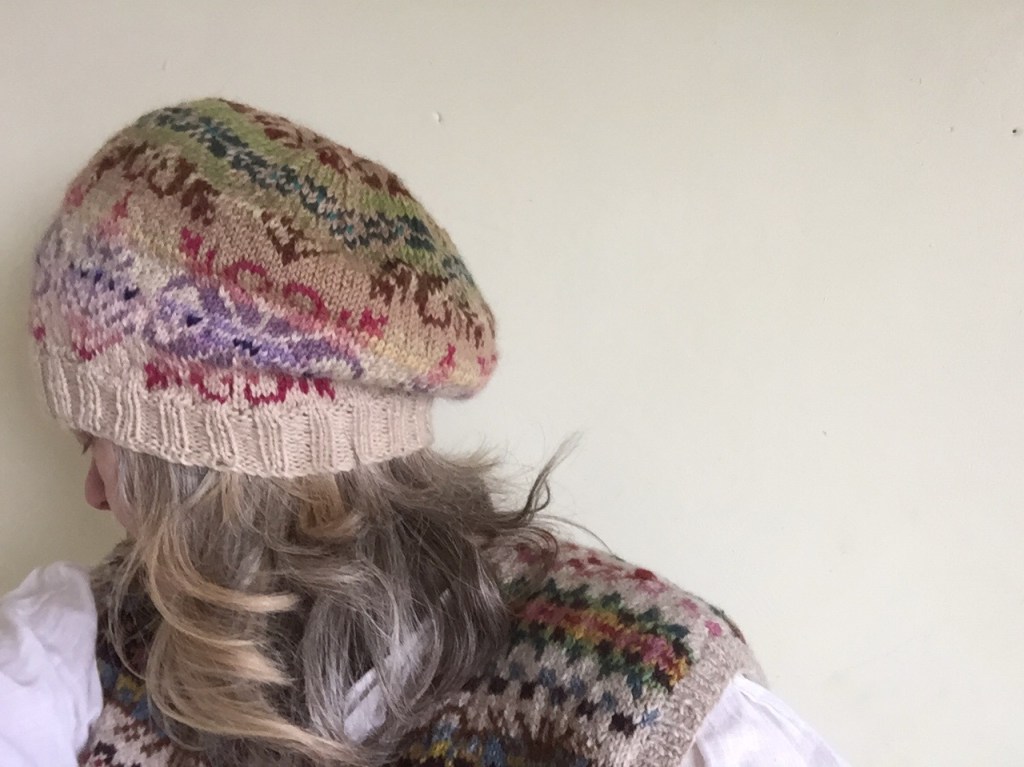
When I first knitted the Sea Urchin hat pattern ten years ago, I used vintage tapestry yarns and the hat was just a quick project for me.  I knitted it in a number of different colour ways before going to Shetland for the first time in 2015, and finding Jamieson’s spindrift.  I still have those first hats from 2014 – they’ve been part of my design process going back 10 years.  The new hat, knitted in RFT is of similar design to my first ones. Below are images of the ones I made in Tapestry yarn.

The yarn used in any project dictates the size and shape of the finished hat. Over time,  I’ve blocked each hat in to a shape that resembled a slouching hat or a kind of beret and latterly, with Jamieson’s yarn, it was a neat beanie.

Seeing the early photos of this hat, I see a different shape entirely to the one that they morphed into over time, taking on the shape of my head through being soaked in gale force rains, being stuffed in pockets and in bags and left for months in a drawer.  When I was living in Brindister, West Burrafirth, Shetland, I wore the Tapestry yarn hat every day whilst walking around the voe on those winter days- especially in the piercing winds.

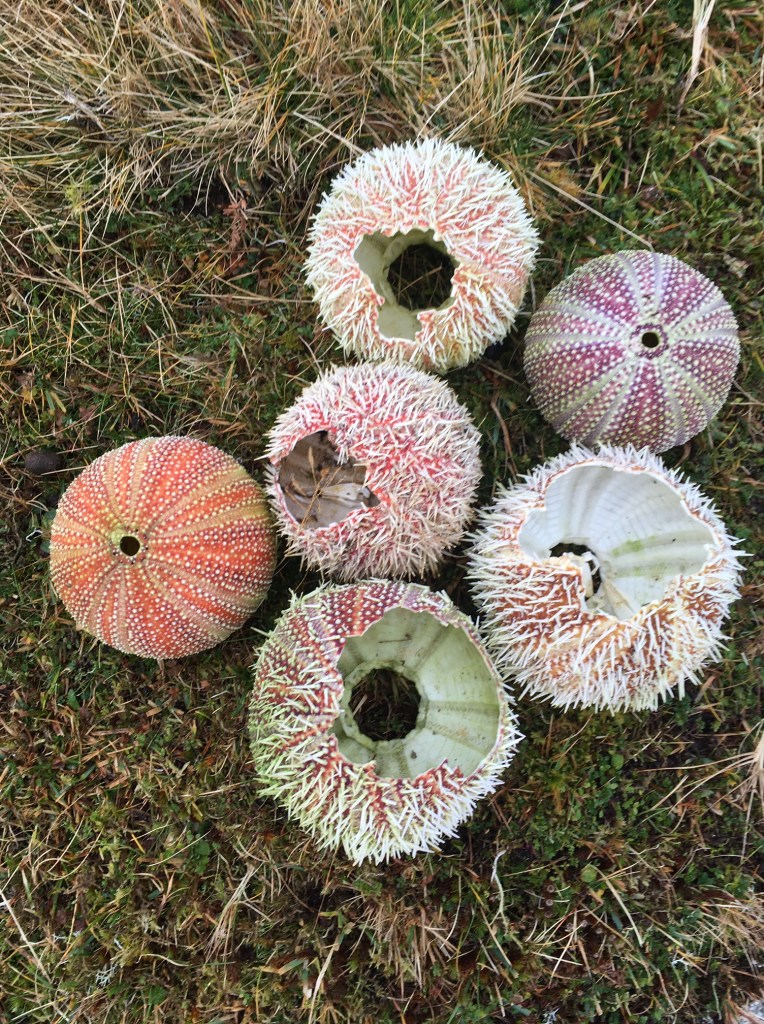
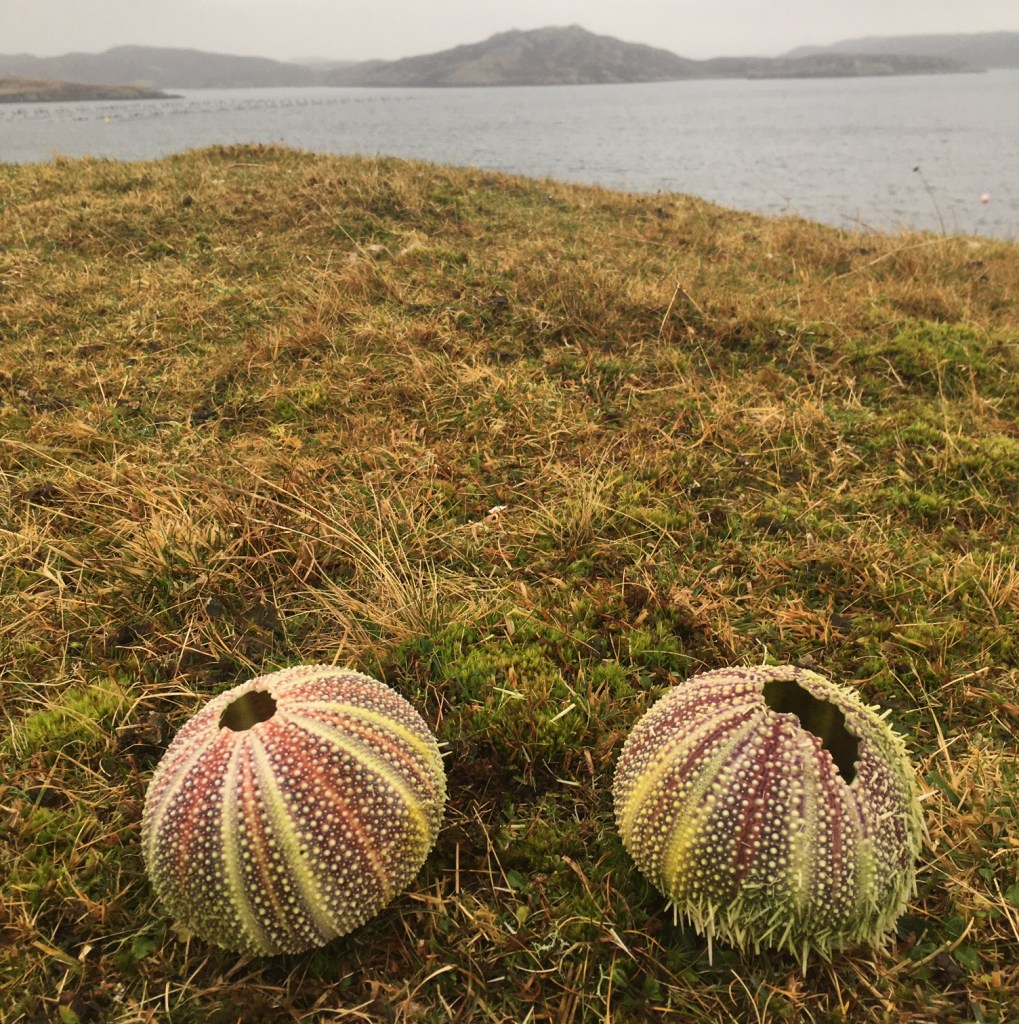
It was then that I was first inspired by the Sea urchin shells that I found in West Burrafirth, where I began to find many discarded Sea Urchin shells of various sizes and colours, left by seagulls. They were abandoned on banks and on flat, wet, mossy plateaus used as seagull breakfast tables.  All had been smashed to get to their breakfast but I was on the lookout for a complete one.  My very first complete found sea urchin shell was an exciting surprise, like finding a four-leafed clover when I was a kid.  I turned it around and around looking at its pattern. I collected any shell that was whole, even if it was broken into until I couldn’t hold them in my hands – so I used my hat to carry the porcelain like sea urchin shells back to the croft house. When I scrutinized the patterns, I saw that both my hat and urchin shell had a similar shape – the hat with a 5-pointed section crown and an urchin-like roundness and in return, the sea urchin shell looked hat-like.  When I returned home to Yorkshire at the end of 2019, I produced my first knitting pattern in January 2020, and called the it, Sea Urchin Shetland Hat pattern.

I am now loving using Rowan Felted Tweed yarn for this new pattern which is just called, Sea Urchin Hat.

The new pattern using Rowan’s Felted Tweed yarn, is here  but you can use any double knitting wool to knit it and if you do knit it, tag me on Instagram @traceydoxey so that I can see your experimental projects.

My workshop is now live on the Rowan Connect Website.   There’s lots of workshops on during the weekend of 12th – 14th April – Even Kaffe Fassett, is doing a talk. So, maybe I will see you online on at my session on 12th April  – hope so.  AND if you would like to win a place on all complimentary sessions and to my workshop at Rowan Connect on the weekend of 12th – 14th April, I will be picking one person out of a hat from the people who buy the new pattern. Closing date to buy the pattern is April 5th.

I’m really excited to be doing an online colour blending workshop for Rowan Connect because it will run completely differently to how I run my smaller workshops.

Online colour blending workshop for Rowan Connect in April is in link below

https://www.rowanconnect.net

Let me know what you think 🙂

Much love, Tracey.

Sharing my Creative Practice

Hi everyone, Firstly, I would like to say a big thank you to those who have followed my on my website for some time, and to those new people who have recently joined me on here. This is my ‘blog’ and covers topics from knitting to travel, inspiration, Shetland, my cats and my workshops.

today, it feels like a long time since I started my Patreon supporters website so, I’d like to update you on some of the exciting knitting posts that I have been uploading onto my Patreon site around the 1st of each month, since last August.

I cover topics such as behind the scenes (of knitting projects, patterns, motifs, colour blending and events) as well as inspiration, links, prompts and every month, there is a downloadable chart or charts in both colour and b/w so that you can use them with your own coloured yarns to knit in your own projects.

I started posting in August – with my first post – For the love of colour work knitting, which is free for everyone and is here 

https://www.patreon.com/posts/for-love-of-work-87220920

Then there is the first August subscribers post where I add half of the motifs that I used in the Stash buster neck warmer – both in colour and in B/W for every knitter to enjoy

September’s post shares the joys of swatching for colour – not for gauge. And I add the last of the neck warmer motif charts to download  – so now, you could knit it yourself without even buying the pattern because you have all the motif charts and all the colours.

By the time we are getting to September, I have written the stash buster neck warmer pattern, that so many people wanted and the pattern is finally launched, which I share first on patreon.

Then people on social media want more than just the neck warmer so I start adding charts of the pullover to Patreon too on the October post called Using my intuition and pragmatism.

In November, I write about finishing off and inspiration. And I also do my first pod cast chat and it is with Irina Shar – which was a bit scary for me but I loved it nonetheless.

December post begins with my love of – it is all about Shetland Dice.  – I tell the original story of my first pattern and why I used the dice patterns  – there are many images of the dice swatches and downloadable charts

In December, I post from my stay in Kyoto and there is a free little story on the needle shop and I post photos of knitting in the dry raked Zen gardens in the temples, which I fell in love with.  On January 1st, coming from Kyoto, I share how the city has inspired my love of colour and I start swatching for Kyoto Baby pattern – there are beautiful photographs fo the temple gardens and of my swatches and of the fabulous Wedding kimono that started my love of Crimson.

In February, I post about my behind the scenes of designing the Kyoto Baby hat and there are downloadable charts of the motifs.

March’s post is already written, it will be posted on 1st March – there will be downloadable charts, behind the scenes on my upcoming Rowan Connect workshop, and I will be joining a crochet group and there’s links to really interesting stuff.

So, you see, there is so much to get your teeth into.

There are  5 different levels of memberships.  The knitting level only – is £5.00 a month – cheaper thana a cuppa and a biscuit in a café – and that’s gone in 10 minutes.   Your subscription also goes towards supporting me as an artist – to continue creating.  If you join now, you get all the older posts back dated so it is a wonderful opportunity to see and read so many months of posts.

There is an expensive tier where you get a free workshop and 1:1 tutorial with me too and I have one incredibly generous supporter who joined at this level.

Each knitting subscriber, also gets 20% discount on all of my patterns on ravelry and a discount of 10% on my online workshops.

So, if you like my work, and if you follow on here, you can get much more from Patreon –

thank you to my current subscribers. some have left, many have stuck with me. I am back, I have energy again. I am looking forward to March’s post 🙂

Let me know your thoughts

Very best wishes

Tracey

Sea Urchin Hat pattern

January 2024

I thought that it was the Sea Urchin hat pattern’s third anniversary, but, because we slipped into 2024, when I was in Japan, I finally realised that this unassuming first design pattern of mine, is a big FOUR years.

I gave it the name of Sea Urchin Shetland pattern, after collecting Sea Urchin shells in Brindister on the West coast of Shetland in the December of 2019.

There were so many on the hills making the lunch tables for wild birds to crack open sea shells, that I began to call the place, ‘Sea Urchin Hill’.   

So much has happened since the inception of this little beanie pattern, that I had already been making up in vintage tapestry yarn for some time.  In January 2020, I formalised the pattern a released it.  I didn’t know about test knitters or pricing or anything, and it flew.   It was the colours, you see.  I made the pattern beanie up in my very first use of Jamiesons of Shetland, Spindrift, after returning from 2 months of living on Fair Isle with Mati Ventrillon, as intern, at the age of 56.  It was around that time, after many visits to Shetland, that I began to feel at home there, and think about moving to the islands. 

I look back to the time of writing and designing this little pattern and now see that is it was the Kickstarter to my creative design process – the beginning of how I saw colour in knitting and how I began to blend those colours.   The pattern became incorporated into my online colour blending workshops and was the possibility for a new me. 

I designed the pattern on the doorstep, out back of my Sheffield flat using the yarn from Jamieson’s, posting little posts on Instagram, building what I didn’t realise then, was an interest in the pattern and in my colour ways.   I began dreaming of living on an island 60degrees north.  (the full story unfolds here and you can read Aug – January of the book I wrote, if you join us on Patreon now – then each month will drop on the 1st of the month) and enjoyed how I mixed the  colours to sing.

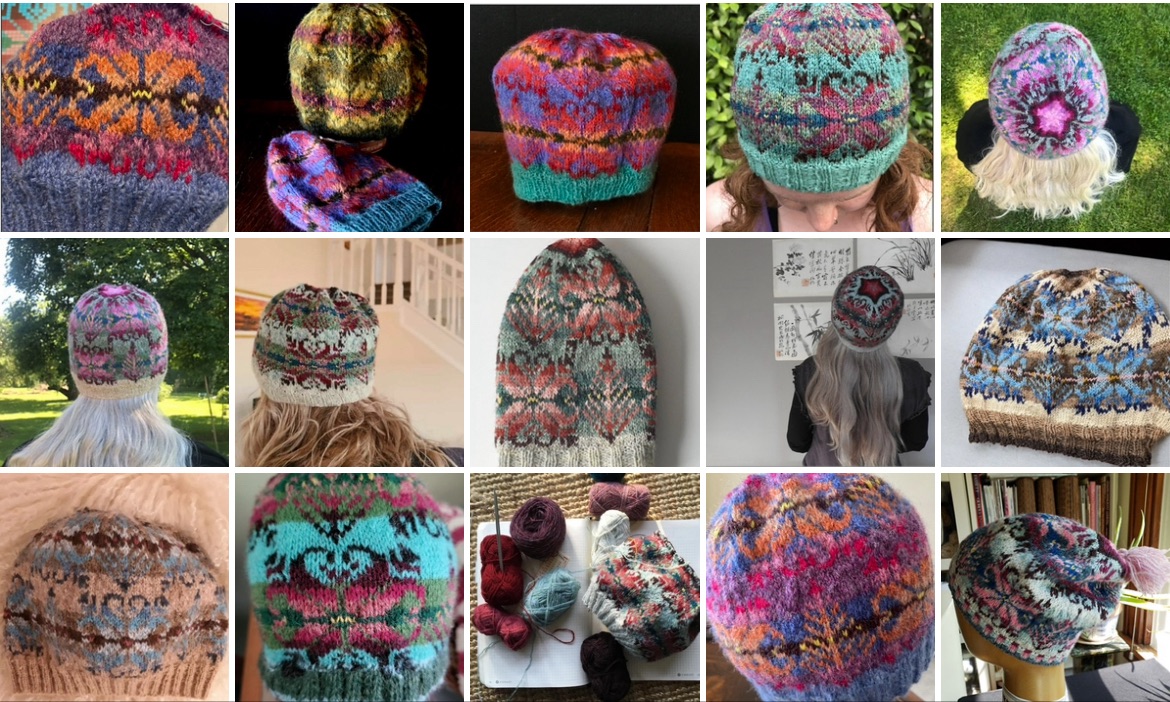
It makes me really happy to see this pattern interpreted by knitters in their own colours, some of which are included here.  If you have knitted this pattern, please tag me in your posts so that I can see the results. 

Here is the little pattern.

Just think, you never know where knitting can take you. It is all interconnected and all a journey .

Thank you to everyone who supported me in 2023.

Tracey 🙂

textile, knitting or art?

Knitting, Art or just textiles?

Under a week after handing over this commissioned piece of knitting, I have had time to reflect.  I have a window of time to reconsider what I have made and why and what happened during the making and designing process and the outcome of what seems to some, to just be a knitted pullover.

The idea for this hand-knitted piece actually came from my thinking son because I was questioning the time involved in knitting and designing one off pieces. He suggested for me to consider intricately knitting something that I loved and to log every hour and minute spent making it.  This type of time is not commercial time but entirely creative, without speed, without a target.  So, to make a knitted piece in this way, with this idea behind it was the initiation that made it a project or a work of art; not just knitting and certainly not textiles.

A constant driving question of any maker is what is the value of time spent. I question time and the value of an hour of my time because, at 55 years old I may be running out of hours and what do I want to do with my one precious hour? is my hour of more value than, say, a 23 year old who, statistically, has more hours left to live than me.  If we knew how many hours left, what would we do with those hours? Knit?  

So, the act of writing, logging and recognising time spent whilst making became an underlying, fundamental principal of this knitted piece. I did not lie about time, did not hide time spent in the making process, did not adjust hours to fit ‘within time’ or an acceptable amount of time judged by others to take to knit this item and I did not exaggerate either.  I was wholly honest.

During the process there was no brief, or contract or even a binding conversation with the person who may or may not buy it, I made a Fair Isle pullover with a woman in mind.  A woman who I know respects hand-made items, understands art and creativity and supports makers.  And, I know that time is precious to her.  Of course, in the end, it is wearable. Win, win.

There was no design brief or discussion or demands or expectations.

Carte blanche. 

There was also no discussion of money due to the fact that this was not my driving force for the knitted project.  Notice, that this knitting has been called many things – a project, a hand-knitted piece, a piece of art but never just knitting or textiles. 
This whole project was a thought process – thinking about design, experimentation, research in practice, 2 years in an MA to research knitted lace, colours, heritage, Shetland-inspired memories, traditional patterns, blending colours, making mistakes and undoing mistakes, patterns I’ve previously knitted and why I wanted to weave those things into each stitch.   How can you sell that?  In a story? To a believer?  It’s an investment of time and detail.

In brief, the underlying principle was to create a work of art which encompassed understanding and mastery of the craft of knitting, which I have done for over 40 years now. To the untrained eye, this knitted piece is ‘textiles’ or ‘just knitting’ but,  to the thinking mind it is not.

So, I started. And unstarted. Designed and redesigned and felt my way through many, many, many hours of knitting.  Each hour was logged and sometimes what I was thinking, what I was feeling and my understanding of developing certain areas of the piece.  The work went everywhere with me and I knitted every day over 4 months. Yes, 4 months – sometimes at night watching things on iplayer. It went to café’s, babysitting, to Sheffield Institute of arts and on train journeys and to different cities but always I stayed true to the principle of logging the hours and to making every loop perfect.  I began to want to hold the work and get back to it.  It became a piece of wellbeing.
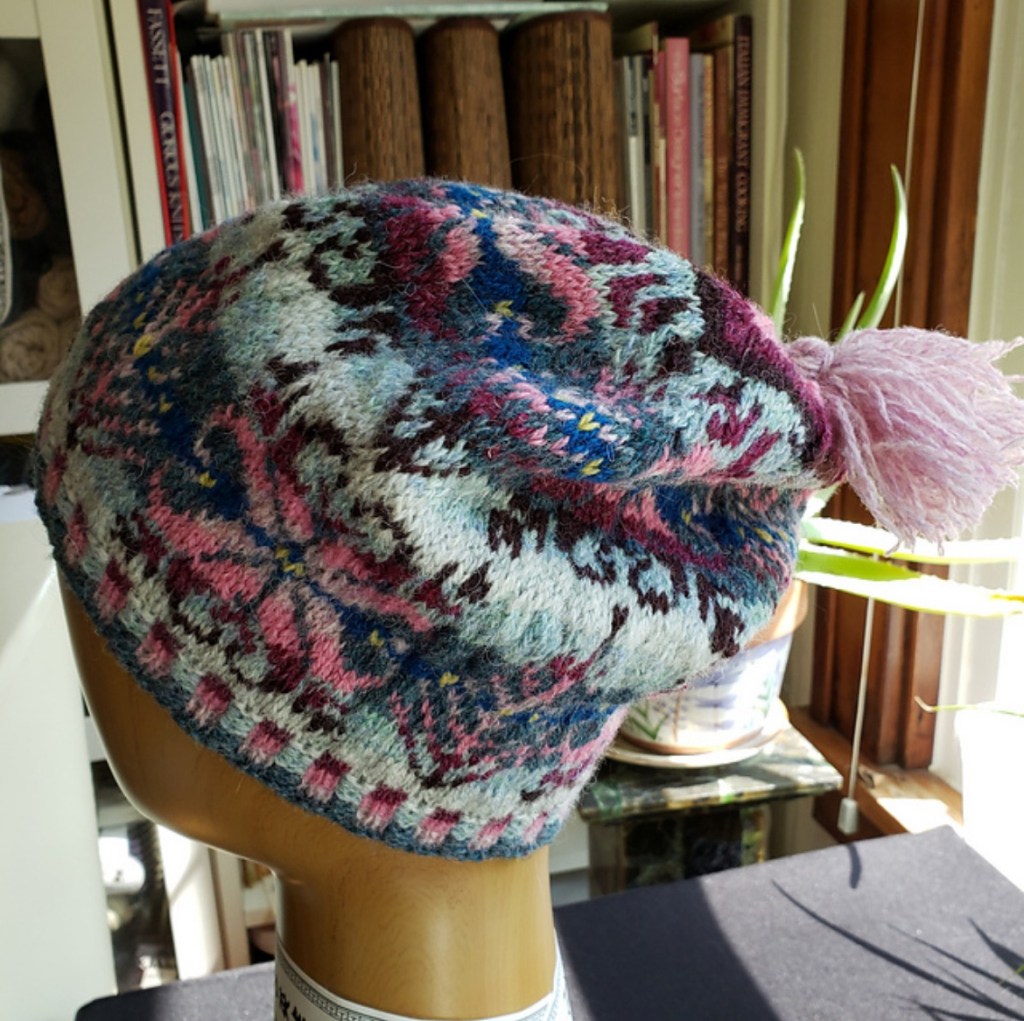
I became fascinated by thinking about how one colour sat next to another and where the pattern had come from and what memories the knitting drew on. I undid anything that I was not totally, absolutely happy with and the happiness came in the detail which fed back to the process of thinking.  The whole process took on a journey of its own.

The result is like a tightly woven carpet.

I am partly embarrassed about the hours I spent on this knitted piece and partly in awe of how much time I spent dedicated to something that a knitter would do in under half the time.  But, that knitting, from a pattern would be ‘just knitting’.  This piece came from scratch – from an idea and a bundle of over 50 colours of Shetland yarn.

On bank holiday Monday – the jewel-coloured surprise was ceremoniously and fittingly handed over