Sea Urchin Hat pattern

January 2024

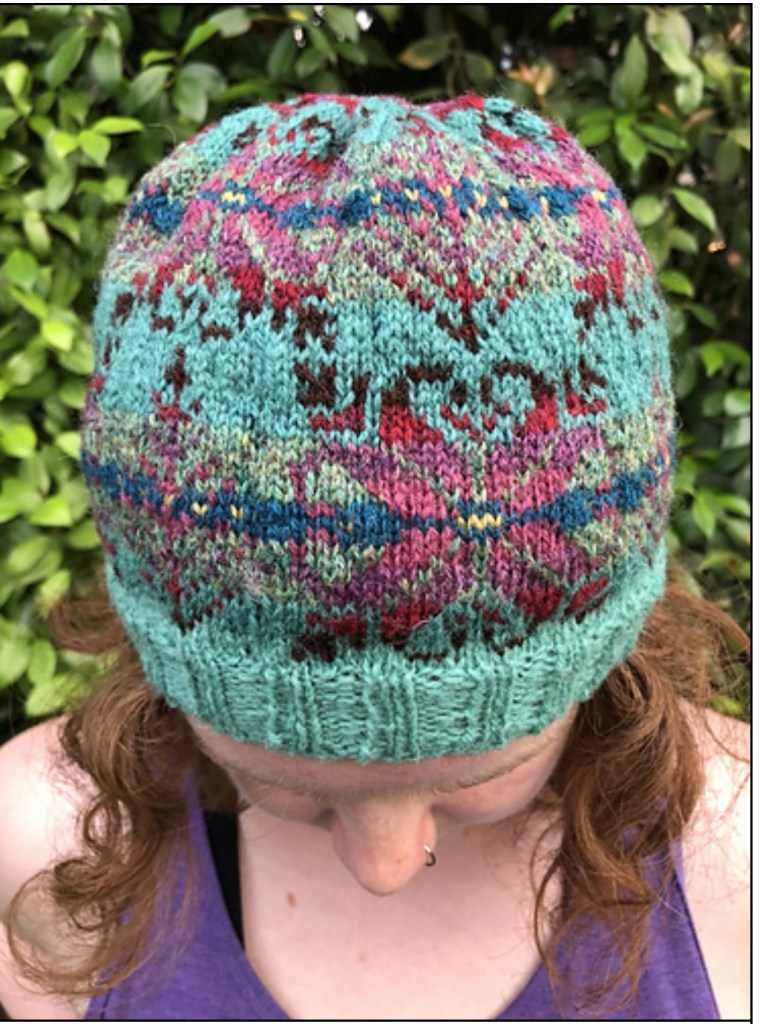
I thought that it was the Sea Urchin hat pattern’s third anniversary, but, because we slipped into 2024, when I was in Japan, I finally realised that this unassuming first design pattern of mine, is a big FOUR years.

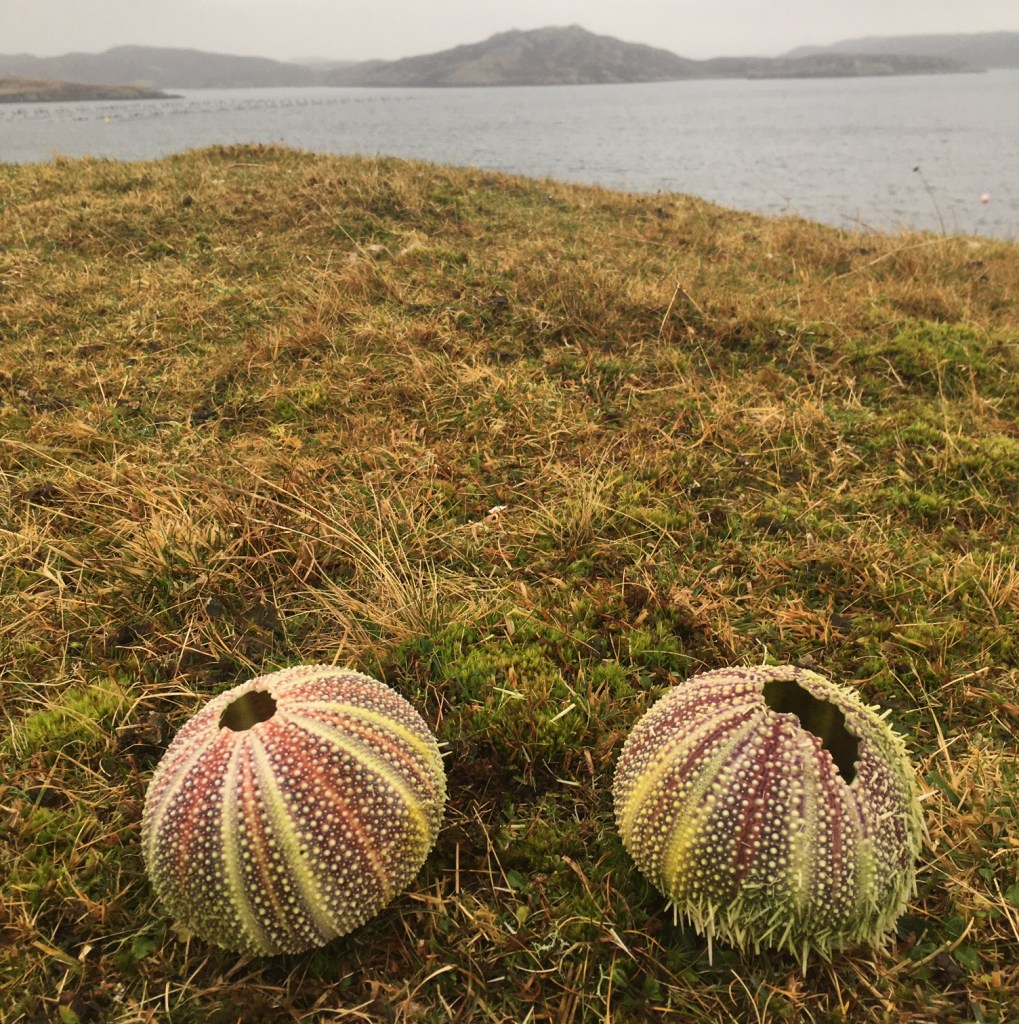
I gave it the name of Sea Urchin Shetland pattern, after collecting Sea Urchin shells in Brindister on the West coast of Shetland in the December of 2019.
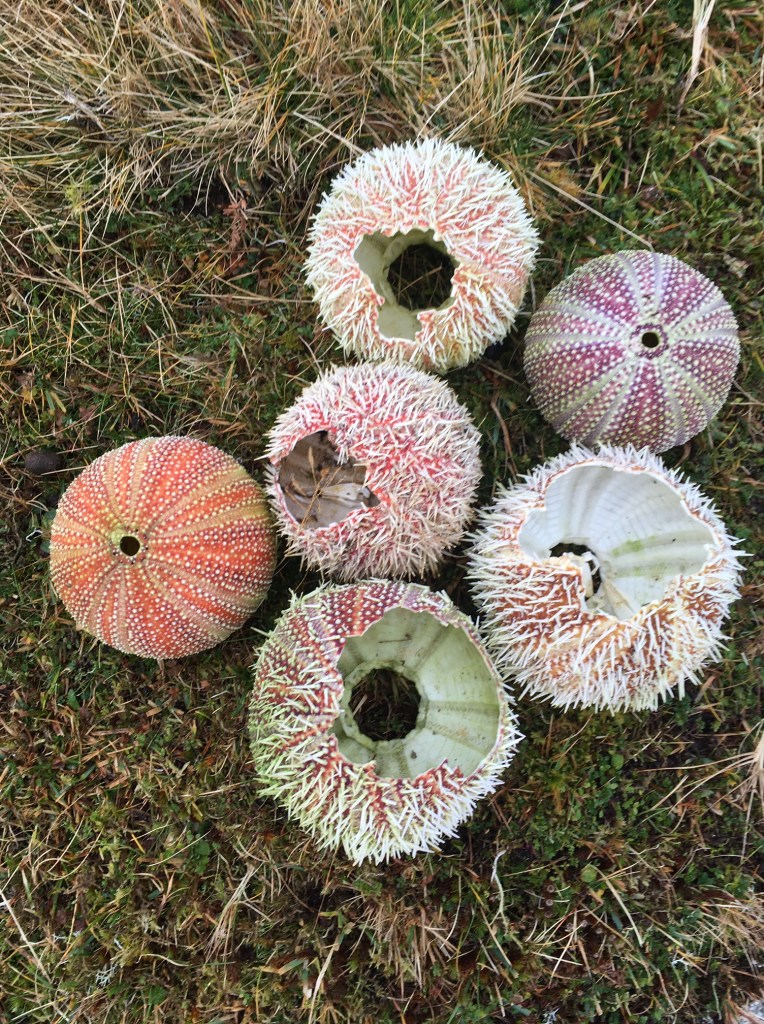
There were so many on the hills making the lunch tables for wild birds to crack open sea shells, that I began to call the place, ‘Sea Urchin Hill’.   

So much has happened since the inception of this little beanie pattern, that I had already been making up in vintage tapestry yarn for some time.  In January 2020, I formalised the pattern a released it.  I didn’t know about test knitters or pricing or anything, and it flew.   It was the colours, you see.  I made the pattern beanie up in my very first use of Jamiesons of Shetland, Spindrift, after returning from 2 months of living on Fair Isle with Mati Ventrillon, as intern, at the age of 56.  It was around that time, after many visits to Shetland, that I began to feel at home there, and think about moving to the islands. 

I look back to the time of writing and designing this little pattern and now see that is it was the Kickstarter to my creative design process – the beginning of how I saw colour in knitting and how I began to blend those colours.   The pattern became incorporated into my online colour blending workshops and was the possibility for a new me. 

I designed the pattern on the doorstep, out back of my Sheffield flat using the yarn from Jamieson’s, posting little posts on Instagram, building what I didn’t realise then, was an interest in the pattern and in my colour ways.   I began dreaming of living on an island 60degrees north.  (the full story unfolds here and you can read Aug – January of the book I wrote, if you join us on Patreon now – then each month will drop on the 1st of the month) and enjoyed how I mixed the  colours to sing.

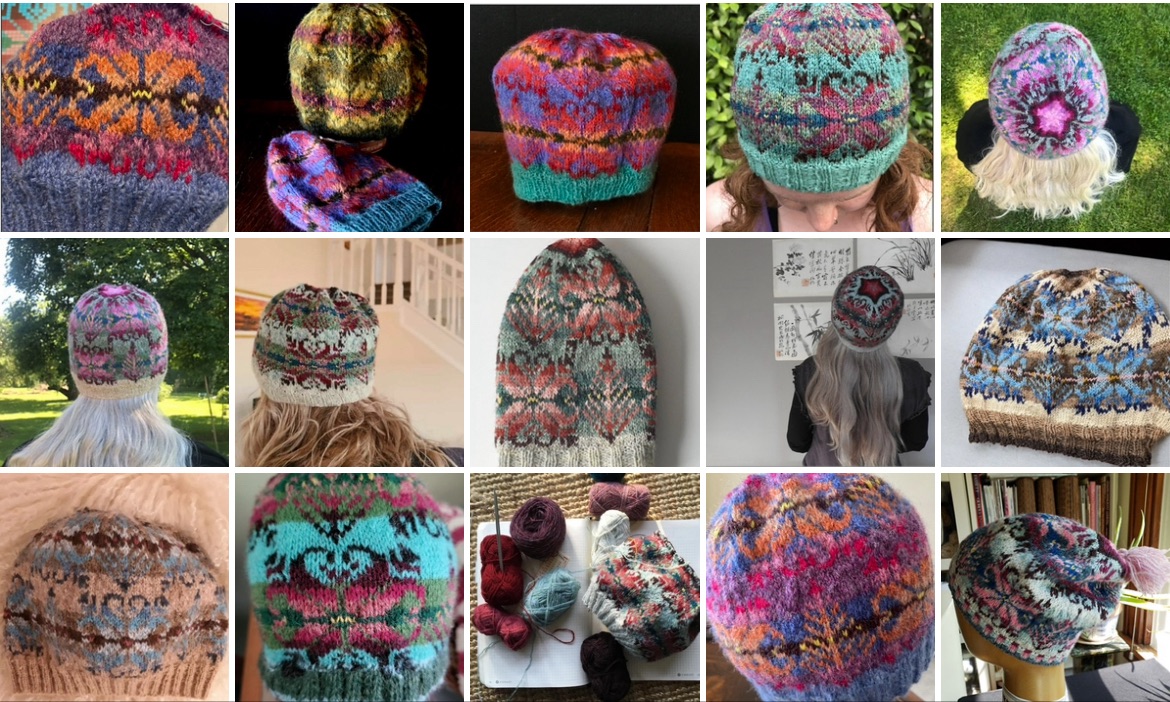
It makes me really happy to see this pattern interpreted by knitters in their own colours, some of which are included here.  If you have knitted this pattern, please tag me in your posts so that I can see the results. 
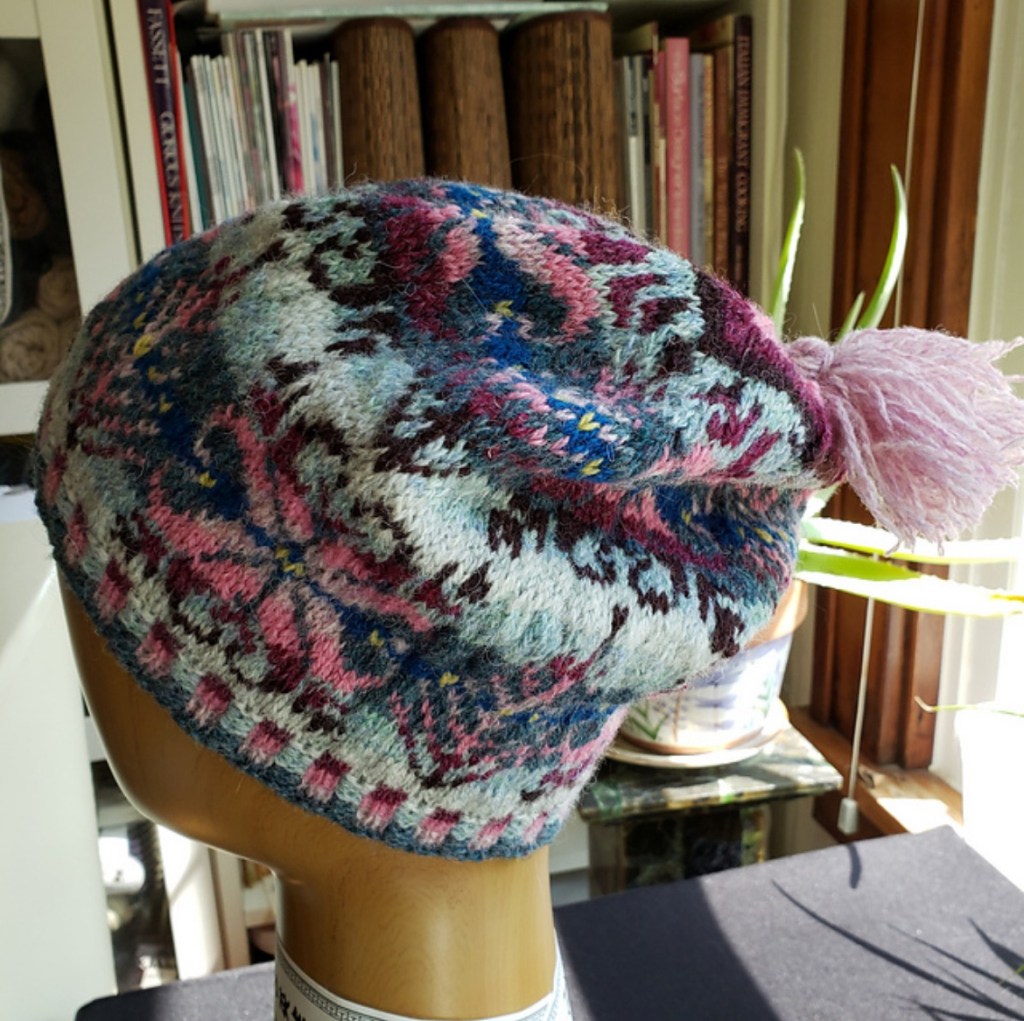
Here is the little pattern.

Just think, you never know where knitting can take you. It is all interconnected and all a journey .

Thank you to everyone who supported me in 2023.

Tracey 🙂
What do you eat? – a post from my old Shetland life

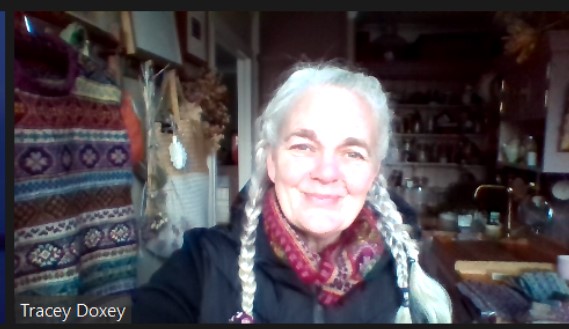
On Saturday 14th November 2020, I was the guest on a really interesting 2 hour Zoom meeting with the lovely ladies at Cream City Yarn in Milwaukee,  4pm Shetland time – already twilight – 10am there.  The meeting was to be about my knitting designs and my tiny croft house here in Shetland with any of their customers who would like to join.

I sat, in frame, on a small old wooden Liberty chair in front of my wood burning stove, burning peats.  I showed the peats, what they looked like, how they burn on the fire and explained a little of how they are harvested.  I was surrounded by my knitting (completed and half done) and my knitting design book that I add to all the time. I explained how I start to make swatches and of my colour choices and how I blend my colours.  I explained the importance of colour and how you choose the right ones.  I then went on to how I am inspired by place and or person and how that inspiration then turns into a research of sorts; possibly bordering on a small obsession to get details right.

I showed photographs of Susan Halcrow, who had lived in this house for 83 years and then a 360-degree panoramic view of the room with the old latch doors.  
I showed all of my designs and explained the inspiration and colour and how they had come in to being.  They are a story in themselves.    I even showed the Sea Urchin shells that Inspired my Sea Urchin hat pattern and how I had developed the colour for that design which is described in the pattern. There was a conversation between myself and the ladies at CCYarn.

I hoped to create an atmosphere of the house and an insight into colour blending and knitting design.  An atmosphere of my way of life.

After 1 hour 45, we opened up for questions from Zoom participants

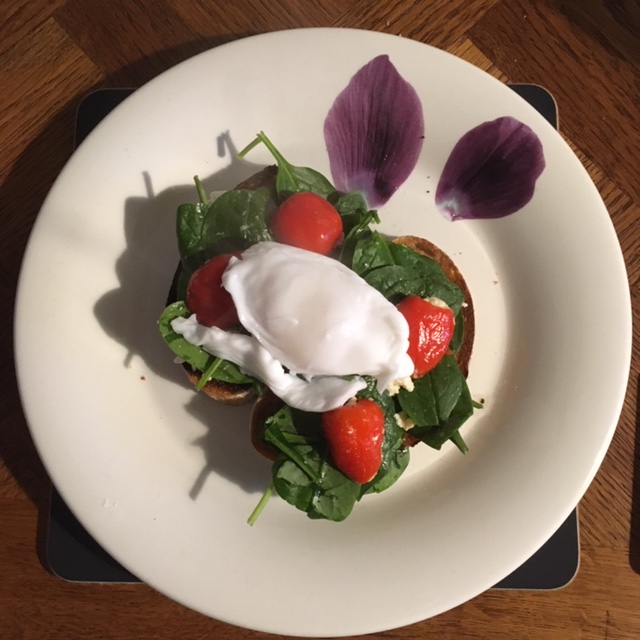
The first question was – ‘What do you eat?’

I mean, this was kind of a weird question to me – both personal and odd because we have a Tesco Megastore in Lerwick and a big fat Co-op and many small stores including farm shops.  I felt like I was back in China – when in the mornings, they don’t greet with, ‘Good Morning’ they often say “你吃了吗(Nǐ chī le ma)?” which means – have you eaten?  I always considered this to be funny but realised that the deeper route goes back to the times of famine – Have you eaten? What have you eaten? Because food was rare and is precious.  So, on the zoom,  I explained my lunch that day – Shepherds pie with 5 root vegetable mash and gravy made of the wine left over from when Mati visited and all the juices of the meat.  And then I explained that Mati had stayed the week before and that she had brought me 2 butchered lambs from her croft in Fair Isle and they were in my freezer – the day before, we had had roast lamb and all the trimmings so I didn’t really understand her question.

But on reflection, I realise she didn’t mean – what do I eat – but how, on this isolated island do I get my food?

I’m new here.  I have no stock or store or polytunnel stocked with mature soft fruits growing protected from the harsh weather.  There are no trees here that shed an autumn harvest of apples, pears, plums and there are no pecan trees shedding pecans to fill my belly ( I have been reading Braiding Sweet Grass)

This island is barren and bleak in Winter, which can last from the end of October to the end of March.  I have no cellar store with stacks of pickles or potatoes.

I mean – WHAT DO I EAT?

What if the boat did not come from the mainland, due to endless storms, to stock up Tesco? What if the electricity went and the freezer died?  What if the boat from Aberdeen to Lerwick gets cut and the service is lessened?  

In truth, I did save pasta and a few things when COVID hit us in Sheffield and you couldn’t buy pasta or rice for love nor money.  That time was an eye opener that shops can be cleared in hours, in a city of 550,000 people with a food shop on every corner. So I did stock up for the first time in over 2 decades with non-perishable foods.  So, a more rounded question might be – what can I eat if everything is removed from a shop?

When I arrived, I dug out the small stone roofless Byre of over 20 years of soil, weeds, fern, roses, plants I didn’t know the name of with the intention of getting it reroofed in polytunnel plastic to be a greenhouse to grow my own food.  Everywhere across the islands are new expensive polytunnels.  A high percentage of homes have one – over half. They are high yielding, complete with internal growth systems inside.  The smallest polytunnel will set you back 3.5K and that is a kit.  You have to lay the base and put it up so that it will withstand any gale (of which there are plenty) I have been quoted 5K to re roof this tiny building which I am still taking a deep breath at.

As part of the eco system of this house and my new life, I need to grow things for two reasons – one to have a supply of fresh organically grown fruit and veg and two, something to fall back on and there is another reason – I would like to offer organically grown vegetables to my visitors.

To grow here, you have to cover your plants.  The sea air burns leaves, the wind rips plants back to sticks.   At the moment, my city pot plants of Winter Jasmine, Star Jasmine and Orange Blossom are jostling for space in my porch.  But I want to grow things – both edible and scented.  It’s important.

To do this, I need to get a roof on the byre and then I will learn how to grow things in the wormless soil of Shetland. 

So, I don’t think the workshop participant meant, ‘What do you eat?’ but more, where do you get your food from and how do you survive on that island?

textile, knitting or art?

Knitting, Art or just textiles?

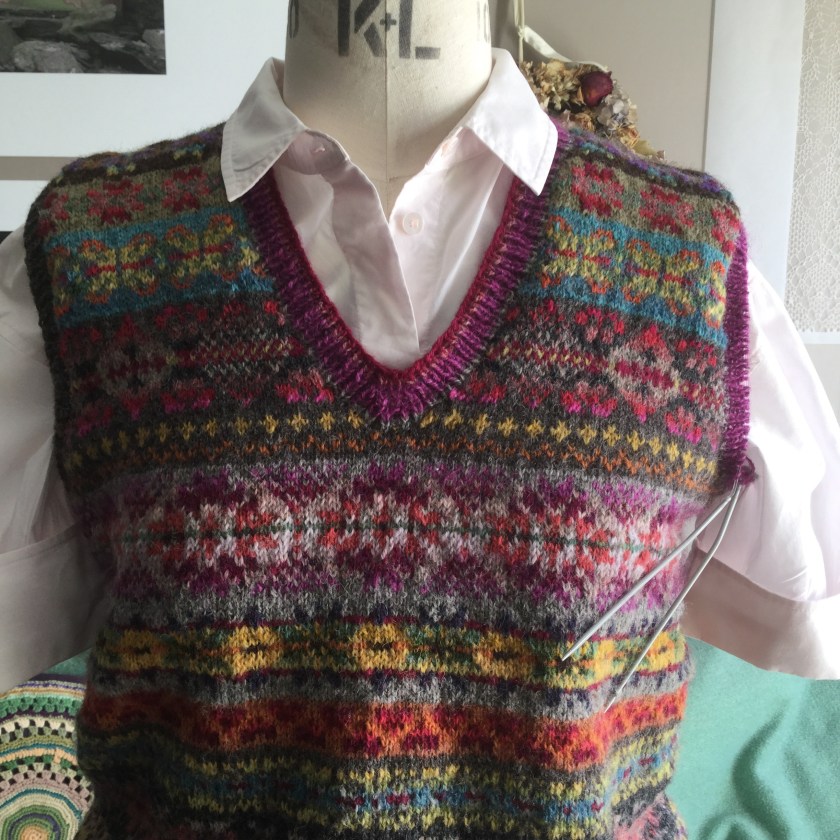
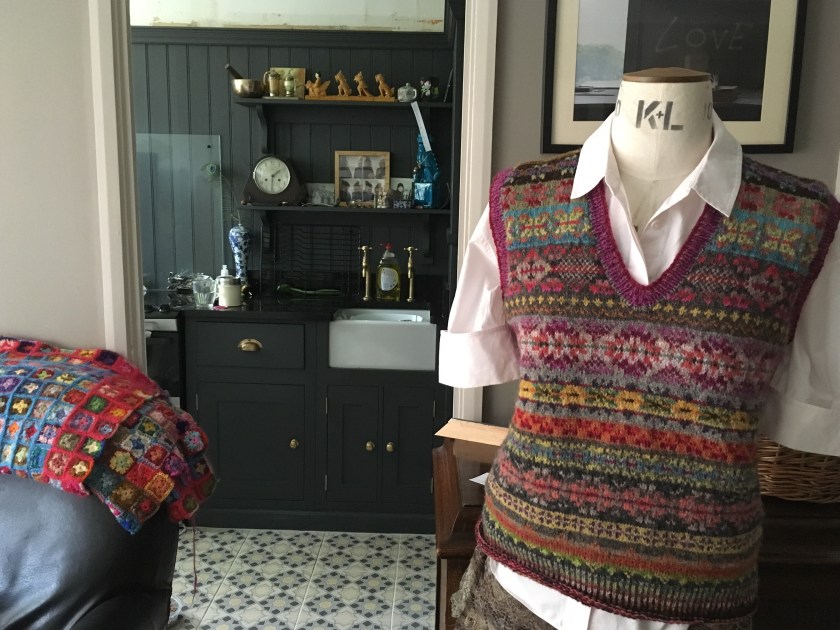
Under a week after handing over this commissioned piece of knitting, I have had time to reflect.  I have a window of time to reconsider what I have made and why and what happened during the making and designing process and the outcome of what seems to some, to just be a knitted pullover.

The idea for this hand-knitted piece actually came from my thinking son because I was questioning the time involved in knitting and designing one off pieces. He suggested for me to consider intricately knitting something that I loved and to log every hour and minute spent making it.  This type of time is not commercial time but entirely creative, without speed, without a target.  So, to make a knitted piece in this way, with this idea behind it was the initiation that made it a project or a work of art; not just knitting and certainly not textiles.

A constant driving question of any maker is what is the value of time spent. I question time and the value of an hour of my time because, at 55 years old I may be running out of hours and what do I want to do with my one precious hour? is my hour of more value than, say, a 23 year old who, statistically, has more hours left to live than me.  If we knew how many hours left, what would we do with those hours? Knit?  

So, the act of writing, logging and recognising time spent whilst making became an underlying, fundamental principal of this knitted piece. I did not lie about time, did not hide time spent in the making process, did not adjust hours to fit ‘within time’ or an acceptable amount of time judged by others to take to knit this item and I did not exaggerate either.  I was wholly honest.

During the process there was no brief, or contract or even a binding conversation with the person who may or may not buy it, I made a Fair Isle pullover with a woman in mind.  A woman who I know respects hand-made items, understands art and creativity and supports makers.  And, I know that time is precious to her.  Of course, in the end, it is wearable. Win, win.

There was no design brief or discussion or demands or expectations.

Carte blanche. 

There was also no discussion of money due to the fact that this was not my driving force for the knitted project.  Notice, that this knitting has been called many things – a project, a hand-knitted piece, a piece of art but never just knitting or textiles. 

This whole project was a thought process – thinking about design, experimentation, research in practice, 2 years in an MA to research knitted lace, colours, heritage, Shetland-inspired memories, traditional patterns, blending colours, making mistakes and undoing mistakes, patterns I’ve previously knitted and why I wanted to weave those things into each stitch.   How can you sell that?  In a story? To a believer?  It’s an investment of time and detail.

In brief, the underlying principle was to create a work of art which encompassed understanding and mastery of the craft of knitting, which I have done for over 40 years now. To the untrained eye, this knitted piece is ‘textiles’ or ‘just knitting’ but,  to the thinking mind it is not.

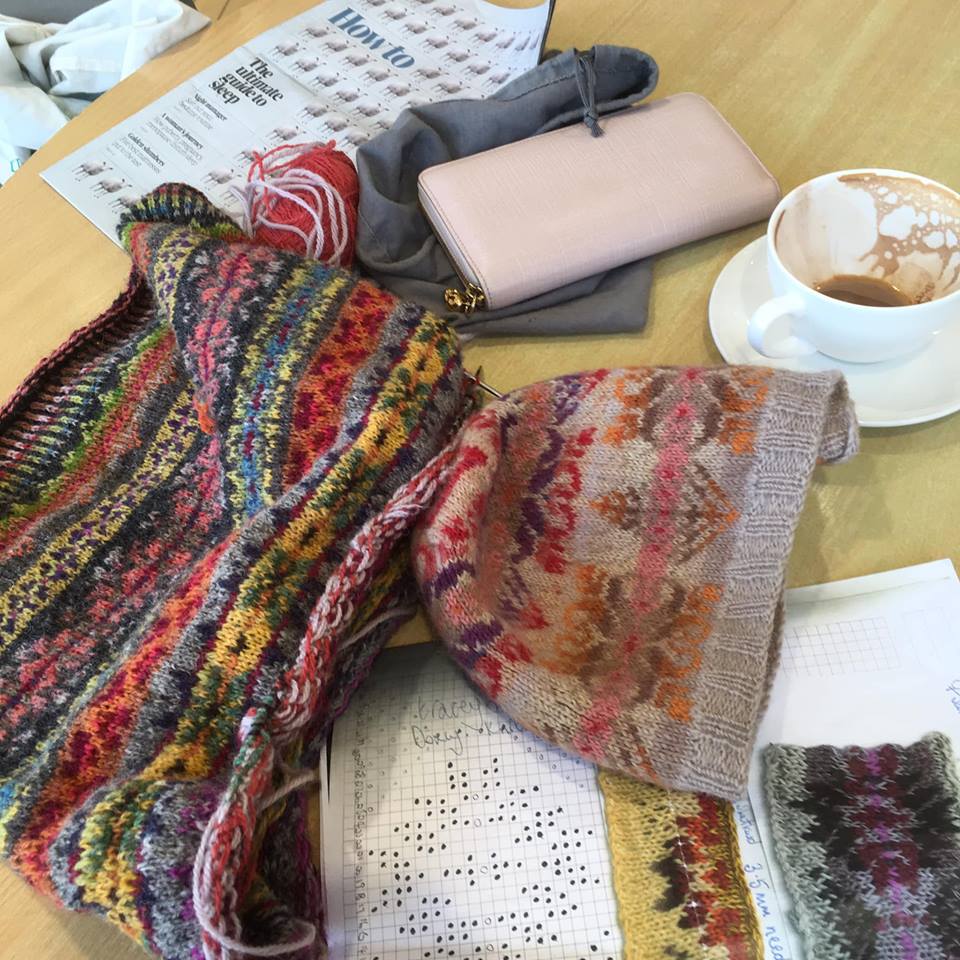
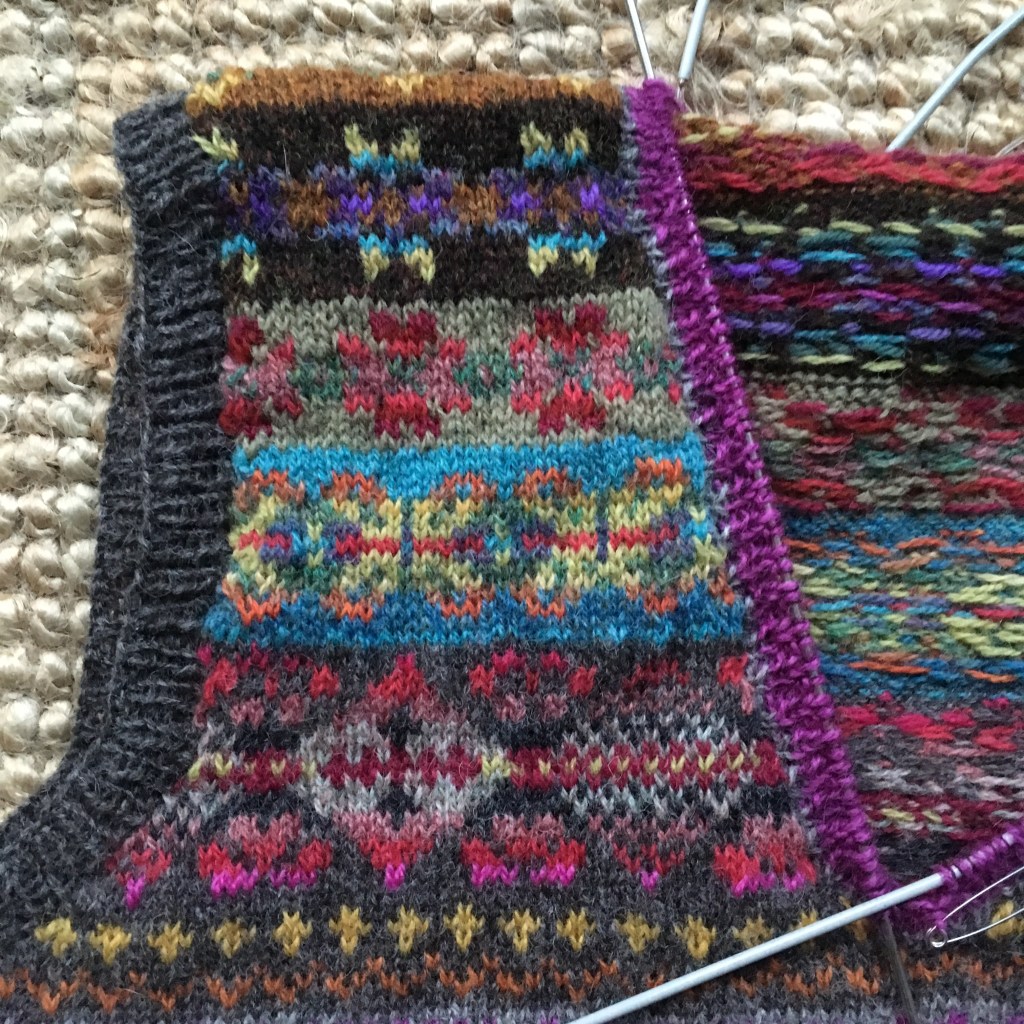
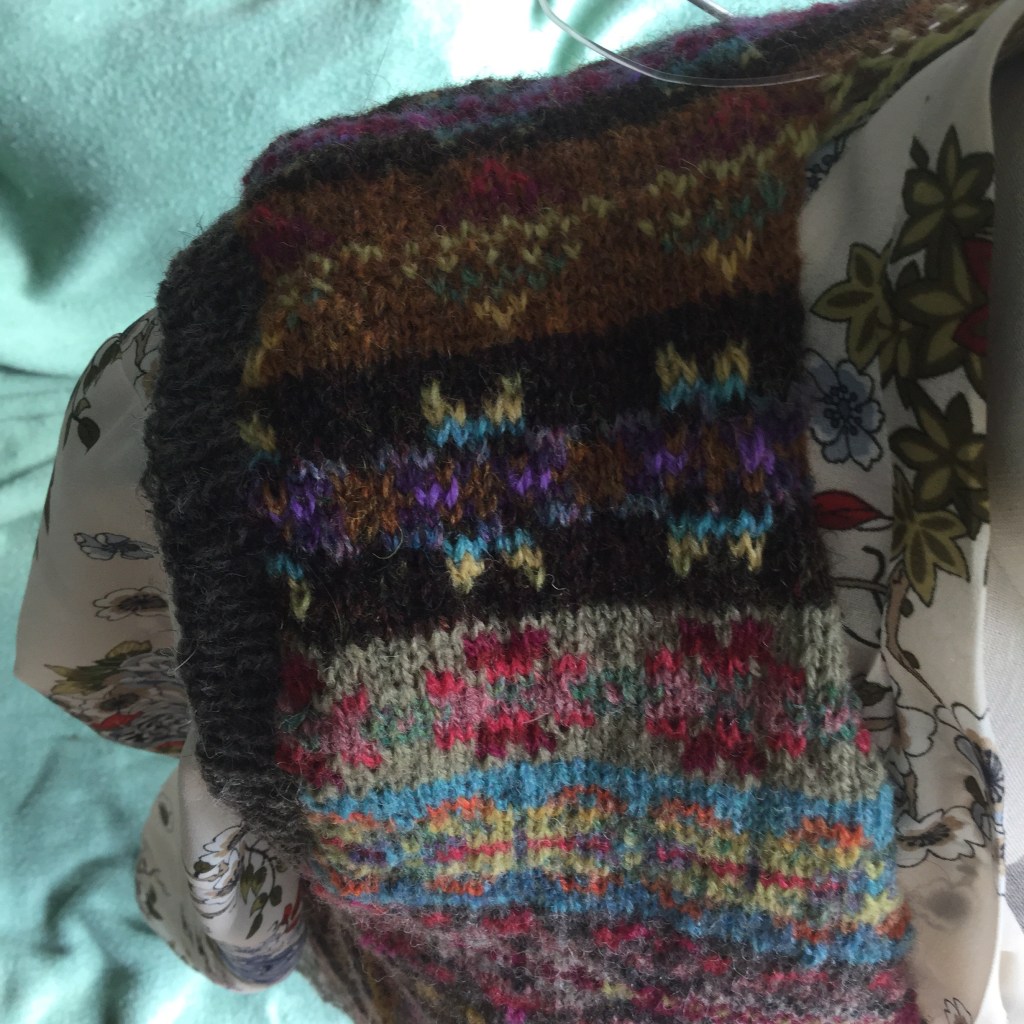
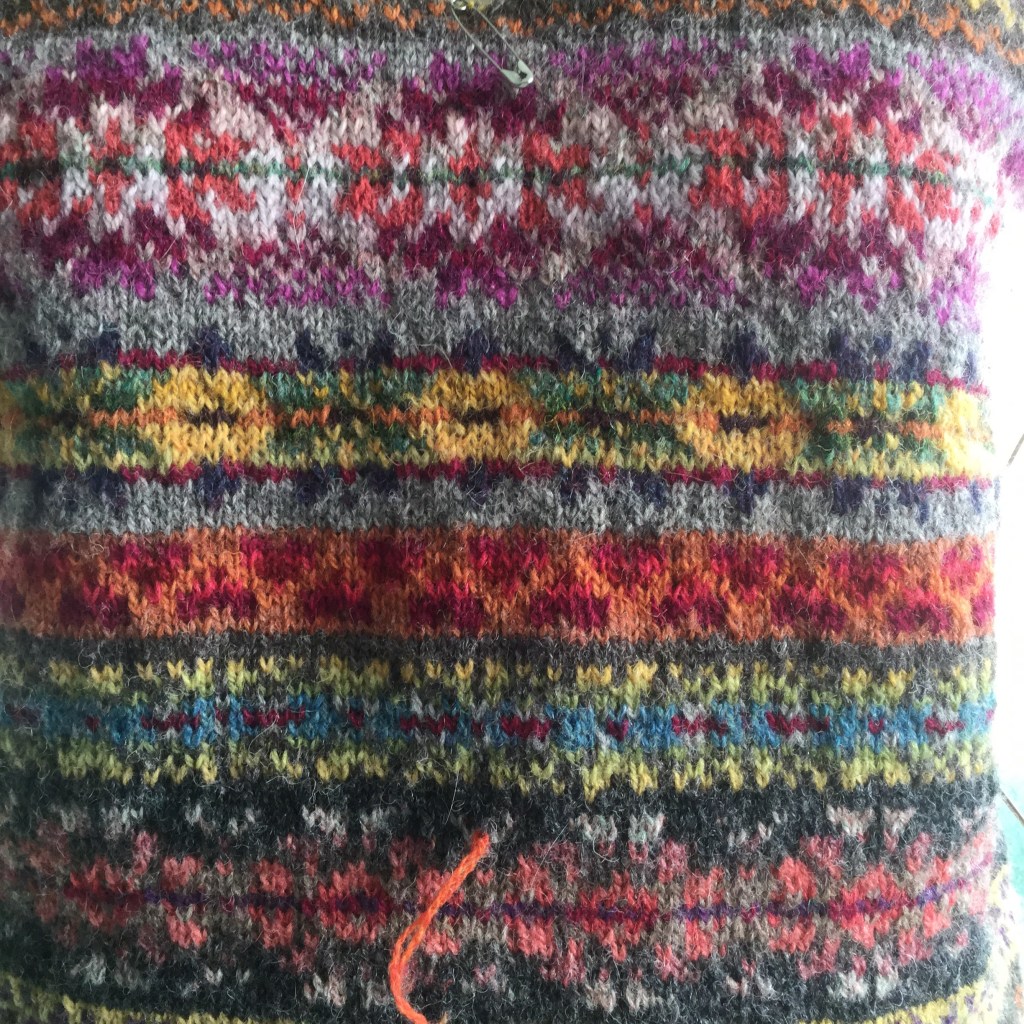
So, I started. And unstarted. Designed and redesigned and felt my way through many, many, many hours of knitting.  Each hour was logged and sometimes what I was thinking, what I was feeling and my understanding of developing certain areas of the piece.  The work went everywhere with me and I knitted every day over 4 months. Yes, 4 months – sometimes at night watching things on iplayer. It went to café’s, babysitting, to Sheffield Institute of arts and on train journeys and to different cities but always I stayed true to the principle of logging the hours and to making every loop perfect.  I began to want to hold the work and get back to it.  It became a piece of wellbeing.

I became fascinated by thinking about how one colour sat next to another and where the pattern had come from and what memories the knitting drew on. I undid anything that I was not totally, absolutely happy with and the happiness came in the detail which fed back to the process of thinking.  The whole process took on a journey of its own.

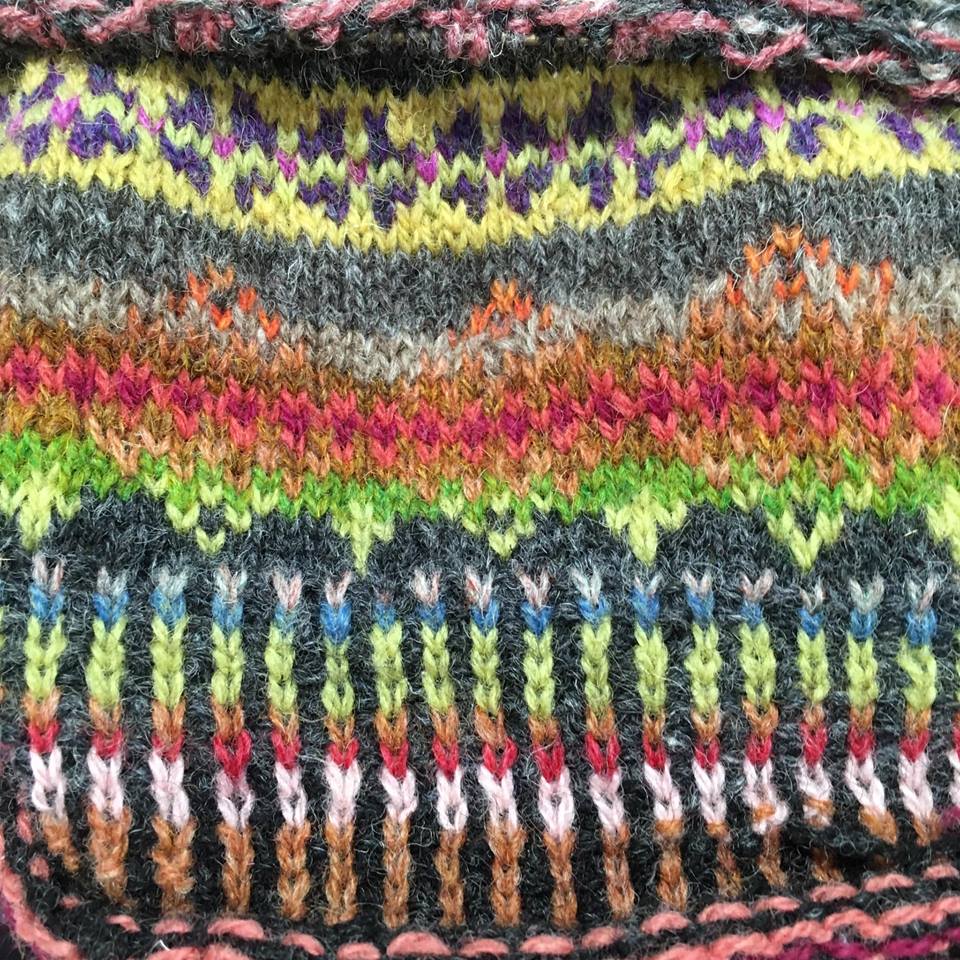
The result is like a tightly woven carpet.

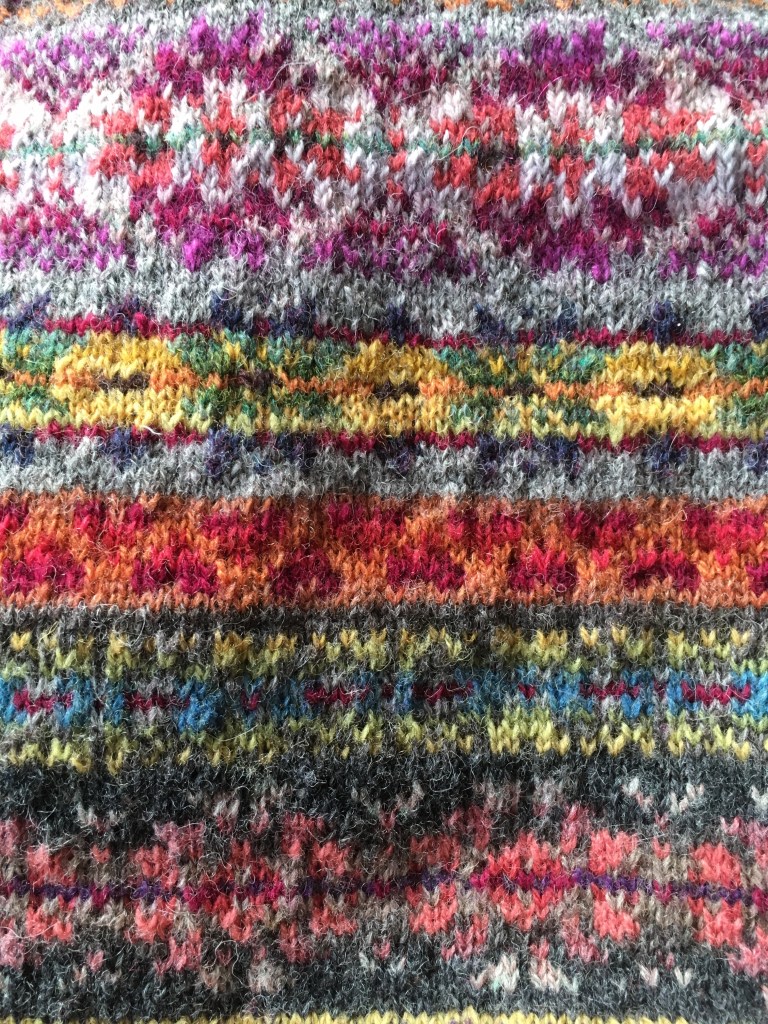
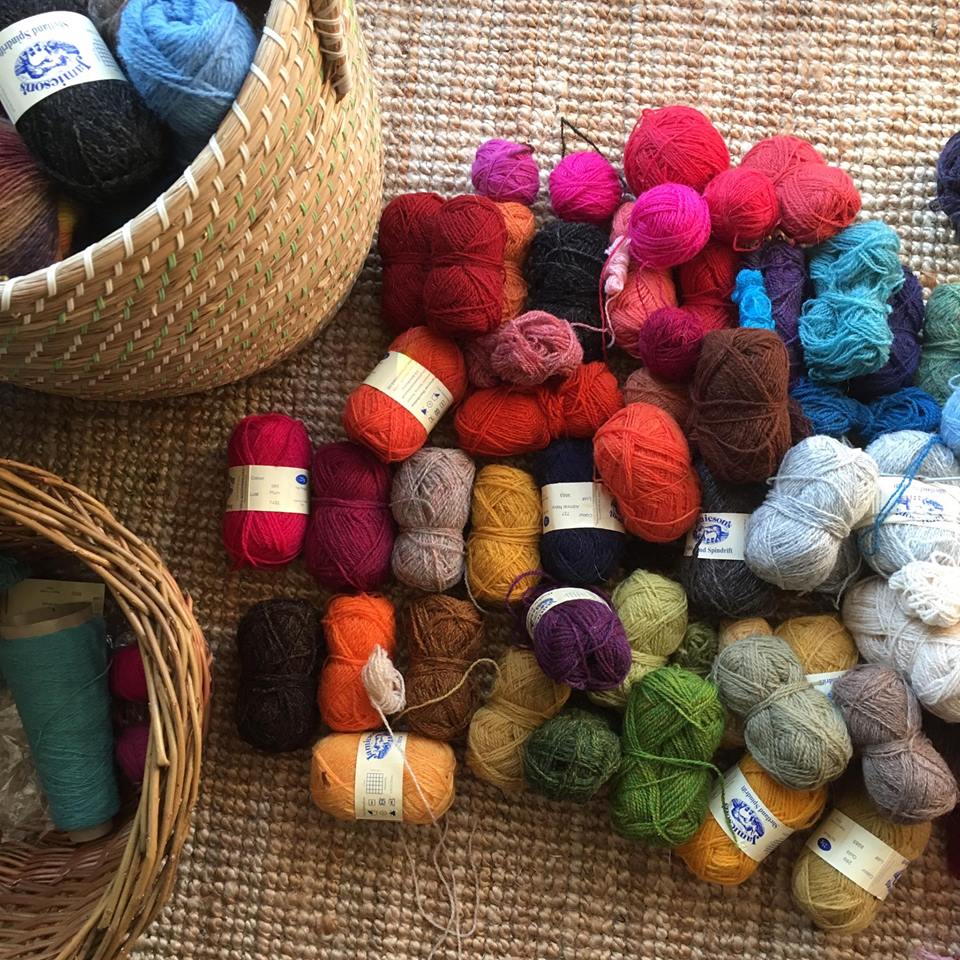
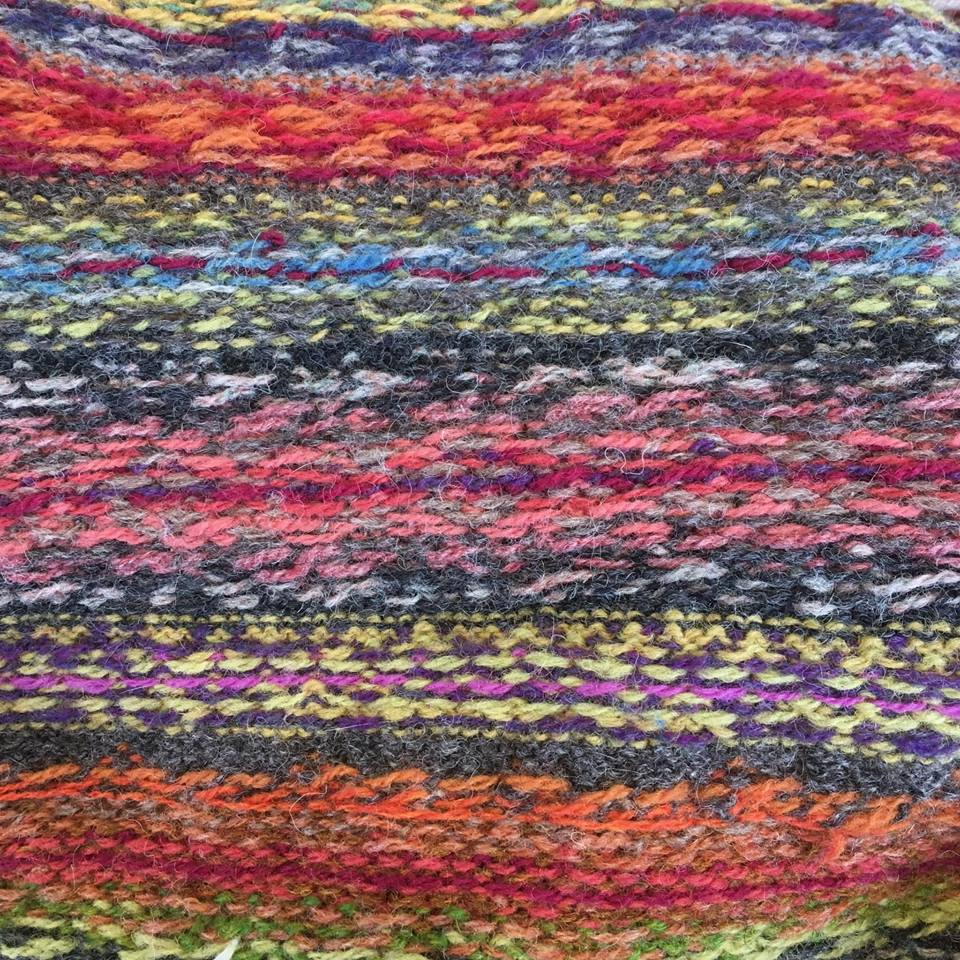
I am partly embarrassed about the hours I spent on this knitted piece and partly in awe of how much time I spent dedicated to something that a knitter would do in under half the time.  But, that knitting, from a pattern would be ‘just knitting’.  This piece came from scratch – from an idea and a bundle of over 50 colours of Shetland yarn.

On bank holiday Monday – the jewel-coloured surprise was ceremoniously and fittingly handed over