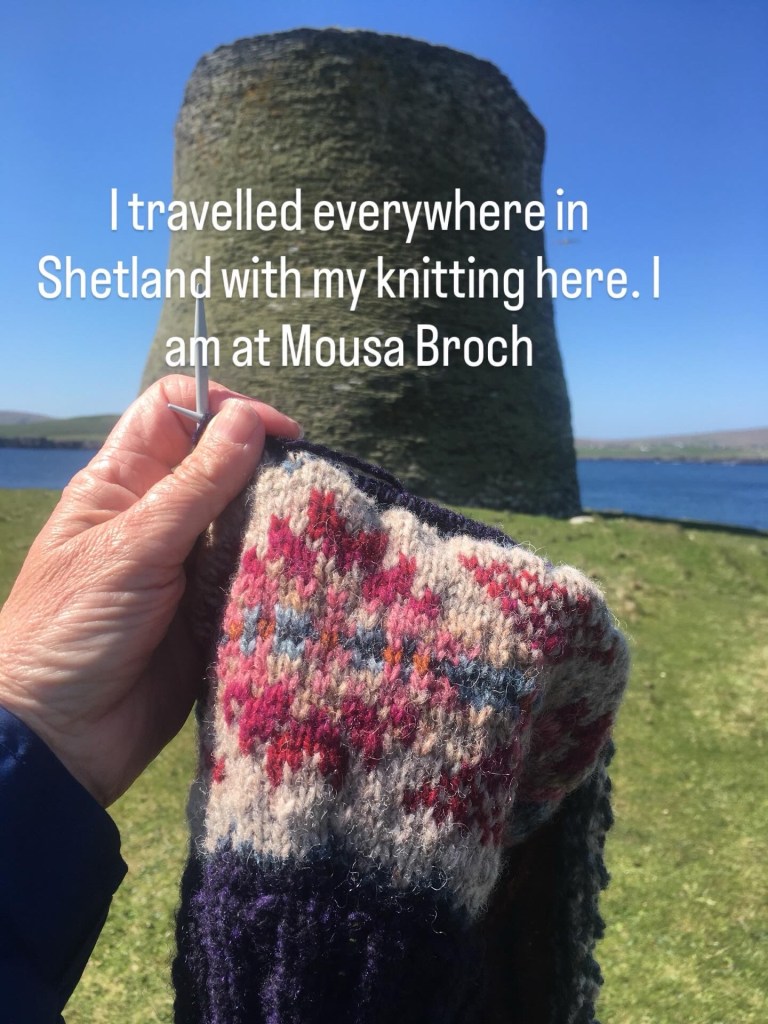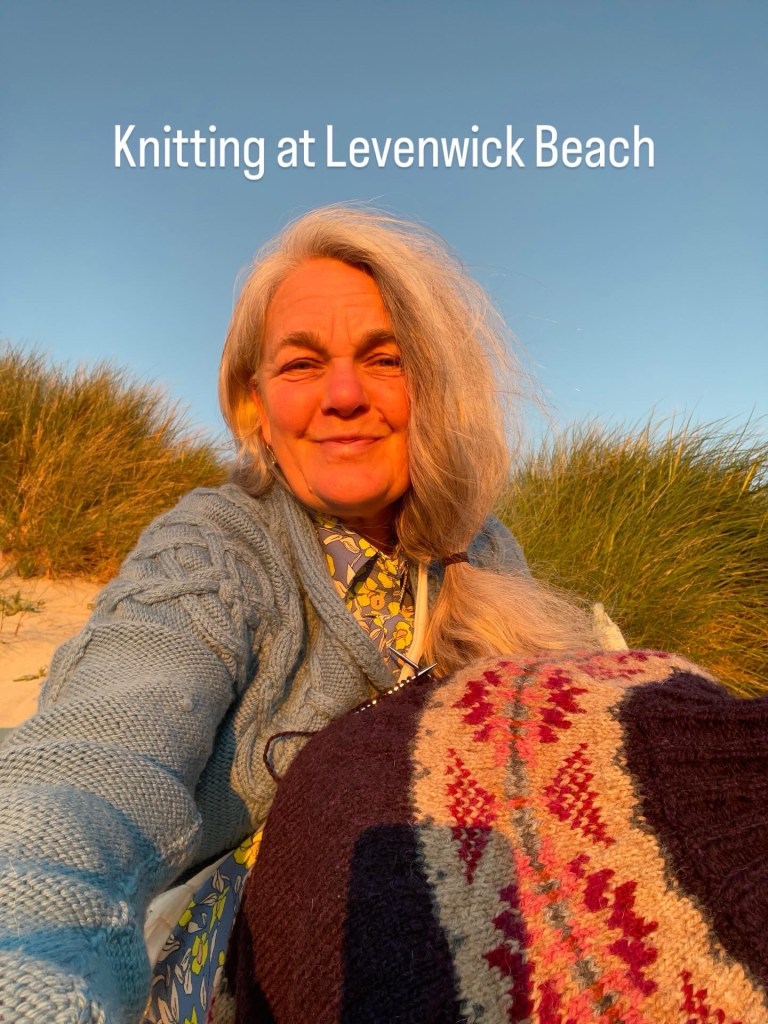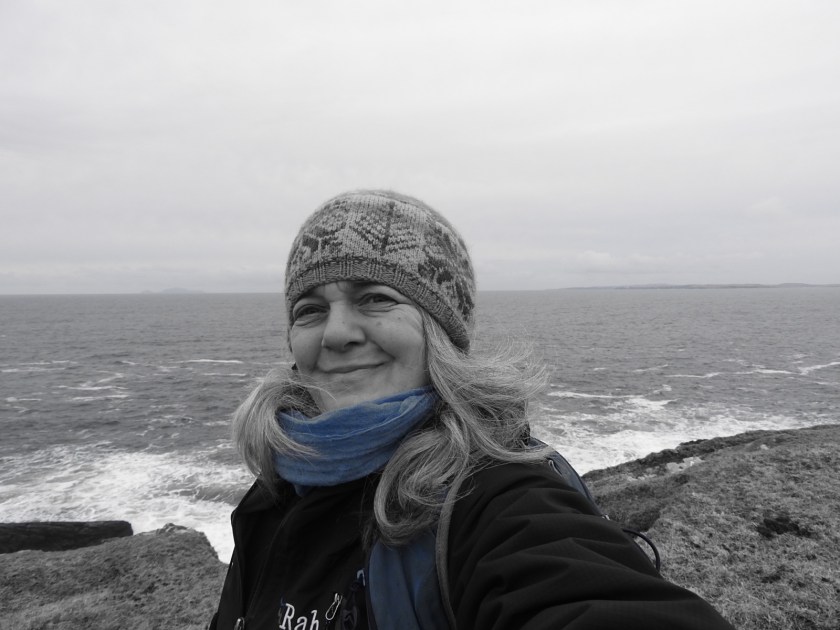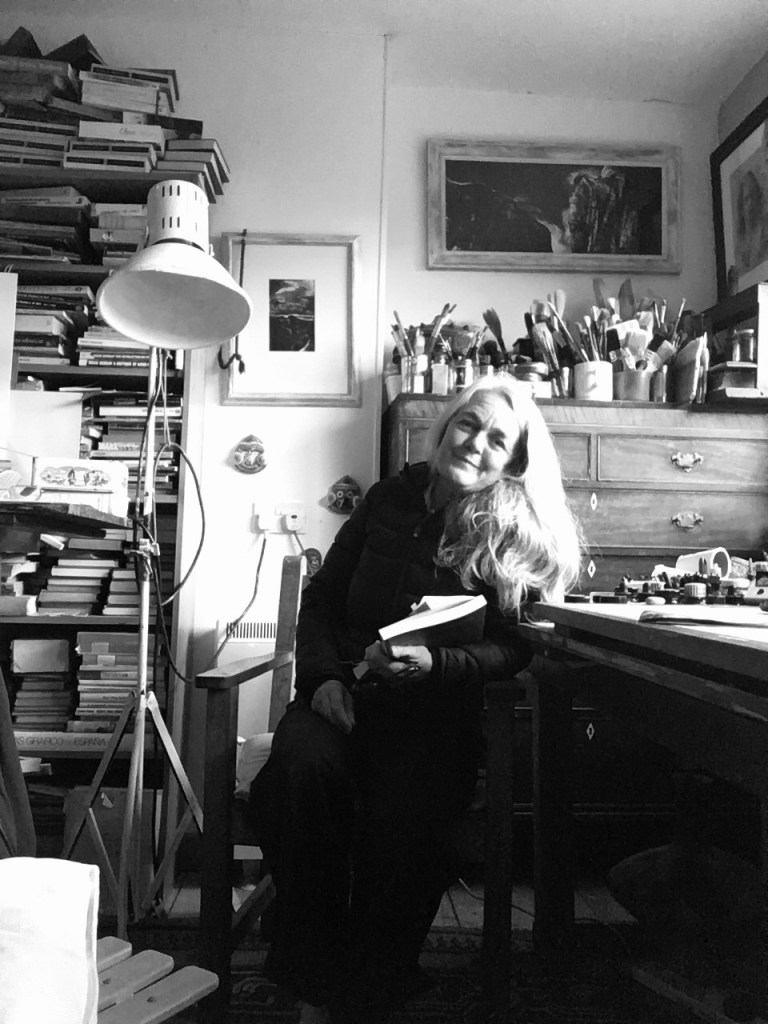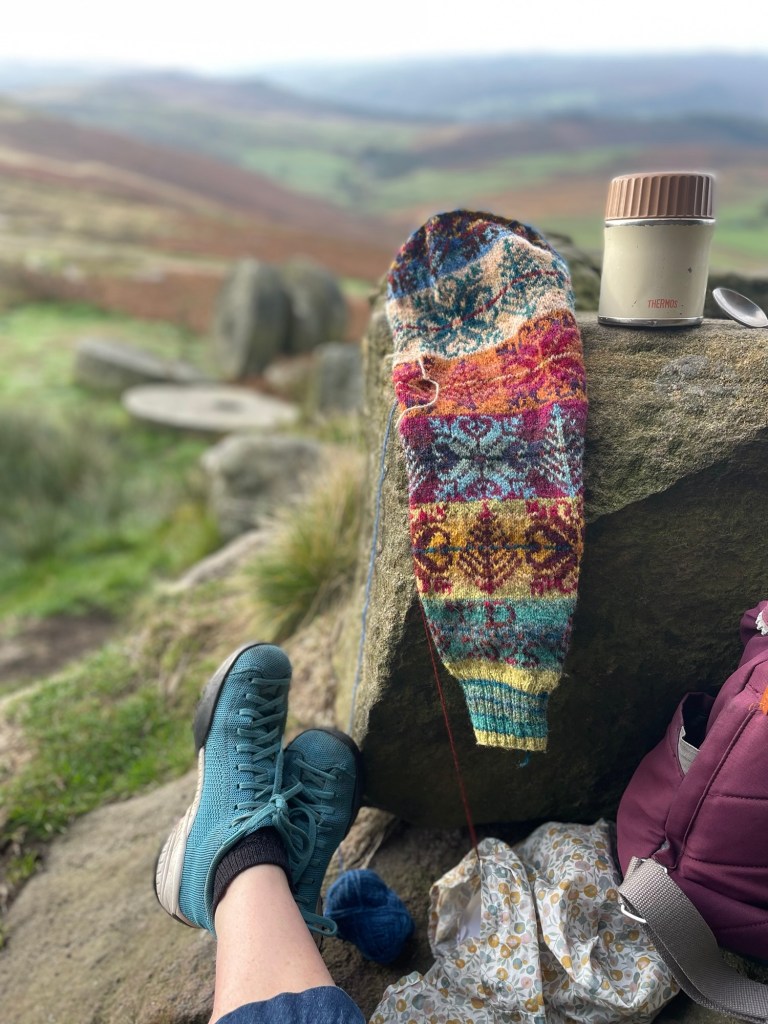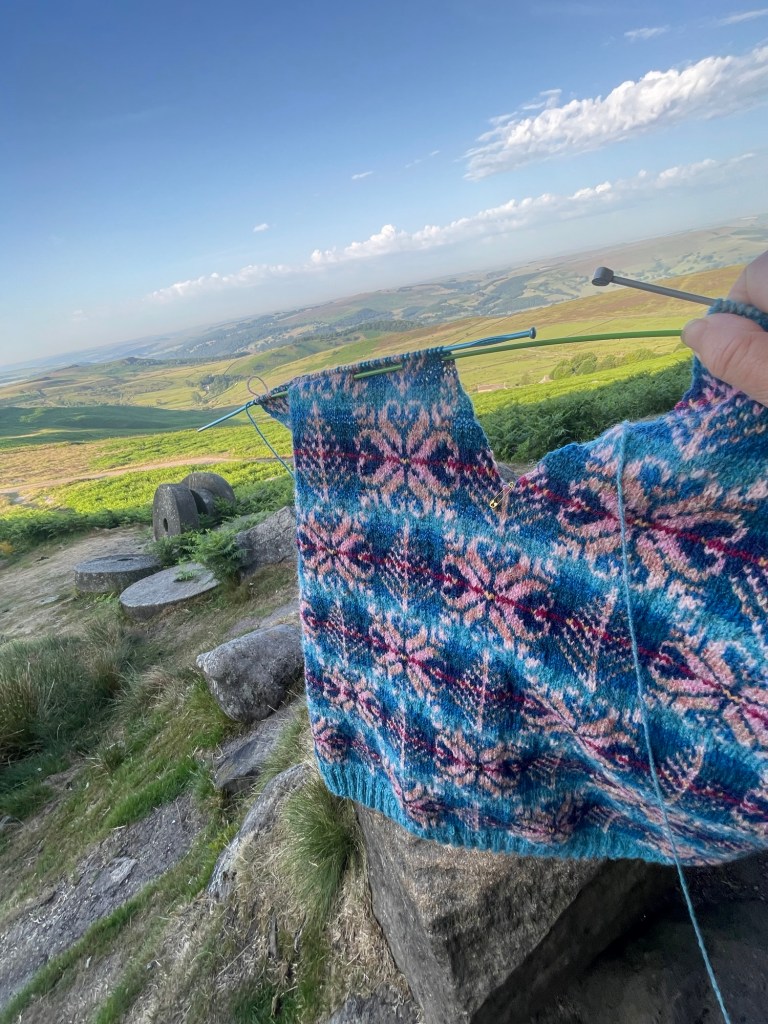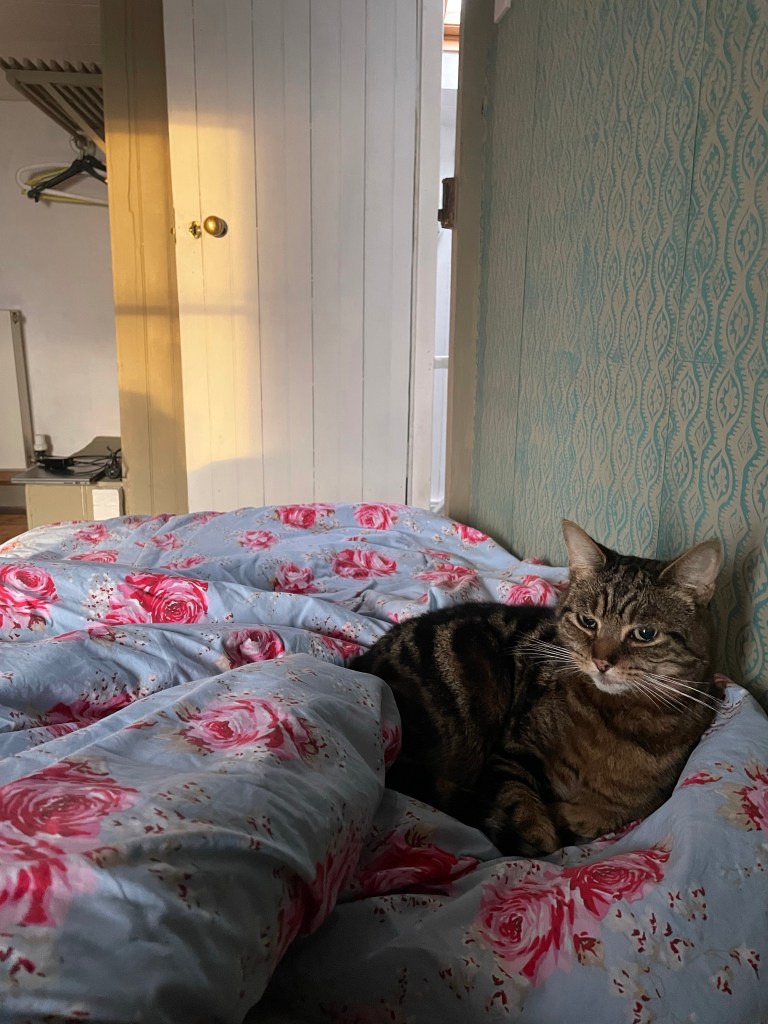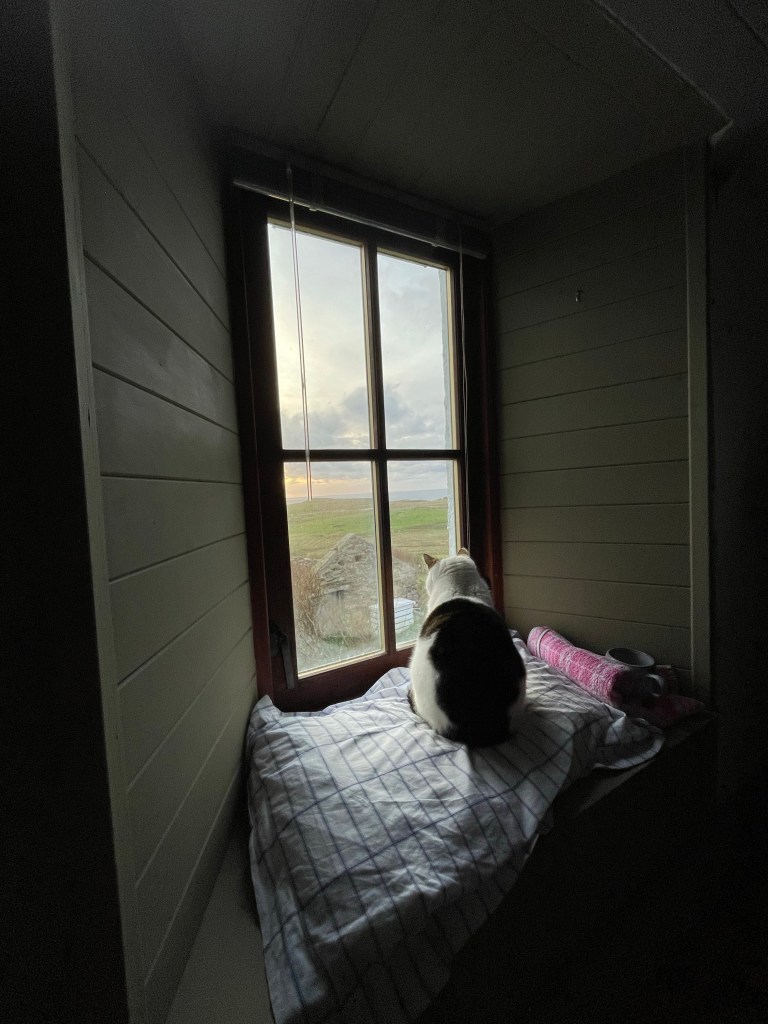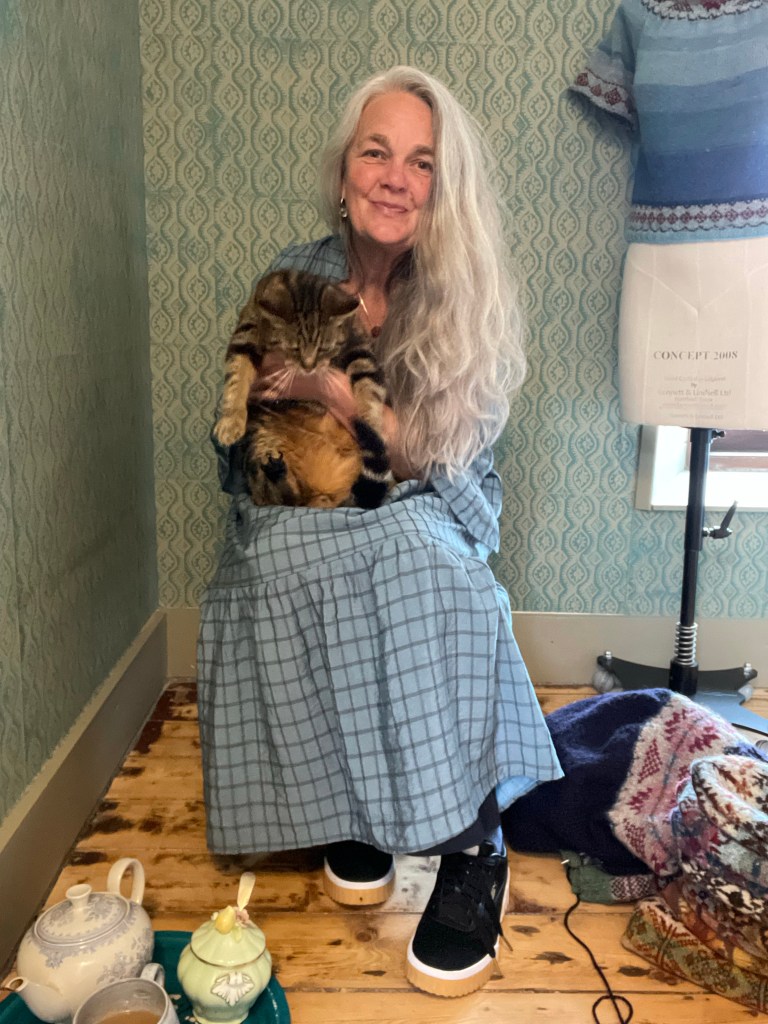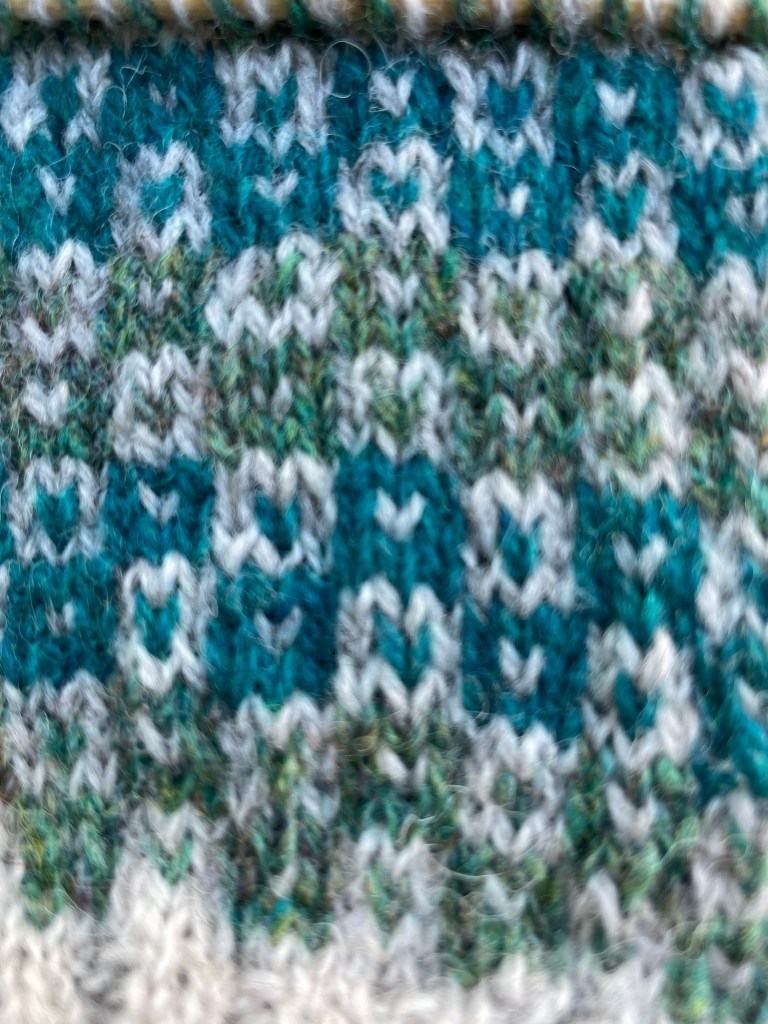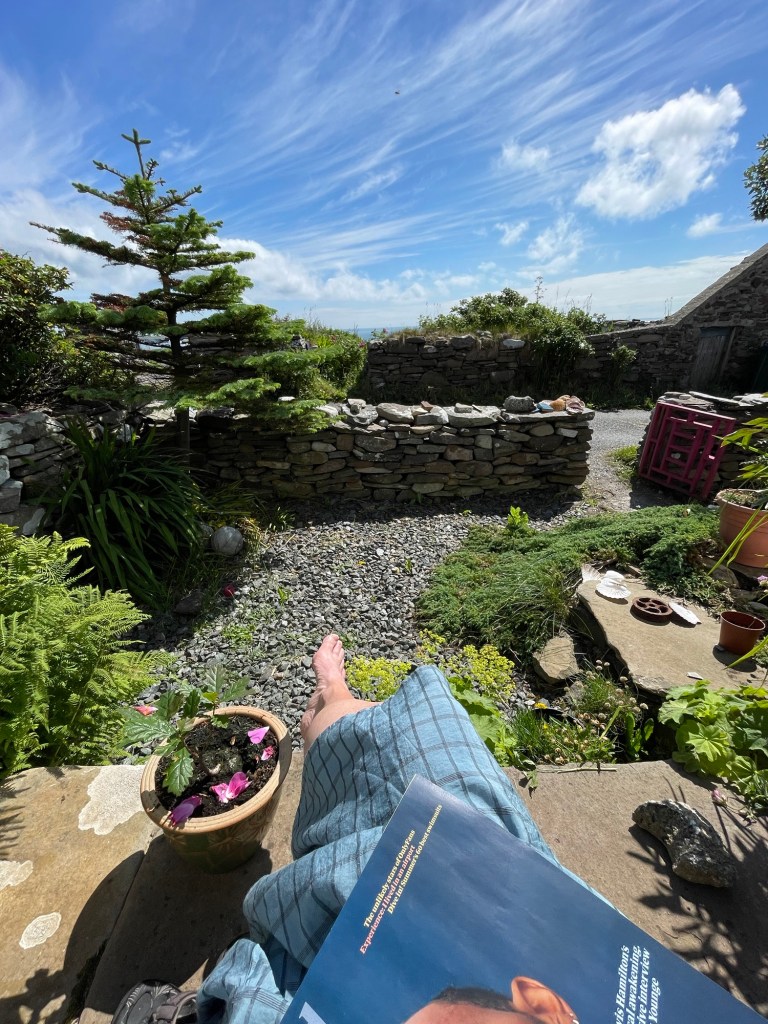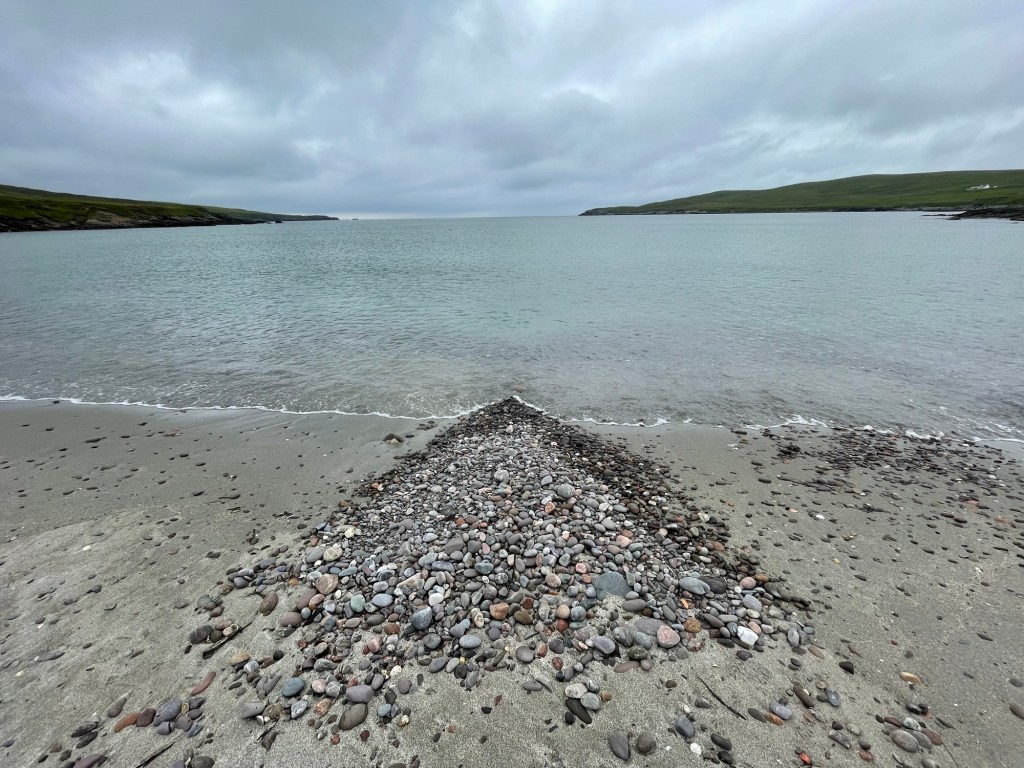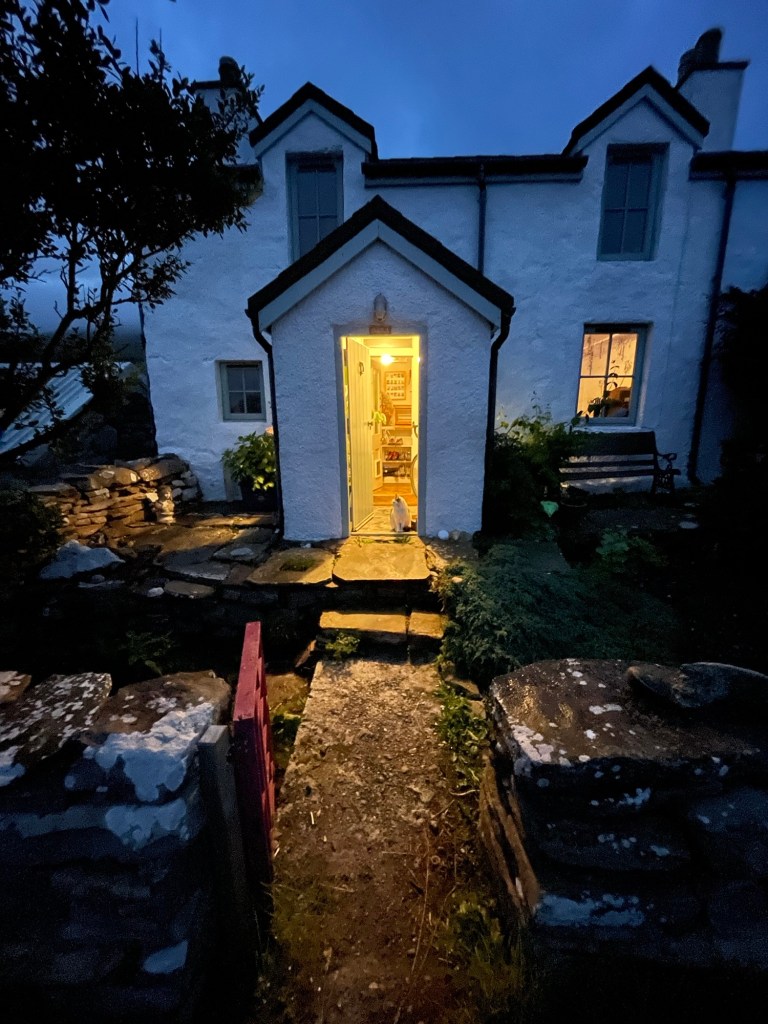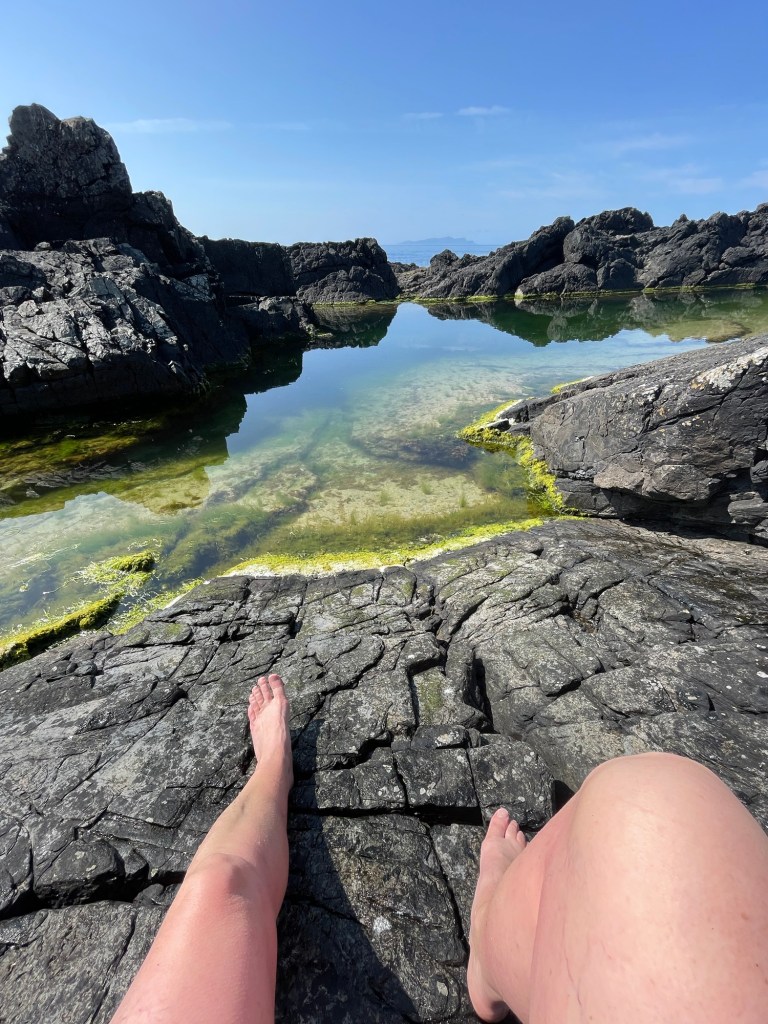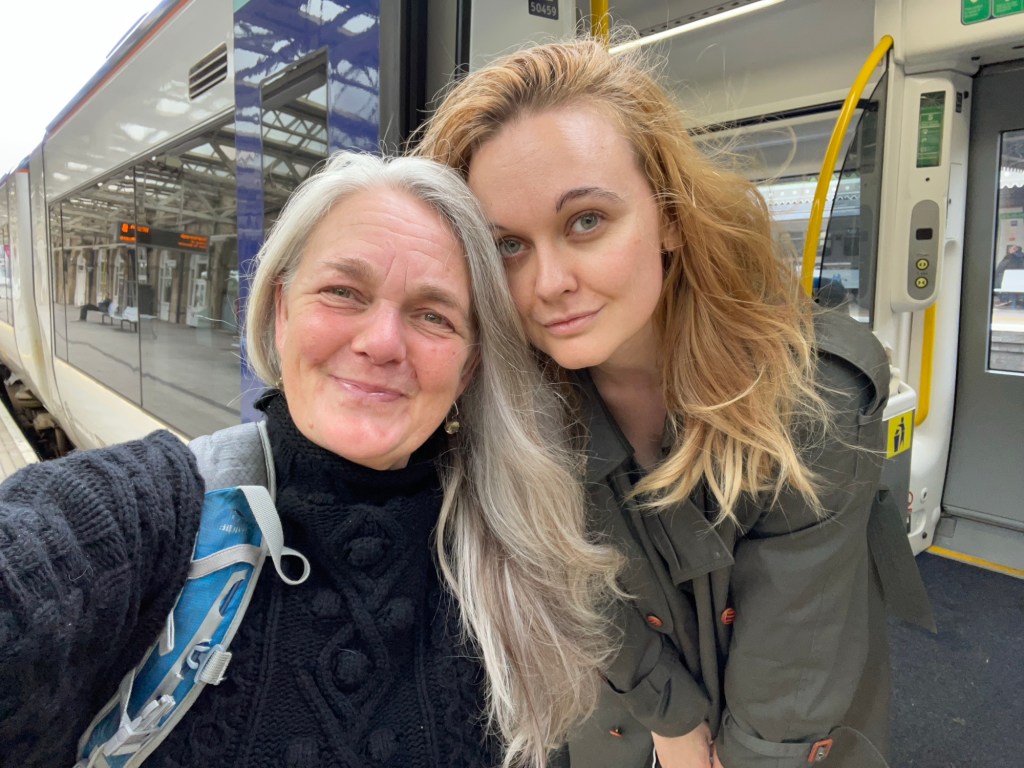
When I used to live in Shetand.

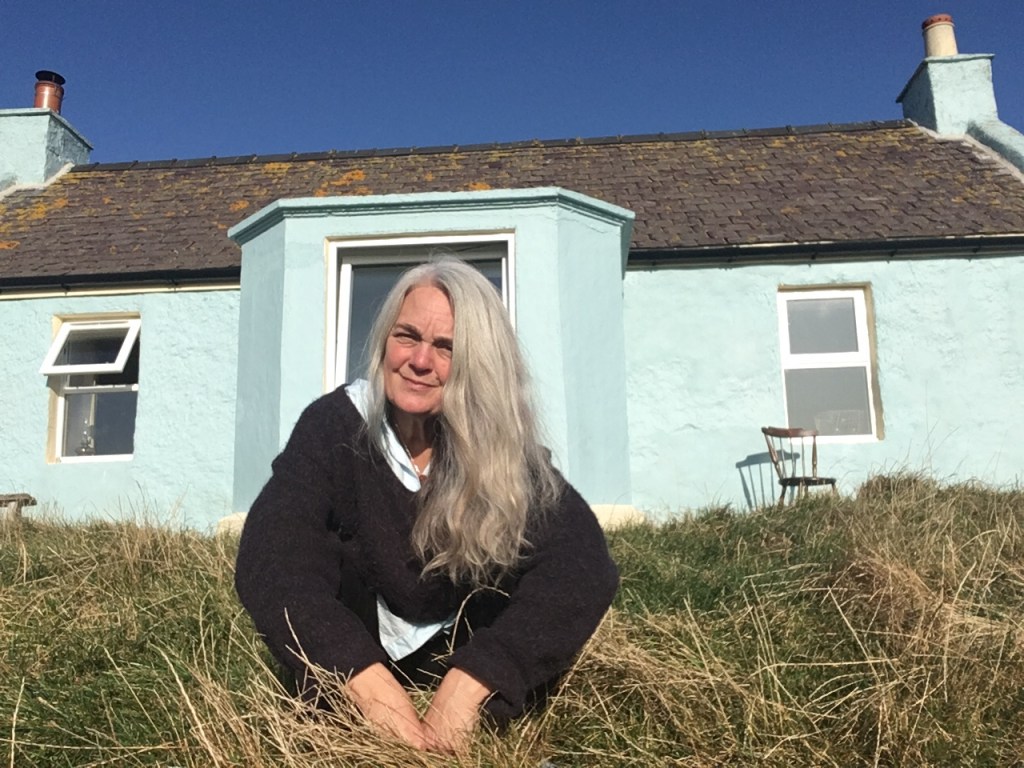
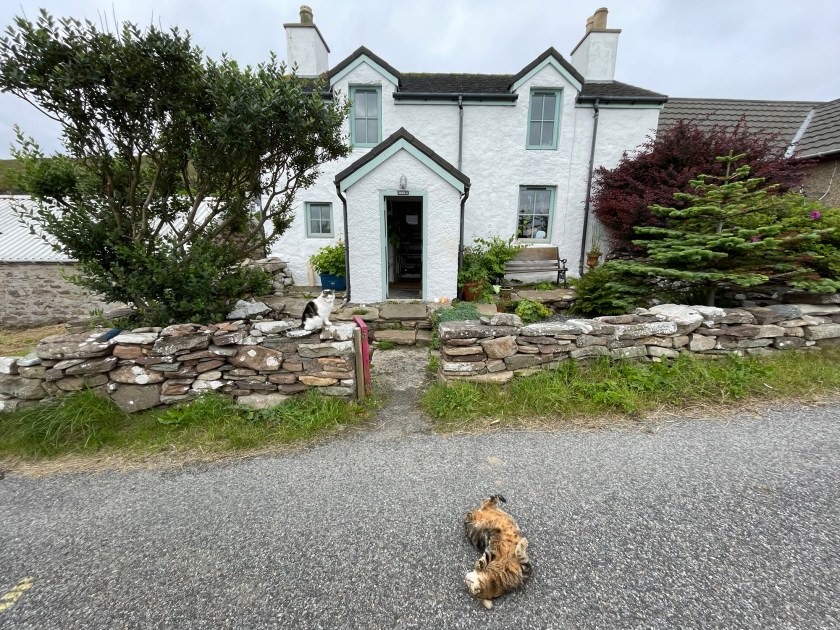
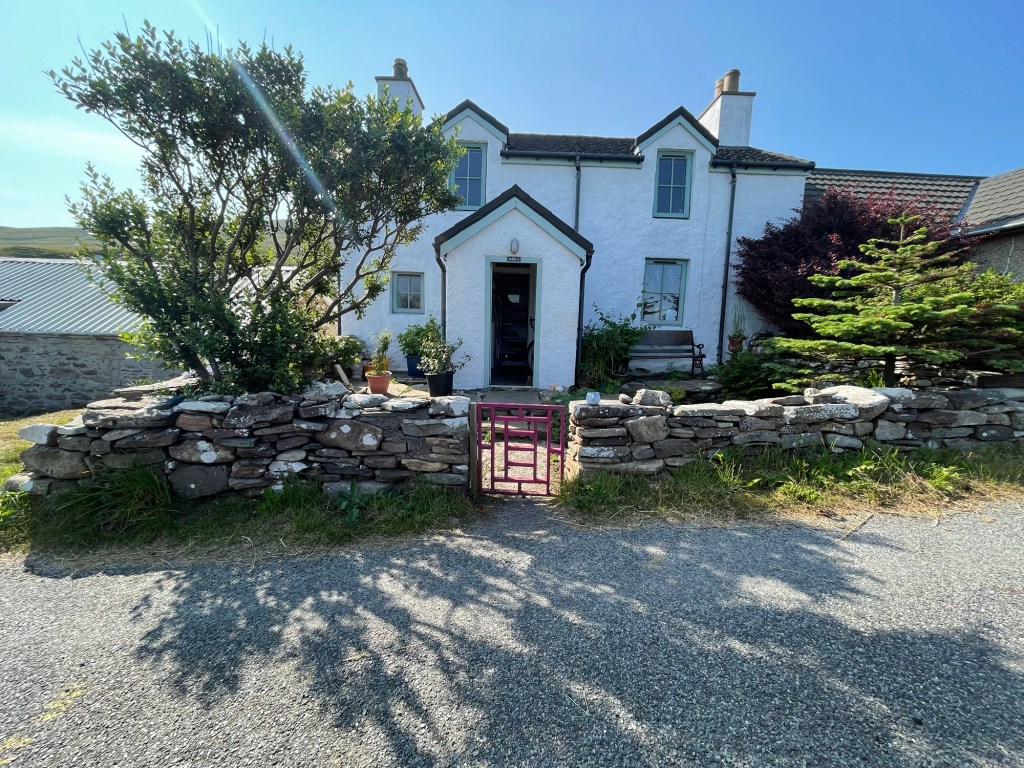
I thought I’d share with you my first ever jumper pattern that I designed. In August 2020, I bought a Croft house in Levenwick that faced the sea.
This was the beginning of my real knitting journey and of designing Shetland motif knitting patterns.
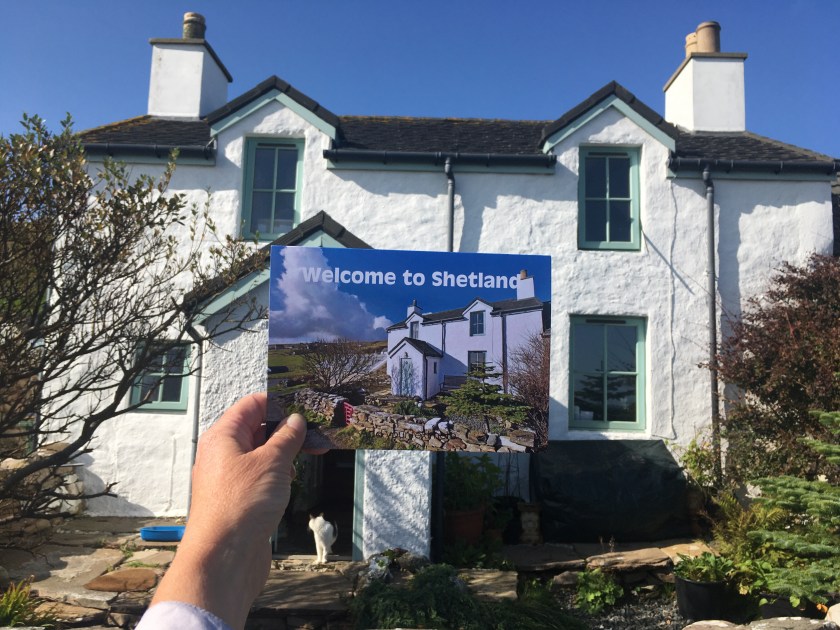
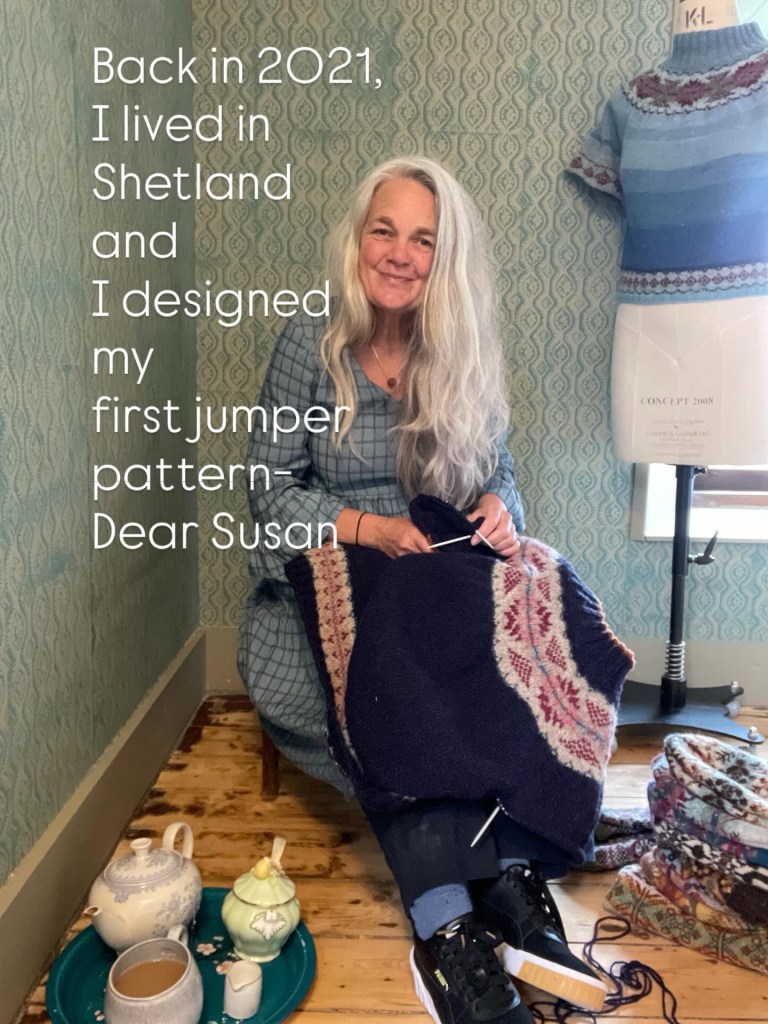
I started with beanie patterns but in 2021 I designed these two jumpers using the same Shetland yoke motif. The first jumper is in Shetland 2ply and I named it, dear Susan after the woman that lived in the house that I bought from 1876 to 1960.. she was a very impressive inspiring beautiful woman. You can read all about this on my blog if you dig way back. 

here is a blog post, if you want to dig back

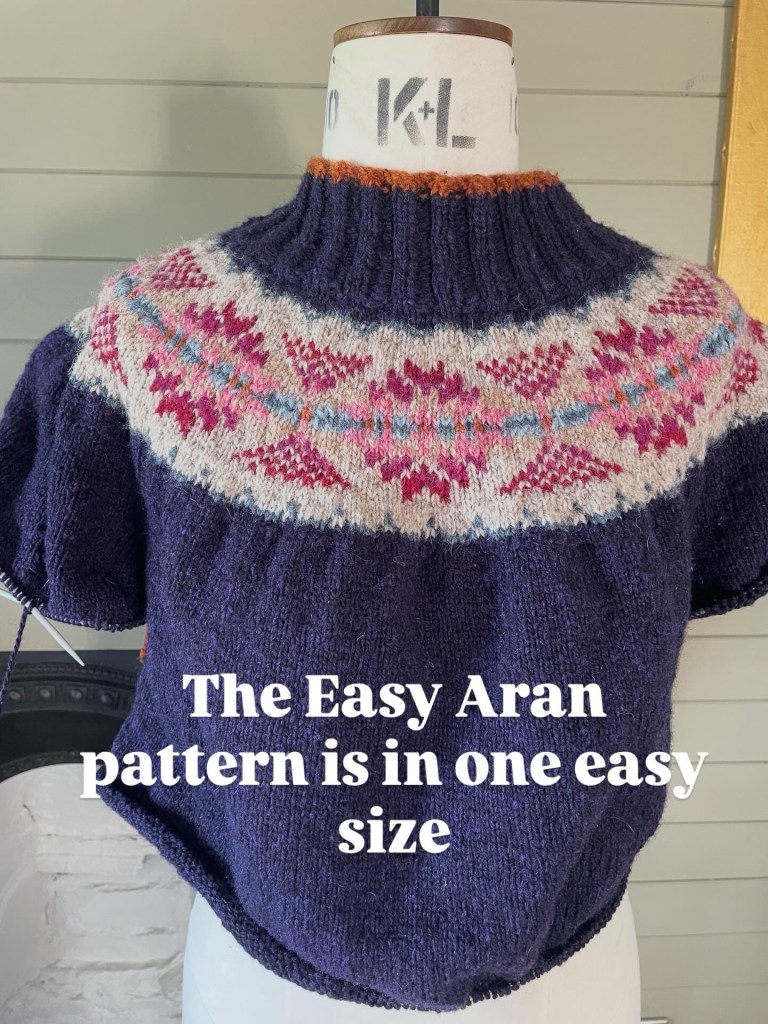
After I knitted the Dear Susan, I developed the pattern into a very easy quick knit Aran jumper and named it, Easy Aran pullover
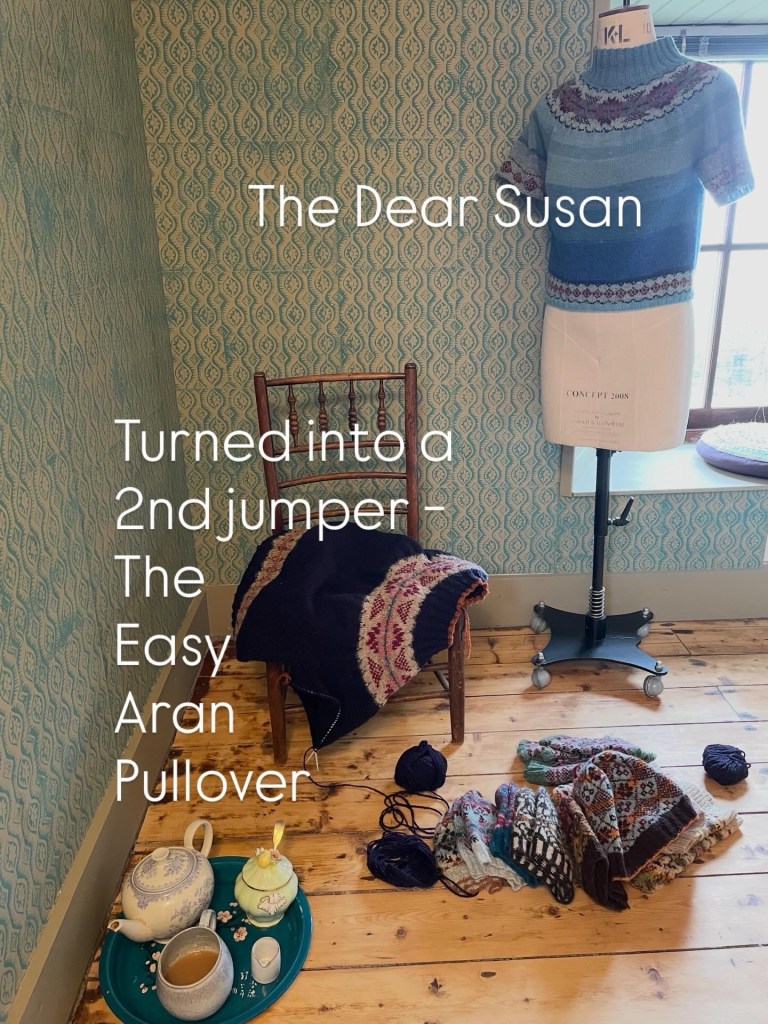
Both of these jumpers are very easy to knit and the patterns include photograph tutorials, written instructions, and colour charts
I’ve come a long way since designing these patterns almost 6 years ago, but they are still two of my life changing decisions. I’m grateful for the time that I lived in Shetland.
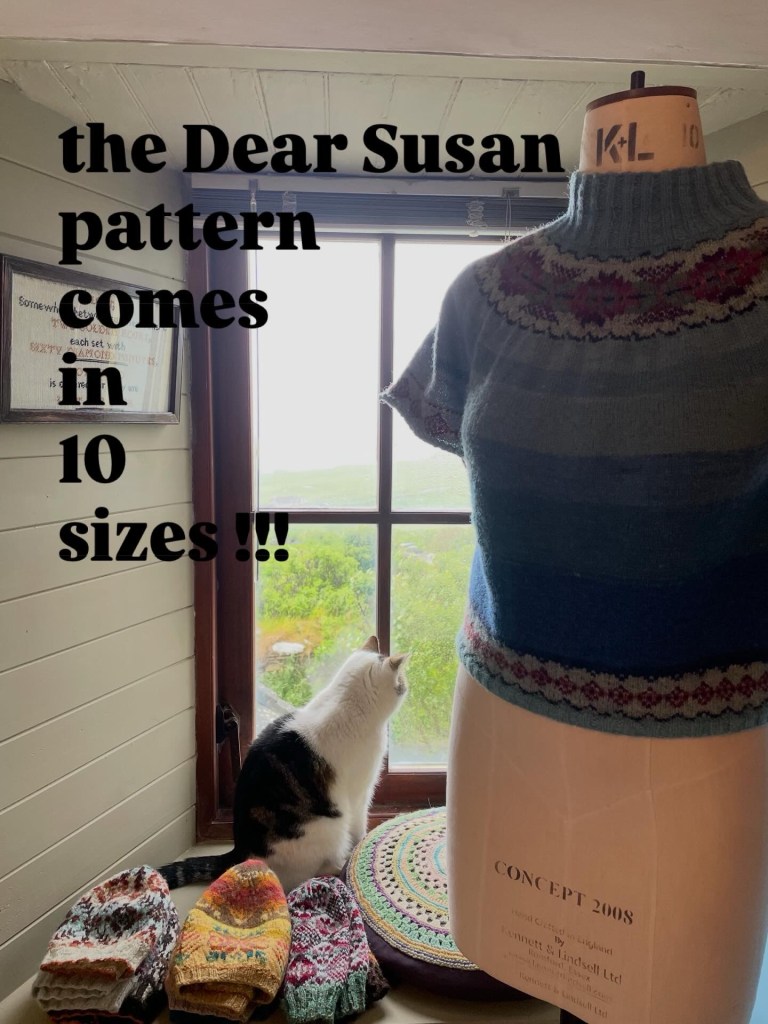
Both patterns also include a 12 page story about my life in Shetland – my house named Smola, Susan – who had lived in it, an me – with each of these patterns

Here is the beginning of that story in the patterns

Dear Susan

and

A house of two women

Tracey Doxey

Preface

Shetland, May 2021

One day, towards the end of May, it rained so heavily that when the winds took up the weight of sky and sea water, dropping it upon the house roof, I could hear nothing else but the sound of pelting rain. Dampness penetrated the house, not as seeping or leaking but as a shroud that rested upon my body.  I lit the fire in an attempt to fight back. After one hour, the weight lifted and I began to knit, waiting for the promised summer.   By early evening, the sun came out as if there had never been rain at all so I walked to pay the wood man for the fire wood and on the way home, I took a detour to the beach.  I wandered the edge of the surging waves, churned up by the afternoon’s winds.  The sea, still being in a fury, was not able to slow down its waves to meet the sudden calmness of the early evening.  The ebbing sea left a wake of tidal crustations as if lace edges on the beach.  I looked for Buckies but all in an instant, I saw a tiny green sea urchin the size of a small flat pea.  I bent to pick it up just as the tide surged over my shoes but I caught it before it was lost back in to the sea.

I wondered if you ever walked to the beach to collect sea treasures or if you never bothered.

Shetland, Arrival August 2020

Dear Susan,

I begin with the outside, with what I have to hand; my reason, my eyes, my spatial understanding, and an openness tinged with the unknown.

On arriving, I need my first investigations of your croft house interior to be made alone. I want to inhale the house, listen to my internal feelings at first sight then recognise how my body responds to the old stones – I need to let body and stones talk to me. Thoughts and feelings need space.  I need space.   I haven’t yet found you.  I do not know that you were born in this house 145 years ago.

It is a pale grey day, mist rolling over the hill behind the house as if a blind has been half pulled down a window. The sky is bleached out, the day is calm and windless, not particularly notable.

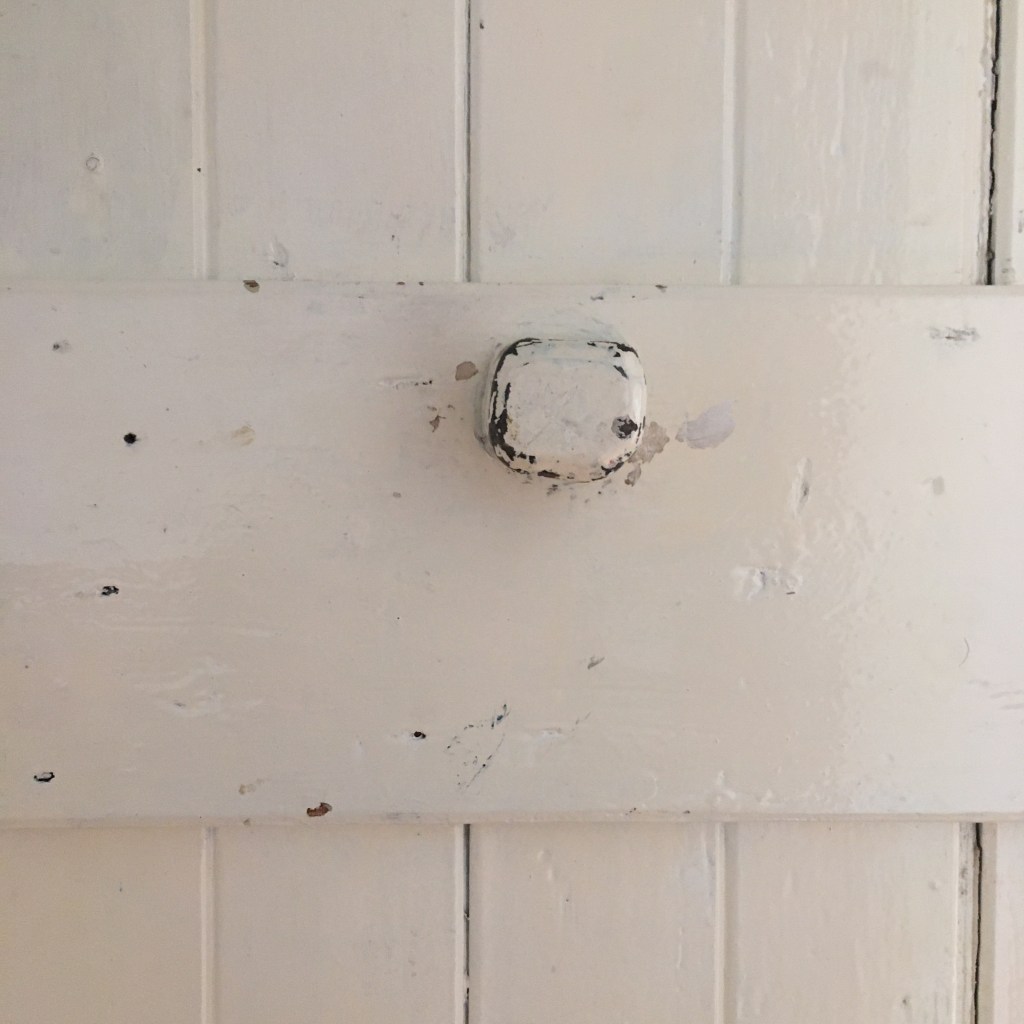
I open the front porch door, then, I try the house door with its mismatched glass panels. It opens.  To the right in the tiny vestibule area, there is a third old, board-door, painted white with a hand-hewn square wooden knob which I turn to the right.  The simple mechanism lifts a wooden latch inside.  That sharp click sound of the latch lifting and hitting its wooden casing is the sound that I will forever remember of this place.  It is my first sound here and it will probably be my last when I leave.  It is a click of old wood against old wood, heard by every man, woman and child that has ever entered this house before me, for the last 180 years.  Human touch leaves tangible traces of every hand that has opened it before me. The patina of years lies dirty on the paint’s surface.
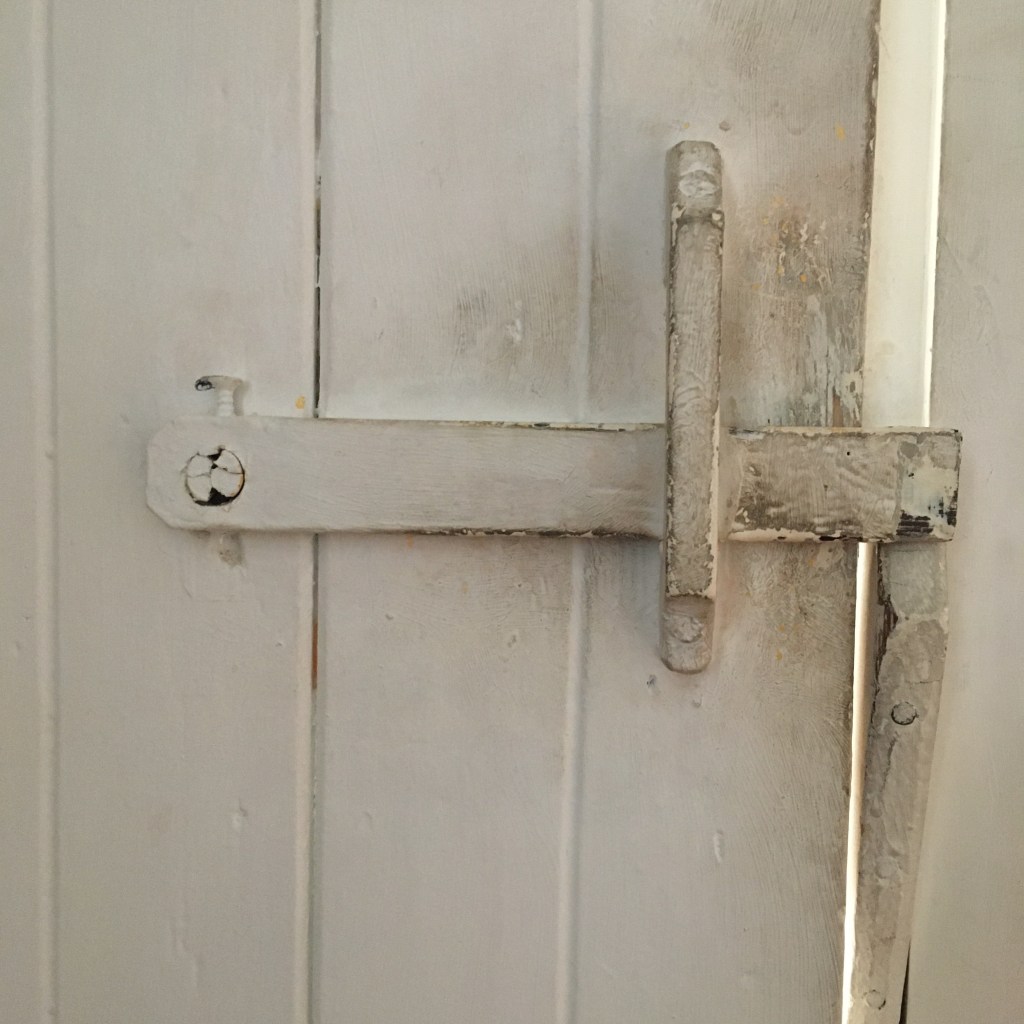
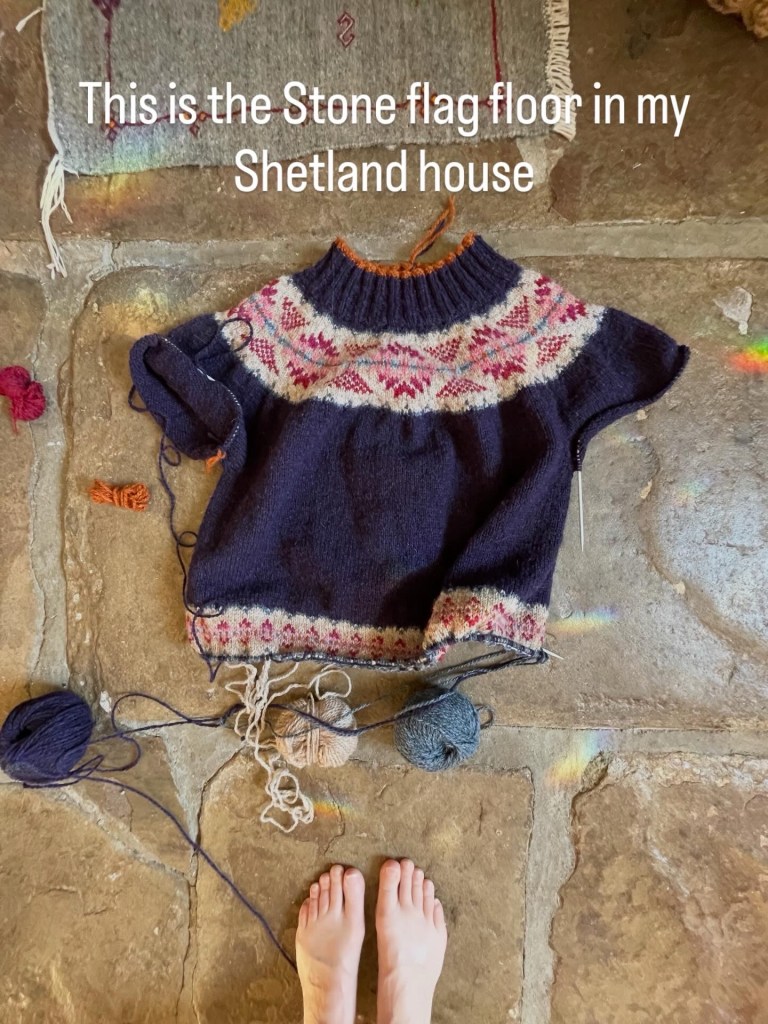
Simultaneously, within the sound, my heart is given over to the first sight of the flag floor and fire place in the sitting room. In an instant, I am sold on sound and sight.  I know I will not pull out of this crazy unseen deal to buy a house and change my life entirely.

Heart over head, I move in three weeks later, with two cats and a bag, the furniture and belongings on a lorry, to arrive a week later.

Life shrinks or expands in proportion to one’s courage.

Anais Nin

Dear Susan,

I have been sent an image of your Brother – John Halcrow, in his Naval Uniform.  I begin to look at censuses and the local history ancestry website then I ask around to find out about the previous inhabitants of this house.  I called in at John’s to ask about you because I know nothing of the woman I had heard lived in the house for many years. He said to speak to Jim, so I went over the road to Jim’s and Martin was there too.  They were off to Anne Mouat’s funeral but Jim was gracious with his time with me. He told me of you – Susanna (Susan, Cissie) who lived in the house that I now live in and that he was sent as a child, nearly 80 years ago, to collect the milk from you at your house.  He told me that you had one cow on the croft, you sold milk, and you rowed the little hand-written paper milk bills up on a shelf in the porch – the same porch that I have.  He was a young boy then but he clearly remembers you.

At the funeral, Martin spoke with Raymond whose Aunt lived in the house after you.  You knew her, her name was Alice.  Raymond came to see me the next day with a mesmerising handful of photographs of you.  He introduced me to Susanna Halcrow (Susan, Cissie, or even Zizzie) The photographs, he told me, had been left in the house after his Aunt Alice had died some 30 years after you.  

For the first time I could put a face to the name of a woman who lived in my old house for 83 years. Your face, your name.  I sank to sit on the floor to look at your serene face in the images dating back to early 1900.  Your candid expression caught by the lens of a camera, looking openly right back at me opened something inside me to find you more deeply.

You were born in this house on the 6th February 1876 and Died on 4th January 1960.

In the archives at the museum, I found that your Halcrow family had lived here through the 1800’s – 1960. They were listed in the 1888 valuation roll of the Symbister Estate, Whalsay, partly owned by the Laird, William Arthur Bruce (In 1888, John Halcrow, your Father) tenant, paid a yearly rent of £4, 10 Shillings for croft number 7.  You would have been twelve years old (registered as knitter).  The whole family are on the census of 1881 and ‘Susanna’ is listed as being five years old – there were seven people living in this small house at that time – Thomas Halcrow aged 86, Barbara Halcrow aged 83 (your grandparents), John Halcrow aged 40 and Ann Halcrow aged 41 (your parents) John aged nine, you aged five and a boy named John Brown aged 13, but you will already know this.  Seven people living in this small two bedroomed house.  Afterwards, I looked at records from 1838 and found your family, here, in Upperton.

In the grave yard at Levenwick cemetery, you lie on your own next to your parents and brothers.  Your head is against the sea and in May, you rest above a bank carpeted in pale lemon primroses. I wonder if you are lonely, or if you are free.

Over the months after arriving, I became obsessed with you and wrote thoughts that occurred to me about you, on scraps of paper.  These papers began to litter the house.  I connected with you through a field of built environment in the house, photographs, your old pottery, the view from the sitting room window and eight sessions in the Shetland Museum archive which revealed the legal documents relating to some of the most notable social changes in Shetland between the 1880’s and mid 1950’s.  The *Register of the Sasines, recorded the sale of the house from Laird to local in 1923, valuation rolls of rent paid for three generations of the Halcrow family for over 100 years are traceable, the Napier Commission registered the croft and detailed their calculated rental value and reduction of rents for Shetland crofters and the legal rights for tenants, the Small Holding Act, and I found the registered wills of your brother and finally your own, which gave me an insight into over one hundred years of three generations of Halcrow life within this old house.   To the very end, with your serene looking gaze of steady calm and with a glint in your eyes, you put everything in order to the very last moment – crossing every t and dotting ever i.  All of your wishes are written clearly in the directions of your will.  

But, how am I to find out about you – what you thought and felt and how you lived? The neighbours reveal little.

So, I turn to the physical things to look at our lives carried out in the same place – the same stone walls of a house built so long ago – with no record of its beginning, how the breeze moves through the house through its open doors, the sound of the wooden doors and their opening and closing then there is the view – a view that has changed every single day of every single year but it is the same frame from which you looked and I now look out of at the changing world.

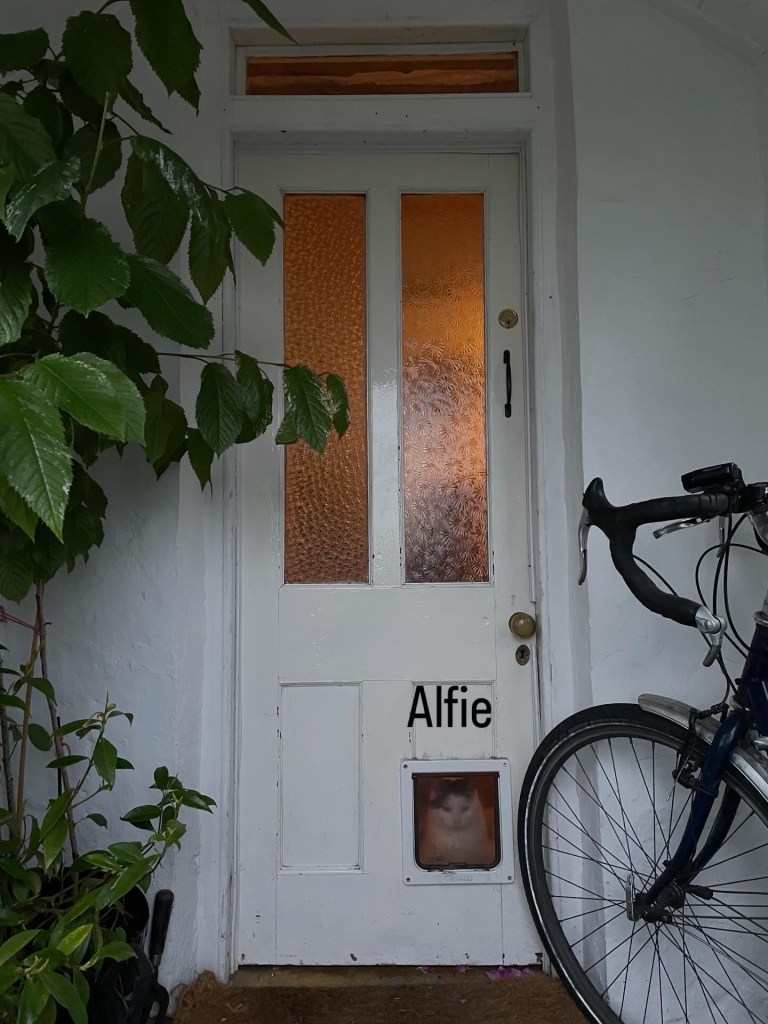
Your artifacts have been returned to the house – some pitchers, jugs, vases, plates, bowls.  Before mixing them on the shelves with my own plates and jugs, I turn them around and around to connect with a life before and then there is the biggest connection of all – that you were and I am single women, living a life and paying the bills on our own in an old stone house facing the sea. Did you talk to Ralph, the dog, as I talk with Tiggy and Alfie?

I wonder about the touch upon things, the patina laid down by years of paint, of opening and closing the door, of turning door knobs, of opening and closing windows.

Finding you is like the moment I removed a damp layer of wallpaper in one gentle pull upwards, in an old abandoned derelict Shetland croft house, to reveal a perfect hand printed layer of pre 1950’s paper with wildflowers printed up it.  Then, in one more pull that strip of hand printed wallpaper also came off the wall completely intact. I folded the paper and placed it under my jumper, its dampness pressed against the skin of my belly. I thought that if I were to paste the top layer of wall paper back over the void, then no one would know what had been before. No one would know what had been removed from underneath the top layer. It was as if it had never existed.

Finding you IS like finding old beautiful handprinted wallpaper lying beneath layers of less attractive paper. Then peeling it off in sections and placing it under my jumper for safety.   Susan, you are under my jumper, next to my skin.

I lift the pewter lid of your old Victorian salt ware jug to look inside. Revealing, peeling, pasting, painting, lifting, closing, opening things in the house, as generations have done so before me.  I paint over what has been on the walls and doors. I sit quietly to look at the layers of layers, like the quiet man who mediates first thing in the morning, stripping away layers of noise  to his core, before all else happens in the day.

I spoke to Marylyn, who, as a 10-year-old child, moved in to this house with her family.  It was the year you died. She told me of a wash stand in each bedroom and jugs and bowls, a sink at the bottom of the stairs and a radio on a dresser in the front room. These were your things left behind.   I can picture them now.  She told me that her and her brother slid down the green linoleum on the stairs and they telephoned their cousins in the house behind by joining two cans with a long piece of string and shouting out the back window in the north bedroom. I can hear their laughter now. Children in the house for the first time in over 60 years.  

I have had moments where I wonder if I am prying.  I wonder if you would like me. I hope that you would like me.

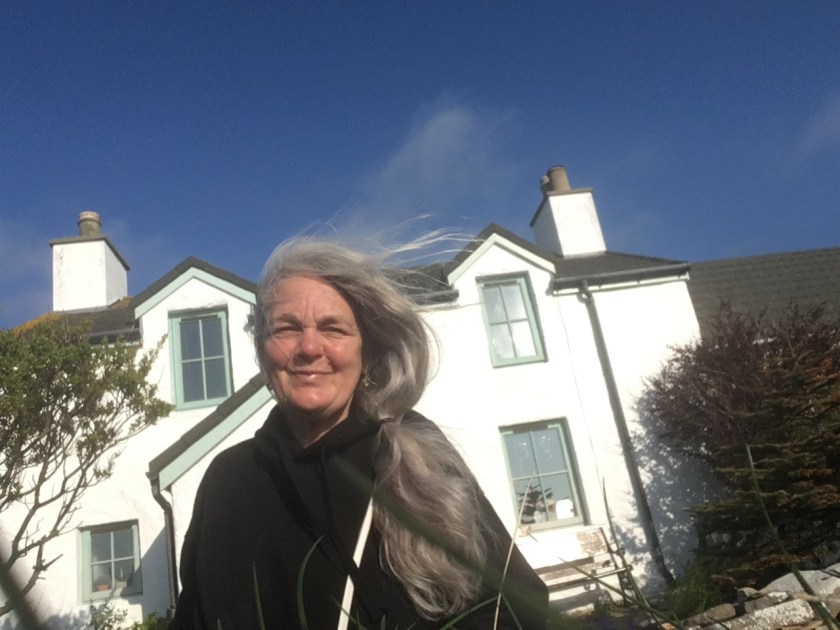
Maybe there is not much difference between us.  Did you look in the mirror to comb your hair or did you, as I do, stand outside in front of the house to comb your hair into the wind whereupon stray grey hairs blow upon the breeze and hang upon the roses?

Susan, I am now the carer of your house for however long I can endure the winters.

House / Home – Situatedness

Outside, I Inhale the heady scent of peat smoke, as a hundred women must have done so before me.

Standing on to the hand-hewn flag stone veranda that skirts the front of the house, I take in the heady scent of the previous night’s peat fire smoke lingering in the air.  The grey sky is touching the grey sea beholding all that is in front of me, under my feet and behind me within the stones of this old house. 

The rough stone structure of the house has been touched by many hands over nearly two centuries and is built upon rock.  This house is my place of thinking and feeling.  It holds me within its walls endowed with previous lives, to live freely, without compromise of any other thing except the elements and darkness of night and the lengthy lightness of summer – yet these are still penetrable.  Isolation can penetrate.

The house gives to me the opportunity of freedom and I give it the love and tenderness to continue standing strong.  But the Winter took its toll on me and then Easter was beyond harsh where the floors shook and the chimneys roared with swirling storm winds. I have lost energy.

How many women have stood at this door way, eyes drawn East to the sea, mind drawn inward to the shores, children playing, wars questioned, lost ones at sea, the animals and subsistence or maybe even love?   You lost your brother in the Battle of Jutland.  He left this house and never returned. The interconnectivity of all of us lies in the details of life – past and present.  A life before that built the foundations of this house is linked to this life now as my life now is linked to the lives gone before and to those that will live here after me.  Who turned the first key?   Who left the key under a stone in the garden so that when I found it, the rust was as thick as a pie crust? 

Sea air permeates my skin, seeping into my bones and softening the edges of my soul. It takes time. I accept this time as a gift.  I have come home.  Maybe, all my life has been pointing to this one moment.  A moving fluid moment of now.   Time is temporary but for now, it is the right place.  

I heard Marianne Faithful say, ‘ Eventually, I always end up where I’m meant to be.’

I know that here is where I am meant to be, for now.

The past is always carried into the present by the small unmovable things, the click of a latch, the stone floors, the view of the sea, the old byre, a curling photograph of a group of women, long dead, a sheet of paper left in the window sill, faded by the sun. 

In the city, I had begun to lose my idea of direction.  My direction was determined by worn out decisions made on previous decisions.  This is a house of new decisions.

I am here, this is me, windblown, sieved soil, a beating heart, I am becoming sea, wind, beach, yarn.

The breath of my cats reminds me that in fact, I am not alone.
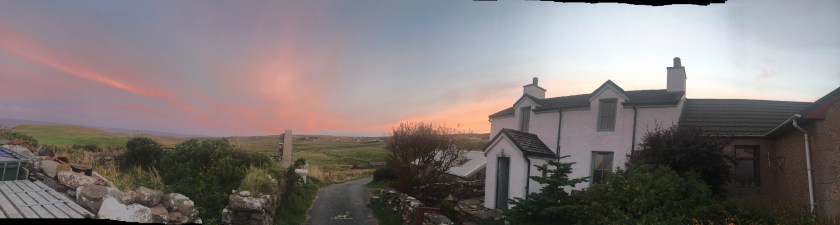

in October 2021 I moved back to England for many reasons

Here you can find the Dear Susan jumper pattern (in 10 sizes) or the Easy Aran Pullover in one relaxed size.
Celebrating 6 years

I’d like to celebrate something that seemed small when it happened but has been the absolute foundation of my creative practice today.  

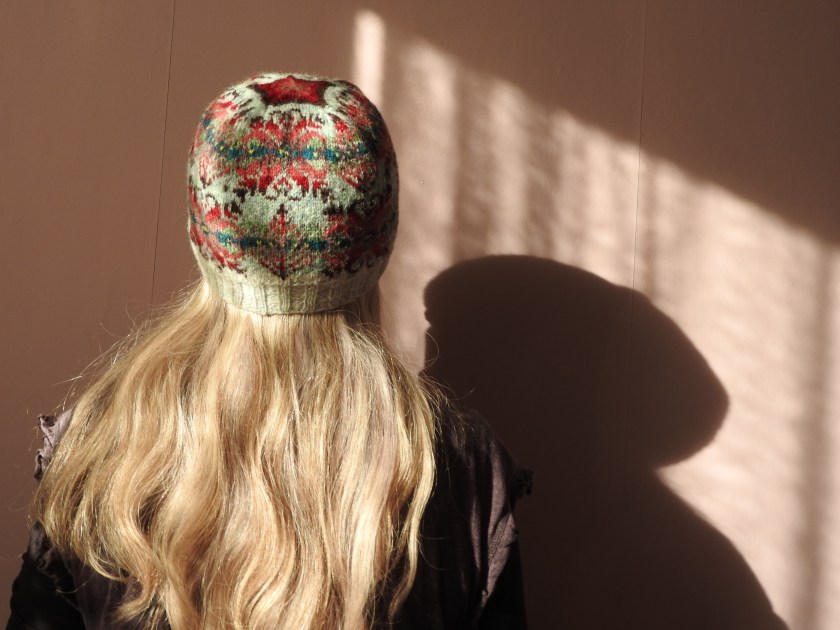
On Jan 21st 2020 – 6 years ago, I published my first pattern on Ravelry.  It was my Sea Urchin Shetland hat pattern.   When I look back, I see that I have never really just produced patterns but knitting stories – like recipes – like myths – like stories that I uncovered.

The Sea Urchin Hat pattern text starts with the below (it was written in January 2020)  :-

Dear lover of yarn and of the tactile act of knitting,

This hat design has been long in the making.  I’m producing it as a design sheet because the pattern can be followed to the stitch and colour, or you can use it as a springboard to develop your own ideas by choosing your colours and even a different tree and star motif to the one I have chosen to incorporate into your hat pattern – you can make it your design too.

Over the years, I’ve made this hat using varying yarns and colours.  I’ve blocked it in to a shape that resembled a slouching hat or a kind of beret.  I still have two of these hats from 2015, and I’ve worn them in all weathers and in many countries.  I’ve left one and lost it in places but I have always retraced my steps and gratefully been reunited with the hat that now is part of me every winter.  Seeing the early photos of this hat, I see a different shape entirely to the one that has morphed and shaped to my head through being soaked in gale force rains, being stuffed in pockets and in bags and left for months in a drawer.  In November 2019, I was living in Brindister, West Burrafirth, Shetland and wore this hat every day whilst walking around the voe.  By now, its shape had morphed into a basin shape and I felt lost without it if I ever forgot it any winter day – especially in the piercing winds.  
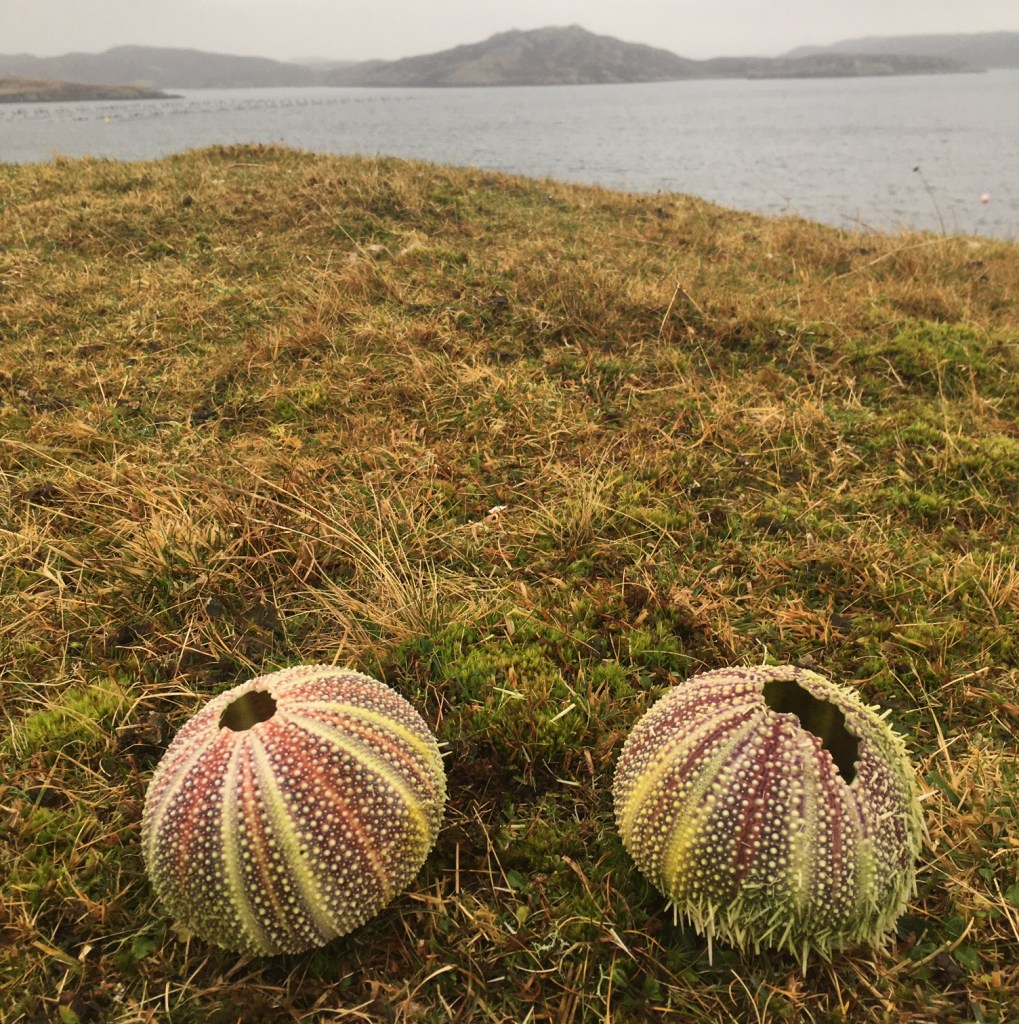
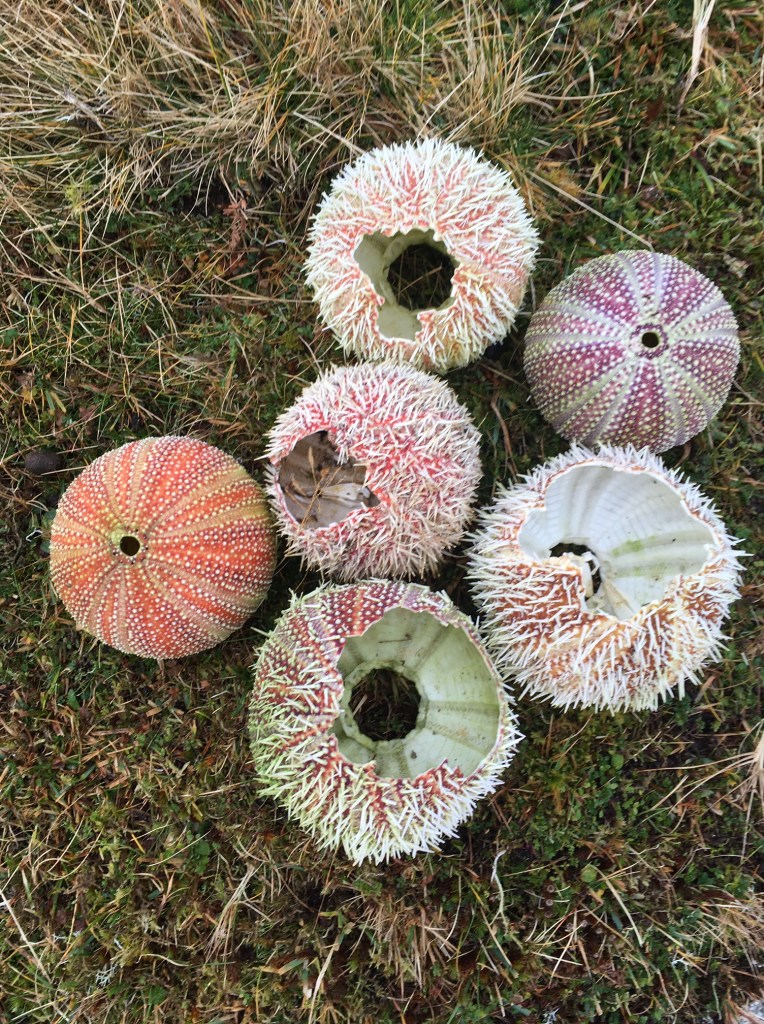
In November 2019, when, every day, I walked around the Voe at Brindister, I began to find discarded Sea Urchin shells left by seagulls. They were abandoned where the gull had left it after breaking it open to eat the urchin. I found them on banks and on flat, wet, mossy plateaus used as seagull breakfast tables.  All had been smashed to get to breakfast but I was on the lookout for a complete one.  The first found sea urchin shell was an exciting surprise, like finding a four-leafed clover when I was a kid.  I turned it around and around looking at its pattern and the smashed opening. Then, I started looking out for these sea treasure on the land. I collected any shell that was whole, even if it was broken into until I couldn’t carry them in my hands – so I used my hat to carry the porcelain like sea urchin shells back to the croft house. When I looked, I saw that both my hat and urchin shell had a similar shape – the hat with a 5-pointed section crown and an urchin-like roundness and in return, the sea urchin shell looked hat-like

I would love for you, the knitter, designer, maker, lover of yarn and the tactile act of knitting, to make this hat in whichever colours and with whatever tree and star motif you would like.   Any motif will make the same shape as the decrease around the tree creates the crown. Have fun, send photos of your finished hats to https://www.facebook.com/DoxeyKnits/ and I will post them on the FB and Instagram pages https://www.instagram.com/traceydoxey/

I would like to ask  – How many knitting patterns do you know that start with a letter to the knitter ?

The pattern ends with  the following words :-

I hope that you have enjoyed knitting this hat. If you want to experiment with larger needles and different yarns, as I have over the years, you’ll have a lot of fun with the results. I look forward to seeing your hats.

Big knitting love, Tracey.

How many knitting patterns do you know that end like a letter.

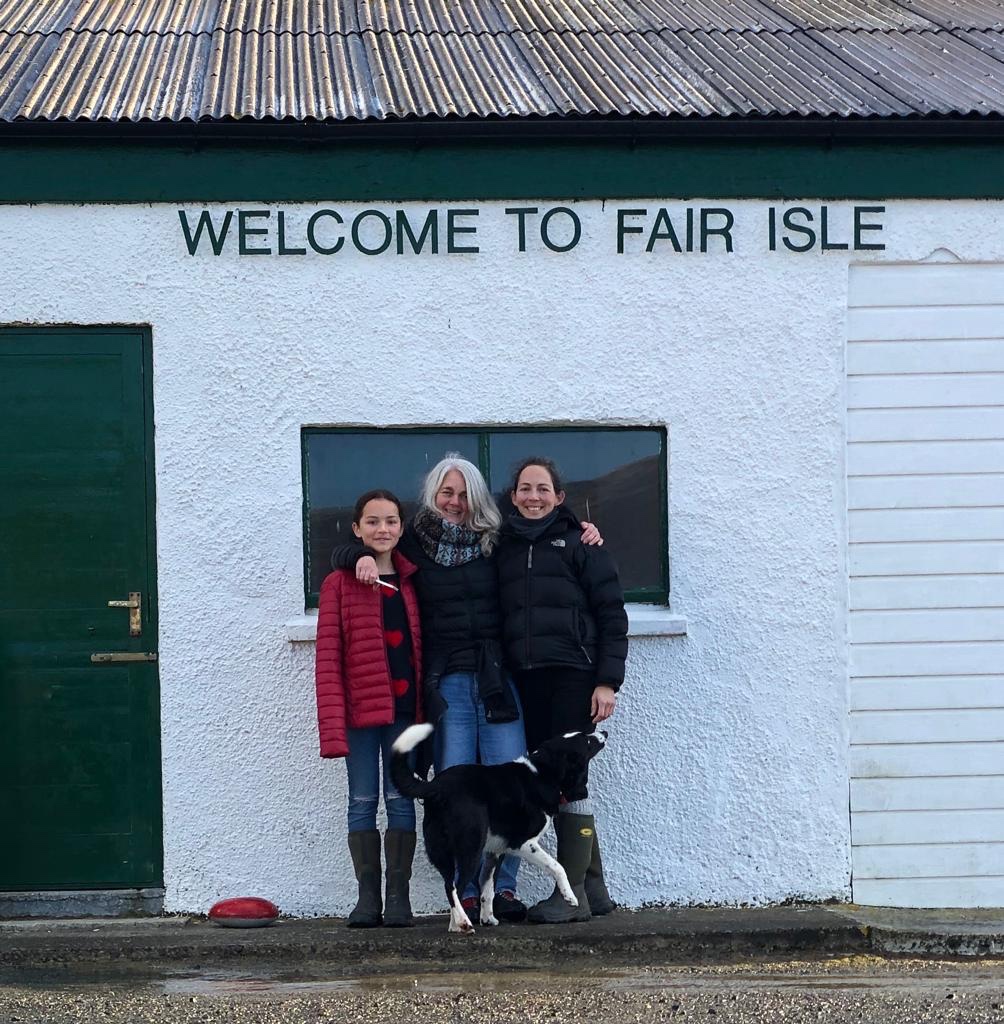
I want to thank this little design that I made whilst staying in Fair Isle then in Brindister, Shetland, running up to the end of 2019. The design challenged me at the end of my MA in Knitting from NTU during which time, I went back and forth to Shetland until I finally bought a croft house there in 2020 and I am ok that I made the decision to return to England  in 2021– I wrote a book about my life in Shetland but it never was published. 

I want to acknowledge and thank my creative spirit for developing  this simple Shetland Yoke motif and simple hat into workshops, colour blending, and finally – a new jumper pattern.  I have learned so much along the way, in 6 years.


What a journey.

Thank you to every one of you who has supported me by buying a knitting pattern or attended a workshop.  I do not know what is to come 😊

much love. Tracey 🙂

Ravelry patterns are here – you will see the visual journey

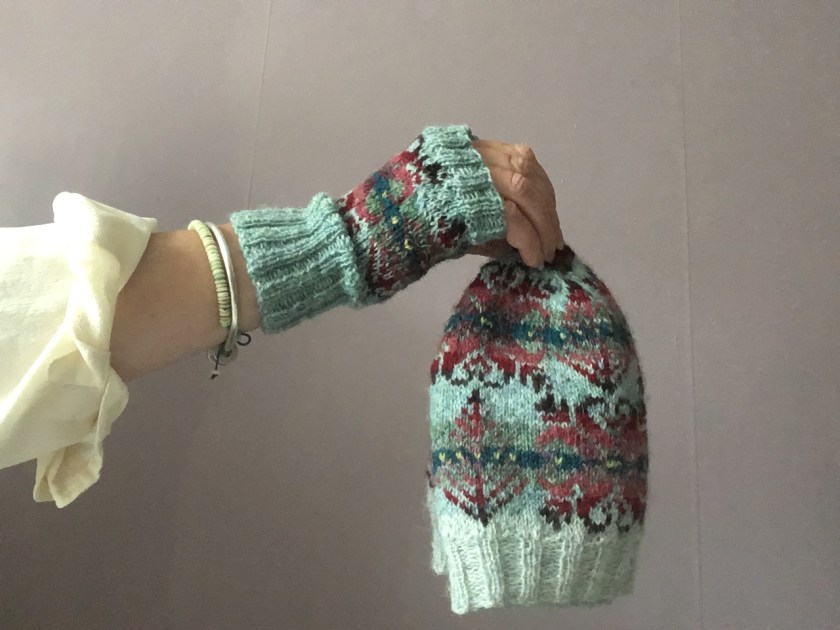
Sea Urchin hat and mitts pattern 2020

Sea Urchin Shetland hat pattern is here

to subscribe for more blog posts, sign up here – yayyyy

Dear Susan

Surprisingly, yesterday, someone bought my east to knit, Aran , Dear Susan, Jumper pattern. I made this when I lived in Shetland and the entire piece is dedicated to the woman that lived in the house that I bought.

This is a beautiful, quick, easy knit yoke pullover, knitted in Aran weight yarn. It is entirely inspired from my living in Shetland with the landscape, the sea, the weather, the house I bought – and is a letter to Susan Halcrow, a woman that lived in the same house from 1876 to 1960. ‘Dear Susan’

The pattern (which is here) has a 12 page letter/story dedicated to her which is where the name of the pattern comes from

I originally knitted this pullover in spindrift yarn in the summer of 2021 but this jumper / easy pullover, has been knitted for Winter in Aran weight and is a fun, quick easy knit.

It is one size and fits many people. You can lengthen the body if you require.

It is knitted using 4mm (US6) circular needles and 2:75mm (US2) for the sleeve cuffs. It has been knitted by 4 test knitters – from a complete beginner to very experienced. Some of the test knitters went rogue with their yarn choices and the outcomes are lovely.

You can also make it a little larger by using 5mm needles – as one test knitter did.

Yarn:- Jamieson’s of Shetland Aran weight Heather yarn.

My test knitters used lots of different yarns and you will see this in the projects. You can try your Aran wight stash.

There are coloured charts, photos to explain how to do some of the stages and indepth fully written pattern. (23 pages in all to this pattern) 9 pages for the pattern –

Additional, to the pattern is a 12 page story/ letter dedicated to Susan Halcrow – Dear Susan,

here is an extract from the end of the letter after many months of research and living in the house …

(May 2021)
Dear Susan – friend – may I call you friend?

I imagine you looking out of the South Bedroom window as I now do. The early spring evening light is illuminating the edge of the land, holding back the blue, blue sea.
Would you have lit a fire in hearth in this bedroom beside you? I can see you putting the animals to bed – the cow in the barn (now derelict) the sheep in the field (now overgrown) or letting them out on the first clear break after 5 days of blizzards, arctic ice and gale force winds? Would you have smiled at the sudden calmness after such elemental ferocity as I now do?

Everything inside the house has possibly changed since you left in 1960 – except the floors, the doors and the view and maybe the sounds of the birds. The nature and intensity of this ever-changing view through the window is both of ours – both yours and mine.

Susan ….

This is not just a pattern but a true testament to a beautiful woman who lived a very long life in a beautiful house facing the sea with harsh weather, managing on her own and living a full life. It is a pattern of love and integrity.
’Dear Susan’ in Aran weight is a great winter pullover entirely inspired by life in Shetland.

Grateful thanks to my test knitters for the Aran jumper –
Judi Hurst, Janet Benjafield, Cheryl De Ville and Tracie Bailey.

Happy Knitting.
From Tracey.

Dear Susan jumper is on ravelry

New easy pattern – Little Kisses Mitts

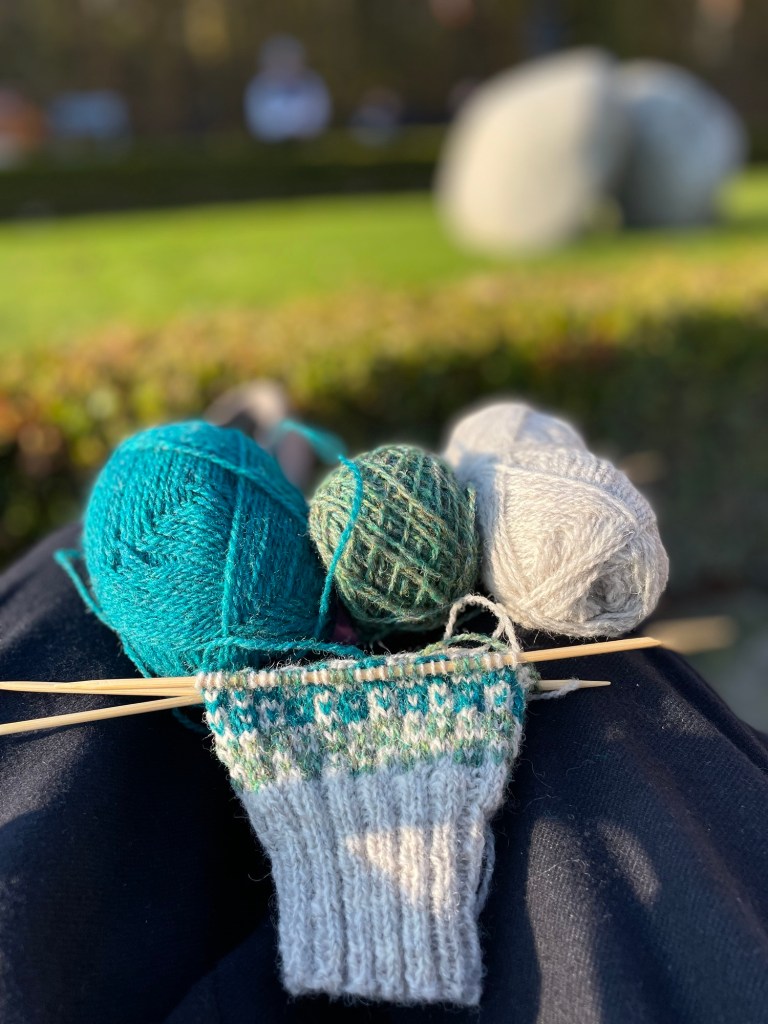
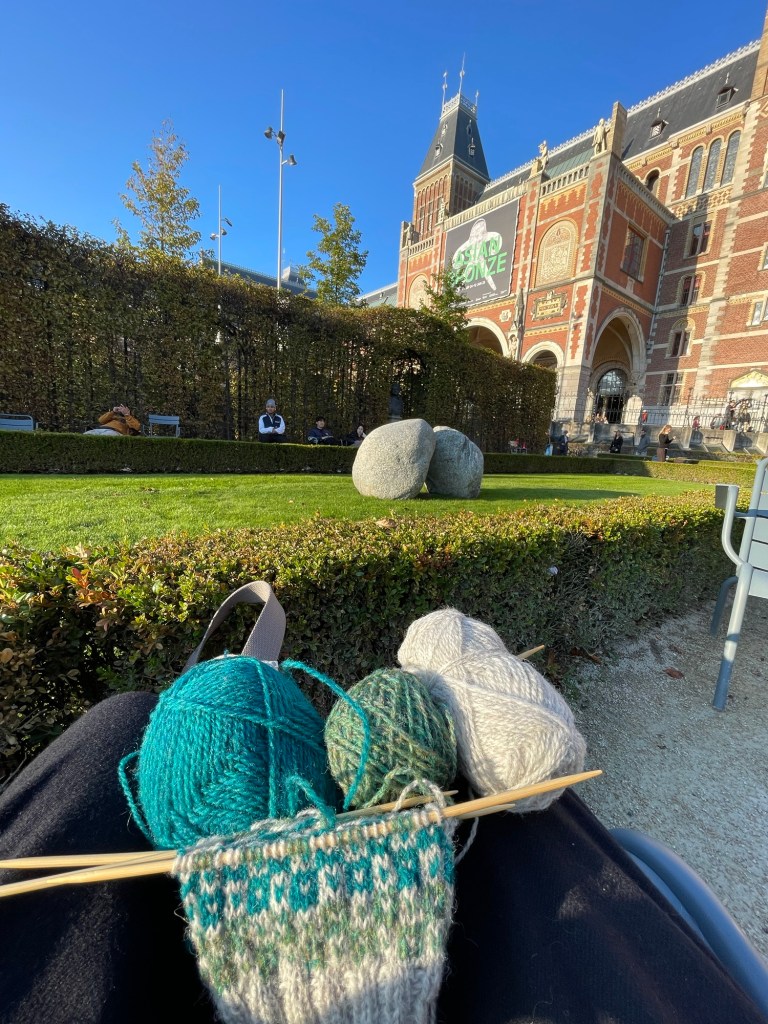
After visiting Amsterdam,  I have made a new little knitting pattern, which I started knitting and designing in the garden of the Rijksmuseaum  and finished on the Eurostar back to London.  Then I had to do the difficulty of writing the pattern out, getting it checked and test knitted.

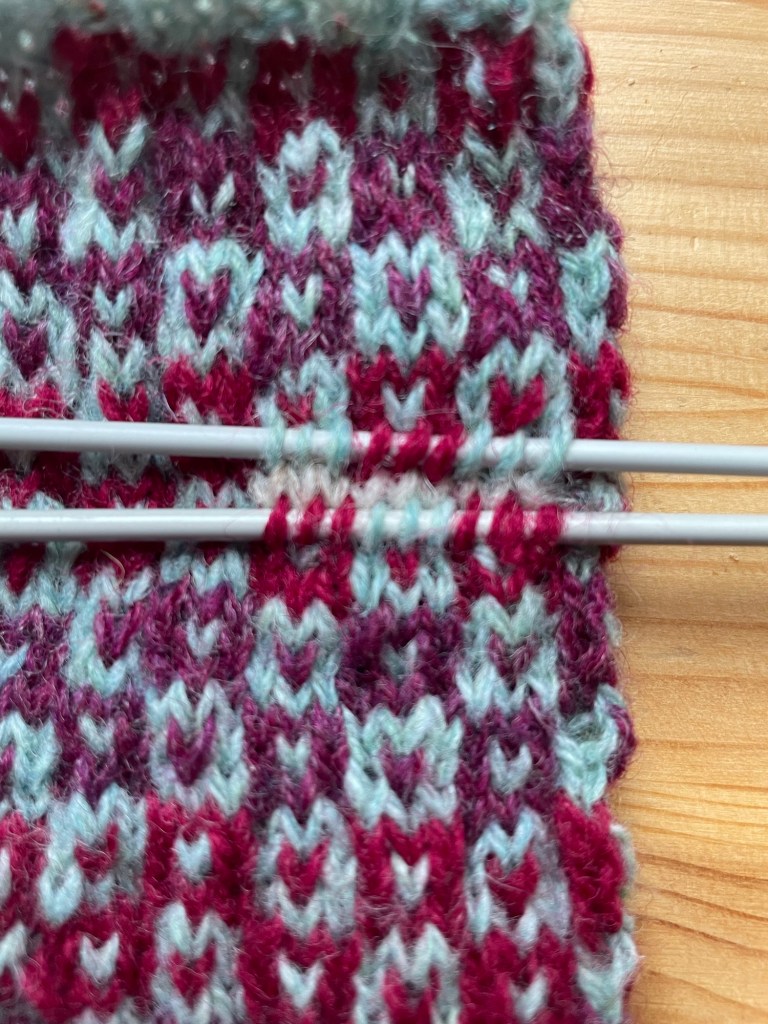
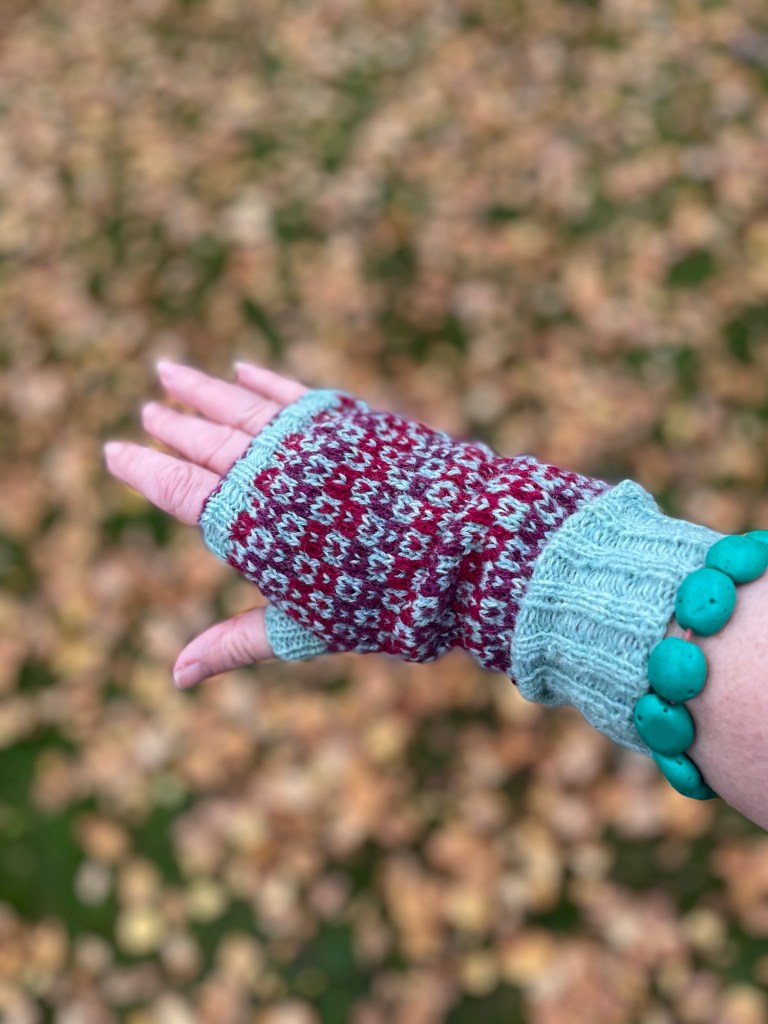
But, here it is,  I’ve made a new Little Kisses Mitts pattern – the left mitt was knitted using greens inspired by the the garden against the pebble colour of Lee Ufan’s stones in the summer garden exhibition in the Rijksmuseum, in Amsterdam.  Then knitted a matching mitt to the green one but using berry colours – Cherry and Raspberry.   This pattern is a very easy knit using a cute peerie Shetland motif, which looks like little hearts in boxes – which is how I finally came to choose its name –   Little Kisses Mitts. 

The motif is very easy. It is only made up of 6 stitches and 6 rows, so, when you have set up the first round, you will not have to look at the chart again until the round to insert your thumbs.

The thumb is easy to knit. I have added clear written instruction and photo tutorial to take you through all the stages to produce neat little thumbs in your mitts.  There is also a little reel on Instagram which shows all the stages too – it is here. https://www.instagram.com/reel/DBtwzO4IUen/ go to the link to see the clip of knitting the thumb.

Little Kisses Mitts, Pattern uses 3 listed 4ply colours from Jamiesons of Shetland but you can knit it in 2 colours or as many colours as you would like to use from your stash. It’s a very quick and joyful knit with endless colour possibilities.   I knitted the both mitts in Jamieson’s of Shetland, Spindrift. In Pebble, Moorgrass and Mermaid – then in Berry colours using Dewdrop, Cherry and Raspberry.

You can also use JC Rennie Scottish Supersoft Lambswool 4ply which I also used after buying a lovely large ball of aqua colour in Amsterdam.

I have used 3 colours in each of my knitted examples, in order to make the knit reasonably priced – rather than the patterns that I have been knitting recently, which have grown in the amount of colours used in them.

The pattern is here    

Ravelry: Little Kisses Mitts pattern by Tracey Doxey

As always, thanks to Karen Barker for her brilliant checking of all of my details written in my pattern and to Gary Butler for knitting the mitt and giving advice on the pattern notes.   Your support is much appreciated

I would love to know what you think of using this tiny little motif in this easy pattern.

The space between all things

My field of Art has been knitted textiles for a long time, including a Masters in Knitting at Nottingham Trent University 2016 – 2018.  I often placed my knitted textiles into the landscape to create site specific photographic art which explored the social histories of women and the making of knitted articles.  

I am currently working on a wall based knitted jumper piece called, ‘I Cannot Reach You.’  It is taking into consideration the Japanese concept of 間 (Ma)   – the  silences and the spaces in between all things, and relating it to the relationship between me and my sister.  

I would like to learn about the meaning and concept of the Japanese word Ma    and relate it to the way in which I experience life, don’t you think it would make life fuller? We do not have this word or meaning in England and to look at the spaces is as interesting as looking at the solid things. 

I would like to explore what ‘Ma’, looks like to me, in the space between all things and use textiles and print to express my new understanding of this. If you are Japanese and have and wisdom to share, please do.

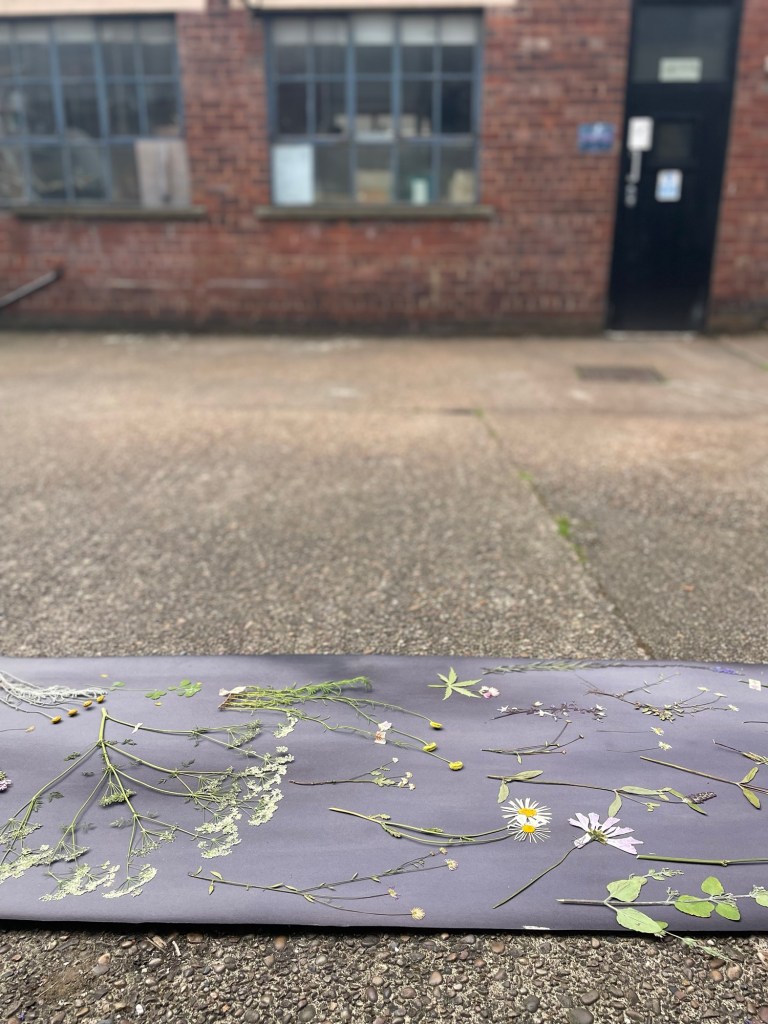
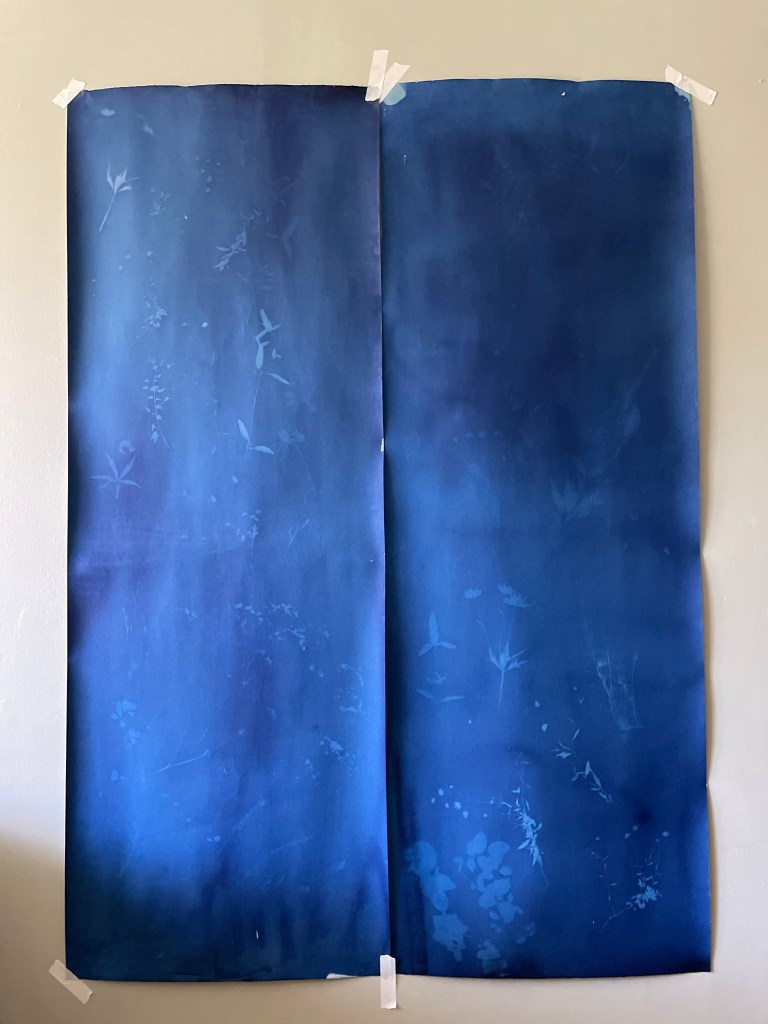
I have recently started to develop Cyanotype prints using pressed wild flowers to create images that are often  half present, a little ghostly.  I am looking at making wallpaper strips to utilise the cyanotype printing process to create the deepest blue papers with hints of British wild flowers, to look a little at the spaces in between in the prints.  Yesterday, I made to sample strips out in the yard at bloc studios, where I have a small space to work.

Currently, I am experimenting and, as you can see,  the process is open to risk and failure, but the two wallpaper strips are becoming more loved by me because of the spaces in between. One has less impressions of the flowers than the other due to both my impatience of removing the flowers and due to the wind shifting them but maybe just pure blue is lovely enough with a hint of a story of flowers in smaller areas – less ‘gilding the lily’ to speak.

Today, I hung the papers on my wall at home to really look at what is present and what is a faint mark only, and what is in the spaces.   I like the results, in some way, they remind me of the Japanese screens that I saw in the temples in Kyoto. But maybe I need to make them more sparse.  Let me know your thoughts. 

If you would like to join me in my next online workshops, they are in the link here.

If you would like to contact me about hand printed cyanotype wallpaper strips, please do so 😊

If you would like to follow me on instagram, where there are lots more images, then, I am in the link here

Have you ever wanted to know what it is like to sell up and go and live in Shetland?

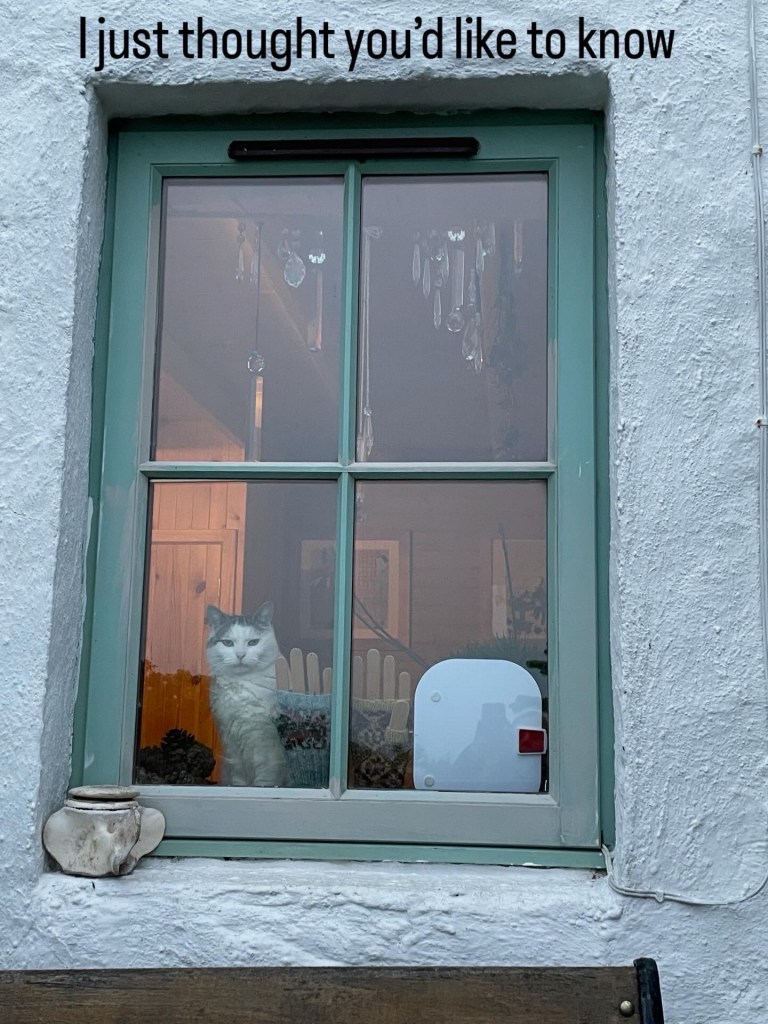
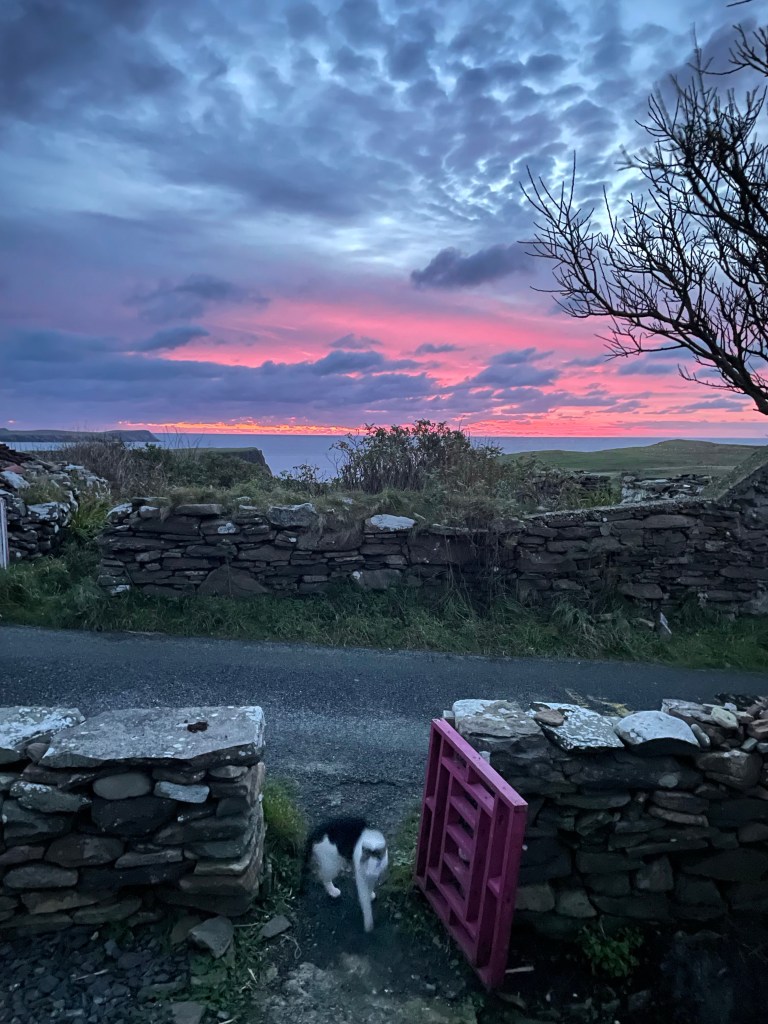
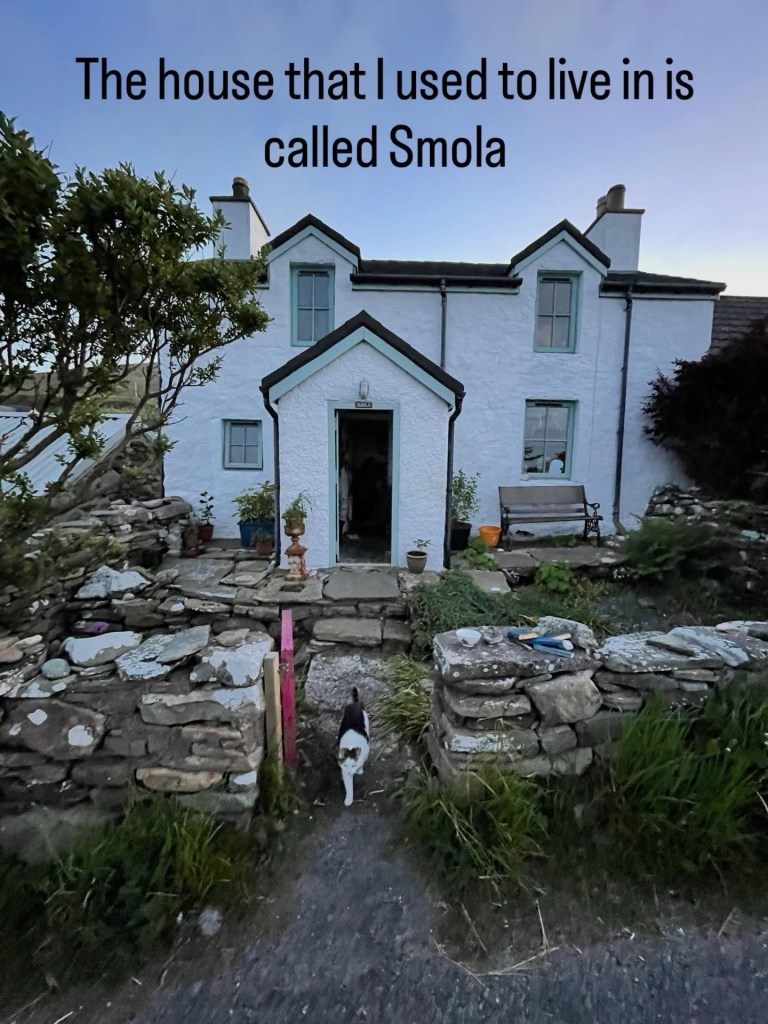
Tiggy out on the lane outside the croft house I bought in Levenwick.

July, I made the decision to return to the city and share the reasons why.

July starts like this:-

July – Shetland

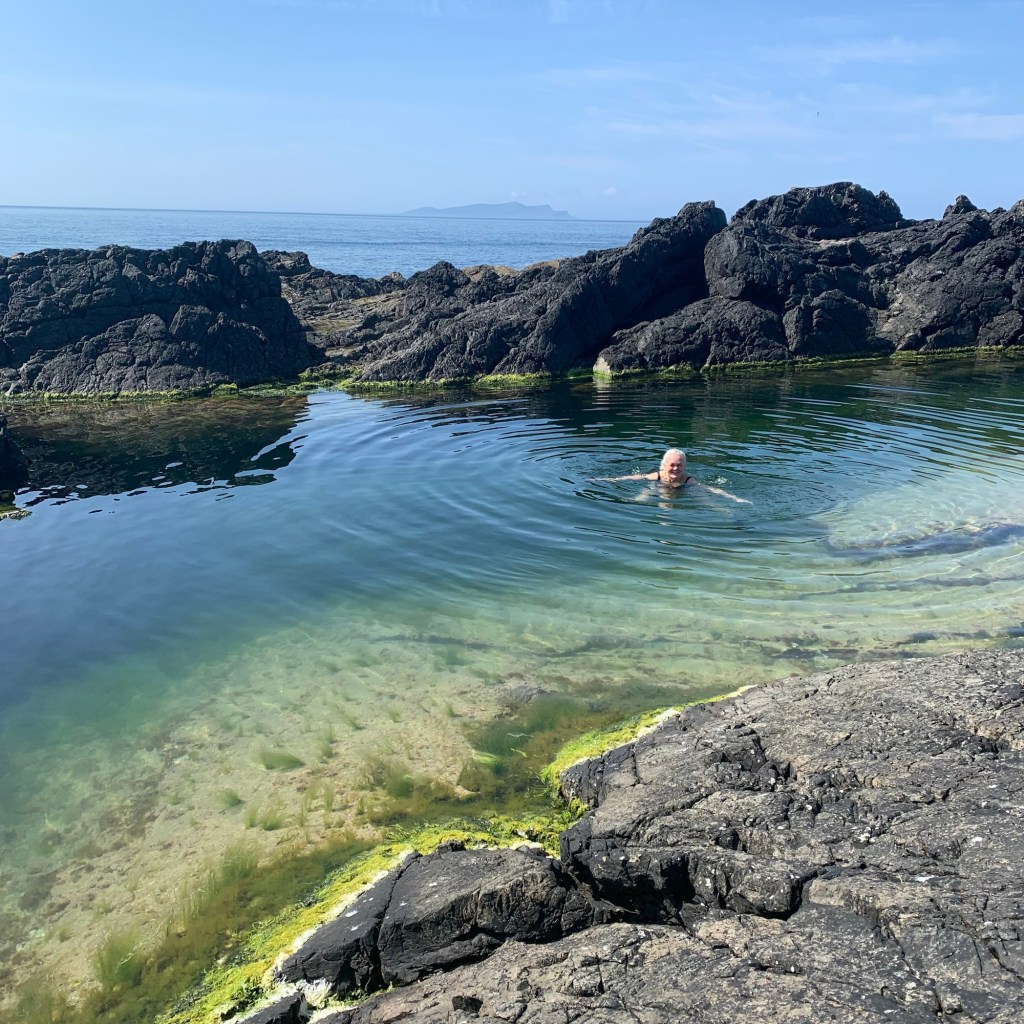
A month of sea swimming at Levenwick, at Spiggie, then on the west side.

Vegetables growing in builders’ sacks that I filled with sieved soil, in the roofless byre.

Speckle of Wild purple orchids peeping out of the long grass.

A long line of sea urchin shells residing in my newly painted deep bathroom window sill.

I return to sit upon a hill, by the sea, where the gulls drop the sea urchins to crack open for dinner – it is, Sea Urchin hill.

The old flagged back yard is dug out and cleared of a hundred years of weeds.

I cradle a large hedgehog curled in a great ball in the palm of both my hands, at Sumburgh Head where the fog horn sounds and the light spears out in the night.

The beautiful gift of a full Fleece from Francis, shorn from a ewe that I greatly admired daily in his field.  

The most exquisite incomparable morning light over sea and sky.

The return of heavy fog for days and days.  

I write ‘worry’ in the sand at the beach and let the sea wash it away but my worry still lingers in every moment.

The ‘Dear Susan’ jumper is finished – it glows upon the sands

I met with Hazel Tindel in town.  She lifted my spirits and didn’t know that I had felt so low

Reading Saturday’s guardian on the bench on Sunday, a Sheffield potted baby oak tree at my feet.

The inside of the understairs cupboard door is papered perfectly with the wallpaper that I lifted from the derelict house.  

My first intrepid knitting visitors to the house for a colour blending workshop are welcomed – A hint of things to come.

A visit back to my city of Sheffield, where a daughter meets me for 3 hours from London and I know. I just know.

Here is the beginning of July’s post – extract

Moments on the edge

Have you ever driven to the very edge of the rock upon which you live, so that you can see the curvature of the earth on the horizon in the fading light of the day? To sit, to knit, to think, to feel? To Be grateful for this roller coaster of beautiful life? Have you sat still long enough to hear the call of a thousand birds beneath the whir of a lighthouse light gently turning and the sea slightly roaring below your feet? This is where time stops and the world slows down.

Four New online knitting workshops

New online workshops.

I live in Sheffield.  Whilst I was sorting out yarn this afternoon for my 2nd Fair Isle Pullover, Richard Hawley’s ‘People’, was playing on Six radio.   I stopped to listen.  Sheffield, is, I have realised my home – I have lived here since 1998 but honestly, I didn’t realise until a conversation with my son last week, that ‘I live in Sheffield’ .  I may sound odd to you but to me, I have always been looking to other places, mostly far away.   

Saturday 8th June, my bike outside the beautiful Three Tunns pub, Sheffield

I have got on a train and got off and lived and worked in China, I’ve lived in Salzburg, London, and of course, Shetland.  I have been a traveller for some years and travel is part of my art but, honestly, I have only just realised that, Sheffield is where I live, where I want to live; it is my home.  And then, Richard sings, ‘People’ and I could understand every word – every place mentioned and how people are called, ‘Love’  it is a colloquialism – People in this city, call us ‘Luv’ – On the bus, at work, at the fruit and veg markets stall, at the chip shop, about town, not always, but a certain generation, it is often. 

I love Sheffield, the city centre is a bit broken, the SHU university is financially on its financial knees, and there isn’t much here but there is also everything here.  Art, music, friends, cinema days, festivals, history, vintage shops, people – ‘who fight for every breath’ and so much more. I am proud of this gritty city. 

Anyway, I digress, whilst I was setting up my little video of my swatch book for my new Swatch workshop on 5th July, Richard’s new song – ‘People’ came on the radio.  I found it quite haunting.  It is love of a city and a life and people.   So, I recorded the video with Richard singing in the background.   It seemed quite fitting. 

I am not sure how the swatch workshop on 5th July, will pan out yet but I am asking for registrations of interest. 

I am also doing a one off special FREE online zoom workshop for everyone who has bought the Fair Isle Pullover worksheet.   The session will help anyone who has bought the worksheet, to develop ideas of colour, alignment of Fair Isle motifs in your project and ideas to help you get the best out of the worksheet to make a great project – it could be a hat, scarf, jumper of vest.  This session is on 22nd June at 3-4pm UK time.  You don’t have to register for this one – I will email everyone who bought the pattern with zoom joining instructions on 19th June – so you still have time to buy the worksheet, if you have been thinking about it. It is here.

If I was still living in Shetland, my workshops were sold out within 30 minutes of advertising them.  Now they take time because I live in a city far away from Shetland.  But, I am still the same person, and my workshops have developed into much better experiences than when I was in Shetland.  Come and join me.

TWO NEW DATES FOR MY ONLINE COLOUR BLENDING WORKSHOP IN JULY

DATES AND INFORMATION on all workshops in this link HERE

PS, if you don’t follow me on instagram – there are lots more images in updates there – https://www.instagram.com/traceydoxey/

Let me know your thoughts in the comments. See you soon.

Tracey 🙂

Art, craft, knitting or story telling?

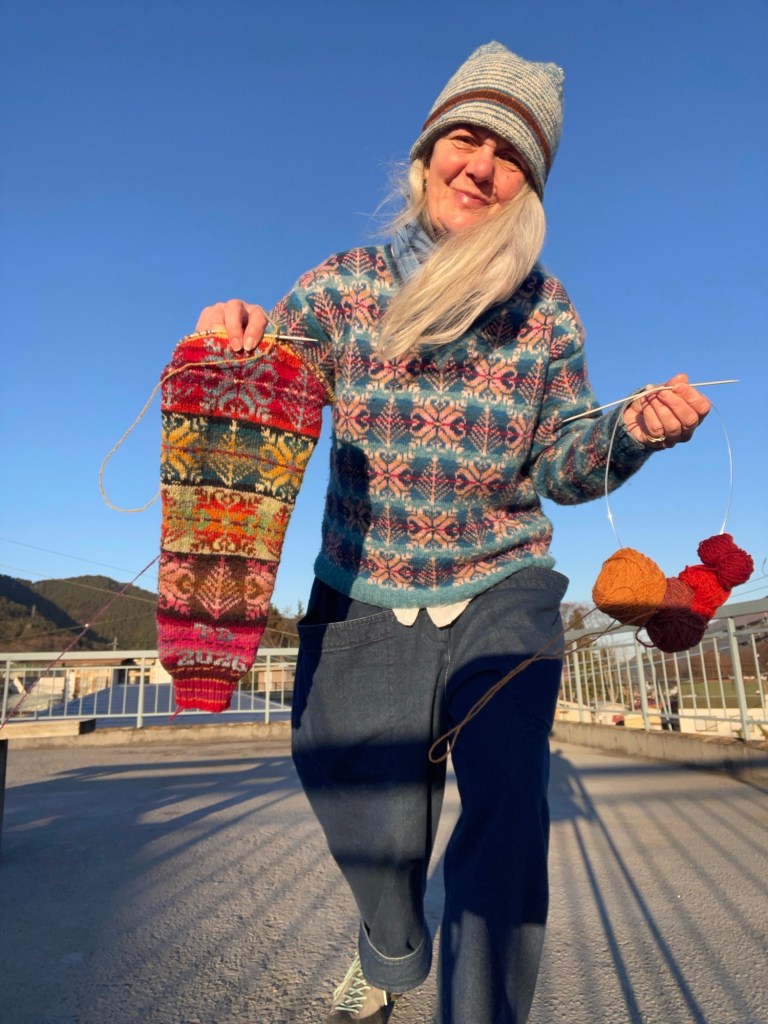
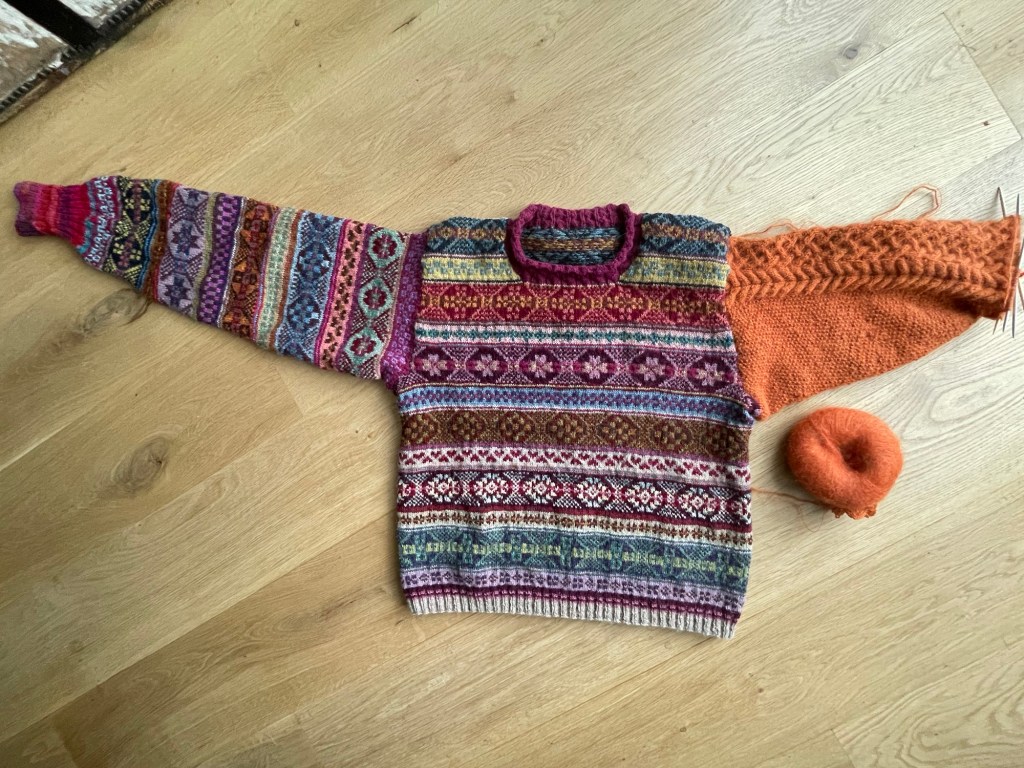
I have knitted something that is recognised as a jumper but it isn’t only that.  The knitted piece now sits well within the intersection between craft / skill / materiality / woo/ textiles/ conceptual art / family / heritage and cross cultural discussion.  It is nearly finished and it has a name.   It is named, ‘I cannot reach you.’

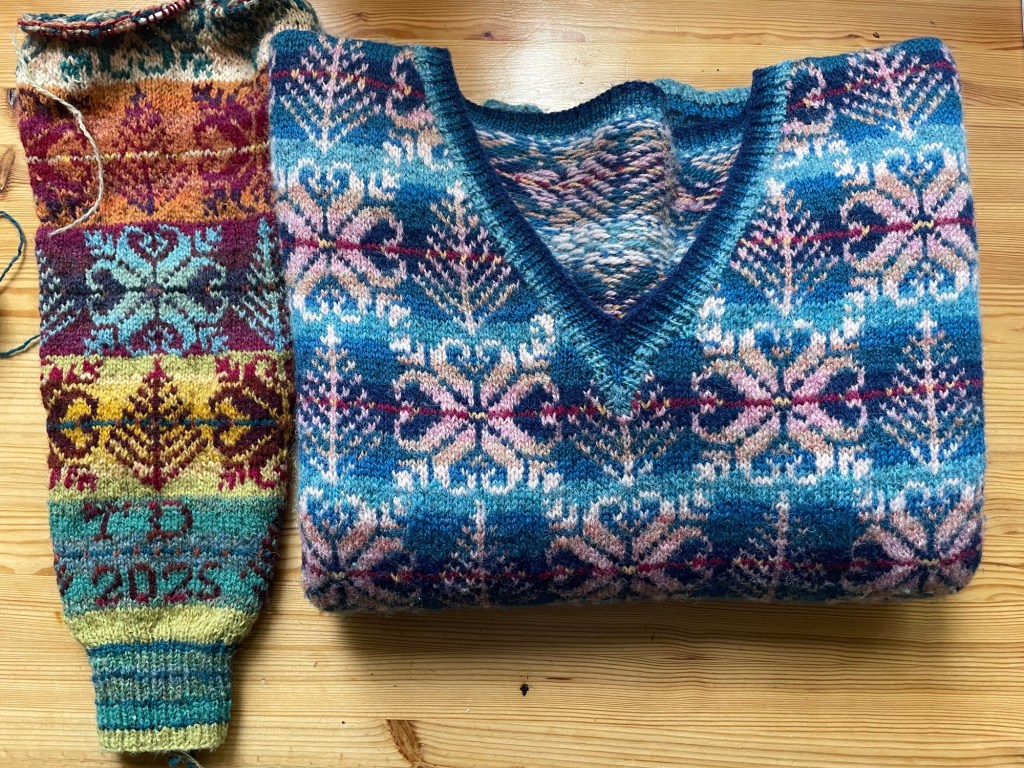
The garment, because it can be worn, has one slightly longer Fair Isle sleeve than necessary, reaching out, ending into a knitted cuff with a thumb. The other sleeve, knitted in Amber coloured yarn in Aran patterns, crosses and plaits the stitches.  This style of knit for this sleeve  was chosen because of how I sometimes plait my hair. So, the indication is now that it is not clothes but craft or art.    Most people who have commented on the Aran sleeve don’t like it – they cannot work with the idea that the sleeve is different to the Fair Isle patterning of the body and other sleeve.  Me, I like it.

The Pattern of Life isn’t all perfectly matching or symmetrical or neat or predictable.  So, changing the length of a sleeve, adding another style of knit to the other sleeve, working with patterns and motifs for about one thousand hours, has enabled me to Knit an evolving story.  First, it was a wearable vest, then I ripped the arm ribs back to start sleeves. I don’t mind if I never wear this garment at all, and yet it is wearable, it is also showable as art, it is passable to be open to a discussion about clothes, knitting, women’s work, materiality – why we knit, why we make clothes, what becomes art, a concept, a thought and why we bother at all.

In my 60th year, I am figuring out what is the stage of my creative journey, today.  I have a valuable story / experience to share – having an MA in knitting when I was 58, a Fine Art Degree at the age of 35, I’ve travelled across some of the largest countries in the world by train, to get to a tiny place in China. I’ve sailed across land and sea to live in Shetland. I knit but I am not a knitter. I can crochet and sew too.  I’ve taught English, I’m a coach for apprentices at Uni, I have been a PA, a Contemporary Dance tour manager, and events manager, a gallery building manager –  but none of this really matters and yet it all matters greatly because it has brought me to this point in my life – to figure out exactly what is the value of my creative practice and where do I want to take it?

I am not an emerging artist, I am firmly placed in an underrepresented demographic of  an older Women still making conceptual art under the guise of a knitted project.

What I would like to do is engage with other women to knit this piece, as they feel fits them. I want everyone to use their own colours choices, yarn decisions, size of the project so that we may talk about the work of women.  

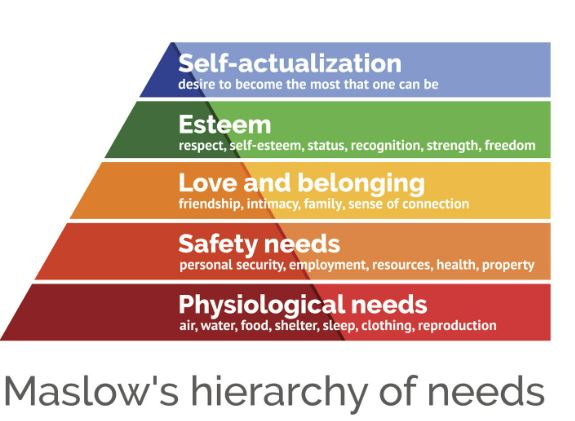
I am really proud of being able to knit this ‘thing’ because, let’s be honest, I have been in a privileged position to do so but I haven’t always been so.   I could not have knitted it when I returned to the city from living in Shetland, without home or job, crying on the kerb stones.  My creative practice was far from my priority then – I needed stability  – take Maslow’s hierarchy of needs, for example.   When I returned from Shetland, didn’t even have the physiological needs – without home or sleep.  Since that time, I have built myself back up and for now, I am around the esteem level with a subliminal eye on Self actualisation.  I’ve also been here before and know that it is not a sure thing nor is it a prolonged state and I know where it goes after – that is down.

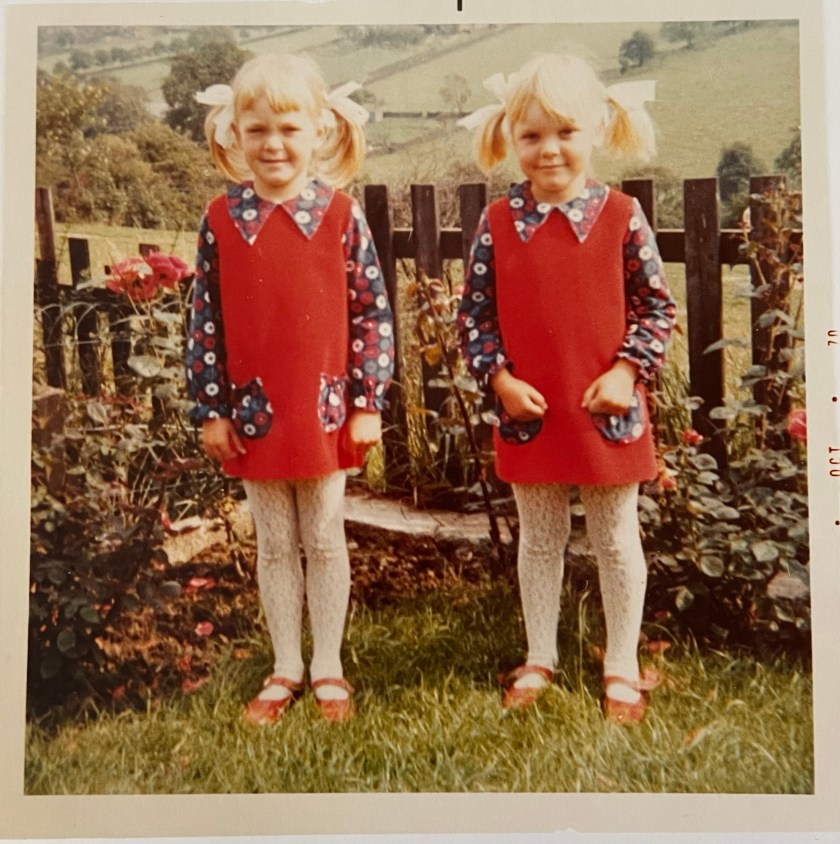
I think, what I am writing is that my jumper is not a jumper – it is an art piece about my feelings about my beautiful Sister and I cannot always reach her – which is why I have called it ‘I cannot reach you’  And, weirdly, to this end, I am thinking of knitting  a 2nd jumper, in exactly the same way as the first but in different colours because when we were children, our mother dressed us in identical clothes for about 12 years ,when we were, and still are, like chalk and cheese.  

For all the lovely people who have bought my Fair Isle pullover worksheet, would you like to join me in some kind of knit along.  I will not be teaching you how to do your project but I would love to see your projects and hear what you are making.  I think it will be wonderful to share what we are doing.   I will be slow, I am not in a rush.  I have many other things on the go including finishing this piece, I also have work and workshops and a crochet piece for my daughter and somewhere along the line, I would like to live a little – go see places

I have added a chat group on Ravelry – it is here

I am also thinking of ways to display this piece and have been in contact with The Head of Fine Art at SHU to see if we could show the piece  and she had better ideas – so there are maybe a few things being  mulled over.  
I want to show the piece because I would like to be back in the Fine Art arena because I want to go to Japan to do an artist residency and showing work is part of that process.

Have any of you read this far 😊 ?

Would any of you like to join me in a knit along so that you can knit your own pullover or use the charts to knit something for yourselves?  leave a comment or join the group.

Do you have any thoughts on this whole thing? Positive or negative.

Is it art or craft or knitting or story telling?

Here is the Fair Isle worksheet with all the motifs in 2 large charts, if you would like to join the chat group.

https://www.ravelry.com/patterns/library/fair-isle-chart-2

A journey to Shetland and back

I am sitting in the calm, welcome sunshine resting on the small patch of grass outside my flat in Sheffield, which I have surrounded with strong sunflower plants that I grew from seeds, a sea of forget me nots, beautiful jasmines in early bud, potatoes growing in bags, peonies in bud and the hydrangea taking over. I am at my laptop setting up my June post for ‘My Shetland life’, on Patreon – the month of June in Shetland.

I remember when I first moved to that beautiful croft house in Shetland and the wonders of existence that I felt every day, until I had to leave 14 months later. I wrote a book in monthly chapters of my life that year on the island, I also wrote to the woman who had lived in the house from 1976 to 1960.

If you have ever wanted to live on an island, or move to a remote place, either as a couple or a single woman – then, you may be interested in the story I have to tell. I have released each month as a chapter, that aligns with the month that we are currently in so that it will give insight into where you live and what Shetland is like. I release the chapters on the 1st of each month. I am sitting in the city calmness, rereading my June chapter before I set it up ready for release and I wanted to share an extract with you.

Extract from May

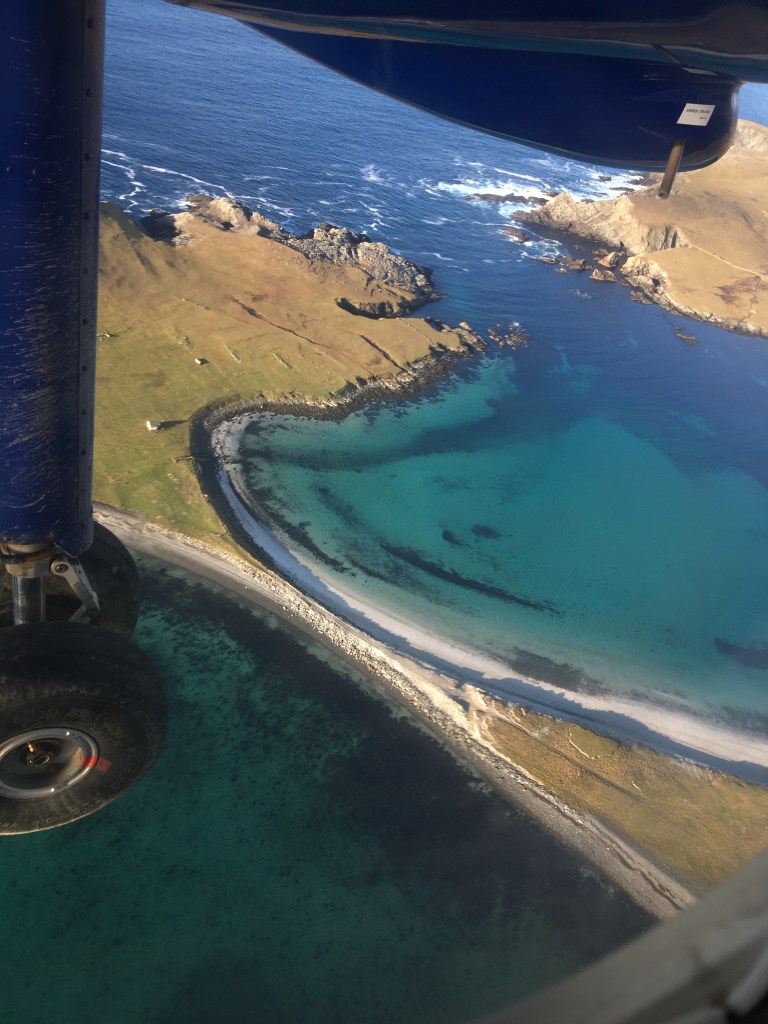
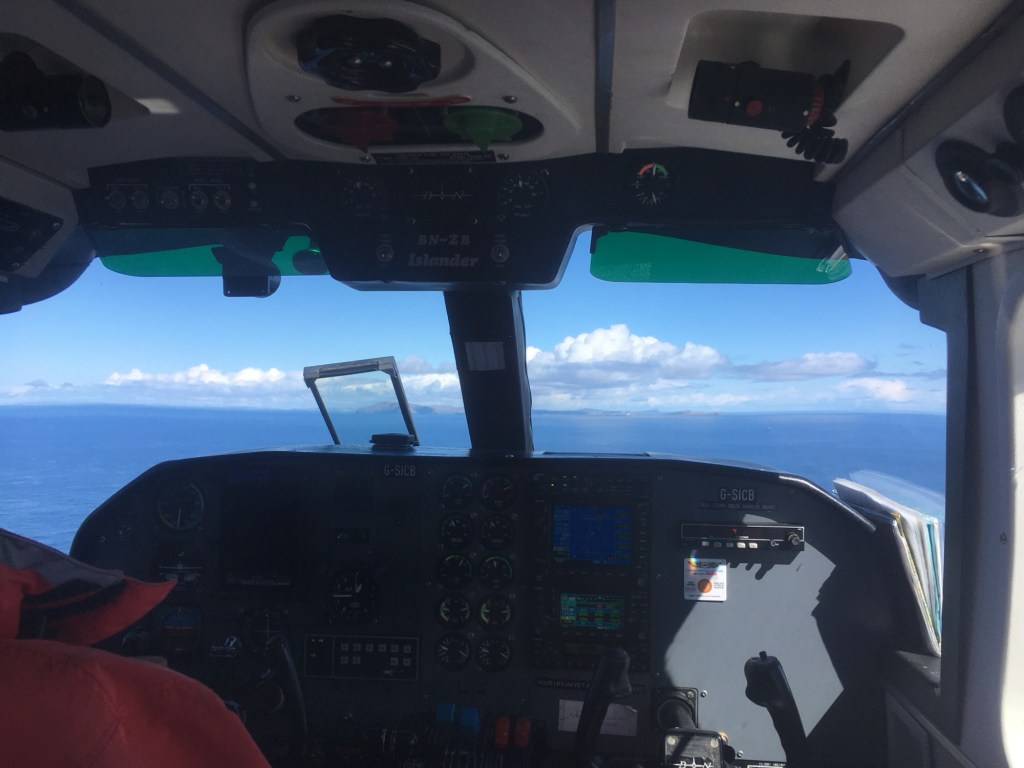
It is the first day of the fifth month. I’m excited to take a seat on the small seven-seater plane to Fair Isle. The trip is easier for me than someone not living on the island but even so, it’s not a straightforward flight, which makes it all the more unique.  I’m used to the flight path from one island to another, but the close proximity of the tiny plane flying low above the land and sea coupled with the craziness of flying in something so small never ceases to amaze me.  In the small building at Tingwall airstrip, I watch the flight safety video on a small tv balanced on a table, take a seat amid the two rows of six orange plastic chairs to wait.  One of the guys who loads the plane plays his guitar in a room behind me – I hand my bags to the official man, whom I know by name, at the weighing scales to measure the weight of baggage going south (never on the return flight though), and smile.

Outside, where the plane rests on the tarmac, I wait to be seated inside, related to body weight and distribution of balance.  We don’t want all of the bodies on one side, tipping the plane, do we. Bags are stowed in the back of the tapering metal tail, behind a net.  I’m seated above the wheel and love it.  My view down is obstructed by the tiny comical looking triangular metal blue leg with two fat small rubber wheels. It’s like the spindly leg of a blue metal bird.

Extract from June 

At 1am, the horizon line between sea and sky is still visible. In the gloaming, the sky to the North is a pink stripe of clouds where the sunlight lingers between setting and rising, neither dusk nor twilight.  Suspended half-light where everything is still visible. A magical dreamlike world twists in the atmosphere. The energy of the island atmosphere charges our weak bodies. The magnetism in the environment of this northerly world is palpable. It makes me spin.  It draws me outside like a moth drawn to the light bulb.

Together, the two merging lights and the calmness of the evenings full of bird calls are recognisable as only Shetland.   

Time is like a breath.  It feels as if our island world held its breath so long during Winter and spring, that now, there is an opportunity for a gentle exhale.  

On the 12th, I do the rarest investment of time and money, I leave the island for Edinburgh for four days, and I take a small plane from Sumburgh.  On the tram into the city, I see healthy green trees for the first time in 10 months. Before my friend arrives, I drop in at the City Arts Centre and find the oil painting,  La Musica Veneziana, by Charles Hodge Mackie. So beautiful is a dome of light in this painting that I sit opposite it for some time, thinking of Chinese style lanterns dancing in the breeze above the gondola at night. The grand buildings framing half of the painting draw the eye to a life I have never known. Gondolas float on the water at the forefront. But it is the dome of light that holds my attention. It may be the lights of a building, I couldn’t say and I didn’t need to know. it’s such a captivating work that it needs time. It was painted in 1909 and I thought of Susan, living in Shetland in 1909 at the age of 33 and that if I could pick any single work of art from here to show her, it would be this painting. So that she could see something of another floating sea world so different to that of her own.

What light we lose in the winter, we gain in the summer. The Simmer Dim rolls in upon us bringing days in waves and folds of calm, still light so long and rich that they stretch my mind. The bank sides on the drive home from Lerwick, are covered in long swathes and carpets of dancing white dog daisies.  I’m shopping at Tesco at 10pm thinking it is day time and on the way home,  at St Ninian’s at 11pm, the gloaming light astonishes me – I am home at 11:20pm feeling restless, so, I nip to Levenwick beach at midnight   There are two magical lights in the calendar of the Shetland year.
One, is the cracking open of the world between sea and sky in the deep winter where the sun light spears then leaks along the horizon just before the sun rise and now, this crazy time of Simmerdim, where I am out at 1:30am looking at the sky to the North where a pink line of clouds lie suspended where the sun light lingers in a place that I don’t know about. Suspended light…

I am wondering if I actually do tick things off a subliminal list – the sun sets after midnight, ducks flying overhead quacking, a beautiful boat bobbing in the bay.  I don’t feel that this is ticking things off, this is just watching, listening, waiting, experiencing. My face glows in the setting sun light while I knit on the beach. My legs shiver with cold.  I feel it all. Nothing is missed.  I knit the sea, air, and light into this jumper of mine and I am grateful to take the risk to live here.  If I squint at the setting sun, it becomes a pointed star shooting deepest red, orange rays across the sea. The red fire ball sinks into the sea but there is no boiling water as if a hot iron dipping at the iron smiths. Suddenly a few folks arrive at the beach to witness the spectacle   I wait for the green flash but there is none, the sun sank into the sea at exactly 10:30pm having bored its light into my retinas.

https://www.patreon.com/Tracey_Doxey

The Dear Susan jumper that I finished in May, is also here

Fair Isle Vest / pullover Worksheet

I am hoping to go to Japan on an Artist residency and have created a Fair Isle vest worksheet in order for any pattern sales form this £5.75 pattern can go towards my savings for travel expenses (I may only get as far as Manchester 🙂 ) but it is an earnest start.

So, I have been busy today – 2 posts in one day – never before has this happened.

What is this post about – it is about a Fair Isle vest WORKSHEET that I have just submitted to Ravelry

Every motif that I have knitted and every colour that I have used in my original vest turned pullover and every chart that I used when I added the Fair Isle sleeve is included in this Worksheet.

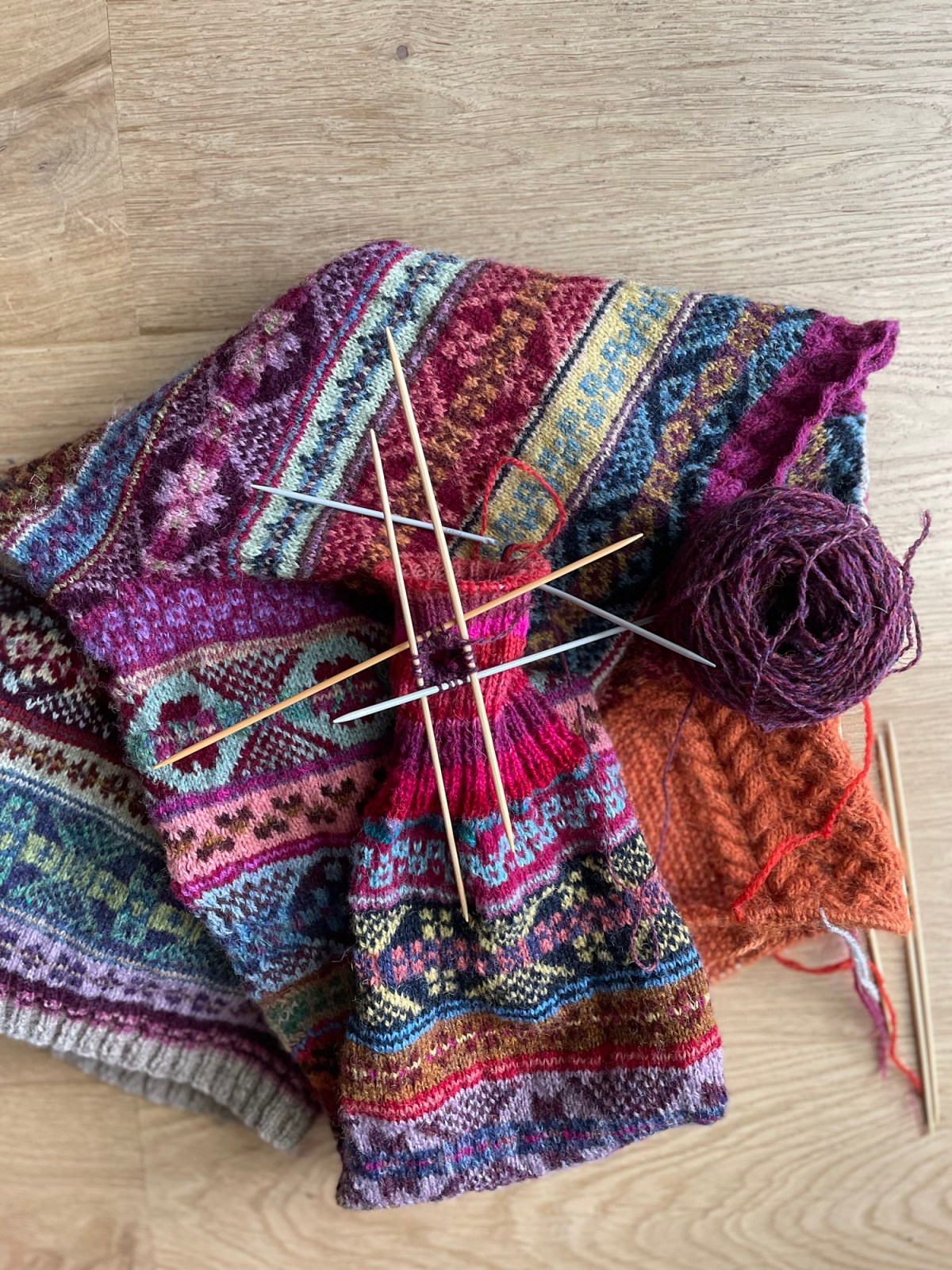
I first started this knitted piece whilst on holiday in Italy, last June.  At that time, I had no plan or idea what it would look like or what it would become because I was ‘just knitting in the round’ starting with lilac and blue and green. I was using the motifs that I had developed in my Stash Buster neck warmer pattern, to play with design, colour and texture to make a Fair Isle Vest using only the OXO patterns from Fair Isle with a bright twist on colour.  

Knitting, I have realised, is a compulsion for me.  Sometimes, I try to leave it, to do other interesting things but it is not long before I am drawn back to it. Knitting is something I have to do every day – for relaxation, design, creative development or learning, for experimenting with colour but I do not knit with the aim to monetise my designs or findings.  Maybe the work develops into a pattern but it is not my first aim to design patterns – knitting is my lifestyle. If I aimed to make money from the beginning – two things would happen – pure playful creativity would go out of the window and two, patterns do not earn me an income.  A £4 pattern is cut to about £2.90 after Ravelry and Paypal have taken their cuts.  Considering the hundreds of hours that goes into a pattern, making £2.90 isn’t really the driving reason to make it.  If I only make patterns with the end user in mind, then a creative design concept just becomes a product.  It has taken years to understand how I work – A Fine Art Degree, A Masters in Knitting, travelling to and from Shetland for years, living in a croft house by the sea in Levenwick, but mostly, it is my love of colour that has developed my practice and out of this was born my online colour blending workshops so that I can teach other people how to develop their own skills in how to blend colours within their Fair Isle and stranded knitting projects.  If I can make a pattern, or share a story or idea, I do – so that others can also learn from the colours.  

My reason for finally producing a Fair Isle Vest Worksheet ,  is because I have been asked so many times for a pattern and because I have decided that the earnings from this chart will go towards my savings for an Artist textile residency that I hope to do in Japan.

I have some faithful social media followers that have been with me for years – all through my Shetland move and back to the city, all through the workshops and every pattern – we have become friends and I respect them greatly.  Janet, Lyn, Cheryl, Yve, Shona, Berti, to name a few. 

So, what have I produced here, what am I putting out into the world?

So many people have asked me for my Fair Isle Vest pattern – I have pointed them in the direction of the Stash Buster Neck warmer where there are many motifs so that they can create a jumper, like I have but they don’t want that – they want a vest pattern. But I cannot produce a vest or pullover pattern in every size that would make everyone happy.  To alter the stich count and where the motifs lie for everyone would take months.   My life doesn’t have that time and I am not a pattern editor – I have done it previously with the help of a friend from America where we spent months number crunching the Dear Susan pattern to deliver it for multiple sizes.  It is not an easy job and takes forever to check everything.   I am but one individual person – spending 3 full months designing a full pattern, at this time of my life is not what I can do.

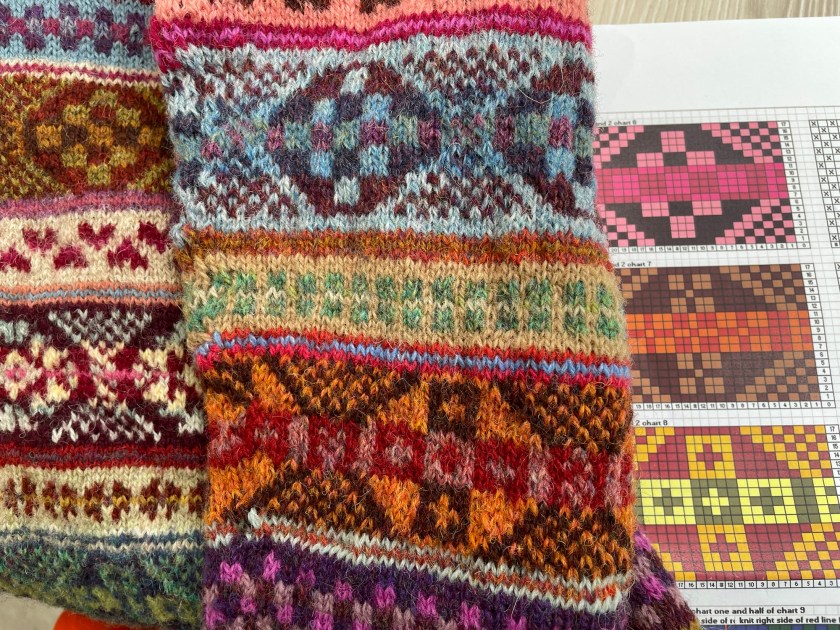
So, I have made a series of 2 fabulous, full colour A4 charts (body chart and sleeve chart) with all the colours listed alongside, that I used in my own knitting project  – to give you the tools to make your own road map for your own vest or pullover, or scarf, or hat.

The complete charts included in this work sheet, are not a jumper pattern, nor a vest pattern.  What I have produced is a worksheet including the entire range of motif bands, built into a body and a sleeve chart with a clear centre stitch line.  One sleeve is Fair Isle patterns – the other is Aran, following the plaits of how I sometimes braid in my hair. 

These 2 large charts include 23 motifs and colours are a treasure trove of endless possibilities for you to be creative and make your own vest or pullover by incorporating them into your own favourite vest or jumper pattern.  Use any colours that you have, use any wool that you have, use 2 colours, or like me, use over 90 colours.  I am giving you a recipe for you to enjoy and work with in whatever way you want.  I am giving you 23 fully lined up Fair Isle charts to knit in any colour you choose to make your own design.  
Recently, I have been reminded of how Kaffe Fassett, in the 80’s made beautiful patterns in books and wrote, ‘ choose 9 balls of varied light colours and 9 balls of dark colours’ and people ran with that, me included.  Sometimes, he would write – use double knitting yarn, sometimes he listed the yarn and the exact colours.

If you run with these charts, you can use your favourite double knitting yarn and the jumper will be how you like it to look and feel with your favourite yarn, incorporating some or all of these Fair Isle motifs. 

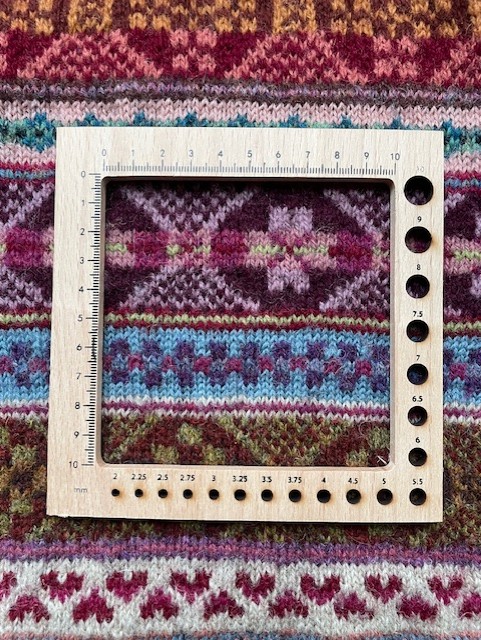
My jumper is knitted in Jamieson’s of Shetland spindrift using over 90 colours – some small lengths, some longer – these colours I have had left over from previous projects.   As the colours are not often repeated, not great lengths are required.   But you can do this differently.  Use your stash or buy just 4 colours or even 2.   The choices and permutations are endless but this relies on you.  It relies on being excited to try this, to work out your centre front (which in my case, mirrored my centre back) and making sure that your motif bands align.  It is about enjoying colour, swatching to experiment for colour combinations. It is a fun package and I would love you to have a go. 

It has taken me nearly one year to design and make this jumper – it has taken 3 days to map out the motif bands and make the chart used in the body and in the sleeve and another 2 days to pull it all together. 

If you have done so, I want to Thank you for buying my pattern for the charts – you are supporting me with saving towards my artist textile residency.

here is where the worksheet is at – let me know your thoughts on this one year project.

https://www.ravelry.com/patterns/library/fair-isle-chart-2