Kyoto Baby.

On the way back to the Kyoto guest house, as the light was fading, I passed a small shop in Gion. The front was covered in a grill, at the door, was hanging a traditional Japanese door curtain (Noren).  I was only 3 days into staying in Kyoto and had no idea what the little place was, but, I could see a bent woman, working at a table under a light. A small gap in the grill showed a flash of crimson framed by the window.  I watched the woman carefully sewing, and, as is my habit, I wanted to know more.  At the window, I gestured to ask if I could enter the tiny shop.  The Noren, always bending the guests as they enter.  I, making no exception to this, bowed as I entered the tiny shop.

Inside, the space, the only thing I could see was the colour in exquisite Japanese silk Kimono taking up the entire huge table under the window and the woman standing beside it.


Crimson, peach, orange, ginger, cherry, turquoise, gold, purple, mint green patterned silk covered in cranes (symbolizing honour, good fortune, loyalty, and longevity) in flight shone under the sewing light.  The seamstress was hand sewing the great, padded roll of crimson at the hem of the Kimono.  She explained with few words and many gestures that it was a wedding kimono and entirely hand made by her.  She exuded the gently quality of unassuming dignity. A craft master who had probably worked at that table, under the window for decades.   I was awe struck by her skill.

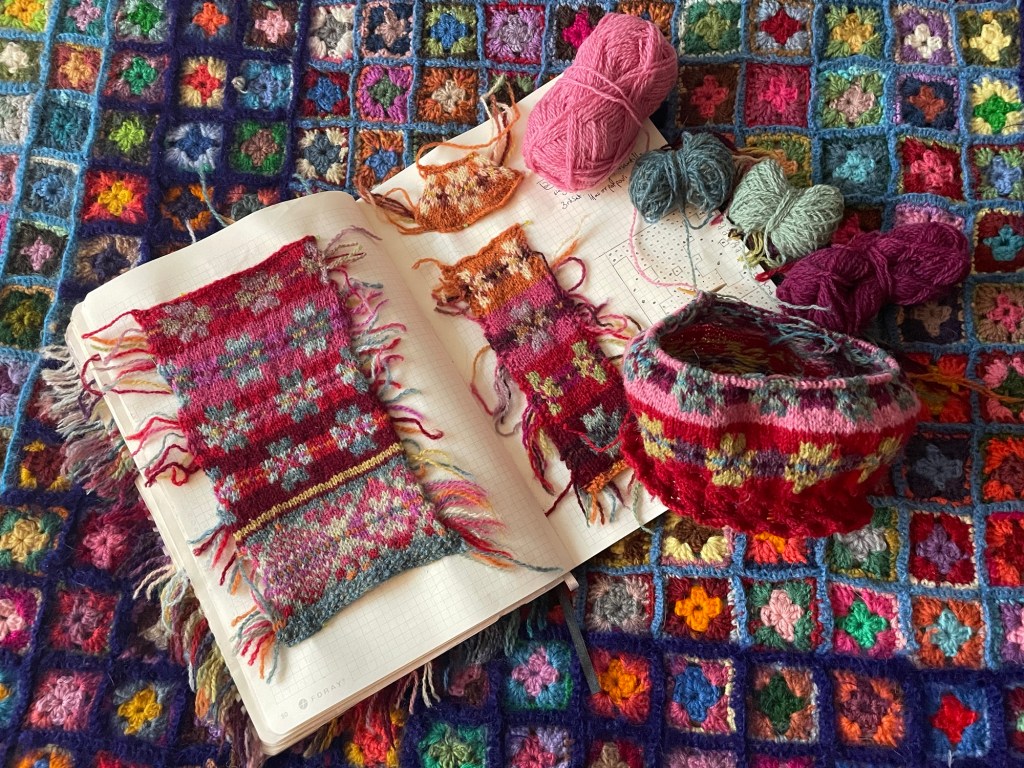
I returned to the shop a number of times whilst I was in Kyoto – the last time was to show her my ideas to knit using colours that were inspired by the exquisite silk used in the kimono.  I particularly noted the thick crimson roll at the hem.   She understood what I was trying to do but must have thought that my swatch book was rather naive to her own skill, though she never showed it.    We passed small talk about colour, each using our own languages, understanding little in words but everything in the action.

Before I went to Kyoto, I hoped to live in a space between ‘Balance and Beauty’ and here I was, at that exact place.

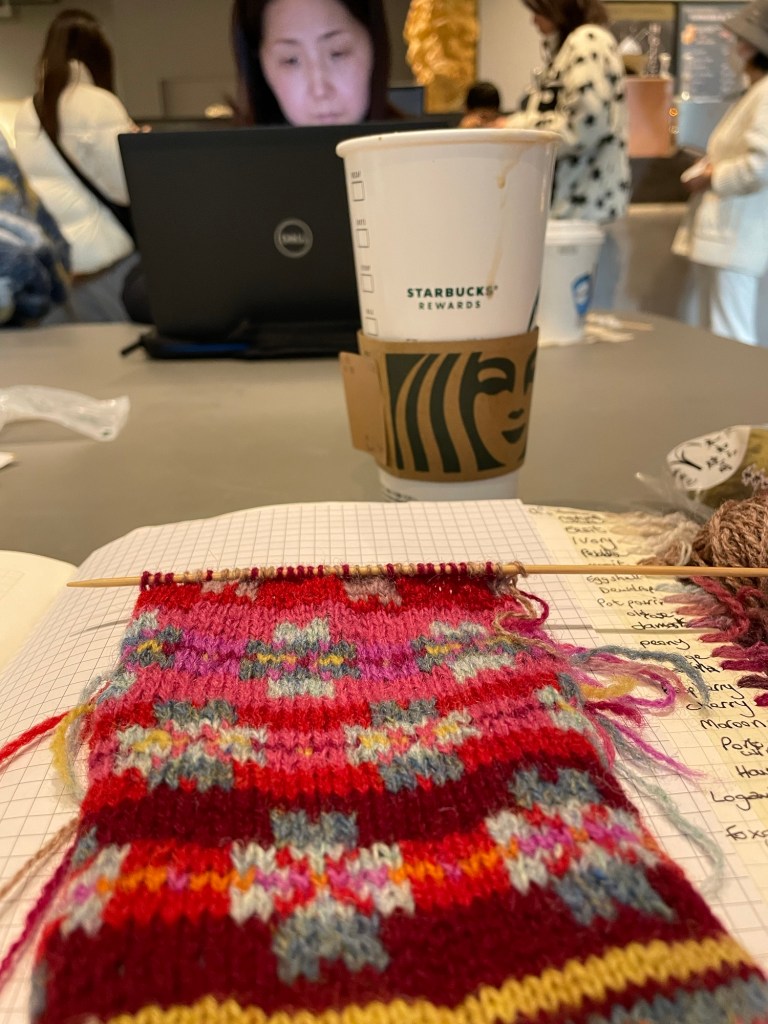
This little pattern is the result of that experience and inspiration of colour.  I swatched for colour in the little guest house, I swatched the colours in the Sky Garden on the 11th floor of Kyoto Train Station, I swatched in many of the Zen temples whilst viewing the zen gardens. 

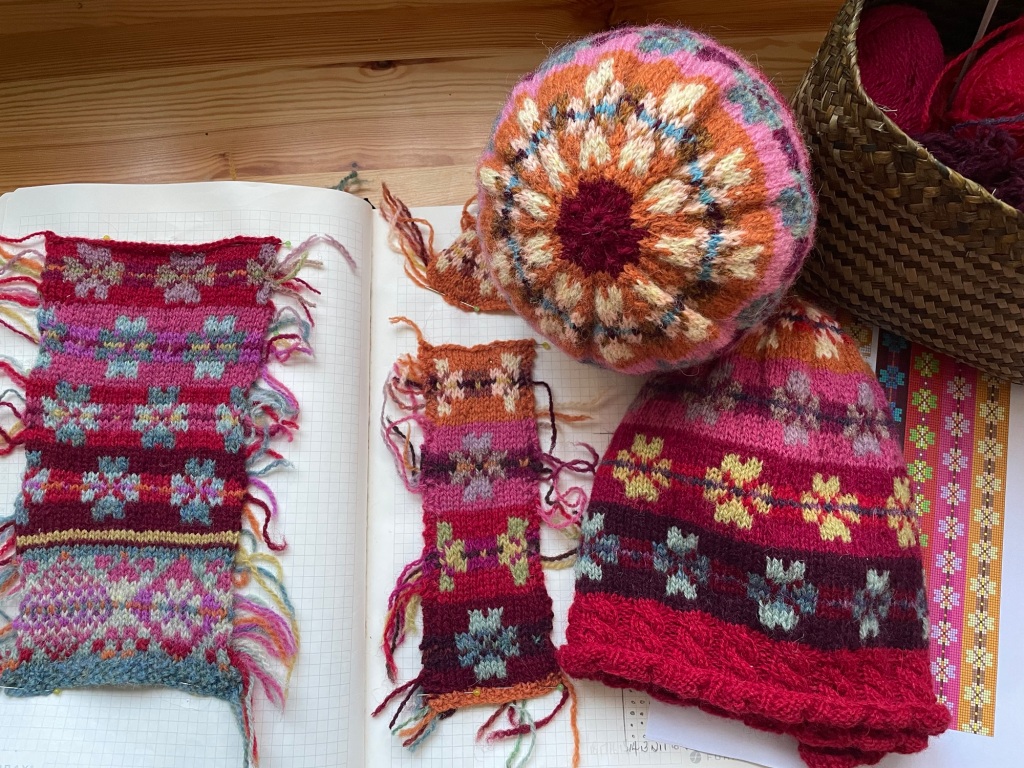
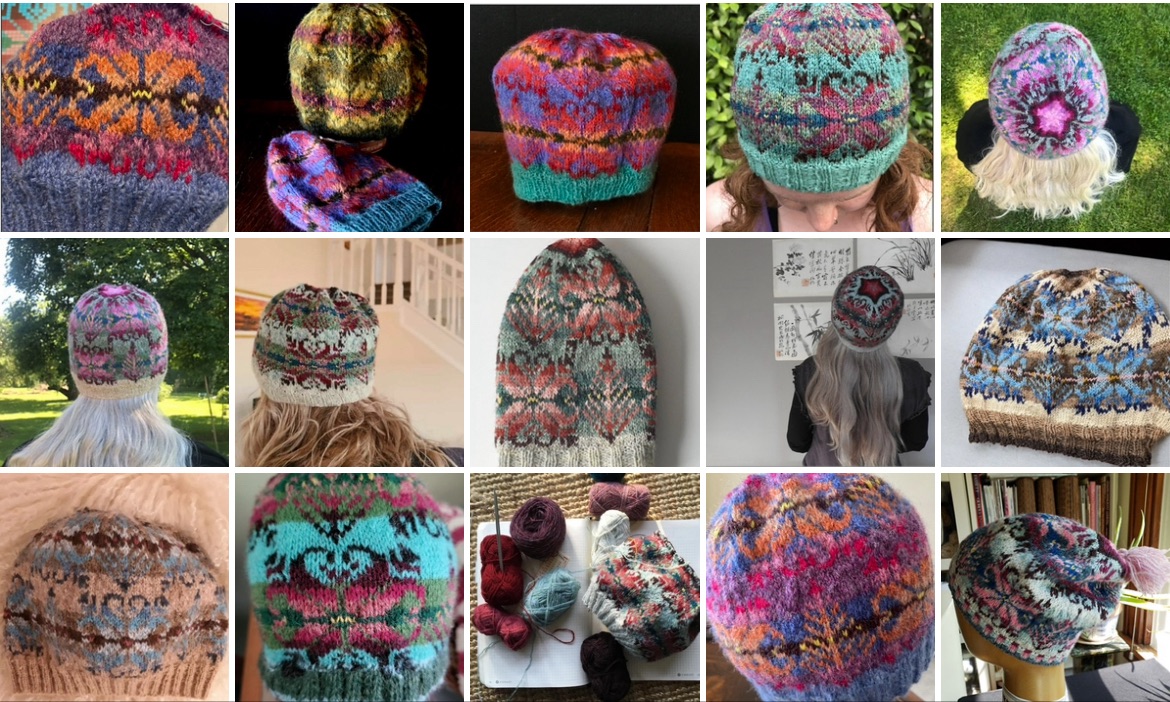
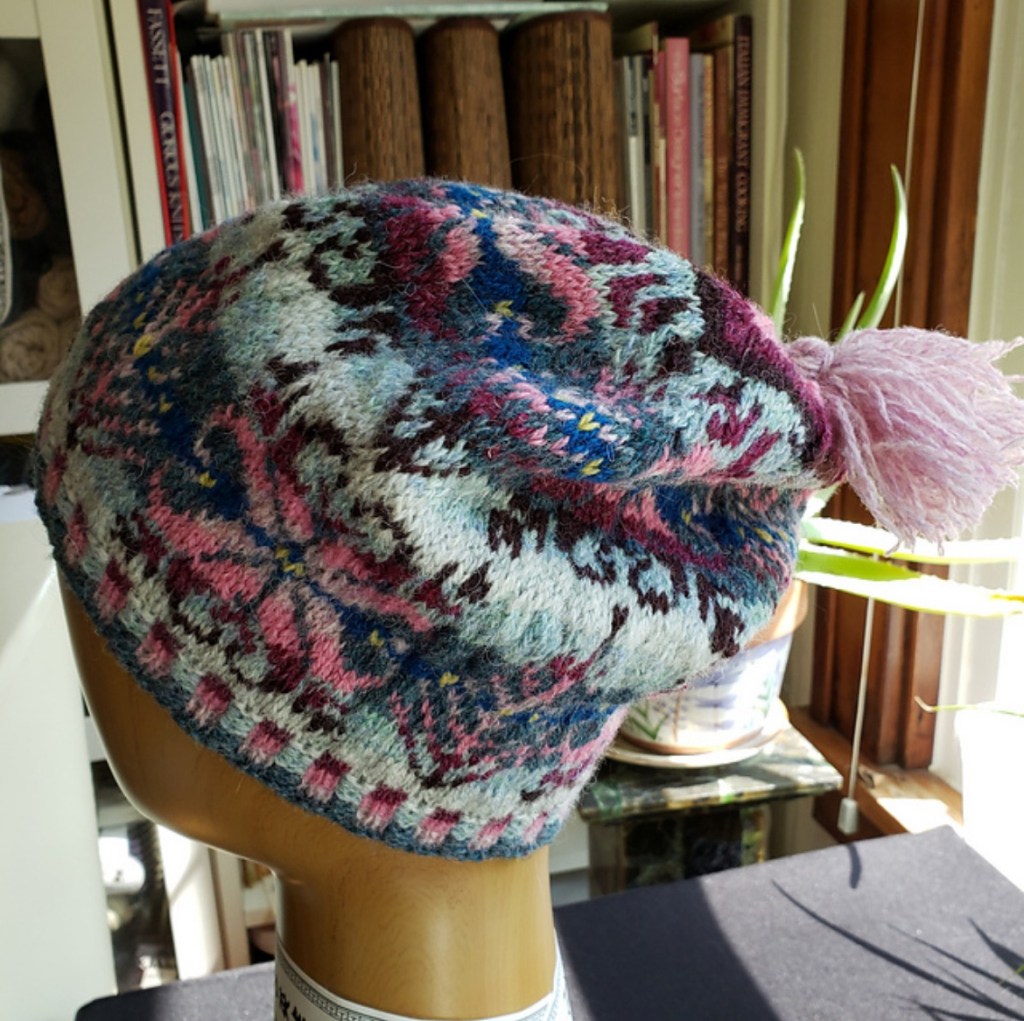
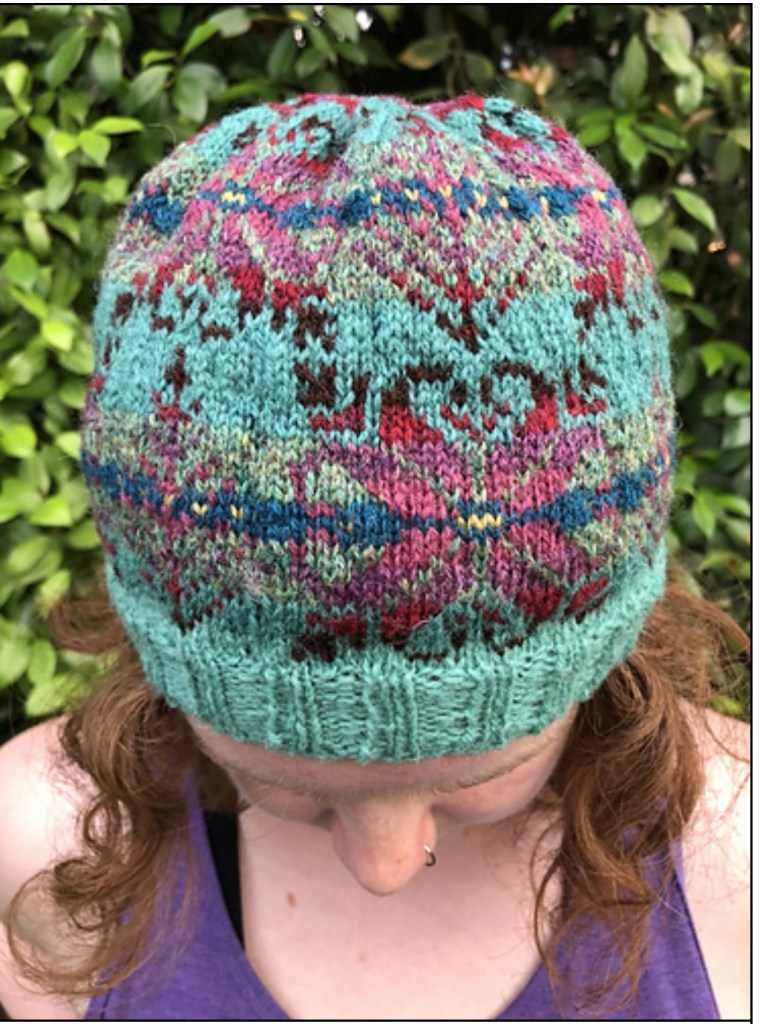
This little hat pattern, brings together some of the colours that I found that day.  It is called Kyoto baby.  It’s very easy to knit. The rib is an easy left crossing cable in Crimson to emulate the padded hem of the wedding kimono.  It has a simple Shetland flower motif.  The pattern has 14 colours related to the Kimono but it can be knitted simply in 6 colours.  All the information is in the pattern and it was a joy to make.   It is modelled by a beautiful little Sheffield girl, whose name I will keep a secret.

Kyoto Baby is here.

https://www.ravelry.com/patterns/library/kyoto-baby
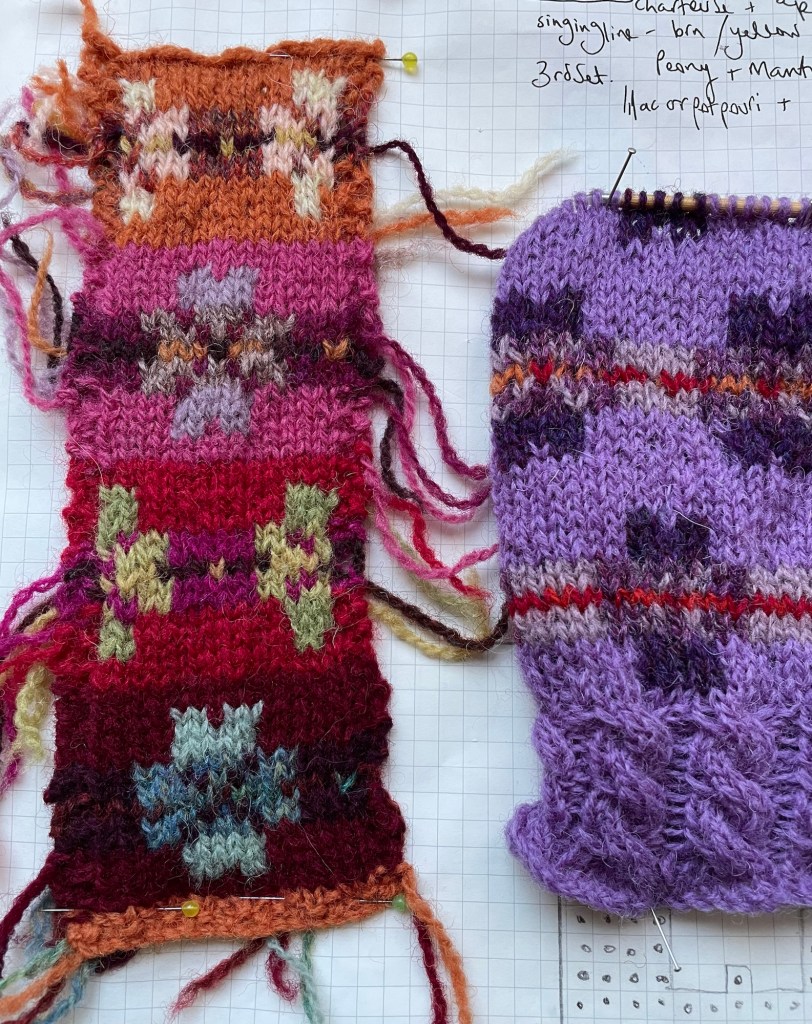
there are a number of colour options in the pattern. I swatched for colour and so did my lovely test knitters. Shona Brown In Nova Scotia is has test knitted the baby beanie. – Thanks, Shona 🙂

The adult pattern will be out next week – Let me know what you think –
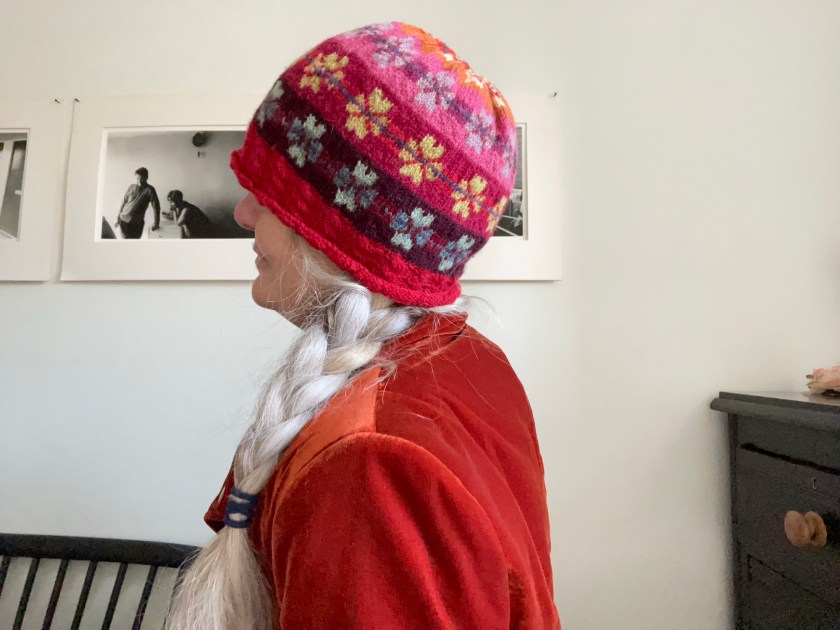
Kyoto baby

An accumulation of Impulses – Dear Susan

I had a dream, I achieved that dream but I had to leave it behind.  My story is about finding joy / fear, love and loss, heart and soul – trapped and free over the duration of 14 months.

Capturing that year is too big a task.  So, I am trying.  Many people write about their dream to leave the city and to move to an island life – few write about the reality of that seismic change and the decision to leave the dream, of leaving behind hopes, love, dreams, can be read as failure – but only to those who have never tried.

I tried my hardest and here are the remains of that massive attempt.  This is the story I created, then broke down with hardly a word to say for it.

THE HOUSE OF TWO WOMEN

Dear Susan.

Synopsis

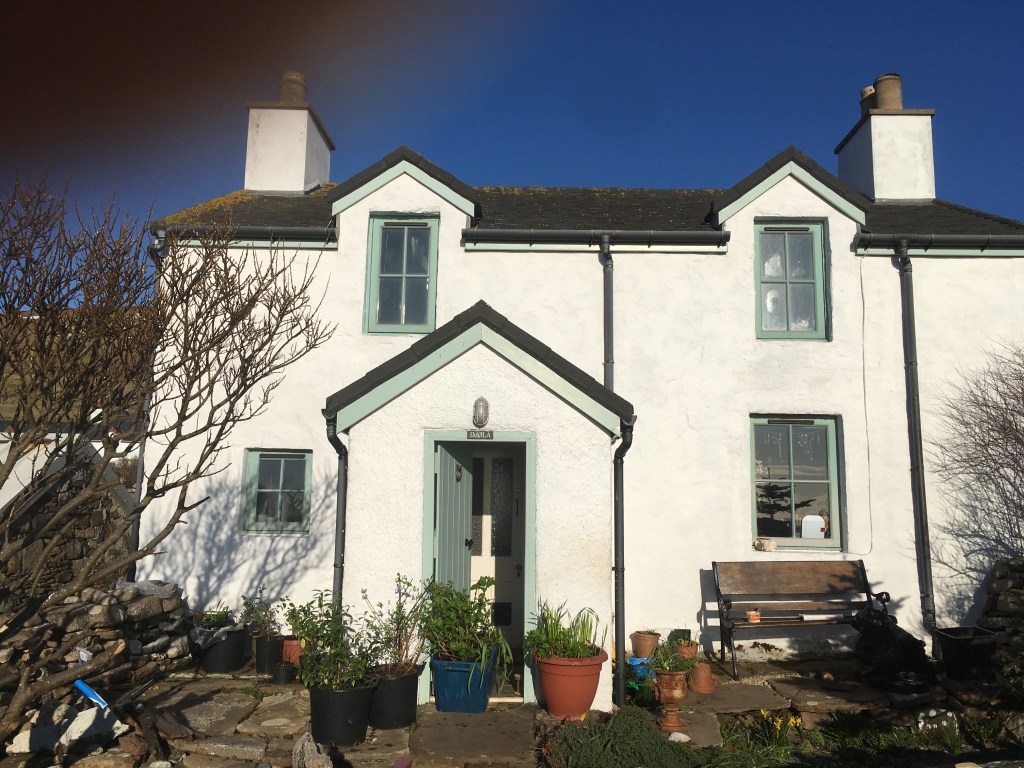
‘I stand for a second to take in the moment, to look at the old plank-board door with a square wooden knob, which I finally turn sharply to the right. The simple mechanism lifts a wooden latch inside. Human touch has left tangible traces of every hand that has opened this door before me. The hollow sound of the sneck – a door latch hitting its casing – is what I will always remember of this place. I understand that it is a unique sound to this house, one that will forever embody a simple place of great beauty. In this exact moment, I am sold on the sound of a wooden latch and the view of the stone flag floor in the empty room in front of me. Before the agent has even arrived, I know that I will not pull out of this crazy unfinished deal to buy this house and change my life forever. I won’t admit to the agent that it is the sound of the sneck that sealed the deal, but it is.’
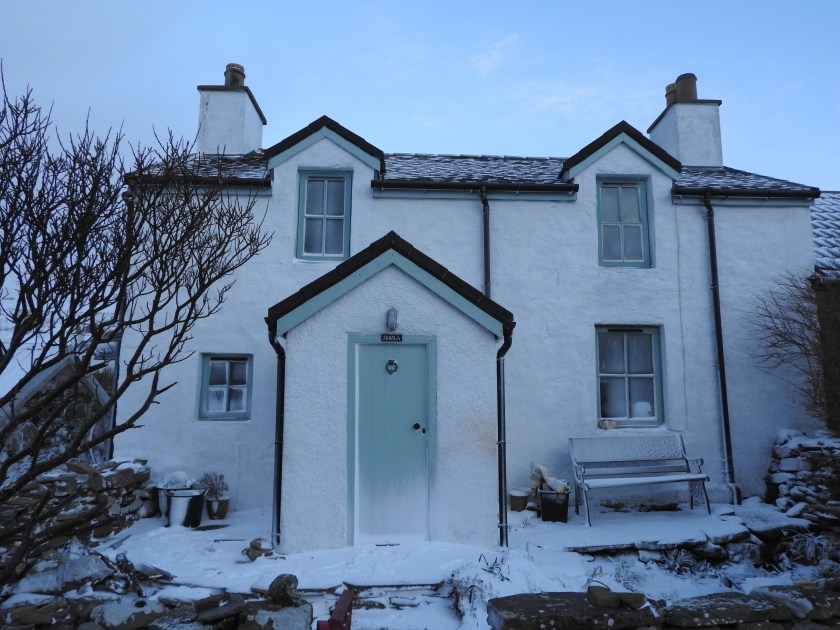
This book is my story: a single, 57-year-old Yorkshire woman who dared to follow a dream against all odds; to sell up and risk all to move lock, stock and two cats from a small city flat to a home facing the sea, in the northernmost reaches of Scotland, the islands of Shetland.  It is a love letter to Shetland and its extreme elemental landscapes; to an old croft house and three generations of the same family who lived there for more than 140 years, knitting and landscapes. It is an accumulation of impulses. This is also the story of hope and desire and of demise and leaving.

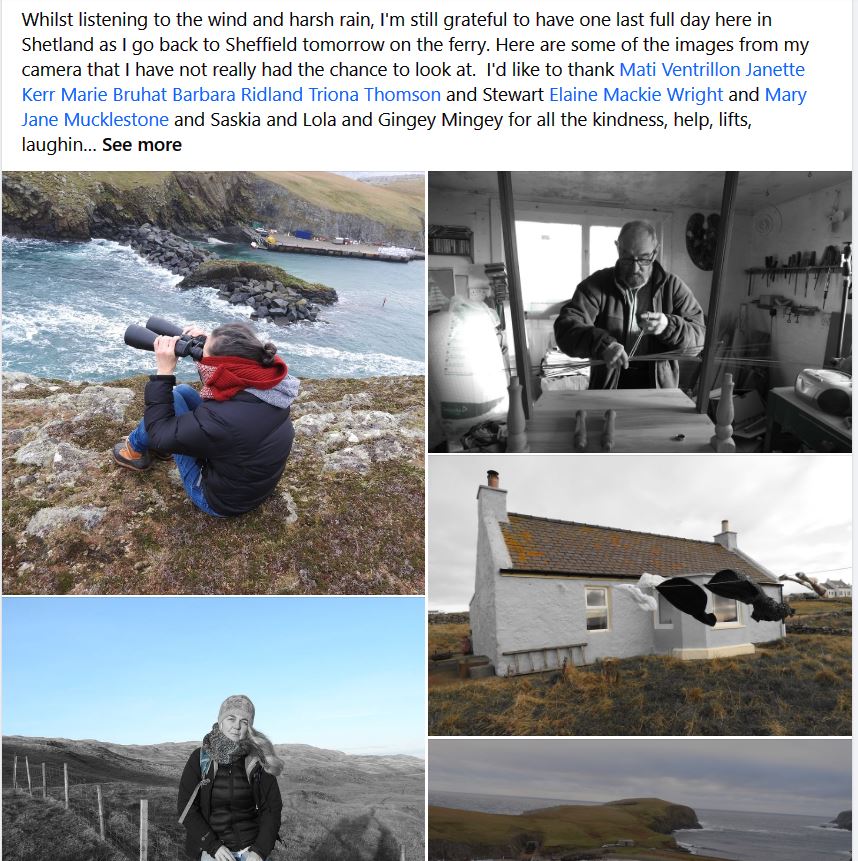
Here, are the bones of my life of one year on an island and the letters I wrote to Susan Halcrow, a woman that once lived in the house, from 1876 to 1960.   It unfolds in monthly instalments, beginning on the very first day I visited the house, and heard the sneck, in August 2020, to my last sunrise in October 2021, when I walked away, never to look back again. I dreamed of living on the island to be closer to nature, creativity and a life less ordinary, with my knitting practice at the heart of every day; of moving through slow travel across sea and natural beauty, to come to a personal understanding of both inner and outer landscapes.  I never dreamed I would want to leave to return to the city.

I hope to share how emotionally challenging it is to make such a seismic life-change from city to island life and how my being an incomer, made it hard to find community both with some islanders and with some other local incomers.

The full book, written entirely from the islands of Shetland, ending abruptly in October 2021, offering an insight into island life and, finally explaining the reasons why I had to sell up and leave, to never look back again. Here, I draw out the bones of it in letters to Susan.

Tell me, what is it you plan to do with your one wild and precious life? Mary Oliver.

Sea Urchin Hat pattern

January 2024

I thought that it was the Sea Urchin hat pattern’s third anniversary, but, because we slipped into 2024, when I was in Japan, I finally realised that this unassuming first design pattern of mine, is a big FOUR years.

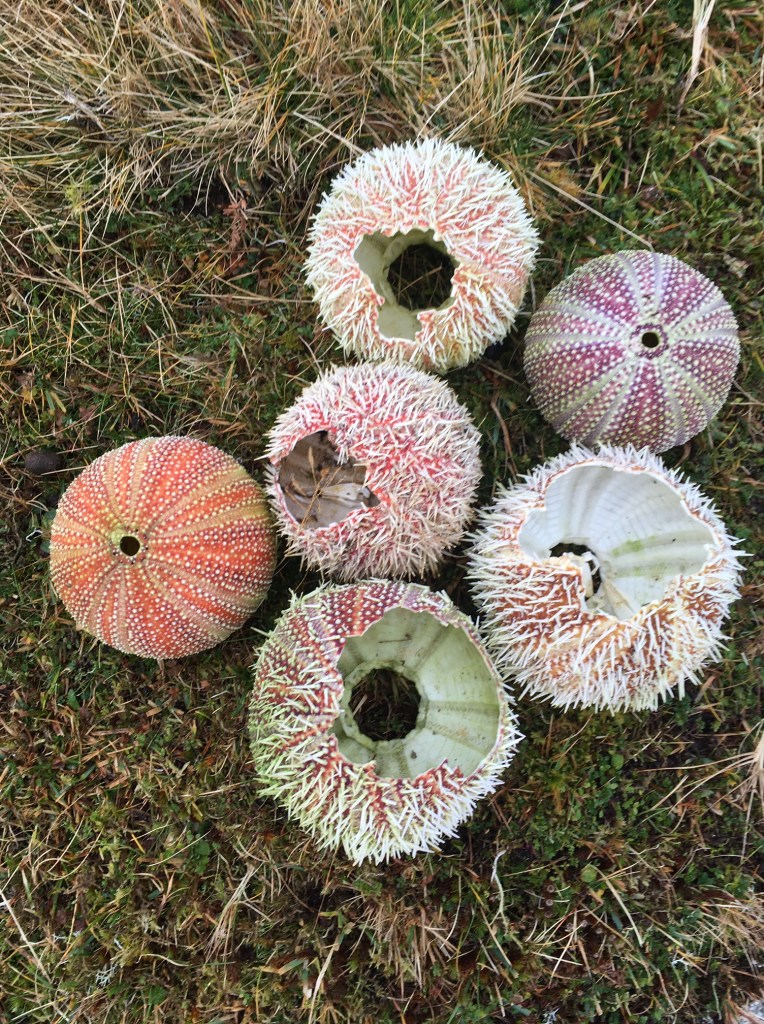
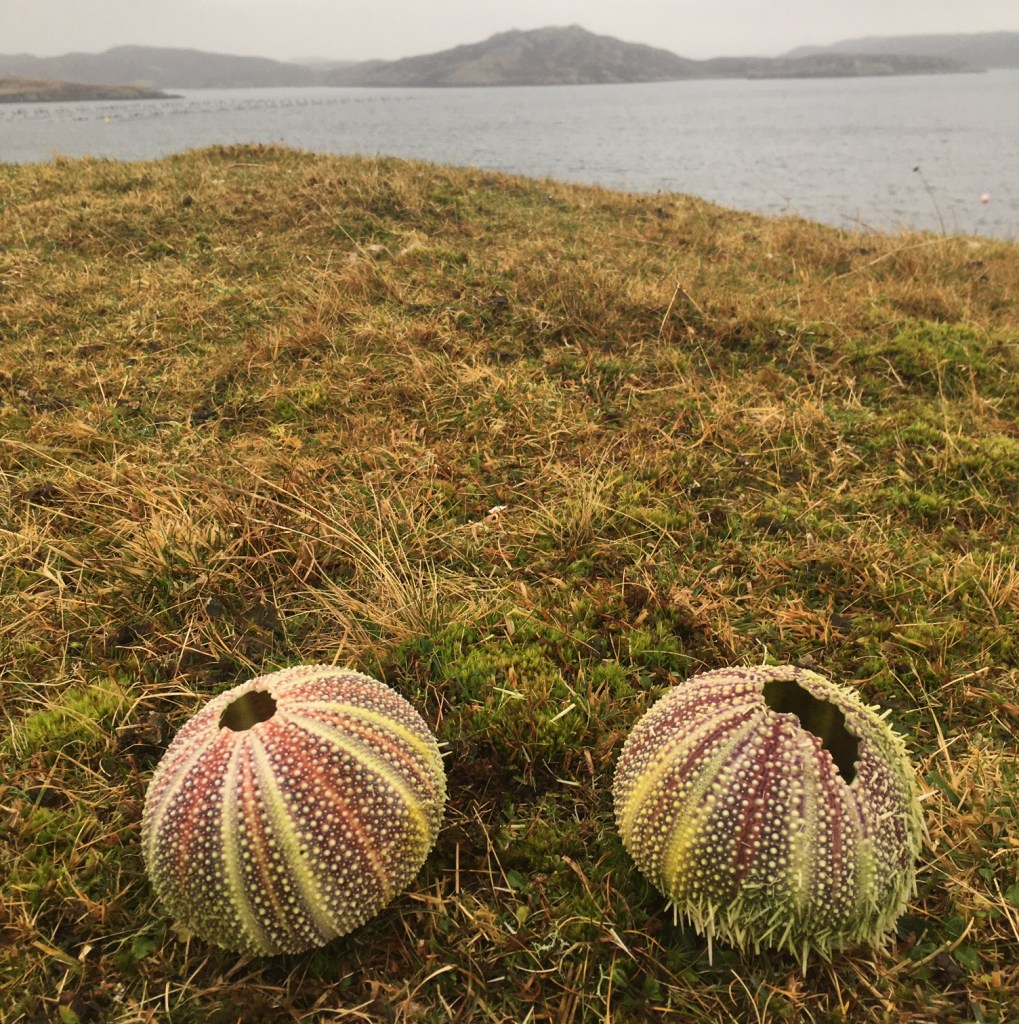
I gave it the name of Sea Urchin Shetland pattern, after collecting Sea Urchin shells in Brindister on the West coast of Shetland in the December of 2019.

There were so many on the hills making the lunch tables for wild birds to crack open sea shells, that I began to call the place, ‘Sea Urchin Hill’.   

So much has happened since the inception of this little beanie pattern, that I had already been making up in vintage tapestry yarn for some time.  In January 2020, I formalised the pattern a released it.  I didn’t know about test knitters or pricing or anything, and it flew.   It was the colours, you see.  I made the pattern beanie up in my very first use of Jamiesons of Shetland, Spindrift, after returning from 2 months of living on Fair Isle with Mati Ventrillon, as intern, at the age of 56.  It was around that time, after many visits to Shetland, that I began to feel at home there, and think about moving to the islands. 

I look back to the time of writing and designing this little pattern and now see that is it was the Kickstarter to my creative design process – the beginning of how I saw colour in knitting and how I began to blend those colours.   The pattern became incorporated into my online colour blending workshops and was the possibility for a new me. 
I designed the pattern on the doorstep, out back of my Sheffield flat using the yarn from Jamieson’s, posting little posts on Instagram, building what I didn’t realise then, was an interest in the pattern and in my colour ways.   I began dreaming of living on an island 60degrees north.  (the full story unfolds here and you can read Aug – January of the book I wrote, if you join us on Patreon now – then each month will drop on the 1st of the month) and enjoyed how I mixed the  colours to sing.

It makes me really happy to see this pattern interpreted by knitters in their own colours, some of which are included here.  If you have knitted this pattern, please tag me in your posts so that I can see the results. 

Here is the little pattern.

Just think, you never know where knitting can take you. It is all interconnected and all a journey .

Thank you to everyone who supported me in 2023.

Tracey 🙂

Kyoto Zen Gardens and knitting

Tofuku Ji

I’ve begun to get a small obsession with sitting in different Kyoto, Zen temples with dry raked and or moss gardens.

My favourite so far is Daisen In temple where I sat with a Japanese architect viewing the gardens in wonder together –  but no photos were allowed of this astonishing place – I do have Instagram reels of the temples – @traceydoxey.
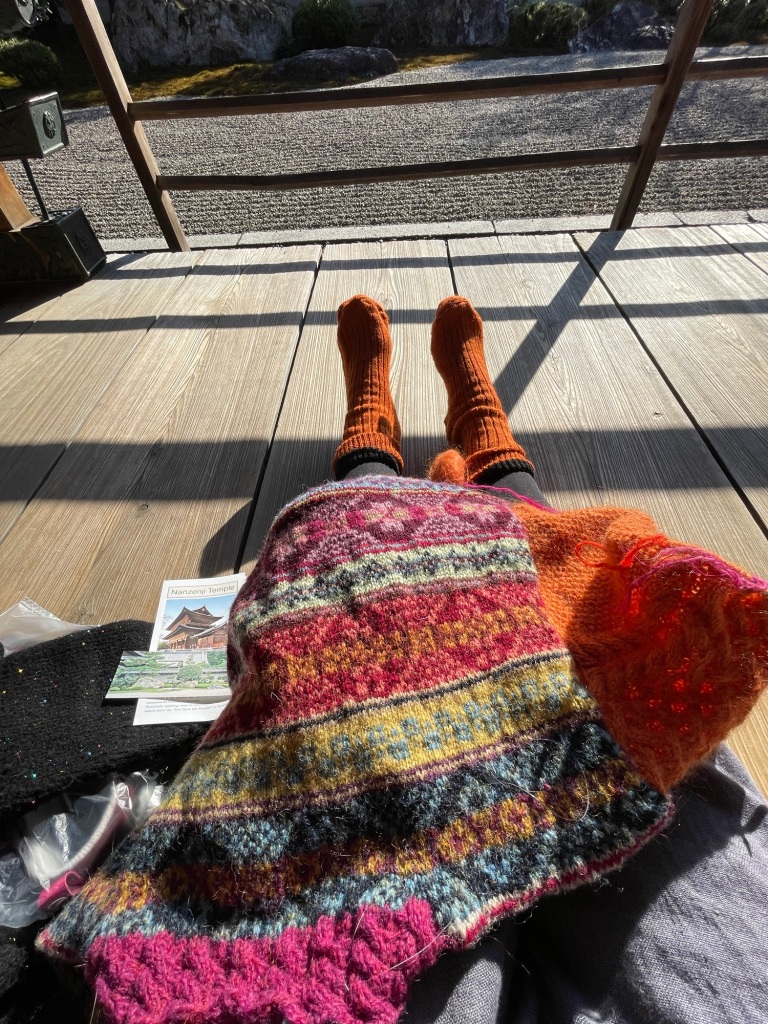
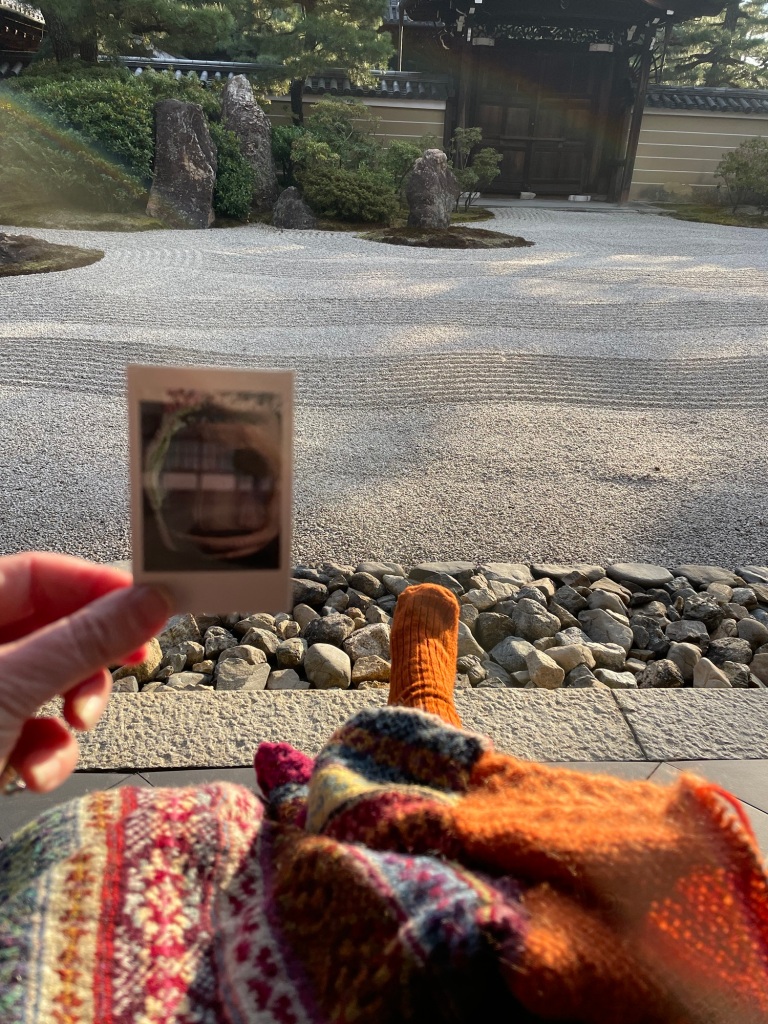
Sitting on at ancient wooden verandas surrounding these gardens, I usually end up facing south whereupon, I get my knitting out


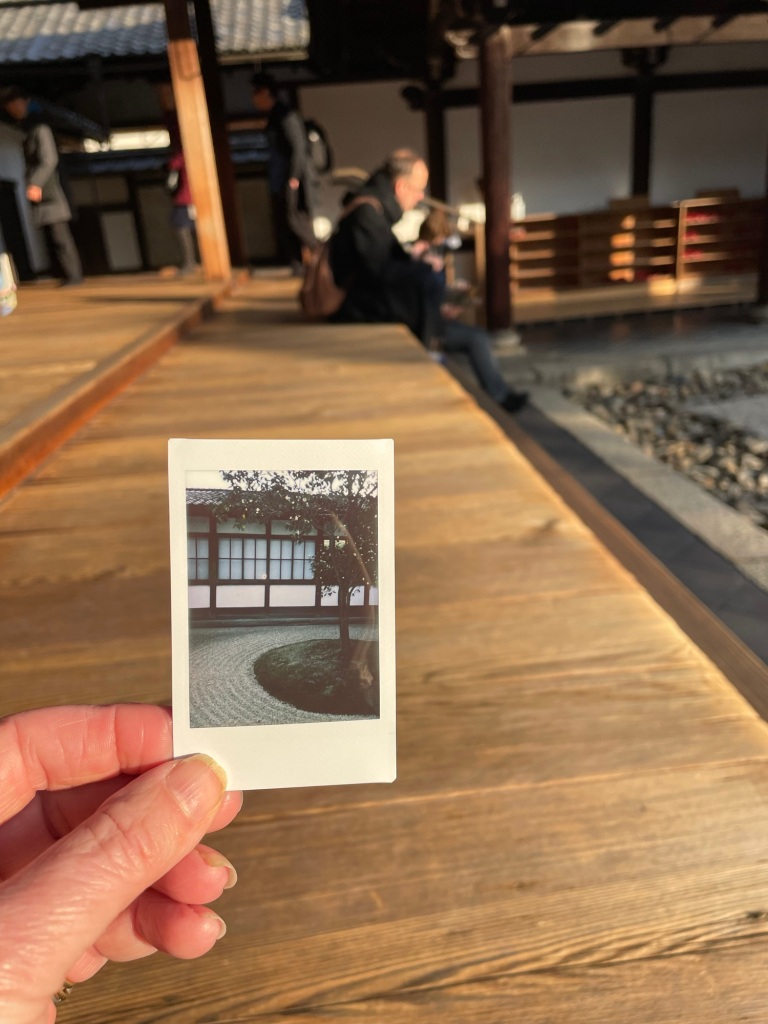
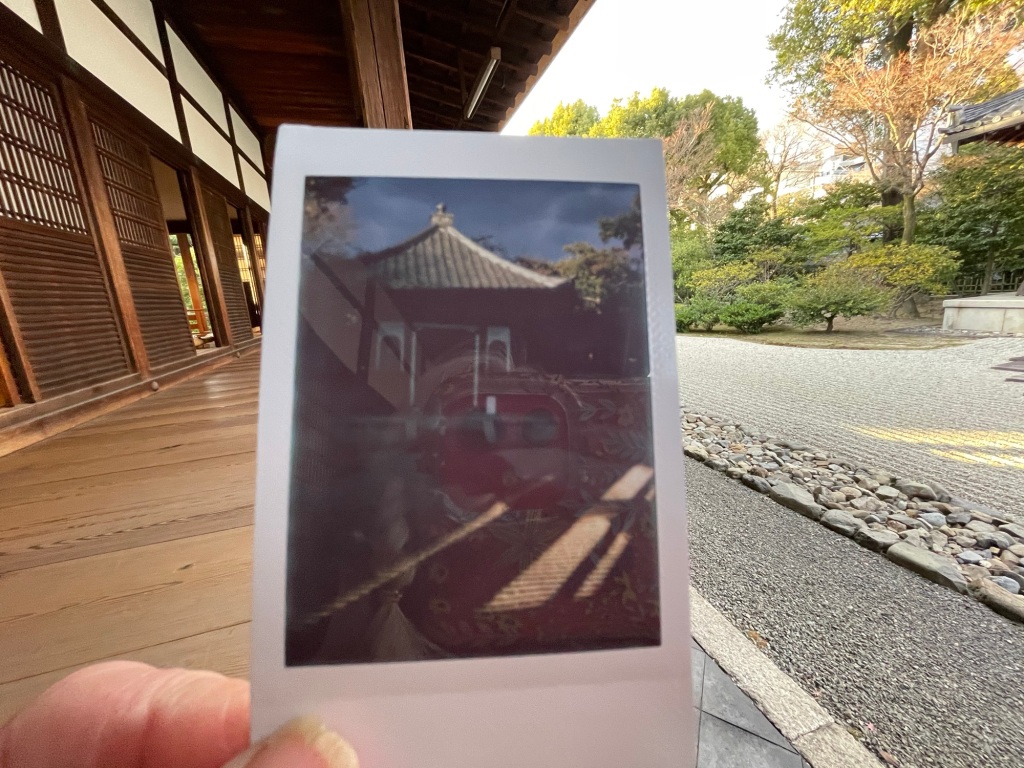
I’ve begun to take instax shots of them. Some work, some don’t.


I have already had so many wonderful experiences but for me, the most memorable things about kyoto are the Zen dry gardens, and knitting in the sunshine. No one moves me on, I can just sit there with everyone filing past at their own paces. I’m in heaven.

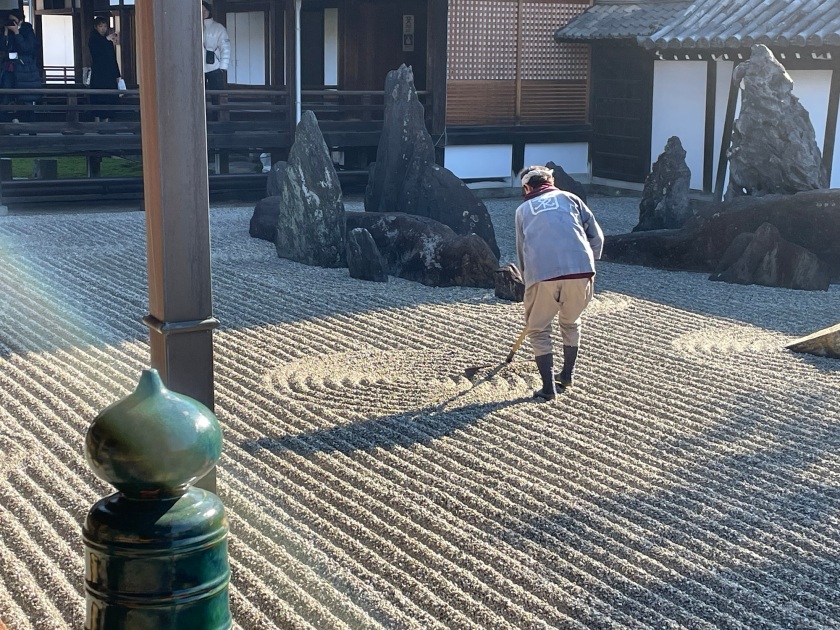
Yesterday, at Tofuku- Ji temple, (my 2nd visit) I was knitting in the warm wonderful winter sunshine on the great wooden veranda facing the south garden with a backdrop of Japanese wedding photography, when I saw a man with a rake and knew what he was about to do.

I thought the raking was a secret, I thought the gardens are raked before people arrive but here he was, beginning to rake the 8 great oceans. Everyone there was silenced in great respect of his skill.

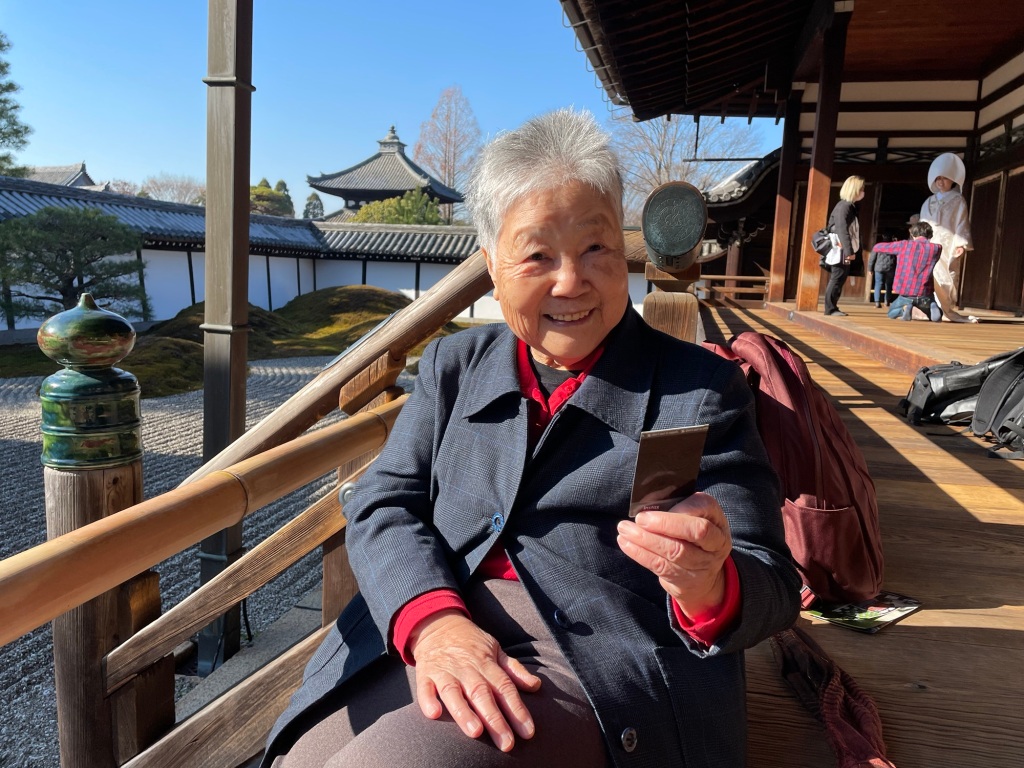
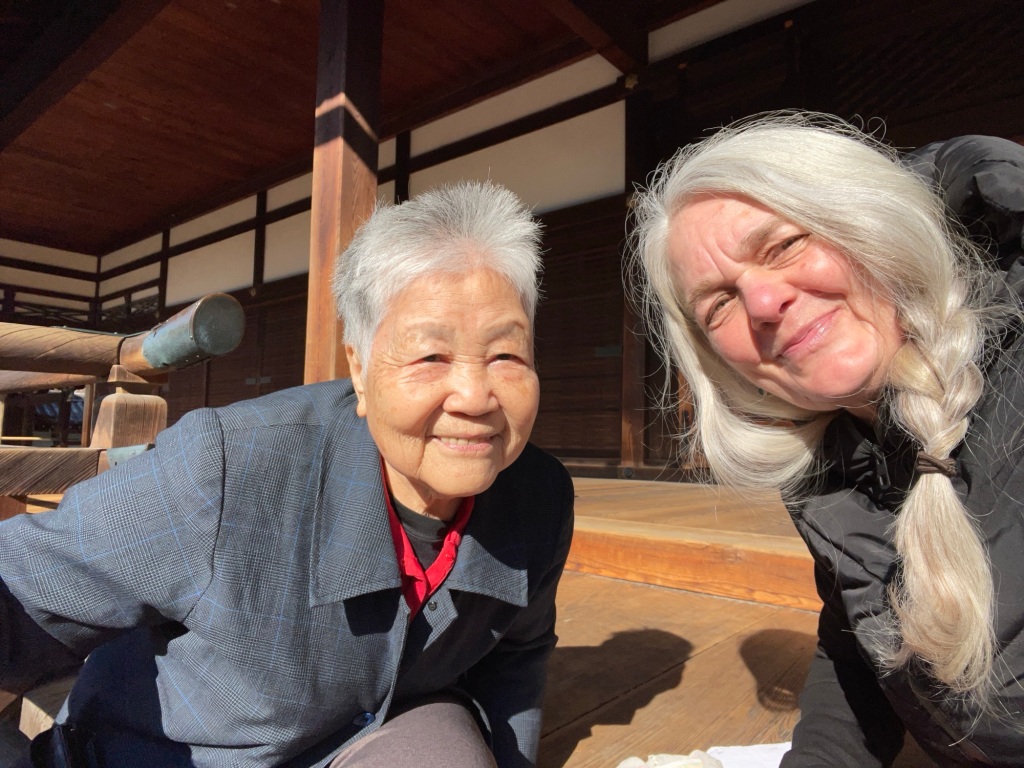
When I arrived, there was a wedding photography session going on – with the ancient temple as a backdrop.  Sometimes, the photos are real, sometimes they are dress up. But yesterday, was real. I sat on the veranda beside the 81year old grandma of the bride. We were both chasing the sun.  She was delightful – I mean full of delight and must have been all of 4ft 8. I gestured if I could take her photo. She had no idea what the instax was. So I took 2, one for her and one for me. She was astonished. She chose the one she wanted and laughed and laughed. We sat together for ages. The wedding photographer even took our photo


I feel very lucky to have seen all of this at Tofuku-ji but it is about spending lengthy time in one place, engaging with the environment fully and the people within it.  Then, you never know what will happen.

If you are a reader of this post and love reading about Kyoto and love knitting, I will give 20% off any of my patterns for the new year – runnin for the next 24 hours use the code – blogpost

Ravelry pattern link here  ravely patterns are here

Happy Holidays – and good wishes for the new year

The needle shop, Kyoto.

Misuyabari

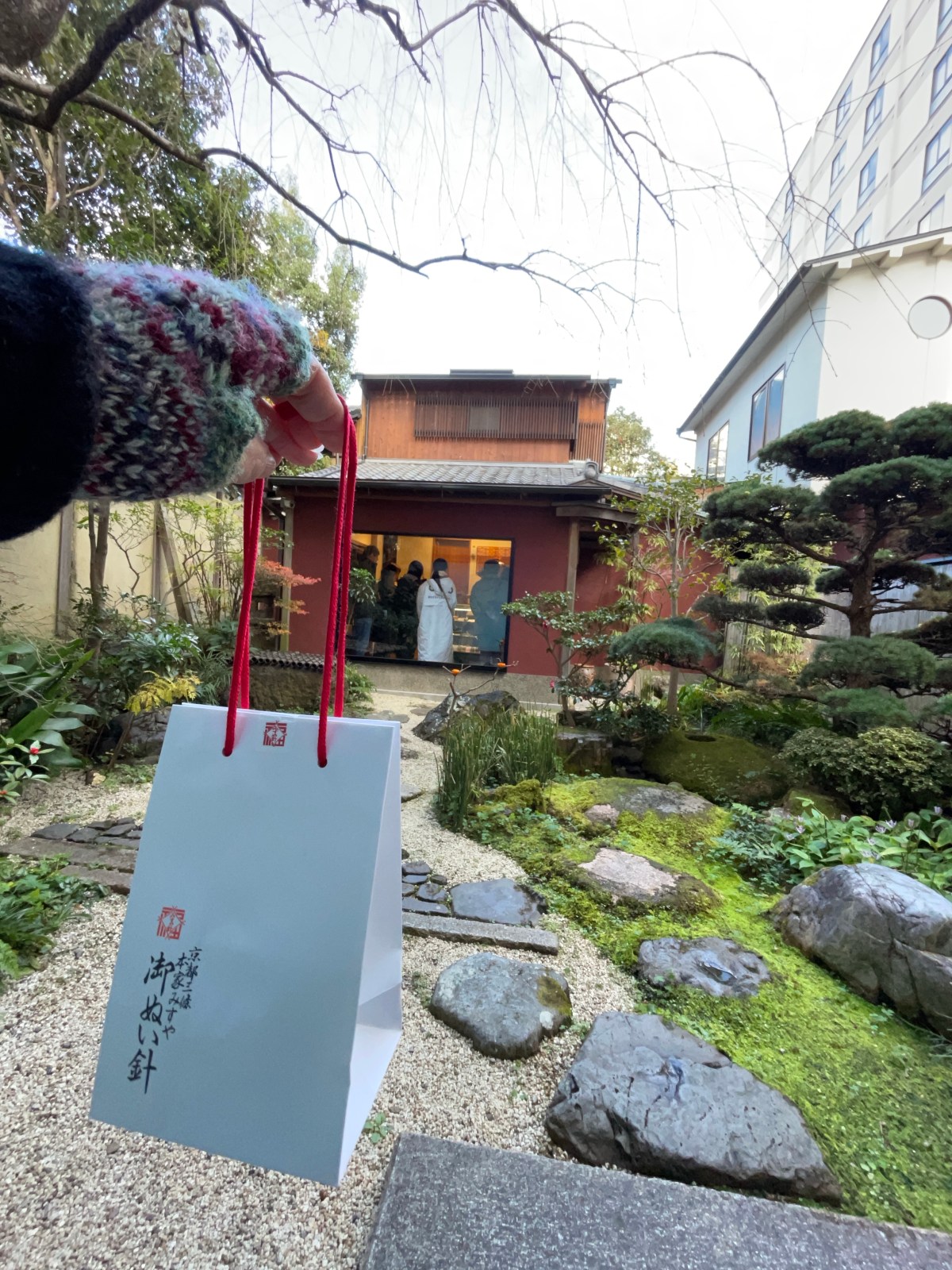
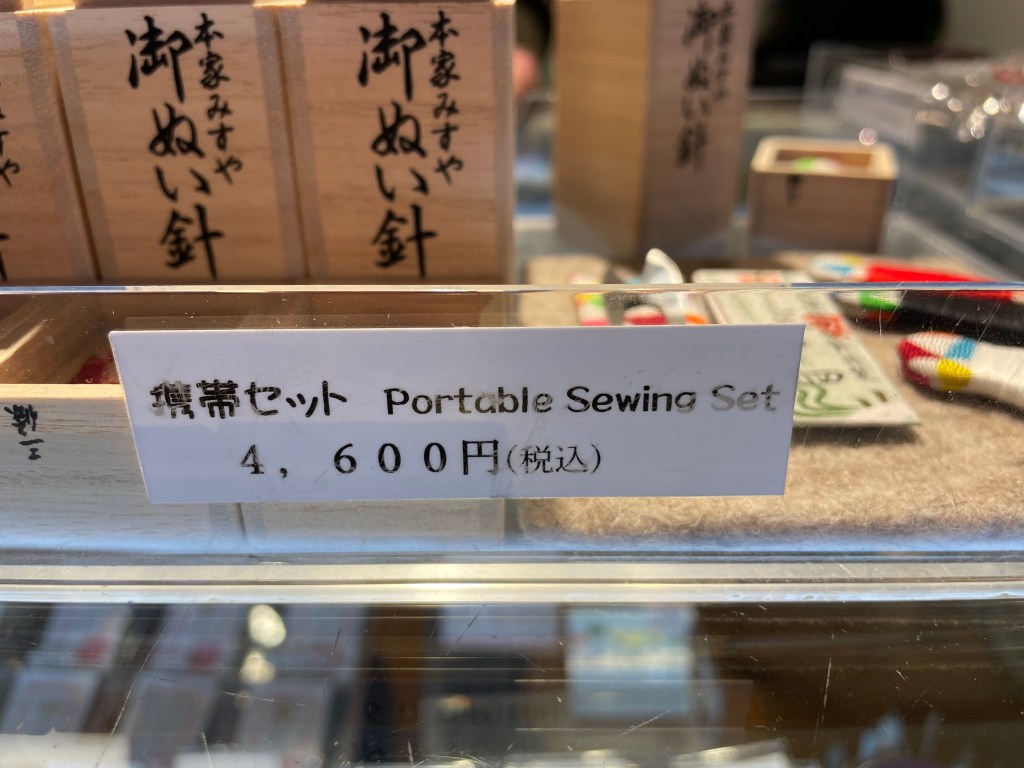
After waiting for it to open, to being completely overwhelmed by the contents of the tiny place, from listening to the owner who is the 18th generation of over 400 years of the same family, to sell sewing needles, in this tiny place – down an alley in a shopping mall – to restraining myself and replacing the initial selection. Then, after buying my painstakingly considered choice, I sit in the zen garden in front of the tiny shop hoping for the jade green bird with the white circles round it’s eyes to return.  A steady stream of women visit and ponder the wonders of sewing needles.  Not just any sewing needles but French ones and Japanese ones for silk kimonos, long ones for denim and then, the very special hand made ones which are so very expensive that I still don’t think they pay enough for the skilled craftsman who hand-makes a steel needle with an eye for sewing thread.

I ponder the wonders that I have just seen – some of which, I cannot see well enough to see the eye at the end of the finest needles hich a Japanese seamstress uses.  The owner, explains to me he lost his hair in 2000, whilst he is pulling out small cane woven baskets from under the counter, containing sewing needles in their neat rows related to sizes, which are placed inside a neatly fitted cushioni. So when I look and try to figure out which needles my friend in Shetland might want, he patiently tells me the story of each size and what they are for.  I choose us both the same – French needles – sizes 6 and 7’s then we have a hope of threading them.   I buy a pack of 8’s and also a tiny hand-made pin cushion and one of those wire things to aid threading a needle with a tiny eye, which he promptly tells me is not special ( you can buy this anywhere) and it will break.  But, the needles are another story – fine packaging is the appeal too.  The owner counts up how much I owe him but I don’t really mind.  A Japanese lady, about my age, and he mother, in her 80’s are in the shop with me.  The mum is so lovely – I hope not to sound patronising, which I also say to the daughter when I say that her mum is adorable.  She has shrunk to tiny and she is as sharp as a pin herself.   This is their first time in the shop although the mum lives close by.  Her nifty hands feel the needles, as did mine. 

The shop is a tiny explosive experience of need/ want/ desire management which requires restraint. After all, they are only needles and only a pin cushion, aren’t they?

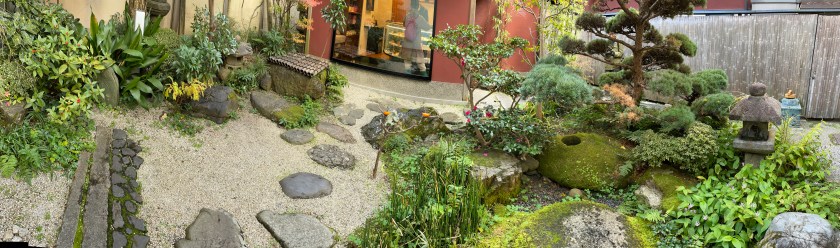
As we three customers chat, the owner points out the marvellous bright green little Kyoto bird that has flown into the garden for the oranges. It is exquisite, so after I have paid, I move to the bench in the garden, waiting for it to return while a new stream of buyers file past, into the tiny shop. This exquisite little heavenly garden fronting the shop is a dream – granite bird water baths, large stones covered in moss like the moss gardens in the temples, small low growing lilac flowers, deep red camelia, berries and two trees.  Irises too. 

No bird returns so I finally haul myself off the bench and head back down the tiny alley to the crazy life outside this calm oasis. 

The needle shop is Misuyabari, located on Sanjo Dori inside the shopping centre – it is closed on Thursdays.  It might take you till then to find it.

What do you eat? – a post from my old Shetland life

On Saturday 14th November 2020, I was the guest on a really interesting 2 hour Zoom meeting with the lovely ladies at Cream City Yarn in Milwaukee,  4pm Shetland time – already twilight – 10am there.  The meeting was to be about my knitting designs and my tiny croft house here in Shetland with any of their customers who would like to join.

I sat, in frame, on a small old wooden Liberty chair in front of my wood burning stove, burning peats.  I showed the peats, what they looked like, how they burn on the fire and explained a little of how they are harvested.  I was surrounded by my knitting (completed and half done) and my knitting design book that I add to all the time. I explained how I start to make swatches and of my colour choices and how I blend my colours.  I explained the importance of colour and how you choose the right ones.  I then went on to how I am inspired by place and or person and how that inspiration then turns into a research of sorts; possibly bordering on a small obsession to get details right.

I showed photographs of Susan Halcrow, who had lived in this house for 83 years and then a 360-degree panoramic view of the room with the old latch doors.  
I showed all of my designs and explained the inspiration and colour and how they had come in to being.  They are a story in themselves.    I even showed the Sea Urchin shells that Inspired my Sea Urchin hat pattern and how I had developed the colour for that design which is described in the pattern. There was a conversation between myself and the ladies at CCYarn.

I hoped to create an atmosphere of the house and an insight into colour blending and knitting design.  An atmosphere of my way of life.

After 1 hour 45, we opened up for questions from Zoom participants

The first question was – ‘What do you eat?’

I mean, this was kind of a weird question to me – both personal and odd because we have a Tesco Megastore in Lerwick and a big fat Co-op and many small stores including farm shops.  I felt like I was back in China – when in the mornings, they don’t greet with, ‘Good Morning’ they often say “你吃了吗(Nǐ chī le ma)?” which means – have you eaten?  I always considered this to be funny but realised that the deeper route goes back to the times of famine – Have you eaten? What have you eaten? Because food was rare and is precious.  So, on the zoom,  I explained my lunch that day – Shepherds pie with 5 root vegetable mash and gravy made of the wine left over from when Mati visited and all the juices of the meat.  And then I explained that Mati had stayed the week before and that she had brought me 2 butchered lambs from her croft in Fair Isle and they were in my freezer – the day before, we had had roast lamb and all the trimmings so I didn’t really understand her question.

But on reflection, I realise she didn’t mean – what do I eat – but how, on this isolated island do I get my food?

I’m new here.  I have no stock or store or polytunnel stocked with mature soft fruits growing protected from the harsh weather.  There are no trees here that shed an autumn harvest of apples, pears, plums and there are no pecan trees shedding pecans to fill my belly ( I have been reading Braiding Sweet Grass)

This island is barren and bleak in Winter, which can last from the end of October to the end of March.  I have no cellar store with stacks of pickles or potatoes.

I mean – WHAT DO I EAT?

What if the boat did not come from the mainland, due to endless storms, to stock up Tesco? What if the electricity went and the freezer died?  What if the boat from Aberdeen to Lerwick gets cut and the service is lessened?  

In truth, I did save pasta and a few things when COVID hit us in Sheffield and you couldn’t buy pasta or rice for love nor money.  That time was an eye opener that shops can be cleared in hours, in a city of 550,000 people with a food shop on every corner. So I did stock up for the first time in over 2 decades with non-perishable foods.  So, a more rounded question might be – what can I eat if everything is removed from a shop?

When I arrived, I dug out the small stone roofless Byre of over 20 years of soil, weeds, fern, roses, plants I didn’t know the name of with the intention of getting it reroofed in polytunnel plastic to be a greenhouse to grow my own food.  Everywhere across the islands are new expensive polytunnels.  A high percentage of homes have one – over half. They are high yielding, complete with internal growth systems inside.  The smallest polytunnel will set you back 3.5K and that is a kit.  You have to lay the base and put it up so that it will withstand any gale (of which there are plenty) I have been quoted 5K to re roof this tiny building which I am still taking a deep breath at.

As part of the eco system of this house and my new life, I need to grow things for two reasons – one to have a supply of fresh organically grown fruit and veg and two, something to fall back on and there is another reason – I would like to offer organically grown vegetables to my visitors.

To grow here, you have to cover your plants.  The sea air burns leaves, the wind rips plants back to sticks.   At the moment, my city pot plants of Winter Jasmine, Star Jasmine and Orange Blossom are jostling for space in my porch.  But I want to grow things – both edible and scented.  It’s important.

To do this, I need to get a roof on the byre and then I will learn how to grow things in the wormless soil of Shetland. 

So, I don’t think the workshop participant meant, ‘What do you eat?’ but more, where do you get your food from and how do you survive on that island?

Fiberchat podcast

podcast with Fiberchats

On 4th October, I met with Irina Shaar of Fiberchats, online, to have a little chat.  It was pretty in depth because, I appear to be a talker.  Stories of my journey in how I learnt to knit and my knitting journey were an initial soft entry into the chat.  Topics such as ‘what constitutes an original design’, how do I teach colour blending workshops?, why did I move to Shetland? and did I fit in? talk about my book and other topics are all covered in the chat.  I was totally honest, slightly guarded but honest.

There are things that I learned from my chat with Irina – to go for something new, to be out there – warts and all ( I look like my mother) to put my trust in a recording that was not at all edited, to find a joy in what I have achieved. To actually hear myself talk about what I have done in my life.

My life so far, has been a small but interesting journey.  Of course, the 44 minute podcast only scrapes the surface but under that surface lies a challenging, sporadic, optimistic journey with many dents and bumps and breakages along the way – a bit like my knee at the moment, because I came off the bike – visible on the surface but such a lot going on underneath.

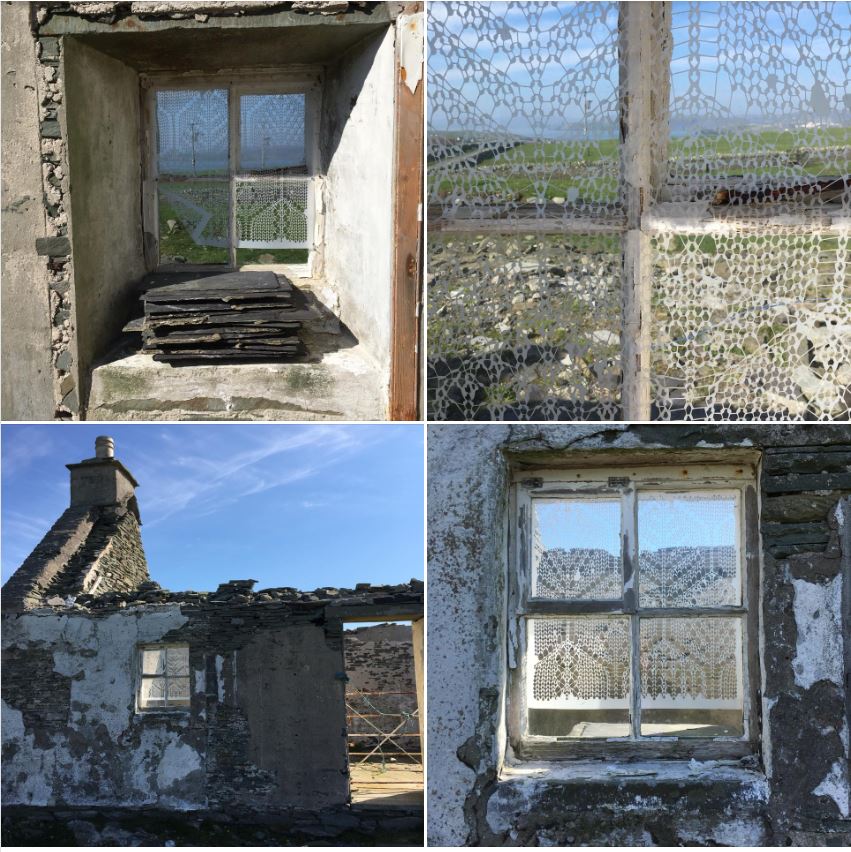
In the podcast, I talk about my knitting journey, my Masters at NTU in Knitting where I developed my skills in CAD fine lace knit which I took back to Shetland and placed in the abandoned derelict homes of the knitters long gone.

Unst – 2018

If you go back in this website, you will see all the Shetland visits to abandoned croft houses.

With Irina, I talked of writing to Sarah Burton at Alexander McQueen’s and working with them for a while whilst at Uni, and how that happened, and also, how I got on a train in Sheffield and got off in China. 

Irina asked me about my online workshops, and about the book I wrote whilst living in Shetland for which I had an agent but no publisher.   If you have ever wondered what it is like to move lock, stock and two cats to a remote Island, I am releasing the chapters in monthly instalments on Patreon.  There are already 4 months posted – August to November, filled with the joy of buying the house, walking to the village beach, collecting flowers, shells, and sunrises, whale watching, soil digging, paint stripping.  December’s will come out on 1st December.  There are also knitting posts, with downloadable Fair Isle motifs in colour and b/w –   It is all there. Well, it is all here.

and here is a little note from Unst in 2018

So, if you want to listen to my chat with Irina, then, it is here.  say hi to her for me.

https://www.youtube.com/watch?v=HVQR4FMa1dA

Much  love Tracey


https://patreon.com/tracey_doxey

Sitting in on someone else’s class

It is raining.  It has rained and rained and rained, amid strong winds.  Here, in the city, this extreme stroke of lashing weather is nothing to what it was like when I lived in Shetland. Today, the weather that has brought trains and buses to a standstill and cars are sitting in 3 ft deep water on Chesterfield road in a huge city puddle where the roads dip (why?)  It is like an Autumn day in Shetland, where it was exhausting to even go to the shops and come home in the car and carry the bags to the house.  So, I got wet today, so I sat in traffic but it is relatively mild storm weather and I feel safe.

At work, I dropped in to the Architecture lecture for module 1, for the first year Architect apprentices,  so that they could see me, ask questions related to their apprenticeship support and for me to understand their first module.   I didn’t think I would enjoy it as much as I did. It was so exciting to sit in a class situation and be inspired by the slides of the work of Architects who deliver sensory responses to social, physical and environmental spaces – to develop relationships between person and place, altering sensory experience.

My mind flew to where I would go with the project group work, if I was in their class and I realised that I missed academic stimulation to create new work.     My mind rushed back to my own Fine Art degree of 1995- 98, and my MA in Knitting at NTU 2016 – 18, creating site specific work back in the abandoned croft houses in Shetland, and then it flew forward to Kyoto and how could I carry the inspiration I felt from this one hour lecture that wasn’t even for me, to create work within the environment of a city I have never seen, using found materials to make a prop to alter the sensory perception of place? that’s the brief, but in Sheffield from the city to Sky Edge.

I unintentionally started drawing a row of thin, long, unambitious, vertical lines / threads with ideas of tiny macrame baskets fastened to the lines, full of sunflower seeds, that I have gathered from my trip to Tickhill Sunflower fields in the heat of one day, seemingly so long ago.  The vertical lines would be tied to a tree branch and anchored into the ground, burying a pellet of mixed sunflower seeds from Doncaster, in to a wood in Kyoto.  I also thought of the confrontation and humorous work of the artist, Nina Saunders, that I saw in 1996.   It feels like forever ago that Nina, upholstered sofas and chairs with great spheres couched into the seats in Chesterfield sofa style buttoning, making them into structures that could not be sat upon.

I also stripped sofas in 1996, when I was at Art school and upholstered them in dried rose petal filled muslin upholstery.  The scent was sensory.

Used furniture has huge potential to tell a new story if used in sculpture or out in the environment.  It is interesting how people relate to everyday furniture when is has been manipulated. In the 90’s, I found Nina’s work both beautiful and memorable. I felt part of the confusing artwork that asked me questions.

So, today, as I watched the presentation for the degree students, my own thoughts developed ideas that I could  make to be manipulated into seed hills on sofa frames for the outside sensory experience for the passer by to connect with environment and place.  I have collected many sunflower seed heads and am going to send some to Shetland, in the hope that they will grow in my friends’ (x2) poly crubs and bring a flash of yellow to the Shetland weather.   I no longer want to rip out the upholstery of a sofa to reveal the frame to rebuild it as a sensory object, but I am thinking of taking sunflower seeds to Kyoto to make site specific work in nature and walk away, never knowing if they will grow, or be eaten by birds or squirrels, using fine cord and maybe crochet.

Did you know, that the stripey sunflowers have stripey sun flower seeds?

I haven’t felt so alive in a long time as I did in that class that wasn’t even for me.   How lucky these students are to be able to experiment with environment and materials to make architectural choices at the beginning of their 3-year degree.  I could drop in on Fridays, I might drop in on Fridays, but it is hard for me to keep quiet, because I am so excited by such possibility and it isn’t my degree so I need to keep away. Though, the lecture did trigger my memory of my own site specific work in Shetland which is here which I did during my MA.

After today’s presentation, the SHU library beckoned.  All of the art books from the library when I did my degree in 1995 – 1998 were transferred from Psalter lane when it was demolished, to the city library – the art book collection is extensive, though some are missing.   Where is Twombly’s 24 poems to the sea?

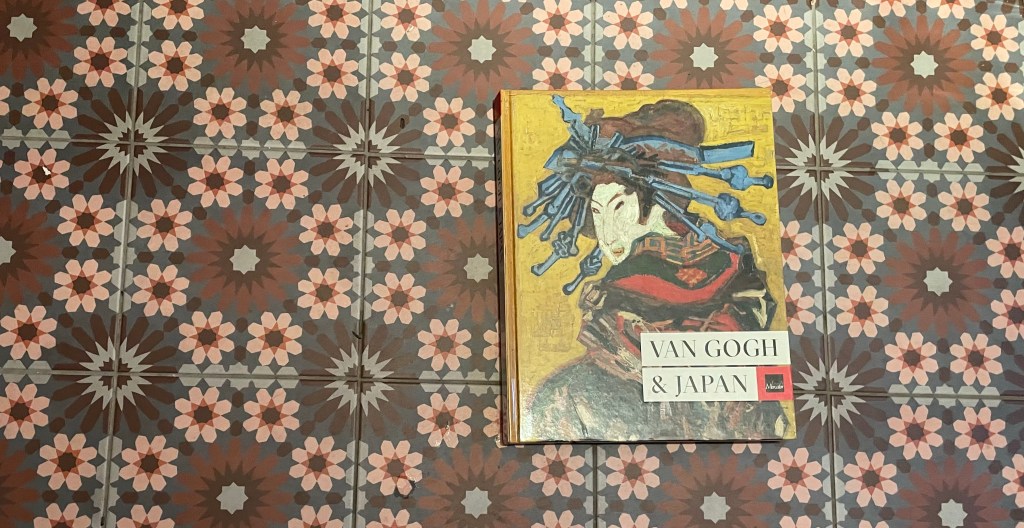
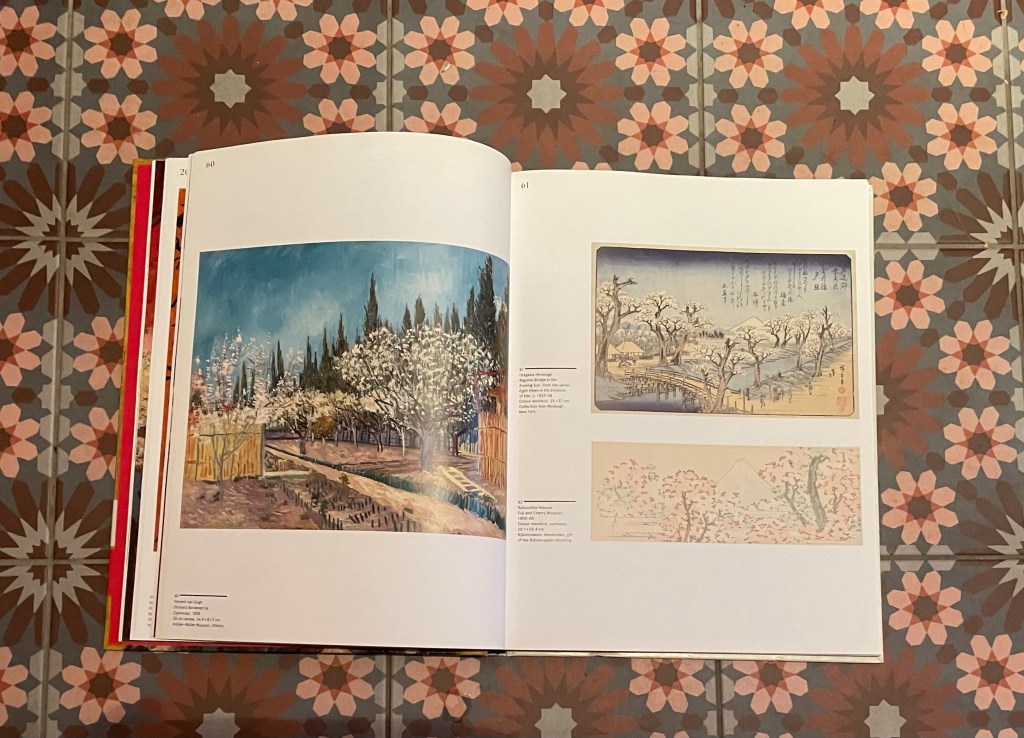
I borrowed – Van Gogh and Japan.  Let’s see what happens. Maybe nothing, but for one hour, I was transformed to think completely creatively and those ideas bled into thoughts of reading, art and site specifice work. Now, I have to keep quiet on my ideas and just be an apprenticeship coach.

Small wins / Gratitude

I had forgotten to read, almost forgotten how to read. Reading used to be my go to, my come down, my love but now, my time being taken up with work and knitting admin, I had forgotten how the written words of others, feed my own written words.

Nourishing transient words and thoughts flowing from the simple act of reading.

To neglect my relationship with the written word removes one of my senses – not sound, nor sight, nor taste, touch or smell but the 6th sense of inspiration. 

I am visiting Kyoto for 3 weeks in December / January – to nourish excitement, to be in the moment, to be baffled by everything in front of me by not recognising a thing – not the written or spoken word, nor the food or shops or culture – to have, in essence, my senses born again.  I am also going whilst I still have most of my own faculties, though I may have to tie my name and Japanese address on a string around my neck. 

To pursue a real and floating world that I never knew existed is exciting.  Who knows where it may lead. Three weeks, or thereabout, give or take forty hours of travel in the sky and waiting in my old beloved Pudong airport, is a wonderful hard-earned gift in life.   To leave a son and a daughter at Christmas would be unthinkable to most, but ‘Christmas’ is brief and we will make it up at the beginning of December – tree and all.

My trip to Kyoto slots in between a holiday break given at work (plus a few days either end) and, although a great financial cost, I will make do – cycling around the city, walking and eating cheaply.  I will wash my clothes in the wash tubs on the roof of the hostel over looking the mountain and I will live small with big thoughts.   I will stay in the attic of a hostel owned in Kyoto by a couple that I met in China in 2008, when they owed a hostel in Chengdu. They sold up and moved to Kyoto.  I never thought that I would ever see them again but I return, to people, to places.  They are beautiful people and Maki has been in touch regarding the booking. I feel quietly excited although a little nervous. 

I am knitting Maki a gift, which I will wrap beautifully and hand over to her with two hands and a faint bow as a sign of respect – something I learned in China and became second nature. Respect for a hard working woman, for communication, and mutual respect.

So much still to organise,  the thoughts are on a little back burner, slowly simmering.

For now, on this rainy day in Sheffield, I am having a delicious hour with the three books that I bought in the summer from a real book shop. That day,  I returned to work and said to my colleague, ‘ I think I’ll nip to Japan.  After all, I bought the books so now I have to go. ‘

I’m thinking of taking a small business card to reflect my knitting, this is a mock up, it is not the finished image but an idea – quite ridiculous and not at all corporate – What do you think?

Stash buster neck warmer is here

When do the reminders of my journey past, stop?

October 5th, 2015, 8 years ago today

When will spontaneous social media reminders stop pulling me back to a place in the past, a place of my dreams even though it is no longer a dream when it became a reality.

Visual reminders drawing me back to a time of pure joy in a place – Shetland  – it is always the frozen moment in time, captured in an image.

and, I begin to be torn, in my head.

question my leaving, questioning myself and my own judgement.

I achieved my dream but left it behind.

Re reading my journals for my Patreon posts pulls me back – leaving one foot in each place.

The city and the island.

How do memories fade?  Are they skewed or chewed?  Will my brain shrink until there is no capacity to remember?

This week, I heard the beautiful lilting pure Shetland accent on Louise at Jamieson’s,  flooding out of the telephone through the ether, words hanging in the air long after they are spoken. Such warmth, such beauty are the things I that I hang from. Dangling in mid thought.

Words left floating from a thousand miles away, and wished I could have been there. Back in that shop, in that street, in that town on that Island.

When do I lift my dragging foot out of Shetland?

The beautiful isles

The beautiful lilting accents of tangible generations.

Probably never.