On the way back to the Kyoto guest house, as the light was fading, I passed a small shop in Gion. The front was covered in a grill, at the door, was hanging a traditional Japanese door curtain (Noren). I was only 3 days into staying in Kyoto and had no idea what the little place was, but, I could see a bent woman, working at a table under a light. A small gap in the grill showed a flash of crimson framed by the window. I watched the woman carefully sewing, and, as is my habit, I wanted to know more. At the window, I gestured to ask if I could enter the tiny shop. The Noren, always bending the guests as they enter. I, making no exception to this, bowed as I entered the tiny shop.
Inside, the space, the only thing I could see was the colour in exquisite Japanese silk Kimono taking up the entire huge table under the window and the woman standing beside it.
Crimson, peach, orange, ginger, cherry, turquoise, gold, purple, mint green patterned silk covered in cranes (symbolizing honour, good fortune, loyalty, and longevity) in flight shone under the sewing light. The seamstress was hand sewing the great, padded roll of crimson at the hem of the Kimono. She explained with few words and many gestures that it was a wedding kimono and entirely hand made by her. She exuded the gently quality of unassuming dignity. A craft master who had probably worked at that table, under the window for decades. I was awe struck by her skill.
I returned to the shop a number of times whilst I was in Kyoto – the last time was to show her my ideas to knit using colours that were inspired by the exquisite silk used in the kimono. I particularly noted the thick crimson roll at the hem. She understood what I was trying to do but must have thought that my swatch book was rather naive to her own skill, though she never showed it. We passed small talk about colour, each using our own languages, understanding little in words but everything in the action.
Before I went to Kyoto, I hoped to live in a space between ‘Balance and Beauty’ and here I was, at that exact place.
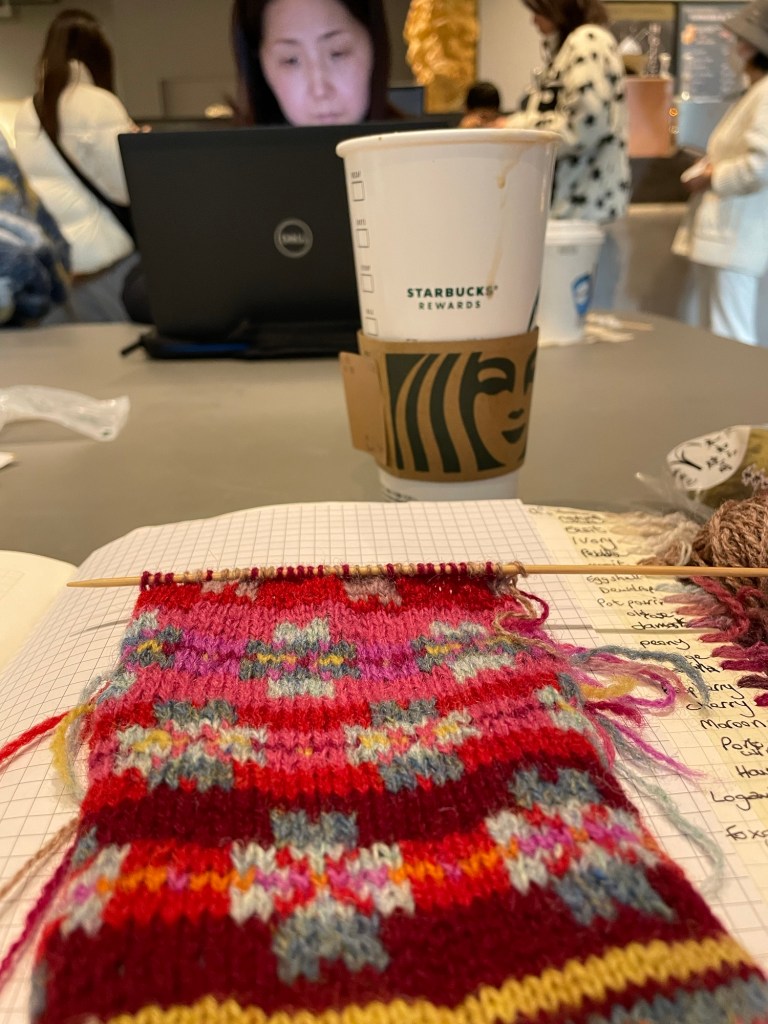
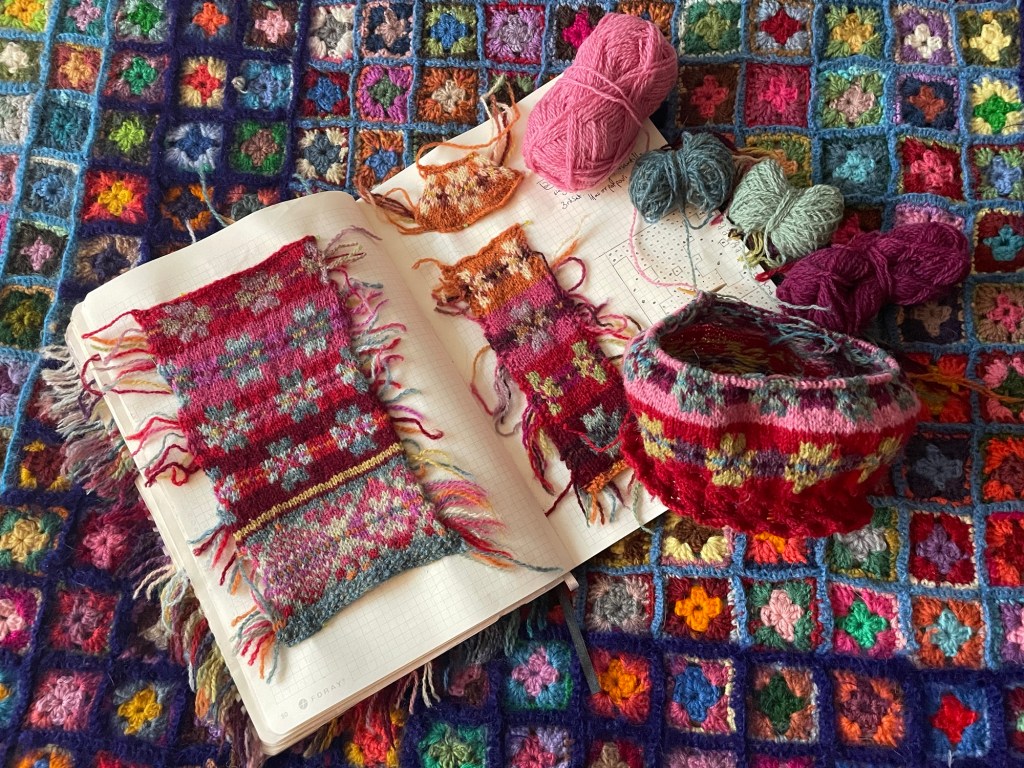
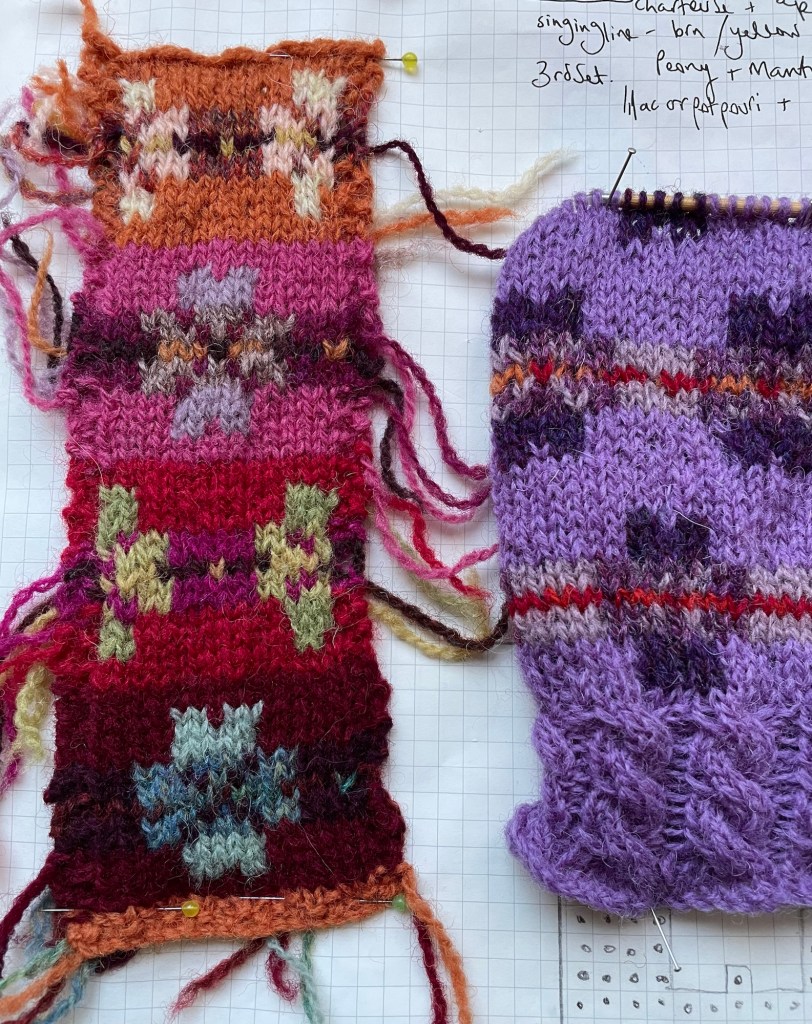
This little pattern is the result of that experience and inspiration of colour. I swatched for colour in the little guest house, I swatched the colours in the Sky Garden on the 11th floor of Kyoto Train Station, I swatched in many of the Zen temples whilst viewing the zen gardens.
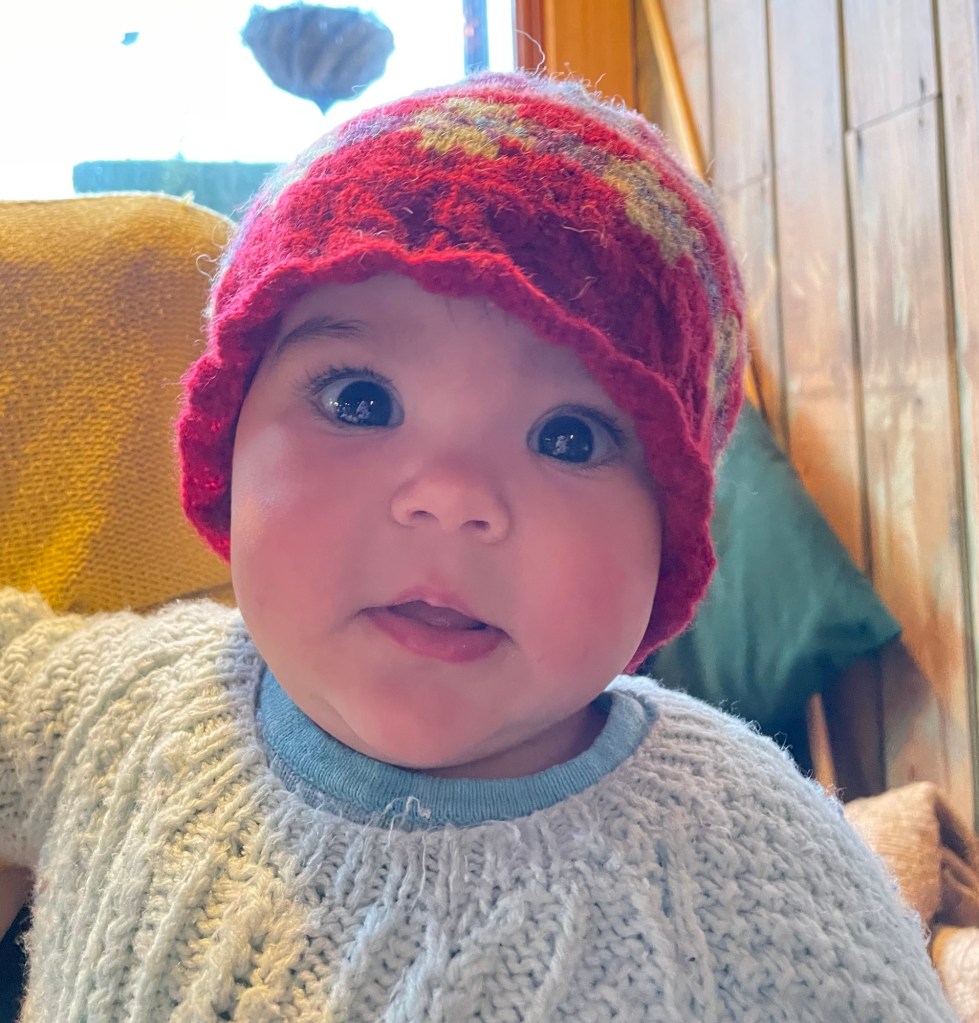
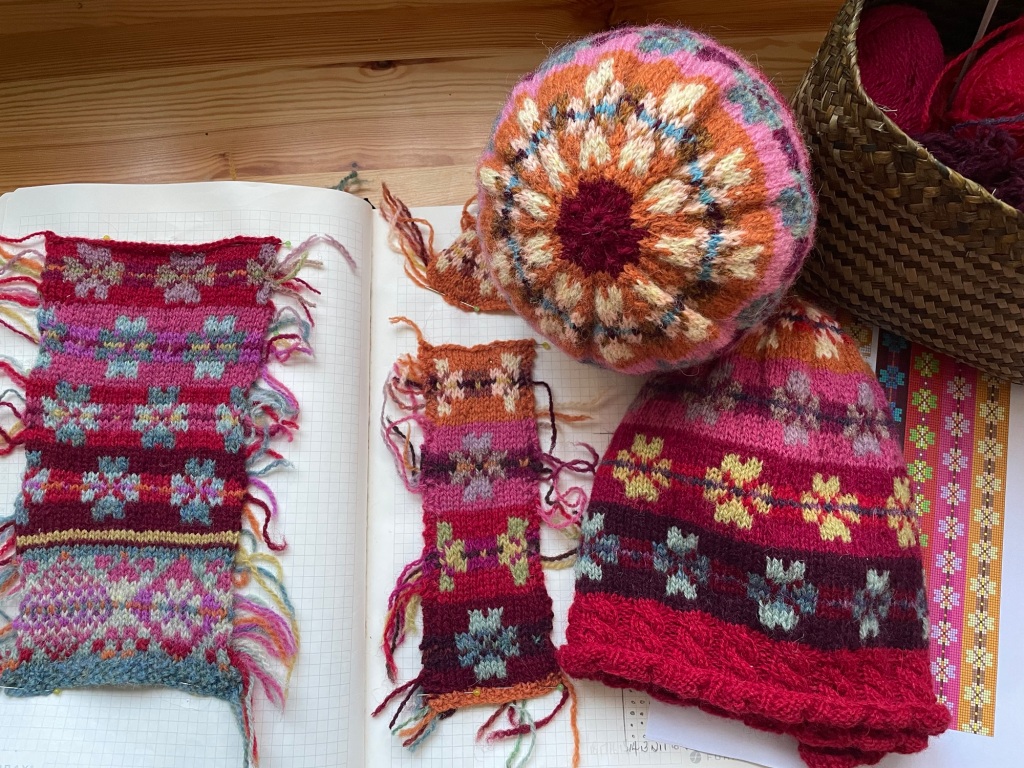
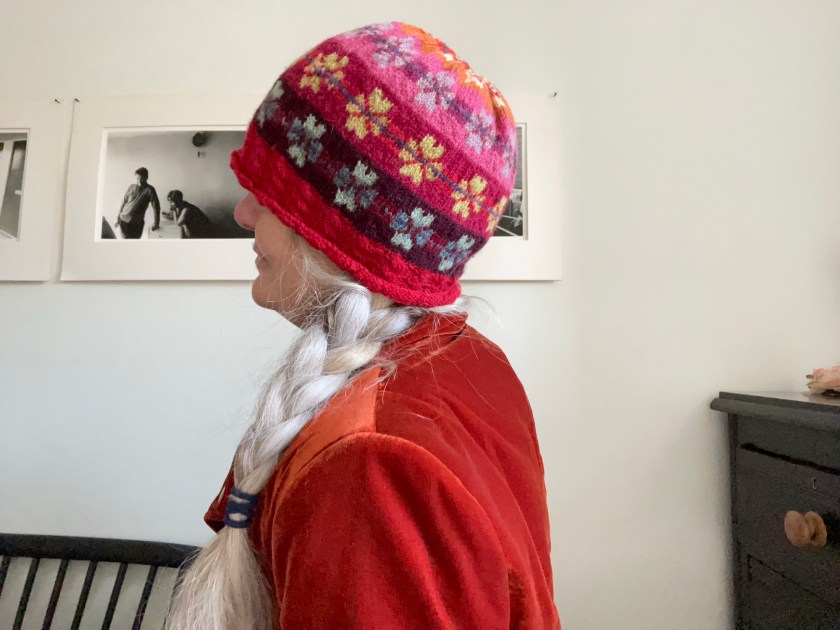
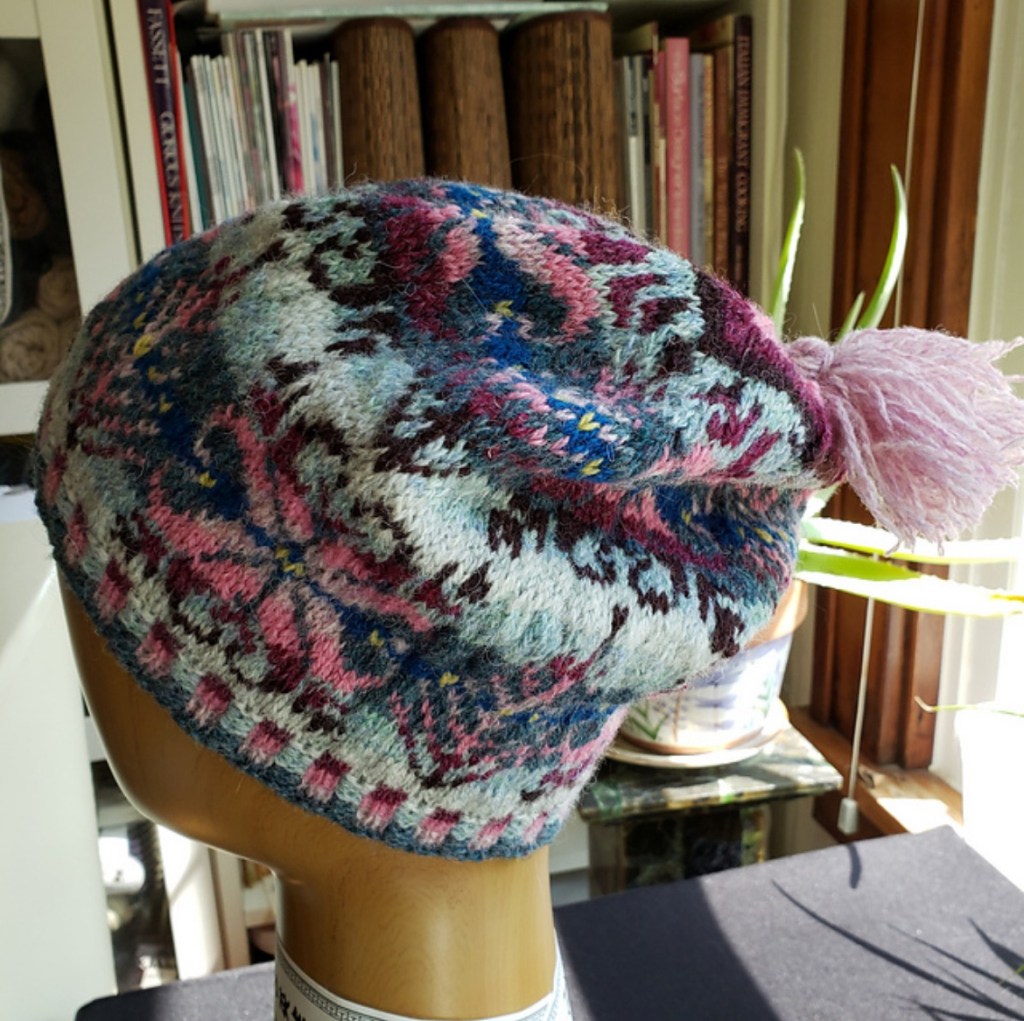
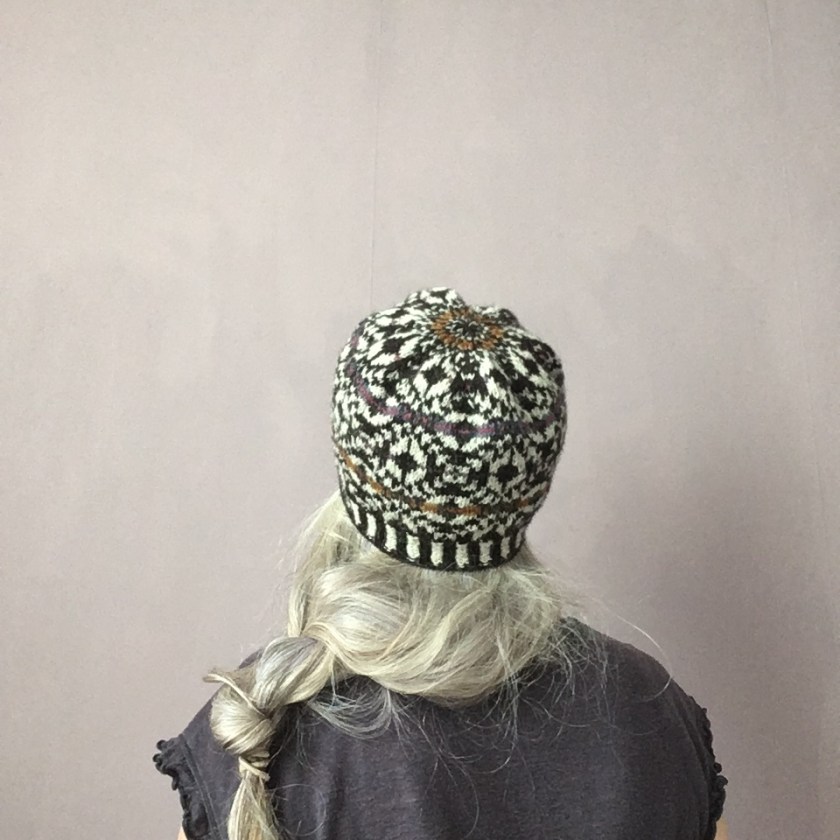
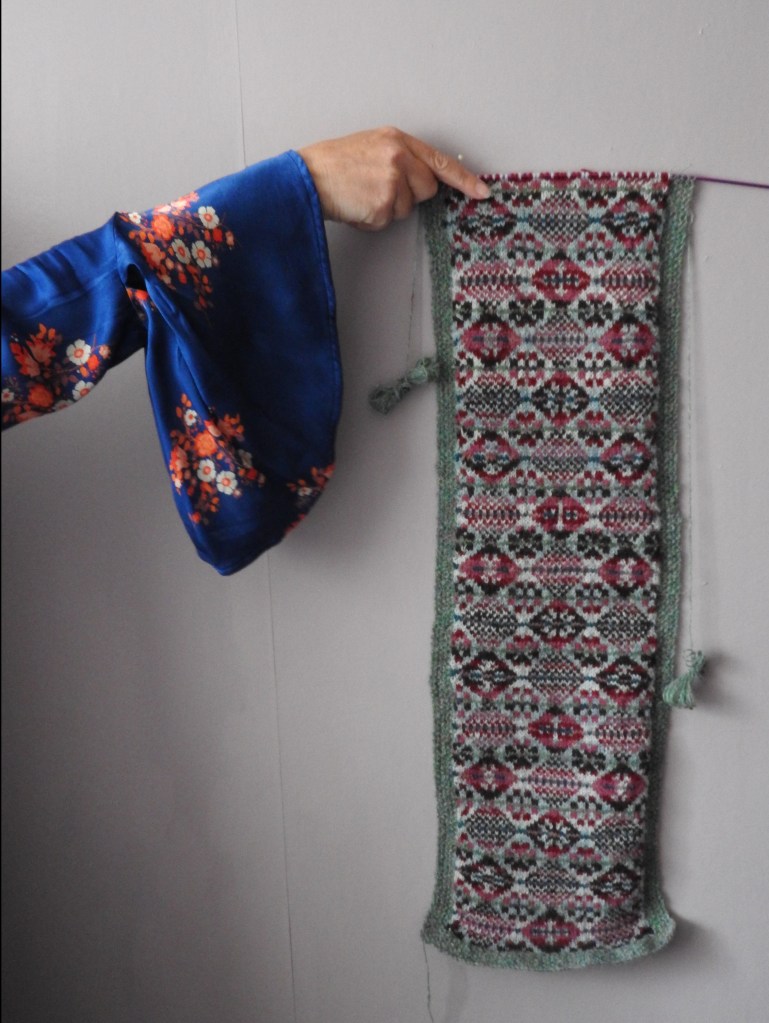
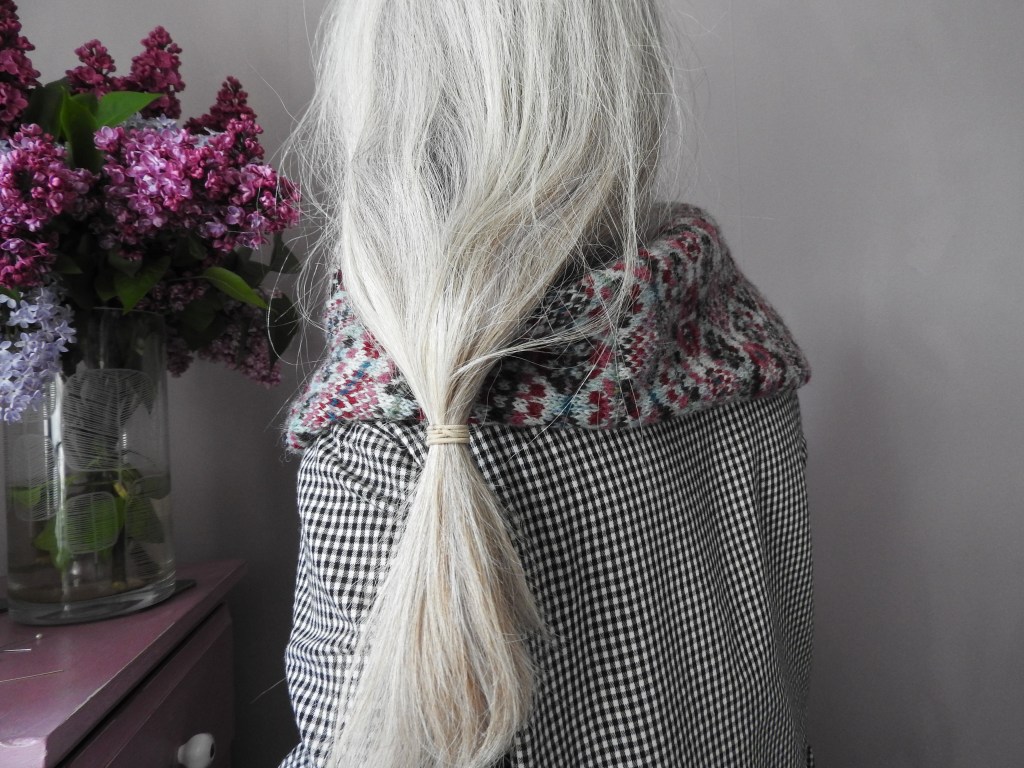
This little hat pattern, brings together some of the colours that I found that day. It is called Kyoto baby. It’s very easy to knit. The rib is an easy left crossing cable in Crimson to emulate the padded hem of the wedding kimono. It has a simple Shetland flower motif. The pattern has 14 colours related to the Kimono but it can be knitted simply in 6 colours. All the information is in the pattern and it was a joy to make. It is modelled by a beautiful little Sheffield girl, whose name I will keep a secret.
there are a number of colour options in the pattern. I swatched for colour and so did my lovely test knitters. Shona Brown In Nova Scotia is has test knitted the baby beanie. – Thanks, Shona 🙂
The adult pattern will be out next week – Let me know what you think –
I thought that it was the Sea Urchin hat pattern’s third anniversary, but, because we slipped into 2024, when I was in Japan, I finally realised that this unassuming first design pattern of mine, is a big FOUR years.
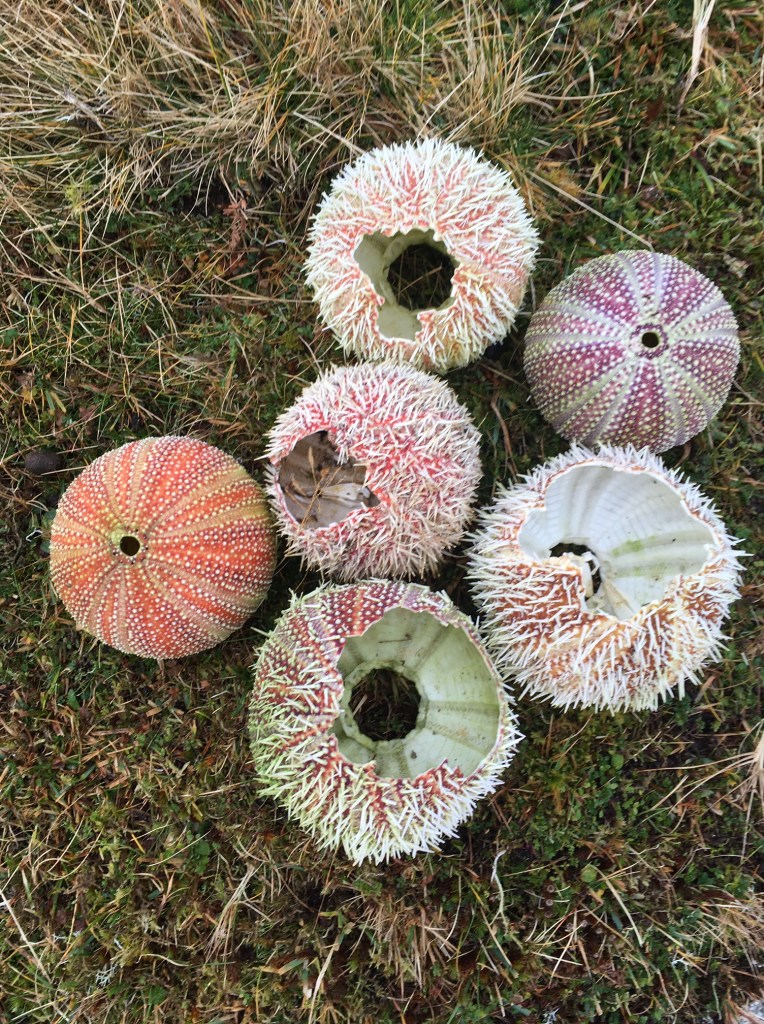
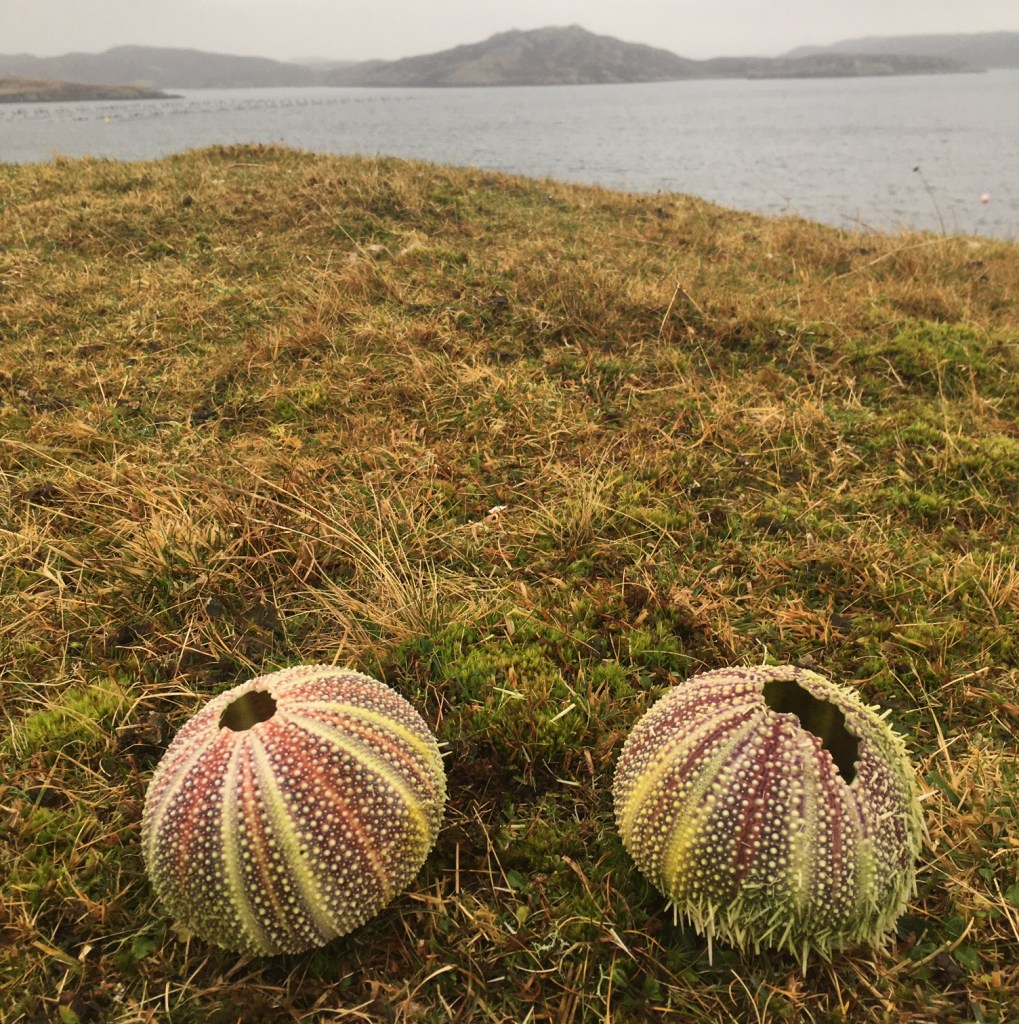
I gave it the name of Sea Urchin Shetland pattern, after collecting Sea Urchin shells in Brindister on the West coast of Shetland in the December of 2019.
There were so many on the hills making the lunch tables for wild birds to crack open sea shells, that I began to call the place, ‘Sea Urchin Hill’.
So much has happened since the inception of this little beanie pattern, that I had already been making up in vintage tapestry yarn for some time. In January 2020, I formalised the pattern a released it. I didn’t know about test knitters or pricing or anything, and it flew. It was the colours, you see. I made the pattern beanie up in my very first use of Jamiesons of Shetland, Spindrift, after returning from 2 months of living on Fair Isle with Mati Ventrillon, as intern, at the age of 56. It was around that time, after many visits to Shetland, that I began to feel at home there, and think about moving to the islands.
I look back to the time of writing and designing this little pattern and now see that is it was the Kickstarter to my creative design process – the beginning of how I saw colour in knitting and how I began to blend those colours. The pattern became incorporated into my online colour blending workshops and was the possibility for a new me.
I designed the pattern on the doorstep, out back of my Sheffield flat using the yarn from Jamieson’s, posting little posts on Instagram, building what I didn’t realise then, was an interest in the pattern and in my colour ways. I began dreaming of living on an island 60degrees north. (the full story unfolds here and you can read Aug – January of the book I wrote, if you join us on Patreon now – then each month will drop on the 1st of the month) and enjoyed how I mixed the colours to sing.
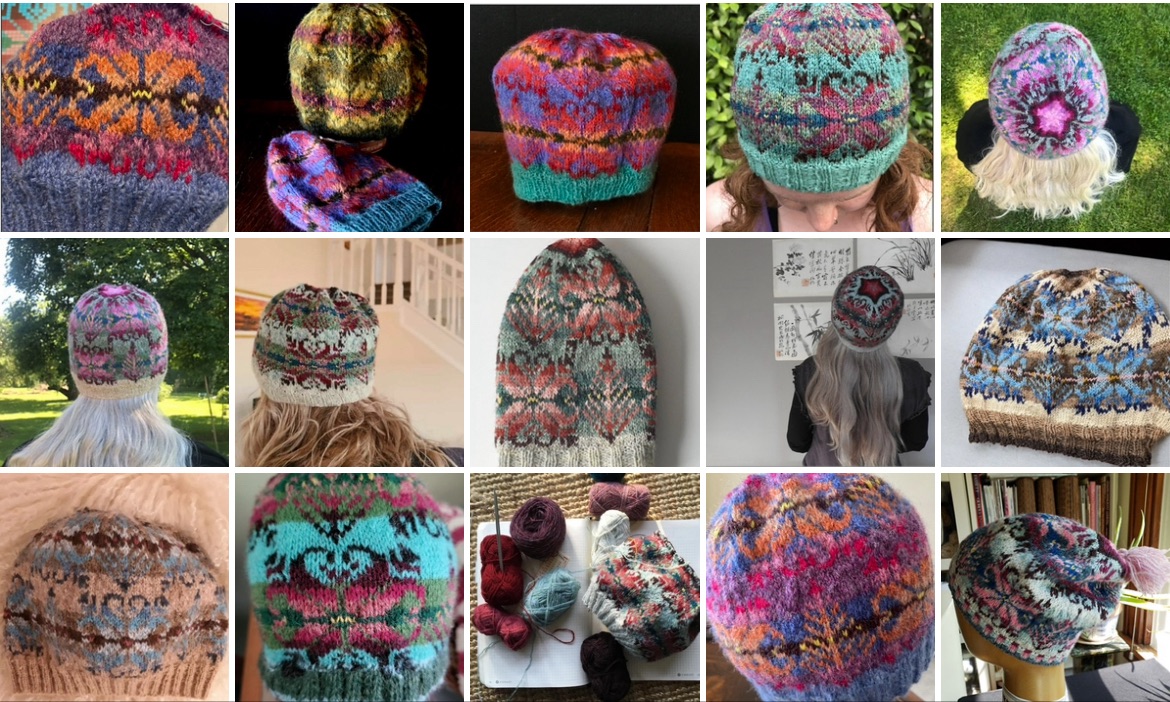
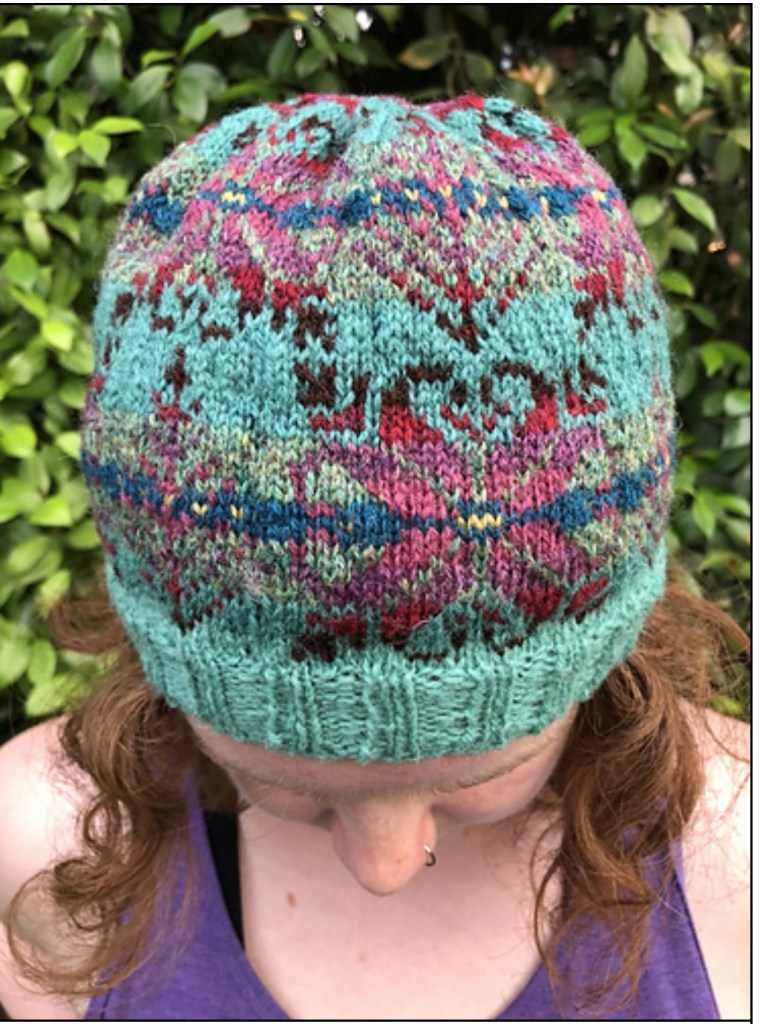
It makes me really happy to see this pattern interpreted by knitters in their own colours, some of which are included here. If you have knitted this pattern, please tag me in your posts so that I can see the results.
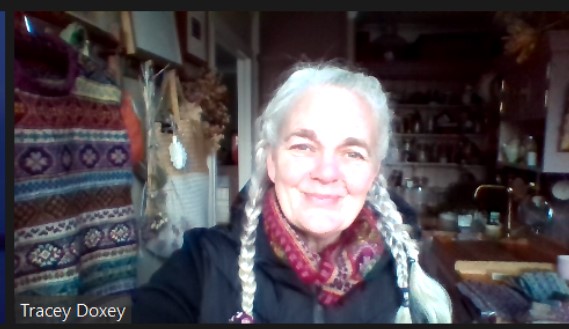
On 4th October, I met with Irina Shaar of Fiberchats, online, to have a little chat. It was pretty in depth because, I appear to be a talker. Stories of my journey in how I learnt to knit and my knitting journey were an initial soft entry into the chat. Topics such as ‘what constitutes an original design’, how do I teach colour blending workshops?, why did I move to Shetland? and did I fit in? talk about my book and other topics are all covered in the chat. I was totally honest, slightly guarded but honest.
There are things that I learned from my chat with Irina – to go for something new, to be out there – warts and all ( I look like my mother) to put my trust in a recording that was not at all edited, to find a joy in what I have achieved. To actually hear myself talk about what I have done in my life.
My life so far, has been a small but interesting journey. Of course, the 44 minute podcast only scrapes the surface but under that surface lies a challenging, sporadic, optimistic journey with many dents and bumps and breakages along the way – a bit like my knee at the moment, because I came off the bike – visible on the surface but such a lot going on underneath.
In the podcast, I talk about my knitting journey, my Masters at NTU in Knitting where I developed my skills in CAD fine lace knit which I took back to Shetland and placed in the abandoned derelict homes of the knitters long gone.
Unst – 2018
If you go back in this website, you will see all the Shetland visits to abandoned croft houses.
With Irina, I talked of writing to Sarah Burton at Alexander McQueen’s and working with them for a while whilst at Uni, and how that happened, and also, how I got on a train in Sheffield and got off in China.
Irina asked me about my online workshops, and about the book I wrote whilst living in Shetland for which I had an agent but no publisher. If you have ever wondered what it is like to move lock, stock and two cats to a remote Island, I am releasing the chapters in monthly instalments on Patreon. There are already 4 months posted – August to November, filled with the joy of buying the house, walking to the village beach, collecting flowers, shells, and sunrises, whale watching, soil digging, paint stripping. December’s will come out on 1st December. There are also knitting posts, with downloadable Fair Isle motifs in colour and b/w – It is all there. Well, it is all here.
I had forgotten to read, almost forgotten how to read. Reading used to be my go to, my come down, my love but now, my time being taken up with work and knitting admin, I had forgotten how the written words of others, feed my own written words.
Nourishing transient words and thoughts flowing from the simple act of reading.
To neglect my relationship with the written word removes one of my senses – not sound, nor sight, nor taste, touch or smell but the 6th sense of inspiration.
I am visiting Kyoto for 3 weeks in December / January – to nourish excitement, to be in the moment, to be baffled by everything in front of me by not recognising a thing – not the written or spoken word, nor the food or shops or culture – to have, in essence, my senses born again. I am also going whilst I still have most of my own faculties, though I may have to tie my name and Japanese address on a string around my neck.
To pursue a real and floating world that I never knew existed is exciting. Who knows where it may lead. Three weeks, or thereabout, give or take forty hours of travel in the sky and waiting in my old beloved Pudong airport, is a wonderful hard-earned gift in life. To leave a son and a daughter at Christmas would be unthinkable to most, but ‘Christmas’ is brief and we will make it up at the beginning of December – tree and all.
My trip to Kyoto slots in between a holiday break given at work (plus a few days either end) and, although a great financial cost, I will make do – cycling around the city, walking and eating cheaply. I will wash my clothes in the wash tubs on the roof of the hostel over looking the mountain and I will live small with big thoughts. I will stay in the attic of a hostel owned in Kyoto by a couple that I met in China in 2008, when they owed a hostel in Chengdu. They sold up and moved to Kyoto. I never thought that I would ever see them again but I return, to people, to places. They are beautiful people and Maki has been in touch regarding the booking. I feel quietly excited although a little nervous.
I am knitting Maki a gift, which I will wrap beautifully and hand over to her with two hands and a faint bow as a sign of respect – something I learned in China and became second nature. Respect for a hard working woman, for communication, and mutual respect.
So much still to organise, the thoughts are on a little back burner, slowly simmering.
For now, on this rainy day in Sheffield, I am having a delicious hour with the three books that I bought in the summer from a real book shop. That day, I returned to work and said to my colleague, ‘ I think I’ll nip to Japan. After all, I bought the books so now I have to go. ‘
I’m thinking of taking a small business card to reflect my knitting, this is a mock up, it is not the finished image but an idea – quite ridiculous and not at all corporate – What do you think?
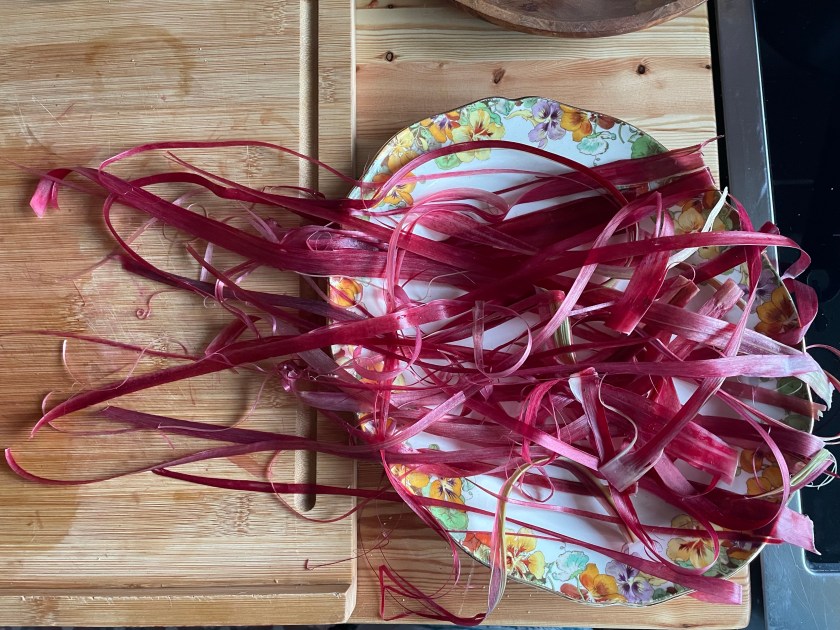
A couple of weeks ago, I gathered a big bunch of rhubarb stems, to harvest their skins because I wanted to make cord, or string. Hoping for red.
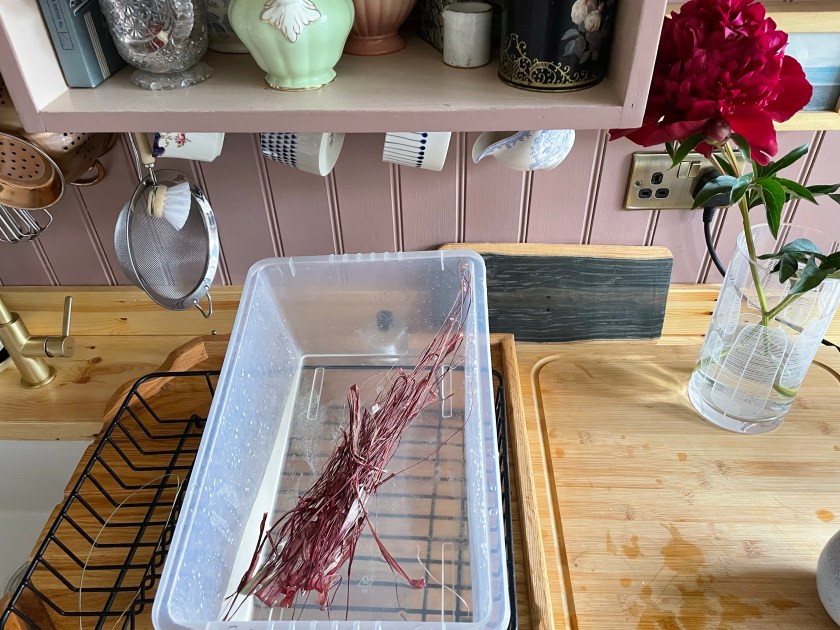
I washed the rhubarb stems in a bucket of water then tried to peel the skins off. Some lengths were successful, some less so, but I saved all the strands and hung them on a string across the kitchen window. I froze the rhubarb in the hope of making crumble when the apples come. ( I might do a crumble party – with ice cream) Crumble party in the autumn anyone?
I left the skins hanging on the string until they became dry / brittle.
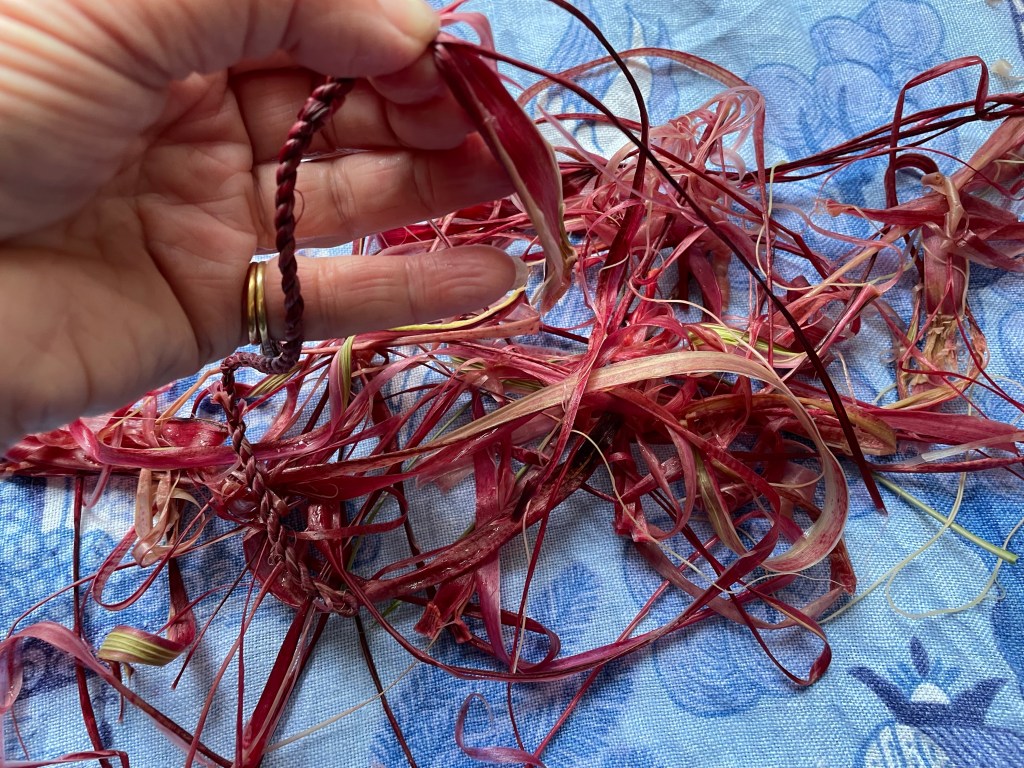
After my unsuccessful attempt at making a tiny basket out of lily leaves, I turned to the red rhubarb skins, soaked them briefly so that they were pliable again, and twisted them into a length of string. (string, I can do)
I love the tactile act of twisting the natural fibres and the anticipation of what it might look like when it dries.
Above is after twisting the fibres, below is the dried little bundle a few days later. It kept most of its colour
Now I have two tiny bundles of hand made string and I am on the lookout to collect more fibres. It’s addictive. The Iris leaves are definitely going to be next and I have my eye on long grasses.
Around the 18th March, I began to receive multiple messages from friends on different platforms with a link to a tiny house in Shetland. On that day, I should have already been in Lerwick, but I wasn’t because the hostel had finally closed on 16th and the interview on 19th that I was going for, was finally agreed to be a skype call because of the Virus which we are all now well familiar with. I’d been looking for a little house in Shetland for some time, having looked at one myself, in the old lanes in Lerwick, in November. Then, a friend, went to look at another for me in January. But March, the little house in the sunshine-flooded image didn’t just speak to me, it shouted my name which appeared to be written all over it.
I called the agent who had a viewing day of Smola, on Saturday 21st, the last of all viewings of properties before lock down. As I couldn’t attend, I was sent the house report and two small videos – one of inside the property and one of the byre. Although the tiny house is basic, it is perfectly formed and without question, it seemed ideal for me and the dreams I have of living in Shetland, but on the Monday 23rd , one of the Saturday viewers had put an offer in on the tiny house and I lost hope and duly whined about it on FB on 25th March. This was not just a house to me, it had become a dream filled with ideas of sharing it, offering artist exchanges to exchange and share skills with each other artists and the wider community, artist retreats, workshops, air B&B to friends and people who have connected with me on Instagram, but most importantly, it would be a home where my (art) work / and life would become without borders – indistinguishable.
live work studio in Sheffield , April 2020
live work studio in Sheffield
I was screaming inside, it should have been me because during the preceding developing 7 days, I had been booked to be in Shetland and could have been there, seen it, felt it, put the offer in but instead, I was in my tiny flat in Sheffield forced in to lockdown feeling helpless.
Then, Beate, a friend of mine, messaged and said, just put an offer in. It was the most practical and real advice I had been given, so I spoke to Emma, who put me in touch with Barbara, who in turn, put me in touch with Chris, who had rented the little house for 3 years and he told me about it. So, the house was more known to me and some questions were answered. And, in any case, I had already fallen in love with Levenwick last August
Levenwick August 2019
Are you still reading? After all the chronological dates and lost hope? Here’s Levenwick when I was there last August
That weekend, I thought about nothing other than the tiny house and artist exchanges and workshops on knitting and design whilst all the time mentally composing a letter in parts to the owners of Smola, in order to compete with the offer on the table already. Without seeing, smelling or touching the house, the letter flowed. I was honest, direct, clear and shot from the hip on the financial offer. On Monday 30th, I emailed it to the agents with the letter and offer, then promptly let it go. I went to work at Ryegate Children’s hospital where I’ve been a temp medical secretary since early Feb. Just because of a pandemic, the children don’t stop being ill with severe neurological issues, so I didn’t stop going to answer calls from worried parents, arrange medication and type consultant letters from clinics. I got on with my week. The pandemic gathered steam and I started knitting. Below are some of my recent designs.
On Thursday, 2nd April, I got a call from the agent. I assumed it would just be a rejection call. But it wasn’t. The sellers had accepted my offer on the proviso of a non refundable deposit to take it off the market and that they would wait for me to sell my flat. Since 2nd April until 17th May, two Shetland solicitors have been involved in writing the agreement for this non-refundable deposit, which I signed, in a wood in Sheffield on 8th May, honoured by my friend Deborah witnessing and co signing the document, and Lola the jug waiting as patiently as she could tied to a branch.
My great friend, Deb and my borrowed joy – Lola the Jug signing the non-refundable deposit agreement.
in the frilly wood with deb, lola and an agreement.
So there you have it, just over 8 weeks after seeing an image, both moving and still of a little house in Levenwick, I have signed a document to say that I will pay the non refundable deposit, deductible from the cost of the house, if I finalise the Scottish missives and all the papers to purchase within 3 months – an IMPOSSIBLE task. After the initial 3 months, I have a further 3 months agreement with the same terms but the first non refundable deposit isn’t carried over – that becomes lost. I was asked by a friend, – ‘what do I get for my non refundable deposit?’ and I said TIME but my wise friend Deb added, security . So, I have 6 months to turn everything around, still in lock down, during a pandemic and a recession to sell my flat and to purchase my dream.
I have 6 months to make this dream come true.
A dream to truly live a life fully in Smola, without borders between creative thought process and daily life, with my 2 cats, to go swimming with Barbara D and the Selkie swimming group in the sea, to write the book with Shetland knitters – of their mothers and mothers’ mothers and their knitting patterns and the homes they lived in, to make site-specific art, to offer air b&b to friends and artist whom I have come to know over the years through my artistic practice.
I can imagine the artistic exchanges that I hope to offer twice a year to share skills and art with other practitioners including and open call to hand block printers, wallpaper printers, basket makers, knitters, painters, writers and I can see it all happening in that tiny house. I am keen to be part of the village of Levenwick, keen to give and not take by being a supportive member of the local community and I want to make art, knit, share Smola with other artists, create exchanges and opportunities for others to come and work in and draw creativity from the fine little unassuming place.
This is my dream.
If you are interested in supporting this idea, please contact me.
If you are interested in future residencies or exchanges, please sign up to this blog so that you will see further progress on my move to Shetland because if it does not happen with Smola, then it will be another place.
If you are interested in coming to share skills, stay in the tiny house with me as an air B&B, also please let me know by contacting me through this website then I can see how many people would like to share of this dream.
If I do not make the exchange within the time – I will realign my dream.
In the meantime, if you would like to support me, you can do this by buying one of my knitting patterns here.
I am also looking to create a website for Smola and the creative business I will carry out there and I am looking to buy a new camera to capture the beauty of this place and to capture the offer to others.
I also have started a new Instagram page for Smola, which is here and where you can follow progress.
I’m hoping to share this dream with many people. When we are allowed to take visitors, I will be offering Air B&B for single travelling women – I’ll also be offering residencies and looking to create artist exchanges. If you are interested in any of these ideas, please email me on the contact form.
Tracey
I look forward to hearing your thoughts on this new move
If you would like to keep up with my move to Shetland, please sign up to the blog here.
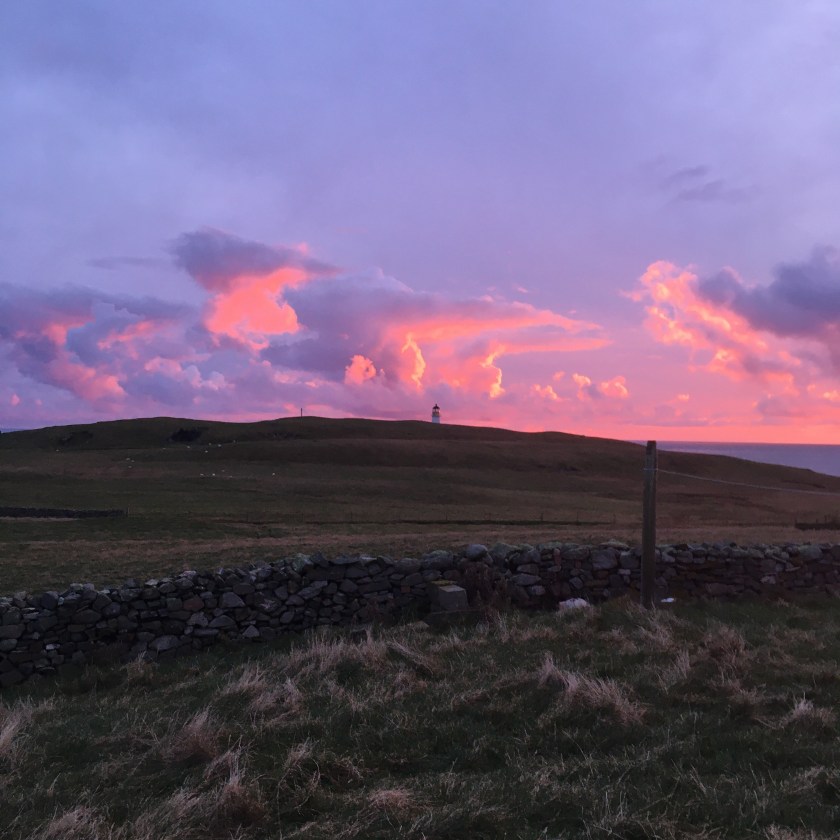
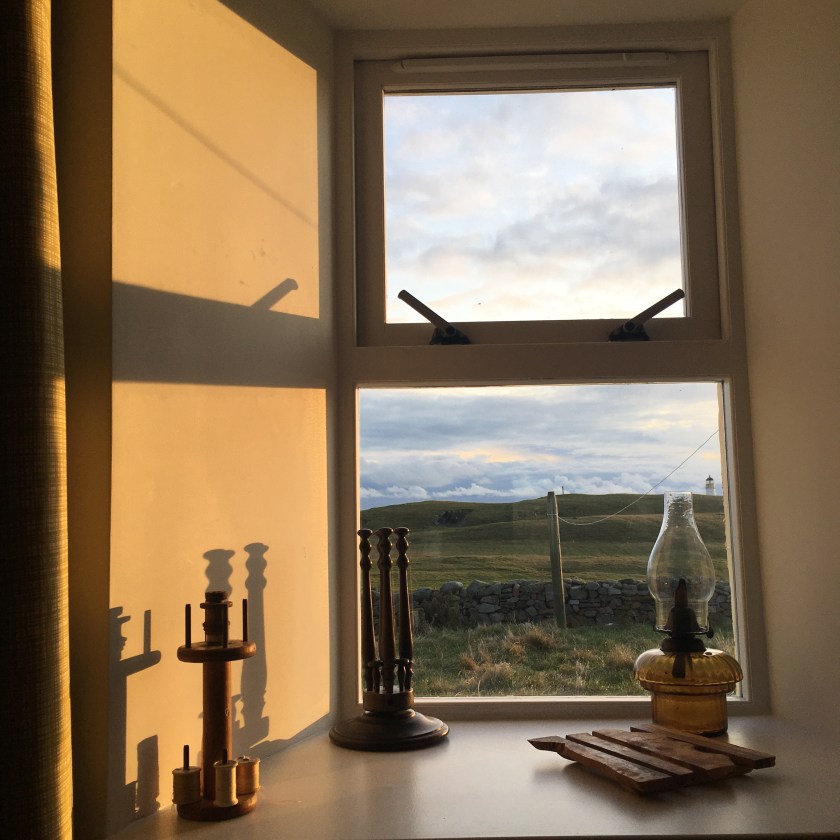
The light in the croft house dims sooner than at Mati’s house. The croft’s windows dictate the change in the amount of light within. Two – feet deep walls hold the place up. The deep walls narrow into the windows – each of which look out to every corner of the globe on this island which is only three miles long. I look out south-facing to the light house and gauge the weather by the grass waving or whipping in the wind and by the waves crashing or ebbing on the sea.
home for a while – Fair Isle
The intention is to leave no rubbish after my 9 day stay here. Everything has been bought at the one and only shop at great expense. Everything has come a long way and been handled by much transport – even from Lerwick, either by the local plane or boat from Grutness. I hand picked all the vegetables and packed them in brown bags. All of the peelings will be saved for the pigs at Mati’s, which are owned by four people and brushed by Saskia. I’m learning about animal behaviour from those pigs. They have grown from shy piglets arriving in a cage to grunting and squealing with anticipation at their one and only priority – food. One even bites the other.
Even after 3 weeks, Fair Isle is now so deep in my soul that
I already miss it and yet I am still here – how can that be? I miss the island when I am deep in the
moment of it. It’s like I don’t want to
lose it or I can’t lose it for to do so, would be to give up on a life less
ordinary.
I’m here with Mati as a knitting intern, (maybe the oldest intern in the West at age 56) I’m learning a lot, not only about knitting but island life, the sea, the wind, the land, grass, animal behaviour, the sun rise and whether the plane will come. Where can ‘A Body’ see an unbroken horizon at every window without hesitation. At every lift of the head, a huge deep basin of silver sea greets you. Seeing the sea, hearing it, tasting it makes it seep into your soul. The nights are so pitch dark that my heart quickens at the deepness of the darkness, when I open the door. Nothing can be seen when ther is no moon, except the light house light but even so, it adds to the eeriness of being able to cut darkness with a knife.
There is a book full of old images of Fair Isle islanders
here. I look at the women’s expressions
and how they stand unquestionably, stoically face on. They are all working hard with oxen, ploughs,
knitting, or peats. Maggie Stout of
Shirva is the woman that interests me the most. I cannot stop looking at her
looking at me. I can almost feel the middle
parting of her black hair with my finger – it is so pronounced. This place I am living has a long history. You
can find it easily. It is written across the stones in the grave yard. On a wet
Sunday afternoon, I look for Maggie on the stones. It’s beautiful. The names are listed on the stones, where
they lived and who they married. Women appear to bear their maiden names even
though they are married. History is
tangible here, as across all of Shetland.
How many women moved a curtain aside to look out to sea and wonder about
their men out there, wondering about their safety and return. The weather
changes at a pinch. The stones bear many stories of death at sea.
In this place are larger than life ship wrecked items of great beauty – two identical figurines and two mismatched simple chairs which add character and richness to this small croft house that I am staying for 9 nights.
ship wrecked
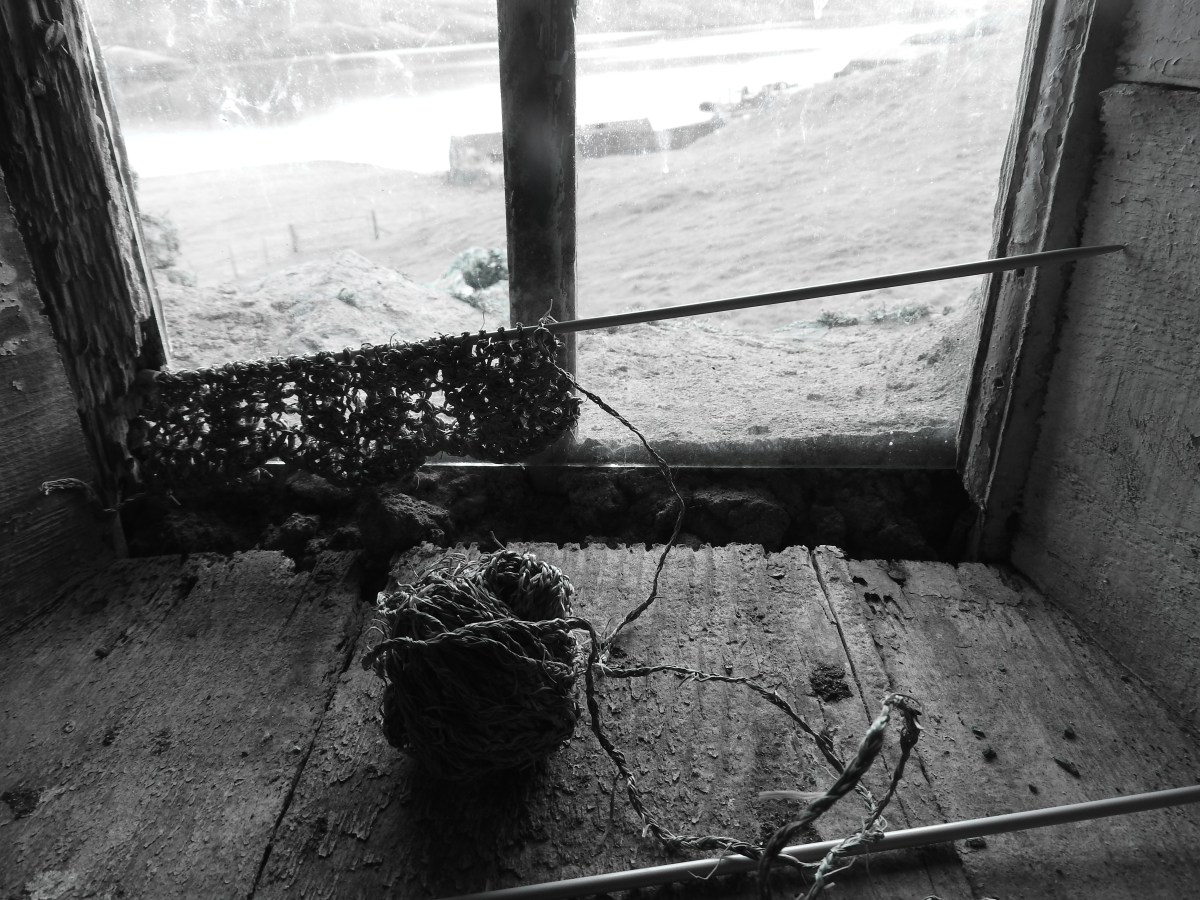
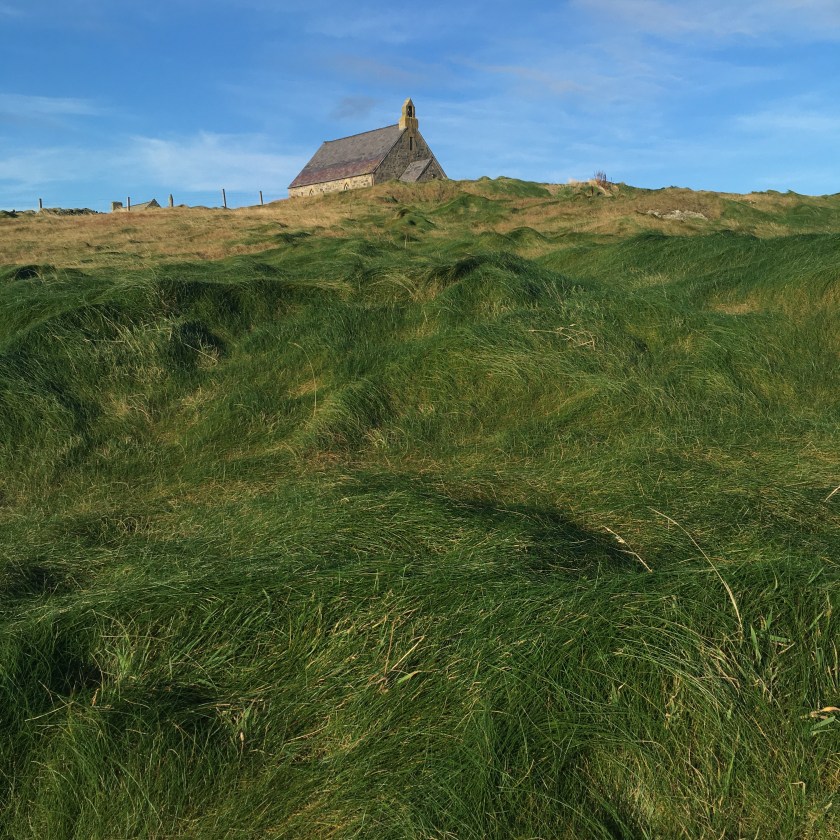
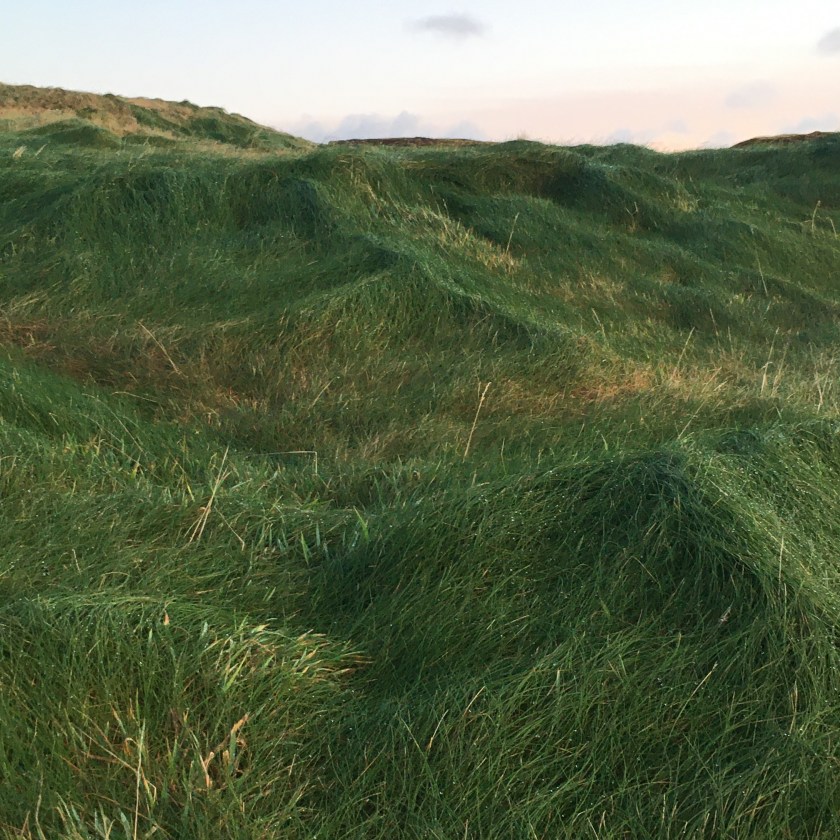
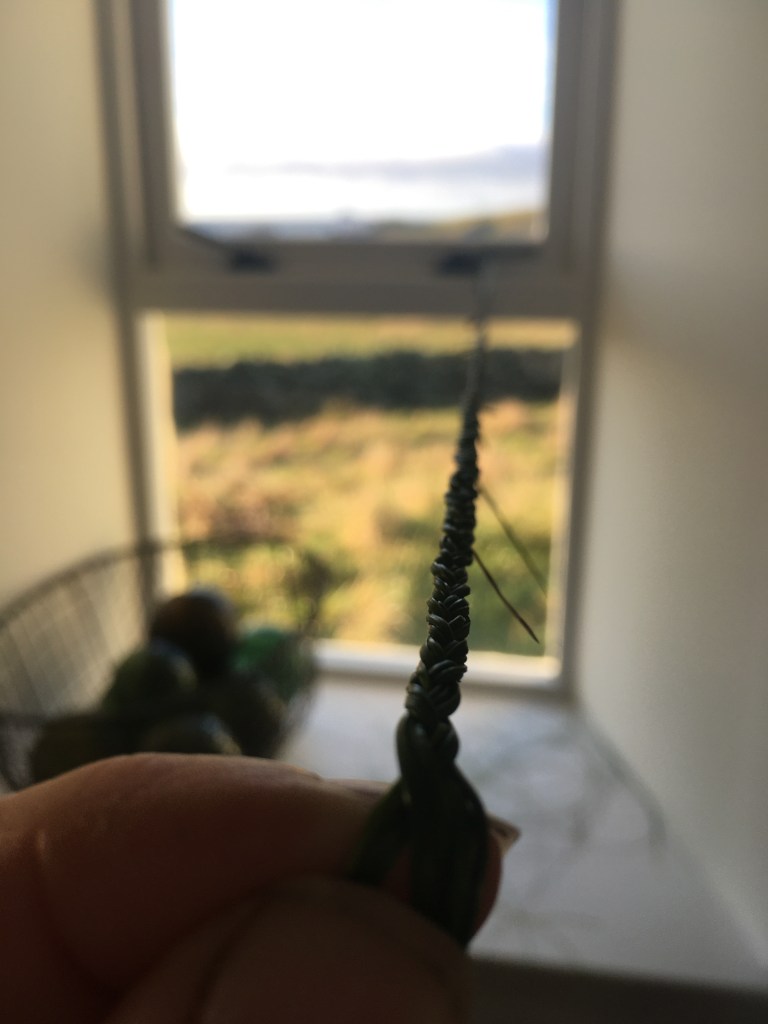
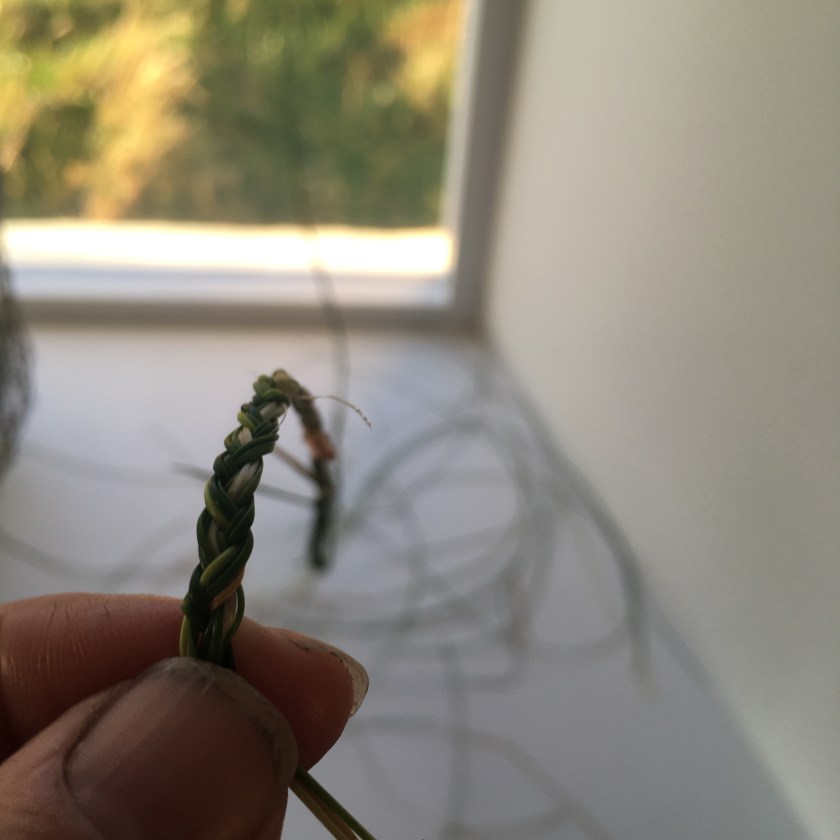
On the second day, Marie and I cut tussock grass, which is growing just below the chapel, with house scissors. We bag it. I want to knit it and make a lace curtain from its yarn. I’ve long since loved Shetland grass which grows at great length untouched, untrodden on and forms in dune-like shapes carved by the wind. We cut it without knowing its possibilities or strength. I spend 3 days and evenings plaiting the grass into a long length and a ball of grass yarn. The grass is strewn across 3 floors and stuck to everything. When knitting and unknitting, because I am dissatisfied with the results, the grass yarn bears the memory of the stitch.
I am using the resources of the island to create something to connect both with the island and with the age old practice of knitting in order to make site specific / site responsive work back in the Shetland landscape. It will be about the women knitters and a skilled craft that when placed within the landscape, will create a personally constructed context or narrative. My work is created around the theme of gendered women’s creative knitted work that is often undervalued and underpaid. I work within a place to learn the skills embedded within that area and I position my work back into the landscape to connect place, time, history, women’s craft and that pure moment in the present. If it works, for me, there is a distillation of experiences.
As I am working with the materials to hand – grass – and the thought of the women who lived in the croft houses here and how they knitted to subsidise the crofting income and how they dressed and looked in haps – I will choose to knit a hap lace edge and find the right window to place the lace knitted grass. It will be a window that women will have looked out of many times, over many generations whilst working on a croft in Shetland.
Last night was the closing party to Celebrate ‘Making Ways’. I came back from London especially for it. ‘Making Ways’ was an ambitious 3 year programme to support artists in Sheffield.
I stood in a group of people at Sidney and Mathilda last night and felt a deep sense of pride to have been a small part of what has happened here in Sheffield over the last three years, with funding for the arts and Artists developing from it, me included. Most of all, I was proud of Janet Jennings who has tirelessly co-ordinated the project of over hundreds of artist applications, events, workshops, gallery programmes, supporting new staff and studio workspace development. The Cultural Consortium of Sheffield bid for the money and won it, but it was / is Janet who has held it together.
In January 2018, during my MA in Knitting at NTU, I applied for an R&D grant in the 2nd round of Open Calls. It was my first ever application – ever, ever. It was a pure application, heartfelt, possibly a little naïve, but for me – very focused. Out of 98 applications in that Open Call round, I was firstly shortlisted then, one of 7 who were successfully awarded the money for either their project or R&D. I was grateful and earnest but didn’t fully understand what the impact of that grant would mean to me. I met with Janet to talk it over and planned then went to the furthest inhabited island in the UK – Unst – the home of Shetland lace knitting.
My application was called ‘Vod’ – and empty place. Vod is a Shetland word for an abandoned or empty place. I had fallen in love with the many abandoned croft houses that lie across the whole of Shetland.
I aimed to use a concentrated period of 10 days in May 2018 to:
Travel to and work in Unst Heritage Centre to research
primary lace knitting and to record stories from the women who still create
fine lace and of their ancestors.
Find derelict crofts on the island of Unst,
research and record the oral histories of these abandoned homes. (which I have
started to do)
Make site specific work using photography as a
platform develop a relationship between Contemporary Art, the stories of women
knitters in Unst, the crofts, dialect and the elemental landscape.
to experiment with a one-off pop-up summer
installation in a found derelict place on Shetland (agreed by the land owner)
to develop audiences for photographic contemporary art which tells a story.
I already had one amazing contact on the small island of Unst (Rhoda) and over the previous two years had built up relationships with many knitters on mainland Shetland.
This was an ambitious aim in 10 days. I embarked on the 9 hour train journey to Aberdeen from Sheffield, the 12 hour overnight ferry to Lerwick, the 2 local buses and 2 interconnecting island ferries to get me to the northern tip of Unst. 36 hours after setting off, I arrived. I’d done my ‘ethics’ training at NTU, I’d brought my books and recording equipment, cameras, laser cuts and power shima knitted lace entirely inspired by Shetland, its heritage and culture- I was ready.
I was a fresh, naïve 54 year old from a city who had spent many weeks on Shetland with women who enjoy talking of their knitting heritage and knew my stuff, but Unst is a different land.
The thing I mainly learned is that even if you are trusted by one person in a small community, on a tiny island (some of whom have never left the island in their lives) it is not an instant green light access to connect with everyone. I was taken in by a wonderful woman who was chair at Unst Heritage Site – Rhoda, who took me places and talked of her ancestors who knitted to subsidise the income of the family. I have beautiful recordings of her talking of her mother and aunt. I spoke to other women but none wanted to share information, saw fine lace knitting, I found abandoned croft houses that I fell in love with and recorded their soundscapes, I watched the sea, learned of the press gang stealing Shetland boys. I saw, heard and felt so many amazing things that it was the changing of me in a long chain of change.
The main thing on the Island of Unst that I quickly learned and reflected on was that some lace knitters do not like to share what they knit or make in case you steal the pattern or idea and make it your own. This was definitely not my aim but it dawned on me after a few days and there was nothing that I could do that could change that in my 8 day stay. Over months, I would have fully engaged, been part of the community and eventually been trusted and accepted. The major deeply moving light-bulb moment came when I understood that not many would talk to me about the past and the history of knitting because then the words would be out and I would have heard and possibly, they would no longer be theirs. This learning was something that ‘ethics’ training cannot teach. You learn it by being in it.
In Unst, I wrote to Janet part way through the night in late May and remember writing – ‘who owns words once they are spoken’. This is the main thing I learned at that time but since the R&D trip. But it is not the main thing that I felt and saw. I know that you earn the voices that you hear spoken and that those words are not yours. Since the R&D, I have gathered confidence, learned a new language, and found an honest understanding of my creative practice and built an aim to go further.
After graduating, I applied for and was lucky to be accepted on the AA2A Artist In Residence scheme at Sheffield Institute of Arts. This one year residency has built on my skills and technique and given me the absolute freedom to make work in that amazing building but I would not have applied for the AA2A had I not had the leg-up from the Making Ways R&D grant in 2018.
Last night I felt proud of Janet, of Sheffield, of Art and
Sheffield, even a little proud of myself because I haven’t finished yet. There’s
still so much to learn and research and find out and make. I’m always just at the beginning of something
new but there is so much more.
These few words are written in gratitude to Janet Jennings and ‘Making Ways’ Sheffield.
Over a number of weeks, I’ve been developing my creative practice whilst being privileged to have access to the facilities at Sheffield Institute of Arts (SIA) – I am one of the Artists in Residence on the 2019, AA2A programme. Until this morning, I was here, working with resources, talking with students, pushing my own creative practice boundaries and experimenting with my work. Then, last week, I presented my creative practice and process to the Extended Foundation students and on Tuesday, I’ll present to the MA, Design Students, on the Level 1, here at the Old Head Post Office (SIA), which gives me the opportunity to give back, in some small way.
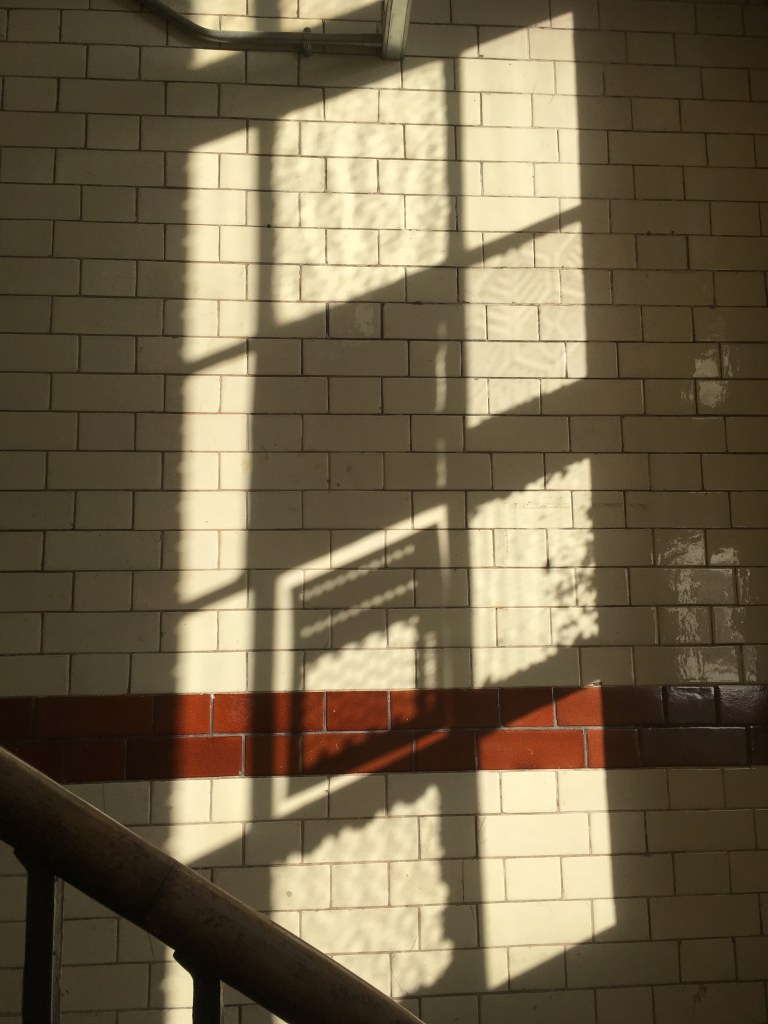
This place, this old Head Post Office, is quite magical. You can feel it in the fabric of the tiled walls, the mosaic floors and sash windows. Being here makes me feel free.
But, I learn every time I’m within its walls – by learning new techniques, asking questions, seeing what the Students are creating, learning through osmosis and by reflecting and being patient until finally, my practice has turned a corner. This is maybe how the universe works. Time, experimenting, patience, reflection and energy = creativity
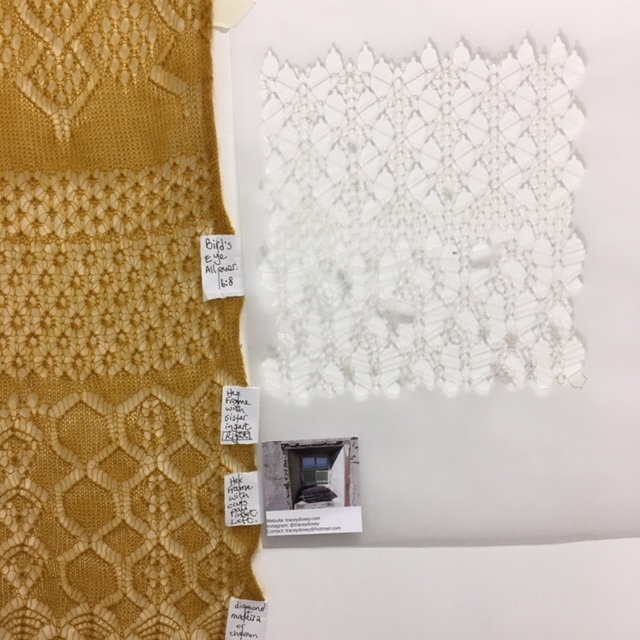
Over a number of weeks, I’ve been laser cutting and laser engraving – something I wasn’t allowed to do myself at NTU because all cutting went through the one technician. At Sheffield Hallam, students and staff alike learn to use the laser cutting machines themselves, of which there are 6 here at SIA and more at Sheaf.
When I get the chance to spend time with a new technique,
the more I learn about process and in turn, the more I take chances and become
adventurous and experimental with new ideas and outputs. At SIA, I’ve learned
to laser cut. I still don’t know how to do everything and not I’m without mistakes
which I build on, but I can cut and engrave what I visualise quite well. It
takes time. I’m on two hours a day, two
days a week.
When I first started at SIA, I wondered how my work, which
is inspired by the Heritage Shetland knitted lace industry, its tradition and
the knitters themselves, could actually fit within the urban setting of a city
in Yorkshire. Four months after starting at SIA I’ve developed a piece of work
that is both portable and in keeping with place. I’ve learnt through time.
This place of Sheffield is so far removed from that place of Shetland.
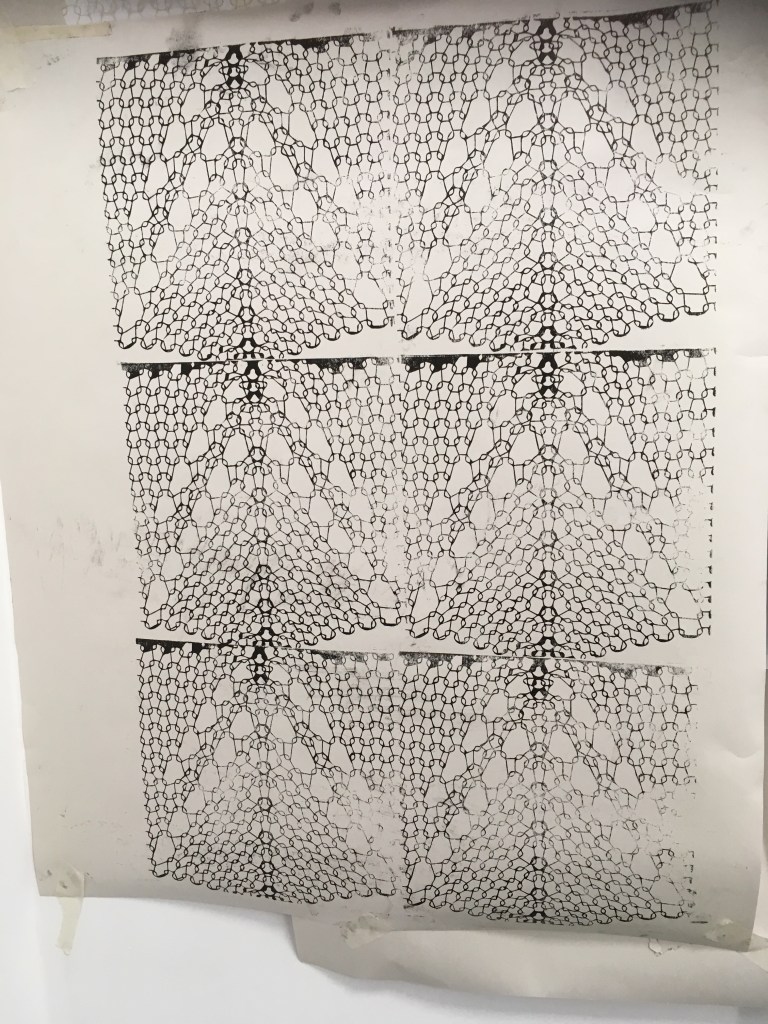
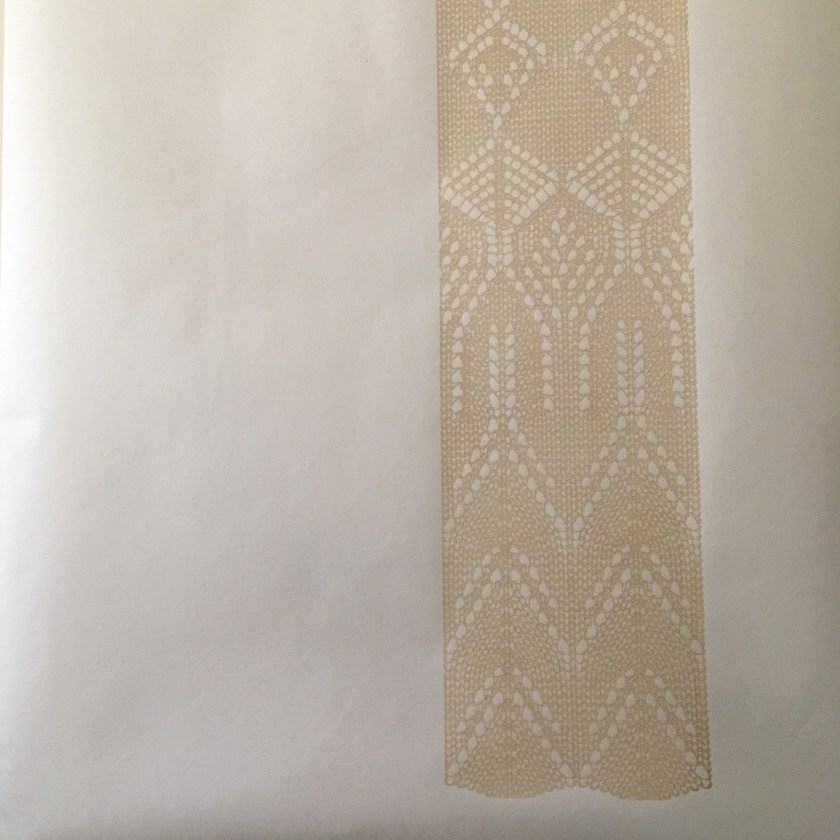
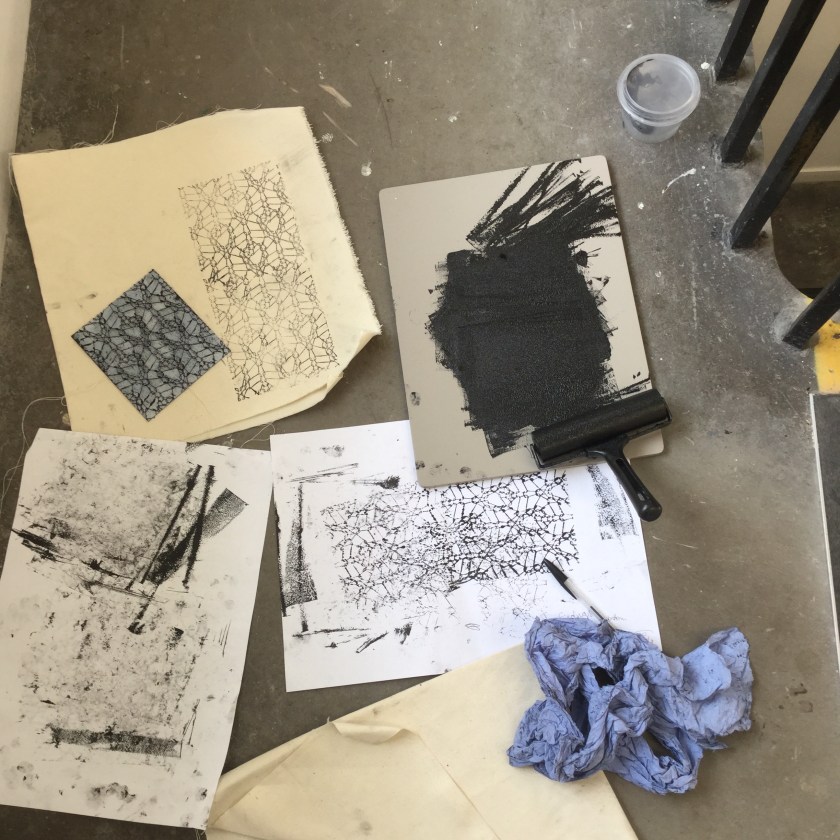
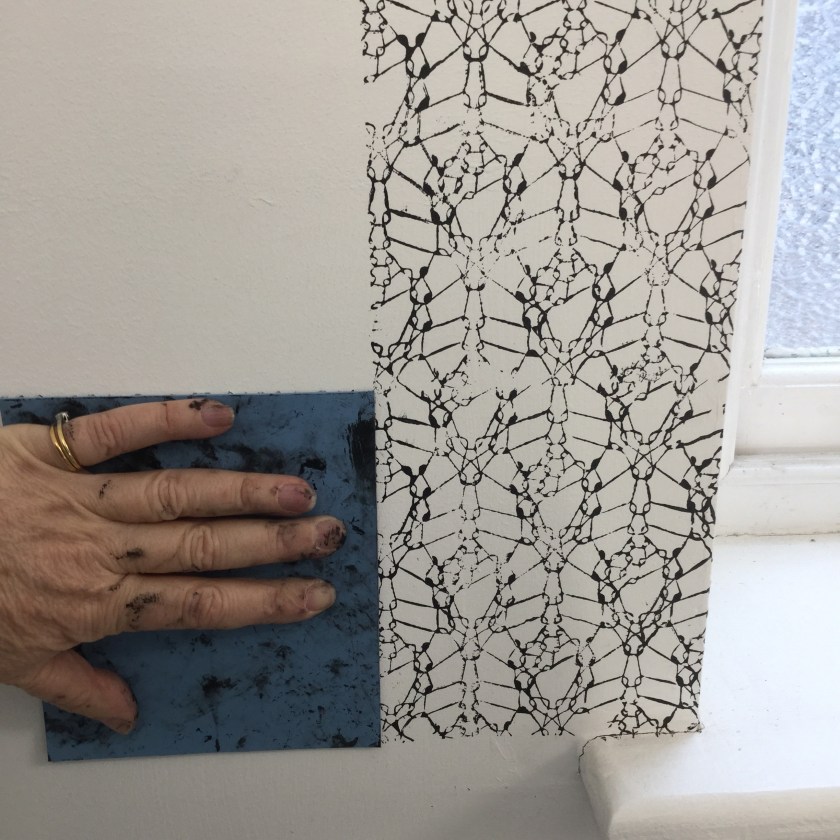
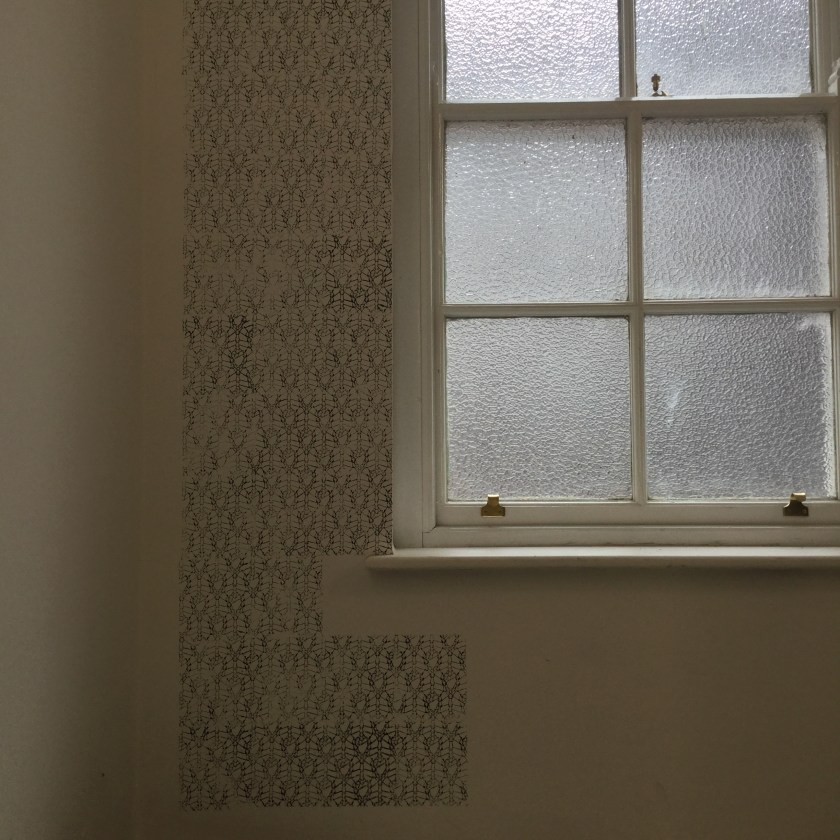
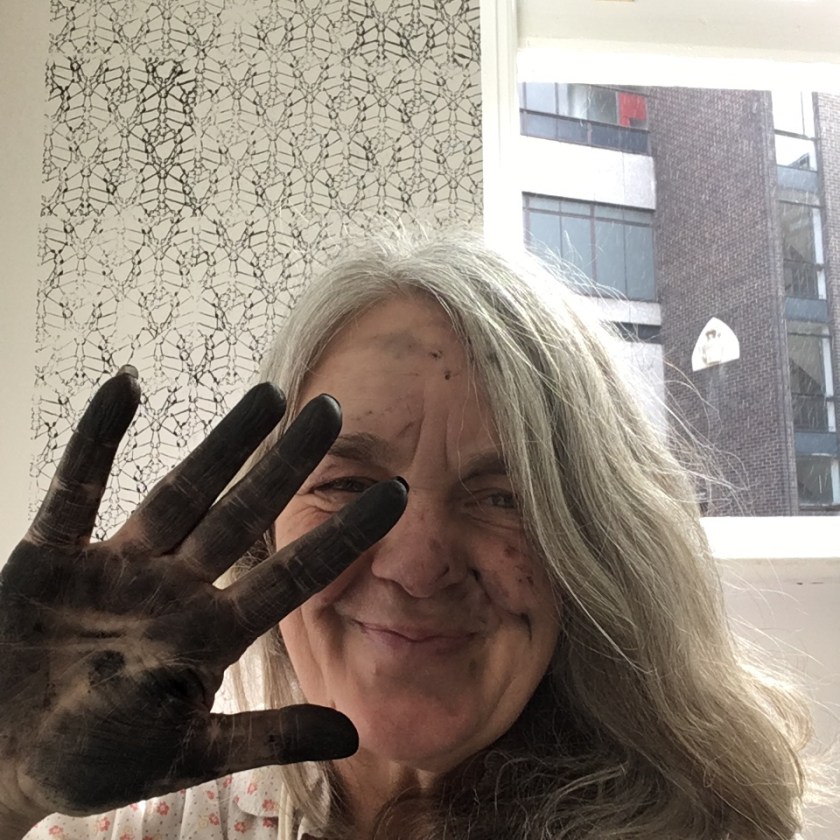
To me, there initially seemed to be no possible link for my creative practice and its links with knitting and Shetland because the work seemed to have been dragged out of context by the two places being geographically hundreds of miles apart. But this morning, loaded with printing ink, roller, John Lewis bread board, rags and my hand-made, 15x17cm, rubber printing block that I made using my CAD lace knit designs, I have hand printed my tessellating Bird’s Eye pattern across the stairwell wall by the MA Studio.
The result is a happy one. Hand printing on the wall made my heart race because I realised what I can do with this idea. The printing block is portable, it’s accessible, it’s easy to set up and it works.
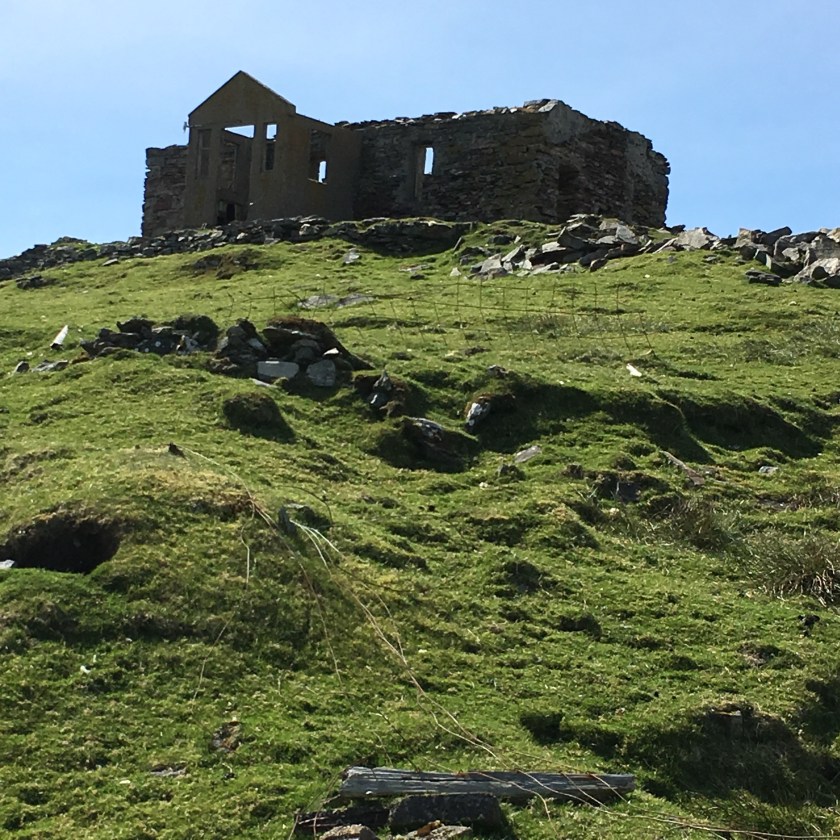
I can print on any flat wall, any place, any time. This morning’s printing was a stepping stone to see how well I could make the tessellating pattern match, if it would work on a wall, does it need to be perfect, I love the imperfect walls of Shetland – so it can be patchy, how would I go round corners, what would it look like in a large block of space, how long would it take and if it could be possible to take the printing block to Shetland to print across the walls of a derelict croft house that I have fallen in love with and have revisited over a number of times since 2015.
And, the answer is yes.
New art, new project. I’m heading for Shetland in May / June and know exactly the wall I will be printing on.
I’ve never had an Artist studio for a number of reasons:
– it is an expense that I cannot really afford, I live a 4-mile cycle ride from
town so to get to a studio and back is a chore, and in the summer, it felt odd
to call myself an Artist. One miserable,
wet, dark, raining night in August, I did look at a studio at Kelham Island,
but it wasn’t right. I couldn’t find the right place, at the right price.
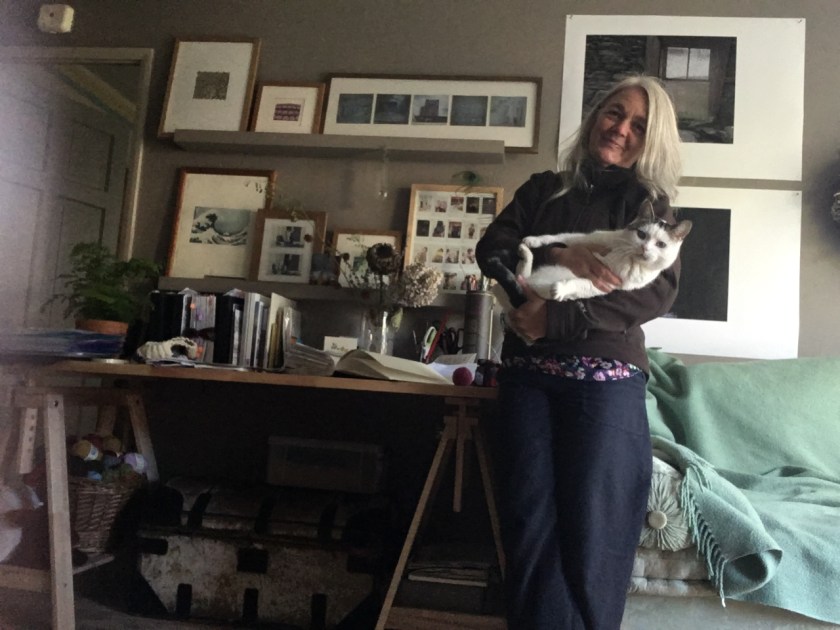
In the end, I did buy a desk and was delighted how
that desk, in my home, made me feel and instantly became my work space. It was enough. It is enough. My flat became
exactly how I wanted it – a live/work
space at any time of the day.
Then, in November, when I was accepted on to the
AA2A Artist residency programme at Sheffield Hallam University, I moved old
papers and prints into the MA studio at Sheffield Institute of Arts (The Old
Head Post Office) It is a small space with a perfect wall area to overlap
things, put things up, leave things, remove things, reflect. So, until the end of June ‘19, that is exactly
where you will find me every Monday and Tuesday. Take
this as an open invite to come visit.
There is nothing not to like about this gorgeous,
strong building which was, for many years, The Old Head Post Office in
Sheffield. The floors in the large exhibition space are mosaiced, the walls are
still tiled in dark rich brown and cream and everywhere is conducive to creative
thought with old remnants of a by gone postal service in town which litters the
walls, floors and views. The technical resources are second to none. Space is
limited.
The AA2A residency came at exactly the right time. I applied 2 days after the closing date, the
submission was accepted, I was interviewed and proceeded to naïvely cover the
interview table with examples of processes and work. It was a shamble of words
and lace knit and photographs and, of course, laser cuts. I was over the moon
when I was accepted.
Now, is a new phase – a progressive time to learn,
experiment and develop by using the resources available to me. In return, I will show work to the current
students, do presentations and workshops, be around in the space, ask and
answer questions. I’m also mentoring a
little. Alongside that, there are countless
students doing their thing, and we share information. They’ve got used to seeing me and I look
forward to seeing them. In the new year,
I’ll offer workshops and add information to their notice boards of competitions
and residencies.
I did not want repeat my creative practice,
therefore, I expose myself to a very creative environment as what can be called
‘A Young Artist’ and I will add – at an older age because I’m not young but I feel
it. But, to repeat is out of the question
– where do I start?
I could only start the residency at SHU, where I had
left off at Nottingham Trent Uni but I had never used a laser cutting machine
myself as this is done by the technician at NTU. At Sheffield Hallam, the
students use the laser cutting machines themselves. They’re shown how to use them and off they /
I go. I collected all of my files from NTU but they are not compatible with the
software at SHU. So the learning curve of preparing files started.
Initially this seemed daunting but, only 3 weeks in, daunting is a memory. I’m learning by trial and error but the errors are mine and I continue to learn from them, build a new portfolio and a new-found confidence as a practicing ‘Artist in Residence’. Silly mistakes during the process of live tracing an image and digitally cutting it open up steps to understanding what I can try next and how to overcome errors. When I fail, I try again and again until, after I feel that I have some small grasp of the technique.
Students come into the laser cutting room, we discuss our practice and technique, we share learning experiences and own it. Every student fully owns their own work when they create and cut it. After two successful (ish) laser cuts, I needed a location to place the work in order to really see it.
I could hear a voice in my head asking myself why I thought
that laser cuts of lace knitting which were inspired by Shetland could ever fit
into Sheffield. There were no links between lace and Yorkshire. Did it need a
link? Could I create a link? Was it becoming inauthentic or decorative? Or, was
I repeating myself. And, that would never do.
Showing my work has previously been an easy act to
do as I chose remote extreme outdoor locations to place laser cuts or lace
knitting and Only I saw it. In Shetland,
the work merged with the landscape and each relied on the other to give
meaning. Pure Symbiosis
Today, I do not have access to Shetland to continue to place laser
cuts into abandoned croft house windows but I have done that already,
photographed it, shown it and understood it.
Now, I only have digital files that stem from my original lace knitting
CAD patterns. And I am placing them into Sheffield Institute of Art (SIA)
I looked around the SIA building, the stair wells, and corners at the working windows – mostly sash, and mostly aesthetically pleasing. I even used a measure and made diagrams. In Shetland there was no time for a measure of any sorts – not of windows or of place – I came across places and the site-specific work was entirely intuitive. It was placed quickly, in wind and gales and rain or snow. Here lies a clear difference, I have the luxury of choice and measurement – though this may remove the rawness of the work.
At SIA, location can be more considered than in Shetland. The work can be left in situ at SIA and not
blow away. Consciously, I knew I wanted
a window of great beauty, subconsciously, I wanted a window in a location with
great foot fall. I also considered the
view that would be seen through the laser cuts. I wanted people to walk past
and either look or not, to stop or not, to think about the laser cuts or not
but I did want the work have ‘the option to be looked at’. I didn’t want it hidden.
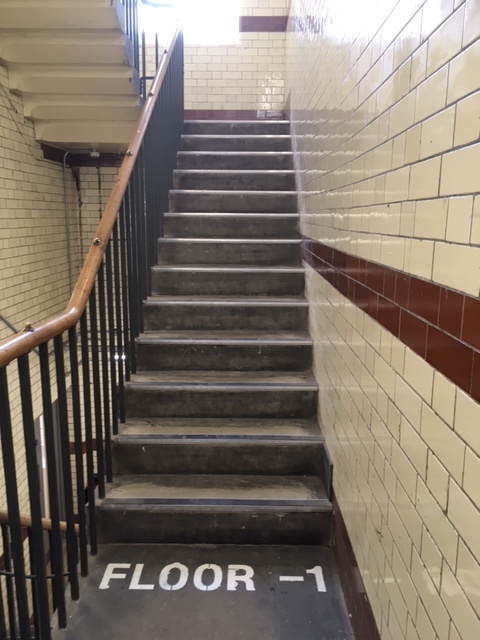
I chose this window on the half floor at Sheffield Institute of
Art, between floors -2 and -1 from the reception to the studios and laser
cutting rooms. A stair well of much foot fall.
I must admit, I put laser cut 1 and 2 up quickly because I had no permission and I felt nervous. Nervous if I could be stopped, or asked what I was doing or, and this was the biggest thing, – was the work interesting enough and would it ‘work’ into this location. Laser cut 3 went up – doing it felt good and I didn’t hide it but I could no longer reach to place the next row. At this point, I tried to enlist the support of Jim, a technician, who was obviously going to ask the question I had been avoiding – Who gave me permission to place this work in this window and had I had it covered by H&S?
So, now after the work has been checked and cleared by H&S,
Jim placed 3 more panels and I am thinking of placing renegade work across the
city and then in galleries. New Goals. But
for now, this window is my canvas.
Happy Christmas. Here’s to 2019 and new things that I don’t know exist yet.




































































 tracey doxey