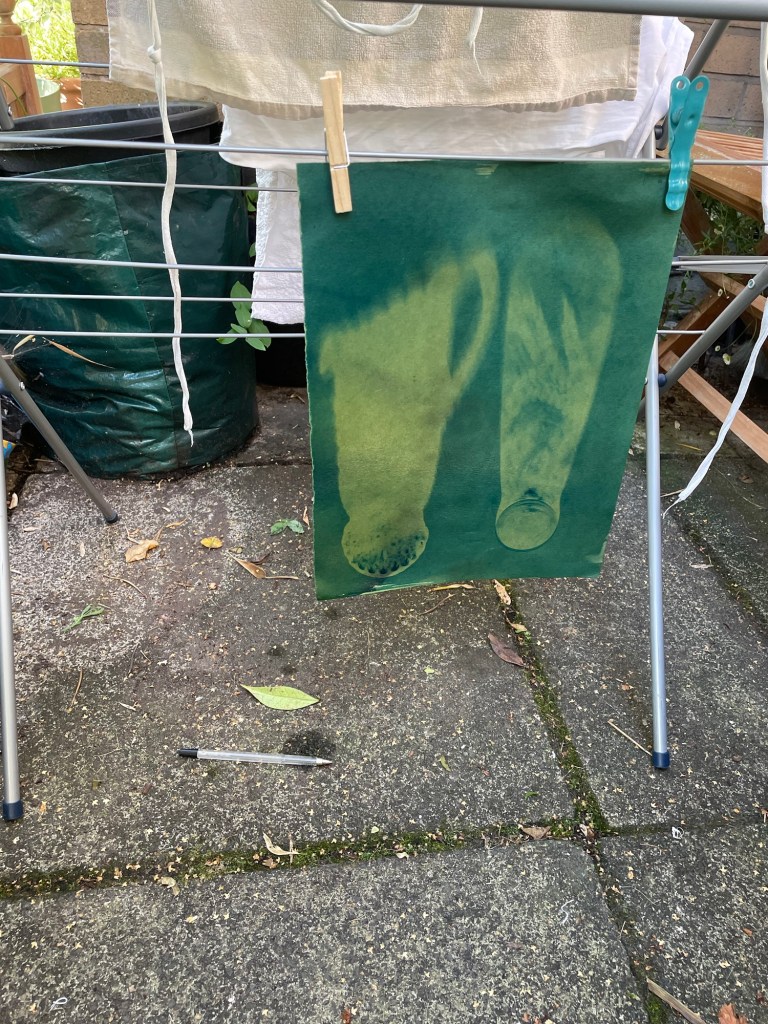
It is a calm Saturday, overcast with a little breeze. I googled the sun and is listed to be out above the city of Sheffield later this afternoon. I have wanted to try something for some time, thinking of home. My cyanotypes have mostly utilised pressed flowers and photographic negatives from when I lived in the hutongs of China, all of which rely on the sun to develop the image. I have mostly worked in the studio but have a small amount of papers that I coated last night, and they are under my nose.
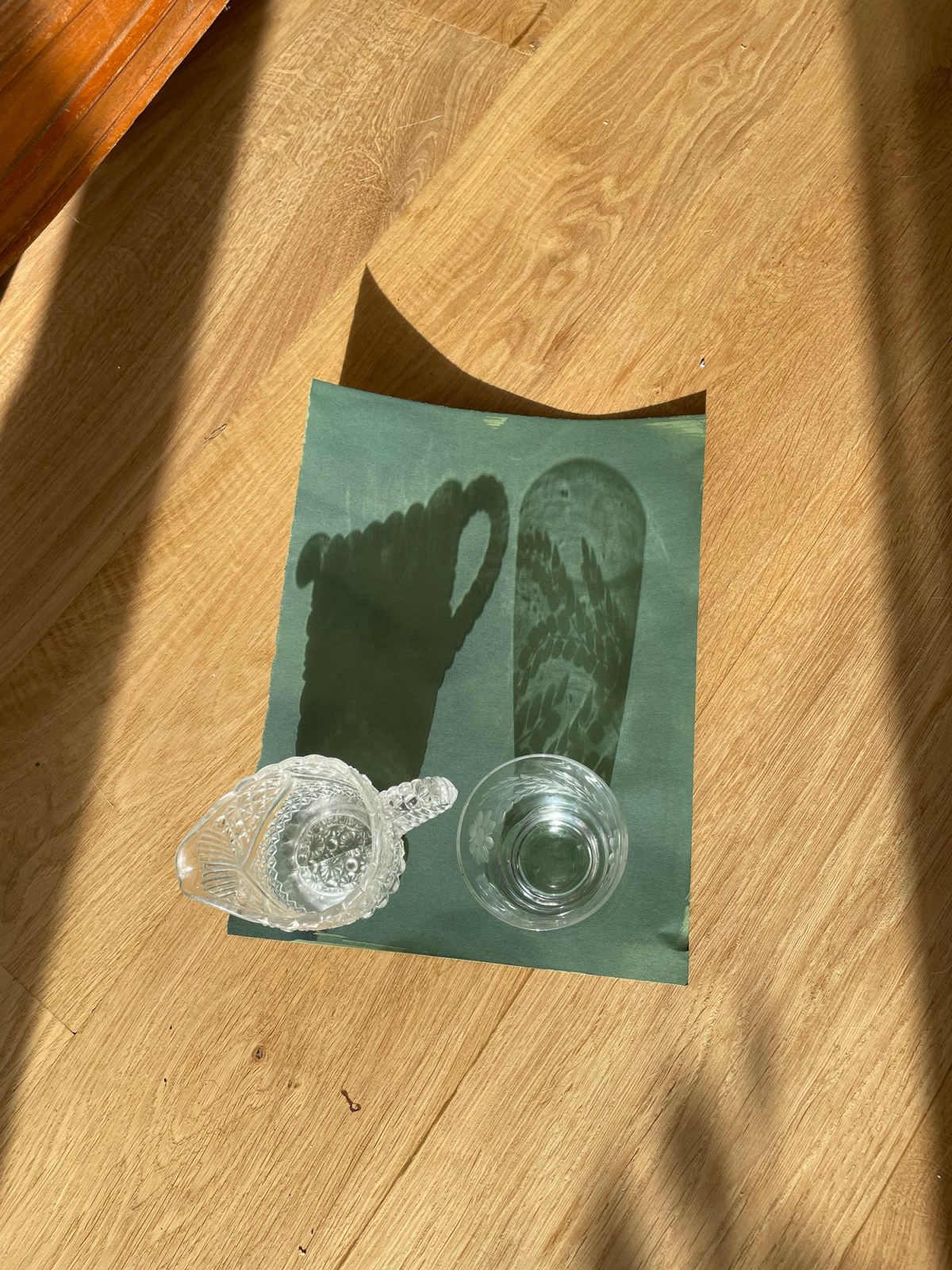
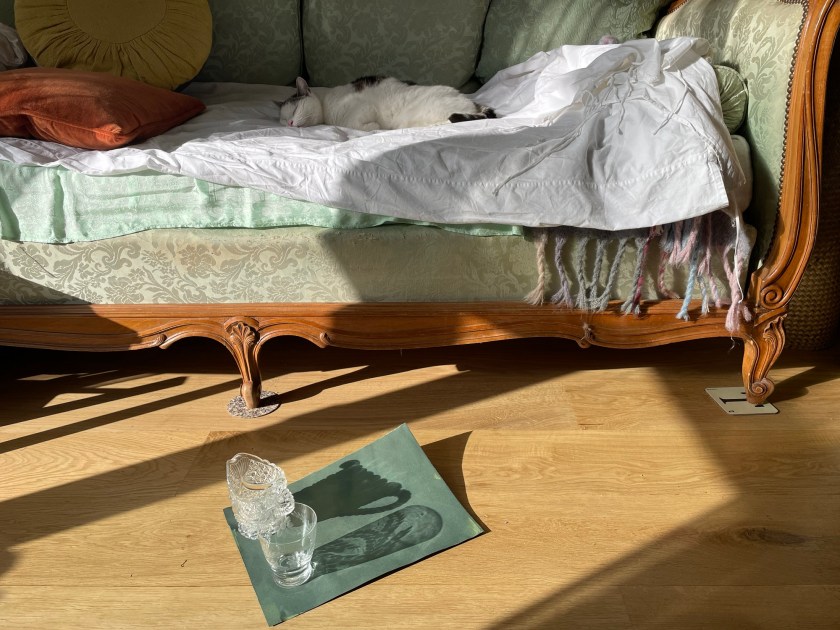
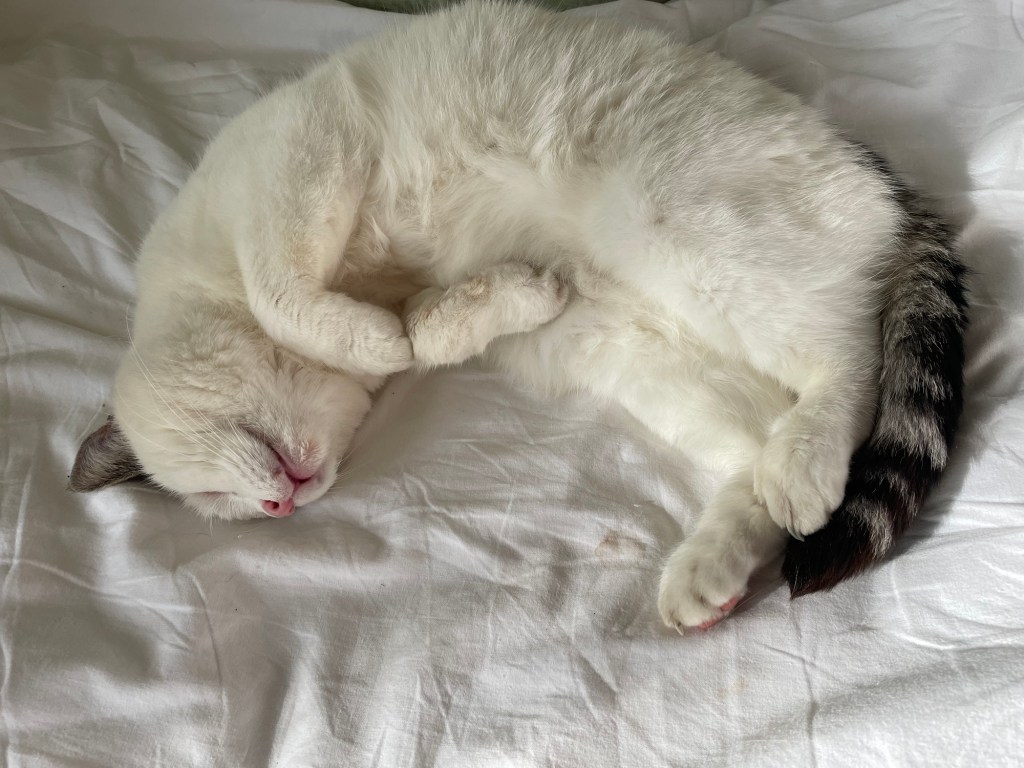
Surprisingly, at 8am, a break in the clouds allowed the sun to break through and cast a brief shard of light across the floor of my tiny flat in Sheffield. Alfie watches on as I place the two objects from home, made of etched glass or crystal, into the shard of light. The crystal glass was Susan Halcrow’s. I tear a pre prepared paper in half to experiment with what I have – a brief moment of sunshine, two objects, my floor and a little hope. Here goes.
The sun gives me about 3 minutes, not long enough to develop a clear image. I don’t move, the sun reappears, Alfie lies down and I hope at the wonder of what might emerge – in total I have only about five minutes of sunshine which matches my impatience.
While I wait, I’m thinking of the shadow moving across the paper, even a small amount will blur the image, if the image will take at all and then I am thinking of the movement of time – the Japanese concept of Ma, ( the space and pause between all things) that I am interested in and I watch as the sun hides again, the paper is cast into a shadow and a faint image is exposed upon the paper. I take my chance.
This is one of my processes. Experimentation – either with wool, colour, photography or cyanotype – to take a chance in the moment, with what I have to hand.
My field of Art has been knitted textiles for a long time, including a Masters in Knitting at Nottingham Trent University 2016 – 2018. I often placed my knitted textiles into the landscape to create site specific photographic art which explored the social histories of women and the making of knitted articles.
I am currently working on a wall based knitted jumper piece called, ‘I Cannot Reach You.’ It is taking into consideration the Japanese concept of 間 (Ma) – the silences and the spaces in between all things, and relating it to the relationship between me and my sister.
I would like to learn about the meaning and concept of the Japanese word Ma 間and relate it to the way in which I experience life, don’t you think it would make life fuller? We do not have this word or meaning in England and to look at the spaces is as interesting as looking at the solid things.
I would like to explore what ‘Ma’, looks like to me, in the space between all things and use textiles and print to express my new understanding of this. If you are Japanese and have and wisdom to share, please do.
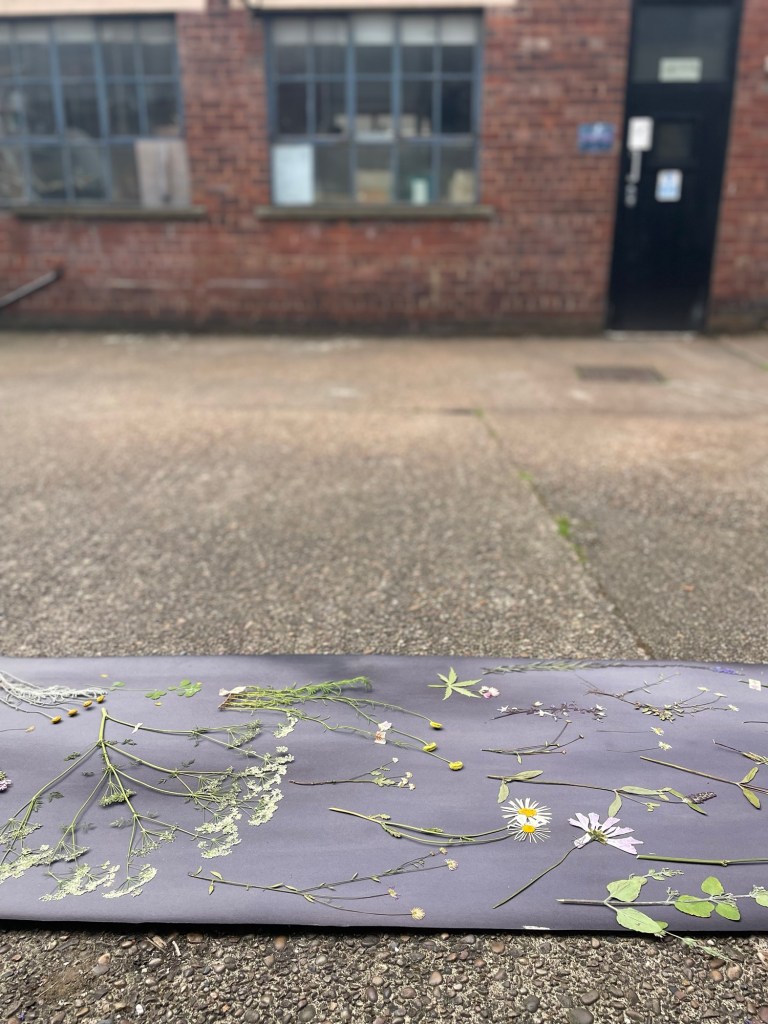
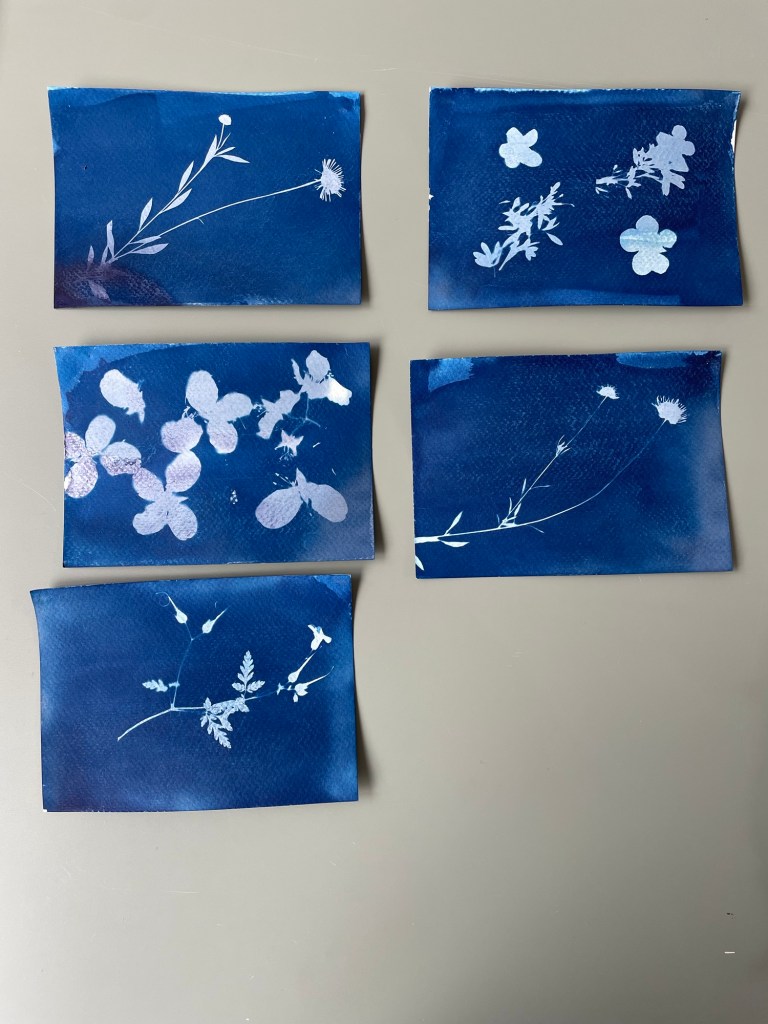
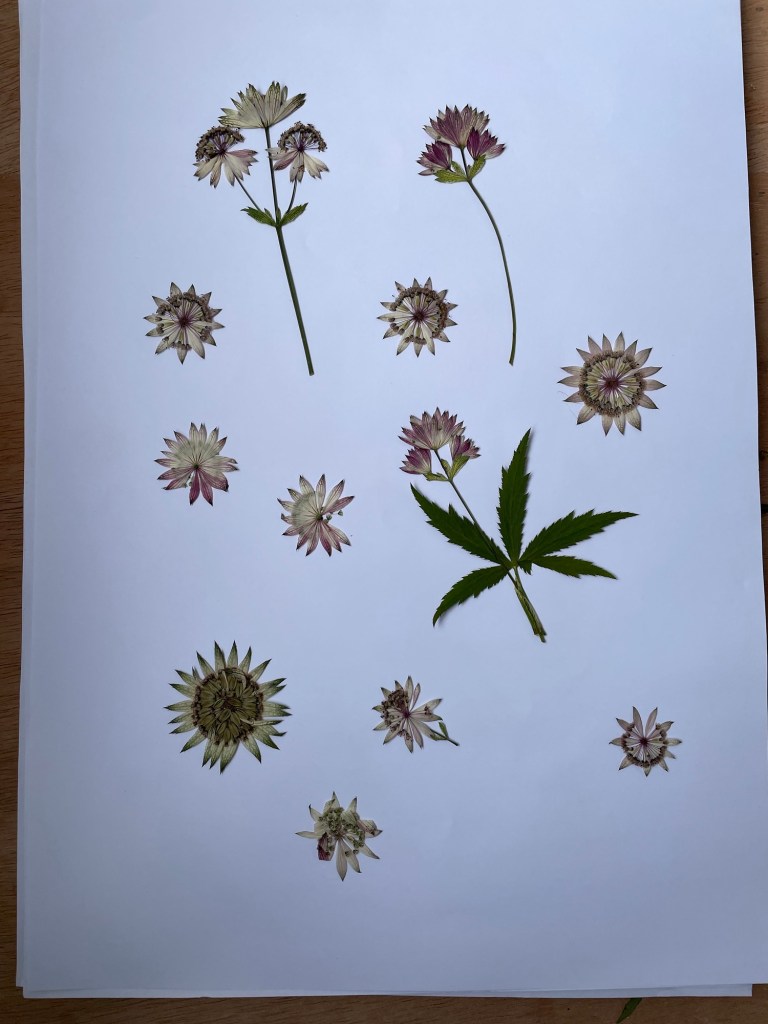
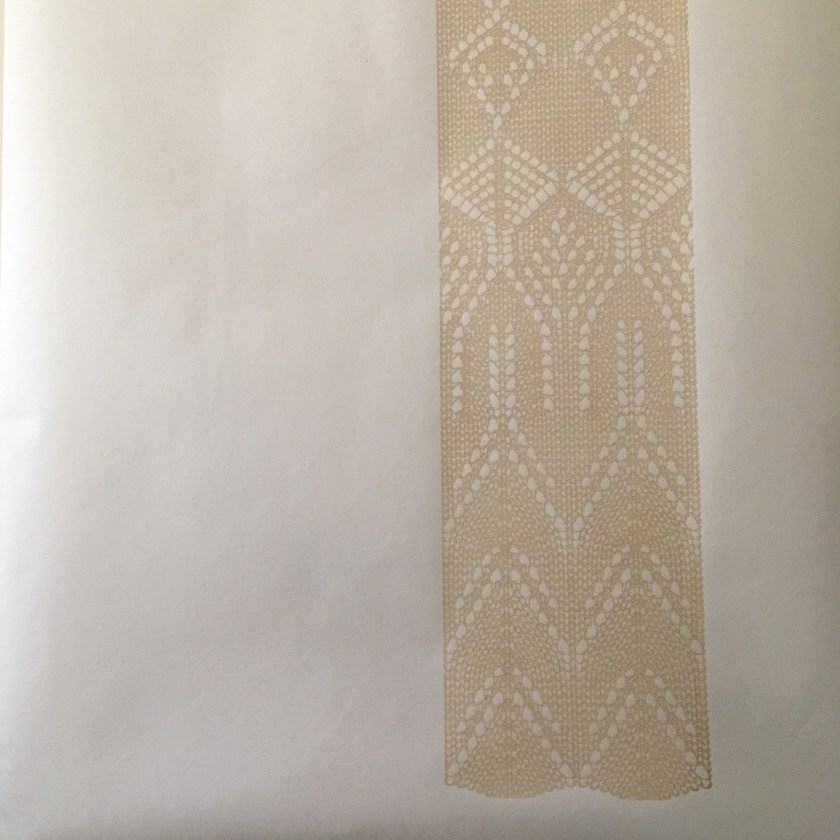
I have recently started to develop Cyanotype prints using pressed wild flowers to create images that are often half present, a little ghostly. I am looking at making wallpaper strips to utilise the cyanotype printing process to create the deepest blue papers with hints of British wild flowers, to look a little at the spaces in between in the prints. Yesterday, I made to sample strips out in the yard at bloc studios, where I have a small space to work.
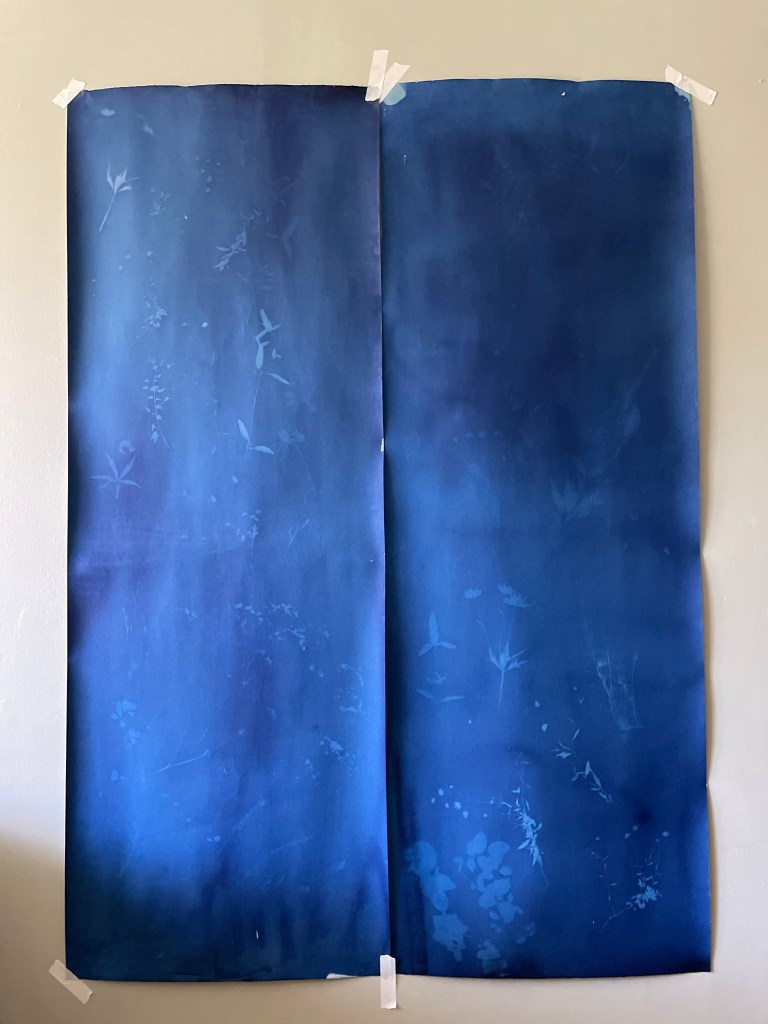
Currently, I am experimenting and, as you can see, the process is open to risk and failure, but the two wallpaper strips are becoming more loved by me because of the spaces in between. One has less impressions of the flowers than the other due to both my impatience of removing the flowers and due to the wind shifting them but maybe just pure blue is lovely enough with a hint of a story of flowers in smaller areas – less ‘gilding the lily’ to speak.
Today, I hung the papers on my wall at home to really look at what is present and what is a faint mark only, and what is in the spaces. I like the results, in some way, they remind me of the Japanese screens that I saw in the temples in Kyoto. But maybe I need to make them more sparse. Let me know your thoughts.
If you would like to join me in my next online workshops, they are in the link here.
If you would like to contact me about hand printed cyanotype wallpaper strips, please do so 😊
If you would like to follow me on instagram, where there are lots more images, then, I am in the link here
This weekend, I have watched two films online – the first, Jo Jo Rabbit and the second, ‘Hunt for the Wilder People’, both directed, (amongst many other things ) by Taika Waititi, a New Zealand Film Maker, then of course, I looked up Taika and watched his TedX talk from 13 years ago and already saw the influences from his part Jewish back ground in his writing of Jo Jo Rabbit, and in which he stars as Jo Jo’s imaginary friend, Hitler.
In his TedX talk, Taika, says all of the things he does, ‘they’re all tools’ he painted, wrote poetry, made films, travelled, was a comedian and all these things visibly influenced his work then and now.
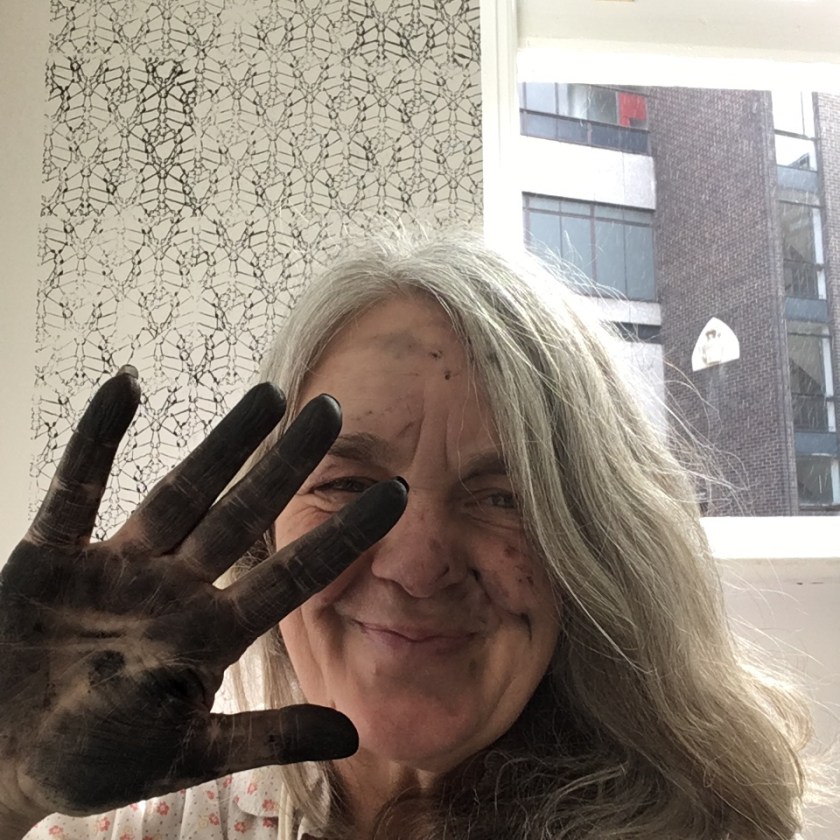
I looked around at my tools, knitting, crochet, travel, drawing, photography, writing, sewing, colour, landscape, and noticed that, of course, these are my tools. The tools I am bringing to my new studio -which, at the moment looks slightly hopeless on the output front. I am playing with cyanotypes from attending a small workshop here in Sheffield. My hands are dry from washing papers out in water, the washed out liquid colouring my fingers. I wondered if the studio is one expense too much for me because I will not earn from it. And yet, here I am, on a quiet Sunday afternoon, after visiting the Buddhist Centre at Walkley’s, Summer Fair, I am here, present, in this tiny room with windows on both sides, sunshine pouring in, Gorecki Symphony of Sorrowful Songs, playing to me and I am content.
I’ve opened my tin of Lomo photographs from when I lived in the Hutongs of Beijing, the winter of 2010/11 to remind me of the far off places that I have been and to bring a thread of future travel here in to the old steel works building – which embeds me in Sheffield.
I am learning new things and Ideas are coming, practice led ideas but for now, I am excusing my inability to produce anything profound, by say, ‘ I am playing’, though for how long, I do not know.
If you are in Sheffield and want to come and visit me, get in touch. If you would like to support me, then please buy a knitting pattern, this will help pay for my studio 😊 the patterns are here, and very good. The patterns are here
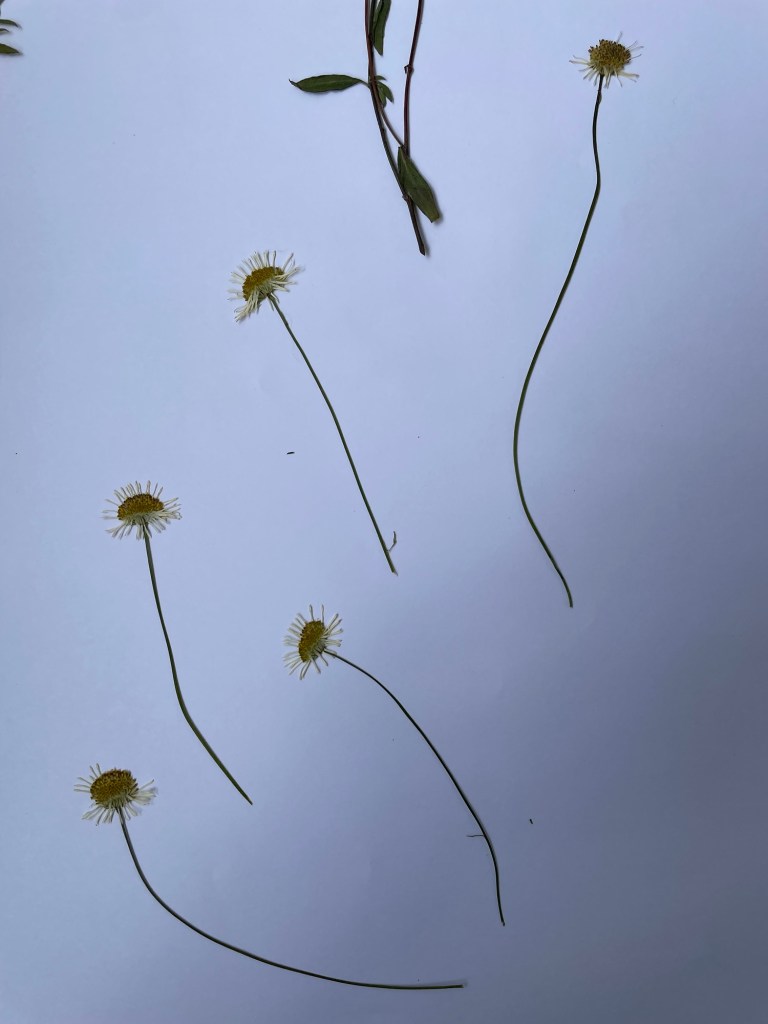
I am making cyanotypes with all the pressed flowers from my garden and from hanging over walls in the city. This is my favourite one so far. I actually like the accidental finding of washi tape that is holding the tiny daisy in place.
When I moved to Shetland, I just flippantly mentioned, ‘write to me’ in one of my instagram posts after I shared my writing space in the croft house. Over 100 people sent postcards, this time, it is different. I am in the city, but I am still me.
Today, I am in an old steel works in Sheffield, If you fancy sending me a postcard from where ever you live, then I would love to receive it. I am in
Studio 10, Bloc Studios, 4 Sylvester Street, Sheffield, South Yorkshire, S1 4RN
I am hoping to go to Japan on an Artist residency and have created a Fair Isle vest worksheet in order for any pattern sales form this £5.75 pattern can go towards my savings for travel expenses (I may only get as far as Manchester 🙂 ) but it is an earnest start.
So, I have been busy today – 2 posts in one day – never before has this happened.
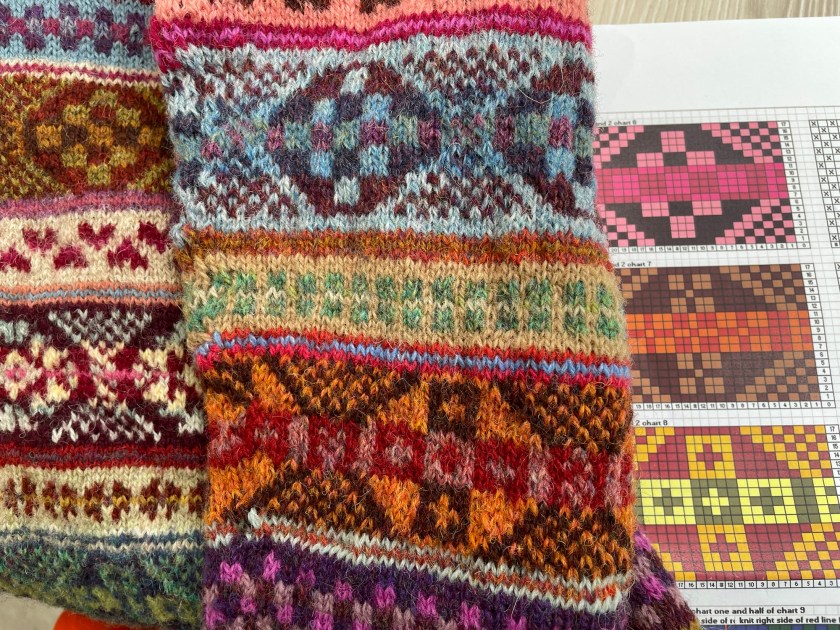
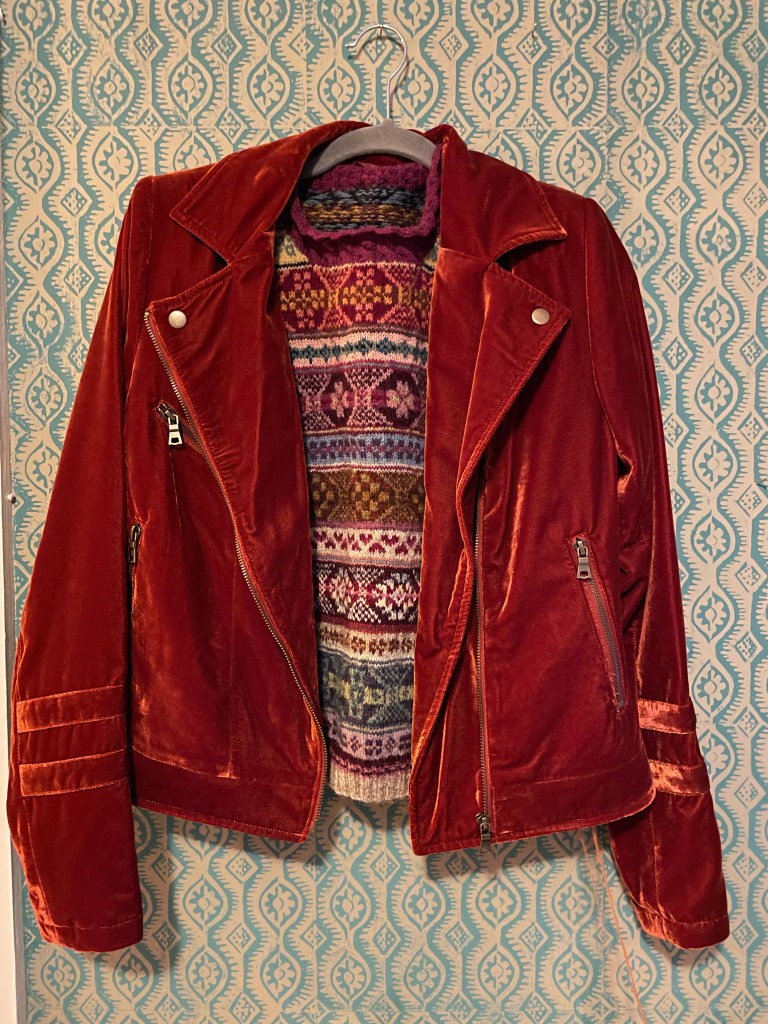
Every motif that I have knitted and every colour that I have used in my original vest turned pullover and every chart that I used when I added the Fair Isle sleeve is included in this Worksheet.
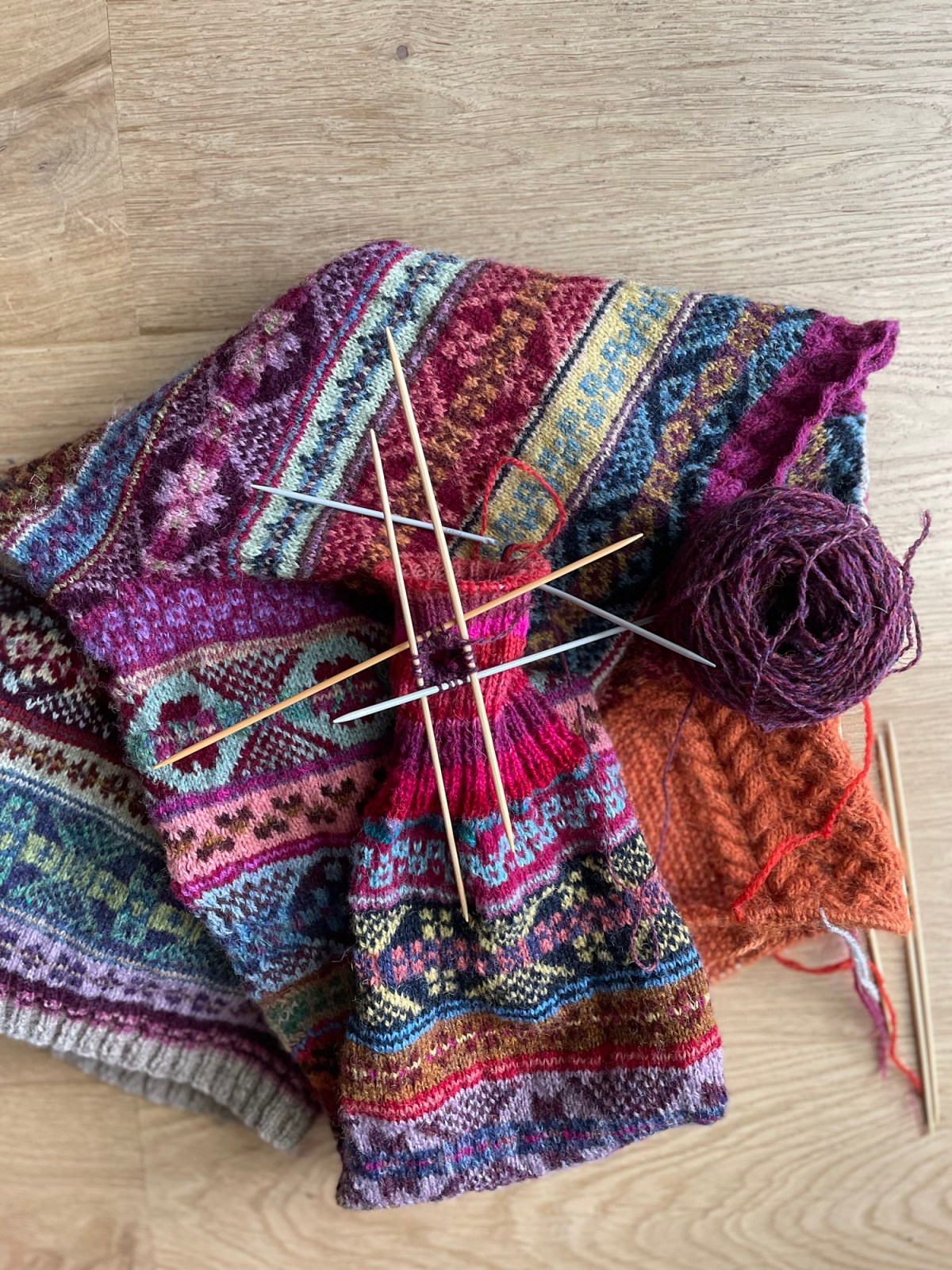
I first started this knitted piece whilst on holiday in Italy, last June. At that time, I had no plan or idea what it would look like or what it would become because I was ‘just knitting in the round’ starting with lilac and blue and green. I was using the motifs that I had developed in my Stash Buster neck warmer pattern, to play with design, colour and texture to make a Fair Isle Vest using only the OXO patterns from Fair Isle with a bright twist on colour.
Knitting, I have realised, is a compulsion for me. Sometimes, I try to leave it, to do other interesting things but it is not long before I am drawn back to it. Knitting is something I have to do every day – for relaxation, design, creative development or learning, for experimenting with colour but I do not knit with the aim to monetise my designs or findings. Maybe the work develops into a pattern but it is not my first aim to design patterns – knitting is my lifestyle. If I aimed to make money from the beginning – two things would happen – pure playful creativity would go out of the window and two, patterns do not earn me an income. A £4 pattern is cut to about £2.90 after Ravelry and Paypal have taken their cuts. Considering the hundreds of hours that goes into a pattern, making £2.90 isn’t really the driving reason to make it. If I only make patterns with the end user in mind, then a creative design concept just becomes a product. It has taken years to understand how I work – A Fine Art Degree, A Masters in Knitting, travelling to and from Shetland for years, living in a croft house by the sea in Levenwick, but mostly, it is my love of colour that has developed my practice and out of this was born my online colour blending workshops so that I can teach other people how to develop their own skills in how to blend colours within their Fair Isle and stranded knitting projects. If I can make a pattern, or share a story or idea, I do – so that others can also learn from the colours.
My reason for finally producing a Fair Isle Vest Worksheet , is because I have been asked so many times for a pattern and because I have decided that the earnings from this chart will go towards my savings for an Artist textile residency that I hope to do in Japan.
I have some faithful social media followers that have been with me for years – all through my Shetland move and back to the city, all through the workshops and every pattern – we have become friends and I respect them greatly. Janet, Lyn, Cheryl, Yve, Shona, Berti, to name a few.
So, what have I produced here, what am I putting out into the world?
So many people have asked me for my Fair Isle Vest pattern – I have pointed them in the direction of the Stash Buster Neck warmer where there are many motifs so that they can create a jumper, like I have but they don’t want that – they want a vest pattern. But I cannot produce a vest or pullover pattern in every size that would make everyone happy. To alter the stich count and where the motifs lie for everyone would take months. My life doesn’t have that time and I am not a pattern editor – I have done it previously with the help of a friend from America where we spent months number crunching the Dear Susan pattern to deliver it for multiple sizes. It is not an easy job and takes forever to check everything. I am but one individual person – spending 3 full months designing a full pattern, at this time of my life is not what I can do.
So, I have made a series of 2 fabulous, full colour A4 charts (body chart and sleeve chart) with all the colours listed alongside, that I used in my own knitting project – to give you the tools to make your own road map for your own vest or pullover, or scarf, or hat.
The complete charts included in this work sheet, are not a jumper pattern, nor a vest pattern. What I have produced is a worksheet including the entire range of motif bands, built into a body and a sleeve chart with a clear centre stitch line. One sleeve is Fair Isle patterns – the other is Aran, following the plaits of how I sometimes braid in my hair.
These 2 large charts include 23 motifs and colours are a treasure trove of endless possibilities for you to be creative and make your own vest or pullover by incorporating them into your own favourite vest or jumper pattern. Use any colours that you have, use any wool that you have, use 2 colours, or like me, use over 90 colours. I am giving you a recipe for you to enjoy and work with in whatever way you want. I am giving you 23 fully lined up Fair Isle charts to knit in any colour you choose to make your own design. Recently, I have been reminded of how Kaffe Fassett, in the 80’s made beautiful patterns in books and wrote, ‘ choose 9 balls of varied light colours and 9 balls of dark colours’ and people ran with that, me included. Sometimes, he would write – use double knitting yarn, sometimes he listed the yarn and the exact colours.
If you run with these charts, you can use your favourite double knitting yarn and the jumper will be how you like it to look and feel with your favourite yarn, incorporating some or all of these Fair Isle motifs.
My jumper is knitted in Jamieson’s of Shetland spindrift using over 90 colours – some small lengths, some longer – these colours I have had left over from previous projects. As the colours are not often repeated, not great lengths are required. But you can do this differently. Use your stash or buy just 4 colours or even 2. The choices and permutations are endless but this relies on you. It relies on being excited to try this, to work out your centre front (which in my case, mirrored my centre back) and making sure that your motif bands align. It is about enjoying colour, swatching to experiment for colour combinations. It is a fun package and I would love you to have a go.
It has taken me nearly one year to design and make this jumper – it has taken 3 days to map out the motif bands and make the chart used in the body and in the sleeve and another 2 days to pull it all together.
If you have done so, I want to Thank you for buying my pattern for the charts – you are supporting me with saving towards my artist textile residency.
here is where the worksheet is at – let me know your thoughts on this one year project.
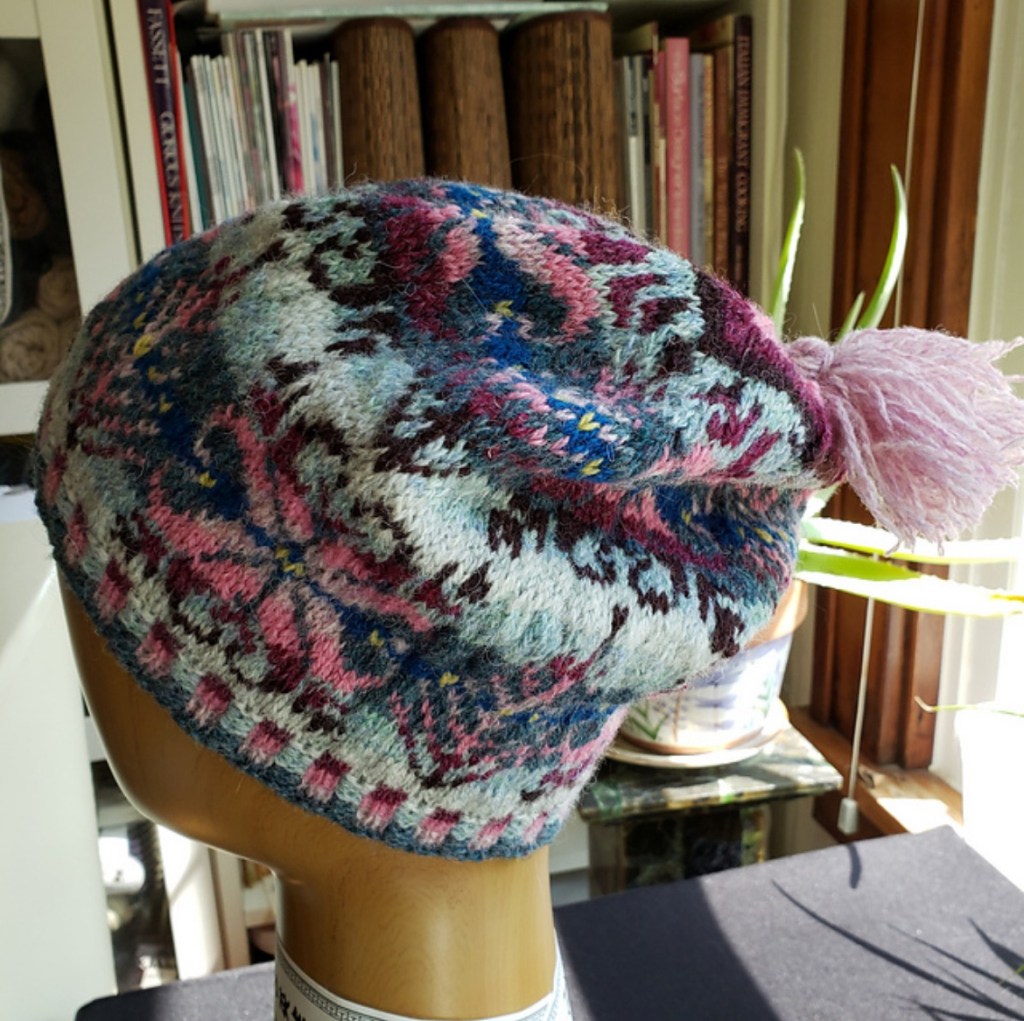
I thought that it was the Sea Urchin hat pattern’s third anniversary, but, because we slipped into 2024, when I was in Japan, I finally realised that this unassuming first design pattern of mine, is a big FOUR years.
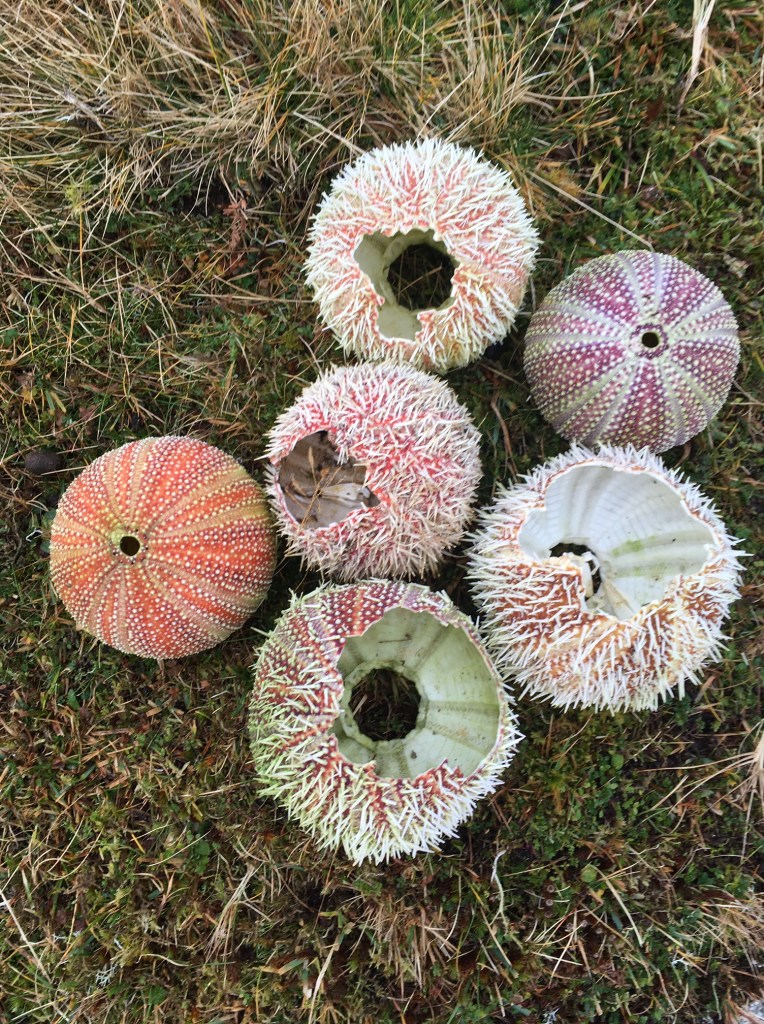
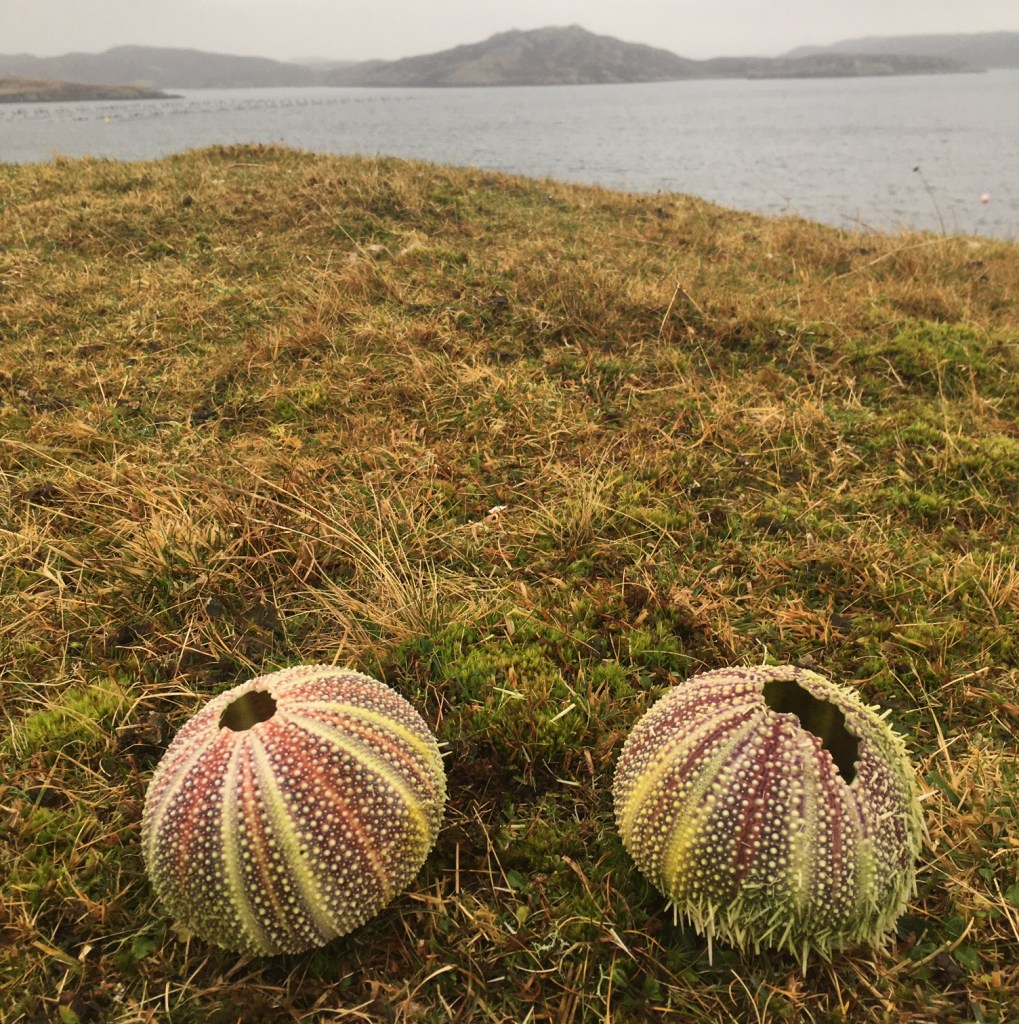
I gave it the name of Sea Urchin Shetland pattern, after collecting Sea Urchin shells in Brindister on the West coast of Shetland in the December of 2019.
There were so many on the hills making the lunch tables for wild birds to crack open sea shells, that I began to call the place, ‘Sea Urchin Hill’.
So much has happened since the inception of this little beanie pattern, that I had already been making up in vintage tapestry yarn for some time. In January 2020, I formalised the pattern a released it. I didn’t know about test knitters or pricing or anything, and it flew. It was the colours, you see. I made the pattern beanie up in my very first use of Jamiesons of Shetland, Spindrift, after returning from 2 months of living on Fair Isle with Mati Ventrillon, as intern, at the age of 56. It was around that time, after many visits to Shetland, that I began to feel at home there, and think about moving to the islands.
I look back to the time of writing and designing this little pattern and now see that is it was the Kickstarter to my creative design process – the beginning of how I saw colour in knitting and how I began to blend those colours. The pattern became incorporated into my online colour blending workshops and was the possibility for a new me.
I designed the pattern on the doorstep, out back of my Sheffield flat using the yarn from Jamieson’s, posting little posts on Instagram, building what I didn’t realise then, was an interest in the pattern and in my colour ways. I began dreaming of living on an island 60degrees north. (the full story unfolds here and you can read Aug – January of the book I wrote, if you join us on Patreon now – then each month will drop on the 1st of the month) and enjoyed how I mixed the colours to sing.
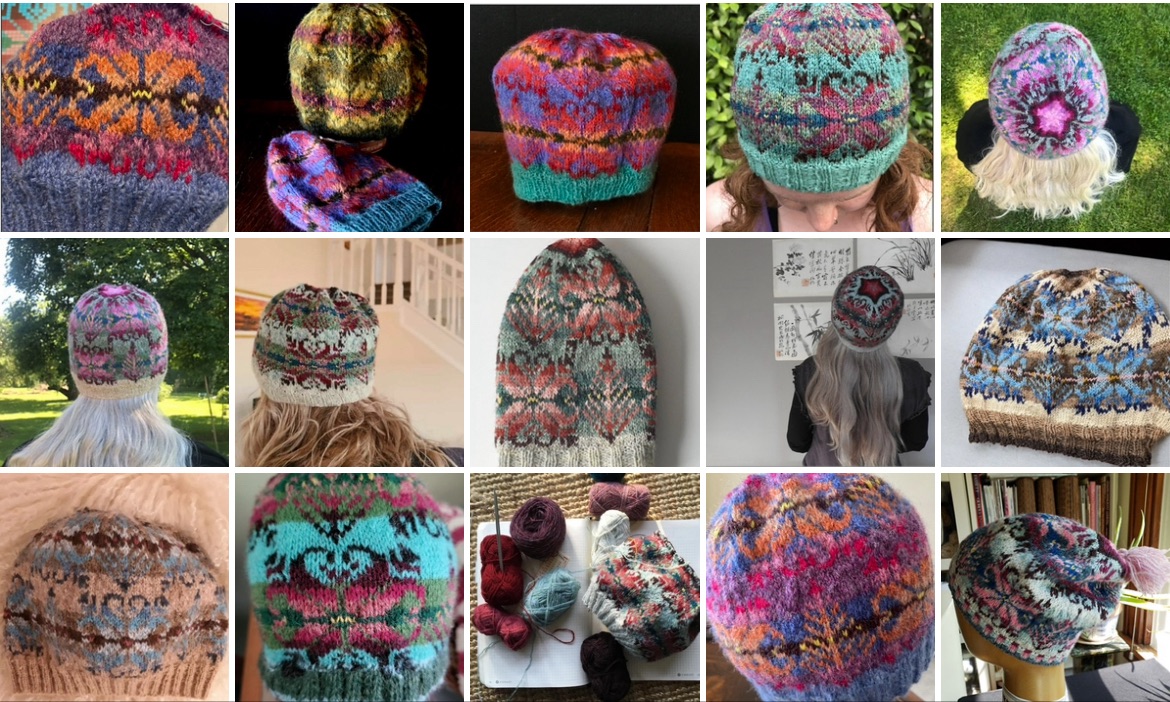
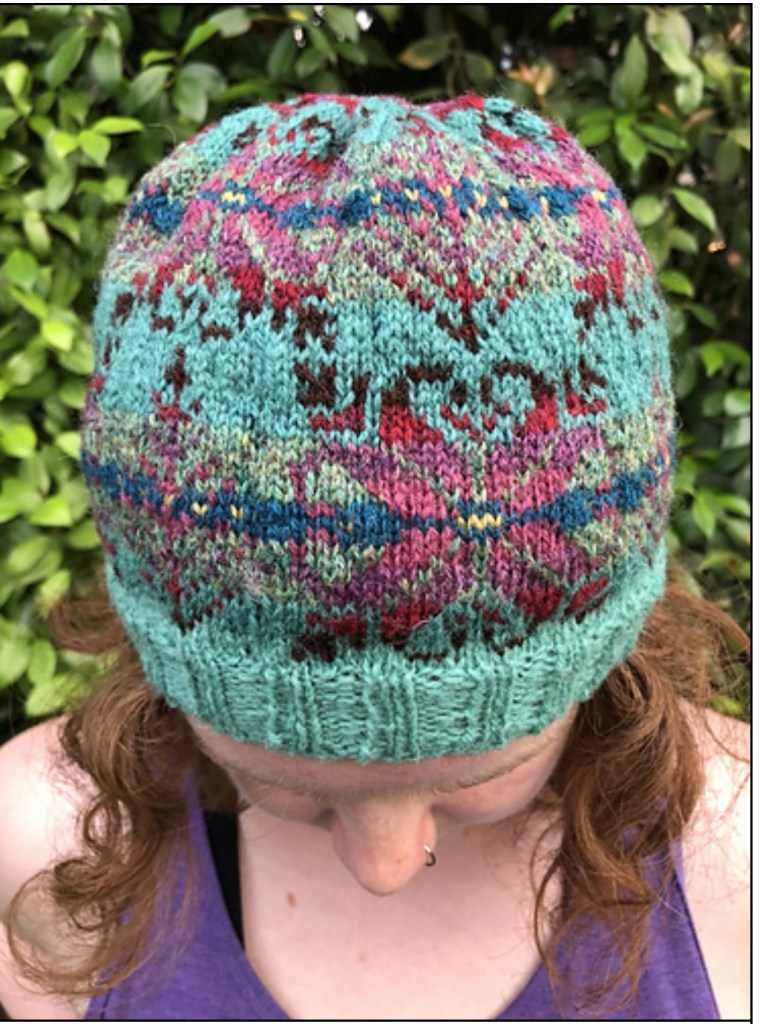
It makes me really happy to see this pattern interpreted by knitters in their own colours, some of which are included here. If you have knitted this pattern, please tag me in your posts so that I can see the results.
On 4th October, I met with Irina Shaar of Fiberchats, online, to have a little chat. It was pretty in depth because, I appear to be a talker. Stories of my journey in how I learnt to knit and my knitting journey were an initial soft entry into the chat. Topics such as ‘what constitutes an original design’, how do I teach colour blending workshops?, why did I move to Shetland? and did I fit in? talk about my book and other topics are all covered in the chat. I was totally honest, slightly guarded but honest.
There are things that I learned from my chat with Irina – to go for something new, to be out there – warts and all ( I look like my mother) to put my trust in a recording that was not at all edited, to find a joy in what I have achieved. To actually hear myself talk about what I have done in my life.
My life so far, has been a small but interesting journey. Of course, the 44 minute podcast only scrapes the surface but under that surface lies a challenging, sporadic, optimistic journey with many dents and bumps and breakages along the way – a bit like my knee at the moment, because I came off the bike – visible on the surface but such a lot going on underneath.
In the podcast, I talk about my knitting journey, my Masters at NTU in Knitting where I developed my skills in CAD fine lace knit which I took back to Shetland and placed in the abandoned derelict homes of the knitters long gone.
Unst – 2018
If you go back in this website, you will see all the Shetland visits to abandoned croft houses.
With Irina, I talked of writing to Sarah Burton at Alexander McQueen’s and working with them for a while whilst at Uni, and how that happened, and also, how I got on a train in Sheffield and got off in China.
Irina asked me about my online workshops, and about the book I wrote whilst living in Shetland for which I had an agent but no publisher. If you have ever wondered what it is like to move lock, stock and two cats to a remote Island, I am releasing the chapters in monthly instalments on Patreon. There are already 4 months posted – August to November, filled with the joy of buying the house, walking to the village beach, collecting flowers, shells, and sunrises, whale watching, soil digging, paint stripping. December’s will come out on 1st December. There are also knitting posts, with downloadable Fair Isle motifs in colour and b/w – It is all there. Well, it is all here.
Around the 18th March, I began to receive multiple messages from friends on different platforms with a link to a tiny house in Shetland. On that day, I should have already been in Lerwick, but I wasn’t because the hostel had finally closed on 16th and the interview on 19th that I was going for, was finally agreed to be a skype call because of the Virus which we are all now well familiar with. I’d been looking for a little house in Shetland for some time, having looked at one myself, in the old lanes in Lerwick, in November. Then, a friend, went to look at another for me in January. But March, the little house in the sunshine-flooded image didn’t just speak to me, it shouted my name which appeared to be written all over it.
I called the agent who had a viewing day of Smola, on Saturday 21st, the last of all viewings of properties before lock down. As I couldn’t attend, I was sent the house report and two small videos – one of inside the property and one of the byre. Although the tiny house is basic, it is perfectly formed and without question, it seemed ideal for me and the dreams I have of living in Shetland, but on the Monday 23rd , one of the Saturday viewers had put an offer in on the tiny house and I lost hope and duly whined about it on FB on 25th March. This was not just a house to me, it had become a dream filled with ideas of sharing it, offering artist exchanges to exchange and share skills with each other artists and the wider community, artist retreats, workshops, air B&B to friends and people who have connected with me on Instagram, but most importantly, it would be a home where my (art) work / and life would become without borders – indistinguishable.
live work studio in Sheffield , April 2020
live work studio in Sheffield
I was screaming inside, it should have been me because during the preceding developing 7 days, I had been booked to be in Shetland and could have been there, seen it, felt it, put the offer in but instead, I was in my tiny flat in Sheffield forced in to lockdown feeling helpless.
Then, Beate, a friend of mine, messaged and said, just put an offer in. It was the most practical and real advice I had been given, so I spoke to Emma, who put me in touch with Barbara, who in turn, put me in touch with Chris, who had rented the little house for 3 years and he told me about it. So, the house was more known to me and some questions were answered. And, in any case, I had already fallen in love with Levenwick last August
Levenwick August 2019
Are you still reading? After all the chronological dates and lost hope? Here’s Levenwick when I was there last August
That weekend, I thought about nothing other than the tiny house and artist exchanges and workshops on knitting and design whilst all the time mentally composing a letter in parts to the owners of Smola, in order to compete with the offer on the table already. Without seeing, smelling or touching the house, the letter flowed. I was honest, direct, clear and shot from the hip on the financial offer. On Monday 30th, I emailed it to the agents with the letter and offer, then promptly let it go. I went to work at Ryegate Children’s hospital where I’ve been a temp medical secretary since early Feb. Just because of a pandemic, the children don’t stop being ill with severe neurological issues, so I didn’t stop going to answer calls from worried parents, arrange medication and type consultant letters from clinics. I got on with my week. The pandemic gathered steam and I started knitting. Below are some of my recent designs.
On Thursday, 2nd April, I got a call from the agent. I assumed it would just be a rejection call. But it wasn’t. The sellers had accepted my offer on the proviso of a non refundable deposit to take it off the market and that they would wait for me to sell my flat. Since 2nd April until 17th May, two Shetland solicitors have been involved in writing the agreement for this non-refundable deposit, which I signed, in a wood in Sheffield on 8th May, honoured by my friend Deborah witnessing and co signing the document, and Lola the jug waiting as patiently as she could tied to a branch.
My great friend, Deb and my borrowed joy – Lola the Jug signing the non-refundable deposit agreement.
in the frilly wood with deb, lola and an agreement.
So there you have it, just over 8 weeks after seeing an image, both moving and still of a little house in Levenwick, I have signed a document to say that I will pay the non refundable deposit, deductible from the cost of the house, if I finalise the Scottish missives and all the papers to purchase within 3 months – an IMPOSSIBLE task. After the initial 3 months, I have a further 3 months agreement with the same terms but the first non refundable deposit isn’t carried over – that becomes lost. I was asked by a friend, – ‘what do I get for my non refundable deposit?’ and I said TIME but my wise friend Deb added, security . So, I have 6 months to turn everything around, still in lock down, during a pandemic and a recession to sell my flat and to purchase my dream.
I have 6 months to make this dream come true.
A dream to truly live a life fully in Smola, without borders between creative thought process and daily life, with my 2 cats, to go swimming with Barbara D and the Selkie swimming group in the sea, to write the book with Shetland knitters – of their mothers and mothers’ mothers and their knitting patterns and the homes they lived in, to make site-specific art, to offer air b&b to friends and artist whom I have come to know over the years through my artistic practice.
I can imagine the artistic exchanges that I hope to offer twice a year to share skills and art with other practitioners including and open call to hand block printers, wallpaper printers, basket makers, knitters, painters, writers and I can see it all happening in that tiny house. I am keen to be part of the village of Levenwick, keen to give and not take by being a supportive member of the local community and I want to make art, knit, share Smola with other artists, create exchanges and opportunities for others to come and work in and draw creativity from the fine little unassuming place.
This is my dream.
If you are interested in supporting this idea, please contact me.
If you are interested in future residencies or exchanges, please sign up to this blog so that you will see further progress on my move to Shetland because if it does not happen with Smola, then it will be another place.
If you are interested in coming to share skills, stay in the tiny house with me as an air B&B, also please let me know by contacting me through this website then I can see how many people would like to share of this dream.
If I do not make the exchange within the time – I will realign my dream.
In the meantime, if you would like to support me, you can do this by buying one of my knitting patterns here.
I am also looking to create a website for Smola and the creative business I will carry out there and I am looking to buy a new camera to capture the beauty of this place and to capture the offer to others.
I also have started a new Instagram page for Smola, which is here and where you can follow progress.
I’m hoping to share this dream with many people. When we are allowed to take visitors, I will be offering Air B&B for single travelling women – I’ll also be offering residencies and looking to create artist exchanges. If you are interested in any of these ideas, please email me on the contact form.
Tracey
I look forward to hearing your thoughts on this new move
If you would like to keep up with my move to Shetland, please sign up to the blog here.
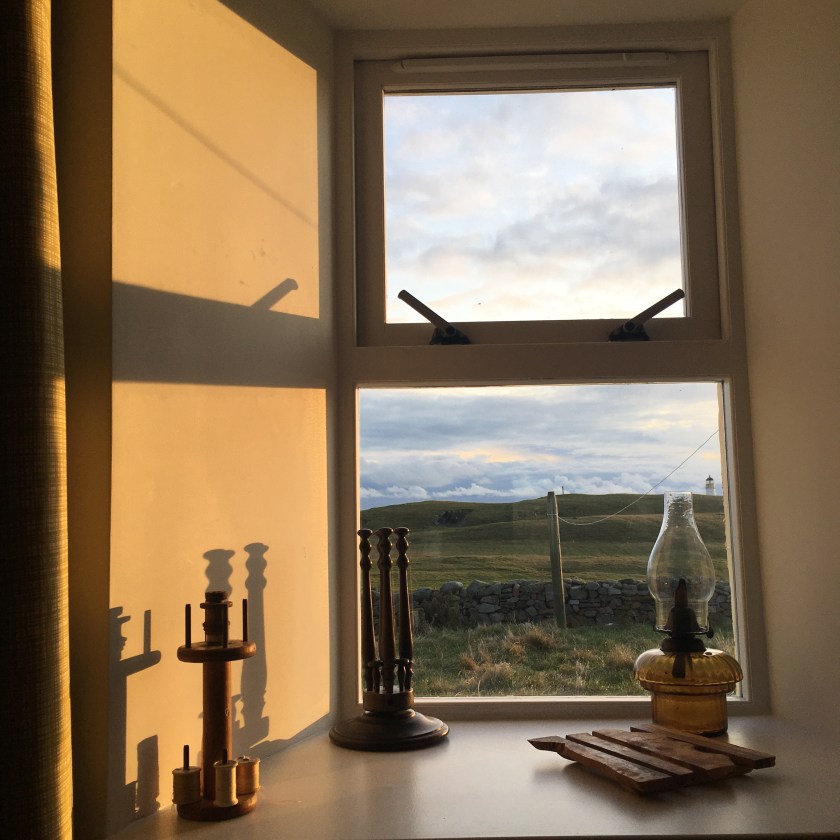
The light in the croft house dims sooner than at Mati’s house. The croft’s windows dictate the change in the amount of light within. Two – feet deep walls hold the place up. The deep walls narrow into the windows – each of which look out to every corner of the globe on this island which is only three miles long. I look out south-facing to the light house and gauge the weather by the grass waving or whipping in the wind and by the waves crashing or ebbing on the sea.
home for a while – Fair Isle
The intention is to leave no rubbish after my 9 day stay here. Everything has been bought at the one and only shop at great expense. Everything has come a long way and been handled by much transport – even from Lerwick, either by the local plane or boat from Grutness. I hand picked all the vegetables and packed them in brown bags. All of the peelings will be saved for the pigs at Mati’s, which are owned by four people and brushed by Saskia. I’m learning about animal behaviour from those pigs. They have grown from shy piglets arriving in a cage to grunting and squealing with anticipation at their one and only priority – food. One even bites the other.
Even after 3 weeks, Fair Isle is now so deep in my soul that
I already miss it and yet I am still here – how can that be? I miss the island when I am deep in the
moment of it. It’s like I don’t want to
lose it or I can’t lose it for to do so, would be to give up on a life less
ordinary.
I’m here with Mati as a knitting intern, (maybe the oldest intern in the West at age 56) I’m learning a lot, not only about knitting but island life, the sea, the wind, the land, grass, animal behaviour, the sun rise and whether the plane will come. Where can ‘A Body’ see an unbroken horizon at every window without hesitation. At every lift of the head, a huge deep basin of silver sea greets you. Seeing the sea, hearing it, tasting it makes it seep into your soul. The nights are so pitch dark that my heart quickens at the deepness of the darkness, when I open the door. Nothing can be seen when ther is no moon, except the light house light but even so, it adds to the eeriness of being able to cut darkness with a knife.
There is a book full of old images of Fair Isle islanders
here. I look at the women’s expressions
and how they stand unquestionably, stoically face on. They are all working hard with oxen, ploughs,
knitting, or peats. Maggie Stout of
Shirva is the woman that interests me the most. I cannot stop looking at her
looking at me. I can almost feel the middle
parting of her black hair with my finger – it is so pronounced. This place I am living has a long history. You
can find it easily. It is written across the stones in the grave yard. On a wet
Sunday afternoon, I look for Maggie on the stones. It’s beautiful. The names are listed on the stones, where
they lived and who they married. Women appear to bear their maiden names even
though they are married. History is
tangible here, as across all of Shetland.
How many women moved a curtain aside to look out to sea and wonder about
their men out there, wondering about their safety and return. The weather
changes at a pinch. The stones bear many stories of death at sea.
In this place are larger than life ship wrecked items of great beauty – two identical figurines and two mismatched simple chairs which add character and richness to this small croft house that I am staying for 9 nights.
ship wrecked
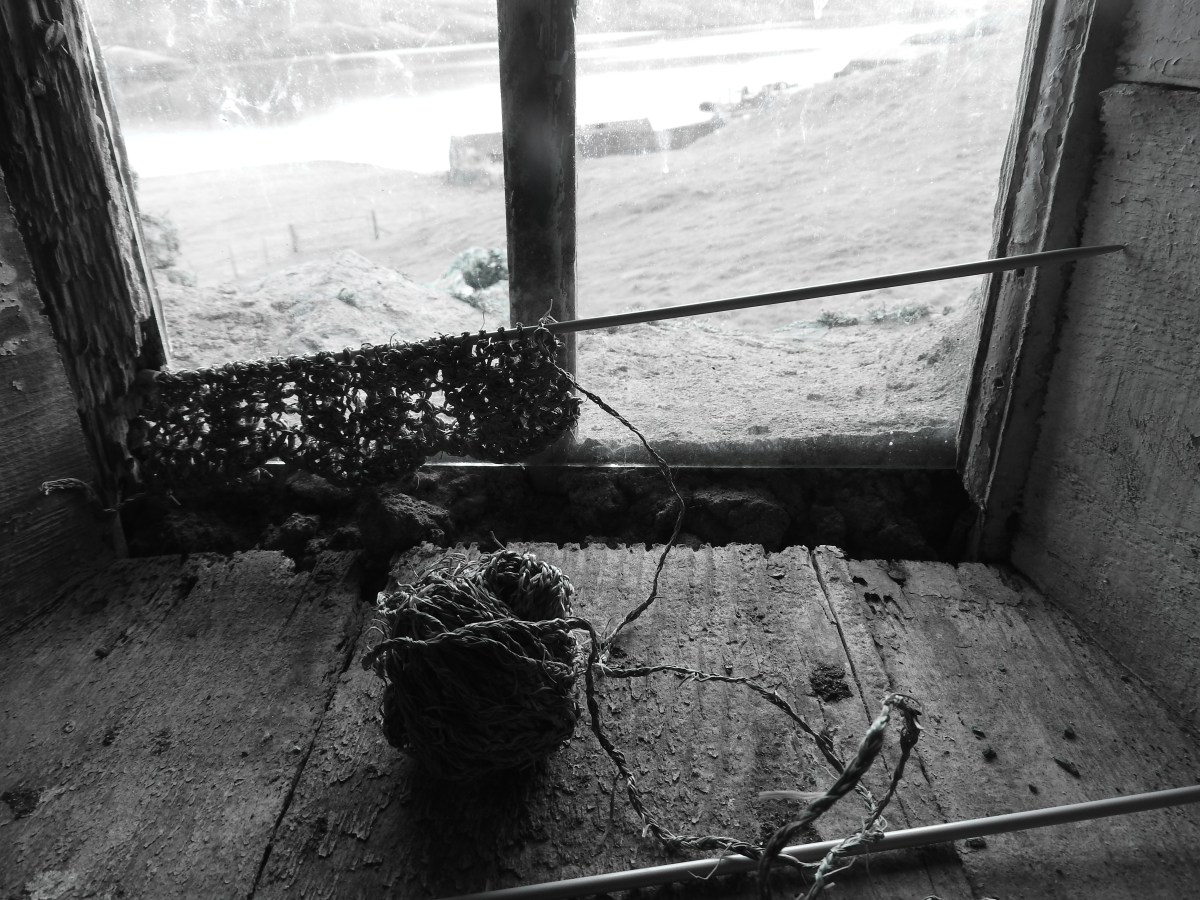
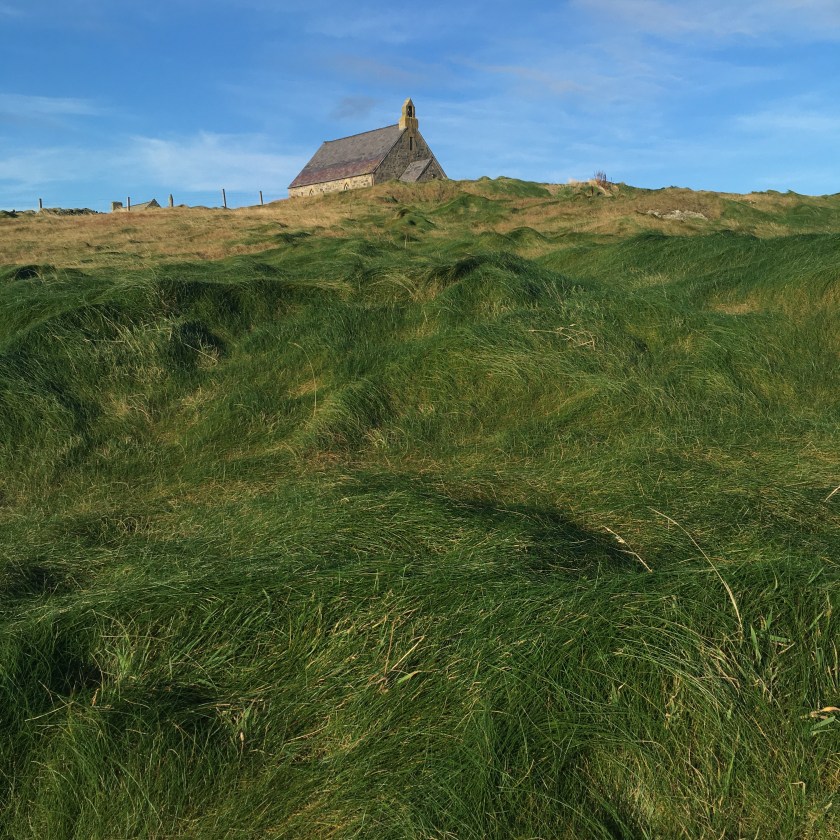
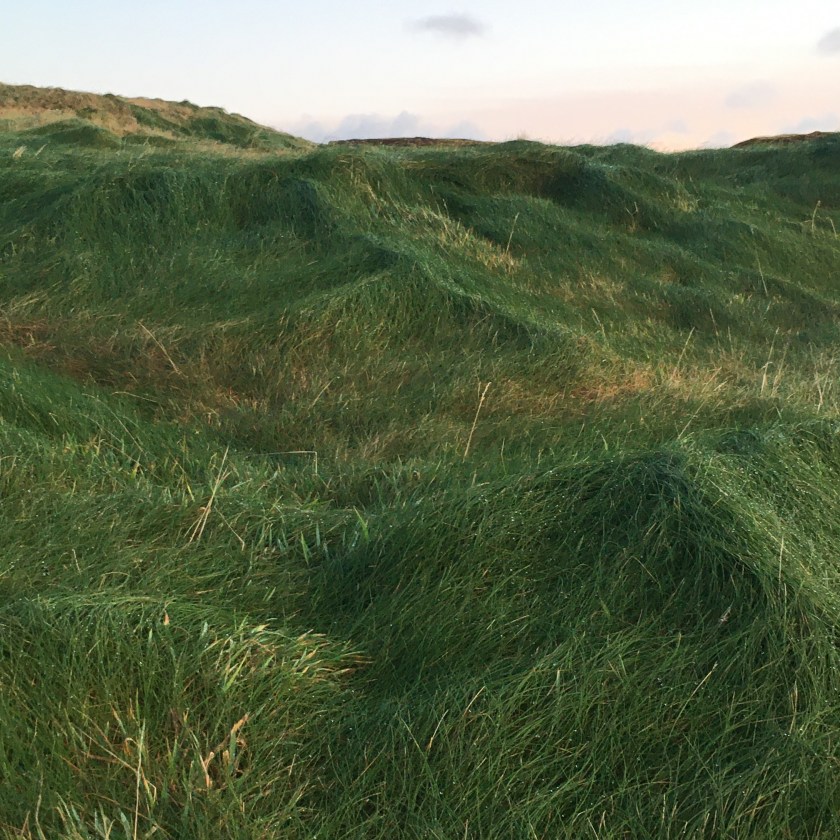
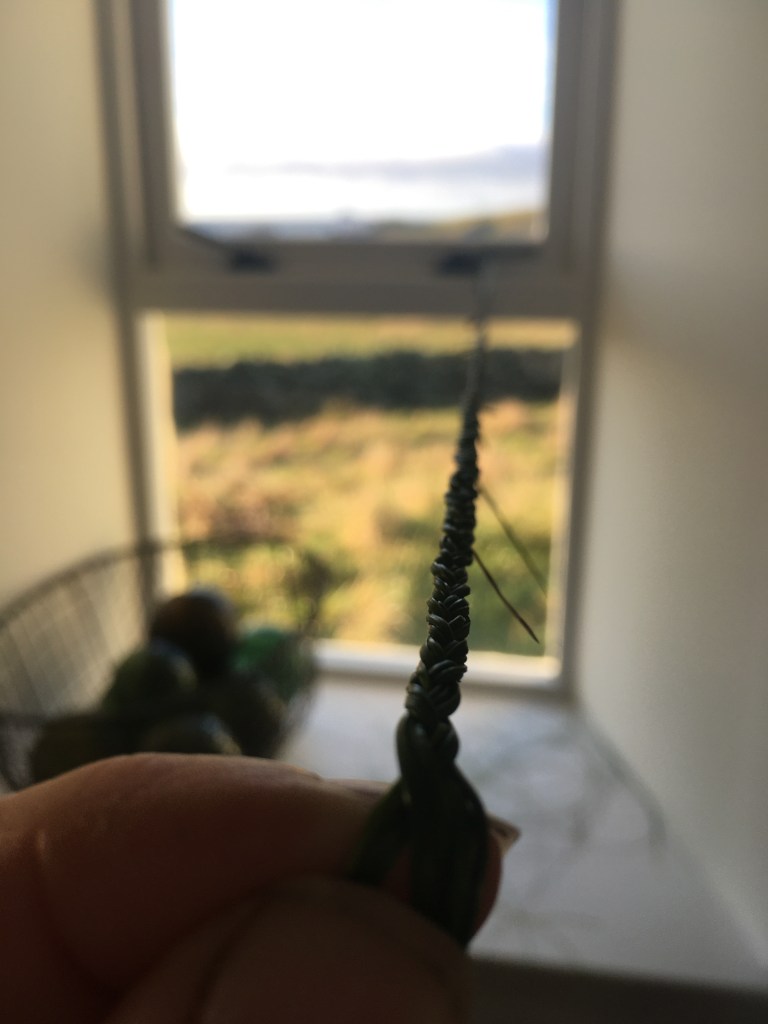
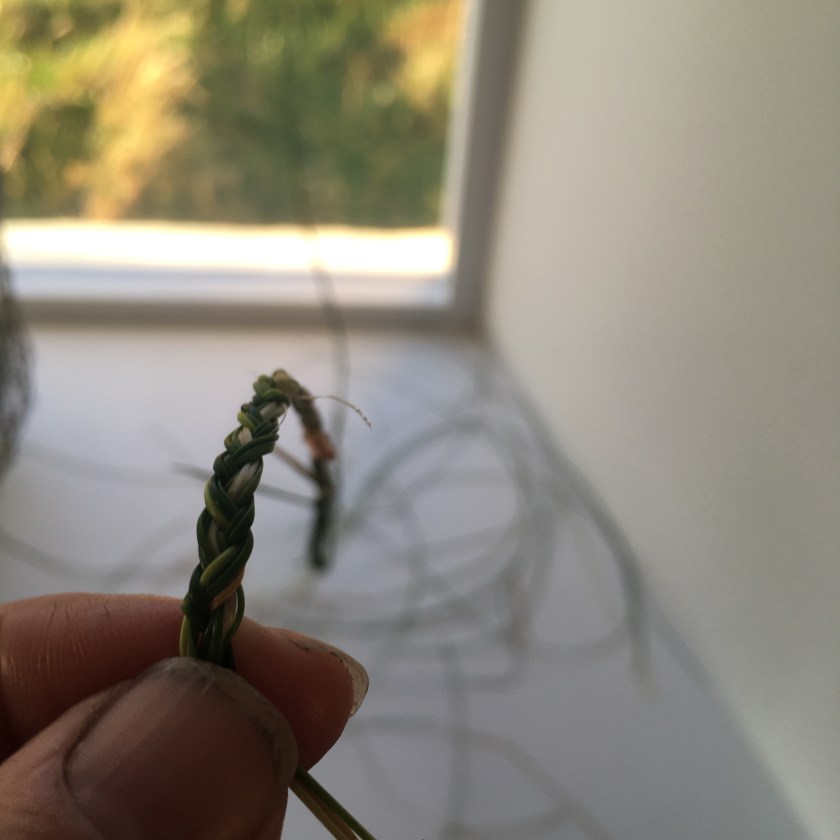
On the second day, Marie and I cut tussock grass, which is growing just below the chapel, with house scissors. We bag it. I want to knit it and make a lace curtain from its yarn. I’ve long since loved Shetland grass which grows at great length untouched, untrodden on and forms in dune-like shapes carved by the wind. We cut it without knowing its possibilities or strength. I spend 3 days and evenings plaiting the grass into a long length and a ball of grass yarn. The grass is strewn across 3 floors and stuck to everything. When knitting and unknitting, because I am dissatisfied with the results, the grass yarn bears the memory of the stitch.
I am using the resources of the island to create something to connect both with the island and with the age old practice of knitting in order to make site specific / site responsive work back in the Shetland landscape. It will be about the women knitters and a skilled craft that when placed within the landscape, will create a personally constructed context or narrative. My work is created around the theme of gendered women’s creative knitted work that is often undervalued and underpaid. I work within a place to learn the skills embedded within that area and I position my work back into the landscape to connect place, time, history, women’s craft and that pure moment in the present. If it works, for me, there is a distillation of experiences.
As I am working with the materials to hand – grass – and the thought of the women who lived in the croft houses here and how they knitted to subsidise the crofting income and how they dressed and looked in haps – I will choose to knit a hap lace edge and find the right window to place the lace knitted grass. It will be a window that women will have looked out of many times, over many generations whilst working on a croft in Shetland.
Over a number of weeks, I’ve been developing my creative practice whilst being privileged to have access to the facilities at Sheffield Institute of Arts (SIA) – I am one of the Artists in Residence on the 2019, AA2A programme. Until this morning, I was here, working with resources, talking with students, pushing my own creative practice boundaries and experimenting with my work. Then, last week, I presented my creative practice and process to the Extended Foundation students and on Tuesday, I’ll present to the MA, Design Students, on the Level 1, here at the Old Head Post Office (SIA), which gives me the opportunity to give back, in some small way.
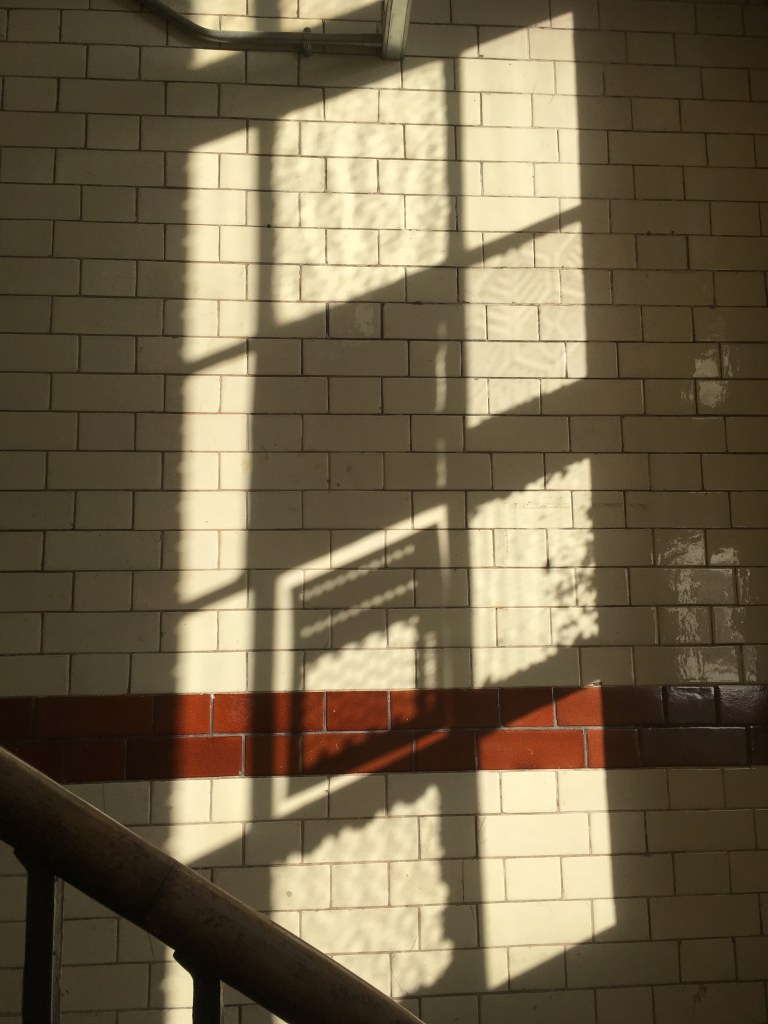
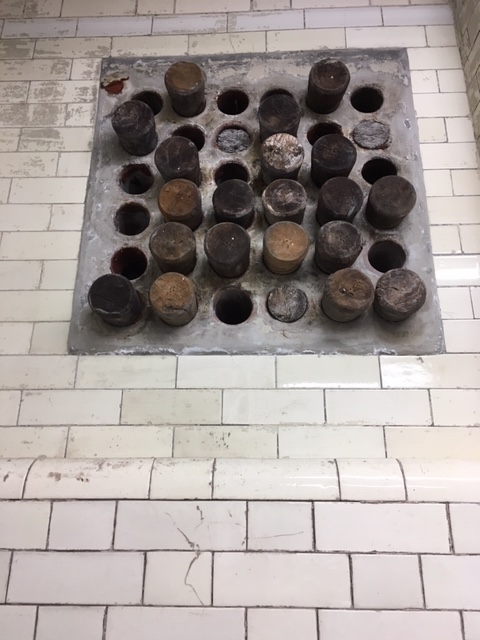
This place, this old Head Post Office, is quite magical. You can feel it in the fabric of the tiled walls, the mosaic floors and sash windows. Being here makes me feel free.
But, I learn every time I’m within its walls – by learning new techniques, asking questions, seeing what the Students are creating, learning through osmosis and by reflecting and being patient until finally, my practice has turned a corner. This is maybe how the universe works. Time, experimenting, patience, reflection and energy = creativity
Over a number of weeks, I’ve been laser cutting and laser engraving – something I wasn’t allowed to do myself at NTU because all cutting went through the one technician. At Sheffield Hallam, students and staff alike learn to use the laser cutting machines themselves, of which there are 6 here at SIA and more at Sheaf.
When I get the chance to spend time with a new technique,
the more I learn about process and in turn, the more I take chances and become
adventurous and experimental with new ideas and outputs. At SIA, I’ve learned
to laser cut. I still don’t know how to do everything and not I’m without mistakes
which I build on, but I can cut and engrave what I visualise quite well. It
takes time. I’m on two hours a day, two
days a week.
When I first started at SIA, I wondered how my work, which
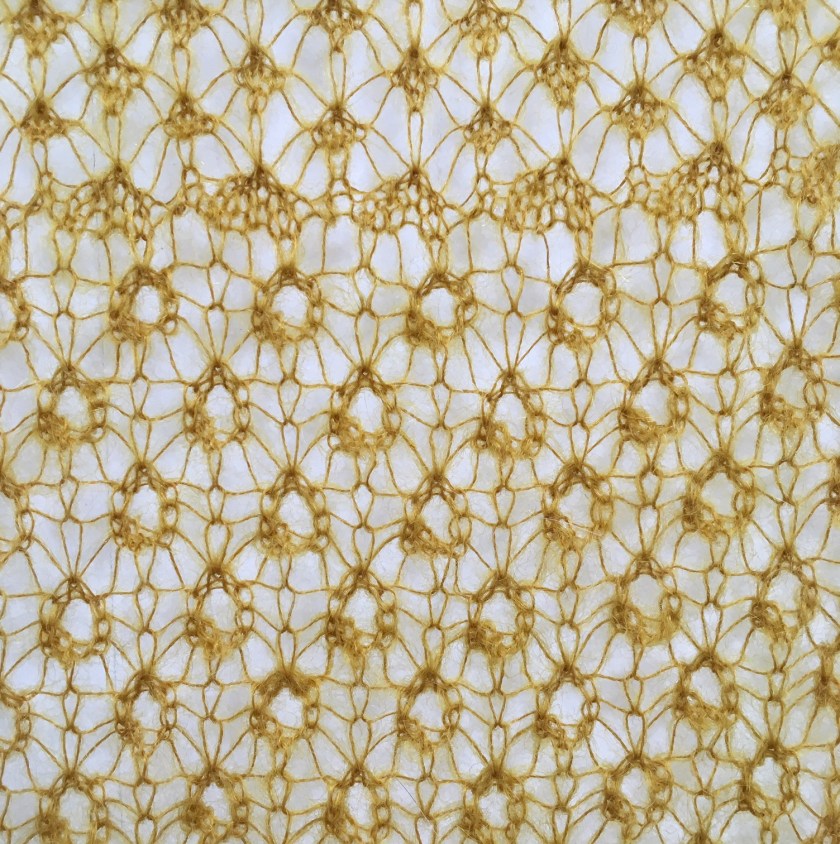
is inspired by the Heritage Shetland knitted lace industry, its tradition and
the knitters themselves, could actually fit within the urban setting of a city
in Yorkshire. Four months after starting at SIA I’ve developed a piece of work
that is both portable and in keeping with place. I’ve learnt through time.
This place of Sheffield is so far removed from that place of Shetland.
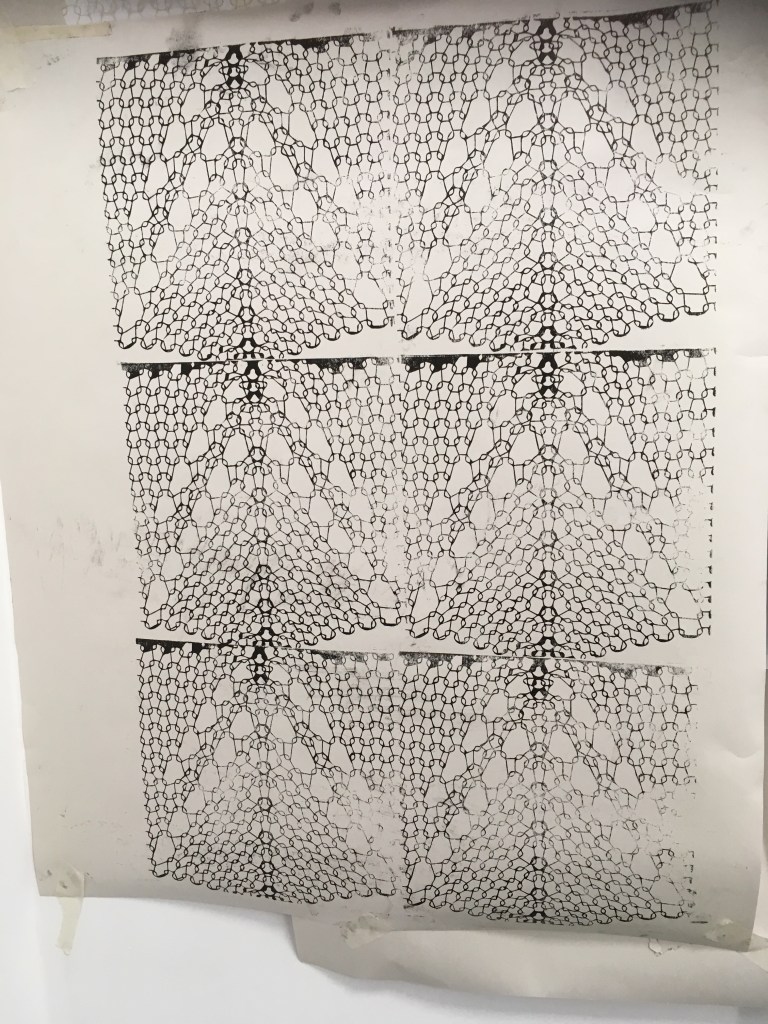
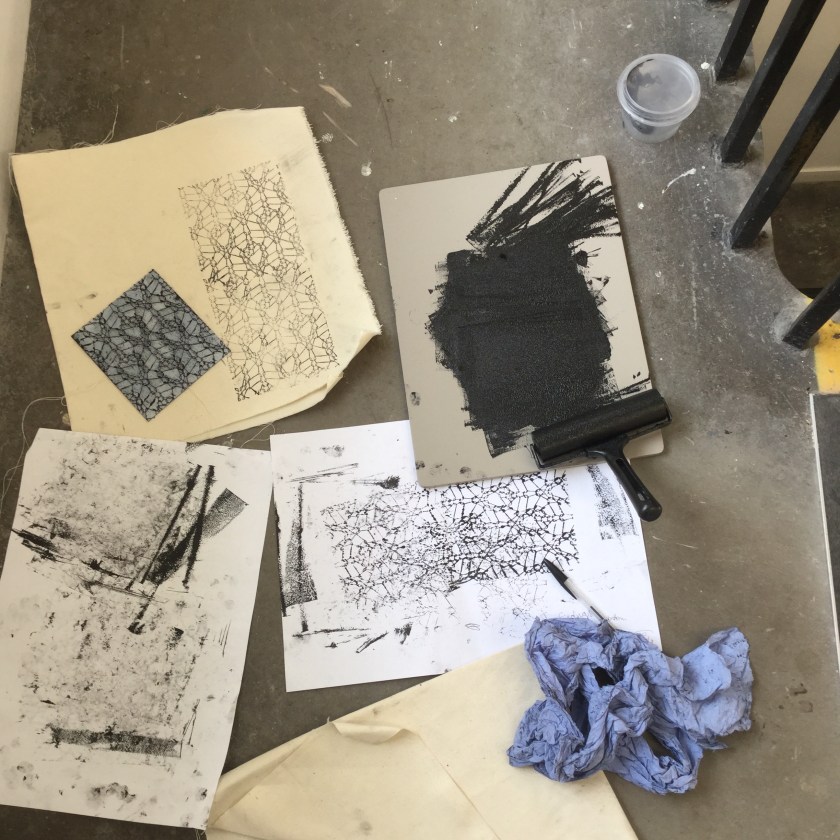
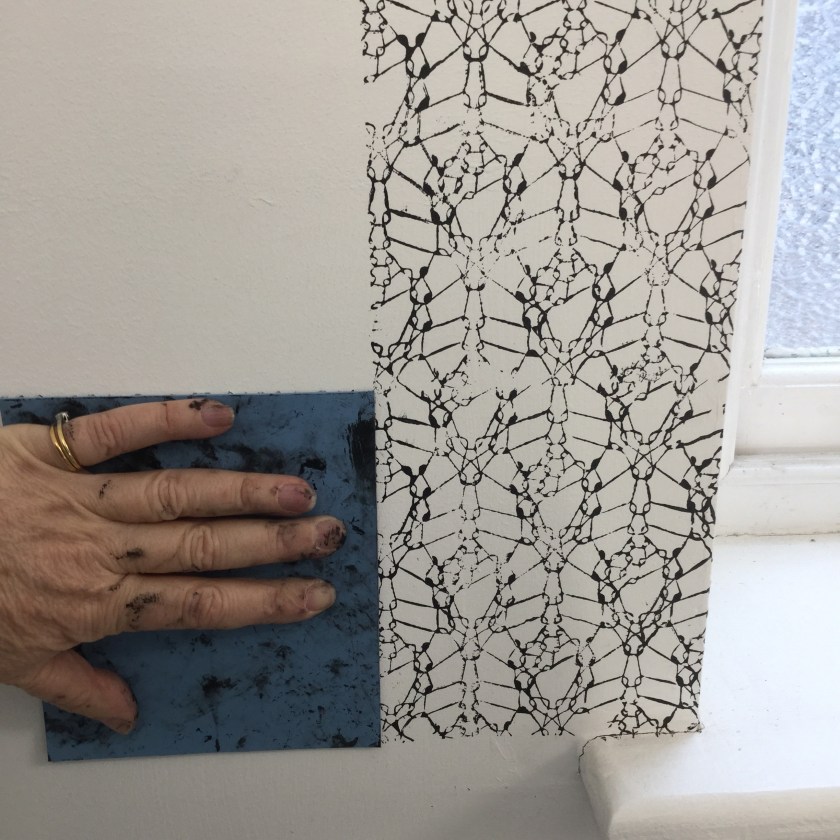
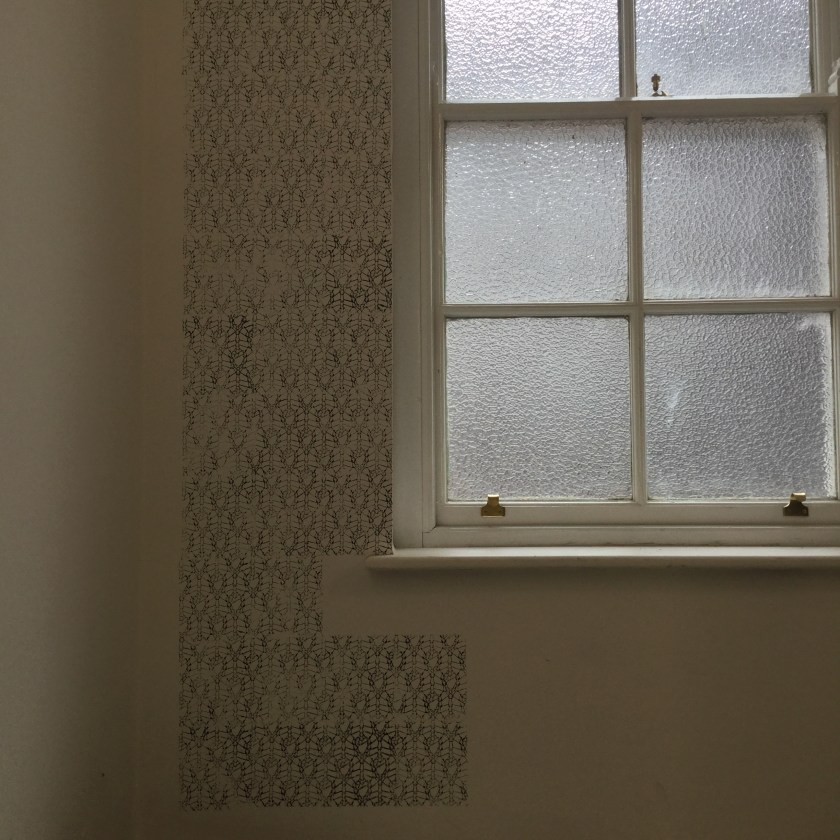
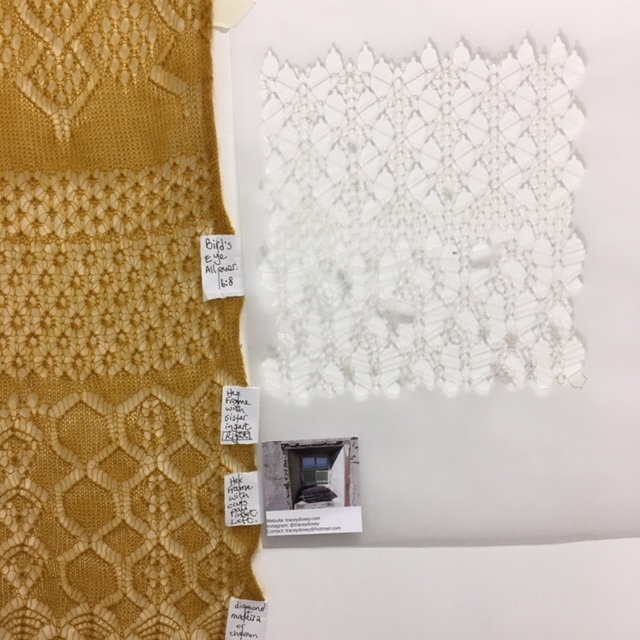
To me, there initially seemed to be no possible link for my creative practice and its links with knitting and Shetland because the work seemed to have been dragged out of context by the two places being geographically hundreds of miles apart. But this morning, loaded with printing ink, roller, John Lewis bread board, rags and my hand-made, 15x17cm, rubber printing block that I made using my CAD lace knit designs, I have hand printed my tessellating Bird’s Eye pattern across the stairwell wall by the MA Studio.
The result is a happy one. Hand printing on the wall made my heart race because I realised what I can do with this idea. The printing block is portable, it’s accessible, it’s easy to set up and it works.
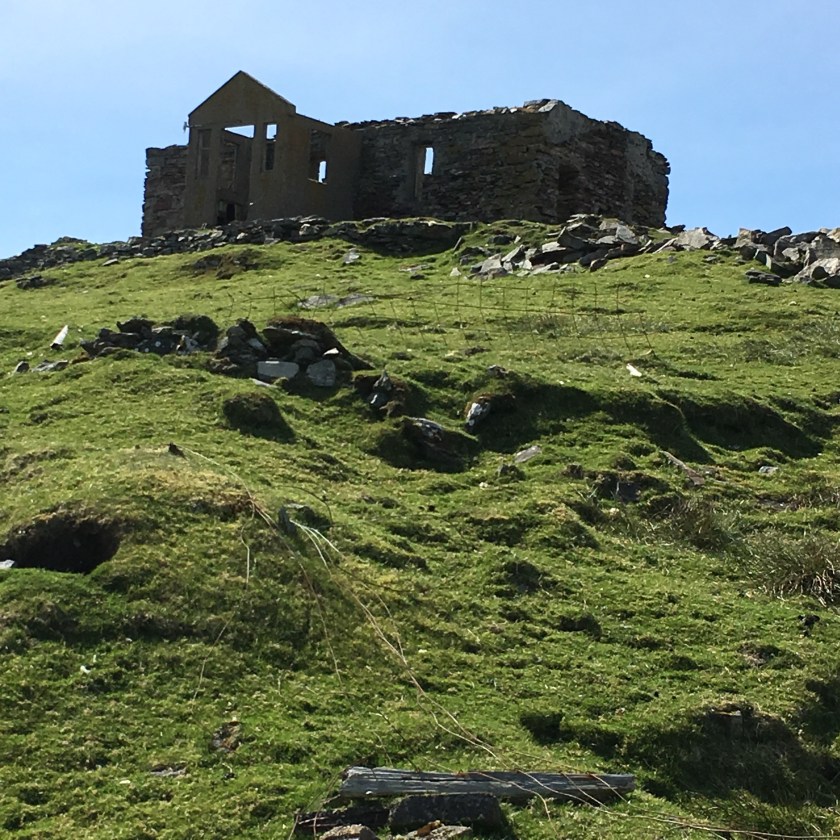
I can print on any flat wall, any place, any time. This morning’s printing was a stepping stone to see how well I could make the tessellating pattern match, if it would work on a wall, does it need to be perfect, I love the imperfect walls of Shetland – so it can be patchy, how would I go round corners, what would it look like in a large block of space, how long would it take and if it could be possible to take the printing block to Shetland to print across the walls of a derelict croft house that I have fallen in love with and have revisited over a number of times since 2015.
And, the answer is yes.
New art, new project. I’m heading for Shetland in May / June and know exactly the wall I will be printing on.
I’ve never had an Artist studio for a number of reasons:
– it is an expense that I cannot really afford, I live a 4-mile cycle ride from
town so to get to a studio and back is a chore, and in the summer, it felt odd
to call myself an Artist. One miserable,
wet, dark, raining night in August, I did look at a studio at Kelham Island,
but it wasn’t right. I couldn’t find the right place, at the right price.
In the end, I did buy a desk and was delighted how
that desk, in my home, made me feel and instantly became my work space. It was enough. It is enough. My flat became
exactly how I wanted it – a live/work
space at any time of the day.
Then, in November, when I was accepted on to the
AA2A Artist residency programme at Sheffield Hallam University, I moved old
papers and prints into the MA studio at Sheffield Institute of Arts (The Old
Head Post Office) It is a small space with a perfect wall area to overlap
things, put things up, leave things, remove things, reflect. So, until the end of June ‘19, that is exactly
where you will find me every Monday and Tuesday. Take
this as an open invite to come visit.
There is nothing not to like about this gorgeous,
strong building which was, for many years, The Old Head Post Office in
Sheffield. The floors in the large exhibition space are mosaiced, the walls are
still tiled in dark rich brown and cream and everywhere is conducive to creative
thought with old remnants of a by gone postal service in town which litters the
walls, floors and views. The technical resources are second to none. Space is
limited.
The AA2A residency came at exactly the right time. I applied 2 days after the closing date, the
submission was accepted, I was interviewed and proceeded to naïvely cover the
interview table with examples of processes and work. It was a shamble of words
and lace knit and photographs and, of course, laser cuts. I was over the moon
when I was accepted.
Now, is a new phase – a progressive time to learn,
experiment and develop by using the resources available to me. In return, I will show work to the current
students, do presentations and workshops, be around in the space, ask and
answer questions. I’m also mentoring a
little. Alongside that, there are countless
students doing their thing, and we share information. They’ve got used to seeing me and I look
forward to seeing them. In the new year,
I’ll offer workshops and add information to their notice boards of competitions
and residencies.
I did not want repeat my creative practice,
therefore, I expose myself to a very creative environment as what can be called
‘A Young Artist’ and I will add – at an older age because I’m not young but I feel
it. But, to repeat is out of the question
– where do I start?
I could only start the residency at SHU, where I had
left off at Nottingham Trent Uni but I had never used a laser cutting machine
myself as this is done by the technician at NTU. At Sheffield Hallam, the
students use the laser cutting machines themselves. They’re shown how to use them and off they /
I go. I collected all of my files from NTU but they are not compatible with the
software at SHU. So the learning curve of preparing files started.
Initially this seemed daunting but, only 3 weeks in, daunting is a memory. I’m learning by trial and error but the errors are mine and I continue to learn from them, build a new portfolio and a new-found confidence as a practicing ‘Artist in Residence’. Silly mistakes during the process of live tracing an image and digitally cutting it open up steps to understanding what I can try next and how to overcome errors. When I fail, I try again and again until, after I feel that I have some small grasp of the technique.
Students come into the laser cutting room, we discuss our practice and technique, we share learning experiences and own it. Every student fully owns their own work when they create and cut it. After two successful (ish) laser cuts, I needed a location to place the work in order to really see it.
I could hear a voice in my head asking myself why I thought
that laser cuts of lace knitting which were inspired by Shetland could ever fit
into Sheffield. There were no links between lace and Yorkshire. Did it need a
link? Could I create a link? Was it becoming inauthentic or decorative? Or, was
I repeating myself. And, that would never do.
Showing my work has previously been an easy act to
do as I chose remote extreme outdoor locations to place laser cuts or lace
knitting and Only I saw it. In Shetland,
the work merged with the landscape and each relied on the other to give
meaning. Pure Symbiosis
Today, I do not have access to Shetland to continue to place laser
cuts into abandoned croft house windows but I have done that already,
photographed it, shown it and understood it.
Now, I only have digital files that stem from my original lace knitting
CAD patterns. And I am placing them into Sheffield Institute of Art (SIA)
I looked around the SIA building, the stair wells, and corners at the working windows – mostly sash, and mostly aesthetically pleasing. I even used a measure and made diagrams. In Shetland there was no time for a measure of any sorts – not of windows or of place – I came across places and the site-specific work was entirely intuitive. It was placed quickly, in wind and gales and rain or snow. Here lies a clear difference, I have the luxury of choice and measurement – though this may remove the rawness of the work.
At SIA, location can be more considered than in Shetland. The work can be left in situ at SIA and not
blow away. Consciously, I knew I wanted
a window of great beauty, subconsciously, I wanted a window in a location with
great foot fall. I also considered the
view that would be seen through the laser cuts. I wanted people to walk past
and either look or not, to stop or not, to think about the laser cuts or not
but I did want the work have ‘the option to be looked at’. I didn’t want it hidden.
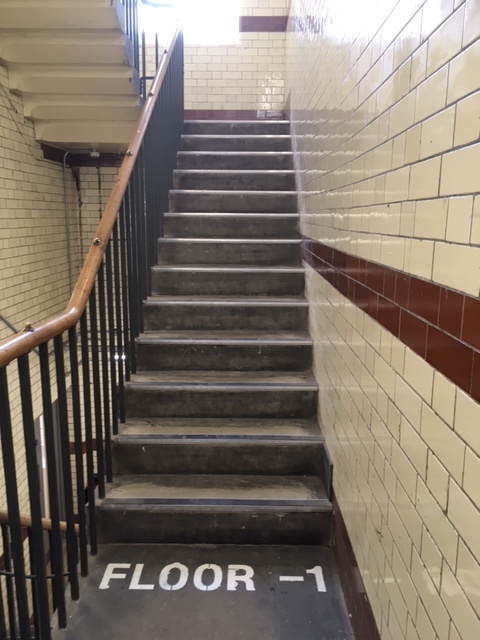
I chose this window on the half floor at Sheffield Institute of
Art, between floors -2 and -1 from the reception to the studios and laser
cutting rooms. A stair well of much foot fall.
I must admit, I put laser cut 1 and 2 up quickly because I had no permission and I felt nervous. Nervous if I could be stopped, or asked what I was doing or, and this was the biggest thing, – was the work interesting enough and would it ‘work’ into this location. Laser cut 3 went up – doing it felt good and I didn’t hide it but I could no longer reach to place the next row. At this point, I tried to enlist the support of Jim, a technician, who was obviously going to ask the question I had been avoiding – Who gave me permission to place this work in this window and had I had it covered by H&S?
So, now after the work has been checked and cleared by H&S,
Jim placed 3 more panels and I am thinking of placing renegade work across the
city and then in galleries. New Goals. But
for now, this window is my canvas.
Happy Christmas. Here’s to 2019 and new things that I don’t know exist yet.























































 tracey doxey