Experimenting with colours that you love.

Tell me …. What is it that puts you off using or experimenting with new colours in your stranded colour work project?

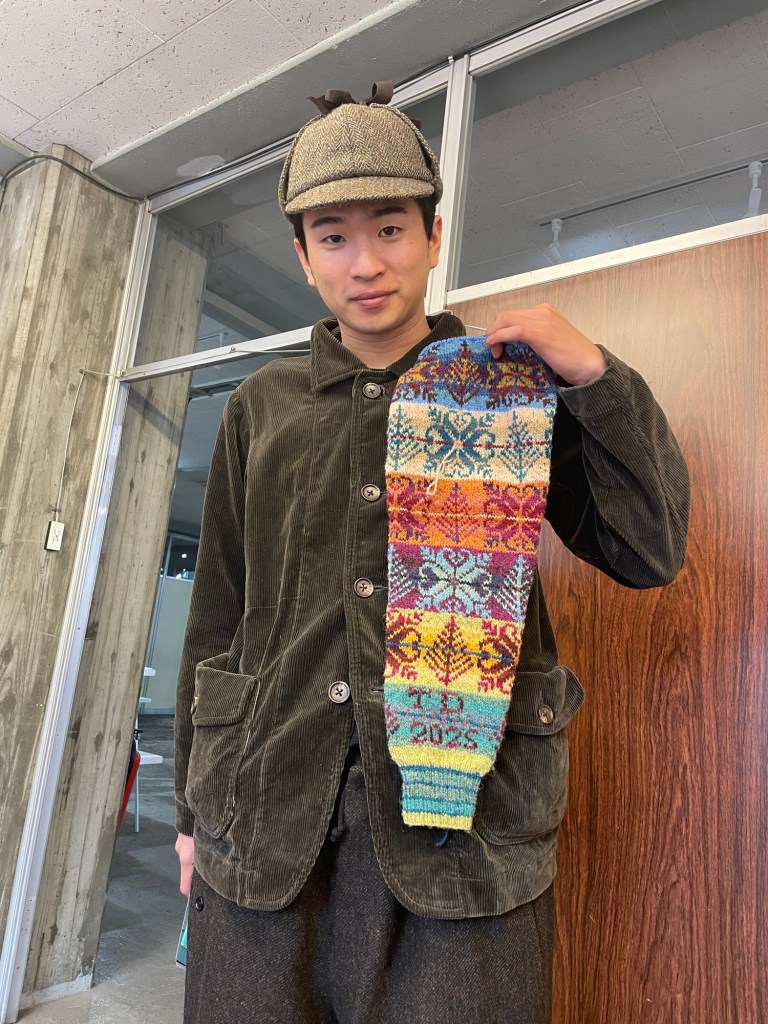
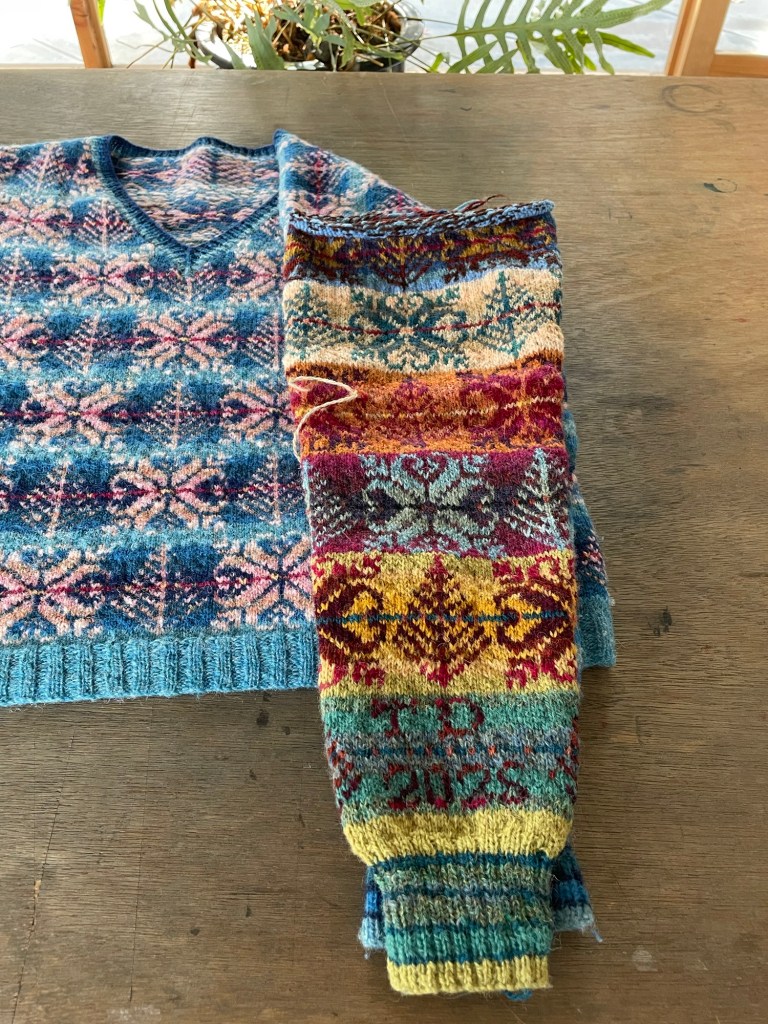
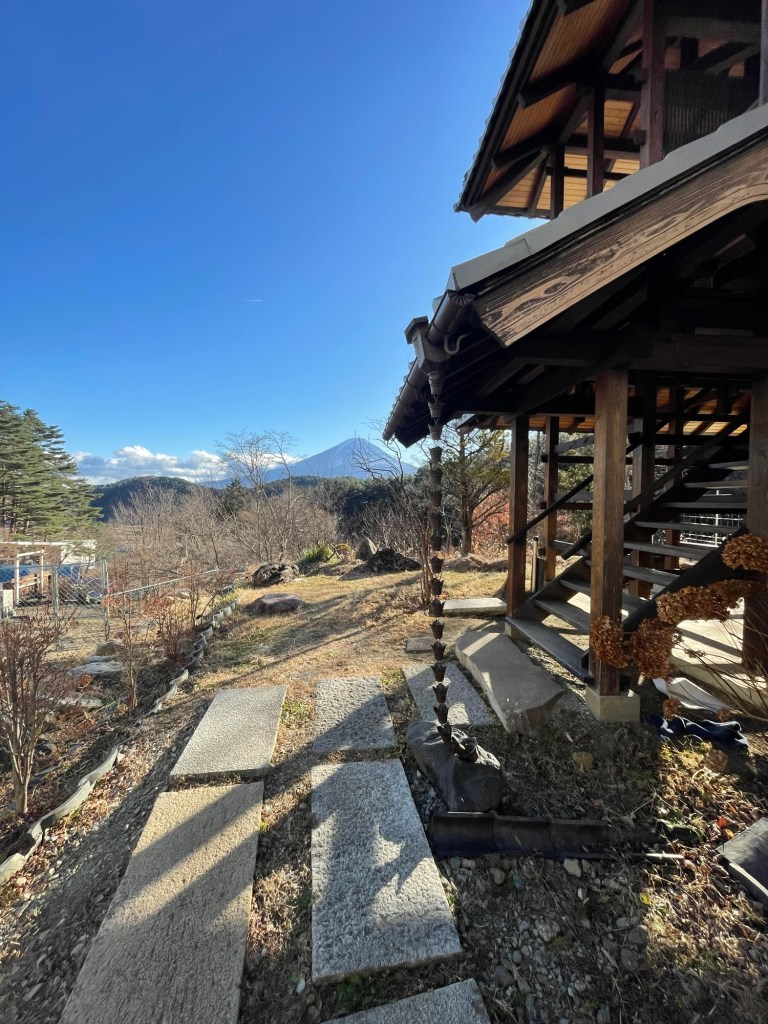
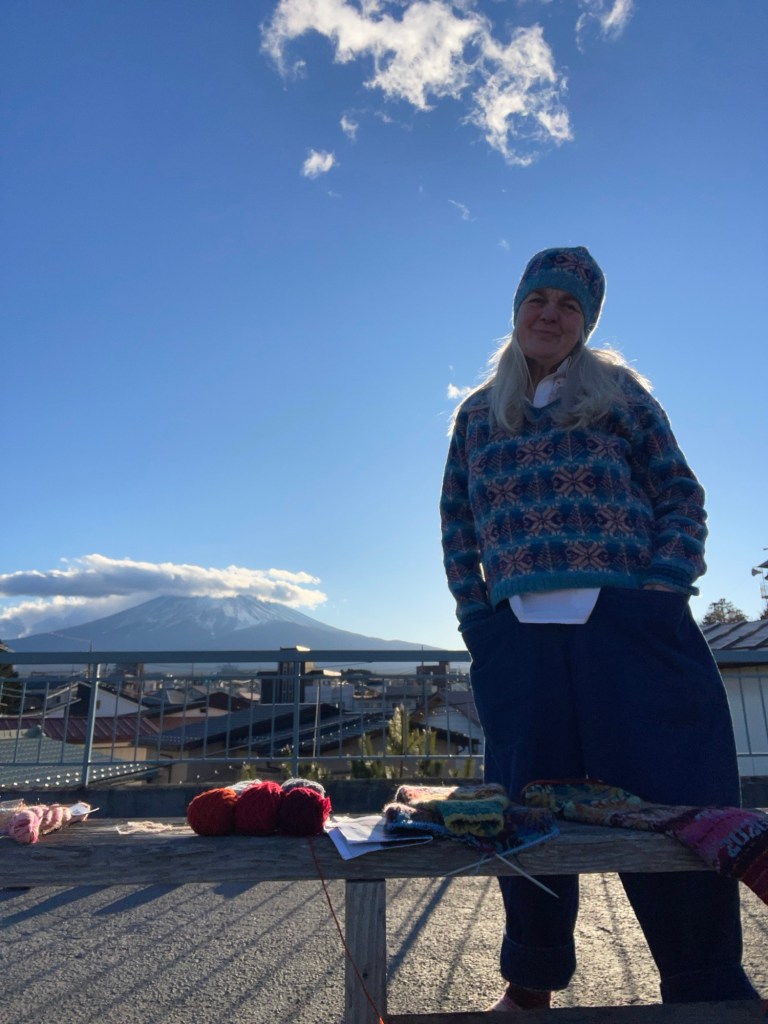
I’m currently in Fujiyoshida – a town at the base of Mount Fuji, for 28 days.  I’ve been knitting my Tree and Star sleeves with an idea to add them to a fabric body.  I bought a couple of Kimono from the flea market at Hanazono Shrine in Tokyo but the fabric doesn’t work for a body with these sleeves. So, I may knit another Kaleidoscope jumper body using 3mm needles so that all the people who wanted a larger size can see how a needle increase from 2:75mm to 3mm will make to the overall size.   Would that be of interest to anyone who was hoping for the next size up?

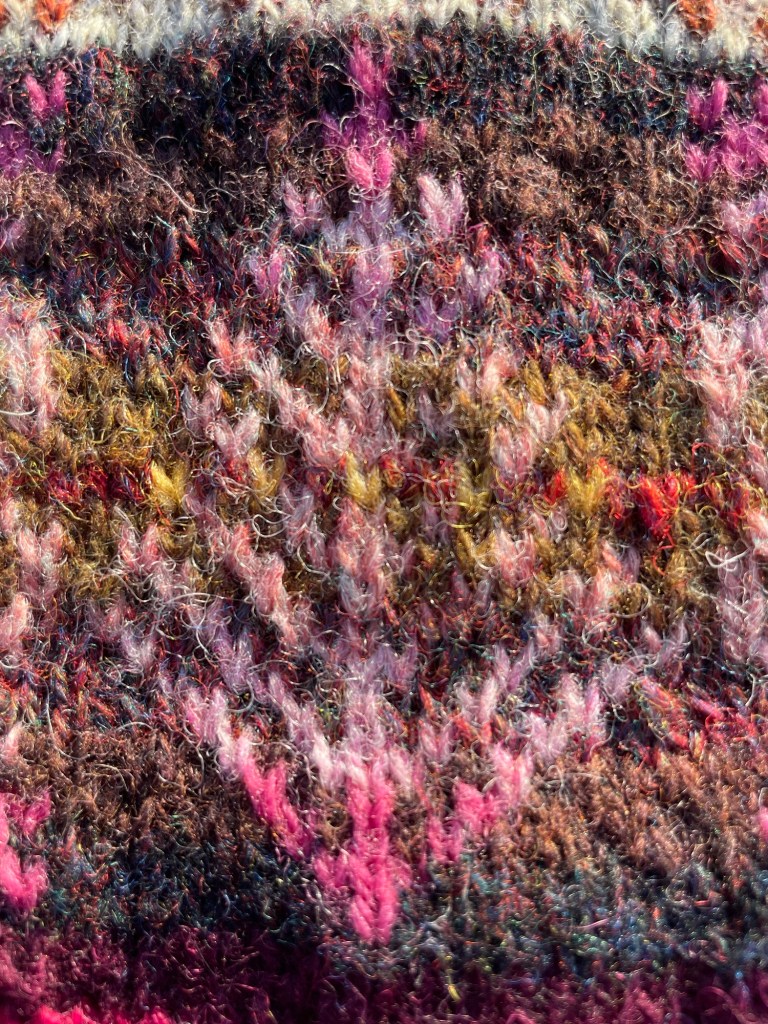
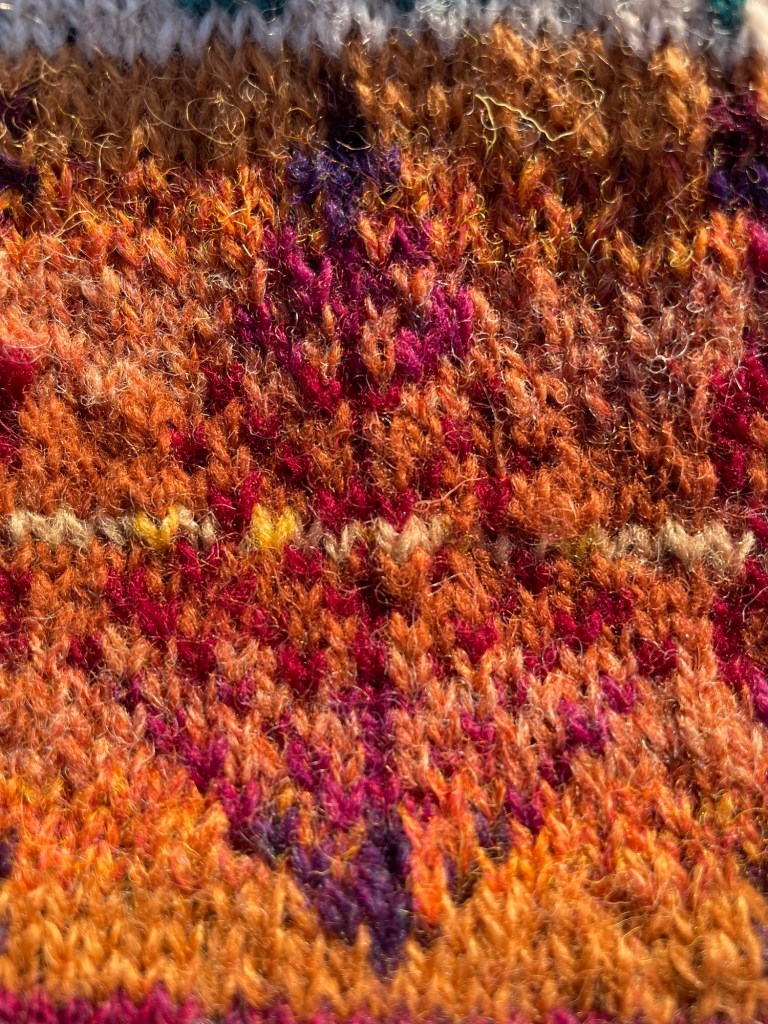
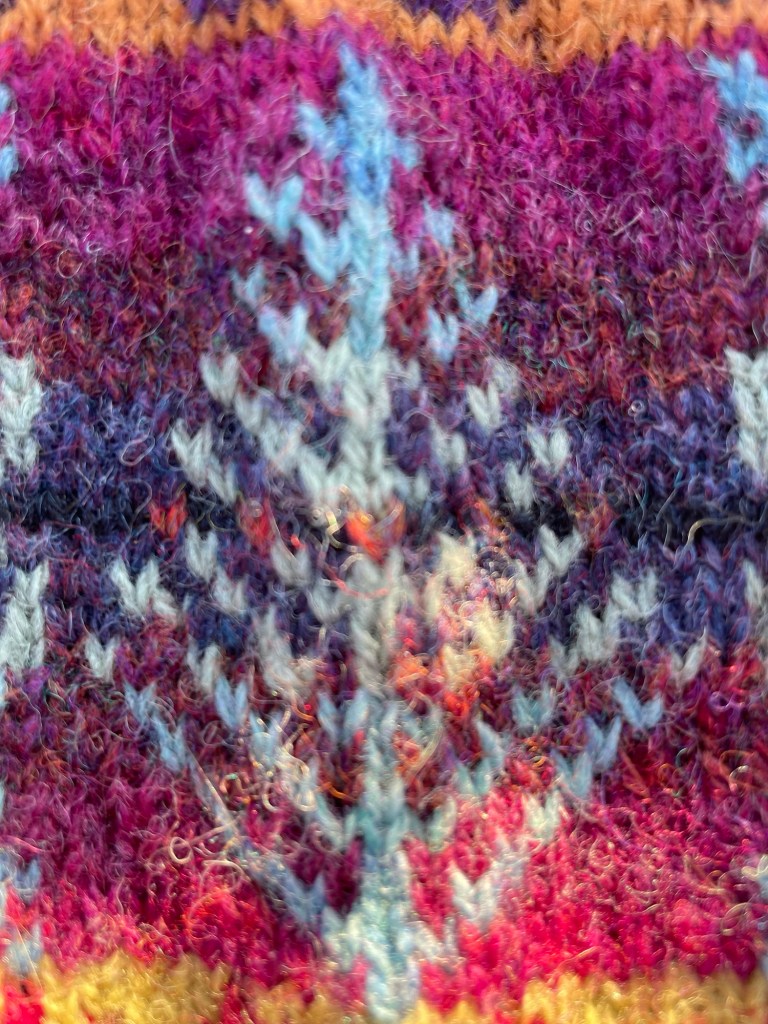
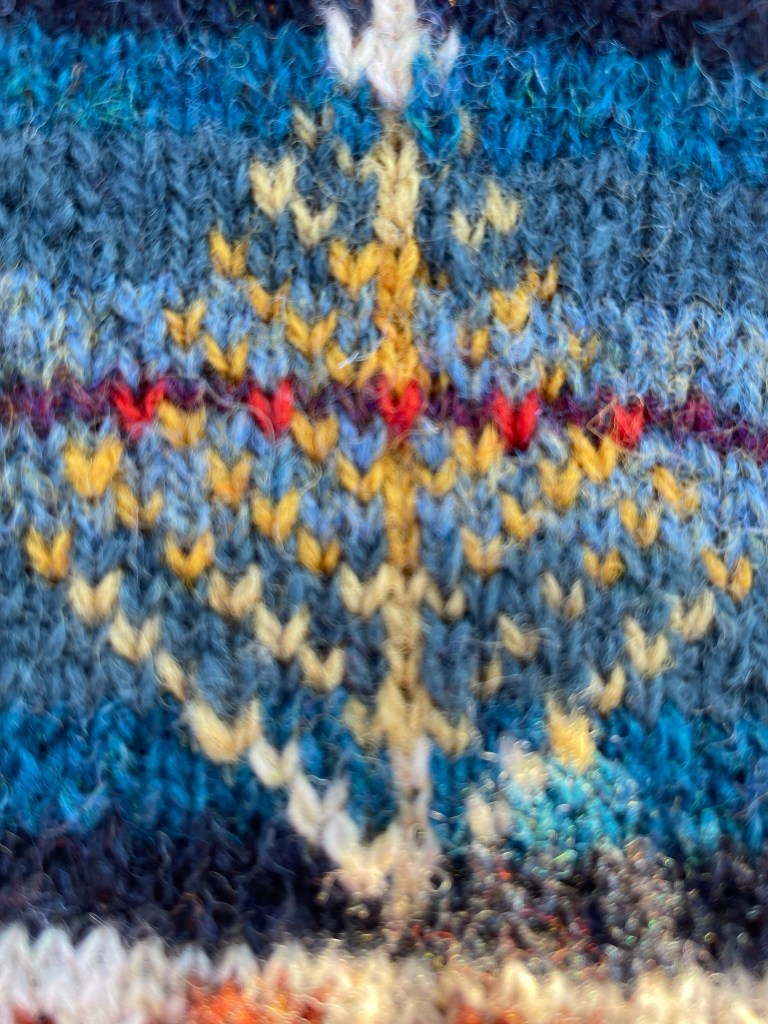
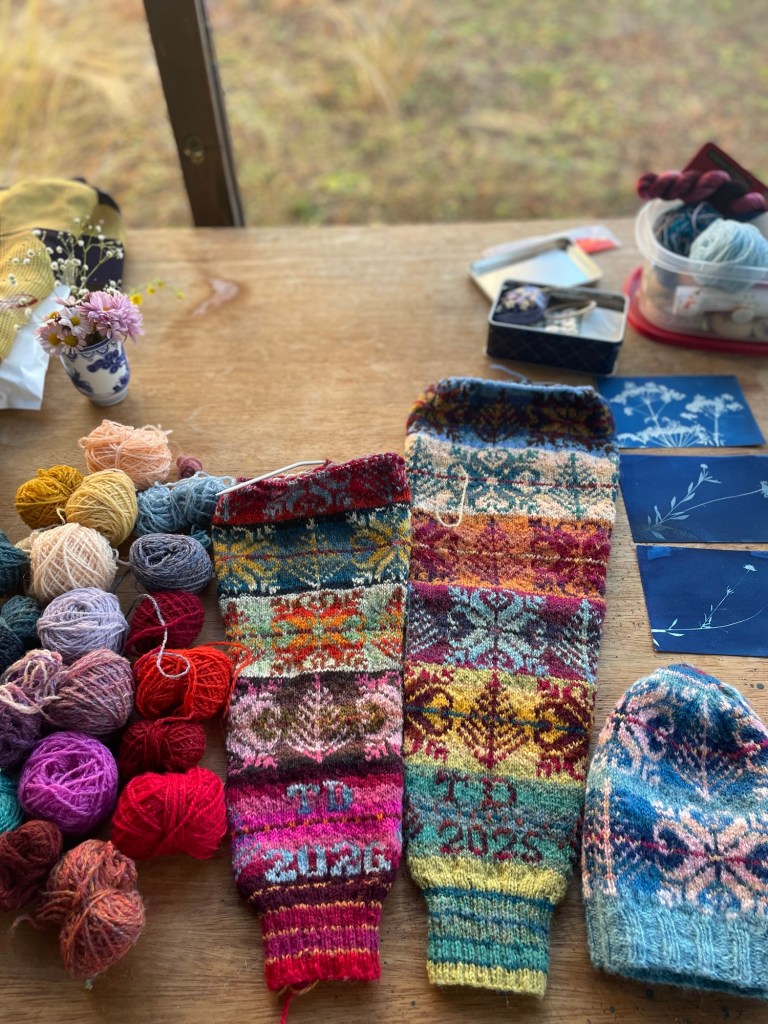
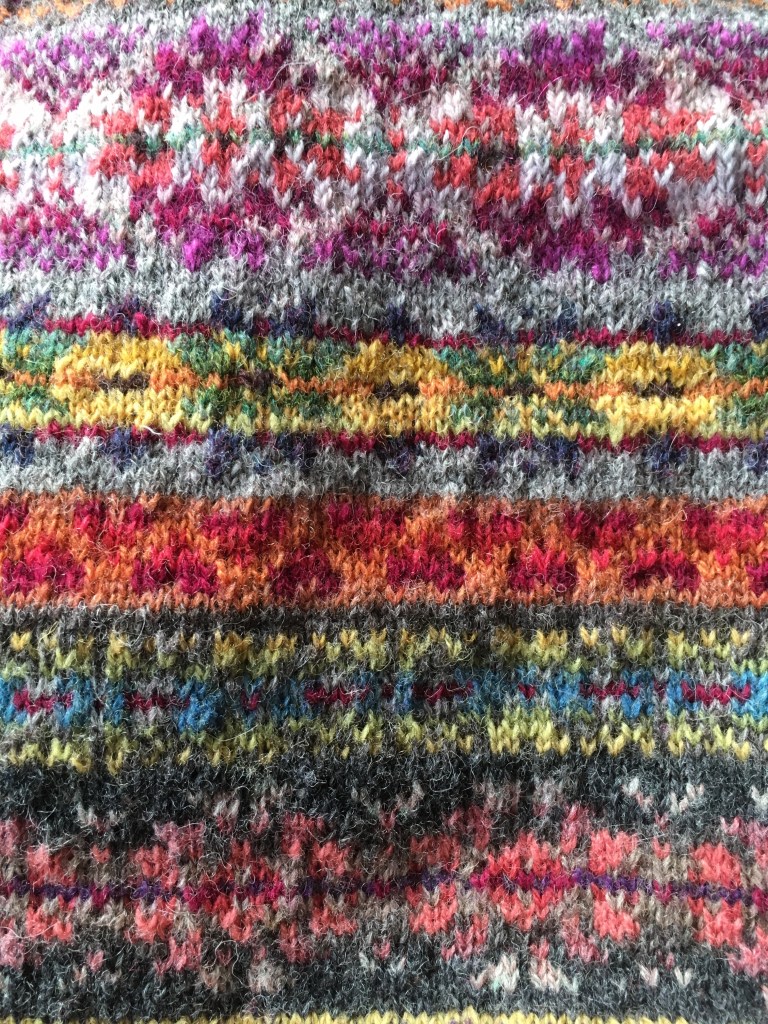
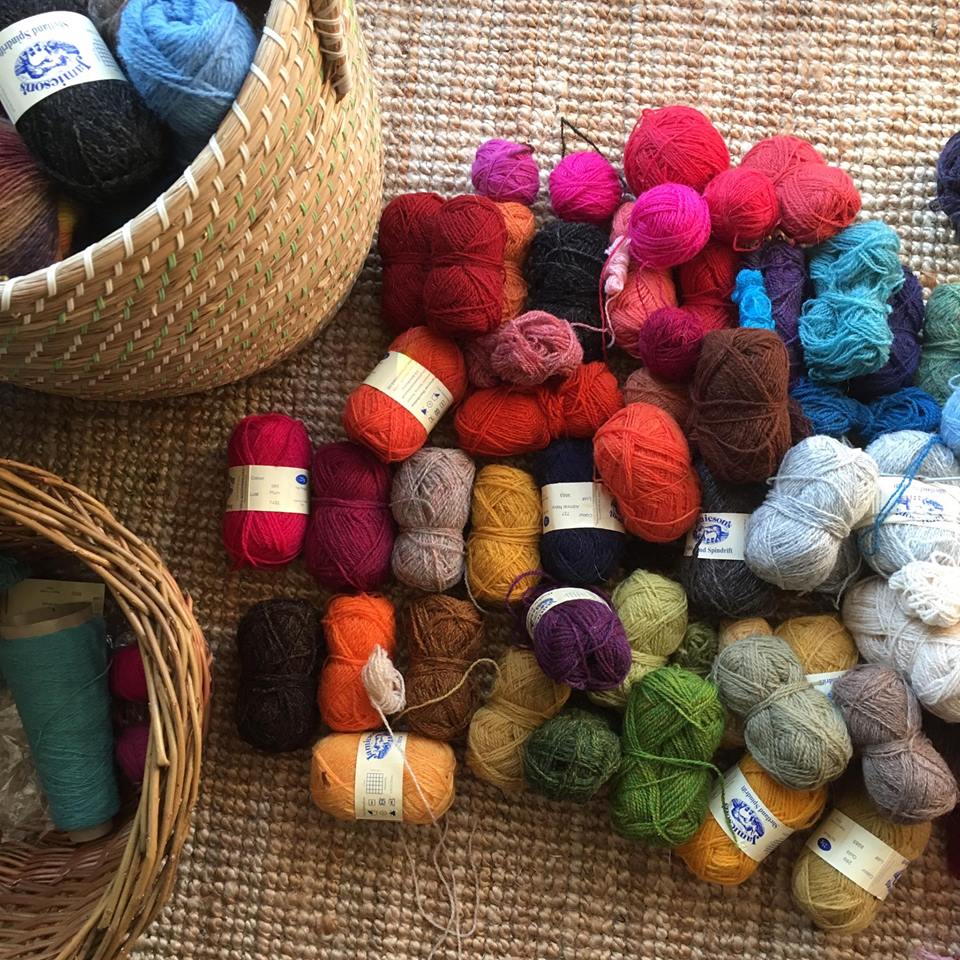
I am using my stash yarn as evidence of a journey in colour. A journey that anyone could do with their own stash.  I kept knitting this motif in different colours because I couldn’t settle on just one. Each version felt like a different mood—quiet, bold, playful, grounded. The first colours of brightest pinks with my initials and the year 2026, when the project will be finished, felt like really owning the sleeve as – not just knitting but creative freedom.
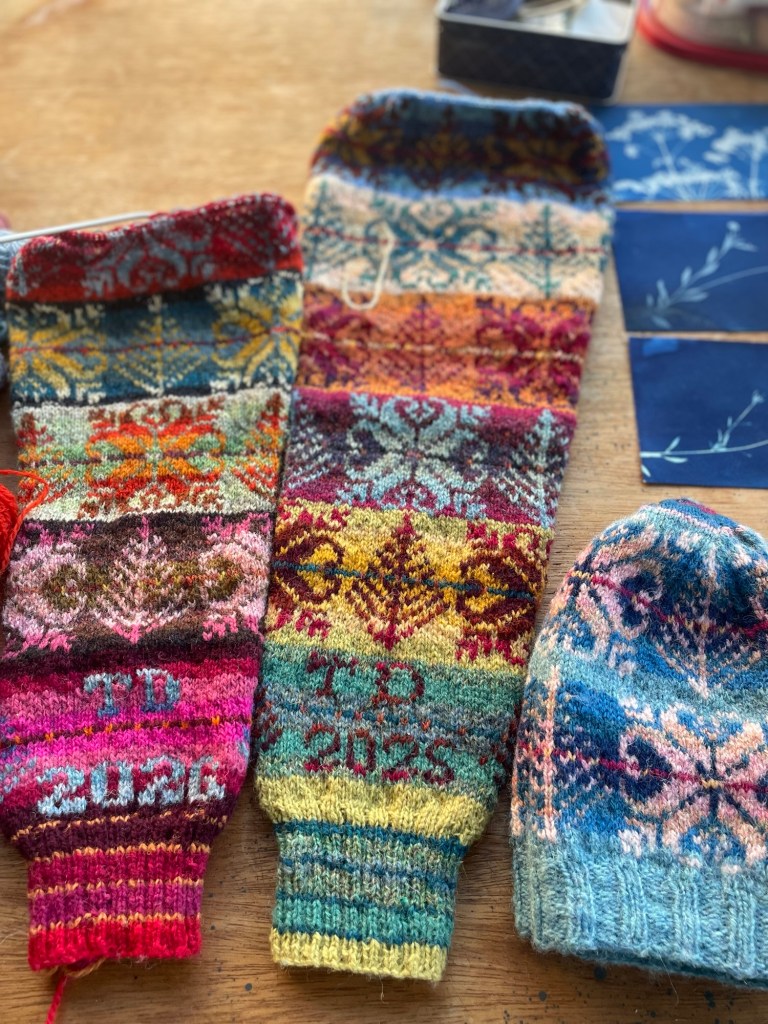
That’s when I realized the pattern isn’t about my colour choices at all. It’s about giving you a place to try yours.  I would like to invite you to have a look at these sleeves and think of the colours and if you were going to knit the same jumper – which ones might you give a try. 
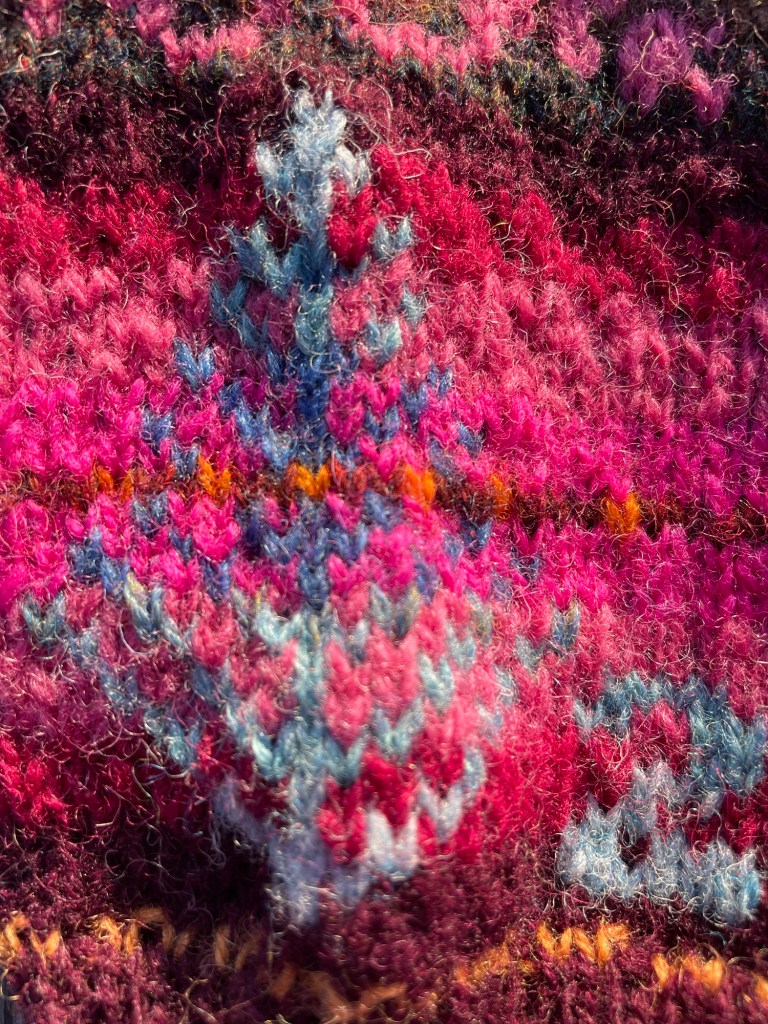
When I lived in Shetland, my knitting patterns and their colour choices were devised around the wild Shetland landscape, the croft house that I lived in and the woman who had lived in the house for 83 years until 1960.  But now, the Kaleidoscope jumper has been more playful, named after my own kaleidoscope at home, which has a great big blue marble at the end. 

Kaleidoscope

Would you like to try this jumper pattern for your everyday self—or your future self?  I am wearing this jumper daily in Japan – it matches the sky and I am having a lot of fun wearing it with the matching hat and a tweed jacket.   On Sunday, we all (from the residency) did a drop-in session for anyone who would like to knit or weave or trying punch needling.  So many people came to see us including some Tokyo Fashion guys who wore all black, all brown or all Navy and I suggested that they needed a little colour – like a Fair Isle vest just showing through their dark colours -for every day.  They were very interested in the colour idea.
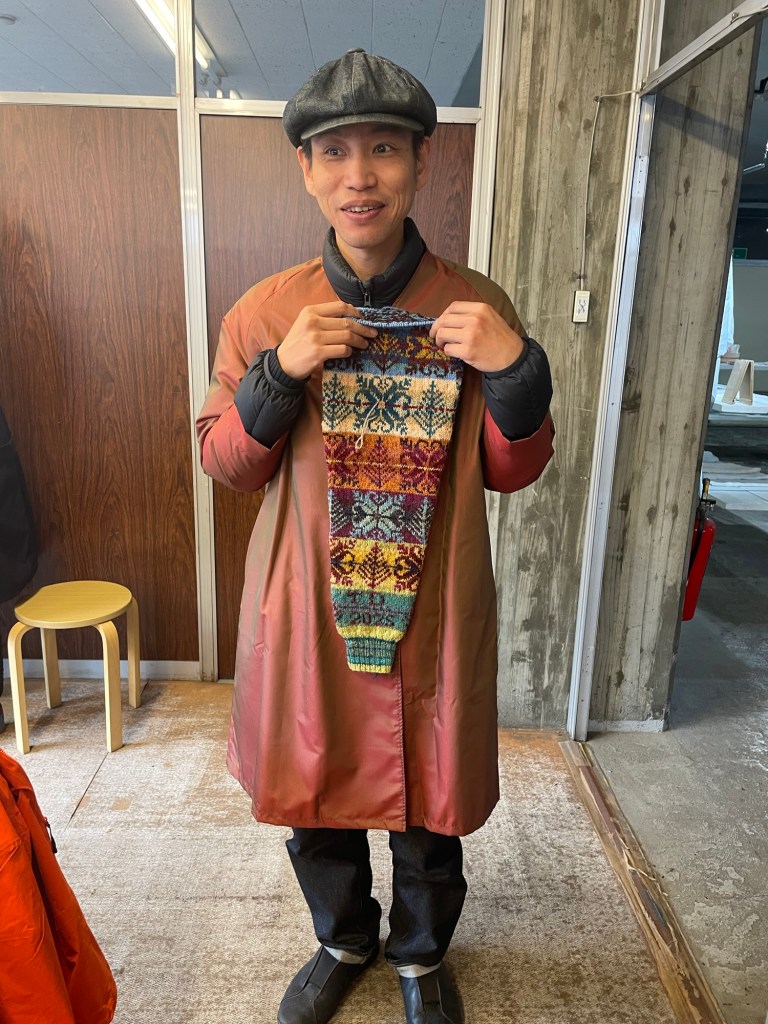
The motif repeats consistently and the colours can be swapped without recalculating the whole pattern.  I designed this so colour changes feel playful, not precious.

The pattern doesn’t ask you to commit to one look—it gives you a place to experiment. To trust your instincts. To surprise yourself.

If you want a project where colour gets to be personal, this one might be for you. 

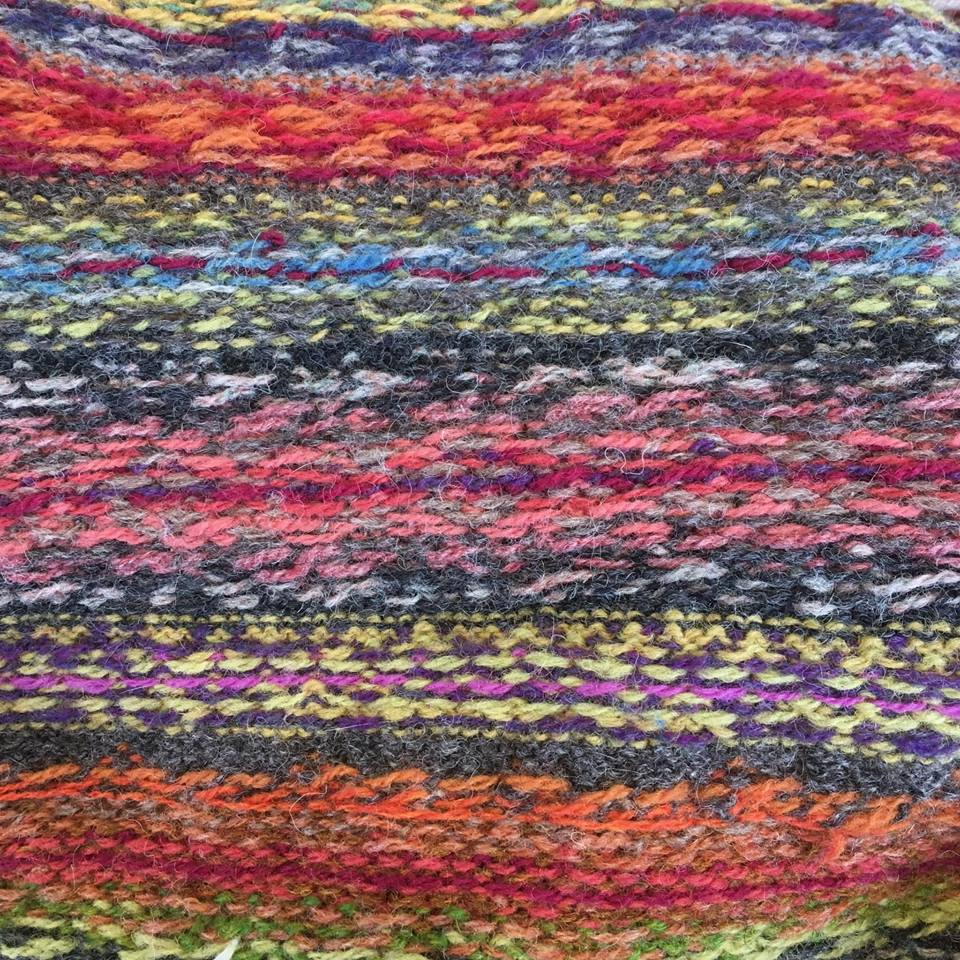
Swatch your colour ideas first – always swatch for colour to see what works and what doesn’t – for you.    Keep the motif and the background colours with enough contrast so that the pattern is not muddied.   And just experiment – this is the perfect motif.

Experimenting with colours that you love.

Here is the Kaleidoscope Jumper Let me know in the comments if you have bought the pattern and are still considering the colours you might choose.

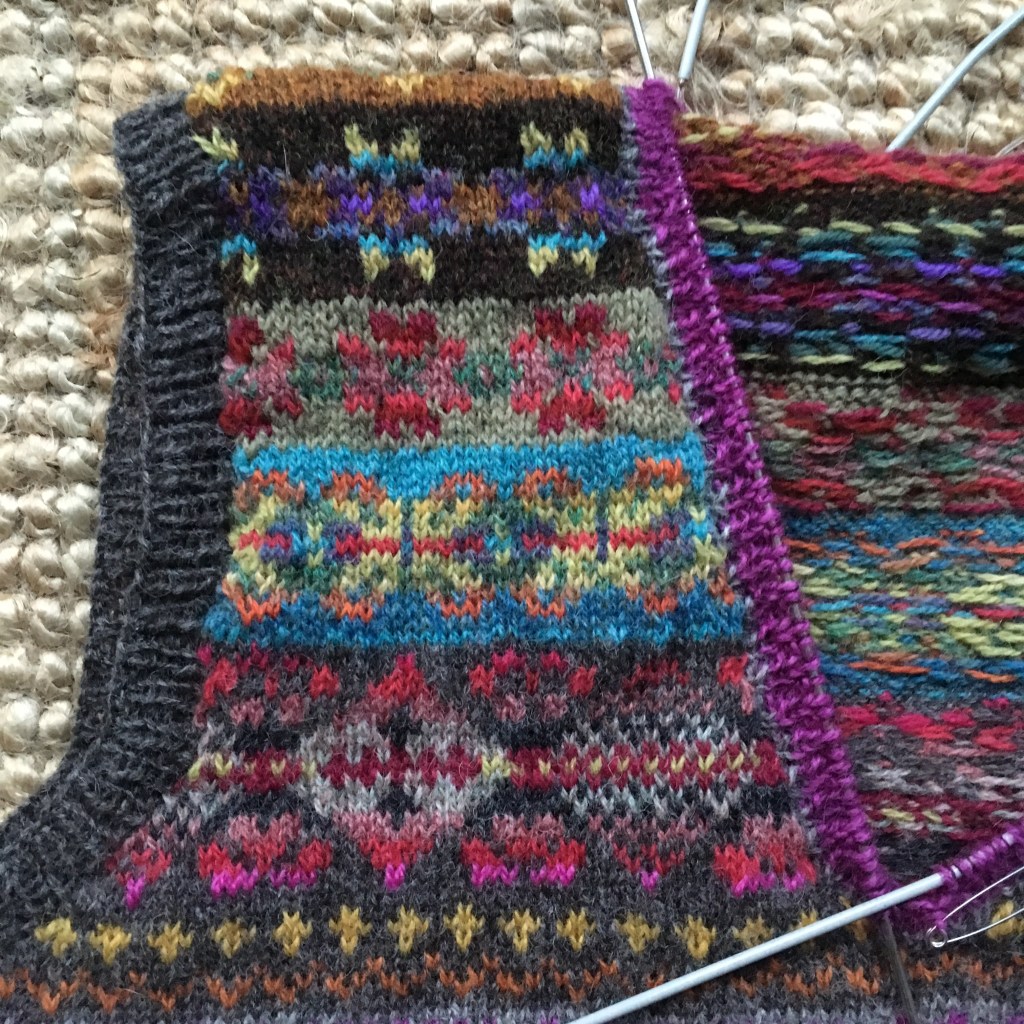
Here are the Tree and Star sleeves which are alternative sleeves to the Tree only sleeves in the original pattern.

Let me know what you think about your colour choices.

Creative expression

I’m sitting on the roof of our residency, watching sunrise over Fuji, and I finally figured out that it’s Saturday. Being on an artist residency for a month, in another place, city, country, is kind of not knowing what day it is.  To be fully immersed in place and a practice of making whatever comes to mind, and experiencing and finding new things in a new city that you never knew existed removes dates on a calendar and even day names. 

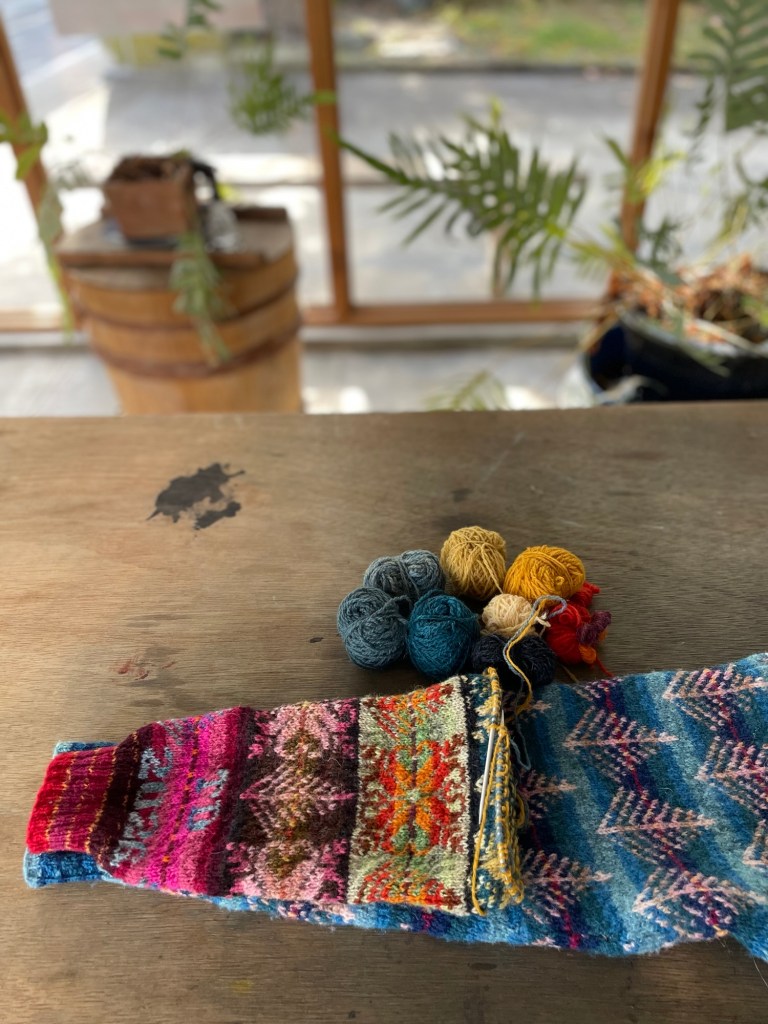
I think it’s day 12.  I finally settled into this place with new people and new building. On a practical level I’m still knitting. I’ve been knitting my second sleeve using the colours that I brought with me and really enjoying how they both sleeves sit alongside each other.

We’ve all had an artist interview with the people who manage the residency here.  The questions were quite interesting – Tell us about you, what can you bring to Fujiyoshida, what does the residency space mean for you and a couple more questions that I’ve forgotten. I think what I bring here is an enduring curiosity for a place and culture (not everyone sees that in me) and an ability to share my findings with many people on my website blog and on Instagram. Of course I share just my perspective but I have a pretty keen eye.

Yesterday I was picked up by a complete stranger that contacted me through Instagram.  She is called Shannon.  She and her sister Pat were visiting their brother Mike who lives quite close to Fujiyoshida. We went to the Itchiku Kubota Art Museum, which is a museum built in 1994 by Itchiku Kubota to house his permanent exhibition of his work. It was quite remarkable to see the Kimono in all of their glory showing his techniques.  If you ever go, my favourites were numbers 19 and 20.  The gardens and buildings also represent the world of Itchiku

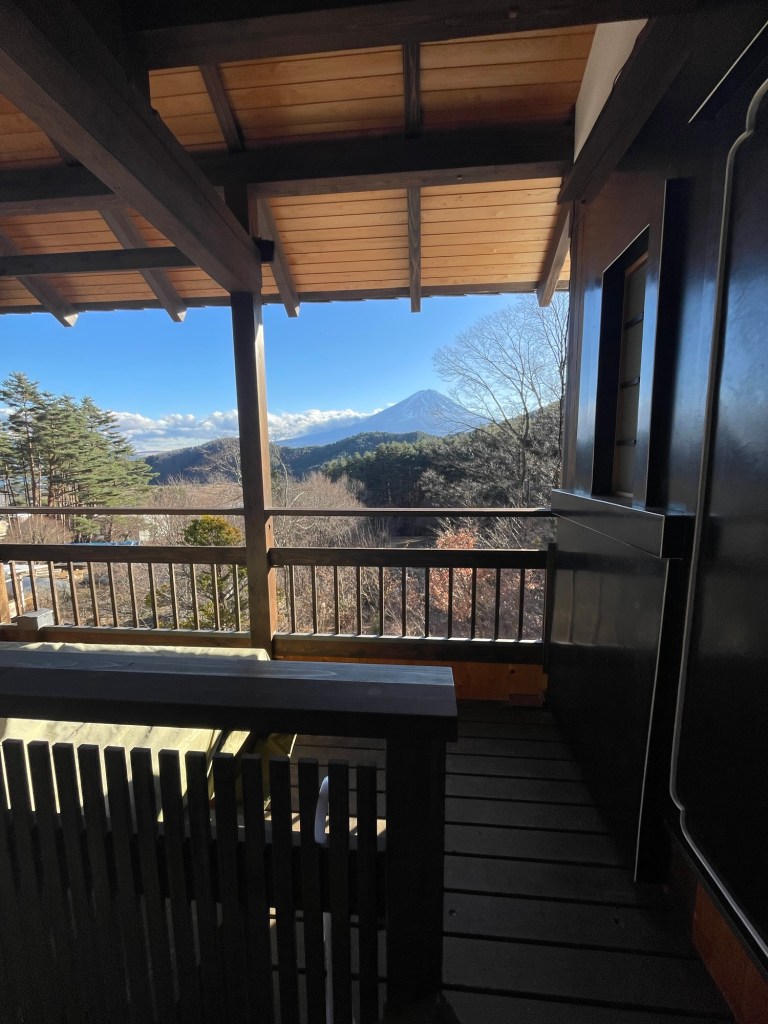
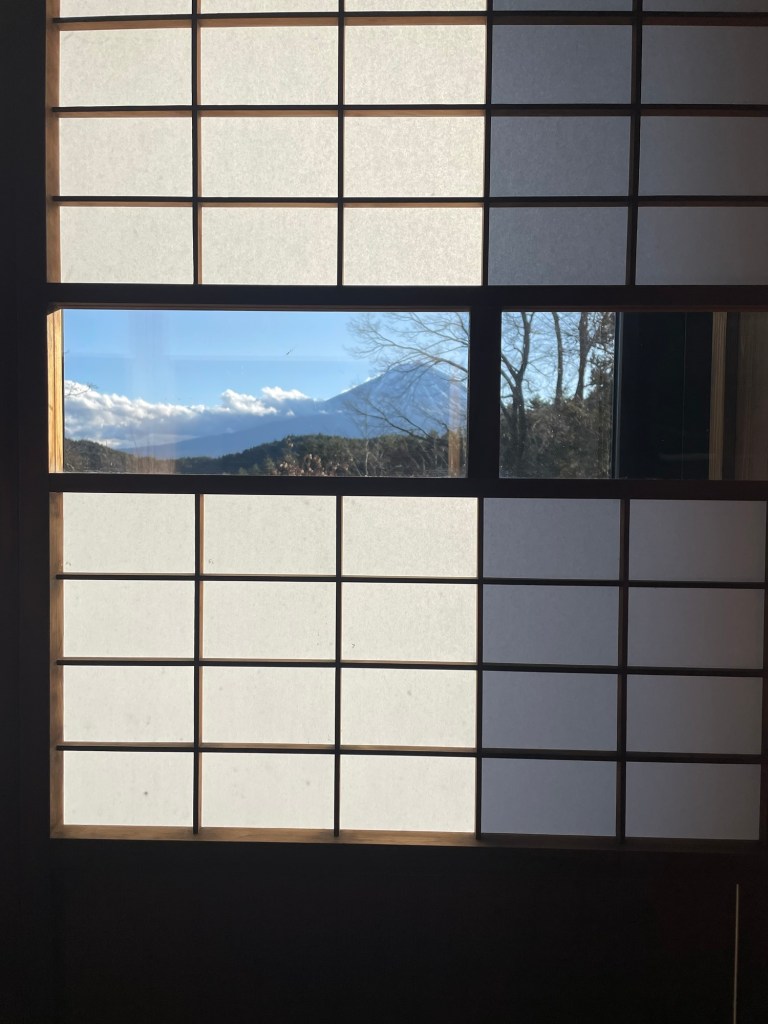
Then we went to the very beautiful chair museum to the foot of Mt. Fuji, in the forest of Oishi in Fujikawaguchiko. My favourite thing was the initial scent of wood on entering the building and the glorious, viewing Veranda where from many strategically placed small glass Windows in the traditional paper Shoji sliding doors you could view Mount Fuji whilst sitting on extremely exquisite low wooden sofas and chairs.

The view is exquisite. The scent was heavenly and then I found out that the building had been completely dismantled from the Saitama Prefecture in Tokyo, piece by piece and brought her to the mountain side.

If you don’t take chances with new people you never encounter these new things, so thank you Shannon for getting in touch and thank you Mike for driving us everywhere yesterday.

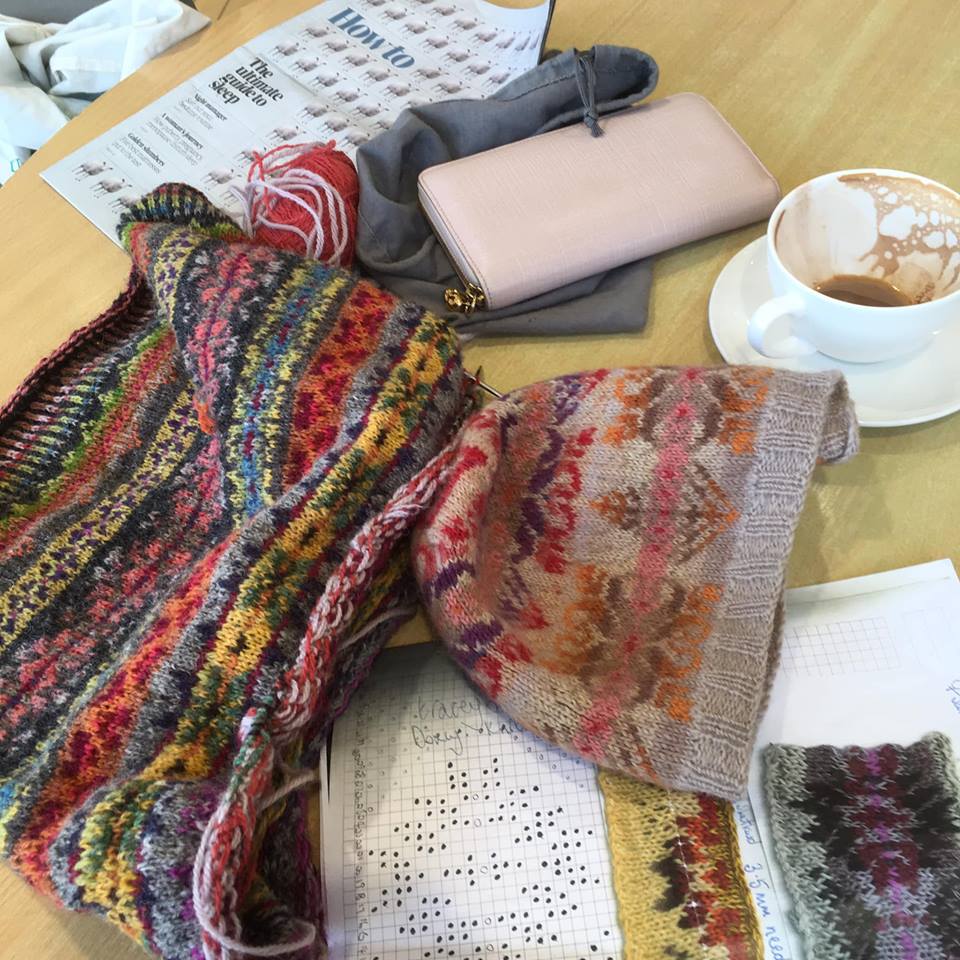
On a basic level, I’m knitting and my knitting is always portable so I sit on the roof at sunrise and watch the sun drench Fuji with colours of red or white light. I take my knitting to cafés and down to the Onsen, Which I visit every day except Wednesdays when it’s closed.

Knitting brought me here.  Knitting has taken me to Shetland and other far off places and enabled me to continue to learn and express my creative practice through storytelling.

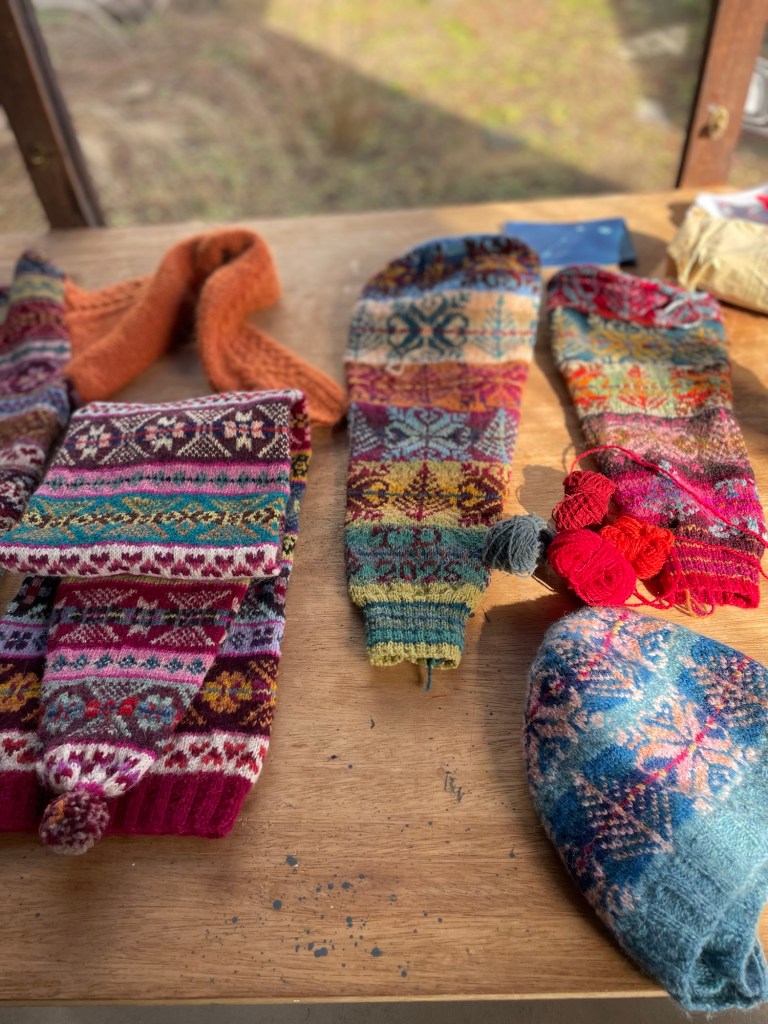
Here are my sleeves.

I am still not sure whether I will add them to a fabric body or a knitted body but if you want to practice your own colour work and experimentation through pattern and colour – then have to go with these sleeves or the hat pattern because this easy to knit motif lends itself to real experimentation and colour work.

Oh yes,  I remember that one of the questions in the artist interview was, ‘what does art mean to you?’ and I think it is entirely about creative expression and freed of thought and when they both come together – you get alchemy

If you’d like to try this motif in a hat or jumper or alternative sleeves, then the links are here.

And even buying a small pattern helps and independent disigner to keep creating – so thank you. https://www.ravelry.com/designers/tracey-doxey

Finding Colour Confidence

Finding Colour Confidence: Trusting Your Eye and Your Yarn 

I often have comments on my posts about how people like the colours that I choose.  They look at all those colours — beautiful, bright, blended or contrasting and say that they don’t know how to choose their own colour combinations successfully.  

I used to feel the same way. 
Choosing colour felt like a test I hadn’t studied for — as if there were secret rules I hadn’t learned. 
 

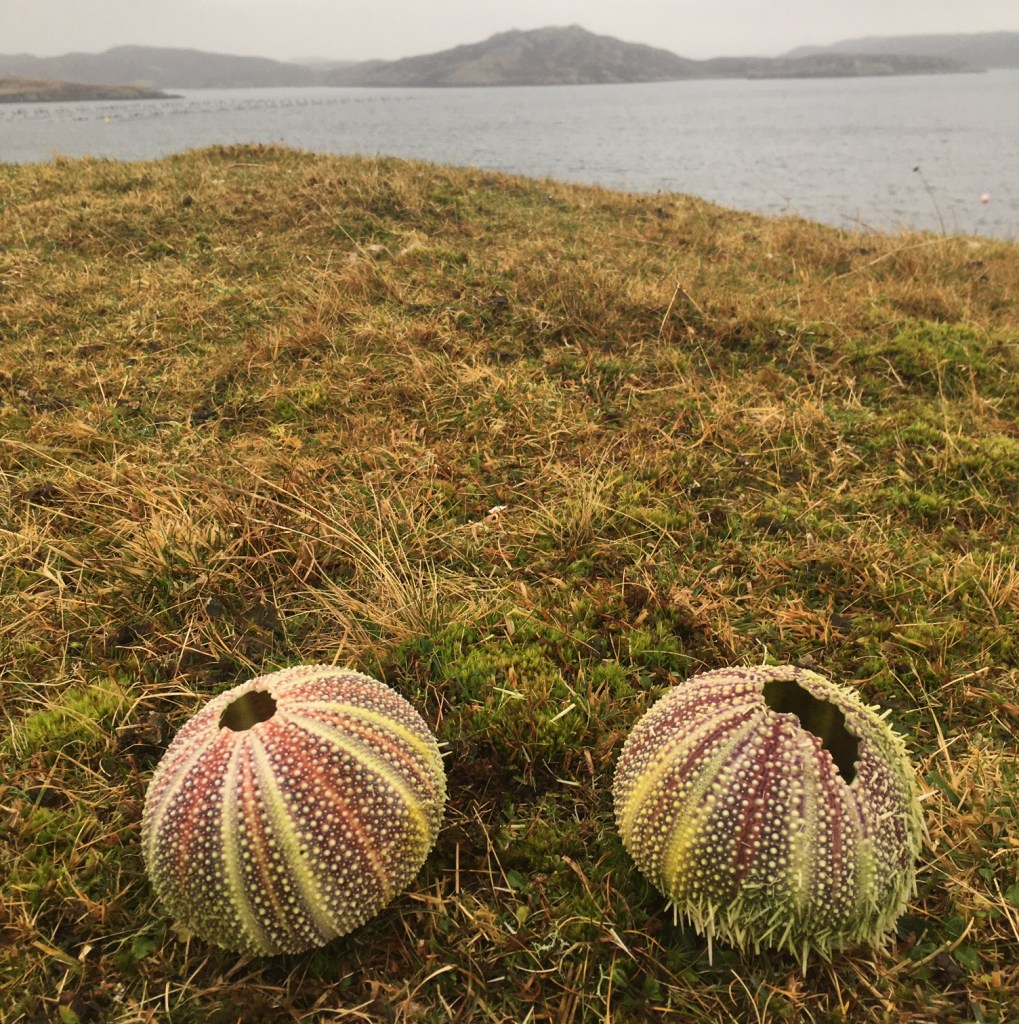
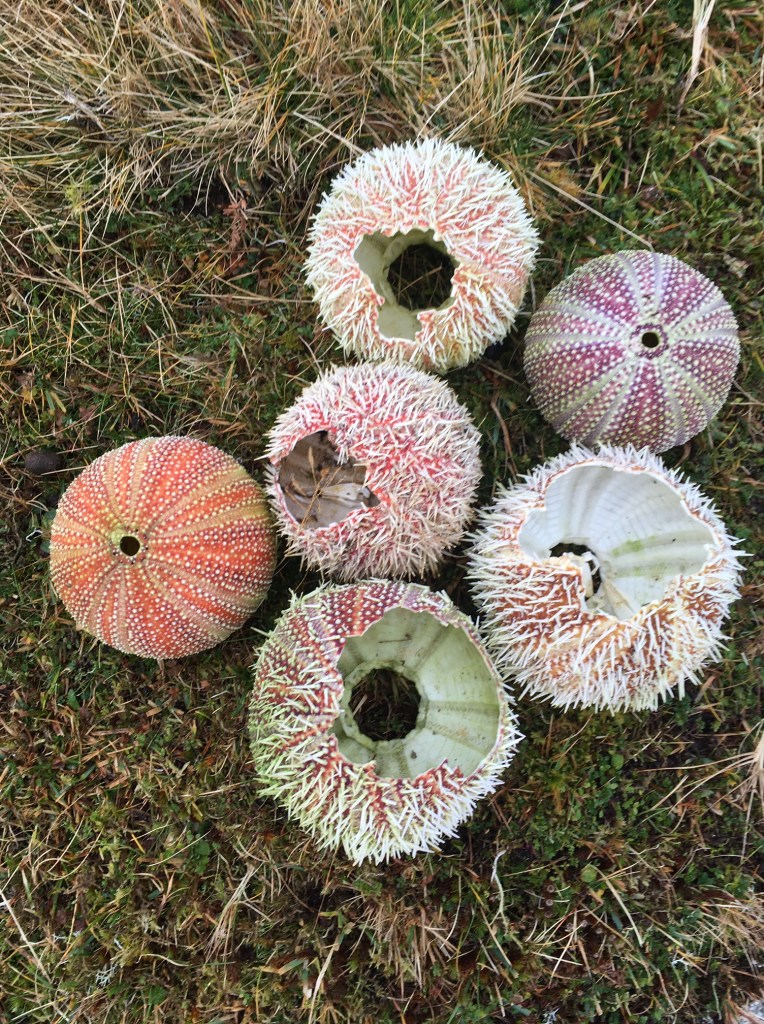
My colour journey started after I went to Shetland to stay on Fair Isle with Mati, then at Brindister just before Christmas of 2019.  At Brindister, I found Sea Urchin shells scattered on the hill beside the voe.  I began to name the place Sea Urchin Hill and really took notice of the colours and form of the dried Sea Urchin Shells after the sea gulls had eaten the urchin.  

In Jamieson’s of Shetland, in Lerwick, I bought colours that I felt worked for me for a new hat project.  By then, I had started sampling colours but still didn’t know what I was doing.   When I got home from Shetland, I started the Sea Urchin hat pattern with light background and a darker coloured Shetland Tree and Star Motif.  And that is where the story of my colour blending started I laid two yarns together on a whim: a stormy and washy blue skies and a flash of dark reds and purples from one of the shells that I had seen.  


It shouldn’t have worked — but it did. It looked alive. 
And that was the start of learning to trust my inspiration and eye and I began to blend the colours.  

What Changed 

It wasn’t that I suddenly “understood” colour blending – my swatch book will show you that but it was that I stopped trying to get it right and started trying to get it interesting and understand the changes in tone and colour.  
I began to notice colour in the world around me — the copper of old bricks, the green of moss after rain, the pink glow of dusk. 
Nature never worries about matching. It just works. 

That’s when I realised: 
Colour confidence isn’t about knowing rules — it’s about paying attention, and being willing to play. 

Small Steps to Build Colour Confidence 

1. Start with Inspiration, Not Theory 
Forget the colour wheel for a moment. 
Go for a walk, look through a photo album, open your wardrobe. 
What colours feel like you? 
That’s where your palette begins. 

2. Work With What You Have 
Lay out your stash and make little “yarn bouquets.” 
Mix fibres, tones, and textures — even scraps. 
Sometimes the most magical combination comes from leftovers you’d never thought to pair. 

A Palette from the Everyday 

This week I took a walk through Sheffield woods — everything was damp and glowing. 
There was soft lichen green, deep bark brown, a sudden flare of orange leaves against a grey sky. 
When I came home, I pulled those colours from my stash and swatched a few rows. 
Instant calm. 
Sometimes, the best palette comes from the ground beneath your feet. 

Confidence Comes with Play 

Colour confidence isn’t something you’re born with. 
It’s something you knit into being — loop by loop, swatch by swatch. 
Every “wrong” colour combination teaches your eye what it loves. 
And every small experiment builds courage for the next. 

looking at all the colours to really see them

Ready to find your own colour confidence? 
If  you want to learn more now, and would like to join my exclusive small Colour classes of 6 people, then,  I do teach colour blending workshops online and the information is here

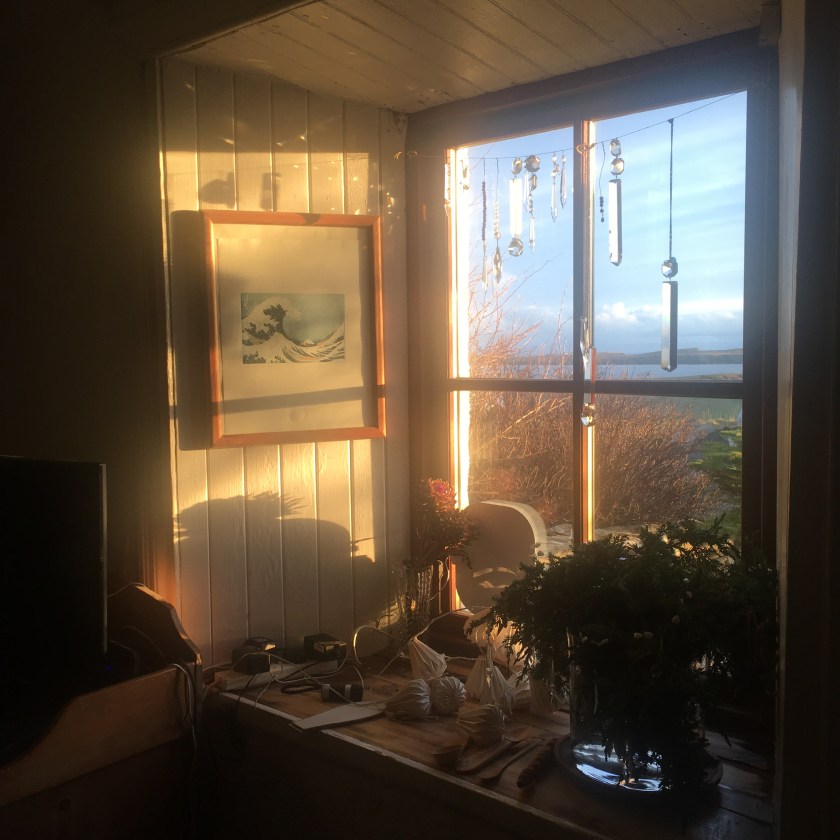
You’ll get the Sea Urchin Pattern free to work with after your workshop. Many people have joined me in the Colour Blending sessions from my first workshop in January 2021 – held in the window sill of my window in Shetland looking out to sea.  

Now, I still teach but not often, so if you would like to grab a space, there is only one left for Friday 9th Jan and 4 left for Saturday 17th Jan.   So please get in touch using the form on the workshops page.

If you have knitted the Sea Urchin hat pattern, please tag me on instagram because I do share other people’s knitting using my patterns.

Happy successful colour work knitting 🙂

Tracey

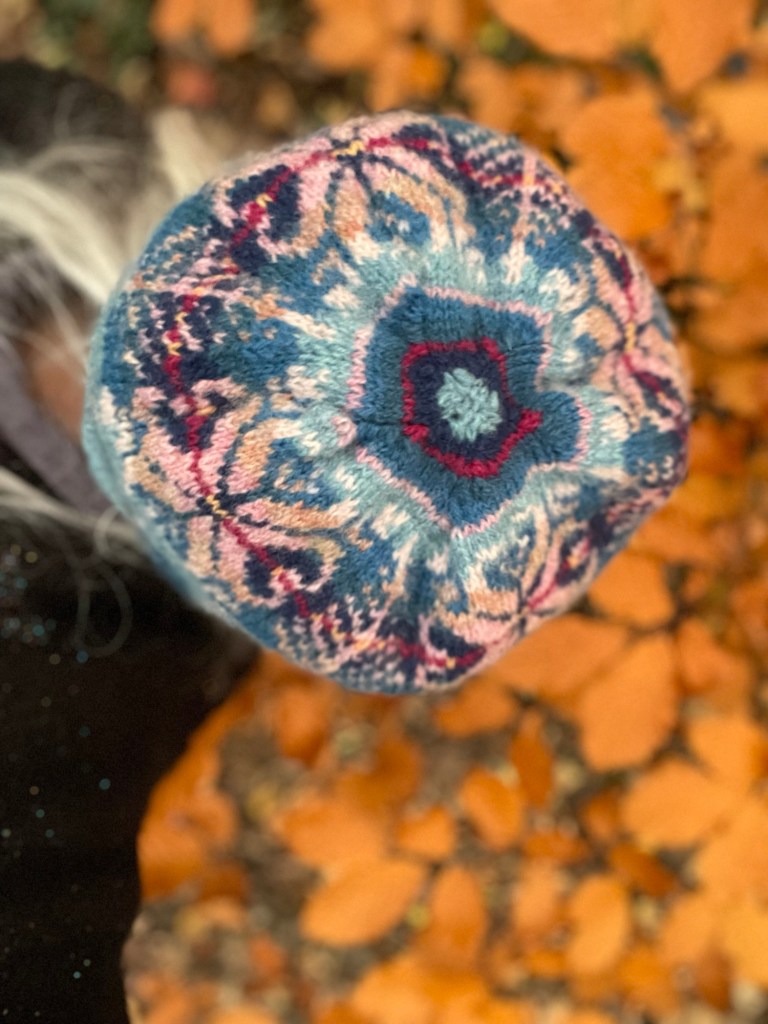
Tree and Star Hat pattern last week above the burning copper coloured fallen leaves

Between Silk and Paper

Between Paper and Silk

I wanted to share with you, something that I have been quietly working on alongside my knitting designs,

I have been building a new body of work titled ‘Between Paper and Silk’, rooted in the two Japanese concepts of Ma (間)—the space between things—and Mono no aware, the gentle awareness of impermanence. I don’t begin to understand these concepts but I am building my knowledge and expressing my understanding through making.  These ideas began to take shape during my time in Kyoto in December 2023/Jan 2024 and will be further explored during a one-month residency in Fujiyoshida with SARUYA Artist Residency, Japan in December 2025, where I will develop further stages of this project.

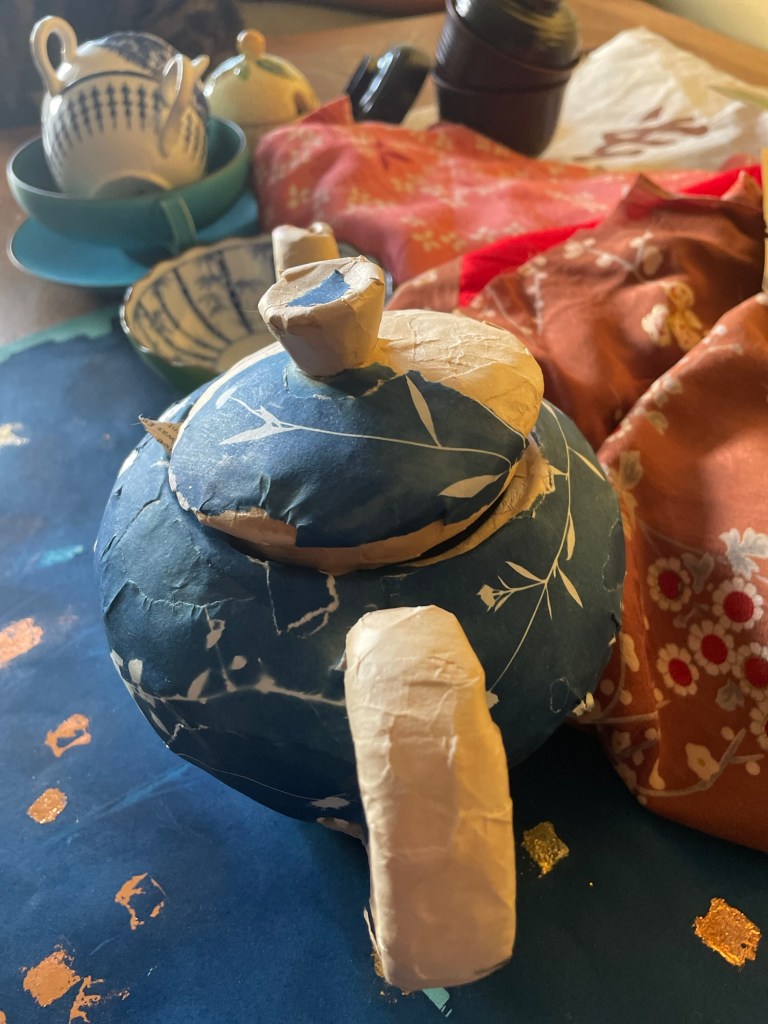
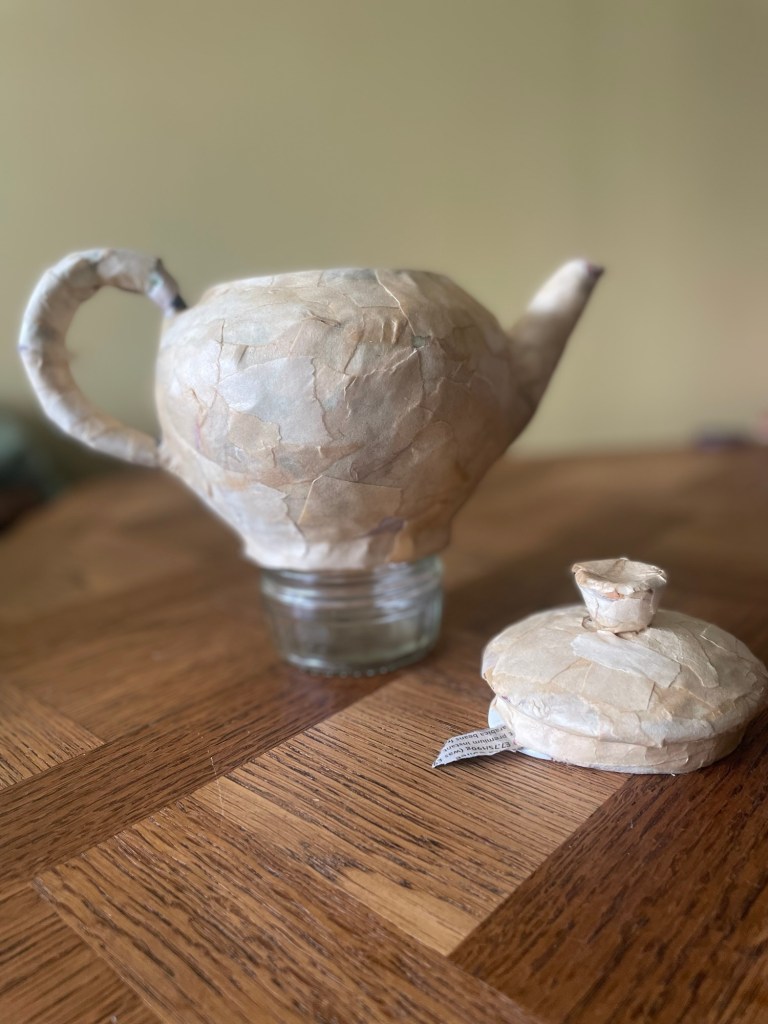
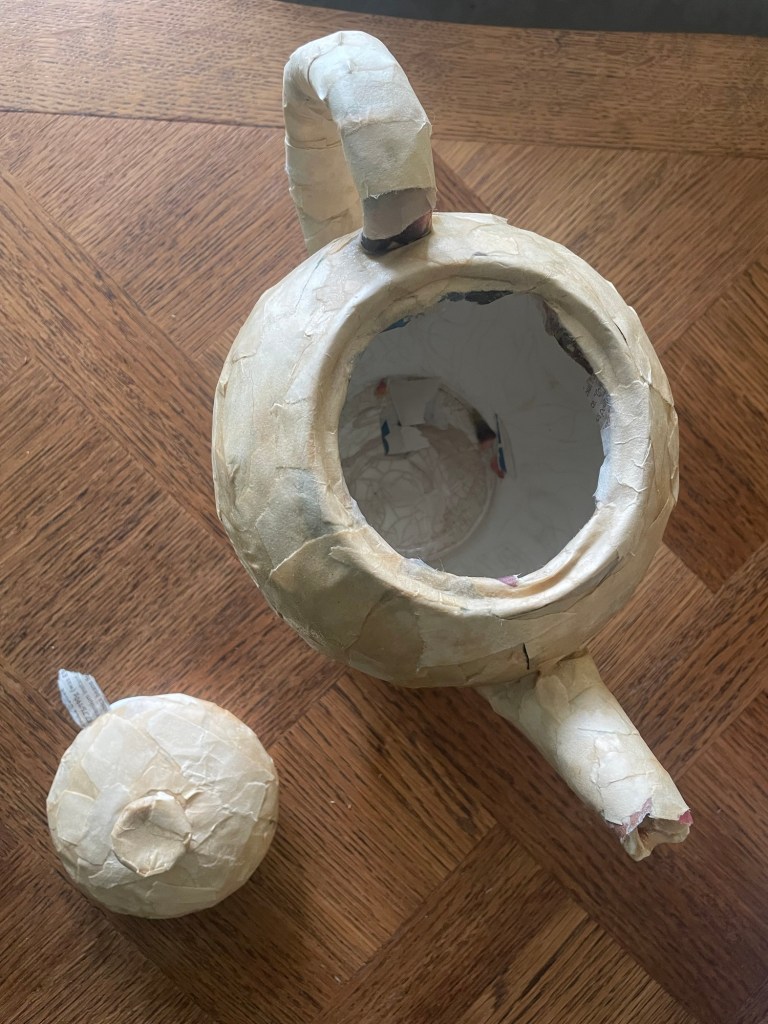
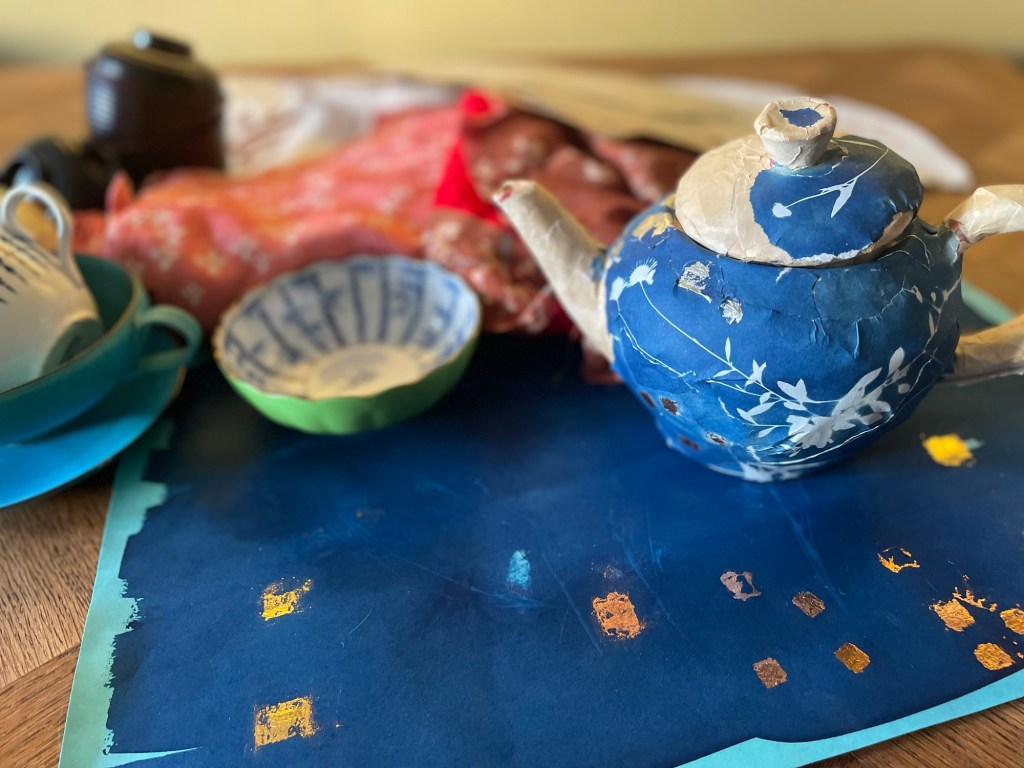
I am applying for a local Sheffield residency which will give me the perfect space and time for a continuation and deepening of that work. I will create a series of papier-mâché pots, made from my British tea pots and cups alongside vintage Japanese bowls, as a testament to both British and Japanese everyday home pottery used in everyday family life. And I will be considering the space between the time of use, who used them, how they hold stories and their tactile shapes lend to me feeling my way through these stories.  I will cover these vessels with papier mache, initially using Japanese papers that I collected at the enormous flea markets in Kyoto to create objects which will then be covered in vintage Japanese kimono silk, sourced during my time in Japan to create delicate vessels considering both Japanese concepts of Ma and Mono no aware. I can also use my cyanotype prints from when I had my studio at Bloc.  But the fabric of the silk will enable me to embroider a into it and some of the stitches will hold the pots together, symbolising repair, connection, and the delicate tension between fragility / resilience and home life.

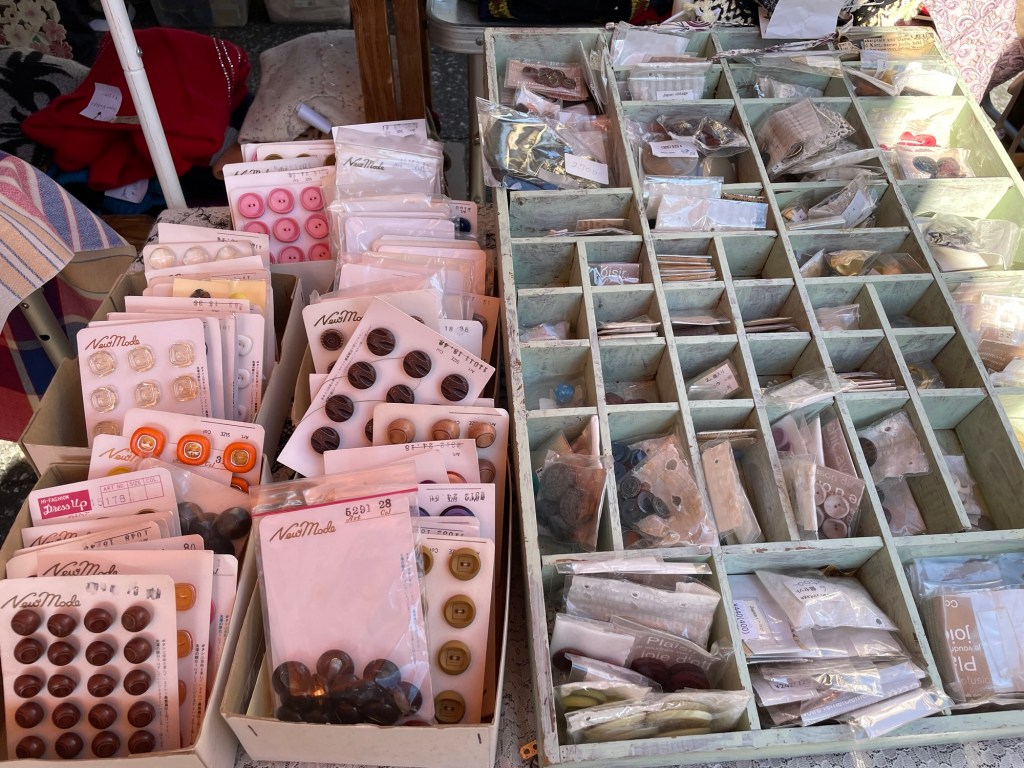
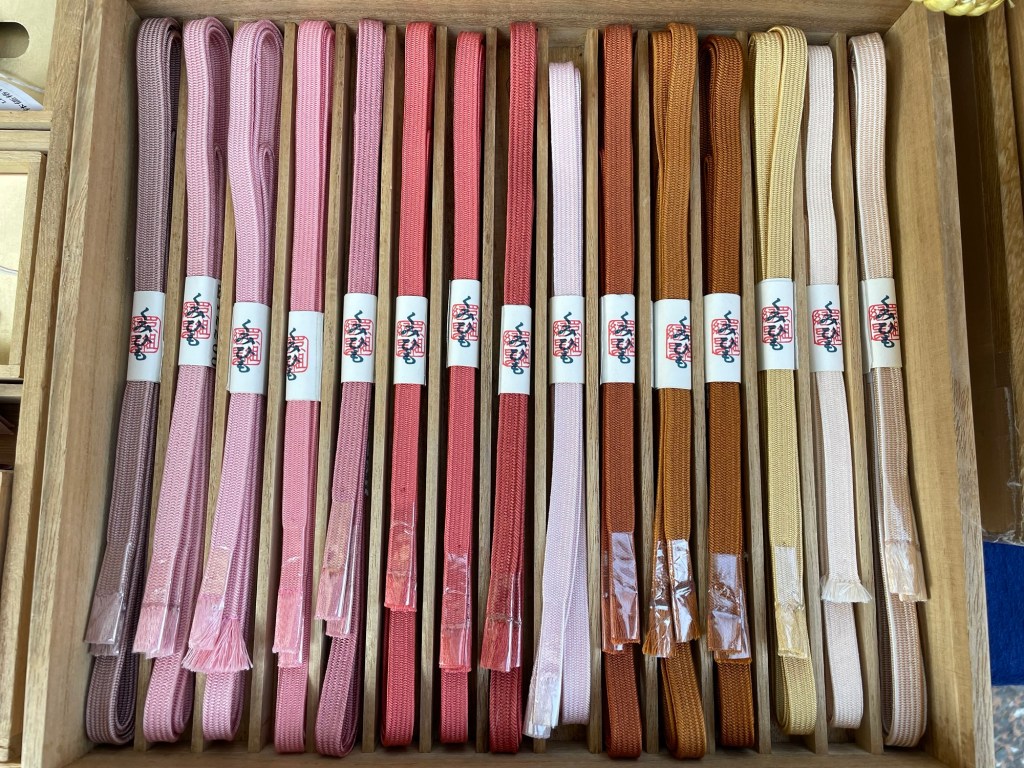
Kyoto Flea market

This new work builds on themes explored in my previous piece, ‘I Cannot Reach You, which was exhibited at Farfield Mill and Frontier Gallery both in 2025. Those installations incorporated my hand knitted textiles and archival photographs to reflect on the emotional and physical distance between sisters, drawing on my story of memory, identity, and silence between siblings. It was a deeply personal exploration of Ma, using garments and imagery to express the spaces between people and the quiet weight of what remains unsaid. While ‘ I Cannot Reach You’ was rooted in knitting, ‘Between Paper and Silk’ moves into new material territory—paper, silk, family pottery, and embroidery —while continuing to explore the emotional resonance of absence and connection.

I cannot reach you
I cannot reach you

If I am lucky enough to be accepted on the residency in Sheffield next year, the studio space will become a contemplative evolving installation, where the paper tea pots, bowls and cups  are hung and  arranged with intentional gaps, allowing the voids between them to become part of the narrative. Torn paper from Kimono packaging will be layered into the papier mache, evoking the beauty of incompleteness and paper vessels of impermanence. The Testing Ground spatial arrangement will reflect Ma, inviting viewers to consider not just the objects, but the spaces between them. 

Here is my current work in progress.  It is may family Burleigh Tea pot.  It has 2 cracks in it.  I have covered it in 4 layers of paper before testing the cyanotype paper over the top.  But, I think that silk pots will be more tactile and hole more stories.   Stories of the family pottery and of the vintage silk from Kimonos. 

Let me know what you think of my initial idea.

One and Two Cardigans

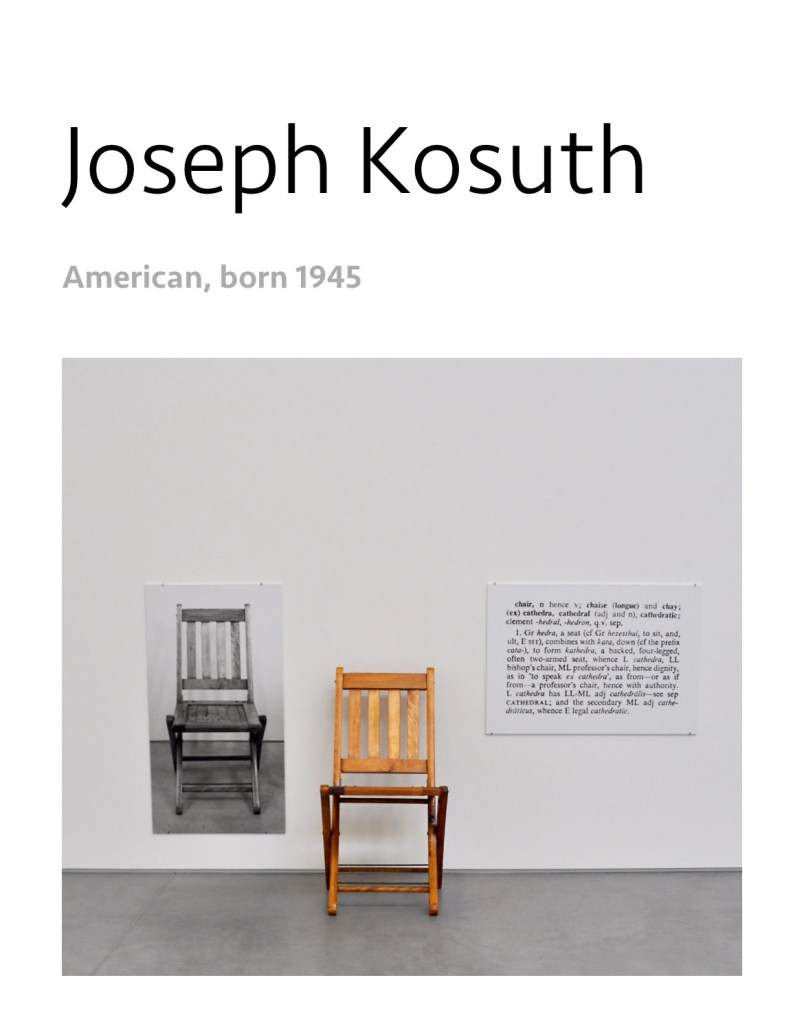
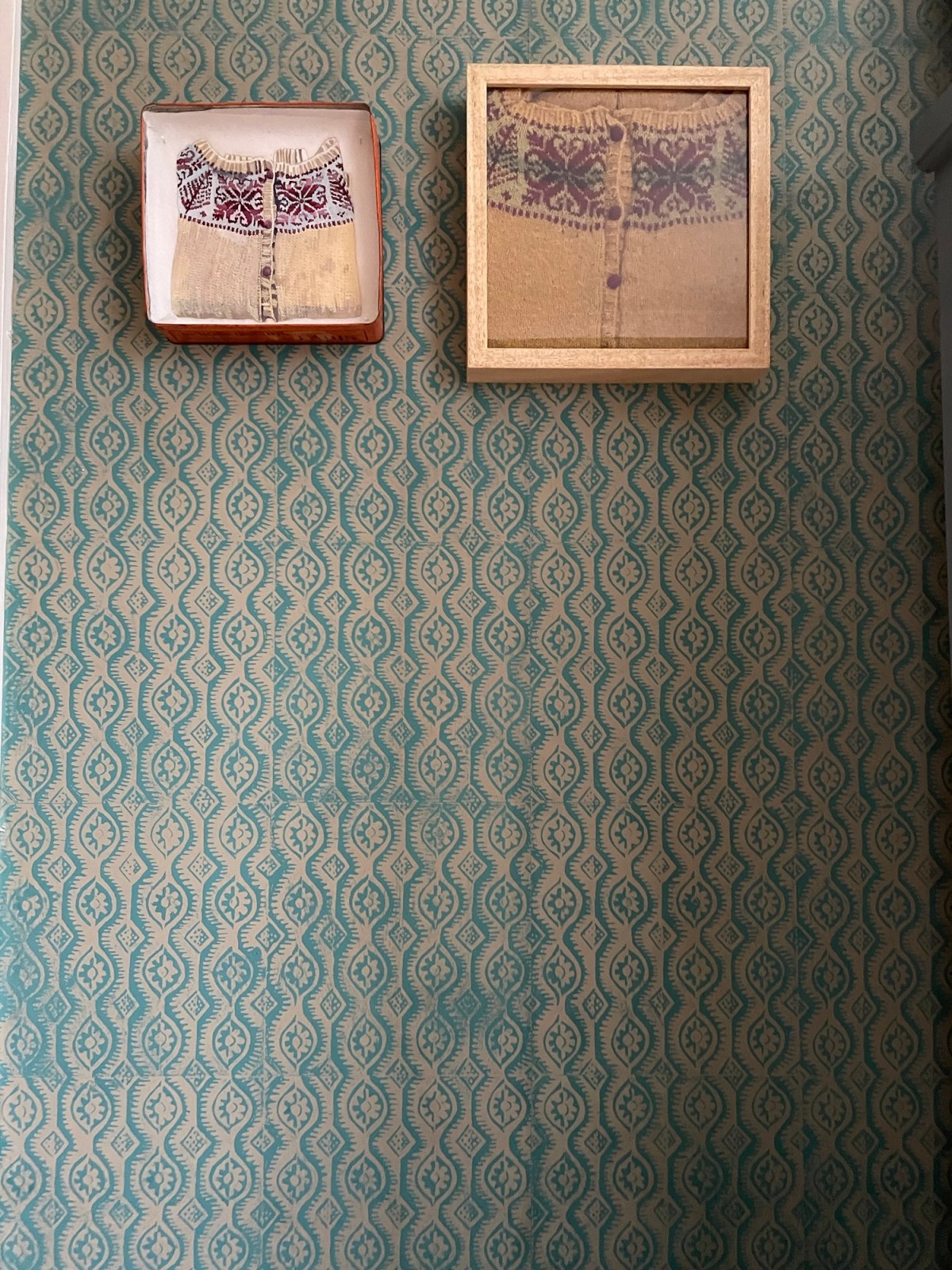
One and Two Cardigan’s, After Kosuth’s One and Three Chairs.

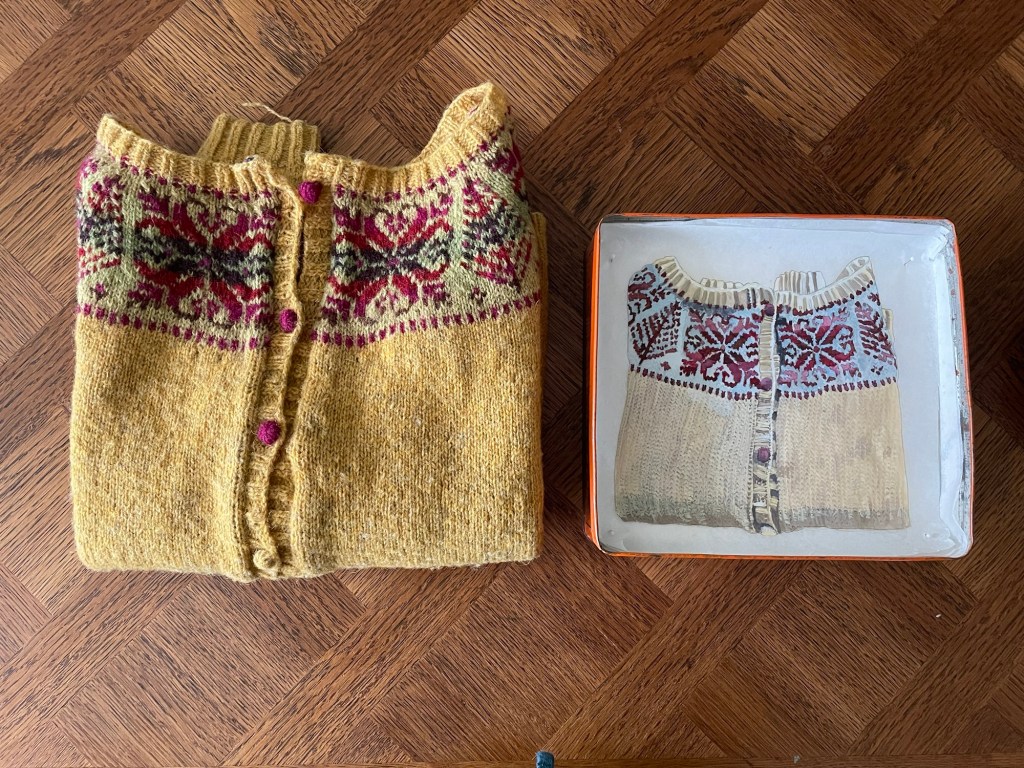
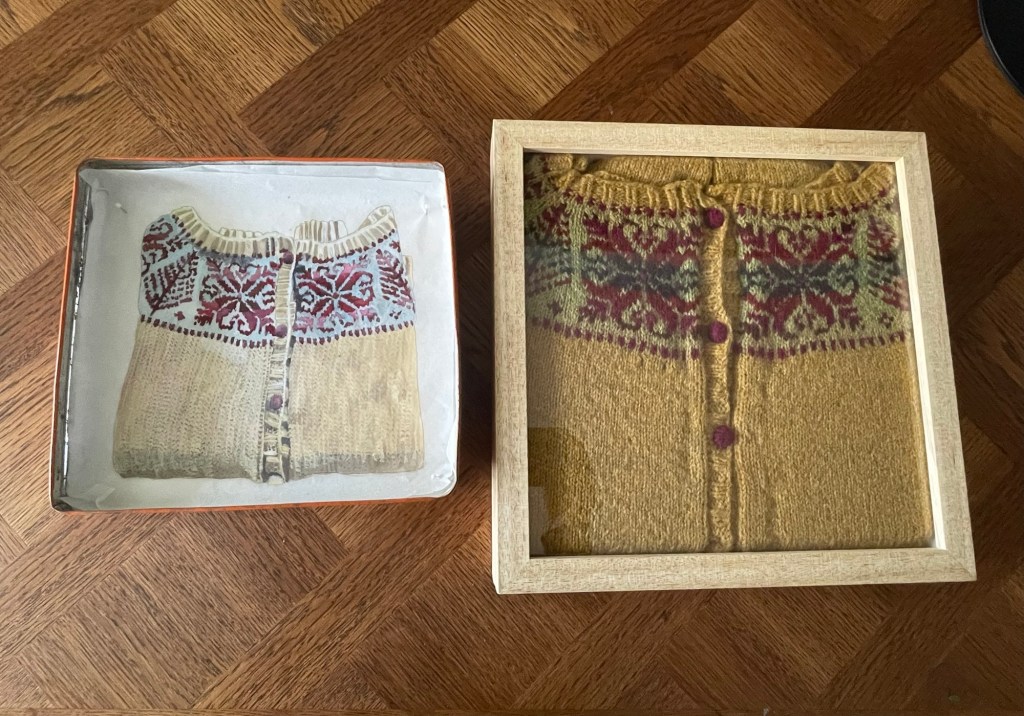
I finally saved enough money to have a perfect box frame made for the first and only yoke cardigan that I have ever made, way back in 2015.  I was never happy with the results, and hardly wore it.  The project was a learning curve of both knitting/ textile construction, steeking and colour work as well as my first taste of Shetland from my visit to Shetland wool week that year almost 10 years ago. After making it, the cardigan mostly lay dormant in my bottom draw for some years and I have, on many occasions, almost given it away.   

My reason for boxing it, is not sentimental but the fact that, unbeknown to me,  Francoise Delot- Rolando, a French artist,  painted the very same cardigan in her ‘Clothing Fragments Series,’ in late 2021 and in March 2022, she messaged me asking if she could post the image on her Instagram of the little painted mustard cardigan.  I had no idea what it would look like so she sent me images, which absolutely blew me away.  In March 2022, she generously sent me the little exquisite painting, framed in a French biscuit tin. It arrived when I was living for one week, in a borrowed house, six months after returning from Shetland, when I was moving from pillar to post without home or idea of home and I was very lost. Here is the post of that time https://traceydoxey.com/2022/04/12/tin-paint-paper-creative-generosity-and-kindness/

When the painting arrived, it took my breath away, made me feel connected to a woman I have never met, connected to her art, to my knitting, to living and creating work again.  She lifted my spirits in a very difficult time and I have always been grateful for her spontaneous, incredible generosity.   Her gift also elevated my knitted piece from a rugged cardigan in the bottom of a drawer to something to celebrate – a journey – a life. 

When I framed the cardigan, I sent an image to Francoise and she said that ‘there’s something of Joseph Kosuth’s, One and Three Chairs, about it.’  I hadn’t heard of the work, so I, of course, immediately googled it.  

Joseph Kosuth’s ‘One and Three Chairs’ was a conceptual piece from 1965 – the work consisted of a Chair, A Photograph of that Chair, and a printed text definition of the word ‘Chair’

Every time Kosuth, showed the work, he used a chair from the place of exhibition, so the work remained the same but different each time, with only 2 elements of the piece remaining consistent – the text of the definition, and the subject matter – a Chair.  Kosuth’s concern was the difference between a concept and its mode of presentation.  He unified concept and realisation.   The value of the piece was rooted in concept rather than the work’s physical / material properties.   Whereas, I have come about my combined piece the opposite way around – this coupling of the painting of my cardigan and knitted cardigan sits, not as concept – but as materiality and I suppose, women’s work.    One and Three chairs explored the idea of the nature of representation – same chair three ways. And in some ways, my piece could now be ‘One and Two cardigans’ but for me, it also raises the question that I return to repeatedly – the notion of what art is and what it should be.   I placed the two works together and was introduced to an Artist I hadn’t heard of before as reference to a similar representation.

I have long wanted to box frame the cardigan to sit alongside the painting of it but why elevate the old cardigan? It’s rough around the edges, its yoke colours jar with me now and all I see is how I would knit it now, how I would do better.  Let’s be honest, without the beautiful painting, it would not have been a consideration for me to frame this knitted piece.  At one time, I would have framed it as a sentimental reminder of my growth in learning a craft involving my love of Shetland, my first experiments with steeking (knitting in the round then cutting the piece open up the front to create an opening) such love and attention to the hand made buttons, such attention to its making would have at one time been a reason for me to frame it – but not now.  There was no romance in framing this piece, it is ART when placed alongside the painting, it is something more than itself.

I have finally placed it on the hand printed wallpaper that Emma did for me in Shetland – a Peggy Angus print from long ago.   Emma told me that the wallpaper was made to show art – but I always loved the paper too much to cover it – now ‘One and Two Cardigans’ sits on top of a small area of beautiful paper, elevating it even more.  Not everyone would see it this way, but I do.  The small details in life are what I live by, and then life becomes that beautiful small moment.  The small things count.

I invite you to consider this  – is my newly framed old cardigan, when framed and placed next to an oil painting of the very same cardigan, is it art? 

Is there a concept of knitting as art? Or is it a Textile artist’s work?   Kosuth focused on the idea of a chair rather than its physical representation, and now, I too have focused on the idea of The Knitted Cardigan.

Happy new 2025. 

Hoping for a year of creativity and small sharp points of beauty. xxx

travel far or close up?

Is it true, that the longer we live, the more appreciative we become of the small things closer to home?

Such as the simplicity of setting off from home spontaneously on early evening walk, after teaching, just as the sun is setting far away, where the exquisite but simple chrysanthemums glow in the pink evening light in an allotment, or how the trees cover me in the woods but do not touch each other, and where I walk in an absolute carpet of leaves for miles while the sound of ever present moving water in the over flowing brook accompanies me. A change in 10 minutes from dusk to dark where I noticed every fleeting detail.

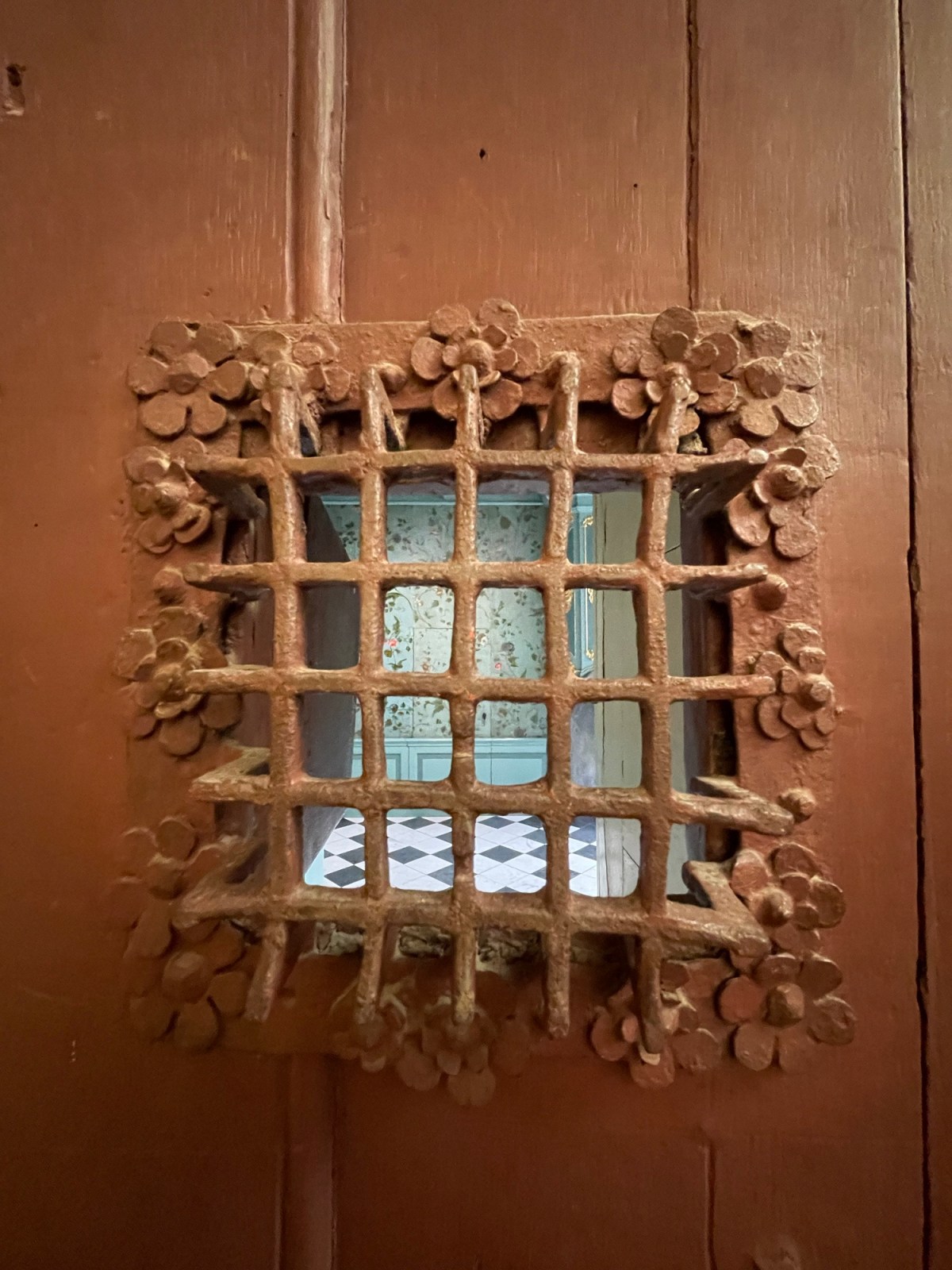
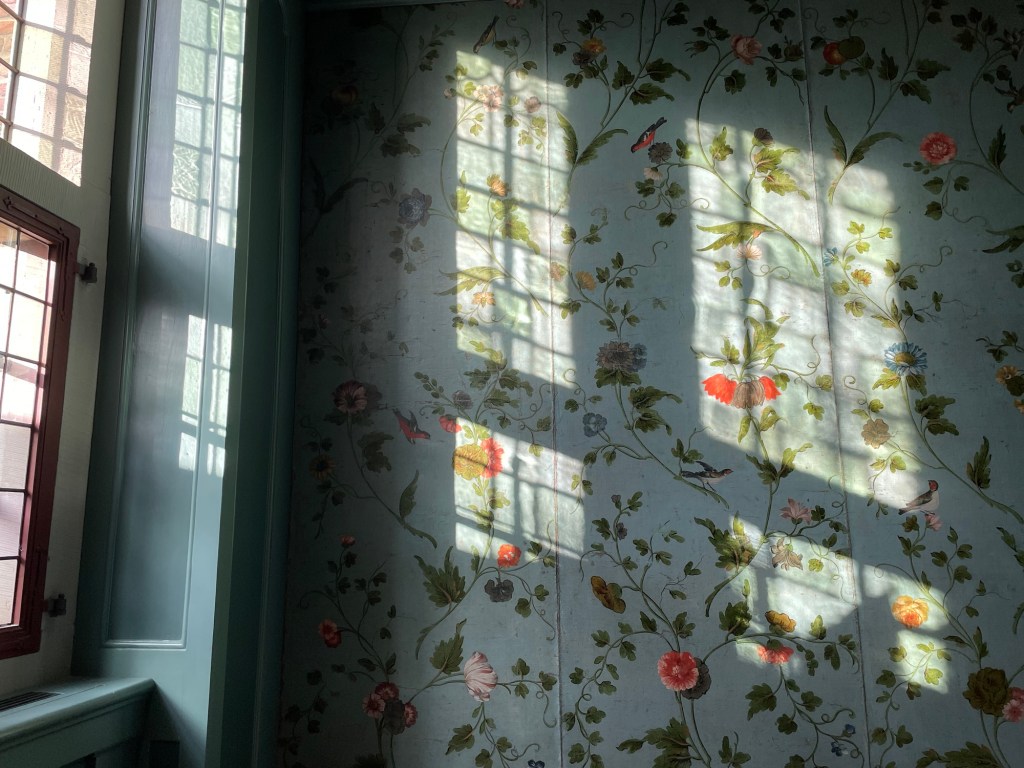
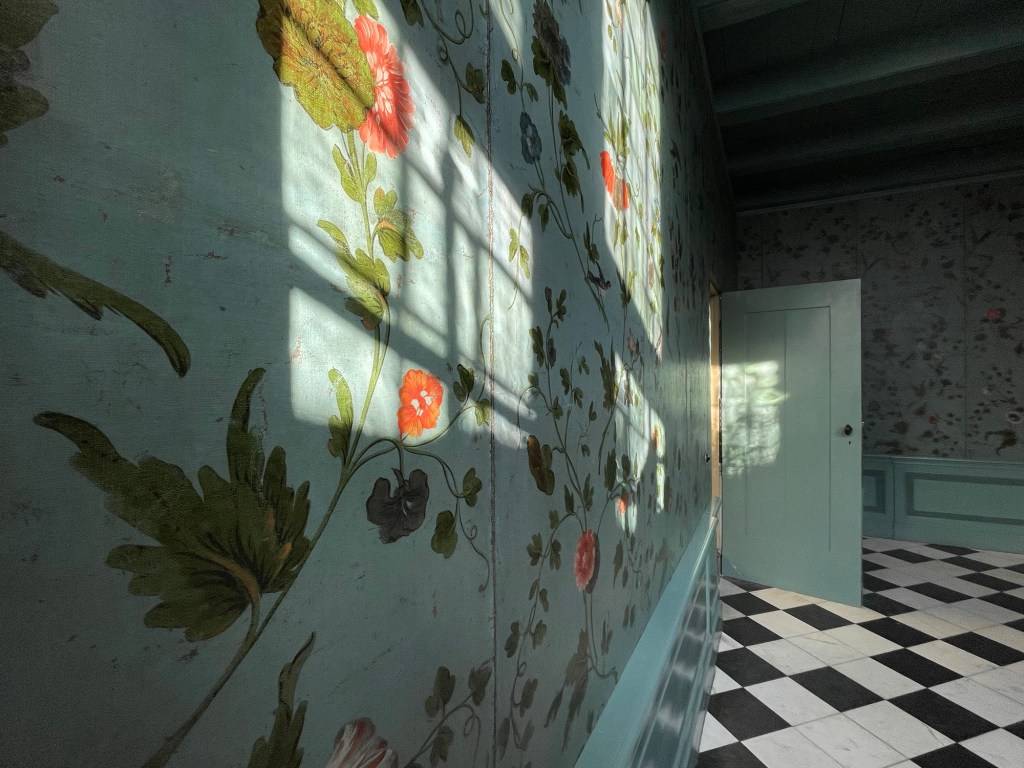
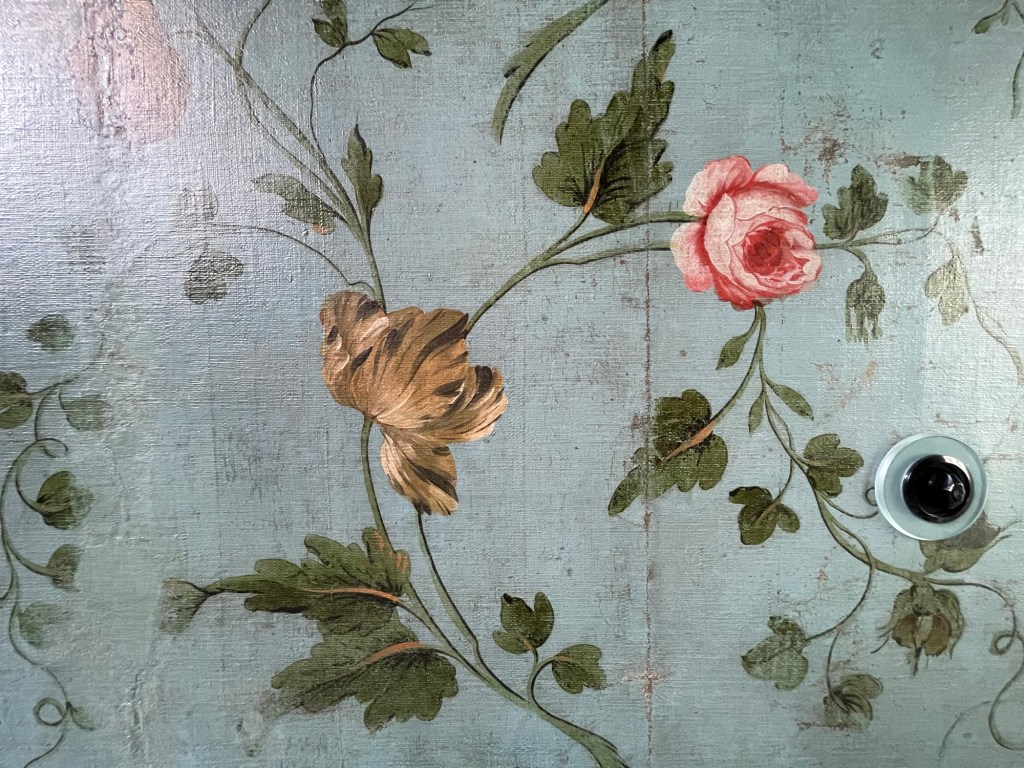
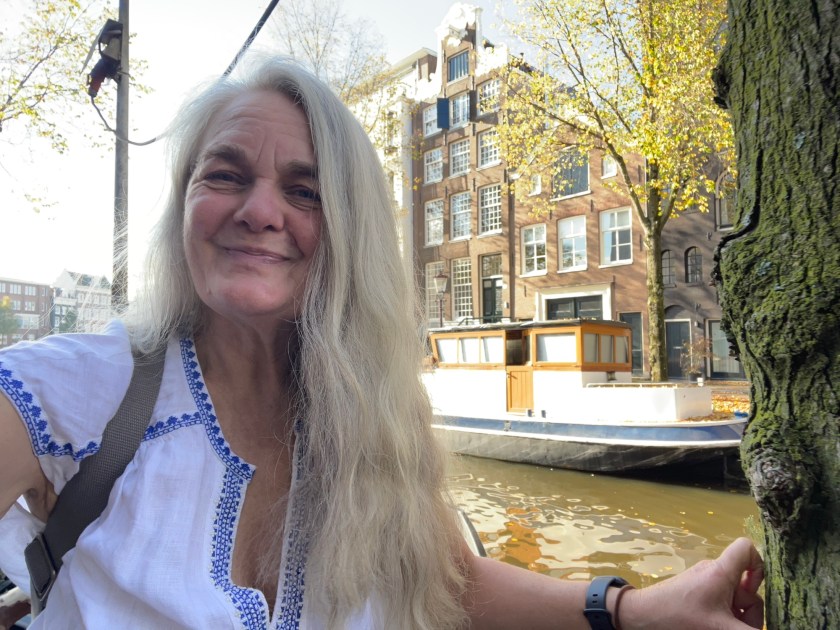
And yet, last week, at this time, I was in Amsterdam in the Oude Kerk (dating back to 1200) looking at, gently touching and enjoying beyond all understanding the hand painted linen walls in the Marriage Banns room dating back to 1760. It is called wallpaper but it is linen painted in the finest aqua, duck egg colour overlayed with exotic tulips, chrysanthemums and nasturtium.

These two moments, a time spent walking close to home through a wood at sunset, in the city and finding the blue lined walls in the oldest Church in Amsterdam, affected me in the very same way. A connection to absolute unexpected beauty.

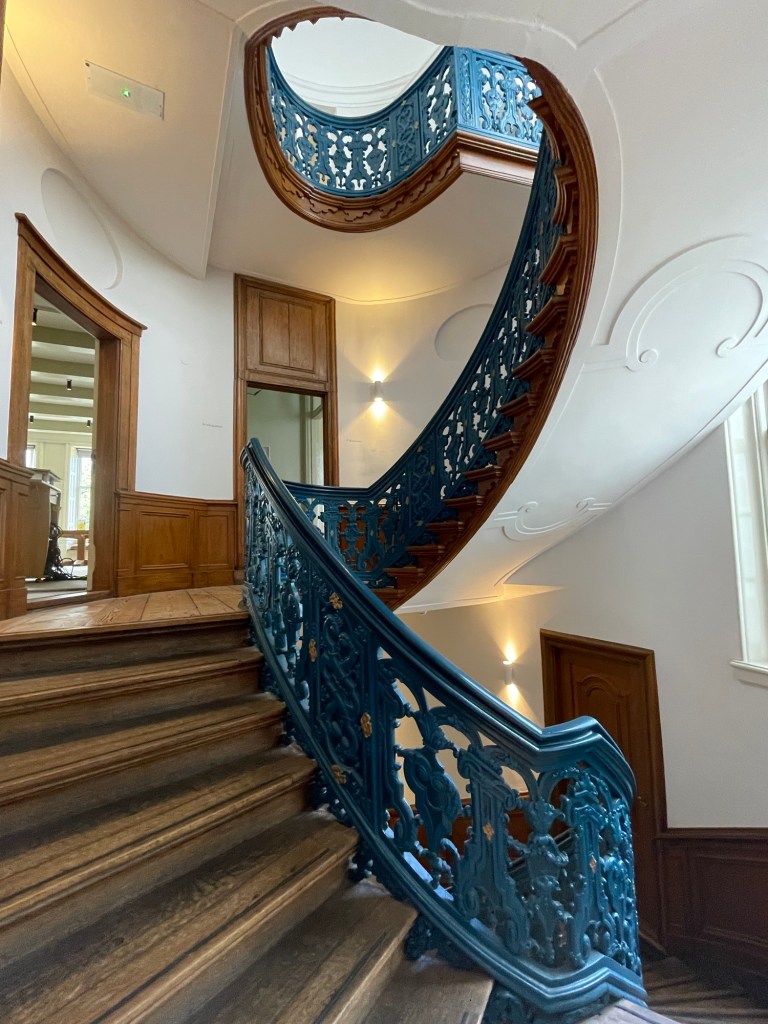
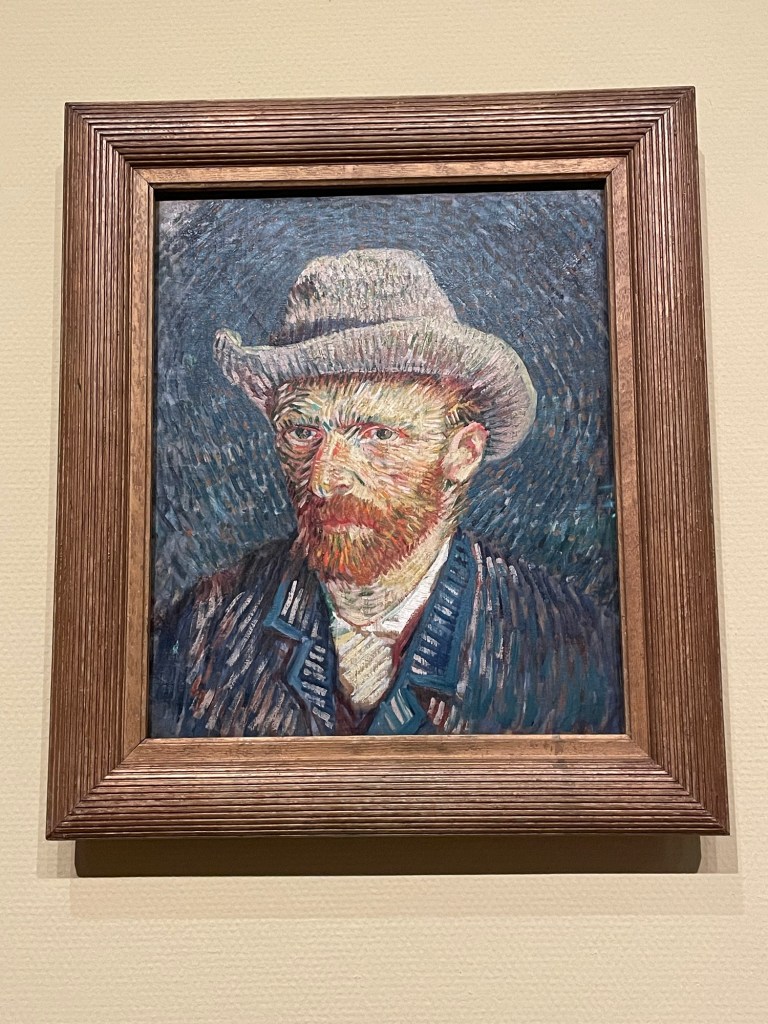
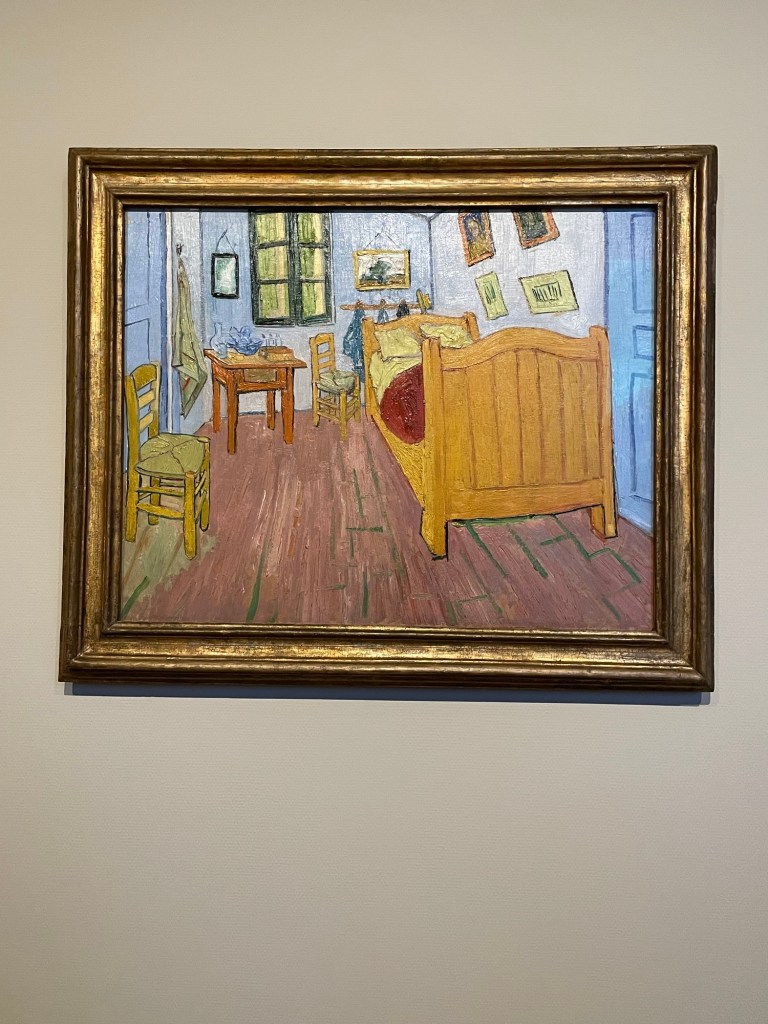
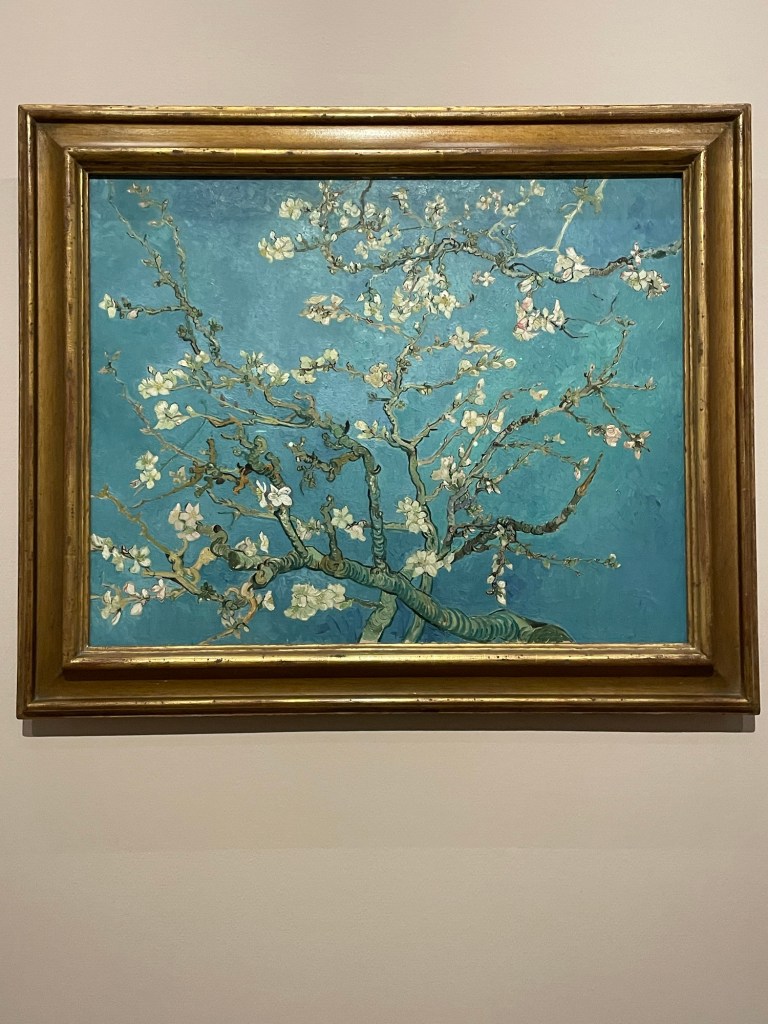
so many things in Amsterdam affected me through the senses of sight and wonder – here are a few.

miss nothing. find joy in small unexpected things as well as the grander wonders of the world.

https://www.instagram.com/traceydoxey/

experimenting with exposure

It is a calm Saturday, overcast with a little breeze.  I googled the sun and is listed to be out above the city of Sheffield later this afternoon.  I have wanted to try something for some time, thinking of home. My cyanotypes have mostly utilised pressed flowers and photographic negatives from when I lived in the hutongs of China, all of which rely on the sun to develop the image. I have mostly worked in the studio but have a small amount of papers that I coated last night, and they are under my nose.

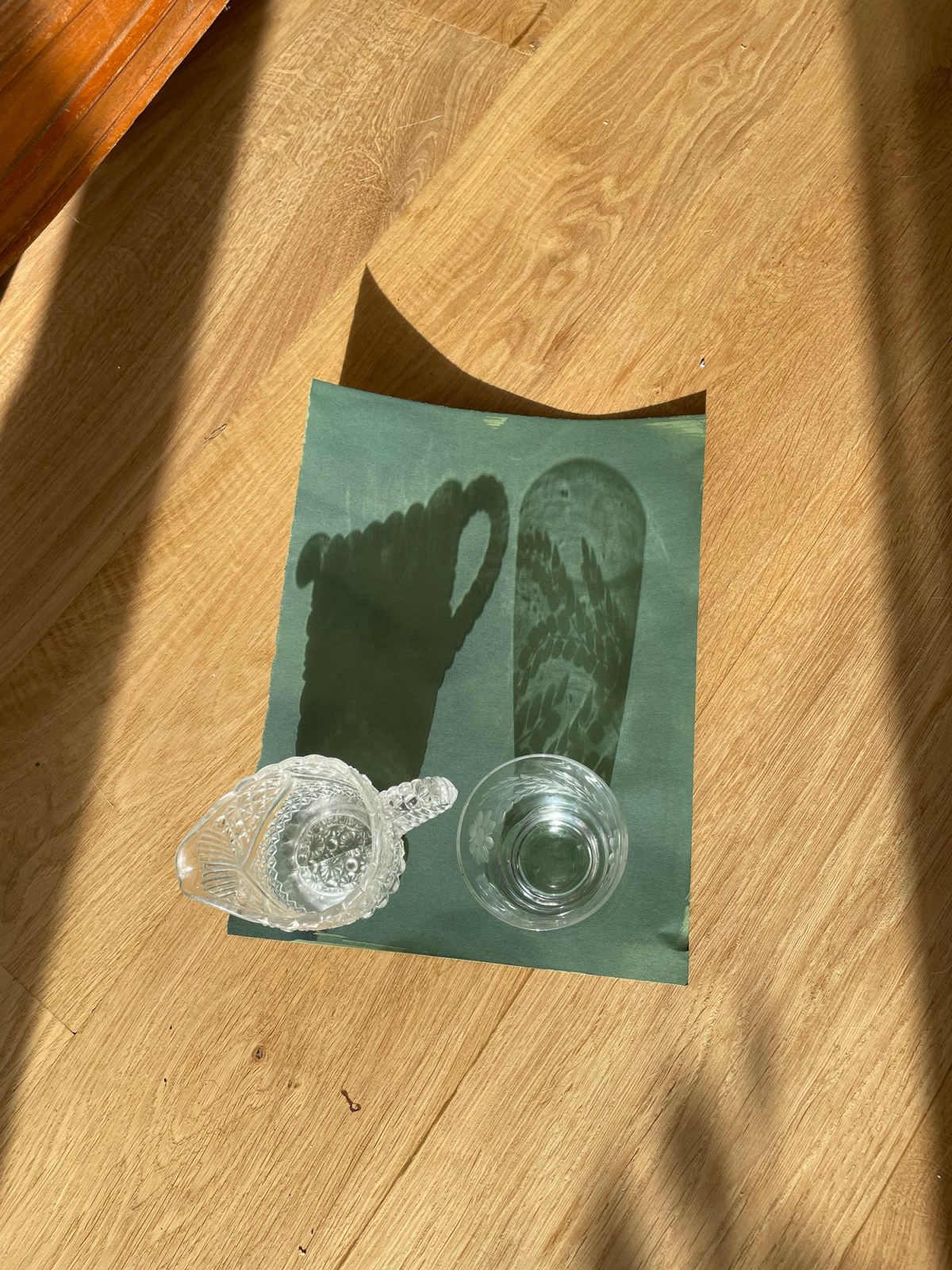
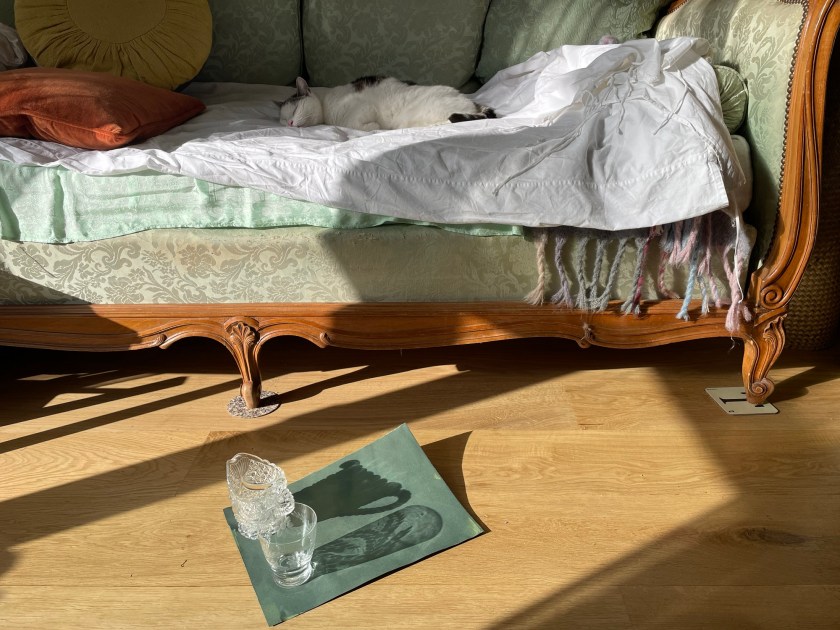
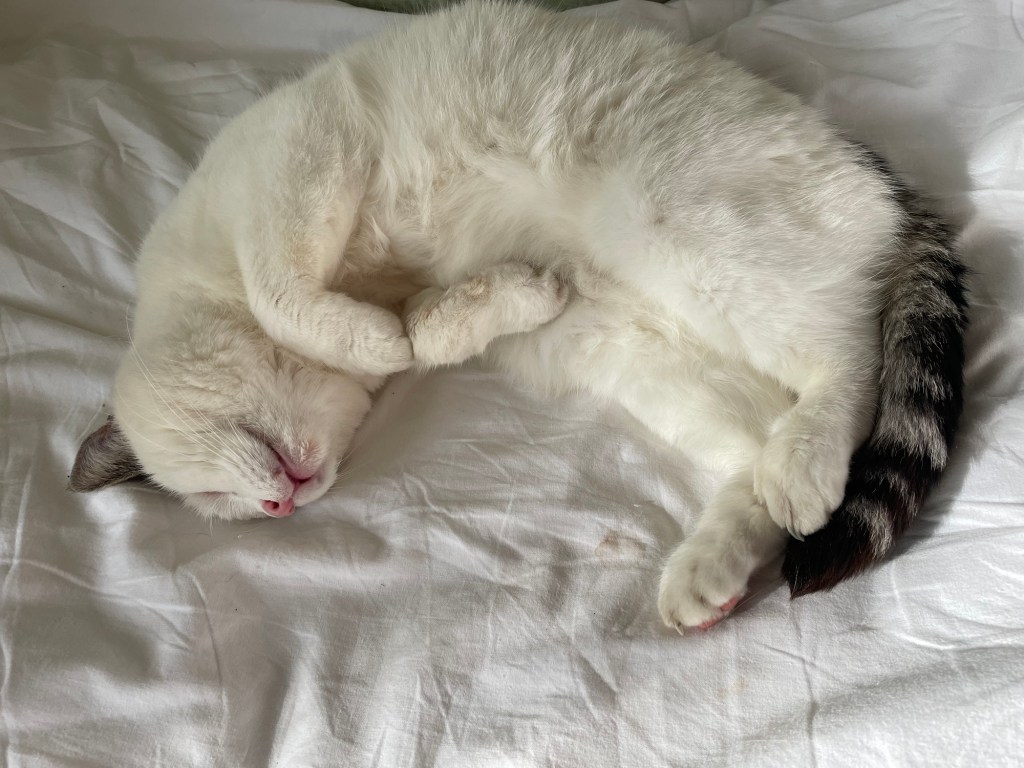
Surprisingly, at 8am, a break in the clouds allowed the sun to break through and cast a brief shard of light across the floor of my tiny flat in Sheffield.  Alfie watches on as I place the two objects from home, made of etched glass or crystal, into the shard of light.  The crystal glass was Susan Halcrow’s. I tear a pre prepared paper in half to experiment with what I have – a brief moment of sunshine, two objects, my floor and a little hope.  Here goes.

The sun gives me about 3 minutes, not long enough to develop a clear image. I don’t move, the sun reappears, Alfie lies down and I hope at the wonder of what might emerge – in total I have only about five minutes of sunshine which matches my impatience.

While I wait, I’m thinking of the shadow moving across the paper, even a small amount will blur the image, if the image will take at all and then I am thinking of the movement of time – the Japanese concept of Ma, ( the space and pause between all things) that I am interested in and I watch as the sun hides again, the paper is cast into a shadow and a faint image is exposed upon the paper. I take my chance.

This is one of my processes. Experimentation – either with wool, colour, photography or cyanotype – to take a chance in the moment, with what I have to hand.

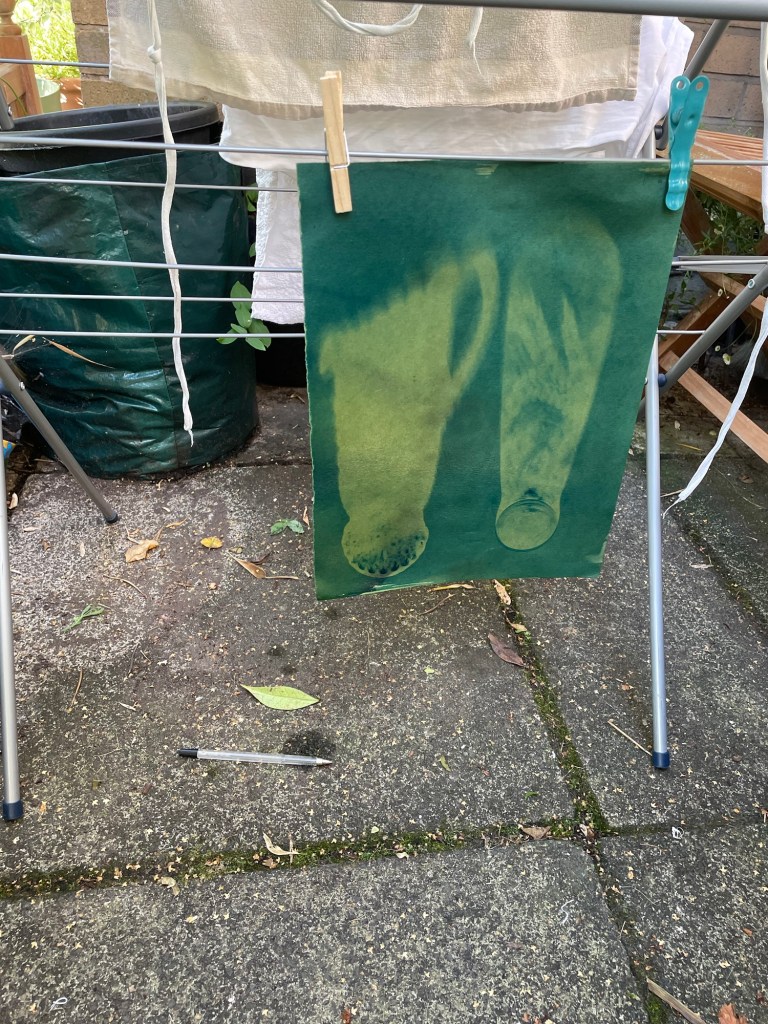
And here is the first result.

I love how the bottom of the jug is deepened in colour, I love how the etched glass stretches in pattern and a faint movement of impression.

Tomorrow, the sun is booked for some hours, I will try again. Hopefully, with a time of exposure to show movement. While, Alfie sleeps on.

The space between all things

My field of Art has been knitted textiles for a long time, including a Masters in Knitting at Nottingham Trent University 2016 – 2018.  I often placed my knitted textiles into the landscape to create site specific photographic art which explored the social histories of women and the making of knitted articles.  

I am currently working on a wall based knitted jumper piece called, ‘I Cannot Reach You.’  It is taking into consideration the Japanese concept of 間 (Ma)   – the  silences and the spaces in between all things, and relating it to the relationship between me and my sister.  

I would like to learn about the meaning and concept of the Japanese word Ma    and relate it to the way in which I experience life, don’t you think it would make life fuller? We do not have this word or meaning in England and to look at the spaces is as interesting as looking at the solid things. 

I would like to explore what ‘Ma’, looks like to me, in the space between all things and use textiles and print to express my new understanding of this. If you are Japanese and have and wisdom to share, please do.

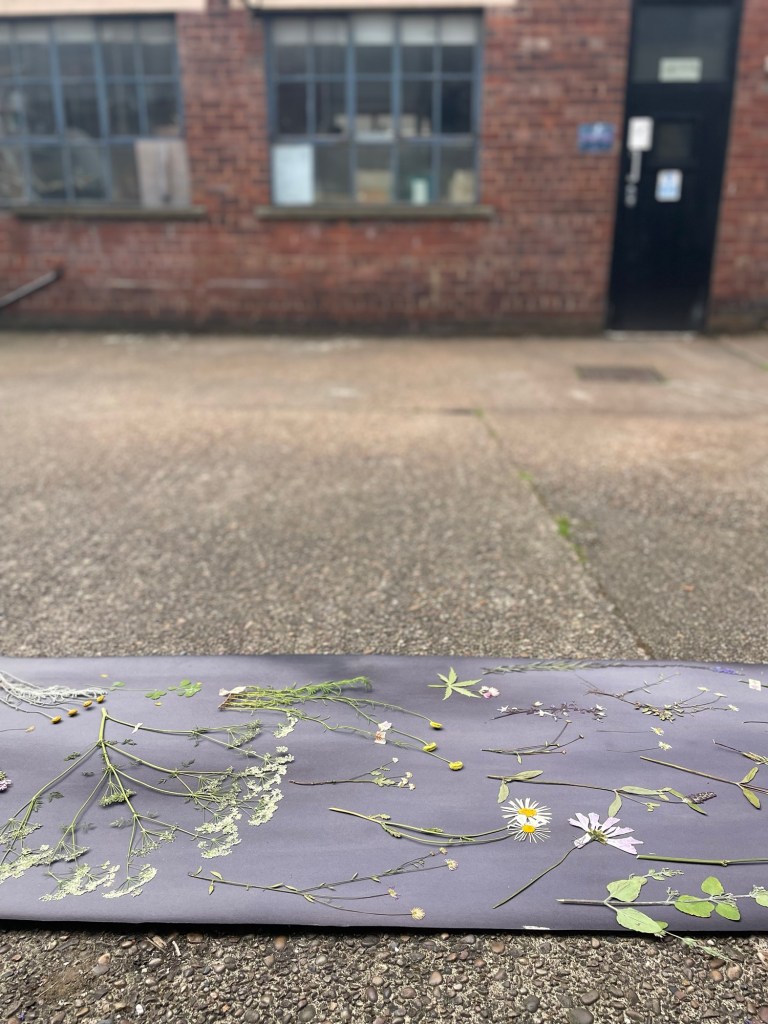
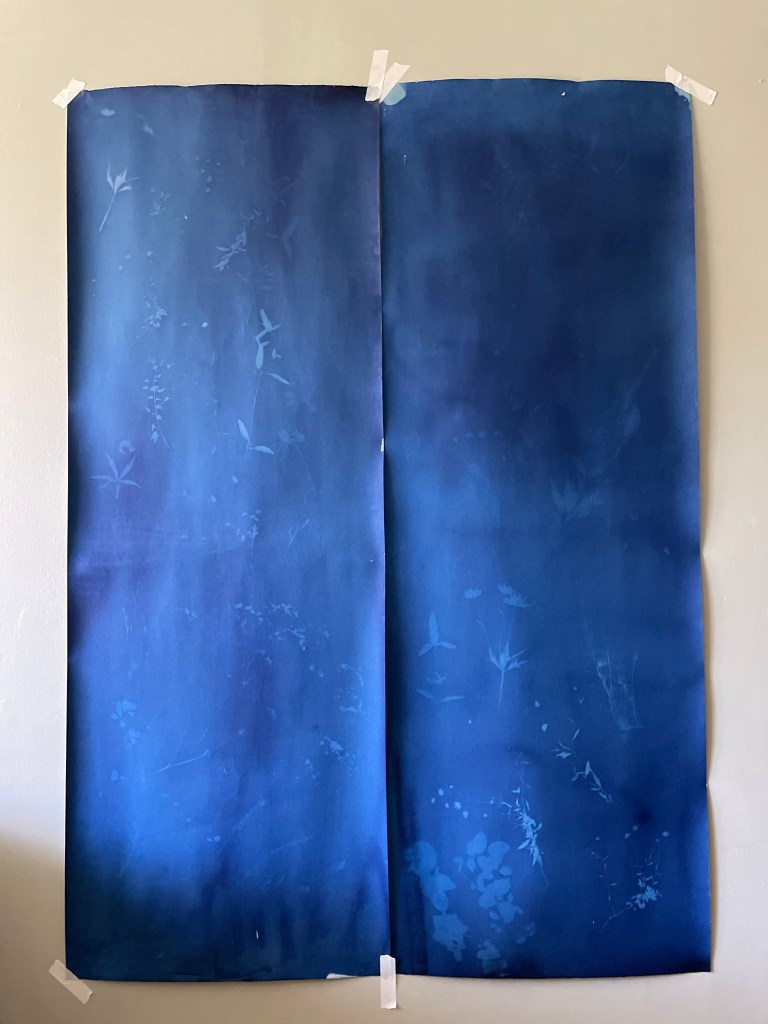
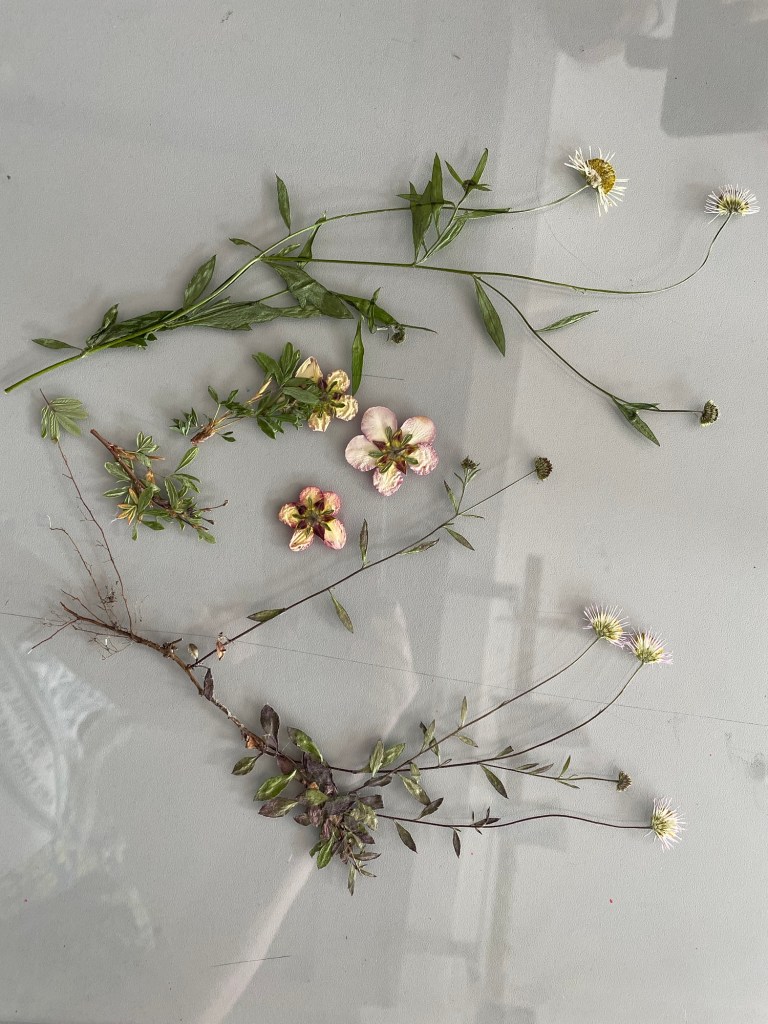
I have recently started to develop Cyanotype prints using pressed wild flowers to create images that are often  half present, a little ghostly.  I am looking at making wallpaper strips to utilise the cyanotype printing process to create the deepest blue papers with hints of British wild flowers, to look a little at the spaces in between in the prints.  Yesterday, I made to sample strips out in the yard at bloc studios, where I have a small space to work.

Currently, I am experimenting and, as you can see,  the process is open to risk and failure, but the two wallpaper strips are becoming more loved by me because of the spaces in between. One has less impressions of the flowers than the other due to both my impatience of removing the flowers and due to the wind shifting them but maybe just pure blue is lovely enough with a hint of a story of flowers in smaller areas – less ‘gilding the lily’ to speak.

Today, I hung the papers on my wall at home to really look at what is present and what is a faint mark only, and what is in the spaces.   I like the results, in some way, they remind me of the Japanese screens that I saw in the temples in Kyoto. But maybe I need to make them more sparse.  Let me know your thoughts. 

If you would like to join me in my next online workshops, they are in the link here.

If you would like to contact me about hand printed cyanotype wallpaper strips, please do so 😊

If you would like to follow me on instagram, where there are lots more images, then, I am in the link here

Cyanotype

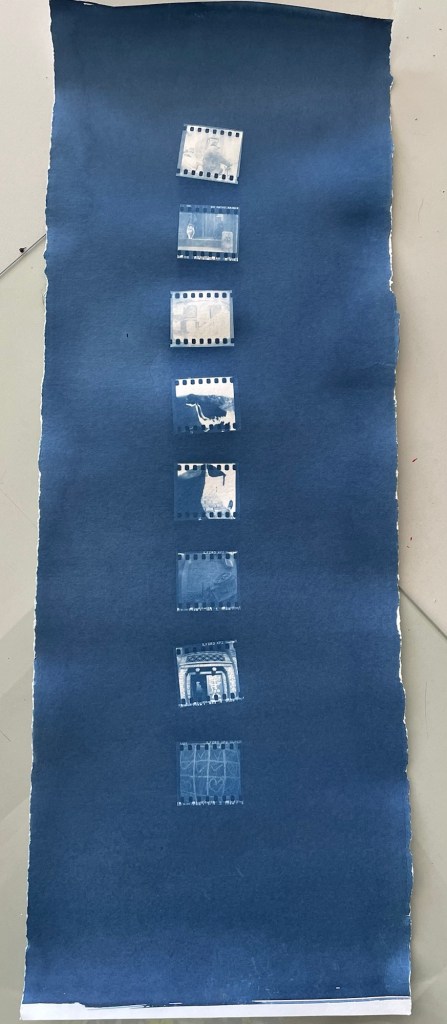
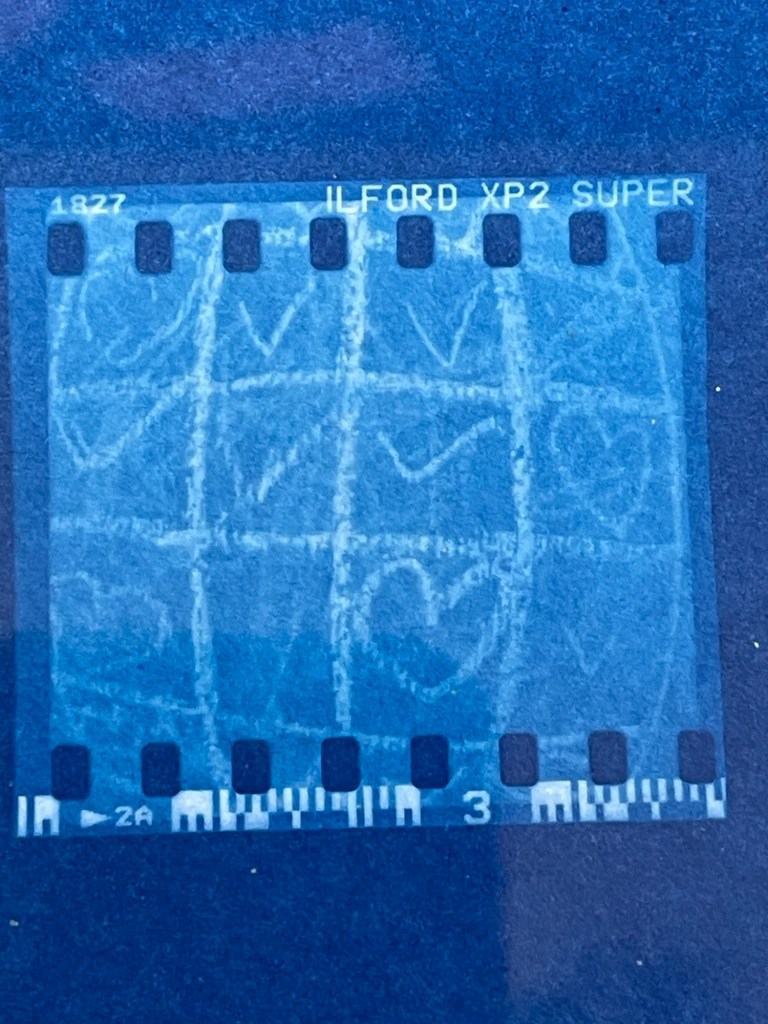
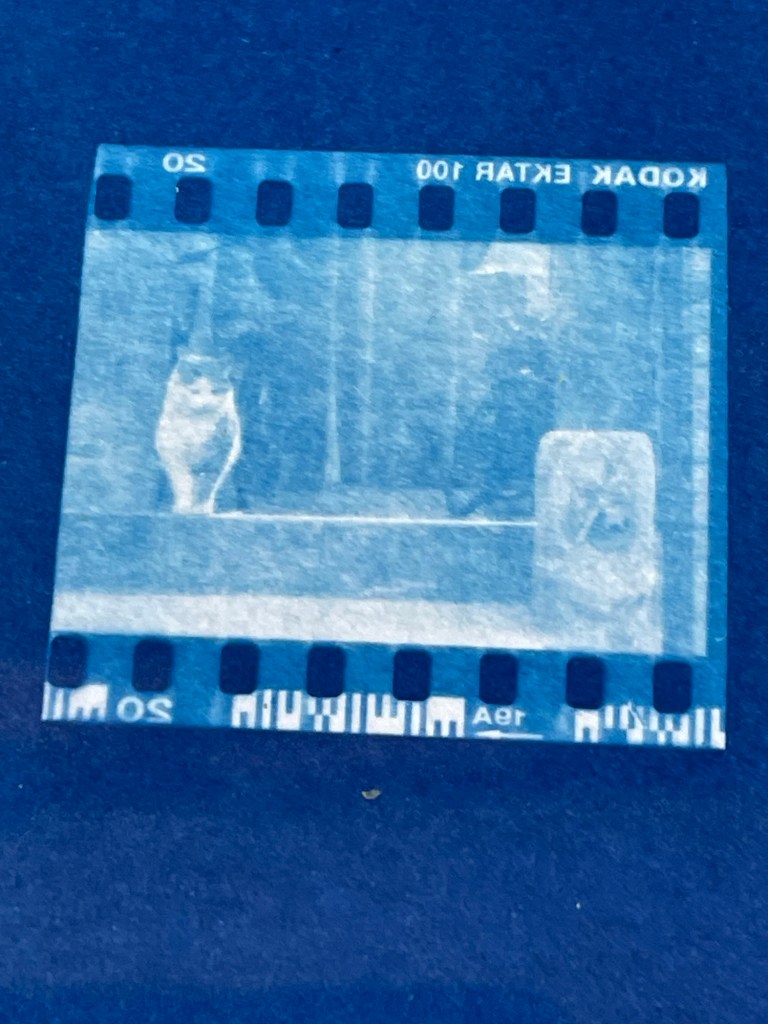
I lived in Beijing for the winter of 2010 and used 3 cameras, my favourite being my plastic analogue Lomo camera. The beauty of Lomo images is that you don’t know if you have captured anything at all on film, or if they will develop and when you get your little pack of prints, all of the images are a beautiful surprise. Yesterday, I got to look back at my lovely Lomo images from the time that I lived in Beijing and Suzhou, by using the negatives in a cyanotype workshop, led by the lovely Andy Dolan held at Carousel Print Studios,  here in Sheffield.

I know I had a great time because I forgot about my bike and its safety and I didn’t think about what I could eat next ( much).

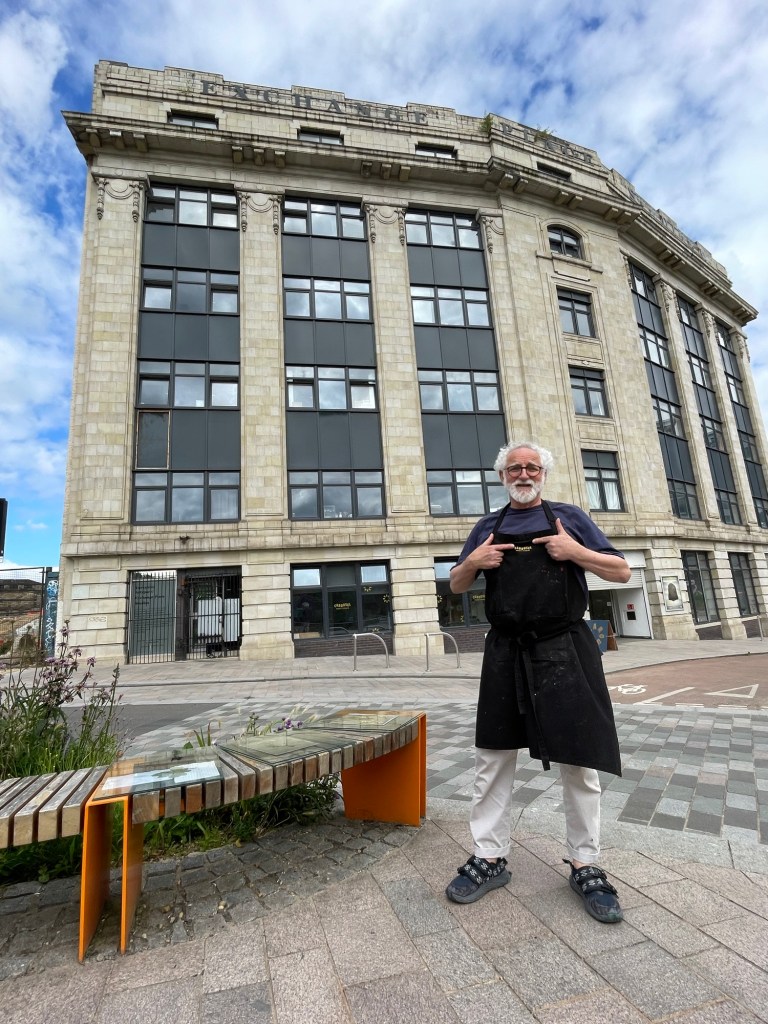
Here are some of my cyanotype prints from this workshop and Andy looking brilliant in the last image outside Exchange Place Studios, run by  Yorkshire Art Space.

I already have lots of new ideas for grand projects including wallpaper. (why start small) I have rented an artist studio for 2 months to see how I go. It’s good when you find something new that’s exciting. It is good to learn new skills and make new stuff.

here is my previous wallpaper spell, but going forward, I not print lace, I will print summer flowers in wonder blue – just now sure how I can make it work yet.

textile, knitting or art?

Knitting, Art or just textiles?

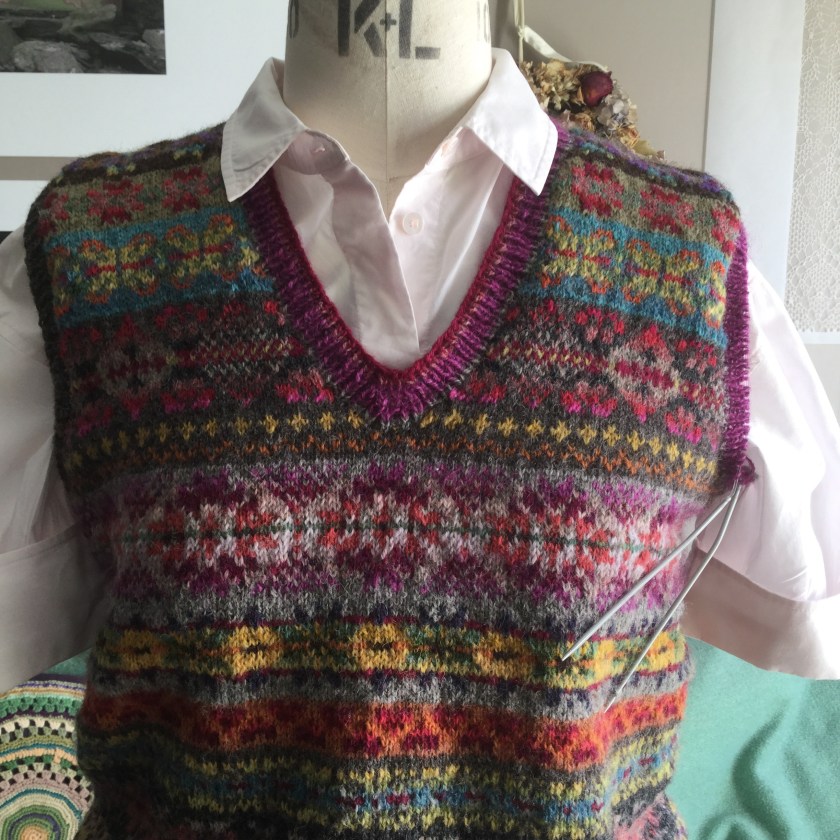
Under a week after handing over this commissioned piece of knitting, I have had time to reflect.  I have a window of time to reconsider what I have made and why and what happened during the making and designing process and the outcome of what seems to some, to just be a knitted pullover.

The idea for this hand-knitted piece actually came from my thinking son because I was questioning the time involved in knitting and designing one off pieces. He suggested for me to consider intricately knitting something that I loved and to log every hour and minute spent making it.  This type of time is not commercial time but entirely creative, without speed, without a target.  So, to make a knitted piece in this way, with this idea behind it was the initiation that made it a project or a work of art; not just knitting and certainly not textiles.
A constant driving question of any maker is what is the value of time spent. I question time and the value of an hour of my time because, at 55 years old I may be running out of hours and what do I want to do with my one precious hour? is my hour of more value than, say, a 23 year old who, statistically, has more hours left to live than me.  If we knew how many hours left, what would we do with those hours? Knit?  
So, the act of writing, logging and recognising time spent whilst making became an underlying, fundamental principal of this knitted piece. I did not lie about time, did not hide time spent in the making process, did not adjust hours to fit ‘within time’ or an acceptable amount of time judged by others to take to knit this item and I did not exaggerate either.  I was wholly honest.

During the process there was no brief, or contract or even a binding conversation with the person who may or may not buy it, I made a Fair Isle pullover with a woman in mind.  A woman who I know respects hand-made items, understands art and creativity and supports makers.  And, I know that time is precious to her.  Of course, in the end, it is wearable. Win, win.

There was no design brief or discussion or demands or expectations.

Carte blanche. 

There was also no discussion of money due to the fact that this was not my driving force for the knitted project.  Notice, that this knitting has been called many things – a project, a hand-knitted piece, a piece of art but never just knitting or textiles. 

This whole project was a thought process – thinking about design, experimentation, research in practice, 2 years in an MA to research knitted lace, colours, heritage, Shetland-inspired memories, traditional patterns, blending colours, making mistakes and undoing mistakes, patterns I’ve previously knitted and why I wanted to weave those things into each stitch.   How can you sell that?  In a story? To a believer?  It’s an investment of time and detail.

In brief, the underlying principle was to create a work of art which encompassed understanding and mastery of the craft of knitting, which I have done for over 40 years now. To the untrained eye, this knitted piece is ‘textiles’ or ‘just knitting’ but,  to the thinking mind it is not.

So, I started. And unstarted. Designed and redesigned and felt my way through many, many, many hours of knitting.  Each hour was logged and sometimes what I was thinking, what I was feeling and my understanding of developing certain areas of the piece.  The work went everywhere with me and I knitted every day over 4 months. Yes, 4 months – sometimes at night watching things on iplayer. It went to café’s, babysitting, to Sheffield Institute of arts and on train journeys and to different cities but always I stayed true to the principle of logging the hours and to making every loop perfect.  I began to want to hold the work and get back to it.  It became a piece of wellbeing.
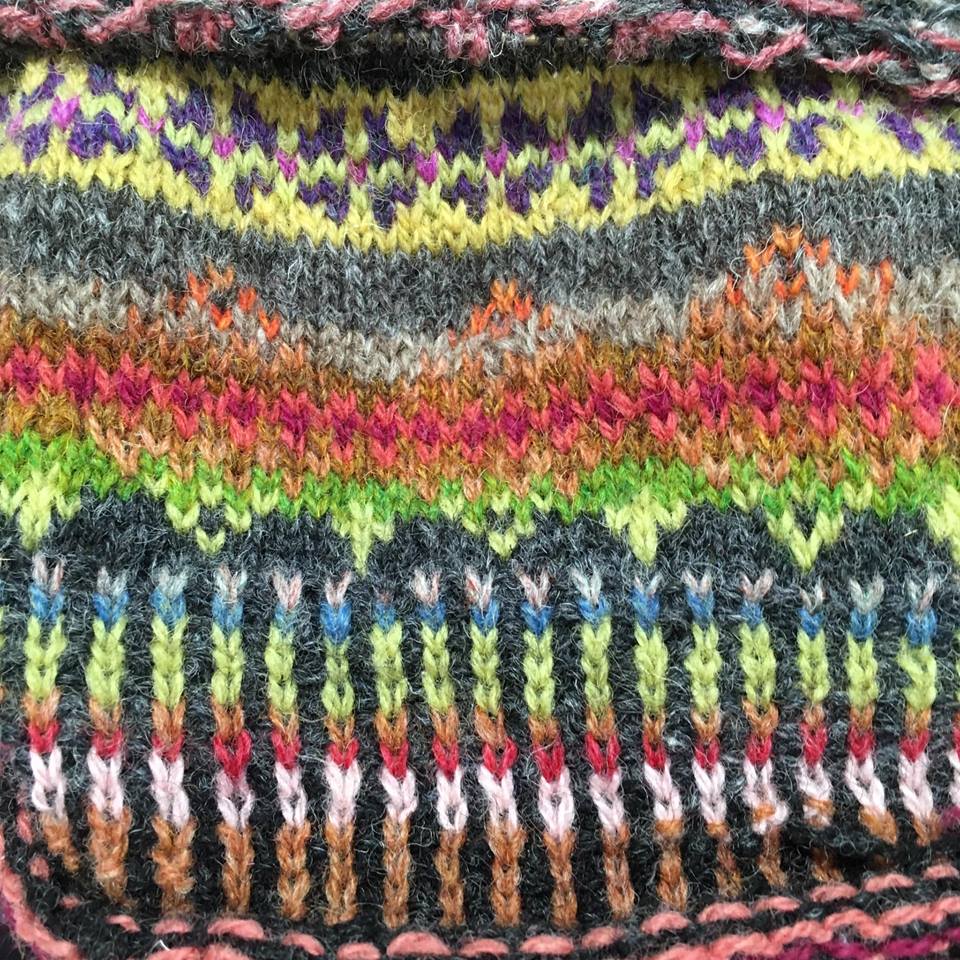
I became fascinated by thinking about how one colour sat next to another and where the pattern had come from and what memories the knitting drew on. I undid anything that I was not totally, absolutely happy with and the happiness came in the detail which fed back to the process of thinking.  The whole process took on a journey of its own.

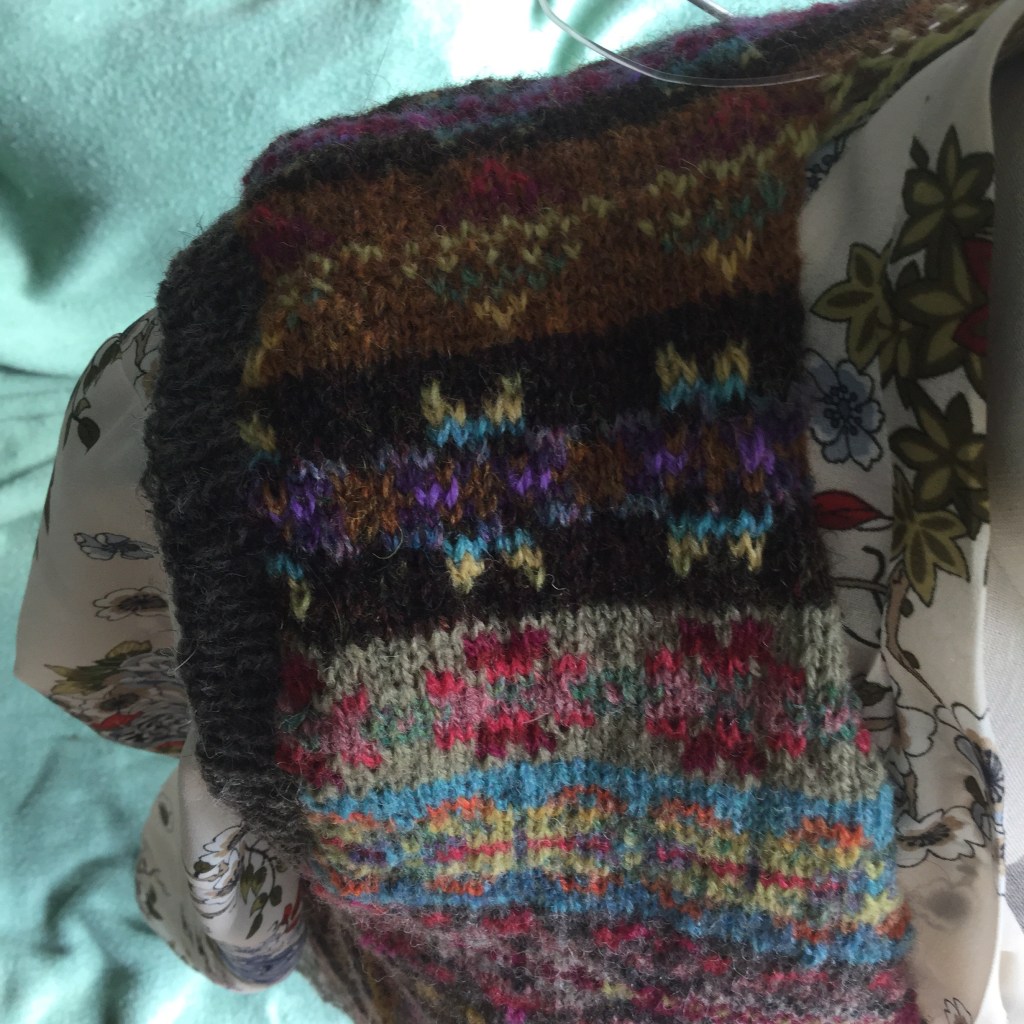
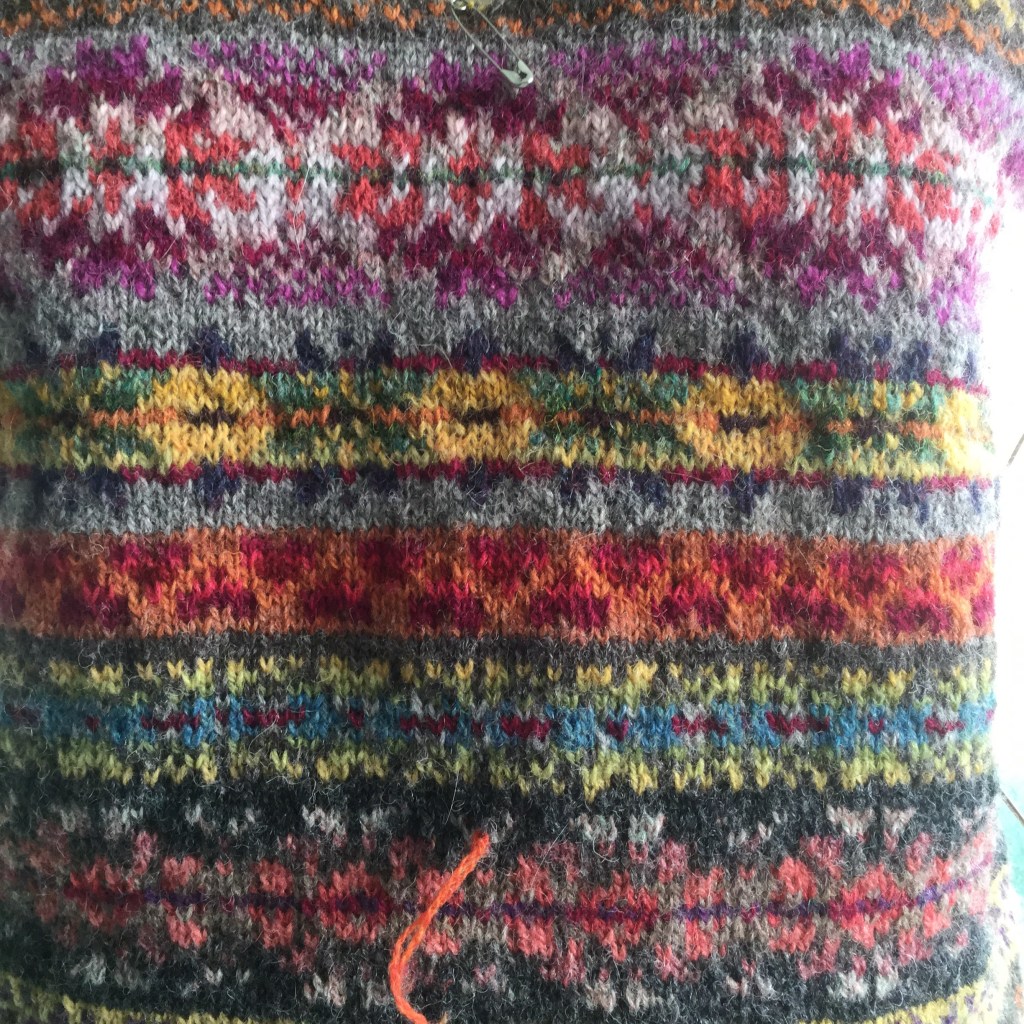
The result is like a tightly woven carpet.

I am partly embarrassed about the hours I spent on this knitted piece and partly in awe of how much time I spent dedicated to something that a knitter would do in under half the time.  But, that knitting, from a pattern would be ‘just knitting’.  This piece came from scratch – from an idea and a bundle of over 50 colours of Shetland yarn.

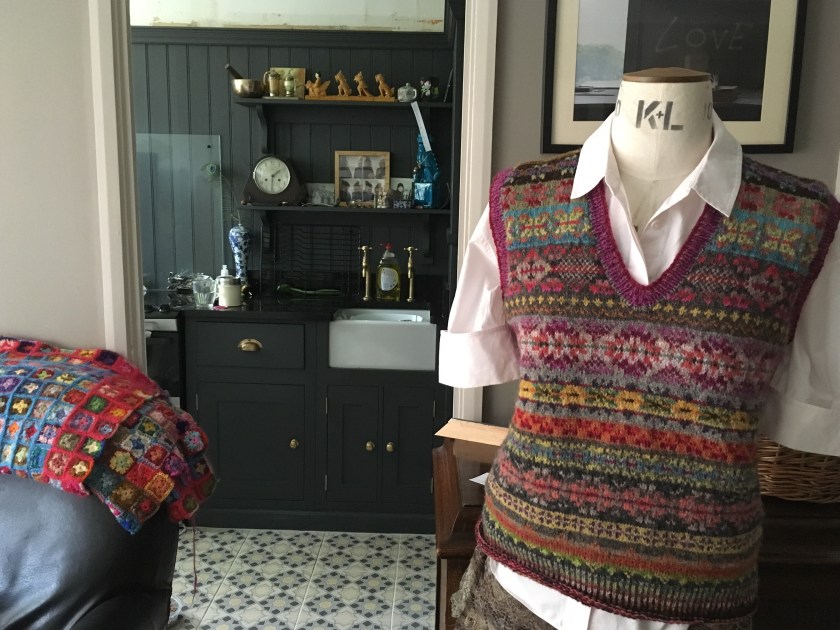
On bank holiday Monday – the jewel-coloured surprise was ceremoniously and fittingly handed over