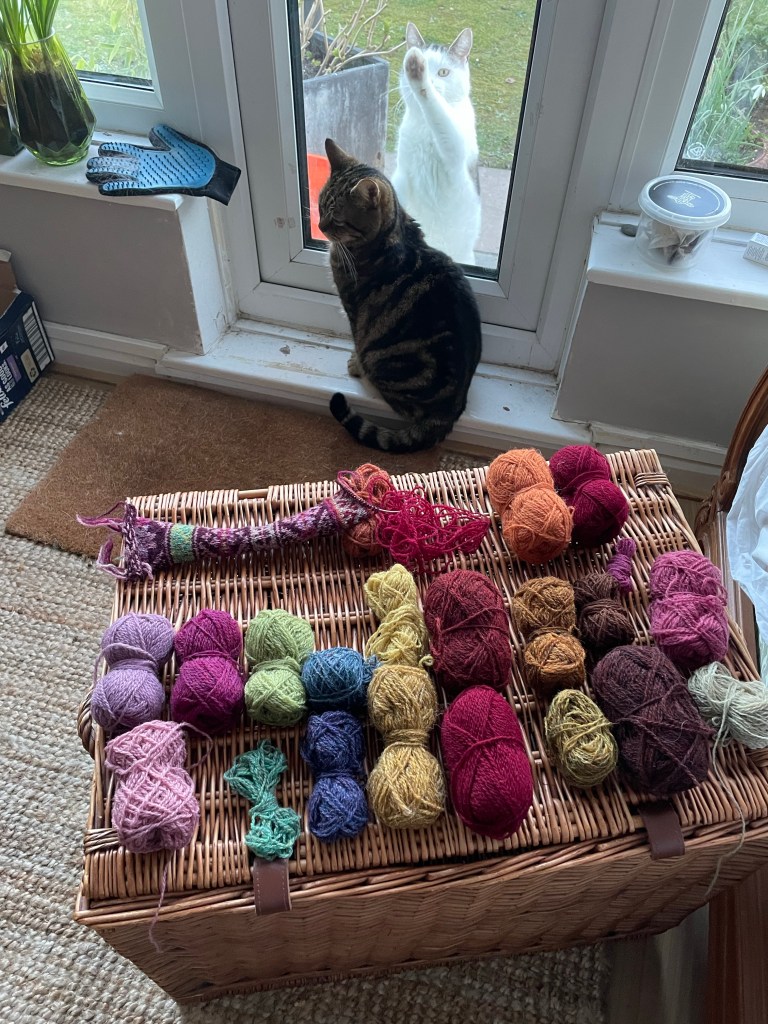
Fair Isle Hat Scarf pattern release

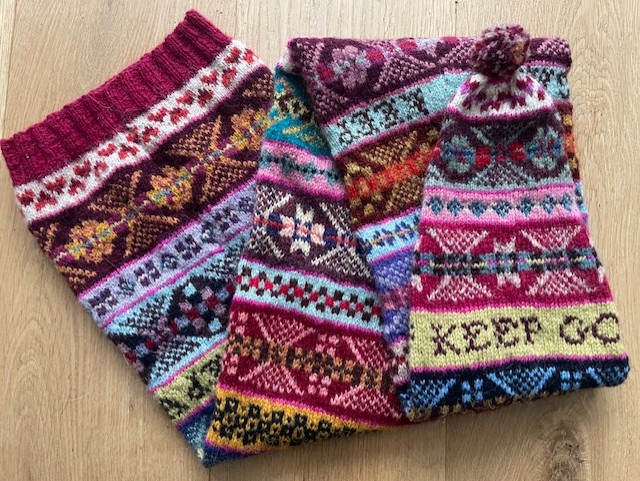
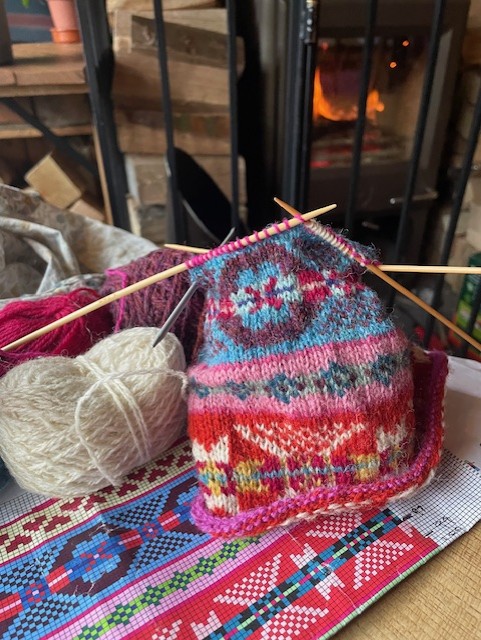
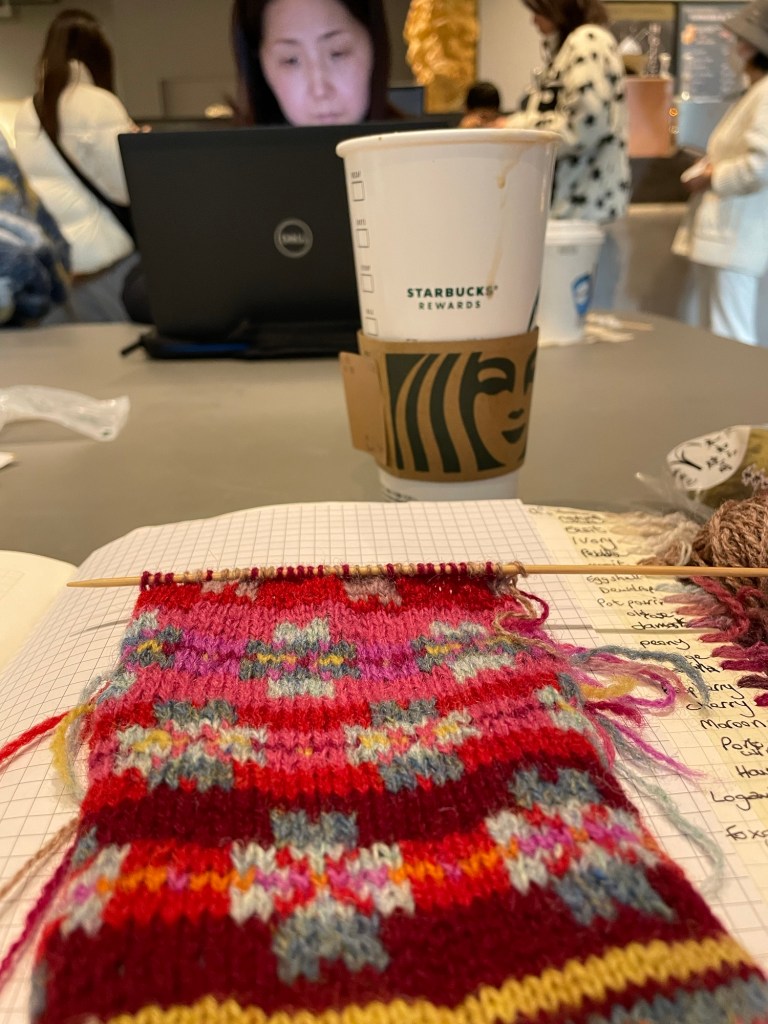
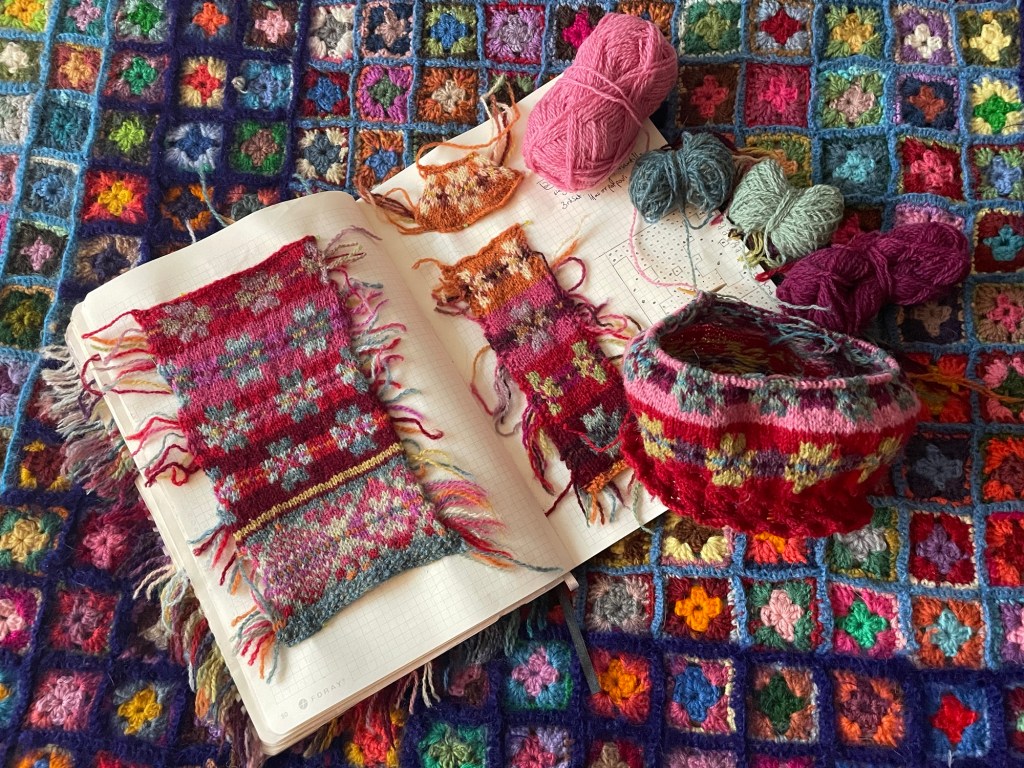
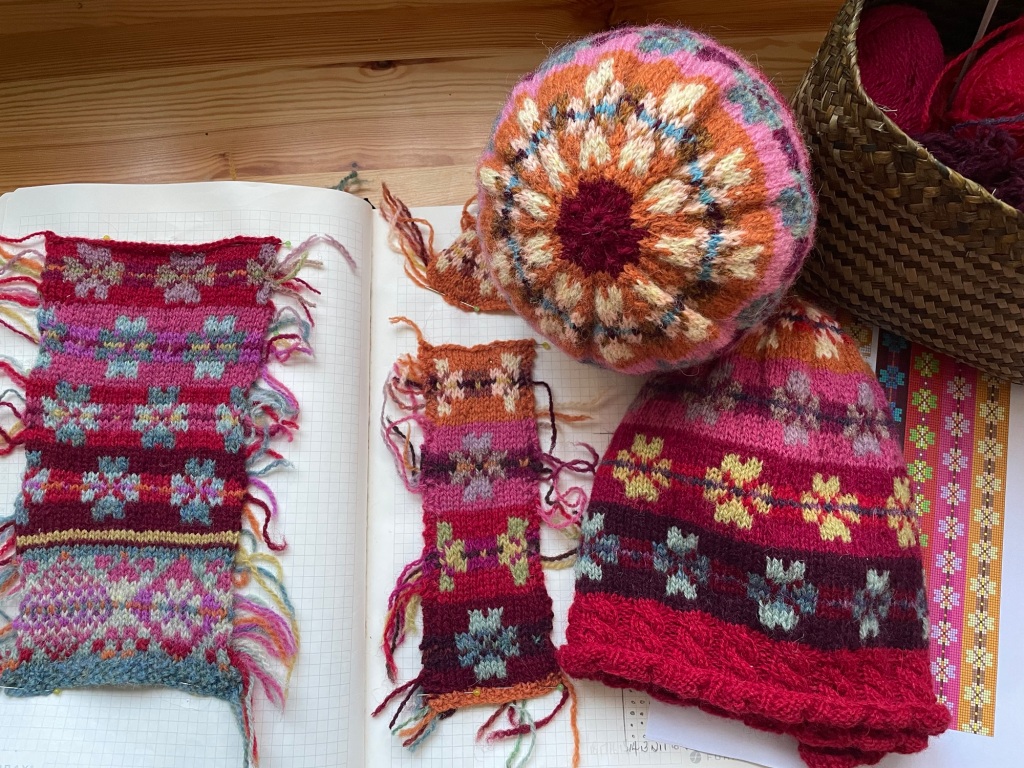
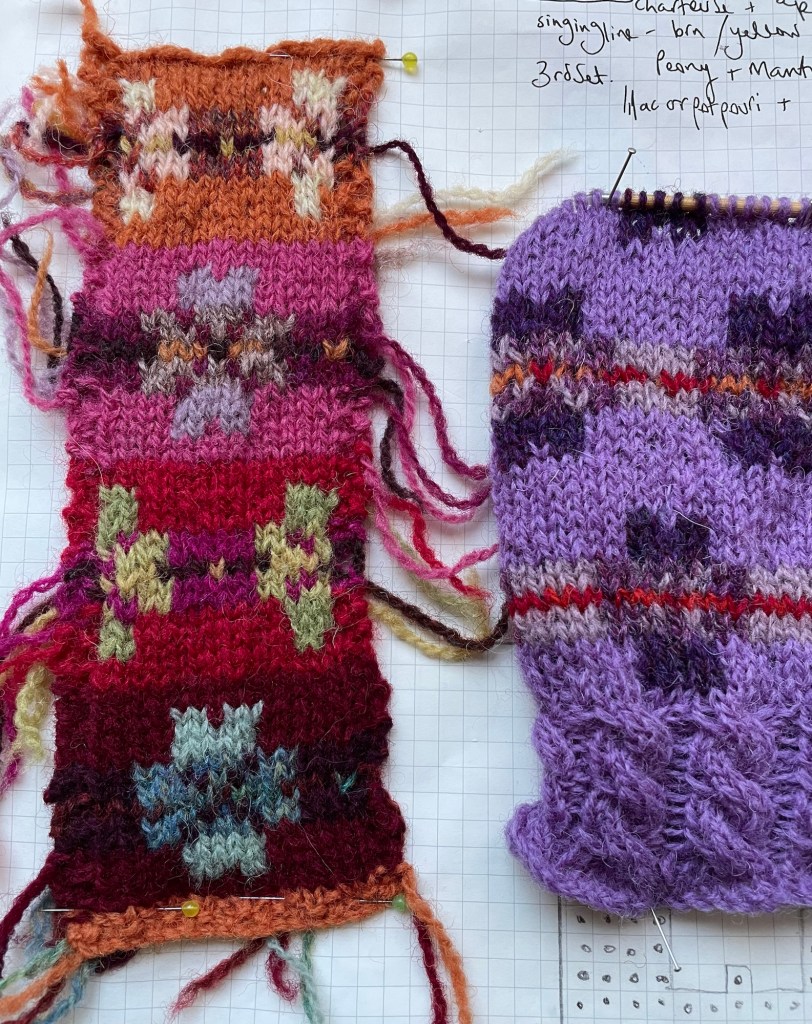
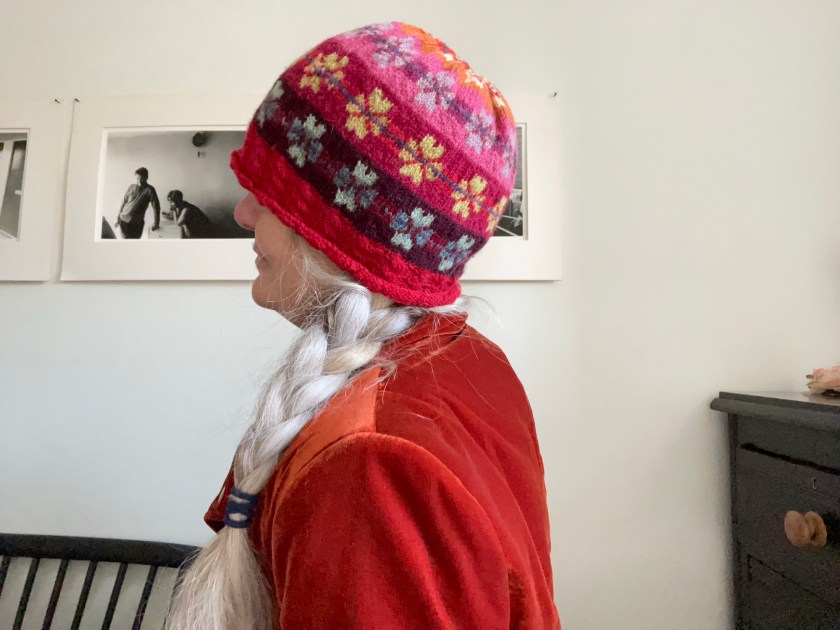
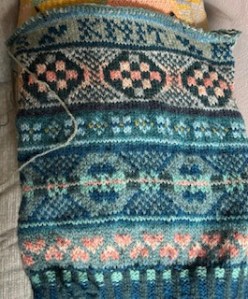
I am really excited to bring you my latest knitting pattern design – My Fair Isle Hat Scarf – which has  been a complete labour of love to create this twelve page pattern containing a complete guide of size, gauge, colours and all motifs used  in this hat.  There are 10 Full colour charts, over 8 pages, showing clear motif and colour layout, ranging from an A4 page full colour overview of the full bands of motifs making up this pattern –  to additional pages of magnified, larger scale sections of the charts in order for you to see them easily. 

Here is the pattern, if you want to go see https://www.ravelry.com/patterns/library/fair-isle-hat-scarf

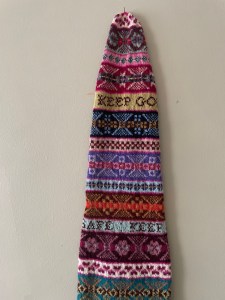
Additional to the Fair Isle colour charts, there are written and photographic instructions and I have included a full Sanquhar alphabet and numbers 0-9 because I knitted words into my piece and the alphabet chart enables you to do the same or personalise your own work, with your own meaningful words, names or dates knitted into your hat so that you can make it your own. You can also add dates. 
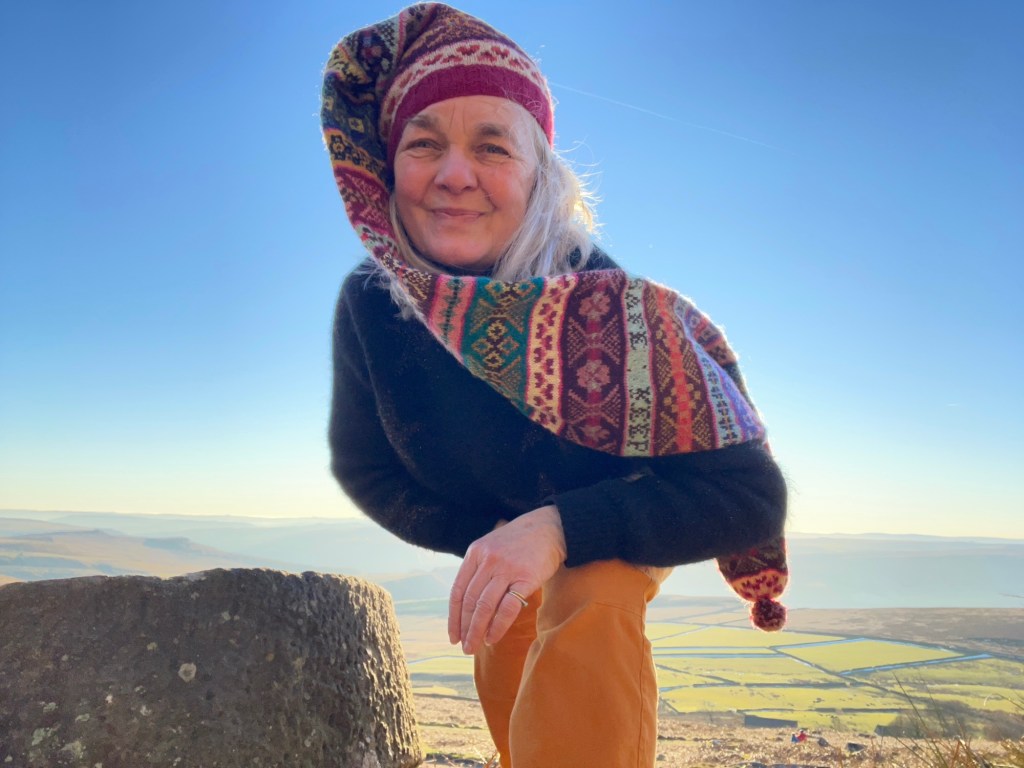
 

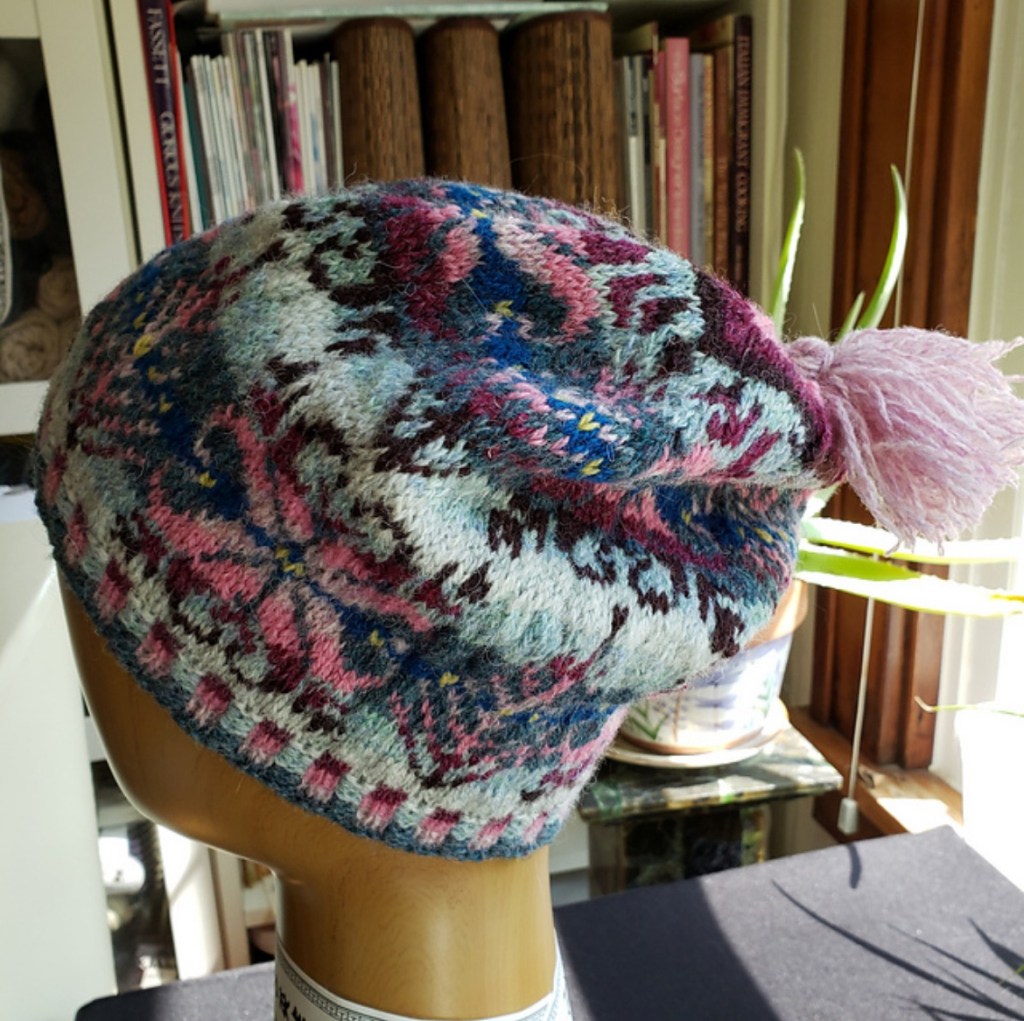
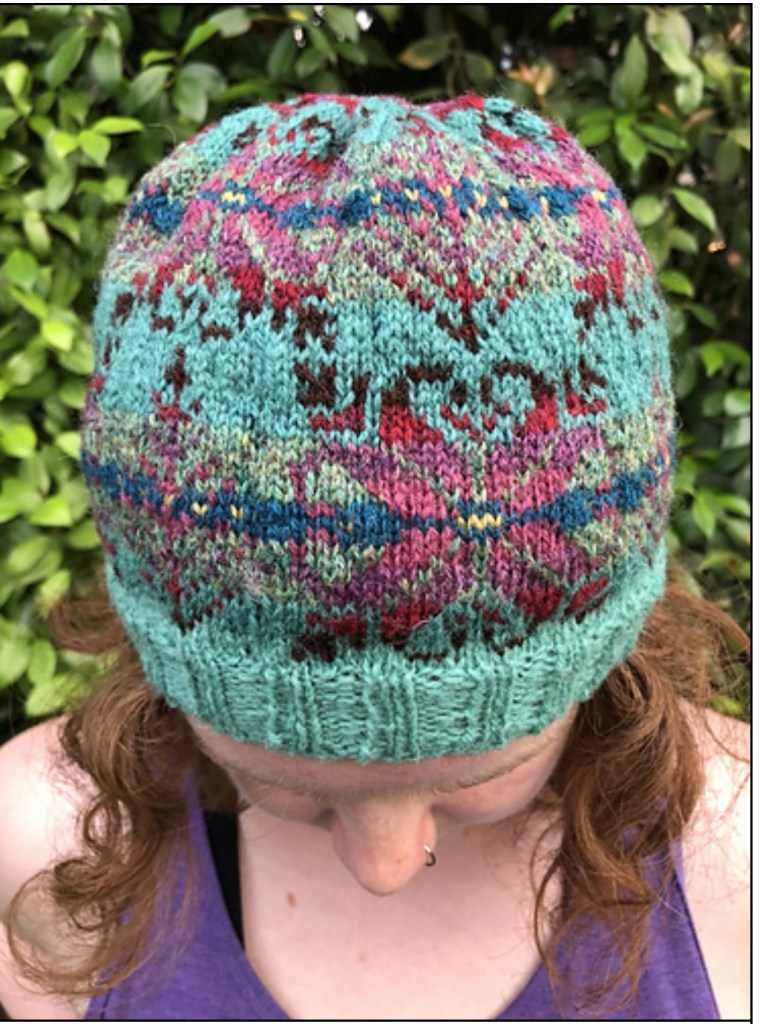
This Fair Isle long Kep/ scarf, is a bright, fun, functional, practical, colourful, wearable long hat, designed using large traditional OXO and smaller peerie Fair Isle motifs to create a unique long hat.  It was originally designed as an exhibition piece by thinking how I can connect to my sister.  My own hat has expressive words knitted into it.  They’re from individual text messages sent to me by my sister – KEEP SAFE…  KEEP WARM…  JUST KEEP GOING… Remember, you can add your own words to make it your own creative work by using the  alphabet chart included in the pattern.
KEEP WARM, KEEP SAFE, and JUST KEEP GOING, are individual text messages sent to me by my sister, they are short simple and caring, meant for me but also act as reminders to herself. 

For the textile art exhibition, I titled the long Fair Isle hat scarf, ‘Trying to Just keep going’, but, it is also a wearable knitted artwork, using intricate, colourful, Fair Isle motifs to create a long hat /scarf.  You can easily follow the pattern and make your own artwork
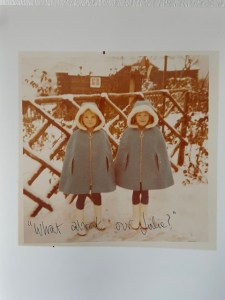
My sister and I were born in the 1960’s.  I finished this hat/scarf as a tribute to her – to keep warm, safe and to just keep going.  There is some kind of paradox between the colourful, cosy, knitted piece and the texted words, which could seem irregular on a knitted hat. 

The words invite the viewer to read the piece through words and could raise the question of what  words in knitwear can mean to them.


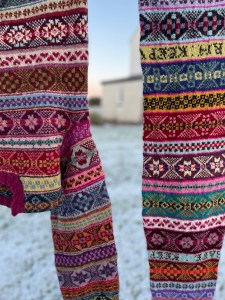
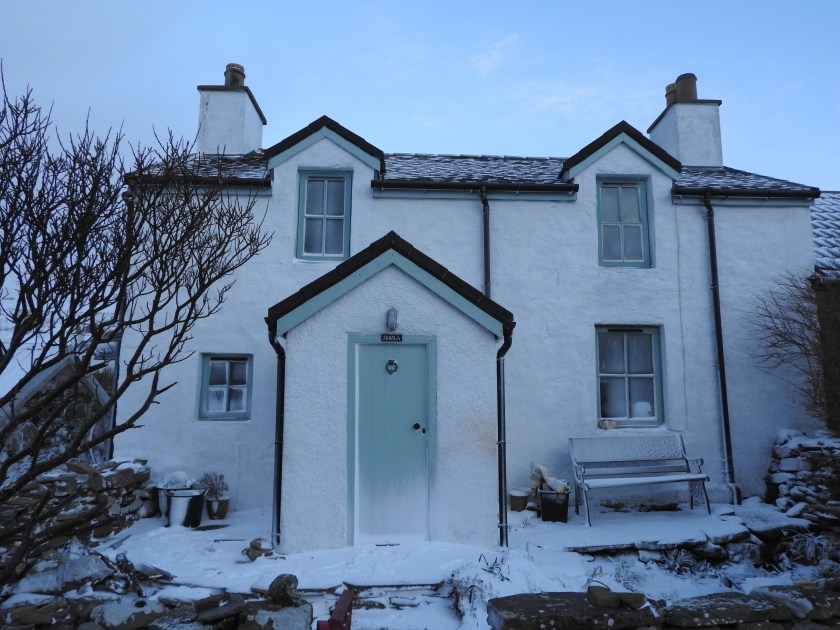
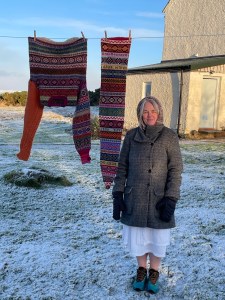
On 5th Jan, I walked in the snow wearing both the ‘Trying to Keep Going’, hat scarf and the, ‘I Cannot Reach You’ jumper – I thought of the words knitted into the piece – KEEP WARM, KEEP SAFE,  JUST KEEP GOING, and I felt them all for myself, at that moment.  

The below words have been sent to me by Mary Mullens, who kindly test knitted this piece.  I asked Mary if she would like to test knit because she has attended my online workshop to understand how to blend colours, tone, contrast and pattern as well as knitting some of my patters but more than that, Mary has developed experimental skills and has been up for learning along the way.  She has very much enjoyed knitting this hat/scarf – here are her words.  She is happy to share them and her story shows that we do not know what people are going through and how the stabilising qualities of knitting help us with our mental health.  Me included. 

Test Knit of Long Kep for Tracey Doxey 2025 – Mary Mullins.

I have been knitting since 1986 when I had my daughter. I continued for a few years and made jumpers for my children. I then found life got in the way and also living with an alcoholic husband, my mental health did not help.

After many years alone and not really thinking of marriage, I met my current husband Mark and we married in 2018. He became critically ill from covid 19 in 2022 and was on a ventilator in ITU for 2 weeks, he needed emergency open heart surgery as the virus destroyed his valves. He then had a stroke while under anaesthetic and fractured his back. He developed seizures and lost most of his mobility.

As a result of this I was off work for 2 months and when I returned, I went back part time so I had time to visit him in hospital in London’s St Barts.

I don’t know why but I decided to knit again. It helped my mental health and I took it on with a vengeance. I have knitted 7 jumpers, numerous hats, 3 cowls, baby clothes and toys including Bag Puss and an Elephant. These items made great Christmas and birthday Presents as we had very little income due to loss of husbands earning and mine being cut in half.

Somehow my addictive personality has established a huge stash of wools of all kinds and gathered all the needs that I needed.

I also have hundreds of patterns that one day I hope to knit.

When Tracey asked me if I would like to Test Knit her new project, I was amazed to be honest. I never imagined I was good enough to do it. I have enjoyed this project immensely and it has really been a challenge as I was not aware of just how much feedback I was meant to give regarding the pattern ect.

I was a little nervous but embraced it in my usual enthusiastic way and dug out every strand of Jamison’s wool and wanted to use as many colours as I could. I found I had an extensive stash which fills 3 boxes and started straight away.

When thinking about the words I wanted to use in the kep I decided on “Lots of Love and Hugs”, I have conversations by wattsapp with my mum daily and we always close the messages this way. For the 2nd row of words, I am still thinking what to do. I have plenty of quotes that are especially meaningful to me so thinking keps on 😊

I have been using the tips I learnt in Tracey’s workshop for the colour choices to help with the sets of colour for each band.

Jamison’s do such lovely colours and there is a huge choice. One day I would like to have a ball of every colour.

This journey has been an amazing experience and I was chuffed to see my name and a photo of my work at the end of the pattern.

Thankyou Tracey for giving me this opportunity and all the very best with the launch.

Here are some images of Mary’s test knitting for  the long Fair Isle Kep scarf.


And here is Judy MacGlaflin’s test knit image.  A great big thank you to both Mary and Judy for knitting this piece.  I will update their test knit images in a future post. 


One and Two Cardigans

One and Two Cardigan’s, After Kosuth’s One and Three Chairs.

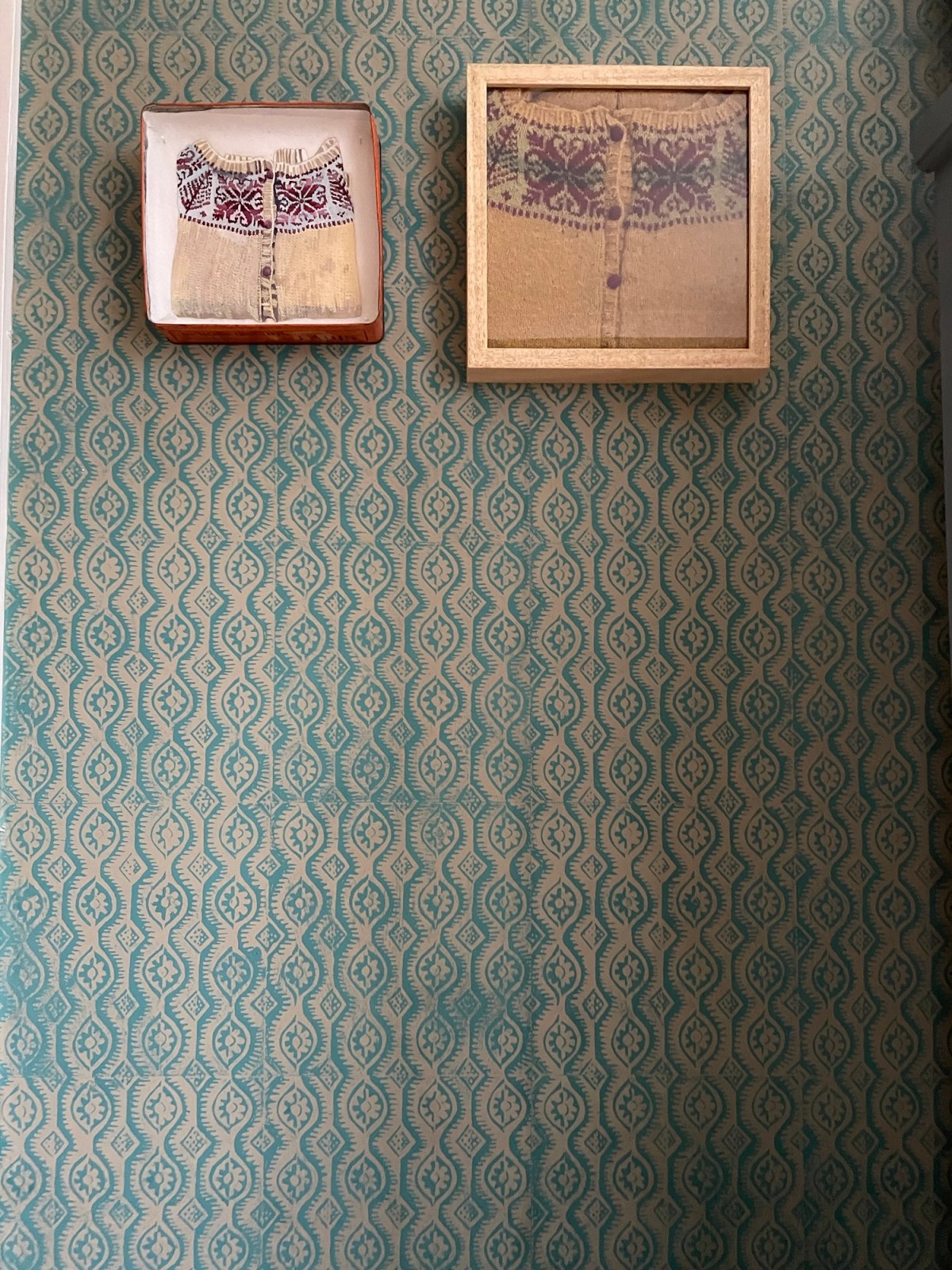
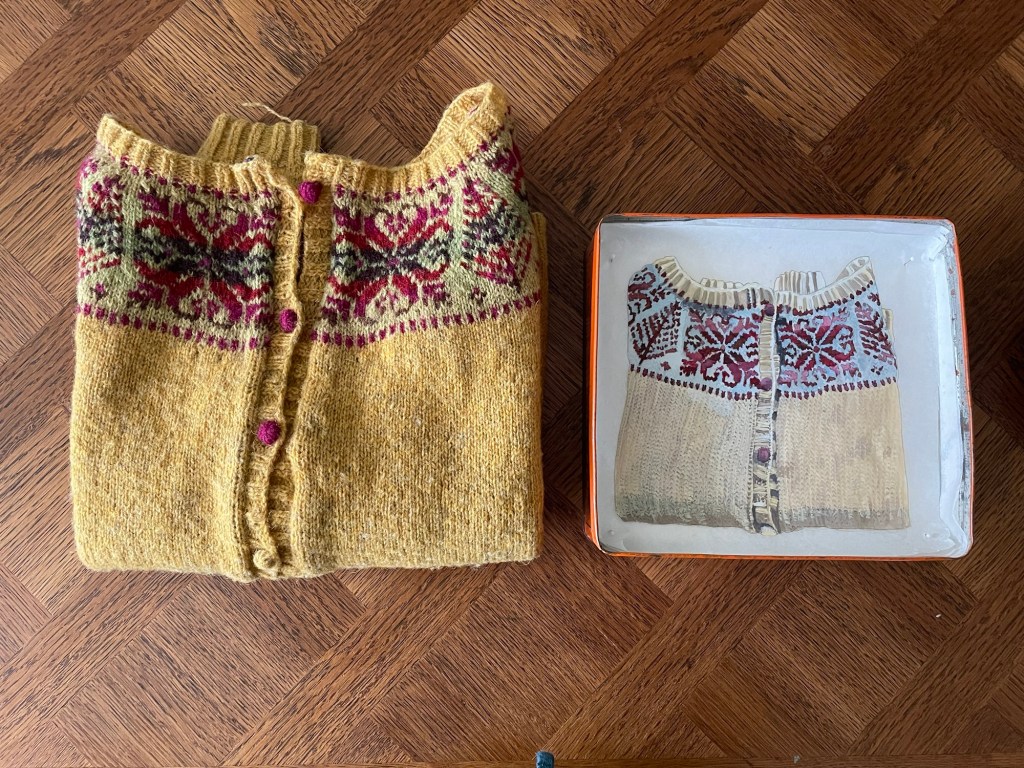
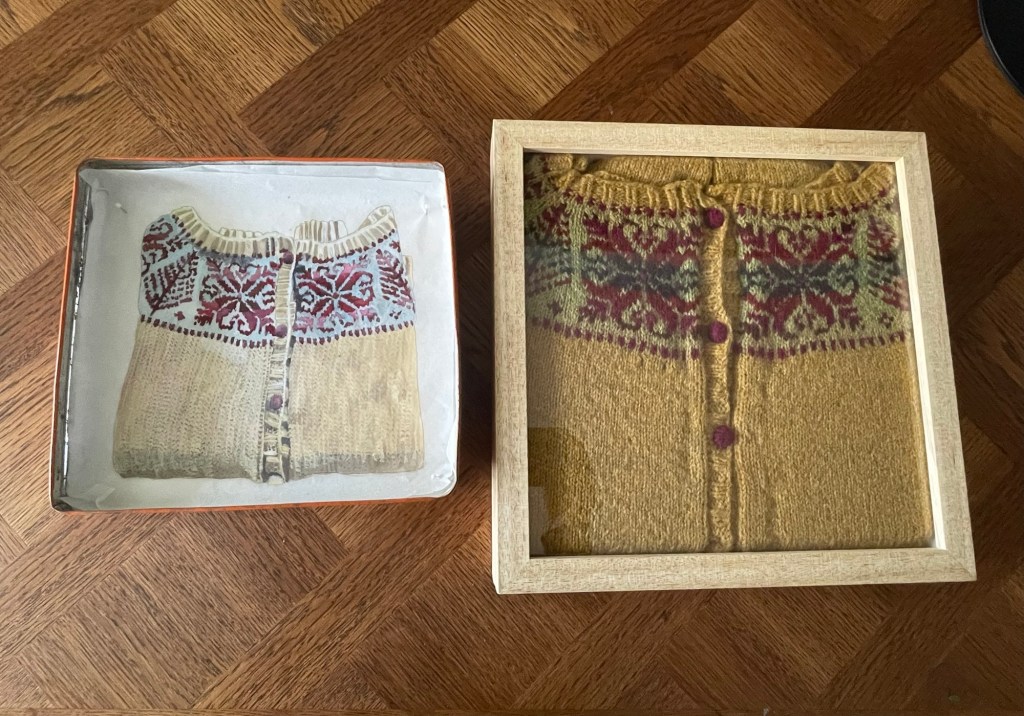
I finally saved enough money to have a perfect box frame made for the first and only yoke cardigan that I have ever made, way back in 2015.  I was never happy with the results, and hardly wore it.  The project was a learning curve of both knitting/ textile construction, steeking and colour work as well as my first taste of Shetland from my visit to Shetland wool week that year almost 10 years ago. After making it, the cardigan mostly lay dormant in my bottom draw for some years and I have, on many occasions, almost given it away.   

My reason for boxing it, is not sentimental but the fact that, unbeknown to me,  Francoise Delot- Rolando, a French artist,  painted the very same cardigan in her ‘Clothing Fragments Series,’ in late 2021 and in March 2022, she messaged me asking if she could post the image on her Instagram of the little painted mustard cardigan.  I had no idea what it would look like so she sent me images, which absolutely blew me away.  In March 2022, she generously sent me the little exquisite painting, framed in a French biscuit tin. It arrived when I was living for one week, in a borrowed house, six months after returning from Shetland, when I was moving from pillar to post without home or idea of home and I was very lost. Here is the post of that time https://traceydoxey.com/2022/04/12/tin-paint-paper-creative-generosity-and-kindness/

When the painting arrived, it took my breath away, made me feel connected to a woman I have never met, connected to her art, to my knitting, to living and creating work again.  She lifted my spirits in a very difficult time and I have always been grateful for her spontaneous, incredible generosity.   Her gift also elevated my knitted piece from a rugged cardigan in the bottom of a drawer to something to celebrate – a journey – a life. 

When I framed the cardigan, I sent an image to Francoise and she said that ‘there’s something of Joseph Kosuth’s, One and Three Chairs, about it.’  I hadn’t heard of the work, so I, of course, immediately googled it.  

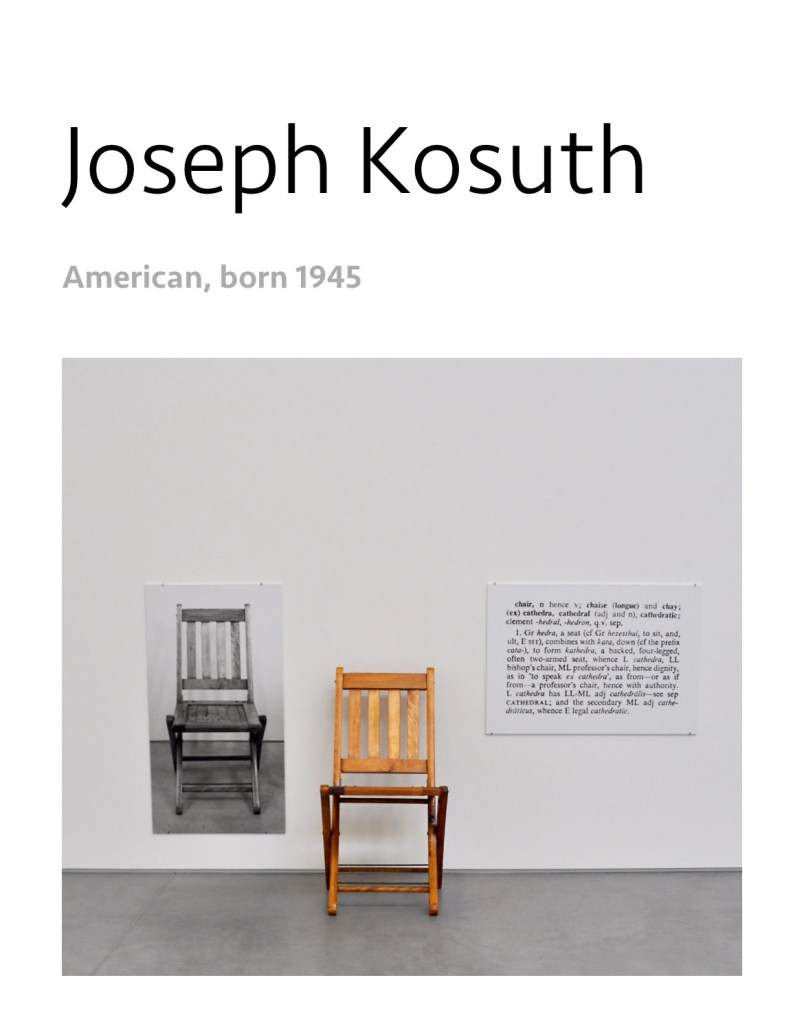
Joseph Kosuth’s ‘One and Three Chairs’ was a conceptual piece from 1965 – the work consisted of a Chair, A Photograph of that Chair, and a printed text definition of the word ‘Chair’

Every time Kosuth, showed the work, he used a chair from the place of exhibition, so the work remained the same but different each time, with only 2 elements of the piece remaining consistent – the text of the definition, and the subject matter – a Chair.  Kosuth’s concern was the difference between a concept and its mode of presentation.  He unified concept and realisation.   The value of the piece was rooted in concept rather than the work’s physical / material properties.   Whereas, I have come about my combined piece the opposite way around – this coupling of the painting of my cardigan and knitted cardigan sits, not as concept – but as materiality and I suppose, women’s work.    One and Three chairs explored the idea of the nature of representation – same chair three ways. And in some ways, my piece could now be ‘One and Two cardigans’ but for me, it also raises the question that I return to repeatedly – the notion of what art is and what it should be.   I placed the two works together and was introduced to an Artist I hadn’t heard of before as reference to a similar representation.

I have long wanted to box frame the cardigan to sit alongside the painting of it but why elevate the old cardigan? It’s rough around the edges, its yoke colours jar with me now and all I see is how I would knit it now, how I would do better.  Let’s be honest, without the beautiful painting, it would not have been a consideration for me to frame this knitted piece.  At one time, I would have framed it as a sentimental reminder of my growth in learning a craft involving my love of Shetland, my first experiments with steeking (knitting in the round then cutting the piece open up the front to create an opening) such love and attention to the hand made buttons, such attention to its making would have at one time been a reason for me to frame it – but not now.  There was no romance in framing this piece, it is ART when placed alongside the painting, it is something more than itself.

I have finally placed it on the hand printed wallpaper that Emma did for me in Shetland – a Peggy Angus print from long ago.   Emma told me that the wallpaper was made to show art – but I always loved the paper too much to cover it – now ‘One and Two Cardigans’ sits on top of a small area of beautiful paper, elevating it even more.  Not everyone would see it this way, but I do.  The small details in life are what I live by, and then life becomes that beautiful small moment.  The small things count.

I invite you to consider this  – is my newly framed old cardigan, when framed and placed next to an oil painting of the very same cardigan, is it art? 

Is there a concept of knitting as art? Or is it a Textile artist’s work?   Kosuth focused on the idea of a chair rather than its physical representation, and now, I too have focused on the idea of The Knitted Cardigan.

Happy new 2025. 

Hoping for a year of creativity and small sharp points of beauty. xxx

New easy pattern – Little Kisses Mitts

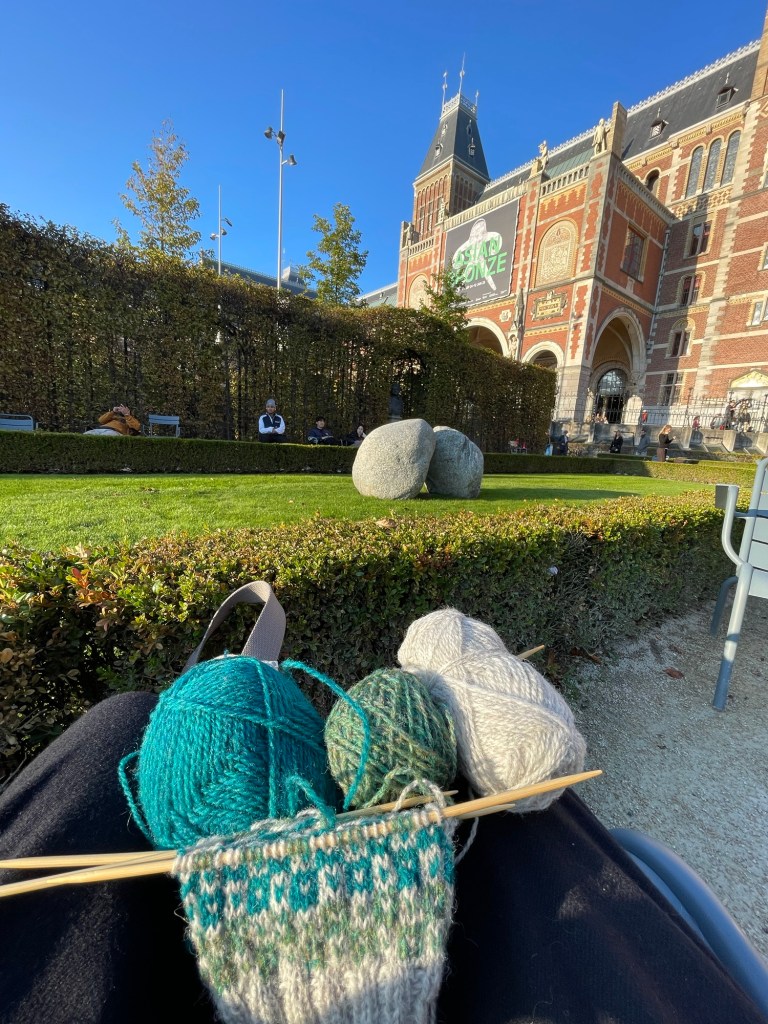
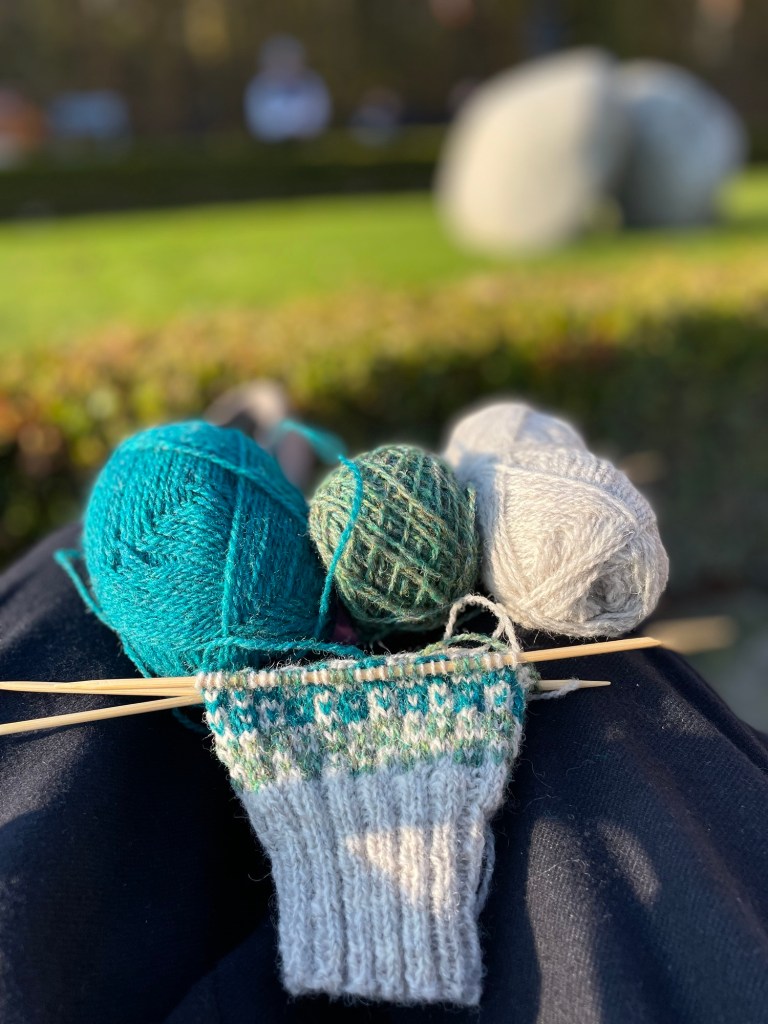
After visiting Amsterdam,  I have made a new little knitting pattern, which I started knitting and designing in the garden of the Rijksmuseaum  and finished on the Eurostar back to London.  Then I had to do the difficulty of writing the pattern out, getting it checked and test knitted.

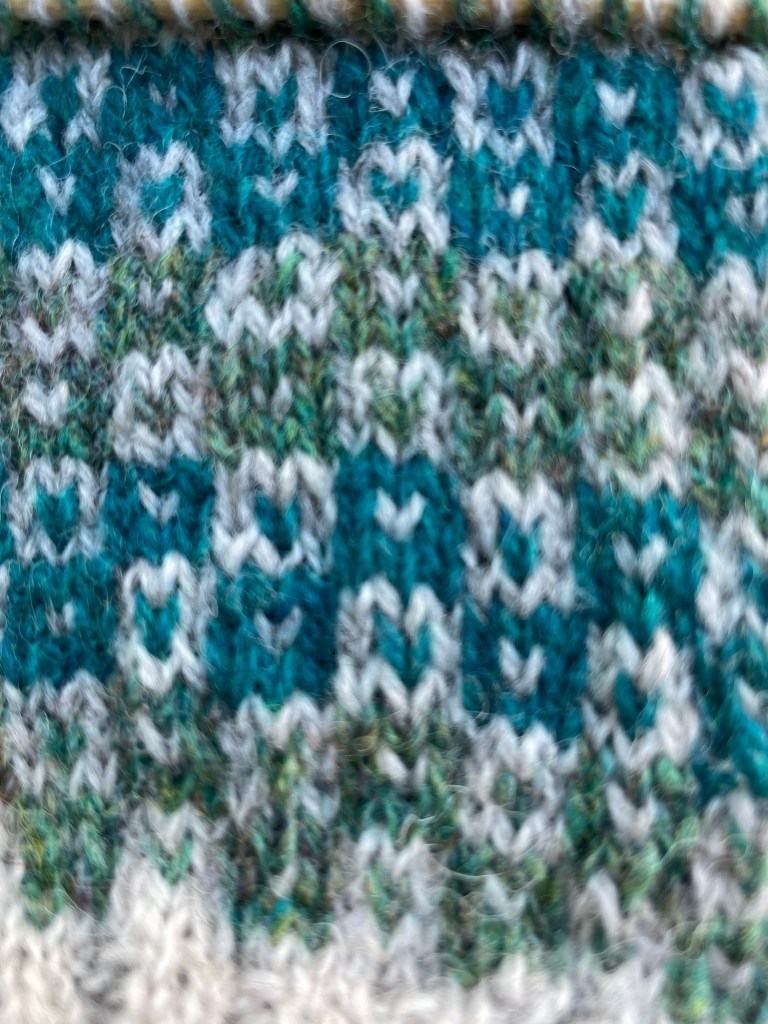
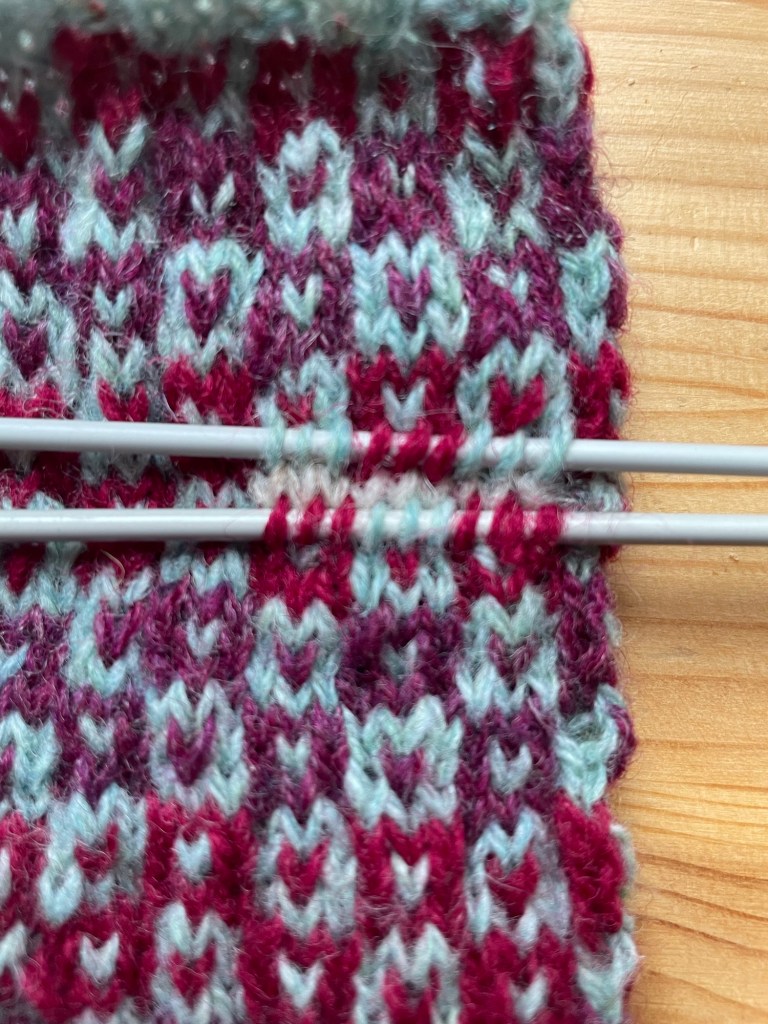
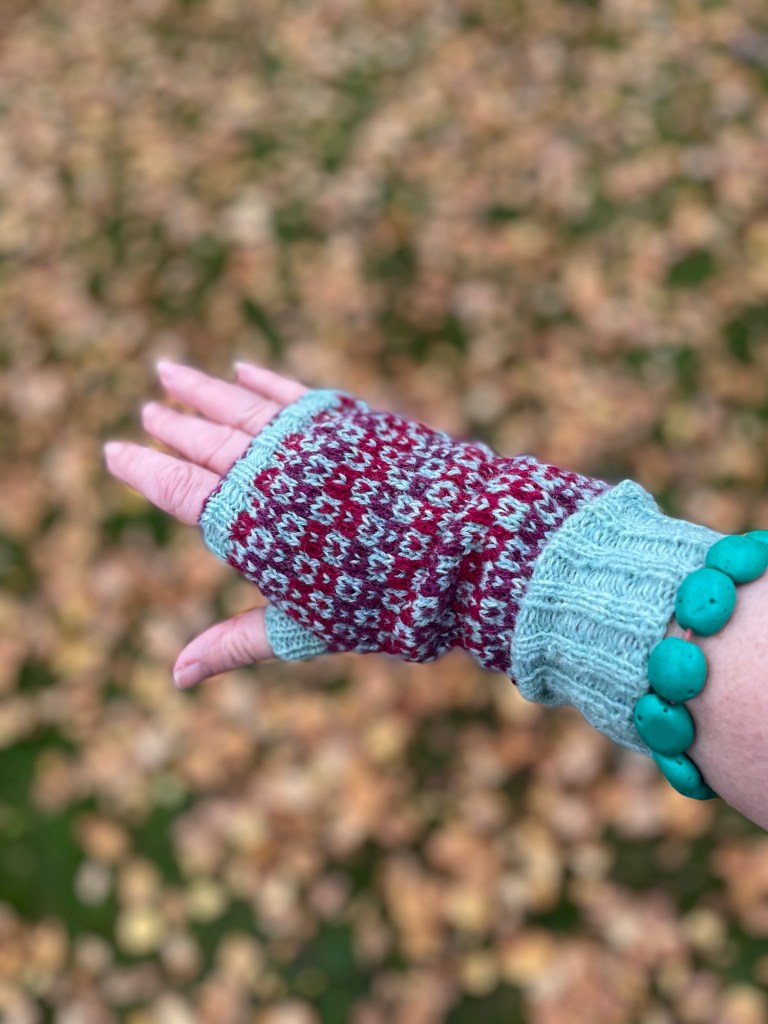
But, here it is,  I’ve made a new Little Kisses Mitts pattern – the left mitt was knitted using greens inspired by the the garden against the pebble colour of Lee Ufan’s stones in the summer garden exhibition in the Rijksmuseum, in Amsterdam.  Then knitted a matching mitt to the green one but using berry colours – Cherry and Raspberry.   This pattern is a very easy knit using a cute peerie Shetland motif, which looks like little hearts in boxes – which is how I finally came to choose its name –   Little Kisses Mitts. 

The motif is very easy. It is only made up of 6 stitches and 6 rows, so, when you have set up the first round, you will not have to look at the chart again until the round to insert your thumbs.

The thumb is easy to knit. I have added clear written instruction and photo tutorial to take you through all the stages to produce neat little thumbs in your mitts.  There is also a little reel on Instagram which shows all the stages too – it is here. https://www.instagram.com/reel/DBtwzO4IUen/ go to the link to see the clip of knitting the thumb.

Little Kisses Mitts, Pattern uses 3 listed 4ply colours from Jamiesons of Shetland but you can knit it in 2 colours or as many colours as you would like to use from your stash. It’s a very quick and joyful knit with endless colour possibilities.   I knitted the both mitts in Jamieson’s of Shetland, Spindrift. In Pebble, Moorgrass and Mermaid – then in Berry colours using Dewdrop, Cherry and Raspberry.

You can also use JC Rennie Scottish Supersoft Lambswool 4ply which I also used after buying a lovely large ball of aqua colour in Amsterdam.

I have used 3 colours in each of my knitted examples, in order to make the knit reasonably priced – rather than the patterns that I have been knitting recently, which have grown in the amount of colours used in them.

The pattern is here    

Ravelry: Little Kisses Mitts pattern by Tracey Doxey

As always, thanks to Karen Barker for her brilliant checking of all of my details written in my pattern and to Gary Butler for knitting the mitt and giving advice on the pattern notes.   Your support is much appreciated

I would love to know what you think of using this tiny little motif in this easy pattern.

experimenting with exposure

It is a calm Saturday, overcast with a little breeze.  I googled the sun and is listed to be out above the city of Sheffield later this afternoon.  I have wanted to try something for some time, thinking of home. My cyanotypes have mostly utilised pressed flowers and photographic negatives from when I lived in the hutongs of China, all of which rely on the sun to develop the image. I have mostly worked in the studio but have a small amount of papers that I coated last night, and they are under my nose.

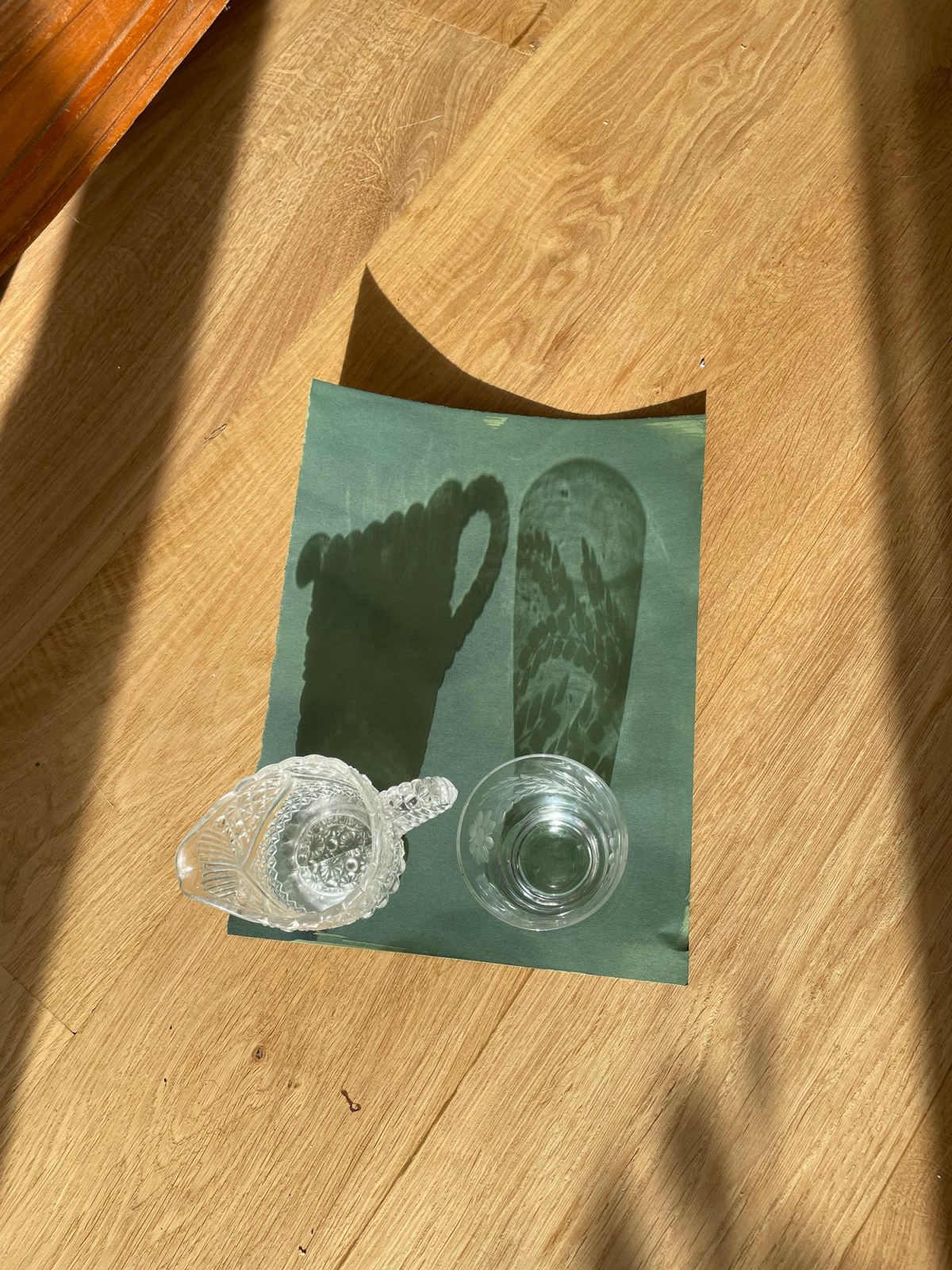
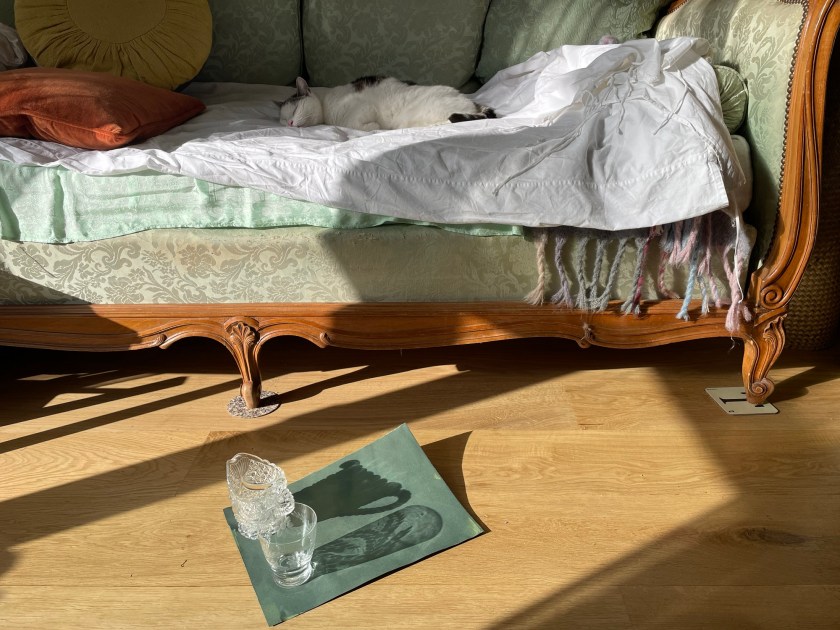
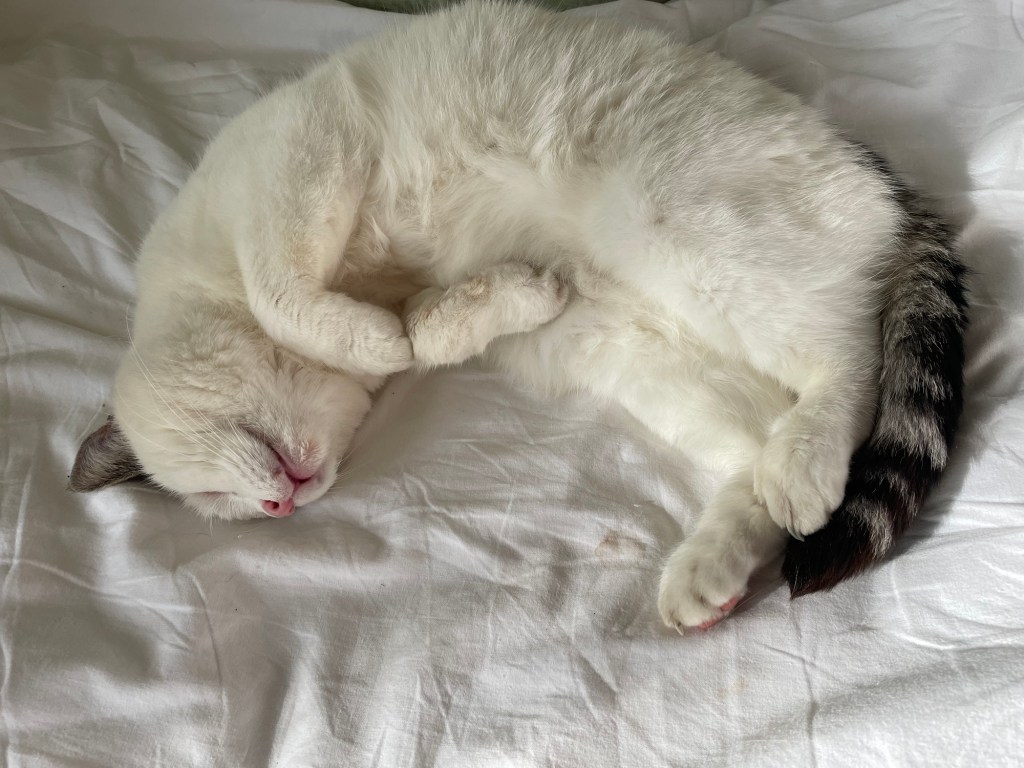
Surprisingly, at 8am, a break in the clouds allowed the sun to break through and cast a brief shard of light across the floor of my tiny flat in Sheffield.  Alfie watches on as I place the two objects from home, made of etched glass or crystal, into the shard of light.  The crystal glass was Susan Halcrow’s. I tear a pre prepared paper in half to experiment with what I have – a brief moment of sunshine, two objects, my floor and a little hope.  Here goes.

The sun gives me about 3 minutes, not long enough to develop a clear image. I don’t move, the sun reappears, Alfie lies down and I hope at the wonder of what might emerge – in total I have only about five minutes of sunshine which matches my impatience.

While I wait, I’m thinking of the shadow moving across the paper, even a small amount will blur the image, if the image will take at all and then I am thinking of the movement of time – the Japanese concept of Ma, ( the space and pause between all things) that I am interested in and I watch as the sun hides again, the paper is cast into a shadow and a faint image is exposed upon the paper. I take my chance.

This is one of my processes. Experimentation – either with wool, colour, photography or cyanotype – to take a chance in the moment, with what I have to hand.

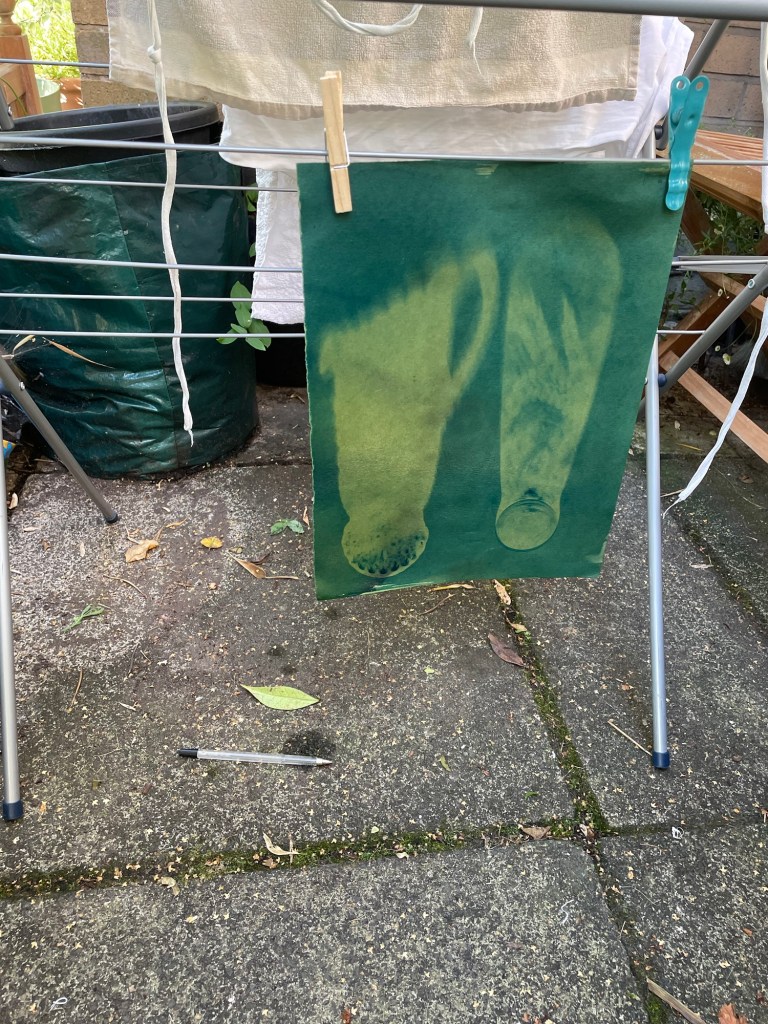
And here is the first result.

I love how the bottom of the jug is deepened in colour, I love how the etched glass stretches in pattern and a faint movement of impression.

Tomorrow, the sun is booked for some hours, I will try again. Hopefully, with a time of exposure to show movement. While, Alfie sleeps on.

Art, craft, knitting or story telling?

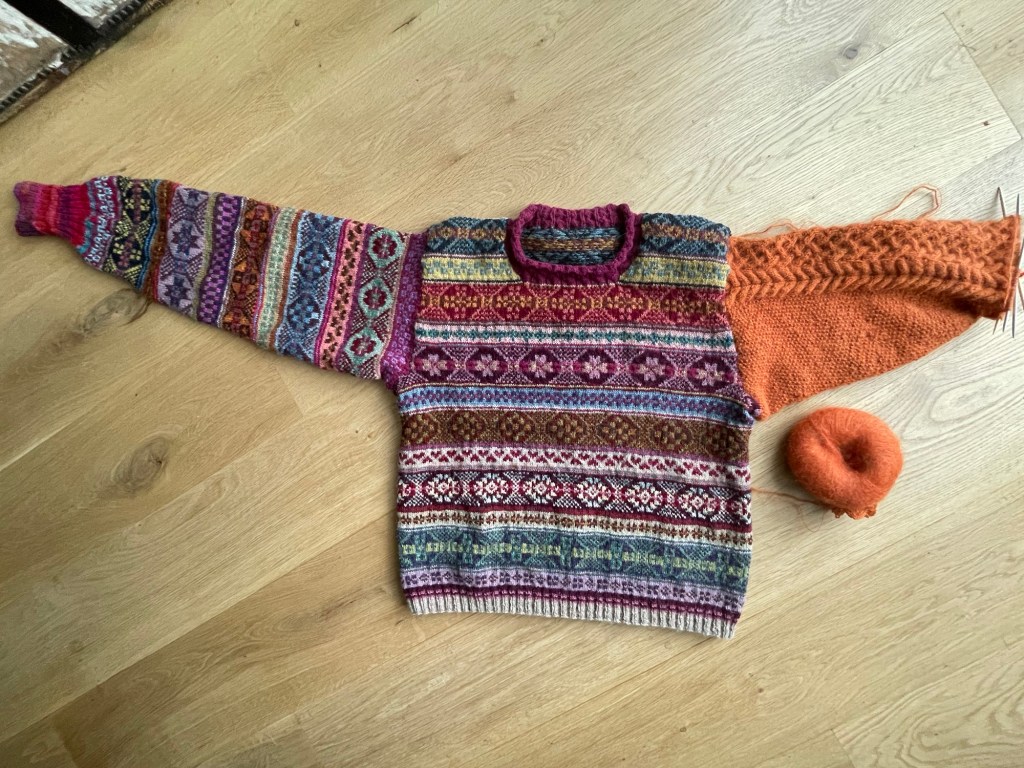
I have knitted something that is recognised as a jumper but it isn’t only that.  The knitted piece now sits well within the intersection between craft / skill / materiality / woo/ textiles/ conceptual art / family / heritage and cross cultural discussion.  It is nearly finished and it has a name.   It is named, ‘I cannot reach you.’

The garment, because it can be worn, has one slightly longer Fair Isle sleeve than necessary, reaching out, ending into a knitted cuff with a thumb. The other sleeve, knitted in Amber coloured yarn in Aran patterns, crosses and plaits the stitches.  This style of knit for this sleeve  was chosen because of how I sometimes plait my hair. So, the indication is now that it is not clothes but craft or art.    Most people who have commented on the Aran sleeve don’t like it – they cannot work with the idea that the sleeve is different to the Fair Isle patterning of the body and other sleeve.  Me, I like it.

The Pattern of Life isn’t all perfectly matching or symmetrical or neat or predictable.  So, changing the length of a sleeve, adding another style of knit to the other sleeve, working with patterns and motifs for about one thousand hours, has enabled me to Knit an evolving story.  First, it was a wearable vest, then I ripped the arm ribs back to start sleeves. I don’t mind if I never wear this garment at all, and yet it is wearable, it is also showable as art, it is passable to be open to a discussion about clothes, knitting, women’s work, materiality – why we knit, why we make clothes, what becomes art, a concept, a thought and why we bother at all.

In my 60th year, I am figuring out what is the stage of my creative journey, today.  I have a valuable story / experience to share – having an MA in knitting when I was 58, a Fine Art Degree at the age of 35, I’ve travelled across some of the largest countries in the world by train, to get to a tiny place in China. I’ve sailed across land and sea to live in Shetland. I knit but I am not a knitter. I can crochet and sew too.  I’ve taught English, I’m a coach for apprentices at Uni, I have been a PA, a Contemporary Dance tour manager, and events manager, a gallery building manager –  but none of this really matters and yet it all matters greatly because it has brought me to this point in my life – to figure out exactly what is the value of my creative practice and where do I want to take it?

I am not an emerging artist, I am firmly placed in an underrepresented demographic of  an older Women still making conceptual art under the guise of a knitted project.

What I would like to do is engage with other women to knit this piece, as they feel fits them. I want everyone to use their own colours choices, yarn decisions, size of the project so that we may talk about the work of women.  

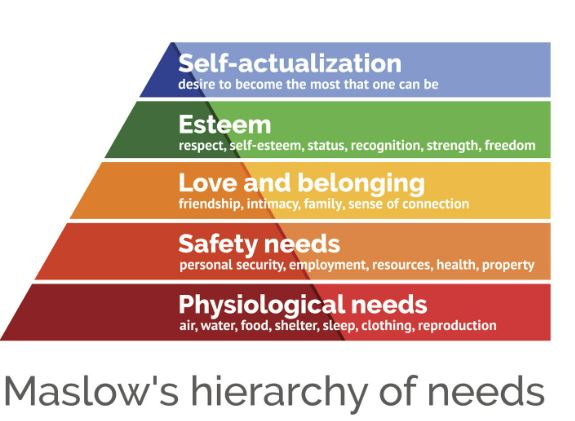
I am really proud of being able to knit this ‘thing’ because, let’s be honest, I have been in a privileged position to do so but I haven’t always been so.   I could not have knitted it when I returned to the city from living in Shetland, without home or job, crying on the kerb stones.  My creative practice was far from my priority then – I needed stability  – take Maslow’s hierarchy of needs, for example.   When I returned from Shetland, didn’t even have the physiological needs – without home or sleep.  Since that time, I have built myself back up and for now, I am around the esteem level with a subliminal eye on Self actualisation.  I’ve also been here before and know that it is not a sure thing nor is it a prolonged state and I know where it goes after – that is down.

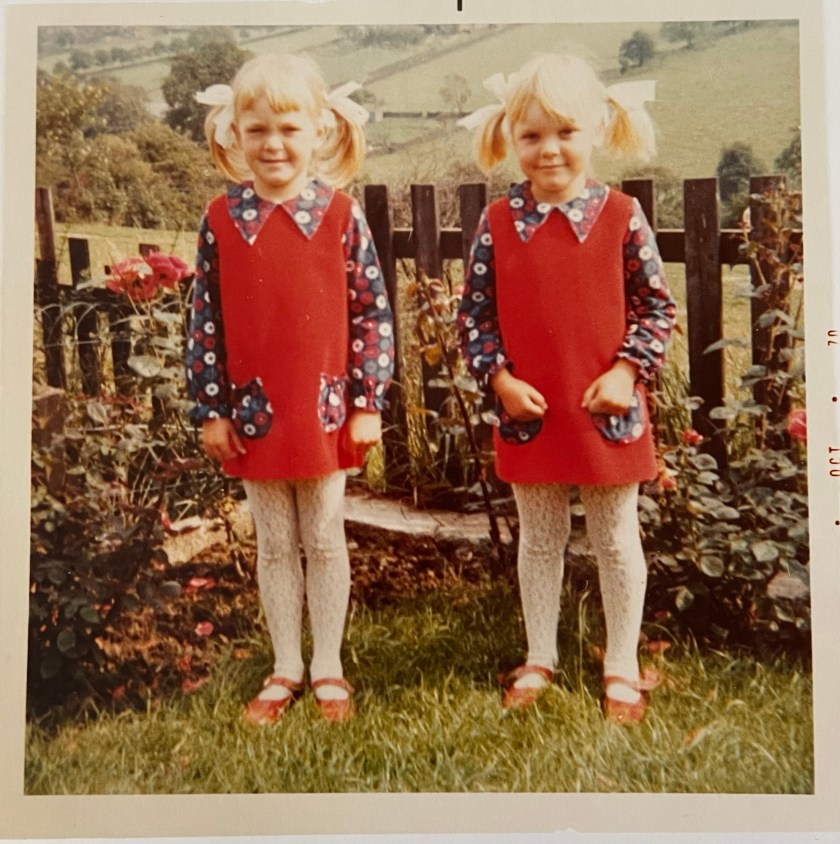
I think, what I am writing is that my jumper is not a jumper – it is an art piece about my feelings about my beautiful Sister and I cannot always reach her – which is why I have called it ‘I cannot reach you’  And, weirdly, to this end, I am thinking of knitting  a 2nd jumper, in exactly the same way as the first but in different colours because when we were children, our mother dressed us in identical clothes for about 12 years ,when we were, and still are, like chalk and cheese.  

For all the lovely people who have bought my Fair Isle pullover worksheet, would you like to join me in some kind of knit along.  I will not be teaching you how to do your project but I would love to see your projects and hear what you are making.  I think it will be wonderful to share what we are doing.   I will be slow, I am not in a rush.  I have many other things on the go including finishing this piece, I also have work and workshops and a crochet piece for my daughter and somewhere along the line, I would like to live a little – go see places

I have added a chat group on Ravelry – it is here

I am also thinking of ways to display this piece and have been in contact with The Head of Fine Art at SHU to see if we could show the piece  and she had better ideas – so there are maybe a few things being  mulled over.  
I want to show the piece because I would like to be back in the Fine Art arena because I want to go to Japan to do an artist residency and showing work is part of that process.

Have any of you read this far 😊 ?

Would any of you like to join me in a knit along so that you can knit your own pullover or use the charts to knit something for yourselves?  leave a comment or join the group.

Do you have any thoughts on this whole thing? Positive or negative.

Is it art or craft or knitting or story telling?

Here is the Fair Isle worksheet with all the motifs in 2 large charts, if you would like to join the chat group.

https://www.ravelry.com/patterns/library/fair-isle-chart-2

Kyoto Baby.

On the way back to the Kyoto guest house, as the light was fading, I passed a small shop in Gion. The front was covered in a grill, at the door, was hanging a traditional Japanese door curtain (Noren).  I was only 3 days into staying in Kyoto and had no idea what the little place was, but, I could see a bent woman, working at a table under a light. A small gap in the grill showed a flash of crimson framed by the window.  I watched the woman carefully sewing, and, as is my habit, I wanted to know more.  At the window, I gestured to ask if I could enter the tiny shop.  The Noren, always bending the guests as they enter.  I, making no exception to this, bowed as I entered the tiny shop.

Inside, the space, the only thing I could see was the colour in exquisite Japanese silk Kimono taking up the entire huge table under the window and the woman standing beside it.


Crimson, peach, orange, ginger, cherry, turquoise, gold, purple, mint green patterned silk covered in cranes (symbolizing honour, good fortune, loyalty, and longevity) in flight shone under the sewing light.  The seamstress was hand sewing the great, padded roll of crimson at the hem of the Kimono.  She explained with few words and many gestures that it was a wedding kimono and entirely hand made by her.  She exuded the gently quality of unassuming dignity. A craft master who had probably worked at that table, under the window for decades.   I was awe struck by her skill.

I returned to the shop a number of times whilst I was in Kyoto – the last time was to show her my ideas to knit using colours that were inspired by the exquisite silk used in the kimono.  I particularly noted the thick crimson roll at the hem.   She understood what I was trying to do but must have thought that my swatch book was rather naive to her own skill, though she never showed it.    We passed small talk about colour, each using our own languages, understanding little in words but everything in the action.

Before I went to Kyoto, I hoped to live in a space between ‘Balance and Beauty’ and here I was, at that exact place.

This little pattern is the result of that experience and inspiration of colour.  I swatched for colour in the little guest house, I swatched the colours in the Sky Garden on the 11th floor of Kyoto Train Station, I swatched in many of the Zen temples whilst viewing the zen gardens. 

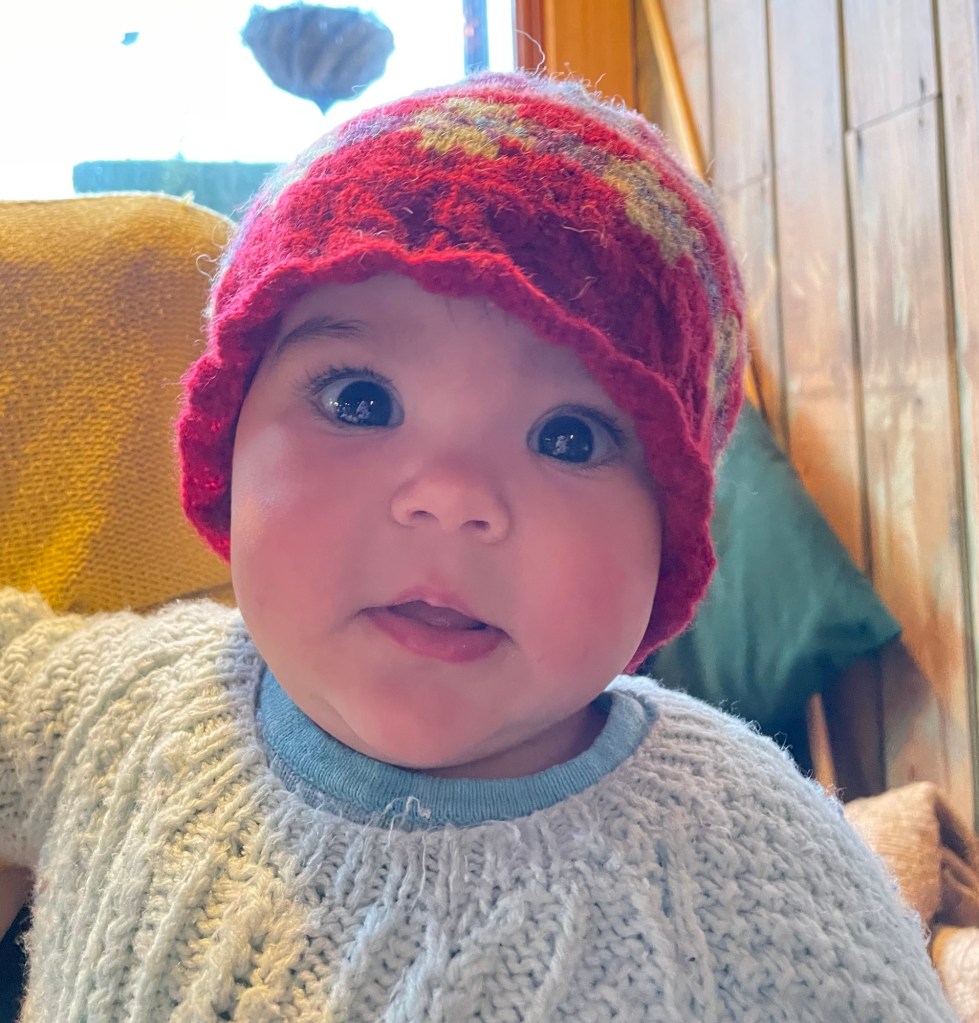
This little hat pattern, brings together some of the colours that I found that day.  It is called Kyoto baby.  It’s very easy to knit. The rib is an easy left crossing cable in Crimson to emulate the padded hem of the wedding kimono.  It has a simple Shetland flower motif.  The pattern has 14 colours related to the Kimono but it can be knitted simply in 6 colours.  All the information is in the pattern and it was a joy to make.   It is modelled by a beautiful little Sheffield girl, whose name I will keep a secret.

Kyoto Baby is here.

https://www.ravelry.com/patterns/library/kyoto-baby

there are a number of colour options in the pattern. I swatched for colour and so did my lovely test knitters. Shona Brown In Nova Scotia is has test knitted the baby beanie. – Thanks, Shona 🙂

The adult pattern will be out next week – Let me know what you think –

Kyoto baby

An accumulation of Impulses – Dear Susan

I had a dream, I achieved that dream but I had to leave it behind.  My story is about finding joy / fear, love and loss, heart and soul – trapped and free over the duration of 14 months.

Capturing that year is too big a task.  So, I am trying.  Many people write about their dream to leave the city and to move to an island life – few write about the reality of that seismic change and the decision to leave the dream, of leaving behind hopes, love, dreams, can be read as failure – but only to those who have never tried.

I tried my hardest and here are the remains of that massive attempt.  This is the story I created, then broke down with hardly a word to say for it.

THE HOUSE OF TWO WOMEN

Dear Susan.

Synopsis

‘I stand for a second to take in the moment, to look at the old plank-board door with a square wooden knob, which I finally turn sharply to the right. The simple mechanism lifts a wooden latch inside. Human touch has left tangible traces of every hand that has opened this door before me. The hollow sound of the sneck – a door latch hitting its casing – is what I will always remember of this place. I understand that it is a unique sound to this house, one that will forever embody a simple place of great beauty. In this exact moment, I am sold on the sound of a wooden latch and the view of the stone flag floor in the empty room in front of me. Before the agent has even arrived, I know that I will not pull out of this crazy unfinished deal to buy this house and change my life forever. I won’t admit to the agent that it is the sound of the sneck that sealed the deal, but it is.’

This book is my story: a single, 57-year-old Yorkshire woman who dared to follow a dream against all odds; to sell up and risk all to move lock, stock and two cats from a small city flat to a home facing the sea, in the northernmost reaches of Scotland, the islands of Shetland.  It is a love letter to Shetland and its extreme elemental landscapes; to an old croft house and three generations of the same family who lived there for more than 140 years, knitting and landscapes. It is an accumulation of impulses. This is also the story of hope and desire and of demise and leaving.

Here, are the bones of my life of one year on an island and the letters I wrote to Susan Halcrow, a woman that once lived in the house, from 1876 to 1960.   It unfolds in monthly instalments, beginning on the very first day I visited the house, and heard the sneck, in August 2020, to my last sunrise in October 2021, when I walked away, never to look back again. I dreamed of living on the island to be closer to nature, creativity and a life less ordinary, with my knitting practice at the heart of every day; of moving through slow travel across sea and natural beauty, to come to a personal understanding of both inner and outer landscapes.  I never dreamed I would want to leave to return to the city.

I hope to share how emotionally challenging it is to make such a seismic life-change from city to island life and how my being an incomer, made it hard to find community both with some islanders and with some other local incomers.

The full book, written entirely from the islands of Shetland, ending abruptly in October 2021, offering an insight into island life and, finally explaining the reasons why I had to sell up and leave, to never look back again. Here, I draw out the bones of it in letters to Susan.

Tell me, what is it you plan to do with your one wild and precious life? Mary Oliver.

Sea Urchin Hat pattern

January 2024

I thought that it was the Sea Urchin hat pattern’s third anniversary, but, because we slipped into 2024, when I was in Japan, I finally realised that this unassuming first design pattern of mine, is a big FOUR years.

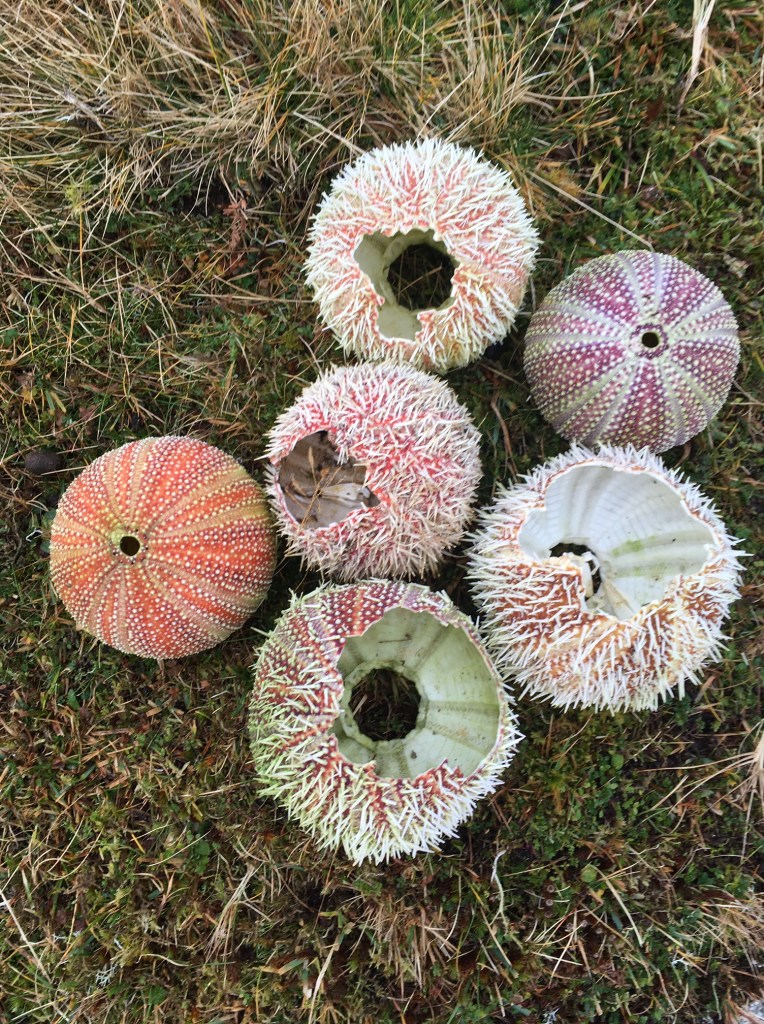
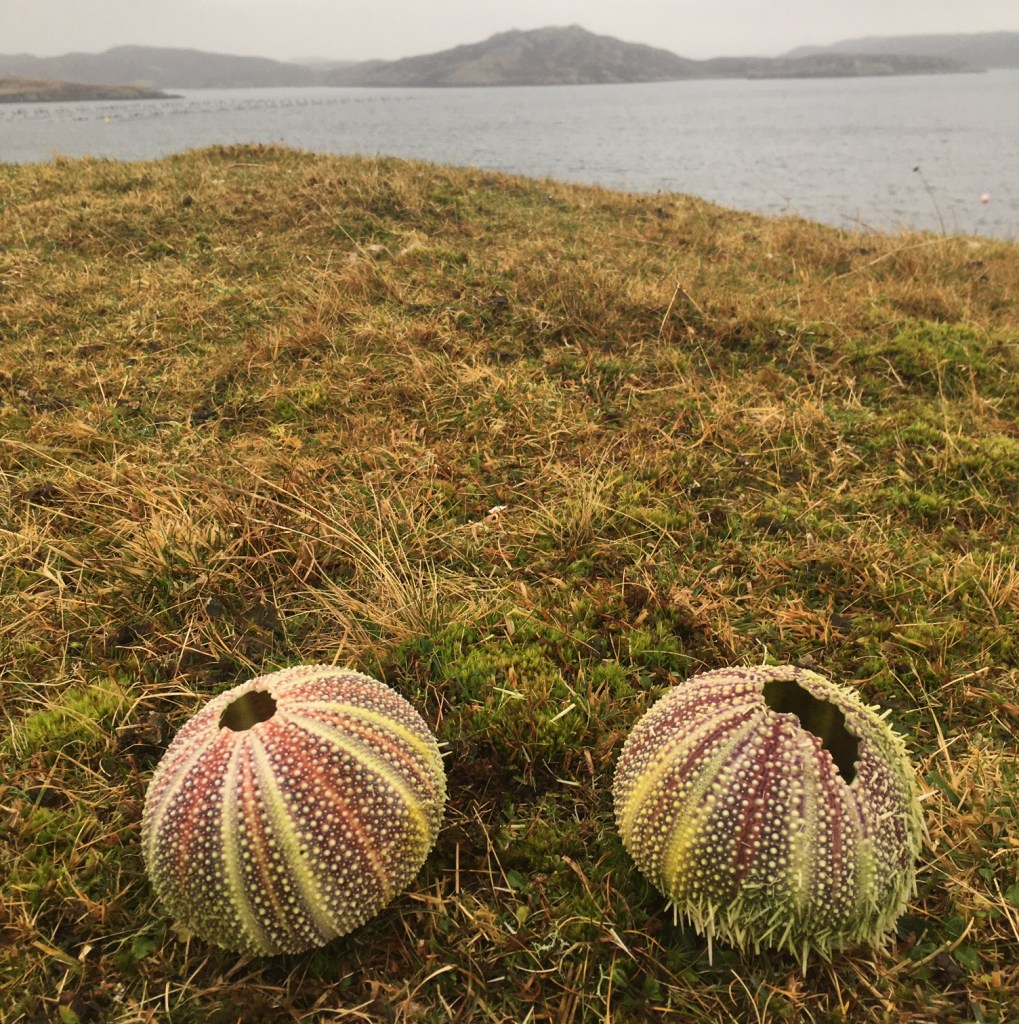
I gave it the name of Sea Urchin Shetland pattern, after collecting Sea Urchin shells in Brindister on the West coast of Shetland in the December of 2019.

There were so many on the hills making the lunch tables for wild birds to crack open sea shells, that I began to call the place, ‘Sea Urchin Hill’.   

So much has happened since the inception of this little beanie pattern, that I had already been making up in vintage tapestry yarn for some time.  In January 2020, I formalised the pattern a released it.  I didn’t know about test knitters or pricing or anything, and it flew.   It was the colours, you see.  I made the pattern beanie up in my very first use of Jamiesons of Shetland, Spindrift, after returning from 2 months of living on Fair Isle with Mati Ventrillon, as intern, at the age of 56.  It was around that time, after many visits to Shetland, that I began to feel at home there, and think about moving to the islands. 

I look back to the time of writing and designing this little pattern and now see that is it was the Kickstarter to my creative design process – the beginning of how I saw colour in knitting and how I began to blend those colours.   The pattern became incorporated into my online colour blending workshops and was the possibility for a new me. 

I designed the pattern on the doorstep, out back of my Sheffield flat using the yarn from Jamieson’s, posting little posts on Instagram, building what I didn’t realise then, was an interest in the pattern and in my colour ways.   I began dreaming of living on an island 60degrees north.  (the full story unfolds here and you can read Aug – January of the book I wrote, if you join us on Patreon now – then each month will drop on the 1st of the month) and enjoyed how I mixed the  colours to sing.

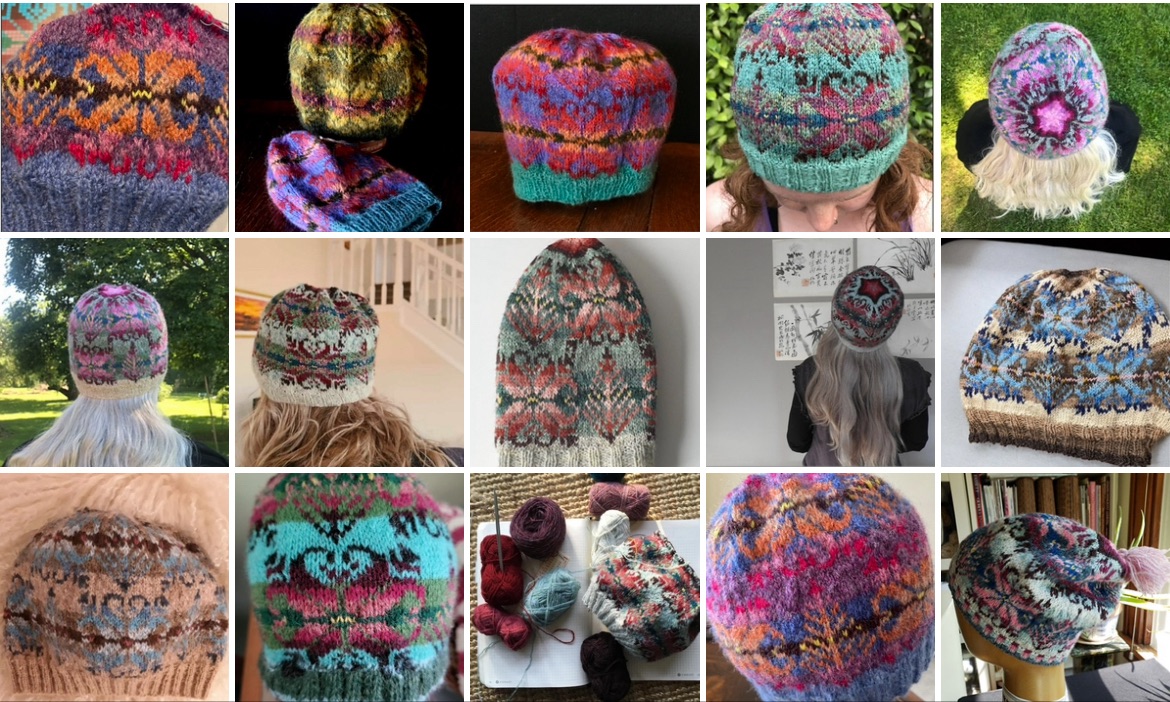
It makes me really happy to see this pattern interpreted by knitters in their own colours, some of which are included here.  If you have knitted this pattern, please tag me in your posts so that I can see the results. 

Here is the little pattern.

Just think, you never know where knitting can take you. It is all interconnected and all a journey .

Thank you to everyone who supported me in 2023.

Tracey 🙂

A few words on designing something that you would like to make.

whale bones, flowers and mittens – Shetland

A few words on designing a knitted piece that you would like to make. (including mistakes, errors, bodge)

swatching

When I was a child, I always made stuff.  No one taught me, I just went for it.  I remember seeing a large yellow cloth hard backed book on the shelf at the newsagents with 365 things to make in it.  I ran to that book every time we went in that news agents and poured over the photos and asked for for the book for Christmas – I remember my mother answering, ‘You want a book?’ I was about 8 years old and loved that book.    I sewed rag dolls, made resin ashtrays, made tiny doll dresses and sold them to my sister for her pocket money (which my mother made me give back) collected four / five / six / seven leafed clovers, pressed flowers, made cards – you name it, I made it.  A loner’s kind of life then too.

I also remember my mother getting a Singer sewing treadle machine and I used  it to make the entire miles and miles of the bunting for our estate jubilee party in 1977 – I was just 14 and could hardly reach the treadle peddle – no one taught me how to use it – I just got on with it coordinating foot and hand movements for miles of bunting, which seems simple but not when you embark on it as a young person – there is a responsiblity that I was unaware of. I also made very unattractive, shapeless, square t shirts for my dad out of the left over fabric, which were never worn.

Later, I taught myself to knit. There was no Youtube.  Then I got a knitting machine, then I started knitting intricate patterns by hand, going directly ‘off piste’ every time with my own alterations.  Making stuff has been a lifestyle.  Now, I spend hours and hours ‘designing’ a few knitting patterns for small knitted articles. I’ve tried to stop but I just can’t.   So I’ll share how I think I will make something – from scratch, from an idea, from a light bulb moment.

Just now, I want to make a very intricate pullover in an infinite number of colours, using traditional Fair Isle motifs – so to test how this will look, I will make a cowl.  Already, I have learned from this exercise of knitting in the round, where the yarn tails end up after knitting blocks of different blocks of colour – not in the right place – that’s where.

My initial ideas are inspired by any number of things. Honestly, my ideas of colour and pattern come from deeply inspired thoughts of connecting to a person or place in history – ie my ‘Dear Susan’ jumper, or from the sunrises when I was staying on Fair Isle – how the light cuts between the horizon line of the sea world and sky in ‘Fair Isle Sunrise’ or from the beautiful natural crustation of sea urchin shells that I collected from the discarded meals of gulls on Sea Urchin Hill in Brindister, which became the ‘Sea Urchin’ pattern.

But now I don’t live in Shetland. So what of inspiration? I’m still taken by how the light falls, both on my walls or even on the roof top of my daughter’s flat in London.  So, I never stop. The excitement of light and colour never stops.

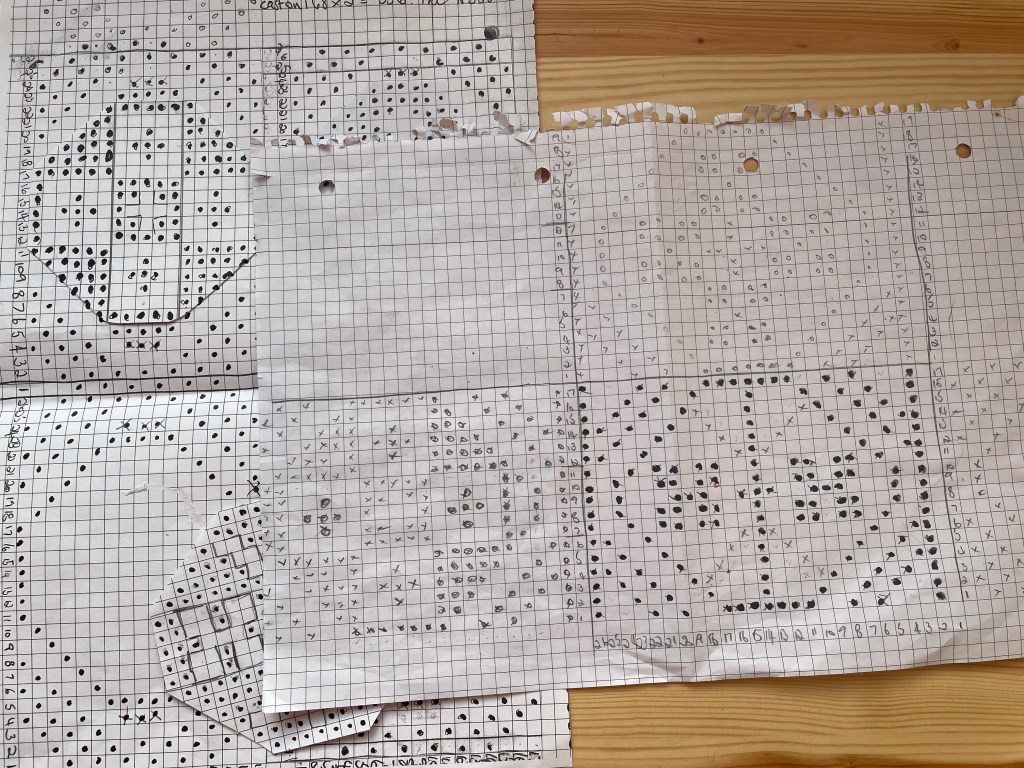
Lately, I have been really taken by a traditional fair Isle jumper that I saw in a museum because of its quality and integrity.  Each motif in the row was different and repeated randomly in other rows.  I counted about 15 Fair Isle patterns in the entire project. So, I studied them and began to graph them with an idea to draw on my love of colour (blending) and my memories of knitting Patricia Roberts intricate work in the 80’s to drawing on my use of Shetland yarn and love of traditional patterns. 

I am wondering if you would like to join me on a journey of making your own design pattern? Go for it.  Let’s start with a cowl.  Easy.

I’ll show you how I have started project and what it looks like now – admittedly, some weeks have already passed and due to my writing schedule, many more will pass before it is finished.  People can think that buying a knitting pattern from Ravelry for £3-£4 can be expensive, but behind it, for me, is hours and hours and hours of trial and error to find the right colour, tension, feel, drape, size and outcome.  Then, I’ll let you know, that Paypal take a cut, quite a big cut and that Ravelry then charge at the end of the month for the patterns sold – so a £4 pattern can end up being about £2.90 and if I offer a discount, which I often do, then I will end up with about £2.00 for each sold pattern (they are cheapter than a cup of tea in town) so, you see, that Pattern designing can be just for the love of it (Unless you are a famous ‘knitter’) Fortunately, Knitting is one  of my loves – and I share that love in patterns.     

I said to someone yesterday, that I am not a knitter – I just knit, then move on.  

So, let’s start at the beginning of this project, which may or may not work. What I used for this project is an inspirational image of a Fair Isle Jumper that I admired and wanted to develop into a project. 

I wanted to use my colours – lots of colours and my methods of ‘colour blending’ and tiny needles to create a Persian carpet look. Already, the starting image will be forgotten within half a day’s developmental work.

Here we go.

What you’ll need for this project ( I am making a cowl – because my face is cold on the bike in the early mornings)

  • Your idea of which motifs you would like to knit
  • A notepad of graph sheets
  • Pencil, with rubber / sharpie, regular pen, tape measure
  • Time
  • Patience
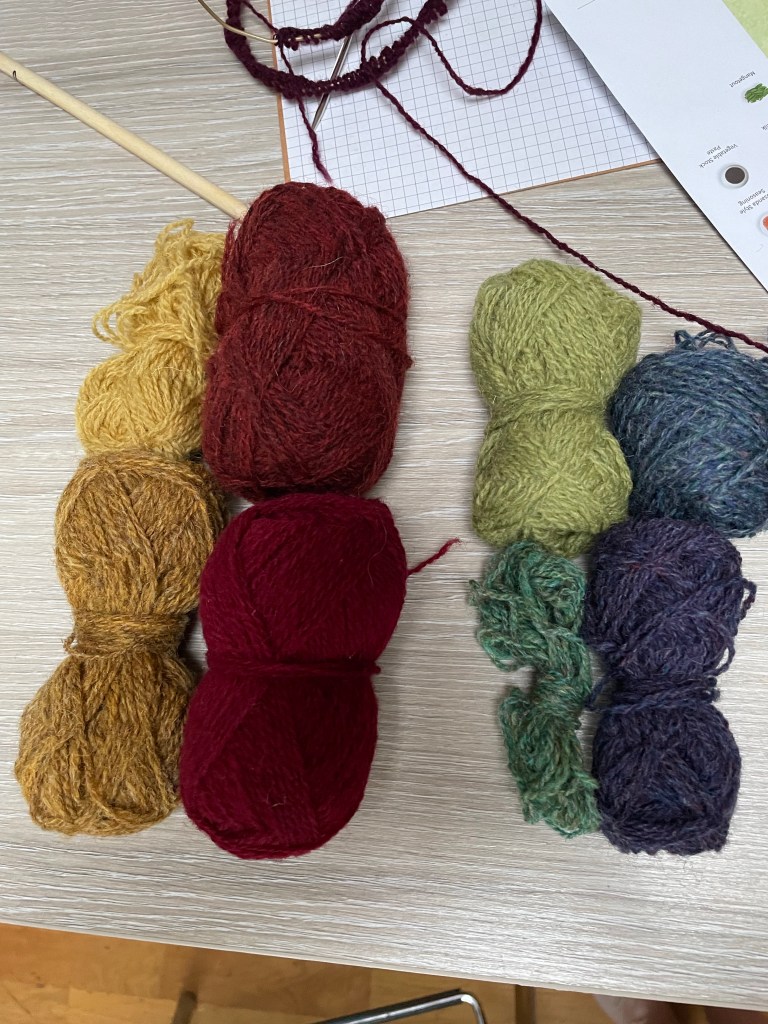
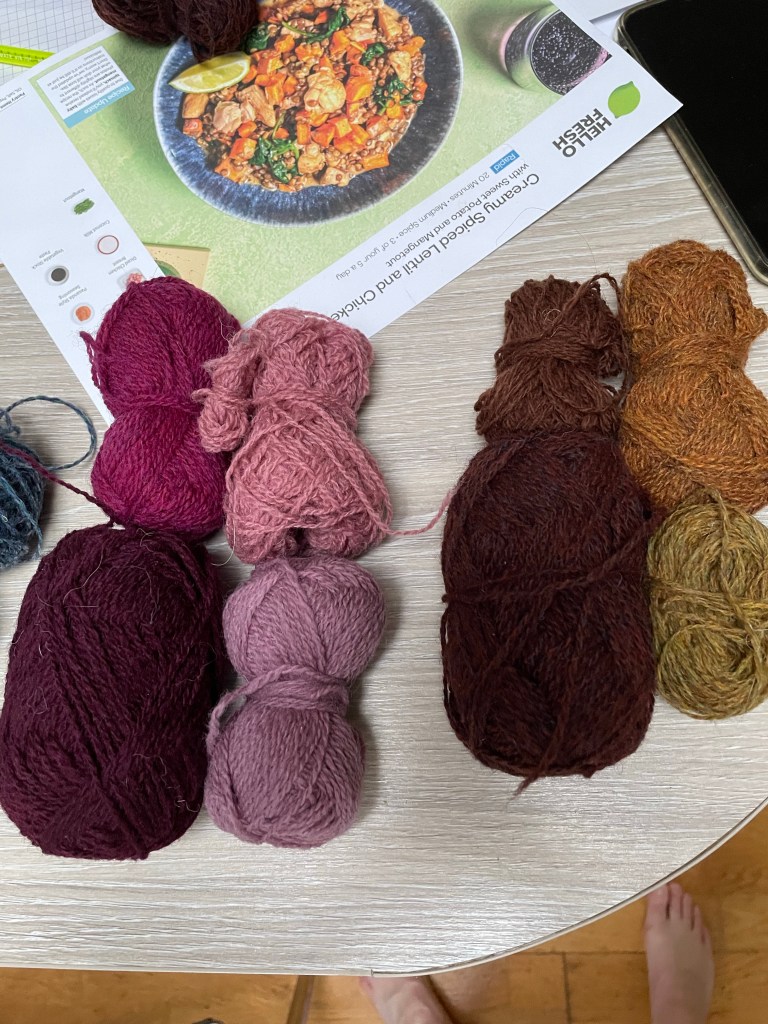
  • A stash of yarn (all the same quality of yarn)
  • Day light
  • and Hello Fresh does work too.

boys and colour

Instructions –

Preparation

  1. Start by looking at the motifs that you like and start replicating them on graph paper. You can also graph out patterns using excel spreadsheets, but that comes later for me, if I choose to put a pattern out. Initially, I like the tactile act of using paper and pencils.   Graph the motifs by studying your image of knitted inspiration and working out the pattern or by looking in ‘The Complete Book of Traditional Fair Isle Knitting’ book by Sheila McGregor or the cute little ‘Shetland Pattern book’ by Mary Smith and Maggie Twatt.  Both books are pretty old. I have a copy of both ( I used to have 2 copies of each but…)
  • Start graphing out your desired motifs and be prepared to make mistakes.   I start with pencil and do a lot of rubbing out.  Then I go over the pencil with a sharpie and still sometimes make errors.  Making errors at this stage is also learning how the motif works, if this is the first time that you have knitted this kind of pattern.
  • Then, start to choose your colours.  If you have attended any of my colour blending sessions, you will know how this goes.  It can be complicated, it can also be easy but if you haven’t – then I suggest to firstly think of harmony, then contrast. And do not buddy up the colours.
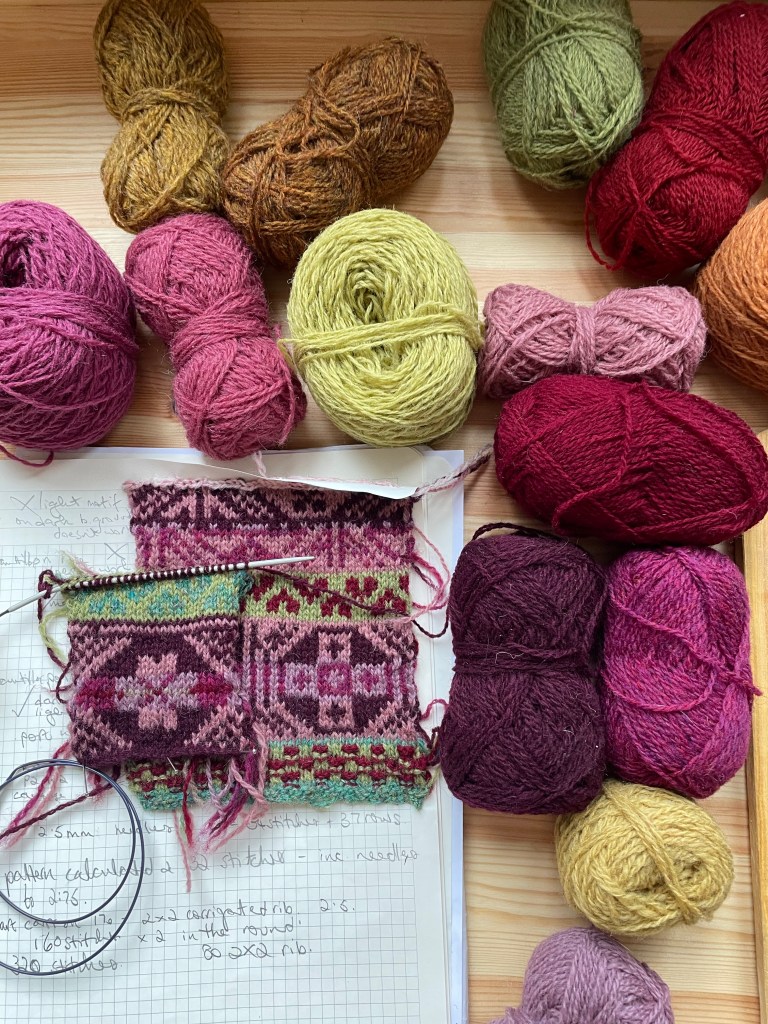
  • Knit some of your drawn out motifs into swatches. Use different size needles too, to see how the swatch looks. This is not supposed to be torture, this is the first fun bit after you have painstakingly drawn out the motifs on paper.  The swatch is to check colour then tension (as a bi product)
  • When you have knitted random swatches in varying colours, you can see how the pattern stands – are there too many stitches in the block for the feel I want? – is there a harmony in colour, is there enough contrast? How does it feel? – yes, really, how does it feel in your heart?  Is it better with dark motif on light back ground or vice versa? How the do the colours blend – oh, and never, never choose your colours under tungsten light or whilst watching the tele or not really looking – always choose your colours under natural daylight – ignore this last bit at your own peril.
  • When you have knitted the swatch, then you can measure it to figure out how many motifs you need for the size you want to knit – simples? Using the needles that you like for the outcome you like.  Easy?  Or just stick with figuring out your colours in the swatch. The size will take care of itself – right?

When you have knitted quite a few swatches in a number of colours, then you will have an idea if any adjustments need to be made to the motif or where it falls within the pattern or what motifs will go before or after the main motifs.

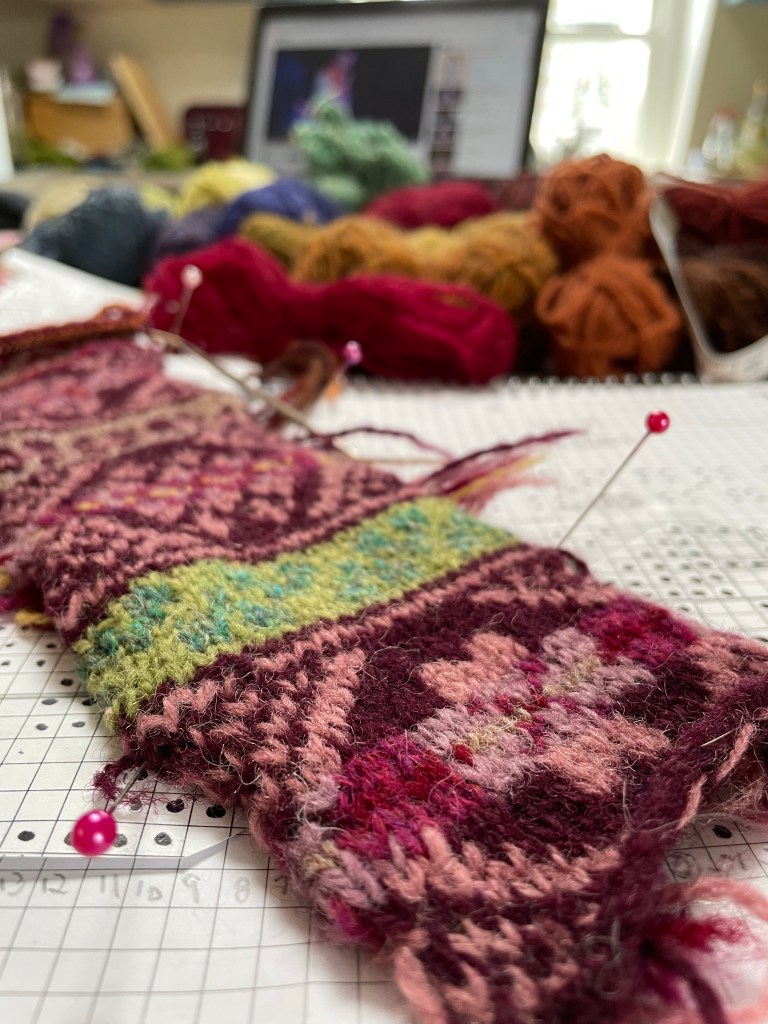
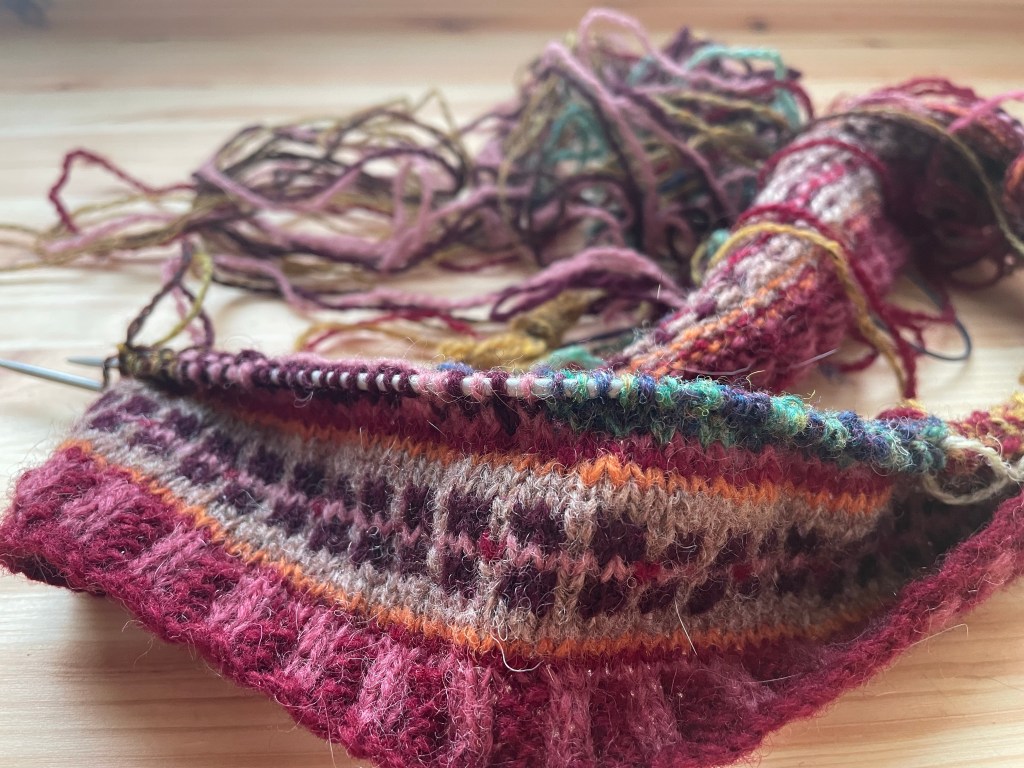
Anyway, here is a start –   this is where I am with my project – round 3 of the first round of Fair Isle Motifs.  It looks messy but I am in full control.

It is a cowl with 8 different hand drawn out Fair Isle motifs joined by seed stitches because I didn’t like how geometric the original Fair Isle joining sections looked.  I am using a different set of colours for each block of motif, like I used to with Patricia Roberts’ patterns and even with I used to knit Kaffe Fassett jumpers in the 80’s.

Let me know how you get on. Leave me a comment on your thoughts.

Have a good day.

https://ko-fi.com/traceydoxey

Leave No Trace, Shetland

Place of return

At every visit to Shetland over the past 4 years, I always take time to return to an isolated, derelict, lonely croft house on Bressay where I respectfully and quietly develop a creative practice that speaks to me of connections and belonging. 

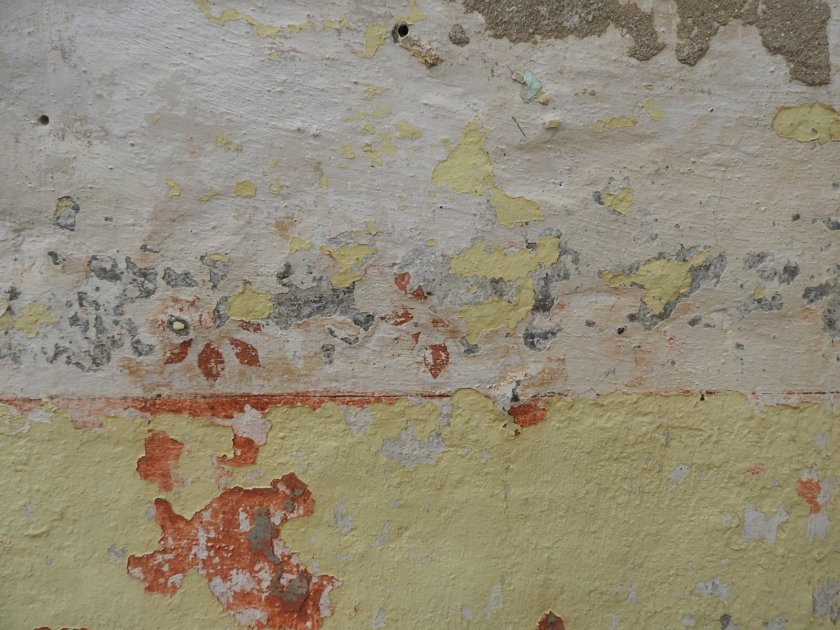
The deterioration of this 2 roomed croft house has been logged since I first saw hand stencilled flowers painted across the walls at waist height in 2015.  The last family who lived in this small home painted those flowers but now they are gone.  The croft house may be small in size but I have spoken to a woman who was born there, as were her brothers and sisters and her mother and her own children.  It was her grandmother’s house and I heard of three generations of women who went home to give birth to their children there.

march 2017

Because I know this, I hear the sounds in the plaster on the walls that is now, year by year, disappearing away down to the stone fabric of the build. 

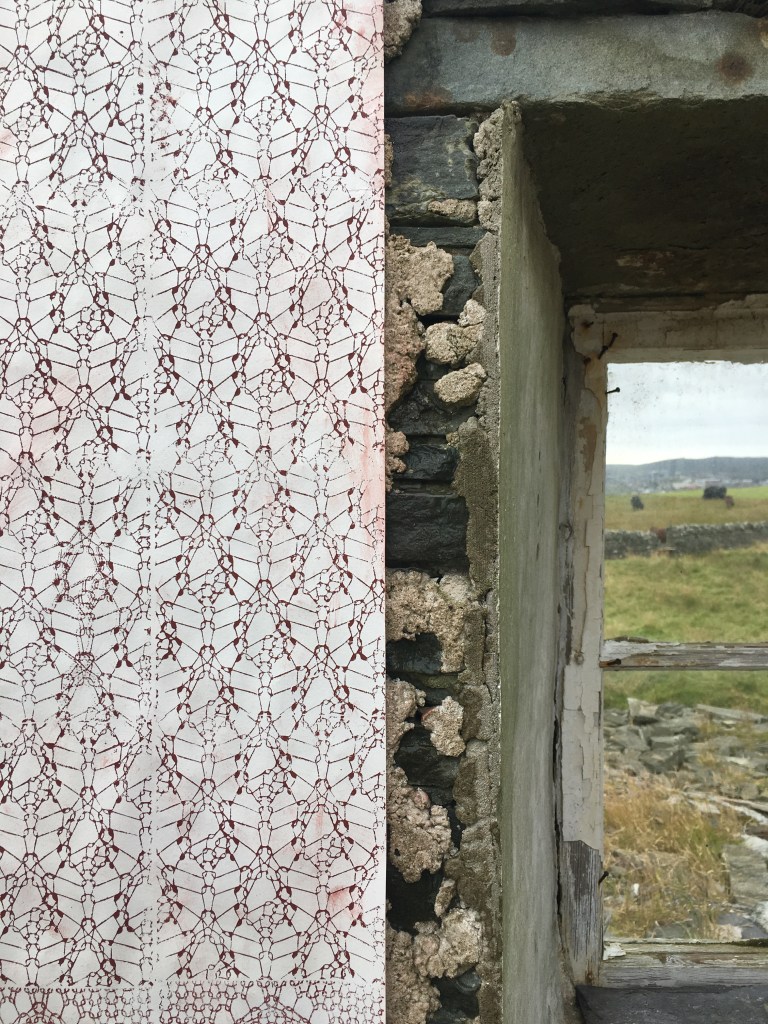
For weeks before returning this time, I had made preparation for my reunion with the shell of a house, by making it a gift of hand-block printed wallpaper with a Shetland Bird’s eye and a Brother / Sister lace design.  This wallpaper has been a couple of years in the making from learning CAD knit to using the stitch pattern to create a laser etched rubber stamp to print the design.   Material process and practice led research has always been the core of the development of my art practice.  I have long questioned – is it craft or art and is it relevant today a Contemporary Art arena in a time of changing families, fragmented families, home life, belonging, gendered women’s domestic craft of knitting and narratives of those women.  

The world is speedily changing and what can we say through art that will make a difference to someone for a moment to stop and think and feel.

Last week, on my first day back on Shetland, I nipped to see the derelict croft house.  As I was rounding the corner on the hill, my pace and heart quickened at what sight may greet me as it had been 15 months and a cycle of 7 raw weather seasons each taking its toll on the exposed walls since my last visit.   I hoped the house would be standing proudly as before which it was.   It felt like meeting an old friend.  Returning to make work here is not a safe option.  It feels as if I am breaking and entering, although the house has no roof and takes the label of ‘barn’.   I know it was a loving family home that just happens to be falling down on farm land which is owned by another person.  I visit it like an old relative. I look forward to first sight of out and in. Each year, I notice change.

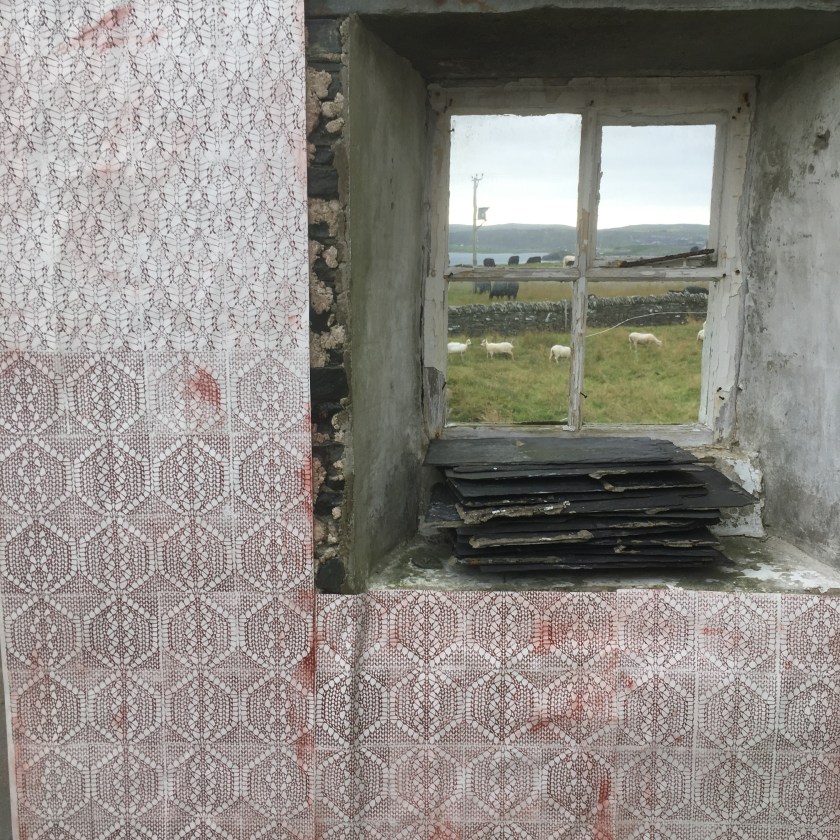
On Tuesday, I returned again. This time, I carried the wallpaper, paste, brushes and measure to wallpaper around a window that I know so well. I had a hope of making creative work that spoke of belonging and connection to place and women’s domestic craft of knitting, maybe something of my own personal journey to this point.  

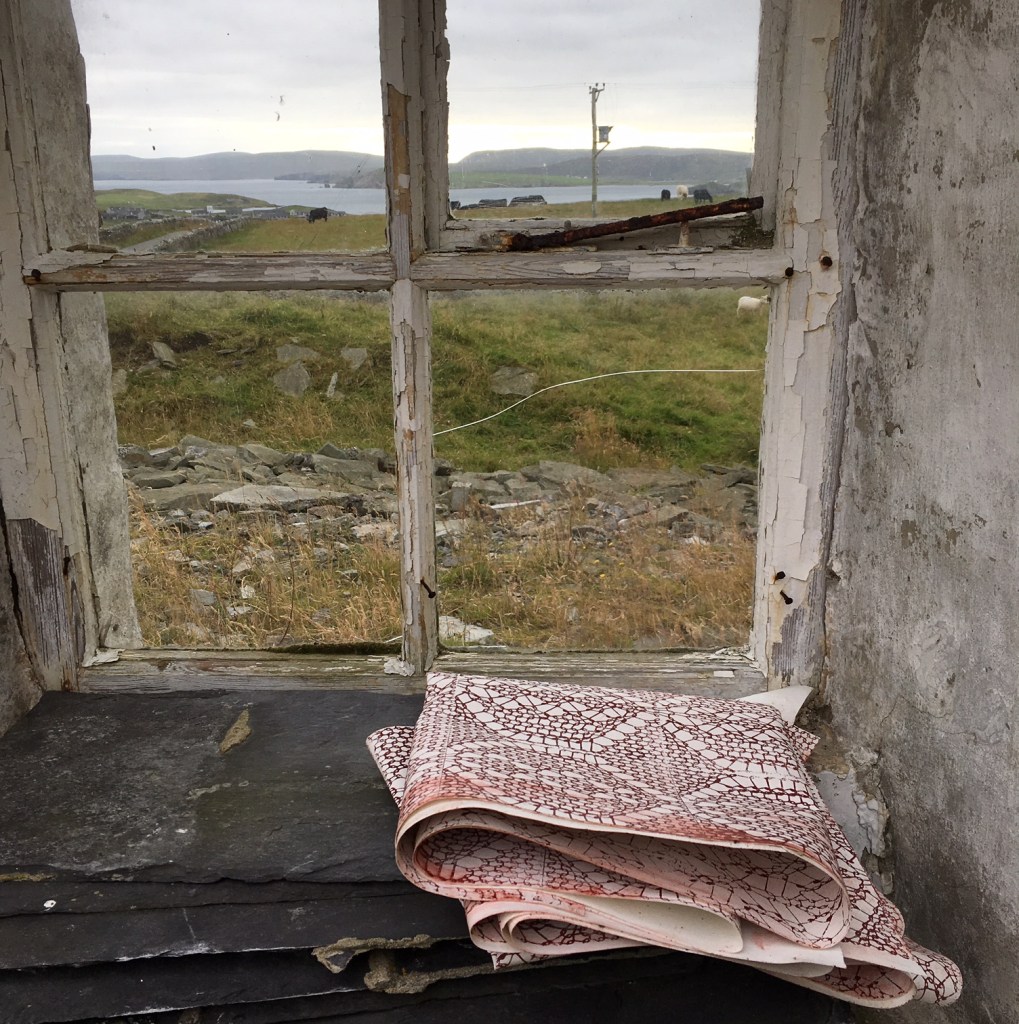
I measured, sized the walls, and hung the strips of paper on crumbling plaster in the hope of creating something that touched on the embedded experiences I had during the making process.   A connection of past and present. I’m interested what other people see.  My critical eye firstly noted that the water based ink ran when touched by water based glue, and that the design would have probably looked better with one style of lace pattern and at best it could be described as imperfect and at its worst – well, you can only say but actually, on a practice led research level, the piece did work because in the right place, with the right print, I know I can create a piece of work that does speak of belonging.

After I stepped back from it, I recorded my initial responses and photographed the work then I pulled the paper off the wall, folded it and took it away for the bin back in Lerwick and Left No Trace.

leave no trace

Leave no trace, only record the moment of a coming together of a conceptual and expressive property which remains personal.  What is this work – is it Art? Textile art? Ethnography? Materiality? Am I telling stories? Am I making stories?  I’m trying to understand it in a way in which textile materials and techniques are expressed in contemporary site-specific art in order to tell a story.